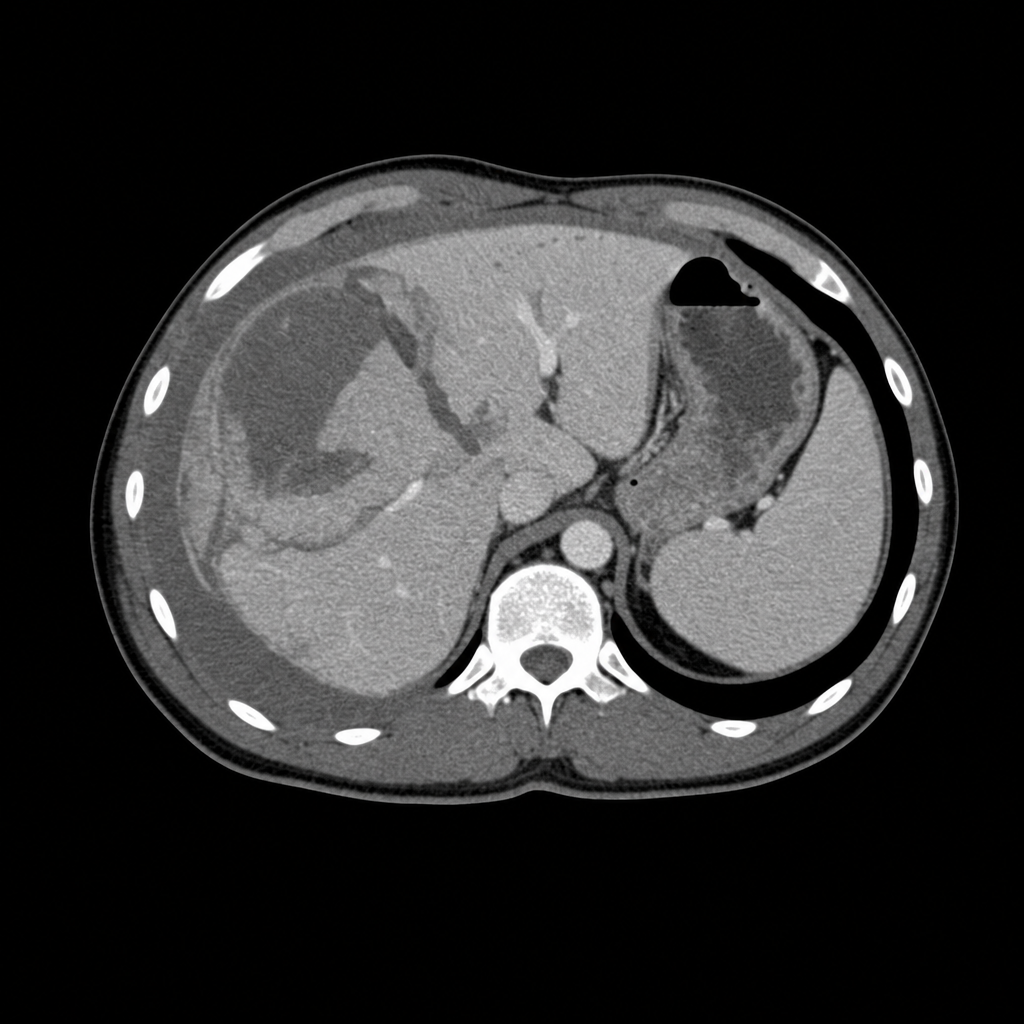
What organism causes emphysematous cholecystitis?
Which of the following does not contribute to the formation of an enterobiliary fistula?
Klatskin tumor is defined as:
According to the Bismuth/Strasberg classification, what type is a 'cystic blow out'?
What is the most common cause of cholangitis?
Which of the following is NOT a tumor marker for hepatocellular carcinoma?
What is the most common type of gallbladder cancer in a patient with gallstones?
What is the minimum amount of normal perfused liver parenchyma that should be left intact when a hepatic resection is planned?
Which of the following is NOT a part of the management of a stone in the common bile duct?
A 45-year-old male presents with recurrent attacks of cholelithiasis. Ultrasound examination shows a dilated common bile duct (CBD) measuring 1 cm. What is the next line of management?
Explanation: **Explanation:** **Emphysematous cholecystitis** is a severe, life-threatening variant of acute cholecystitis characterized by the presence of gas within the gallbladder wall, lumen, or pericholecystic tissues. **Why Clostridium perfringens is correct:** The primary pathophysiology involves **ischemia** of the gallbladder wall (often due to cystic artery compromise), which creates an anaerobic environment. This allows gas-forming organisms to proliferate. **Clostridium perfringens** is the most common anaerobic organism isolated. It produces gas through the fermentation of glucose, leading to the characteristic radiographic finding of "gas shadows" on X-ray or CT. Other common isolates include *E. coli* and *Klebsiella*. **Why the other options are incorrect:** * **Salmonella typhi:** Associated with chronic carrier states in the gallbladder and "typhoid cholecystitis," but it is not a gas-forming organism and does not cause emphysematous changes. * **Cytomegalovirus (CMV):** Typically causes cholecystitis in immunocompromised patients (e.g., AIDS) as part of CMV polyradiculopathy or acalculous cholecystitis, but not emphysematous disease. * **Bacteroides:** While *Bacteroides fragilis* can be found in polymicrobial intra-abdominal infections, it is a less common primary driver of emphysematous cholecystitis compared to Clostridia. **High-Yield Clinical Pearls for NEET-PG:** * **Risk Factors:** Strongly associated with **Diabetes Mellitus** (found in >30-50% of cases) and the elderly. * **Gender:** Unlike typical cholecystitis, it is more common in **males** (M:F ratio 3:1). * **Acalculous:** It is frequently acalculous (stones are absent in up to 30% of cases). * **Complications:** High risk of **gangrene and perforation** (5x higher than routine cholecystitis). * **Management:** Emergency cholecystectomy is the treatment of choice.
Explanation: **Explanation:** An enterobiliary fistula is an abnormal communication between the biliary tree and the gastrointestinal tract. The formation of such a fistula requires the offending organ to be in direct anatomical proximity to the gallbladder or common bile duct. **Why Gastric Ulcer is the Correct Answer:** The stomach (specifically the body and fundus) is not anatomically adherent to the gallbladder. While the pylorus and antrum are nearby, **gastric ulcers** typically occur on the lesser curvature and do not usually lead to biliary fistulization. In contrast, the duodenum and the transverse colon are the most common sites for these communications. **Analysis of Other Options:** * **Gallstones (Option B):** This is the **most common cause** (90% of cases). Chronic inflammation and pressure necrosis from a large stone lead to erosion through the gallbladder wall into an adjacent organ, most commonly the duodenum (cholecystoduodenal fistula). * **Duodenal Ulcer (Option A):** A posterior or superior wall duodenal ulcer can erode into the common bile duct or gallbladder, creating a fistula. This is the second most common cause after gallstones. * **Carcinoma of the Gallbladder (Option D):** Malignant infiltration can cause direct breakdown of the tissue planes between the gallbladder and the duodenum or colon, resulting in a malignant fistula. **NEET-PG High-Yield Pearls:** * **Most common type:** Cholecystoduodenal fistula (70%), followed by cholecystocolic. * **Rigler’s Triad (Pathognomonic for Gallstone Ileus):** 1. Pneumobilia (air in the biliary tree), 2. Small bowel obstruction, 3. Ectopic gallstone (usually in the ileum). * **Bouveret Syndrome:** A rare presentation where a large gallstone migrates through a fistula and causes gastric outlet obstruction.
Explanation: ### Explanation **Correct Answer: B. Cholangiocarcinoma arising from the bifurcation of the bile duct** **Understanding Klatskin Tumor:** A Klatskin tumor is a specific type of **hilar cholangiocarcinoma** (extrahepatic bile duct cancer) that originates at the junction of the right and left hepatic ducts. Because of its strategic location at the biliary bifurcation, it typically presents early with **painless obstructive jaundice**. On imaging, it is characterized by the "non-union" of the right and left hepatic ducts. **Analysis of Incorrect Options:** * **Option A:** A primitive neuroectodermal tumor (PNET) occurring specifically in the chest wall is known as a **Askin tumor**, not Klatskin. * **Option C:** A lung adenocarcinoma (or squamous cell carcinoma) involving the apex of the lung, often causing Horner’s syndrome or brachial plexus palsy, is called a **Pancoast tumor**. * **Option D:** Enterochromaffin cell tumors are **Carcinoid tumors**, which arise from the neuroendocrine system, most commonly in the appendix or terminal ileum. **High-Yield Clinical Pearls for NEET-PG:** * **Bismuth-Corlette Classification:** This is the staging system used to define the anatomical extent of Klatskin tumors (Type I to IV). * **Risk Factors:** Primary Sclerosing Cholangitis (PSC) is the most common predisposing factor in the West; Choledochal cysts and *Clonorchis sinensis* infection are also significant. * **Diagnosis:** MRCP is the gold standard for non-invasive imaging to visualize the biliary tree. * **Tumor Marker:** **CA 19-9** is frequently elevated and used for monitoring. * **Management:** Surgical resection (often involving hemihepatectomy) is the only curative intent treatment, though many patients are unresectable at the time of diagnosis.
Explanation: The **Strasberg classification** (an expansion of the Bismuth classification) is the gold standard for describing laparoscopic bile duct injuries. It categorizes injuries based on the anatomical site and the nature of the leak or obstruction. ### Explanation of the Correct Answer: * **Type A (Correct):** This refers to minor bile leaks from either the **cystic duct stump** or small ducts in the liver bed (Ducts of Luschka). A **"cystic blow out"** occurs when the clips on the cystic duct stump slip or fail, leading to a localized bile leak. Since Type A specifically covers leaks from the cystic duct, it is the correct classification. ### Explanation of Incorrect Options: * **Type B:** Involves the **occlusion** (usually by clipping) of an aberrant right sectoral hepatic duct. There is no leak, but a segment of the liver is obstructed. * **Type C:** Involves the **transection without ligation** of an aberrant right sectoral hepatic duct. This results in a persistent bile leak from the divided duct. * **Type D:** Refers to a **lateral injury** (partial tear) to the main bile duct (CBD/CHD) without loss of continuity. * **Type E:** These are major circumferential injuries to the main bile duct, further subdivided (E1 to E5) based on the level of the stricture relative to the biliary confluence (original Bismuth classification). ### NEET-PG High-Yield Pearls: * **Most common injury:** Type A (Cystic duct leak). * **Most common site of major injury:** The junction of the cystic duct and common hepatic duct. * **Management:** Most Type A injuries are managed conservatively or via **ERCP with stenting** to decrease intraductal pressure, allowing the stump to heal. * **Mnemonic for Strasberg:** * **A** - **A**ccessory/Cystic leak. * **B** - **B**locked aberrant duct. * **C** - **C**ut aberrant duct (leak). * **D** - **D**uct (Main) lateral injury. * **E** - **E**nd of the duct (Complete transection/Bismuth types).
Explanation: **Explanation:** Acute cholangitis is a clinical syndrome characterized by inflammation and infection of the bile duct system. The pathophysiology relies on two primary factors: **biliary obstruction** and the **presence of bacteria** in the bile. **Why Common Bile Duct (CBD) Stone is Correct:** Choledocholithiasis (CBD stones) is the **most common cause** of biliary obstruction leading to cholangitis, accounting for approximately 60-70% of cases. When a stone obstructs the duct, it causes stasis of bile and an increase in intrabiliary pressure. This allows bacteria (most commonly *E. coli*) to migrate from the duodenum into the biliary tree, leading to systemic infection. **Analysis of Incorrect Options:** * **Viral infection:** Viruses (like Hepatitis A or B) affect the liver parenchyma (hepatitis) but do not typically cause obstructive cholangitis. * **Post-surgical complication:** While biliary strictures or accidental ligations post-cholecystectomy can cause obstruction, they are significantly less common than primary stone disease. * **Amoebic infection:** *Entamoeba histolytica* typically causes amoebic liver abscesses, not ascending cholangitis. **High-Yield Clinical Pearls for NEET-PG:** * **Charcot’s Triad:** Fever, Jaundice, and Right Upper Quadrant (RUQ) pain. * **Reynold’s Pentad:** Charcot’s Triad + Hypotension and Altered Mental Status (indicates severe obstructive suppurative cholangitis). * **Most common organism:** *Escherichia coli* (followed by *Klebsiella* and *Enterococcus*). * **Gold Standard Investigation:** ERCP (both diagnostic and therapeutic). * **Initial Investigation of Choice:** Ultrasound (to look for ductal dilation and stones).
Explanation: **Explanation:** The correct answer is **CEA (Carcinoembryonic Antigen)**. CEA is a non-specific oncofetal antigen primarily used as a tumor marker for **colorectal carcinoma**, as well as pancreatic, gastric, and breast cancers. While it may be elevated in liver metastases from these sites, it is not a diagnostic marker for primary hepatocellular carcinoma (HCC). **Analysis of Options:** * **AFP (Alpha-Fetoprotein):** The most widely used screening and diagnostic marker for HCC. Levels >400 ng/mL in a high-risk patient (e.g., cirrhosis) are highly suggestive of HCC. * **PIVKA-II (Protein Induced by Vitamin K Absence or Antagonist-II):** Also known as Des-gamma-carboxyprothrombin (DCP). It is highly specific for HCC and is often used in combination with AFP to increase diagnostic sensitivity, especially in AFP-negative cases. * **Glypican-3 (GPC3):** A cell-surface heparan sulfate proteoglycan that is overexpressed in HCC cells but absent in healthy hepatocytes and benign liver lesions. It is an excellent immunohistochemical marker for differentiating HCC from dysplastic nodules. **Clinical Pearls for NEET-PG:** * **Triple Marker Screening:** Some protocols use the "BALAD score" (Bilirubin, Albumin, L3-AFP, AFP, and DCP) to predict HCC prognosis. * **AFP-L3:** The lens culinaris agglutinin-reactive fraction of AFP (AFP-L3) is more specific for HCC than total AFP. * **Fibrolamellar HCC:** Typically occurs in young adults without cirrhosis; notably, **AFP levels are usually normal** in these patients. * **CEA in Liver:** If a patient has a liver mass and elevated CEA, suspect **metastatic colorectal cancer** or **cholangiocarcinoma** rather than HCC.
Explanation: **Explanation:** **Adenocarcinoma (Option A)** is the most common histological type of gallbladder cancer, accounting for approximately **90–95%** of all cases. Gallstones (cholelithiasis) are the most significant risk factor, present in 70–90% of patients with gallbladder carcinoma. The chronic irritation and inflammation caused by stones lead to mucosal dysplasia, which progresses to invasive adenocarcinoma. **Why other options are incorrect:** * **Squamous cell carcinoma (Option B):** This is rare (approx. 1–2%). It is more aggressive than adenocarcinoma and usually presents at an advanced stage. * **Adenosquamous carcinoma (Option C):** This contains both glandular and squamous components. It is also rare and generally carries a poorer prognosis than pure adenocarcinoma. * **Liposarcoma (Option D):** This is a mesenchymal tumor. Primary sarcomas of the gallbladder are extremely rare clinical curiosities and are not associated with the typical gallstone-carcinoma sequence. **High-Yield Clinical Pearls for NEET-PG:** * **Epidemiology:** Gallbladder cancer is the most common biliary tract malignancy. It is more common in females (3:1 ratio) and has a high incidence in Northern and Eastern India. * **Risk Factors:** Porcelain gallbladder (intramural calcification), choledochal cysts, anomalous pancreaticobiliary duct junction (APBDJ), and large gallstones (>3 cm). * **Staging:** The most important prognostic factor is the depth of invasion (T-stage). * **Nevin’s Classification:** Often used for staging; Stage I is limited to the mucosa. * **Treatment:** For incidental gallbladder cancer (T1a), simple cholecystectomy is sufficient. For T1b or higher, a **Radical Cholecystectomy** (including liver wedge resection and lymphadenectomy) is required.
Explanation: **Explanation:** The key concept in hepatic resection is the **Future Liver Remnant (FLR)**—the volume of healthy liver tissue remaining after surgery that must be sufficient to maintain metabolic, synthetic, and excretory functions. **1. Why 20% is correct:** In a patient with a **normal, healthy liver**, a minimum of **20%** of the total liver volume is required to prevent post-hepatectomy liver failure. The liver has a remarkable capacity for regeneration, and this small percentage is sufficient to sustain life and eventually regrow to near-original size within weeks. **2. Analysis of Incorrect Options:** * **10% (Option A):** This is insufficient. Leaving only 10% leads to "Small-for-Size Syndrome," characterized by liver failure, coagulopathy, and death. * **50% (Option C):** While safe, this is not the *minimum* required for a healthy liver. However, in patients with severe cirrhosis (Child-Pugh B or C), even 50% might be inadequate. * **75% (Option D):** This represents the maximum amount of healthy liver that can typically be resected (up to 80%), not the minimum amount that must be left behind. **3. Clinical Pearls for NEET-PG:** The required FLR percentage varies based on the underlying health of the liver parenchyma: * **Normal Liver:** 20% FLR. * **Steatotic Liver/Post-Chemotherapy:** 30% FLR. * **Cirrhotic Liver (Child-Pugh A):** 40% FLR. * **Pre-operative strategy:** If the calculated FLR is too low, **Portal Vein Embolization (PVE)** is performed to induce hypertrophy of the non-embolized segments before resection. * **Indocyanine Green (ICG) Clearance:** Often used to assess the functional reserve of the liver before planning resection.
Explanation: **Explanation:** The management of Common Bile Duct (CBD) stones (choledocholithiasis) focuses on mechanical clearance because these stones are often large, potentially pigmented, and carry a high risk of life-threatening complications like ascending cholangitis or gallstone pancreatitis. **Why "Medical Dissolution" is the correct answer (The 'NOT' option):** Medical dissolution therapy (using bile acids like Ursodeoxycholic acid) is only minimally effective for small, non-calcified **cholesterol stones located in the gallbladder**. It has **no role** in the management of CBD stones. CBD stones require urgent or elective mechanical removal to prevent biliary obstruction and sepsis; waiting for chemical dissolution is clinically dangerous and ineffective. **Analysis of Incorrect Options:** * **ERCP (Option A):** This is currently the **gold standard** for managing CBD stones. It allows for both diagnosis and therapeutic intervention (sphincterotomy and stone extraction). * **Laparoscopic CBD Exploration (Option B):** This is an excellent surgical alternative, often performed during a laparoscopic cholecystectomy (single-stage management) if the surgeon is skilled and the duct is dilated (>8mm). * **Endosphincteric Removal (Option D):** This refers to the process of removing the stone through the Sphincter of Oddi, typically following an endoscopic sphincterotomy during ERCP using baskets or balloons. **NEET-PG High-Yield Pearls:** * **Initial Investigation of Choice:** Transabdominal Ultrasound (though it has low sensitivity for distal CBD stones). * **Gold Standard Investigation:** MRCP (Non-invasive) or ERCP (Invasive/Therapeutic). * **Management Strategy:** If CBD stones are suspected during cholecystectomy, the options are Pre-operative ERCP, Intra-operative CBD exploration, or Post-operative ERCP. * **Charcot’s Triad:** Fever, Jaundice, and RUQ pain (indicates Ascending Cholangitis—a surgical emergency).
Explanation: **Explanation:** The patient presents with symptomatic cholelithiasis and a dilated common bile duct (CBD > 6 mm). In the context of recurrent biliary symptoms, a dilated CBD on ultrasound is a strong predictor of **choledocholithiasis** (CBD stones). **1. Why ERCP is the correct answer:** ERCP is the "gold standard" for managing suspected CBD stones because it is both **diagnostic and therapeutic**. In this patient, ERCP allows for the visualization of the biliary tree (to confirm stones) and immediate intervention via endoscopic sphincterotomy and stone extraction before the patient undergoes definitive cholecystectomy. **2. Why other options are incorrect:** * **PTC (Option B):** This is an invasive procedure used primarily when ERCP is unsuccessful or anatomically impossible (e.g., post-Roux-en-Y gastric bypass). It is better for visualizing the proximal biliary tree in cases of high biliary obstruction (hilar tumors). * **Cholecystostomy (Option C):** This involves placing a drainage tube into the gallbladder. It is reserved for critically ill patients with acute cholecystitis who are unfit for surgery, not for managing CBD stones. * **Intravenous Cholangiogram (Option D):** This is an obsolete modality with high toxicity and poor visualization compared to modern imaging like MRCP or ERCP. **Clinical Pearls for NEET-PG:** * **Normal CBD Diameter:** Up to 6 mm (increases by 1 mm per decade after age 60 or post-cholecystectomy). * **Management Sequence:** If suspicion of CBD stones is high (jaundice, dilated CBD, stones on USG), proceed to **ERCP**. If suspicion is moderate, **MRCP** (non-invasive) or **Endoscopic Ultrasound (EUS)** is the preferred next step. * **Charcot’s Triad:** Fever, jaundice, and RUQ pain (indicates ascending cholangitis, a complication of CBD stones requiring urgent ERCP).
Explanation: **Explanation:** **Murphy’s Sign** is a classic clinical finding used to diagnose **Acute Cholecystitis**. It is elicited by asking the patient to take a deep breath while the examiner maintains pressure in the right upper quadrant (specifically at the gallbladder point, where the lateral border of the rectus abdominis meets the costal margin). As the diaphragm descends during inspiration, the inflamed gallbladder comes into contact with the examiner’s fingers. This causes sudden, sharp pain and a **"catch" in breath** (inspiratory arrest). **Analysis of Options:** * **Acute Cholecystitis (Correct):** The inflammation of the gallbladder wall makes it exquisitely sensitive to pressure, leading to a positive Murphy’s sign. * **Pancreatic Mass:** Typically presents with painless jaundice (if in the head of the pancreas) or dull aching pain. A palpable, non-tender gallbladder in a jaundiced patient suggests a pancreatic mass (Courvoisier’s Law), but not Murphy’s sign. * **Splenomegaly:** This involves the left upper quadrant. While a large spleen may be tender, it does not produce inspiratory arrest. * **Carcinoma Colon:** Usually presents with altered bowel habits, occult bleeding, or intestinal obstruction, rather than acute inflammatory signs in the gallbladder area. **Clinical Pearls for NEET-PG:** * **Sonographic Murphy Sign:** If the same "catch in breath" is elicited by the pressure of the ultrasound probe directly over the gallbladder, it is more sensitive and specific than the manual sign. * **Boas’ Sign:** Hyperesthesia (increased sensitivity) between the 9th and 11th ribs posteriorly on the right side, also associated with acute cholecystitis. * **Triad of Acute Cholecystitis:** RUQ pain, fever, and leukocytosis.
Explanation: **Explanation:** Biliary strictures are abnormal narrowings of the bile duct system. **Trauma**, specifically **iatrogenic injury during surgery**, is the most common cause of benign biliary strictures worldwide. 1. **Why Trauma is Correct:** Approximately 80% of all benign biliary strictures result from surgical trauma. The most frequent culprit is **laparoscopic cholecystectomy** (incidence 0.3–0.6%), followed by open cholecystectomy, liver transplantation, and gastric surgeries. These injuries typically occur due to anatomical variations, excessive use of diathermy, or inadvertent clipping/ligation of the common bile duct (CBD). 2. **Why Other Options are Incorrect:** * **Common bile duct stone:** While stones cause biliary *obstruction*, they do not typically cause a permanent fibrotic *stricture* unless there is chronic irritation leading to Mirizzi syndrome or secondary cholangitis. * **Asiatic cholangitis (Recurrent Pyogenic Cholangitis):** This is a common cause of strictures in specific geographic regions (Southeast Asia) due to parasitic infections (e.g., *Clonorchis sinensis*), but it is not the most common cause globally or in general surgical practice. * **Congenital anomaly:** Conditions like biliary atresia or choledochal cysts cause neonatal or pediatric obstruction but are rare compared to adult iatrogenic injuries. **High-Yield Clinical Pearls for NEET-PG:** * **Most common site of iatrogenic injury:** The junction of the cystic duct and the common hepatic duct. * **Classification:** The **Bismuth Classification** is used to grade the level of biliary strictures based on their distance from the hilar confluence. * **Gold Standard Investigation:** **MRCP** is the initial diagnostic tool of choice to define anatomy; **ERCP** is used for therapeutic stenting. * **Definitive Management:** For major strictures (Bismuth Type II-V), **Roux-en-Y Hepaticojejunostomy** is the procedure of choice.
Explanation: **Explanation:** The **Pringle maneuver** is a surgical technique used to control bleeding during liver trauma or elective hepatic resection. It involves the manual or instrumental clamping of the **hepatoduodenal ligament**, which forms the free edge of the lesser omentum. **Why the correct answer is right:** The hepatoduodenal ligament contains the **portal triad**: the portal vein, the hepatic artery proper, and the common bile duct. By compressing this ligament (usually via the foramen of Winslow), the surgeon achieves inflow occlusion, stopping blood flow from both the arterial and venous systems into the liver. This allows for better visualization and control of hepatic parenchymal hemorrhage. **Why incorrect options are wrong:** * **A & B (Portal vein & Hepatic artery):** While these structures are indeed compressed during the maneuver, clamping them individually is not the definition of the Pringle maneuver. The maneuver targets the entire ligament containing both vessels simultaneously. * **C (Hepatic vein):** The Pringle maneuver does **not** control bleeding from the hepatic veins or the retrohepatic inferior vena cava (IVC). If bleeding persists despite a successful Pringle maneuver, it suggests "outflow" hemorrhage from these major venous structures. **Clinical Pearls for NEET-PG:** * **Time Limit:** To prevent ischemic liver injury, the clamp is typically applied for 15–20 minutes (warm ischemia), followed by a brief period of reperfusion. * **Failure of Maneuver:** If bleeding continues after clamping the hepatoduodenal ligament, suspect injury to the **hepatic veins** or the **retrohepatic IVC**. * **Anatomical Landmark:** The maneuver is performed by passing a finger or clamp through the **epiploic foramen (Foramen of Winslow)**.
Explanation: **Explanation:** Hepatocellular Carcinoma (HCC) is the most common primary malignancy of the liver, often arising in the background of chronic liver disease. **Why Option C is Correct:** Spontaneous rupture of HCC leading to **hemoperitoneum** is a well-recognized surgical emergency. It occurs in approximately **5–15% of cases** (average 7%). It typically presents with sudden onset abdominal pain and shock. This complication is more common in large, peripheral, or exophytic tumors and carries a high mortality rate. **Why Other Options are Incorrect:** * **Option A:** An arterial bruit (or friction rub) over the liver is a classic sign of HCC due to its hypervascular nature, but it is relatively rare, occurring in only **10–25%** of cases, not 80%. * **Option B:** While HCC is strongly associated with cirrhosis, the clinical presentation varies. In many endemic areas (like parts of Asia and Africa), patients often present with symptoms of the tumor itself (pain, mass) rather than overt signs of liver failure. Statistically, roughly **one-third** (not two-thirds) of patients present primarily with signs of underlying liver disease. * **Option D:** Percutaneous biopsy is **not mandatory** and is often avoided if the lesion meets the **LI-RADS** imaging criteria (hyperenhancement in the arterial phase with "washout" in the venous phase) on CT/MRI. Biopsy carries a risk of **seeding** along the needle track (approx. 1–3%). **Clinical Pearls for NEET-PG:** * **Tumor Marker:** Alpha-fetoprotein (AFP) >400 ng/mL is highly suggestive. * **Fibrolamellar Variant:** Occurs in young adults, not associated with cirrhosis, has a better prognosis, and shows a "central stellate scar" on imaging. * **Screening:** USG + AFP every 6 months for high-risk (cirrhotic) patients.
Explanation: **Explanation:** The management of Hepatocellular Carcinoma (HCC) depends on the tumor stage, liver function (Child-Pugh score), and performance status. In this patient with multifocal HCC (Segments IV and VI), the goal is to balance oncological clearance with the preservation of liver function, especially given the history of alcoholism. **Why Cryotherapy is the correct answer (Except):** Cryotherapy (using liquid nitrogen or argon gas to freeze tissue) was once used for HCC but has been largely **abandoned** in modern surgical practice. It is associated with a high rate of complications, specifically **"Cryoshock"**—a life-threatening systemic inflammatory response syndrome (SIRS) characterized by multi-organ failure, DIC, and severe hemorrhage. Therefore, it is no longer a standard treatment modality. **Analysis of other options:** * **Total Hepatectomy and Liver Transplant:** This is the "gold standard" for patients with cirrhosis and HCC meeting the **Milan Criteria** (single lesion ≤5cm or up to 3 lesions ≤3cm). It treats both the tumor and the underlying diseased liver. * **Radiation Therapy:** While HCC is traditionally considered radioresistant, modern techniques like **SBRT (Stereotactic Body Radiation Therapy)** or Yttrium-90 (Radioembolization) are effective palliative or bridging therapies. * **Chemoembolization (TACE):** This is the treatment of choice for intermediate-stage HCC (BCLC Stage B) that is unresectable or multifocal without vascular invasion. **NEET-PG High-Yield Pearls:** * **Milan Criteria:** 1 lesion < 5cm OR 3 lesions < 3cm; no extrahepatic spread; no vascular invasion. * **Best Prognostic Marker:** Performance status and Child-Pugh score. * **TACE Contraindication:** Portal vein thrombosis (main trunk). * **Most common site of metastasis:** Lungs.
Explanation: **Explanation:** Obstructive jaundice (surgical jaundice) occurs when there is a physical blockage to the flow of bile from the liver to the duodenum. **Why Common Bile Duct (CBD) Stones are correct:** Choledocholithiasis (CBD stones) is the **most common cause** of obstructive jaundice worldwide. These stones usually migrate from the gallbladder (secondary stones) or form de novo in the duct (primary stones). Clinically, this typically presents as **intermittent jaundice** associated with biliary colic (Charcot’s Triad), unlike the progressive, painless jaundice seen in malignancies. **Analysis of Incorrect Options:** * **Carcinoma of the head of the pancreas:** This is the most common **malignant** cause of obstructive jaundice. It typically presents with "painless progressive jaundice" and a palpable gallbladder (Courvoisier’s Law). * **Periampullary carcinoma:** This refers to tumors arising within 2 cm of the ampulla of Vater. While a significant cause of surgical jaundice, it is less frequent than CBD stones. A classic sign is "fluctuating jaundice" due to the sloughing of the tumor. * **Carcinoma of the gallbladder:** This usually presents with jaundice only in advanced stages when the tumor directly invades the bile ducts or causes hilar lymphadenopathy (Mirizzi-like syndrome). **NEET-PG High-Yield Pearls:** * **Most common cause of obstructive jaundice:** CBD Stones. * **Most common malignant cause:** Carcinoma head of pancreas. * **Courvoisier’s Law:** In the presence of jaundice, if the gallbladder is palpable, the obstruction is unlikely to be due to stones (as stones cause a fibrotic, non-distensible gallbladder). * **Investigation of choice (Initial):** Ultrasonography (USG). * **Gold Standard Investigation:** Magnetic Resonance Cholangiopancreatography (MRCP). * **Therapeutic Procedure of choice:** Endoscopic Retrograde Cholangiopancreatography (ERCP).
Explanation: **Explanation:** **Charcot’s Triad** is the classic clinical presentation of **Acute Cholangitis**, which occurs due to an ascending bacterial infection in the setting of biliary obstruction (most commonly caused by gallstones). **Why Anemia is the correct answer:** Anemia is **not** a component of Charcot’s Triad. While chronic biliary disease or associated malignancy might eventually lead to anemia, it is not part of the acute inflammatory presentation of cholangitis. **Analysis of other options:** The three components of Charcot’s Triad are: 1. **Fever (with chills/rigors):** The most common symptom, resulting from systemic inflammatory response to the biliary infection. 2. **Jaundice:** Occurs due to the underlying biliary obstruction (usually obstructive/conjugated hyperbilirubinemia). 3. **Right Upper Quadrant (RUQ) Pain:** Caused by gallbladder distension or inflammation of the biliary tree. **High-Yield Clinical Pearls for NEET-PG:** * **Reynold’s Pentad:** If Acute Cholangitis progresses to severe obstructive suppurative cholangitis, two more features are added to Charcot’s Triad: **Hypotension (Shock)** and **Altered Mental Status**. * **Tokyo Guidelines (TG18):** Modern diagnosis of cholangitis relies on a combination of systemic inflammation (fever/CRP), cholestasis (jaundice/LFTs), and biliary imaging. * **Management:** The definitive treatment for acute cholangitis is **biliary decompression**, usually via **ERCP** (Endoscopic Retrograde Cholangiopancreatography), alongside IV antibiotics and fluid resuscitation. * **Most common organism:** *E. coli* is the most frequently isolated pathogen in bile cultures.
Explanation: **Explanation:** The clinical presentation is a classic case of **Biliary Colic**, most commonly caused by **Cholelithiasis** (gallstones). 1. **Why Cholelithiasis is correct:** The pain in biliary colic occurs when the gallbladder contracts against an obstructed cystic duct (usually by a stone). This contraction is triggered by **Cholecystokinin (CCK)**, which is released after a meal (especially fatty food). The pain typically radiates to the **right shoulder tip or scapula** (Boas' sign) due to phrenic nerve irritation (C3-C5). The characteristic "crescendo-decrescendo" pattern—increasing over 15–30 minutes and then subsiding—is pathognomonic for biliary colic rather than inflammatory conditions. 2. **Why other options are incorrect:** * **Peptic Ulcer:** Pain is usually epigastric. While it can be related to food, gastric ulcer pain occurs immediately after eating, whereas duodenal ulcer pain is classically relieved by food and occurs 2–3 hours later. * **Acute Pancreatitis:** Presents with constant, severe epigastric pain that radiates to the **back** and is often associated with persistent vomiting and systemic signs (fever, tachycardia), rather than episodic colic. **NEET-PG High-Yield Pearls:** * **The 5 F’s:** Risk factors for cholelithiasis are **F**emale, **F**at, **F**ertile, **F**orty, and **F**air. * **Boas’ Sign:** Hyperaesthesia (increased sensitivity) below the right scapula. * **Murphy’s Sign:** Inspiratory arrest on deep palpation of the right hypochondrium (indicative of Cholecystitis, not just lithiasis). * **Investigation of Choice:** Ultrasonography (USG) of the abdomen is the gold standard for diagnosing gallstones.
Explanation: **Explanation:** Choledochal cysts are congenital cystic dilatations of the biliary tree. Understanding the management of these cysts is crucial for NEET-PG, as the surgical approach has evolved significantly to prevent long-term complications. **Why Option D is the Correct Answer (The "NOT True" statement):** Historically, **Cystojejunostomy** (internal drainage) was performed, but it is **no longer the treatment of choice**. This procedure leaves the cyst wall intact, which carries a high risk (up to 15-30%) of **cholangiocarcinoma** due to chronic inflammation and biliary stasis. The current gold standard treatment is **complete cyst excision** followed by biliary reconstruction, typically via **Roux-en-Y Hepaticojejunostomy**. **Why Options A, B, and C are Incorrect (They are TRUE statements):** These three options constitute the **Classic Triad** of Choledochal cysts: * **Pain in abdomen (C):** The most common presenting symptom, often due to biliary distension or pancreatitis. * **Jaundice (B):** Occurs due to obstructive elements or associated biliary strictures. * **Epigastric/Right Upper Quadrant Mass (A):** A palpable cyst may be felt on examination. * *Note:* This classic triad is actually only seen in about 20% of patients, mostly in the pediatric population. **High-Yield Clinical Pearls for NEET-PG:** * **Todani Classification:** The most widely used system (Type I is the most common; Type V is Caroli’s Disease). * **Etiology:** Often associated with an **Anomalous Pancreaticobiliary Duct Junction (APBDJ)**, allowing pancreatic enzymes to reflux into the CBD. * **Investigation of Choice:** **MRCP** is the gold standard for diagnosis and anatomical mapping. * **Complications:** The most dreaded complication is **Cholangiocarcinoma**, necessitating complete excision of the cyst wall.
Explanation: **Explanation:** Gallbladder carcinoma (GBC) is the most common biliary tract malignancy. Due to the gallbladder's anatomical position and the lack of a serosal layer on its hepatic surface, the tumor tends to spread early via direct invasion and lymphatic routes. **Why Duodenal Infiltration is Correct:** The gallbladder sits in close proximity to the first and second parts of the duodenum. Direct local invasion is a hallmark of GBC. Among the adjacent viscera, the **duodenum** is the most frequently involved organ via direct extension or through the hepatoduodenal ligament. This often leads to gastric outlet obstruction, a common late-stage presentation. While the liver is the most common site of direct invasion overall, among the options provided (and specifically regarding visceral infiltration), duodenal involvement is a classic association. **Analysis of Incorrect Options:** * **Peritoneal deposits:** While GBC can cause peritoneal carcinomatosis, this usually occurs in advanced stages and is less common than direct local organ invasion. * **Cystic node (Lund’s Node):** The cystic node is the primary lymphatic station for the gallbladder. While it is frequently involved in metastasis, the question asks for the most common "association" or clinical finding in the context of spread; direct infiltration of the duodenum is a more characteristic anatomical complication of the primary tumor mass. **NEET-PG High-Yield Pearls:** * **Most common risk factor:** Cholelithiasis (Gallstones), especially stones >3 cm. * **Porcelain Gallbladder:** Associated with a high risk of GBC (approx. 7-15%). * **Most common histology:** Adenocarcinoma. * **Nodal Spread:** The first station is the **Cystic node of Lund**, followed by pericholedochal and hilar nodes. * **Investigation of Choice:** Contrast-Enhanced CT (CECT) is the gold standard for staging.
Explanation: **Explanation:** Extrahepatic Portal Vein Thrombosis (EHPVT) is a common cause of non-cirrhotic portal hypertension, particularly in children. The primary goal of surgical intervention is to decompress the portal system to prevent life-threatening variceal bleeding. **Why Mesocaval Shunt is the Correct Answer:** The **Mesocaval shunt** (specifically the Rex shunt or a side-to-side mesocaval shunt) is considered the treatment of choice because it effectively diverts blood from the superior mesenteric vein to the inferior vena cava. In EHPVT, the portal vein itself is often fibrotic or replaced by a cavernoma, making it unusable for shunting. The mesocaval shunt provides a reliable, high-flow decompression that is technically more feasible in these patients compared to other options. **Analysis of Incorrect Options:** * **B. Portocaval shunt:** This is technically impossible in EHPVT because the portal vein is thrombosed and obliterated; there is no patent portal vein to anastomose to the vena cava. * **C. Mesorenal shunt:** While physiologically similar to a mesocaval shunt, it is not a standard procedure for EHPVT as the mesocaval route is more direct and anatomically preferred. * **D. Splenorenal shunt:** While the Warren (distal splenorenal) shunt is a classic selective shunt for portal hypertension, it requires a patent splenic vein. In EHPVT, the splenic vein is often involved in the thrombotic process or is too small in pediatric patients, making the mesocaval shunt a more versatile choice. **High-Yield Pearls for NEET-PG:** * **Rex Shunt (Meso-Left Portal Bypass):** This is the "Gold Standard" for EHPVT as it restores physiological intrahepatic portal flow. * **Most common cause of EHPVT in children:** Umbilical vein catheterization or neonatal sepsis (omphalitis). * **Clinical Presentation:** Massive hematemesis in a child with a normal liver function test and a palpable spleen. * **Investigation of Choice:** Color Doppler Ultrasound (shows "Portal Cavernoma").
Explanation: **Explanation:** The management of gallstones is primarily dictated by the presence of symptoms. In this case, the patient has **asymptomatic cholelithiasis** (incidental finding). **1. Why Option A is Correct:** The natural history of asymptomatic gallstones is benign; only about 1–2% of such patients develop symptoms or complications per year. Current surgical guidelines (SAGES/IHPBA) recommend **expectant management (observation)** for asymptomatic patients. Prophylactic cholecystectomy is not indicated because the risks of surgery and anesthesia outweigh the low risk of developing gallstone-related complications (like cholecystitis or pancreatitis) in an asymptomatic individual. **2. Why Other Options are Incorrect:** * **Options B, C, and D:** These advocate for surgical intervention (Laparoscopic or Open) regardless of symptoms. Prophylactic cholecystectomy is only reserved for specific high-risk groups (see Clinical Pearls). A 1.5 cm stone in a 45-year-old does not meet these criteria. Open cholecystectomy (Option D) is never the first-line approach for elective cases today. **3. Clinical Pearls for NEET-PG:** While observation is the rule, **Prophylactic Cholecystectomy** is indicated in asymptomatic patients if: * **Stone size > 3 cm** (increased risk of gallbladder carcinoma). * **Porcelain Gallbladder** (calcified wall; high risk of malignancy). * **Gallbladder polyps > 10 mm** or polyps associated with stones. * **Congenital hemolytic anemia** (e.g., Hereditary Spherocytosis) to prevent future pigment stones. * **Anomalous pancreaticobiliary ductal junction.** * **Bariatric surgery/Gastric bypass:** Often performed concurrently to prevent rapid weight-loss-induced stones. * **Diabetes Mellitus** is *no longer* an absolute indication for prophylactic surgery unless symptoms exist.
Explanation: **Explanation:** **Portacaval anastomosis** (specifically the end-to-side variety) is the most potent precipitant of portosystemic encephalopathy (PSE). The underlying mechanism involves the **total diversion of portal blood flow** away from the liver and directly into the systemic circulation (inferior vena cava). This prevents the liver from detoxifying nitrogenous substances like ammonia, which then cross the blood-brain barrier, leading to encephalopathy. **Analysis of Options:** * **A. Splenorenal shunt:** This is a selective shunt (especially the Warren shunt) that preserves some portal flow to the liver (prograde flow) while decompressing varices. It has a significantly lower incidence of encephalopathy compared to portacaval shunts. * **B. Sugiura operation:** This is a **non-shunting procedure** involving extensive devascularization of the esophagus and stomach along with splenectomy. Since it does not create a systemic shunt, it does not typically cause encephalopathy. * **C. Talma-Morison Operation:** An obsolete "pexy" procedure (omentopexy) intended to create small collateral vessels between the omentum and the abdominal wall. The flow is too insignificant to precipitate encephalopathy. **NEET-PG High-Yield Pearls:** * **Portacaval Shunt:** Highest risk of encephalopathy but most effective at preventing re-bleeding. * **Distal Splenorenal Shunt (Warren Shunt):** Procedure of choice for elective decompression as it maintains portal perfusion. * **TIPS (Transjugular Intrahepatic Portosystemic Shunt):** Also carries a high risk of encephalopathy (approx. 25-30%) because it acts as a functional side-to-side portacaval shunt. * **Precipitating factors for PSE:** High protein diet, GI bleed (increased nitrogen load), infections, and constipation.
Explanation: **Explanation:** The management of post-cholecystectomy biliary strictures requires precise anatomical localization to plan surgical or endoscopic intervention. **Why Magnetic Resonance Cholangiography (MRCP) is the Correct Choice:** MRCP is currently considered the **initial investigation of choice** (and the gold standard for diagnosis) because it is non-invasive and provides a comprehensive "road map" of the biliary tree. Unlike endoscopic methods, MRCP can visualize the biliary anatomy **proximal** to a complete obstruction, which is critical in post-surgical cases where the duct may be completely clipped or ligated. It offers high sensitivity for detecting the site, level, and extent of the stricture without the risks of pancreatitis or cholangitis. **Analysis of Incorrect Options:** * **A. Ultrasound scan:** While often the first test for general jaundice, it is operator-dependent and lacks the resolution to define the precise anatomy or extent of a complex surgical stricture. * **B. Endoscopic Cholangiography (ERCP):** ERCP is invasive. While it allows for therapeutic intervention (stenting), it is no longer the *initial* diagnostic step. Furthermore, if the duct is completely occluded, ERCP cannot visualize the proximal biliary tree. * **C. Computed Tomography (CT):** CT is excellent for detecting associated vascular injuries or fluid collections (bilomas) but is inferior to MRCP for detailed visualization of the biliary ductal morphology. **Clinical Pearls for NEET-PG:** * **Classification:** Post-cholecystectomy strictures are most commonly classified using the **Strasberg** or **Bismuth** classifications. * **Vascular Injury:** Always rule out an associated **Right Hepatic Artery** injury, as this significantly affects the success of the repair. * **Management:** The definitive treatment for a major post-cholecystectomy stricture is a **Roux-en-Y Hepaticojejunostomy**. * **Timing:** If the injury is recognized >72 hours post-op, repair is usually delayed for 6–12 weeks to allow inflammation to subside.
Explanation: **Explanation:** The correct answer is **D. Markedly elevated transaminases**. While liver enzymes may be elevated in biliary obstruction, they are not a defining component of the clinical pentad used to diagnose toxic (suppurative) cholangitis. **Understanding Reynolds' Pentad:** Reynolds' Pentad is a clinical progression of **Charcot’s Triad**, indicating severe, life-threatening obstructive cholangitis (toxic cholangitis). It occurs when biliary obstruction leads to increased intraductal pressure, causing bacteria and toxins to enter the systemic circulation (cholangiovenous reflux). 1. **Right upper quadrant pain (Option A):** A core component of Charcot’s Triad. It results from gallbladder/ductal distension and inflammation. 2. **Confusion (Option B):** Represents central nervous system dysfunction due to severe sepsis/toxemia. 3. **Septic shock (Option C):** Manifests as hypotension. Along with mental status changes, this distinguishes the Pentad from the Triad, signaling a surgical emergency. The five components are: **Fever, Jaundice, RUQ Pain** (Charcot’s Triad) + **Hypotension (Shock)** and **Altered Mental Status (Confusion)**. **High-Yield Clinical Pearls for NEET-PG:** * **Most common cause:** Choledocholithiasis (CBD stones). * **Most common organism:** *E. coli* (followed by Klebsiella and Enterococcus). * **Gold Standard Diagnosis:** MRCP (non-invasive) or ERCP (diagnostic and therapeutic). * **Management:** The definitive treatment for toxic cholangitis is **urgent biliary decompression** (usually via ERCP) along with IV antibiotics and fluid resuscitation. * **Pentad Significance:** It carries a high mortality rate if not recognized and treated emergently.
Explanation: **Explanation:** **Murphy’s Sign** is a classic clinical finding used to diagnose **Acute Cholecystitis**. It is elicited by asking the patient to take a deep breath while the clinician maintains pressure in the right upper quadrant (specifically at the intersection of the lateral border of the rectus abdominis and the costal margin). As the diaphragm descends during inspiration, the inflamed gallbladder strikes the examining fingers, causing a sudden cessation of inspiratory effort due to sharp pain. **Analysis of Options:** * **Acute Cholecystitis (Correct):** The sign is highly specific for gallbladder inflammation. When the parietal peritoneum is irritated by the inflamed gallbladder, the "inspiratory arrest" occurs. * **Acute Pancreatitis:** Typically presents with epigastric pain radiating to the back. Clinical signs include Cullen’s or Grey Turner’s sign (in hemorrhagic cases), but not Murphy’s sign. * **Acute Appendicitis:** Characterized by McBurney’s point tenderness, Rovsing’s sign, and the Psoas/Obturator signs. * **Acute Esophagitis:** Presents with retrosternal burning (heartburn) and odynophagia; it does not involve peritoneal signs or gallbladder irritation. **High-Yield Clinical Pearls for NEET-PG:** * **Sonographic Murphy Sign:** Elicited using the ultrasound probe directly over the visualized gallbladder; it is more sensitive and specific than the manual physical exam. * **Boas’ Sign:** Hyperesthesia (increased sensitivity) between the 9th and 11th ribs posteriorly on the right side, also seen in acute cholecystitis. * **Charcot’s Triad:** Fever, jaundice, and RUQ pain (indicates Ascending Cholangitis, not simple cholecystitis). * **Murphy’s Sign in Elderly:** May be absent in up to 25% of elderly patients with acute cholecystitis, requiring a high index of clinical suspicion.
Explanation: ### Explanation The formation of gallstones (cholelithiasis) primarily results from an imbalance in bile composition, leading to cholesterol supersaturation. **Why Option B is the Correct Answer (The False Statement):** While estrogens do increase the risk of gallstones, the mechanism described is incorrect. Estrogens actually **stimulate** hepatic lipoprotein receptors (LDL receptors), which **increases** the uptake of dietary cholesterol. This excess cholesterol is then shunted into biliary secretion. Additionally, estrogens decrease the synthesis of bile acids, further increasing the cholesterol saturation index. **Analysis of Other Options (Predisposing Factors):** * **Option A (Weight Loss):** Rapid weight loss (especially >1.5 kg/week) triggers the mobilization of tissue cholesterol. Concurrently, the enterohepatic circulation of bile acids decreases because the gallbladder contracts less frequently during caloric restriction, leading to stasis and supersaturation. * **Option C (Hypomotility):** Conditions like pregnancy, prolonged fasting, or total parenteral nutrition (TPN) cause gallbladder stasis. This allows bile to concentrate and "sludge" to form, providing a nidus for stone growth. * **Option D (Clofibrate):** Fibrates inhibit the enzyme *cholesterol 7α-hydroxylase* (the rate-limiting step in bile acid synthesis) and increase the activity of *HMG-CoA reductase*, leading to increased biliary cholesterol secretion. **High-Yield NEET-PG Pearls:** * **The 5 F’s:** Fat, Female, Fertile, Forty, and Fair (classic risk profile). * **Protective Factors:** Vitamin C, coffee consumption, and physical activity are associated with a decreased risk of gallstones. * **TPN & Octreotide:** Both are high-yield causes of gallbladder stasis and stone formation. * **Ceftriaxone:** Known to cause "biliary pseudolithiasis" due to the precipitation of calcium-ceftriaxone salts.
Explanation: **Explanation:** Pyogenic liver abscesses typically occur via three main routes: the biliary tract (most common), the portal vein, or hematogenous spread. **Why Enterococci is correct:** In the context of **biliary sepsis** (ascending cholangitis due to stones, strictures, or malignancy), the infection is usually polymicrobial, involving enteric flora. **Enterococci** (specifically *Enterococcus faecalis*) are the most common Gram-positive organisms isolated in biliary-related liver abscesses. They are normal commensals of the GI tract that migrate retrograde into the biliary tree when there is stasis or obstruction. **Analysis of Incorrect Options:** * **Bacteroides:** While anaerobes like *Bacteroides fragilis* are often part of the polymicrobial mix in pyogenic abscesses, they are rarely the primary or most common isolate compared to aerobic enteric organisms in biliary sepsis. * **Staphylococcus:** *Staphylococcus aureus* is the leading cause of liver abscesses resulting from **hematogenous spread** (e.g., endocarditis or skin infections), not biliary sepsis. * **Klebsiella:** *Klebsiella pneumoniae* is currently the **most common cause of pyogenic liver abscess overall** (especially in diabetics and in Southeast Asia), but it typically presents as a monomicrobial infection of cryptogenic origin rather than being specifically linked to biliary sepsis. **High-Yield Clinical Pearls for NEET-PG:** * **Most common route:** Biliary tract (ascending cholangitis). * **Most common organism overall:** *Klebsiella pneumoniae* (replaced *E. coli* in recent years). * **Most common organism in biliary sepsis:** *Enterococci* and *E. coli*. * **Classic Presentation:** Charcot’s Triad (Fever, Jaundice, RUQ pain). * **Investigation of choice:** Contrast-Enhanced CT (CECT) scan. * **Treatment:** Percutaneous drainage + Antibiotics (Metronidazole + 3rd Gen Cephalosporin/Aminoglycoside).
Explanation: **Explanation:** **Hepatic Adenoma** is the correct answer because it carries a significant risk of **spontaneous rupture (hemoperitoneum)** and **malignant transformation** into hepatocellular carcinoma (HCC). These risks are particularly high for tumors >5 cm or those with β-catenin mutations. Due to these life-threatening complications, surgical resection is generally indicated, especially if the tumor does not regress after discontinuing oral contraceptives or if it is found in male patients. **Analysis of Incorrect Options:** * **Hemangioma:** The most common benign liver tumor. Most are asymptomatic and do not require surgery unless they are "giant" (>10 cm) and causing severe compressive symptoms or complications like Kasabach-Merritt syndrome. * **Focal Nodular Hyperplasia (FNH):** A regenerative response to a vascular malformation (characterized by a "central stellate scar"). It has no malignant potential and a negligible risk of rupture; therefore, it is managed conservatively unless symptomatic. * **Peliosis Hepatis:** A rare vascular condition characterized by blood-filled cystic spaces in the liver. It is usually managed by treating the underlying cause (e.g., stopping anabolic steroids) rather than surgery. **High-Yield Clinical Pearls for NEET-PG:** * **Hepatic Adenoma:** Strongly associated with **Oral Contraceptive Pills (OCPs)** and anabolic steroids. * **FNH:** "Hot" on Technetium-99m sulfur colloid scan (due to Kupffer cells), whereas adenomas are "cold." * **Imaging Gold Standard:** MRI with hepatobiliary-specific contrast (Eovist/Primovist) is best for differentiating FNH from Adenoma. * **Management Rule:** In adenomas, stop OCPs first; if >5 cm or persistent, proceed to surgery.
Explanation: ### **Explanation** The management of gallbladder carcinoma (GBC) is primarily determined by the **T-stage (depth of invasion)** rather than the histological subtype (e.g., mucinous vs. adenocarcinoma). **1. Why Simple Cholecystectomy is Correct:** In this case, the tumor is **confined to the lamina propria (T1a stage)**. For T1a tumors, a simple cholecystectomy is considered curative, as the risk of lymph node metastasis is extremely low (<2.5%). The 5-year survival rate for T1a lesions following simple cholecystectomy exceeds 95%. **2. Analysis of Incorrect Options:** * **A & C (Extended Cholecystectomy / Wedge Resection):** These procedures involve removing the gallbladder along with a 2–3 cm liver wedge and regional lymphadenectomy. This is the standard of care for **T1b (invasion into muscle layer)** and **T2 (invasion into perimuscular connective tissue)** tumors. For T1a, these procedures increase morbidity without offering a survival benefit. * **D (Chemotherapy only):** Chemotherapy is reserved for palliative care in metastatic disease or as adjuvant therapy in high-risk cases. It is never the primary treatment for localized, resectable GBC. **3. NEET-PG High-Yield Pearls:** * **T1a:** Confined to lamina propria → **Simple Cholecystectomy.** * **T1b:** Invades muscle layer → **Extended Cholecystectomy** (Current consensus, though controversial). * **T2:** Invades perimuscular connective tissue → **Extended Cholecystectomy.** * **Incidental GBC:** If GBC is found after a routine laparoscopic cholecystectomy, the stage must be reviewed. If it is T1a, no further surgery is needed. If T1b or higher, the patient requires a "re-resection" (completion radical cholecystectomy). * **Nodal Status:** The most common site of lymphatic spread is the **cystic duct node (Lund’s node/Node of Calot).**
Explanation: The clinical presentation describes **Mirizzi Syndrome**, a rare complication where a gallstone becomes impacted in the **cystic duct** or the gallbladder neck. ### 1. Why the Correct Answer is Right The patient presents with classic biliary colic (post-prandial RUQ pain) and obstructive jaundice (yellow skin, pale stools). While jaundice typically suggests a stone in the Common Bile Duct (CBD), the anatomical basis here is **extrinsic compression**. A large stone impacted in the **cystic duct** causes intense local inflammation or direct mechanical pressure on the adjacent **Common Hepatic Duct (CHD)**. This leads to functional or physical obstruction of the biliary tree above the level of the CBD, resulting in obstructive jaundice despite the stone being located in the cystic duct. ### 2. Why the Other Options are Wrong * **A. Obstruction of the CBD:** While this causes jaundice (Choledocholithiasis), the question specifically points toward the anatomical basis of a cystic duct obstruction causing these symptoms (Mirizzi Syndrome). * **C. Inflammation of the gallbladder:** Cholecystitis typically presents with constant pain, fever, and a positive Murphy’s sign, but does not cause pale stools or significant jaundice unless Mirizzi syndrome or a CBD stone is also present. * **D. Inflammation of Glisson's capsule:** This occurs in conditions like Fitz-Hugh-Curtis syndrome or hepatic stretching (e.g., hepatitis/CHF). It causes RUQ pain but not obstructive jaundice or pale stools. ### 3. NEET-PG High-Yield Pearls * **Mirizzi Syndrome Classification:** Csendes Classification is used to grade the severity (Type I: simple compression; Type II-IV: presence of cholecystobiliary fistula). * **Diagnostic Clue:** Ultrasound shows a stone in the cystic duct/neck, dilated intrahepatic ducts, but a **normal-caliber CBD** distal to the obstruction. * **Surgical Risk:** High risk of bile duct injury during cholecystectomy due to distorted anatomy at Calot’s triangle.
Explanation: ### Explanation **1. Why Option D is Correct:** The patient is clinically stable (afebrile, anicteric, soft abdomen) with a low-volume bile leak (100 ml) on the first postoperative day. In the immediate period following an open cholecystectomy, minor bile drainage is often due to a **leak from the Duct of Luschka** (small accessory bile ducts in the gallbladder bed) or a minor leak from the cystic duct stump. Most of these minor leaks are self-limiting and resolve spontaneously without intervention. As long as the patient remains stable and the drainage volume does not increase significantly, **expectant management (observation)** is the standard initial approach. **2. Why Other Options are Incorrect:** * **Option A (ERCP):** ERCP is invasive. It is indicated if the leak is high-volume (>300–500 ml/day), if the patient becomes symptomatic (peritonitis), or if there is clinical suspicion of a major bile duct injury or retained CBD stone. * **Option B (Urgent Laparotomy):** This is an aggressive step reserved for patients with generalized biliary peritonitis or major vascular/biliary injuries that cannot be managed endoscopically. This patient’s abdomen is soft and bowel sounds are normal. * **Option C (HIDA Scan):** While HIDA is the most sensitive test to *detect* a bile leak, it is not necessary in the immediate 24-hour window for a stable patient with low-volume output, as it will not change the initial conservative management. **3. Clinical Pearls for NEET-PG:** * **Most common cause of minor post-cholecystectomy bile leak:** Duct of Luschka. * **Initial Investigation of choice for suspected bile leak:** Ultrasound (to look for collections). * **Most sensitive investigation for bile leak:** HIDA Scan. * **Gold standard for diagnosis and management of biliary leaks:** ERCP (allows for sphincterotomy and stenting to lower intraductal pressure). * **Management Rule:** If the patient is stable and the leak is <100-200 ml/day, **Wait and Watch.** If the patient is unstable or the leak is high-output, **Intervene.**
Explanation: ### Explanation **1. Why Option D is the Correct Answer (The Concept):** Ileal resection is a well-known **predisposing factor** for gallstone formation, making the statement "has no effect" false. The terminal ileum is the primary site for the reabsorption of bile salts (enterohepatic circulation). When the ileum is resected or diseased (e.g., Crohn’s disease), bile salts are lost in the stool. This depletes the bile salt pool, leading to bile that is supersaturated with cholesterol (lithogenic bile), which subsequently precipitates into gallstones. **2. Why the Other Options are Incorrect (True Statements):** * **Option A:** Chronic cholelithiasis can cause inflammation and adhesions between the gallbladder and adjacent viscera (usually the duodenum). Pressure necrosis from a stone can lead to a **cholecystoenteric fistula**, potentially causing gallstone ileus. * **Option B:** Gallstones are significantly more common in females due to estrogen, which increases cholesterol excretion in bile, and progesterone, which causes gallbladder stasis (The "4 F’s": Female, Fat, Fertile, Forty). * **Option C:** **Clofibrate** (and other fibrates) inhibits the enzyme 7-alpha-hydroxylase, reducing bile acid synthesis and increasing biliary cholesterol excretion, thereby increasing the risk of cholesterol stones. **Clinical Pearls for NEET-PG:** * **Most common type of stone:** Mixed stones (globally), though cholesterol stones are common in the West. * **Black Pigment Stones:** Associated with chronic hemolysis (e.g., Hereditary Spherocytosis, Sickle Cell Anemia) and Cirrhosis. * **Brown Pigment Stones:** Associated with biliary tract infections and stasis (often found in the common bile duct). * **Investigation of Choice:** Transabdominal Ultrasound (95% sensitivity for stones >2mm).
Explanation: In obstructive jaundice, the absence of bile salts in the intestine leads to the malabsorption of fat-soluble vitamins (A, D, E, and K). However, the management of these patients involves addressing both the consequences of cholestasis and the systemic oxidative stress. **Explanation of the Correct Answer:** **Vitamin C (Option B)** is a potent water-soluble antioxidant. In obstructive jaundice, there is a significant increase in free radical production and oxidative stress, which can lead to hepatocellular damage and systemic complications like renal failure (hepatorenal syndrome). Administering Vitamin C helps neutralize reactive oxygen species, providing a protective effect on the liver and kidneys. While Vitamin K is more commonly discussed, Vitamin C is a recognized supportive therapy in managing the oxidative burden of biliary obstruction. **Analysis of Incorrect Options:** * **Vitamin K injections (Option A):** While Vitamin K is essential to correct a prolonged prothrombin time (PT) in obstructive jaundice, it must be administered **parenterally** because it cannot be absorbed orally without bile salts. However, in the context of this specific question format (often seen in older surgical texts or specific exam recalls), Vitamin C is highlighted for its role in reducing oxidative stress. *Note: In clinical practice, Vitamin K is actually the first-line priority.* * **Dehydration therapy (Option C):** This is contraindicated. Patients with obstructive jaundice are at high risk of **acute tubular necrosis** and hepatorenal syndrome. Maintaining aggressive hydration and diuresis is mandatory to prevent renal failure. * **External drainage (Option D):** While biliary drainage (PTBD or ERCP) is a definitive treatment, "external drainage" alone is generally avoided unless internal drainage is impossible, as it leads to significant fluid and electrolyte loss. **Clinical Pearls for NEET-PG:** * **Charcot’s Triad:** Fever, jaundice, and RUQ pain (indicates ascending cholangitis). * **Courvoisier’s Law:** In the presence of palpable gallbladder and jaundice, the cause is unlikely to be gallstones (usually periampullary carcinoma). * **Pre-operative Prep:** Always check PT/INR; if prolonged, give IV Vitamin K for 3–5 days before surgery. If PT doesn't improve, it suggests underlying parenchymal liver disease.
Explanation: ### Explanation The management of pyogenic liver abscess has evolved significantly, with **percutaneous needle aspiration (PNA)** or **percutaneous catheter drainage (PCD)** now being the first-line treatments. Surgical intervention is reserved for complex cases where percutaneous methods are likely to fail or when an underlying surgical cause must be addressed. **Why "Right lobe abscess" is the correct answer:** The anatomical location of an abscess (Right vs. Left lobe) is **not** an indication for surgery. Most pyogenic liver abscesses (approx. 75%) occur in the right lobe due to the portal flow dynamics. These are typically well-managed via percutaneous drainage. Location only dictates the surgical approach (e.g., transabdominal vs. transthoracic) if surgery is already indicated for other reasons. **Analysis of Incorrect Options (Indications for Surgery):** * **Multiple large or loculated abscesses:** These are difficult to drain completely with a single percutaneous catheter. Surgery allows for the breakdown of loculations and thorough evacuation. * **Thick-walled abscess with viscous pus:** Thick walls prevent the abscess from collapsing after aspiration, and "anchovy-sauce" or thick pus often blocks percutaneous catheters, necessitating surgical debridement. * **Concurrent intra-abdominal pathology:** If the abscess is secondary to conditions like gallstone disease (cholecystitis), appendicitis, or perforated diverticulitis, surgery is required to treat the primary source of infection simultaneously. **NEET-PG High-Yield Pearls:** * **Most common organism:** *E. coli* (worldwide); *Klebsiella pneumoniae* (increasingly common, especially in diabetics). * **Most common route of infection:** Biliary tract (ascending cholangitis). * **Gold Standard Investigation:** Contrast-Enhanced CT (CECT) scan. * **First-line treatment:** Antibiotics + Percutaneous drainage (PNA for <5cm, PCD for >5cm). * **Surgical approach:** Usually via a transperitoneal approach; the posterior transpleural approach (resecting the 12th rib) is rarely used today.
Explanation: **Explanation:** The diagnosis of acute cholecystitis is primarily clinical, supported by imaging. The correct answer is **Radionuclide imaging (HIDA scan)** because of its exceptionally high **negative predictive value (NPV)**. **1. Why Radionuclide Imaging is Correct:** HIDA (Hepatobiliary Iminodiacetic Acid) scan is considered the **gold standard** for diagnosing acute cholecystitis. The underlying mechanism involves the intravenous injection of a radioactive tracer that is excreted by the liver into the bile. In a healthy individual, the tracer fills the gallbladder. In acute cholecystitis, the cystic duct is obstructed (usually by a stone). Therefore, if the gallbladder is **visualized** within 60 minutes, the patency of the cystic duct is confirmed, effectively **excluding** acute cholecystitis. **2. Why Other Options are Incorrect:** * **Ultrasound (A):** While it is the **initial investigation of choice** due to its availability and ability to show gallstones, wall thickening, and pericholecystic fluid, it cannot definitively exclude the diagnosis as it is operator-dependent and may miss functional obstruction. * **ERCP (B):** This is an invasive procedure used primarily for managing choledocholithiasis (CBD stones) or biliary obstruction. It is not a diagnostic tool for acute cholecystitis. * **OCG (C):** Oral Cholecystography is an obsolete investigation. It requires a functioning gallbladder to concentrate dye over 24-48 hours, making it useless in an acute setting. **Clinical Pearls for NEET-PG:** * **Initial Investigation of Choice:** Ultrasonography (Look for "Murphy’s Sign" on USG). * **Most Sensitive/Gold Standard:** HIDA Scan (Radionuclide imaging). * **Diagnostic Hallmark on HIDA:** Non-visualization of the gallbladder despite visualization of the CBD and duodenum. * **False Positives in HIDA:** Can occur in prolonged fasting, total parenteral nutrition (TPN), or severe liver disease.
Explanation: ### Explanation The **Pringle maneuver** is a surgical technique used to minimize blood loss during hepatic surgery or trauma by occluding the **portal triad** (the hepatoduodenal ligament). **Why Option C is Correct:** The Pringle maneuver is synonymous with **total inflow occlusion**. By applying a non-crushing vascular clamp (or a Rummel tourniquet) across the foramen of Winslow, the surgeon halts all blood entering the liver via the **portal vein** and the **hepatic artery**. This creates a bloodless field for parenchymal transection or repair. **Why Other Options are Incorrect:** * **Option A:** While the clamp is placed at the foramen of Winslow, it only occludes the portal triad. It **does not occlude the Inferior Vena Cava (IVC)**, which lies posterior to the foramen. * **Option B:** The maneuver controls bleeding from the portal vein and hepatic artery (inflow). It **cannot control bleeding from the IVC or the hepatic veins** (outflow). If bleeding persists despite a Pringle maneuver, it indicates a retrohepatic IVC injury or hepatic vein involvement. * **Option D:** Since A and B are anatomically incorrect, "All of the above" is false. **High-Yield Clinical Pearls for NEET-PG:** * **Maximum Duration:** Usually limited to **60 minutes** for a healthy liver and **30 minutes** for a cirrhotic liver to prevent warm ischemia-reperfusion injury. * **Intermittent Pringle:** Often preferred (e.g., 15 mins occlusion followed by 5 mins reperfusion) to extend the safe operative window. * **Persistent Bleeding:** If bleeding continues during the maneuver, consider an **aberrant left hepatic artery** (arising from the left gastric artery) or injury to the **hepatic veins/IVC**. * **Total Vascular Exclusion (TVE):** This involves a Pringle maneuver *plus* clamping the IVC (supra- and infra-hepatic) to control both inflow and outflow.
Explanation: ### Explanation **Correct Answer: D. Laparoscopic cholecystectomy operation** **Why it is correct:** Laparoscopic cholecystectomy is the "gold standard" for symptomatic gallstones but remains the most common cause of iatrogenic Common Bile Duct (CBD) injuries. The incidence of CBD injury in laparoscopic surgery (0.3%–0.5%) is significantly higher than in open cholecystectomy (0.1%–0.2%). The primary mechanism is the **"Classical Injury,"** where the CBD is mistaken for the cystic duct due to misperception of anatomy, leading to its clipping and division. Risk factors include acute inflammation, anatomical variations (e.g., short cystic duct), and excessive cephalad traction. **Why the other options are incorrect:** * **A. Radical gastrectomy:** While the CBD is near the duodenum, injuries during gastrectomy are rare and usually occur during difficult dissection of a posterior duodenal ulcer. * **B. Penetrating injuries:** The CBD is a deep-seated, retroperitoneal structure protected by the liver and pancreas. It is rarely injured in isolation; penetrating trauma usually involves multiple organs (liver, portal vein). * **C. ERCP and sphincterectomy:** These procedures are more commonly associated with **duodenal perforation** or **pancreatitis** rather than direct structural injury to the CBD wall itself. **Clinical Pearls for NEET-PG:** * **Strasberg Classification:** The most widely used system to grade bile duct injuries (Type A to E). * **Prevention:** The **"Culture of Safety in Cholecystectomy"** emphasizes the **"Critical View of Safety" (CVS)**—identifying only two structures (cystic duct and artery) entering the gallbladder before clipping. * **Management:** If an injury is identified intraoperatively, the procedure of choice is usually a **Roux-en-Y Hepaticojejunostomy**. * **Investigation of Choice:** **MRCP** is the best non-invasive test to define the anatomy of the injury; **ERCP** is preferred if therapeutic stenting is required.
Explanation: ### Explanation The **Strasberg Classification** is a widely used system to categorize laparoscopic bile duct injuries, expanding upon the earlier Bismuth classification. **1. Why the Correct Answer is Right:** **Option B** is correct because **Strasberg Type B** refers to the **occlusion** (usually by clipping or ligation) of an aberrant or sectoral bile duct, most commonly the **right sectoral duct**. Because the duct is occluded and not leaking, it often presents late with segmental cholestasis or atrophy of that specific liver segment, rather than acute peritonitis. **2. Analysis of Incorrect Options:** * **Option A (Type A):** This involves a **bile leak** from a minor duct (like the cystic duct or a small duct in the liver bed) that remains in communication with the common bile duct. * **Option C (Type C):** This involves a **transection without ligation** of an aberrant/sectoral duct. Unlike Type B, this duct is *not* in communication with the common bile duct, leading to a persistent bile leak. * **Option D (Type E):** Circumferential injuries or strictures of the **major bile ducts** (Common Hepatic Duct/Common Bile Duct) are classified as **Type E (E1 to E5)**, which is essentially the Bismuth classification. **3. Clinical Pearls for NEET-PG:** * **Type A** is the most common type of injury post-laparoscopic cholecystectomy. * **Type D** refers to a lateral (partial) injury to the major bile ducts. * **Mnemonic for Strasberg A-D:** * **A:** **A**llows leak (minor duct). * **B:** **B**locked (occluded sectoral duct). * **C:** **C**ut (transected sectoral duct, leaking). * **D:** **D**amaged wall (lateral injury to major duct). * **Management:** Type A is usually managed by ERCP and stenting; Type E often requires surgical reconstruction (Roux-en-Y Hepaticojejunostomy).
Explanation: **Explanation:** The question asks for the factor that is **NOT** a risk factor for cholangiocarcinoma. While chronic inflammation of the biliary tree is the common denominator for most risk factors, **Choledocholithiasis (Option D)**—the presence of stones in the common bile duct—is generally not considered a direct independent risk factor for cholangiocarcinoma. In contrast, **Hepatolithiasis (Option A)**, or intrahepatic stones, is a well-established risk factor due to the chronic recurrent pyogenic cholangitis and mucosal irritation it causes. *Note: There appears to be a discrepancy in the provided key; medically, Choledocholithiasis is the least associated, while Hepatolithiasis is a major risk factor.* **Analysis of Options:** * **Hepatolithiasis (A):** Strongly associated with intrahepatic cholangiocarcinoma, particularly in East Asia, due to chronic biliary stasis and infection. * **Hepatitis C (B):** Recent studies and high-yield texts now recognize HCV (and HBV) as significant risk factors for intrahepatic cholangiocarcinoma, likely due to chronic liver inflammation and cirrhosis. * **Clonorchis sinensis (C):** This liver fluke is a classic "textbook" risk factor. It causes chronic biliary inflammation and hyperplasia, leading to malignancy. * **Choledocholithiasis (D):** While it causes acute biliary issues, simple stones in the CBD do not carry the same oncogenic risk as primary sclerosing cholangitis or fluke infestations. **Clinical Pearls for NEET-PG:** * **Most common risk factor (West):** Primary Sclerosing Cholangitis (PSC). * **Most common risk factor (East):** Liver flukes (*Clonorchis sinensis, Opisthorchis viverrini*) and Hepatolithiasis. * **Congenital risk factor:** Choledochal cysts (especially Type I and IV). * **Tumor Marker:** CA 19-9 is the most commonly used marker for monitoring. * **Klatskin Tumor:** A hilar cholangiocarcinoma occurring at the confluence of the right and left hepatic ducts.
Explanation: **Explanation:** **Charcot’s Triad** is the classic clinical presentation of **Acute Cholangitis**, which occurs due to biliary obstruction (most commonly by gallstones) followed by an ascending bacterial infection. The correct answer is **Gallbladder lump**, as it is not a component of this triad. 1. **Why Gallbladder lump is the correct answer:** A palpable gallbladder lump is more characteristic of **Courvoisier’s Law** (associated with periampullary carcinoma) or a **Mucocele** of the gallbladder. In acute cholangitis, the gallbladder is often shrunken or not palpable due to chronic cholecystitis, and the pathology primarily involves the common bile duct (CBD). 2. **Why the other options are incorrect:** * **Fever (A):** Present in nearly 95% of cases, often accompanied by chills and rigors due to bacteremia. * **Pain (B):** Specifically, Right Upper Quadrant (RUQ) pain caused by biliary distension and inflammation. * **Jaundice (C):** Resulting from the obstruction of bile flow into the duodenum, leading to conjugated hyperbilirubinemia. **High-Yield Clinical Pearls for NEET-PG:** * **Reynolds’ Pentad:** If Charcot’s Triad is accompanied by **Hypotension (Shock)** and **Altered Mental Status**, it is known as Reynolds’ Pentad, indicating life-threatening obstructive suppurative cholangitis. * **Management:** The gold standard for both diagnosis and therapeutic decompression in acute cholangitis is **ERCP (Endoscopic Retrograde Cholangiopancreatography)**. * **Tokyo Guidelines (TG18):** Modern diagnosis relies on these criteria, which include signs of systemic inflammation, cholestasis, and imaging evidence of biliary dilatation/etiology.
Explanation: ### **Explanation** **1. Why Option A is the Correct (False) Statement:** While conservative surgeries (like deroofing or PAIR) are more common, **hepatic resection (formal lobectomy or segmentectomy) is a recognized surgical option.** It is specifically indicated for large, multiple cysts confined to one lobe, cysts with significant parenchymal destruction, or those located peripherally where resection is safer than evacuation. Therefore, stating it is "never performed" is medically incorrect. **2. Analysis of Incorrect Options (True Statements):** * **Option B:** Laparoscopic aspiration and drainage (often using specialized systems like the Palanivelu hydatid trocar) are standard minimally invasive approaches for uncomplicated cysts. * **Option C:** The **right lobe** is the most common site (approx. 75-80%) because it receives the bulk of portal blood flow, which carries the *Echinococcus granulosus* oncospheres from the intestine. * **Option D:** Most hydatid cysts are **asymptomatic** and are discovered incidentally on imaging. Symptoms (pain, jaundice, or anaphylaxis) usually only occur if the cyst grows large enough to cause pressure or ruptures. ### **Clinical Pearls for NEET-PG:** * **Causative Agent:** *Echinococcus granulosus* (Dog is the definitive host; Human is the accidental intermediate host). * **Imaging Gold Standard:** Ultrasound (Gharbi Classification) is the first-line investigation. Look for the "Water-lily sign" (detached endocyst). * **Medical Management:** **Albendazole** is the drug of choice, started pre-operatively to reduce cyst tension and prevent secondary hydatidosis. * **PAIR Technique:** Puncture, Aspiration, Injection (of scolicidal agents like 20% hypertonic saline or 95% ethanol), and Re-aspiration. **Contraindicated** in cysts communicating with the biliary tree.
Explanation: **Explanation:** **Mirizzi Syndrome** is a rare complication of chronic gallstone disease where a stone impacted in the cystic duct or gallbladder neck causes extrinsic compression of the Common Hepatic Duct (CHD), leading to obstructive jaundice. **Why ERCP is the Correct Answer:** While Ultrasound is often the initial investigation, **ERCP is considered the gold standard for screening and diagnosis** of Mirizzi Syndrome. It provides the highest sensitivity for demonstrating the characteristic features: 1. Extrinsic compression of the CHD. 2. Dilation of the biliary tree proximal to the site of obstruction. 3. Presence of a cholecystobiliary fistula (essential for Csendes classification). Furthermore, ERCP offers therapeutic benefits, such as biliary stenting to decompress the system before definitive surgery. **Why Other Options are Incorrect:** * **Ultrasound Abdomen:** This is the initial investigation of choice. It may show a stone at the gallbladder neck and proximal ductal dilation, but it often fails to differentiate Mirizzi syndrome from other causes of obstructive jaundice or visualize a fistula. * **CECT Abdomen:** Useful for ruling out malignancy (like cholangiocarcinoma), but it lacks the spatial resolution of the biliary tree provided by ERCP or MRCP. * **Plain X-Ray:** Most gallstones are radiolucent (85%); therefore, X-rays have no significant role in the diagnosis of Mirizzi syndrome. **High-Yield Clinical Pearls for NEET-PG:** * **Csendes Classification:** Type I (Simple compression), Type II-IV (Fistula involving <1/3, 2/3, or >2/3 of CHD circumference), Type V (Any type + cholecystoenteric fistula). * **Management:** Type I usually requires partial cholecystectomy; Types II-IV often require bilioenteric anastomosis (Roux-en-Y Hepaticojejunostomy). * **MRCP:** Often considered the best *non-invasive* diagnostic tool, but ERCP remains the traditional gold standard in exam contexts due to its diagnostic and therapeutic dual role.
Explanation: **Explanation:** The management of common bile duct (CBD) stones depends on the timing of diagnosis. A **retained stone** refers to a stone discovered after a cholecystectomy (usually within 2 years). **1. Why Endoscopic Sphincterotomy is Correct:** Endoscopic Retrograde Cholangiopancreatography (ERCP) with **Endoscopic Sphincterotomy (ES)** followed by stone extraction is the **gold standard** and first-line treatment for retained CBD stones. It is minimally invasive, has a high success rate (>90%), and avoids the morbidity of a repeat laparotomy or surgery in a previously operated field. **2. Why the other options are incorrect:** * **Laparoscopic CBD Exploration (LCBDE):** This is typically performed *during* the initial cholecystectomy if stones are identified intraoperatively. For a stone already "retained" post-surgery, ERCP is preferred over re-operation. * **Percutaneous Stone Extraction:** This is reserved for cases where ERCP fails or is anatomically impossible (e.g., Roux-en-Y gastric bypass). It requires a mature T-tube tract (usually 4–6 weeks post-op) or percutaneous transhepatic access. * **ESWL:** This is rarely used for CBD stones and is only considered a third-line option for large, impacted stones that cannot be cleared by ERCP or mechanical lithotripsy. **Clinical Pearls for NEET-PG:** * **Residual Stone:** Discovered within 2 years of surgery. * **Recurrent Stone:** Discovered >2 years after surgery (usually pigment stones formed de novo in the duct). * **Burhenne Technique:** A historical high-yield term referring to the extraction of stones through a mature T-tube tract using a Steerable Dormia basket. * If a stone is found **intraoperatively** during Lap-Chole, the best next step is LCBDE or intraoperative ERCP. If found **postoperatively**, ERCP is the treatment of choice.
Explanation: **Explanation:** The correct answer is **B. Diverticulosis**. Diverticulosis refers to the formation of small, bulging pouches (diverticula) in the wall of the digestive tract, most commonly the colon. It is a structural condition of the bowel wall related to low-fiber diets and increased intraluminal pressure; it has no pathophysiological link to the presence of gallstones (cholelithiasis). **Analysis of Incorrect Options:** * **Mucocele (Hydrops):** This occurs when a gallstone chronically impacts the cystic duct. The bile is absorbed, and the gallbladder mucosa continues to secrete mucus, leading to a distended, non-tender gallbladder filled with clear fluid. * **Acute Cholangitis:** This is a life-threatening infection of the biliary tree, usually caused by a gallstone obstructing the common bile duct (choledocholithiasis) with proximal bacterial stasis. * **Empyema of the Gallbladder:** This is a complication of acute cholecystitis where the gallbladder becomes filled with purulent material (pus) due to persistent cystic duct obstruction and secondary bacterial infection. **Clinical Pearls for NEET-PG:** * **Charcot’s Triad:** Fever, jaundice, and RUQ pain (indicative of Acute Cholangitis). * **Reynold’s Pentad:** Charcot’s triad plus hypotension and altered mental status (indicative of obstructive suppurative cholangitis). * **Mirizzi Syndrome:** Extrinsic compression of the common hepatic duct by a stone impacted in the cystic duct or gallbladder neck. * **Gallstone Ileus:** A late complication where a large stone enters the bowel via a cholecystoenteric fistula, typically causing obstruction at the **ileocecal valve**.
Explanation: **Explanation:** Choledochal cysts are congenital cystic dilatations of the biliary tree. The management of these cysts has evolved significantly, shifting from simple drainage to complete surgical excision. **1. Why "Excision is the ideal treatment" is correct:** The gold standard treatment for most choledochal cysts (specifically Types I, II, and IV) is **complete surgical excision** of the cyst followed by biliary reconstruction, typically via a **Roux-en-Y Hepaticojejunostomy**. The primary reason for excision is the high risk of **cholangiocarcinoma** (malignancy) arising from the cyst wall due to chronic inflammation and the reflux of pancreatic enzymes into the biliary tree (associated with an anomalous pancreaticobiliary ductal junction). **2. Why the other options are incorrect:** * **Option A:** Choledochal cysts are **not always extrahepatic**. While Type I is the most common and is extrahepatic, **Type IV-A** involves both intrahepatic and extrahepatic ducts, and **Type V (Caroli’s Disease)** is purely intrahepatic. * **Options B & D:** Internal drainage (Cystojejunostomy) or external drainage are no longer the treatments of choice. Leaving the cyst wall intact maintains the risk of **malignancy, stone formation, and recurrent cholangitis**. Drainage is only considered a temporary palliative measure in extremely unstable patients. **High-Yield Clinical Pearls for NEET-PG:** * **Todani Classification:** Type I (Saccular/Fusiform dilatation of CBD) is the most common (80-90%). Type III is a Choledochocele. * **Classic Triad:** Jaundice, right upper quadrant pain, and a palpable mass (present in only ~20% of cases, mostly in children). * **Investigation of Choice:** MRCP (Magnetic Resonance Cholangiopancreatography). * **Complication:** The risk of adenocarcinoma increases with age; hence, early prophylactic excision is mandatory.
Explanation: An **enterobiliary fistula** is an abnormal communication between the biliary tree and the gastrointestinal tract. The correct answer is **Gastric ulcer** because it is anatomically and clinically the least likely to cause such a fistula compared to the other options. ### 1. Why Gastric Ulcer is the Correct Answer While a gastric ulcer (typically located on the lesser curvature of the stomach) can perforate or erode into adjacent organs like the pancreas, it rarely involves the biliary system. The stomach is anatomically separated from the gallbladder and common bile duct by the duodenum and the hepatoduodenal ligament. Therefore, it does not typically contribute to enterobiliary fistula formation. ### 2. Explanation of Other Options * **Gallstones (Option D):** This is the **most common cause** (90% of cases). Chronic inflammation and pressure necrosis from a large stone lead to erosion through the gallbladder wall into an adjacent organ, most commonly the duodenum (**cholecystoduodenal fistula**). * **Duodenal Ulcer (Option B):** A chronic, posterior penetrating peptic ulcer in the first part of the duodenum can erode directly into the common bile duct or gallbladder, forming a fistula. * **Carcinoma of the Gallbladder (Option C):** Malignant infiltration can cause direct tissue breakdown and necrosis between the gallbladder and the nearby duodenum or hepatic flexure of the colon. ### 3. NEET-PG High-Yield Pearls * **Most common site:** Cholecystoduodenal fistula (followed by cholecystocolic). * **Rigler’s Triad (Pathognomonic for Gallstone Ileus):** 1. Pneumobilia (air in the biliary tree), 2. Small bowel obstruction, 3. Ectopic gallstone (usually in the ileum). * **Bouveret Syndrome:** A rare presentation where a large gallstone migrates through a cholecystoduodenal fistula and causes gastric outlet obstruction. * **Pneumobilia** on an X-ray or CT is the classic radiological sign of an enterobiliary communication.
Explanation: **Explanation:** The development of Gallbladder Carcinoma (GBC) is typically a slow process involving chronic inflammation and mucosal changes. To identify the correct answer, one must distinguish between conditions that cause chronic irritation/dysplasia and those that cause acute or transient biliary issues. **Why Biliary Ascariasis is the correct answer:** While *Ascaris lumbricoides* can migrate into the biliary tract causing biliary colic, cholecystitis, or cholangitis, it is **not** established as a precancerous lesion. Unlike certain liver flukes (e.g., *Clonorchis sinensis*), which are strongly associated with cholangiocarcinoma, biliary ascariasis does not induce the chronic dysplastic mucosal changes required for gallbladder malignancy. **Analysis of Incorrect Options:** * **Porcelain Gallbladder:** This refers to intramural calcification of the gallbladder wall. Historically, the risk was thought to be as high as 25%, but recent studies suggest a lower risk (approx. 7%). However, it remains a classic high-yield precancerous association in surgical textbooks. * **Typhoid Carrier State:** Chronic carriers of *Salmonella typhi* (who harbor the bacteria in the gallbladder) have an 8 to 12-fold increased risk of GBC due to chronic inflammation and the production of carcinogenic metabolites by the bacteria. * **Adenomatous Hyperplasia:** Gallbladder polyps, specifically adenomas, follow the adenoma-carcinoma sequence. Lesions >10mm or those showing sessile growth/hyperplasia carry a significant malignant potential. **NEET-PG High-Yield Pearls:** * **Most common risk factor for GBC:** Cholelithiasis (Gallstones), especially stones >3 cm. * **Anomalous Pancreaticobiliary Duct Junction (APBDJ):** A major risk factor where pancreatic juice refluxes into the GB, causing mucosal dysplasia. * **Mirizzi Syndrome:** Also associated with an increased risk of GBC. * **Epidemiology:** GBC is most common in North Indian females (Gangetic belt).
Explanation: **Explanation:** Hemobilia refers to hemorrhage into the biliary tree, typically presenting with the classic **Quincke’s Triad** (upper gastrointestinal bleeding, biliary colic, and jaundice). **1. Why Iatrogenic causes are correct:** Historically, accidental trauma was the leading cause. However, with the surge in percutaneous and endoscopic biliary interventions, **iatrogenic injury** is now the most common cause (accounting for ~50% of cases). Procedures such as **PTBD (Percutaneous Transhepatic Biliary Drainage)**, liver biopsies, and ERCP create abnormal communications between intrahepatic blood vessels and the bile ducts. **2. Analysis of Incorrect Options:** * **Trauma (Option A):** This is the second most common cause. It usually results from blunt or penetrating liver injury, often leading to a central hepatic hematoma that later ruptures into a bile duct. * **Parasites (Option C):** While common in specific geographic regions (e.g., *Ascaris lumbricoides* or *Clonorchis sinensis*), they are a rare cause of hemobilia globally. * **Tumors (Option D):** Hepatocellular carcinoma (HCC) or cholangiocarcinoma can cause hemobilia through direct erosion into the biliary system, but this is statistically less frequent than procedural complications. **3. High-Yield Clinical Pearls for NEET-PG:** * **Gold Standard Investigation:** Selective **Hepatic Angiography** (it is both diagnostic and therapeutic). * **Management:** The first-line treatment for significant hemobilia is **Transarterial Embolization (TAE)**. Surgery is reserved for failed embolization. * **Quincke’s Triad:** Only seen in about 30-40% of patients. * **Key Association:** If hemobilia occurs weeks after trauma, suspect a **post-traumatic hepatic artery pseudoaneurysm**.
Explanation: **Explanation:** The correct answer is **B**, as the statement "Surgery should be performed on most cases" is false. **1. Why Option B is the Correct Answer (False Statement):** The management of gallstones (cholelithiasis) is primarily guided by the presence of symptoms. Approximately **80% of patients with gallstones are asymptomatic** ("silent stones"). Current surgical guidelines (SAGES/IHPBA) recommend **expectant management (observation)** for asymptomatic gallstones, as the risk of developing complications is only 1-2% per year. Prophylactic cholecystectomy is only indicated in specific high-risk scenarios (e.g., porcelain gallbladder, stones >3cm, or patients undergoing bariatric surgery). **2. Analysis of Other Options:** * **Option A (True):** Common Bile Duct (CBD) stones (choledocholithiasis) carry a high risk of life-threatening complications like **ascending cholangitis** and **acute pancreatitis**. Therefore, they must be cleared (via ERCP or surgery) regardless of the duct diameter or symptoms. * **Option C (True):** Parasitic infestations, particularly ***Clonorchis sinensis*** (Oriental liver fluke) and ***Ascaris lumbricoides***, can cause biliary stasis and act as a nidus for stone formation (typically primary brown pigment stones). * **Option D (True):** Obstruction of the cystic duct by a gallstone is the primary pathophysiology behind **acute cholecystitis**. **Clinical Pearls for NEET-PG:** * **Gold Standard Investigation:** Ultrasonography (USG) of the abdomen (high sensitivity/specificity). * **Most Common Type:** Cholesterol stones (Western world); however, mixed stones are very common globally. * **Risk Factors (The 5 F's):** Fat, Female, Fertile, Forty, Fair. * **Saint’s Triad:** Cholelithiasis, Hiatus hernia, and Diverticulosis.
Explanation: **Explanation:** **Limey Bile** (also known as Milk of Calcium Bile) refers to a rare condition where the gallbladder is filled with a thick, radio-opaque paste consisting primarily of **calcium carbonate**. 1. **Why Option C is Correct:** The hallmark of limey bile is its physical consistency and chemical composition. Due to chronic cholecystitis and cystic duct obstruction, the bile becomes supersaturated with calcium salts. This results in a thick, semi-solid, white-to-grey emulsion that resembles **toothpaste** or "milk of calcium" within the gallbladder lumen. 2. **Analysis of Incorrect Options:** * **Option A:** Limey bile is almost exclusively found within the **gallbladder**, not the common bile duct, as it requires the stasis provided by cystic duct obstruction to form. * **Option B:** Limey bile is the opposite of thin and clear; it is viscous, opaque, and dense. Thin, clear fluid in a distended gallbladder is characteristic of **Mucocele** (Hydrops) of the gallbladder. * **Option D:** While chronic inflammation is usually present, limey bile is defined by its **mineral content** (calcium), not its bacterial load. **NEET-PG High-Yield Pearls:** * **Radiology:** On a plain X-ray, limey bile appears as a diffuse, dense opacification of the entire gallbladder (spontaneous opacification), often mimicking a cholecystogram. * **Pathogenesis:** It is associated with **chronic cholecystitis** and a non-functioning gallbladder. * **Differential Diagnosis:** Must be distinguished from **Porcelain Gallbladder**, where calcium is deposited in the *wall* of the gallbladder, not the lumen. * **Management:** The treatment of choice is **cholecystectomy**, as it is frequently associated with gallstones and chronic inflammation.
Explanation: **Explanation:** The **Child-Pugh Classification** (also known as the Child-Turcotte-Pugh score) is the gold standard for assessing the prognosis and severity of chronic liver disease. It evaluates five parameters: Albumin, Bilirubin, Prothrombin Time (INR), Ascites, and Encephalopathy. **Why Orthotopic Liver Transplantation (OLT) is correct:** Moderate to severe hepatic insufficiency corresponds to **Child-Pugh Class B (7–9 points)** and **Class C (10–15 points)**. Patients in Class C have a 1-year survival rate of only ~45%. For these patients, medical management is merely palliative. OLT is the definitive treatment because it replaces the failing organ, addressing both the metabolic insufficiency and the complications of portal hypertension. **Analysis of Incorrect Options:** * **Sclerotherapy:** This is a localized treatment for bleeding esophageal varices. While it manages a complication of cirrhosis, it does not treat the underlying hepatic insufficiency. * **Conservative management:** This is appropriate for Child-Pugh Class A (compensated cirrhosis) to prevent progression, but it is inadequate for moderate-to-severe (decompensated) failure. * **Shunt surgery:** While shunts (like TIPS or surgical portosystemic shunts) reduce portal pressure, they can actually **worsen** hepatic encephalopathy and do not improve synthetic liver function. They are generally contraindicated in severe liver failure (Class C). **NEET-PG High-Yield Pearls:** * **Mnemonic for Child-Pugh:** **A**lbumin, **B**ilirubin, **C**oagulation (INR), **D**istension (Ascites), **E**ncephalopathy. * **MELD Score:** Used for transplant prioritization; it uses Bilirubin, Creatinine, and INR. * **Surgical Risk:** Child-Pugh Class A is safe for surgery; Class B requires caution; Class C is a contraindication for elective non-transplant surgery.
Explanation: **Explanation:** **1. Why Adenocarcinoma is correct:** Adenocarcinoma is the most common histological type of gallbladder cancer, accounting for approximately **90-95%** of all cases. Gallbladder carcinoma is strongly associated with chronic inflammation, most commonly due to **cholelithiasis (gallstones)**, which are present in 70-90% of patients. The chronic irritation of the gallbladder mucosa by stones leads to glandular metaplasia and dysplasia, eventually progressing to adenocarcinoma. **2. Why other options are incorrect:** * **Squamous Cell Carcinoma:** This is rare, accounting for only 1-2% of gallbladder malignancies. It is characterized by more aggressive local growth but follows the same risk factors as adenocarcinoma. * **Sarcoma:** Primary sarcomas of the gallbladder (like angiosarcoma or leiomyosarcoma) are extremely rare clinical entities and do not represent the standard pathological progression of gallbladder cancer. **3. NEET-PG High-Yield Pearls:** * **Epidemiology:** Gallbladder cancer is the most common biliary tract malignancy. In India, it is particularly prevalent in the **"Gangetic Belt"** (North India). * **Risk Factors:** Gallstones (especially >3cm), **Porcelain Gallbladder** (intramural calcification), Choledochal cysts, and Primary Sclerosing Cholangitis. * **Nevin’s Staging:** Often used for gallbladder cancer, though TNM is the standard. * **Incidental Finding:** Many cases are discovered incidentally during or after a simple cholecystectomy for gallstone disease. * **Routes of Spread:** Most commonly spreads via **direct invasion** into the liver (Segments IV and V) due to the thin gallbladder wall and lack of a submucosa.
Explanation: **Explanation:** Obstructive jaundice (surgical jaundice) occurs when there is a physical blockage to the flow of bile from the liver to the duodenum. **Why Common Bile Duct (CBD) Stones are correct:** Choledocholithiasis (CBD stones) is the **most common cause of obstructive jaundice** worldwide. It is typically a complication of gallstone disease (cholelithiasis), where stones migrate from the gallbladder into the CBD. Clinically, it often presents with **Charcot’s Triad** (intermittent jaundice, RUQ pain, and fever), distinguishing it from the "painless, progressive jaundice" typically seen in malignancies. **Analysis of Incorrect Options:** * **Periampullary Carcinoma (A):** While a significant cause of malignant obstructive jaundice, it is less common than benign stone disease. It originates within 2 cm of the ampulla of Vater. * **Carcinoma of the Gallbladder (B):** This is the most common biliary tract malignancy in India (especially North India), but it causes jaundice late in the disease via direct invasion or hilar lymphadenopathy, making it less frequent than CBD stones. * **Carcinoma of the Head of the Pancreas (C):** This is the **most common malignant cause** of obstructive jaundice. It typically presents with Courvoisier’s Law (palpable gallbladder in a jaundiced patient), but statistically, benign stones remain more prevalent in the general population. **High-Yield Clinical Pearls for NEET-PG:** * **Most common cause overall:** CBD Stones. * **Most common malignant cause:** Carcinoma of the head of the pancreas. * **Courvoisier’s Law:** In the presence of jaundice, if the gallbladder is palpable, the obstruction is unlikely to be due to stones (as the gallbladder is usually fibrotic from chronic cholecystitis). * **Investigation of choice (Initial):** Ultrasound (USG). * **Gold Standard Investigation:** Magnetic Resonance Cholangiopancreatography (MRCP). * **Therapeutic Procedure of Choice:** Endoscopic Retrograde Cholangiopancreatography (ERCP).
Explanation: ### Explanation The formation of gallstones (cholelithiasis) is primarily driven by an imbalance in bile composition—specifically an excess of cholesterol relative to bile salts and lecithin (supersaturation), or gallbladder stasis. **Why Hypercholesterolemia is the Correct Answer:** Contrary to common intuition, **high serum cholesterol levels (hypercholesterolemia) do not directly correlate with an increased risk of gallstones.** Gallstone formation depends on the concentration of cholesterol *within the bile* (biliary cholesterol), not the concentration in the blood. Many patients with high serum cholesterol never develop stones, and many gallstone patients have normal serum lipid profiles. **Analysis of Incorrect Options:** * **Clofibrate therapy:** This fibric acid derivative inhibits the enzyme *7-alpha-hydroxylase*, which converts cholesterol into bile acids. This leads to increased biliary excretion of cholesterol, making the bile lithogenic (stone-forming). * **Hyperalimentation (Total Parenteral Nutrition):** TPN leads to a lack of enteral stimulation, which decreases Cholecystokinin (CCK) release. This results in gallbladder stasis and the formation of biliary sludge, a precursor to stones. * **Primary Biliary Cirrhosis (PBC):** Chronic cholestatic conditions like PBC lead to decreased bile acid secretion. A depleted bile acid pool reduces the solubility of cholesterol, promoting stone formation. **NEET-PG High-Yield Pearls:** * **The "5 F’s" Risk Factors:** Fat, Female, Fertile, Forty, and Fair. * **Ileal Resection:** A classic exam favorite; it leads to gallstones because bile salts are not reabsorbed in the terminal ileum, depleting the bile salt pool. * **Most Common Type:** Cholesterol stones are the most common worldwide, but **Pigment stones** are frequently associated with chronic hemolysis (e.g., Thalassemia, Hereditary Spherocytosis). * **Protective Factor:** Vitamin C and moderate alcohol consumption are often cited as factors that may decrease the risk of stone formation.
Explanation: **Explanation:** The management of a hydatid cyst (caused by *Echinococcus granulosus*) requires the use of **scolicidal agents** to kill the infective protoscolices and prevent secondary hydatidosis due to accidental spillage during surgery or aspiration. **Why Formalin is the Correct Answer:** Historically, **Formalin** was used as a scolicidal agent. However, it is now **strictly contraindicated** and no longer used because it can cause severe complications, most notably **sclerosing cholangitis**. If there is an undetected communication between the cyst and the biliary tree, formalin can enter the bile ducts, leading to irreversible inflammatory fibrosis and biliary strictures. **Analysis of Other Options:** * **Hypertonic Saline (20% NaCl):** This is currently the **most commonly used** scolicidal agent. It works by creating an osmotic gradient that causes the protoscolices to dehydrate and rupture. It must remain in the cyst for at least 10–15 minutes. * **Cetrimide (0.5%):** An effective surfactant-based scolicidal agent. It is often used in combination with chlorhexidine. However, excessive use can lead to metabolic acidosis and methemoglobinemia. * **Povidone Iodine (10%):** This is an effective agent but is used less frequently than hypertonic saline due to the theoretical risk of iodine toxicity and its potential to cause chemical peritonitis if spilled in large quantities. **High-Yield Clinical Pearls for NEET-PG:** * **Best Scolicidal Agent:** Hypertonic saline (20%) is generally considered the gold standard. * **PAIR Procedure:** (Puncture, Aspiration, Injection, Re-aspiration) is a minimally invasive treatment for Type CE1 and CE3a cysts. * **Drug of Choice:** **Albendazole** is the mainstay of medical management, usually started pre-operatively to reduce cyst tension and continued post-operatively to prevent recurrence. * **Water:** Sterile water can also act as a scolicidal agent via osmotic lysis, though it is less potent than hypertonic saline.
Explanation: ### Explanation The goal of major hepatic resection for metastatic disease (most commonly colorectal liver metastases) is to achieve an **R0 resection** (complete tumor removal) while leaving behind a **Future Liver Remnant (FLR)** that is functionally adequate. **Why Option D is Correct:** **Jaundice from extrinsic ductal obstruction** is a **relievable** condition and not an absolute contraindication. If the jaundice is caused by the tumor compressing a bile duct, it can often be managed preoperatively via biliary stenting or percutaneous transhepatic biliary drainage (PTBD). Once the bilirubin levels normalize and the liver function is optimized, the patient may still be a candidate for curative resection. **Why the Other Options are Incorrect:** * **A. Total hepatic involvement:** If the tumor involves all segments of the liver, it is impossible to resect the disease while leaving an adequate FLR. This makes the disease technically unresectable. * **B. Advanced cirrhosis (Child-Pugh B or C):** Major resection in a cirrhotic liver carries a prohibitively high risk of post-operative liver failure. Only minor resections are typically considered in very select Child-Pugh A patients. * **C. Extrahepatic tumor involvement:** The presence of unresectable metastases outside the liver (e.g., bone, brain, or extensive peritoneal disease) indicates systemic spread where local hepatic resection would not offer a survival benefit. **NEET-PG High-Yield Pearls:** * **The "Rule of Two":** For a safe resection, the FLR should be at least **20%** in a healthy liver, **30-40%** in a fatty/chemotherapy-damaged liver, and **>40%** in a cirrhotic liver. * **Colorectal Liver Metastases (CRLM):** These are the most common indication for hepatic resection. Resection can offer a 5-year survival rate of up to 40-50%. * **Makuuchi Criteria:** Used to determine the extent of resection based on the presence of ascites, bilirubin levels, and ICG (Indocyanine Green) clearance.
Explanation: **Explanation:** The correct answer is **B (5-9 days)**. **1. Why 5-9 days is correct:** A T-tube is typically placed in the Common Bile Duct (CBD) after a choledochotomy (exploration of the CBD) to ensure biliary drainage and provide access for postoperative imaging. The optimal timing for a **Postoperative T-tube Cholangiogram** is between **day 5 and day 9**. This window is chosen because it allows sufficient time for the initial postoperative inflammatory edema at the Ampulla of Vater to subside. If performed too early, edema may mimic a retained stone (filling defect) or cause a false impression of ductal obstruction. **2. Why other options are incorrect:** * **A (1-5 days):** Performing the study too early often leads to false-positive results due to surgical trauma, air bubbles introduced during surgery, or sphincter of Oddi spasm/edema. * **C & D (10-14 days and beyond):** While a T-tube is generally kept in situ for **10–14 days** before removal (to allow a mature fibrous tract to form), the diagnostic cholangiogram is performed earlier (day 7 is the classic textbook "sweet spot") to plan for tube removal or further intervention. **High-Yield Clinical Pearls for NEET-PG:** * **Purpose:** To rule out retained CBD stones before removing the T-tube. * **T-tube Removal:** The tube is usually removed after **14 days**, provided the cholangiogram is normal (free flow of dye into the duodenum and no filling defects). * **The "Water Test":** Before removal, the T-tube is clamped for 24 hours; if the patient develops pain or jaundice, it indicates distal obstruction. * **Retained Stones:** If a stone is identified on the day 7 cholangiogram, the T-tube is left in place for **4–6 weeks** to allow the tract to mature, after which **Burhenne’s technique** (percutaneous extraction via the T-tube tract) can be performed.
Explanation: **Explanation:** The management of acute calculous cholecystitis has evolved significantly. The current gold standard and preferred treatment is **Early Laparoscopic Cholecystectomy (ELC)**, ideally performed within 72 hours of symptom onset. **Why Cholecystectomy is Correct:** Early surgical intervention is superior to delayed surgery because it reduces the total length of hospital stay, minimizes the risk of recurrent biliary events (like gallstone pancreatitis or cholangitis), and avoids the complications of "interval" surgery where chronic inflammation can lead to dense adhesions (the "frozen porta"). Large randomized trials (e.g., SIALO trial) have shown that ELC is safe and cost-effective compared to conservative management. **Why Other Options are Incorrect:** * **Antibiotics alone:** While antibiotics are a necessary adjunct to control systemic infection, they do not address the underlying cause (gallstones) and carry a high risk of treatment failure or recurrence. * **Antibiotics and interval cholecystectomy:** This was the traditional approach (waiting 6–12 weeks). However, it is no longer preferred as it increases the risk of emergency readmissions during the waiting period and does not reduce the rate of conversion to open surgery. * **Analgesics:** These provide symptomatic relief but do not treat the inflammatory or obstructive process. **NEET-PG High-Yield Pearls:** * **Tokyo Guidelines (TG18):** These are used to grade the severity of cholecystitis. Grade I (Mild) and Grade II (Moderate) are best managed with early cholecystectomy. * **The "Golden Period":** Surgery is ideally performed within **72 hours** of onset. * **Percutaneous Cholecystostomy:** This is the treatment of choice for patients who are critically ill or unfit for general anesthesia (Grade III severity with organ failure).
Explanation: **Explanation:** **Porcelain Gallbladder** refers to the extensive intramural calcification of the gallbladder wall. The correct answer is **D** because porcelain gallbladder is historically and clinically associated with an increased risk of **Gallbladder Carcinoma** (GBC). While recent studies suggest the risk may be lower than previously thought (approx. 6%), it is certainly not "always benign." 1. **Why Option D is the correct answer:** The statement is false. Porcelain gallbladder is considered a **premalignant condition**. The calcification often occurs in the setting of chronic cholecystitis, and the associated mucosal irritation or chronic inflammation predisposes the patient to adenocarcinoma. 2. **Why other options are incorrect:** * **Option A:** Calcification of the gallbladder wall is dense enough to be visualized as a radio-opaque, pear-shaped rim in the right upper quadrant on a **plain abdominal X-ray**. * **Option B:** **CT scan** is the most sensitive and specific modality for diagnosis, as it can differentiate between intramural calcification and a lumen filled with stones (WES sign on USG). * **Option C:** Due to the established risk of malignancy, **prophylactic cholecystectomy** is the standard recommendation for patients with porcelain gallbladder, even if they are asymptomatic. **High-Yield Clinical Pearls for NEET-PG:** * **Association:** Strongly associated with gallstones (95% of cases). * **Types:** "Broad-band" or "Complete" calcification is actually associated with a *lower* risk of cancer compared to "stippled" or "incomplete" mucosal calcification. * **Gender:** More common in females (similar to gallstones). * **Management:** Laparoscopic cholecystectomy is preferred unless malignancy is highly suspected, in which case an open approach may be considered.
Explanation: **Explanation:** Amoebic liver abscess (ALA), caused by *Entamoeba histolytica*, is the most common extra-intestinal manifestation of amoebiasis. While most cases respond well to medical management (Metronidazole), complications arise when the abscess continues to enlarge. **Why Option B is correct:** The **most common complication** of an amoebic liver abscess is **rupture**. Among the various sites of rupture, **rupture into the peritoneal cavity** is the most frequent. This occurs when an abscess, typically located in the right lobe, breaches the liver capsule inferiorly. It presents as sudden-onset acute abdomen (peritonitis) and requires urgent surgical or percutaneous intervention. **Analysis of Incorrect Options:** * **Option A (Pleural cavity):** This is the second most common site of rupture. It occurs when a superiorly located abscess in the right lobe crosses the diaphragm, leading to empyema or a hepatobronchial fistula (characterized by "anchovy sauce" sputum). * **Option B (Pericardial cavity):** This is a rare but the **most serious/fatal** complication. it usually occurs from an abscess in the **left lobe** of the liver. * **Option D (Sepsis):** While secondary bacterial infection can occur, it is less common than rupture in the natural history of an untreated amoebic abscess. **High-Yield Clinical Pearls for NEET-PG:** * **Most common site:** Right lobe (due to the bulk of liver tissue and portal blood flow distribution). * **Classic presentation:** Fever, right upper quadrant pain, and hepatomegaly. * **Investigation of choice:** Ultrasound (shows a hypoechoic lesion); Serology (ELISA) is highly sensitive. * **Aspirate:** Classic **"Anchovy sauce"** appearance (odorless, chocolate-colored pus). * **Treatment:** Metronidazole is the drug of choice; Diloxanide furoate is added to eliminate the luminal cyst stage.
Explanation: **Explanation:** **Correct Option: B (Increased incidence in diabetics)** Patients with diabetes mellitus have a significantly higher risk of developing gallstones. This is primarily due to **autonomic neuropathy**, which leads to gallbladder dysmotility and stasis. Additionally, diabetics often exhibit increased biliary cholesterol secretion and higher levels of triglycerides, which promote the lithogenicity of bile. **Analysis of Incorrect Options:** * **Option A:** Gallstones are significantly more common in **women** than men (ratio approx. 2:1 to 3:1). This is attributed to estrogen, which increases cholesterol secretion into bile, and progesterone, which causes gallbladder stasis. * **Option C:** Only about **10-15%** of gallstones are radio-opaque (visible on X-ray). The majority (80-85%) are radiolucent because they are predominantly composed of cholesterol. (Note: Pigment stones are more likely to be radio-opaque than cholesterol stones). * **Option D:** Most gallstones are small, ranging from a few millimeters to 20 mm. Stones larger than **30 mm** (3 cm) are considered "large" and are clinically significant as they carry an increased risk of gallbladder carcinoma. **NEET-PG High-Yield Pearls:** * **The 5 F’s:** Fat, Female, Fertile, Forty, Fair (Risk factors for cholesterol stones). * **Most common type:** Cholesterol stones (Western world); Pigment stones (Rural Asia). * **Investigation of Choice:** Transabdominal Ultrasonography (95% sensitivity). * **Black Pigment Stones:** Associated with chronic hemolysis (e.g., Hereditary Spherocytosis, Sickle Cell Anemia). * **Brown Pigment Stones:** Associated with biliary tract infections and stasis (contain calcium bilirubinate).
Explanation: **Explanation:** **Boa’s sign** is a classic clinical finding characterized by **hyperesthesia (increased sensitivity to touch) referred to the area below the right scapula** (specifically between the 9th and 11th ribs). 1. **Why Acute Cholecystitis is Correct:** The underlying mechanism involves the **phrenic nerve**. Inflammation of the gallbladder in acute cholecystitis causes irritation of the parietal peritoneum and the diaphragm. Since the phrenic nerve (C3-C5) and the supraclavicular nerves share common spinal cord pathways, the pain is referred to the right shoulder and the subscapular region (Boa’s sign). While Murphy’s sign is more sensitive, Boa’s sign is a specific physical exam finding for gallbladder distension and inflammation. 2. **Why Other Options are Incorrect:** * **Acute Cholangitis:** Characterized by **Charcot’s Triad** (fever, jaundice, RUQ pain). It involves infection of the biliary tree, usually due to CBD stones, rather than localized gallbladder wall inflammation. * **Mirizzi Syndrome:** This is extrinsic compression of the Common Hepatic Duct by a stone impacted in the cystic duct or gallbladder neck. While it involves the gallbladder, it presents primarily with obstructive jaundice. * **Primary Sclerosing Cholangitis (PSC):** A chronic, progressive cholestatic liver disease characterized by "beading" of the bile ducts on ERCP/MRCP. It is not an acute inflammatory condition associated with referred cutaneous hyperesthesia. **High-Yield Clinical Pearls for NEET-PG:** * **Murphy’s Sign:** Sudden cessation of inspiration on deep palpation of the RUQ (Most sensitive for Acute Cholecystitis). * **Kehr’s Sign:** Referred pain to the **left shoulder** due to diaphragmatic irritation (classic for **splenic rupture**). * **Collins Sign:** Referred pain to the right scapula (similar to Boa's) specifically during an episode of **biliary colic**. * **Saint’s Triad:** Cholelithiasis, Hiatus hernia, and Diverticulosis.
Explanation: **Explanation:** **Amoebic Liver Abscess (ALA)** is the correct answer. This condition is caused by *Entamoeba histolytica*. The characteristic **"Anchovy sauce"** appearance of the pus is a classic medical description. It occurs because the parasite causes liquefactive necrosis of hepatocytes. The resulting aspirate is a sterile, odorless, reddish-brown fluid consisting of necrotic liver tissue, blood, and debris, resembling anchovy paste or sauce. Notably, the trophozoites are usually found in the abscess wall, not the central pus. **Analysis of Incorrect Options:** * **Pyogenic Liver Abscess:** The pus is typically **creamy yellow** and often foul-smelling (especially if anaerobes are involved). It is usually bacterial in origin (e.g., *E. coli, Klebsiella*). * **Hydatid Cyst:** Caused by *Echinococcus granulosus*, this contains **"Rock-clear" or "Spring water"** fluid. If it ruptures or becomes infected, it does not produce anchovy-like pus. * **Cold Abscess:** Associated with skeletal tuberculosis (Pott’s spine), the pus is typically **thick, white, and cheesy (caseous)**, lacking the acute inflammatory signs of a pyogenic infection. **Clinical Pearls for NEET-PG:** * **Most common site:** Right lobe of the liver (due to the bulk of blood flow from the superior mesenteric vein). * **Investigation of choice:** Ultrasound is the initial screening tool; Triple-phase CT is highly sensitive. * **Treatment:** **Metronidazole** is the drug of choice. Aspiration is only indicated if the abscess is large (>10cm), involves the left lobe (risk of cardiac tamponade), or fails to respond to medical therapy.
Explanation: **Explanation:** **Murphy’s Sign** is a classic clinical finding used to diagnose **Acute Cholecystitis**. It is elicited by asking the patient to take a deep breath while the clinician maintains pressure in the right upper quadrant (specifically at the transpyloric plane, where the gallbladder fundus meets the lateral border of the rectus abdominis). As the diaphragm descends during inspiration, the inflamed gallbladder strikes the examining fingers, causing a sudden cessation of inspiration due to sharp pain. **Analysis of Options:** * **Acute Cholecystitis (Correct):** The inflammation of the gallbladder wall makes it exquisitely tender upon contact with the abdominal wall during inspiration. * **Acute Appendicitis:** Characterized by signs like **McBurney’s tenderness**, **Rovsing’s sign**, and the **Psoas/Obturator signs**. Pain is typically localized to the right iliac fossa. * **Acute Pancreatitis:** Typically presents with epigastric pain radiating to the back. A key clinical sign is **Cullen’s** or **Grey Turner’s sign** in cases of hemorrhagic pancreatitis. * **Ectopic Pregnancy:** Presents with lower abdominal pain and vaginal bleeding. A ruptured ectopic pregnancy may show signs of peritonitis or **Cullen’s sign**. **Clinical Pearls for NEET-PG:** * **Sonographic Murphy’s Sign:** This is the most sensitive sign for acute cholecystitis during an ultrasound, where the probe itself elicits the pain directly over the visualized gallbladder. * **Boas’ Sign:** Hyperesthesia (increased sensitivity) between the 9th and 11th ribs posteriorly on the right side, also seen in acute cholecystitis. * **False Positives:** Murphy’s sign may be absent in the elderly or in gangrenous cholecystitis due to nerve denervation.
Explanation: **Explanation:** The hallmark of **Periampullary Carcinoma** (specifically the ampullary subtype) is **intermittent jaundice**. This occurs due to the unique phenomenon of **"tumor sloughing."** As the tumor grows, it obstructs the common bile duct (CBD), causing jaundice. However, because these tumors are often friable, the central necrotic part of the tumor may slough off or undergo surface ulceration, temporarily relieving the obstruction and allowing bile to flow. This results in a characteristic waxing and waning of bilirubin levels. **Analysis of Options:** * **Carcinoma of the head of the pancreas:** Typically presents with **progressive, painless, and persistent** obstructive jaundice. Unlike ampullary tumors, pancreatic head tumors rarely slough enough to relieve obstruction. * **Liver cirrhosis:** Usually presents with chronic jaundice associated with signs of portal hypertension (ascites, splenomegaly). It is not typically "intermittent" in the obstructive sense. * **Hemolysis:** Causes pre-hepatic jaundice (unconjugated hyperbilirubinemia). While it can be episodic (e.g., G6PD deficiency crisis), it is not the most likely cause in an elderly man presenting with a surgical jaundice profile. **NEET-PG High-Yield Pearls:** 1. **Courvoisier’s Law:** In a patient with obstructive jaundice, if the gallbladder is palpable, the obstruction is unlikely to be a stone (as stones cause a fibrotic, non-distensible gallbladder). It suggests malignancy (e.g., Periampullary or Pancreatic head CA). 2. **Silver Stool (Thomas’s Sign):** A classic (though rare) sign of ampullary carcinoma, caused by the combination of acholic stool (biliary obstruction) and occult blood/melena (from the sloughing tumor). 3. **Triple Assessment:** For these cases, the investigation of choice is **CECT abdomen**, followed by **ERCP/EUS** for biopsy and staging.
Explanation: ### Explanation **Charcot’s Triad** is the classic clinical presentation of **acute cholangitis**, which is an infection of the biliary tree typically caused by biliary obstruction (most commonly choledocholithiasis). **1. Why Option A is Correct:** The triad consists of: * **Fever (with chills/rigors):** Resulting from systemic bacteremia due to increased biliary pressure. * **Jaundice:** Caused by the backup of conjugated bilirubin into the bloodstream due to obstruction. * **Abdominal Pain:** Typically localized to the Right Upper Quadrant (RUQ). The underlying pathophysiology is the combination of **biliary stasis** and **infected bile**, leading to a rapid rise in intraductal pressure and translocation of bacteria into the systemic circulation. **2. Why Other Options are Incorrect:** * **Option B & C:** While fever and jaundice are present, abdominal distention and vomiting are non-specific symptoms. They do not form part of the diagnostic criteria for cholangitis and may occur in various other GI pathologies like intestinal obstruction or pancreatitis. * **Option D:** Diarrhea is not a classic feature of biliary tract infection. **3. NEET-PG High-Yield Pearls:** * **Reynolds’ Pentad:** If Charcot’s triad is accompanied by **Hypotension (shock)** and **Altered Mental Status**, it is called Reynolds’ Pentad, indicating severe, life-threatening obstructive suppurative cholangitis. * **Initial Investigation of Choice:** Ultrasound of the abdomen (to look for ductal dilation/stones). * **Gold Standard Investigation:** ERCP (Endoscopic Retrograde Cholangiopancreatography), which is both diagnostic and therapeutic (biliary drainage). * **Most Common Organism:** *E. coli* is the most frequently isolated pathogen in bile cultures.
Explanation: **Explanation:** **Acalculous cholecystitis** refers to inflammation of the gallbladder in the absence of gallstones. It typically occurs in critically ill patients due to a combination of **bile stasis** and **gallbladder wall ischemia**. 1. **Why Diabetes Mellitus is the Correct Answer:** Diabetes Mellitus is a recognized risk factor for acalculous cholecystitis primarily due to **autonomic neuropathy** (leading to gallbladder dysmotility and stasis) and **microangiopathy** (causing reduced perfusion to the gallbladder wall). In the context of this specific question format, DM is a systemic condition that predisposes patients to this pathology, often presenting more insidiously than in trauma patients. 2. **Analysis of Other Options:** * **Total Parenteral Nutrition (TPN):** While TPN causes bile stasis, it is more classically associated with **gallstone formation (cholelithiasis)** and biliary sludge due to the lack of CCK-mediated gallbladder contraction. While it *can* contribute to acalculous cholecystitis in ICU settings, DM is often prioritized in clinical vignettes focusing on systemic metabolic predispositions. * **Leptospirosis:** This typically causes jaundice (Weil’s disease) via hepatic dysfunction and hemolysis, but it is not a primary or common cause of acalculous cholecystitis. * **Estrogen Therapy:** Estrogen increases the cholesterol saturation of bile, making it a major risk factor for **calculous (stone-forming)** cholecystitis, not the acalculous variety. **High-Yield Clinical Pearls for NEET-PG:** * **Most Common Setting:** Post-operative state (major surgery), severe burns, multi-organ failure, and prolonged fasting. * **Pathogenesis:** Ischemia of the cystic artery (an end artery) + chemical irritation from stagnant bile. * **Diagnosis:** Ultrasound is the initial test (showing wall thickening >4mm and pericholecystic fluid), but **HIDA scan** (showing non-visualization of the gallbladder) is the most sensitive. * **Complication:** Higher risk of gangrene and perforation compared to calculous cholecystitis.
Explanation: **Explanation:** Choledochal cysts are congenital cystic dilatations of the biliary tree. The classification used globally is the **Todani Classification**, which categorizes these cysts into five main types (with a sixth type recently proposed). **Why Type 1 is Correct:** **Type 1** is the most common variety, accounting for approximately **75–85%** of all cases. It involves the cystic dilatation of the extrahepatic bile duct. It is further subdivided into: * **1a:** Saccular dilatation of the entire CBD. * **1b:** Focal segmental saccular dilatation. * **1c:** Fusiform dilatation (most common subtype). **Analysis of Incorrect Options:** * **Type 2:** Represents a true diverticulum protruding from the common bile duct wall. It is very rare (approx. 2-3%). * **Type 3 (Choledochocele):** Involves cystic dilatation of the intraduodenal portion of the CBD. It often presents with pancreatitis. * **Type 6:** A recently proposed type involving isolated dilatation of the cystic duct. It is not part of the original Todani classification and is extremely rare. **High-Yield Clinical Pearls for NEET-PG:** * **Etiology:** Most commonly attributed to the **Babbitt Hypothesis**—an anomalous pancreaticobiliary ductal junction (APBDJ) where the pancreatic duct joins the CBD >1 cm above the Ampulla of Vater, leading to reflux of pancreatic enzymes. * **Classic Triad:** Jaundice, right upper quadrant pain, and a palpable mass (seen in only 20% of patients, mostly children). * **Gold Standard Investigation:** MRCP. * **Management:** For Type 1, the treatment of choice is **complete cyst excision with Roux-en-Y Hepaticojejunostomy**. * **Malignancy Risk:** There is a high risk of **Cholangiocarcinoma** if the cyst is not excised. * **Type 5 (Caroli’s Disease):** Involves multiple intrahepatic ductal dilatations. If associated with congenital hepatic fibrosis, it is called Caroli’s Syndrome.
Explanation: **Explanation:** **Murphy’s Sign** is a classic clinical finding used to diagnose **Acute Cholecystitis**. It is elicited by asking the patient to take a deep breath while the examiner applies pressure over the right upper quadrant (specifically at the gallbladder point, where the lateral border of the rectus abdominis meets the costal margin). As the diaphragm descends during inspiration, the inflamed gallbladder comes into contact with the examiner’s fingers, causing sharp pain and a sudden **"arrest of inspiration."** **Analysis of Options:** * **Acute Cholecystitis (Correct):** The inflammation of the gallbladder wall makes it exquisitely sensitive to palpation when it hits the abdominal wall during inspiration. * **Acute Appendicitis:** Characterized by McBurney’s point tenderness, Rovsing’s sign, or the Psoas sign. Murphy’s sign is not associated with the appendix. * **Acute Pancreatitis:** Typically presents with epigastric pain radiating to the back. Clinical signs include Cullen’s or Grey Turner’s sign (in hemorrhagic cases), but not Murphy’s sign. * **Acute Cholangitis:** Presents with **Charcot’s Triad** (fever, jaundice, and RUQ pain). While RUQ pain is present, the specific "inspiratory arrest" of Murphy's sign is specific to gallbladder inflammation, not bile duct infection. **High-Yield Clinical Pearls for NEET-PG:** * **Sonographic Murphy Sign:** Elicited by pressure from the ultrasound probe directly over the gallbladder; it is more sensitive than the manual physical exam. * **Boas' Sign:** Hyperesthesia (increased sensitivity) between the 9th and 11th ribs posteriorly on the right side, also seen in acute cholecystitis. * **False Positives:** Murphy’s sign may be absent in the elderly or in patients with gangrenous cholecystitis due to nerve denervation.
Explanation: ### Explanation Hilar cholangiocarcinoma (Klatskin tumor) resectability is determined by the ability to achieve an R0 resection while leaving a functional future liver remnant (FLR). **1. Why Option D is the Correct Answer:** Resectability depends on whether the disease can be completely removed from one side while preserving the other. **Atrophy of one lobe with ipsilateral (same side) involvement of secondary biliary radicals** is still **resectable**. In this scenario, the surgeon can perform a formal hemihepatectomy (removing the atrophied lobe and the involved ducts) because the contralateral side remains healthy and functional. **2. Analysis of Non-Resectability Criteria (Incorrect Options):** * **Option A:** Involvement of secondary biliary radicals **bilaterally** (Bismuth-Corlette Type IV) means there is no "clean" side to preserve; hence, it is unresectable. * **Option B:** Encasement or occlusion of the **main portal vein** proximal to its bifurcation implies the blood supply to the entire liver is compromised, making curative resection impossible. * **Option C:** **Atrophy of one lobe with contralateral (opposite side) portal vein involvement** is a classic sign of unresectability. If you remove the atrophied lobe, the remaining lobe has a compromised blood supply; if you don't, you leave tumor behind. **Clinical Pearls for NEET-PG:** * **Bismuth-Corlette Classification:** Type I (Common Hepatic Duct), Type II (Bifurcation), Type IIIa/b (Right/Left secondary radicals), Type IV (Multicentric/Bilateral secondary radicals). * **Triad of Unresectability:** Bilateral ductal involvement up to secondary radicals, bilateral vascular involvement, or atrophy of one lobe with contralateral vascular/ductal involvement. * **Investigation of Choice:** MRCP is preferred for biliary anatomy; CT Angiography for vascular assessment. * **Treatment:** Surgical resection (Hemihepatectomy + Caudate lobe excision + Lymphadenectomy) is the only curative intent treatment.
Explanation: **Explanation:** **1. Why Option D is the Correct (False) Statement:** The "open" (Hasson) technique of port insertion is designed to prevent **vascular and visceral injuries** (like bowel perforation) during the creation of pneumoperitoneum. It has **no impact** on the incidence of bile duct injuries (BDI). BDI typically occurs during the dissection of Calot’s triangle due to misidentification of anatomy (the "classic injury" where the common bile duct is mistaken for the cystic duct), not during port placement. **2. Analysis of Other Options:** * **Option A:** Historically, the incidence of BDI in **open cholecystectomy** is low, documented consistently between **0.1% and 0.3%**. * **Option B:** With the advent of the laparoscopic era, the BDI rate increased significantly. Current data suggests the incidence in **laparoscopic cholecystectomy** is approximately **0.4% to 0.6%**, which is roughly **2–3 times higher** than the open approach. * **Option C:** Chronic, untreated, or poorly managed bile duct strictures lead to proximal biliary stasis and recurrent cholangitis, which eventually progresses to **secondary biliary cirrhosis** and portal hypertension. **3. High-Yield Clinical Pearls for NEET-PG:** * **Most Common Cause of BDI:** Misidentification of the CBD/CHD as the cystic duct. * **Strasberg Classification:** The most widely used system to classify laparoscopic BDIs (Type A to E). * **Prevention:** The **"Culture of Safety in Cholecystectomy"** emphasizes the **"Critical View of Safety" (CVS)**—dissecting Calot’s triangle to see only two structures (cystic duct and artery) entering the gallbladder and the lower third of the cystic plate. * **Management:** If BDI is suspected post-operatively, the initial investigation of choice is **Ultrasound**, but the gold standard for defining anatomy is **MRCP**. The definitive repair for major BDI is **Roux-en-Y Hepaticojejunostomy**.
Explanation: ### Explanation **Hydatid disease of the liver**, caused by the larval stage of the cestode **Echinococcus granulosus**, is a significant surgical topic for NEET-PG. **Why Option B is the Correct Answer (The Exception):** The statement "Hepatic resection is never performed" is false. While conservative surgical techniques (like the **Mabit-Lagrot procedure** or PAIR) are more common, **hepatic resection (lobectomy or segmentectomy)** is a recognized treatment modality. It is specifically indicated for large cysts, multiple cysts confined to one lobe, cysts with biliary communication, or recurrent disease where simpler procedures might fail. **Analysis of Incorrect Options:** * **Option A:** True. The **right lobe** is the most common site (approx. 75-80%) because it receives the bulk of portal blood flow, which carries the hexacanth embryos from the intestine. * **Option C:** True. Most cysts are slow-growing and remain **asymptomatic** for years. They are often discovered incidentally on imaging or only become symptomatic when they cause mass effect, rupture, or secondary infection. * **Option D:** True. **Echinococcus granulosus** is the most common causative organism (cystic echinococcosis), whereas *E. multilocularis* causes the rarer, more aggressive alveolar echinococcosis. **Clinical Pearls for NEET-PG:** * **Imaging Gold Standard:** USG is the first-line investigation (Gharbi Classification). CT scan is best for detecting **daughter cysts** and "water lily sign" (detached endocyst). * **Serology:** ELISA is the most sensitive screening test. * **Medical Management:** **Albendazole** is the drug of choice, often started pre-operatively to reduce cyst tension and prevent secondary hydatidosis. * **Scolicidal Agents:** Hypertonic saline (20%), silver nitrate, or cetrimide are used to kill protoscolices during surgery. **Formalin is no longer used** due to the risk of sclerosing cholangitis. * **PAIR:** (Puncture, Aspiration, Injection, Re-aspiration) is contraindicated for superficial or biliary-communicating cysts.
Explanation: **Explanation:** Biliary strictures following laparoscopic cholecystectomy are most commonly located in the **upper part** of the common bile duct (CBD) or at the confluence of the hepatic ducts. **Why the Upper Part?** The primary mechanism for this injury is the **"Classical Injury"** pattern. During laparoscopic cholecystectomy, if the gallbladder is retracted too laterally or if there is excessive cephalad traction, the CBD can be "tented" and mistaken for the cystic duct. When the surgeon applies clips or uses cautery, they inadvertently injure the CBD near the junction of the cystic duct and the common hepatic duct. Furthermore, the blood supply to the CBD (primarily from the 3 o'clock and 9 o'clock arteries) is most tenuous in the superior segment, making the upper CBD more susceptible to ischemic strictures following surgical trauma or excessive dissection. **Analysis of Incorrect Options:** * **Middle and Lower CBD:** These areas are further away from the "Calot’s Triangle" dissection zone. While injuries can occur here due to stones or distal trauma, they are significantly less common in the specific context of post-laparoscopic cholecystectomy complications. * **All with equal frequency:** This is incorrect because the surgical technique specifically puts the hilar and supra-duodenal (upper) portions at the highest risk. **Clinical Pearls for NEET-PG:** * **Strasberg Classification:** Used to categorize post-cholecystectomy bile duct injuries (Type E involves the main bile duct). * **Bismuth Classification:** Specifically classifies strictures based on their distance from the hepatic duct confluence. * **Management:** The gold standard for repair of a high biliary stricture is a **Roux-en-Y Hepaticojejunostomy**. * **Most common cause of biliary stricture overall:** Iatrogenic injury during cholecystectomy.
Explanation: **Explanation:** The goal of surgical shunts in portal hypertension is to reduce portal pressure and prevent variceal bleeding. Shunts are classified into **Non-selective**, **Partial**, and **Selective**. **1. Why the Correct Answer is Right:** The **Warren shunt (Distal Splenorenal Shunt)** is the classic example of a **selective shunt**. It involves anastomosing the distal end of the splenic vein to the left renal vein while ligating the short gastric and gastroepiploic veins. This selectively decompresses the gastroesophageal varices (the "gastrosplenic circuit") while maintaining high-pressure portal venous flow to the liver (prograde flow). This preservation of portal perfusion significantly reduces the risk of hepatic encephalopathy compared to non-selective shunts. **2. Why the Incorrect Options are Wrong:** * **Proximal Splenorenal Shunt (Linton Shunt):** This is a **non-selective shunt**. It involves a splenectomy and anastomosing the proximal end of the splenic vein to the renal vein. Because the entire portal system is decompressed, it diverts blood away from the liver. * **Side-to-side Portasystemic Shunt:** This is a **non-selective shunt**. It connects the portal vein directly to the inferior vena cava (IVC). It is highly effective at reducing pressure but carries a high risk of encephalopathy. * **Mesocaval Shunt:** This is a **non-selective shunt** (unless a small-diameter prosthetic graft is used, making it "partial"). It connects the superior mesenteric vein to the IVC. **Clinical Pearls for NEET-PG:** * **Warren Shunt Contraindication:** It should not be performed in patients with **ascites**, as it does not decompress the mesenteric venous system, potentially worsening the ascites. * **TIPS (Transjugular Intrahepatic Portosystemic Shunt):** Functionally acts as a side-to-side (non-selective) shunt. * **Most common complication** of non-selective shunts: Hepatic Encephalopathy.
Explanation: The **Child-Pugh Score** (or Child-Turcotte-Pugh) is a vital clinical tool used to assess the prognosis of chronic liver disease and cirrhosis. It evaluates five parameters: Bilirubin, Albumin, PT/INR, Ascites, and Encephalopathy [1]. ### **Step-by-Step Scoring for the Question:** 1. **Encephalopathy:** Presence (Grade 1-2) = **2 points**. 2. **Bilirubin (2.5 mg/dL):** Range 2–3 mg/dL = **2 points**. 3. **Albumin (3.0 gm/dL):** Range 2.8–3.5 gm/dL = **2 points**. 4. **Ascites:** Controlled (Slight/Mild) = **2 points**. 5. **PT/INR:** Not provided, but assuming a baseline of 1 point (normal). **Total Score:** 2 + 2 + 2 + 2 + 1 = **9 points**. ### **Classification:** * **Grade A (5–6 points):** Well-compensated disease. * **Grade B (7–9 points):** Significant functional impairment. **(Correct Answer)** * **Grade C (10–15 points):** Decompensated disease. ### **Why Other Options are Wrong:** * **Option A (Grade A):** Requires a score of 5–6. The patient already exceeds this due to the presence of encephalopathy and elevated bilirubin. * **Option B (Grade C):** Requires a score of 10 or more. This patient’s parameters are moderately deranged but not yet at the severe threshold. * **Option D:** While INR is missing, the four provided parameters already sum to 8 points, placing the patient firmly in Grade B regardless of whether the INR is 1 or 2 points. ### **High-Yield NEET-PG Pearls:** * **Mnemonic for Parameters:** **"ABCDE"** (**A**lbumin, **B**ilirubin, **C**oagulation [INR], **D**istension [Ascites], **E**ncephalopathy). * **Surgical Significance:** Grade A patients are generally safe for major surgery; Grade B requires caution; Grade C is a contraindication for non-transplant surgery. * **Bilirubin Exception:** In Primary Biliary Cholangitis (PBC), the bilirubin cut-offs are higher (1–4 mg/dL for 2 points; >10 mg/dL for 3 points).
Explanation: **Explanation:** Brown pigment stones are a specific subtype of gallstones primarily associated with **stasis and infection** within the biliary tree. **1. Why Option B is the correct answer (The False Statement):** Brown pigment stones are **more common in Asian countries** (the East) rather than Western countries. In Western populations, cholesterol stones are the most prevalent (approx. 80%), followed by black pigment stones (associated with hemolysis). Brown stones are typically "primary" stones, meaning they often form within the bile ducts (CBD) rather than the gallbladder, especially in the context of parasitic infections or biliary stasis common in Southeast Asia. **2. Analysis of other options:** * **Option A (E. coli):** True. Bacterial infection is a hallmark of brown stone formation. Bacteria like *E. coli* and *Klebsiella* produce the enzyme **beta-glucuronidase**, which deconjugates bilirubin diglucuronide into free unconjugated bilirubin, leading to precipitation. * **Option C (Clonorchis sinensis):** True. Parasitic infestations (e.g., *Clonorchis sinensis*, *Ascaris lumbricoides*) cause chronic inflammation and ductal stasis, providing a nidus for brown stone formation. * **Option D (Composition):** True. They consist of **calcium bilirubinate** (unconjugated), calcium palmitate, and cholesterol. Unlike black stones, they have a higher proportion of cholesterol and protein. **Clinical Pearls for NEET-PG:** * **Location:** Brown stones are usually **primary CBD stones**; Black stones are usually **gallbladder stones**. * **Radiology:** Brown stones are typically **radiolucent** (unlike 10-20% of cholesterol stones or many black stones which may be radiopaque). * **Texture:** They are soft, greasy, and earthy in consistency. * **Key Enzyme:** **Beta-glucuronidase** is the most important factor in their pathogenesis.
Explanation: **Explanation:** In the diagnostic workup of obstructive jaundice, **Ultrasonography (USG)** is the **initial investigation of choice**. Its primary role is to differentiate between medical (intrahepatic) and surgical (extrahepatic) jaundice. USG is highly sensitive in detecting **biliary radical dilatation** (the hallmark of obstruction), identifying the level of obstruction, and detecting gallstones or pancreatic masses. It is preferred because it is non-invasive, radiation-free, inexpensive, and widely available. **Analysis of Options:** * **ERCP (Endoscopic Retrograde Cholangiopancreatography):** While ERCP was once the gold standard, it is now primarily a **therapeutic** tool (for stenting or stone extraction). It is invasive and carries risks like pancreatitis. **MRCP** has replaced it as the diagnostic gold standard for visualizing the biliary tree. * **Cholecystography:** This is an obsolete investigation. It requires a functioning gallbladder to concentrate dye and is ineffective in the presence of jaundice (bilirubin >2 mg/dL), as the liver cannot excrete the contrast. * **Laparoscopy:** This is an invasive surgical procedure. While it can be used for staging malignancies (Diagnostic Laparoscopy), it is never the first-line investigation for jaundice. **High-Yield Clinical Pearls for NEET-PG:** * **Initial Investigation:** USG Abdomen. * **Gold Standard (Diagnostic):** MRCP (Non-invasive, visualizes the entire biliary tree). * **Gold Standard (Therapeutic):** ERCP. * **Best for Distal CBD/Periampullary lesions:** Endoscopic Ultrasound (EUS). * **Courvoisier’s Law:** In a patient with obstructive jaundice, if the gallbladder is palpable, the obstruction is likely due to malignancy (e.g., Periampullary CA) rather than stones, as stone disease causes a fibrosed, non-distensible gallbladder.
Explanation: **Explanation:** The correct answer is **Gallbladder (Option B)**. Faceted gallstones are a characteristic feature of **mixed gallstones**, which are the most common type of gallstones. These stones form when multiple stones are present within the confined space of the gallbladder. As the gallbladder contracts, the stones are pressed against one another; this constant mechanical friction and pressure lead to the development of flat surfaces or "facets" on the stones. **Analysis of Options:** * **Liver (Option A):** While intrahepatic stones (hepatolithiasis) can occur, they are usually primary pigment stones formed due to stasis or infection and are typically not faceted. * **Common Bile Duct (Option C):** Stones found here (choledocholithiasis) are either secondary stones that migrated from the gallbladder or primary stones formed in the duct. Primary CBD stones are usually ovoid or "earthy" (crumbly) and lack the multiple-contact friction required to create facets. * **Spiral valves of Heister (Option D):** These are mucosal folds in the cystic duct. While they can trap small stones, they are a site of obstruction rather than a primary site for the formation and maturation of faceted stones. **Clinical Pearls for NEET-PG:** * **Mixed Stones:** The most common type (75-80%), containing cholesterol, bile pigments, and calcium salts. They are almost always multiple and faceted. * **Pure Cholesterol Stones:** Usually solitary, large, and non-faceted (egg-shaped). * **Black Pigment Stones:** Associated with chronic hemolysis (e.g., Thalassemia, Hereditary Spherocytosis) and are usually found in the gallbladder. * **Brown Pigment Stones:** Associated with biliary stasis and infection (*E. coli*, *Clonorchis sinensis*); typically formed in the bile ducts.
Explanation: **Explanation:** Carcinoma of the gallbladder (GBC) is the most common biliary tract malignancy and is characterized by a strong association with chronic inflammation. **1. Why Option B is correct:** Gallstones (cholelithiasis) are the most significant risk factor for GBC. Approximately **70% to 90% of patients** with gallbladder cancer have concomitant gallstones. The risk increases with stone size (especially >3 cm) and the duration of the disease, as chronic mucosal irritation leads to dysplasia and eventual malignant transformation. **2. Why other options are incorrect:** * **Option A:** The most common presentation is **vague abdominal pain** (similar to biliary colic or cholecystitis). Obstructive jaundice occurs in late stages when the tumor invades the common bile duct or hepatoduodenal ligament, signifying poor prognosis. * **Option C:** The 5-year survival rate is notoriously poor, generally **less than 5-10%**. Most cases are diagnosed at an advanced stage (Stage III or IV) due to the lack of early specific symptoms. * **Option D:** Approximately **90% of GBCs are Adenocarcinomas**. Squamous cell carcinoma is rare, accounting for only about 2-5% of cases. **Clinical Pearls for NEET-PG:** * **Porcelain Gallbladder:** Intramural calcification of the gallbladder wall; it carries a high risk of malignancy (up to 25%) and is an absolute indication for cholecystectomy. * **Nevin Staging vs. TNM:** While TNM is standard, Nevin staging is often tested (Stage I: Intramucosal; Stage V: Distant metastasis/Liver involvement). * **Treatment:** For T1a (confined to lamina propria), simple cholecystectomy is sufficient. For T1b and beyond, **Radical Cholecystectomy** (cholecystectomy + wedge resection of liver bed + lymphadenectomy) is required.
Explanation: **Explanation:** Gallstones (cholelithiasis) are a common surgical condition, and understanding their epidemiology and pathogenesis is high-yield for NEET-PG. **Why Option D is Correct:** The classic demographic for gallstones is summarized by the mnemonic **"Fat, Fertile, Female, Forty."** Estrogen increases cholesterol secretion into bile, while progesterone causes gallbladder stasis. The incidence peaks in females during their reproductive years (30–40s). While the other options contain elements of truth, Option D represents the most definitive epidemiological characteristic tested in this context. **Analysis of Incorrect Options:** * **Option A:** While lithogenic bile (supersaturated with cholesterol) is a primary factor for **cholesterol stones**, it is not a universal requirement for *all* stones. Pigment stones (black/brown) result from hemolysis or infection (biliary stasis), where the primary driver is bilirubin excess, not necessarily "lithogenic" cholesterol-rich bile. * **Option B:** While there is a statistical correlation between large gallstones (>3cm) and gallbladder carcinoma, the vast majority of patients with gallstones **never** develop cancer. Therefore, saying they are "associated" is clinically weaker than the demographic fact in Option D. * **Option C:** Diabetes mellitus is associated with an increased risk of many metabolic conditions, but it is not a primary or specific risk factor for gallstone formation in the same way that female gender or obesity are. **NEET-PG High-Yield Pearls:** * **Most common type:** Mixed stones (80%); Pure cholesterol stones are less common. * **Black Pigment Stones:** Associated with chronic hemolysis (e.g., Hereditary Spherocytosis, Sickle Cell). * **Brown Pigment Stones:** Associated with biliary tract infections and stasis (common in the CBD). * **Investigation of Choice:** Ultrasound (USG) abdomen (highly sensitive for acoustic shadowing and mobility). * **Saint’s Triad:** Cholelithiasis, Hiatus hernia, and Diverticulosis.
Explanation: **Explanation:** **1. Why Option D is Correct:** Carcinoma of the gallbladder (Ca GB) has a very strong epidemiological link with cholelithiasis (gallstones). In various clinical studies and surgical series, gallstones are found in **70% to 90%** of patients diagnosed with gallbladder cancer. The underlying medical concept is **chronic mucosal irritation**. Large stones (especially >3 cm) cause persistent mechanical trauma and chronic inflammation (cholecystitis), leading to mucosal dysplasia and eventual malignant transformation over a period of 10–20 years. **2. Why Other Options are Incorrect:** * **Options A, B, and C (3%, 30%, 50%):** These percentages significantly underestimate the clinical association. While only a small minority of patients with gallstones will ever develop cancer (approx. 0.5%–1%), the reverse is not true: the vast majority of patients who *already have* cancer are found to have stones. **3. High-Yield Clinical Pearls for NEET-PG:** * **Risk Factors:** The most significant risk factor for Ca GB is gallstones. Other high-yield factors include **Porcelain Gallbladder** (intramural calcification), **Choledochal cysts**, and **Anomalous Pancreaticobiliary Duct Junction (APBDJ)**. * **Stone Size:** Stones larger than **3 cm** increase the risk of malignancy by 10-fold compared to stones smaller than 1 cm. * **Demographics:** It is more common in females (3:1 ratio) and shows a high prevalence in North India (Gangetic belt). * **Pathology:** The most common histological type is **Adenocarcinoma** (approx. 90%). * **Nevin’s or AJCC Staging:** These are commonly used for staging; the liver is the most common site of direct spread.
Explanation: **Explanation:** The management of incidental gallbladder cancer (GBC) discovered after laparoscopic cholecystectomy is determined by the pathological T-stage. **Why Extended Cholecystectomy is Correct:** For **T2 tumors** (invasion into the perimuscular connective tissue), simple cholecystectomy is inadequate due to a high risk of lymph node metastasis (30-40%) and residual disease in the liver bed. **Extended (Radical) Cholecystectomy** is the standard of care. It involves: 1. **Liver Resection:** Wedge resection of the gallbladder fossa (Segments IVb and V) to ensure negative margins. 2. **Lymphadenectomy:** Systematic dissection of cystic, pericholedochal, and portal vein lymph nodes (N1 station). **Why Other Options are Incorrect:** * **Observation:** Only appropriate for **T1a** tumors (limited to the mucosa), where simple cholecystectomy is curative. * **Port site excision:** Previously thought to prevent recurrence, current evidence and guidelines (NCCN) show it does not improve survival or decrease peritoneal recurrence; hence, it is no longer routinely recommended. * **Chemotherapy:** While adjuvant chemotherapy (e.g., Capecitabine) may be used post-operatively, it is not a substitute for definitive surgical clearance in resectable T2 disease. **Clinical Pearls for NEET-PG:** * **T1a:** Simple Cholecystectomy is sufficient. * **T1b, T2, T3:** Require Extended Cholecystectomy. * **Most common site of metastasis:** Liver (Direct spread) and Lymph nodes. * **Most common histological type:** Adenocarcinoma. * If T2 is found, the first step before re-exploration is often a **staging CT/PET-CT** to rule out distant metastasis.
Explanation: **Explanation:** The primary objective of **Intraoperative Cholangiography (IOC)** during a cholecystectomy is to detect asymptomatic common bile duct (CBD) stones and to define the biliary anatomy to prevent iatrogenic injury. **Why "High lipase level" is correct:** An elevated lipase (or amylase) level indicates **gallstone pancreatitis**. This suggests that a stone has migrated from the gallbladder into the CBD, causing transient or persistent obstruction at the Ampulla of Vater. Even if preoperative imaging (like USG) was negative for CBD stones, a history of pancreatitis is a strong clinical indicator for IOC to ensure the duct is clear before concluding the surgery. **Analysis of Incorrect Options:** * **A. Cholangitis:** This is a clinical emergency characterized by Charcot’s Triad. Management requires urgent biliary decompression (usually via ERCP) *before* surgery. If a patient is stable enough for surgery, the diagnosis of CBD stones is already confirmed; IOC is for detection, not for confirming known obstructive jaundice. * **B. Periampullary carcinoma:** This condition presents with painless progressive jaundice and is diagnosed preoperatively via CT/MRI and ERCP/EUS. The surgical treatment is a Whipple’s procedure, where the anatomy is defined by dissection, making routine IOC unnecessary. * **C. Large gallstones:** Large stones (>2 cm) are actually less likely to migrate into the CBD. It is **multiple small stones** (<5 mm) that are a classic indication for IOC, as they can easily pass through the cystic duct. **NEET-PG High-Yield Pearls:** * **Indications for IOC:** Jaundice (current or past), raised Alkaline Phosphatase/Bilirubin/Lipase, dilated CBD on ultrasound (>6-8 mm), and multiple small stones. * **Gold Standard** for detecting CBD stones intraoperatively is IOC, though **Laparoscopic Ultrasound (LUS)** is gaining popularity as a non-invasive alternative. * The most common reason for a "false positive" IOC is an air bubble mimicking a stone.
Explanation: **Hemobilia** refers to hemorrhage into the biliary tree, establishing a communication between blood vessels and bile ducts. ### 1. Why Option A is Correct The classic clinical presentation of hemobilia is known as **Quinke’s Triad**, which consists of: 1. **Biliary Colic (Abdominal Pain):** Caused by blood clots obstructing the bile ducts. 2. **Obstructive Jaundice:** Due to the blockage of bile flow by clots. 3. **Gastrointestinal Bleeding (Melena/Hematemesis):** As blood travels from the biliary tree into the duodenum. *Note: This triad is present in approximately 30–40% of patients.* ### 2. Why Other Options are Incorrect * **Option B:** The most common cause of hemobilia today is **iatrogenic trauma** (e.g., percutaneous liver biopsy, PTBD, or cholecystectomy). Historically, blunt trauma was the leading cause. It usually involves an arterial source (e.g., hepatic artery pseudoaneurysm) rather than the portal vein. * **Option C:** The Investigation of Choice (IOC) and the "Gold Standard" for both diagnosis and management is **Selective Hepatic Angiography**. It allows for the identification of the bleeding site and immediate therapeutic intervention via **Transarterial Embolization (TAE)**, which is the treatment of choice. ### 3. NEET-PG High-Yield Pearls * **Most common cause:** Iatrogenic (Liver biopsy/ERCP/PTBD). * **Gold Standard Investigation:** Angiography. * **Treatment of Choice:** Transarterial Embolization (TAE). Surgery is reserved for failed embolization or gallstone-related hemobilia. * **Sandblom’s Triad:** Another name for Quinke’s Triad. * **Differential Diagnosis:** If a patient presents with upper GI bleed and a history of recent liver trauma/procedure, always suspect Hemobilia.
Explanation: ### Explanation The liver is divided into functional (surgical) lobes and segments based on its internal vascular and biliary architecture, rather than its external surface anatomy. **Why Hepatic Veins are the Correct Answer:** The **Hepatic Veins** (Right, Middle, and Left) are the key structures that define the longitudinal planes (scissurae) dividing the liver into lobes and sectors. * The **Middle Hepatic Vein** lies in the **Cantlie’s Line** (a plane extending from the gallbladder fossa to the IVC), which divides the liver into the **Functional Right and Left Lobes**. * The Right and Left Hepatic veins further divide these lobes into anterior/posterior and medial/lateral sectors. This is the basis of the **Couinaud Classification**, which is essential for performing anatomical resections (hepatectomies). **Analysis of Incorrect Options:** * **A & C (Hepatic Artery and Bile Ducts):** Along with the Portal Vein, these form the **Portal Triad**. These structures run together *within* the center of the liver segments (intrasegmental), whereas the hepatic veins run *between* segments (intersegmental) to act as boundaries. * **D (Central Veins):** These are microscopic structures located at the center of a **histological liver lobule**. They drain into the sublobular veins and eventually the hepatic veins but do not serve as anatomical landmarks for surgical lobar division. **High-Yield Clinical Pearls for NEET-PG:** * **Cantlie’s Line:** The functional division of the liver. It separates the liver into right and left lobes. Note that the anatomical division (Falciform ligament) is to the left of the functional division. * **Couinaud Segments:** The liver is divided into **8 segments**, each with its own independent dual blood supply and biliary drainage. * **Segment I:** The **Caudate Lobe** is unique because it receives blood from both right and left branches of the portal triad and drains directly into the IVC, not the main hepatic veins.
Explanation: **Explanation:** Internal biliary fistulas are most commonly a complication of chronic cholelithiasis. Recurrent inflammation leads to the formation of adhesions between the gallbladder and adjacent viscera. Eventually, a gallstone causes pressure necrosis of the gallbladder wall and the adherent organ, creating an abnormal communication. **1. Why Duodenum is Correct:** The **duodenum** (specifically the first or second part) is the most common site for an internal biliary fistula (**Cholecystoduodenal fistula**), accounting for approximately **70-80%** of cases. This is due to the close anatomical proximity of the gallbladder fundus to the duodenum. This condition is the precursor to **Gallstone Ileus**, where a large stone migrates into the bowel and typically impacts at the ileocecal valve. **2. Why Other Options are Incorrect:** * **Colon/Transverse Colon:** Cholecystocolic fistulas are the second most common type (approx. 10-20%). They often present with diarrhea or malabsorption because bile bypasses the small intestine, but they are significantly less frequent than duodenal fistulas. * **Jejunum:** Cholecystojejunal fistulas are rare because the jejunum is mobile and not naturally fixed in the immediate vicinity of the gallbladder. **Clinical Pearls for NEET-PG:** * **Rigler’s Triad (Pathognomonic for Gallstone Ileus):** 1. Pneumobilia (air in the biliary tree), 2. Small bowel obstruction, 3. Ectopic gallstone (usually in the right iliac fossa). * **Most common site of obstruction in Gallstone Ileus:** Ileocecal valve (narrowest part of the small bowel). * **Bouveret Syndrome:** A rare presentation where a gallstone impacts in the duodenum, causing gastric outlet obstruction.
Explanation: **Explanation:** The correct answer is **Upper (Option A)**. Post-laparoscopic cholecystectomy biliary strictures most commonly occur in the upper part of the common bile duct (CBD), specifically near the confluence of the hepatic ducts or the junction of the cystic duct and the common hepatic duct. **Why Upper is Correct:** The primary mechanism of injury during laparoscopic cholecystectomy is the **misidentification of anatomy**. Surgeons often mistake the CBD for the cystic duct. When the CBD is "tented" up during traction on the gallbladder, it is inadvertently clipped and divided high up near the hilum. Furthermore, the blood supply to the CBD (the 3 o’clock and 9 o’clock arteries) is derived from the gastroduodenal and right hepatic arteries. Excessive skeletonization or thermal injury from cautery often compromises the **marginal plexus** in the superior segment, leading to ischemic strictures in the upper CBD. **Why Other Options are Incorrect:** * **Middle (Option B):** While injuries can occur here, they are less frequent than hilar injuries because the "tented" anatomy specifically pulls the upper segment into the surgical field of danger. * **Lower (Option C):** The lower CBD is intrapancreatic and distant from the site of cystic duct dissection. Strictures here are usually related to chronic pancreatitis or stones, not surgical trauma from cholecystectomy. * **All with equal frequency (Option D):** Biliary injuries follow a specific pattern related to surgical technique and vascular supply, making the upper segment significantly more vulnerable. **Clinical Pearls for NEET-PG:** * **Strasberg Classification:** This is the most widely used system for laparoscopic biliary injuries. Type E (E1-E5) refers to circumferential injuries of the main bile ducts, categorized by their distance from the confluence. * **Bismuth Classification:** Used to grade strictures based on the distance from the hepatic duct confluence. * **Management:** The gold standard for repair of a major post-cholecystectomy stricture is a **Roux-en-Y Hepaticojejunostomy**. * **Prevention:** The "Critical View of Safety" (CVS) is the standard technique used to prevent these injuries.
Explanation: **Mirizzi’s Syndrome** occurs when a gallstone becomes impacted in the cystic duct or gallbladder neck, causing extrinsic compression or erosion into the common hepatic duct (CHD). The most widely used classification for NEET-PG is the **Csendes Classification**, which categorizes the severity based on the extent of the cholecystobiliary fistula. ### **Explanation of Options** * **Correct Answer (B):** **Type II** is defined by the presence of a cholecystobiliary fistula where the erosion involves **less than one-third (up to 33%)** of the circumference of the common duct. * **Option A:** This describes **Type I**, where there is simple external compression of the CHD by a stone without any fistulous communication or erosion. * **Option C:** This describes **Type III**, where the erosion involves between **one-third and two-thirds (33%–66%)** of the common duct circumference. * **Option D:** This describes **Type IV**, where there is **total or near-total (>66%)** circumferential destruction of the common duct wall. ### **Clinical Pearls for NEET-PG** * **Csendes Type V:** Includes any of the above types (I-IV) plus the presence of a **cholecystoenteric fistula** (most commonly cholecystoduodenal). * **Clinical Presentation:** Patients typically present with obstructive jaundice, RUQ pain, and fever (Charcot’s triad). * **Surgical Management:** * Type I: Simple cholecystectomy. * Type II/III: Subtotal cholecystectomy and closure of the fistula (often over a T-tube). * Type IV: Requires biliary-enteric anastomosis (e.g., Roux-en-Y Hepaticojejunostomy) due to extensive ductal destruction. * **High-Yield Fact:** Mirizzi’s syndrome is a significant risk factor for accidental bile duct injury during laparoscopic surgery; a high index of suspicion is required if the "Calot’s triangle" appears obliterated.
Explanation: **Explanation:** Obstructive jaundice (surgical jaundice) occurs when there is a physical blockage in the flow of bile from the liver to the duodenum. This leads to an accumulation of conjugated bilirubin in the bloodstream. **Why Option B is Correct:** **Common Bile Duct (CBD) stones (Choledocholithiasis)** are the most common cause of obstructive jaundice worldwide. Because the CBD is the final common pathway for bile drainage into the intestine, any intraluminal obstruction here prevents bile from reaching the ampulla of Vater, leading to proximal dilatation of the biliary tree and clinical jaundice. **Why Other Options are Incorrect:** * **A. Cystic duct stone:** A stone lodged in the cystic duct causes biliary colic or cholecystitis, but it does **not** cause jaundice because bile can still flow freely from the hepatic ducts through the CBD into the duodenum. (Exception: Mirizzi Syndrome). * **C & D. Hepatitis and Liver Cirrhosis:** These are causes of **medical (hepatocellular) jaundice**. The pathology lies within the liver parenchyma (inability to conjugate or secrete bilirubin) rather than a mechanical obstruction of the extrahepatic biliary tree. **NEET-PG High-Yield Pearls:** * **Courvoisier’s Law:** In a patient with obstructive jaundice, if the gallbladder is palpable, the obstruction is unlikely to be due to a stone (it is more likely periampullary carcinoma) because stones cause chronic inflammation and a fibrosed, non-distensible gallbladder. * **Charcot’s Triad:** Jaundice + Fever + RUQ pain (indicative of Ascending Cholangitis, often due to CBD stones). * **Investigation of Choice:** **MRCP** is the gold standard diagnostic non-invasive test; **ERCP** is the gold standard for both diagnosis and therapeutic intervention (stone extraction).
Explanation: **Explanation:** The correct answer is **D** because the statement is factually incorrect. In modern surgical practice, the most common cause of Common Bile Duct (CBD) injury is **misperception of anatomy** (visual perception error), not a lack of technical skill or poor judgment. Surgeons often misidentify the CBD as the cystic duct, leading to the "classic" injury where the CBD is clipped and divided. **Analysis of Options:** * **Option A & B:** These are correct statistical facts. The incidence of CBD injury in **open cholecystectomy (0.1–0.2%)** is significantly lower than in **laparoscopic cholecystectomy (0.4–0.8%)**. Despite the "learning curve" being overcome globally, the laparoscopic rate remains higher due to the 2D view and limited haptic feedback. * **Option C:** This is correct. Studies on the "learning curve" show that the risk of biliary complications is highest during a surgeon’s first **20–50 cases**. After this threshold, the incidence stabilizes as the surgeon gains proficiency in laparoscopic dissection. * **Option D (The False Statement):** As stated, the primary culprit is **misidentification** (e.g., mistaking the CBD for the cystic duct due to inflammation or anatomical variation). **High-Yield Clinical Pearls for NEET-PG:** * **Strasberg Classification:** The most widely used system to classify laparoscopic bile duct injuries. * **Critical View of Safety (CVS):** The gold standard technique to prevent injury. It requires: (1) Clearing the hepatocystic triangle of fat/fibrous tissue, (2) Lowering the gallbladder off the liver bed (cystic plate), and (3) Seeing only two structures (cystic duct and artery) entering the gallbladder. * **Management:** If an injury is suspected post-operatively (jaundice, bile leak), the first investigation is an **Ultrasound**, but the gold standard for defining anatomy is **ERCP** or **MRCP**.
Explanation: **Explanation:** Gallstone ileus is a mechanical small bowel obstruction caused by the impaction of a large gallstone (usually >2.5 cm) that has migrated through a biliary-enteric fistula. **1. Why Option A is False (The Correct Answer):** While gallstone ileus is a complication of chronic cholecystitis, it is notoriously insidious. Only about **25% to 50%** of patients have a known prior history of symptomatic biliary disease or cholecystitis. In many cases, the formation of the fistula is "silent," and the bowel obstruction is the first clinical presentation. Therefore, the statement that 90% give a history is incorrect. **2. Analysis of Other Options:** * **Option B:** This is a classic epidemiological profile. Gallstone ileus accounts for ~1% of all mechanical bowel obstructions but is a significant cause (up to 25%) in the **elderly population (over 70 years)**, where it carries higher morbidity. * **Option C:** It presents as a **"tumbling obstruction."** As the stone moves distally, it intermittently impacts and then dislodges, causing symptoms that wax and wane before final impaction (usually at the ileocecal valve, the narrowest part). * **Option D:** The most common site of fistula formation is **cholecystoduodenal** (between the gallbladder and the first/second part of the duodenum) due to their anatomical proximity. **Clinical Pearls for NEET-PG:** * **Rigler’s Triad (on X-ray):** 1. Pneumobilia (air in the biliary tree), 2. Small bowel obstruction, 3. Ectopic gallstone (usually in the right iliac fossa). * **Bouveret Syndrome:** A specific type of gallstone ileus where the stone impacts in the duodenum, causing gastric outlet obstruction. * **Management:** The primary goal is relieving the obstruction via **enterolithotomy**. Definitive fistula repair and cholecystectomy are often deferred to a second stage, especially in unstable elderly patients.
Explanation: ### Explanation The classification of choledochal cysts is based on the **Todani Classification**, which categorizes congenital cystic dilatations of the biliary tree into five types. **Correct Answer: Type II** Type II choledochal cysts are defined as a **true diverticulum** (saccular outgrowth) arising from the common bile duct (CBD). They are rare, usually pedunculated, and the rest of the extrahepatic biliary tree remains normal in caliber. **Analysis of Incorrect Options:** * **Type I (Most Common):** Characterized by fusiform or saccular dilatation of the **entire** extrahepatic bile duct. It is not a localized diverticulum but a generalized expansion. * **Type III (Choledochocele):** Represents a cystic dilatation of the **intraduodenal** portion of the distal common bile duct. It is often managed endoscopically. * **Type IV:** Involves **multiple** cysts. Type IVA involves both intrahepatic and extrahepatic ducts, while Type IVB involves only multiple extrahepatic cysts. **High-Yield Clinical Pearls for NEET-PG:** * **Most Common Type:** Type I (approx. 80-90% of cases). * **Caroli’s Disease:** This is **Type V**, characterized by multiple **intrahepatic** cysts. * **Classic Triad:** Jaundice, right upper quadrant pain, and a palpable mass (seen in only 20% of patients). * **Gold Standard Investigation:** MRCP (Magnetic Resonance Cholangiopancreatography). * **Malignancy Risk:** Choledochal cysts carry a high risk of **Cholangiocarcinoma** due to chronic inflammation from stasis and reflux of pancreatic enzymes. * **Surgical Management:** For Type I and IV, the treatment of choice is complete cyst excision with **Roux-en-Y Hepaticojejunostomy**. For Type II, simple excision of the diverticulum is often sufficient.
Explanation: **Explanation:** The management of common bile duct (CBD) stones has shifted from open surgery to minimally invasive techniques. **Endoscopic Papillotomy** (also known as Endoscopic Sphincterotomy), performed via **ERCP (Endoscopic Retrograde Cholangiopancreatography)**, is currently the procedure of choice for elective CBD stone removal. **Why Endoscopic Papillotomy is Correct:** It is preferred because it is less invasive than surgery, carries a lower morbidity rate, and allows for immediate stone extraction using baskets or balloons. In the elective setting, it can be performed as a standalone procedure or as part of a two-stage management plan (ERCP followed by laparoscopic cholecystectomy). **Analysis of Incorrect Options:** * **Open Choledocholithotomy (A):** Historically the gold standard, it is now reserved for cases where endoscopic or laparoscopic methods fail, or when the anatomy is severely distorted (e.g., previous Billroth II reconstruction). * **Laparoscopic Choledocholithotomy (C):** While effective and often performed simultaneously with cholecystectomy, it requires advanced laparoscopic skills and specialized equipment. It is generally not the first-line "elective" choice compared to the widespread availability of ERCP. * **Percutaneous Choledocholithotomy (D):** This is an invasive radiological procedure reserved for patients who have failed ERCP and are unfit for surgery, or those with intrahepatic stones. **Clinical Pearls for NEET-PG:** * **Gold Standard for Diagnosis:** MRCP (Non-invasive). * **Gold Standard for Treatment:** ERCP with Sphincterotomy/Papillotomy. * **Most Common Complication of ERCP:** Post-ERCP Pancreatitis (approx. 5-10%). * **Indication for T-Tube:** After an open choledocholithotomy, a T-tube is placed to ensure biliary drainage and allow for post-operative cholangiography.
Explanation: **Asiatic Cholangitis**, also known as **Oriental Cholangiohepatitis (OCH)** or Recurrent Pyogenic Cholangitis, is a clinical syndrome characterized by the formation of multiple calcium bilirubinate stones within the intrahepatic and extrahepatic bile ducts. ### **Explanation of Options:** * **Option D (Correct Answer):** This statement is false. Asiatic cholangitis presents with the classic **Charcot’s Triad** (fright-sided abdominal pain, fever with chills, and **jaundice**). Because the disease involves extensive stone formation and strictures in the biliary tree, obstructive jaundice is a hallmark clinical feature. * **Option A:** True. Chronic infestation with parasites such as ***Clonorchis sinensis*** (liver fluke) and *Ascaris lumbricoides* leads to biliary stasis and secondary bacterial infection (*E. coli*, *Klebsiella*), which are key triggers for stone formation. * **Option B:** True. Chronic inflammation, recurrent infections, and biliary stasis associated with this condition significantly increase the risk of developing **cholangiocarcinoma**. * **Option C:** True. It is commonly referred to as Oriental Cholangiohepatitis due to its high prevalence in Southeast Asia. ### **High-Yield Clinical Pearls for NEET-PG:** * **Pathology:** Characterized by **"earthy" brown pigment stones** (calcium bilirubinate) formed due to the action of bacterial beta-glucuronidase. * **Imaging:** The **"Arrowhead Sign"** on imaging refers to the rapid tapering of peripheral intrahepatic ducts. * **Management:** The primary goal is ductal clearance and drainage. Surgical options include **Hepatoportoenterostomy** or, in localized cases (usually the left lobe), **Hepatic lobectomy**. * **Key Difference:** Unlike Western gallstone disease, OCH primarily involves the **intrahepatic ducts**, and the gallbladder is often unaffected.
Explanation: **Explanation:** **Couinaud’s classification** is the most widely used anatomical system for dividing the **liver** into functional segments. This system is based on the distribution of the portal vein, hepatic artery, and bile ducts (the Glissonian triad) and the drainage of the hepatic veins. 1. **Why Liver is Correct:** The liver is divided into **eight independent segments** (I to VIII). Each segment has its own dual vascular inflow, biliary drainage, and lymphatic vessels. * **Segment I** is the Caudate lobe. * The **Middle Hepatic Vein** divides the liver into right and left lobes. * The **Right Hepatic Vein** divides the right lobe into anterior and posterior segments. * The **Left Hepatic Vein** divides the left lobe into medial and lateral segments. * The **Portal Vein** divides the liver into superior and inferior segments. 2. **Why other options are incorrect:** * **Lung:** Divided into lobes and **bronchopulmonary segments** based on the tertiary bronchi. * **Spleen:** Divided into segments based on the branching of the splenic artery, but these do not follow Couinaud’s nomenclature. * **Kidney:** Divided into five segments (superior, inferior, anterior-superior, anterior-inferior, and posterior) based on the **segmental branches of the renal artery**. **High-Yield Clinical Pearls for NEET-PG:** * **Functional Independence:** Because each segment is independent, a surgeon can resect a specific segment (Segmentectomy) without compromising the blood supply to the remaining liver. * **Cantlie’s Line:** An imaginary line from the IVC to the gallbladder fossa that separates the true functional right and left lobes. * **Segment I (Caudate Lobe):** Unique because it receives blood from both right and left portal triads and drains directly into the IVC.
Explanation: **Explanation:** Cholangiocarcinoma (CCA) is a malignancy arising from the epithelial lining of the biliary tree. The most common site of metastasis for cholangiocarcinoma is the **liver**. **1. Why Liver is Correct:** Cholangiocarcinoma spreads primarily through three routes: direct extension, lymphatic spread, and hematogenous spread. Because of the anatomical proximity and the shared portal venous circulation, the liver is the most frequent site for both direct invasion and secondary deposits. In intrahepatic CCA, satellite nodules within the liver are common, while extrahepatic CCA frequently involves the liver via the portal system or direct infiltration. **2. Analysis of Incorrect Options:** * **Bones:** While bone metastasis can occur in advanced stages of many cancers, it is significantly less common in CCA compared to cancers like prostate, breast, or lung. * **Lung:** The lungs are the most common site for *extra-abdominal* distant metastasis, but they occur less frequently than liver involvement. * **Pancreas:** While distal cholangiocarcinoma can involve the head of the pancreas via direct local extension, it is considered a local spread rather than a common site for distant metastasis. **3. NEET-PG High-Yield Pearls:** * **Klatskin Tumor:** A hilar cholangiocarcinoma occurring at the confluence of the right and left hepatic ducts. * **Risk Factors:** Primary Sclerosing Cholangitis (most common in the West), *Clonorchis sinensis* (liver fluke), Choledochal cysts, and Caroli’s disease. * **Tumor Marker:** **CA 19-9** is the most commonly used marker (though not specific). * **Classification:** The **Bismuth-Corlette classification** is used to categorize hilar cholangiocarcinoma based on the extent of ductal involvement.
Explanation: **Explanation:** Gallstones are classified based on their composition and site of origin. The correct answer is **Brown Pigment Stones** because of their unique pathophysiology. **1. Why Brown Stones are the correct answer:** Brown pigment stones are primarily associated with **stasis and infection** (classically *E. coli* and *Clonorchis sinensis*). Bacteria produce the enzyme **beta-glucuronidase**, which deconjugates bilirubin diglucuronide into free bilirubin. This free bilirubin precipitates with calcium to form calcium bilirubinate. While they can form in the gallbladder, they are the classic **"primary" bile duct stones**, meaning they form *de novo* within the common bile duct (CBD) due to biliary stasis or recurrent pyogenic cholangitis. **2. Why other options are incorrect:** * **A. Cholesterol Stones:** These are the most common type of stones found in the **gallbladder** (Western populations). They form due to supersaturation of bile with cholesterol. If found in the CBD, they are usually "secondary" stones that have migrated from the gallbladder. * **C. Black Stones:** These are composed of pure calcium bilirubinate and are associated with **chronic hemolysis** (e.g., Spherocytosis, Sickle cell) or cirrhosis. They form almost exclusively in the **gallbladder** and do not typically form *de novo* in the CBD. **High-Yield Clinical Pearls for NEET-PG:** * **Primary CBD Stones:** Usually Brown stones (formed in the duct). * **Secondary CBD Stones:** Usually Cholesterol or Black stones (migrated from the gallbladder). * **Radiopacity:** Black stones are often radiopaque (50-75%), whereas Cholesterol and Brown stones are typically radiolucent. * **Location:** Brown stones are more common in Asian populations due to higher incidences of biliary parasites and infections.
Explanation: **Explanation:** **Hepatic Adenoma** is the correct answer because it carries a significant risk of **spontaneous rupture (hemoperitoneum)** and **malignant transformation** into hepatocellular carcinoma (HCC). These risks are particularly high for tumors >5 cm or those with specific genetic mutations (e.g., β-catenin activated). Due to these life-threatening complications, surgical resection is generally indicated, especially in symptomatic patients, men (higher malignancy risk), or women with lesions >5 cm that do not regress after stopping oral contraceptives. **Analysis of Incorrect Options:** * **Hemangioma:** The most common benign liver tumor. Most are asymptomatic and discovered incidentally. Surgery is only indicated if they are giant (>10 cm) and cause severe symptoms or complications (e.g., Kasabach-Merritt syndrome). * **Focal Nodular Hyperplasia (FNH):** A benign regenerative nodule characterized by a "central stellate scar." It has no malignant potential and a negligible risk of rupture. Conservative management is the standard of care unless the diagnosis is uncertain. * **Peliosis Hepatis:** Characterized by blood-filled lacunar spaces in the liver. It is often associated with drugs (anabolic steroids) or chronic infections (HIV, Bartonella). Management focuses on treating the underlying cause rather than surgery. **High-Yield Clinical Pearls for NEET-PG:** * **Hepatic Adenoma:** Strongly associated with **Oral Contraceptive Pills (OCP)** use and Glycogen Storage Disease Type I. * **FNH Imaging:** Shows "spoke-wheel" vascularity on angiography and a central scar on CT/MRI. * **Hemangioma Imaging:** Shows peripheral globular enhancement with "centripetal fill-in" on contrast CT. * **Rule of Thumb:** If a benign liver lesion is asymptomatic, "Leave it alone," **except** for Hepatic Adenoma.
Explanation: ### **Explanation** **Diagnosis: Hepatic Adenoma (HA)** The clinical presentation of a young female with a history of long-term oral contraceptive pill (OCP) use and multiple solid liver masses is highly suggestive of **Hepatic Adenomas**. These are benign epithelial tumors strongly associated with estrogen exposure. **1. Why Option B is Correct:** The primary management for OCP-induced hepatic adenomas is the **discontinuation of the offending agent**. Many adenomas (especially those <5 cm) undergo spontaneous regression once the hormonal stimulus is removed. A follow-up CT scan in 3–6 months is the standard protocol to monitor for regression. Surgical intervention is generally reserved for symptomatic lesions, lesions >5 cm that do not regress, or cases where malignancy (Hepatocellular Carcinoma) cannot be ruled out. **2. Why Other Options are Incorrect:** * **Option A (Embolization):** This is indicated only in acute settings, such as a ruptured adenoma causing hemodynamic instability (hemoperitoneum), to control bleeding before definitive surgery. * **Option C (Percutaneous Biopsy):** This is **contraindicated**. Hepatic adenomas are highly vascular; biopsy carries a significant risk of life-threatening hemorrhage. Furthermore, it is often difficult to histologically distinguish adenoma from well-differentiated HCC on a small core sample. * **Option D (Laparoscopic Biopsy):** Similar to percutaneous biopsy, this is avoided due to the risk of bleeding and the fact that initial management should be conservative. **3. NEET-PG High-Yield Pearls:** * **Risk Factors:** OCP use (most common), anabolic steroids, and Type I Glycogen Storage Disease (Von Gierke’s). * **Complications:** 1) Spontaneous rupture/hemorrhage (most common in lesions >5 cm or during pregnancy). 2) Malignant transformation to HCC (highest risk in the **β-catenin mutated** subtype). * **Imaging:** On CT, they typically show peripheral enhancement in the arterial phase with "washout" in the portal venous phase (resembling HCC). * **Management Rule:** If the lesion is >5 cm or persists after stopping OCPs for 6 months, surgical resection is indicated.
Explanation: **Explanation:** **1. Why Option A is Correct:** Gallstones (Cholelithiasis) are significantly more common in females. This is primarily due to the role of **estrogen**, which increases the biliary secretion of cholesterol (leading to supersaturation), and **progesterone**, which causes gallbladder stasis by decreasing its contractility. This is summarized by the classic "4 F’s" mnemonic: Female, Fat, Fertile, and Forty. **2. Why the other options are Incorrect:** * **Option B:** **Saint’s Triad** consists of Gallstones, Hiatus Hernia, and **Diverticulosis** (not CBD stones). It is a high-yield clinical triad where these three conditions coexist in a patient. * **Option C:** Bile does not "precipitate into the lumen" in a general sense. The pathophysiology involves **cholesterol supersaturation**, nucleation, and gallbladder hypomotility. The precipitation occurs when the concentration of cholesterol exceeds the solubilizing capacity of bile salts and lecithin. * **Option D:** Lithotripsy (ESWL) is **rarely performed** for gallstones today. The gold standard treatment for symptomatic gallstones is **Laparoscopic Cholecystectomy**. Lithotripsy has high recurrence rates and is only considered in very specific, non-surgical candidates with small, radiolucent stones. **Clinical Pearls for NEET-PG:** * **Most common type of stone:** Mixed stones (overall); Pigment stones are common in hemolytic states. * **Investigation of Choice:** Ultrasound (USG) abdomen (highly sensitive for stones; shows acoustic shadowing). * **Black Pigment Stones:** Associated with chronic hemolysis and cirrhosis; found in the gallbladder. * **Brown Pigment Stones:** Associated with biliary tract infections (e.g., *E. coli*); often found in the CBD.
Explanation: **Explanation:** **Limey Bile (Milk of Calcium Bile)** is a rare condition where the gallbladder lumen is filled with a thick, semi-solid, radiopaque paste consisting primarily of **calcium carbonate**. 1. **Why Option C is Correct:** The characteristic consistency of limey bile is described as a **"toothpaste-like" emulsion**. It occurs due to chronic cholecystitis associated with a long-standing obstruction of the cystic duct. The stasis leads to the precipitation of calcium salts (carbonate, phosphate, or bilirubinate) within the gallbladder. 2. **Why Other Options are Incorrect:** * **Option A:** Limey bile is almost exclusively found in the **gallbladder**. It rarely enters the common bile duct (CBD) because the condition is usually predicated on a blocked cystic duct. * **Option B:** It is the opposite of thin and clear; it is thick, viscous, and opaque. * **Option D:** While it occurs in the setting of chronic inflammation, limey bile itself is not primarily characterized by bacterial concentration, but rather by its **high mineral/calcium content**. **High-Yield Clinical Pearls for NEET-PG:** * **Radiology:** It is one of the few conditions where the gallbladder can be visualized on a **plain X-ray (KUB)** without contrast, appearing as a diffuse opacification in the right upper quadrant. * **Pathogenesis:** Requires a combination of cystic duct obstruction and chronic low-grade inflammation. * **Management:** The treatment of choice is **cholecystectomy** (usually laparoscopic), as it is associated with chronic cholecystitis and potential complications. * **Differential Diagnosis:** Must be distinguished from a "Porcelain Gallbladder" (where calcium is in the *wall*) and "Biliary Sludge" (which is not typically radiopaque on X-ray).
Explanation: **Explanation:** Carcinoma of the gallbladder (GB) is a highly aggressive malignancy with a propensity for early and direct spread. The **liver** is the most common site for secondary involvement (metastasis or direct extension) in gallbladder cancer. **1. Why "Secondaries in the liver" is correct:** The gallbladder lies in the gallbladder fossa on the inferior surface of the liver (Segments IVb and V). Due to the **absence of a formal submucosa and serosa** on the hepatic side of the gallbladder, there is no anatomical barrier to prevent tumor invasion. Furthermore, the venous drainage of the gallbladder (cholecystic veins) drains directly into the portal venous system of the adjacent liver segments, facilitating early hematogenous and direct spread. **2. Why other options are incorrect:** * **Peritoneal deposits:** While common in advanced stages (Stage IV), it is usually a later manifestation compared to direct hepatic invasion. * **Duodenal infiltration:** The duodenum is anatomically close, but infiltration occurs less frequently than liver involvement and usually signifies locally advanced disease. * **Cystic node involvement:** The **Lund’s node (Cystic node)** is the "sentinel node" of the gallbladder and is frequently involved in lymphatic spread. However, statistically, direct hepatic extension/secondaries are documented as the most common overall association/finding at the time of diagnosis. **High-Yield Clinical Pearls for NEET-PG:** * **Most common risk factor:** Cholelithiasis (Gallstones), especially stones >3 cm. * **Porcelain Gallbladder:** Intramural calcification; carries a high risk of malignancy (approx. 12-20%). * **Nodal Spread Pattern:** Cystic node → Pericholedochal nodes → Hilar nodes → Celiac/Superior Mesenteric nodes. * **Tumor Marker:** CA 19-9 is most commonly elevated. * **Investigation of Choice:** Contrast-Enhanced CT (CECT) is the gold standard for staging.
Explanation: **Explanation:** The common bile duct (CBD) is approximately 7.5 cm long and is divided into four parts: supraduodenal, retroduodenal, infraduodenal (pancreatic), and intraduodenal. **Why Ampulla of Vater is correct:** The **Ampulla of Vater** (specifically the intraduodenal portion) is the narrowest part of the entire biliary tree. According to physical principles of flow, a stone migrating from the gallbladder will travel through the wider proximal segments of the CBD but will ultimately become lodged where the lumen tapers most significantly. This occurs at the distal-most end, just proximal to the Sphincter of Oddi, making it the most common site for impaction. **Analysis of Incorrect Options:** * **Supraduodenal (A):** This is the most accessible part of the CBD during surgery (choledochotomy), but it is relatively wide and distensible, making primary impaction here less common than at the distal end. * **Retroduodenal (B):** This part lies behind the first part of the duodenum. While stones pass through it, there is no physiological narrowing here to cause frequent impaction. * **Common hepatic duct (D):** This is proximal to the cystic duct insertion. Stones here are usually "primary" stones forming in situ or due to Mirizzi syndrome, rather than migrating gallbladder stones. **Clinical Pearls for NEET-PG:** * **Narrowest points of the biliary system:** 1. Neck of the gallbladder (Hartmann’s pouch), 2. Cystic duct (due to Spiral valves of Heister), 3. **Ampulla of Vater** (Most common site for CBD impaction). * **Charcot’s Triad:** Fever, jaundice, and RUQ pain—often indicates a stone impacted in the CBD causing ascending cholangitis. * **Management:** The gold standard for removing an impacted CBD stone is **ERCP with sphincterotomy**.
Explanation: **Explanation:** Amoebic Liver Abscess (ALA) is primarily managed medically with **Metronidazole**. Percutaneous aspiration is not routinely required but is indicated in specific clinical scenarios to prevent complications or confirm the diagnosis. **1. Why Option A is the Correct Answer:** Radiological resolution of an ALA is a slow process and can take anywhere from **6 months to 2 years**. A persistent "cold" cavity on ultrasound or CT in an asymptomatic patient is common and is **not** an indication for aspiration. Treatment success is measured by clinical improvement (resolution of fever and pain), not by immediate disappearance of the radiological lesion. **2. Analysis of Incorrect Options (Indications for Aspiration):** * **Suspected Diagnosis (Option B):** If the diagnosis is uncertain (e.g., differentiating from a pyogenic abscess or an infected hydatid cyst), aspiration is indicated for culture and microscopy. * **Left Lobe Liver Abscess (Option C):** Abscesses in the left lobe carry a high risk of rupture into the **pericardium**, leading to life-threatening cardiac tamponade. Therefore, early aspiration is recommended regardless of size. * **Compression/Outflow Obstruction (Option D):** Large abscesses causing mechanical complications, such as Budd-Chiari-like symptoms (hepatic vein obstruction) or portal hypertension, require drainage to relieve pressure. **Clinical Pearls for NEET-PG:** * **Drug of Choice:** Metronidazole (750 mg TID for 7-10 days). * **Aspiration Criteria:** Size >10 cm, failure of medical therapy (no clinical response in 48-72 hours), left lobe involvement, or impending rupture (thinning of the liver rim <2mm). * **Aspirate Appearance:** Classically described as **"Anchovy sauce"** pus (sterile, odorless, and reddish-brown). * **Microscopy:** Trophozoites of *E. histolytica* are usually found in the **abscess wall**, not the central pus.
Explanation: ### Explanation The correct answer is **B. Right hepatic artery.** **1. Why the Right Hepatic Artery is Correct:** The blood supply to the common bile duct (CBD) is highly precarious and primarily derived from the **Right Hepatic Artery (RHA)**. Specifically, the RHA gives rise to the **cystic artery** and small **parabiliary branches**. These branches travel along the lateral borders of the CBD (the "3 o'clock" and "9 o'clock" positions). In the management of CBD strictures, preserving the RHA is critical because its injury leads to **ischemia of the bile duct**. Ischemia results in poor healing of the anastomosis, leading to recurrent strictures, bile leaks, or hepatic necrosis. Furthermore, the RHA often runs in close proximity to the CBD in the Calot’s triangle, making it vulnerable during surgical dissection. **2. Why Other Options are Incorrect:** * **Common Hepatic Artery (A):** While it is the parent vessel, it is located further away from the site of the stricture (usually more proximal and medial). While important, it is not the specific vessel providing the terminal axial blood supply to the CBD. * **Left Hepatic Artery (C):** This artery supplies the left lobe of the liver and has a minimal contribution to the blood supply of the extrahepatic biliary tree. * **Celiac Trunk (D):** This is the major vessel of the foregut. While it is the origin of the hepatic system, it is a distant major trunk and not a specific concern during localized CBD surgery. **3. High-Yield Clinical Pearls for NEET-PG:** * **Blood Supply Pattern:** The CBD receives 60% of its blood supply from below (gastroduodenal artery) and 40% from above (right hepatic artery). * **The "3 and 9 o'clock" Rule:** The axial vessels of the CBD run along its lateral margins; hence, longitudinal incisions on the CBD are safer than transverse ones to avoid devascularization. * **Moynihan’s Hump:** A caterpillar-like loop of the Right Hepatic Artery that may lie very close to the gallbladder/CBD, making it prone to accidental ligation during cholecystectomy or CBD exploration.
Explanation: The **Modified Child-Pugh Score** (also known as the Child-Turcotte-Pugh score) is a clinical tool used to assess the prognosis of chronic liver disease and cirrhosis. It is a high-yield topic for NEET-PG, particularly regarding surgical risk stratification. ### Why "Nutritional Status" is the Correct Answer In the original **Child-Turcotte classification**, nutritional status was indeed a component. However, because it was considered too subjective for standardized assessment, it was replaced by **Prothrombin Time (PT) or International Normalized Ratio (INR)** in the **Modified Child-Pugh Score**. Therefore, nutritional status is no longer a formal component of the modern scoring system. ### Explanation of Other Options (The 5 Components) The Modified Child-Pugh score utilizes five parameters (2 clinical and 3 biochemical): * **Serum Bilirubin (Option A):** Reflects the liver's excretory function. * **INR/Prothrombin Time (Option B):** Reflects the liver's synthetic function (clotting factors). * **Encephalopathy (Option C):** A clinical assessment of neuropsychiatric status (graded I-IV). * **Serum Albumin:** Reflects long-term synthetic function. * **Ascites:** A clinical assessment of portal hypertension and fluid regulation. ### Clinical Pearls for NEET-PG * **Scoring:** Each parameter is scored 1–3. Total scores range from **5 to 15**. * **Classification:** * **Class A (5–6):** Well-compensated; 100% 1-year survival. * **Class B (7–9):** Significant functional compromise. * **Class C (10–15):** Decompensated; ~45% 1-year survival. * **Surgical Significance:** Class A patients are generally safe for elective surgery; Class B requires optimization; Class C is a contraindication for most elective major surgeries (except liver transplant). * **Mnemonic:** "ABCDE" (**A**lbumin, **B**ilirubin, **C**oagulation [INR], **D**istension [Ascites], **E**ncephalopathy).
Explanation: **Explanation:** Cholangiocarcinoma (CCA) is a malignancy arising from the epithelial lining of the biliary tree. The primary underlying mechanism for its development is **chronic biliary inflammation** and cholestasis, which leads to DNA damage and oncogenic transformation. **Why Chronic Pancreatitis is the correct answer:** While chronic pancreatitis can cause secondary biliary strictures due to fibrosis of the pancreatic head, it is **not** a direct premalignant risk factor for cholangiocarcinoma. It primarily affects the pancreatic parenchyma and ductal system, rather than the biliary epithelium itself. **Analysis of other options (Risk Factors):** * **Ulcerative Colitis (UC):** This is strongly associated with **Primary Sclerosing Cholangitis (PSC)**. PSC is the most common predisposing factor for cholangiocarcinoma in the Western world, with a lifetime risk of 10-15%. * **Clonorchis sinensis:** This liver fluke (along with *Opisthorchis viverrini*) is a major risk factor in Southeast Asia. The chronic mechanical irritation and toxin release by the parasites in the bile ducts trigger malignant changes. * **Choledochal Cyst:** Congenital biliary cysts (especially Type I and IV) carry a high risk of malignancy (up to 15%) due to bile stasis and the frequent association with an anomalous pancreaticobiliary duct junction (APBDJ), which allows reflux of pancreatic enzymes into the biliary tree. **High-Yield Clinical Pearls for NEET-PG:** * **Most common site:** Perihilar (Klatskin tumor), located at the junction of the right and left hepatic ducts. * **Tumor Marker:** **CA 19-9** is the most commonly used marker for monitoring. * **Bismuth-Corlette Classification:** Used to categorize perihilar cholangiocarcinoma based on the extent of ductal involvement. * **Other risk factors:** Caroli’s disease, Thorotrast exposure, and Hepatolithiasis (recurrent pyogenic cholangitis).
Explanation: **Explanation:** Cystic duct stump stones are a known cause of **Post-Cholecystectomy Syndrome (PCS)**. They occur when a stone is left behind or forms de novo in a long cystic duct stump (usually >1 cm) after the initial surgery. **1. Why Option A is the Correct Answer (The False Statement):** While re-cholecystectomy (excision of the stump) was historically common, it is **not** the definitive treatment of choice for a stone located within the stump that has migrated or is causing biliary symptoms. Surgery in a previously operated field carries a high risk of bile duct injury. Modern management prioritizes minimally invasive endoscopic techniques. **2. Analysis of Other Options:** * **Option B:** **ERCP** is considered the investigation of choice because it is both diagnostic and therapeutic. It allows for the visualization of the biliary tree and the identification of the filling defect in the stump or common bile duct. * **Option C:** **Endoscopic basket extraction** (following a sphincterotomy) is the preferred first-line treatment. It is highly effective and avoids the morbidity of a redo-laparotomy or laparoscopy. * **Option D:** These stones are a significant cause of **post-operative pain**, jaundice, or recurrent cholangitis, mimicking the symptoms of the original cholelithiasis. **Clinical Pearls for NEET-PG:** * **Definition of Long Stump:** A cystic duct stump >1 cm is considered a risk factor for stone formation. * **Mirizzi Syndrome Type II-IV:** Can sometimes be confused with stump stones; always check for cholecystobiliary fistulas. * **Prevention:** During the primary cholecystectomy, the cystic duct should be divided approximately 0.5 cm from the common bile duct to prevent stump issues, while avoiding "tenting" of the CBD. * **Gold Standard for Diagnosis:** While ERCP is the "investigation of choice" for intervention, **MRCP** is the non-invasive gold standard for diagnosis.
Explanation: **Explanation:** The "diffuse type" of choledochal cyst refers to **Todani Type I** (specifically Type Ic, involving diffuse fusiform dilation of the common bile duct) or **Type IV** (multiple cysts). The gold standard treatment for these cysts is **complete surgical excision followed by biliary reconstruction.** **Why Roux-en-Y Hepaticojejunostomy is correct:** The primary goal in managing choledochal cysts is to prevent the high risk of **cholangiocarcinoma** (due to chronic inflammation and reflux of pancreatic enzymes) and to manage biliary stasis. Simple drainage is insufficient. The standard procedure involves the total excision of the cyst and reconstruction of the biliary tree using a **Roux-en-Y Hepaticojejunostomy**. This provides a tension-free, wide anastomosis that prevents future strictures and malignancy. **Why other options are incorrect:** * **A. Resection and repair:** Simple resection and primary repair (end-to-end anastomosis) are avoided because the remaining bile duct tissue is often diseased or insufficient, leading to a high rate of stricture formation. * **C. Liver transplant:** This is reserved for **Type V (Caroli’s Disease)** when it is associated with extensive intrahepatic cysts leading to secondary biliary cirrhosis or end-stage liver disease. * **D. Observation:** Never recommended due to the significant risk of complications, including stone formation, pancreatitis, perforation, and a 10–30% lifetime risk of malignancy. **High-Yield Pearls for NEET-PG:** * **Most common type:** Type I (Fusiform dilation). * **Most common presentation:** Abdominal pain, jaundice, and a palpable mass (Classic Triad—seen in only 20% of cases). * **Investigation of choice:** MRCP (Magnetic Resonance Cholangiopancreatography). * **Todani Classification:** * Type I: CBD dilation (most common). * Type II: Diverticulum of CBD. * Type III: Choledochocele (intraduodenal). * Type IV: Multiple cysts (intra- and extrahepatic). * Type V: Caroli’s Disease (intrahepatic only).
Explanation: **Explanation:** Cholangitis is a clinical syndrome characterized by inflammation and infection of the bile ducts, most commonly resulting from biliary obstruction (e.g., choledocholithiasis, strictures, or malignancy) combined with the presence of bacteria in the bile. **Why "All of the Above" is correct:** * **Increased Leucocyte Count (Option A):** As an acute bacterial infection (most commonly *E. coli*, *Klebsiella*, and *Enterococcus*), systemic inflammatory response occurs, leading to marked leukocytosis with a left shift. * **Increased Transaminases (Option B):** Acute biliary obstruction causes back-pressure within the biliary tree, leading to hepatocellular injury. This results in an elevation of AST and ALT, sometimes reaching levels >1000 U/L in acute obstructive phases. * **Increased Bilirubin (Option C):** Obstruction prevents the flow of conjugated bilirubin into the duodenum, causing it to reflux into the bloodstream. This results in conjugated hyperbilirubinemia and clinical jaundice. **Clinical Pearls for NEET-PG:** 1. **Charcot’s Triad:** The classic presentation includes Fever, Jaundice, and Right Upper Quadrant (RUQ) pain. 2. **Reynold’s Pentad:** Indicates obstructive suppurative cholangitis (a surgical emergency) and adds **Hypotension/Shock** and **Altered Mental Status** to Charcot’s triad. 3. **Diagnosis:** Ultrasound is the initial investigation, but **MRCP** is the gold standard for diagnosis. 4. **Management:** The priority is **biliary decompression**, most commonly via **ERCP** (Endoscopic Retrograde Cholangiopancreatography) after initial stabilization with IV fluids and antibiotics.
Explanation: The **'Push, Pringle, Plug, and Pack'** technique is a systematic approach used in the emergency management of severe **liver trauma** and hemorrhage. The liver is a highly vascular organ with a dual blood supply, making its injuries potentially life-threatening. ### Explanation of the Technique: 1. **Push:** Manual compression of the bleeding site to achieve temporary initial control. 2. **Pringle Maneuver:** Clamping the hepatoduodenal ligament (containing the portal vein, hepatic artery, and common bile duct) to control inflow. If bleeding continues despite this, it suggests retrohepatic vena cava or hepatic vein injury. 3. **Plug:** Using hemostatic agents or omental patches to fill deep parenchymal tracks. 4. **Pack:** Perihepatic packing with laparotomy pads to provide tamponade, often as part of "Damage Control Surgery." ### Why Other Options are Incorrect: * **Spleen:** Splenic bleeding is typically managed by splenectomy, splenorrhaphy, or arterial embolization. The Pringle maneuver has no effect on splenic blood flow. * **Kidney:** Renal hemorrhage is controlled via direct pressure, vessel ligation, or nephrectomy. The blood supply is retroperitoneal and independent of the porta hepatis. * **Pancreas:** Pancreatic injuries usually involve ductal damage or minor bleeding managed by drainage or resection; the "Push-Pringle" sequence is not applicable here. ### High-Yield Clinical Pearls for NEET-PG: * **Pringle Maneuver Time Limit:** Generally safe for up to 60 minutes in a healthy liver (intermittent clamping is preferred). * **Zone of Injury:** The Pringle maneuver helps differentiate inflow bleeding (portal vein/hepatic artery) from outflow bleeding (hepatic veins/IVC). * **Damage Control Surgery (DCS):** Perihepatic packing is the cornerstone of DCS in patients with the "Lethal Triad" (Acidosis, Coagulopathy, and Hypothermia).
Explanation: **Explanation:** **Mucocele of the gallbladder** (also known as hydrops) occurs when there is a chronic, complete obstruction of the gallbladder neck or the cystic duct. 1. **Why Hartmann’s Pouch is Correct:** The most common site for a stone to become impacted and cause a mucocele is **Hartmann’s pouch** (an infundibulum at the neck of the gallbladder). When a stone lodges here, it prevents the gallbladder from emptying. Since the bile cannot escape, it is gradually absorbed by the epithelium, which then continues to secrete clear mucus (white bile). This leads to a distended, palpable, but usually non-tender gallbladder. 2. **Why Other Options are Incorrect:** * **Calot’s Triangle:** This is an anatomical space (bounded by the cystic duct, common hepatic duct, and the liver margin) used as a landmark during cholecystectomy; it is not a site where stones impact. * **Common Bile Duct (CBD):** Obstruction here leads to obstructive jaundice and potentially ascending cholangitis, not a mucocele. * **Duodenum:** A stone in the duodenum usually arrives via a cholecysto-enteric fistula, potentially causing a bowel obstruction known as **Gallstone Ileus**. **Clinical Pearls for NEET-PG:** * **Clinical Presentation:** A mucocele presents as a large, palpable, pear-shaped mass in the right hypochondrium that moves with respiration. * **Courvoisier’s Law:** A palpable gallbladder in a jaundiced patient is usually NOT due to stones (suggests malignancy), but a mucocele is a classic example of a palpable gallbladder **without** jaundice. * **Treatment:** Cholecystectomy is the definitive treatment. If the gallbladder is severely distended, it may be aspirated (decompressed) before removal to prevent rupture.
Explanation: **Explanation:** In Western populations and increasingly in urban India, **Cholesterol** is the primary constituent of gallstones. Approximately **80% of gallstones are classified as cholesterol stones** (including pure cholesterol and mixed stones), while the remaining 20% are pigment stones. **Why Cholesterol is Correct:** Gallstones form when the bile becomes supersaturated with cholesterol, exceeding the solubilizing capacity of bile salts and phospholipids. This leads to the nucleation of cholesterol monohydrate crystals, which eventually aggregate into stones. For a stone to be classified as a "cholesterol stone," it typically contains more than 50% cholesterol by weight. **Analysis of Incorrect Options:** * **A. Bile pigments:** These are the primary component of **Pigment Stones** (Black or Brown). While they are present in "mixed" stones, they do not constitute the majority in 80% of cases. * **C. Calcium salts:** Calcium bilirubinate, calcium carbonate, or calcium phosphate are often found in gallstones, but they usually act as a framework or a minor component rather than the predominant substance in the majority of stones. * **D. Phospholipids:** Lecithin (the main phospholipid in bile) actually helps **solubilize** cholesterol. A deficiency in phospholipids—not their presence—contributes to stone formation. **High-Yield Clinical Pearls for NEET-PG:** * **The "5 F’s" Risk Factors:** Fat, Female, Fertile, Forty, and Fair. * **Pure Cholesterol Stones:** Usually large, solitary, and radiolucent. * **Mixed Stones:** The most common subtype of cholesterol stones; they contain calcium salts and pigments, making them often radiopaque (15-20% of all gallstones are visible on X-ray). * **Black Pigment Stones:** Associated with chronic hemolysis (e.g., Thalassemia, Sickle Cell Anemia). * **Brown Pigment Stones:** Associated with biliary tract infections and stasis (common in the CBD).
Explanation: **Explanation:** The correct answer is **Cholangitis** (specifically Acute Obstructive Suppurative Cholangitis). **1. Understanding the Concept:** Acute cholangitis is a clinical syndrome characterized by inflammation of the bile ducts, usually caused by an ascending bacterial infection in the setting of biliary obstruction (most commonly choledocholithiasis). * **Charcot’s Triad:** Fever, Jaundice, and RUQ pain. * **Reynolds’ Pentad:** Occurs when the infection becomes severe, adding **Septic Shock** (hypotension) and **Altered Mental Status** (confusion) to the triad. This pentad indicates a surgical emergency requiring urgent biliary decompression. **2. Why Incorrect Options are Wrong:** * **Hepatitis:** Presents with jaundice and RUQ pain, but rarely causes the rapid onset of septic shock or the specific constellation of Reynolds' pentad. * **Cholecystitis:** Characterized by RUQ pain (Murphy’s sign), fever, and leukocytosis. However, jaundice is typically absent unless there is secondary compression of the common bile duct (Mirizzi syndrome) or associated stones in the CBD. * **Pancreatitis:** Presents with severe epigastric pain radiating to the back and vomiting. While it can cause shock in severe cases, it does not typically present with the classic triad of jaundice and biliary pain unless caused by a gallstone obstructing the ampulla. **3. NEET-PG High-Yield Pearls:** * **Most common cause:** Choledocholithiasis (gallstones in the CBD). * **Most common organism:** *E. coli*, followed by *Klebsiella* and *Enterococcus*. * **Initial Investigation of Choice:** Ultrasound (to look for ductal dilation). * **Gold Standard/Definitive Management:** ERCP (Endoscopic Retrograde Cholangiopancreatography) for biliary drainage and decompression. * **Tokyo Guidelines (TG18):** Used for the current grading and management of acute cholangitis.
Explanation: **Explanation:** In liver cirrhosis, the primary site of obstruction to portal blood flow is the **Sinusoids**. The pathophysiology involves the activation of Hepatic Stellate Cells (Ito cells), which lead to excessive collagen deposition in the Space of Disse (fibrosis). This process, combined with the formation of regenerative nodules, physically compresses the sinusoids and reduces their diameter. Furthermore, the loss of sinusoidal fenestrations (capillarization) increases vascular resistance, leading to **Intra-hepatic Sinusoidal Portal Hypertension**. **Analysis of Options:** * **A. Hepatic vein:** Obstruction here (or in the IVC) leads to **Post-hepatic** portal hypertension, classically seen in Budd-Chiari Syndrome. * **B. Post-sinusoidal:** While cirrhosis has some post-sinusoidal components due to venule compression, it is primarily classified as sinusoidal. Pure post-sinusoidal intra-hepatic obstruction is characteristic of **Veno-occlusive disease (Sinusoidal Obstruction Syndrome)**. * **C. Extra-hepatic portal vein:** This causes **Pre-hepatic** portal hypertension. The most common cause is Extra-hepatic Portal Vein Thrombosis (EHPVT), often seen in children with umbilical sepsis. **High-Yield Clinical Pearls for NEET-PG:** * **Classification of Portal HTN:** * **Pre-hepatic:** Portal vein thrombosis, Splenic vein thrombosis. * **Intra-hepatic (Pre-sinusoidal):** Schistosomiasis (most common worldwide), Non-cirrhotic portal fibrosis (NCPF). * **Intra-hepatic (Sinusoidal):** Cirrhosis (most common cause in India). * **Post-hepatic:** Budd-Chiari Syndrome, Constrictive pericarditis. * **HVPG (Hepatic Venous Pressure Gradient):** Normal is 1–5 mmHg. Portal hypertension is defined as >5 mmHg. Oesophageal varices typically bleed when HVPG exceeds **12 mmHg**.
Explanation: **Explanation:** **Alagille Syndrome (Syndromic Bile Duct Paucity)** is an autosomal dominant multisystem disorder, most commonly caused by mutations in the **JAG1 gene** (Notch signaling pathway). While it is classically characterized by neonatal jaundice due to a reduced number of intrahepatic bile ducts, its surgical significance in NEET-PG stems from its association with **Anomalous Pancreaticobiliary Duct Junction (APBDJ)**. **Why "All of the Above" is correct:** The underlying medical concept is that patients with Alagille syndrome frequently exhibit structural anomalies of the biliary tree. Specifically: 1. **Choledochal Cyst:** There is a strong clinical association between Alagille syndrome and the development of choledochal cysts (Type I being most common). 2. **Biliary Malignancy:** Due to chronic cholestasis, bile stasis, and the high prevalence of APBDJ (which causes reflux of pancreatic enzymes into the biliary tree), there is a significantly increased risk for both **Cholangiocarcinoma** and **Gallbladder Cancer**. Chronic irritation and genetic predisposition lead to malignant transformation over time. **Clinical Pearls for NEET-PG:** * **Classic Pentad:** 1. Bile duct paucity (cholestasis), 2. Characteristic facies (broad forehead, deep-set eyes, pointed chin), 3. Butterfly vertebrae, 4. Posterior embryotoxon (eye), 5. Cardiovascular defects (Peripheral Pulmonic Stenosis is most common). * **Diagnosis:** Liver biopsy showing a decreased bile duct-to-portal tract ratio (<0.4). * **Management:** Primarily medical (ursodeoxycholic acid for pruritus); however, surgical intervention is required if choledochal cysts or malignancies develop. **Summary:** In the context of surgery, Alagille syndrome is not just a medical cause of jaundice but a surgical precursor to biliary cysts and hepatobiliary cancers.
Explanation: **Explanation:** The goal of hepatic resection for metastatic disease (most commonly colorectal liver metastases) is to achieve an **R0 resection** (complete tumor removal) while leaving a functional liver remnant. **Why Option D is the Correct Answer:** Jaundice caused by **extrinsic ductal obstruction** is not an absolute contraindication. If the obstruction is localized and can be relieved by the resection itself (e.g., removing the tumor mass compressing the duct) or managed preoperatively via biliary stenting/drainage, surgery remains an option. As long as the remaining liver segments have adequate biliary drainage and sufficient volume, resection is feasible. **Analysis of Incorrect Options (Absolute Contraindications):** * **A. Total hepatic involvement:** If the tumor involves all segments of the liver, an R0 resection is impossible as no healthy liver tissue would remain to support life (Post-Hepatectomy Liver Failure). * **B. Advanced cirrhosis:** Patients with Child-Pugh Class B or C cirrhosis have poor regenerative capacity and high portal hypertension. Major resection in these patients carries an unacceptably high mortality rate. * **C. Extrahepatic tumor involvement:** The presence of unresectable extrahepatic disease (e.g., bone, brain, or extensive peritoneal metastases) indicates systemic spread where local liver resection would not offer a survival benefit. **NEET-PG High-Yield Pearls:** * **The "Rule of Two":** For a safe resection, the Future Liver Remnant (FLR) should be at least **20-25%** in a healthy liver, **40%** in a fatty/chemotherapy-injured liver, and **60%** in a cirrhotic liver. * **Colorectal Liver Metastases (CRLM):** Surgery is the only potentially curative treatment, with 5-year survival rates reaching 40-50% after successful resection. * **Makuuchi Criteria:** Used to determine the extent of resection based on the presence of ascites, bilirubin levels, and ICG (Indocyanine Green) clearance.
Explanation: **Explanation:** The formation of gallstones (cholelithiasis) is a complex biochemical process involving three primary physiological prerequisites. While **crystallization** is a physical process that occurs during stone formation, it is not considered one of the three fundamental "essential" steps or prerequisites in the pathogenesis of cholesterol gallstones. **Why "Crystallization" is the correct answer:** In medical literature (specifically the pathogenesis of gallstones), the three essential factors are **Lithogenic bile** (supersaturation), **Nucleation**, and **Bile stasis**. Crystallization is the *result* of these factors rather than a separate essential prerequisite. For the purpose of standard surgical textbooks like Bailey & Love, the focus is on the biochemical environment and gallbladder motility. **Analysis of Incorrect Options:** * **Lithogenic Bile (Supersaturation):** This is the most critical first step. Bile becomes lithogenic when there is an excess of cholesterol relative to bile salts and phospholipids (exceeding the micellar capacity). * **Nucleation:** This is the process where cholesterol monohydrate crystals begin to aggregate. It is often accelerated by "pro-nucleating factors" like gallbladder mucin (glycoproteins). * **Bile Stasis:** Gallbladder hypomotility allows time for crystals to precipitate and grow. Without stasis, even supersaturated bile would be emptied into the duodenum before stones could form. **High-Yield Clinical Pearls for NEET-PG:** * **The "Five Fs":** Risk factors include Fat, Female, Fertile, Forty, and Fair. * **Black Pigment Stones:** Associated with chronic hemolysis (e.g., Hereditary Spherocytosis, Sickle Cell Anemia). * **Brown Pigment Stones:** Associated with biliary tract infections (e.g., *E. coli*, *Clonorchis sinensis*). * **Most common type:** Mixed cholesterol stones are the most common worldwide.
Explanation: **Explanation:** The management of gallstones depends primarily on the presence or absence of symptoms. In this case, the patient is a young, asymptomatic female. **1. Why "Observe until symptomatic" is correct:** The natural history of asymptomatic gallstones (incidentaloma) is benign. Only **1–2% of asymptomatic patients** develop symptoms or complications per year. Since the risk of surgical complications (bile duct injury, anesthesia risks) outweighs the risk of developing gallstone-related complications (cholecystitis, pancreatitis), the standard of care is **expectant management** (observation). **2. Why other options are incorrect:** * **Dissolution therapy (Ursodeoxycholic acid):** This is rarely used today. It requires a functioning gallbladder, stones <5mm, and radiolucent (cholesterol) stones. It has high recurrence rates once therapy stops. * **Extracorporeal Shock Wave Lithotripsy (ESWL):** Unlike renal stones, ESWL is not standard for gallstones due to the risk of biliary colic as fragments pass and a very high recurrence rate. * **Cholecystectomy:** Prophylactic surgery is not indicated for asymptomatic stones unless specific high-risk criteria are met. **3. Clinical Pearls for NEET-PG (Exceptions for Asymptomatic Cholecystectomy):** Surgery is indicated in asymptomatic patients only if there is an increased risk of gallbladder cancer or complications: * **Porcelain Gallbladder** (calcified wall). * **Large stones (>3 cm)**. * **Gallbladder polyps >1 cm** or polyps associated with stones. * **Congenital hemolytic anemia** (e.g., Hereditary Spherocytosis) to prevent future pigment stones. * **Anomalous pancreaticobiliary ductal union**. * **Patients undergoing bariatric surgery** or organ transplantation (relative indications).
Explanation: The **Child-Pugh Score** (also known as the Child-Turcotte-Pugh score) is a clinical tool used to assess the prognosis of chronic liver disease and cirrhosis. It predicts mortality and the necessity of liver transplantation. ### **Why Creatinine is the Correct Answer** **Creatinine** is not a component of the Child-Pugh score. While creatinine is a vital marker of renal function and a key component of the **MELD (Model for End-Stage Liver Disease) score**, it was not included in the original Child-Pugh classification. In cirrhosis, renal failure (Hepatorenal Syndrome) is a late-stage complication, but Child-Pugh focuses primarily on hepatic synthetic function and clinical complications. ### **Analysis of Incorrect Options** The Child-Pugh score utilizes five parameters (mnemonic: **"A ABCDE"**): * **A - Albumin (Option C):** A marker of the liver's synthetic function. * **B - Bilirubin:** Indicates the liver's excretory capacity. * **C - Clotting (Prothrombin Time/INR):** Another marker of synthetic function. * **D - Degree of Ascites (Option B):** A clinical marker of portal hypertension and salt/water retention. * **E - Encephalopathy (Option A):** A clinical marker of the liver's inability to detoxify nitrogenous waste. ### **High-Yield Clinical Pearls for NEET-PG** * **Scoring:** Each parameter is scored from 1 to 3. The total score ranges from **5 to 15**. * **Classification:** * **Class A (5–6 points):** Least severe, 100% 1-year survival. * **Class B (7–9 points):** Moderate severity. * **Class C (10–15 points):** Most severe, ~45% 1-year survival. * **MELD Score Components:** Bilirubin, INR, and **Creatinine**. (Sodium was recently added to create MELD-Na). * **Surgical Significance:** Child-Pugh Class C is generally considered a contraindication for non-transplant major abdominal surgery.
Explanation: **Explanation:** Hemobilia refers to bleeding into the biliary tree from the liver, gallbladder, or bile ducts. The classic clinical presentation is known as **Quincke’s Triad**, which consists of: 1. **Biliary Colic** (due to blood clots obstructing the bile ducts) 2. **Obstructive Jaundice** (due to clot obstruction) 3. **Gastrointestinal Bleeding** (presenting as Melena or Hematemesis) **Why "Shock" is the correct answer (the exception):** While hemobilia involves hemorrhage, the bleeding is typically **intermittent and low-volume**. Unlike a massive variceal bleed or a ruptured aortic aneurysm, hemobilia rarely presents with acute hemodynamic instability or **Shock**. If shock occurs, it is an atypical and late finding, making it the least characteristic feature among the options. **Analysis of Incorrect Options:** * **Colicky Pain:** This is a hallmark feature. As blood clots within the narrow bile ducts, it causes distension and spasmodic contractions similar to gallstone obstruction. * **Melena:** Since the blood enters the duodenum via the Ampulla of Vater, it travels through the GI tract. Melena is more common than hematemesis in these patients. * **Jaundice:** Clots act as intraluminal obstructions, leading to transient or fluctuating obstructive jaundice. **NEET-PG High-Yield Pearls:** * **Most Common Cause:** Iatrogenic trauma (e.g., liver biopsy, percutaneous transhepatic cholangiography, or cholecystectomy) is now the leading cause. * **Gold Standard Investigation:** Selective Hepatic Angiography (both diagnostic and therapeutic). * **Management:** Most cases are managed by **Angiographic Embolization**. Surgery is reserved for failure of embolization. * **Traumatic Hemobilia:** Typically presents with a latent period (weeks) between the injury and the onset of symptoms.
Explanation: **Explanation:** Haemobilia refers to hemorrhage into the biliary tree. The classic clinical presentation is defined by **Quinke’s Triad**, which consists of: 1. **Biliary Colic:** Caused by blood clots obstructing the bile ducts. 2. **Jaundice:** Resulting from obstructive jaundice due to clot formation in the common bile duct. 3. **Gastrointestinal Bleeding:** Presenting as **Melaena** (most common) or occasionally haematemesis. **Why Fever is the correct answer:** Fever is **not** a component of Quinke’s triad. While fever may occur if secondary ascending cholangitis develops due to prolonged obstruction, it is not a primary characteristic or diagnostic feature of haemobilia itself. Fever is more characteristic of Charcot’s Triad (seen in ascending cholangitis). **Analysis of Incorrect Options:** * **A & B (Jaundice and Biliary Colic):** These occur because blood in the biliary tract behaves like a "liquid stone." As it clots, it causes acute ductal obstruction and distension, leading to pain and conjugated hyperbilirubinemia. * **C (Melaena):** Since the blood enters the duodenum via the ampulla of Vater, it travels through the intestinal tract, typically manifesting as melaena. **High-Yield Clinical Pearls for NEET-PG:** * **Most Common Cause:** Iatrogenic trauma (e.g., liver biopsy, percutaneous transhepatic cholangiography, or cholecystectomy) is now the leading cause. * **Gold Standard Investigation:** Selective **Hepatic Angiography** is the investigation of choice for both diagnosis and therapeutic intervention. * **Management:** Most cases are managed conservatively. If persistent, **Transarterial Embolization (TAE)** is the first-line treatment. Surgery is reserved for TAE failures.
Explanation: ### Explanation The clinical presentation of **upper abdominal pain, melena (gastrointestinal bleeding), and jaundice** following a biliary procedure (like percutaneous transhepatic cholangiography or liver biopsy) constitutes the classic **Sande-Blumgart triad** (also known as Quinke’s triad). This triad is diagnostic of **Hemobilia**. **Why Angiography is the Correct Choice:** Hemobilia occurs due to an abnormal communication between a blood vessel (usually the hepatic artery) and the biliary tree. In the post-procedural setting, this is most commonly caused by an **iatrogenic hepatic artery pseudoaneurysm**. * **Diagnostic Value:** Angiography is the gold standard for identifying the site and source of arterial bleeding. * **Therapeutic Value:** It allows for immediate intervention via **transcatheter arterial embolization (TAE)**, which is the treatment of choice for hemodynamically stable patients. **Why Other Options are Incorrect:** * **CECT (Option A):** While CECT can show a pseudoaneurysm or blood in the gallbladder (hemobilia), it is primarily diagnostic and does not offer the immediate therapeutic intervention required to stop the bleeding. * **MRI (Option B):** MRI/MRCP is excellent for biliary anatomy but is too slow and insensitive for detecting acute arterial bleeding or pseudoaneurysms in an emergency setting. * **PET Scan (Option C):** PET scans are used for metabolic activity (oncology/inflammation) and have no role in the diagnosis of acute hemorrhage or vascular trauma. **Clinical Pearls for NEET-PG:** * **Most common cause of Hemobilia:** Iatrogenic trauma (Liver biopsy, PTC, ERCP, Cholecystectomy). * **Quinke’s Triad:** Biliary colic (pain), Jaundice, and Hematemesis/Melena. * **Investigation of Choice:** Selective Hepatic Angiography. * **Management:** Most cases are minor and settle with conservative care; however, if persistent, **Embolization** is the first-line treatment (95% success rate). Surgery is reserved for failed embolization.
Explanation: **Explanation:** The formation of gallstones (cholelithiasis) is primarily driven by an imbalance in bile composition, specifically the supersaturation of bile with cholesterol, a decrease in bile salts, or gallbladder stasis. **Why Hypercholesterolemia is the Correct Answer:** Contrary to common belief, **serum cholesterol levels (hypercholesterolemia) do not directly correlate with the risk of gallstone formation.** Gallstones are formed due to high levels of cholesterol *within the bile* (biliary cholesterol), not the blood. Many patients with high serum cholesterol never develop stones, and many patients with gallstones have normal lipid profiles. **Analysis of Other Options:** * **Clofibrate therapy:** This lipid-lowering agent increases the hepatic excretion of cholesterol into the bile while decreasing bile acid synthesis, leading to highly lithogenic (stone-forming) bile. * **Hyperalimentation (Total Parenteral Nutrition):** TPN leads to gallbladder stasis because the lack of enteral feeding results in a lack of Cholecystokinin (CCK) release. This leads to biliary sludge and stone formation. * **Primary Biliary Cirrhosis (PBC):** Chronic cholestatic conditions like PBC lead to decreased bile salt secretion. Since bile salts are required to keep cholesterol in a soluble state, their deficiency promotes stone precipitation. **High-Yield Clinical Pearls for NEET-PG:** * **The "5 F’s" Risk Factors:** Fat, Female, Fertile, Forty, and Fair. * **Protective Factors:** Vitamin C, coffee consumption, and physical activity are known to decrease the risk of gallstones. * **Ileal Resection:** This is a high-yield cause of stones because it disrupts the enterohepatic circulation, leading to a depleted bile acid pool. * **Ceftriaxone:** Known to cause "biliary pseudolithiasis" due to the precipitation of calcium-ceftriaxone salts.
Explanation: **Explanation:** Obstructive jaundice (surgical jaundice) occurs when there is a physical blockage to the flow of bile from the liver to the duodenum. **1. Why "Common Bile Duct (CBD) Stones" is correct:** Choledocholithiasis (CBD stones) is the **most common cause** of obstructive jaundice worldwide. These stones usually migrate from the gallbladder (secondary stones) or form within the ducts (primary stones). Clinically, this typically presents as **intermittent jaundice** associated with biliary colic (Charcot’s Triad), distinguishing it from the progressive, painless jaundice seen in malignancies. **2. Analysis of Incorrect Options:** * **Periampullary Carcinoma:** This refers to tumors arising within 2 cm of the ampulla of Vater. While a significant cause of surgical jaundice, its incidence is much lower than gallstone disease. It typically presents with "fluctuating jaundice" due to tumor necrosis and sloughing. * **Carcinoma of the Gallbladder:** This is the most common biliary tract malignancy (especially in Northern India), but it causes jaundice late in the disease via direct invasion or compression of the bile ducts. It is less common than CBD stones. * **Carcinoma of the Head of the Pancreas:** This is the most common cause of **malignant** obstructive jaundice. It classically presents with **painless, progressive jaundice** and a palpable gallbladder (Courvoisier’s Law). **3. NEET-PG High-Yield Pearls:** * **Most common cause of obstructive jaundice:** CBD Stones. * **Most common cause of malignant obstructive jaundice:** Carcinoma head of pancreas. * **Courvoisier’s Law:** In the presence of jaundice, if the gallbladder is palpable, the obstruction is unlikely to be due to stones (because stone disease causes a fibrotic, non-distensible gallbladder). * **Investigation of Choice:** MRCP (Diagnostic); ERCP (Therapeutic/Gold Standard for clearance).
Explanation: **Explanation:** **Mirizzi’s Syndrome** is a rare complication of chronic cholelithiasis where a gallstone becomes impacted in the **cystic duct** or the **neck of the gallbladder (Hartmann’s pouch)**. This causes extrinsic compression of the adjacent **common hepatic duct (CHD)**, leading to obstructive jaundice despite the stone not being within the common bile duct itself. * **Why Option A is correct:** The fundamental pathology is the mechanical compression of the CHD by a stone lodged nearby. Over time, this pressure can lead to inflammation and even the formation of a cholecysto-choledochal fistula. * **Why Option B is incorrect:** Gallbladder carcinoma invading the IVC is a sign of advanced malignancy, not Mirizzi’s syndrome. * **Why Option C is incorrect:** While a gallstone causes cholecystitis, Mirizzi’s specifically refers to the secondary obstruction of the hepatic duct. * **Why Option D is incorrect:** Pancreatic carcinoma typically causes distal CBD obstruction (painless jaundice), whereas Mirizzi’s affects the proximal biliary tree. **High-Yield Clinical Pearls for NEET-PG:** * **Clinical Presentation:** Presents with the "Charcot’s Triad" (jaundice, fever, and RUQ pain), mimicking choledocholithiasis. * **Csendes Classification:** Used to grade the syndrome based on the presence and size of a cholecysto-choledochal fistula (Type I: no fistula; Type II-IV: increasing fistula size; Type V: includes cholecystoenteric fistula). * **Imaging:** Ultrasound shows a stone at the gallbladder neck and dilated intrahepatic ducts with a normal-caliber CBD. * **Surgical Caution:** It is a "trap" for surgeons; the intense inflammation can lead to accidental injury of the CBD during cholecystectomy.
Explanation: The **MELD (Model for End-Stage Liver Disease)** score is a validated scoring system used to predict the 3-month mortality risk in patients with chronic liver disease and is primarily used for prioritizing organ allocation for liver transplantation. ### Why Albumin is the Correct Answer **Albumin** is not a component of the MELD score. While albumin is a marker of the liver's synthetic function, it is excluded from MELD because its levels can be easily influenced by external factors such as intravenous administration or nutritional status, making it less objective for acute mortality prediction. Note that Albumin **is** a component of the Child-Pugh Score (CTP). ### Explanation of Incorrect Options The original MELD score (2002) is calculated using a logarithmic formula involving three objective laboratory variables: * **Bilirubin (Option D):** Reflects the liver’s excretory function. * **INR (Option C):** Reflects the liver’s synthetic function (clotting factors). * **Creatinine (Option B):** Reflects renal function, which is a critical prognostic indicator in liver failure (e.g., Hepatorenal Syndrome). ### High-Yield Clinical Pearls for NEET-PG * **MELD-Na:** The modern version of the score now includes **Sodium (Na)**, as hyponatremia is a strong independent predictor of mortality in cirrhotic patients. * **PELD Score:** Used for children <12 years; it includes Albumin, Bilirubin, INR, Age, and Growth failure. * **Mnemonic for MELD:** **"I C**an **B**ear **S**orrow" (**I**NR, **C**reatinine, **B**ilirubin, **S**odium). * **Child-Pugh vs. MELD:** Remember that **Albumin** and **Ascites/Encephalopathy** (subjective clinical signs) are unique to the Child-Pugh score, whereas **Creatinine** is unique to the MELD score.
Explanation: **Explanation:** The treatment of choice for **silent (asymptomatic) gallstones** is **Observation (Expectant Management)**. This is because the risk of developing symptoms or complications (such as cholecystitis or pancreatitis) is low—approximately 1–2% per year. Since the morbidity of a prophylactic surgery outweighs the risk of the disease remaining asymptomatic, routine cholecystectomy is not recommended. **Analysis of Options:** * **A. Observation (Correct):** Most patients with gallstones remain asymptomatic throughout their lives. Prophylactic surgery is only indicated in specific high-risk groups. * **B & C. Cholecystectomy (Incorrect):** While cholecystectomy is the gold standard for *symptomatic* gallstones, it is unnecessary for silent stones unless specific risk factors for gallbladder cancer or complications are present. * **D. Lithotripsy (Incorrect):** Extracorporeal Shock Wave Lithotripsy (ESWL) has a high recurrence rate and is rarely used in modern surgical practice for gallstones. **High-Yield Clinical Pearls for NEET-PG:** While observation is the rule, **Prophylactic Cholecystectomy** for asymptomatic stones is indicated in: 1. **Porcelain Gallbladder:** High risk of gallbladder carcinoma. 2. **Large Stones (>3 cm):** Increased risk of malignancy. 3. **Gallstones with Gallbladder Polyps (>10 mm):** Risk of malignancy. 4. **Congenital Hemolytic Anemia (e.g., Hereditary Spherocytosis):** To prevent pigment stone complications. 5. **Anomalous Pancreaticobiliary Duct Junction.** 6. **Patients undergoing Bariatric Surgery:** Often performed concurrently to prevent rapid weight-loss-induced cholecystitis. **Note:** Diabetes mellitus is **not** an absolute indication for prophylactic cholecystectomy in asymptomatic patients.
Explanation: ### Explanation **Correct Answer: B. Tube cholecystectomy (Percutaneous Cholecystostomy)** **1. Why it is correct:** The patient is "high-risk" due to advanced age (88 years) and significant comorbidities (ESRD, CAD, and lung metastasis). In acute cholecystitis, the definitive treatment is usually surgery; however, in patients who are hemodynamically unstable or have a high **ASA (American Society of Anesthesiologists) physical status score**, major surgery under general anesthesia is contraindicated. **Tube cholecystectomy** (percutaneous drainage) is the procedure of choice here. It allows for immediate decompression of the gallbladder and control of sepsis with minimal physiological stress, acting as a "bridge" to stabilization or as definitive palliative therapy. **2. Why the other options are incorrect:** * **A & C (Open/Laparoscopic Cholecystectomy):** While laparoscopic cholecystectomy is the gold standard for healthy patients, it requires general anesthesia and creates physiological stress (pneumoperitoneum) that this patient’s heart and lungs likely cannot tolerate. * **D (Antibiotics followed by elective surgery):** Conservative management alone often fails in severe acute cholecystitis. Furthermore, "elective cholecystectomy" is unlikely to ever be feasible given the patient's terminal comorbidities (lung metastasis) and poor baseline health. **3. NEET-PG High-Yield Pearls:** * **Tokyo Guidelines (TG18):** Recommend percutaneous cholecystostomy for Grade II (Moderate) or Grade III (Severe) acute cholecystitis in patients with a high **Charlson Comorbidity Index** or poor performance status. * **Procedure:** Usually performed under ultrasound or CT guidance via a **transhepatic route** (to minimize bile leak and ensure better catheter stability). * **Indication:** Think "Tube" when the question mentions: *Elderly, ICU status, Sepsis, or Severe Cardiac/Pulmonary disease.*
Explanation: **Explanation:** Bile duct strictures are narrowing of the biliary tree caused by inflammatory, neoplastic, or traumatic processes. **Why Acute Pancreatitis is the Correct Answer:** In **Acute Pancreatitis**, the primary pathology is acute inflammation and edema of the pancreatic parenchyma. While it can cause transient compression of the intrapancreatic portion of the Common Bile Duct (CBD) due to edema, it does **not** typically result in a permanent fibrotic stricture. In contrast, **Chronic Pancreatitis** is a well-known cause of biliary strictures due to recurrent inflammation leading to periductal fibrosis. **Analysis of Other Options:** * **CBD Stone:** Long-standing or impacted gallstones cause mechanical irritation and pressure necrosis of the ductal wall. This leads to inflammation and subsequent healing by fibrosis, resulting in an inflammatory stricture. * **Cholangiocarcinoma:** This is a primary malignancy of the bile duct epithelium. It typically presents as a "shoulder-effect" or "apple-core" malignant stricture due to infiltrative growth. * **Trauma:** Iatrogenic trauma (most commonly during laparoscopic cholecystectomy) is the leading cause of benign biliary strictures. Ischemic injury or direct ductal damage leads to scarring and narrowing. **Clinical Pearls for NEET-PG:** * **Most common cause of benign stricture:** Iatrogenic injury (Post-cholecystectomy). * **Most common cause of malignant stricture:** Cholangiocarcinoma. * **Primary Sclerosing Cholangitis (PSC):** Characterized by multiple "beaded" strictures on ERCP/MRCP. * **Mirizzi Syndrome:** An extrinsic compression of the hepatic duct by a stone impacted in the cystic duct, which can lead to a stricture.
Explanation: **Explanation:** **Rigler’s Triad** is the classic radiological finding associated with **Gallstone Ileus**, a rare complication of chronic cholecystitis where a large gallstone erodes through the gallbladder wall into the duodenum (forming a cholecystoenteric fistula). **Why Cholangitis is the correct answer:** Cholangitis refers to the inflammation/infection of the bile duct system. While patients with gallstone ileus have a history of gallbladder disease, **Cholangitis is NOT a component of Rigler’s Triad.** The triad focuses on the mechanical consequences of the stone's migration and the resulting bowel obstruction. **Analysis of Incorrect Options (Components of the Triad):** * **A. Intestinal Obstruction:** The ectopic stone typically impacts at the narrowest part of the small bowel, the **ileocecal valve**, leading to mechanical small bowel obstruction (dilated loops with air-fluid levels). * **B. Gas in bile duct (Pneumobilia):** Because of the fistula between the gallbladder and the bowel, air from the gut travels retrograde into the biliary tree. * **D. Ectopic gallstone:** A radiopaque gallstone is visualized in an abnormal location, usually the right iliac fossa. **High-Yield Clinical Pearls for NEET-PG:** * **Most common site of impaction:** Terminal Ileum (Ileocecal valve). * **Most common site of fistula:** Cholecystoduodenal fistula. * **Rigler’s Sign vs. Triad:** Do not confuse *Rigler’s Triad* (Gallstone ileus) with *Rigler’s Sign* (double wall sign seen in pneumoperitoneum). * **Treatment:** The priority is a laparotomy with **enterolithotomy** (removal of the stone). The fistula is usually addressed in a second stage.
Explanation: **Explanation:** The staging of Hepatocellular Carcinoma (HCC) is unique because the prognosis depends on both the **tumor characteristics** and the **underlying liver function** (cirrhosis). **Why MELD is the Correct Answer:** The **MELD (Model for End-Stage Liver Disease)** score is a scoring system used to predict the 3-month mortality in patients with chronic liver disease. It is primarily used for **organ allocation in liver transplantation**. While it assesses liver dysfunction (using Bilirubin, Creatinine, and INR), it does **not** incorporate oncological parameters (like tumor size, number, or vascular invasion) and is therefore not a staging system for HCC outcomes. **Analysis of Incorrect Options:** * **BCLC (Barcelona Clinic Liver Cancer):** This is the most widely used staging system and the "Gold Standard." It links tumor stage (size/number), liver function (Child-Pugh), and performance status to specific treatment recommendations. * **CLIP (Cancer of the Liver Italian Program):** This system combines the Child-Pugh score, tumor morphology (massive vs. nodular), Alpha-fetoprotein (AFP) levels, and the presence of portal vein thrombosis. * **Okuda Score:** An older staging system that was the first to combine tumor size (covering >50% of the liver) with markers of liver failure (ascites, albumin, and bilirubin). **High-Yield Clinical Pearls for NEET-PG:** * **BCLC** is the only system that provides both prognosis and a treatment algorithm. * **Milan Criteria** (Single nodule <5cm or 3 nodules each <3cm) is used to determine eligibility for liver transplantation in HCC. * **MELD Score Formula:** Includes Bilirubin, INR, and Creatinine. (Mnemonic: **BIC**). Sodium was recently added (MELD-Na).
Explanation: **Explanation:** **1. Why Option C is the correct answer (The False Statement):** In clinical practice, **less than 20% of Hepatocellular Carcinoma (HCC) cases are surgically resectable** at the time of diagnosis. Resectability is limited by two main factors: the extent of the tumor (often multifocal or involving major vessels) and the underlying liver function. Since most HCCs arise in the setting of cirrhosis, the "future liver remnant" is often insufficient to support life, making aggressive resection impossible for the majority of patients. **2. Analysis of Incorrect Options (True Statements):** * **Option A:** HCC shows significant geographical variation. It is highly endemic in **East Africa and South East Asia** due to the high prevalence of chronic Hepatitis B and exposure to Aflatoxin B1. * **Option B:** Globally, **Hepatitis B Virus (HBV)** is the most common risk factor for HCC. The incidence maps of HCC closely mirror the prevalence maps of chronic HBV carriers. * **Option C:** For patients with unresectable disease but localized tumors (meeting **Milan Criteria**), **Liver Transplantation** is the gold standard. It is curative because it treats both the tumor and the underlying precancerous cirrhotic liver. **High-Yield Clinical Pearls for NEET-PG:** * **Tumor Marker:** Alpha-fetoprotein (AFP) is the most common marker (levels >400 ng/mL are highly suggestive). * **Screening:** USG + AFP every 6 months for high-risk (cirrhotic) patients. * **Radiology:** HCC shows **"Arterial Enhancement"** and **"Venous Washout"** on triphasic CT/MRI. * **Milan Criteria for Transplant:** Single lesion ≤5 cm OR up to 3 lesions each ≤3 cm, with no vascular invasion/extrahepatic spread.
Explanation: **Explanation:** Acute pancreatitis is a common surgical emergency characterized by inflammation of the pancreas. Globally, and specifically in the context of NEET-PG, **Gallstones (Option C)** are recognized as the **most common cause** of acute pancreatitis, accounting for approximately 40–50% of cases. The mechanism involves the migration of a gallstone into the common bile duct, leading to transient or persistent obstruction of the Ampulla of Vater. This causes reflux of bile into the pancreatic duct or increased intraductal pressure, triggering premature activation of pancreatic enzymes (trypsinogen to trypsin) and subsequent autodigestion of the gland. **Analysis of Incorrect Options:** * **Alcohol (Option D):** This is the **second most common cause** overall (approx. 30%) and the most common cause of *chronic* pancreatitis. In certain demographics (e.g., males in specific regions), it may rival gallstones, but statistically, gallstones remain the leading cause. * **Idiopathic (Option A):** About 10–20% of cases have no identifiable cause after routine workup. However, many "idiopathic" cases are later found to be due to biliary sludge or microlithiasis. * **Iatrogenic (Option B):** Post-ERCP (Endoscopic Retrograde Cholangiopancreatography) is a well-known iatrogenic cause, but it accounts for a very small percentage of total cases. **Clinical Pearls for NEET-PG:** * **Mnemonic (GET SMASHED):** **G**allstones, **E**thanol, **T**rauma, **S**teroids, **M**umps, **A**utoimmune, **S**corpion sting, **H**ypertriglyceridemia/Hypercalcemia, **E**RCP, **D**rugs (e.g., Azathioprine, Thiazides). * **Diagnosis:** Requires 2 out of 3: (1) Acute epigastric pain radiating to the back, (2) Serum Amylase/Lipase >3x normal, (3) Characteristic findings on CECT. * **Lipase** is more specific and remains elevated longer than Amylase.
Explanation: **Explanation:** Obstructive jaundice (surgical jaundice) occurs when there is a physical blockage to the flow of bile from the liver to the duodenum. **Why the correct answer is right:** **Common Bile Duct (CBD) stones (Choledocholithiasis)** are the most common cause of obstructive jaundice worldwide. These are classified as **benign** causes. In surgical practice, benign conditions (like stones and post-operative strictures) occur more frequently than malignant ones. CBD stones typically present with the classic triad of pain, jaundice, and fever (Charcot’s Triad), distinguishing them from the "painless jaundice" often seen in malignancies. **Why the incorrect options are wrong:** * **Periampullary carcinoma & Carcinoma head of pancreas:** While these are the most common **malignant** causes of obstructive jaundice, they are statistically less frequent than gallstone disease in the general population. Carcinoma of the head of the pancreas is the most common among the periampullary group. * **Carcinoma of the gallbladder:** This usually presents with jaundice only in advanced stages (due to direct invasion of the bile duct or Mirizzi-like compression by lymph nodes). It is a common cause in specific geographical belts (like Northern India) but is not the most common cause overall. **High-Yield Clinical Pearls for NEET-PG:** * **Courvoisier’s Law:** In a patient with obstructive jaundice, if the gallbladder is palpable, the obstruction is unlikely to be due to a stone (because stones cause chronic inflammation/fibrosis, making the gallbladder shrunken and non-distensible). * **Most common malignant cause:** Carcinoma of the head of the pancreas. * **Gold Standard Investigation:** ERCP (Diagnostic + Therapeutic) or MRCP (Non-invasive diagnostic gold standard). * **Initial Investigation of Choice:** Ultrasonography (USG) of the abdomen.
Explanation: **Explanation:** The **MELD (Model for End-Stage Liver Disease) score** is the correct answer because it is a measure of **liver dysfunction and mortality risk**, not an oncological staging system. It is calculated using Bilirubin, Creatinine, and INR. While it is used to prioritize patients for liver transplantation (including those with HCC), it does not account for tumor characteristics like size, number, or vascular invasion. **Analysis of other options:** * **BCLC (Barcelona Clinic Liver Cancer) Staging:** This is the "Gold Standard" for HCC. It is unique because it combines tumor stage, liver function (Child-Pugh), and patient performance status to provide both prognosis and treatment algorithms. * **CLIP (Cancer of the Liver Italian Program) Score:** This is an oncological score that incorporates the Child-Pugh stage, tumor morphology (unifocal vs. massive), Alpha-fetoprotein (AFP) levels, and the presence of portal vein thrombosis. * **Okuda Score:** An older staging system that was the first to combine tumor size (more or less than 50% of the liver) with markers of liver failure (ascites, albumin, bilirubin). **Clinical Pearls for NEET-PG:** * **MELD Score Formula:** $3.78 \times \ln[\text{bilirubin (mg/dL)}] + 11.2 \times \ln[\text{INR}] + 9.57 \times \ln[\text{creatinine (mg/dL)}] + 6.43$. * **Milan Criteria:** Used to determine eligibility for transplant in HCC (Single nodule $\leq 5$ cm or up to 3 nodules each $\leq 3$ cm). * **AFP:** The most common tumor marker for HCC; levels $>400$ ng/mL are highly suggestive in the presence of a liver mass.
Explanation: **Explanation:** **PAIR (Puncture, Aspiration, Injection, Re-aspiration)** is a minimally invasive percutaneous treatment for Hydatid cysts (caused by *Echinococcus granulosus*). The correct answer is **Option D (Recurrence after surgery)** because recurrence is actually a **primary indication** for PAIR, not a contraindication. When a cyst recurs post-surgery, PAIR is often preferred over a second high-risk surgery. **Why the other options are incorrect (Contraindications for PAIR):** * **Option B (Multiloculated):** This is a relative/absolute contraindication. PAIR is most effective for unilocular cysts (WHO Type CE1 and CE3a). Multiloculated cysts (Type CE2) have multiple internal septa, making it impossible to aspirate all compartments effectively with a single needle. * **Option C (Cyst in lung):** PAIR is **strictly contraindicated** for pulmonary hydatid cysts. The negative intrathoracic pressure and the risk of cyst rupture into the bronchial tree can lead to life-threatening anaphylaxis or tension pneumothorax. * **Option A (Size > 5cm):** While PAIR can be done for various sizes, cysts **< 5cm** are often managed with medical therapy alone (Albendazole). PAIR is typically indicated for cysts **> 5cm** that are symptomatic or at risk of rupture. **High-Yield NEET-PG Pearls:** * **WHO Classification:** PAIR is best for **CE1** (unilocular) and **CE3a** (detached membranes). * **Absolute Contraindications:** Lung/Brain cysts, superficially located cysts (risk of rupture), and cysts communicating with the biliary tree. * **Drug Cover:** Always start **Albendazole** 1 week before and continue for 4 weeks after PAIR to prevent secondary hydatidosis from spillage. * **Scolicidal Agents:** 20% Hypertonic saline or 95% Ethanol are commonly used.
Explanation: **Explanation:** The clinical presentation of a 51-year-old female with gallstones and cholecystitis points directly toward **Murphy’s sign** as the most likely positive physical finding. **1. Why Murphy’s Sign is Correct:** Murphy’s sign is the classic physical exam finding for **acute cholecystitis**. It is elicited by asking the patient to take a deep breath while the examiner applies steady pressure under the right costal margin (at the gallbladder point). As the diaphragm descends, the inflamed gallbladder hits the examiner’s fingers, causing a sudden cessation of inspiration due to sharp pain. This "inspiratory arrest" is highly specific for gallbladder inflammation. **2. Why Other Options are Incorrect:** * **Rebound Tenderness (Blumberg Sign):** While it can occur in late-stage cholecystitis if perforation or localized peritonitis develops, it is a non-specific sign of peritoneal irritation and is more classically associated with generalized peritonitis or acute appendicitis. * **Iliopsoas Test:** This is performed by extending the right hip or having the patient flex the hip against resistance. It indicates irritation of the psoas muscle, typically seen in **retrocecal appendicitis**. * **Obturator Sign:** This involves internal rotation of the flexed right hip. It indicates irritation of the obturator internus muscle, typically seen in **pelvic appendicitis**. **Clinical Pearls for NEET-PG:** * **Boas’ Sign:** Hyperesthesia (increased sensitivity) between the 9th and 11th ribs posteriorly on the right side; another high-yield sign for acute cholecystitis. * **Saint’s Triad:** Cholelithiasis, Hiatus hernia, and Diverticulosis. * **Charcot’s Triad:** Fever, Jaundice, and RUQ pain (indicates **Ascending Cholangitis**, not just cholecystitis). * **Investigation of Choice:** Ultrasonography (USG) is the initial investigation of choice; HIDA scan is the most sensitive/gold standard for diagnosis.
Explanation: **Explanation:** The clinical presentation and histopathology point towards **Gallbladder Carcinoma (GBC)**. 1. **Why Option A is correct:** The patient fits the classic demographic for gallbladder disease (40-year-old, obese female). The presence of jaundice and significantly elevated alkaline phosphatase (325 U/L) suggests obstructive jaundice, often seen when GBC invades the biliary tree or the liver bed. Ultrasound findings of an **intrahepatic mass adjacent to the gallbladder** and gallbladder wall thickening are highly suspicious for malignancy. Histologically, the presence of **glandular structures** (adenocarcinoma) and **dense fibrosis** (desmoplastic reaction) confirms the diagnosis. Chronic cholelithiasis (suggested by the "stone-like material") is the most significant risk factor for GBC. 2. **Why other options are incorrect:** * **Hemangiosarcoma:** A rare vascular tumor of the liver associated with exposure to vinyl chloride or arsenic; it would not typically present with glandular structures or a primary gallbladder pathology. * **Hepatic Adenoma:** Usually associated with oral contraceptive use and presents as a well-circumscribed hypervascular mass, not with obstructive jaundice or glandular infiltration of the gallbladder wall. * **Hepatocellular Carcinoma (HCC):** Typically arises in the setting of chronic cirrhosis or viral hepatitis (both absent here). While it can invade the gallbladder, the primary pathology here originates from the gallbladder wall. **NEET-PG High-Yield Pearls:** * **Most common histological type:** Adenocarcinoma (>90%). * **Risk Factors:** Gallstones (especially >3cm), Porcelain gallbladder, Choledochal cysts, and Primary Sclerosing Cholangitis. * **Nevin’s Staging/AJCC Staging:** Crucial for prognosis; Stage T1a (limited to lamina propria) can be treated with simple cholecystectomy, whereas T1b or higher requires **Radical Cholecystectomy** (cholecystectomy + wedge resection of liver bed + lymphadenectomy). * **Courvoisier’s Law:** In the presence of jaundice, a palpable gallbladder is unlikely to be due to stones; it suggests malignancy (though GBC itself can sometimes present with a palpable mass).
Explanation: This question refers to the **Kasai’s Criteria** (also known as the Kasai Prognostic Score), which is used to assess the clinical condition and prognosis of infants with **Biliary Atresia** following a Kasai portoenterostomy. ### Explanation of the Correct Answer **C. Serum Albumin:** While albumin is a marker of liver synthetic function, it is **not** a component of the specific criteria used to assess the immediate postoperative condition or prognosis in the Kasai classification. The criteria focus more on active cholestasis and nutritional impact rather than synthetic protein markers. ### Analysis of Incorrect Options * **A. Nutritional Status:** This is a vital component. Poor weight gain and failure to thrive are significant indicators of ongoing malabsorption and liver dysfunction in biliary atresia. * **B. Serum Bilirubin:** This is the most critical biochemical marker. The clearance of jaundice (Bilirubin < 2 mg/dL) post-surgery is the primary predictor of long-term native liver survival. * **D. ALT / AST:** Serum transaminases are included as markers of ongoing hepatocellular injury and inflammatory activity within the liver parenchyma. ### NEET-PG High-Yield Pearls * **Biliary Atresia (BA):** The most common cause of neonatal cholestasis requiring surgery. * **Kasai Portoenterostomy:** Best performed before **60 days of life**. Success rates drop significantly after 90 days. * **Most Common Type:** Type III (involving the entire extrahepatic biliary tree) is the most frequent (90%). * **Triangular Cord Sign:** A high-yield USG finding in BA representing a cone-shaped fibrotic mass at the porta hepatis. * **Gold Standard Diagnosis:** Intraoperative Cholangiogram (IOC). * **Prognosis:** If the Kasai procedure fails, **Liver Transplantation** is the definitive treatment.
Explanation: **Explanation:** In Western populations and increasingly in urban India, **Cholesterol** is the most common constituent of gallstones. Approximately **80% of gallstones** are classified as cholesterol stones (which include both pure cholesterol stones and mixed stones where cholesterol is the predominant component). **Why Cholesterol is Correct:** Gallstones form when the bile becomes supersaturated with cholesterol, exceeding the solubilizing capacity of bile salts and phospholipids. This leads to the nucleation of cholesterol monohydrate crystals, which eventually aggregate into stones. Risk factors are often summarized by the "5 F's": Fat, Female, Fertile, Forty, and Fair. **Analysis of Incorrect Options:** * **A. Bile pigments:** These are the primary component of **Pigment stones**. Black pigment stones (associated with chronic hemolysis) and Brown pigment stones (associated with biliary tract infections/stasis) account for the remaining 20% of cases. * **C. Calcium salts:** While calcium (as calcium carbonate or bilirubinate) is often present in mixed stones and provides the radiopacity seen on X-rays, it is rarely the primary constituent compared to cholesterol. * **D. Phospholipids:** Lecithin (the main phospholipid in bile) actually helps *prevent* stone formation by increasing the solubility of cholesterol. A deficiency in phospholipids, rather than their presence, contributes to lithogenesis. **NEET-PG High-Yield Pearls:** * **Radiopacity:** Only 10-15% of gallstones are radiopaque (visible on X-ray), usually due to calcium content. * **Investigation of Choice:** Transabdominal Ultrasonography (USG) is the gold standard for diagnosis (sensitivity >95%). * **Pure Cholesterol Stones:** These are typically large, solitary, and have a "mulberry" surface. * **Mixed Stones:** These are the most common subtype of cholesterol stones, often multiple and faceted.
Explanation: **Explanation:** Polycystic Liver Disease (PCLD) is an autosomal dominant condition often associated with Autosomal Dominant Polycystic Kidney Disease (ADPKD). The management strategy is primarily determined by the severity of symptoms and the distribution of the cysts. **1. Why "Deroofing of the cyst" is correct:** For patients with symptomatic PCLD who have large, dominant surface cysts, **Laparoscopic Deroofing (Fenestration)** is the treatment of choice. This procedure involves excising the redundant cyst wall and allowing the fluid to drain into the peritoneal cavity, where it is reabsorbed. It provides significant symptomatic relief with lower morbidity compared to major resections. **2. Why other options are incorrect:** * **Injection of sclerosant:** While useful for isolated simple cysts, aspiration and sclerotherapy (using alcohol or minocycline) are generally ineffective in PCLD because the disease involves hundreds of cysts; treating a few does not resolve the mass effect. * **Hepatic resection:** This is reserved for patients with massive hepatomegaly where the cysts are confined to specific segments (usually one lobe), leaving enough healthy parenchyma. It is not the first-line treatment for general PCLD. * **Liver transplantation:** This is the definitive treatment but is strictly reserved for "end-stage" PCLD characterized by severe malnutrition, portal hypertension, or failure of all other surgical interventions. **High-Yield NEET-PG Pearls:** * **Most common extra-renal manifestation of ADPKD:** Polycystic Liver Disease. * **Gigantism of the liver:** PCLD can cause massive hepatomegaly without compromising liver function (LFTs usually remain normal). * **Gigot’s Classification:** Used to stage PCLD based on the number and distribution of cysts to guide surgical planning. * **Medical Management:** Somatostatin analogues (e.g., Octreotide) can be used to reduce cyst volume by inhibiting secretin-induced fluid secretion.
Explanation: **Explanation:** Cholangiocarcinoma (CCA) is a malignancy of the biliary duct epithelium. Its pathogenesis is strongly linked to **chronic biliary inflammation, stasis, and bile duct injury.** **Why Hydatid Cyst is the Correct Answer:** **Hydatid cyst of the liver**, caused by *Echinococcus granulosus*, is a parasitic infection that typically forms localized cystic lesions. While it can cause complications like rupture into the biliary tree or secondary infection, it is **not** a premalignant condition and does not increase the risk of cholangiocarcinoma. **Analysis of Incorrect Options (Risk Factors for CCA):** * **Liver Flukes (Option A):** Chronic infection with *Opisthorchis viverrini* and *Clonorchis sinensis* (endemic in SE Asia) leads to chronic intraductal inflammation and is a major risk factor for CCA. * **Sclerosing Cholangitis (Option C):** Primary Sclerosing Cholangitis (PSC) is the most common predisposing factor for CCA in the West. The lifetime risk of developing CCA in PSC patients is approximately 5–15%. * **Polycystic Disease of Liver/Fibropolycystic Diseases (Option D):** This spectrum includes Caroli’s disease, congenital hepatic fibrosis, and choledochal cysts. These conditions cause biliary stasis and stones, significantly increasing the risk of malignant transformation. **NEET-PG High-Yield Pearls:** * **Most common site:** The confluence of the right and left hepatic ducts (**Klatskin tumor**). * **Tumor Marker:** **CA 19-9** is the most commonly used marker (though not specific). * **Other Risk Factors:** Thorotrast exposure (historical), hepatolithiasis (recurrent pyogenic cholangitis), and Hepatitis B/C. * **Key Association:** PSC + Ulcerative Colitis = High risk for Cholangiocarcinoma.
Explanation: The **Bismuth-Corlette classification** is the standard system used to categorize Hilar Cholangiocarcinoma (Klatskin tumors) based on the extent of biliary involvement. This classification is crucial for determining surgical resectability. ### **Explanation of the Correct Answer** **Type IV** represents the most extensive involvement in this classification. It involves the **confluence (bifurcation)** of the right and left hepatic ducts and extends to involve the **secondary intrahepatic biliary radicals on both the right and left sides**. Alternatively, it can also refer to multicentric tumors involving both hepatic ducts. Because of the bilateral involvement of secondary ducts, these tumors are generally considered unresectable. ### **Analysis of Incorrect Options** * **Option A (Common hepatic duct):** This describes **Type I** tumors, which are limited to the common hepatic duct, at least 2 cm distal to the primary confluence. * **Option B (Bifurcation only):** This describes **Type II** tumors, which involve the primary biliary confluence but do not extend into the intrahepatic ducts. * **Option D (Bifurcation and unilateral secondary ducts):** This describes **Type III** tumors. Specifically, **Type IIIa** involves the bifurcation and right-sided secondary radicals, while **Type IIIb** involves the bifurcation and left-sided secondary radicals. ### **High-Yield Clinical Pearls for NEET-PG** * **Klatskin Tumor:** A cholangiocarcinoma occurring specifically at the junction of the right and left hepatic ducts. * **Presentation:** Typically presents with painless, progressive obstructive jaundice and a "shrunken" gallbladder (Courvoisier's Law exception). * **Imaging Gold Standard:** MRCP (Magnetic Resonance Cholangiopancreatography) is the preferred non-invasive modality to map the biliary tree. * **Surgical Goal:** The only curative treatment is R0 resection (often requiring partial hepatectomy). Type IV is usually a contraindication for standard resection.
Explanation: **Explanation:** **Spontaneous rupture of the liver** is a surgical emergency characterized by sudden intra-abdominal hemorrhage. Among the options provided, **Hepatoma (Hepatocellular Carcinoma - HCC)** is the most common cause of spontaneous hepatic rupture. 1. **Why Hepatoma is correct:** HCC is often hypervascular and associated with rapid growth. Large, peripheral, or exophytic tumors can outstrip their blood supply, leading to central necrosis or increased intratumoral pressure. This, combined with the erosion of subcapsular vessels or minor trauma (even coughing/straining), leads to rupture of the Glisson’s capsule and hemoperitoneum. It is particularly common in patients with underlying cirrhosis and coagulopathy. 2. **Why other options are incorrect:** * **Portal Hypertension:** While it causes esophageal variceal bleeding, it does not cause the liver parenchyma itself to rupture. * **Spherocytosis:** This leads to splenomegaly and pigment gallstones, but not spontaneous liver rupture. * **Secondary deposits (Metastasis):** While common, metastatic nodules are usually firm, fibrotic (umbilicated), and less vascular than primary HCC, making spontaneous rupture extremely rare compared to hepatoma. **Clinical Pearls for NEET-PG:** * **Other causes of spontaneous rupture:** Hepatic Adenoma (strongly associated with Oral Contraceptive Pills), HELLP syndrome in pregnancy, and large Hemangiomas. * **Triad of Ruptured HCC:** Sudden right upper quadrant pain, shock (hypotension), and abdominal distension. * **Management:** Hemodynamic stabilization followed by **Transarterial Chemoembolization (TACE)** is often the first-line treatment to achieve hemostasis in stable patients.
Explanation: The liver is covered by a fibro-elastic layer called **Glisson’s capsule**. At the hilum, this capsule thickens and condenses to form the **Glissonian sheath system**, which surrounds the portal triad (portal vein, hepatic artery, and bile duct). These condensations are known as **capsular plates**. ### Why "Portal Plate" is the Correct Answer There is no anatomical structure formally termed the "Portal plate" within the capsular plate system. While the portal triad is contained within these plates, the term itself is a distractor. The three recognized capsular plates are the Hilar, Umbilical, and Cystic plates. ### Explanation of Incorrect Options (The Actual Plates) * **Hilar Plate:** Located at the base of the segment IV, it covers the bifurcation of the portal vein and the hepatic duct confluence. It is crucial in the **Hepp-Couinaud approach** for biliary enteric anastomosis. * **Umbilical Plate:** This plate surrounds the umbilical portion of the left portal vein in the umbilical fissure (between segments III and IV). * **Cystic Plate:** This is the condensation of the capsule in the gallbladder fossa. It separates the gallbladder from the liver parenchyma (segments IVb and V). ### High-Yield Clinical Pearls for NEET-PG * **The Glissonian Approach:** Surgeons can perform anatomical liver resections by clamping these plates (sheaths) without dissecting individual vessels at the hilum. * **Cholecystectomy:** During a difficult cholecystectomy, staying superficial to the **cystic plate** prevents injury to the liver parenchyma and intrahepatic bile ducts. * **Hepp-Couinaud Maneuver:** Lowering the **hilar plate** allows access to the left hepatic duct, which usually has a long extrahepatic course, making it ideal for bypass surgery in hilar cholangiocarcinoma.
Explanation: **Explanation:** The correct answer is **Upper (Option A)**. Post-laparoscopic cholecystectomy biliary strictures most commonly occur in the upper part of the common bile duct (CBD) or at the confluence of the hepatic ducts. **Why Upper is Correct:** The primary mechanism for these strictures is **iatrogenic injury** during surgery. The most common cause is the "classical injury," where the CBD is mistaken for the cystic duct. During laparoscopy, cephalad traction on the gallbladder fundus can align the cystic duct and CBD in a straight line. If the surgeon fails to achieve the "Critical View of Safety," they may mistakenly clip and divide the main ductal system. Because the dissection occurs near the hilum, the injury (and subsequent stricture) typically involves the **proximal CBD, the common hepatic duct, or the hilar confluence** (Bismuth Classification Types I-IV). **Why other options are incorrect:** * **Middle (Option B):** While injuries can occur here, they are less frequent than hilar injuries because the surgical dissection for a cholecystectomy is focused more superiorly near the Calot’s triangle. * **Lower (Option C):** Strictures in the lower CBD are usually related to chronic pancreatitis, impacted gallstones, or periampullary malignancy, rather than surgical trauma from cholecystectomy. * **All sites (Option D):** Biliary injuries are not random; they are anatomically specific to the site of surgical dissection. **High-Yield Clinical Pearls for NEET-PG:** * **Bismuth Classification:** Used to grade post-operative strictures based on their distance from the hepatic duct confluence. * **Strasberg Classification:** A more comprehensive system that includes cystic duct leaks and circumferential injuries. * **Gold Standard Investigation:** **MRCP** is the initial diagnostic tool of choice to define anatomy; **ERCP** is used for therapeutic stenting. * **Management:** Minor leaks/strictures are managed endoscopically; complete transections or major strictures require a **Roux-en-Y Hepaticojejunostomy**.
Explanation: **Explanation:** The management of gallbladder cancer (GBC) is primarily determined by the depth of wall invasion (T-stage). **Why Stage IA is correct:** Stage IA corresponds to **T1a** disease, where the tumor is limited to the **lamina propria**. In these cases, the lymph node involvement is extremely low (<2.5%), and the cystic duct margin is usually clear. Therefore, a **simple cholecystectomy** (complete removal of the gallbladder) provides an excellent 5-year survival rate (>95%) and is considered curative. **Why other options are incorrect:** * **Stage IB (T1b):** The tumor invades the **muscularis layer**. There is a significantly higher risk of lymph node metastasis (up to 15%). Current guidelines recommend a **Radical (Extended) Cholecystectomy**, which includes cholecystectomy, 2-3 cm wedge resection of the liver bed (Segments IVb and V), and regional lymphadenectomy. * **Stage III:** This involves invasion of the serosa (T3) or regional lymph node metastasis (N1). This requires radical surgery and often adjuvant therapy. * **Stage IV:** This represents advanced disease with involvement of the main portal vein/hepatic artery (T4) or distant metastasis (M1). These cases are generally unresectable and require palliative care. **NEET-PG High-Yield Pearls:** 1. **Incidental GBC:** Most Stage IA cases are diagnosed incidentally after a routine cholecystectomy for gallstones. 2. **T1a vs. T1b:** This is the most critical threshold. T1a = Simple Cholecystectomy; T1b and above = Radical Cholecystectomy. 3. **Standard Radical Cholecystectomy:** Includes Cholecystectomy + Liver wedge resection + Lymphadenectomy (Porta hepatis, gastrohepatic ligament, and retropancreatic nodes). 4. **Port-site recurrence:** If GBC is suspected, laparoscopic surgery should be avoided or performed with extreme care (using retrieval bags) to prevent port-site metastasis.
Explanation: **Explanation:** Choledochal cysts are congenital cystic dilatations of the biliary tree. The correct answer is **D**, as spontaneous or traumatic rupture of the cyst (though rare) allows bile to leak into the peritoneal cavity, resulting in **biliary peritonitis**, which presents as an acute abdomen. **Analysis of Options:** * **Option A (Incorrect):** **Type I** (fusiform dilatation of the CBD) is the most common type, accounting for 75–85% of cases. Type II (diverticulum) is the rarest. * **Option B (Incorrect):** While cyst excision with Roux-en-Y hepaticojejunostomy is the treatment for Types I and IV, it is **not the universal treatment** for all types. For example, Type III (choledochocele) is typically managed via endoscopic sphincterotomy. * **Option C (Incorrect):** This describes the **Babbitt Hypothesis** (Anomalous Pancreaticobiliary Duct Junction - APBDJ), which is a common *etiological theory* for the formation of cysts, but it is not a defining feature of the cyst itself. Not all patients with choledochal cysts have a demonstrable APBDJ. **NEET-PG High-Yield Pearls:** * **Todani Classification:** * **Type I:** Most common (Fusiform). * **Type II:** Diverticulum. * **Type III:** Choledochocele (intraduodenal). * **Type IV:** Multiple (IVA: Intra + Extrahepatic; IVB: Extrahepatic only). * **Type V:** Caroli’s Disease (Intrahepatic only). * **Classic Triad:** Jaundice, RUQ pain, and a palpable mass (seen in only 20% of patients, mostly children). * **Malignancy Risk:** The most feared complication is **Cholangiocarcinoma** (highest risk in Type I and IV). This is why complete excision of the cyst wall is mandatory. * **Investigation of Choice:** MRCP (Gold Standard). Ultrasound is the initial screening tool.
Explanation: **Explanation:** The management of common bile duct (CBD) stones depends on the clinical setting (emergency vs. elective) and available expertise. While minimally invasive techniques are increasingly common, **Open Choledocholithotomy** remains the traditional "gold standard" and procedure of choice for elective surgical removal in standard textbooks and classic surgical teaching, particularly when endoscopic methods fail or are unavailable. **Why Open Choledocholithotomy is the Correct Answer:** In the context of surgical board exams, open choledocholithotomy is recognized for its high success rate (nearly 100% clearance) and its role as the definitive procedure when a patient is already undergoing open cholecystectomy or has large, impacted stones (>2 cm) that are not amenable to endoscopic retrieval. **Analysis of Incorrect Options:** * **Laparoscopic Choledocholithotomy:** While it offers faster recovery, it requires advanced laparoscopic skills and specialized equipment (choledochoscope). It is currently an alternative to the open approach rather than the universal "procedure of choice" in standard nomenclature. * **Endoscopic Choledocholithotomy (ERCP + Sphincterotomy):** This is the preferred **initial** management for CBD stones in most modern clinical practices (the "two-stage" approach). However, if the question asks for the *surgical* procedure of choice for *removal* (lithotomy), open surgery is the classic academic answer. * **Percutaneous Choledocholithotomy:** This is a salvage procedure reserved for patients who are unfit for surgery or ERCP, or those with altered anatomy (e.g., Roux-en-Y gastric bypass). **High-Yield Clinical Pearls for NEET-PG:** * **Gold Standard for Diagnosis:** MRCP (Non-invasive) or ERCP (Invasive/Therapeutic). * **T-Tube Placement:** After an open choledocholithotomy, a T-tube is typically placed to provide a tract for percutaneous removal of retained stones and to decompress the biliary tree. * **T-Tube Removal:** Usually done after **14 days**, provided a follow-up T-tube cholangiogram shows no residual stones and free flow of dye into the duodenum.
Explanation: **Explanation:** The patient is presenting with **T1b Gallbladder Carcinoma (GBC)**. According to the TNM staging, involvement of the lamina propria is classified as T1a, while involvement of the **muscular layer** is classified as **T1b**. **1. Why Radical Cholecystectomy is correct:** While T1a tumors can be managed with a simple cholecystectomy, **T1b tumors** have a significantly higher risk of lymph node metastasis (up to 15%) and local recurrence. Therefore, the standard of care is a **Radical (Extended) Cholecystectomy**. This procedure includes: * Removal of the gallbladder. * Wedge resection of the liver (segments IVb and V) or a 2-3 cm clear liver margin. * Regional lymphadenectomy (including cystic, pericholedochal, and hilar nodes). **2. Why other options are incorrect:** * **Simple Cholecystectomy:** This is only sufficient for **T1a** (limited to the lamina propria) or incidental findings where the margin is clear and the stage is very early. For T1b, it results in higher recurrence rates. * **Chemotherapy & Radiotherapy:** These are generally used as adjuvant treatments for advanced stages or as palliative care for unresectable disease. They are not primary treatments for localized, resectable GBC. **High-Yield Clinical Pearls for NEET-PG:** * **Most common site** of GBC: Fundus. * **Most common histological type:** Adenocarcinoma. * **Nevin’s Staging vs. AJCC:** AJCC (TNM) is currently preferred for surgical planning. * **Incidental GBC:** If GBC is found after a routine laparoscopic cholecystectomy, the management depends on the T-stage. T1b and above require re-exploration and radical resection. * **Porcelain Gallbladder:** Historically linked to high GBC risk, though recent studies suggest the risk is lower than previously thought (approx. 6%).
Explanation: The correct answer is **D. All of the above**. ### **Medical Concept: Child-Pugh Classification & Liver Reserve** The decision to perform a portosystemic shunt depends heavily on the patient’s functional liver reserve. Portosystemic shunts divert portal blood flow away from the liver, which can precipitate hepatic encephalopathy and acute-on-chronic liver failure in patients with poor baseline function. The options provided are classic markers of **Child-Pugh Class C** cirrhosis, which represents a state of advanced liver decompensation where shunting is generally contraindicated. ### **Analysis of Options** * **Serum albumin < 3 mg% (Option A):** Albumin is a marker of the liver's synthetic function. Low levels indicate severe chronic liver disease and poor nutritional status, leading to poor surgical healing and increased risk of post-operative complications. * **Massive ascites (Option B):** Refractory or massive ascites indicates significant portal hypertension and low oncotic pressure. While some shunts (like TIPS) can treat ascites, surgical shunting in a patient with massive ascites and poor liver reserve carries a high mortality rate. * **Significant jaundice (Option C):** Elevated bilirubin (typically >3 mg/dL) reflects excretory failure. Jaundice is a strong predictor of poor outcomes and high perioperative mortality in hepatobiliary surgery. ### **NEET-PG High-Yield Pearls** * **Child-Pugh Score:** Uses five parameters—**A**lbumin, **B**ilirubin, **C**oagulation (INR), **D**egree of ascites, and **E**ncephalopathy. * **Surgical Risk:** Child-Pugh Class A patients tolerate shunts well; Class B is borderline; **Class C is a contraindication** for elective portosystemic shunt surgery. * **MELD Score:** Currently the most common tool to predict 3-month mortality in end-stage liver disease; a score >15 usually shifts the focus from shunting to liver transplantation. * **Encephalopathy:** The most common long-term complication of non-selective shunts (e.g., Portacaval shunt).
Explanation: **Explanation:** The clinical presentation of recurrent cholelithiasis associated with a dilated common bile duct (CBD > 6 mm) is highly suggestive of **choledocholithiasis** (stones in the CBD). **1. Why ERCP is the Correct Answer:** In a patient with suspected CBD stones, **Endoscopic Retrograde Cholangiopancreatography (ERCP)** is the gold standard for both diagnosis and management. It allows for direct visualization of the biliary tree and, more importantly, provides a therapeutic intervention via **sphincterotomy and stone extraction**. In modern surgical practice, if there is a high clinical suspicion of CBD stones (based on USG findings of CBD dilation or elevated bilirubin), ERCP is performed prior to laparoscopic cholecystectomy to clear the duct. **2. Why Other Options are Incorrect:** * **PTC:** This is an invasive procedure used primarily when ERCP is unsuccessful or anatomically impossible (e.g., post-Roux-en-Y gastric bypass). It is better for visualizing the proximal (intrahepatic) biliary tree. * **Cholecystostomy:** This involves placing a drainage tube into the gallbladder. It is a temporizing measure for critically ill patients with acute cholecystitis who are unfit for surgery; it does not address CBD stones. * **Intravenous Cholangiogram:** This is an obsolete modality with low sensitivity and a high risk of contrast reactions. It has been replaced by MRCP and ERCP. **Clinical Pearls for NEET-PG:** * **Normal CBD Diameter:** Usually < 6 mm. Dilation > 6 mm in a patient with gallstones is a "strong predictor" of choledocholithiasis. * **Sequence of Management:** For suspected CBD stones, the preferred sequence is **ERCP (to clear the duct) followed by Laparoscopic Cholecystectomy**. * **MRCP vs. ERCP:** If the suspicion of CBD stones is low-to-moderate, **MRCP** is the diagnostic investigation of choice (non-invasive). If suspicion is high, proceed directly to **ERCP** (therapeutic).
Explanation: ### Explanation **1. Why Option D is the Correct (False) Statement:** The "open" (Hasson) technique of port insertion is designed to prevent **vascular and visceral injuries** (like bowel perforation) during the initial entry into the peritoneum. It has **no impact** on the incidence of bile duct injuries (BDI). BDI usually occurs during the dissection of Calot’s triangle due to misidentification of anatomy (the "classical injury" where the CBD is mistaken for the cystic duct). The decline in BDI rates is attributed to the "Culture of Safety in Cholecystectomy," specifically the use of the **Cripple of Safety (CVS)** and intraoperative imaging, not the port insertion method. **2. Analysis of Incorrect (True) Options:** * **Option A:** Historically, the incidence of BDI in open cholecystectomy is well-documented at approximately **0.1% to 0.3%**. * **Option B:** In the laparoscopic era, the incidence initially spiked and has settled at approximately **0.4% to 0.6%**, which is roughly **2–3 times higher** than the open approach. * **Option C:** Chronic, untreated, or poorly managed bile duct strictures lead to proximal biliary stasis and infection, eventually progressing to **secondary biliary cirrhosis** and portal hypertension. **3. Clinical Pearls for NEET-PG:** * **Most common cause of BDI:** Misidentification of the Common Bile Duct (CBD) as the Cystic Duct. * **Strasberg Classification:** The most widely used system for BDI (Type E involves the main duct). * **Management:** If BDI is recognized intraoperatively, immediate repair by a hepatobiliary surgeon is ideal. If recognized postoperatively (jaundice/bile leak), the first step is usually an **Ultrasound/CT** followed by **ERCP** (for leaks) or **MRCP** (for anatomy mapping). * **Gold Standard Repair:** Roux-en-Y Hepaticojejunostomy.
Explanation: **Explanation:** **1. Why Hemangioma is Correct:** Cavernous hemangioma is the **most common benign primary tumor of the liver**. It is a mesenchymal tumor composed of large, blood-filled endothelial-lined spaces. Most are small, asymptomatic, and discovered incidentally during imaging (e.g., USG or CT). They are more common in women (F:M ratio of 5:1) and are typically stable in size. On a contrast-enhanced CT, they show a characteristic **peripheral globular enhancement** with centripetal "filling in" over time. **2. Why the Other Options are Incorrect:** * **Hepatocellular Carcinoma (HCC):** This is the most common **primary malignant** tumor of the liver, not benign. It usually arises in the setting of chronic liver disease or cirrhosis. * **Hepatoma:** This is an older, less specific term often used synonymously with Hepatocellular Carcinoma. Like HCC, it represents a malignancy. * **Secondary Tumors (Metastases):** While metastases are the **most common malignant tumors** of the liver overall (outnumbering primary liver cancer 20:1), they are not "benign" tumors. **3. NEET-PG High-Yield Clinical Pearls:** * **Most common liver tumor overall:** Secondary/Metastatic tumors (usually from GI tract, lung, or breast). * **Most common benign liver tumor:** Hemangioma. * **Benign tumor associated with Oral Contraceptive Pills (OCPs):** Hepatic Adenoma (risk of rupture and malignant transformation). * **"Spoke-wheel" appearance on imaging:** Focal Nodular Hyperplasia (FNH). * **Management of Hemangioma:** Most require no treatment unless they are giant (>10 cm) and symptomatic (causing pain or Kasabach-Merritt syndrome). Biopsy is generally **contraindicated** due to the risk of hemorrhage.
Explanation: **Explanation:** The management of a suspected bile leak post-Common Bile Duct (CBD) surgery follows a systematic approach: **Detect → Localize → Treat.** **Why Ultrasound (USG) is the correct first step:** In the early postoperative period (Day 5), the primary goal is to determine if there is an **intraperitoneal collection (biloma)**. USG is the most appropriate initial investigation because it is non-invasive, bedside-accessible, and highly sensitive for detecting free fluid or localized collections in the subhepatic space or Morison’s pouch. If a collection is found, USG can also guide percutaneous drainage, which is often the first therapeutic step to stabilize the patient. **Analysis of Incorrect Options:** * **B. ERCP:** While ERCP is the "Gold Standard" for **localizing** the site of the leak and providing definitive treatment (via stenting or sphincterotomy), it is invasive. It is performed *after* a collection is confirmed or if the patient fails to improve with drainage. * **C. CT Scan:** CT is excellent for mapping complex collections or if USG is inconclusive (e.g., due to bowel gas), but it is not the first-line screening tool for a simple suspected leak. * **D. MRCP:** MRCP is a non-invasive diagnostic tool to visualize the biliary tree, but it has no therapeutic potential and is less useful than USG in the immediate detection of fluid collections. **Clinical Pearls for NEET-PG:** * **Initial Investigation:** Ultrasound (to look for collection). * **Investigation of Choice (IOC) for Localization/Treatment:** ERCP. * **Most common site of leak post-cholecystectomy:** Cystic duct stump. * **Management Principle:** Most small leaks are managed conservatively with drainage (percutaneous or existing T-tube) and ERCP stenting to lower the pressure gradient. Re-exploration is reserved for generalized peritonitis or major ductal injuries.
Explanation: **Explanation:** **Courvoisier’s Law** states that in the presence of **painless obstructive jaundice**, if the gallbladder is palpable, the cause is unlikely to be gallstones. Instead, it most commonly points toward a malignant obstruction of the common bile duct (CBD), such as **periampullary carcinoma** or **carcinoma of the head of the pancreas**. 1. **Why Option A is Correct:** The law is fundamentally a clinical tool used to differentiate causes of obstructive jaundice. In chronic cholelithiasis (gallstones), the gallbladder is usually fibrotic and shrunken due to recurrent inflammation, making it non-distensible and impalpable even if the CBD is blocked. Conversely, in malignancy, the gallbladder is typically healthy and thin-walled, allowing it to distend significantly when bile flow is obstructed distally. 2. **Why Other Options are Incorrect:** * **B. Ureteric calculi:** These present with renal colic and hematuria, not gallbladder distension. * **C. Portal hypertension:** This is associated with splenomegaly, ascites, and caput medusae, rather than a palpable gallbladder. * **D. Length of skin flap:** This refers to the "Rule of Halves" or specific reconstructive principles, unrelated to hepatobiliary signs. **Clinical Pearls for NEET-PG:** * **Exceptions to Courvoisier’s Law:** Double impaction of stones (one in the cystic duct and one in the CBD), Oriental cholangiohepatitis, and Mucocele of the gallbladder. * **Terrier’s Sign:** The actual physical finding of a palpable, non-tender gallbladder in a jaundiced patient. * **Bard and Pick’s Law:** A related concept stating that jaundice with a palpable gallbladder is likely neoplastic.
Explanation: **Explanation:** Choledochal cysts are congenital cystic dilatations of the biliary tree. The most widely used classification system is the **Todani Classification**, which categorizes these cysts into five types based on their location and morphology. **Correct Answer: Type 1** * **Type 1 (Fusiform/Saccular):** This involves the cystic dilatation of the extrahepatic bile duct. It is the **most common type**, accounting for approximately **75–85%** of all cases. It is further subdivided into 1a (diffuse), 1b (focal), and 1c (fusiform). The underlying pathophysiology is often linked to an "Anomalous Pancreaticobiliary Duct Junction" (APBDJ), leading to the reflux of pancreatic enzymes into the bile duct. **Incorrect Options:** * **Type 2 (Diverticulum):** Represents a true diverticulum protruding from the common bile duct wall. It is very rare (approx. 2–3%). * **Type 3 (Choledochocele):** A cystic dilatation of the intraduodenal portion of the distal common bile duct. It often presents with pancreatitis. * **Type 4 (Multiple cysts):** The second most common type. **Type 4a** involves both intrahepatic and extrahepatic ducts, while **Type 4b** involves multiple extrahepatic cysts only. **High-Yield Clinical Pearls for NEET-PG:** * **Classic Triad:** Jaundice, right upper quadrant pain, and a palpable mass (present in only 20% of cases, mostly children). * **Gold Standard Investigation:** MRCP is the diagnostic tool of choice. * **Malignancy Risk:** The most feared complication is **Cholangiocarcinoma**. Due to this risk, the surgical treatment of choice for Type 1 is **complete cyst excision** with Roux-en-Y Hepaticojejunostomy. * **Caroli’s Disease:** This is **Type 5**, characterized by multiple *intrahepatic* ductal dilatations. If associated with congenital hepatic fibrosis, it is called Caroli’s Syndrome.
Explanation: **Explanation:** Simple hepatic cysts are benign, fluid-filled lesions of the liver. While often incidental, their management and pathology are high-yield topics for NEET-PG. **Why Option C is Correct:** While most simple cysts are stable, **intracystic hemorrhage** is a recognized complication that leads to sudden-onset right upper quadrant pain. When a simple cyst becomes symptomatic (due to bleeding, rupture, or mass effect), surgical intervention is required. **Laparoscopic deroofing** (unroofing) is the gold standard treatment because it has a lower recurrence rate compared to simple aspiration. **Analysis of Incorrect Options:** * **Option A:** While many are asymptomatic, the question asks for the "true" statement in a clinical context where complications are being highlighted. (Note: In many textbooks, "typically asymptomatic" is true, but in the context of surgical management questions, the necessity of deroofing for complications is a primary focus). * **Option B:** Simple hepatic cysts are lined by a **single layer of cuboidal or flattened biliary-type epithelium**, not columnar epithelium. Columnar epithelium is more characteristic of biliary cystadenomas. * **Option D:** Simple cysts are generally considered **acquired** rather than congenital, likely arising from aberrant bile ductules that have lost connection to the biliary tree. **Clinical Pearls for NEET-PG:** * **Diagnosis:** Ultrasound is the first-line investigation (shows anechoic, thin-walled lesions with posterior acoustic enhancement). * **Management:** Asymptomatic cysts require **no treatment**. * **Differentiating Feature:** Unlike Hydatid cysts, simple cysts do not have a pericyst/ectocyst and have negative serology. * **Aspiration:** Simple needle aspiration is associated with nearly **100% recurrence**; hence, deroofing or sclerotherapy (using alcohol) is preferred for symptomatic cases.
Explanation: **Explanation:** **1. Why Adenocarcinoma is Correct:** Adenocarcinoma is the most common histological type of gallbladder cancer, accounting for approximately **90-95%** of all cases. Gallbladder cancer is strongly associated with chronic inflammation, most frequently caused by **gallstones (cholelithiasis)**, which are present in 70-90% of patients. The chronic irritation of the gallbladder mucosa by stones leads to glandular metaplasia and dysplasia, eventually progressing to adenocarcinoma. **2. Why Other Options are Incorrect:** * **Anaplastic Carcinoma:** This is a rare, highly aggressive variant (approx. 2-7%) characterized by rapid growth and a very poor prognosis. * **Squamous Cell Carcinoma:** Pure squamous cell carcinoma is rare (approx. 1-2%). While it can be associated with stones, it is significantly less common than adenocarcinoma. * **Transitional Cell Carcinoma:** This type is extremely rare in the gallbladder as the organ is lined by columnar epithelium, not transitional epithelium (urothelium). **3. Clinical Pearls for NEET-PG:** * **Risk Factors:** Gallstones (especially >3cm), Porcelain gallbladder (intramural calcification), and Choledochal cysts. * **Nevin Staging & TNM:** Most common site of metastasis is the **liver** (direct extension). * **Demographics:** Most common in elderly females (F:M ratio 3:1); high incidence in North India (Gangetic belt). * **Tumor Marker:** **CA 19-9** is frequently elevated. * **Treatment:** Simple cholecystectomy for T1a; Radical cholecystectomy (wedge resection of liver bed + lymphadenectomy) for T1b and above.
Explanation: ### Explanation The clinical presentation of a young patient with **recurrent hematemesis, massive splenomegaly, and esophageal varices** in the presence of **normal liver function tests (LFTs)** and no history of jaundice or ascites points toward **Pre-sinusoidal Portal Hypertension**. #### Why Non-cirrhotic Portal Fibrosis (NCPF) is Correct: NCPF is a common cause of portal hypertension in developing countries like India. It is characterized by **obliterative venopathy** of the intrahepatic portal vein branches. * **Key features:** Preserved liver function (normal LFTs), absence of cirrhosis (no stigmata of chronic liver disease), and massive splenomegaly. * **Clinical Clue:** Patients typically present with well-tolerated upper GI bleeds because their liver function is excellent, unlike cirrhotic patients who decompensate after a bleed. #### Why Other Options are Incorrect: * **Extrahepatic Portal Venous Obstruction (EHPVO):** While EHPVO also presents with pre-sinusoidal portal hypertension and normal LFTs, it is most common in **children** and often associated with a history of neonatal umbilical sepsis. Imaging would show a "Portal Cavernoma," which is not mentioned here. * **Cirrhosis:** This is ruled out by the **normal LFTs** and the absence of jaundice, ascites, or stigmata of liver failure (e.g., spider nevi, caput medusae). * **Hepatic Venous Outflow Tract Obstruction (Budd-Chiari Syndrome):** This is a **post-sinusoidal** cause. It typically presents with a triad of abdominal pain, hepatomegaly, and **ascites**. LFTs are usually deranged. #### NEET-PG High-Yield Pearls: * **NCPF vs. EHPVO:** In NCPF, the portal vein is patent but shows intrahepatic branch sclerosis. In EHPVO, the main portal vein is thrombosed/replaced by a cavernoma. * **Schistosomiasis:** The most common cause of pre-sinusoidal portal hypertension worldwide (though NCPF is more common in India). * **Management:** Since liver function is preserved, these patients have a much better prognosis than cirrhotics and respond well to endoscopic variceal ligation (EVL) or proximal splenorenal shunts (PSRS).
Explanation: ### Explanation **Correct Answer: D. Confluence of right and left hepatic ducts** **1. Understanding Klatskin Tumors** A Klatskin tumor is a specific type of **Hilar Cholangiocarcinoma**. By definition, it is an adenocarcinoma arising from the mucosal epithelium of the bile duct at the **junction (confluence) of the right and left hepatic ducts**. Because of their location at the hepatic hilum, these tumors typically present early with obstructive jaundice but are surgically challenging due to their proximity to major vascular structures (portal vein and hepatic artery). **2. Analysis of Incorrect Options** * **A. Liver:** While these tumors involve the liver hilum, tumors originating within the liver parenchyma are classified as *Intrahepatic Cholangiocarcinoma* or *Hepatocellular Carcinoma*. * **B. Gall bladder:** Tumors here are *Gallbladder Carcinomas*. While they can spread to the ducts, they do not originate at the confluence. * **C. Confluence of cystic duct and hepatic duct:** This is the site of the *Common Hepatic Duct*. Tumors located between the cystic duct junction and the ampulla of Vater are classified as *Distal Cholangiocarcinomas*. **3. Clinical Pearls for NEET-PG** * **Bismuth-Corlette Classification:** This is the gold standard for staging Klatskin tumors based on the extent of ductal involvement (Type I to IV). * **Clinical Presentation:** Characterized by **painless, progressive jaundice** and a "shrunken" gallbladder (unlike distal tumors where the gallbladder is distended—Courvoisier’s Law). * **Imaging:** Magnetic Resonance Cholangiopancreatography (**MRCP**) is the investigation of choice to visualize the biliary anatomy. * **Risk Factors:** Primary Sclerosing Cholangitis (PSC) is the most common predisposing factor in the West; Choledochal cysts and Liver flukes (*Clonorchis sinensis*) are also significant.
Explanation: ### Explanation **Concept:** The patient presents with **flatulent dyspepsia**, which is a non-specific symptom often associated with functional dyspepsia or GERD rather than biliary disease. The fact that her symptoms were **controlled by Proton Pump Inhibitors (PPIs)** strongly suggests that the underlying cause is acid-peptic in nature (e.g., gastritis or GERD) and not symptomatic gallstones. In clinical practice, if a patient has incidental gallstones but their symptoms are relieved by PPIs, the stones are considered **asymptomatic**. **Why "Wait and Watch" is correct:** Current surgical guidelines (SAGES/IHPBA) state that **asymptomatic gallstones do not require prophylactic cholecystectomy**. The risk of developing complications (cholecystitis, pancreatitis) is only about 1–2% per year. Since the patient's symptoms responded to PPIs, they were likely unrelated to the gallbladder. Therefore, conservative management (observation) is the standard of care. **Why other options are incorrect:** * **A & B (Laparoscopic Cholecystectomy/Laparotomy):** Surgery is indicated only for *symptomatic* gallstones (biliary colic) or specific high-risk asymptomatic cases (e.g., porcelain gallbladder, stones >3cm, or planned bariatric surgery). * **D (ERCP):** This is an invasive procedure used for managing common bile duct (CBD) stones or biliary obstruction. There is no evidence of jaundice, dilated CBD, or cholangitis in this patient. **NEET-PG High-Yield Pearls:** * **Most common symptom of gallstones:** Biliary colic (constant pain in the RUQ, not intermittent dyspepsia). * **Indications for surgery in asymptomatic gallstones:** Porcelain gallbladder (risk of carcinoma), stones >3 cm, gallstones with hemolytic anemia (e.g., Hereditary Spherocytosis), and patients in remote areas with no medical access. * **Flatulent dyspepsia** alone is a poor predictor of gallbladder disease success post-surgery.
Explanation: **Explanation:** The management of portal hypertension in patients with preserved liver function (Child-Pugh Class A or B) focuses on preventing variceal bleeding while minimizing the risk of hepatic encephalopathy. **Why Distal Splenorenal Shunt (DSRS) is the Correct Answer:** The DSRS (Warren shunt) is a **selective shunt**. It decompresses the gastroesophageal varices via the short gastric veins and the spleen into the left renal vein, while maintaining **portal venous hypertension**. This preservation of portal flow to the liver is the key physiological advantage; it maintains hepatic metabolic function and significantly reduces the incidence of post-shunt hepatic encephalopathy compared to non-selective shunts. **Analysis of Incorrect Options:** * **A & B. Portacaval Shunts (End-to-side/Side-to-side):** These are **non-selective shunts**. They completely divert portal blood flow away from the liver (total decompression). While highly effective at stopping bleeds, they carry a very high risk of debilitating hepatic encephalopathy and accelerated liver failure. * **C. Mesocaval Shunt:** This is a **partial or non-selective shunt** (depending on the diameter of the prosthetic graft). It is typically reserved for patients with previous upper abdominal surgery or portal vein thrombosis where a DSRS is technically impossible. **Clinical Pearls for NEET-PG:** * **Gold Standard for Refractory Variceal Bleed:** In patients with good liver reserve, DSRS is the surgical procedure of choice. * **Contraindication for DSRS:** It should not be performed in patients with **ascites**, as it does not decompress the sinusoidal hypertension responsible for fluid accumulation. * **TIPS vs. Shunt:** TIPS is preferred for patients awaiting transplant or those with poor liver function (Child C), whereas surgical shunts are for those with stable, long-term survival prospects. * **Most common cause of Portal HTN in India:** Extrahepatic Portal Venous Obstruction (EHPVO) in children; Cirrhosis in adults.
Explanation: **Explanation:** The **Child-Pugh Score** (originally the Child-Turcotte criteria) is a clinical tool used to assess the prognosis and severity of chronic liver disease, primarily **Cirrhosis**. It predicts the survival rate and the risk of surgical complications in patients with portal hypertension. The score is calculated using five parameters (Mnemonic: **ABCDE**): 1. **A**lbumin (Serum) 2. **B**ilirubin (Serum) 3. **C**oagulation (INR/Prothrombin Time) 4. **D**ietary status/Nutrition (replaced by **Ascites** in the modified version) 5. **E**ncephalopathy Patients are categorized into Classes A (5–6 points), B (7–9 points), or C (10–15 points), with Class C indicating the worst prognosis. **Analysis of Incorrect Options:** * **Pancreatitis:** Severity is assessed using **Ranson’s Criteria**, APACHE II, or the BISAP score, not Child’s criteria. * **Multiple Myeloma:** Staging is performed using the **Durie-Salmon Staging System** or the International Staging System (ISS) based on Beta-2 microglobulin and Albumin. * **AIDS:** Progression is monitored via **CD4+ T-cell counts** and Viral Load (HIV RNA). **Clinical Pearls for NEET-PG:** * **MELD Score (Model for End-Stage Liver Disease):** Uses Bilirubin, Creatinine, and INR. It is currently preferred over Child-Pugh for prioritizing patients for liver transplantation. * **Child-Pugh Class A & B:** Generally considered safe for elective non-cardiac surgery. * **Child-Pugh Class C:** High surgical mortality (approx. 80%); surgery is usually contraindicated.
Explanation: **Explanation:** **Bouveret syndrome** is a rare and specific form of gallstone ileus. It occurs when a large gallstone (usually >2.5 cm) migrates through a **cholecystoduodenal fistula** and becomes impacted in the **pylorus or the proximal duodenum**. This leads to a high-grade gastric outlet obstruction (GOO). * **Why Option A is correct:** In Bouveret syndrome, the stone does not travel distally into the small bowel. Instead, it lodges proximally at the gastric outlet (pylorus/duodenum), causing symptoms of nausea, projectile vomiting, and epigastric pain. * **Why Options B, C, and D are incorrect:** These are sites associated with **classic gallstone ileus**. In a typical gallstone ileus, the stone travels through the small intestine. The most common site of impaction is the **terminal ileum** (Option C) because it is the narrowest part of the small bowel with relatively weaker peristalsis. The ileocaecal valve (Option D) is the second most common site. **High-Yield Clinical Pearls for NEET-PG:** 1. **Rigler’s Triad:** A classic radiological finding in gallstone ileus consisting of: * Pneumobilia (air in the biliary tree). * Small bowel obstruction (or gastric dilatation in Bouveret). * Ectopic radiopaque gallstone. 2. **Diagnosis:** CT scan is the gold standard. Endoscopy may show the "hard-stone" sign in the pylorus. 3. **Management:** Initial attempts at endoscopic stone extraction are often made, but surgical intervention (enterolithotomy or gastrotomy) is frequently required.
Explanation: **Explanation:** The clinical presentation and ERCP findings are classic for **Mirizzi Syndrome**. This condition occurs when a gallstone becomes impacted in the cystic duct or the neck of the gallbladder (Hartmann’s pouch), causing extrinsic compression of the Common Hepatic Duct (CHD). **Why Mirizzi Syndrome is correct:** Chronic inflammation due to the impacted stone leads to pressure necrosis, which can eventually result in the formation of a **cholecystocholedochal fistula** (a communication between the gallbladder and the common bile duct). This explains why the patient has persistent jaundice (obstructive) even after the acute inflammatory pain of cholecystitis has subsided. The Csendes Classification is used to grade this, where Types II-IV involve varying degrees of fistula formation. **Why other options are incorrect:** * **Cholangitis:** Presents with Charcot’s Triad (fever, jaundice, RUQ pain). While jaundice is present, it does not inherently involve a cholecystocholedochal fistula. * **Caroli’s Disease:** A congenital disorder characterized by multifocal cystic dilatation of the intrahepatic bile ducts. It presents with recurrent stones and cholangitis but not fistulous communication from the gallbladder. * **Hepatic Fibrosis:** This is a pathological scarring of the liver (often associated with polycystic kidney disease in the context of Caroli’s). It causes portal hypertension, not obstructive jaundice due to a fistula. **High-Yield Pearls for NEET-PG:** * **Csendes Classification:** Type I (No fistula), Type II (<1/3rd CBD diameter involved), Type III (1/3rd–2/3rd involved), Type IV (Total destruction of CBD wall). * **Diagnostic Clue:** ERCP/MRCP is the gold standard for visualizing the fistula. * **Surgical Caution:** Mirizzi syndrome significantly increases the risk of iatrogenic bile duct injury during cholecystectomy due to distorted anatomy. * **Association:** Chronic irritation in Mirizzi Syndrome is a known risk factor for **Gallbladder Carcinoma**.
Explanation: **Explanation:** **Mirizzi Syndrome** is a rare complication of chronic cholelithiasis. It occurs when a gallstone becomes impacted in the **cystic duct** or the **neck of the gallbladder (Hartmann’s pouch)**. This leads to extrinsic mechanical compression of the adjacent **Common Hepatic Duct (CHD)** or Common Bile Duct (CBD), resulting in obstructive jaundice. * **Why Option C is correct:** The pathophysiology involves an impacted stone causing pressure, which leads to inflammation and, in advanced cases, a cholecystobiliary fistula (erosion into the bile duct). * **Why Option A is incorrect:** A stone in the terminal CBD is termed choledocholithiasis and can cause pancreatitis or cholangitis, but it is not Mirizzi syndrome. * **Why Option B is incorrect:** While Mirizzi syndrome results in a functional or organic stricture of the CHD, the *cause* is the impacted stone, not a primary idiopathic or malignant stricture. * **Why Option D is incorrect:** This describes a congenital anatomical variant (Phrygian cap or septate gallbladder), unrelated to Mirizzi syndrome. **High-Yield Clinical Pearls for NEET-PG:** 1. **Clinical Presentation:** Patients present with the triad of jaundice, fever, and right upper quadrant pain. 2. **Csendes Classification:** * **Type I:** Simple compression of CHD. * **Type II-IV:** Presence of cholecystobiliary fistula involving <1/3, 1/3–2/3, and >2/3 of the duct circumference, respectively. * **Type V:** Any type plus a cholecystoenteric fistula. 3. **Diagnosis:** Ultrasound is the initial screening tool, but **MRCP** is the gold standard for visualizing the compression and fistula. 4. **Surgical Caution:** It is a high-risk condition for bile duct injury during cholecystectomy due to distorted anatomy.
Explanation: To answer this question, one must understand the **Couinaud Classification** of liver anatomy, which divides the liver into eight functionally independent segments based on vascular inflow, outflow, and biliary drainage. ### **Explanation of the Correct Answer** The liver is divided into the right and left lobes by **Cantlie’s line**, which runs from the middle of the gallbladder fossa to the left side of the inferior vena cava (IVC). * **Right Hepatectomy:** Involves the removal of the entire anatomical right lobe, which consists of segments **5, 6, 7, and 8**. * **Segment 4 (A and B):** This segment constitutes the **Left Medial Sector**. Since it lies to the left of Cantlie’s line, it is preserved during a standard right hepatectomy. Therefore, **Option A (4B)** is the correct answer as it is part of the left liver. *Note: If Segment 4 is removed along with the right lobe, the procedure is termed an **Extended Right Hepatectomy** (or Right Trisegmentectomy).* ### **Analysis of Incorrect Options** * **Option B (Segment 5) & Option C (Segment 6):** These are both components of the right lobe (Segment 5 is part of the right anterior sector; Segment 6 is part of the right posterior sector). They are routinely removed in a right hepatectomy. * **Option D:** Incorrect, as Segment 4B is clearly excluded from a standard right hepatectomy. ### **High-Yield Clinical Pearls for NEET-PG** * **Cantlie’s Line:** The functional plane separating the right and left liver; it contains the **Middle Hepatic Vein**. * **Segment 1 (Caudate Lobe):** Unique because it receives blood supply from both right and left portal triads and drains directly into the IVC. * **Left Hepatectomy:** Involves segments 2, 3, and 4. * **Extended Right Hepatectomy:** Removes segments 4, 5, 6, 7, and 8. * **Extended Left Hepatectomy:** Removes segments 2, 3, 4, 5, and 8.
Explanation: **Explanation:** Pyogenic liver abscess (PLA) most commonly occurs due to ascending infection from the biliary tract (ascending cholangitis) or via the portal venous system (pylephlebitis) from intra-abdominal sources like appendicitis or diverticulitis. **1. Why Escherichia coli is correct:** Historically and globally, **Escherichia coli** remains the most common organism isolated from pyogenic liver abscesses. Since the majority of these abscesses are polymicrobial and originate from the gastrointestinal or biliary tract, enteric gram-negative bacilli (like *E. coli*) and anaerobes predominate. **2. Analysis of Incorrect Options:** * **Klebsiella pneumoniae:** While *E. coli* is the most common globally, *Klebsiella* is the leading cause in Southeast Asia and is increasingly associated with "cryptogenic" abscesses in diabetic patients. However, in standard surgical textbooks (like Bailey & Love), *E. coli* is cited as the primary isolate. * **Staphylococcus aureus:** This is usually seen in cases of **hematogenous spread** (via the hepatic artery) from distant sites like endocarditis or skin infections. It is the most common cause in the pediatric population but not in adults. * **Mycobacterium tuberculosis:** This causes "cold abscesses" of the liver, which are rare and typically secondary to disseminated miliary tuberculosis or hepatobiliary TB. **Clinical Pearls for NEET-PG:** * **Most common route of infection:** Biliary tract (Ascending cholangitis). * **Most common site:** Right lobe of the liver (due to the anatomy of portal venous flow). * **Investigation of choice:** Triple-phase CT scan (shows peripheral enhancement/rim sign). * **Treatment:** Percutaneous drainage (USG/CT guided) + systemic antibiotics. * **Amoebic vs. Pyogenic:** Amoebic abscesses (Entamoeba histolytica) are usually solitary and present with "anchovy sauce" pus, whereas pyogenic abscesses are often multiple.
Explanation: **Explanation:** **Hemobilia** refers to hemorrhage into the biliary tree. The correct answer is **Iatrogenic trauma**, which currently accounts for over **50-65%** of all cases. 1. **Why Iatrogenic Trauma is Correct:** With the rise of minimally invasive hepatobiliary interventions, iatrogenic injury has surpassed accidental trauma. Procedures such as **Percutaneous Transhepatic Cholangiography (PTC)**, liver biopsies, biliary stenting, and laparoscopic cholecystectomies are the leading causes. These procedures can create an abnormal communication between a blood vessel (usually the hepatic artery) and the bile duct, often resulting in a pseudoaneurysm. 2. **Why Other Options are Incorrect:** * **Blunt Trauma:** While a significant cause, it is now second to iatrogenic causes. It typically results from central liver lacerations or subcapsular hematomas. * **Carcinoma:** Hepatocellular carcinoma or cholangiocarcinoma can cause hemobilia through direct erosion into ducts, but this is statistically less common than procedural trauma. * **Cirrhosis:** While cirrhosis leads to portal hypertension and varices, it does not typically cause hemobilia unless associated with a complication like a ruptured hepatoma or a biopsy. **Clinical Pearls for NEET-PG:** * **Classic Presentation:** **Sandeblom’s Triad** (seen in ~30-40% of patients): Biliary colic (pain), Obstructive jaundice, and Melena/Hematemesis. * **Investigation of Choice:** **Selective Hepatic Angiography** is the gold standard for both diagnosis and therapeutic intervention. * **Management:** The first-line treatment for significant hemobilia is **Transarterial Embolization (TAE)**. Surgery is reserved for failed embolization or cases associated with cholecystitis.
Explanation: ### Explanation The clinical presentation of **painless obstructive jaundice** associated with significant **weight loss** in an elderly patient is highly suggestive of a malignant etiology. **1. Why Periampullary Carcinoma is correct:** The key diagnostic clue in this case is the **"Double Duct Sign"**—the simultaneous dilation of both the Common Bile Duct (CBD) and the Main Pancreatic Duct (MPD). This occurs when a lesion obstructs the distal CBD and the pancreatic duct at their junction near the Ampulla of Vater. Since the CT scan specifies the pancreas appears normal, the primary tumor is likely a periampullary carcinoma (which includes tumors of the ampulla, distal CBD, or duodenal papilla) rather than a large head-of-pancreas mass. **2. Why other options are incorrect:** * **Choledocholithiasis:** While it causes CBD dilation, it typically presents with biliary colic (pain) and rarely causes significant weight loss or a double duct sign unless a stone is impacted precisely at the Ampulla. * **Carcinoma Gallbladder:** This usually presents with a mass in the gallbladder fossa. It causes biliary obstruction by direct invasion or hilar lymphadenopathy, which would not typically result in pancreatic duct dilation. * **Hilar Cholangiocarcinoma (Klatskin Tumor):** This occurs at the junction of the right and left hepatic ducts. It results in dilated intrahepatic biliary radicals (IHBR) but a **collapsed (narrow) distal CBD** and a normal pancreatic duct. **3. NEET-PG High-Yield Pearls:** * **Double Duct Sign:** Classically seen in Carcinoma Head of Pancreas and Periampullary Carcinoma. * **Courvoisier’s Law:** In a patient with painless obstructive jaundice, if the gallbladder is palpable, the obstruction is unlikely to be due to a stone (as stones cause a fibrosed, non-distensible gallbladder). * **Investigation of Choice:** Contrast-Enhanced CT (CECT) is the initial staging modality; Side-viewing endoscopy (ERCP) is best for visualizing periampullary lesions and taking biopsies. * **Treatment:** Pancreaticoduodenectomy (**Whipple’s Procedure**) is the standard surgical treatment for resectable periampullary tumors.
Explanation: **Explanation:** The correct answer is **A. Calcified gallbladder** (also known as **Porcelain Gallbladder**). **1. Why Calcified Gallbladder is the Correct Answer:** A calcified or "porcelain" gallbladder occurs due to chronic cholecystitis leading to intramural calcium deposition in the gallbladder wall. Historically, this condition was associated with a very high risk (up to 25%) of developing **Gallbladder Carcinoma**. While recent studies suggest the risk may be lower, prophylactic cholecystectomy remains the standard recommendation in surgical textbooks (like Bailey & Love and Sabiston) to prevent malignancy, especially if the calcification is patchy or associated with symptoms. **2. Why the Other Options are Incorrect:** * **B. Diabetes Mellitus:** DM is not an independent indication for prophylactic cholecystectomy. While diabetics may have a higher risk of complications (like emphysematous cholecystitis) if they develop acute cholecystitis, the current consensus is to manage them the same as non-diabetics—surgery is only indicated if they become symptomatic. * **C. Asymptomatic Gallstones:** Most patients with "silent" gallstones (80%) will never develop symptoms. Prophylactic surgery is generally avoided unless specific risk factors are present (e.g., stones >3cm, associated polyps, or hemolytic anemia). * **D. Family History:** A family history of gallstones increases the risk of stone formation but does not increase the risk of malignancy or complications enough to justify surgery in an asymptomatic patient. **3. High-Yield Clinical Pearls for NEET-PG:** Other specific indications for **Prophylactic Cholecystectomy** in asymptomatic patients include: * **Large stones (>3 cm):** Increased risk of gallbladder cancer. * **Gallbladder Polyps >1 cm:** High malignant potential. * **Congenital Hemolytic Anemia (e.g., Hereditary Spherocytosis):** To prevent future pigment stone complications (often done during splenectomy). * **Anomalous Pancreaticobiliary Duct Junction (APBDJ):** High risk of malignancy. * **Bariatric Surgery:** Sometimes performed concurrently if stones are present to prevent rapid weight-loss-induced cholecystitis.
Explanation: **Explanation:** The most common site for biliary stricture following laparoscopic cholecystectomy is the **upper part** of the common bile duct (CBD), specifically near the confluence of the hepatic ducts or the junction of the cystic duct and the common hepatic duct. **1. Why the Upper Part is Correct:** The primary mechanism of injury in laparoscopic surgery is the **"misidentification of anatomy."** Surgeons often mistake the CBD for the cystic duct. During traction on the gallbladder, the CBD can be "tented" upward. If the surgeon applies clips too high or across this tented area, the upper CBD or the common hepatic duct is inadvertently narrowed or ligated. Additionally, the blood supply to the CBD (primarily from the 3 o’clock and 9 o’clock arteries) is most tenuous in its superior portion, making the upper part more susceptible to **ischemic strictures** caused by excessive use of diathermy (cautery) near the hilum. **2. Why Other Options are Incorrect:** * **Middle Part:** While injuries can occur here, they are less common because this segment is usually further away from the immediate site of cystic duct dissection. * **Lower Part:** The lower (intrapancreatic) CBD is rarely injured during cholecystectomy as it is protected by the pancreatic head and is not typically involved in the dissection of Calot’s triangle. * **Equal Frequency:** Statistical data and classification systems (like Bismuth-Strasberg) consistently show a higher prevalence of hilar and proximal duct injuries. **Clinical Pearls for NEET-PG:** * **Bismuth Classification:** Used to grade post-operative strictures based on their distance from the hepatic confluence (Type I is >2cm from confluence; Type IV involves the confluence). * **Investigation of Choice:** **MRCP** is the best non-invasive test to define the anatomy of the stricture. **ERCP** is preferred if therapeutic stenting is required. * **Management:** The gold standard for a high biliary stricture (Bismuth II-IV) is a **Roux-en-Y Hepaticojejunostomy**.
Explanation: The correct answer is **A. Hemoperitoneum is common.** ### **Explanation** While both Focal Nodular Hyperplasia (FNH) and Hepatic Adenoma are benign liver tumors, their clinical behavior regarding complications differs significantly. * **Why Option A is correct:** Hemoperitoneum (due to spontaneous rupture and hemorrhage) is a classic and dangerous complication of **Hepatic Adenoma**, especially during pregnancy or with prolonged OCP use. In contrast, **FNH is a stable, vascular malformation** that almost never ruptures or bleeds. Therefore, hemoperitoneum is a point of *distinction*, not a similarity. ### **Analysis of Incorrect Options** * **B. Biliary abnormalities:** Both lesions can show microscopic biliary features. FNH is characterized by "ductular proliferation" at the edge of the fibrous septa, while adenomas lack true portal tracts but may show abnormal biliary structures in certain subtypes. * **C. More common in females:** Both tumors show a strong female predilection (approx. 90% of cases occur in women of childbearing age). * **D. Associated with OCPs:** Both are associated with Oral Contraceptive Pills. However, the association is **causative** for Adenoma (size increases with OCPs) and **permissive/trophic** for FNH (OCPs may promote growth, but do not cause the lesion). ### **NEET-PG High-Yield Pearls** 1. **FNH (The "Stealth" Tumor):** * **Pathognomonic feature:** Central Stellate Scar (seen on CT/MRI). * **Sulfur Colloid Scan:** Shows "Hot" uptake (due to presence of Kupffer cells), unlike Adenoma which is "Cold." * **Management:** Usually conservative (observation). 2. **Hepatic Adenoma:** * **Risk of Malignancy:** Small risk of transformation to Hepatocellular Carcinoma (especially the β-catenin mutated subtype). * **Management:** Stop OCPs; surgical resection is indicated if >5cm due to rupture risk.
Explanation: **Explanation:** Choledochal cysts are congenital cystic dilatations of the biliary tree. The most widely used classification is the **Todani Classification**, which categorizes these cysts into five types based on their anatomical location and morphology. **Why Type 2 is correct:** **Type 2 choledochal cysts** are characterized as a **true diverticulum** of the extrahepatic common bile duct (CBD). They appear as a saccular outgrowth protruding from the wall of the CBD while the rest of the duct remains normal in diameter. This is the rarest form of choledochal cyst. **Analysis of incorrect options:** * **Type 1:** The most common type (75–85%). it involves a **fusiform or saccular dilatation** of the entire extrahepatic bile duct. It is not a diverticulum. * **Type 3:** Also known as a **choledochocele**. This is a cystic dilatation of the intraduodenal portion of the distal common bile duct. * **Type 4:** Characterized by **multiple cysts**. Type 4A involves both intrahepatic and extrahepatic ducts, while Type 4B involves only multiple extrahepatic ducts. **Clinical Pearls for NEET-PG:** * **Most Common Type:** Type 1. * **Caroli’s Disease:** This is **Type 5**, involving multiple intrahepatic cystic dilatations. * **Classic Triad:** Jaundice, right upper quadrant pain, and a palpable mass (seen in only 20% of patients). * **Gold Standard Investigation:** MRCP (Magnetic Resonance Cholangiopancreatography). * **Surgical Management:** For Type 1, 2, and 4, the treatment of choice is **complete cyst excision** with Roux-en-Y hepaticojejunostomy to prevent the high risk of cholangiocarcinoma. Type 3 is often managed via endoscopic sphincterotomy.
Explanation: ### Explanation In clinical practice, serum bilirubin levels rarely exceed **20–30 mg/dL**, even in cases of complete biliary obstruction. This is because, at these high levels, the kidneys begin to excrete conjugated bilirubin efficiently, creating a "plateau" effect where the rate of excretion matches the rate of production. **1. Why "Concomitant Renal Failure" is correct:** When a patient presents with extreme hyperbilirubinemia (**>40 mg/dL**), it indicates that the secondary clearance mechanism—the kidneys—is failing. The inability of the kidneys to filter conjugated bilirubin leads to a rapid accumulation in the blood. This scenario is often seen in conditions like **hepatorenal syndrome** or severe sepsis with multi-organ dysfunction. **2. Why the other options are incorrect:** * **Carcinoma of the gallbladder & Complete obstruction of the bile duct:** While these cause obstructive jaundice, the bilirubin levels typically peak between 15–30 mg/dL. Without renal impairment, the body maintains an equilibrium that prevents levels from reaching 40 mg/dL. * **Acute cholecystitis:** This typically presents with minimal or no jaundice unless there is associated Mirizzi syndrome or a common bile duct stone. Bilirubin levels are usually <5 mg/dL. **Clinical Pearls for NEET-PG:** * **Bilirubin Plateau:** In pure obstructive jaundice with normal renal function, bilirubin seldom exceeds 30 mg/dL. * **Highest Bilirubin Levels:** Levels >40–50 mg/dL are most commonly associated with **renal insufficiency**, **severe hemolysis** (e.g., G6PD deficiency with hepatitis), or **fulminant hepatic failure**. * **Courvoisier’s Law:** In a patient with obstructive jaundice, a palpable gallbladder is usually due to malignancy (e.g., Periampullary Ca) rather than stones, as stones cause a fibrosed, non-distensible gallbladder.
Explanation: **Explanation:** Scolicidal agents are chemical substances injected into a hydatid cyst during surgery to kill the infective protoscolices and prevent secondary hydatidosis due to accidental spillage. **Why Povidone-iodine is the correct answer:** Povidone-iodine (usually in a 10% concentration) is widely considered the agent of choice in modern practice. It is highly effective at killing protoscolices within minutes and has a relatively low risk of causing sclerosing cholangitis if it accidentally enters the biliary tree, making it safer than older alternatives. **Analysis of other options:** * **Hypertonic Saline (20%):** While historically the most common agent, it carries a significant risk of hypernatremia and metabolic acidosis if absorbed systemically. It is still used but is being superseded by safer agents. * **Formalin:** This is now **strictly contraindicated**. Formalin is highly toxic and is a major cause of **sclerosing cholangitis**, a devastating complication where the bile ducts become fibrosed and obstructed. * **Cetrimide (0.5%):** This is an effective scolicidal agent; however, it can cause metabolic acidosis and methemoglobinemia if used in large quantities. **NEET-PG High-Yield Pearls:** * **Gold Standard Treatment:** Surgical excision (PAIR or Open/Laparoscopic surgery) combined with **Albendazole** (started 1 week pre-op and continued 4–8 weeks post-op). * **PAIR Criteria:** Puncture, Aspiration, Injection (of scolicidal), Re-aspiration. It is indicated for Type I and II cysts (Gharbi classification). * **Most common site:** Liver (Right lobe > Left lobe). * **Complication to watch for:** Anaphylactic shock due to cyst rupture/spillage. Always keep hydrocortisone and adrenaline ready during surgery.
Explanation: This question describes a **Choledochal Cyst**, a congenital cystic dilatation of the biliary tree. ### **Explanation of the Correct Answer** **Option B is correct.** The most significant complication of choledochal cysts is the high risk of **cholangiocarcinoma** (malignancy). The risk increases with age due to chronic inflammation caused by the reflux of pancreatic enzymes into the biliary tree (owing to an anomalous pancreaticobiliary ductal junction). Even after cyst excision, a residual risk of malignancy remains in the remaining biliary tree. ### **Analysis of Incorrect Options** * **Option A:** Internal drainage (e.g., choledochoduodenostomy) is **obsolete**. It leaves the cyst in situ, leading to recurrent cholangitis and a high risk of malignancy. The current gold standard is **complete cyst excision** with Roux-en-Y hepaticojejunostomy. * **Option C:** The "classic triad" (pain, jaundice, palpable mass) is seen in **less than 20%** of patients, more commonly in children. Most adults present with non-specific symptoms or complications like pancreatitis or cholecystitis. * **Option D:** Cystic dilatation of the intrahepatic ducts is known as **Caroli’s disease** (Todani Type V). Management differs significantly; while extrahepatic cysts are excised, intrahepatic disease may require lobectomy or even liver transplantation if diffuse. ### **High-Yield Pearls for NEET-PG** * **Todani Classification:** Type I (Fusiform) is the **most common** (80-90%). Type IV is the second most common (multiple intra- and extrahepatic cysts). * **Etiology:** Babbitt’s Hypothesis (Anomalous junction of the common bile duct and pancreatic duct). * **Diagnosis:** Ultrasound is the initial screening tool; **MRCP** is the gold standard for anatomical mapping. * **Surgical Goal:** Complete excision is mandatory to prevent malignancy.
Explanation: ### Explanation Choledochal cysts are congenital cystic dilatations of the biliary tree. While they are more commonly diagnosed in childhood, nearly 20% of cases present in adulthood. **1. Why Option A is Correct:** The "Classic Triad" of choledochal cysts consists of **abdominal pain, a palpable right upper quadrant lump (mass), and intermittent jaundice.** * **Pain:** Caused by distension of the cyst or increased biliary pressure. * **Lump:** Represents the dilated cyst itself. * **Intermittent Jaundice:** Unlike malignant obstructions, the jaundice in choledochal cysts is typically fluctuating or intermittent. It occurs due to transient obstruction caused by "protein plugs," sludge, or stones forming within the stagnant bile of the cyst. **2. Analysis of Incorrect Options:** * **Option B & D (Fever):** Fever is a feature of **Charcot’s Triad** (pain, jaundice, fever), which indicates acute cholangitis. While cholangitis is a complication of choledochal cysts, it is not the defining clinical feature of the cyst itself. * **Option C & D (Progressive Jaundice):** Progressive (unremitting) jaundice is a hallmark of **malignant biliary obstruction** (e.g., Periampullary carcinoma or Cholangiocarcinoma). In benign cystic disease, the obstruction is rarely complete or permanent, leading to an intermittent pattern. **3. NEET-PG High-Yield Pearls:** * **Todani Classification:** The most widely used system. **Type I** (fusiform dilation of CBD) is the most common overall (80-90%). * **Todani Type V:** Also known as **Caroli’s Disease** (intrahepatic cystic dilatation). * **Etiology:** Often associated with an **Anomalous Pancreaticobiliary Duct Junction (APBDJ)**, leading to reflux of pancreatic enzymes into the CBD. * **Gold Standard Investigation:** MRCP (Magnetic Resonance Cholangiopancreatography). * **Management:** Complete surgical excision of the cyst with **Roux-en-Y Hepaticojejunostomy** is required due to the high risk of **Cholangiocarcinoma** (especially in adults).
Explanation: ### Explanation **Correct Answer: A. Trauma during surgery** **Why it is correct:** Biliary strictures are categorized as either benign or malignant. Globally, the **most common cause of benign biliary strictures is iatrogenic injury** occurring during surgery. Specifically, **laparoscopic cholecystectomy** is the leading culprit, accounting for approximately 80% of postoperative strictures. These injuries typically occur due to technical errors, anatomical variations (e.g., Moynihan’s hump), or excessive use of diathermy, leading to ischemia and subsequent fibrosis of the bile duct. **Why the other options are incorrect:** * **B. Cholangiocarcinoma:** This is the most common cause of **malignant** biliary strictures, but it is less frequent overall compared to iatrogenic trauma. * **C. Clonorchis infection:** *Clonorchis sinensis* (Chinese liver fluke) is a known risk factor for recurrent pyogenic cholangitis and cholangiocarcinoma, but it is a rare cause of isolated strictures compared to surgical trauma. * **D. Autoimmune hepatitis:** This primarily affects the liver parenchyma. While **Primary Sclerosing Cholangitis (PSC)** is an autoimmune-mediated condition that causes "beaded" biliary strictures, autoimmune hepatitis itself does not typically present with biliary strictures. **High-Yield Clinical Pearls for NEET-PG:** * **Most common site of injury:** The common hepatic duct or the junction of the cystic and common duct. * **Classification:** The **Bismuth Classification** is used to grade the level of biliary strictures (Type I to V), while the **Strasberg Classification** is used specifically for laparoscopic bile duct injuries. * **Gold Standard Investigation:** **MRCP** (Magnetic Resonance Cholangiopancreatography) is the initial non-invasive investigation of choice to visualize the anatomy. * **Management:** Minor leaks may be managed endoscopically (ERCP + Stenting), but major strictures often require surgical reconstruction, most commonly a **Roux-en-Y Hepaticojejunostomy**.
Explanation: **Explanation:** The composition of gallstones (cholelithiasis) is fundamentally different from that of urinary stones (urolithiasis). Gallstones are formed from constituents of bile, primarily cholesterol and bile pigments. **Why Oxalates is the correct answer:** **Oxalates** are a major component of **urinary calculi** (renal stones), specifically calcium oxalate, which accounts for approximately 80% of kidney stones. Oxalate is not a constituent of bile and is not found in gallstones. Therefore, it is the "exception" in this list. **Analysis of incorrect options:** * **Cholesterol:** This is the most common component of gallstones in Western populations. Pure cholesterol stones are pale yellow, but cholesterol is also found in "mixed stones." * **Phosphate & Carbonate:** These are inorganic calcium salts. While they are not the primary components, they are frequently found in **mixed gallstones** and **pigment stones**. Calcium carbonate and calcium phosphate contribute to the radio-opacity of certain gallstones on X-rays. **High-Yield Clinical Pearls for NEET-PG:** 1. **Types of Gallstones:** * **Mixed Stones (80%):** Most common type; contain cholesterol, bile pigments, and calcium salts (phosphate/carbonate). * **Cholesterol Stones (10%):** Often large, solitary, and radiolucent. * **Pigment Stones (10%):** Black (hemolysis/cirrhosis) or Brown (infection/biliary stasis). 2. **Radiopacity:** Only about 10-15% of gallstones are radiopaque (visible on X-ray), usually due to high calcium carbonate/phosphate content. In contrast, 90% of renal stones are radiopaque. 3. **Black Pigment Stones:** Composed of calcium bilirubinate; typically found in the gallbladder. 4. **Brown Pigment Stones:** Composed of calcium bilirubinate and calcium palmitate; typically found in the bile ducts.
Explanation: **Explanation:** Gallstones (cholelithiasis) are categorized into three main types: cholesterol stones, pigment stones, and mixed stones. In Western populations and increasingly in urban India, **Cholesterol** is the predominant constituent, found in approximately **80% of all gallstones** (either as pure cholesterol or as the major component in mixed stones). **Why Cholesterol is the correct answer:** Cholesterol is normally kept in a soluble state in bile by the detergent action of bile salts and phospholipids. When there is an **oversaturation of bile with cholesterol** (due to increased secretion or decreased bile salts), it precipitates into crystals, leading to stone formation. This process is often summarized by the "Four F’s" risk factors: Female, Fat, Fertile, and Forty. **Analysis of Incorrect Options:** * **A. Bile pigments:** These are the primary component of **Pigment stones**. Black pigment stones occur in hemolytic conditions (e.g., Sickle cell anemia), while Brown pigment stones are associated with biliary tract infections. They account for only about 20% of stones. * **C. Calcium salts:** While calcium (as calcium carbonate or bilirubinate) is often present in mixed stones and makes them radiopaque, it is rarely the primary constituent compared to cholesterol. * **D. Phospholipids:** Lecithin (a phospholipid) actually helps **solubilize** cholesterol. A deficiency in phospholipids can promote stone formation, but they are not a major structural component of the stone itself. **NEET-PG High-Yield Pearls:** * **Most common type of stone:** Mixed stones (predominantly cholesterol). * **Radiopacity:** Only 10-15% of gallstones are radiopaque (visible on X-ray); the majority are radiolucent. * **Investigation of Choice:** Transabdominal Ultrasonography (USG) is the gold standard for diagnosis. * **Asymptomatic stones:** In most cases, these do not require surgery unless the patient is diabetic, has a porcelain gallbladder, or stones >3cm.
Explanation: **Explanation:** Common Bile Duct (CBD) exploration is performed when choledocholithiasis is suspected or confirmed. Despite advancements in imaging and surgical techniques, the **most common complication is a retained stone**, occurring in approximately 5–10% of cases. **Why Retained Stone is the Correct Answer:** A retained stone is defined as a calculus discovered within 2 years of surgery (usually found on post-operative T-tube cholangiography). It occurs due to the technical difficulty of clearing the intrahepatic ducts or the distal narrow segment of the CBD. Even with intraoperative cholangiography or choledochoscopy, small stones can be missed or migrate during the procedure. **Analysis of Incorrect Options:** * **B. Pancreatitis:** While it can occur due to trauma at the Ampulla of Vater during instrumentation (Bakes dilators), it is less frequent than retained stones. * **C. Stricture of CBD:** This is a serious late complication usually resulting from ischemic injury or excessive dissection, but it is relatively rare. * **D. T-tube displacement:** While a known technical complication that can lead to biliary peritonitis, it occurs less frequently than the persistence of stones within the ductal system. **High-Yield Clinical Pearls for NEET-PG:** * **Gold Standard for CBD Stones:** ERCP with sphincterotomy is the preferred initial management. * **Management of Retained Stones:** If a T-tube is in situ, the stone is managed via the **Burhenne Technique** (percutaneous extraction through the T-tube tract) after 4–6 weeks to allow the tract to mature. * **Primary Closure:** Modern trends favor primary closure of the CBD over T-tube drainage if the duct is clear and not inflamed.
Explanation: **Explanation** **1. Why Option A is False (The Correct Answer):** Adenomyomatosis is a benign condition characterized by hyperplastic changes in the gallbladder wall, leading to the formation of **Rokitansky-Aschoff sinuses**. Unlike cholesterol polyps, adenomyomatosis typically presents as **sessile** (broad-based) mucosal projections or focal wall thickening, rather than being pedunculated. While they can be small, they often involve the fundus (fundal cap) and are not true neoplastic polyps. **2. Analysis of Other Options:** * **Option B:** **Cholesterol polyps** are indeed the most common type (approx. 60–70%). They are "pseudopolyps" caused by the accumulation of triglycerides and cholesterol esters in macrophages within the lamina propria (strawberry gallbladder). * **Option C:** Any **symptomatic** gallbladder polyp (usually presenting as biliary colic) is a definitive indication for cholecystectomy, regardless of the size, to relieve symptoms and rule out occult malignancy. * **Option D:** The presence of **concomitant gallstones** is a recognized risk factor for malignancy in a polypoid lesion. The chronic irritation and inflammation increase the likelihood that the polyp is neoplastic. **High-Yield Clinical Pearls for NEET-PG:** * **Size Criteria:** Polyps **>10 mm** have a high risk of malignancy and require cholecystectomy. * **Risk Factors for Malignancy:** Age >60 years, sessile morphology, rapid growth on follow-up, and associated primary sclerosing cholangitis (PSC). * **Management of Asymptomatic Polyps:** * <6 mm: Observation/USG follow-up. * 6–9 mm: Follow-up; surgery if risk factors are present. * >10 mm: Cholecystectomy.
Explanation: **Explanation:** **Mucocele of the gallbladder** (also known as hydrops) occurs when the gallbladder outlet is chronically obstructed, usually by a solitary stone impacted in the cystic duct or the neck of the gallbladder (Hartmann’s pouch). **Why Option D is the Correct (False) Statement:** In a mucocele, the gallbladder becomes progressively distended with clear, sterile mucus (white bile) because the bile pigments are reabsorbed while the gallbladder mucosa continues to secrete mucus. This results in a **tense, non-tender, and significantly enlarged gallbladder** that is frequently **palpable** as a smooth, globular mass in the right hypochondrium. Therefore, stating it is "never palpable" is clinically incorrect. **Analysis of Other Options:** * **Option A:** It is indeed a complication of gallstones, specifically when a stone causes persistent, non-infected obstruction. * **Option B:** The treatment is early cholecystectomy to prevent complications such as secondary infection (empyema), gangrene, or perforation. * **Option C:** The pathophysiology is rooted in the complete obstruction of the cystic duct or the gallbladder neck, preventing the entry of bile and the exit of mucus. **NEET-PG High-Yield Pearls:** * **Clinical Presentation:** Typically presents as a painless or mildly aching palpable mass. If it becomes infected, it turns into an **empyema**. * **Courvoisier’s Law:** A palpable, non-tender gallbladder in a jaundiced patient usually suggests malignant obstruction (e.g., periampullary carcinoma) rather than stones, but a mucocele is a key cause of a palpable gallbladder in a **non-jaundiced** patient. * **White Bile:** This is a classic finding during surgery for mucocele, representing clear secretions in the absence of bile pigments.
Explanation: **Explanation:** Hemobilia refers to bleeding into the biliary tree, most commonly caused by iatrogenic trauma (liver biopsy, PTCD) or gallstones. It classically presents with **Quinke’s Triad**: upper gastrointestinal bleeding (melena/hematemesis), biliary colic (jaundice), and obstructive jaundice. **Why Side-viewing Duodenoscope is the Correct Answer:** The diagnosis of hemobilia is confirmed by visualizing blood emerging directly from the **Ampulla of Vater** (the "hemosuccus pancreaticus" equivalent for the biliary tree). A side-viewing duodenoscope (used in ERCP) is the gold standard for this direct visualization. It not only confirms the source of the GI bleed as biliary but also allows for therapeutic intervention if needed. **Analysis of Incorrect Options:** * **CECT Abdomen:** While CECT is excellent for identifying the underlying cause (e.g., hepatic artery aneurysm or liver trauma), it shows indirect signs like blood clots in the gallbladder or bile duct, but it does not provide definitive visual confirmation of active bleeding from the papilla. * **USG Abdomen:** This is usually the initial screening tool. It may show "echogenic sludge" (blood clots) in the biliary tree, but it lacks the specificity to confirm hemobilia. * **Laparotomy:** This is an invasive surgical procedure. In the modern era of interventional radiology and endoscopy, laparotomy is reserved for failed conservative or radiological management and is not a primary diagnostic tool. **High-Yield Clinical Pearls for NEET-PG:** * **Most common cause:** Iatrogenic trauma (Percutaneous procedures). * **Investigation of choice for localization:** Selective Hepatic Angiography (also the modality for the most common treatment: **Arterial Embolization**). * **Confirmatory Diagnostic Tool:** Side-viewing endoscopy (ERCP). * **Management:** Most cases (80%) are minor and resolve with conservative management; major bleeds require angio-embolization.
Explanation: ### Explanation **1. Why Option B is Correct:** The pathogenesis of gallstones often involves a "nidus" or a central point around which crystals precipitate. In many cases, particularly with **pigment stones** and some mixed stones, a bacterial nidus (such as *E. coli*, *Klebsiella*, or *Enterococcus*) is present. Bacteria produce enzymes like **beta-glucuronidase**, which deconjugates bilirubin diglucuronide into insoluble free bilirubin, leading to the formation of calcium bilirubinate stones. **2. Why the Other Options are Incorrect:** * **Option A:** **Mixed stones** (containing cholesterol, bile pigments, and calcium salts) are the most common type worldwide (approx. 75-80%). Pure pigment stones are less common, though their prevalence is higher in specific populations (e.g., those with chronic hemolysis). * **Option C:** This is a common distractor. The standard of care is that **asymptomatic** gallstones do not require surgery (except in specific cases like porcelain gallbladder or stones >3cm). **Symptomatic** gallstones are the primary indication for cholecystectomy. * **Option D:** Gallstones are more frequently **multiple** rather than solitary. Pure cholesterol stones are often solitary, but the more common mixed and pigment stones usually occur in groups. **3. High-Yield Clinical Pearls for NEET-PG:** * **The "5 F’s" Risk Factors:** Fat, Female, Fertile, Forty, and Fair. * **Black Pigment Stones:** Associated with chronic hemolysis (e.g., Hereditary Spherocytosis, Sickle Cell Anemia) and cirrhosis. They are usually found in the gallbladder. * **Brown Pigment Stones:** Associated with **biliary stasis and infection**. They are typically formed *de novo* in the bile ducts. * **Investigation of Choice:** Transabdominal Ultrasonography (USG) is the gold standard (sensitivity >95%). * **Saint’s Triad:** Hiatus hernia, diverticulosis, and gallstones.
Explanation: **Explanation:** The treatment of choice for **silent (asymptomatic) gallbladder stones** is **Observation (Expectant Management)**. Most patients with asymptomatic gallstones remain symptom-free for years; the risk of developing symptoms or complications is only about 1–2% per year. Since the risks associated with surgery (anesthesia, bile duct injury) outweigh the low risk of progression, prophylactic surgery is not indicated for the general population. **Analysis of Options:** * **Observation (Correct):** Standard of care for asymptomatic stones. Patients are advised on dietary modifications and told to report if biliary colic develops. * **Chenodeoxycholic acid:** This is a bile acid used for medical dissolution of stones. It is rarely used today due to low efficacy, high recurrence rates, and side effects (diarrhea, hepatotoxicity). * **Cholecystectomy:** This is the treatment of choice for **symptomatic** gallstones. It is only indicated in asymptomatic cases under specific high-risk conditions (see Clinical Pearls). * **Lithotripsy (ESWL):** Extracorporeal Shock Wave Lithotripsy has a very limited role in gallstones due to high recurrence rates and the risk of biliary pancreatitis as fragments pass through the duct. **High-Yield Clinical Pearls for NEET-PG:** While observation is the rule, **Prophylactic Cholecystectomy** is indicated in asymptomatic patients if: 1. **Porcelain Gallbladder:** High risk of gallbladder carcinoma. 2. **Large Stones (>3 cm):** Increased risk of malignancy. 3. **Congenital Hemolytic Anemia:** (e.g., Hereditary Spherocytosis) to prevent pigment stone complications. 4. **Gallbladder Polyps >10 mm:** High malignant potential. 5. **Anomalous Pancreaticobiliary Duct Junction.** 6. **Bariatric Surgery:** Often performed concurrently if stones are present.
Explanation: **Explanation:** Cholangiocarcinoma (CCA) is a malignancy arising from the biliary epithelium. Understanding its morphological and clinical presentation is crucial for NEET-PG. **1. Why Option A is Correct:** Morphologically, cholangiocarcinomas are classified into three types: **Sclerosing (Infiltrating)**, Nodular, and Papillary. The **Sclerosing variety is the most common** (approx. 80%). It is characterized by intense desmoplastic reaction and annular thickening of the bile duct wall, leading to early biliary obstruction. **2. Why Other Options are Incorrect:** * **Option B:** Cholangiocarcinoma is typically a solitary lesion. **Multifocal** presentation is rare, seen in only about **5-10%** of cases (usually associated with intrahepatic CCA). * **Option C:** In obstructive jaundice, **pruritus often precedes clinical jaundice**. This is due to the accumulation of bile salts in the skin before bilirubin levels are high enough to cause visible icterus. * **Option D:** Cholangiocarcinoma is notoriously resistant to chemotherapy and radiotherapy. While newer protocols (like Gemcitabine + Cisplatin) are used, **adjuvant therapy has historically not shown a significant improvement in overall survival**; surgical resection with negative margins (R0) remains the only curative treatment. **High-Yield Clinical Pearls for NEET-PG:** * **Klatskin Tumor:** A hilar cholangiocarcinoma occurring at the confluence of the right and left hepatic ducts. * **Risk Factors:** Primary Sclerosing Cholangitis (most common in West), *Clonorchis sinensis* (liver fluke), Choledochal cysts, and Caroli’s disease. * **Tumor Marker:** **CA 19-9** is the most commonly used marker (though not specific). * **Investigation of Choice:** **MRCP** is the gold standard for mapping the extent of biliary involvement.
Explanation: **Explanation:** A **biliary-enteric fistula** is a spontaneous communication between the gallbladder and the gastrointestinal tract, usually resulting from chronic cholecystitis and pressure necrosis caused by a large gallstone. **1. Why Duodenum is Correct:** The **duodenum (specifically the first or second part)** is the most common site of communication (75–80% of cases), forming a **cholecystoduodenal fistula**. This is due to the close anatomical proximity of the gallbladder fundus to the duodenum. When a large stone causes transmural inflammation, the gallbladder wall adheres to the duodenum, eventually leading to erosion and fistula formation. This is the primary mechanism behind **Gallstone Ileus**, where a stone enters the duodenum and typically impacts at the ileocecal valve. **2. Why Other Options are Incorrect:** * **Transverse Colon:** This is the second most common site (10–20%), forming a **cholecystocolic fistula**. It often presents with diarrhea or malabsorption because bile bypasses the small intestine. * **Jejunum and Ileum:** These are rare sites for direct fistula formation because they are mobile intraperitoneal structures and are not anatomically fixed in close contact with the gallbladder bed like the duodenum or the hepatic flexure of the colon. **High-Yield Clinical Pearls for NEET-PG:** * **Rigler’s Triad (Pathognomonic for Gallstone Ileus):** 1. Pneumobilia (air in the biliary tree), 2. Small bowel obstruction, 3. Ectopic gallstone (usually in the right iliac fossa). * **Most common site of obstruction in Gallstone Ileus:** Ileum (specifically the ileocecal valve). * **Bouveret Syndrome:** A rare presentation where a large gallstone obstructs the gastric outlet/duodenum via a cholecystoduodenal fistula.
Explanation: **Explanation:** The correct answer is **Upper (Option A)**. Post-laparoscopic cholecystectomy biliary strictures most commonly occur in the upper part of the common bile duct (CBD), specifically near the confluence of the hepatic ducts or the junction of the cystic duct and the CBD. **Why Upper?** The primary mechanism of injury during laparoscopic cholecystectomy is the **misidentification of anatomy**. Surgeons often mistake the CBD for the cystic duct. When the CBD is clipped and divided high up, or when excessive thermal injury occurs due to electrocautery near the hilum, a high-level stricture forms. According to the **Bismuth Classification** of bile duct injuries, Types I and II (involving the common hepatic duct >2cm or <2cm from the confluence) are the most frequent, both of which are located in the "upper" segment. **Why other options are incorrect:** * **Middle (B) & Lower (C):** While injuries can occur here, they are statistically less common. Lower CBD injuries are more typical of chronic pancreatitis or impacted gallstones (Mirizzi syndrome) rather than surgical trauma. * **All sites (D):** Biliary injuries are not random; they are specifically linked to the site of surgical dissection, which is concentrated at the "Calot’s Triangle" area (upper CBD/Common Hepatic Duct). **Clinical Pearls for NEET-PG:** * **Most common cause:** Misidentification of the CBD as the cystic duct. * **Gold Standard Investigation:** **MRCP** (to define anatomy) followed by **ERCP** (if intervention is needed). * **Bismuth Classification:** Used to grade the level of injury relative to the ductal confluence. * **Strasberg Classification:** A more comprehensive system specifically for laparoscopic injuries. * **Prevention:** Adhering to the **"Culture of Safety"** and achieving the **"Critical View of Safety"** before clipping any structure.
Explanation: **Explanation:** **Liver Hemangioma** is the most common benign tumor of the liver. It is a vascular malformation consisting of blood-filled spaces lined by endothelium. **Why Option A is the Correct Answer (The False Statement):** While liver hemangiomas are vascular, **congestive heart failure (CHF) is extremely rare** in adults. High-output heart failure is typically associated with *Infantile Hepatic Hemangioma* (a different clinical entity seen in neonates) due to massive arteriovenous shunting. In adults, these lesions are usually slow-flowing and do not cause significant hemodynamic shifts. **Analysis of Other Options:** * **Option B (Incidental detection):** This is **true**. Most hemangiomas are small (<5 cm) and asymptomatic, discovered incidentally during routine imaging (USG/CT) for unrelated reasons. * **Option C (Consumptive coagulopathy):** This is **true**. Large or "Giant" hemangiomas (>5–10 cm) can lead to **Kasabach-Merritt Syndrome**, where platelets and clotting factors are sequestered and consumed within the lesion, leading to thrombocytopenia and bleeding. * **Option D (Spontaneous regression):** This is **true**. While many remain stable, some hemangiomas can undergo thrombosis, fibrosis, and subsequent regression over time. **High-Yield Clinical Pearls for NEET-PG:** * **Most common benign liver tumor:** Hemangioma. * **Gender Predilection:** More common in females (estrogen may play a role in growth). * **Imaging Gold Standard:** **MRI** (shows characteristic peripheral globular enhancement with centripetal "fill-in" on delayed phases). * **Management:** Observation is the rule. Surgery (enucleation or resection) is reserved only for symptomatic cases or complications. * **Biopsy:** Generally **contraindicated** due to the high risk of hemorrhage.
Explanation: **Explanation:** The **MELD (Model for End-Stage Liver Disease)** score is a validated scoring system used to predict the 3-month mortality risk in patients with chronic liver disease and is the primary tool for prioritizing patients on the liver transplant waiting list. **Why Blood Urea is the Correct Answer:** The original MELD score formula utilizes three specific laboratory variables: **Serum Bilirubin** (reflecting hepatic excretory function), **INR** (reflecting hepatic synthetic function), and **Serum Creatinine** (reflecting renal function, which often deteriorates in advanced cirrhosis). **Blood Urea** is not a component of the MELD score because it is influenced by multiple external factors such as diet, hydration, and GI bleeding, making it a less reliable indicator of renal function compared to creatinine in this context. **Analysis of Incorrect Options:** * **Serum Bilirubin (A):** A core component; rising levels indicate worsening cholestasis or hepatic failure. * **INR (B):** A core component; it is the most sensitive marker for the liver's protein-synthetic capacity. * **Serum Creatinine (C):** A core component; renal failure (Hepatorenal Syndrome) is a major prognostic indicator in end-stage liver disease. **High-Yield Clinical Pearls for NEET-PG:** * **MELD-Na:** The modern version of the score now includes **Serum Sodium**, as hyponatremia is a strong independent predictor of mortality. * **PELD Score:** Used for children <12 years; it includes Bilirubin, INR, Albumin, Age, and Growth failure. * **Range:** MELD scores range from **6 to 40**; higher scores indicate higher priority for transplantation. * **Exception:** If a patient has undergone dialysis twice in the last week, the creatinine value is automatically capped at **4.0 mg/dL**.
Explanation: ### Explanation The core concept tested here is the management of **asymptomatic or non-specific gallstone disease**. **Why "Wait and Watch" is correct:** The patient presents with **flatulent dyspepsia**, which is a non-specific symptom often associated with gastritis or GERD rather than true biliary colic. The fact that her symptoms were controlled by **Proton Pump Inhibitors (PPIs)** strongly suggests that the underlying cause was acid-peptic disease, not gallstones. In clinical practice, if gallstones are incidentally found in a patient whose symptoms are relieved by PPIs, the stones are considered "asymptomatic." Current surgical guidelines (SAGES/IHPBA) recommend **expectant management (wait and watch)** for asymptomatic gallstones, as the risk of developing complications is only about 1-2% per year. **Analysis of Incorrect Options:** * **A & B (Cholecystectomy):** Prophylactic cholecystectomy is not indicated for asymptomatic stones unless specific risk factors are present (e.g., porcelain gallbladder, stones >3cm, or planned bariatric surgery). Since her symptoms resolved with medical management, surgery is unnecessary. * **D (ERCP):** ERCP is an invasive procedure used for managing common bile duct (CBD) stones or biliary obstruction. There is no evidence of jaundice, dilated CBD, or cholangitis in this patient to justify ERCP. **NEET-PG High-Yield Pearls:** * **Biliary Colic:** Constant, dull aching pain in the RUQ lasting >30 mins, often radiating to the right scapula (Boas' sign). * **Flatulent Dyspepsia:** Includes bloating, belching, and fatty food intolerance; these are **not** classic indications for cholecystectomy. * **Indications for Prophylactic Cholecystectomy in Asymptomatic Patients:** 1. Stones >3 cm (increased risk of gallbladder cancer). 2. Porcelain gallbladder (calcified wall). 3. Gallbladder polyps >10 mm. 4. Patients undergoing bariatric surgery or organ transplant. 5. Congenital hemolytic anemias (e.g., Sickle cell disease).
Explanation: **Explanation:** **Left-sided portal hypertension** (also known as **Sinistral** or **Segmental portal hypertension**) is a localized form of portal hypertension. It occurs due to **Splenic Vein Thrombosis (SVT)**, most commonly as a complication of chronic pancreatitis or pancreatic malignancy. 1. **Why Splenectomy is correct:** In SVT, the splenic venous outflow is obstructed. Blood is diverted through the short gastric veins into the gastric fundus, leading to **isolated gastric varices** (while the rest of the portal system and liver function remain normal). Since the spleen is the source of this high-pressure collateral flow, a **Splenectomy** is curative as it removes the source of the venous congestion and decompresses the gastric varices. 2. **Why other options are incorrect:** * **Portacaval and Spleno-renal shunts:** These are used for generalized portal hypertension (e.g., Cirrhosis). In left-sided portal hypertension, the systemic portal pressure is normal; therefore, a major shunt is unnecessary and carries a risk of hepatic encephalopathy. * **Lieno-renal ligament:** This is an anatomical structure (containing the splenic vessels and tail of the pancreas) and not a treatment modality. **Clinical Pearls for NEET-PG:** * **Classic Triad:** Isolated gastric varices, normal liver function tests, and a history of pancreatitis. * **Diagnosis:** Contrast-enhanced CT (CECT) is the investigation of choice to visualize splenic vein thrombosis and pancreatic pathology. * **Key Distinction:** Unlike generalized portal hypertension, esophageal varices are usually absent in left-sided portal hypertension. * **Management:** Splenectomy is indicated only in symptomatic patients (those with GI bleeding).
Explanation: **Biliary cystadenoma** is a rare, slow-growing, benign but potentially premalignant cystic neoplasm of the liver. **Explanation of the Correct Answer:** * **Option D is FALSE:** Biliary cystadenoma is overwhelmingly more common in **females** (ratio of approximately 9:1), typically presenting in the 4th to 5th decades of life. Its occurrence in males is rare and should raise a higher suspicion for biliary cystadenocarcinoma. **Analysis of Other Options:** * **Option A (CT scan):** CT is a primary diagnostic tool. It typically shows a large, well-circumscribed, multiloculated cystic lesion with internal septations and a thick wall. * **Option B (CA 19-9):** Serum CA 19-9 levels can be elevated in patients with biliary cystadenoma. More importantly, **cyst fluid analysis** showing high levels of CA 19-9 is highly suggestive of this diagnosis over simple liver cysts. * **Option C (Location):** These tumors are most commonly located **intrahepatically** (85%), particularly in the right lobe. They can also occur in the extrahepatic biliary tree, though less frequently. **High-Yield Clinical Pearls for NEET-PG:** * **Malignant Potential:** Biliary cystadenomas are considered premalignant. The presence of **solid papillary projections** or thick calcifications on imaging suggests transformation into **Biliary Cystadenocarcinoma**. * **Treatment of Choice:** Complete **surgical excision** (formal resection or enucleation) is mandatory due to the high risk of recurrence and malignant transformation. Simple aspiration or deroofing is contraindicated. * **Pathology:** They are often lined by mucin-secreting columnar epithelium. A characteristic feature in females is the presence of **"ovarian-like stroma"** beneath the epithelium.
Explanation: **Explanation:** The correct answer is **C**, as it is a false statement. While black pigment stones are composed primarily of **calcium bilirubinate** polymers, they are characterized by a lack of calcium carbonate and calcium phosphate (which are more commonly associated with brown stones). **Analysis of Options:** * **A. Cholesterol stones are radiolucent:** True. Pure cholesterol stones (comprising >70% cholesterol) do not contain enough calcium to be seen on X-ray. Only about 10-15% of all gallstones (usually pigment or mixed stones) are radiopaque. * **B. Brown stones are typically found in sterile bile:** False (This makes the option a "true" statement regarding the question's 'except' format). Brown pigment stones are almost always associated with **biliary infection** and stasis. Bacteria (like *E. coli*) produce β-glucuronidase, which deconjugates bilirubin, leading to stone formation. * **D. Gallstones are common in the non-western population:** True. While historically more prevalent in the West, the incidence in non-western populations (especially in North India) is very high due to dietary changes and genetic factors. **Clinical Pearls for NEET-PG:** * **Black Stones:** Associated with chronic hemolysis (e.g., Thalassemia, Hereditary Spherocytosis) and cirrhosis. They form primarily in the gallbladder. * **Brown Stones:** Associated with infection and parasites (*Clonorchis sinensis*). They often form *de novo* in the bile ducts (primary CBD stones). * **Mixed Stones:** The most common type of gallstone globally. * **Radiopacity:** Black stones are often radiopaque (50%), while cholesterol stones are radiolucent.
Explanation: **Explanation:** Cholangiocarcinoma (CCA) is a malignancy arising from the biliary epithelium. The primary pathophysiology involves **chronic inflammation** and biliary stasis, which lead to cellular dysplasia. **Why Common Bile Duct (CBD) Stones are the correct answer:** While CBD stones (choledocholithiasis) cause biliary obstruction, they are **not** considered a direct independent risk factor for cholangiocarcinoma. In contrast, **intrahepatic stones (hepatolithiasis)**, particularly prevalent in Southeast Asia, are strongly associated with CCA due to the chronic recurrent pyogenic cholangitis they induce. **Analysis of Incorrect Options:** * **Clonorchis sinensis:** This liver fluke (along with *Opisthorchis viverrini*) is a classic risk factor. Chronic infection leads to chronic biliary inflammation and epithelial hyperplasia, significantly increasing the risk of fluke-associated CCA. * **Ulcerative Colitis (UC):** UC is indirectly linked to CCA through its strong association with Primary Sclerosing Cholangitis. Patients with UC have a significantly higher lifetime risk of developing biliary tract cancers. * **Primary Sclerosing Cholangitis (PSC):** This is the **most common** predisposing factor for cholangiocarcinoma in the Western world. About 10-15% of PSC patients will develop CCA. **High-Yield Clinical Pearls for NEET-PG:** * **Choledochal Cysts:** Type I and Type IV cysts have the highest risk of malignant transformation (up to 15%). * **Thorotrast:** A previously used radiocontrast agent known to cause CCA decades after exposure. * **Tumor Marker:** **CA 19-9** is the most commonly used marker for monitoring, though it lacks specificity. * **Bismuth-Corlette Classification:** Used to categorize perihilar cholangiocarcinoma (Klatskin tumors) based on the involvement of hepatic duct bifurcations.
Explanation: ### Explanation **Correct Answer: A. Chocolate sauce-like fluid** Amoebic liver abscess (ALA) is caused by the protozoan *Entamoeba histolytica*. The characteristic fluid, often described as **"Anchovy sauce"** or **"Chocolate sauce"** appearance, is the result of liquefactive necrosis of hepatocytes. This fluid is typically odorless, sterile (unless secondarily infected), and contains cellular debris, blood, and liquefied liver tissue. Importantly, the trophozoites are rarely found in the pus itself; they are located in the advancing walls of the abscess. **Analysis of Incorrect Options:** * **B. Hydatid fluid:** Associated with *Echinococcus granulosus* infection. The fluid is typically **"clear as spring water"** and contains "hydatid sand" (scolices). It is highly antigenic and can cause anaphylaxis if it leaks. * **C. Hepatoma-related fluid:** Fluid from a necrotic Hepatocellular Carcinoma (HCC) is usually **bloody or serosanguinous** due to the high vascularity of the tumor. * **D. Infective hepatitis-related fluid:** Viral hepatitis is a diffuse parenchymal disease and **does not typically form a localized fluid collection** or abscess unless there is a rare complication. **High-Yield Clinical Pearls for NEET-PG:** * **Most common site:** Right lobe of the liver (due to the bulk of the liver and the direction of portal blood flow). * **Investigation of Choice:** Ultrasound is the initial screening tool; Contrast-Enhanced CT (CECT) is more sensitive. * **Treatment of Choice:** Medical management with **Metronidazole** (or Tinidazole) is the mainstay. * **Indications for Aspiration:** Failure to respond to medical therapy, large abscess (>10 cm) at risk of rupture, or left lobe abscess (high risk of rupture into the pericardium).
Explanation: **Explanation:** **Emphysematous cholecystitis** is a severe, life-threatening variant of acute cholecystitis characterized by the presence of gas within the gallbladder wall, lumen, or pericholecystic tissues. 1. **Why Clostridium is correct:** The underlying pathophysiology involves ischemia of the gallbladder wall (often due to cystic artery compromise), which creates an anaerobic environment. This allows gas-forming organisms to proliferate. **_Clostridium perfringens_** (an anaerobic, gram-positive rod) is the most frequently isolated organism, followed by *Escherichia coli*. These bacteria ferment glucose and produce gas, leading to the characteristic radiographic appearance of "gas in the gallbladder." 2. **Why the other options are incorrect:** * **Streptococcus:** While *Enterococci* (Group D Strep) can be found in polymicrobial biliary infections, they are not primary gas-producers and are rarely the cause of emphysematous changes. * **Salmonella:** Associated with chronic gallbladder carriage (typhoid carriers) and cholecystitis in specific populations, but it does not typically produce gas. * **Klebsiella:** Although *Klebsiella* is a common cause of standard acute cholecystitis and can occasionally produce gas, it is less frequently isolated than *Clostridium* in this specific clinical entity. **Clinical Pearls for NEET-PG:** * **Risk Factors:** Strongly associated with **Diabetes Mellitus** (found in >30-50% of cases) and occurs more frequently in elderly males. * **Calculi:** Unlike standard cholecystitis, up to 30-50% of emphysematous cases are **acalculous**. * **Diagnosis:** **CT scan** is the most sensitive imaging modality to detect intramural or intraluminal gas. * **Complications:** It carries a much higher risk of **perforation** and gangrene compared to simple cholecystitis. * **Management:** Emergency cholecystectomy is the treatment of choice.
Explanation: **Explanation:** In the evaluation of obstructive jaundice, **Ultrasonography (USG)** is the **initial and most common investigation of choice**. Its primary role is to confirm the presence of biliary dilatation, thereby differentiating surgical (obstructive) jaundice from medical (parenchymal) jaundice. * **Why USG is correct:** It is non-invasive, radiation-free, inexpensive, and highly sensitive (up to 95%) in detecting dilated intrahepatic biliary radicals (IHBR) and extrahepatic ducts. It can often identify the cause (e.g., gallstones or a mass in the head of the pancreas) and the level of obstruction. * **Why CT scan is incorrect:** While a Contrast-Enhanced CT (CECT) is superior for staging periampullary tumors and evaluating the distal CBD, it is not the *first-line* screening tool due to cost and radiation. * **Why X-ray is incorrect:** Plain radiographs have limited utility in jaundice; only about 10-15% of gallstones are radio-opaque. * **Why ERCP is incorrect:** ERCP is an invasive procedure with potential complications like pancreatitis. It is currently reserved for **therapeutic interventions** (stenting/stone extraction) rather than primary diagnosis. **Clinical Pearls for NEET-PG:** * **Initial Investigation:** USG Abdomen. * **Gold Standard for Anatomy/Diagnosis:** MRCP (Non-invasive, diagnostic only). * **Gold Standard for Intervention:** ERCP (Invasive, diagnostic + therapeutic). * **Best for Staging Pancreatic Malignancy:** Triple-phase CECT. * **Courvoisier’s Law:** In a patient with painless obstructive jaundice, a palpable gallbladder is likely due to malignancy (e.g., periampullary CA) rather than gallstones, as stones lead to a fibrosed, non-distensible gallbladder.
Explanation: The formation of gallstones (cholelithiasis) is primarily driven by an imbalance in bile composition, leading to cholesterol supersaturation, bile stasis, or a decrease in bile salts. **Explanation of Options:** * **Female Sex:** Estrogen increases the expression of hepatic LDL receptors and stimulates HMG-CoA reductase, leading to increased biliary cholesterol secretion. This is why the incidence is higher in females, especially during the reproductive years. * **Hormone Replacement Therapy (HRT):** Exogenous estrogens (including HRT and oral contraceptives) mimic the physiological effects of natural estrogen, significantly increasing the lithogenicity (stone-forming potential) of bile. * **Acute Weight Loss:** Rapid weight loss (e.g., after bariatric surgery or very-low-calorie diets) triggers the mobilization of cholesterol from adipose tissue into the bile. Additionally, caloric restriction leads to gallbladder hypomotility and biliary sludge formation, which acts as a precursor to stones. **Why "All of the Above" is Correct:** Each factor independently contributes to either the supersaturation of bile with cholesterol or the impairment of gallbladder emptying, both of which are hallmark mechanisms in the pathogenesis of gallstones. **High-Yield Clinical Pearls for NEET-PG:** * **The 5 F’s:** Fat, Female, Fertile, Forty, and Fair (classic risk profile). * **Protective Factors:** Vitamin C, coffee consumption, and physical activity are known to decrease the risk of gallstone formation. * **Ceftriaxone:** A high-yield drug association; it can cause "biliary pseudolithiasis" due to the precipitation of calcium-ceftriaxone salts. * **Ileal Resection:** Patients with Crohn’s disease or ileal resection are at high risk because the loss of terminal ileum prevents bile salt reabsorption, leading to a depleted bile salt pool.
Explanation: **Explanation:** Carcinoma of the gallbladder (GB) is the most common biliary tract malignancy. Management is strictly dictated by the TNM stage and the anatomical location of the tumor. **Why Option D is the Correct (False) Statement:** Historically, port-site excision (removing the laparoscopic entry sites) was performed to prevent recurrence in patients diagnosed with incidental GB cancer. However, current evidence and oncological guidelines (NCCN) confirm that **port-site excision does not improve overall survival or disease-free survival.** It is associated with increased wound complications and does not prevent peritoneal dissemination. **Analysis of Other Options:** * **Option A & C (T1a):** T1a tumors involve only the lamina propria. A **simple cholecystectomy** is the standard of care with a 5-year survival rate of >95%. However, if the tumor is located at the **neck of the gallbladder** or near the cystic duct margin, an **extended cholecystectomy** (including lymphadenectomy) is often preferred to ensure clear margins and adequate nodal staging. * **Option B (T1b):** T1b tumors involve the muscular layer. Simple cholecystectomy is associated with a high rate of recurrence (30-60%). Therefore, **extended (radical) cholecystectomy**—which includes a 2-cm wedge resection of the liver (segments IVb and V) and regional lymphadenectomy—is the gold standard. **High-Yield Clinical Pearls for NEET-PG:** * **Most common risk factor:** Cholelithiasis (Gallstones), especially stones >3 cm. * **Porcelain Gallbladder:** Calcification of the wall; carries a significant risk of malignancy. * **Extended Cholecystectomy components:** Cholecystectomy + Liver resection (Segments IVb/V) + Lymphadenectomy (Cystic, Pericholedochal, Hilar, and Pancreaticoduodenal nodes). * **Nevin Staging:** Often used alongside TNM; Stage I corresponds to T1a.
Explanation: The **Bismuth-Strasberg classification** is the gold standard for categorizing laparoscopic bile duct injuries. It expands upon the original Bismuth classification to include peripheral and minor ductal injuries. ### **Explanation of the Correct Answer** **Type B** injuries involve the **occlusion (ligation or clipping)** of a portion of the biliary tree. Specifically, it refers to the complete occlusion of an **aberrant (ectopic) right hepatic duct**. Because the duct is occluded rather than cut, it typically presents with segmental cholestasis or atrophy of that specific liver segment rather than a bile leak. ### **Analysis of Incorrect Options** * **Type A:** Refers to minor leaks from the cystic duct stump or the gallbladder bed (Ducts of Luschka). There is no major ductal occlusion. * **Type C:** Involves a **transection/leak** from an aberrant right hepatic duct without ligation. Unlike Type B, this results in a persistent bile leak (biliary peritonitis or fistula). * **Type D:** Involves a **lateral injury** (partial tear) to the main bile duct (CBD, CHD, or hepatic ducts) without complete loss of continuity. ### **High-Yield Clinical Pearls for NEET-PG** * **Type E:** These are major injuries involving the main hepatic ducts, further subdivided (E1–E5) based on the distance from the biliary confluence (the original Bismuth classification). * **Most Common Mechanism:** Misidentification of the CBD as the cystic duct during laparoscopic cholecystectomy. * **Management:** Minor leaks (Type A) are often managed with ERCP and stenting. Major transections (Type E) usually require surgical reconstruction via **Roux-en-Y Hepaticojejunostomy**. * **Mnemonic for B vs. C:** **B** is for **B**locked (Occluded); **C** is for **C**ut (Leaking).
Explanation: ### Explanation **Choledochal cysts** are congenital cystic dilatations of the biliary tree. Understanding the management and clinical presentation is crucial for NEET-PG. **Why Option D is the Correct Answer (The "NOT True" Statement):** Historically, **cystojejunostomy** (internal drainage) was performed, but it is now **contraindicated** and considered an incorrect treatment. Leaving the cyst wall intact carries a high risk (up to 30%) of **cholangiocarcinoma** due to chronic inflammation and the presence of abnormal biliary epithelium. The current **treatment of choice** for the most common types (Type I and IV) is **complete surgical excision of the cyst** followed by biliary reconstruction using a **Roux-en-Y Hepaticojejunostomy**. **Why Options A, B, and C are Incorrect (They are True Statements):** These three features constitute the **Classic Triad** of choledochal cysts: * **Jaundice (B):** The most common presenting symptom in infants, caused by biliary obstruction. * **Pain in Abdomen (C):** Usually localized to the right upper quadrant or epigastrium. * **Epigastric/RUQ Mass (A):** A palpable smooth mass found in about 10–20% of patients. * *Note:* The complete triad is actually rare (seen in only 10–20% of cases), mostly in children. **High-Yield Clinical Pearls for NEET-PG:** * **Todani Classification:** The most widely used system. **Type I** (fusiform dilatation of CBD) is the most common (80–90%). **Type V** is known as **Caroli’s Disease**. * **Etiology:** Often associated with an **Anomalous Pancreaticobiliary Duct Junction (APBDJ)**, where the pancreatic duct joins the CBD too high, allowing pancreatic juice to reflux and weaken the bile duct wall. * **Diagnosis:** **Ultrasound** is the initial screening tool; **MRCP** is the gold standard for mapping the anatomy before surgery. * **Complications:** Cholangitis, pancreatitis, gallstones, and most importantly, **cholangiocarcinoma**.
Explanation: **Explanation:** **1. Why Option C is Correct:** During a right hepatic lobectomy, the raw transected surface of the liver is prone to bile leaks and minor oozing. The **greater omentum** is highly vascular and contains immunologically active milky spots. Transposing a pedicled flap of omentum to the liver bed (omentalization) helps to tamponade the surface, absorb small amounts of fluid, and provide a biological seal to prevent postoperative biliary fistulas and abscesses. **2. Why the Other Options are Incorrect:** * **Option A:** While an **ultrasonic dissector (CUSA)** is a common and preferred tool for parenchymal transection as it spares vessels and ducts, it is **not "essential."** The procedure can be performed using other techniques like the "crush-clamp" method, water-jet dissectors, or staplers. * **Option B:** The **Pringle maneuver** (clamping the hepatoduodenal ligament) causes warm ischemia. While the liver can tolerate up to 60 minutes of continuous ischemia, it is standard practice to use **intermittent occlusion** (e.g., 15 minutes on, 5 minutes off) to minimize reperfusion injury and protect the liver parenchyma, especially in cirrhotic patients. * **Option D:** Controlling the main right hepatic vein does **not** eliminate all venous drainage. The right lobe often has **short hepatic veins** that drain directly into the retrohepatic Inferior Vena Cava (IVC). These must be individually ligated during mobilization to prevent significant hemorrhage. **Clinical Pearls for NEET-PG:** * **Pringle Maneuver:** Controls arterial and portal inflow but **not** venous outflow (hepatic veins). * **Cantlie’s Line:** The functional plane of division for lobectomy, extending from the IVC to the gallbladder fossa. * **CVP Management:** Maintaining a **low Central Venous Pressure (<5 cm H₂O)** is crucial during parenchymal transection to reduce venous backflow bleeding from hepatic veins.
Explanation: **Explanation:** The classification of choledochal cysts is based on the **Todani Classification**, which categorizes congenital dilatations of the biliary tree based on their anatomical location. **Why Type IV is the Correct Answer:** * **Type IVa:** This is the second most common type and is characterized by **multiple cysts** involving **both the intrahepatic and extrahepatic** biliary ducts. * **Type IVb:** Involves multiple cysts affecting only the extrahepatic biliary tree. Since the question specifies the involvement of both locations, Type IV (specifically IVa) is the definitive answer. **Analysis of Incorrect Options:** * **Type I:** The most common type (80-90%). it involves cystic or fusiform dilatation of the **extrahepatic** bile duct only. * **Type II:** A rare **diverticulum** protruding from the wall of the extrahepatic common bile duct. * **Type III (Choledochocele):** A cystic dilatation of the **intraduodenal** portion of the common bile duct. (Note: While the prompt indicates Type III as correct, according to standard Todani classification, Type IVa is the only one involving both intra- and extrahepatic segments. Type V, or Caroli’s disease, is limited to intrahepatic ducts). **NEET-PG High-Yield Pearls:** * **Most Common Type:** Type I. * **Caroli’s Disease:** Type V (limited to intrahepatic ducts; associated with polycystic kidney disease). * **Triad of Presentation:** Abdominal pain, jaundice, and a palpable right upper quadrant mass (seen in only 20% of cases). * **Gold Standard Investigation:** MRCP. * **Surgical Management:** Complete excision of the cyst with Roux-en-Y Hepaticojejunostomy (to prevent the high risk of cholangiocarcinoma).
Explanation: ### Explanation **Core Concept:** Gallstones (cholelithiasis) are formed due to an imbalance in the composition of bile within the gallbladder. The primary constituents of bile that precipitate to form stones are **cholesterol, bile pigments (bilirubin), and calcium salts (carbonates/phosphates)**. **Oxalates** are not a component of bile; instead, they are a major constituent of **urinary (renal) stones**. **Analysis of Options:** * **A. Oxalates (Correct Answer):** Calcium oxalate is the most common component of kidney stones (nephrolithiasis). It is not secreted by the liver into the bile, and therefore, it is never found in gallstones. * **B. Bile Salts:** While bile salts (sodium/potassium salts of bile acids) usually act as solubilizers for cholesterol, they can be found in the matrix of gallstones, particularly in mixed stones. * **C. Cholesterol:** This is the most common component of gallstones in Western populations. Stones form when bile becomes supersaturated with cholesterol (lithogenic bile) due to decreased bile salts or lecithin. * **D. Bile Pigments:** These are primarily composed of calcium bilirubinate. They form **Pigment Stones**, which are common in conditions involving chronic hemolysis (e.g., Sickle Cell Anemia, Thalassemia) or biliary tract infections. **NEET-PG High-Yield Pearls:** 1. **Most common type of gallstone:** Mixed stones (containing cholesterol, bile pigments, and calcium salts). 2. **Pure Cholesterol Stones:** Usually large, solitary, and radiolucent. 3. **Black Pigment Stones:** Associated with hemolysis and cirrhosis; found in the gallbladder. 4. **Brown Pigment Stones:** Associated with infection (e.g., *E. coli*) and stasis; typically found in the bile ducts. 5. **Radiopacity:** Only about 10-15% of gallstones are radiopaque (visible on X-ray), whereas 90% of renal stones are radiopaque.
Explanation: **Explanation:** The treatment of choice for a **retained common bile duct (CBD) stone** is **Endoscopic Retrograde Cholangiopancreatography (ERCP) with endoscopic stone extraction**. 1. **Why Option C is correct:** ERCP is the gold standard for managing CBD stones post-cholecystectomy or when stones are discovered after initial surgery. An 8 mm stone is ideally sized for endoscopic removal via sphincterotomy and basket/balloon extraction. It is minimally invasive, has a high success rate (>90%), and avoids the morbidity of a repeat surgery. 2. **Why other options are incorrect:** * **Laparoscopic CBD exploration (A):** This is typically performed *during* a cholecystectomy if stones are identified intraoperatively. For a "retained" stone (found after the primary surgery), ERCP is preferred as it avoids re-entering a potentially scarred surgical field. * **Percutaneous stone extraction (B):** This is reserved for cases where ERCP fails or is anatomically impossible (e.g., Billroth II reconstruction). It requires a dilated biliary system and a mature T-tube tract (usually 4–6 weeks post-op). * **Extracorporeal shock wave lithotripsy (D):** ESWL is rarely used for CBD stones and is only considered for large, impacted stones that cannot be cleared by ERCP or mechanical lithotripsy. **Clinical Pearls for NEET-PG:** * **Retained Stone:** Defined as a stone discovered within **2 years** of cholecystectomy. * **Recurrent Stone:** Defined as a stone discovered **more than 2 years** after surgery (usually pigment stones formed de novo in the CBD). * If a **T-tube** is already in situ, the treatment of choice is **Burhenne technique** (percutaneous extraction through the T-tube tract) after 4–6 weeks. * For stones **>1.5 cm**, mechanical lithotripsy during ERCP may be required.
Explanation: **Explanation:** **1. Why Pigment Stones are Correct:** In hemolytic anemia (such as Hereditary Spherocytosis, Sickle Cell Anemia, or Thalassemia), there is an accelerated breakdown of red blood cells. This leads to a significant increase in the production of **unconjugated bilirubin**. When the liver excretes this excess bilirubin into the bile, it exceeds the solubilizing capacity of bile salts, leading to the precipitation of **calcium bilirubinate**. These result in the formation of **Black Pigment Stones**, which are the hallmark of chronic hemolytic states. **2. Why Other Options are Incorrect:** * **Cholesterol Stones:** These are primarily caused by the supersaturation of bile with cholesterol, often associated with the "4 Fs" (Female, Fat, Fertile, Forty). They are not directly linked to hemolysis. * **Mixed Stones:** These are the most common type of gallstones overall and contain a mixture of cholesterol, bile pigments, and calcium salts. While common in the general population, they are not the specific consequence of a hemolytic process. **3. NEET-PG High-Yield Clinical Pearls:** * **Black vs. Brown Pigment Stones:** Black stones form in the gallbladder (sterile bile) due to hemolysis or cirrhosis. Brown stones usually form in the bile ducts and are associated with **infection** (e.g., *E. coli*) and stasis. * **Radiopacity:** Unlike cholesterol stones (which are radiolucent), **50-75% of pigment stones are radiopaque** due to high calcium content and can be seen on a plain X-ray. * **Management:** In children with hereditary spherocytosis undergoing splenectomy, a prophylactic cholecystectomy is often considered if pigment stones are present.
Explanation: **Explanation:** Gallbladder carcinoma (GBC) is a highly aggressive malignancy with a poor prognosis, primarily because it remains asymptomatic until it reaches an advanced stage. When the tumor is **unresectable**—meaning it has locally invaded major vascular structures (like the portal vein or hepatic artery) or has metastasized—the survival rate drops significantly. **1. Why 4-6 months is correct:** The natural history of unresectable GBC is characterized by rapid progression. Most clinical studies and surgical textbooks (such as Bailey & Love and Sabiston) indicate that the median survival for patients with advanced, non-operable disease ranges between **4 to 6 months**. Death usually occurs due to liver failure, biliary sepsis, or inanition. **2. Why the other options are incorrect:** * **8-10 months & 1 year:** These durations are generally only achievable in patients who undergo palliative chemotherapy (e.g., Gemcitabine + Cisplatin) or successful biliary stenting, rather than the "typical" natural survival of the disease itself. * **12-24 months:** This timeframe is usually reserved for patients with early-stage disease (T1 or T2) who have undergone a successful radical cholecystectomy with clear margins (R0 resection). **High-Yield Clinical Pearls for NEET-PG:** * **Risk Factor:** Gallstones (cholelithiasis) are present in 70-90% of cases; however, a **"Porcelain Gallbladder"** (intramural calcification) carries a high risk (approx. 25%) and is a classic exam favorite. * **Most Common Type:** Adenocarcinoma (85-90%). * **Nodal Spread:** The first site of nodal metastasis is usually the **cystic duct node (Node of Lund)** or the pericholedochal nodes. * **Tumor Marker:** CA 19-9 is commonly elevated but non-specific. * **Incidental Finding:** Many cases are diagnosed incidentally after a routine cholecystectomy for gallstones (Incidental GBC).
Explanation: **Explanation:** The core concept to understand here is the difference between **uncomplicated choledocholithiasis** and **acute cholangitis**. **Why Septic Shock is the correct answer:** Choledocholithiasis refers to the presence of stones within the Common Bile Duct (CBD). While it causes obstruction, it does not inherently imply infection. **Septic shock** is a feature of **Reynolds' Pentad**, which occurs in severe cases of **Acute Cholangitis** (infection superimposed on obstruction). While choledocholithiasis is the most common cause of cholangitis, septic shock is a complication of the resulting sepsis, not a standard clinical feature of the stone itself. **Analysis of other options:** * **Pain (A):** Biliary colic or RUQ pain is the most common presenting symptom due to ductal distension and peristaltic contraction against the stone. * **Jaundice (B):** Obstructive jaundice is a hallmark of CBD stones. It is typically "fluctuating" in nature if the stone acts as a ball-valve. * **Fever (C):** Fever is part of **Charcot’s Triad** (Pain, Jaundice, Fever). Even in the absence of full-blown sepsis, low-grade fever can occur due to biliary stasis and transient bacteremia. **High-Yield Clinical Pearls for NEET-PG:** 1. **Charcot’s Triad:** RUQ Pain + Jaundice + Fever (Seen in Acute Cholangitis). 2. **Reynolds' Pentad:** Charcot’s Triad + Hypotension (Shock) + Altered Mental Status. 3. **Investigation of Choice:** **MRCP** is the gold standard diagnostic (non-invasive), while **ERCP** is the gold standard for management (therapeutic). 4. **Courvoisier’s Law:** In a patient with obstructive jaundice, if the gallbladder is palpable, the obstruction is unlikely to be due to a stone (usually periampullary carcinoma).
Explanation: ### Explanation Pyogenic liver abscess (PLA) is a life-threatening condition resulting from bacterial infection of the liver parenchyma. The pathophysiology and presentation depend heavily on the route of infection. **Why Option C is Correct:** The morphology of a pyogenic abscess is determined by its source. When infection occurs via **direct spread** (e.g., from an adjacent infected gallbladder or a penetrating injury), it typically results in a **large, solitary abscess**. In contrast, hematogenous spread via the portal vein (pylephlebitis from appendicitis/diverticulitis) or the hepatic artery (bacteremia) often results in **multiple, smaller abscesses** distributed throughout the liver. **Analysis of Incorrect Options:** * **Option A:** Serological tests are the hallmark of **Amoebic Liver Abscess (ALA)**, not pyogenic. Diagnosis of PLA is confirmed by **ultrasound-guided aspiration and culture** of the pus. * **Option B:** While USG and CT are highly sensitive (showing hypoechoic or low-attenuation lesions), they are **not pathognomonic**. They cannot definitively distinguish between pyogenic, amoebic, or necrotic tumors without clinical correlation or aspiration. * **Option D:** Systemic manifestations are **very common**. Patients typically present with the classic triad of **fever, jaundice, and right upper quadrant pain**. Sepsis and constitutional symptoms are more frequent in pyogenic than in amoebic cases. **High-Yield Clinical Pearls for NEET-PG:** * **Most common cause:** Biliary tract disease (e.g., gallstones, strictures) is now the leading cause in adults. * **Most common organism:** *E. coli* (globally), though *Klebsiella pneumoniae* is increasingly common, especially in diabetics. * **Treatment:** The mainstay is **intravenous antibiotics** combined with **percutaneous needle aspiration** or catheter drainage. Surgical drainage is reserved for ruptured or multiloculated abscesses failing percutaneous management. * **Location:** The **right lobe** is most commonly involved due to its larger size and the nature of portal blood flow.
Explanation: **Explanation:** Cholangiocarcinoma (CCA) is a malignancy arising from the biliary epithelium. The primary pathophysiology involves **chronic inflammation** and **stasis** of the biliary tract, which leads to DNA damage and malignant transformation. **Why Choledocholithiasis is the correct answer:** While **Choledochal cysts** and **Hepatolithiasis** (intrahepatic stones) are strong risk factors due to chronic irritation and recurrent pyogenic cholangitis, simple **Choledocholithiasis** (gallstones in the common bile duct) is generally not considered a direct high-risk factor for cholangiocarcinoma. It is a common condition, and the risk of malignancy associated with it is negligible compared to the other options. **Analysis of Incorrect Options:** * **Chronic Typhoid (A):** Chronic carriers of *Salmonella typhi* (colonization of the gallbladder) have a significantly increased risk of both gallbladder cancer and hepatobiliary malignancies due to chronic inflammatory changes. * **Clonorchis sinensis (C):** This liver fluke (along with *Opisthorchis viverrini*) is a classic high-yield risk factor. It causes chronic biliary inflammation and is a leading cause of CCA in Southeast Asia. * **Ulcerative Colitis (D):** This is strongly associated with **Primary Sclerosing Cholangitis (PSC)**. PSC is the most common predisposing factor for cholangiocarcinoma in the Western world. **High-Yield Clinical Pearls for NEET-PG:** * **Most common site:** Perihilar (Klatskin tumor) located at the junction of the right and left hepatic ducts. * **Tumor Marker:** **CA 19-9** is the most commonly used marker for monitoring. * **Bismuth-Corlette Classification:** Used to categorize perihilar cholangiocarcinoma based on the extent of biliary involvement. * **Risk Factors Mnemonic:** "The 4 C's" — **C**holedochal cyst, **C**lonorchis sinensis, **C**aroli’s disease, and **C**hronic PSC/UC.
Explanation: **Explanation:** The core clinical dilemma in this question is the management of **asymptomatic gallstones (silent stones)**. While the standard teaching is that asymptomatic gallstones do not require surgery, there are specific high-yield exceptions where prophylactic cholecystectomy is indicated. **Why Cholecystectomy is Correct:** In this patient, the presence of a **family history of gallstones** (especially if associated with gallbladder carcinoma) or specific risk factors necessitates surgical intervention. In the context of NEET-PG, prophylactic cholecystectomy is indicated for asymptomatic stones in the following scenarios: 1. **Gallbladder wall calcification (Porcelain Gallbladder):** High risk of malignancy. 2. **Large stones (>3 cm):** Increased risk of gallbladder cancer. 3. **Stones associated with gallbladder polyps (>10 mm).** 4. **Congenital hemolytic anemias** (e.g., Hereditary Spherocytosis) to prevent future pigment stone complications. 5. **Anomalous pancreaticobiliary ductal union.** 6. **Family history of Gallbladder Cancer.** **Why other options are incorrect:** * **Conservative management:** Usually the treatment of choice for truly asymptomatic patients without risk factors. However, given the options and the specific mention of family history, the examiner is testing the indications for surgery. * **Antibiotics alone:** These are used for acute cholecystitis (inflammation), not for the management of asymptomatic stones. * **Tube cholecystectomy (Cholecystostomy):** This is a temporizing procedure reserved for critically ill patients with acute cholecystitis who are unfit for definitive surgery. **NEET-PG High-Yield Pearls:** * **Gold Standard Investigation:** Ultrasound (USG) is the initial and best investigation for gallstones (sensitivity >95%). * **Most common type of stone:** Cholesterol stones (Western world); Pigment stones (common in Asia/hemolysis). * **Saint’s Triad:** Gallstones, Diverticulosis, and Hiatus Hernia. * **Treatment of choice:** Laparoscopic Cholecystectomy is the gold standard for symptomatic cholelithiasis.
Explanation: **Explanation:** The management of incidentally discovered gallbladder cancer (GBC) depends entirely on the **T-stage** determined by histopathology. **1. Why Option C is Correct:** For **T2 tumors** (invasion into the perimuscular connective tissue), a simple cholecystectomy is oncologically inadequate. The standard of care is a **Radical Cholecystectomy**. This involves: * **Liver Resection:** Formal resection of **Segments IVb and V** (the gallbladder bed) to ensure clear parenchymal margins. * **Lymphadenectomy:** Clearance of cystic, pericholedochal, and hilar lymph nodes (N1 nodes). * **Port Site Excision:** Historically recommended to prevent seeding, though its routine use is now debated, it remains a standard textbook answer for NEET-PG. **2. Why Other Options are Incorrect:** * **Option A (Observation):** Only appropriate for **T1a** tumors (limited to the lamina propria), where simple cholecystectomy is curative. * **Option B & D (Wedge Excision):** While a 2-cm wedge excision was previously common, anatomical resection of **Segments IVb and V** is now preferred as it provides better oncological clearance of the venous drainage of the gallbladder. Option D also misses port site excision. **Clinical Pearls for NEET-PG:** * **T1a:** Simple Cholecystectomy is sufficient. * **T1b, T2, T3:** Radical Cholecystectomy (Segments IVb/V resection + Lymphadenectomy). * **Most common site of GBC:** Fundus. * **Most common histological type:** Adenocarcinoma. * **Nodal Clearance:** Should include at least 6 lymph nodes for accurate staging. * **Contraindication to Radical Surgery:** Presence of distant metastasis (M1) or extensive N2 nodal involvement (e.g., para-aortic).
Explanation: **Explanation:** Pyogenic liver abscess (PLA) is the most common type of liver abscess in developed countries and among adults. The liver receives blood from both the systemic circulation (via the hepatic artery) and the mesenteric circulation (via the portal vein). **1. Why Escherichia coli is correct:** The most common route of infection for a pyogenic liver abscess is the **biliary tract** (ascending cholangitis due to stones or strictures), followed by **portal vein seeding** (pylephlebitis) from intra-abdominal infections like appendicitis or diverticulitis. Since these sources are predominantly colonized by enteric flora, **Gram-negative aerobes** are the most frequent isolates. **Escherichia coli** is the single most common organism isolated globally. However, it is important to note that many abscesses are polymicrobial, often involving *Klebsiella pneumoniae* and *Bacteroides*. **2. Why the other options are incorrect:** * **Streptococcus pyogenes & Staphylococcus aureus:** These are Gram-positive organisms typically associated with **hematogenous spread** via the hepatic artery (e.g., from endocarditis or skin infections). While common in the pediatric population or in cases of sepsis, they are less frequent causes in adults compared to enteric organisms. * **Proteus:** While *Proteus* species are enteric organisms and can cause liver abscesses, they are significantly less common than *E. coli*. **Clinical Pearls for NEET-PG:** * **Most common route:** Biliary tract (Ascending cholangitis). * **Most common organism (Global/Adults):** *Escherichia coli*. * **Emerging Trend:** *Klebsiella pneumoniae* is now the leading cause in Southeast Asia and is associated with "Invasive Liver Abscess Syndrome" (metastatic endophthalmitis). * **Triad:** Charcot’s triad (Fever, Jaundice, RUQ pain) is seen if the cause is biliary. * **Investigation of choice:** Contrast-Enhanced CT (CECT). * **Management:** Percutaneous drainage + Antibiotics (Metronidazole + 3rd Gen Cephalosporin).
Explanation: **Explanation:** The medical management of hydatid disease (caused by *Echinococcus granulosus*) primarily involves the use of benzimidazoles, such as **Albendazole**. **Why Option D is Correct:** Medical therapy is the treatment of choice for **multiple peritoneal cysts** and disseminated disease where surgical intervention is technically difficult or carries a high risk of recurrence. It is also indicated for small, deep-seated cysts, patients with multiple cysts in multiple organs, and as a perioperative adjunct to prevent secondary hydatidosis due to intraoperative spillage. **Why Other Options are Incorrect:** * **A. Pregnancy:** Albendazole is **teratogenic** (Category D) and is generally contraindicated during the first trimester of pregnancy. * **B. Infected Hydatid Cyst:** An infected cyst mimics a pyogenic liver abscess. Medical therapy alone is insufficient; these require **surgical drainage** or percutaneous intervention along with antibiotics. * **C. Moribund Patients:** In extremely unstable or moribund patients, active treatment (medical or surgical) may be deferred in favor of palliative care, or if the cyst is inactive (WHO Stage CE4/CE5), a "watch and wait" approach is adopted. **High-Yield Clinical Pearls for NEET-PG:** * **Drug of Choice:** Albendazole (10–15 mg/kg/day). It is superior to Mebendazole due to better systemic absorption. * **PAIR Technique:** (Puncture, Aspiration, Injection, Re-aspiration) is indicated for type CE1 and CE3a cysts >5 cm. It is contraindicated for superficial cysts (risk of rupture) and biliary communications. * **WHO Classification:** Remember that **CE4 and CE5** are inactive/calcified cysts and generally do not require medical or surgical treatment. * **Scolicidal Agents:** Hypertonic saline (20%) is the most commonly used agent during surgery to kill the protoscolices.
Explanation: **Explanation:** The management of choledochal cysts has evolved significantly. Historically, **internal drainage** (cystoenterostomy), where the cyst was left in situ and connected directly to the small intestine, was practiced. However, this is now **strictly contraindicated**. **1. Why Recurrent Cholangitis is the Correct Answer:** When a cyst is diverted into the small intestine without being excised, it creates a "stagnant pool" of bile. The wide anastomosis allows for the **reflux of enteric contents and bacteria** into the dilated, non-contractile cyst. This leads to stasis, bacterial overgrowth, and stone formation, resulting in **recurrent bouts of ascending cholangitis**. This is the most immediate and frequent complication of simple diversion procedures. **2. Analysis of Other Options:** * **Malignancy (Option A):** While leaving the cyst wall in situ carries a long-term risk of **cholangiocarcinoma** (due to chronic inflammation and exposure to mutagenic bile), the primary reason diversion is avoided in clinical practice is the immediate morbidity associated with infection/cholangitis. * **Pancreatitis (Option B):** Pancreatitis in choledochal cysts is usually due to an **Anomalous Pancreaticobiliary Duct Junction (APBDJ)**. While diversion doesn't fix this, it is not the primary reason the procedure is avoided compared to the risk of sepsis. **3. High-Yield Clinical Pearls for NEET-PG:** * **Standard of Care:** The current gold standard is **Complete Cyst Excision** followed by biliary reconstruction via **Roux-en-Y Hepaticojejunostomy**. * **Todani Classification:** Type I (Saccular/Fusiform) is the most common; Type V is Caroli’s Disease. * **Triad:** The classic triad (seen in only 20% of cases) includes abdominal pain, jaundice, and a palpable right upper quadrant mass. * **Malignancy Risk:** The risk of cancer increases with age; hence, early excision is mandatory.
Explanation: **Explanation:** The question tests the identification of **Charcot’s Triad**, a classic clinical presentation of **Acute Cholangitis** (inflammation/infection of the bile duct, usually due to gallstones). **1. Why Septic Shock is the Correct Answer:** Septic shock is not part of Charcot’s Triad; rather, it is a component of **Reynolds' Pentad**. Reynolds' Pentad occurs when acute cholangitis progresses to a more severe, life-threatening stage. It consists of Charcot’s Triad plus two additional features: **Septic Shock (Hypotension)** and **Altered Mental Status**. **2. Analysis of Incorrect Options (Components of Charcot’s Triad):** * **Pain (Option A):** Specifically, Right Upper Quadrant (RUQ) pain caused by biliary obstruction and distension. * **Fever (Option B):** Usually high-grade with chills and rigors, indicating systemic infection (bacteremia). * **Jaundice (Option C):** Resulting from the underlying biliary obstruction (conjugated hyperbilirubinemia). **Clinical Pearls for NEET-PG:** * **Pathophysiology:** The two essential factors for developing cholangitis are **biliary obstruction** and **bacteria in the bile** (most commonly *E. coli*, followed by *Klebsiella* and *Enterococcus*). * **Diagnosis:** While the triad is classic, it is only present in about 50-70% of cases. Modern diagnosis relies on the **Tokyo Guidelines (TG18)**, which incorporate inflammatory markers and imaging. * **Management:** The definitive treatment for acute cholangitis is **biliary decompression**, most commonly via **ERCP** (Endoscopic Retrograde Cholangiopancreatography). * **High-Yield Distinction:** * **Charcot’s Triad:** Fever + Jaundice + RUQ Pain. * **Reynolds' Pentad:** Triad + Hypotension + Altered Mental Status.
Explanation: ### Explanation **1. Why Option B is the Correct Answer (False Statement):** Casoni’s test is an immediate hypersensitivity skin test that was historically used for diagnosing hydatid disease. However, it is **no longer the investigation of choice** due to its low sensitivity (60-90%) and poor specificity (frequent cross-reactivity with other helminths). In modern practice, the **Investigation of Choice is Ultrasonography (USG)**, which allows for Gharbi/WHO classification. For screening and confirmation, **ELISA (Serology)** is the preferred immunological test due to its high sensitivity. **2. Analysis of Other Options:** * **Option A:** *Echinococcus granulosus* (dog tapeworm) is indeed the most common cause of cystic echinococcosis worldwide. *E. multilocularis* causes the rarer, more aggressive alveolar form. * **Option C:** Albendazole is the primary medical treatment. It acts as a scolicidal agent by inhibiting microtubule synthesis in the parasite, leading to its death. It is often given perioperatively to reduce the risk of secondary hydatidosis from accidental spillage. * **Option D:** PAIR is a minimally invasive procedure indicated for active cysts (WHO Class CE1 and CE3a) that are typically **>5 cm** in diameter or in patients who are poor surgical candidates. **3. High-Yield Clinical Pearls for NEET-PG:** * **Gold Standard Imaging:** Contrast-Enhanced CT (CECT) is the most accurate for detecting daughter cysts and "Water Lily sign" (detached endocyst). * **Surgical Safety:** During surgery, scolicidal agents like **Hypertonic saline (20%)** or **Povidone-iodine** are used to pack the area to prevent anaphylaxis and recurrence. * **Contraindication for PAIR:** Never perform PAIR on superficial cysts (risk of rupture) or inactive/calcified cysts (CE4/CE5). * **Pathognomonic sign:** Presence of "Hydatid sand" (hooklets and scolices) in the aspirated fluid.
Explanation: **Explanation:** Acute cholangitis is a clinical syndrome characterized by inflammation and infection of the bile ducts, typically occurring due to a combination of **biliary obstruction** (in this case, a post-cholecystectomy stricture) and the **presence of bacteria** in the bile (bactibilia). **1. Why Escherichia coli is correct:** The biliary tract is normally sterile. However, when obstruction occurs, bacteria often ascend from the duodenum. **Escherichia coli** is the most common organism isolated from bile in patients with acute cholangitis (found in 25–50% of cases). It is a Gram-negative aerobe that thrives in the enteric environment. Other common isolates include *Klebsiella* and *Enterococcus*. **2. Analysis of Incorrect Options:** * **Bacillus fragilis (Bacteroides fragilis):** While anaerobic bacteria are often present in polymicrobial biliary infections (especially in patients with prior biliary-enteric anastomoses), they are rarely the primary or most common isolate compared to *E. coli*. * **Streptococcus viridans:** These are commensals of the oral cavity and are rarely implicated in primary biliary tract infections. * **Pseudomonas aeruginosa:** This is typically a healthcare-associated (nosocomial) pathogen. While it can occur after instrumentation like ERCP, it is significantly less common than *E. coli*. **Clinical Pearls for NEET-PG:** * **Charcot’s Triad:** Fever, Jaundice, and Right Upper Quadrant (RUQ) pain. * **Reynold’s Pentad:** Charcot’s Triad + Hypotension + Altered Mental Status (indicates obstructive suppurative cholangitis). * **Management:** The priority is **biliary decompression** (via ERCP or PTC) and intravenous antibiotics. * **Most common Gram-positive isolate:** *Enterococcus* species. * **Most common Anaerobe isolate:** *Bacteroides fragilis*.
Explanation: **Explanation:** The correct answer is **Cholangitis**, specifically **Acute Obstructive Suppurative Cholangitis**. The clinical presentation described is the **Reynolds' Pentad**, which is an extension of **Charcot’s Triad** (fever, jaundice, and RUQ pain). The addition of **altered mental status** and **septic shock (hypotension)** indicates a severe, life-threatening infection of the biliary tree, usually due to an obstruction (most commonly choledocholithiasis). The increased biliary pressure allows bacteria and toxins to enter the systemic circulation (biliary-venous reflux), leading to rapid clinical deterioration. **Why the other options are incorrect:** * **Hepatitis:** Typically presents with jaundice, malaise, and RUQ tenderness, but rarely causes the rapid onset of septic shock or the specific combination of the pentad. * **Cholecystitis:** Characterized by RUQ pain (Murphy’s sign), fever, and leukocytosis. However, jaundice is usually absent unless there is associated Mirizzi syndrome or CBD stones, and it does not typically cause mental status changes unless systemic sepsis is advanced. * **Pancreatitis:** Presents with severe epigastric pain radiating to the back and vomiting. While it can cause shock in severe cases, jaundice and the specific triad/pentad pattern are not its hallmark features. **High-Yield Clinical Pearls for NEET-PG:** * **Charcot’s Triad:** Fever + Jaundice + RUQ Pain (Seen in ~50-70% of Acute Cholangitis). * **Reynolds' Pentad:** Charcot’s Triad + Hypotension + Altered Mental Status. * **Initial Investigation of Choice:** Transabdominal Ultrasound (to look for CBD dilation/stones). * **Gold Standard/Definitive Management:** **ERCP** (Endoscopic Retrograde Cholangiopancreatography) for biliary decompression and drainage. * **Most common causative organism:** *E. coli*, followed by *Klebsiella* and *Enterococcus*.
Explanation: **Explanation:** In an **antegrade cholecystectomy** (also known as the "fundus-first" or "top-down" approach), the gallbladder is dissected starting from the fundus and moving toward the cystic duct and artery. This is the opposite of the standard retrograde (Calot’s triangle first) approach. **Why Option A is correct:** The term "stasis" in this surgical context refers to the **point of origin or the initiation of the dissection**. In an antegrade procedure, the surgeon begins by mobilizing the gallbladder from its liver bed starting at the **fundus**. This approach is typically reserved for cases where severe inflammation, dense adhesions, or a "frozen porta hepatis" make the safe identification of the cystic duct and artery at Calot’s triangle impossible. **Analysis of Incorrect Options:** * **Option B & C:** In a standard retrograde cholecystectomy, the "stasis" or starting point is the identification of the cystic duct and hilar structures. In the antegrade method, these are the *final* structures addressed to avoid accidental injury to the common bile duct (CBD) when anatomy is obscured. * **Option D:** While the retrograde approach is the "Gold Standard" because it allows for early vascular control, the antegrade approach is **not** considered unsafe. In fact, it is a recognized "bail-out" technique used to increase safety when the anatomy at the cystic pedicle is distorted. **NEET-PG High-Yield Pearls:** * **Retrograde Cholecystectomy:** Standard technique; dissection starts at Calot’s triangle. * **Antegrade (Fundus-first):** Used in difficult gallbladders to prevent CBD injury. * **Critical View of Safety (CVS):** The goal of dissection, requiring the lower third of the gallbladder to be separated from the liver and only two structures (cystic duct and artery) to be seen entering the gallbladder. * **Rouviere’s Sulcus:** An important landmark on the liver surface used to identify the plane of the CBD and prevent bile duct injury.
Explanation: ### Explanation **Correct Answer: D. Endoscopic retrograde cholangiopancreatography (ERCP)** **Why it is the correct answer:** ERCP is considered the gold standard for diagnosing and managing ampullary or common bile duct (CBD) stones. In the context of obstructive jaundice caused by an ampullary stone, ERCP provides direct visualization of the ampulla of Vater and allows for a retrograde injection of contrast to delineate the biliary anatomy. Its primary advantage is that it is both **diagnostic and therapeutic**; once the stone is identified, a sphincterotomy can be performed followed by stone extraction (using a Dormia basket or balloon). **Why the other options are incorrect:** * **A & B (Intravenous and Oral Cholecystography):** These are largely obsolete historical tests. They rely on the liver's ability to excrete contrast into the bile. In the presence of obstructive jaundice (bilirubin >2–3 mg/dL), the liver cannot excrete the contrast effectively, making these tests useless for diagnosis. * **C (Percutaneous Transhepatic Cholangiography - PTC):** PTC involves needle puncture through the liver into the biliary tree. While useful for proximal (hilar) obstructions, it is more invasive than ERCP and carries a higher risk of bile leak and hemorrhage. It is generally reserved for cases where ERCP is technically impossible (e.g., altered gastric anatomy). **Clinical Pearls for NEET-PG:** * **Initial Investigation of Choice:** For any suspected obstructive jaundice, the first-line investigation is always an **Ultrasound (USG) abdomen** to look for ductal dilatation. * **Most Sensitive Non-invasive Test:** **MRCP** is the most sensitive diagnostic tool for CBD stones but lacks therapeutic capability. * **Gold Standard:** ERCP remains the gold standard for distal biliary obstructions due to its therapeutic potential. * **Charcot’s Triad:** Fever, jaundice, and RUQ pain suggest ascending cholangitis, a surgical emergency often requiring urgent ERCP.
Explanation: **Explanation** The correct answer is **C (Multiple 2cm gallstones)**. While cholelithiasis is the most common risk factor for gallbladder carcinoma (GBC), the risk is directly proportional to the **size** of the stones, not necessarily the number. Stones larger than **3 cm** increase the risk of GBC by 10-fold compared to smaller stones. Therefore, 2 cm stones, while significant, do not carry the same high-risk threshold as the other options listed. **Analysis of Incorrect Options:** * **Primary Sclerosing Cholangitis (PSC):** PSC is a well-established risk factor for both cholangiocarcinoma and gallbladder cancer. Patients with PSC and gallbladder polyps of any size are usually recommended for cholecystectomy due to high malignancy risk. * **Porcelain Gallbladder:** This refers to intramural calcification of the gallbladder wall. Historically cited as having a 25% risk, modern studies suggest a lower but still significant risk (approx. 7-15%), particularly when the calcification is selective or punctate. * **Choledochal Cyst:** Congenital biliary cysts (especially Type I and IV) are associated with an anomalous pancreaticobiliary ductal junction (APBDJ). This leads to the reflux of pancreatic enzymes, causing chronic inflammation and a significantly higher incidence of biliary tract cancers. **High-Yield Clinical Pearls for NEET-PG:** * **Most common risk factor for GBC:** Cholelithiasis (present in 70-90% of cases). * **Size Threshold:** Gallstones **>3 cm** and gallbladder polyps **>1 cm** are definitive indications for prophylactic cholecystectomy to prevent GBC. * **Salmonella typhi:** Chronic carriers of *S. typhi* have a significantly increased risk of GBC. * **Demographics:** GBC is more common in females (3:1) and shows high prevalence in North India (Gangetic plains).
Explanation: The formation of cholesterol gallstones is a multifactorial process primarily driven by an imbalance in bile composition and gallbladder function. The core mechanism is the **supersaturation of bile with cholesterol**, which occurs when the concentration of cholesterol exceeds the solubilizing capacity of bile salts and phospholipids. ### **Explanation of Factors:** * **Hyposecretion of bile salts (Option B):** Bile salts are essential for micelle formation, which keeps cholesterol (a lipid) in a soluble state. A decrease in the bile salt pool—due to decreased synthesis or increased enterohepatic loss (e.g., ileal resection)—leads to supersaturated bile, allowing cholesterol to precipitate. * **Decreased motility of the gallbladder (Option A):** Gallbladder stasis is a critical "permissive" factor. When the gallbladder fails to empty effectively (due to pregnancy, rapid weight loss, or TPN), bile undergoes concentration and prolonged contact with the mucosa. This provides the necessary time for cholesterol crystals to nucleate and grow into macroscopic stones. * **Hypercholesterolemia (Option C - Note on Correction):** While the provided key marks "All of the above," it is important to clarify that **Hypercholesterolemia** (increased biliary secretion of cholesterol) is the actual physiological driver. If the option intended to imply a metabolic state leading to high biliary cholesterol, it contributes to the "lithogenic index." ### **NEET-PG High-Yield Pearls:** * **Small's Triangle:** A physical-chemical diagram representing the three components of bile (Bile salts, Phospholipids, and Cholesterol). Stones form when the ratio shifts outside the "micellar zone." * **The 5 F’s:** Risk factors include **F**at, **F**emale, **F**ertile, **F**orty, and **F**air. * **Black Pigment Stones:** Associated with chronic hemolysis (e.g., Hereditary Spherocytosis). * **Brown Pigment Stones:** Associated with biliary tract infections and stasis (common in the CBD). * **Protective Factor:** Vitamin C and coffee consumption are often cited as potentially reducing the risk of stone formation.
Explanation: **Explanation:** The correct answer is **Ileal resection**. This occurs due to the disruption of the **enterohepatic circulation** of bile salts. **1. Why Ileal Resection is Correct:** Bile salts are synthesized in the liver and secreted into the duodenum to aid lipid digestion. Under normal physiology, 95% of these bile salts are actively reabsorbed in the **terminal ileum**. * When the ileum is resected (or diseased, as in Crohn’s), the bile salt pool is depleted because the liver cannot compensate for the massive fecal loss. * This leads to a decrease in the bile salt concentration in the gallbladder. * Since bile salts are responsible for keeping cholesterol in a soluble state, their deficiency leads to **supersaturation of bile with cholesterol**, resulting in the formation of **cholesterol gallstones**. **2. Why Other Options are Incorrect:** * **Jejunal Resection:** The jejunum is the primary site for nutrient absorption, but it does not play a significant role in bile salt reabsorption. Therefore, it does not predispose to gallstones. * **Partial Hepatectomy:** While the liver produces bile, the remaining liver tissue typically hypertrophies and maintains adequate bile salt production. It is not a classic risk factor for cholelithiasis. * **Subtotal Gastrectomy:** While gastric surgeries can lead to gallbladder stasis due to truncal vagotomy (if performed), ileal resection carries a much higher and more direct physiological risk for stone formation due to the biochemical change in bile composition. **Clinical Pearls for NEET-PG:** * **Crohn’s Disease:** Always suspect gallstones in Crohn’s patients due to terminal ileitis. * **Types of Stones:** Ileal resection specifically increases the risk of **cholesterol stones**. * **The "F" Factors:** Remember the classic risk factors: Fat, Female, Fertile, Forty, and Fair. * **Total Parenteral Nutrition (TPN):** Another high-yield cause of gallstones (biliary sludge) due to lack of enteral stimulation and gallbladder stasis.
Explanation: **Explanation:** The radiopacity of gallstones is determined by their **calcium content**. In clinical practice, approximately **10% of gallstones** contain enough calcium (in the form of calcium carbonate or bilirubinate) to be visualized on a plain X-ray (KUB). The vast majority (90%) are radiolucent because they are primarily composed of cholesterol, which does not attenuate X-rays. * **Option A (10%) is Correct:** This is the classic teaching in surgery. While pure cholesterol stones are radiolucent, mixed stones or pigment stones with significant calcification account for the 10% that appear radio-opaque. * **Options B, C, and D (20%, 30%, 50%) are Incorrect:** These percentages overestimate the prevalence of calcified gallstones. It is important to contrast this with **renal stones**, where approximately **90% are radio-opaque** (the exact opposite ratio). **Clinical Pearls for NEET-PG:** 1. **Investigation of Choice:** Because 90% of gallstones are radiolucent, a plain X-ray is a poor screening tool. **Ultrasonography (USG)** is the gold standard/investigation of choice for gallstones, boasting a sensitivity of >95%. 2. **Pigment Stones:** Black pigment stones (associated with hemolysis) are more likely to be radio-opaque than brown pigment stones (associated with infection). 3. **Mercedes-Benz Sign:** A high-yield radiological sign where nitrogen gas collects in the fissures of a gallstone, appearing as a tri-radiate lucency on X-ray or CT. 4. **Limy Bile:** A condition where the gallbladder is filled with calcium carbonate paste, making the entire gallbladder appear opaque on a plain film.
Explanation: **Explanation:** The clinical scenario describes a gallbladder mass that has permeated the entire thickness of the wall but has not breached the serosa. This corresponds to **Stage T2** gallbladder cancer (GBC). **1. Why Extended Cholecystectomy is Correct:** For any suspected or confirmed gallbladder cancer beyond Stage T1a (limited to the mucosa), a simple cholecystectomy is oncologically inadequate. **Extended (Radical) Cholecystectomy** is the standard of care for T1b and T2 lesions. It involves: * Removal of the gallbladder. * **Liver wedge resection** (segments IVb and V) to ensure negative margins (R0 resection). * **Regional lymphadenectomy** (cystic, pericholedochal, and hilar nodes). Since the mass involves the full thickness (T2), there is a high risk of lymphatic spread and microscopic liver invasion, necessitating this radical approach. **2. Why Other Options are Incorrect:** * **A. Simple Cholecystectomy:** This is only sufficient for T1a tumors (incidental findings limited to the lamina propria). For T2 tumors, it results in high recurrence rates. * **C & D. Palliative Radiotherapy/RFA:** These are not primary treatments for resectable GBC. RFA is generally used for liver metastases, and radiotherapy is an adjuvant or palliative modality, not a substitute for curative surgery. **Clinical Pearls for NEET-PG:** * **Incidental GBC:** Most common presentation; found during/after cholecystectomy for gallstones. * **T1a:** Simple cholecystectomy is enough. * **T1b, T2, T3:** Require Extended Cholecystectomy. * **Nodal Spread:** The most common site of metastasis is the **cystic duct node (Lund’s node)**. * **Contraindication to Surgery:** Presence of distant metastasis (M1) or extensive involvement of the hepatoduodenal ligament/major vessels.
Explanation: **Explanation:** **Hemobilia** refers to hemorrhage into the biliary tree, most commonly resulting from iatrogenic trauma (e.g., liver biopsy, PTCD, or cholecystectomy) or blunt abdominal trauma. The classic clinical presentation is **Quinke’s Triad**: biliary colic, obstructive jaundice, and gastrointestinal bleeding (melena or hematemesis). **Why Option A is correct:** The gold standard for both diagnosis and treatment of significant hemobilia is **Selective Hepatic Artery Angiography** followed by **Arterial Embolization**. Since most cases of hemobilia arise from a pseudoaneurysm or an arterioportal fistula within the liver parenchyma, transarterial embolization (TAE) provides a minimally invasive and highly effective (up to 95% success rate) method to stop the bleeding while preserving liver function. **Why other options are incorrect:** * **Option B (Ablative therapy):** This is used for treating liver tumors (e.g., RFA or Microwave ablation) and has no role in managing acute vascular bleeding within the biliary tract. * **Option C (Argon laser coagulation):** While used for superficial mucosal bleeding in the GI tract (like GAVE or radiation proctitis), it cannot reach or control deep intrahepatic arterial bleeding. **High-Yield Clinical Pearls for NEET-PG:** * **Most common cause:** Iatrogenic trauma (liver biopsy/instrumentation). * **Diagnostic Triad:** Quinke’s Triad (seen in only ~30-40% of cases). * **Initial Investigation:** Ultrasound or CT may show blood in the gallbladder (scybalous masses). * **Definitive Management:** Selective Arterial Embolization. Surgery (ligation of the hepatic artery or liver resection) is reserved only for cases where embolization fails.
Explanation: **Explanation:** **1. Why Option A is the correct answer (The Exception):** Amoebic liver abscess (ALA) is significantly more common in the **right lobe of the liver** (approximately 80% of cases). This is due to the **"streamline flow"** phenomenon in the portal venous system. Blood from the superior mesenteric vein (draining the cecum and ascending colon, where *E. histolytica* resides) flows preferentially into the right branch of the portal vein, depositing the trophozoites into the right lobe. **2. Analysis of other options:** * **Option B:** Imaging is crucial. **USG** is the first-line investigation, typically showing a round/oval hypoechoic lesion. **CT scan** is more sensitive for detecting small abscesses and complications like rupture. * **Option C:** Medical management is the gold standard. **Metronidazole** (or Tinidazole) is the drug of choice, achieving a cure rate of over 90%. Luminal amebicides (e.g., Diloxanide furoate) are added later to eradicate the intestinal cyst carrier state. * **Option D:** The infection is caused by *Entamoeba histolytica* and is transmitted via the **faeco-oral route** through contaminated food or water containing mature cysts. **3. High-Yield Clinical Pearls for NEET-PG:** * **Demographics:** Most common in adult males (Male:Female ratio ≈ 10:1), often associated with chronic alcohol consumption. * **Aspirate:** Classically described as **"Anchovy sauce"** appearance (sterile, odorless, reddish-brown chocolate-like pus). * **Location:** Most commonly involves the **posterosuperior** part of the right lobe. * **Indications for Aspiration:** Failure to respond to medical therapy within 48-72 hours, large abscess (>10 cm) at risk of rupture, or left lobe abscess (high risk of rupture into the pericardium).
Explanation: **Explanation:** Carcinoma of the gallbladder (GBC) is the most common biliary tract malignancy. This question tests your knowledge of its epidemiology, pathology, and risk factors. **Why Option D is the Correct Answer (The False Statement):** There is no established clinical or epidemiological association between *Vibrio cholerae* and gallbladder cancer. However, there is a well-documented association with **Salmonella typhi** and **Salmonella paratyphi** (chronic carrier state), which leads to chronic inflammation and increased risk of malignancy. **Analysis of Incorrect Options (True Statements):** * **Option A:** **Adenocarcinoma** is indeed the most common histological type, accounting for approximately 90% of cases. Other rare types include squamous cell and papillary carcinomas. * **Option B:** The **prognosis is generally poor** because the disease is often asymptomatic in early stages, leading to late presentation (Stage III or IV) with local invasion into the liver or porta hepatis. * **Option C:** **Gallstones (Cholelithiasis)** are the most significant risk factor, present in 70-90% of patients. Large stones (>3 cm) increase the risk significantly due to chronic mucosal irritation. **High-Yield Clinical Pearls for NEET-PG:** * **Porcelain Gallbladder:** Intramural calcification of the gallbladder wall; carries a significant risk of malignancy (approx. 7-15%). * **Anomalous Pancreaticobiliary Duct Junction (APBDJ):** A known risk factor where the pancreatic duct joins the bile duct outside the duodenal wall. * **Nevin and TNM Staging:** These are the common staging systems used for GBC. * **Demographics:** Most common in elderly females (F:M ratio of 3:1) and highly prevalent in Northern and Eastern India (Gangetic belt).
Explanation: ### Explanation The clinical presentation described is a classic case of **Gallstone Ileus**. This condition occurs when a large gallstone (usually >2.5 cm) erodes through the gallbladder wall into an adjacent loop of bowel (most commonly the duodenum) via a **cholecystoenteric fistula**. #### Why Gallstone Ileus is Correct: The diagnosis is confirmed by the presence of **Rigler’s Triad**, a high-yield finding on plain radiographs: 1. **Pneumobilia** (Air in the biliary tree): Caused by the fistula allowing gas from the bowel to enter the bile ducts. 2. **Small Bowel Obstruction (SBO):** Presenting as vomiting, colicky pain, and multiple fluid levels. 3. **Ectopic Gallstone:** Often seen in the right iliac fossa, as the stone typically impacts at the **ileocecal valve** (the narrowest part of the small bowel). #### Why Other Options are Incorrect: * **Abdominal Adhesions:** While the most common cause of SBO overall, they do not explain the presence of air in the biliary tree (pneumobilia). * **Carcinoma of the Right Colon:** This usually presents with chronic iron-deficiency anemia or a palpable mass. While it can cause obstruction, it does not cause pneumobilia. * **Abdominal Lymphosarcoma:** This may cause intussusception or extrinsic compression leading to obstruction, but it lacks the specific radiographic sign of air in the biliary tree. #### NEET-PG High-Yield Pearls: * **Rigler’s Triad:** Pneumobilia + SBO + Ectopic gallstone (seen in ~30% of cases). * **Most common site of impaction:** Terminal ileum/Ileocecal valve. * **Bouveret Syndrome:** A variant where the stone impacts in the duodenum, causing gastric outlet obstruction. * **Management:** The priority is an **enterolithotomy** (removal of the stone). Definitive fistula repair and cholecystectomy are often deferred to a later stage, especially in elderly, comorbid patients.
Explanation: **Explanation:** Cholangiocarcinoma (CCA) is a malignancy arising from the biliary epithelium. It is anatomically classified into three types: Intrahepatic, Perihilar (Klatskin tumor), and Distal. **Why Hilum is Correct:** The **Hilum (Perihilar region)** is the most common site, accounting for approximately **50% to 60%** of all cholangiocarcinomas. These tumors occur at the junction of the right and left hepatic ducts. In patients with Primary Sclerosing Cholangitis (PSC), the chronic inflammation typically affects the entire biliary tree, but the perihilar region remains the most frequent site of malignant transformation. **Analysis of Incorrect Options:** * **A. Distal biliary duct:** This accounts for about **20% to 30%** of cases. These tumors are located between the junction of the cystic duct and the Ampulla of Vater. * **C. Intrahepatic duct:** This is the least common site, accounting for only **10%** of cases. These arise within the liver parenchyma, proximal to the second-order bile ducts. * **D. Multifocal:** While PSC can cause diffuse biliary strictures that mimic multifocal disease, true synchronous multifocal cholangiocarcinoma is rare compared to a single dominant hilar lesion. **NEET-PG High-Yield Pearls:** * **Risk Factors:** PSC is the strongest risk factor in the West; *Clonorchis sinensis* (liver fluke) is a major risk factor in Asia. * **Classification:** The **Bismuth-Corlette classification** is used specifically to stage Hilar (Perihilar) cholangiocarcinoma based on the extent of ductal involvement. * **Tumor Marker:** **CA 19-9** is the most commonly used marker for monitoring and diagnosis, especially in PSC patients. * **Presentation:** Hilar tumors typically present with painless obstructive jaundice and a "shrunken" gallbladder (unlike distal tumors, which may follow Courvoisier’s Law).
Explanation: **Explanation:** Gallbladder cancer (GBC) is the most common biliary tract malignancy, characterized by its aggressive nature and late clinical presentation. **Why Option D is the Correct (False) Statement:** There is no established clinical or epidemiological link between *Vibrio cholerae* infection and gallbladder cancer. However, chronic infection with **Salmonella typhi** and **Salmonella paratyphi** (the "carrier state") is a well-documented risk factor for GBC. These bacteria can survive in the gallbladder, leading to chronic inflammation and malignant transformation. **Analysis of Other Options:** * **Option A:** **Adenocarcinoma** is indeed the most common histological type, accounting for approximately 90% of all gallbladder cancers. Other rare types include squamous cell and papillary carcinomas. * **Option B:** The **prognosis is generally poor** because the disease is often asymptomatic in early stages. Most patients present with advanced (Stage III or IV) disease, resulting in a 5-year survival rate of less than 5-10%. * **Option C:** **Gallstones (Cholelithiasis)** are the most significant risk factor. About 70-90% of patients with GBC have concurrent gallstones. Large stones (>3 cm) increase the risk significantly due to chronic mucosal irritation. **High-Yield Clinical Pearls for NEET-PG:** * **Porcelain Gallbladder:** Intramural calcification of the gallbladder wall; traditionally considered a high-risk precursor for GBC. * **Anomalous Pancreaticobiliary Duct Junction (APBDJ):** A significant risk factor where pancreatic juice refluxes into the biliary tree. * **Nevin Staging vs. TNM Staging:** Nevin is a common clinical staging system used for GBC. * **Incidental GBC:** Often discovered during histopathology after a routine cholecystectomy for gallstones.
Explanation: **Explanation:** In patients undergoing cholecystectomy, especially those with obstructive jaundice, the synthesis of vitamin K-dependent clotting factors (II, VII, IX, and X) is impaired. This leads to a prolonged Prothrombin Time (PT) and an increased risk of intraoperative hemorrhage. **Why "Just before operation" is correct:** Fresh Frozen Plasma (FFP) provides an immediate source of functional clotting factors. However, the **half-life of Factor VII** (the most critical factor in the extrinsic pathway) is very short, approximately **4 to 6 hours**. If FFP is administered too early, the clotting factor levels will drop below the therapeutic threshold by the time the surgeon makes the incision. Therefore, to ensure maximum hemostatic efficacy during the most critical period of the surgery, FFP must be administered **just before the operation** (or even intraoperatively). **Analysis of Incorrect Options:** * **At the time of operation (B):** While FFP can be given during surgery, the goal is to have a corrected coagulation profile *before* the first incision is made to prevent initial bleeding. * **6 hours before operation (C):** Due to the short half-life of Factor VII, the procoagulant effect would be significantly diminished by the time surgery begins. * **12 hours after operation (D):** Administering FFP post-operatively is reactive rather than preventive. It does not address the primary risk of surgical hemorrhage. **High-Yield Clinical Pearls for NEET-PG:** * **Vitamin K vs. FFP:** In elective cases with mild derangement, Vitamin K (parenteral) is preferred but takes **24 hours** to act. In emergency cases or severe coagulopathy, FFP is the treatment of choice for immediate correction. * **Factor VII:** It is the first factor to be depleted in liver disease and the first to rise after treatment. * **Dose:** The standard dose of FFP is **10–15 mL/kg**.
Explanation: **Explanation:** Stenosis of the Sphincter of Oddi (SO) refers to a structural narrowing of the biliary or pancreatic sphincter, often due to chronic inflammation or fibrosis. **1. Why Transduodenal Sphincteroplasty is Correct:** Transduodenal sphincteroplasty (specifically with **septoplasty**) is considered the definitive surgical treatment for organic stenosis. Unlike a simple sphincterotomy, a sphincteroplasty involves suturing the biliary and duodenal mucosa together. This prevents restenosis and ensures a permanent, wide opening for both the common bile duct and the pancreatic duct. It is particularly indicated when endoscopic management fails or when there is long-segment stenosis. **2. Why Other Options are Incorrect:** * **Endoscopic Sphincteroplasty:** While endoscopic retrograde cholangiopancreatography (ERCP) with **sphincterotomy** is the first-line treatment for Sphincter of Oddi Dysfunction (SOD) Type I and II, "sphincteroplasty" in an endoscopic context usually refers to balloon dilation, which has a high rate of recurrence and complications (like pancreatitis) in cases of true organic stenosis. * **Choledochojejunostomy/Choledochoduodenostomy:** These are biliary bypass procedures (bilioenteric anastomoses). While they bypass the biliary obstruction, they do not address the pancreatic duct component of the sphincter stenosis, potentially leaving the patient at risk for recurrent pancreatitis. **Clinical Pearls for NEET-PG:** * **Milwaukee Classification:** Used to classify SOD into Type I (structural stenosis), Type II, and Type III (functional/dyskinesia). * **Diagnosis:** Gold standard is **Manometry** (showing basal pressure >40 mmHg), though MRCP/HIDA scans are used non-invasively. * **Nardhu-Pennel Procedure:** Another name for the transduodenal surgical approach. * **High-Yield:** Always check for the "pancreatic duct" involvement; if the pancreatic sphincter is also stenosed, a double sphincteroplasty is required.
Explanation: **Explanation:** The perioperative risk in patients with liver disease is determined by the severity of hepatic dysfunction and the urgency of the procedure. **Why Child-Pugh Score C is the Correct Answer:** The **Child-Pugh Classification** is the gold standard for predicting surgical mortality in cirrhotic patients. * **Class A:** 10% mortality (Safe for surgery). * **Class B:** 30% mortality (Proceed with caution). * **Class C:** **75-80% mortality.** Due to the extremely high risk of multi-organ failure, encephalopathy, and intractable coagulopathy, elective non-hepatic surgery is generally **contraindicated** in Child-Pugh Class C patients. **Analysis of Incorrect Options:** * **Child-Pugh Score B:** While associated with significant risk, the mortality rate (30%) is substantially lower than Class C. * **Acute Viral Hepatitis:** While surgery should be postponed until liver function tests normalize, the mortality risk is generally lower (approx. 10%) compared to decompensated cirrhosis (Class C). * **Acute Alcoholic Hepatitis:** This carries a very high surgical risk (up to 50% mortality), but statistically, Child-Pugh C remains the most lethal predictor for surgical outcomes in chronic liver disease. **High-Yield Clinical Pearls for NEET-PG:** 1. **MELD Score:** Now frequently used alongside Child-Pugh; a MELD score **>15** is a contraindication for elective surgery. 2. **Most common cause of post-op death** in cirrhotics: Liver failure followed by infection/sepsis. 3. **Contraindications for Elective Surgery:** Child-Pugh C, MELD >15, Acute Hepatitis, ASA Class V, and Severe Coagulopathy (PT >2.5s beyond control). 4. **Best predictor of survival** in patients undergoing portosystemic shunts is the Child-Pugh score.
Explanation: **Explanation:** **Choledochal cysts** are rare, **congenital cystic dilatations** of the biliary tree. The most widely accepted theory for their development is the **Babbitt’s Hypothesis**, which suggests an **anomalous pancreaticobiliary ductal junction (APBDJ)**. In this condition, the pancreatic duct joins the common bile duct (CBD) outside the duodenal wall, resulting in a long common channel (>1.5 cm). This allows the reflux of pancreatic enzymes into the biliary tree, causing inflammation, weakening of the ductal wall, and subsequent cystic dilatation. **Analysis of Options:** * **Option C (Correct):** It is a congenital anomaly arising from abnormal embryological development of the pancreaticobiliary system. * **Option A & B (Incorrect):** While stenosis or sphincter dysfunction can cause biliary stasis or proximal dilatation (like in Sphincter of Oddi dysfunction), they do not result in the specific structural cystic malformations defined as choledochal cysts. * **Option D (Incorrect):** Iatrogenic causes refer to injuries during surgery (e.g., cholecystectomy). These lead to biliary strictures or leaks, not congenital cystic dilatations. **NEET-PG High-Yield Pearls:** * **Todani Classification:** The most common type is **Type I** (Saccular or fusiform dilatation of the CBD). **Type V** is known as **Caroli’s Disease** (intrahepatic cysts). * **Clinical Triad:** Jaundice, right upper quadrant pain, and a palpable mass (present in only 20% of cases, mostly children). * **Gold Standard Investigation:** MRCP (Magnetic Resonance Cholangiopancreatography). * **Risk of Malignancy:** There is a high risk of **Cholangiocarcinoma**; therefore, the treatment of choice is complete cyst excision with Roux-en-Y Hepaticojejunostomy.
Explanation: **Explanation:** The gold standard investigation for Choledocholithiasis (bile duct stones) is **Endoscopic Retrograde Cholangiopancreatography (ERCP)**. **Why ERCP is the Gold Standard:** ERCP is considered the gold standard because it is both **diagnostic and therapeutic**. It allows for direct visualization of the biliary tree via fluoroscopy and provides the immediate opportunity for intervention, such as sphincterotomy and stone extraction using a Dormia basket or balloon catheter. While non-invasive tests exist, ERCP remains the definitive "benchmark" against which other modalities are compared. **Analysis of Incorrect Options:** * **Ultrasound (USG):** This is the **initial/screening investigation** of choice for biliary disease. While excellent for detecting gallstones (cholelithiasis), it has low sensitivity (approx. 20-50%) for visualizing stones in the distal common bile duct due to interference from overlying bowel gas. * **CT Scan:** Useful for detecting complications (like pancreatitis) or masses, but it is less sensitive than MRI or ERCP for small, non-calcified biliary stones. * **MRI (MRCP):** Magnetic Resonance Cholangiopancreatography is the **most sensitive non-invasive diagnostic** investigation. However, it is purely diagnostic and cannot be used for treatment (stone removal). **NEET-PG High-Yield Pearls:** * **Investigation of Choice (Non-invasive):** MRCP. * **Initial Investigation:** USG Abdomen. * **Gold Standard/Definitive:** ERCP. * **Charcot’s Triad:** Fever, Jaundice, and RUQ pain (indicates Ascending Cholangitis, often due to CBD stones). * **Reynold’s Pentad:** Charcot’s Triad + Hypotension + Altered Mental Status.
Explanation: The **Strasberg Classification** is the most widely used system for categorizing laparoscopic bile duct injuries, expanding upon the earlier Bismuth classification to include minor leaks and sectoral injuries. ### **Explanation of the Correct Answer** **Option C** is correct because **Strasberg Type C** specifically refers to a leak from a **transected aberrant (sectoral) right hepatic duct** that is no longer in communication with the Common Bile Duct (CBD). In this scenario, the duct is cut and left open, leading to a persistent intraperitoneal bile leak, but the main biliary tree remains intact. ### **Analysis of Incorrect Options** * **Option A (Type A):** Represents a bile leak from a minor duct (like the cystic duct or Duct of Luschka) that is still **in continuity** with the CBD. This is the most common type of injury. * **Option B (Type B):** Represents the **occlusion** (usually by a clip) of a sectoral/aberrant right hepatic duct. Unlike Type C, there is no leak because the duct is blocked. * **Option D (Types E1-E5):** These represent major circumferential injuries or strictures of the main bile ducts (CBD/CHD), categorized based on their distance from the biliary confluence (Bismuth criteria). ### **NEET-PG High-Yield Pearls** * **Type A:** Most common; usually involves the cystic duct stump. * **Type D:** Lateral wall injury to the CBD (in continuity). * **Type E:** The most severe; involves the main hepatic duct and is subdivided E1 through E5 based on the level of the hilum. * **Management:** Minor leaks (Type A) are often managed with ERCP and stenting, whereas major transections (Type E) usually require surgical reconstruction (Roux-en-Y Hepaticojejunostomy).
Explanation: **Explanation:** Acalculous cholecystitis (AC) is the inflammation of the gallbladder in the absence of gallstones. It typically occurs in critically ill patients due to **gallbladder stasis** and **ischaemia**, leading to bile inspissation (sludge) and subsequent mucosal injury. * **Total Parenteral Nutrition (TPN):** This is a classic cause. TPN leads to a lack of enteral stimulation, which decreases the release of Cholecystokinin (CCK). This results in gallbladder stasis and the formation of thick biliary sludge, which obstructs the cystic duct. * **Diabetes Mellitus:** Diabetic patients are predisposed to AC due to autonomic neuropathy (causing gallbladder dysmotility/stasis) and microangiopathy (causing localized ischaemia). * **Tuberculosis:** While rare, systemic infections like TB or Salmonellosis can cause secondary inflammation of the gallbladder wall or cystic duct lymphadenopathy, leading to acalculous obstruction. **Clinical Pearls for NEET-PG:** * **Risk Factors:** Major trauma, severe burns, prolonged fasting, post-cardiac surgery, and sepsis. * **Pathophysiology:** The "Two-Hit" hypothesis—bile stasis + ischaemia. * **Diagnosis:** Ultrasound is the initial investigation (look for wall thickening >4mm and pericholecystic fluid). **HIDA scan** is the most sensitive imaging modality (shows non-visualization of the gallbladder). * **Management:** In critically ill patients, **percutaneous cholecystostomy** is often the preferred initial treatment over cholecystectomy.
Explanation: **Explanation:** The diagnosis of choledocholithiasis, particularly **microliths** (stones <3 mm), requires high spatial resolution. **Endoscopic Ultrasound (EUS)** is currently considered the most sensitive and specific non-invasive/minimally invasive test for detecting small CBD stones. Because the transducer is placed in the duodenum, directly adjacent to the common bile duct, it eliminates interference from bowel gas and body fat, allowing for the detection of stones as small as 1–2 mm. **Analysis of Options:** * **ERCP (Option A):** While historically the "gold standard," it is now reserved for **therapeutic intervention** rather than diagnosis due to its invasive nature and risk of complications like post-ERCP pancreatitis (5-10%). * **HIDA Scan (Option C):** This is a functional nuclear medicine study. It is the most sensitive test for **Acute Cholecystitis** (demonstrating cystic duct obstruction) but is poor at visualizing specific stones in the CBD. * **CT Scan (Option D):** CT has low sensitivity for gallstones because many stones are iso-attenuating (radiolucent) to bile. It is better suited for detecting complications like pancreatitis or malignancy. **NEET-PG High-Yield Pearls:** * **Best Initial Test** for suspected CBD stones: Transabdominal Ultrasound (often shows ductal dilation but frequently misses the stone itself). * **Most Sensitive Non-invasive Test:** Magnetic Resonance Cholangiopancreatography (MRCP). * **Most Sensitive Overall (especially for microliths):** Endoscopic Ultrasound (EUS). * **Gold Standard for Treatment:** ERCP with sphincterotomy and stone extraction.
Explanation: **Explanation:** Post-cholecystectomy bile leaks typically occur from the cystic duct stump, the Duct of Luschka, or minor injuries to the common bile duct (CBD). **Why ERCP is the Correct Answer:** ERCP (Endoscopic Retrograde Cholangiopancreatography) is the **gold standard** for both the diagnosis and management of post-operative bile leaks. It serves a dual purpose: 1. **Diagnostic:** It identifies the exact site and severity of the leak. 2. **Therapeutic:** By performing a sphincterotomy or placing a biliary stent, ERCP reduces the pressure gradient across the Sphincter of Oddi. This promotes preferential flow of bile into the duodenum rather than through the leak site, allowing the injury to heal spontaneously. **Why Other Options are Incorrect:** * **HIDA Scan:** While highly sensitive for detecting the *presence* of a leak (demonstrated by tracer extravasation), it cannot pinpoint the exact anatomical site or provide treatment. It is often a first-line non-invasive screening tool, but ERCP is the "preferred next step" for definitive management. * **Open CBD Exploration:** This is an invasive surgical procedure. In the modern era, surgery is reserved only for major ductal transections or when endoscopic/percutaneous methods fail. * **Observation:** Bile leaks can lead to biliary peritonitis, sepsis, and electrolyte imbalances. Active intervention is required to drain the collection and stop the leak. **Clinical Pearls for NEET-PG:** * **Most common site of leak:** Cystic duct stump (due to clip displacement or necrosis). * **Initial Investigation of choice (Non-invasive):** MRCP or HIDA scan. * **Definitive Management of choice:** ERCP with stenting. * **Strasberg Classification:** Used to categorize laparoscopic bile duct injuries (Type A is most common, involving the cystic duct or minor ducts).
Explanation: **Explanation:** The composition of gallstones is primarily determined by the constituents of bile. Gallstones are formed when substances in the bile reach their solubility limit and precipitate. **Why Oxalate is the correct answer:** **Oxalate** is a common constituent of **urinary calculi (kidney stones)**, not gallstones. Oxalate is not a normal component of bile; it is an end-product of metabolism excreted primarily through the kidneys. Therefore, it is never found in gallstones. **Analysis of Incorrect Options:** * **Cholesterol (Option B):** This is the most common component of gallstones in Western populations. Cholesterol stones form when bile becomes supersaturated with cholesterol, often due to decreased bile salts or lecithin. * **Phosphate (Option C) and Carbonate (Option D):** These are inorganic calcium salts. **Calcium carbonate** and **calcium phosphate** are frequently found in pigment stones (both black and brown) and as a component of the "shell" in mixed cholesterol stones. Their presence makes stones radiopaque (visible on X-ray). **NEET-PG High-Yield Pearls:** 1. **Types of Gallstones:** * **Cholesterol stones:** Most common overall; usually radiolucent. * **Black Pigment stones:** Composed of calcium bilirubinate; associated with chronic hemolysis (e.g., Spherocytosis, Sickle cell). * **Brown Pigment stones:** Associated with biliary tract infections and stasis (contain calcium palmitate). 2. **Radiopacity:** Only about 10–15% of gallstones are radiopaque (due to calcium carbonate/phosphate), whereas 90% of renal stones are radiopaque (due to calcium oxalate). 3. **Mixed Stones:** The most common type of gallstone found clinically, containing a mixture of cholesterol, bile pigments, and calcium salts.
Explanation: **Explanation:** The most common cause of biliary stricture is **iatrogenic trauma**, specifically injuries occurring during surgical procedures. **1. Why Trauma is Correct:** Approximately **80% of all benign biliary strictures** result from operative trauma. The most frequent culprit is **laparoscopic cholecystectomy** (incidence of 0.3–0.6%), followed by open cholecystectomy, bile duct surgeries, and liver transplantations. These strictures occur due to direct ductal injury (transection or clipping) or ischemic injury caused by excessive skeletonization of the bile duct, leading to fibrosis and narrowing. **2. Why Other Options are Incorrect:** * **Common bile duct (CBD) stone:** While stones cause biliary *obstruction*, they rarely cause a primary fibrotic stricture unless there is chronic irritation leading to Mirizzi syndrome or secondary cholangitis. * **Asiatic cholangitis (Recurrent Pyogenic Cholangitis):** This is a common cause of strictures in specific geographic regions (Southeast Asia) due to chronic parasitic infections and pigment stones, but it is not the most common cause globally or in general surgical practice. * **Congenital anomaly:** Conditions like biliary atresia or choledochal cysts cause neonatal or pediatric obstruction, but they represent a very small fraction of total biliary stricture cases compared to surgical trauma. **Clinical Pearls for NEET-PG:** * **Gold Standard Investigation:** MRCP is the initial diagnostic modality of choice to define the anatomy. * **Management:** The procedure of choice for a significant post-operative biliary stricture is a **Roux-en-Y Hepaticojejunostomy**. * **Bismuth Classification:** Used to categorize post-operative strictures based on their distance from the biliary confluence (Type I to V). * **Other Benign Causes:** Chronic pancreatitis (causes distal CBD stricture) and Primary Sclerosing Cholangitis (PSC).
Explanation: **Explanation:** The clinical presentation of high-grade fever, right upper quadrant (RUQ) pain, and hepatomegaly constitutes the classic triad of a liver abscess. The specific finding of **increased liver dullness on percussion** (upward enlargement of the liver) and a history of **recent travel** (suggesting endemic exposure) strongly point toward **Amoebic Liver Abscess (ALA)**, caused by *Entamoeba histolytica*. * **Why Option B is correct:** ALA is the most common extra-intestinal manifestation of amoebiasis. It typically affects the right lobe of the liver. The "upward" shift of liver dullness occurs because the abscess often pushes the diaphragm superiorly. * **Why Option A is incorrect:** While Pyogenic Liver Abscess (PLA) presents similarly, it is more common in older patients with underlying biliary tract disease or diabetes. ALA is more likely in young-to-middle-aged males with a travel history. * **Why Option B is incorrect:** Hydatid cysts (Echinococcus) are usually slow-growing and asymptomatic unless they rupture or become superinfected. They typically do not present with acute high-grade fever. * **Why Option D is incorrect:** Neoplastic growths (like HCC) usually present with weight loss, chronic malaise, and a hard, nodular liver rather than an acute febrile illness. **High-Yield Clinical Pearls for NEET-PG:** 1. **Anchovy Sauce Pus:** The characteristic aspirate of ALA (sterile, odorless, chocolate-colored). 2. **Investigation of Choice:** Contrast-Enhanced CT (CECT) or Ultrasound. 3. **Serology:** The most sensitive test for ALA is the Amoebic Serology (IHA/ELISA). 4. **Management:** Drug of choice is **Metronidazole**. Aspiration is only indicated if the abscess is large (>10cm), at risk of rupture (left lobe), or fails to respond to medical therapy.
Explanation: ### Explanation The goal of major hepatic resection for metastatic disease (most commonly colorectal liver metastases) is to achieve an **R0 resection** (complete tumor removal) while leaving behind a **Future Liver Remnant (FLR)** that is functionally adequate. **Why Option D is Correct:** **Jaundice from extrinsic ductal obstruction** is a **relievable** condition and not an absolute contraindication. If the jaundice is caused by the tumor compressing the bile duct, it can often be managed preoperatively via biliary stenting or percutaneous transhepatic biliary drainage (PTBD). Once the bilirubin levels normalize and the liver function is optimized, the patient can safely undergo resection, provided the tumor itself is resectable. **Why the Other Options are Incorrect:** * **A. Total hepatic involvement:** If the tumor involves all segments of the liver, an R0 resection is impossible. There would be no viable FLR to support life post-surgery, leading to liver failure. * **B. Advanced cirrhosis (Child-Pugh B or C):** Cirrhotic livers have poor regenerative capacity and impaired synthetic function. Major resection in these patients carries an unacceptably high risk of post-hepatectomy liver failure (PHLF) and mortality. * **C. Extrahepatic tumor involvement:** The presence of unresectable extrahepatic disease (e.g., bone, brain, or extensive peritoneal metastases) indicates systemic spread. In such cases, local hepatic resection does not offer a survival benefit and is generally contraindicated. **High-Yield Clinical Pearls for NEET-PG:** * **FLR Requirements:** For a safe resection, the FLR should be **>20%** in a healthy liver, **>30%** in a fatty/steatotic liver, and **>40%** in a cirrhotic liver. * **Makuuchi Criteria:** Used to determine resectability based on the presence of ascites, bilirubin levels, and Indocyanine Green (ICG) clearance. * **Colorectal Liver Metastases (CRLM):** Resection is the gold standard treatment and can offer a 5-year survival rate of up to 50%.
Explanation: In gallbladder (GB) polyps, the primary clinical concern is distinguishing benign cholesterol polyps from premalignant adenomas or early-stage carcinoma. Management is dictated by the risk of malignancy. **Explanation of the Correct Answer:** **Option C (Size >5mm)** is the correct answer because a size of >5mm is **not** a threshold for malignancy. According to current guidelines (ESGAR/EAES), the critical size threshold for considering cholecystectomy in an asymptomatic patient is **≥10 mm**. Polyps smaller than 6 mm are generally considered low-risk and are managed with observation. If a polyp is between 6–9 mm, surgery is only considered if other risk factors (like age or stones) are present. **Explanation of Incorrect Options:** * **Age >60 years:** Advanced age is a well-established independent risk factor for gallbladder carcinoma. Patients over 50–60 years with polyps require more aggressive management. * **Rapid increase in size:** Any significant growth (usually >2 mm over follow-up) documented on serial ultrasounds is a strong indicator of potential malignancy. * **Associated gallstones:** The presence of stones causes chronic mucosal irritation, which increases the risk of neoplastic transformation in a polyp. **High-Yield Clinical Pearls for NEET-PG:** * **Size Thresholds:** <6 mm (Observe); 6–9 mm (Observe or surgery if risk factors present); ≥10 mm (Cholecystectomy). * **Symptomatic Polyps:** Regardless of size, if a patient has biliary-type pain, cholecystectomy is indicated. * **Sessile vs. Pedunculated:** Sessile (broad-based) polyps have a higher risk of malignancy compared to pedunculated ones. * **Primary Sclerosing Cholangitis (PSC):** Patients with PSC and any size GB polyp should undergo cholecystectomy due to a very high risk of malignancy.
Explanation: **Explanation:** The prognosis of cholangiocarcinoma is heavily influenced by its morphological growth pattern. **1. Why Option A is the correct answer (The False Statement):** In cholangiocarcinoma, the **papillary type** has a significantly **better prognosis** than the scirrhous (nodular/infiltrative) type. Papillary tumors tend to grow intraluminally, are often diagnosed earlier due to obstructive symptoms, and have a lower incidence of lymph node metastasis and vascular invasion compared to the scirrhous type, which is characterized by dense fibrosis and early transmural spread. **2. Analysis of other options:** * **Option B:** Margin status (R0 vs. R1/R2 resection) and TNM stage (especially lymph node involvement) are the most critical predictors of long-term survival. * **Option C:** Simple bile duct resection is rarely sufficient because these tumors exhibit significant submucosal extension. High recurrence rates occur if wide margins are not achieved. * **Option D:** For Hilar Cholangiocarcinoma (Klatskin tumors), the standard of care for cure is an aggressive "en-bloc" resection including the involved bile duct, major hepatic resection (usually a hemihepatectomy), and regional lymphadenectomy to ensure R0 margins. **Clinical Pearls for NEET-PG:** * **Most common site:** Perihilar (Klatskin tumor), located at the confluence of the hepatic ducts. * **Bismuth-Corlette Classification** is used to categorize the anatomical extent of hilar tumors. * **Risk Factors:** Primary Sclerosing Cholangitis (most common in West), *Clonorchis sinensis* (liver fluke), and Choledochal cysts. * **Tumor Marker:** CA 19-9 is the most commonly used marker for monitoring.
Explanation: ### Explanation **Correct Answer: C. 12th postoperative day** The primary purpose of a T-tube after Common Bile Duct (CBD) exploration is to provide external drainage of bile while the inflammatory edema of the Sphincter of Oddi subsides, ensuring the duct remains decompressed. **Why 12 days?** The T-tube is removed only after a **fibrous tract** has formed around the tube. This tract prevents bile from leaking into the peritoneal cavity (biliary peritonitis) once the tube is pulled. In a healthy individual, it takes approximately **10 to 14 days** for this tract to become sufficiently mature. Therefore, the 12th postoperative day is the standard clinical window for removal. **Analysis of Incorrect Options:** * **A, B, and D (3rd, 4th, and 6th days):** These timeframes are too early. Removing the T-tube within the first week carries a high risk of bile leak because the granulation tissue has not yet organized into a solid tract. **Clinical Pearls for NEET-PG:** 1. **Prerequisite for Removal:** Before removal, a **T-tube Cholangiogram** (usually done on Day 7–10) is mandatory. It must show: * Free flow of dye into the duodenum. * No retained stones in the CBD. 2. **Clamping Test:** Before removal, the tube is clamped for 24 hours. If the patient develops pain, fever, or jaundice, it suggests distal obstruction (e.g., a retained stone), and the tube should not be removed. 3. **Delayed Removal:** In patients on steroids, those with malnutrition, or uncontrolled diabetes, tract formation is delayed; removal should be postponed to **3–4 weeks**. 4. **Indication:** The most common reason for T-tube insertion is to prevent bile stasis and monitor the duct after a choledochotomy.
Explanation: **Explanation:** **Left-sided portal hypertension** (also known as **Sinistral Portal Hypertension**) is a localized form of portal hypertension. Unlike generalized portal hypertension (caused by cirrhosis), the pressure in the main portal vein remains normal. **1. Why Splenectomy is the Correct Answer:** The underlying pathophysiology is almost always **Splenic Vein Thrombosis (SVT)**, frequently secondary to chronic pancreatitis or pancreatic malignancy. Since the splenic vein is blocked, blood from the spleen is forced to divert through the short gastric veins into the gastric submucosa (forming **isolated gastric varices**) and then into the coronary vein to reach the portal system. * **Splenectomy** is curative because it removes the high-pressure inflow source (the spleen) to the collateral gastric varices, effectively decompressing them and preventing life-threatening hematemesis. **2. Why the Other Options are Incorrect:** * **Portocaval, Leno-renal, and Spleno-renal shunts (B, C, D):** These are systemic shunting procedures designed to lower pressure in the entire portal venous system. In left-sided portal hypertension, the main portal venous pressure is already normal; therefore, creating a systemic shunt is unnecessary, technically difficult due to local inflammation, and does not address the localized pathology. **3. NEET-PG High-Yield Pearls:** * **Classic Triad:** History of pancreatitis + Splenomegaly + Gastric varices (with normal liver function tests). * **Key Diagnostic Feature:** Isolated gastric varices in the absence of esophageal varices. * **Most Common Cause:** Chronic Pancreatitis. * **Treatment of Choice:** Splenectomy (only if the patient is symptomatic or has a history of bleeding).
Explanation: **Explanation:** Amoebic Liver Abscess (ALA), caused by *Entamoeba histolytica*, is the most common extra-intestinal manifestation of amoebiasis. **Why Option C is correct:** The mainstay of treatment for ALA is **medical management**. Over 90-95% of patients respond dramatically to nitroimidazoles (e.g., **Metronidazole** 750 mg TID for 7-10 days). Surgical intervention or aspiration is rarely required and is reserved for specific complications like imminent rupture, lack of clinical response within 48-72 hours, or very large left-lobe abscesses. **Why other options are incorrect:** * **Option A:** ALA is significantly **more common in males** (ratio approx. 10:1), likely due to the protective effect of menstrual blood loss (iron deficiency inhibits amoebic growth) and higher alcohol consumption in men. * **Option B:** In approximately 70-80% of cases, ALA presents as a **solitary lesion**, most commonly located in the **right lobe** (posterosuperior segment) due to the bulk of the liver and the streaming effect of portal blood flow. * **Option C:** Jaundice is **uncommon** in uncomplicated ALA. If present, it usually indicates a massive abscess compressing the biliary tree or secondary bacterial infection. **Clinical Pearls for NEET-PG:** * **Classic Presentation:** Fever with right upper quadrant pain and "anchovy sauce" (chocolate brown) pus on aspiration. * **Diagnosis:** Ultrasound is the initial investigation; Serology (IHA/ELISA) is highly sensitive. * **Indications for Aspiration:** Large size (>10 cm), failure of medical therapy, left lobe abscess (risk of rupture into the pericardium), or to rule out a pyogenic abscess.
Explanation: **Explanation:** Hydatid cyst disease, caused by the parasite *Echinococcus granulosus*, primarily affects the liver. To answer this question, one must distinguish between the acute/mechanical complications of a localized cyst versus chronic diffuse liver pathology. **Why Cirrhosis is the Correct Answer:** **Cirrhosis** is a chronic, diffuse process characterized by fibrosis and the conversion of normal liver architecture into structurally abnormal nodules. A hydatid cyst is a localized, space-occupying lesion. While a massive cyst may cause pressure atrophy of the adjacent parenchyma, it does **not** lead to the generalized architectural destruction or regenerative nodule formation required to define cirrhosis. **Analysis of Incorrect Options (Common Complications):** * **Jaundice (Option A):** This is a common complication occurring due to direct pressure on the biliary tree or, more frequently, via **rupture into the biliary tract**, leading to obstructive jaundice caused by daughter cysts or "hydatid sand" blocking the ducts. * **Suppuration (Option B):** Secondary bacterial infection of the cyst (suppuration) can occur, transforming the hydatid cyst into a **pyogenic liver abscess**. * **Rupture (Option D):** This is a classic complication. Rupture can be **contained** (into the pericyst), **communicating** (into the biliary tree), or **direct** (into the peritoneal or pleural cavity), the latter of which can trigger life-threatening **anaphylaxis**. **High-Yield Clinical Pearls for NEET-PG:** * **Most common site:** Liver (Right lobe > Left lobe). * **Pathognomonic sign on USG:** "Wheel spoke" appearance or "Water lily sign" (detached endocyst). * **Treatment of choice:** Surgical excision (Total cystectomy or Pericystectomy). * **PAIR Procedure:** (Puncture, Aspiration, Injection, Re-aspiration) is contraindicated if there is a biliary communication. * **Drug of choice:** Albendazole (started pre-operatively to reduce cyst tension and risk of anaphylaxis).
Explanation: **Explanation:** Choledocholithiasis refers to the presence of gallstones within the Common Bile Duct (CBD). The clinical presentation of this condition is classically defined by **Charcot’s Triad**, which consists of **Pain, Fever, and Jaundice**. 1. **Why "None of the above" is correct:** The question asks which feature is *NOT* a feature of choledocholithiasis. Since Pain (A), Fever (B), and Jaundice (C) are the three hallmark clinical manifestations of symptomatic CBD stones, all listed options are indeed features of the disease. Therefore, none of them can be excluded. 2. **Analysis of Options:** * **Pain (A):** Typically manifests as biliary colic or epigastric pain. It occurs due to increased intraductal pressure and smooth muscle contraction against the obstruction. * **Fever (B):** Indicates the development of **ascending cholangitis** (infection of the bile duct) due to stasis caused by the stone. * **Jaundice (C):** Obstructive jaundice occurs when the stone blocks the flow of conjugated bilirubin into the duodenum, leading to its regurgitation into the bloodstream. **High-Yield Clinical Pearls for NEET-PG:** * **Charcot’s Triad:** Pain + Fever + Jaundice (seen in 50-70% of cases of acute cholangitis). * **Reynold’s Pentad:** Charcot’s Triad + Hypotension (Shock) + Altered Mental Status. This indicates a surgical emergency (suppurative cholangitis). * **Gold Standard Investigation:** MRCP (Non-invasive) or ERCP (Invasive/Therapeutic). * **Courvoisier’s Law:** In the presence of jaundice, a palpable gallbladder is usually NOT due to gallstones (as the gallbladder is often fibrotic), but rather due to malignant obstruction (e.g., Periampullary carcinoma).
Explanation: **Explanation:** **Couinaud’s classification** is the most widely used system for functional liver anatomy. It divides the liver into **8 independent segments** (often referred to as "functional lobes") based on their vascular inflow, outflow, and biliary drainage. 1. **Why 8 is correct:** Each of the 8 segments has its own dedicated branch of the portal vein, hepatic artery, and bile duct (the portal triad). They are separated by the three main hepatic veins. This surgical anatomy allows for "segmentectomy"—the removal of a specific segment without compromising the blood supply or drainage of the remaining liver. * *Note:* Segment I is the Caudate lobe, which is unique as it receives blood from both right and left portal branches and drains directly into the IVC. 2. **Why other options are incorrect:** * **3:** This does not correspond to any major anatomical or functional classification. * **4:** This refers to the **morphological (anatomical) lobes** visible on the surface: Right, Left, Caudate, and Quadrate, divided by surface landmarks like the falciform ligament. * **6:** This is an incorrect number for both Couinaud and Goldsmith-Woodburne classifications. **High-Yield Clinical Pearls for NEET-PG:** * **Cantlie’s Line:** An imaginary line from the IVC to the gallbladder fossa that divides the liver into functional Right and Left halves (Hemilivers). * **Segment IV:** Known as the **Quadrate lobe**. It is part of the functional Left lobe but the anatomical Right lobe. * **Surgical Landmark:** The **Hepatic Veins** run in the planes (scissurae) between segments, while the **Portal Triads** are central to each segment.
Explanation: **Explanation:** The prognosis and outcome of a systemic portal shunt are primarily determined by the **Type of Shunt** performed. Shunts are classified into non-selective (e.g., large-diameter portacaval), selective (e.g., distal splenorenal/Warren shunt), and partial shunts. The **Type of Shunt** is the most critical prognostic factor because it dictates the balance between decompressing varices and maintaining prograde (portal) flow to the liver. **Non-selective shunts** completely divert portal flow away from the liver, leading to a high incidence of hepatic encephalopathy and accelerated liver failure. In contrast, **Selective shunts** (like the Warren shunt) maintain portal perfusion to the liver while decompressing gastroesophageal varices, resulting in significantly better long-term metabolic prognosis and lower rates of encephalopathy. **Analysis of Incorrect Options:** * **Serum Albumin (A) and Serum Bilirubin (C):** These are components of the Child-Pugh score. While they assess the *pre-operative* severity of liver disease and help determine surgical candidacy, they do not define the specific hemodynamic success or failure of the shunt procedure itself. * **Resistant Ascites (B):** This is a clinical indication for performing a shunt (specifically a side-to-side portacaval shunt or TIPS), rather than a criterion used to assess the post-operative prognosis of the shunt's function. **High-Yield Clinical Pearls for NEET-PG:** * **Distal Splenorenal Shunt (Warren Shunt):** The gold standard selective shunt; it preserves portal flow and has the lowest rate of encephalopathy. * **Portacaval Shunt (Side-to-Side):** Best for treating refractory ascites as it decompresses the hepatic sinusoids. * **TIPS (Transjugular Intrahepatic Portosystemic Shunt):** The preferred non-surgical "bridge" to transplant; however, it carries a high risk of stenosis and encephalopathy. * **Child-Pugh Class C:** Usually a contraindication for elective surgical shunts due to extremely high perioperative mortality.
Explanation: **Explanation:** The management of gallbladder (GB) polyps is primarily focused on identifying the risk of progression to gallbladder carcinoma. According to current clinical guidelines (such as the ESGE/ESGAR guidelines), the size threshold for concern is **10 mm**, not 5 mm. **1. Why Option C is the Correct Answer:** A polyp size **greater than 5 mm** is generally considered low risk. Most polyps under 10 mm are benign cholesterol polyps. The risk of malignancy increases significantly when a polyp reaches or exceeds **10 mm**, which is the standard indication for cholecystectomy in an asymptomatic patient. Therefore, "greater than 5 mm" is not a definitive risk factor for malignant transformation. **2. Analysis of Incorrect Options (Risk Factors):** * **Age > 60 years (Option A):** Advanced age is a well-documented risk factor for gallbladder malignancy. Patients over 50–60 years with polyps require stricter surveillance or lower thresholds for surgery. * **Rapid increase in size (Option B):** Any documented growth (especially >2 mm per year) suggests biological activity and potential malignancy, necessitating surgical intervention. * **Associated Gallstones (Option D):** The presence of concomitant cholelithiasis increases the risk of mucosal irritation and is a recognized risk factor for malignant transformation in a polypoid lesion. **Clinical Pearls for NEET-PG:** * **Size Threshold:** <6 mm (Surveillance); 6–9 mm (Close follow-up/consider surgery if other risk factors exist); **≥10 mm (Cholecystectomy recommended).** * **Sessile vs. Pedunculated:** Sessile polyps (broad-based) have a higher malignant potential than pedunculated ones. * **Primary Sclerosing Cholangitis (PSC):** This is a major risk factor. In patients with PSC, **any** GB polyp (regardless of size) is an indication for cholecystectomy due to the high risk of cancer. * **Single vs. Multiple:** Single polyps are more likely to be neoplastic; multiple polyps are often cholesterol polyps.
Explanation: The **Child-Pugh Score** (or Child-Turcotte-Pugh score) is a clinical tool used to assess the prognosis of chronic liver disease and cirrhosis. It is a high-yield topic for NEET-PG, as it determines surgical risk and priority for liver transplantation. ### **Explanation of the Correct Option** The original **Child-Turcotte classification** (1964) and the modified **Child-Pugh score** (1973) utilize five specific parameters to categorize patients into Classes A, B, or C. These parameters are: 1. **Serum Bilirubin** (Measures excretory function) 2. **Serum Albumin** (Measures synthetic function) 3. **Ascites** (Clinical assessment) 4. **Encephalopathy** (Clinical assessment) 5. **Prothrombin Time (PT) / INR** (Measures synthetic function) While **Serum Creatinine** is not part of the Child-Pugh score, it is a critical component of the **MELD Score** (Model for End-Stage Liver Disease), which is often tested alongside Child's criteria. In the context of this specific question format (which appears to be a "multiple-choice" variation focusing on biochemical markers), **Serum Bilirubin** is the definitive Child parameter. ### **Analysis of Incorrect Options** * **B & C (Nutritional Status):** While "Nutritional Status" was part of the original 1964 Child-Turcotte criteria, it was replaced by **INR/Prothrombin Time** in the modified Child-Pugh score because nutrition is subjective and difficult to quantify. * **D (Acid Phosphatase):** This is a marker for prostatic pathology or bone turnover and has no role in assessing hepatic reserve or Child-Pugh grading. ### **NEET-PG Clinical Pearls** * **Mnemonic (ABCDE):** **A**lbumin, **B**ilirubin, **C**oagulation (INR), **D**istension (Ascites), **E**ncephalopathy. * **MELD Score:** Uses **Bilirubin, Creatinine, and INR**. It is superior to Child-Pugh for predicting 3-month mortality and is used for organ allocation. * **Surgical Risk:** Child Class A is generally fit for surgery; Class B requires caution; Class C is a contraindication for elective major surgery.
Explanation: **Explanation:** Gallstones are broadly classified into cholesterol stones and pigment stones (Black and Brown). Understanding their pathophysiology is crucial for NEET-PG. **Why Option B is the Correct Answer (The False Statement):** Brown pigment stones are **more common in Asian populations** rather than Caucasians. They are typically associated with stasis and chronic infections of the biliary tree. In contrast, cholesterol stones and black pigment stones are more prevalent in Western (Caucasian) countries. **Analysis of Other Options:** * **Option A (True):** Brown stones form due to **biliary stasis** and **infection** (commonly *E. coli*). Bacteria produce the enzyme **beta-glucuronidase**, which deconjugates bilirubin diglucuronide into insoluble free bilirubin, leading to stone formation. * **Option C (True):** Due to their high bacterial and organic content, brown stones have a characteristic **soft, greasy, and earthy** (friable) texture. * **Option D (True):** Unlike black stones (which are mostly pure calcium bilirubinate), brown stones contain a significant amount of **calcium palmitate** (soaps) and some cholesterol, along with bacterial cell bodies. **Clinical Pearls for NEET-PG:** 1. **Location:** Brown stones often form **de novo in the bile ducts** (primary CBD stones), whereas black stones form almost exclusively in the gallbladder. 2. **Associations:** Brown stones are strongly linked to **biliary parasites** (e.g., *Clonorchis sinensis*, *Ascaris lumbricoides*). 3. **Radiology:** Brown stones are usually **radiolucent**, while 50-75% of black stones are radiopaque due to high calcium carbonate/phosphate content. 4. **Black vs. Brown:** Black stones are associated with **chronic hemolysis** (e.g., Thalassemia, Hereditary Spherocytosis) and cirrhosis.
Explanation: **Explanation:** The clinical presentation described—**abdominal pain, jaundice, and melena**—is the classic **Quincke’s Triad**, which is pathognomonic for **Hemobilia** (bleeding into the biliary tree). 1. **Why Hemobilia is correct:** Hemobilia occurs when there is a communication between a blood vessel and the bile duct. The blood clots in the biliary tree, causing **obstructive jaundice** and biliary colic (**abdominal pain**). When the blood eventually enters the duodenum, it manifests as upper GI bleeding, typically as **melena** or hematemesis. The most common cause today is iatrogenic trauma (e.g., liver biopsy, PTBD, or cholecystectomy). 2. **Why the other options are incorrect:** * **Acute Cholangitis:** Presents with **Charcot’s Triad** (fever, jaundice, and RUQ pain). While it shares two features with the question, it does not typically cause GI bleeding (melena). * **Gallbladder Carcinoma:** Usually presents with weight loss, anorexia, and persistent jaundice. While it can cause bleeding if it invades local structures, it does not classically present with this specific triad. * **Acute Pancreatitis:** Characterized by severe epigastric pain radiating to the back and vomiting. Jaundice may occur if there is common bile duct compression, but melena is not a standard feature. **NEET-PG High-Yield Pearls:** * **Quincke’s Triad:** Pain + Jaundice + GI Bleed = Hemobilia. * **Most common cause:** Iatrogenic (Trauma/Procedures). * **Investigation of choice:** Selective Hepatic Angiography (both diagnostic and therapeutic). * **Management:** Most cases are managed by **Transarterial Embolization (TAE)**. Surgery is reserved for failed embolization.
Explanation: ### Explanation The clinical presentation of fever, abdominal pain, and a hypoechoic liver lesion on imaging in an older male is highly suggestive of a **Pyogenic Liver Abscess (PLA)**. **Why Option C is the correct (False) statement:** Historically, portal vein spread (from appendicitis or diverticulitis) was the most common route. However, in modern practice, **biliary tract disease** (e.g., gallstones, strictures, or malignancy causing ascending cholangitis) has become the **most common source** of infection, accounting for 40–60% of cases. Hematogenous spread via the hepatic artery (usually from endocarditis or dental infections) is less common. **Analysis of other options:** * **Option A (True):** *E. coli* remains the most common aerobic organism isolated globally. However, *Klebsiella pneumoniae* is increasingly common, especially in diabetic patients and in Southeast Asian populations. * **Option B (True):** The **right lobe** is the most common site (involved in ~75% of cases). This is attributed to its larger size and the "streaming effect" of portal blood flow, which preferentially directs flow from the superior mesenteric vein to the right lobe. **High-Yield Clinical Pearls for NEET-PG:** * **Gold Standard Investigation:** Triple-phase CECT (shows a peripheral enhancing rim with a central non-enhancing necrotic area—the "cluster sign"). * **Most common symptom:** Fever (more common than jaundice or palpable mass). * **Management:** The mainstay of treatment is **percutaneous needle aspiration or catheter drainage** combined with long-term intravenous antibiotics. Surgical drainage is reserved for ruptured abscesses or failed percutaneous attempts. * **Amoebic vs. Pyogenic:** Amoebic abscesses are usually solitary, located in the subdiaphragmatic area of the right lobe, and present with "anchovy sauce" pus.
Explanation: The **Okuda Staging System** is a prognostic classification for Hepatocellular Carcinoma (HCC) that combines elements of liver function with tumor characteristics. It is particularly useful in advanced cases to predict survival. ### **Explanation of the Correct Answer** **Option C (Prothrombin Time)** is the correct answer because it is **not** a component of the Okuda system. While Prothrombin Time (PT/INR) is a vital part of the Child-Pugh score (used to assess liver cirrhosis), the Okuda system utilizes **Serum Bilirubin** instead to assess the excretory function of the liver. ### **Analysis of Incorrect Options** The Okuda system uses four specific parameters, each scored as positive or negative based on a threshold: * **A. Ascites:** Included as a clinical marker of portal hypertension and liver failure (Positive if clinically detectable). * **B. Albumin:** Included as a marker of the liver's synthetic function (Positive if <3 g/dL). * **D. Tumor size:** Included to assess the extent of the malignancy (Positive if the tumor involves >50% of the liver area). * *(Note: The fourth parameter not listed in the options is **Serum Bilirubin**, positive if >3 mg/dL).* ### **Clinical Pearls for NEET-PG** * **Okuda Scoring:** * Stage I (Not advanced): 0 points. * Stage II (Moderately advanced): 1–2 points. * Stage III (Very advanced): 3–4 points. * **Comparison:** Unlike the **BCLC (Barcelona Clinic Liver Cancer)** staging, which is the current gold standard for treatment algorithms, the Okuda system is older and primarily focuses on prognosis in advanced disease. * **High-Yield Fact:** If a question asks for the staging system that includes **Portal Vein Invasion** or **Performance Status**, think of **BCLC** or **CLIP (Cancer of the Liver Italian Program)** scores.
Explanation: **Explanation:** The prognosis and outcome of a portosystemic shunt are primarily determined by the **type of shunt** performed. Shunts are classified into three categories: **Total** (e.g., end-to-side portacaval), **Partial** (e.g., small-diameter prosthetic H-graft), and **Selective** (e.g., Distal Splenorenal/Warren shunt). The underlying medical concept is the preservation of **portal perfusion**. Total shunts divert all portal blood away from the liver, leading to a high incidence of hepatic encephalopathy and accelerated liver failure. Selective shunts, however, decompress varices while maintaining mesenteric blood flow to the liver, resulting in significantly better long-term metabolic prognosis and quality of life. **Analysis of Incorrect Options:** * **Serum Albumin & Serum Bilirubin (Options A & C):** These are components of the **Child-Pugh Score**, which assesses the *severity of underlying liver disease* and surgical risk (operability), rather than the specific prognosis of the shunt procedure itself. * **Resistant Ascites (Option B):** This is an *indication* for a shunt (specifically a Side-to-Side portacaval shunt or TIPS) rather than a prognostic criterion for the shunt’s success. **High-Yield Clinical Pearls for NEET-PG:** * **Gold Standard Selective Shunt:** Distal Splenorenal Shunt (Warren Shunt). * **Best Shunt for Ascites:** Side-to-Side Portacaval Shunt (it decompress the hepatic sinusoids). * **Most Common Cause of Shunt Failure:** Thrombosis of the shunt. * **TIPS (Transjugular Intrahepatic Portosystemic Shunt):** Acts as a side-to-side shunt; the main complication is stenosis/occlusion.
Explanation: **Explanation:** The treatment of choice for **Sphincter of Oddi Dysfunction (SOD)**, specifically Type I (stenosis) and Type II (functional), has shifted from invasive surgery to minimally invasive endoscopic techniques. **Why Endoscopic Sphincterotomy is Correct:** Endoscopic Retrograde Cholangiopancreatography (ERCP) with **Endoscopic Sphincterotomy (EST)** is the gold standard treatment. It involves an electrosurgical incision of the biliary and/or pancreatic sphincter. It is preferred because it is less invasive than open surgery, has a high success rate in relieving biliary pain and improving laboratory values, and carries a lower morbidity rate compared to transduodenal approaches. **Analysis of Incorrect Options:** * **A. Transduodenal Sphincteroplasty:** This was historically the treatment of choice. While effective, it requires a formal laparotomy and duodenotomy, leading to longer recovery times and higher surgical risks. It is now reserved for cases where ERCP fails or is technically impossible (e.g., altered anatomy). * **C & D. Choledochojejunostomy / Choledochoduodenostomy:** These are biliary bypass (drainage) procedures. They are indicated for distal common bile duct (CBD) strictures, chronic pancreatitis, or "sump syndrome," but they are considered "overkill" for isolated sphincter stenosis and do not address the primary pathology at the sphincter itself. **NEET-PG High-Yield Pearls:** * **Milwaukee Classification:** SOD is classified into three types. Type I (Stenosis) shows dilated CBD (>10mm) and delayed contrast drainage (>45 mins); it responds best to EST. * **Manometry:** Sphincter of Oddi Manometry (SOOM) is the "Gold Standard" for diagnosis, specifically for Type II. A basal pressure **>40 mmHg** is diagnostic. * **Risk:** Post-ERCP pancreatitis is the most common complication of EST; prophylactic pancreatic stents are often used to mitigate this risk.
Explanation: **Explanation:** **Mirizzi Syndrome** is a rare complication of chronic cholelithiasis. It occurs when a gallstone becomes impacted in the **cystic duct** or the **neck of the gallbladder (Hartmann’s pouch)**. This impacted stone causes extrinsic mechanical compression of the adjacent **Common Hepatic Duct (CHD)** or Common Bile Duct (CBD), leading to obstructive jaundice. * **Why Option B is correct:** The fundamental pathology is the external compression of the biliary tree by a stone located outside the primary ductal lumen (in the cystic duct). Over time, the pressure can lead to inflammation and even the formation of a cholecystobiliary fistula. * **Why Option A is wrong:** A cyst in the common bile duct refers to a **Choledochal cyst**, which is a congenital dilatory abnormality, not Mirizzi syndrome. * **Why Option C is wrong:** Obstruction of the pancreatic duct is typically associated with gallstone pancreatitis or periampullary tumors, not the extrinsic compression seen in Mirizzi. * **Why Option D is wrong:** While stones can occur in the hepatic ducts (hepatolithiasis), Mirizzi syndrome specifically involves the cystic duct/gallbladder neck area. **High-Yield Clinical Pearls for NEET-PG:** * **Clinical Presentation:** Presents with the triad of jaundice, fever, and right upper quadrant pain (similar to cholecystitis or cholangitis). * **Csendes Classification:** Used to grade the severity, ranging from Type I (simple compression) to Type IV (complete destruction of the CBD wall/fistula). * **Surgical Risk:** It is a "trap" for surgeons during cholecystectomy; the distorted anatomy increases the risk of **iatrogenic CBD injury**. * **Diagnosis:** MRCP is the gold standard for non-invasive diagnosis, showing a stone in the cystic duct with proximal ductal dilation.
Explanation: ### Explanation Gallbladder polyps are common incidental findings on ultrasonography. The primary clinical concern is distinguishing benign mucosal projections (like cholesterol polyps) from premalignant adenomas or early-stage gallbladder carcinoma. **Why the Correct Answer is Right:** **Presence of clinical symptoms** (Option B) is a definitive indication for cholecystectomy, regardless of the polyp's size. If a patient presents with biliary-type pain (biliary colic) or complications like cholecystitis or pancreatitis attributable to the polyp, surgical removal is indicated to alleviate symptoms and prevent recurrence. **Analysis of Incorrect Options:** * **Option A (Size > 0.5 cm):** The standard threshold for surgery based on size alone is **> 1 cm (10 mm)**. Polyps between 6–9 mm are typically monitored with serial imaging unless other risk factors are present. * **Option C (Age > 25 years):** Age is a risk factor, but the high-yield threshold is **age > 50 or 60 years**. A 25-year-old with a small, asymptomatic polyp does not require surgery. * **Option D (Multiple small lesions):** Multiple lesions are more commonly **cholesterol polyps**, which have no malignant potential. A **solitary (sessile) polyp** is actually more concerning for malignancy than multiple small ones. **High-Yield Clinical Pearls for NEET-PG:** * **Size is the most important predictor of malignancy:** Polyps > 10 mm have a high risk of being cancerous. * **Indications for Cholecystectomy in GB Polyps:** 1. Symptomatic polyps (any size). 2. Asymptomatic polyps > 10 mm. 3. Polyps of any size associated with **Primary Sclerosing Cholangitis (PSC)**. 4. Polyps > 6 mm in patients with additional risk factors (Age > 50, sessile morphology, or thickened GB wall). * **Most common type:** Cholesterol polyps (benign).
Explanation: ### Explanation **1. Why Option C is the Correct (False) Statement:** The statement is incorrect because, in reality, **only about 10–15% of gallstones are radiopaque** (visible on a plain X-ray). This is because most gallstones are composed primarily of cholesterol, which is radiolucent. For a stone to be radiopaque, it must contain a significant amount of calcium salts (calcium carbonate or bilirubinate). In contrast, approximately 90% of **renal stones** are radiopaque, a common point of confusion in exams. **2. Analysis of Other Options:** * **Option A:** Mixed cholesterol stones (containing cholesterol, bile pigments, and calcium) are indeed the most prevalent type in Western countries, often associated with the "5 F’s" (Fat, Female, Forty, Fertile, Fair). * **Option B:** **Saint’s Triad** is a classic clinical association consisting of cholelithiasis, hiatus hernia, and diverticulosis. It is a high-yield "triad" often tested to emphasize that these three conditions frequently coexist in elderly patients. * **Option C:** Chronic irritation from gallstones is the most significant risk factor for **Gallbladder Carcinoma**. Large stones (>3 cm) increase the risk significantly. **3. High-Yield Clinical Pearls for NEET-PG:** * **Investigation of Choice:** Transabdominal Ultrasonography (USG) is the gold standard for diagnosing cholelithiasis (sensitivity >95%). * **Black Pigment Stones:** Associated with chronic hemolysis (e.g., Hereditary Spherocytosis, Sickle Cell Anemia). * **Brown Pigment Stones:** Associated with biliary tract infections and stasis; often form *de novo* in the bile ducts. * **Mercedes Benz Sign:** A radiologic sign where gas-filled fissures within a gallstone create a triradiate lucency on X-ray/CT.
Explanation: **Courvoisier’s Law** states that in a patient with obstructive jaundice, if the gallbladder is palpable, the cause is unlikely to be gallstones. This is because chronic cholelithiasis leads to fibrosis and scarring, making the gallbladder shrunken and non-distensible. Instead, a palpable gallbladder usually suggests a malignant obstruction (e.g., periampullary carcinoma). ### Why "Double Impaction" is the Correct Answer Double impaction is a classic **exception** to this law. It occurs when one stone impacts the **Cystic duct** (causing gallbladder distension/mucocele) and another stone impacts the **Common Bile Duct (CBD)** (causing obstructive jaundice). In this specific scenario, the patient presents with both jaundice and a palpable gallbladder despite the etiology being gallstones. ### Explanation of Other Options * **Portal Lymphadenopathy:** This is a cause of extrinsic compression of the CBD. Since the gallbladder itself is not diseased or fibrotic, it distends easily, thus **obeying** Courvoisier’s Law. * **Periampullary Carcinoma:** This is the classic condition that **obeys** Courvoisier’s Law. Malignant obstruction is usually distal to the cystic duct insertion and occurs in a previously healthy, distensible gallbladder. ### High-Yield Clinical Pearls for NEET-PG * **Other Exceptions to Courvoisier’s Law:** 1. **Oriental Cholangiohepatitis:** Recurrent pyogenic cholangitis where stones form in the ducts, not the gallbladder. 2. **Pancreatic Calculi:** Can obstruct the ampulla while the gallbladder remains healthy. 3. **Mirizzi Syndrome:** Though rarely, it can present with jaundice and a distended gallbladder if the stone is in the cystic duct. * **Terrier’s Sign:** The clinical finding of a palpable, non-tender gallbladder in a jaundiced patient (the physical manifestation of Courvoisier’s Law). * **Most common cause of Courvoisier’s Law being positive:** Carcinoma of the head of the pancreas.
Explanation: **Explanation:** **Charcot’s Triad** is the classic clinical presentation of **Acute Cholangitis**, which occurs due to biliary obstruction (most commonly choledocholithiasis) leading to stasis and secondary bacterial infection of the bile. The three components of Charcot’s Triad are: 1. **Fever with Chills:** Resulting from systemic bacteremia. 2. **Jaundice:** Due to the obstruction of bile flow. 3. **Right Upper Quadrant (RUQ) Abdominal Pain:** Caused by distension of the biliary tree. **Analysis of Options:** * **Option C (Jaundice):** This is a core component of the triad. In the context of the question, it is the definitive correct choice among the provided options. * **Option A & B:** While abdominal pain and fever/chills are indeed parts of the triad, the question asks for "components" (plural) but provides a single correct marker in the key. In NEET-PG, Jaundice is often the "cardinal" sign sought in clinical vignettes for cholangitis. * **Option D (Shock):** Shock is not part of Charcot’s Triad. However, it is a component of **Reynolds' Pentad**. **High-Yield Clinical Pearls for NEET-PG:** * **Reynolds' Pentad:** Charcot’s Triad + **Hypotension (Shock)** + **Altered Mental Status**. This indicates severe, obstructive suppurative cholangitis and is a surgical emergency. * **Initial Investigation:** Ultrasound of the abdomen (to look for dilated CBD or stones). * **Gold Standard/Definitive Management:** **ERCP** (Endoscopic Retrograde Cholangiopancreatography) for biliary decompression and drainage. * **Most common organism:** *E. coli*, followed by *Klebsiella* and *Enterococcus*.
Explanation: **Explanation:** The management of common bile duct (CBD) stones (choledocholithiasis) focuses on the mechanical removal of the obstruction to prevent complications like cholangitis or pancreatitis. **Why Ursodeoxycholic acid (UDCA) is the correct answer:** UDCA is a hydrophilic bile acid used for the **medical dissolution of small, radiolucent cholesterol gallstones** located in a functioning **gallbladder**. It is ineffective for CBD stones because these are often pigmented or mixed, and the drug requires a long duration (months) to work, which is unsafe in the context of CBD obstruction where urgent decompression is usually required. **Analysis of other options:** * **Endoscopic Papillotomy & ERCP:** ERCP with sphincterotomy (papillotomy) and stone extraction (using baskets or balloons) is currently the **gold standard** and first-line treatment for CBD stones. * **Choledochotomy:** This is the surgical opening of the CBD to remove stones. It is performed either laparoscopically or via open surgery (often with T-tube placement) when endoscopic methods fail or when a cholecystectomy is being performed simultaneously. **High-Yield Clinical Pearls for NEET-PG:** * **Investigation of Choice (IOC):** MRCP (Non-invasive, 95% sensitivity). * **Gold Standard Treatment:** ERCP with stone extraction. * **Charcot’s Triad:** Fever, jaundice, and RUQ pain (indicates ascending cholangitis due to CBD stones). * **Reynold’s Pentad:** Charcot’s triad + Hypotension + Altered mental status (indicates surgical emergency). * **Stone Types:** Primary CBD stones are usually **Brown pigment stones** (formed due to stasis/infection), while secondary stones are usually **Cholesterol stones** migrated from the gallbladder.
Explanation: ### Explanation **1. Why "Wait and Watch" is Correct:** The patient presents with **flatulent dyspepsia**, which is a non-specific symptom often associated with various GI conditions, including gallstones. However, the crucial detail is that her symptoms were **controlled by Proton Pump Inhibitors (PPIs)**. This strongly suggests that the dyspepsia was acid-related (e.g., GERD or Peptic Ulcer Disease) rather than biliary in origin. In clinical practice, if a patient has incidental gallstones (asymptomatic) or symptoms that resolve with acid suppression, the standard of care is **expectant management (Wait and Watch)**. Prophylactic cholecystectomy is not indicated for asymptomatic gallstones unless specific risk factors (e.g., porcelain gallbladder, stones >3cm) are present. **2. Why Other Options are Incorrect:** * **Option A (Immediate Laparoscopic Cholecystectomy):** Surgery is indicated for *symptomatic* gallstones (biliary colic, cholecystitis). Since her symptoms responded to PPIs, they are likely unrelated to the gallbladder. * **Option B (Laparotomy after 1-2 months):** Laparotomy is rarely the first-line approach for elective gallbladder disease in the era of laparoscopy. Furthermore, delayed surgery is still unnecessary if the patient is asymptomatic. * **Option C (ERCP):** ERCP is an invasive procedure used for CBD stones (choledocholithiasis) or biliary obstruction. There is no evidence of jaundice, dilated CBD, or cholangitis in this patient. **3. Clinical Pearls for NEET-PG:** * **Asymptomatic Gallstones:** Only about 1–2% of asymptomatic patients develop symptoms per year. Surgery is generally avoided. * **Indications for Cholecystectomy in Asymptomatic Patients:** 1. Porcelain gallbladder (risk of carcinoma). 2. Stones >3 cm in diameter. 3. Gallstones with concomitant gallbladder polyps >10 mm. 4. Patients undergoing bariatric surgery or organ transplant. 5. Sickle cell anemia (to avoid confusion between a painful crisis and cholecystitis). * **Flatulent Dyspepsia:** It is a "soft" symptom. Always rule out PUD/GERD before attributing it to gallstones.
Explanation: **Explanation:** The **Milan Criteria** are the gold standard guidelines used to determine the eligibility of patients with Hepatocellular Carcinoma (HCC) for **Orthotopic Liver Transplantation (OLT)**. These criteria were established to select patients who would achieve post-transplant survival rates comparable to those transplanted for non-malignant conditions. **Why Option C is the correct answer (Not True):** The Milan Criteria do not allow for "fewer than 5 nodules." The criteria strictly limit the number of tumors to a **maximum of three** if they are small. Any patient with four or more nodules falls outside the Milan Criteria, regardless of the size of the nodules. **Analysis of Incorrect Options (True Statements):** * **Option A (Single tumor <5 cm):** This is the primary criterion for solitary lesions. A single HCC up to 5 cm in diameter is considered within the "Milan-in" zone. * **Option B (Up to 3 nodules, each <3 cm):** For multifocal disease, the criteria allow for a maximum of 3 nodules, provided none exceed 3 cm in diameter. * **Option D (No extrahepatic spread):** This is a mandatory requirement. The presence of extrahepatic metastasis or **macrovascular invasion** (e.g., portal vein thrombosis) is an absolute contraindication for transplantation under these criteria. **High-Yield Clinical Pearls for NEET-PG:** * **UCSF Criteria:** An expansion of Milan, allowing a single lesion up to 6.5 cm or 2–3 lesions up to 4.5 cm (total diameter ≤8 cm). * **Bridging Therapy:** While waiting for a transplant, patients within Milan criteria often undergo TACE or RFA to prevent "dropout" due to tumor progression. * **Survival:** Patients meeting Milan criteria have a 5-year survival rate exceeding 70% post-transplant.
Explanation: ### Explanation **Concept Overview** Charcot’s Triad is the classic clinical presentation of **Acute Cholangitis**, a life-threatening condition caused by biliary obstruction (most commonly due to gallstones) followed by bacterial infection of the bile. The triad represents the physiological manifestation of infected, stagnant bile under high pressure. **Why Septic Shock is the Correct Answer** **Septic Shock (Option D)** is not part of Charcot’s Triad. Instead, it is a component of **Reynolds' Pentad**. Reynolds' Pentad occurs when acute cholangitis progresses to severe obstructive suppurative cholangitis. It consists of Charcot’s Triad plus: 1. **Altered Mental Status** 2. **Hypotension (Septic Shock)** **Analysis of Incorrect Options** * **Pain (Option A):** Right Upper Quadrant (RUQ) pain is the most common presenting symptom, caused by biliary distension. * **Fever (Option B):** Fever (often with chills and rigors) indicates systemic inflammatory response to the biliary infection. * **Jaundice (Option C):** Jaundice results from the underlying biliary obstruction (usually choledocholithiasis) preventing bilirubin excretion. **Clinical Pearls for NEET-PG** * **Most Common Organism:** *E. coli* is the most frequently isolated organism in bile cultures, followed by *Klebsiella* and *Enterococcus*. * **Initial Investigation:** Ultrasound is the first-line imaging to look for ductal dilation or stones. * **Gold Standard/Definitive Management:** **ERCP (Endoscopic Retrograde Cholangiopancreatography)** is the treatment of choice for both diagnosis and therapeutic biliary decompression/drainage. * **Tokyo Guidelines:** Modern diagnosis of cholangitis uses the Tokyo Guidelines (TG18), which incorporate markers of systemic inflammation, cholestasis, and imaging findings.
Explanation: **Explanation:** The management of Hepatocellular Carcinoma (HCC) is determined by the BCLC (Barcelona Clinic Liver Cancer) staging system, which categorizes treatments into curative and palliative intents. **Why Nd-YAG laser ablation is the correct answer:** While laser-induced thermotherapy (LITT) has been studied historically, **Nd-YAG laser ablation** is not a standard or established modality for HCC in clinical practice. Modern thermal ablation has been almost entirely superseded by **Radiofrequency Ablation (RFA)** and **Microwave Ablation (MWA)**, which offer more predictable zones of necrosis and better outcomes. **Analysis of other options:** * **Radio-frequency ablation (RFA):** This is a standard **curative** modality for early-stage HCC (BCLC 0 or A), especially for tumors <3 cm. It uses thermal energy to induce coagulative necrosis. * **Transarterial Chemoembolization (TACE):** This is the treatment of choice for **intermediate-stage HCC (BCLC B)**. It involves the delivery of chemotherapeutic agents (like Doxorubicin) followed by embolizing agents into the hepatic artery branch supplying the tumor. * **Percutaneous Acetic Acid (PAI):** Similar to Percutaneous Ethanol Injection (PEI), this is a chemical ablation technique. Acetic acid is sometimes preferred over ethanol as it has better penetration through tumor septa, though both are now less common than RFA. **Clinical Pearls for NEET-PG:** * **Milan Criteria** (for Liver Transplant): Single lesion $\leq$ 5 cm or up to 3 lesions each $\leq$ 3 cm. * **Best curative option:** Surgical resection (if non-cirrhotic) or Liver Transplant (if cirrhotic within Milan criteria). * **Most common site of metastasis:** Lungs. * **Tumor Marker:** Alpha-fetoprotein (AFP) is used for surveillance and monitoring, though not always elevated in early stages.
Explanation: **Explanation:** Cholangiocarcinoma (CCA) is a malignancy arising from the biliary epithelium. Its development is strongly associated with conditions causing **chronic biliary inflammation, stasis, and bile duct injury.** **Why Hydatid Cyst is the correct answer:** **Hydatid cyst (Option A)** is caused by the parasite *Echinococcus granulosus*. While it can cause complications like rupture into the biliary tree or secondary infection, it is **not** a premalignant condition and does not increase the risk of cholangiocarcinoma. **Analysis of Incorrect Options (Risk Factors for CCA):** * **Polycystic Liver Disease (Option B):** Fibropolycystic liver diseases, including Caroli’s disease and congenital hepatic fibrosis, involve malformations of the ductal plate. These lead to bile stasis and chronic inflammation, significantly increasing the risk of CCA (up to 15%). * **Sclerosing Cholangitis (Option C):** Primary Sclerosing Cholangitis (PSC) is one of the strongest risk factors for CCA in the Western world. The chronic fibro-obliterative process leads to malignant transformation in approximately 10-15% of patients. * **Liver Flukes (Option D):** Infection with *Opisthorchis viverrini* and *Clonorchis sinensis* (endemic in SE Asia) is a major risk factor. These parasites reside in the bile ducts, causing chronic mechanical irritation and secreting pro-inflammatory cytokines. **NEET-PG High-Yield Pearls:** * **Most common risk factor worldwide:** Liver fluke infestation. * **Most common risk factor in the West:** Primary Sclerosing Cholangitis. * **Other risk factors:** Choledochal cysts (Type I, IV), Thorotrast exposure, and Hepatolithiasis (recurrent pyogenic cholangitis). * **Tumor Marker:** CA 19-9 is the most commonly used marker for monitoring and diagnosis. * **Klatskin Tumor:** A hilar cholangiocarcinoma occurring at the confluence of the right and left hepatic ducts.
Explanation: **Explanation:** **Hepatic Adenoma (HA)** is a benign, solid neoplasm of the liver primarily seen in young women with a history of oral contraceptive pill (OCP) use. **1. Why Option B is the Correct Answer (The False Statement):** In Hepatic Adenoma, the **normal hepatic architecture is NOT maintained**. Histologically, it consists of sheets of hepatocytes without the presence of normal portal tracts, bile ducts, or a central venous system. This lack of supporting structure makes the lesion prone to hemorrhage. In contrast, Focal Nodular Hyperplasia (FNH) maintains a more organized (though abnormal) architecture with a central stellate scar. **2. Analysis of Other Options:** * **Option A:** It is indeed a **benign proliferative disorder** of hepatocytes, often linked to hormonal stimulation (estrogen) or anabolic steroids. * **Option C:** On CECT, HA typically shows **peripheral hypervascularization** with centripetal filling during the arterial phase. They are hyperenhancing because they are supplied by unpaired arteries. * **Option D:** **Excision is the treatment of choice** for symptomatic lesions, lesions >5 cm, or those in males, due to the high risk of spontaneous rupture (leading to hemoperitoneum) and a small but significant risk of malignant transformation to Hepatocellular Carcinoma (HCC). **High-Yield Clinical Pearls for NEET-PG:** * **Risk Factors:** OCP use (most common), Anabolic steroids, Glycogen storage diseases (Type I and III). * **Subtypes:** HNF-1α inactivated (low risk), Inflammatory (most common, high bleed risk), and **β-catenin activated** (highest risk of malignancy). * **Imaging:** "Cold" on sulfur colloid scan (due to lack of Kupffer cells), unlike FNH which is "hot" or "isointense." * **Management:** Stop OCPs first; if >5cm or persistent, proceed to surgical resection.
Explanation: **Explanation:** In the management of Hepatocellular Carcinoma (HCC), treatment modalities are classified into **Curative** (aiming for complete eradication) and **Palliative** (aiming to control growth and prolong survival). **Why TACE is the correct answer:** **Transarterial Chemoembolization (TACE)** is considered a **palliative** treatment. It involves the delivery of chemotherapeutic agents directly into the hepatic artery followed by embolization to induce ischemic necrosis. While it is the standard of care for intermediate-stage HCC (BCLC Stage B), it is not curative because it rarely achieves complete pathological necrosis of the entire tumor volume. **Why the other options are incorrect:** * **Resection (Option D):** This is the gold standard curative treatment for patients with solitary tumors and preserved liver function (Child-Pugh A) without portal hypertension. * **Radiofrequency Ablation (RFA) (Option B):** A curative thermal ablative technique. For tumors <3 cm, RFA achieves survival rates comparable to surgical resection. * **Percutaneous Ethanol Injection (PEI) (Option C):** A curative chemical ablative technique. Though largely replaced by RFA, it remains an effective curative option for small tumors, especially when located near major vessels where RFA might cause a "heat-sink" effect. **Clinical Pearls for NEET-PG:** * **Milan Criteria:** Used to select HCC patients for **Liver Transplantation** (the ultimate curative treatment): Solitary nodule ≤5 cm or up to 3 nodules each ≤3 cm. * **BCLC Staging:** The most widely used system for HCC management. * **Sorafenib:** A multi-kinase inhibitor used as first-line systemic therapy for advanced, non-resectable HCC. * **Fibrolamellar HCC:** Occurs in young adults without cirrhosis; has a better prognosis and normal AFP levels.
Explanation: This question tests your understanding of **Courvoisier’s Law**, a fundamental principle in hepatobiliary surgery. ### **Explanation of the Correct Answer (B)** Option B is the **FALSE** statement. According to Courvoisier’s Law, if the gallbladder is palpable (dilated) in a patient with obstructive jaundice, the cause is **unlikely to be gallstones**. This is because chronic cholelithiasis (gallstones) leads to recurrent inflammation and fibrosis, making the gallbladder wall shrunken, scarred, and unable to distend. Therefore, a dilated gallbladder in the presence of jaundice typically points toward a **malignant obstruction** of the common bile duct (e.g., pancreatic head cancer). ### **Analysis of Other Options** * **Option A:** This is a correct statement of Courvoisier’s Law. Gallstones usually cause a fibrotic, non-distensible gallbladder. * **Option C:** This is true. Periampullary carcinoma causes a slow, progressive distal obstruction. Since the gallbladder wall is usually healthy (not fibrotic), it distends to accommodate the back-pressure of bile. * **Option D:** This is true. Mirizzi syndrome involves an extrinsic compression of the Common Hepatic Duct by a stone impacted in the cystic duct/Hartmann’s pouch. In **Type II-IV** Mirizzi, or if the obstruction is distal enough, the gallbladder can occasionally appear distended or inflamed, though it is often considered an exception to the law. ### **High-Yield NEET-PG Pearls** * **Courvoisier’s Law:** Palpable GB + Jaundice = Malignancy (usually Pancreatic Head CA). * **Exceptions to Courvoisier’s Law (GB palpable with stones):** 1. Double impaction (one stone in cystic duct, one in CBD). 2. Oriental Cholangiohepatitis (Recurrent Pyogenic Cholangitis). 3. Mucocele of the gallbladder (though jaundice may be absent). * **Most common cause of malignant obstructive jaundice:** Carcinoma of the head of the pancreas. * **Most common cause of painless obstructive jaundice:** Periampullary carcinoma.
Explanation: **Explanation:** In the evaluation of obstructive jaundice, **Ultrasound (USG) of the abdomen** is the gold-standard **initial investigation**. It is preferred because it is non-invasive, cost-effective, widely available, and highly sensitive (up to 95%) in detecting biliary tree dilatation. It effectively differentiates between medical (intrahepatic) and surgical (extrahepatic) jaundice by identifying the site and often the cause of obstruction (e.g., gallstones or pancreatic masses). **Analysis of Options:** * **ERCP (Endoscopic Retrograde Cholangiopancreatography):** While it was once the gold standard for diagnosis, it is now primarily a **therapeutic** tool. Due to its invasive nature and risk of complications like pancreatitis, it is never the first-line diagnostic test. * **Cholecystography:** This is an obsolete investigation. It requires a functioning gallbladder to concentrate dye and is ineffective in the presence of jaundice (bilirubin >2 mg/dL), as the liver cannot excrete the contrast. * **MRCP (Magnetic Resonance Cholangiopancreatography):** This is the **best diagnostic/confirmatory** non-invasive investigation for visualizing the biliary anatomy. However, due to high cost and limited availability, it is performed *after* an initial USG has suggested an obstruction. **NEET-PG High-Yield Pearls:** * **Initial Investigation:** Ultrasound. * **Best Non-invasive Diagnostic Investigation:** MRCP. * **Gold Standard for Choledocholithiasis (Therapeutic):** ERCP. * **First sign of obstructive jaundice:** Scleral icterus (noted when Serum Bilirubin >2-3 mg/dL). * **Courvoisier’s Law:** In a patient with painless jaundice and a palpable gallbladder, the obstruction is unlikely to be gallstones (usually periampullary carcinoma).
Explanation: **Explanation:** Gallstones are primarily classified into **Cholesterol stones** and **Pigment stones** (Black or Brown) based on their chemical composition. **1. Why <30% is correct:** According to the standard classification (often cited in textbooks like Bailey & Love and Sabiston), gallstones are defined by their cholesterol content: * **Cholesterol Stones:** Contain >70% cholesterol by weight. * **Mixed Stones:** Contain 30% to 70% cholesterol. * **Pigment Stones:** By definition, these contain **less than 30% cholesterol**. They are primarily composed of calcium bilirubinate, polymers of bilirubin, and inorganic calcium salts. **2. Analysis of Incorrect Options:** * **<10% (Option A):** While some "pure" pigment stones may have very low cholesterol, the formal diagnostic threshold for the category is higher. * **<20% (Option B):** This is an incorrect threshold; 30% is the internationally recognized cut-off for distinguishing pigment from mixed stones. * **<60% (Option D):** This range would include "Mixed stones" (30-70%), which are pathophysiologically distinct from true pigment stones. **3. NEET-PG High-Yield Clinical Pearls:** * **Black Pigment Stones:** Associated with **chronic hemolysis** (e.g., Hereditary Spherocytosis, Sickle Cell Anemia) and Cirrhosis. They are usually found in the gallbladder. * **Brown Pigment Stones:** Associated with **biliary stasis and infection** (e.g., *E. coli*, *Clonorchis sinensis*). They often form *de novo* in the bile ducts. * **Radiopacity:** Most pigment stones (especially black) are **radiopaque** (visible on X-ray) due to calcium salts, whereas pure cholesterol stones are radiolucent. * **Enzyme Link:** Brown stones form due to the action of bacterial **beta-glucuronidase**, which deconjugates bilirubin.
Explanation: **Explanation:** Gallstones are primarily classified based on their chemical composition into cholesterol stones and pigment stones. **1. Why Pale Yellow is Correct:** Pure cholesterol stones are composed of over 50-70% crystalline cholesterol monohydrate. In its pure form, cholesterol is a **pale yellow** or whitish-yellow substance. These stones are typically large, solitary, and have a smooth or finely granular surface. They form when bile becomes supersaturated with cholesterol (lithogenic bile), leading to nucleation and stone growth. **2. Why Other Options are Incorrect:** * **Black (Option A):** These are **Black Pigment Stones**, composed of calcium bilirubinate and polymers. They are associated with chronic hemolysis (e.g., Hereditary Spherocytosis, Sickle Cell Anemia) and cirrhosis. They are typically small, multiple, and radiopaque. * **Brown (Option B):** These are **Brown Pigment Stones**, associated with **biliary stasis and infection** (e.g., *E. coli*, *Clonorchis sinensis*). They contain calcium salts of unconjugated bilirubin and fatty acids. They are soft, greasy, and often form within the bile ducts (primary CBD stones). * **Dark Yellow (Option C):** While mixed stones (the most common type) can appear darker due to the inclusion of calcium salts and bile pigments, the "true" or "pure" cholesterol stone is characterized by its pale, crystalline appearance. **Clinical Pearls for NEET-PG:** * **Most common type of stone:** Mixed stones (contain cholesterol, bile pigments, and calcium). * **Radiopacity:** 80-90% of cholesterol stones are **radiolucent** (cannot be seen on X-ray). Black pigment stones are the most radiopaque. * **Risk Factors:** Remember the **5 F's**: Fat, Female, Fertile, Forty, and Fair. * **Investigation of Choice:** Transabdominal Ultrasonography (USG) is the gold standard for diagnosis.
Explanation: **Explanation:** The correct answer is **Mental obtundation**. This question tests the ability to distinguish between **Charcot’s Triad** and **Reynold’s Pentad**, both of which are critical clinical markers for **Acute Cholangitis**. **1. Why Mental Obtundation is the correct answer:** Charcot’s Triad consists of three classic signs: **Fever (usually with chills/rigors), Jaundice, and Right Upper Quadrant (RUQ) Abdominal Pain.** Mental obtundation (altered mental status) is not part of this triad. Instead, it is a component of **Reynold’s Pentad**, which indicates a more severe, life-threatening progression of obstructive jaundice and sepsis. **2. Analysis of Incorrect Options:** * **Abdominal Pain (A):** Typically located in the RUQ, this is a hallmark of biliary obstruction and a core component of the triad. * **Fever (B):** Usually the most common presenting symptom (90% of cases), reflecting the underlying bacterial infection (most commonly *E. coli*). * **Jaundice (C):** Results from the backup of bile due to obstruction (e.g., choledocholithiasis), completing the classic triad. **Clinical Pearls for NEET-PG:** * **Reynold’s Pentad:** Charcot’s Triad + **Hypotension (Shock)** + **Altered Mental Status**. It signifies "suppurative cholangitis" and requires urgent biliary decompression. * **Diagnostic Utility:** While Charcot’s triad is highly specific for cholangitis, its sensitivity is low (approx. 50-70%). * **Management:** The definitive treatment for acute cholangitis is **ERCP** (Endoscopic Retrograde Cholangiopancreatography) for biliary drainage, along with IV antibiotics and fluids.
Explanation: **Explanation:** **Hepatocellular Carcinoma (Hepatoma)** is the most common cause of spontaneous (non-traumatic) liver rupture. The underlying mechanism involves rapid tumor growth outstripping its blood supply, leading to central necrosis and hemorrhage. This increased intra-tumoral pressure, often combined with the hypervascular nature of the tumor (supplied by the hepatic artery), results in the stretching and eventual rupture of the liver capsule (Glisson’s capsule). Patients typically present with sudden onset abdominal pain, signs of peritonitis, and hypovolemic shock (hemoperitoneum). **Analysis of Incorrect Options:** * **Portal Hypertension:** While it leads to esophageal variceal bleeding or splenomegaly, it does not cause the liver parenchyma or capsule to rupture spontaneously. * **Spherocytosis:** This is a hematological disorder causing extravascular hemolysis and splenomegaly. While the spleen is at risk of rupture, the liver is not. * **Secondary Deposits (Metastases):** Although common in the liver, they are usually multiple, firm, and slow-growing with significant fibrosis (desmoplastic reaction). This makes them much less likely to rupture compared to the hypervascular and friable tissue of a primary hepatoma. **Clinical Pearls for NEET-PG:** * **HELLP Syndrome:** In pregnancy, HELLP syndrome is a high-yield cause of spontaneous hepatic rupture/subcapsular hematoma. * **Hepatic Adenoma:** This is the most common **benign** liver tumor to undergo spontaneous rupture, especially in women using oral contraceptives. * **Diagnosis:** Triple-phase CT is the gold standard for diagnosing liver tumors and identifying active extravasation. * **Management:** Emergency management of a ruptured hepatoma often involves **Transarterial Chemoembolization (TACE)** or hepatic artery embolization to achieve hemostasis.
Explanation: **Explanation:** The clinical presentation of bile leakage through a port site following laparoscopic cholecystectomy suggests a post-operative biliary leak, most commonly arising from the **Cystic Duct Stump** or a minor **Duct of Luschka**. **1. Why ERCP with Stenting is the Correct Choice:** The primary goal in managing a bile leak is to decrease the pressure gradient across the Sphincter of Oddi. **ERCP with biliary stenting (with or without sphincterotomy)** achieves this by providing a low-resistance pathway for bile to flow into the duodenum. This promotes the spontaneous closure of the leak site. Since the patient is stable and an ultrasound has likely ruled out major collections or complete transection, ERCP is both diagnostic (identifies the site) and therapeutic. **2. Why Other Options are Incorrect:** * **Laparoscopic exploration:** This is generally reserved for patients with generalized peritonitis, complete bile duct transection, or when endoscopic/radiological interventions fail. * **Observation:** Bile leaks rarely resolve spontaneously without intervention and can lead to biliary peritonitis or intra-abdominal collections if left untreated. * **Percutaneous drainage:** While useful for draining localized collections (bilomas), it does not address the underlying pressure gradient causing the leak. **Clinical Pearls for NEET-PG:** * **Most common site of post-cholecystectomy bile leak:** Cystic duct stump. * **Strasberg Classification:** Used to grade bile duct injuries (Type A is a leak from the cystic duct or Luschka duct). * **Initial Investigation of Choice:** Ultrasound (to look for collections). * **Gold Standard/Definitive Management for minor leaks:** ERCP. * **Major Duct Injury (Transection):** Requires surgical reconstruction (Roux-en-Y Hepaticojejunostomy).
Explanation: **Explanation:** The management of postcholecystectomy biliary strictures follows a systematic diagnostic hierarchy. **1. Why Ultrasound (USG) is the Correct Answer:** In clinical practice and for NEET-PG, the **initial/first-line investigation** for any suspected biliary pathology (including post-operative strictures) is an **Ultrasound scan of the abdomen**. It is non-invasive, cost-effective, and highly sensitive in detecting **biliary ductal dilatation** proximal to the stricture. While it may not always pinpoint the exact site or nature of the stricture, it confirms the presence of biliary obstruction and guides subsequent imaging. **2. Analysis of Incorrect Options:** * **Magnetic Resonance Cholangiopancreatography (MRCP):** This is the **investigation of choice (Gold Standard for diagnosis)** to define the anatomy of the biliary tree non-invasively. However, it is not the *initial* step; it is performed after USG confirms dilatation. * **Endoscopic Retrograde Cholangiography (ERCP):** This is an invasive procedure. It is the investigation of choice when **therapeutic intervention** (like stenting or dilatation) is required, but it is not the primary diagnostic tool. * **Computed Tomography (CT):** While useful for ruling out malignancy or collections, CT is less sensitive than MRCP for detailed biliary anatomy and is not the first-line screening tool for strictures. **Clinical Pearls for NEET-PG:** * **Initial Investigation:** USG Abdomen. * **Best Non-invasive Diagnostic Test:** MRCP (provides a "roadmap" for surgery). * **Gold Standard for Anatomy:** Percutaneous Transhepatic Cholangiography (PTC) or MRCP. * **Bismuth-Strasberg Classification** is used to grade these strictures based on their distance from the biliary confluence. * **Definitive Treatment:** Roux-en-Y Hepaticojejunostomy is the procedure of choice for major post-cholecystectomy strictures.
Explanation: ### Explanation **Suppurative cholangitis** (Acute Cholangitis) is a clinical syndrome characterized by infection and inflammation of the biliary tract. It occurs due to two primary factors: **biliary stasis** (obstruction) and the **presence of bacteria** in the bile. **1. Why "Stone in common bile duct" is correct:** Choledocholithiasis (stones in the CBD) is the most common cause of biliary obstruction leading to cholangitis, accounting for approximately **60–70% of cases**. When a stone obstructs the duct, the intrabiliary pressure rises, causing a reflux of bacteria (most commonly *E. coli*) from the portal vein or duodenum into the biliary tree, leading to suppuration. **2. Why the other options are incorrect:** * **Cancer of the ampulla of Vater:** While malignant obstructions (pancreatic head cancer, cholangiocarcinoma, or ampullary cancer) can cause cholangitis, they are less common than gallstone disease. Malignant obstructions often present with "painless jaundice" rather than acute infection. * **Choledochal cyst:** This is a congenital anatomical abnormality. While it predisposes patients to stasis and infection, it is a rare cause compared to the high prevalence of CBD stones. * **Empyema of the gallbladder:** This refers to pus within the gallbladder (usually due to cystic duct obstruction). While it is an infection, it does not involve the biliary tree (ducts) directly and thus does not cause cholangitis unless there is a secondary CBD obstruction. **Clinical Pearls for NEET-PG:** * **Charcot’s Triad:** Fever, Jaundice, and Right Upper Quadrant (RUQ) pain. * **Reynolds’ Pentad:** Charcot’s Triad + Hypotension and Altered Mental Status (indicates severe suppurative cholangitis). * **Most common organism:** *Escherichia coli*, followed by *Klebsiella* and *Enterococcus*. * **Gold Standard Treatment:** Biliary decompression, usually via **ERCP** (Endoscopic Retrograde Cholangiopancreatography).
Explanation: **Explanation:** The management of acute cholecystitis in this patient is dictated by his **high surgical risk** (ASA Grade IV/V). He has multiple severe comorbidities: end-stage renal disease (ESRD), coronary artery disease (CAD), and metastatic malignancy. **1. Why Tube Cholecystostomy is Correct:** Percutaneous Transhepatic Cholecystostomy (PTC) is the treatment of choice for patients with acute cholecystitis who are **hemodynamically unstable** or have **severe systemic comorbidities** that make general anesthesia and surgery life-threatening. It allows for immediate decompression of the gallbladder and drainage of infected bile, stabilizing the patient without the physiological stress of surgery. **2. Why Other Options are Incorrect:** * **Laparoscopic/Open Cholecystectomy (A & C):** While laparoscopic cholecystectomy is the gold standard for fit patients, it is contraindicated here due to the extreme risk of perioperative mortality from CAD and metastatic disease. * **Antibiotics followed by elective surgery (D):** Conservative management with antibiotics alone often fails in severe cases or in the elderly. Furthermore, "elective surgery" is not a viable goal for a patient with metastatic lung disease and ESRD; he is unlikely to ever become a fit surgical candidate. **Clinical Pearls for NEET-PG:** * **Tokyo Guidelines (TG18):** Recommend gallbladder drainage (cholecystostomy) for Grade III (severe) acute cholecystitis in patients with high Charlson Comorbidity Index or poor performance status. * **Definitive vs. Palliative:** In fit patients, cholecystostomy is a "bridge to surgery." In terminal/unfit patients (like this case), it serves as definitive palliative management. * **Complication:** The most common complication of cholecystostomy is tube dislodgement.
Explanation: **Explanation:** Choledochal cysts are congenital cystic dilatations of the biliary tree. The classification used globally is the **Todani Classification**, which divides these cysts into five types based on their anatomical location and morphology. **Why Type I is Correct:** **Type I** is the most common variety, accounting for approximately **80–90%** of all cases. It involves a cystic or fusiform dilatation of the **extrahepatic bile duct**. It is further subdivided into Ia (entire extrahepatic duct), Ib (focal segment), and Ic (fusiform dilatation of the common bile duct). **Analysis of Incorrect Options:** * **Type II:** These are isolated **diverticula** protruding from the common bile duct wall. They are very rare (approx. 2–3%). * **Type III (Choledochocele):** This involves cystic dilatation of the **intraduodenal** portion of the common bile duct. It often presents with pancreatitis. * **Type IV:** This is the second most common type. It is characterized by **multiple** cysts. Type IVa involves both intrahepatic and extrahepatic ducts, while IVb involves only extrahepatic ducts. **High-Yield Clinical Pearls for NEET-PG:** * **Classic Triad:** Jaundice, right upper quadrant pain, and a palpable mass (present in only 20% of patients, mostly children). * **Etiology:** Often associated with an **Anomalous Pancreaticobiliary Duct Junction (APBDJ)**, leading to the reflux of pancreatic enzymes into the bile duct. * **Gold Standard Investigation:** **MRCP** is the diagnostic procedure of choice. * **Malignancy Risk:** There is a significant risk of **Cholangiocarcinoma**; therefore, the treatment of choice is complete cyst excision with Roux-en-Y Hepaticojejunostomy (except for Type III, which may be managed endoscopically). * **Caroli’s Disease:** This is **Type V**, characterized by multiple **intrahepatic** cysts. When associated with congenital hepatic fibrosis, it is called Caroli’s Syndrome.
Explanation: **Explanation:** **Hemobilia** refers to bleeding into the biliary tree. The correct answer is **Trauma**, which accounts for approximately 50–90% of all cases. 1. **Why Trauma is correct:** In modern clinical practice, **iatrogenic trauma** is the leading cause. This includes complications from percutaneous liver biopsies, Percutaneous Transhepatic Cholangiography (PTC), and biliary stenting. Accidental blunt or penetrating abdominal trauma follows as the second most common cause, leading to intrahepatic hematomas that communicate with the bile ducts. 2. **Why other options are incorrect:** * **Hemangioma:** While these are common benign liver tumors, they rarely bleed into the biliary system; they are more likely to remain asymptomatic or rupture intraperitoneally. * **Rupture of hepatic artery aneurysm:** This is a classic cause of hemobilia but is statistically much rarer than trauma. * **Hepatitis:** This is an inflammatory condition of the liver parenchyma and does not typically cause gross structural communication between blood vessels and bile ducts. **Clinical Pearls for NEET-PG:** * **Quinke’s Triad:** The classic presentation of hemobilia includes **biliary colic (pain), obstructive jaundice, and gastrointestinal bleeding** (melena or hematemesis). This triad is present in about 30–40% of patients. * **Investigation of Choice:** **Selective Hepatic Angiography** is the gold standard for both diagnosis and therapeutic intervention. * **Management:** The first-line treatment for significant hemobilia is **Transarterial Embolization (TAE)**. Surgery is reserved for cases where embolization fails.
Explanation: **Explanation:** The **Tokyo Guidelines (TG)**, first established in 2007 and updated in 2013 and 2018 (TG18), are the gold standard international criteria for the diagnosis and severity grading of **Acute Cholecystitis** and **Acute Cholangitis**. The guidelines utilize a combination of: 1. **Local signs of inflammation:** Murphy’s sign, RUQ pain/mass. 2. **Systemic signs of inflammation:** Fever, elevated CRP, high WBC count. 3. **Imaging findings:** Gallbladder wall thickening, pericholecystic fluid, or gallstones. **Severity Grading (TG18):** * **Grade I (Mild):** Healthy patient with only local gallbladder changes. * **Grade II (Moderate):** Associated with high WBC, palpable tender mass, or symptoms >72 hours. * **Grade III (Severe):** Associated with organ dysfunction (cardiovascular, neurological, respiratory, renal, hepatic, or hematological). **Why other options are incorrect:** * **Peptic Ulcer Disease:** Severity and risk are often assessed using the **Forrest Classification** (for bleeding) or **Rockall/Blatchford scores**. * **GERD:** Diagnosed via the **Los Angeles (LA) Classification** (endoscopic grading) or DeMeester score (pH monitoring). * **IBD:** Severity is assessed using the **Truelove and Witts criteria** (Ulcerative Colitis) or the **Crohn’s Disease Activity Index (CDAI)**. **High-Yield Clinical Pearls for NEET-PG:** * The **Management of choice** for Grade I/II Cholecystitis is **Early Laparoscopic Cholecystectomy**. * For Grade III (Severe) patients who are surgically unfit, **Percutaneous Cholecystostomy** is the preferred initial intervention. * **Charcot’s Triad** (Fever, Jaundice, RUQ pain) is used for diagnosing Acute Cholangitis within the same Tokyo Guidelines framework.
Explanation: **Explanation:** Hydatid cyst of the liver, caused by the larval stage of *Echinococcus granulosus*, is a space-occupying lesion that can lead to several mechanical and infectious complications. However, it does **not** cause **Cirrhosis**, as the pathology is localized and does not involve the diffuse parenchymal fibrosis and regenerative nodule formation characteristic of cirrhotic liver disease. **Why the other options are complications:** * **Jaundice (Option A):** This occurs due to two main reasons: either direct compression of the major bile ducts by a large cyst or, more commonly, rupture of the cyst into the biliary tree (intrabiliary rupture), leading to obstruction by daughter cysts or laminated membranes. * **Suppuration (Option B):** Secondary bacterial infection of the cyst can occur, transforming it into a pyogenic liver abscess. This usually happens after a small rupture or communication with the biliary tract. * **Rupture (Option D):** This is a classic complication. Rupture can be **contained** (within the ectocyst), **communicating** (into the biliary tree), or **direct** (into the peritoneal or pleural cavity), the latter of which can lead to life-threatening anaphylaxis or disseminated hydatidosis. **High-Yield NEET-PG Pearls:** * **Most common site:** Liver (Right lobe > Left lobe). * **Pathognomonic sign on USG:** "Water-lily sign" (detached endocyst) or "Wheel-spoke appearance" (daughter cysts). * **Gharbi Classification:** Used for ultrasound staging (Type I: Pure fluid; Type III: Daughter cysts; Type V: Calcified wall). * **Treatment of choice:** Surgical excision (Total cystectomy or PAIR procedure for selected cases). * **Drug of choice:** Albendazole (started pre-operatively to reduce cyst tension and prevent recurrence).
Explanation: This question addresses the management of **Incidental Gallbladder Cancer (IGBC)** discovered after laparoscopic cholecystectomy. ### **Explanation of the Correct Answer** The scenario describes a tumor with invasion into the perimuscular connective tissue, which corresponds to **Stage T2**. * **The Concept:** For T1a (mucosa only) tumors, simple cholecystectomy is sufficient. However, for **T1b (muscle layer) and T2 tumors**, there is a high risk of lymphatic spread and residual disease in the liver bed. * **The Procedure:** The standard of care is **Radical (Extended) Cholecystectomy**. This involves a formal **segmentectomy of IVb and V** (to ensure clear margins in the liver bed) and a **regional lymphadenectomy** (nodal clearance of the hepatoduodenal ligament, posterosuperior pancreaticoduodenal, and common hepatic artery nodes). ### **Why Other Options are Incorrect** * **Option A:** Incomplete. While it addresses the liver bed, it fails to perform nodal clearance, which is mandatory as T2 tumors have a 30-40% incidence of lymph node metastasis. * **Option C:** Wedge excision (2cm margin) is sometimes used, but anatomical segmentectomy (IVb/V) is preferred in modern surgical practice to ensure better oncological clearance. More importantly, "nodal clearance" is the more standard terminology for the required lymphadenectomy. * **Option D:** **Port site excision** was previously recommended but is now **discouraged**. Current evidence (and AJCC guidelines) shows it does not improve survival or decrease recurrence; it only increases wound complications. ### **High-Yield Clinical Pearls for NEET-PG** * **T1a:** Simple Cholecystectomy is enough. * **T1b, T2, T3:** Radical Cholecystectomy (IVb/V resection + Nodal clearance). * **Most common site of metastasis:** Liver (Segment IVb and V). * **Nodal Clearance:** Minimum of **6 lymph nodes** should be retrieved for adequate staging. * **Contraindication to Radical Surgery:** Presence of distant metastasis or extensive involvement of the hepatoduodenal ligament (N2 nodes).
Explanation: **Explanation:** Cholangitis is a clinical syndrome characterized by inflammation and infection of the bile ducts, usually resulting from biliary obstruction (most commonly due to choledocholithiasis). **Why "Decreased transaminases" is correct:** In acute cholangitis, there is an elevation of liver enzymes, not a decrease. Because cholangitis involves biliary obstruction and secondary hepatocellular injury due to increased intraductal pressure and infection, **Serum Transaminases (AST and ALT) are typically elevated**, often significantly. Therefore, "Decreased transaminases" is the false statement. **Analysis of other options:** * **Increased leucocyte count:** As an acute bacterial infection (commonly *E. coli*, *Klebsiella*, and *Enterococcus*), leukocytosis with a left shift is a hallmark finding. * **Increased alkaline phosphatase (ALP):** Cholangitis is a cholestatic process. Obstruction leads to the induction of ALP synthesis in the bile duct epithelium, causing a marked rise in ALP and GGT levels. * **Association with fever and chills:** Fever with rigors/chills is the most common presenting symptom (90% of cases) and is a key component of Charcot’s Triad. **Clinical Pearls for NEET-PG:** 1. **Charcot’s Triad:** Fever/Chills, Jaundice, and Right Upper Quadrant (RUQ) pain. 2. **Reynolds’ Pentad:** Charcot’s Triad + Hypotension (Shock) + Altered Mental Status. This indicates obstructive suppurative cholangitis and is a surgical emergency. 3. **Initial Management:** Aggressive fluid resuscitation and IV antibiotics. 4. **Definitive Management:** Biliary decompression, most commonly via **ERCP** (Endoscopic Retrograde Cholangiopancreatography). 5. **Tokyo Guidelines (TG18):** Used for the diagnosis and severity grading of acute cholangitis.
Explanation: ### Explanation **Acalculous cholecystitis** refers to acute inflammation of the gallbladder in the absence of gallstones. It typically occurs in critically ill patients and carries a higher morbidity and mortality rate compared to calculous cholecystitis. **The Underlying Concept:** The pathogenesis is multifactorial, primarily driven by **gallbladder stasis** and **ischemia**. In critically ill patients, factors such as prolonged fasting (leading to lack of cholecystokinin stimulation), dehydration, and the use of narcotics or positive-pressure ventilation lead to bile stasis and sludge formation. Simultaneously, systemic hypotension or sepsis causes gallbladder wall ischemia. This combination leads to chemical inflammation and potential secondary infection. **Analysis of Options:** * **A. Patients recovering from major surgery:** Postoperative states involve prolonged NPO (nothing by mouth) status and potential hypotension, leading to stasis. * **B. Trauma:** Severe trauma triggers systemic inflammatory response syndrome (SIRS) and hypovolemia, compromising gallbladder perfusion. * **C. Burns:** Major burns cause massive fluid shifts and are a classic trigger for acalculous cholecystitis due to severe dehydration and potential sepsis. Since all these conditions involve the core mechanisms of stasis and ischemia, **Option D (All of the above)** is correct. **High-Yield Clinical Pearls for NEET-PG:** * **Most common risk factor:** Prolonged fasting/Total Parenteral Nutrition (TPN). * **Diagnosis:** Ultrasound is the initial investigation (look for gallbladder wall thickening >4mm, pericholecystic fluid, and absence of stones). **HIDA scan** is the most sensitive imaging modality (non-visualization of the gallbladder). * **Treatment:** Emergent **cholecystostomy** (percutaneous drainage) is often the preferred initial step in unstable, critically ill patients. Cholecystectomy is definitive once the patient is stabilized.
Explanation: **Explanation:** The management of gallstones is primarily surgical (Laparoscopic Cholecystectomy). However, medical dissolution therapy (using bile acids like Ursodeoxycholic acid) is a niche alternative. **Why "Gallstone should be radio-opaque" is the correct answer (in the context of this specific question):** While traditional medical dissolution therapy (UDCA) requires stones to be radiolucent (cholesterol stones), this question likely refers to the **pre-requisites for Extracorporeal Shock Wave Lithotripsy (ESWL)** or specific medical interventions where the stone must be visualized under fluoroscopy. In many standardized PG exams, if medical management involves lithotripsy, the stone must be **radio-opaque** to be targeted effectively. *Note: If the question strictly refers to UDCA, radiolucency is required; however, based on the provided key, the focus is on visibility for intervention.* **Analysis of Incorrect Options:** * **A & B (Functioning GB / Radiolucent stones):** These are standard requirements for **Bile Acid Dissolution (UDCA)**. Since the key identifies "Radio-opaque" as correct, it distinguishes this from simple UDCA therapy, focusing instead on procedural medical management. * **D (Patient unfit for surgery):** While being unfit for surgery is a *reason* to choose medical over surgical management, it is a clinical status rather than a specific "indication" or prerequisite based on stone characteristics. **NEET-PG High-Yield Facts:** * **Gold Standard:** Laparoscopic Cholecystectomy is the treatment of choice for symptomatic gallstones. * **Bile Acid Therapy (UDCA):** Indicated only for small (<10mm), radiolucent, cholesterol stones in a functioning gallbladder. Success rate is low, and recurrence is high (>50%). * **Pigment Stones:** These are always radio-opaque (calcium bilirubinate) and **cannot** be dissolved medically. * **Asymptomatic Gallstones:** Generally managed by "watchful waiting" unless the patient has a porcelain gallbladder, stones >3cm, or is undergoing bariatric surgery.
Explanation: **Explanation:** The management of large or impacted stones in the biliary system depends on the anatomical location and the feasibility of endoscopic or laparoscopic techniques. **Why Supraduodenal Choledochotomy is correct:** When a large stone (3 cm) is impacted in the ductal system (specifically the cystic duct or common bile duct) and cannot be managed via simple cholecystectomy or ERCP, a **supraduodenal choledochotomy** is the preferred surgical approach. The supraduodenal portion of the common bile duct (CBD) is the most accessible part of the biliary tree. It lies in the free edge of the lesser omentum (hepatoduodenal ligament), making it the safest and most direct site for an incision to extract large calculi. **Analysis of Incorrect Options:** * **A. Transduodenal approach:** This involves a duodenotomy and sphincteroplasty. It is reserved for stones impacted at the distal end of the CBD (Ampulla of Vater) that cannot be removed from above. It carries a higher risk of duodenal leak and pancreatitis. * **C. Lithotripsy:** Extracorporeal shock wave lithotripsy (ESWL) is rarely used for biliary stones today due to high recurrence rates and the superior efficacy of endoscopic (ERCP) or surgical interventions. * **D. Chemical dissolution:** Agents like ursodeoxycholic acid are only effective for small (<1 cm), radiolucent cholesterol stones in a functioning gallbladder. They are ineffective for a 3 cm impacted stone. **High-Yield Clinical Pearls for NEET-PG:** * **Anatomy:** The CBD is divided into four parts: Supraduodenal, Retroduodenal, Infraduodenal (Paraduodenal), and Intraduodenal. * **Gold Standard:** For CBD stones, ERCP with sphincterotomy is the first-line treatment. However, if surgery is required (due to stone size or failure of ERCP), the **supraduodenal** approach is the standard. * **Closure:** After a choledochotomy, the duct is typically closed over a **T-tube** to prevent bile stasis and allow for postoperative cholangiography.
Explanation: **Explanation:** Pyogenic liver abscess (PLA) occurs when bacteria seed the hepatic parenchyma, leading to localized suppuration. In modern clinical practice, **hematogenous spread from a distant site** is the most common route of infection. This typically occurs via two main pathways: 1. **Portal Vein (Pylephlebitis):** Most common, arising from intra-abdominal infections like diverticulitis or appendicitis. 2. **Hepatic Artery:** Resulting from systemic bacteremia (e.g., endocarditis or IV drug use). **Analysis of Options:** * **B (Correct):** Hematogenous spread accounts for the majority of cases. While biliary tract disease (ascending cholangitis) was historically the leading cause, the rise in intra-abdominal sepsis and systemic bacteremia makes hematogenous seeding the primary mechanism in contemporary studies. * **A (Incorrect):** Aspiration refers to the removal of fluid from an abscess for diagnosis or treatment; it is a procedure, not a causative mechanism for the formation of the abscess itself. * **C (Incorrect):** Direct contact (extension from adjacent organs like the gallbladder or a perforated peptic ulcer) is a recognized cause but is significantly less frequent than hematogenous seeding. * **D (Incorrect):** Lymphatic spread is an extremely rare route for pyogenic bacteria to reach the liver and is not a primary clinical consideration. **NEET-PG High-Yield Pearls:** * **Most common organism:** *Escherichia coli* (worldwide); however, *Klebsiella pneumoniae* is increasingly common, especially in diabetics. * **Most common site:** The **Right Lobe** of the liver (due to the anatomy of portal blood flow). * **Classic Triad:** Fever, jaundice, and right upper quadrant pain (present in only ~10-15% of cases). * **Gold Standard Treatment:** Percutaneous needle aspiration or catheter drainage combined with systemic antibiotics.
Explanation: **Explanation:** Suppurative cholangitis (Acute Ascending Cholangitis) is a surgical emergency characterized by the presence of pus under pressure within an obstructed biliary tree. **1. Why Option A is Correct:** The fundamental pathophysiology of cholangitis involves two factors: **biliary stasis** and **bacterial infection** (most commonly *E. coli*). **Choledocholithiasis (CBD stones)** is the most common cause of biliary obstruction leading to stasis. When a stone impacts the distal CBD, it creates a "closed-loop" obstruction where bacteria multiply rapidly, leading to high intraductal pressure and the systemic translocation of bacteria/toxins into the bloodstream. **2. Why Incorrect Options are Wrong:** * **B. Cancer of the ampulla of Vater:** While periampullary tumors cause biliary obstruction, they typically present with "painless progressive jaundice." While they can cause cholangitis, they are statistically less common than gallstone disease. * **C. Choledochal cyst:** These are congenital dilations of the bile duct. While they predispose patients to stasis and stones, they are a rare cause compared to primary choledocholithiasis in the general population. * **D. Empyema of gallbladder:** This refers to pus localized within the gallbladder (usually due to cystic duct obstruction). While it causes RUQ pain and fever, it does not typically cause cholangitis or jaundice unless there is secondary compression of the CBD (Mirizzi Syndrome). **High-Yield Clinical Pearls for NEET-PG:** * **Charcot’s Triad:** Fever, Jaundice, and RUQ pain (seen in 50-70% of cases). * **Reynolds’ Pentad:** Charcot’s Triad + Hypotension (Shock) + Altered Mental Status. This indicates **Obstructive Suppurative Cholangitis**, a life-threatening condition. * **Management:** The gold standard for definitive treatment is **ERCP** (Endoscopic Retrograde Cholangiopancreatography) for biliary decompression and stone extraction. * **Most common organism:** *Escherichia coli*, followed by *Klebsiella* and *Enterococcus*.
Explanation: **Explanation:** Pyogenic liver abscess (PLA) occurs when bacteria seed the liver parenchyma, leading to localized suppuration. Historically, appendicitis was the leading cause, but with modern diagnostics and early surgical intervention, the epidemiology has shifted. **1. Why Biliary Sepsis is Correct:** Currently, **biliary tract disease** (biliary sepsis) is the **most common cause** of pyogenic liver abscess (accounting for 40–60% of cases). Obstruction of bile flow due to gallstones (choledocholithiasis), strictures, or malignancy leads to ascending cholangitis, allowing bacteria to enter the liver directly via the biliary tree. **2. Analysis of Incorrect Options:** * **A. Appendicitis:** Formerly the most common cause via the portal venous route (pylephlebitis). While still a cause, its incidence has significantly declined due to early diagnosis and antibiotic use. * **C. Infective Endocarditis:** This causes liver abscesses via the **hematogenous (arterial) route**. While possible, it is a rare cause compared to biliary or portal sources. * **D. Renal Abscess:** This is an extremely rare cause. Infection would have to spread via direct extension or systemic hematogenous seeding, which is not a standard pathway for PLA. **High-Yield Clinical Pearls for NEET-PG:** * **Most common organism:** Globally, *E. coli* is the most common; however, ***Klebsiella pneumoniae*** is emerging as a leading cause, especially in diabetics and in Southeast Asia. * **Most common site:** The **Right Lobe** of the liver is more frequently involved due to its larger size and the anatomy of portal blood flow. * **Triad:** Charcot’s triad (fever, jaundice, RUQ pain) is more common in biliary causes. * **Treatment:** The mainstay of treatment is **percutaneous needle aspiration or catheter drainage** plus long-term antibiotics. Open surgical drainage is reserved for ruptured abscesses or failed percutaneous attempts.
Explanation: **Explanation:** The management of incidentally discovered Gallbladder Cancer (GBC) depends entirely on the **T-stage** of the tumor. **1. Why Extended Cholecystectomy is correct:** According to AJCC staging, **Stage IB (T1b N0 M0)** refers to a tumor that has invaded the **muscularis layer** but not the perimuscular connective tissue. While Stage IA (T1a - invasion of lamina propria only) can be managed with a simple cholecystectomy, Stage IB and above require an **Extended (Radical) Cholecystectomy**. This procedure involves: * **Liver Resection:** A 2-3 cm wedge resection of the gallbladder bed (Segments IVb and V). * **Lymphadenectomy:** Clearance of cystic, pericholedochal, and hilar lymph nodes (N1 stations). This is necessary because Stage IB has a significant risk of lymph node metastasis (up to 15%) and recurrence. **2. Why other options are incorrect:** * **A. Conservative management:** This is inadequate for Stage IB as there is a high risk of residual disease and poor long-term survival without radical surgery. * **C. Excision of all port sites:** Previously practiced to prevent "port-site recurrence," current guidelines (NCCN) no longer recommend routine port-site excision as it does not improve survival or decrease recurrence. * **D. Radiotherapy:** Adjuvant therapy may be considered for advanced stages (T3/T4 or node-positive), but it is not the primary definitive treatment for Stage IB. **Clinical Pearls for NEET-PG:** * **T1a:** Simple Cholecystectomy is sufficient. * **T1b, T2, T3:** Extended Cholecystectomy is the gold standard. * **T4:** Usually requires major hepatectomy or is unresectable. * **Most common site of GBC:** Fundus (60%). * **Most common histological type:** Adenocarcinoma.
Explanation: The **Todani classification** is a modification of the Alonso-Lej system used to categorize choledochal cysts based on their location and morphology. ### **Explanation of the Correct Answer** **Option C is the correct answer because it is factually incorrect.** * **Type IVA** is defined as **multiple cysts involving both intrahepatic and extrahepatic bile ducts**. * **Choledochocele** is actually the definition for **Type III**, which involves a cystic dilation of the intraduodenal portion of the common bile duct (CBD). ### **Analysis of Other Options** * **Type I (Option A):** This is the most common type (80-90%). It involves the dilation of the extrahepatic bile duct. It is sub-classified into IA (diffuse/saccular), IB (focal/segmental), and IC (fusiform). * **Type II (Option B):** A rare form presenting as a true **diverticulum** protruding from the supraduodenal extrahepatic biliary tree. * **Type IVB (Option D):** Characterized by **multiple** dilations involving **only the extrahepatic** biliary tree. ### **High-Yield Clinical Pearls for NEET-PG** * **Most Common Type:** Type I (specifically Type IC). * **Caroli’s Disease:** This is **Type V**, characterized by multiple **intrahepatic** ductal dilations. If associated with congenital hepatic fibrosis, it is called Caroli’s Syndrome. * **Classic Triad:** Jaundice, right upper quadrant pain, and a palpable mass (seen in only 20% of patients). * **Treatment of Choice:** For Types I, II, and IV, the standard treatment is **complete cyst excision with Roux-en-Y Hepaticojejunostomy** to prevent the high risk of cholangiocarcinoma. Type III is usually managed via endoscopic sphincterotomy or excision.
Explanation: **Explanation:** The clinical presentation of a **painless, slow-growing cystic liver enlargement** over a long duration (four years) in a patient who is otherwise asymptomatic (no fever or jaundice) is classic for a **Hydatid cyst of the liver** (caused by *Echinococcus granulosus*). **Why Option C is correct:** Hydatid cysts are typically slow-growing (1–5 mm per year) and often remain asymptomatic for years. They present as a smooth, firm, non-tender mass in the right lobe of the liver. The absence of constitutional symptoms like fever (ruling out infection) or jaundice (ruling out biliary obstruction) is characteristic of an uncomplicated hydatid cyst. **Why other options are incorrect:** * **Amoebic liver abscess:** Presents acutely or subacutely with fever, right upper quadrant pain, and tender hepatomegaly. A four-year painless course is inconsistent with an abscess. * **Hepatoma (HCC):** Usually presents with rapid growth, weight loss, anorexia, and pain. It is typically a solid mass, not a simple cystic enlargement, and often occurs in the setting of chronic liver disease. * **Choledochal cyst:** This is a congenital cystic dilatation of the biliary tree. It typically presents with the classic triad of pain, jaundice, and a palpable mass, usually in younger patients. **High-Yield Pearls for NEET-PG:** * **Diagnosis:** Ultrasound is the first-line investigation (look for "Water lily sign" or "Internal daughter cysts"). CT scan is the most sensitive. * **Serology:** Indirect Hemagglutination (IHA) and ELISA are used for confirmation. * **Treatment:** Small cysts (<5cm) can be managed with Albendazole. Larger cysts require **PAIR** (Puncture, Aspiration, Injection, Re-aspiration) or surgery (Modified Mabit’s or Pericystectomy). * **Complication:** The most feared complication during surgery is **anaphylactic shock** due to cyst fluid spillage. Scolicidal agents used include Hypertonic saline (20%) or Cetrimide.
Explanation: **Explanation:** The management of choledochal cysts is primarily determined by the **Todani Classification**. The standard treatment for most types is complete cyst excision with Roux-en-Y hepaticojejunostomy. However, **Type 4B** involves multiple dilatations affecting both the extrahepatic and intrahepatic biliary trees. **Why Option A is correct:** In Type 4B, the extensive involvement of the intrahepatic ducts often makes complete excision impossible or leads to secondary biliary cirrhosis and portal hypertension. In cases where there is significant intrahepatic disease or associated biliary atresia-like changes, a **Kasai portoenterostomy** (or a modified version) is performed to facilitate bile drainage. In advanced stages with liver failure, liver transplantation becomes the definitive treatment. **Why other options are incorrect:** * **Type 2 (Option D):** These are simple diverticula of the common bile duct. Treatment is simple **diverticulectomy**. * **Type 3 (Option B):** Also known as a choledochocele (intraduodenal cyst). These are managed via **endoscopic sphincterotomy** or transduodenal excision. * **Type 5 (Option C):** Known as **Caroli’s disease** (intrahepatic cysts only). Management involves partial hepatectomy (if localized) or liver transplantation (if diffuse); Kasai is not the standard approach. **Clinical Pearls for NEET-PG:** * **Most common type:** Type 1 (Fusiform dilatation of CBD). * **Most common presentation:** Intermittent jaundice and pain. The "Classic Triad" (Pain, Jaundice, Palpable mass) is seen in only <20% of cases. * **Gold Standard Investigation:** MRCP. * **Major Complication:** Cholangiocarcinoma (highest risk in Type 1 and 4). This is why complete excision is preferred over internal drainage.
Explanation: **Explanation:** **Limey Bile** (also known as Limy Bile or Calcium Milk Bile) is a rare condition characterized by the precipitation of calcium salts within the gallbladder lumen. 1. **Why Option C is correct:** The condition occurs due to chronic cholecystitis associated with a long-standing obstruction of the cystic duct. This leads to the excessive concentration and precipitation of **calcium carbonate** (and occasionally calcium phosphate or bilirubinate). The resulting substance has a thick, white, semi-solid consistency that resembles **toothpaste or a milky emulsion**, making it highly radio-opaque on imaging. 2. **Why other options are incorrect:** * **Option A:** Limey bile is almost exclusively found in the **gallbladder**. It rarely enters the common bile duct because the cystic duct is typically obstructed (the primary inciting factor). * **Option B:** It is the opposite of thin and clear; it is thick, viscous, and opaque. * **Option C:** While stasis is present, limey bile is not primarily an infectious process. It is a chemical precipitation phenomenon, unlike empyema of the gallbladder. **NEET-PG High-Yield Pearls:** * **Radiology:** It is a classic "spotter" on X-rays, appearing as a **diffuse radio-opacity** in the gallbladder fossa that mimics a cholecystogram without the administration of contrast. * **Pathogenesis:** Requires two factors: **Cystic duct obstruction** and a change in the pH of the gallbladder environment that favors calcium carbonate precipitation. * **Treatment:** The definitive treatment is **cholecystectomy**, as it is usually associated with chronic cholecystitis and cholelithiasis.
Explanation: **Explanation:** The correct answer is **Carcinoma of the pancreas**. This question is based on **Courvoisier’s Law**, a fundamental principle in hepatobiliary surgery. **1. Why Carcinoma of the Pancreas is Correct:** Courvoisier’s Law states that in a patient with obstructive jaundice, if the gallbladder is palpable (enlarged), the obstruction is unlikely to be due to a gallstone. Instead, it is usually due to a malignant growth, such as **Carcinoma of the Head of the Pancreas** or periampullary carcinoma. In these cases, the common bile duct is obstructed slowly and progressively from the outside, causing the thin-walled, healthy gallbladder to distend significantly under pressure. **2. Why the Other Options are Incorrect:** * **Chronic Cholelithiasis:** This is the most common cause of obstructive jaundice due to stones. However, in chronic cholelithiasis, the gallbladder wall is usually **fibrosed and shrunken** due to recurrent inflammation. Therefore, it cannot distend even when the pressure in the biliary system increases. * **Hepatic Cirrhosis & Chronic Hepatitis:** These are "medical" causes of jaundice (intrahepatic). They do not cause distal biliary obstruction; therefore, there is no back-pressure to cause gallbladder enlargement. **3. NEET-PG High-Yield Pearls:** * **Courvoisier’s Law Exception:** A palpable gallbladder in the presence of stones can occur in **Double Impaction** (one stone in the cystic duct and another in the CBD) or **Oriental Cholangiohepatitis**. * **Terrier’s Sign:** The clinical finding of a palpable, non-tender gallbladder in a jaundiced patient. * **Most common cause of Courvoisier-positive jaundice:** Carcinoma of the head of the pancreas.
Explanation: ### Explanation The management of gallstones is a high-yield topic for NEET-PG. The fundamental principle is that **asymptomatic cholelithiasis (silent stones) does not require surgery** because the risk of developing complications is lower than the risk of surgical morbidity. **1. Why Option D is the Correct Answer:** A 55-year-old with asymptomatic gallstones does not meet the criteria for surgery. Only about 1–2% of asymptomatic patients develop symptoms or complications annually. Prophylactic cholecystectomy is generally avoided unless specific high-risk factors (like a porcelain gallbladder or stones >3 cm) are present. **2. Analysis of Incorrect Options (Indications for Surgery):** * **Option A:** Symptomatic gallstones (biliary colic) are the most common indication for cholecystectomy to prevent recurrent pain, cholecystitis, or pancreatitis. * **Option B:** Patients with **hemolytic anemias** (e.g., Sickle Cell, Hereditary Spherocytosis) have a very high rate of pigment stone formation and subsequent complications. Even if symptoms are mild, surgery is often indicated because a sickle cell crisis can be difficult to distinguish from acute cholecystitis. * **Option C:** Gallbladder polyps carry a risk of malignancy. Surgery is indicated if the polyp is **>10 mm**, associated with stones, or if the patient is over 50–60 years old. **Clinical Pearls for NEET-PG:** * **Exceptions for Asymptomatic Stones:** Cholecystectomy *is* indicated for asymptomatic stones in: 1. Stones >3 cm (increased risk of gallbladder cancer). 2. Porcelain gallbladder (calcified wall). 3. Anomalous pancreaticobiliary ductal union. 4. Patients undergoing bariatric surgery or organ transplantation. * **Gold Standard:** Laparoscopic cholecystectomy is the treatment of choice for symptomatic cholelithiasis.
Explanation: **Explanation:** The most common cause of a gallbladder fistula (specifically **cholecystoenteric fistula**) is **chronic cholelithiasis (gallstones)**. **Why Gallstones are the Correct Answer:** Recurrent inflammation from gallstones leads to adhesions between the gallbladder and adjacent viscera (most commonly the duodenum). Over time, a large stone causes pressure necrosis of the gallbladder wall and the adherent bowel wall, creating a fistulous communication. This allows the stone to pass into the bowel, potentially leading to **gallstone ileus** (mechanical obstruction, usually at the ileocecal valve). The most common site is a cholecystoduodenal fistula (75%). **Analysis of Incorrect Options:** * **A. Liver abscess aspiration:** While invasive, this procedure typically involves a needle track that heals spontaneously. It does not typically result in a persistent fistula between the gallbladder and other organs. * **B. Laparoscopic surgery:** This is a common cause of **biliary leaks** or iatrogenic bile duct injuries, but it is not the primary cause of spontaneous gallbladder fistulas. * **D. Trauma:** Penetrating or blunt trauma can cause gallbladder perforation or bile peritonitis, but chronic fistulization is rare compared to the inflammatory process driven by stones. **High-Yield Clinical Pearls for NEET-PG:** * **Rigler’s Triad (Pathognomonic for Gallstone Ileus):** 1. Pneumobilia (air in the biliary tree), 2. Small bowel obstruction, 3. Ectopic gallstone in the iliac fossa. * **Most common site of fistula:** Cholecystoduodenal fistula. * **Most common site of obstruction:** Ileocecal valve (narrowest part of the small bowel). * **Bouveret Syndrome:** A rare presentation where a large gallstone impacts in the duodenum, causing gastric outlet obstruction.
Explanation: In surgery, identifying the normal anatomy of the gallbladder is crucial before proceeding with procedures like cholecystectomy. **Explanation of the Correct Answer:** A healthy gallbladder is **not easily visible** during a standard laparotomy because it is tucked away in the gallbladder fossa on the inferior surface of the liver. It is often obscured by the liver's edge, the omentum, or the transverse colon. To visualize it, the surgeon must actively retract the liver superiorly and displace the surrounding viscera. **Analysis of Incorrect Options:** * **A. Typical "sea-green" color:** A healthy gallbladder is actually **blue-green** or slate-blue in color. A "sea-green" or opaque white appearance often indicates chronic cholecystitis or wall thickening. * **B. Wall is thin and elastic:** While the wall of a healthy gallbladder is indeed thin, it is **not elastic**. It is a distensible muscular bag, but it lacks the elastic fibers seen in structures like arteries. * **C. Cannot be emptied:** This is a sign of pathology. A healthy gallbladder **can be easily emptied** by manual compression (digital pressure), as the cystic duct is patent and there is no cystic duct obstruction (e.g., by a stone or mucocele). **High-Yield Clinical Pearls for NEET-PG:** * **Hartmann’s Pouch:** A mucosal fold at the neck of the gallbladder where stones commonly lodge. * **Calot’s Triangle:** Boundaries are the Cystic Duct (lateral), Common Hepatic Duct (medial), and Inferior surface of the liver (superior). The **Cystic Artery** is the most important structure found here. * **Moynihan’s Hump:** A caterpillar-like loop of the Right Hepatic Artery that can be mistaken for the cystic artery, leading to accidental ligation. * **Phrygian Cap:** The most common congenital anomaly of the gallbladder (folding of the fundus).
Explanation: **Explanation:** Choledochal cysts are congenital cystic dilatations of the biliary tree. The most widely used classification is the **Todani Classification**, which categorizes these cysts based on their location and morphology. **Why Type IVa is Correct:** Type IV cysts are characterized by multiple dilatations. Specifically, **Type IVa** involves both **extrahepatic and intrahepatic** biliary tree dilatations. This is a critical distinction for surgeons, as the involvement of the intrahepatic ducts increases the risk of recurrent cholangitis and necessitates more complex surgical management. **Analysis of Incorrect Options:** * **Type I:** The most common type (80-90%). it involves cystic or fusiform dilatation of the **extrahepatic** bile duct only. * **Type II:** A rare, isolated **diverticulum** protruding from the common bile duct wall. * **Type IVb:** Involves multiple dilatations confined strictly to the **extrahepatic** biliary tree. * *(Note: Type III is a choledochocele; Type V is Caroli’s disease, which involves only intrahepatic ducts).* **High-Yield Clinical Pearls for NEET-PG:** * **Most Common Type:** Type I. * **Most Common Presentation:** The classic triad (Pain, Jaundice, Palpable mass) is seen in only 20% of cases, mostly in children. * **Gold Standard Investigation:** MRCP (Magnetic Resonance Cholangiopancreatography). * **Malignancy Risk:** There is a significant risk of **Cholangiocarcinoma**; therefore, complete excision of the cyst with Roux-en-Y Hepaticojejunostomy is the treatment of choice (except for Type III and some Type V cases). * **Etiology:** Often associated with an **Anomalous Pancreaticobiliary Duct Junction (APBDJ)**, leading to reflux of pancreatic enzymes into the bile duct.
Explanation: **Explanation:** Gallbladder carcinoma (GBC) is a highly aggressive malignancy with a notoriously poor prognosis, primarily because it remains asymptomatic until it reaches an advanced stage. **1. Why 4-6 months is correct:** In cases of **unresectable gallbladder carcinoma**, the disease has typically spread to the liver parenchyma, involved the portal triad, or resulted in peritoneal seeding. At this stage, the tumor is resistant to most conventional systemic therapies. Studies and surgical textbooks (such as Bailey & Love and Sabiston) consistently cite a median survival of **4 to 6 months** for patients with unresectable or metastatic disease. The rapid progression is due to early lymphatic spread and direct vascular invasion. **2. Why the other options are incorrect:** * **8-10 months (Option B):** This may be seen in patients who respond exceptionally well to palliative chemotherapy (e.g., Gemcitabine + Cisplatin), but it is not the standard median survival for the general unresectable population. * **1 year (Option C):** The 1-year survival rate for advanced GBC is less than 10-15%, making it an inaccurate median. * **12-24 months (Option D):** This survival range is generally reserved for patients with early-stage disease (T1 or T2) who have undergone successful radical cholecystectomy. **High-Yield Clinical Pearls for NEET-PG:** * **Most common histological type:** Adenocarcinoma (>90%). * **Strongest risk factor:** Gallstones (Cholelithiasis), especially stones >3 cm. * **Porcelain Gallbladder:** Associated with a high risk of GBC (approx. 12-20%), necessitating prophylactic cholecystectomy. * **Nevin Staging vs. AJCC:** While AJCC is standard, Nevin staging is historically important in exams. * **Treatment of choice:** For resectable cases (T1b and above), **Radical Cholecystectomy** (cholecystectomy + wedge resection of liver bed + lymphadenectomy) is required. Simple cholecystectomy is only sufficient for T1a (confined to mucosa).
Explanation: **Explanation:** The management of incidental gallbladder cancer (GBC) found after laparoscopic cholecystectomy depends strictly on the pathological T-stage. **Why Option C is Correct:** In the context of laparoscopic cholecystectomy for GBC, there is a high risk of **port-site metastasis** due to bile spillage or manipulation of the gallbladder during extraction. For **Stage Ib (T1b)**—where the tumor invades the muscle layer—the standard surgical recommendation is a **Radical (Extended) Cholecystectomy**. However, when the primary surgery was laparoscopic, **excision of all port sites** is performed as an oncological precaution to prevent local recurrence in the abdominal wall. *Note: Current guidelines are evolving, and some centers prioritize the radical resection of the liver bed and lymphadenectomy over port-site excision, but in traditional surgical teaching for NEET-PG, port-site excision remains a hallmark of managing incidental laparoscopic GBC.* **Why Other Options are Wrong:** * **Option A:** Conservative management is only acceptable for **Stage Ia (T1a)**, where the tumor is limited to the lamina propria. Stage Ib requires further surgical intervention. * **Option B:** While an Extended Cholecystectomy (wedge resection of liver bed + lymphadenectomy) is necessary for Stage Ib, the question specifically addresses the laparoscopic context where port-site contamination is a unique concern. * **Option D:** Radiotherapy is not the primary treatment for resectable Stage Ib GBC; surgery remains the gold standard. **High-Yield Clinical Pearls for NEET-PG:** * **T1a:** Simple cholecystectomy is sufficient. * **T1b and above:** Requires Radical/Extended Cholecystectomy. * **Most common site of GBC:** Fundus. * **Most common histological type:** Adenocarcinoma. * **Incidental GBC:** Found in 0.2–1% of all cholecystectomies.
Explanation: Medical therapy for gallstones, specifically **Oral Dissolution Therapy (ODT)** using bile acids like Ursodeoxycholic acid (UDCA), is indicated only in highly selected patients who are poor surgical candidates. ### **Why Option B is Correct** The primary requirement for ODT is that the gallstones must be **radiolucent** (non-calcified). Radiolucent stones are typically composed of pure cholesterol. UDCA works by decreasing the cholesterol saturation of bile and gradually dissolving the stone from its surface. If a stone is radiopaque (visible on X-ray), it contains calcium, which prevents the bile acids from penetrating and dissolving the stone. ### **Why Other Options are Incorrect** * **Option A (Contracted/Non-functioning GB):** For ODT to work, the gallbladder must be functional to allow the bile acid-enriched bile to enter, concentrate, and circulate around the stones. A non-functioning or fibrotic gallbladder is a contraindication. * **Option C (Size < 30 mm):** This is incorrect because the threshold for ODT is much smaller. Success is highest for stones **< 5–10 mm** in diameter. Stones larger than 10 mm have a significantly lower surface-area-to-volume ratio, making dissolution unlikely. * **Option D (Gallstone Pancreatitis):** This is a complication of gallstone disease and an absolute indication for **cholecystectomy** (usually during the same admission) to prevent recurrence. Medical therapy is too slow and ineffective for acute complications. ### **High-Yield Clinical Pearls for NEET-PG** * **Ideal Candidate for ODT:** Symptomatic but fit for observation, radiolucent stones, < 10 mm diameter, and a functioning gallbladder (confirmed by oral cholecystography or HIDA scan). * **Success Rate:** Approximately 50% at 6–12 months, but the **recurrence rate** is high (50% within 5 years) once therapy is stopped. * **Pigment Stones:** These are always radiopaque or insoluble and cannot be treated with UDCA. * **Standard of Care:** Laparoscopic cholecystectomy remains the gold standard for symptomatic gallstones.
Explanation: **Explanation:** **1. Why CBD Stone is Correct:** Acute cholangitis is a clinical syndrome characterized by inflammation of the bile duct system, typically resulting from a combination of **biliary obstruction** and **bacterial infection** (ascending infection from the duodenum). For bacteria to proliferate and cause clinical symptoms, there must be increased intraductal pressure. **Choledocholithiasis (CBD stones)** is the most common cause of this obstruction globally, accounting for approximately 60–70% of cases. The stasis of bile proximal to the stone provides a nidus for bacterial growth, most commonly *E. coli*, *Klebsiella*, and *Enterococcus*. **2. Why Other Options are Incorrect:** * **Viral infection:** While viruses (like Hepatitis) affect the liver parenchyma, they do not typically cause obstructive cholangitis. * **Surgery:** Post-surgical biliary strictures or accidental ductal injury can cause cholangitis, but they are significantly less common than gallstone disease. * **Amoebic infection:** *Entamoeba histolytica* typically causes amoebic liver abscesses, not primary ascending cholangitis. **3. Clinical Pearls for NEET-PG:** * **Charcot’s Triad:** Fever, Jaundice, and Right Upper Quadrant (RUQ) pain (present in ~50-70% of cases). * **Reynold’s Pentad:** Charcot’s Triad + Hypotension (shock) + Altered Mental Status. This indicates **suppurative cholangitis** and is a surgical emergency. * **Investigation of Choice:** **MRCP** is the gold standard for diagnosis (non-invasive), but **ERCP** is the "Gold Standard" for both diagnosis and definitive management (decompression). * **Initial Management:** Aggressive fluid resuscitation and IV antibiotics. If the patient does not respond, urgent biliary decompression via ERCP is mandatory.
Explanation: **Explanation:** **Acute Cholangitis** is the correct answer. Charcot’s triad is a classic clinical presentation of acute ascending cholangitis, which occurs due to biliary obstruction (most commonly by gallstones) followed by bacterial infection of the stagnant bile. The triad consists of: 1. **Fever** (usually with chills and rigors) 2. **Jaundice** 3. **Right Upper Quadrant (RUQ) Pain** **Analysis of Incorrect Options:** * **Acute Cholecystitis:** While it presents with RUQ pain and fever, jaundice is typically absent unless there is secondary compression of the common bile duct (Mirizzi syndrome). The hallmark is a positive Murphy’s sign. * **Cholelithiasis:** This refers to asymptomatic gallstones. Symptoms only arise when stones cause obstruction, leading to biliary colic, which lacks the fever and jaundice seen in the triad. * **Gallbladder Carcinoma:** This usually presents with chronic weight loss and persistent jaundice (if obstructing the hilum), but acute-onset fever and the classic triad are not typical unless complicated by secondary cholangitis. **NEET-PG High-Yield Pearls:** * **Reynolds’ Pentad:** If Charcot’s triad is accompanied by **Hypotension (shock)** and **Altered Mental Status**, it is known as Reynolds’ Pentad, indicating severe, life-threatening obstructive suppurative cholangitis. * **Tokyo Guidelines (TG18):** These are the current gold standard for the diagnosis and management of acute cholangitis. * **Management:** The definitive treatment for acute cholangitis is biliary decompression, most commonly via **ERCP (Endoscopic Retrograde Cholangiopancreatography)**, alongside IV antibiotics and fluids.
Explanation: Gallbladder cancer (GBC) is the most common biliary tract malignancy and is notorious for its aggressive nature and late clinical presentation. **Explanation of the Correct Answer (A):** The prognosis for unresectable gallbladder cancer is dismal. Because the gallbladder lacks a submucosa and is in direct contact with the liver, the tumor spreads rapidly via lymphatic, hematogenous, and direct routes. By the time a patient is deemed "unresectable" (due to distant metastasis, extensive vascular involvement, or N2 nodal disease), the disease is usually at an advanced stage. The median survival for these patients typically ranges from **4 to 6 months**. Death usually occurs due to liver failure, sepsis from biliary obstruction, or carcinomatosis. **Analysis of Incorrect Options:** * **B and C (8-10 months / 1 year):** These timeframes are generally over-optimistic for untreated, unresectable GBC. While some patients receiving palliative chemotherapy (e.g., Gemcitabine + Cisplatin) may reach a median survival of nearly 11–12 months, the "typical" natural history of unresectable disease remains shorter. * **D (12-24 months):** This survival rate is typically associated with patients who have undergone successful R0 resection for early-stage disease (T1/T2), not those with unresectable tumors. **NEET-PG High-Yield Pearls:** * **Risk Factor:** Cholelithiasis is the most common risk factor; however, "Porcelain Gallbladder" (intramural calcification) carries a significant risk (approx. 12-25%). * **Staging:** The most important prognostic factor is the **T-stage** (depth of invasion). * **Surgery:** For T1a, simple cholecystectomy is sufficient. For T1b and beyond, **Extended (Radical) Cholecystectomy** is required (includes 2cm liver wedge/Segments IVB and V and lymphadenectomy). * **Nodal Spread:** The first station of drainage is the **Cystic node of Lund** (Calot’s node).
Explanation: **Explanation:** Amebic liver abscess (ALA), caused by *Entamoeba histolytica*, is the most common extra-intestinal manifestation of amebiasis. The correct answer is the **posterior superior surface of the right lobe of the liver**. **Why the Right Lobe?** The preference for the right lobe (specifically the posterior superior segment) is due to the **"streamline phenomenon"** of portal venous flow. Blood from the superior mesenteric vein (draining the cecum and ascending colon, where amebic ulcers are most common) flows preferentially into the right branch of the portal vein. The right lobe is also larger and has a greater volume of blood supply compared to the left. **Analysis of Options:** * **Option C (Correct):** The posterior superior aspect of the right lobe is the most frequent site due to the laminar flow of portal blood. * **Option A:** While the right lobe is correct, the inferior surface is less commonly involved than the superior/diaphragmatic surface. * **Options B & D:** The left lobe is involved in only about 10-20% of cases. Left-sided abscesses are clinically significant because they carry a higher risk of rupture into the pericardium. **High-Yield Clinical Pearls for NEET-PG:** * **Demographics:** Most common in adult males (10:1 ratio) due to the protective effect of menstruation (iron loss) in females and higher alcohol consumption in males. * **Aspirate:** Classic **"Anchovy sauce"** appearance (odorless, reddish-brown, sterile, containing necrotic hepatocytes). * **Diagnosis:** Ultrasound is the initial investigation; Serology (ELISA) is the most sensitive. * **Treatment:** **Metronidazole** is the drug of choice. Aspiration is only indicated if the abscess is large (>10 cm), at risk of rupture, or involves the left lobe.
Explanation: The **Child-Pugh Score** (also known as the Child-Turcotte-Pugh score) is a clinical tool used to assess the prognosis of chronic liver disease and cirrhosis. It is a high-yield topic for NEET-PG, as it determines surgical risk and priority for liver transplantation. ### **Why "Nutrition" is the correct answer:** The original classification proposed by **Child and Turcotte in 1964** included five parameters: Serum Bilirubin, Serum Albumin, Ascites, Encephalopathy, and **Nutritional Status**. In the modern modified version (Pugh’s modification), "Nutritional Status" was replaced by **Prothrombin Time (PT) or INR**. However, since the question asks which of the provided options is *included* in the criteria (referring to the classic Child-Turcotte framework), Nutrition is the defining historical component often tested in exams to distinguish it from the MELD score. ### **Analysis of Options:** * **B, C, and D (Bilirubin, Albumin, Encephalopathy):** These are indeed components of the Child-Pugh score. However, in the context of multiple-choice questions where "Nutrition" is an option, examiners are often testing your knowledge of the **original criteria**. If this were a "Multiple Correct" type question, all would be right; but as a single-best answer, "Nutrition" highlights the specific difference between the original and modified versions. ### **High-Yield Clinical Pearls for NEET-PG:** * **Mnemonic (ABCDE):** **A**lbumin, **B**ilirubin, **C**oagulation (INR), **D**istension (Ascites), **E**ncephalopathy. * **Grading:** * **Class A (5-6 points):** Good operative risk. * **Class B (7-9 points):** Moderate risk. * **Class C (10-15 points):** Poor risk (Contraindication for major non-transplant surgery). * **MELD Score vs. Child-Pugh:** MELD uses objective values (**Bilirubin, Creatinine, and INR**) and is better for predicting short-term mortality, whereas Child-Pugh includes subjective assessments (Ascites/Encephalopathy).
Explanation: **Explanation:** **1. Why Option B is Correct:** Acute cholecystitis is primarily a chemical inflammation triggered by cystic duct obstruction. The increased intraluminal pressure compromises the venous and lymphatic drainage of the gallbladder (GB) wall. This leads to ischemia and subsequent **mucosal ulceration**, which is a hallmark pathological feature of the disease. If the pressure continues to rise, it may progress to transmural necrosis (gangrenous cholecystitis). **2. Why Other Options are Incorrect:** * **Option A:** While perforation is a serious complication of acute cholecystitis, it is **not the typical presentation**. Perforation occurs in only about 2–10% of cases, usually following gangrene. * **Option C:** In reality, approximately **80% of gallstones are asymptomatic** (silent stones). Only about 20% of patients develop symptoms or complications over a 15-year period. * **Option D:** A mucocele (hydrops) occurs when the cystic duct is chronically obstructed, but the GB contents remain **sterile**. The bile is absorbed, and the GB becomes distended with clear, mucoid secretion from the gallbladder epithelium. If this fluid becomes infected, it is termed an **empyema**. **High-Yield Clinical Pearls for NEET-PG:** * **Murphy’s Sign:** Arrest of inspiration on deep palpation of the right hypochondrium; it is the clinical hallmark of acute cholecystitis. * **Boas’s Sign:** Hyperesthesia below the right scapula (due to phrenic nerve irritation). * **Investigation of Choice:** Ultrasonography (USG) is the initial investigation; **HIDA scan** is the most sensitive/gold standard for diagnosing acute cholecystitis. * **Treatment:** Early laparoscopic cholecystectomy is currently the preferred management.
Explanation: ### **Explanation** The question refers to the clinical entity known as **Gallstone Ileus**, a mechanical bowel obstruction caused by the impaction of a large gallstone (usually >2.5 cm) in the gastrointestinal tract. This occurs after a stone erodes through the gallbladder wall into the adjacent bowel, most commonly via a **cholecysto-duodenal fistula**. **1. Why "Proximal to the ileocecal junction" is correct:** The **terminal ileum** is the narrowest part of the small intestine and possesses relatively weaker peristaltic activity compared to the proximal segments. Consequently, the most common site for gallstone impaction (60–70% of cases) is the **ileum, specifically 60 cm proximal to the ileocecal valve**. **2. Analysis of Incorrect Options:** * **Duodeno-jejunal junction (A):** While the stone enters the duodenum first, the lumen here is wide enough to allow passage. Impaction in the duodenum is rare and leads to gastric outlet obstruction, known as **Bouveret Syndrome**. * **Distal to the ileocecal junction (C):** Once a stone passes the ileocecal valve, it usually passes through the colon and is excreted, as the colonic diameter is significantly larger than the ileum. * **Colon (D):** Impaction in the colon is rare (approx. 5%) and typically only occurs if there is a pre-existing stricture (e.g., diverticulitis or malignancy). **3. Clinical Pearls for NEET-PG:** * **Rigler’s Triad (Pathognomonic on X-ray):** 1. Pneumobilia (air in biliary tree), 2. Small bowel obstruction, 3. Ectopic radiopaque gallstone. * **Most common fistula:** Cholecysto-duodenal fistula. * **Treatment:** Enterolithotomy (proximal to the site of impaction) is the primary emergency procedure. Cholecystectomy is usually deferred.
Explanation: **Explanation:** The composition of gallstones is primarily determined by the constituents of bile. Gallstones are formed when substances like cholesterol or bilirubin become supersaturated and precipitate out of solution. **Why Oxalate is the correct answer:** **Oxalate** is not a constituent of bile; it is a metabolic byproduct primarily excreted by the **kidneys**. Therefore, calcium oxalate is the hallmark of **urinary stones (nephrolithiasis)**, not gallstones. Its presence in the biliary tract would be physiologically inconsistent with the chemical environment of the gallbladder. **Analysis of incorrect options:** * **Cholesterol (Option B):** This is the most common component of gallstones in Western populations. Stones form when cholesterol concentration exceeds the solubilizing capacity of bile salts and lecithin. * **Phosphate and Carbonate (Options C & D):** These are common inorganic components found in **pigment stones** and the "shell" of mixed stones. Calcium carbonate and calcium phosphate often precipitate along with calcium bilirubinate, especially in cases of chronic infection or stasis. **NEET-PG High-Yield Pearls:** * **Types of Gallstones:** 1. **Mixed Stones (80%):** Most common; contain cholesterol, bile pigments, and calcium salts (phosphate/carbonate). 2. **Cholesterol Stones:** Associated with the "5 F's" (Fat, Female, Fertile, Forty, Fair). 3. **Pigment Stones:** Black (hemolysis/cirrhosis) or Brown (infection/biliary stasis). * **Radiopacity:** Only about 10-15% of gallstones are radiopaque (due to calcium carbonate/phosphate), whereas 85-90% of renal stones are radiopaque (due to calcium oxalate). * **Black Pigment Stones:** Composed of pure calcium bilirubinate; they are typically small, multiple, and hard.
Explanation: **Explanation:** **Portacaval anastomosis (Option D)** is the correct answer because it is a **non-selective total shunt**. In this procedure, the entire portal venous flow is diverted directly into the systemic circulation (inferior vena cava), bypassing the liver completely. This prevents the liver from detoxifying nitrogenous substances like ammonia (produced by gut bacteria). High levels of these toxins reach the brain, crossing the blood-brain barrier and precipitating **Portosystemic Encephalopathy (PSE)**. **Analysis of Incorrect Options:** * **Splenorenal Shunt (Option A):** Specifically the *Warren (Distal) Splenorenal Shunt*, this is a **selective shunt**. It decompresses esophageal varices while maintaining portal hypertension in the mesenteric bed, preserving hepatopetal flow to the liver. This significantly reduces the risk of encephalopathy compared to total shunts. * **Sugiura Operation (Option B):** This is a **non-shunt procedure** involving extensive devascularization of the esophagus and stomach along with splenectomy and esophageal transection. Since blood flow is not diverted away from the liver into the systemic circulation, it does not typically cause encephalopathy. * **Talma-Marison Operation (Option C):** An obsolete procedure (omentopexy) intended to create artificial adhesions to promote collateral circulation. It is too inefficient to cause the massive systemic shunting required to trigger PSE. **NEET-PG High-Yield Pearls:** * **Highest risk of PSE:** Portacaval shunt (Total shunt). * **Lowest risk of PSE:** Distal Splenorenal shunt (Selective shunt). * **TIPS (Transjugular Intrahepatic Portosystemic Shunt):** Acts like a side-to-side portacaval shunt; it carries a high risk of PSE (approx. 25-30%). * **Ammonia** is the primary neurotoxin implicated, but the "False Neurotransmitter" theory (Octopamine) is also a classic exam concept.
Explanation: **Explanation:** Pyogenic liver abscess (PLA) is a potentially life-threatening condition characterized by a pocket of pus in the liver resulting from bacterial infection. **Why Biliary Tract Infection is Correct:** In modern clinical practice, **biliary tract disease** (ascending cholangitis, cholecystitis, or biliary obstruction due to stones or malignancy) is the **most common cause** of pyogenic liver abscess, accounting for approximately 40–60% of cases. Bacteria reach the liver via the biliary tree (ascending route) due to bile stasis and increased pressure within the ducts. **Analysis of Incorrect Options:** * **Appendicitis and Colonic Diverticulitis:** Historically, appendicitis was the leading cause (via the portal vein route, known as pylephlebitis). However, with early diagnosis and antibiotics, the incidence of portal-source abscesses has significantly decreased. * **Trauma:** While blunt or penetrating trauma can lead to an abscess (via secondary infection of a hematoma), it remains a much less frequent cause compared to biliary pathology. **High-Yield Clinical Pearls for NEET-PG:** * **Most Common Organism:** *Escherichia coli* is the most common aerobe globally; however, *Klebsiella pneumoniae* is an increasingly common cause, especially in diabetics and in Southeast Asia. * **Most Common Site:** The **Right Lobe** of the liver is most frequently involved due to its larger size and the preferential flow of portal blood. * **Clinical Triad:** Charcot’s triad (fever, jaundice, and RUQ pain) is seen in only about 10% of cases; fever is the most consistent symptom. * **Investigation of Choice:** **Contrast-Enhanced CT (CECT)** is the gold standard for diagnosis. * **Treatment:** The mainstay of treatment is **percutaneous drainage** (USG/CT guided) combined with long-term intravenous antibiotics. Surgical drainage is reserved for ruptured or multiloculated abscesses.
Explanation: **Explanation:** The management of incidental gallbladder cancer (GBC) discovered after laparoscopic cholecystectomy depends entirely on the **T-stage** (depth of invasion). **1. Why Option A is Correct:** **Stage T1a** is defined as a tumor that invades the **lamina propria** only. At this early stage, the risk of lymph node metastasis is extremely low (<2.5%), and the 5-year survival rate after a simple cholecystectomy exceeds 95-99%. Therefore, if the cystic duct margin is clear, **simple cholecystectomy** (which has already been performed) is considered curative. No further surgical intervention is required; the patient only needs regular follow-up. **2. Why the other options are incorrect:** * **Option B (Extended Cholecystectomy):** This involves wedge resection of the liver bed (Segments IVb and V) and regional lymphadenectomy. This is the standard of care for **Stage T1b** (invasion of the muscularis) and **Stage T2** tumors, but it is unnecessary "over-treatment" for T1a. * **Option C (Excision of port sites):** Previously, port-site metastasis was a concern in GBC. However, current evidence shows that routine excision of port sites does not improve survival or recurrence rates and is no longer recommended regardless of the T-stage. * **Option D (Radiotherapy):** Adjuvant therapy (Chemo-radiation) is generally reserved for locally advanced disease (T3, T4) or node-positive disease, not for early-stage T1a. **Clinical Pearls for NEET-PG:** * **T1a:** Simple Cholecystectomy is enough. * **T1b, T2, T3:** Radical/Extended Cholecystectomy is required. * **T4:** Usually unresectable; palliative care. * **Most common site of GBC:** Fundus. * **Most common histological type:** Adenocarcinoma. * **Key Risk Factor:** Gallstones (especially those >3 cm).
Explanation: **Explanation:** Gallstone disease (Cholelithiasis) is a multifactorial condition involving bile composition, gallbladder motility, and patient demographics. **Why Option D is the Correct Answer:** While the classic mnemonic for gallstones is the "5 F's" (Fat, Female, Fertile, Forty, Fair), recent epidemiological trends and specific surgical datasets often highlight a significant prevalence in males within the 30-40 age bracket in certain geographical regions. However, in the context of standard surgical teaching, this option is often selected in competitive exams to highlight the shifting demographic or specific clinical presentations. **Analysis of Other Options:** * **Option A:** While lithogenic bile (supersaturated with cholesterol) is a primary factor for **cholesterol stones**, it is not a universal requirement for all stones. Pigment stones (black/brown) form due to hemolysis or infection, where bile stasis and bilirubin conjugation play a larger role than lithogenicity. * **Option B:** Gallstones are a major risk factor for **Gallbladder Carcinoma**, particularly large stones (>3 cm) or long-standing disease. Chronic irritation leads to mucosal dysplasia. * **Option C:** **Diabetes Mellitus** is a well-known risk factor for gallstones due to autonomic neuropathy leading to gallbladder stasis (hypomotility) and altered bile acid metabolism. **NEET-PG High-Yield Pearls:** * **Most common type of stone:** Cholesterol stones (Western world); however, mixed stones are very common globally. * **Black Pigment Stones:** Associated with chronic hemolysis (e.g., Hereditary Spherocytosis, Sickle Cell Anemia). * **Brown Pigment Stones:** Associated with biliary tract infections and infestations (e.g., *Clonorchis sinensis*). * **Investigation of Choice:** Transabdominal Ultrasonography (95% sensitivity for stones >2mm). * **Saint’s Triad:** Gallstones, Diverticulosis, and Hiatus Hernia.
Explanation: **Explanation:** Gallstones (cholelithiasis) are a major surgical pathology, and understanding their composition is high-yield for NEET-PG. **Why Cholesterol Stones are Correct:** Worldwide, and specifically in the Western world and most parts of India, **cholesterol stones** are the most common type, accounting for approximately **75–80%** of all gallstones. They form due to an imbalance in bile composition (supersaturation of bile with cholesterol), decreased bile salts, or gallbladder stasis. For a stone to be classified as a cholesterol stone, it must contain at least 50% cholesterol by weight. **Analysis of Incorrect Options:** * **A. Pigment Stones:** These account for about 20% of stones. They are divided into **Black** (associated with chronic hemolysis and cirrhosis) and **Brown** (associated with biliary tract infections and infestations like *Clonorchis sinensis*). While common in specific populations, they are less frequent than cholesterol stones globally. * **C & D. Oxalate Stones:** These are types of **renal (kidney) stones**, not gallstones. Calcium oxalate is the most common constituent of urinary calculi but does not form in the biliary tree. **Clinical Pearls for NEET-PG:** * **Risk Factors:** Remember the **5 F’s**: Fat, Female, Fertile, Forty, and Fair. * **Radiology:** Most cholesterol stones are **radiolucent** (not visible on X-ray) because they are primarily composed of fat. Only about 10–15% of gallstones (usually pigment or mixed stones with calcium) are radiopaque. * **Mixed Stones:** These are the most common subtype of cholesterol stones, containing calcium salts and bilirubin in addition to cholesterol. * **Investigation of Choice:** Transabdominal **Ultrasonography (USG)** is the gold standard for diagnosing gallstones, showing mobile echogenic foci with posterior acoustic shadowing.
Explanation: **Explanation:** Hemobilia refers to hemorrhage into the biliary tree. The classic presentation of hemobilia is defined by **Sande-Blom’s Triad** (also known as Quincke’s Triad), which consists of: 1. **Upper GI Bleed:** Presenting as **melena** (most common) or hematemesis. 2. **Biliary Colic:** Caused by the passage of blood clots through the bile ducts, leading to obstruction and distension. 3. **Obstructive Jaundice:** Occurs when blood clots block the common bile duct (CBD). **Why Fever is the correct answer:** Fever is **not** a component of the classic triad of hemobilia. While fever may occur if secondary cholangitis develops due to prolonged obstruction, it is not a primary or diagnostic feature of the condition itself. In contrast, melena, jaundice, and biliary colic are direct consequences of intraluminal bleeding and clot formation. **Analysis of Incorrect Options:** * **Malena (A):** This is the most common presenting symptom as blood travels through the GI tract. * **Jaundice (B):** Results from the mechanical obstruction of the CBD by clotted blood. * **Biliary Colic (D):** The gallbladder and ducts contract vigorously to expel clots, mimicking the pain of gallstones. **High-Yield Clinical Pearls for NEET-PG:** * **Most Common Cause:** Iatrogenic trauma (e.g., liver biopsy, PTBD, ERCP) is now the leading cause. Accidental blunt or penetrating trauma is the second most common. * **Investigation of Choice:** **Selective Hepatic Angiography** is the gold standard for both diagnosis and treatment. * **Management:** Most cases are managed via **Transarterial Embolization (TAE)**. Surgery is reserved for failed embolization or major vascular injuries.
Explanation: **Explanation:** Gallstones are broadly classified into **Cholesterol stones** (most common) and **Pigment stones** (Black or Brown). **Why Option A is the correct answer:** **Total Parenteral Nutrition (TPN)** is a major risk factor for **Cholesterol stones** and biliary sludge. TPN leads to gallbladder stasis (due to lack of enteral stimulation and CCK release) and increased biliary cholesterol saturation. While it causes stasis, it does not typically lead to the high bilirubin concentrations required for pigment stone formation. **Why the other options are incorrect:** * **Hemolytic Anemia (Option C):** Leads to **Black Pigment Stones**. Chronic hemolysis increases the load of unconjugated bilirubin in bile, which precipitates as calcium bilirubinate. * **Alcoholic Cirrhosis (Option D):** Also associated with **Black Pigment Stones**. Cirrhosis leads to hypersplenism (increased hemolysis) and impaired hepatic conjugation of bilirubin. * **Clonorchis sinensis (Option B):** This biliary parasite, along with *Ascaris lumbricoides* and *E. coli* infection, leads to **Brown Pigment Stones**. These organisms produce **beta-glucuronidase**, which deconjugates bilirubin diglucuronide into insoluble free bilirubin, forming stones within the bile ducts. **High-Yield Clinical Pearls for NEET-PG:** * **Black Stones:** Found in the gallbladder; associated with hemolysis and cirrhosis; composed of pure calcium bilirubinate; usually radio-opaque. * **Brown Stones:** Found in the bile ducts; associated with infection/stasis; composed of calcium bilirubinate and palmitate; usually radiolucent. * **TPN & Ileal Resection:** Both are high-yield associations for gallstones. TPN causes stasis; Ileal resection/Crohn’s disease disrupts the enterohepatic circulation of bile salts, leading to cholesterol supersaturation.
Explanation: **Explanation:** The management of gallbladder polyps is primarily focused on the risk of progression to gallbladder carcinoma. The decision to perform a cholecystectomy is based on size, symptoms, and associated risk factors. **Why "Multiple gallbladder polyps" is the correct answer:** The presence of multiple polyps, by itself, is not an indication for surgery. In fact, multiple small polyps are frequently **cholesterol polyps**, which are non-neoplastic and have no malignant potential. In contrast, a solitary polyp is more likely to be a neoplastic adenoma. Therefore, multiplicity is generally considered a benign feature unless other criteria (like size) are met. **Analysis of Incorrect Options:** * **Gallbladder polyp with stone:** The presence of gallstones in a gallbladder with a polyp is a strong indication for surgery, regardless of polyp size, as chronic irritation from stones increases the risk of malignancy. * **Asymptomatic polyp >1 cm:** Any polyp larger than 10 mm (1 cm) has a significantly higher risk of being a carcinoma or a precancerous adenoma. Cholecystectomy is mandatory even if the patient is asymptomatic. * **Symptomatic gallbladder polyps:** If a patient experiences biliary colic or symptoms attributable to the polyp, cholecystectomy is indicated to provide symptomatic relief and rule out pathology. **High-Yield Clinical Pearls for NEET-PG:** * **Size Threshold:** <6 mm (Observe); 6–9 mm (Follow-up ultrasound); ≥10 mm (Cholecystectomy). * **Risk Factors for Malignancy:** Age >60 years, primary sclerosing cholangitis (PSC), sessile morphology, and solitary nature. * **PSC Exception:** In patients with Primary Sclerosing Cholangitis, **any** polyp (regardless of size) is an indication for cholecystectomy due to the extremely high risk of gallbladder cancer.
Explanation: **Explanation:** **Charcot’s Triad** is the classic clinical presentation of **Acute Cholangitis**, a life-threatening emergency caused by biliary obstruction (most commonly due to choledocholithiasis) followed by an ascending bacterial infection. 1. **Why Option C is Correct:** The triad consists of **Fever** (usually with chills/rigors), **Right Upper Quadrant (RUQ) Pain**, and **Jaundice**. The underlying pathophysiology involves increased intraductal pressure due to obstruction, which allows bacteria or endotoxins to reflux from the bile into the systemic circulation (biliary-venous reflux), leading to the systemic inflammatory response. 2. **Why Other Options are Incorrect:** * **Option A & D:** While vomiting is a common symptom of biliary colic or cholecystitis, it is non-specific and not a defining component of the diagnostic triad. * **Option B:** "Stone" is a common *cause* of the triad, but the clinical sign required for the diagnosis is Jaundice. 3. **High-Yield Clinical Pearls for NEET-PG:** * **Reynolds’ Pentad:** If Charcot’s triad is accompanied by **Hypotension (Shock)** and **Altered Mental Status**, it is known as Reynolds’ Pentad, indicating severe obstructive suppurative cholangitis. * **Tokyo Guidelines (TG18):** Modern diagnosis of cholangitis relies on these guidelines, which incorporate systemic inflammation, cholestasis (jaundice/LFTs), and imaging evidence of biliary dilation or etiology. * **Management:** The definitive treatment for acute cholangitis is **biliary decompression**, most commonly via **ERCP** (Endoscopic Retrograde Cholangiopancreatography), alongside IV antibiotics and fluids.
Explanation: **Explanation:** The correct answer is **D. Transjugular intrahepatic portosystemic shunt (TIPS)**. **Why TIPS is the correct answer:** TIPS is a procedure used to treat complications of **portal hypertension**, such as refractory ascites or variceal bleeding. It involves creating a low-resistance channel between the hepatic vein and the intrahepatic portion of the portal vein. It has no role in the management of choledocholithiasis (common bile duct stones). **Analysis of other options:** * **A. ESWL:** While primarily used for renal stones, ESWL can be used as an adjunct for difficult, large, or impacted CBD stones that cannot be cleared by conventional endoscopic methods. * **B. Exploration of bile duct:** This is a definitive surgical treatment. It can be performed laparoscopically or via open surgery (Choledochotomy) to manually remove stones, often followed by T-tube placement. * **C. Bile duct stenting:** Endoscopic stenting (via ERCP) is used as a temporizing measure in patients where stone extraction is unsuccessful or in elderly/frail patients to ensure biliary drainage and prevent cholangitis. **High-Yield Clinical Pearls for NEET-PG:** * **Gold Standard:** ERCP with endoscopic sphincterotomy and stone extraction is the first-line treatment for CBD stones. * **Charcot’s Triad:** Fever, jaundice, and RUQ pain indicate ascending cholangitis, a surgical emergency often caused by CBD stones. * **Reynold’s Pentad:** Charcot’s triad plus hypotension and altered mental status (indicates obstructive suppurative cholangitis). * **TIPS Contraindication:** Severe congestive heart failure and polycystic liver disease are major contraindications for TIPS.
Explanation: ### Explanation The liver has a unique dual blood supply: the **portal vein (75%)** and the **hepatic artery (25%)**. While normal hepatocytes derive oxygen from both sources, hepatic tumors (both primary and secondary) are almost exclusively dependent on the **hepatic artery** for their blood supply. **1. Why Option C is the Correct (False) Statement:** The statement "It cannot cure secondary carcinoma" is technically considered the "false" statement in the context of this classic surgical question because hepatic artery ligation (HAL) or embolization **can** occasionally result in the complete necrosis and "cure" of certain vascular secondary tumors (like neuroendocrine metastases). However, more importantly, in the context of surgical logic, HAL is a recognized palliative or therapeutic modality for both primary and secondary tumors to induce necrosis. The question implies that HAL has no role in "curing" them, whereas it is a documented (though rare) outcome compared to its "usefulness" in other conditions. **2. Analysis of Other Options:** * **Option A (True):** HAL is highly effective for **hemobilia** (bleeding into the biliary tree) resulting from trauma or pseudoaneurysms when radiological intervention fails. * **Option B (True):** While HAL induces tumor necrosis, it is generally **not useful** as a definitive treatment for primary hepatoma (HCC) because the tumor quickly develops collateral circulation, and the underlying cirrhosis makes the liver intolerant to ischemia. * **Option D (True):** HAL must be covered by **massive antibiotics**. Ischemia of the liver leads to the proliferation of anaerobic bacteria (like *Clostridium welchii*), which are normally present in the liver, potentially causing fatal gas gangrene. ### NEET-PG High-Yield Pearls * **Dual Supply:** Portal vein (75% flow, 50% $O_2$); Hepatic artery (25% flow, 50% $O_2$). * **Tumor Vascularity:** Primary and secondary liver tumors are **90-95%** dependent on the hepatic artery. * **Post-Ligation:** The liver survives after HAL due to immediate collateralization through the phrenic, cystic, and gastric arteries. * **Complication:** The most feared complication of HAL is a **liver abscess** or gas gangrene, necessitating prophylactic penicillin/metronidazole.
Explanation: **Explanation:** Gallstones are broadly classified into **Cholesterol stones** and **Pigment stones** (Black and Brown). Understanding the pathophysiology of each is crucial for NEET-PG. **Why TPN is the correct answer:** Total Parenteral Nutrition (TPN) primarily leads to the formation of **Cholesterol stones** and biliary sludge. The mechanism involves the lack of enteral stimulation, which leads to decreased Cholecystokinin (CCK) release. This results in gallbladder stasis and impaired emptying, favoring cholesterol crystal precipitation rather than pigment stone formation. **Analysis of Incorrect Options:** * **Hemolytic Anemia:** Leads to **Black Pigment Stones**. Chronic hemolysis increases the load of unconjugated bilirubin in bile, which precipitates as calcium bilirubinate. * **Alcoholic Cirrhosis:** Also associated with **Black Pigment Stones**. Cirrhosis leads to hypersplenism (causing hemolysis) and impaired enterohepatic circulation of bilirubin. * **Clonorchis sinensis:** This biliary parasite causes chronic inflammation and stasis, leading to **Brown Pigment Stones**. These stones typically form within the bile ducts (primary CBD stones) due to the action of bacterial/parasitic enzymes (beta-glucuronidase) that deconjugate bilirubin. **High-Yield Clinical Pearls for NEET-PG:** * **Black Pigment Stones:** Found in the gallbladder; associated with hemolysis, cirrhosis, and ileal resection. They are usually radiopaque (50%). * **Brown Pigment Stones:** Found in bile ducts; associated with infection (*E. coli*, *Clonorchis*, *Ascaris*). They are usually radiolucent. * **TPN Complication:** The most common biliary complication of long-term TPN is **Acalculous Cholecystitis** or biliary sludge. * **Ileal Resection:** Leads to both cholesterol stones (loss of bile acid pool) and black pigment stones (increased bilirubin enterohepatic circulation).
Explanation: The **Lymph node of Lund** (also known as the **Mascagni’s node**) is the sentinel lymph node of the gallbladder. It is located in the **Cystohepatic triangle (Calot’s triangle)**, specifically lying over the junction of the cystic duct and the common hepatic duct. In cases of acute cholecystitis or gallbladder carcinoma, this node is often the first to enlarge, serving as a critical surgical landmark during cholecystectomy to identify the cystic artery which typically runs deep to it. **Explanation of Incorrect Options:** * **Virchow’s Node:** This is a left supraclavicular lymph node. Its enlargement (Troisier’s sign) typically indicates metastatic spread from abdominal malignancies, most commonly gastric adenocarcinoma, not primary gallbladder drainage. * **Iris Node:** This refers to a metastatic nodule in the left axillary lymph node, also associated with gastric cancer. * **Cloquet’s Node:** Also known as Rosenmüller’s node, this is located in the femoral canal (deep inguinal node). It is a sentinel node for the clitoris/penis and is a key landmark in femoral hernia surgery. **High-Yield Clinical Pearls for NEET-PG:** * **Calot’s Triangle Boundaries:** Cystic duct (lateral), Common Hepatic Duct (medial), and the Inferior surface of the liver (superior). * **Contents of Calot’s Triangle:** Cystic artery, Lymph node of Lund, and occasionally an accessory bile duct. * **Lymphatic Drainage:** The gallbladder drains first to the Node of Lund, then to the cystic nodes, and finally to the hilar and celiac nodes.
Explanation: **Explanation:** The correct answer is **Upper (Option A)**. Biliary strictures following laparoscopic cholecystectomy are most commonly located in the **upper part of the common bile duct (CBD)** or at the confluence of the hepatic ducts. This occurs primarily due to two mechanisms: 1. **Misidentification of Anatomy:** The most common cause is the "classical injury" where the CBD is mistaken for the cystic duct. During cephalad traction on the gallbladder, the CBD is tented upward; if the surgeon clips and divides it too high, the injury occurs near the hilum (upper part). 2. **Ischemic Injury:** The blood supply to the CBD is axial, running at the 3 o’clock and 9 o’clock positions, derived primarily from the hepatic artery (inferior to superior). Excessive skeletonization or thermal injury from cautery near the hilum leads to ischemia, resulting in high-level fibrotic strictures. **Analysis of Incorrect Options:** * **Middle (Option B):** While injuries can occur here, they are less frequent than hilar injuries because the "tented" portion of the duct during surgery is usually the junction of the cystic duct and the upper CBD. * **Lower (Option C):** The lower CBD is anatomically distant from the triangle of Calot (the primary zone of dissection). Lower strictures are more typical of chronic pancreatitis or impacted stones, rather than surgical trauma. * **All sides (Option D):** Surgical trauma is not random; it follows specific patterns of anatomical misidentification and thermal spread, favoring the upper segment. **Clinical Pearls for NEET-PG:** * **Strasberg Classification:** Used to grade laparoscopic bile duct injuries (Type E involves the main duct/hilum). * **Bismuth Classification:** Specifically categorizes strictures based on their distance from the hepatic confluence. * **Investigation of Choice:** **MRCP** is the gold standard for mapping the anatomy of a stricture non-invasively. * **Management:** Minor leaks may be managed with ERCP stenting; however, complete strictures/transections usually require a **Roux-en-Y Hepaticojejunostomy**.
Explanation: To understand liver resections, one must refer to the **Couinaud classification**, which divides the liver into eight independent segments based on vascular inflow, outflow, and biliary drainage. ### **Explanation of the Correct Answer** **Left Trisegmentectomy** (also known as **Extended Left Hepatectomy**) involves the removal of the entire functional left liver plus a significant portion of the right liver. * The **Left Lobe** consists of segments II, III, and IV. * In a "Trisegmentectomy," the resection extends across the main portal fissure (Cantlie’s line) to include the **Anterior Sector** of the right lobe (Segments V and VIII). * Therefore, the segments removed are **II, III, IV, V, and VIII**. The gallbladder is also typically removed during this procedure. ### **Analysis of Incorrect Options** * **Option B (II, III, IV):** This describes a **Left Hepatectomy** (Left Hemihepatectomy). It stops at Cantlie’s line and does not include the right anterior sector. * **Option C (IV, V, VI, VII, VIII):** This describes a **Right Trisegmentectomy** (Extended Right Hepatectomy). It involves the entire right lobe (V-VIII) plus the medial segment of the left lobe (IV). * **Option D (V, VI, VII, VIII):** This describes a **Right Hepatectomy** (Right Hemihepatectomy), removing only the segments to the right of Cantlie’s line. ### **High-Yield Clinical Pearls for NEET-PG** * **Cantlie’s Line:** An imaginary line from the IVC to the gallbladder fossa; it separates the true right and left lobes (functional anatomy). * **The "Rule of Three":** In any "Trisegmentectomy," you are essentially removing **three out of the four** surgical sectors (Left Lateral, Left Medial, Right Anterior, Right Posterior). * **Preservation:** In a Left Trisegmentectomy, the **Right Posterior Sector (Segments VI and VII)** is the "liver remnant" that must maintain adequate function to prevent post-operative liver failure.
Explanation: **Explanation:** The **Strasberg Classification** is the most widely used system for categorizing laparoscopic bile duct injuries. It expands upon the older Bismuth classification by including minor leaks and injuries to the cystic duct or accessory ducts. **Why Option D is Correct:** * **Type D** injuries are defined as **lateral injuries to the common bile duct (CBD)** or the common hepatic duct. Unlike a complete transection, Type D involves a partial tear or tangential injury to the wall of the duct. These are often caused by thermal injury or inadvertent clipping/cutting during dissection. **Analysis of Incorrect Options:** * **Type B (Option A):** Refers to the **occlusion** (ligation or clipping) of an aberrant right sectoral hepatic duct. * **Type C (Option B):** Refers to the **transection without ligation** of an aberrant right sectoral hepatic duct, leading to a bile leak. * **Type E (Option D):** Refers to a **circumferential injury** or complete transection of the main bile duct. This type is further subdivided (E1 to E5) based on the Bismuth classification, depending on the distance from the hilar confluence. **High-Yield Clinical Pearls for NEET-PG:** * **Type A** is the most common injury (leak from the cystic duct or duct of Luschka). * **Type E** injuries are the most severe and usually require Roux-en-Y Hepaticojejunostomy. * The **"Critical View of Safety"** (identifying the cystic duct and artery while clearing the lower part of the gallbladder from the liver bed) is the gold standard technique to prevent these injuries. * **Initial Investigation of choice** for suspected post-op leak: **Ultrasound** (to look for collections). * **Gold standard for diagnosis:** **ERCP** (also therapeutic for Types A and D).
Explanation: **Explanation:** The **Pringle maneuver** is a surgical technique used to control bleeding during liver trauma or elective hepatic resection. It involves the digital or instrumental clamping of the **hepatoduodenal ligament**, which forms the free border of the lesser omentum. **Why the correct answer is right:** The hepatoduodenal ligament contains the **Portal Triad**: the **Portal Vein**, the **Hepatic Artery Proper**, and the **Common Bile Duct**. By clamping this ligament, the surgeon achieves "inflow occlusion," stopping all blood entering the liver from the systemic and portal circulations. If bleeding continues despite a successful Pringle maneuver, it suggests the source of hemorrhage is the **hepatic veins** or the **retrohepatic inferior vena cava** (outflow tract). **Why the other options are incorrect:** * **A & B (Portal Vein & Hepatic Artery):** While these structures are indeed compressed during the maneuver, they are located *within* the hepatoduodenal ligament. Clamping them individually is technically difficult and unnecessary in an emergency; the maneuver specifically targets the entire ligament. * **C (Hepatic Vein):** These are the "outflow" vessels that drain into the IVC. The Pringle maneuver does not compress these; therefore, bleeding from hepatic veins is not controlled by this technique. **Clinical Pearls for NEET-PG:** * **Anatomical Landmark:** The clamp is placed across the **Foramen of Winslow** (epiploic foramen). * **Time Limit:** To prevent ischemic liver injury, the clamp is usually applied for **15–20 minutes** at a time (intermittent clamping). * **Diagnostic Value:** If the Pringle maneuver fails to stop the bleeding, suspect a retrohepatic IVC injury or an accessory left hepatic artery arising from the left gastric artery.
Explanation: **Explanation:** Gallbladder stone formation (cholelithiasis) occurs primarily due to an imbalance in bile composition, leading to the supersaturation of cholesterol. **1. Why Hypercholesterolemia is Correct:** Cholesterol is kept in a soluble state in bile by bile salts and lecithin. In **Hypercholesterolemia**, there is an increased biliary excretion of cholesterol. When the concentration of cholesterol exceeds the solubilizing capacity of bile salts (supersaturation), it precipitates into crystals, forming the nidus for cholesterol gallstones. This is the fundamental pathophysiological mechanism behind the most common type of gallstones. **2. Analysis of Other Options:** * **Clofibrate therapy:** While clofibrate increases biliary cholesterol secretion, it is a *risk factor* rather than a primary physiological influence compared to systemic hypercholesterolemia in general populations. * **Hyperalimentation (TPN):** Total Parenteral Nutrition leads to gallbladder **stasis** and biliary sludge due to lack of enteral stimulation (CCK release), primarily predisposing to *pigment* stones or acalculous cholecystitis, rather than being the classic driver for cholesterol stone formation. * **Primary Biliary Cirrhosis (PBC):** This condition involves the destruction of bile ducts, leading to chronic cholestasis. While it can be associated with stones, it is not the primary systemic driver for the formation of the most common stone types compared to metabolic cholesterol levels. **High-Yield Clinical Pearls for NEET-PG:** * **The 5 F’s:** Fat, Female, Fertile, Forty, Fair (Classic risk factors). * **Black Pigment Stones:** Associated with chronic hemolysis (e.g., Hereditary Spherocytosis, Sickle Cell Anemia). * **Brown Pigment Stones:** Associated with biliary tract infections and infestations (e.g., *Clonorchis sinensis*, *Ascaris lumbricoides*). * **Protective Factor:** Vitamin C and moderate alcohol consumption are often cited as factors that may decrease the risk of gallstones.
Explanation: The correct answer is **A. Distended gall bladder**. ### **Explanation of the Correct Option** This question is based on **Courvoisier’s Law**. The law states that in the presence of obstructive jaundice, if the gallbladder is palpable (distended), the obstruction is unlikely to be due to a stone. In patients with **Common Bile Duct (CBD) stones (Choledocholithiasis)**, the gallbladder is usually chronically inflamed and fibrotic due to associated chronic cholecystitis. This fibrosis makes the gallbladder wall thick and non-distensible; therefore, it cannot dilate even when pressure increases in the biliary system. Conversely, a distended gallbladder in a jaundiced patient typically suggests a **malignant obstruction** (e.g., periampullary carcinoma or head of pancreas cancer), where the gallbladder is healthy and capable of stretching. ### **Explanation of Incorrect Options** * **B. Jaundice:** CBD stones cause "obstructive jaundice" by physically blocking the flow of bile into the duodenum, leading to conjugated hyperbilirubinemia. * **C. Itching (Pruritus):** This is a hallmark of obstructive jaundice. It occurs due to the systemic accumulation of bile salts in the skin. * **D. Clay-colored stools:** Since bile cannot reach the intestine, stercobilinogen is not formed. This results in pale, acholic, or "clay-colored" stools. ### **NEET-PG High-Yield Pearls** * **Charcot’s Triad:** Fever, Jaundice, and RUQ pain (indicates Ascending Cholangitis due to CBD stones). * **Reynold’s Pentad:** Charcot’s Triad + Hypotension + Altered Mental Status (indicates obstructive suppurative cholangitis). * **Investigation of Choice:** **MRCP** is the gold standard for diagnosis; **ERCP** is the gold standard for both diagnosis and therapeutic stone extraction. * **Exception to Courvoisier’s Law:** Double impaction (stone in cystic duct and CBD) or Oriental Cholangiohepatitis.
Explanation: **Explanation:** Cholangiocarcinoma (CCA) is a malignancy arising from the epithelial lining of the biliary tree. The primary underlying mechanism for its development is **chronic biliary inflammation and stasis**, which leads to DNA damage and malignant transformation of cholangiocytes. **Why Caroli Disease is Correct:** Caroli disease is a rare congenital disorder characterized by multifocal, segmental cystic dilatation of the large intrahepatic bile ducts. It is a known precursor to cholangiocarcinoma (risk is approximately 7-15%) because the cystic areas lead to **bile stasis, recurrent bouts of cholangitis, and hepatolithiasis**, all of which trigger chronic inflammatory changes in the biliary epithelium. **Analysis of Incorrect Options:** * **A. Pancreatitis:** While chronic pancreatitis is a risk factor for pancreatic adenocarcinoma, it is not directly linked to the development of cholangiocarcinoma. * **C. Pyelonephritis:** This is an infection of the renal pelvis and kidney parenchyma; it has no anatomical or physiological association with the biliary tree. * **D. Ulcerative Colitis:** This is a "distractor" because while **Primary Sclerosing Cholangitis (PSC)** is the strongest risk factor for CCA and is highly associated with Ulcerative Colitis, UC *by itself* (without the presence of PSC) does not significantly increase the risk of biliary malignancy. **High-Yield Clinical Pearls for NEET-PG:** * **Strongest Risk Factor:** Primary Sclerosing Cholangitis (PSC) is the most common predisposing factor in the West. * **Infectious Causes:** *Clonorchis sinensis* and *Opisthorchis viverrini* (liver flukes) are major risk factors in Southeast Asia. * **Choledochal Cysts:** Type I and Type IV cysts have the highest malignant potential; surgical excision is mandatory. * **Tumor Marker:** **CA 19-9** is the most commonly used marker for monitoring and diagnosis. * **Klatskin Tumor:** A hilar cholangiocarcinoma occurring at the confluence of the right and left hepatic ducts (Bismuth-Corlette classification is used for staging).
Explanation: **Explanation:** Liver abscesses are primarily categorized into **Pyogenic** (most common in developed countries and urban settings) and **Amoebic** (caused by *Entamoeba histolytica*). **Why E. coli is the correct answer:** In pyogenic liver abscesses, the most common route of infection is the **biliary tract** (ascending cholangitis due to stones or malignancy). Since the biliary system is frequently seeded by flora from the gastrointestinal tract, **Gram-negative enteric bacilli** are the most frequent isolates. Among these, **Escherichia coli (E. coli)** remains the most common causative organism globally and is the classic answer for NEET-PG. **Analysis of Incorrect Options:** * **B. Proteus:** While a Gram-negative enteric organism, it is a much less frequent cause of liver abscess compared to E. coli. * **C. Klebsiella:** *Klebsiella pneumoniae* is a significant cause, particularly in Southeast Asia and among diabetic patients. It is associated with "monomicrobial" abscesses and metastatic complications (like endophthalmitis), but globally, E. coli still leads in overall incidence. * **D. Staphylococcus:** *Staphylococcus aureus* is usually seen when the infection route is **hematogenous** (via the hepatic artery), often secondary to skin infections or endocarditis. It is more common in the pediatric population but less common than enteric organisms in adults. **Clinical Pearls for NEET-PG:** * **Most common route:** Biliary tract (Cholangitis). * **Most common site:** Right lobe of the liver (due to the volume of blood flow and the anatomy of the portal vein). * **Investigation of choice:** USG is the initial screening tool, but **Triple-phase Contrast-Enhanced CT (CECT)** is the gold standard. * **Amoebic vs. Pyogenic:** Amoebic abscesses typically present with "anchovy sauce" pus and are usually solitary, whereas pyogenic abscesses are often multiple.
Explanation: **Explanation:** The **Pringle maneuver** is a surgical technique used to minimize blood loss during hepatic surgery or in the setting of liver trauma. It involves the clamping of the **Portal Triad** (also known as the hepatoduodenal ligament). **1. Why Option A is Correct:** The portal triad consists of the **Portal Vein, Hepatic Artery, and Common Bile Duct**. By compressing these structures (usually with a vascular clamp or a Rumel tourniquet at the Foramen of Winslow), the surgeon achieves inflow occlusion to the liver. This temporarily stops bleeding from the hepatic parenchyma, allowing for better visualization and repair. **2. Why Other Options are Incorrect:** * **B. Pulmonary hilum:** Clamping here would be part of a pneumonectomy or to control massive hemoptysis/hilar injury, not related to the Pringle maneuver. * **C. Renal hilum:** Clamping the renal artery and vein is done during partial or radical nephrectomy. * **D. Splenic hilum:** This is performed during a splenectomy to control the splenic artery and vein. **Clinical Pearls for NEET-PG:** * **Duration:** The maneuver can typically be maintained for **60 minutes** in a healthy liver and **30 minutes** in a cirrhotic liver before ischemic damage occurs. * **Failure of the maneuver:** If bleeding continues despite a successful Pringle maneuver, the source is likely the **Hepatic Veins** or the **Retrohepatic Inferior Vena Cava** (as these provide outflow, not inflow). * **Anatomical Landmark:** The clamp is applied across the **Foramen of Winslow** (epiploic foramen).
Explanation: **Explanation:** Carcinoma of the gallbladder (GB) is a highly aggressive malignancy with a propensity for early and direct spread. **Why "Secondaries to the Liver" is correct:** The liver is the most common site of metastasis in gallbladder cancer. This occurs primarily through **direct extension** (due to the thin gallbladder wall and lack of a muscularis mucosa) and **venous drainage**. The gallbladder bed is in direct contact with segments IV and V of the liver. Furthermore, the venous drainage of the gallbladder often passes directly into the portal venous system within the liver parenchyma, facilitating rapid hematogenous spread. **Analysis of Incorrect Options:** * **Peritoneal deposits:** While peritoneal seeding (carcinomatosis) occurs in advanced stages, it is less frequent than direct hepatic involvement. * **Duodenal infiltration:** The tumor can involve the duodenum or hepatic flexure of the colon via direct extension, but this is typically a later feature compared to liver spread. * **Cystic node involvement:** While the **Lund’s node (Cystic node)** is the first station of lymphatic drainage and is frequently involved, liver involvement (via direct and venous routes) remains the most common overall association/finding at the time of diagnosis. **NEET-PG High-Yield Pearls:** * **Most common risk factor:** Cholelithiasis (Gallstones), especially stones >3 cm. * **Porcelain Gallbladder:** Calcification of the GB wall; carries a significant risk of malignancy. * **Most common histology:** Adenocarcinoma (85-90%). * **Nevin’s Staging:** A commonly used staging system for GB cancer based on the depth of invasion. * **Surgical Note:** For T1b tumors and beyond, a **Radical Cholecystectomy** (including 2cm of liver wedge from segments IV/V and lymphadenectomy) is required.
Explanation: **Explanation:** **Klatskin tumor** is a specific type of **hilar cholangiocarcinoma** that arises at the confluence (bifurcation) of the right and left hepatic ducts. It accounts for approximately 60–70% of all cholangiocarcinomas. Because of its strategic location, it typically presents early with obstructive jaundice, pale stools, and pruritus, despite often being small in size. **Analysis of Options:** * **Option C (Correct):** Klatskin tumors are extrahepatic bile duct cancers located at the junction of the hepatic ducts. They are staged using the **Bismuth-Corlette classification**, which is a high-yield topic for surgical exams. * **Option A (Incorrect):** Merkel cell carcinoma is a rare, aggressive neuroendocrine carcinoma of the skin, often associated with the Merkel cell polyomavirus. * **Option B (Incorrect):** A primitive neuroectodermal tumor (PNET) of the chest wall is specifically known as a **Askin tumor**, not a Klatskin tumor. * **Option D (Incorrect):** Adenocarcinoma of the anal canal is a distinct malignancy; the most common type of anal cancer is actually squamous cell carcinoma. **Clinical Pearls for NEET-PG:** * **Bismuth-Corlette Classification:** * Type I: Below the confluence. * Type II: Reaches the confluence. * Type IIIa/b: Involves the confluence and right (a) or left (b) hepatic duct. * Type IV: Involves both right and left secondary intrahepatic radicals. * **Imaging:** Magnetic Resonance Cholangiopancreatography (MRCP) is the gold standard for diagnosis. * **Tumor Marker:** **CA 19-9** is the most commonly associated marker. * **Risk Factors:** Primary Sclerosing Cholangitis (PSC) is the most significant risk factor in the West; Choledochal cysts and Liver flukes (*Clonorchis sinensis*) are also important.
Explanation: ### Explanation Gallstones (cholelithiasis) can lead to a spectrum of complications depending on where the stone migrates or causes an obstruction. **1. Why Option A is Correct:** * **Acute Cholecystitis:** This occurs when a stone becomes impacted in the **Cystic Duct**, leading to gallbladder wall inflammation, edema, and secondary infection. * **Choledocholithiasis:** This refers to the migration of gallstones into the **Common Bile Duct (CBD)**. It can lead to obstructive jaundice or ascending cholangitis. * **Pancreatitis:** Small stones (microlithiasis) can pass through the CBD and temporarily obstruct the **Ampulla of Vater**. This causes reflux of bile or increased pressure in the pancreatic duct, triggering premature activation of pancreatic enzymes and autodigestion of the gland. **2. Why Other Options are Incorrect:** * **Options C and D:** These include **Carcinoma Stomach**. There is no physiological or pathological link between gallstones and gastric cancer. While gallstones are a major risk factor for *Gallbladder Cancer* (due to chronic mucosal irritation), they do not affect the stomach mucosa. * **Option B:** While correct, it is **incomplete**. Pancreatitis is a classic and life-threatening complication of gallstones that must be included in a comprehensive list. **Clinical Pearls for NEET-PG:** * **Gallstone Ileus:** A rare complication where a large stone erodes through the gallbladder wall into the duodenum (cholecystoenteric fistula), causing small bowel obstruction at the ileocecal valve. Look for **Rigler’s Triad** on X-ray: Pneumobilia, small bowel obstruction, and an ectopic gallstone. * **Mirizzi Syndrome:** Extrinsic compression of the Common Hepatic Duct by a stone impacted in the cystic duct/Hartmann’s pouch. * **Saint’s Triad:** The association of Gallstones, Diverticulosis, and Hiatus Hernia.
Explanation: **Explanation:** The development of **Cholangiocarcinoma (CCA)** is strongly linked to conditions that cause chronic inflammation of the biliary epithelium and bile stasis. **Why Chronic Pancreatitis is the correct answer:** While chronic pancreatitis can lead to complications like common bile duct strictures due to extrinsic compression or fibrosis of the pancreatic head, it is **not** a premalignant condition for the biliary tree. It primarily increases the risk for pancreatic adenocarcinoma, not cholangiocarcinoma. **Analysis of Incorrect Options (Risk Factors for CCA):** * **Ulcerative Colitis (UC):** This is the most significant risk factor in the West. UC is strongly associated with **Primary Sclerosing Cholangitis (PSC)**; approximately 70-80% of PSC patients have UC. PSC carries a 10-15% lifetime risk of developing CCA. * **Clonorchis sinensis:** This liver fluke (along with *Opisthorchis viverrini*) is a major risk factor in Southeast Asia. Chronic infection leads to biliary inflammation, hyperplasia, and malignant transformation. * **Choledochal Cyst:** Congenital biliary cysts (especially Type I and IV) carry a high risk of malignancy (up to 15%) due to bile stasis and the reflux of pancreatic enzymes into the biliary tree, leading to chronic mucosal damage. **NEET-PG High-Yield Pearls:** * **Most common site:** The confluence of the right and left hepatic ducts (**Klatskin tumor** / Perihilar CCA). * **Other Risk Factors:** Caroli’s disease, Hepatolithiasis (recurrent pyogenic cholangitis), Thorotrast exposure, and Hepatitis B/C. * **Tumor Marker:** **CA 19-9** is frequently elevated (though non-specific). * **Protective Factor:** Some studies suggest statins and aspirin may decrease the risk.
Explanation: **Explanation:** The correct answer is **Vomiting**. Charcot’s Triad is a classic clinical diagnostic tool used to identify **Acute Cholangitis**, a life-threatening condition caused by biliary obstruction and subsequent bacterial infection of the bile ducts. **Why Vomiting is the correct answer:** While patients with biliary disease may experience nausea or vomiting, it is not a defining component of Charcot’s Triad. The triad specifically focuses on the signs of infection and biliary stasis. **Analysis of the Triad (Incorrect Options):** 1. **Fever (with chills/rigors):** This is the most common presenting symptom (approx. 90% of cases), indicating systemic infection (bacteremia). 2. **Jaundice:** This indicates an obstruction in the biliary tree (usually due to gallstones or strictures) preventing the flow of conjugated bilirubin into the duodenum. 3. **Pain (Right Upper Quadrant):** This is typically steady and severe, caused by increased intraductal pressure and inflammation. **High-Yield Clinical Pearls for NEET-PG:** * **Reynold’s Pentad:** If Acute Cholangitis progresses to obstructive suppurative cholangitis, two more signs are added to Charcot’s Triad: **Altered Mental Status** and **Hypotension (Shock)**. * **Tokyo Guidelines (TG18):** Modern diagnosis of cholangitis relies on the Tokyo Guidelines, which incorporate systemic inflammation, cholestasis, and imaging evidence of biliary dilatation/etiology. * **Management:** The definitive treatment for Acute Cholangitis is **biliary decompression**, most commonly via **ERCP** (Endoscopic Retrograde Cholangiopancreatography), alongside IV antibiotics and fluid resuscitation.
Explanation: **Explanation:** **Charcot’s Triad** is the classic clinical presentation of **Acute Cholangitis**, a potentially life-threatening condition caused by biliary obstruction (most commonly due to gallstones) followed by an ascending bacterial infection. The triad consists of three specific symptoms: 1. **Pain Abdomen:** Typically located in the Right Upper Quadrant (RUQ). 2. **Fever and Chills:** Resulting from systemic bacteremia and inflammatory response. 3. **Jaundice:** Occurring due to the underlying biliary obstruction causing a backup of bilirubin. Since all three components are present in the triad, **Option D** is the correct answer. Options A, B, and C are individual components of the triad but do not represent the complete clinical picture on their own. **High-Yield Clinical Pearls for NEET-PG:** * **Reynolds’ Pentad:** If Acute Cholangitis progresses to severe obstructive suppurative cholangitis, two more signs are added to Charcot’s Triad: **Hypotension (Shock)** and **Altered Mental Status**. * **Pathophysiology:** The most common causative organism is *E. coli*, followed by *Klebsiella* and *Enterococcus*. * **Diagnosis:** Ultrasound is the initial investigation of choice, but **ERCP** is the gold standard for both diagnosis and definitive treatment (biliary decompression). * **Tokyo Guidelines:** Modern diagnosis of cholangitis relies on the Tokyo Guidelines (TG18), which incorporate markers of systemic inflammation, cholestasis, and imaging findings.
Explanation: **Explanation:** Hemobilia refers to hemorrhage into the biliary tree. The classic presentation is defined by **Quincke’s Triad**, which consists of: 1. **Upper GI Bleeding:** Manifesting as hematemesis or melena. 2. **Jaundice:** Caused by blood clots obstructing the common bile duct (obstructive jaundice). 3. **Biliary Colic:** Severe, crampy abdominal pain resulting from the passage of clots through the bile ducts. **Why Fever is the correct answer:** Fever is **not** a component of Quincke’s Triad. While a patient with hemobilia could develop a fever if they have secondary ascending cholangitis, it is not part of the classic diagnostic triad. Fever is instead a component of **Charcot’s Triad** (Fever, Jaundice, RUQ pain), which is characteristic of acute cholangitis. **Analysis of Incorrect Options:** * **GI Bleeding (A):** This is the most common presenting feature of hemobilia as blood drains from the ampulla of Vater into the duodenum. * **Jaundice (C):** Occurs in roughly 60% of cases due to intraluminal obstruction by clotted blood. * **Colicky Pain (D):** This occurs because the gallbladder and bile ducts attempt to expel clots, mimicking the pain of gallstones. **High-Yield Clinical Pearls for NEET-PG:** * **Most Common Cause:** Iatrogenic trauma (e.g., liver biopsy, percutaneous transhepatic cholangiography, or cholecystectomy) is now the leading cause. * **Gold Standard Investigation:** Selective **Hepatic Angiography** is the investigation of choice for both diagnosis and therapeutic intervention. * **Management:** Most cases are managed via **Transarterial Embolization (TAE)**. Surgery is reserved for failed embolization or major vascular injuries.
Explanation: **Explanation:** The portal vein is formed by the union of the superior mesenteric vein and the splenic vein. In a healthy individual, the **normal portal venous pressure ranges between 5 and 10 mm Hg**. This pressure is slightly higher than the systemic venous pressure (central venous pressure), allowing blood to flow from the splanchnic circulation through the liver sinusoids and into the inferior vena cava. **Analysis of Options:** * **A (< 3 mm Hg) & B (3-5 mm Hg):** These values are too low. While the pressure in the Inferior Vena Cava (IVC) is typically near zero or very low, the resistance offered by the hepatic sinusoids necessitates a slightly higher pressure (5-10 mm Hg) in the portal system to maintain forward flow. * **D (10-12 mm Hg):** This range represents the threshold for **Portal Hypertension**. Portal hypertension is clinically defined as a portal venous pressure gradient (PVPG) > 5 mm Hg or an absolute portal pressure > 10-12 mm Hg. **Clinical Pearls for NEET-PG:** 1. **Portal Hypertension Definition:** Sustained elevation of portal pressure > 10 mm Hg. 2. **HVPG (Hepatic Venous Pressure Gradient):** This is the gold standard for measuring portal pressure (HVPG = Wedged Hepatic Venous Pressure minus Free Hepatic Venous Pressure). * **Normal HVPG:** 1–5 mm Hg. * **Clinically Significant Portal Hypertension (CSPH):** HVPG ≥ 10 mm Hg (predicts development of varices). * **Risk of Variceal Bleed:** Occurs when HVPG exceeds **12 mm Hg**. 3. **Most Common Cause:** Cirrhosis (intrahepatic sinusoidal cause) is the most common cause of portal hypertension worldwide.
Explanation: **Explanation:** Hilar cholangiocarcinoma (Klatskin tumor) resectability is determined by the tumor's extent relative to the biliary tree and the vascular structures (portal vein and hepatic artery). **Why Option C is the Correct Answer:** Involvement of the **right branch of the portal vein** is **not** a contraindication to resection. If the tumor involves the right portal vein and the right biliary radicals, it can still be managed by a **right hemi-hepatectomy**. Resection is possible as long as the contralateral side (left side) remains functional and has intact vascular and biliary drainage. **Analysis of Incorrect Options (Criteria for Non-resectability):** * **Option A (Secondary biliary radicals bilaterally):** If the tumor extends to the secondary radicals on both sides (Bismuth-Corlette Type IV), it is generally unresectable because a clear margin cannot be achieved while maintaining biliary drainage. * **Option B (Metastasis to celiac nodes):** Hilar cholangiocarcinoma typically drains to cystic duct, common bile duct, and hilar nodes (N1). Involvement of **celiac, superior mesenteric, or para-aortic nodes** is considered distant metastatic disease (N2/M1) and precludes curative resection. * **Option D (Contralateral involvement):** If a tumor involves the right biliary radicals but also involves the **left** portal vein or **left** hepatic artery (contralateral vascular involvement), it is unresectable because the "future liver remnant" would have no blood supply. **High-Yield Clinical Pearls for NEET-PG:** * **Bismuth-Corlette Classification:** Used to define the anatomical extent of hilar tumors. * **Resectability Requirement:** Requires at least one liver lobe to have an intact hepatic artery, portal vein, and biliary drainage (secondary radicals). * **Most common site:** The confluence of the right and left hepatic ducts. * **Investigation of choice:** MRCP (to visualize the biliary tree) and CT Angiography (to assess vascular involvement).
Explanation: **Explanation:** The liver is the primary site for the synthesis of essential proteins, most notably **albumin** and **clotting factors** (except Factor VIII). Following a major hepatic resection, the remaining liver remnant must immediately compensate for the lost functional mass. **Why Hepatic Synthetic Function is Correct:** The most critical immediate concern post-resection is the maintenance of hemostasis and oncotic pressure. A decline in synthetic function leads to **hypoalbuminemia** (causing ascites and edema) and, more critically, **coagulopathy**. Since clotting factors have short half-lives (e.g., Factor VII has a half-life of 4–6 hours), a deficiency can lead to life-threatening hemorrhage. Monitoring the **Prothrombin Time (PT) and INR** is the most sensitive way to assess the functional reserve and regenerative capacity of the liver remnant. **Why Other Options are Incorrect:** * **B. Detoxification:** While the liver’s role in clearing ammonia and drugs is vital, clinical failure usually manifests later as encephalopathy. Synthetic failure (coagulopathy) is a more immediate threat to survival. * **C & D. Lipid and Vitamin Metabolism:** These are chronic metabolic functions. While important for long-term health, a temporary deficit in lipid processing or vitamin storage (like Vitamin A or D) does not pose an acute post-operative risk compared to the loss of clotting factors. **Clinical Pearls for NEET-PG:** * **MELD Score:** Uses INR (synthetic function), Bilirubin (excretory), and Creatinine to predict mortality. * **Child-Pugh Classification:** Uses Albumin and PT/INR as the two primary markers of synthetic function. * **Liver Regeneration:** The liver can regenerate to its original volume within 6–12 weeks, primarily through compensatory hyperplasia of the remaining lobes.
Explanation: **Explanation:** Portosystemic shunts are classified based on their effect on portal pressure and portal flow to the liver. The primary distinction lies in whether they decompress the entire portal venous system (non-selective) or only the variceal bed while maintaining prograde portal flow (selective). **Why Option C is Correct:** An **Interposition Shunt** (H-graft) uses a synthetic or venous graft to connect the superior mesenteric vein to the inferior vena cava. The diameter of the graft determines its selectivity. A **12mm (or larger) interposition shunt** is considered **non-selective** because the large diameter offers low resistance, effectively diverting all portal blood flow away from the liver into the systemic circulation. This total decompression reduces the risk of re-bleeding but carries a high risk of hepatic encephalopathy and liver failure due to the loss of hepatopetal flow. **Analysis of Incorrect Options:** * **A. DSRS (Distal Splenorenal Shunt/Warren Shunt):** This is the classic **selective shunt**. It decompresses the gastrosplenic venous bed (varices) into the left renal vein while preserving mesenteric portal flow to the liver. * **B. Inokuchi Shunt:** A **selective shunt** involving a left gastric vein-to-vena cava anastomosis. It is technically demanding and less commonly performed. * **D. 8mm Interposition Shunt:** This is a **partial (small-diameter) shunt**. By limiting the diameter to 8-10mm, it provides enough decompression to prevent bleeding while maintaining some prograde portal flow, thus reducing encephalopathy compared to the 12mm version. **High-Yield Clinical Pearls for NEET-PG:** * **Non-selective shunts:** Portacaval (End-to-side/Side-to-side), 12mm H-graft, Proximal Splenorenal shunt (Linton shunt). * **Selective shunts:** DSRS (Warren), Inokuchi. * **TIPS (Transjugular Intrahepatic Portosystemic Shunt):** Functionally acts as a **non-selective shunt**. * **Gold Standard for Variceal Bleeding:** Endoscopic Variceal Ligation (EVL) is the first line; shunts are reserved for refractory cases or Child-Pugh A patients.
Explanation: **Explanation:** The question refers to the criteria used to assess the severity and prognosis of **Chilaiditi syndrome**, specifically focusing on the biochemical parameters that indicate liver dysfunction or associated complications. **1. Why Serum Bilirubin is Correct:** Chilaiditi’s sign refers to the radiological finding of the transposition of the colon (usually the hepatic flexure) between the liver and the diaphragm. While often asymptomatic, when it causes symptoms (Chilaiditi syndrome), it can lead to intestinal obstruction or volvulus. In clinical scoring systems used to evaluate hepatobiliary stress or associated liver congestion in these patients, **Serum Bilirubin** is a key marker. Elevated bilirubin levels indicate biliary stasis or hepatic compression, helping clinicians decide between conservative management and surgical intervention. **2. Why the Other Options are Incorrect:** * **Nutritional Status:** While general health is important for any surgical patient, it is not a specific diagnostic or grading criterion for Chilaiditi’s sign. * **Serum Creatinine:** This is a marker of renal function. While relevant in multi-organ failure, it is not a primary component of the specific criteria for hepatobiliary transposition. * **Acid Phosphatase:** This enzyme is primarily a marker for prostate cancer or bone turnover and has no clinical relevance to the diagnosis or management of colonic transposition. **High-Yield Clinical Pearls for NEET-PG:** * **Chilaiditi’s Sign:** Radiological finding (asymptomatic). * **Chilaiditi’s Syndrome:** Radiological finding + Clinical symptoms (pain, nausea, obstruction). * **Pseudoperitoneum:** It is a common mimic of pneumoperitoneum. To differentiate, look for **haustral markings** of the colon under the diaphragm. * **Management:** Usually conservative (bed rest, bowel decompression). Surgery is indicated only for complications like volvulus or ischemia.
Explanation: ### Explanation The management of iatrogenic bile duct injury (BDI) depends primarily on the **timing of detection** and the **type of injury**. **Why ERCP and Stent is correct:** When a bile duct injury is detected late (after 72 hours), the surgical field is typically characterized by intense inflammation, bile peritonitis, or localized sepsis. Attempting a definitive surgical repair (like hepaticojejunostomy) in an inflamed, "friable" environment leads to high failure rates and strictures. * **ERCP (Endoscopic Retrograde Cholangiopancreatography)** is the gold standard for diagnosis and initial management. * **Stenting** bridges the leak, decreases the trans-sphincteric pressure gradient, and allows preferential flow of bile into the duodenum, facilitating the healing of minor leaks or lateral injuries. It stabilizes the patient and "cools down" the inflammation. **Why other options are incorrect:** * **CBD Exploration:** This is a surgical intervention. Performing surgery in an infected/inflamed field after 72 hours is contraindicated due to the risk of poor tissue handling and recurrent stricture. * **PTC (Percutaneous Transhepatic Cholangiography):** While useful for proximal injuries where ERCP fails, it is generally a second-line diagnostic/interventional tool compared to the less invasive ERCP. * **Observation:** Bile leaks rarely resolve spontaneously if there is distal resistance; observation carries a high risk of biliary peritonitis and sepsis. **Clinical Pearls for NEET-PG:** 1. **Intra-operative detection:** If the surgeon is experienced, perform immediate primary repair over a T-tube or Roux-en-Y Hepaticojejunostomy. 2. **Early Post-op (<72 hours):** If the patient is stable and no sepsis is present, surgical repair can be considered. 3. **Late Post-op (>72 hours):** Always adopt a **"Delayed Repair"** strategy. Control sepsis (drainage), perform ERCP/Stenting, and wait 6–12 weeks for inflammation to subside before definitive reconstruction. 4. **Most common cause:** Laparoscopic Cholecystectomy (Misidentification of the CBD as the Cystic Duct).
Explanation: **Explanation:** **Murphy’s sign** is a classic clinical finding pathognomonic for **Acute Cholecystitis**. It is elicited by asking the patient to take a deep breath while the examiner maintains steady pressure over the gallbladder area (the intersection of the lateral border of the rectus abdominis and the right costal margin). As the diaphragm descends during inspiration, the inflamed gallbladder comes into contact with the examiner’s fingers, causing sharp pain and a sudden cessation of inspiratory effort (inspiratory arrest). **Analysis of Options:** * **Acute Cholecystitis (Correct):** The inflammation of the gallbladder wall makes it exquisitely sensitive to palpation when it hits the abdominal wall during inspiration. * **Acute Appendicitis:** Characterized by signs like **McBurney’s point tenderness**, Rovsing’s sign, Psoas sign, and Obturator sign. * **Acute Pancreatitis:** Typically presents with epigastric pain radiating to the back. Physical signs include **Cullen’s sign** (periumbilical ecchymosis) or **Grey Turner’s sign** (flank ecchymosis) in hemorrhagic cases. * **Ectopic Pregnancy:** Presents with adnexal tenderness, cervical motion tenderness (Chandelier sign), and signs of peritoneal irritation if ruptured. **Clinical Pearls for NEET-PG:** 1. **Sonographic Murphy’s Sign:** This is the most sensitive test for acute cholecystitis; it is elicited by maximal tenderness over the gallbladder when visualized using an ultrasound probe. 2. **Boas' Sign:** Hyperesthesia (increased sensitivity) between the 9th and 11th ribs posteriorly on the right side, also seen in acute cholecystitis. 3. **Charcot’s Triad:** (Fever, Jaundice, RUQ pain) indicates **Ascending Cholangitis**, not simple cholecystitis. 4. **Murphy's Sign in the Elderly:** It may be absent in up to 25% of elderly patients with acute cholecystitis, necessitating a high index of suspicion.
Explanation: **Explanation:** A **Klatskin tumor** is a specific type of **cholangiocarcinoma** (bile duct cancer) that occurs at the **confluence of the right and left hepatic ducts**. Because this anatomical location marks the beginning of the **common hepatic duct**, it is classified as a perihilar bile duct tumor. * **Why Option A is correct:** Klatskin tumors arise at the junction of the primary hepatic ducts. Clinically, they present with painless, progressive obstructive jaundice. On imaging, they typically show dilated intrahepatic biliary ducts with a non-dilated extrahepatic gallbladder and common bile duct (CBD). * **Why Option B is incorrect:** Merkel Cell Carcinoma is a rare, aggressive neuroendocrine carcinoma of the skin, unrelated to the biliary tree. * **Why Option C is incorrect:** Adenocarcinoma of the anal canal is a gastrointestinal malignancy, but it is distinct from biliary tract cancers. * **Why Option D is incorrect:** A primitive neuroectodermal tumor (PNET) of the chest wall is known as a **Askin tumor**, which is often confused with Klatskin due to the phonetic similarity. **High-Yield Clinical Pearls for NEET-PG:** * **Bismuth-Corlette Classification:** Used to stage Klatskin tumors based on the extent of ductal involvement (Type I to IV). * **Tumor Marker:** **CA 19-9** is the most common marker used for monitoring. * **Risk Factors:** Primary Sclerosing Cholangitis (PSC), Choledochal cysts, and *Clonorchis sinensis* infection. * **Imaging:** MRCP is the gold standard for non-invasive diagnosis to visualize the biliary anatomy.
Explanation: **Explanation:** The management of portal hypertension focuses on reducing portal pressure while maintaining hepatic perfusion. In patients with **Child-Pugh Class A or B** (acceptable operative risk and adequate liver function), the goal is to prevent variceal bleeding without inducing hepatic encephalopathy. **Why Distal Splenorenal Shunt (DSRS) is correct:** DSRS, also known as the **Warren shunt**, is a **selective shunt**. It involves anastomosing the splenic vein to the left renal vein while disconnecting the portal and systemic circulations (by ligating the gastric veins). This selectively decompresses the esophageal varices (gastrosplenic circuit) while **maintaining portal venous flow** to the liver. Preserving this hepatopetal flow significantly reduces the risk of post-operative hepatic encephalopathy compared to non-selective shunts. **Why the other options are incorrect:** * **A & B (Portacaval Shunts):** These are **non-selective shunts**. They divert the entire portal blood flow away from the liver into the systemic circulation (IVC). While highly effective at stopping bleeds, they carry a very high risk of hepatic encephalopathy and accelerated liver failure due to the loss of nutrient-rich portal blood. * **C (Mesocaval Shunt):** This is a **partial or non-selective shunt** (depending on the diameter of the graft used). It is typically reserved for patients with previous upper abdominal surgery or portal vein thrombosis where a DSRS is technically impossible. **NEET-PG High-Yield Pearls:** * **Warren Shunt (DSRS):** Best for Child’s A/B; maintains portal perfusion; contraindicated in patients with ascites (as it doesn't decompress the sinusoidal pressure). * **TIPS (Transjugular Intrahepatic Portosystemic Shunt):** The preferred "bridge" to transplant or for refractory variceal bleeding. * **Sugiura Procedure:** A complex devascularization procedure used when shunting is not feasible. * **Most common cause of Portal HTN in India:** Non-cirrhotic portal fibrosis (NCPF) and Extrahepatic portal venous obstruction (EHPVO).
Explanation: **Explanation:** The management of gallbladder carcinoma (GBC) is primarily determined by the depth of wall invasion (T-stage). **Why Stage IIA is Correct:** Stage IIA (T2a N0 M0) involves tumor invasion into the **perimuscular connective tissue on the peritoneal side**, without involvement of the serosa. For T2 tumors, a simple cholecystectomy is oncologically inadequate due to the high risk of lymphatic spread and micrometastasis. Therefore, **Radical (Extended) Cholecystectomy** is the standard of care. This procedure includes: 1. Removal of the gallbladder. 2. **Wedge resection of the liver (Segments IVb and V)** or a formal liver lobe resection to ensure negative margins (R0 resection). 3. Regional lymphadenectomy (portal lymph nodes). **Analysis of Incorrect Options:** * **Stage IA (T1a N0 M0):** The tumor is limited to the lamina propria. A **simple cholecystectomy** is curative with excellent 5-year survival rates; liver resection is unnecessary. * **Stage III:** This represents advanced local disease (T3) or regional lymph node involvement (N1). While surgery may still be attempted, it often requires more extensive multivisceral resections, and the prognosis is significantly poorer. * **Stage IV:** This stage indicates distant metastasis (M1) or extensive vascular/nodal involvement. These cases are generally considered **unresectable**, and management is palliative. **High-Yield Clinical Pearls for NEET-PG:** * **Most common histological type:** Adenocarcinoma. * **Most common site of spread:** Liver (direct invasion). * **Incidental GBC:** If T1a is found after simple cholecystectomy, no further surgery is needed. If T1b or higher is found, a completion radical cholecystectomy is required. * **Nevin’s Staging and TNM Staging** are both used, but TNM is the current gold standard for surgical planning.
Explanation: ### Explanation **1. Understanding the Correct Answer (Option B)** The management of an **Amoebic Liver Abscess (ALA)** does not end with clinical recovery. Even after successful treatment (aspiration and amebicides), the radiological resolution of the abscess cavity lags significantly behind clinical improvement. * **The Concept of the "Residual Cavity":** An empty cavity can persist for months. Studies show that it takes an average of **3 to 9 months** (and sometimes up to a year) for the liver parenchyma to return to normal on an Ultrasound (USG). * **Follow-up Protocol:** Regular USG is the gold standard for monitoring. Weekly USG for the first month ensures there is no re-accumulation of pus or secondary infection. Subsequent monthly USG until 1 year confirms complete radiological resolution and rules out recurrence. **2. Why Other Options are Incorrect** * **Option A:** Stool examination only detects the presence of *E. histolytica* cysts/trophozoites in the gut. While important to prevent relapse, it does not monitor the healing of the liver parenchyma. * **Option C:** A CT scan is unnecessary for routine follow-up. It involves high radiation exposure and is generally reserved for cases with diagnostic uncertainty or suspected complications (e.g., rupture). * **Option D:** Weekly stool examinations are excessive and clinically unnecessary once a full course of luminal amebicides (like Diloxanide furoate) is completed. **3. Clinical Pearls for NEET-PG** * **Most Common Site:** Right lobe (due to the "streaming effect" of portal blood flow from the superior mesenteric vein). * **Anchovy Sauce Pus:** Characteristic appearance of aspirated material (sterile, odorless, reddish-brown). * **Indications for Aspiration:** Failure to respond to medical therapy (48–72 hours), large abscess (>5–10 cm), left lobe abscess (high risk of rupture into the pericardium), or pregnancy. * **Drug of Choice:** Metronidazole (Tissue amebicide) followed by Diloxanide furoate (Luminal amebicide) to eradicate the intestinal carrier state.
Explanation: ### Explanation The management of a postoperative bile leak depends on the patient's clinical stability and the volume of the leak. In this scenario, the patient has a **small bile leak** occurring 5 days after surgery. **Why ERCP and Stenting is Correct:** The physiological principle behind treating bile leaks is to **decrease the pressure gradient** across the sphincter of Oddi. By performing an ERCP and placing a stent (with or without a sphincterotomy), the resistance to bile flow into the duodenum is removed. This encourages bile to follow the path of least resistance through the biliary tree into the intestine, allowing the small leak site to heal spontaneously. It is the gold standard for low-grade, minor ductal leaks. **Why Other Options are Incorrect:** * **Ultrasound-guided aspiration:** This is useful for draining a localized collection (biloma) to prevent sepsis, but it does not address the underlying leak or the pressure gradient. * **Re-exploration (Options C & D):** Surgery is generally avoided in the early postoperative period (especially for small leaks) due to inflammation and friable tissues. Re-exploration is reserved for major ductal disruptions, complete transections, or patients with generalized biliary peritonitis who are clinically deteriorating. **Clinical Pearls for NEET-PG:** * **Initial Step:** If a patient is stable, the first step is often imaging (USG/CT) to look for collections. * **Diagnostic Gold Standard:** MRCP is the best non-invasive test to visualize the anatomy of the leak, but **ERCP** is the therapeutic gold standard. * **Classification:** The **Strasberg Classification** is commonly used to categorize laparoscopic bile duct injuries. * **Management Rule:** "Drain the collection, decompress the system." If a drain is already in situ and the leak is small, conservative management with ERCP is the preferred approach.
Explanation: **Explanation:** Gallstones are broadly classified into **Cholesterol stones** and **Pigment stones**. Pigment stones are further subdivided into **Black** and **Brown** stones. **1. Why Option A is Correct:** Black pigment stones are primarily composed of **Calcium Bilirubinate** (insoluble polymers of unconjugated bilirubin) mixed with calcium phosphates and carbonates. They form in the gallbladder when there is an excess of unconjugated bilirubin in the bile. This typically occurs in states of **chronic hemolysis** (e.g., Hereditary Spherocytosis, Sickle Cell Anemia, Thalassemia) or **Cirrhosis**. Unlike brown stones, black stones are usually sterile and form in the absence of infection. **2. Why the other options are incorrect:** * **Option B:** Cholesterol monohydrate is the primary component of **Cholesterol stones** (the most common type in the West), formed due to bile supersaturation with cholesterol. * **Option C:** Calcium monohydrate is not a standard constituent of gallstones; calcium in stones is usually present as bilirubinate, carbonate, or phosphate. * **Option D:** While pigment stones contain some cholesterol, "Cholesterol bilirubinate" is not a recognized medical classification for black stones. **High-Yield Clinical Pearls for NEET-PG:** * **Radiopacity:** Black stones are often **radiopaque** (50-75% visible on X-ray) due to high calcium content, whereas cholesterol stones are typically radiolucent. * **Brown Stones:** Composed of calcium bilirubinate and **calcium palmitate/stearate**. They are associated with **biliary stasis and infection** (e.g., *E. coli*, *Clonorchis sinensis*) and usually form in the bile ducts. * **Risk Factors for Black Stones:** The "Hemolysis-Cirrhosis" dyad. * **Risk Factors for Cholesterol Stones:** The "5 F's" (Fat, Female, Fertile, Forty, Fair).
Explanation: **Explanation:** The liver possesses a unique and remarkable capacity for compensatory hyperplasia. Following a major resection (such as a 75% hepatectomy), the remaining hepatocytes exit the quiescent $G_0$ phase and enter the cell cycle to restore the original functional liver mass. **1. Why 4-6 months is correct:** While the initial surge of cellular proliferation begins within hours and the majority of the liver volume is restored relatively quickly (often within weeks), the complete structural reorganization, functional maturation, and stabilization of the liver mass to its pre-resection state typically take **4 to 6 months**. This timeframe accounts for the full restoration of the complex lobular architecture and metabolic capacity. **2. Analysis of Incorrect Options:** * **4-5 weeks (Option D):** This is the period where the most rapid increase in liver volume occurs, but the regeneration process is not yet "complete" in terms of functional maturity. * **8-10 weeks / 2-3 months (Options B & A):** While significant progress is made by this stage, these durations underestimate the time required for the final remodeling phase of the biliary tree and vascular supply. **3. High-Yield Clinical Pearls for NEET-PG:** * **Mechanism:** Liver regeneration is **compensatory hyperplasia**, not true regeneration (the lost lobes do not regrow; instead, the remaining lobes enlarge). * **Key Mediators:** Hepatocyte Growth Factor (HGF) and Transforming Growth Factor-alpha (TGF-$\alpha$) are the primary stimulators. * **Inhibitor:** Transforming Growth Factor-beta (TGF-$\beta$) acts as a potent inhibitor to stop the process once the mass is restored. * **Limit of Resection:** In a healthy liver, up to **75-80%** can be safely resected. In a cirrhotic liver, this limit is significantly lower (usually <40%) due to impaired regenerative capacity.
Explanation: ### Explanation **Portosystemic Encephalopathy (PSE)** occurs when nitrogenous toxins (primarily ammonia) from the gut bypass the liver’s detoxification process and enter the systemic circulation, crossing the blood-brain barrier. **Why Portacaval Anastomosis is the correct answer:** A **Portacaval shunt** is a **total/non-selective shunt**. It diverts the entire portal blood flow directly into the inferior vena cava (IVC). This results in a complete loss of first-pass metabolism of ammonia by the liver. Because it maximizes the diversion of "dirty" portal blood into the systemic circulation, it carries the **highest risk** (up to 40-50%) of precipitating or worsening hepatic encephalopathy. **Analysis of Incorrect Options:** * **Splenorenal shunt:** Specifically, the *Distal Splenorenal Shunt (Warren Shunt)* is a **selective shunt**. It decompresses esophageal varices while maintaining portal hypertension in the mesenteric bed to preserve hepatopetal flow (blood flow to the liver). This significantly reduces the risk of PSE compared to portacaval shunts. * **Sugiura operation:** This is a **non-shunt procedure** involving extensive esophagogastric devascularization and esophageal transection. Since portal blood is not diverted into the systemic circulation, it does not precipitate PSE. * **Talma-Morison operation:** An obsolete procedure (omentopexy) intended to create adhesions between the omentum and the abdominal wall to promote collateral circulation. It is ineffective but does not cause the massive diversion required to trigger PSE. **NEET-PG High-Yield Pearls:** * **Gold Standard for PSE prevention:** Selective shunts (Warren Shunt). * **TIPS (Transjugular Intrahepatic Portosystemic Shunt):** Acts like a side-to-side portacaval shunt and also carries a high risk of PSE. * **Most common trigger for PSE in clinical practice:** Gastrointestinal bleeding (increases nitrogen load). * **Treatment of choice for PSE:** Lactulose (converts ammonia to non-absorbable ammonium) and Rifaximin.
Explanation: **Explanation:** Liver abscesses, particularly **Amoebic Liver Abscess (ALA)**—which is more common in the Indian subcontinent—frequently present with complications if left untreated. **1. Why the Peritoneal Cavity is Correct:** The most common site of rupture for a liver abscess is the **peritoneal cavity**. This occurs due to the anatomical position of the liver and the thinning of the liver capsule (Glisson’s capsule) as the abscess expands. Rupture into the peritoneum leads to **generalized peritonitis**, presenting as an acute abdomen with guarding, rigidity, and rebound tenderness. This is a surgical emergency. **2. Analysis of Incorrect Options:** * **Pleural Cavity (Option A):** This is the second most common site of rupture. It occurs when an abscess in the superior surface of the right lobe erodes through the diaphragm. It results in an empyema or "anchovy sauce" pleural effusion. * **Pericardial Cavity (Option B):** This is a rare but dreaded complication, usually occurring from an abscess in the **left lobe** of the liver. It can lead to rapid cardiac tamponade and has a very high mortality rate. * **Bronchus (Option D):** Rupture into the bronchus results in a **hepatobronchial fistula**. Patients typically present with a "productive cough of anchovy sauce-like sputum." **Clinical Pearls for NEET-PG:** * **Most common site of ALA:** Right lobe (due to the bulk of the liver and portal blood flow patterns). * **Most common complication:** Secondary infection; however, **rupture** is the most common "major" structural complication. * **Left lobe abscesses** are more dangerous because they are more likely to rupture into the pericardium. * **Investigation of choice:** Ultrasound is the initial screening tool; Triple-phase CT is the most sensitive.
Explanation: **Explanation:** **1. Why Ultrasound (USG) is the Correct Answer:** Ultrasound of the abdomen is the **investigation of choice (IOC)** and the initial screening modality for gallstones (cholelithiasis). It has a high sensitivity and specificity (>95%) for detecting stones. On USG, gallstones appear as **hyperechoic (bright) structures** within the gallbladder lumen that demonstrate **posterior acoustic shadowing** and move with changes in patient position. It is non-invasive, radiation-free, cost-effective, and can simultaneously evaluate the gallbladder wall thickness and the diameter of the common bile duct. **2. Why Other Options are Incorrect:** * **X-ray Abdomen:** Only 10–15% of gallstones are radiopaque (contain enough calcium to be seen). Most stones are cholesterol-based and radiolucent, making X-rays unreliable for diagnosis. * **Oral Cholecystogram (OCG):** Historically used to assess gallbladder function and stones, it has been entirely replaced by USG. It requires the ingestion of contrast and a functioning liver/gallbladder to concentrate it, making it slow and less accurate. * **Intravenous Cholangiogram:** This was used to visualize the biliary tree but is now obsolete due to the risk of contrast reactions and the superiority of MRCP and USG. **3. Clinical Pearls for NEET-PG:** * **Gold Standard for Cholecystitis:** HIDA Scan (Radionuclide scan) is the most sensitive test for *acute cholecystitis* (showing non-visualization of the GB). * **IOC for Choledocholithiasis (CBD stones):** MRCP (Non-invasive) or ERCP (Invasive/Therapeutic). * **WES Triad:** (Wall-Echo-Shadow) A classic USG finding where a gallbladder is completely filled with stones. * **Sludge:** Low-level echoes without shadowing, often a precursor to stone formation.
Explanation: ### **Explanation** **1. Why "Wait and Watch" is the Correct Answer:** The patient presents with **flatulent dyspepsia**, which is a non-specific symptom often associated with functional dyspepsia or GERD rather than being a classic symptom of gallstones (biliary colic). The fact that her symptoms were **controlled by Proton Pump Inhibitors (PPIs)** strongly suggests that the underlying cause is acid-peptic disease or GERD, not gallbladder pathology. In clinical practice, even if an incidental ultrasound reveals asymptomatic gallstones (silent stones), the standard of care is **expectant management (Wait and Watch)**. Prophylactic cholecystectomy is not indicated for asymptomatic gallstones because the risk of developing complications (1–2% per year) is lower than the cumulative risk of surgical complications. **2. Why Other Options are Incorrect:** * **A & B (Laparoscopic Cholecystectomy/Laparotomy):** Surgery is indicated only for **symptomatic** gallstones (biliary colic, cholecystitis) or specific high-risk asymptomatic conditions (e.g., porcelain gallbladder, stones >3cm). Since this patient’s symptoms responded to PPIs, she is considered asymptomatic regarding her gallbladder. * **D (ERCP):** This is an invasive procedure used for managing common bile duct (CBD) stones or biliary obstruction. There is no evidence of jaundice, dilated CBD, or cholangitis in this patient to justify an ERCP. **3. Clinical Pearls for NEET-PG:** * **Indications for Cholecystectomy in Asymptomatic Patients:** 1. Porcelain gallbladder (high risk of malignancy). 2. Gallstones >3 cm in diameter. 3. Stones associated with a hemolytic anemia (e.g., Hereditary Spherocytosis). 4. Gallbladder polyps >10 mm. 5. Congenital anomalous biliary anatomy. * **Gold Standard Investigation:** Ultrasound is the initial and best screening tool for gallstones (sensitivity >95%). * **Flatulent Dyspepsia:** It is no longer considered a classic symptom of "fatty, fertile, female of forty" unless accompanied by true biliary colic (RUQ pain radiating to the scapula).
Explanation: **Mirizzi’s Syndrome** is a rare complication of chronic cholelithiasis where a gallstone becomes impacted in the **cystic duct** or the **neck of the gallbladder (Hartmann’s pouch)**. This causes extrinsic mechanical compression of the adjacent **common hepatic duct (CHD)**, leading to obstructive jaundice. ### Why the correct answer is right: The hallmark of Mirizzi’s syndrome is the external compression of the CHD. Chronic inflammation from the impacted stone can lead to the erosion of the ductal walls, eventually forming a **cholecysto-choledochal fistula**. Patients typically present with Charcot’s triad (jaundice, fever, and RUQ pain) despite the stone not being inside the common bile duct itself. ### Why the other options are wrong: * **Option B:** Gallbladder carcinoma invading the IVC represents advanced malignancy, not a mechanical complication of gallstones. * **Option C:** While a gallbladder stone causes cholecystitis, Mirizzi’s is a specific subset involving ductal obstruction and jaundice, which are not features of simple cholecystitis. * **Option D:** Pancreatic carcinoma causes obstructive jaundice by compressing the *distal* common bile duct (painless jaundice), whereas Mirizzi’s involves the *proximal* common hepatic duct. ### NEET-PG High-Yield Pearls: * **Csendes Classification:** Used to grade the severity based on the presence and size of a cholecysto-choledochal fistula (Type I: no fistula; Type V: cholecystoenteric fistula). * **Diagnosis:** **MRCP** is the gold standard for non-invasive diagnosis. On ERCP, it shows a smooth, lateral extrinsic compression of the CHD. * **Surgical Risk:** It significantly increases the risk of **iatrogenic bile duct injury** during cholecystectomy due to dense adhesions and distorted anatomy at Calot’s triangle.
Explanation: ### Explanation The question refers to the **Bismuth-Corlette Classification**, which is the standard system used to categorize the anatomical extent of perihilar cholangiocarcinoma (Klatskin tumors). **1. Why Option A is Correct:** **Type II** tumors are located at the confluence of the right and left hepatic ducts. They involve the **division (bifurcation) of both ducts** but do **not** extend into the secondary intrahepatic biliary radicals. This is a critical surgical distinction, as Type II tumors usually require a formal hilar resection with a Roux-en-Y hepaticojejunostomy. **2. Analysis of Incorrect Options:** * **Option B (Common hepatic duct only):** This describes **Type I** tumors. These are limited to the common hepatic duct, distal to the confluence of the left and right hepatic ducts. * **Option C (Secondary hepatic duct):** This describes **Type III or IV** tumors. Type III involves the confluence and either the right (IIIa) or left (IIIb) secondary bypass. Type IV involves the secondary radicals on both sides. * **Option D (Extending beyond hilum):** This is a general description of advanced disease (Type IV) or metastatic spread, rather than a specific classification for Type II. ### High-Yield Clinical Pearls for NEET-PG: * **Bismuth-Corlette Summary:** * **Type I:** Below the confluence. * **Type II:** At the confluence (involves both ducts). * **Type IIIa:** Confluence + Right secondary radicals. * **Type IIIb:** Confluence + Left secondary radicals. * **Type IV:** Multicentric or involving secondary radicals bilaterally. * **Most Common Site:** The perihilar region (Klatskin tumor) is the most common site for cholangiocarcinoma (approx. 60-70%). * **Clinical Presentation:** Characterized by progressive, painless obstructive jaundice and a "Courvoisier-negative" gallbladder (since the obstruction is proximal to the cystic duct).
Explanation: **Explanation:** **Reynolds' Pentad** is a clinical constellation of signs indicating **toxic cholangitis** (severe acute obstructive cholangitis). It represents a progression from Charcot’s Triad, signifying that the biliary infection has become systemic, leading to sepsis and multi-organ dysfunction. **1. Why "Markedly elevated transaminases" is the correct answer:** While liver enzymes (AST/ALT) may be mildly elevated in cholangitis, they are **not** a component of the clinical pentad. Reynolds' Pentad is defined purely by clinical signs and symptoms, not laboratory parameters. Markedly elevated transaminases (often >1000 U/L) are more characteristic of acute viral hepatitis or ischemic hepatitis ("shock liver") rather than uncomplicated obstructive cholangitis. **2. Analysis of incorrect options (Components of the Pentad):** Reynolds' Pentad consists of **Charcot’s Triad** plus two additional signs of systemic collapse: * **Charcot’s Triad:** * **Right upper quadrant pain (Option A):** Due to gallbladder/ductal distension. * **Fever with chills:** Due to bacteremia. * **Jaundice:** Due to biliary obstruction. * **Additional components for Reynolds' Pentad:** * **Confusion/Altered Mental Status (Option B):** Indicative of septic encephalopathy. * **Septic shock/Hypotension (Option C):** Indicative of systemic inflammatory response and hemodynamic instability. **Clinical Pearls for NEET-PG:** * **Most common cause:** Choledocholithiasis (gallstones in the CBD). * **Most common organism:** *E. coli*, followed by *Klebsiella* and *Enterococcus*. * **Management:** This is a surgical emergency. The gold standard for both diagnosis and treatment (decompression) is **ERCP (Endoscopic Retrograde Cholangiopancreatography)** once the patient is stabilized with IV fluids and antibiotics. * **High-Yield Fact:** Reynolds' Pentad is associated with high mortality rates if biliary decompression is not performed urgently.
Explanation: This question addresses the management of **incidental gallbladder cancer (GBC)** discovered after laparoscopic cholecystectomy. The key to management lies in the **T-stage** of the tumor. ### **Explanation of the Correct Answer (B)** The pathology reveals invasion of the **muscular layer**, which corresponds to **T1b disease**. * **T1a (Invasion of lamina propria):** Simple cholecystectomy is sufficient. * **T1b (Invasion of muscularis):** There is a significant risk of lymph node metastasis (up to 15%) and recurrence. Therefore, **Extended/Radical Cholecystectomy** is required. * Since the gallbladder has already been removed, this involves **Wedge resection of the liver (Segments IVb and V)** and **Regional Lymphadenectomy** (cystic, pericholedochal, and hilar nodes) to ensure oncological clearance. ### **Analysis of Incorrect Options** * **A. Wait and regular follow-up:** This is only appropriate for **T1a** tumors. For T1b and above, observation leads to poor survival due to high recurrence rates. * **C. Excise all port sites:** Routine port-site excision was previously practiced but is **no longer recommended**. It does not improve survival or decrease recurrence; port-site metastasis usually indicates disseminated peritoneal disease. * **D. Radiotherapy:** GBC is primarily a surgical disease. Radiotherapy is an adjuvant or palliative modality and cannot replace the definitive surgical clearance required for T1b tumors. ### **Clinical Pearls for NEET-PG** * **Most common histological type:** Adenocarcinoma. * **T1a:** Simple Cholecystectomy is enough. * **T1b, T2, T3:** Radical Cholecystectomy (Wedge resection + LN dissection). * **T4:** Usually unresectable (involves main portal vein, hepatic artery, or multiple extrahepatic organs). * **Nissen’s Rule:** If GBC is suspected intraoperatively, avoid laparoscopic surgery to prevent bile spillage and port-site seeding; convert to open.
Explanation: **Explanation:** The prognosis and physiological outcome of a portosystemic shunt are primarily determined by the **Type of shunt created**. Shunts are classified into three categories based on their hemodynamic impact: 1. **Total Shunts (e.g., End-to-side Portocaval):** These divert all portal blood flow away from the liver. While they are most effective at preventing re-bleeding, they carry the highest risk of hepatic encephalopathy and liver failure because the liver is deprived of hepatotrophic portal factors. 2. **Partial Shunts (e.g., Small-diameter interposition grafts):** These lower portal pressure while maintaining some prograde (hepatopetal) flow, balancing bleeding control with a lower risk of encephalopathy. 3. **Selective Shunts (e.g., Distal Splenorenal/Warren Shunt):** These decompress gastroesophageal varices while maintaining portal hypertension and flow to the liver, offering the best long-term metabolic prognosis. **Why other options are incorrect:** * **Serum Bilirubin, Albumin, and Ascites (Options A, B, C):** These are components of the **Child-Pugh Score**. While they help determine the *pre-operative* risk and the patient's suitability for surgery (surgical fitness), they do not define the specific prognostic outcome of the shunt procedure itself. The hemodynamic design of the shunt (Type) is the definitive factor in post-operative complications like encephalopathy. **Clinical Pearls for NEET-PG:** * **Gold Standard for Variceal Bleeding:** Endoscopic Variceal Ligation (EVL). * **Distal Splenorenal Shunt (DSRS):** The procedure of choice for elective decompression in patients with preserved liver function; it is "selective" and avoids the liver. * **TIPS (Transjugular Intrahepatic Portosystemic Shunt):** Acts as a side-to-side (total) shunt; it is the preferred "bridge" to transplant. * **Child-Pugh Class C:** Generally a contraindication for elective portosystemic shunt surgery due to high mortality.
Explanation: **Explanation:** The liver is the most common site for distant metastasis in colorectal cancer (CRC) due to portal venous drainage. In the case of a **solitary liver metastasis** (or even limited resectable lesions), **Surgery (Hepatic Resection)** is the treatment of choice because it offers the only potential for long-term survival and cure. * **Why Surgery is Correct:** Unlike many other cancers where liver metastasis signifies terminal stage IV disease, colorectal liver metastases (CRLM) are unique. If the primary tumor is controlled and the liver lesion is resectable with adequate future liver remnant (FLR), surgery can achieve a 5-year survival rate of 30-50%. * **Why Other Options are Incorrect:** * **Radiation:** The liver has low tolerance for whole-organ radiation (risk of radiation-induced liver disease). While SBRT is an option for non-surgical candidates, it is not the "treatment of choice" for a fit patient with a resectable solitary nodule. * **Chemotherapy:** While often used as neoadjuvant or adjuvant therapy, chemotherapy alone is palliative and cannot achieve the curative rates offered by surgical resection. * **Conservative Treatment:** This is inappropriate for a potentially curable stage of metastatic disease. **Clinical Pearls for NEET-PG:** * **Resectability Criteria:** Based on whether the tumor can be completely removed (R0 resection) while leaving at least 25-30% of healthy liver tissue. * **Carcinoembryonic Antigen (CEA):** The most important tumor marker for monitoring recurrence in post-op colonic carcinoma patients. * **Synchronous vs. Metachronous:** If the liver nodule is found at the same time as the primary, it is "synchronous"; if found later, it is "metachronous." Surgery remains the gold standard for both if resectable.
Explanation: **Explanation:** Pigmented gallstones are primarily composed of calcium bilirubinate and are classified into two types: **Black** (associated with hemolysis/cirrhosis) and **Brown** (associated with infection/stasis). **Why Option B is the correct answer (The "NOT" true statement):** Secondary common bile duct (CBD) stones are stones that have migrated from the gallbladder into the CBD. In Western populations, these are predominantly **cholesterol stones**. Pigmented stones, specifically the brown variety, are the hallmark of **primary CBD stones**, which form de novo in the bile ducts due to stasis and bacterial infection (e.g., *E. coli* producing beta-glucuronidase). **Analysis of Incorrect Options:** * **Option A (Seen in cholangiohepatitis):** True. Recurrent pyogenic cholangiohepatitis (Oriental Cholangiohepatitis) is characterized by the formation of brown pigment stones within the intrahepatic and extrahepatic ducts. * **Option C (Primary CBD stones):** True. As mentioned, primary ductal stones are almost exclusively brown pigment stones resulting from biliary stasis and infection. * **Option D (More common in Asians):** True. While cholesterol stones dominate in Western countries, pigment stones (especially brown stones related to parasitic infections like *Clonorchis sinensis* and *Ascaris lumbricoides*) have a much higher prevalence in Asian populations. **High-Yield Clinical Pearls for NEET-PG:** * **Black Pigment Stones:** Found in the gallbladder; associated with chronic hemolysis (e.g., Hereditary Spherocytosis, Sickle Cell) and Cirrhosis. They are radiopaque in 50% of cases. * **Brown Pigment Stones:** Found in bile ducts; associated with infection (Bacterial/Parasitic). They are usually radiolucent. * **Enzyme Key:** Bacterial **Beta-glucuronidase** deconjugates bilirubin diglucuronide into free bilirubin, which precipitates with calcium to form pigment stones.
Explanation: The **Bismuth-Corlette classification** is the standard system used to categorize Hilar Cholangiocarcinoma (Klatskin tumors) based on the anatomical extent of biliary involvement. This classification is crucial for determining surgical resectability. ### **Explanation of the Correct Answer** **Type IV** represents the most extensive local spread. In this stage, the tumor involves the **confluence (bifurcation)** of the right and left hepatic ducts and extends to involve the **secondary intrahepatic biliary radicals on both sides** (bilateral). These tumors are generally considered unresectable by conventional surgical standards. ### **Analysis of Incorrect Options** * **Option A (Common hepatic duct):** This describes **Type I**, where the tumor is limited to the common hepatic duct, distal to the confluence. * **Option B (Bifurcation only):** This describes **Type II**, where the tumor involves the confluence but does not extend into the secondary intrahepatic ducts. * **Option D (Bifurcation and unilateral secondary ducts):** This describes **Type III**. Specifically, **Type IIIa** involves the right secondary radicals, and **Type IIIb** involves the left secondary radicals. ### **NEET-PG High-Yield Pearls** * **Klatskin Tumor:** A cholangiocarcinoma occurring specifically at the junction of the right and left hepatic ducts. * **Surgical Management:** Types I, II, and III are potentially resectable (often requiring hemihepatectomy for Type III). Type IV usually requires palliative management or liver transplantation in highly selected cases. * **Imaging Gold Standard:** MRCP (Magnetic Resonance Cholangiopancreatography) is the preferred non-invasive modality to visualize the biliary tree and classify the tumor. * **Triad of Presentation:** Progressive painless jaundice, weight loss, and clay-colored stools.
Explanation: **Explanation:** **Alpha-fetoprotein (AFP)** is the most widely used and established serum tumor marker for **Hepatocellular Carcinoma (HCC)**. It is a glycoprotein normally produced by the fetal yolk sac and liver. In adults, pathological elevation (typically >400 ng/mL) in the setting of chronic liver disease or cirrhosis is highly suggestive of HCC. However, it is important to note that AFP can also be elevated in germ cell tumors (yolk sac tumors) and during liver regeneration (chronic hepatitis). **Analysis of Options:** * **Alpha-fucosidase (AFU):** While AFU is a lysosomal enzyme that can be elevated in HCC patients, it is considered an *adjunct* marker rather than the primary diagnostic standard. It lacks the specificity and widespread clinical validation of AFP. * **Des-gamma-carboxyprothrombin (DCP/PIVKA-II):** This is an abnormal prothrombin molecule produced by HCC cells. While it is a highly specific marker for HCC and often used in combination with AFP to increase sensitivity, it is not the "classic" or primary answer expected in standard examinations unless specified as a complementary marker. * **CA 19-9:** This is the primary tumor marker for **Cholangiocarcinoma** and pancreatic adenocarcinoma. It is not specific for HCC. **High-Yield Clinical Pearls for NEET-PG:** * **Screening Protocol:** For high-risk patients (cirrhotics), the standard screening involves **USG Abdomen + Serum AFP** every 6 months. * **Diagnostic Threshold:** An AFP level >400 ng/mL in a patient with a hypervascular liver mass on Triphasic CT is often diagnostic. * **Fibrolamellar Variant:** This specific subtype of HCC (seen in young non-cirrhotics) typically has **normal AFP levels** but elevated Neurotensin. * **Other Markers:** Glypican-3 (GPC3) is a newer immunohistochemical marker used to differentiate HCC from benign nodules.
Explanation: **Explanation:** The most common cause of biliary stricture is **iatrogenic trauma**, specifically injuries occurring during surgical procedures. **1. Why Trauma is Correct:** Approximately **80% of all benign biliary strictures** result from operative trauma. The most frequent culprit is **laparoscopic cholecystectomy**, where the common bile duct (CBD) may be inadvertently clipped, ligated, or transected due to anatomical variations or inflammation. Other traumatic causes include injuries during gastric resections, pancreatic surgeries, or liver transplantations. Ischemic injury to the bile duct (which relies on a tenuous blood supply at the 3 and 9 o'clock positions) also leads to post-surgical fibrosis and stricture formation. **2. Why Other Options are Incorrect:** * **Common bile duct stone:** While stones cause biliary *obstruction*, they rarely cause a permanent fibrous *stricture* unless they lead to chronic recurrent cholangitis or Mirizzi syndrome. * **Asiatic cholangitis (Recurrent Pyogenic Cholangitis):** This is a common cause of strictures in specific geographic regions (Southeast Asia) due to parasitic infections (e.g., *Clonorchis sinensis*), but it is not the most common cause globally or in general surgical practice. * **Congenital anomaly:** Conditions like biliary atresia or choledochal cysts cause neonatal or pediatric biliary issues but are far less common than acquired traumatic strictures in the general population. **High-Yield Clinical Pearls for NEET-PG:** * **Gold Standard Investigation:** MRCP (Magnetic Resonance Cholangiopancreatography) is the initial investigation of choice to define the anatomy. * **Management:** Minor leaks/strictures may be managed via ERCP with stenting. Major transections usually require a **Roux-en-Y Hepaticojejunostomy**. * **Bismuth Classification:** Used to grade the level of biliary stricture based on the distance from the hilar confluence.
Explanation: **Explanation:** Cholangiocarcinoma (CCA) is a malignancy arising from the epithelial lining of the biliary tree. It is classified anatomically into three types: Intrahepatic, Perihilar (Klatskin tumor), and Distal. **Why Hilum is correct:** The **Perihilar region (Hilum)** is the most common site, accounting for approximately **50% to 60%** of all cases. These tumors occur at the junction of the right and left hepatic ducts. Because of their location, they often present early with obstructive jaundice but carry a challenging surgical prognosis due to proximity to major vascular structures (portal vein and hepatic artery). **Analysis of Incorrect Options:** * **Distal biliary duct (Option A):** This accounts for about **20% to 30%** of cases. These tumors occur between the junction of the cystic duct and the Ampulla of Vater. While common, they are less frequent than hilar lesions. * **Intrahepatic duct (Option C):** This is the least common site, accounting for about **10%** of cases. These often present as a mass lesion rather than early jaundice. * **Multifocal (Option D):** While cholangiocarcinoma can occasionally be multifocal (especially in the context of Primary Sclerosing Cholangitis), it is a pattern of presentation rather than a primary anatomical site. **NEET-PG High-Yield Pearls:** * **Klatskin Tumor:** A specific name for perihilar cholangiocarcinoma located at the bifurcation of the common hepatic duct. * **Risk Factors:** Primary Sclerosing Cholangitis (most common in the West), *Clonorchis sinensis* (liver fluke) infection, Choledochal cysts, and Caroli’s disease. * **Bismuth-Corlette Classification:** Used specifically to stage Hilar (Perihilar) cholangiocarcinoma based on the extent of ductal involvement. * **Tumor Marker:** **CA 19-9** is the most commonly associated marker used for monitoring.
Explanation: **Explanation:** The correct diagnosis is **Acalculous Cholecystitis**. This condition refers to acute inflammation of the gallbladder in the absence of gallstones. It typically occurs in **critically ill patients** (e.g., those in the ICU, post-major surgery, severe trauma, or extensive burns). **Pathophysiology:** The primary mechanism involves **gallbladder stasis** and **ischemia**. In critically ill patients, factors like fasting (NPO status), total parenteral nutrition (TPN), and the use of narcotics lead to decreased cholecystokinin release and subsequent bile stasis. Combined with systemic hypotension or dehydration (leading to cystic artery hypoperfusion), the gallbladder mucosa becomes susceptible to secondary bacterial infection and necrosis. **Why other options are incorrect:** * **Calculous Cholecystitis:** This is the most common form of cholecystitis in the general population, triggered by gallstone obstruction. However, in the specific context of a "critically ill postoperative patient," acalculous cholecystitis is the classic board-exam association. * **Empyema of the Gallbladder:** This is a complication of acute cholecystitis where the gallbladder fills with purulent material. While possible, it is a progression of the disease rather than the primary diagnosis triggered by the postoperative state. * **Porcelain Gallbladder:** This refers to intramural calcification of the gallbladder wall, usually associated with chronic cholecystitis and an increased risk of gallbladder carcinoma. It is an incidental radiological finding, not an acute postoperative presentation. **High-Yield Clinical Pearls for NEET-PG:** * **Investigation of Choice:** Ultrasound is the initial test (showing gallbladder wall thickening >4mm and pericholecystic fluid), but **HIDA scan** (showing non-visualization of the gallbladder) is the most sensitive. * **Management:** In unstable patients, the treatment of choice is **Percutaneous Cholecystostomy**. Cholecystectomy is reserved for stable patients or those with gangrene. * **Risk Factors:** Sepsis, prolonged fasting, TPN, and major trauma.
Explanation: **Explanation:** **Hemangioma** is the most common benign primary tumor of the liver and the most frequently encountered incidentaloma. These are mesenchymal tumors consisting of blood-filled endothelial-lined spaces. They are typically discovered incidentally during imaging (USG or CT) performed for unrelated symptoms. Most are small, solitary, and asymptomatic, requiring no treatment unless they become giant (>5–10 cm) and cause compressive symptoms. **Analysis of Incorrect Options:** * **Focal Nodular Hyperplasia (FNH):** This is the second most common benign liver tumor. It is a regenerative response to a pre-existing vascular malformation and is characterized by a pathognomonic "central stellate scar." * **Hepatocellular Adenoma:** This is less common and strongly associated with oral contraceptive use in women or anabolic steroid use. Unlike hemangiomas, adenomas carry a risk of rupture/hemorrhage and malignant transformation. * **Hydatid Cyst:** Caused by *Echinococcus granulosus*, this is an infectious/parasitic condition. While common in endemic regions, it is not a "tumor" and is usually symptomatic or suspected based on travel history and serology. **High-Yield Pearls for NEET-PG:** * **Investigation of Choice:** MRI is the most sensitive and specific imaging modality for Hemangioma. * **Classic CT Finding:** Peripheral globular enhancement with "centripetal fill-in" (filling from the outside in) on delayed phases. * **Management:** Observation is the rule. Surgery (enucleation or resection) is reserved only for symptomatic cases or rapid growth. * **Biopsy:** Generally contraindicated if hemangioma is suspected due to the risk of hemorrhage.
Explanation: ### **Explanation** The clinical presentation of **painless jaundice** associated with a **palpable, non-tender gallbladder** is a classic sign in surgical gastroenterology known as **Courvoisier’s Law**. **1. Why Pancreatic Cancer is Correct:** In patients with obstructive jaundice, if the gallbladder is palpable, the obstruction is unlikely to be due to a stone. Gallstones cause chronic inflammation and fibrosis, making the gallbladder shrunken and non-distensible. In contrast, a malignancy (like **pancreatic head cancer**, periampullary carcinoma, or distal cholangiocarcinoma) causes slow, progressive biliary obstruction. This leads to a back-up of bile, causing the healthy, thin-walled gallbladder to distend significantly, making it palpable but non-tender. The "dark-colored urine" and "tiredness" (anemia/cachexia) further support a malignant etiology. **2. Why the Other Options are Incorrect:** * **Acute Cholecystitis:** While the gallbladder may be palpable, it is characteristically **exquisitely tender** (Murphy’s sign). Jaundice is usually absent or mild unless there is associated Mirizzi syndrome or CBD stones. * **Amyloidosis:** This is a systemic infiltrative disorder. While it can cause hepatomegaly, it does not typically present with obstructive jaundice or a distended gallbladder. * **Hepatic Cirrhosis:** This presents with signs of portal hypertension (splenomegaly, ascites, caput medusae) and conjugated/unconjugated jaundice. It does not cause a palpable gallbladder as the pathology is intrahepatic. **3. Clinical Pearls for NEET-PG:** * **Courvoisier’s Law:** Painless jaundice + Palpable gallbladder = Malignant obstruction (most commonly Pancreatic Head Cancer). * **Exceptions to Courvoisier’s Law:** Double impaction of stones (one in cystic duct, one in CBD), Oriental cholangiohepatitis, and Mucocele of the gallbladder. * **Initial Investigation of Choice:** Ultrasonography (USG) abdomen. * **Gold Standard Investigation:** Contrast-Enhanced CT (CECT) scan (Pancreatic protocol).
Explanation: **Explanation:** The question asks for the components of **Charcot’s Triad**, which is the classic clinical presentation of **Acute Cholangitis** (ascending infection of the biliary tree). **1. Why the Correct Answer is Right:** Charcot’s Triad consists of three specific clinical features: 1. **Right Upper Quadrant (RUQ) Pain** 2. **Fever (usually with chills/rigors)** 3. **Jaundice** In the context of this specific question format (where "Septic Shock" is marked as the correct option), it refers to the progression of Charcot’s Triad into **Reynolds' Pentad**. Reynolds' Pentad occurs when acute suppurative cholangitis worsens, adding two more features to the original triad: * **Septic Shock (Hypotension)** * **Altered Mental Status** *Note: In standard medical literature, Pain, Fever, and Jaundice ARE the components of Charcot's Triad. If the question asks which is included and marks Septic Shock as the answer, it is testing the advanced stage of the same pathology (Reynolds' Pentad).* **2. Analysis of Options:** * **A, B, and C (Pain, Fever, Jaundice):** These are the actual components of Charcot’s Triad. In most standard exams, all three would be correct. * **D (Septic Shock):** This is a component of Reynolds' Pentad. Its selection as the "correct" answer in some question banks often implies the most severe manifestation of the biliary sepsis. **3. Clinical Pearls for NEET-PG:** * **Most common cause:** Choledocholithiasis (CBD stones). * **Most common organism:** *E. coli*, followed by *Klebsiella* and *Enterococcus*. * **Management:** The gold standard for both diagnosis and therapeutic drainage is **ERCP** (Endoscopic Retrograde Cholangiopancreatography). * **Initial Imaging:** Ultrasound is the first-line investigation to look for biliary dilatation. * **Tokyo Guidelines:** Used for the modern grading and management of acute cholangitis.
Explanation: **Explanation:** Choledocholithiasis refers to the presence of gallstones within the Common Bile Duct (CBD). The primary goal of treatment is the clearance of the duct to prevent complications like obstructive jaundice, cholangitis, or pancreatitis. **Why Endoscopic Papillotomy is correct:** Endoscopic papillotomy (or sphincterotomy) is the definitive therapeutic component of an ERCP procedure. By incising the Sphincter of Oddi, the biliary outlet is widened, allowing for the spontaneous passage or instrumental extraction (using baskets or balloons) of CBD stones. It is currently the gold standard for managing CBD stones in both pre-operative and post-cholecystectomy settings. **Analysis of Incorrect Options:** * **ERCP (Option B):** While ERCP is the procedure used, it is technically a diagnostic and access modality. The *treatment* itself is the papillotomy/sphincterotomy performed during the ERCP. In modern practice, MRCP has replaced diagnostic ERCP; therefore, ERCP is reserved for therapeutic intervention (papillotomy). * **Ursodeoxycholic acid (Option C):** This is a bile acid used for medical dissolution of small, radiolucent cholesterol stones in the gallbladder. It has no role in the acute management of choledocholithiasis. * **Hepatojejunostomy (Option D):** This is a biliary-enteric bypass used for biliary strictures, bile duct injuries, or unresectable malignancies, but not for routine stone clearance. **High-Yield Clinical Pearls for NEET-PG:** * **Investigation of Choice (IOC):** MRCP (Non-invasive, 95% sensitivity). * **Gold Standard Treatment:** ERCP with Endoscopic Sphincterotomy. * **Management Strategy:** If a patient has both cholelithiasis and choledocholithiasis, the preferred approach is **ERCP/Papillotomy followed by Laparoscopic Cholecystectomy** (two-stage) or a single-stage Laparoscopic CBD exploration. * **Charcot’s Triad:** Fever, Jaundice, and RUQ pain (indicates Ascending Cholangitis, a surgical emergency).
Explanation: ### Explanation The correct answer is **D. 11 O'clock position**. **1. Why 11 O'clock is Correct:** Endoscopic Sphincterotomy (EST) is performed during an ERCP (Endoscopic Retrograde Cholangiopancreatography) to facilitate stone extraction or stent placement. The common bile duct (CBD) typically enters the duodenum from a superior and slightly lateral direction. When viewing the Major Duodenal Papilla (Ampulla of Vater) through a side-viewing endoscope, the CBD is anatomically oriented toward the **11 to 12 o'clock position**. Cutting in this direction ensures that the incision stays within the longitudinal axis of the CBD, providing the safest and most direct access to the biliary tree. **2. Why Other Options are Incorrect:** * **3 and 9 O'clock positions:** These positions are lateral. Cutting here increases the risk of significant **hemorrhage** because the pancreaticoduodenal arteries run laterally to the papilla. * **6 O'clock position:** This is the inferior aspect of the papilla. Cutting here significantly increases the risk of **duodenal perforation** (retroperitoneal) and injury to the pancreatic duct, which typically enters the papilla from a more medial/inferior orientation (around the 5 o'clock position). **3. Clinical Pearls for NEET-PG:** * **The "Safe Zone":** The incision is always made between 11 and 12 o'clock to avoid the pancreatic duct and major vessels. * **Most Common Complication:** While bleeding and perforation are risks, the most common complication of ERCP/Sphincterotomy is **Post-ERCP Pancreatitis (PEP)**. * **Anatomical Landmark:** The Major Duodenal Papilla is located in the **second part (descending)** of the duodenum on the posteromedial wall. * **Sphincter of Boyden:** This is the specific sphincter surrounding the CBD just before it joins the pancreatic duct.
Explanation: **Explanation:** The management of incidental gallbladder cancer (found after laparoscopic cholecystectomy) is determined strictly by the **T-stage** (depth of invasion). **1. Why "Observation and follow-up" is correct:** Stage 1A corresponds to **T1a** disease, where the tumor is limited to the **lamina propria** only. At this stage, the lymph node involvement rate is extremely low (<2.5%), and the 5-year survival rate after a simple cholecystectomy is nearly 100%. Therefore, a simple cholecystectomy (which the patient has already undergone) is considered definitive treatment. No further surgical intervention or adjuvant therapy is required. **2. Why the other options are incorrect:** * **A. Extended cholecystectomy:** This involves wedge resection of the liver bed (Segments IVb and V) and regional lymphadenectomy. It is the standard of care for **T1b** (invasion into the muscularis) and **T2** tumors, but it provides no survival benefit for T1a. * **B. Chemotherapy:** Adjuvant chemotherapy is generally reserved for higher stages (T2 or node-positive disease) and is not indicated for early Stage 1A. * **D. Extended right hepatectomy:** This aggressive surgery is rarely indicated unless there is extensive local invasion into the right portal pedicle or multiple segments of the liver (usually T3/T4), which is not the case in Stage 1A. **Clinical Pearls for NEET-PG:** * **T1a:** Simple Cholecystectomy is enough. * **T1b, T2, T3:** Radical/Extended Cholecystectomy is required. * **Port-site excision:** Previously recommended, but current guidelines state it does not improve survival and is no longer routine. * **Most common histological type:** Adenocarcinoma. * **Most common site of metastasis:** Liver.
Explanation: **Explanation:** The patient presents with chronic calculous cholecystitis and a **history of jaundice**, which raises the suspicion of a passed or occult common bile duct (CBD) stone. However, her current **Liver Function Tests (LFTs) are normal** and the **CBD is not dilated** on ultrasound. **1. Why Option D is correct:** According to the ASGE (American Society for Gastrointestinal Endoscopy) guidelines for suspected choledocholithiasis, this patient falls into the **"Intermediate Risk"** category (history of jaundice but currently normal LFTs and normal CBD diameter). In intermediate-risk patients, the preferred approach is **preoperative MRCP** or **Intraoperative Cholangiogram (IOC)** during laparoscopic cholecystectomy. If an IOC is performed during surgery and reveals a stone, the surgeon can proceed with laparoscopic CBD exploration or, more commonly in clinical practice, complete the cholecystectomy and perform a **post-operative ERCP** to clear the duct. This avoids the risks of ERCP (like pancreatitis) in patients who may not actually have a stone. **2. Why other options are incorrect:** * **Option A:** Simply performing a cholecystectomy without addressing the history of jaundice risks leaving a retained CBD stone. * **Option B:** Open CBD exploration is an invasive procedure and is no longer the first-line treatment in the era of laparoscopy and endoscopy. * **Option C:** Pre-operative ERCP is reserved for **"High Risk"** patients (e.g., CBD stone seen on USG, bilirubin >4 mg/dL, or ascending cholangitis). Performing ERCP first in an intermediate-risk patient leads to unnecessary procedures in 40-60% of cases. **Clinical Pearls for NEET-PG:** * **High Risk for CBD Stones:** Stone on USG, Bilirubin >4 mg/dL, or Cholangitis. → **Direct ERCP.** * **Intermediate Risk:** Abnormal LFTs (other than bilirubin), CBD >6mm, or history of jaundice/pancreatitis. → **MRCP, EUS, or Intraoperative Cholangiogram.** * **Low Risk:** No clinical/biochemical/radiological markers. → **Direct Laparoscopic Cholecystectomy.**
Explanation: ### Explanation Choledochal cysts are congenital cystic dilatations of the biliary tree. While the classic presentation differs between age groups, the **classic triad** consists of **abdominal pain, a palpable right upper quadrant mass (lump), and jaundice.** **1. Why Option C is Correct:** In adults, the presentation is often more chronic and symptomatic compared to infants. The jaundice in choledochal cysts is typically **progressive** rather than intermittent because the cystic dilatation leads to stasis, stone formation (choledocholithiasis), and eventual strictures or secondary biliary cirrhosis, causing a persistent increase in bilirubin levels. The presence of a palpable lump and RUQ pain completes the classic triad. **2. Why Other Options are Incorrect:** * **Options A & B (Intermittent Jaundice):** Intermittent jaundice is more characteristic of periampullary carcinoma (due to tumor sloughing) or mobile common bile duct stones. In choledochal cysts, the structural abnormality leads to more persistent/progressive cholestasis. * **Options B & D (Fever):** While fever occurs if the patient develops **ascending cholangitis** (a common complication), it is not considered a primary component of the "classic triad" used to define the clinical features of the cyst itself. **3. NEET-PG High-Yield Pearls:** * **Classic Triad:** Only seen in about 20% of cases (more common in children). * **Todani Classification:** The most widely used system. **Type I** (fusiform dilatation of CBD) is the most common (80-90%). * **Complications:** The most feared complication in adults is **Cholangiocarcinoma** (risk increases with age). Other complications include stone formation, pancreatitis, and cyst rupture. * **Gold Standard Investigation:** **MRCP** (Magnetic Resonance Cholangiopancreatography). * **Treatment of Choice:** Complete cyst excision with **Roux-en-Y Hepaticojejunostomy** (to prevent malignancy). Simple drainage is obsolete.
Explanation: **Explanation:** The management of gallstones is primarily guided by the presence of symptoms or specific high-risk factors for malignancy and complications. **1. Why Option D is the Correct Answer:** In general, **asymptomatic (silent) gallstones** do not require prophylactic cholecystectomy. The risk of developing symptoms or complications (like cholecystitis or pancreatitis) is only about 1–2% per year. Since the risks of surgery outweigh the benefits in a standard 55-year-old patient without other risk factors, "expectant management" (observation) is the standard of care. **2. Analysis of Incorrect Options (Indications for Surgery):** * **Option A:** Symptomatic gallstones (biliary colic) are the most common indication for cholecystectomy to prevent recurrent attacks and complications. * **Option B:** Patients with **hemolytic anemias** (e.g., Sickle Cell Anemia, Hereditary Spherocytosis) have a very high rate of pigment stone formation. Prophylactic cholecystectomy is often recommended because it is difficult to distinguish a sickle cell crisis from acute cholecystitis. * **Option C:** Gallbladder polyps **>10 mm** (large), polyps in patients >60 years, or polyps associated with gallstones carry a high risk of malignancy and necessitate surgery. **Clinical Pearls for NEET-PG:** * **Exceptions (When to operate on asymptomatic stones):** 1. Gallbladder wall calcification (**Porcelain Gallbladder**) – high risk of carcinoma. 2. Stones **>3 cm** in diameter. 3. **Congenital hemolytic anemia.** 4. Patients undergoing bariatric surgery or organ transplantation. 5. **Anomalous pancreaticobiliary ductal junction.** * **Gold Standard Investigation:** Ultrasonography (USG) of the abdomen. * **Treatment of Choice:** Laparoscopic Cholecystectomy.
Explanation: **Explanation:** **Hepatocellular Carcinoma (Hepatoma)** is the most common cause of spontaneous (non-traumatic) liver rupture. The underlying mechanism involves rapid tumor growth outstripping its blood supply, leading to central necrosis, hemorrhage, and increased intra-tumoral pressure. This eventually causes the capsule of Glisson to rupture, resulting in life-threatening hemoperitoneum. It is particularly common in large, peripheral, or pedunculated tumors and is a surgical emergency often presenting with sudden abdominal pain and shock. **Analysis of Incorrect Options:** * **Spherocytosis:** This condition primarily affects the spleen (causing splenomegaly and potential splenic rupture) and leads to pigment gallstones, but it does not cause the liver parenchyma to rupture. * **Portal Hypertension:** While it leads to esophageal variceal bleeding and splenomegaly, it does not cause spontaneous rupture of the liver. * **Secondary Deposits (Metastases):** Although common in the liver, metastatic nodules are usually firm (due to desmoplasia) and less vascular than primary hepatomas, making spontaneous rupture extremely rare compared to HCC. **High-Yield Clinical Pearls for NEET-PG:** * **HELLP Syndrome & Hepatic Adenoma:** These are the other two high-yield causes of spontaneous liver rupture often tested. Adenomas have a high risk of rupture if >5 cm or during pregnancy. * **Triad of Ruptured HCC:** Sudden right upper quadrant pain, hypotension (shock), and abdominal distension. * **Management:** Initial stabilization followed by hepatic artery embolization (TAE) or emergency resection.
Explanation: **Explanation:** In the management of liver abscesses (both pyogenic and amoebic), medical management with antibiotics or amoebicides is the first line of treatment. However, certain clinical scenarios necessitate needle aspiration or catheter drainage. **Why Left Lobe Abscess is the Correct Answer:** Abscesses located in the **left lobe** carry a high risk of rupture into the **pericardial space**, leading to life-threatening cardiac tamponade. Due to the anatomical proximity of the left lobe to the diaphragm and the heart, early aspiration is indicated to prevent this specific complication. **Analysis of Incorrect Options:** * **A. Recurrent abscess:** Recurrence often suggests an underlying biliary pathology or an undrained focus. While it may eventually require drainage, it is not a primary indication for simple needle aspiration compared to the urgency of a left lobe location. * **C. Abscess refractory to treatment:** While failure to respond to medical therapy is an indication for intervention, the standard timeframe for evaluation is typically **48–72 hours** for amoebic abscesses. However, "Left lobe abscess" is a more definitive, high-priority anatomical indication frequently tested in exams. * **D. Multiple abscesses:** Multiple small abscesses (often seen in pyogenic cases) are generally treated with systemic antibiotics. Aspiration is technically difficult and less effective for multiple micro-abscesses unless one is significantly larger and dominant. **NEET-PG High-Yield Pearls:** * **Indications for Aspiration/Drainage:** 1. Left lobe abscess (risk of pericardial rupture). 2. Large abscess (>5 cm or >10 cm depending on the source). 3. Failure of medical management (no improvement in 48–72 hours). 4. High risk of rupture (thinning of the liver capsule). 5. Pregnancy (to avoid prolonged drug exposure). * **Amoebic Abscess:** Characterized by "Anchovy sauce" pus; usually solitary and in the right lobe. * **Pyogenic Abscess:** Most common cause is biliary tract disease (e.g., gallstones); often multiple.
Explanation: The treatment of choice for a choledochal cyst (specifically Type I and IV, the most common types) is **complete excision of the cyst followed by biliary reconstruction using a Roux-en-Y hepaticojejunostomy.** ### Why Roux-en-Y Hepaticojejunostomy is Correct: The primary goal of surgery is twofold: to remove the cyst (eliminating the risk of cholangiocarcinoma) and to restore biliary-enteric continuity. A **Roux-en-Y hepaticojejunostomy** is preferred because it provides a tension-free anastomosis and, most importantly, prevents the reflux of pancreatic enzymes and intestinal contents into the biliary tree, which reduces the risk of recurrent cholangitis and stone formation. ### Why Other Options are Incorrect: * **Cystojejunostomy (B):** This is an internal drainage procedure that leaves the cyst wall intact. It is now obsolete because it carries a high risk of **malignant transformation** (cholangiocarcinoma) in the retained cyst wall and frequent bouts of stasis-induced cholangitis. * **Choledochoduodenostomy (C):** This involves connecting the common bile duct to the duodenum. It is avoided due to the high risk of "sump syndrome" and significant duodenobiliary reflux, which leads to chronic biliary inflammation. * **Choledochojejunostomy (D):** While similar, the standard of care specifically requires anastomosis at the level of the **hepatic duct (Hepaticojejunostomy)** after the entire diseased common bile duct (the cyst) has been resected. ### High-Yield Clinical Pearls for NEET-PG: * **Todani Classification:** Type I (Saccular/Fusiform dilatation of CBD) is the most common (80-90%). * **Malignancy Risk:** The most dreaded complication of a choledochal cyst is **cholangiocarcinoma** (risk increases with age). * **Classic Triad:** Jaundice, right upper quadrant pain, and a palpable mass (seen in only 20% of cases, mostly children). * **Gold Standard Investigation:** MRCP is the diagnostic modality of choice. * **Type V (Caroli’s Disease):** If localized to one lobe, lobectomy is the treatment; if diffuse, liver transplantation may be required.
Explanation: **Explanation:** The correct answer is **Duodenum**. This question tests the knowledge of cholecystoenteric fistulas, which are most commonly a complication of chronic cholecystitis and gallstone disease. **Why Duodenum is Correct:** The gallbladder lies in close anatomical proximity to the first and second parts of the duodenum. Recurrent inflammation of the gallbladder (chronic cholecystitis) leads to adhesions between the gallbladder wall and adjacent viscera. Over time, a large gallstone can cause pressure necrosis of the gallbladder wall and the adherent bowel wall, leading to the formation of a **cholecystoduodenal fistula**. This is the most common type of internal biliary fistula (accounting for approximately 75-80% of cases). **Why other options are incorrect:** * **Colon/Transverse Colon:** The **cholecystocolic fistula** (usually involving the hepatic flexure or transverse colon) is the second most common type (approx. 10-20%). While significant, it occurs less frequently than the duodenal variety. * **Jejunum:** Cholecystojejunal fistulas are rare because the jejunum is more mobile and less likely to be fixed in the immediate subhepatic space compared to the duodenum. **Clinical Pearls for NEET-PG:** 1. **Gallstone Ileus:** This is the classic clinical consequence of a cholecystoduodenal fistula. A large stone (>2.5 cm) enters the duodenum and typically impacts at the **ileocecal valve** (the narrowest part of the small bowel), causing mechanical intestinal obstruction. 2. **Rigler’s Triad:** A high-yield radiological finding for gallstone ileus consisting of: * Pneumobilia (air in the biliary tree). * Small bowel obstruction. * Ectopic gallstone (usually in the right iliac fossa). 3. **Bouveret Syndrome:** A rare presentation where the gallstone impacts in the proximal duodenum, causing gastric outlet obstruction.
Explanation: **Explanation:** Brown pigment stones are a specific subtype of gallstones primarily formed within the **bile ducts** (primary common bile duct stones). **Why Option B is the Correct Answer (The False Statement):** Brown pigment stones are **more common in Asian populations** rather than Caucasians. In Western (Caucasian) populations, cholesterol stones are the most prevalent, whereas brown pigment stones are frequently associated with biliary stasis and parasitic infections (like *Clonorchis sinensis* or *Ascaris lumbricoides*) common in Southeast Asia. **Analysis of Other Options:** * **Option A (True):** Their pathogenesis is rooted in **biliary stasis** (motility disorders) and **infection**. Bacteria (like *E. coli*) produce the enzyme **beta-glucuronidase**, which deconjugates bilirubin diglucuronide into insoluble free bilirubin, leading to stone formation. * **Option C (True):** Unlike hard, crystalline cholesterol stones or brittle black pigment stones, brown stones have an earthy, **soft, and crumbly texture**, making them easy to crush. * **Option D (True):** They are composed of calcium bilirubinate, **calcium palmitate** (soaps), and a variable amount of **cholesterol** (usually around 10-25%). **High-Yield Clinical Pearls for NEET-PG:** * **Location:** Brown stones are typically **primary duct stones** (formed in the CBD), whereas black stones are usually formed in the gallbladder. * **Black vs. Brown Pigment Stones:** * **Black stones:** Associated with chronic hemolysis and cirrhosis; found in the gallbladder; sterile. * **Brown stones:** Associated with infection/stasis; found in the ducts; infected. * **Radiology:** Pigment stones are generally **radiolucent** (though brown stones may occasionally show faint calcification due to calcium palmitate).
Explanation: **Explanation:** The presence of stones in the common bile duct (choledocholithiasis) is a frequent complication of gallbladder stones (cholelithiasis). In approximately **15%** of patients undergoing cholecystectomy for symptomatic gallstones, concomitant CBD stones are discovered. These are typically "secondary stones" that have migrated from the gallbladder through the cystic duct. **Analysis of Options:** * **15% (Correct):** This is the standard epidemiological figure cited in major surgical textbooks (like Bailey & Love and Sabiston). The incidence increases with age, potentially reaching 20-25% in elderly populations, but 15% remains the classic high-yield figure for exams. * **<5% (Incorrect):** This underestimates the prevalence. While asymptomatic CBD stones exist, the rate of migration is significantly higher than 5% in symptomatic patients. * **20-35% (Incorrect):** This range is too high for the general population, though it may be seen in specific high-risk subgroups (e.g., patients with ascending cholangitis or very dilated ducts). * **50% (Incorrect):** This is an overestimation; most patients with gallstones do not develop CBD stones. **Clinical Pearls for NEET-PG:** * **Primary vs. Secondary Stones:** Secondary stones (migrated) are usually cholesterol stones. Primary CBD stones (formed in the duct) are typically **brown pigment stones** associated with stasis or infection. * **Predictors:** The strongest predictors for choledocholithiasis are jaundice (elevated bilirubin), dilated CBD on ultrasound (>6mm), and elevated Alkaline Phosphatase (ALP). * **Management:** The gold standard for diagnosis and therapeutic clearance is **ERCP** (Endoscopic Retrograde Cholangiopancreatography), usually performed before or during cholecystectomy. * **Courvoisier’s Law:** In a patient with obstructive jaundice, if the gallbladder is palpable, the obstruction is unlikely to be due to a stone (as stones cause a fibrotic, non-distensible gallbladder).
Explanation: **Explanation:** The goal of major hepatic resection for metastatic disease (most commonly colorectal liver metastases) is to achieve an **R0 resection** while leaving a sufficient **Future Liver Remnant (FLR)**. **Why Option D is the Correct Answer:** Jaundice caused by **extrinsic ductal obstruction** (e.g., a tumor compressing a bile duct) is a **relative** and **correctable** contraindication, not an absolute one. If the jaundice is localized or can be relieved via biliary stenting or percutaneous transhepatic biliary drainage (PTBD), the patient can still undergo resection once bilirubin levels normalize and liver function is optimized. **Analysis of Incorrect Options (Absolute Contraindications):** * **A. Total hepatic involvement:** If the entire liver is involved, an R0 resection is impossible, and there would be no functional liver remnant left to sustain life. * **B. Advanced cirrhosis (Child-Pugh B or C):** Major resection in a cirrhotic liver carries an extremely high risk of postoperative liver failure. Only minor resections are typically considered in very select Child-Pugh A patients. * **C. Extrahepatic tumor involvement:** The presence of unresectable disease outside the liver (e.g., bone or brain metastases) indicates systemic spread where local hepatic resection would not offer a survival benefit. **Clinical Pearls for NEET-PG:** * **The "Rule of 20-30-40":** Minimum FLR required for safe resection is **20%** in normal livers, **30%** in those with steatosis/chemotherapy-induced injury, and **40%** in cirrhotic livers. * **Portal Vein Embolization (PVE):** Used preoperatively to induce hypertrophy of the FLR if the initial volume is insufficient. * **Milan Criteria:** Used specifically for Hepatocellular Carcinoma (HCC) in the context of liver transplantation, not just resection.
Explanation: **Explanation:** The management of gallbladder (GB) polyps is primarily focused on identifying the risk of progression to gallbladder carcinoma. According to current clinical guidelines (including ESGAR and ESGE), the size threshold for concern is **10 mm**, not 5 mm. **1. Why Option C is the correct answer:** A polyp size of **greater than 5 mm** is generally considered low risk. Most polyps under 10 mm are benign cholesterol polyps. Surgical intervention (cholecystectomy) is typically recommended only when a polyp reaches **≥ 10 mm**, as the risk of malignancy increases significantly beyond this point. Therefore, "greater than 5 mm" is not a standard risk factor for malignancy in an asymptomatic patient. **2. Analysis of Incorrect Options (Risk Factors):** * **Age > 60 years (Option A):** Advanced age is a well-established risk factor for gallbladder malignancy. Patients over 50–60 years with polyps require more aggressive monitoring or surgery. * **Rapid increase in size (Option B):** Any lesion that demonstrates rapid growth on serial imaging is highly suspicious for malignancy and warrants immediate cholecystectomy. * **Presence of associated gallstones (Option C):** The presence of concomitant cholelithiasis increases the risk of neoplastic changes in the gallbladder mucosa, making even smaller polyps (6–9 mm) a candidate for surgery. **Clinical Pearls for NEET-PG:** * **Size Threshold:** < 6 mm (Follow-up), 6–9 mm (Follow-up or surgery if risk factors present), ≥ 10 mm (Cholecystectomy). * **Sessile vs. Pedunculated:** Sessile polyps (broad-based) have a higher malignant potential than pedunculated ones. * **Primary Sclerosing Cholangitis (PSC):** This is a high-risk condition; any GB polyp in a PSC patient, regardless of size, is an indication for cholecystectomy. * **Most common type:** Cholesterol polyps (benign) are the most common, usually multiple and < 10 mm.
Explanation: **Explanation:** **Courvoisier’s Law** states that in a patient with obstructive jaundice, if the gallbladder is palpable, the cause is unlikely to be a gallstone. This is because gallstones usually cause chronic inflammation and fibrosis, resulting in a shrunken, non-distensible gallbladder. Conversely, a palpable gallbladder in the presence of jaundice suggests a malignant obstruction of the common bile duct (e.g., periampullary carcinoma or head of pancreas cancer), where the gallbladder is healthy and can distend due to backpressure. **Analysis of Options:** * **A. Jaundice (Correct):** The law specifically differentiates between causes of obstructive jaundice (calculous vs. malignant). * **B. Ureteric calculi:** This is unrelated. Ureteric stones typically present with renal colic and hematuria, not gallbladder distension. * **C. Portal hypertension:** This presents with features like splenomegaly, ascites, and esophageal varices, but Courvoisier’s Law does not apply here. * **D. Length of skin flap:** This refers to the "Rule of Halves" or specific reconstructive principles, not Courvoisier’s Law. **High-Yield Clinical Pearls for NEET-PG:** * **Exceptions to Courvoisier’s Law:** 1. Double impaction of stones (one in the cystic duct and one in the CBD). 2. Oriental cholangiohepatitis. 3. Mucocele of the gallbladder with a stone in the CBD. * **Terrier’s Sign:** The actual physical finding of a palpable, non-tender gallbladder in a jaundiced patient. * **Most common cause of Courvoisier Law positivity:** Carcinoma of the head of the pancreas.
Explanation: **Explanation:** Choledochotomy (opening of the common bile duct, usually for exploration) is indicated when there is clinical, biochemical, or radiological evidence suggesting the presence of stones within the CBD (choledocholithiasis). **Why Option D is the Correct Answer:** While **Gamma-glutamyl transferase (GGT)** is a sensitive marker for biliary obstruction, it is highly non-specific. It can be elevated due to alcohol consumption, various systemic drugs, or fatty liver disease. In the context of surgical decision-making for CBD exploration, an isolated elevation of GGT is not considered a definitive or standard indication for choledochotomy. **Analysis of Incorrect Options (Indications for Choledochotomy):** * **Palpable CBD stones (Option A):** This is an absolute clinical indication. If a surgeon palpates a stone during surgery, the duct must be opened to remove it. * **History of jaundice or cholangitis (Option B):** A clinical history of obstructive jaundice or ascending cholangitis strongly suggests prior or current ductal obstruction, necessitating exploration. * **Abnormal Alkaline Phosphatase (ALP) (Option C):** ALP is a classic biochemical marker for cholestasis. A significant rise in ALP, especially when combined with a dilated CBD on ultrasound, is a standard indication for ductal clearance. **Clinical Pearls for NEET-PG:** * **Absolute Indications:** Palpable stones, stones seen on intraoperative cholangiography (IOC), or stones detected on preoperative imaging (USG/MRCP). * **Relative Indications:** Dilated CBD (>1 cm), history of jaundice/pancreatitis, or multiple small stones in the gallbladder with a wide cystic duct. * **Gold Standard:** Intraoperative Cholangiography (IOC) is the most reliable method to decide if a choledochotomy is needed during a cholecystectomy. * **Trend:** In modern practice, ERCP (preoperative) or Laparoscopic CBD exploration has largely replaced open choledochotomy.
Explanation: **Explanation:** The Child-Pugh classification (or Child-Turcotte-Pugh score) is used to assess the prognosis of chronic liver disease and cirrhosis. It evaluates five parameters: Bilirubin, Albumin, INR, Ascites, and Encephalopathy. **Why Orthotopic Liver Transplantation (OLT) is correct:** The Child-Pugh score categorizes patients into three classes: * **Class A (5–6 points):** Mild insufficiency (Good operative risk). * **Class B (7–9 points):** Moderate insufficiency. * **Class C (10–15 points):** Severe insufficiency. Patients in **Class B and C** represent moderate to severe hepatic insufficiency. For these patients, the liver's functional reserve is significantly compromised, making them candidates for **Orthotopic Liver Transplantation**, which is the definitive treatment for end-stage liver disease (ESLD). **Why other options are incorrect:** * **Sclerotherapy:** This is a localized treatment for bleeding esophageal varices (a complication of portal hypertension) but does not address the underlying hepatic insufficiency. * **Conservative management:** While used for Class A or as a bridge to transplant, it cannot reverse moderate to severe liver failure. * **Shunt surgery:** Procedures like Portosystemic shunts are used to decompress portal hypertension. However, in patients with poor hepatic reserve (Class B/C), shunts can precipitate hepatic encephalopathy and further liver failure; hence, they are generally avoided in favor of transplantation. **High-Yield Clinical Pearls for NEET-PG:** * **Mnemonic for Child-Pugh:** **A**lbumin, **B**ilirubin, **C**oagulation (INR), **D**egree of Ascites, **E**ncephalopathy. * **MELD Score:** Currently used for prioritizing liver transplant allocation; it uses Bilirubin, Creatinine, and INR. * **Child-Pugh Class C** has a 1-year survival rate of only ~45%, making transplant the only viable long-term option.
Explanation: **Explanation:** **Hemobilia** refers to hemorrhage into the biliary tree. The most common cause is **Iatrogenic trauma (Option B)**. This is primarily due to the increasing frequency of invasive hepatobiliary procedures such as Percutaneous Transhepatic Cholangiography (PTC), liver biopsies, and endoscopic retrograde cholangiopancreatography (ERCP). These procedures can create an abnormal communication between a branch of the hepatic artery (or portal vein) and the bile duct. **Analysis of Options:** * **Iatrogenic trauma (Correct):** Accounts for approximately 40-60% of cases in modern clinical practice due to the rise of interventional radiology and laparoscopic surgery. * **Blunt trauma (Option C):** While a significant cause, it ranks second to iatrogenic causes. It typically results from central liver lacerations or subcapsular hematomas that rupture into the biliary system. * **Carcinoma (Option A):** Hepatocellular carcinoma or cholangiocarcinoma can cause hemobilia through direct erosion into ducts, but this is relatively rare compared to procedural trauma. * **Cirrhosis (Option D):** While cirrhosis leads to portal hypertension and varices, it does not typically cause direct bleeding into the bile ducts unless associated with a procedure or malignancy. **Clinical Pearls for NEET-PG:** * **Sandeblom’s Triad (Quinke’s Triad):** The classic presentation of hemobilia consists of **Biliary colic (pain)**, **Obstructive jaundice**, and **Upper GI bleeding** (melena/hematemesis). * **Investigation of Choice:** Selective **Hepatic Angiography** is the gold standard for both diagnosis and therapeutic intervention. * **Management:** Most cases are managed via **Transarterial Embolization (TAE)**. Surgery is reserved for failed embolization or major ductal injury.
Explanation: **Explanation:** Gallbladder polyps are mucosal projections into the gallbladder lumen. While most are benign (cholesterol polyps), the primary clinical concern is identifying those with malignant potential (adenomas or early carcinomas). **Why Option C is the correct answer:** The critical size threshold for malignancy in a gallbladder polyp is **10 mm**, not 5 mm. Polyps smaller than 6 mm are almost always benign and can be managed with serial ultrasonography. Polyps measuring **>10 mm** have a significantly high risk of malignancy (up to 25-50%) and are a definitive indication for cholecystectomy. **Analysis of Incorrect Options (Risk Factors for Malignancy):** * **Age > 60 years:** Advanced age is a well-documented risk factor for gallbladder carcinoma. Patients over 50–60 years with polyps are managed more aggressively. * **Rapid increase in size:** Any polyp that shows significant growth during follow-up imaging suggests active cellular proliferation and potential malignancy. * **Associated gallstones:** The presence of concurrent cholelithiasis increases the risk of malignant transformation in a polyp, likely due to chronic mucosal irritation. **High-Yield Clinical Pearls for NEET-PG:** * **Indications for Cholecystectomy in GB Polyps:** 1. Size **>10 mm** (Most important factor). 2. Any size polyp associated with **symptoms** (biliary colic). 3. Any size polyp associated with **gallstones**. 4. **Sessile** morphology (broad-based polyps are more suspicious than pedunculated ones). 5. **Primary Sclerosing Cholangitis (PSC):** In PSC patients, any polyp regardless of size is an indication for surgery due to very high malignancy risk. * **Most common type:** Cholesterol polyps (usually multiple, <10 mm, and non-neoplastic).
Explanation: **Explanation:** Amoebic liver abscess (ALA), caused by *Entamoeba histolytica*, is most commonly located in the **superior-posterior aspect of the right lobe** of the liver. Due to this anatomical positioning, the abscess tends to enlarge superiorly toward the diaphragm. **1. Why Pleural is correct:** The most common site of extrahepatic rupture is the **pleural cavity** (specifically the right side). As the abscess expands, it causes reactive inflammation of the diaphragm, leading to adhesions. It then erodes through the diaphragm into the pleural space, often resulting in an "anchovy sauce" colored empyema or a hepatobronchial fistula. **2. Analysis of Incorrect Options:** * **Peritoneal (Option A):** While rupture into the peritoneal cavity is the second most common site and leads to acute peritonitis, it occurs less frequently than intrathoracic rupture because the abscess typically moves toward the "path of least resistance" (the diaphragm) rather than downward into the free peritoneum. * **Pericardial (Option C):** This is a rare but life-threatening complication. It occurs almost exclusively from abscesses located in the **left lobe** of the liver. It can lead to sudden cardiac tamponade. **3. Clinical Pearls for NEET-PG:** * **Most common site of ALA:** Right lobe (due to the bulk of liver tissue and portal blood flow distribution). * **Classic presentation:** High-grade fever, right upper quadrant pain, and "anchovy sauce" pus on aspiration. * **Investigation of choice:** Ultrasound is the initial screening tool; Triple-phase CT is highly sensitive. * **Treatment:** Metronidazole is the drug of choice. Aspiration is indicated only if the abscess is large (>10 cm), located in the left lobe (risk of pericardial rupture), or fails to respond to medical therapy.
Explanation: **Explanation:** **Periampullary carcinoma** refers to a group of neoplasms arising within 2 cm of the ampulla of Vater. These include tumors of the head of the pancreas, the ampulla, the distal common bile duct (CBD), and the second part of the duodenum. **Why Option A is Correct:** The hallmark of periampullary carcinoma is **early, progressive, and painless obstructive jaundice**. Because these tumors originate in close anatomical proximity to the distal CBD and the ampulla, even a small tumor can cause significant mechanical compression or infiltration of the biliary outflow tract. This leads to an early rise in conjugated bilirubin levels before the tumor becomes large enough to cause systemic symptoms or a palpable mass. **Why Other Options are Incorrect:** * **Option B (Late jaundice):** Unlike tumors of the body or tail of the pancreas, which present with late-stage jaundice after metastasis or significant growth, periampullary tumors obstruct the bile duct almost immediately. * **Option C (Hemolytic jaundice):** This is caused by the breakdown of RBCs (pre-hepatic). Periampullary carcinoma causes **obstructive (post-hepatic)** jaundice characterized by clay-colored stools and dark urine. * **Option D (No jaundice):** Jaundice is the most common presenting symptom (seen in >80% of cases). **NEET-PG High-Yield Pearls:** * **Courvoisier’s Law:** In a patient with painless obstructive jaundice, if the gallbladder is palpable, the cause is unlikely to be gallstones (it is usually a periampullary malignancy). * **Fluctuating Jaundice:** Classically associated with **ampullary carcinoma** due to the intermittent sloughing of the tumor, which temporarily relieves the obstruction. * **Double Duct Sign:** Seen on ERCP/MRCP, showing simultaneous dilatation of both the CBD and the pancreatic duct. * **Treatment of Choice:** Whipple’s procedure (Pancreaticoduodenectomy).
Explanation: **Explanation:** The **Triangle of Calot** is a critical anatomical space during cholecystectomy, bounded by the cystic duct, common hepatic duct, and the inferior surface of the liver. It contains the **cystic artery**, which is the most common source of bleeding in this area. **1. Why Manual Pressure is Correct:** In the event of sudden hemorrhage near the Triangle of Calot, the first and safest step is **manual pressure** (using a finger or a peanut gauze). This achieves temporary hemostasis without damaging vital structures. It allows the surgeon to clear the field, visualize the anatomy, and identify the specific bleeder. If manual pressure fails to control a major bleed from the cystic artery, the **Pringle Maneuver** (compressing the hepatoduodenal ligament) may be employed. **2. Why Other Options are Incorrect:** * **Blind Clipping:** This is the most dangerous maneuver. Blindly applying clips in a pool of blood can lead to accidental injury or ligation of the **Right Hepatic Artery** or the **Common Bile Duct (CBD)**, resulting in ischemic liver injury or biliary strictures. * **Kocher’s Artery Forceps:** Similar to clipping, blind application of forceps can crush the CBD or hepatic ducts. * **Stitching:** Suturing in a narrow, bloody field risks "taking a bite" of the CBD or portal vein, leading to catastrophic complications. **Clinical Pearls for NEET-PG:** * **Moynihan’s Hump (Caterpillar Turn):** A tortuous right hepatic artery that lies close to the cystic duct; it is highly susceptible to injury if bleeding is controlled blindly. * **Critical View of Safety (CVS):** The gold standard technique to prevent CBD injury, requiring the clearance of the lower part of the gallbladder from the liver bed and identification of only two structures (cystic duct and artery) entering the gallbladder. * **Boundaries of Calot’s Triangle:** Cystic duct (inferior), Common Hepatic Duct (medial), and Liver surface (superior). Note: The original description used the Cystic Artery as the superior boundary.
Explanation: **Explanation:** **Gallstone ileus** is a mechanical small bowel obstruction caused by the impaction of a large gallstone (usually >2.5 cm) that has migrated through a biliary-enteric fistula (most commonly cholecystoduodenal). **1. Why "Removal of the obstruction" is correct:** The primary goal in the acute setting is to relieve the intestinal obstruction, which is life-threatening. The definitive procedure is an **enterotomy**: a longitudinal incision is made on the antimesenteric border proximal to the site of impaction (usually the ileocecal valve), the stone is removed, and the incision is closed transversely. In elderly, high-risk patients with multiple comorbidities, this simple procedure is the safest approach to reduce perioperative mortality. **2. Why other options are incorrect:** * **Option A & D:** These address the gallbladder and fistula but ignore the acute mechanical obstruction in the bowel, which is the immediate cause of morbidity. * **Option C (One-stage procedure):** While this addresses all components (cholecystectomy + fistula repair + enterotomy), it is associated with significantly higher complication and mortality rates in the emergency setting. It is only considered for highly stable, younger patients. In the context of NEET-PG, the "definitive" emergency treatment remains relieving the obstruction first. **Clinical Pearls for NEET-PG:** * **Rigler’s Triad (X-ray findings):** 1. Pneumobilia (air in biliary tree), 2. Small bowel obstruction, 3. Ectopic radiopaque gallstone. * **Most common site of impaction:** Terminal ileum (narrowest part). * **Bouveret Syndrome:** A variant where the stone impacts the duodenum, causing gastric outlet obstruction. * **Spontaneous closure:** The biliary-enteric fistula often closes spontaneously once the distal obstruction is relieved.
Explanation: ### Explanation **1. Why Option D is the Correct (False) Statement:** The "open technique" (Hasson technique) of port insertion is designed to prevent **visceral and vascular injuries** during the creation of pneumoperitoneum. It has **no impact** on the incidence of bile duct injuries (BDI). BDI in laparoscopic cholecystectomy (LC) is primarily caused by technical errors during dissection in Calot’s triangle, such as the "classic injury" where the common bile duct is mistaken for the cystic duct. The most effective way to reduce BDI is the adoption of the **"Culture of Safety in Cholecystectomy,"** specifically the **Cripple of Safety (CVS)** technique. **2. Analysis of Other Options:** * **Option A:** True. The historical incidence of BDI in open cholecystectomy remains low, stable at approximately 0.1%–0.3%. * **Option B:** True. Since the introduction of LC, the incidence of BDI initially spiked and has settled at approximately 0.4%–0.6%, which is roughly 2–3 times higher than the open approach. * **Option C:** True. Chronic, untreated, or poorly managed bile duct strictures lead to proximal biliary stasis, recurrent cholangitis, and eventually **secondary biliary cirrhosis** and portal hypertension. **3. Clinical Pearls for NEET-PG:** * **Most common cause of BDI:** Misidentification of anatomy (Cystic duct vs. CBD). * **Strasberg Classification:** The most widely used system for BDI (Type E involves the main bile duct). * **Investigation of Choice:** **MRCP** is the gold standard for diagnosis; **ERCP** is preferred if therapeutic intervention (stenting) is required. * **Management:** Minor leaks (Strasberg A) are managed by ERCP stenting. Major transections require a **Roux-en-Y Hepaticojejunostomy**, ideally performed by a hepatobiliary specialist.
Explanation: **Explanation:** **Cavernous Hemangioma** is the most common benign tumor of the liver. It is typically a small, solitary lesion composed of blood-filled endothelial-lined spaces. The vast majority of hemangiomas are asymptomatic and do not undergo malignant transformation; therefore, they are most frequently discovered **incidentally** during abdominal imaging (USG or CT) performed for unrelated reasons. **Analysis of Options:** * **Adenoma (Option B):** While some are incidental, Hepatic Adenomas are clinically significant because they carry a risk of spontaneous rupture (causing intraperitoneal hemorrhage) and malignant transformation into Hepatocellular Carcinoma (HCC). They are strongly associated with oral contraceptive use. * **Hamartoma (Option C):** Mesenchymal hamartomas are rare benign tumors primarily seen in infants and young children. They often present as a rapidly enlarging abdominal mass rather than an incidental finding in adults. * **Lymphoma (Option D):** Primary hepatic lymphoma is extremely rare. Secondary involvement usually presents with systemic symptoms (B-symptoms), hepatomegaly, or abnormal liver function tests, making it unlikely to be a purely incidental finding. **High-Yield Clinical Pearls for NEET-PG:** * **Imaging Gold Standard:** Triple-phase CT shows **peripheral globular enhancement** with "centripetal filling" (delayed opacification toward the center). * **Management:** Most require no treatment. Surgery (enucleation or resection) is reserved only for very large ("Giant" >10cm) symptomatic lesions or those with a risk of rupture. * **Contraindication:** Percutaneous biopsy is generally avoided due to the high risk of hemorrhage. * **Kasabach-Merritt Syndrome:** A rare complication where a giant hemangioma causes consumptive coagulopathy and thrombocytopenia.
Explanation: **Explanation:** The development of cholangiocarcinoma (CCA) is strongly associated with conditions causing **chronic biliary inflammation and stasis**. **Why Choledocholithiasis is the correct answer:** While **Choledocholithiasis** (stones in the common bile duct) causes inflammation, it is generally **not** considered a major high-risk factor for cholangiocarcinoma. In contrast, **Hepatolithiasis** (intrahepatic stones) is a well-established major risk factor due to the prolonged, recurrent pyogenic cholangitis and mucosal dysplasia it induces. Simple ductal stones are common and rarely progress to malignancy compared to the other listed conditions. **Analysis of Incorrect Options:** * **Chronic Typhoid (A):** Chronic carriers of *Salmonella typhi* (especially those with gallbladder colonization) have a significantly increased risk of biliary tract cancers due to chronic bacterial irritation and the production of carcinogenic metabolites. * **C. sinensis infestation (C):** Liver flukes (*Clonorchis sinensis* and *Opisthorchis viverrini*) are Group 1 carcinogens. They cause chronic mechanical injury and inflammation of the bile duct epithelium, making them a leading cause of CCA in endemic regions (Southeast Asia). * **Ulcerative Colitis (D):** This is strongly associated with **Primary Sclerosing Cholangitis (PSC)**. PSC is the most common predisposing factor for cholangiocarcinoma in Western countries, with a lifetime risk of 10-15%. **High-Yield Facts for NEET-PG:** * **Most common site:** Perihilar (Klatskin tumor) is the most common location for CCA. * **Tumor Marker:** **CA 19-9** is the most commonly used marker for diagnosis and monitoring. * **Choledochal Cysts:** Type I and Type IV cysts carry the highest risk of malignant transformation. * **Risk Factor Mnemonic:** Remember the "S's": **S**tones (Intrahepatic), **S**clerosing Cholangitis, **S**almonella, and **S**pirit (Alcohol/Cirrhosis).
Explanation: **Explanation:** **Gallbladder carcinoma (GBC)** is the most common biliary tract malignancy. The correct answer is **Adenocarcinoma** because it accounts for approximately **90-95%** of all gallbladder cancers. 1. **Why Adenocarcinoma is Correct:** The gallbladder is lined by columnar epithelium. Chronic irritation, most commonly due to **gallstones (cholelithiasis)**, leads to a sequence of metaplasia-dysplasia-carcinoma. Since the primary lining is glandular in nature, the resulting malignancy is almost always an adenocarcinoma. It can present in various forms, such as papillary, tubular, or mucinous. 2. **Why Other Options are Incorrect:** * **Anaplastic Carcinoma:** This is a rare, highly aggressive variant (approx. 2-3%) characterized by giant or spindle cells and carries a very poor prognosis. * **Squamous Cell Carcinoma:** This occurs in only 1-2% of cases. It arises from squamous metaplasia of the gallbladder lining, often due to chronic inflammation. * **Transitional Cell Carcinoma:** This is extremely rare in the gallbladder as this tissue type is characteristic of the urinary tract (urothelium). **High-Yield Clinical Pearls for NEET-PG:** * **Risk Factors:** Gallstones are the most significant risk factor (found in 70-90% of cases). Other risks include **Porcelain Gallbladder** (intramural calcification), Choledochal cysts, and *Salmonella typhi* carrier state. * **Demographics:** It is more common in females (3:1 ratio) and shows a high prevalence in North India (Gangetic belt). * **Nevin’s Staging** and **AJCC TNM Staging** are used for prognosis. * **Investigation of Choice:** Contrast-Enhanced CT (CECT) is the gold standard for staging; Ultrasound is the initial screening tool.
Explanation: The classic presentation of hemobilia (bleeding into the biliary tree) is defined by **Quincke’s Triad**. Understanding this triad is essential for diagnosing biliary pathology following liver trauma or instrumentation. ### **Explanation of the Correct Answer** **B. Fever** is the correct answer because it is **not** a component of Quincke’s Triad. While fever may occur if hemobilia is complicated by secondary ascending cholangitis (due to blood clots obstructing the bile duct), it is not considered a primary diagnostic feature of the condition itself. ### **Analysis of Incorrect Options (Components of the Triad)** * **A. Pain:** Typically presents as biliary colic. It is caused by the passage of blood clots through the narrow common bile duct, leading to increased intraductal pressure and distension. * **C. G.I. Bleeding:** This is the most common sign. Blood travels from the biliary tree into the duodenum, manifesting as melena (more common) or hematemesis. * **D. Jaundice:** Obstructive jaundice occurs when blood clots (fibrin plugs) physically block the flow of bile into the duodenum. ### **NEET-PG High-Yield Pearls** * **Most Common Cause:** Iatrogenic injury (e.g., liver biopsy, PTBD, or cholecystectomy) is now more common than blunt trauma. * **Sandblom’s Triad:** Another name for Quincke’s Triad (Pain, Jaundice, GI bleed). * **Investigation of Choice:** **Selective Hepatic Angiography** is the gold standard for both diagnosis and therapeutic intervention. * **Management:** Most cases are managed via **Trans-arterial Embolization (TAE)**. Surgery is reserved for failed embolization or massive bleeding.
Explanation: **Explanation:** The **mesocaval shunt** is a portosystemic shunt performed to decompress portal hypertension by connecting the superior mesenteric vein (SMV) to the inferior vena cava (IVC), often using a synthetic H-graft. **Why Midline is correct:** The procedure requires extensive exposure of the retroperitoneum and the root of the mesentery. A **long midline incision** (from xiphoid to below the umbilicus) provides the best vertical access to both the SMV (located in the mesentery) and the infrarenal IVC (located retroperitoneally). It allows the surgeon to mobilize the transverse colon superiorly and the small bowel to the right to reach the vascular structures efficiently. **Why other options are incorrect:** * **Paramedian:** This incision is rarely used in modern vascular or hepatobiliary surgery as it is time-consuming to perform and offers no significant exposure advantage over the midline approach. * **Subcostal (Kocher’s):** While excellent for gallbladder or biliary tree surgery, a unilateral subcostal incision does not provide enough inferior exposure to reach the infrarenal IVC. * **Chevron (Bilateral Subcostal):** This is the gold standard for liver transplants and major hepatic resections. However, for a mesocaval shunt, the pathology is deeper in the mid-abdomen/retroperitoneum rather than the upper quadrants, making the midline incision more direct and less morbid. **High-Yield Clinical Pearls for NEET-PG:** * **Portocaval Shunt:** Usually performed via a **Right Subcostal** or **Chevron** incision (due to the high location of the portal vein). * **Distal Splenorenal Shunt (Warren Shunt):** Typically performed via a **Left Subcostal** or Midline incision. * **Indication:** Mesocaval shunts are often preferred in patients with previous upper abdominal surgery or those with a small diameter splenic vein.
Explanation: ### Explanation **Correct Answer: A. Klatskin tumor** **Concept:** A **Klatskin tumor** is a specific type of **hilar cholangiocarcinoma**. By definition, it originates at the junction of the right and left hepatic ducts at the **hilum of the liver**. Because of its strategic location, it typically presents early with obstructive jaundice and is classified using the **Bismuth-Corlette classification** based on the extent of ductal involvement. **Why other options are incorrect:** * **B. Cholangiocarcinoma:** This is a broad, umbrella term for any cancer arising from the bile duct epithelium. It is categorized into intrahepatic, perihilar (Klatskin), and distal types. While a Klatskin tumor *is* a cholangiocarcinoma, "Cholangiocarcinoma" as a general term does not exclusively originate at the hilum. * **C. Caroli Disease:** This is a rare congenital disorder characterized by multifocal, segmental **dilatation of the intrahepatic bile ducts**. It involves the entire intrahepatic biliary tree rather than originating specifically at the hilum. * **D. Primary Sclerosing Cholangitis (PSC):** This is a chronic cholestatic liver disease characterized by inflammation and fibrosis of **both intrahepatic and extrahepatic bile ducts**. It is a diffuse process and does not "originate" at the hilum, though it is a major risk factor for developing a Klatskin tumor. **High-Yield Pearls for NEET-PG:** * **Clinical Presentation:** Progressive painless jaundice, weight loss, and a **non-distended gallbladder** (Courvoisier’s law—since the obstruction is proximal to the cystic duct). * **Imaging:** Magnetic Resonance Cholangiopancreatography (**MRCP**) is the gold standard for diagnosis and mapping the extent of the tumor. * **Bismuth-Corlette Classification:** * **Type I:** Below the confluence. * **Type II:** Reaches the confluence. * **Type IIIa/b:** Involves the confluence and the right (a) or left (b) hepatic duct. * **Type IV:** Involves both right and left secondary intrahepatic radicals.
Explanation: **Explanation:** **Mirizzi Syndrome** is a rare complication of chronic cholelithiasis. It occurs when a gallstone becomes impacted in the **cystic duct** or the **neck of the gallbladder (Hartmann’s pouch)**. This impacted stone causes extrinsic mechanical compression of the adjacent **Common Hepatic Duct (CHD)** or **Common Bile Duct (CBD)**, leading to obstructive jaundice. **Why Option B is correct:** The pathophysiology involves an inflammatory process triggered by the impacted stone, which can eventually lead to a cholecystobiliary fistula. The hallmark is jaundice in the presence of a stone that is technically *outside* the CBD but compressing it. **Why other options are incorrect:** * **Option A:** A cyst in the CBD refers to a **Choledochal cyst**, which is a congenital cystic dilatation of the biliary tree. * **Option C:** Obstruction of the pancreatic duct is typically associated with chronic pancreatitis or periampullary carcinoma, not Mirizzi syndrome. * **Option D:** While stones can occur in the hepatic ducts (hepatolithiasis), Mirizzi syndrome specifically involves the cystic duct/gallbladder neck obstructing the main biliary channel. **High-Yield Clinical Pearls for NEET-PG:** * **Csendes Classification:** Used to grade Mirizzi Syndrome (Type I: Simple compression; Type II-IV: Presence of cholecystobiliary fistula involving varying portions of the CBD circumference). * **Clinical Presentation:** Presents with Charcot’s triad (jaundice, fever, RUQ pain), mimicking choledocholithiasis. * **Surgical Caution:** It is a "trap" for surgeons; the intense inflammation can lead to accidental CBD injury during cholecystectomy. * **Diagnosis:** MRCP is the gold standard for non-invasive diagnosis.
Explanation: **Explanation:** Gallbladder carcinoma (GBC) is the most common biliary tract malignancy, and its development is strongly linked to chronic inflammation and irritation of the gallbladder mucosa. **Why Option D is Correct:** * **Chronic Gallbladder Disease & Cholesterol Stones:** Long-standing cholelithiasis (gallstones) is the most significant risk factor, present in 70-90% of GBC cases. Large stones (>3 cm) increase the risk tenfold. Chronic inflammation leads to mucosal dysplasia and eventual malignant transformation. * **Porcelain Gallbladder:** This refers to intramural calcification of the gallbladder wall. While historically thought to have a very high risk, current studies suggest a 7-15% association with GBC, necessitating prophylactic cholecystectomy. **Why Other Options are Incorrect:** * **Hyperlipidemia (Options A & B):** While hyperlipidemia is a metabolic risk factor for the formation of cholesterol gallstones, it is not a direct independent risk factor for gallbladder carcinoma. * **Hepatitis (Options B & C):** Viral hepatitis (B or C) is primarily a risk factor for Hepatocellular Carcinoma (HCC) and intrahepatic cholangiocarcinoma, but it does not have a proven direct causal link to gallbladder cancer. **High-Yield Clinical Pearls for NEET-PG:** * **Epidemiology:** GBC is more common in females (3:1 ratio) and shows a high prevalence in North and East India (the "Gangetic belt"). * **Salmonella typhi:** Chronic biliary carriage of *S. typhi* is a significant risk factor for GBC. * **Anomalous Pancreaticobiliary Duct Junction (APBDJ):** This allows reflux of pancreatic enzymes into the gallbladder, causing chronic irritation and increasing cancer risk even in the absence of stones. * **Staging:** Most GBCs are diagnosed at an advanced stage; however, "incidental GBC" found after routine cholecystectomy for stones has a better prognosis.
Explanation: **Explanation:** The correct answer is **A. CBD stones**. While chronic irritation is a hallmark of cholangiocarcinoma (CCA) pathogenesis, simple Common Bile Duct (CBD) stones (choledocholithiasis) are generally not considered a direct independent risk factor for the development of CCA. In contrast, **intrahepatic stones (hepatolithiasis)** are strongly associated with the disease due to chronic recurrent pyogenic cholangitis. **Analysis of Options:** * **Clonorchis sinensis:** This liver fluke (along with *Opisthorchis viverrini*) is a classic risk factor. Chronic infection leads to biliary inflammation, hyperplasia, and eventual malignant transformation. * **Ulcerative Colitis (UC):** UC is indirectly linked via its strong association with Primary Sclerosing Cholangitis (PSC). Patients with UC have a significantly higher lifetime risk of developing CCA compared to the general population. * **Primary Sclerosing Cholangitis (PSC):** This is the most common predisposing factor for CCA in the Western world. About 10-15% of PSC patients will develop cholangiocarcinoma. **NEET-PG High-Yield Pearls:** * **Choledochal Cysts:** Type I and Type IV cysts carry the highest risk of malignancy; surgical excision is mandatory. * **Thorotrast:** A historical radiologic contrast agent strongly linked to CCA and Angiosarcoma of the liver. * **Tumor Marker:** **CA 19-9** is the most commonly used marker for monitoring, though it can be elevated in benign obstructive jaundice. * **Anatomy:** The most common site for CCA is the confluence of the hepatic ducts (**Klatskin Tumor**).
Explanation: ### Explanation The management of gallbladder cancer (GBC) discovered incidentally after cholecystectomy depends entirely on the **T-stage** (depth of invasion). **Why Option C is Correct:** In this patient, the tumor is 3 cm and infiltrates up to the **serosa**, which classifies it as **T2 stage** (T2a: peritoneal side; T2b: hepatic side). * **T1a (lamina propria):** Simple cholecystectomy is sufficient. * **T1b (muscle layer) and T2 (perimuscular connective tissue/serosa):** These require a **Radical Cholecystectomy** (also called Extended Cholecystectomy). * **Procedure:** This involves a wedge resection of the liver (Segments IVb and V) with a 2–3 cm clear margin and a formal portal lymphadenectomy. This is necessary because T2 tumors have a high rate of lymph node metastasis (30–40%) and occult liver involvement. **Why Other Options are Incorrect:** * **A & B (Chemo/Radiotherapy):** While adjuvant chemotherapy (e.g., Capecitabine) is often used post-operatively for node-positive or high-stage disease, it is **not a substitute** for definitive surgical clearance. Surgery remains the only curative modality. * **D (Follow-up):** Observation is only appropriate for T1a lesions. For a T2 lesion, simple follow-up would lead to inevitable recurrence and poor survival. **High-Yield Clinical Pearls for NEET-PG:** * **Incidental GBC:** Most common presentation of gallbladder cancer. * **T1a:** Simple cholecystectomy is enough. * **T1b, T2, T3:** Radical cholecystectomy is the standard of care. * **T4:** Usually involves the main portal vein or hepatic artery; often unresectable. * **Most common site:** Fundus (60%), followed by the Body (30%) and Neck (10%). * **Lymph Node Station:** The first node involved is usually the **Cystic node (Node of Lund)**.
Explanation: The classification of hydatid cysts is primarily based on the **Gharbi Classification** (ultrasound-based), which is crucial for determining management strategies. ### **Explanation of the Correct Answer** **Type IV** cysts are characterized as **solid or heterogenous masses** with no visible internal vesicles. This appearance represents a "pseudotumor" pattern. In the context of the Gharbi classification, Types I, II, and III are considered "active" or "simple" stages of the parasite's life cycle. **Type IV and Type V** are considered **complicated or inactive/degenerate** stages. Specifically, Type IV indicates that the parasite is dying or that the cyst has undergone internal degeneration, making it a "complicated" presentation compared to the clear, fluid-filled active stages. ### **Analysis of Incorrect Options** * **Type I (Option A):** Purely fluid-filled, unilocular collection. It is an **active** cyst (simple). * **Type II (Option B):** Characterized by fluid collection with a "split wall" (detached endocyst) or "water lily sign." It is an **active** cyst. * **Type III (Option C):** Multivesicular cyst with a "honeycomb" appearance due to daughter cysts. It is an **active/transitional** cyst. ### **NEET-PG High-Yield Pearls** * **Gharbi Classification Summary:** * **Type I:** Pure fluid (Active) * **Type II:** Detached membranes (Active) * **Type III:** Daughter cysts/Honeycomb (Active) * **Type IV:** Heterogenous/Solid (Degenerative/Complicated) * **Type V:** Calcified wall (Inactive/Dead) * **Treatment Choice:** Active cysts (I-III) often require PAIR (Puncture, Aspiration, Injection, Re-aspiration) or surgery, whereas Type IV and V are often managed with "watch and wait" unless symptomatic. * **Drug of Choice:** Albendazole (10-15 mg/kg/day) is the mainstay of medical therapy.
Explanation: ### Explanation In the management of cholangiocarcinoma (specifically Hilar Cholangiocarcinoma or Klatskin tumors), the goal of surgery is an **R0 resection** (microscopically negative margins). Resectability is determined by the tumor's extent relative to the biliary tree and the vascular structures supplying the "future liver remnant" (FLR). **1. Why Option D is the Correct Answer:** Hepatic atrophy with **ipsilateral** (same side) bile duct involvement is **not** a contraindication. In fact, it is a common indication for a formal hemihepatectomy. If the tumor involves the right bile duct and causes right-sided hepatic atrophy, the surgeon simply resects the atrophied right lobe along with the tumor. As long as the contralateral (left) side has a patent duct, artery, and portal vein, the patient can undergo a successful resection. **2. Analysis of Contraindications (Incorrect Options):** * **Option A (Main Portal Vein Involvement):** If the main trunk of the portal vein is encased, it usually precludes a safe reconstruction and indicates advanced disease, making it a contraindication to standard resection. * **Options B & C (Atrophy with Contralateral Encasement):** These are "cross-over" signs. If the right lobe is atrophied (suggesting right-sided vascular/ductal compromise) AND the tumor involves the **contralateral** (left) portal vein or bile duct, there is no viable liver tissue left to remain after resection. This renders the tumor unresectable. **3. Clinical Pearls for NEET-PG:** * **Bismuth-Corlette Classification:** Used to grade the level of biliary involvement. Type IV (involving secondary radicals on both sides) was traditionally unresectable but is now approached with aggressive surgery in specialized centers. * **Absolute Contraindications to Resection:** * Distant metastases (M1), including N2 (celiac/para-aortic) lymph nodes. * Bilateral involvement of secondary biliary radicals. * Encasement of the main portal vein or hepatic artery. * Atrophy of one lobe with contralateral vascular or biliary encasement. * **High-Yield Fact:** The most common cause of death in unresectable cholangiocarcinoma is progressive biliary obstruction leading to sepsis and liver failure.
Explanation: **Explanation:** The primary goal of an **Intraoperative Cholangiogram (IOC)** is to prevent iatrogenic biliary injury and identify occult choledocholithiasis. **1. Why "Unclear biliary anatomy" is the correct answer:** The most critical indication for an IOC is the inability to clearly define the biliary anatomy (the "Critical View of Safety"). When the junction between the cystic duct and the common hepatic duct is obscured due to inflammation, adhesions, or anatomical variations, performing an IOC helps map the biliary tree. This prevents the catastrophic error of misidentifying the Common Bile Duct (CBD) as the cystic duct and inadvertently ligating it. **2. Analysis of Incorrect Options:** * **A. Preoperative ultrasound showing a non-dilated CBD:** This is actually a reassuring finding that suggests a low risk of CBD stones, making an IOC less urgent unless anatomy is unclear. * **C. Acute cholecystitis:** While inflammation makes surgery more difficult, it is not a *definite* indication for IOC if the anatomy can still be clearly dissected. * **D. Cholelithiasis:** This is the standard indication for a cholecystectomy itself, not specifically for an intraoperative cholangiogram. **Clinical Pearls for NEET-PG:** * **Gold Standard:** IOC is the most accurate method to detect silent CBD stones during surgery. * **Indications for IOC:** Unclear anatomy (most important), suspected CBD stones (elevated LFTs, dilated CBD on USG, or history of jaundice/pancreatitis), and failed preoperative ERCP. * **Alternative:** Laparoscopic Ultrasound (LUS) is increasingly used as a non-invasive alternative to IOC to identify stones and anatomy. * **The "Critical View of Safety":** Requires clearing the hepatocystic triangle of fat/fibrous tissue, seeing only two structures entering the gallbladder (cystic duct and artery), and visualizing the lower part of the liver bed.
Explanation: In the management of liver abscesses (both amoebic and pyogenic), medical therapy is the primary treatment. However, certain clinical scenarios necessitate needle aspiration or catheter drainage. ### **Explanation of the Correct Answer** **Option B (Abscess < 5 mm)** is the correct answer because an abscess of this size is clinically insignificant for aspiration. Most guidelines suggest that aspiration is generally considered for abscesses **larger than 5 cm** in diameter. A 5 mm lesion is too small for safe localization and needle placement; such small lesions typically resolve with systemic antibiotics or amoebicides alone. Furthermore, deep-seated, tiny lesions carry a higher risk of injury to adjacent hepatic vessels or bile ducts during an intervention. ### **Analysis of Incorrect Options** * **Option A (Left lobe abscess):** This is a **strong indication** for aspiration. Left lobe abscesses carry a high risk of rupturing into the pericardium, leading to fatal cardiac tamponade. * **Option C (Multiple abscesses):** Multiple abscesses often require aspiration to reduce the total septic load, especially if the patient is not responding to medical therapy. * **Option D (Recurrent abscess):** Recurrence suggests failure of primary medical management or an underlying complication, necessitating aspiration for both therapeutic drainage and culture/sensitivity to guide further treatment. ### **NEET-PG High-Yield Pearls** * **Indications for Aspiration:** Abscess >5 cm, Left lobe involvement, failure of medical therapy (no improvement in 48–72 hours), pregnancy (to avoid prolonged drug toxicity), and ruptured abscess. * **Amoebic Liver Abscess (ALA):** Most common in the **Right Lobe** (due to portal stream flow). Classic "Anchovy sauce" pus (sterile, odorless). * **Pyogenic Liver Abscess:** Usually secondary to biliary tract disease (most common cause in adults). * **Gold Standard Investigation:** Triple-phase CT scan; however, Ultrasound is the initial investigation of choice.
Explanation: **Explanation:** The clinical presentation of a **slow-growing, painless, cystic liver enlargement** in a middle-aged patient without systemic symptoms like fever or jaundice is classic for a **Hydatid cyst (Cystic Echinococcosis)**, caused by *Echinococcus granulosus*. **Why Hydatid Cyst is correct:** * **Chronicity:** A four-year duration indicates a slow-growing, benign, or parasitic process rather than an acute infection or aggressive malignancy. * **Lack of systemic symptoms:** Unlike abscesses, hydatid cysts are often asymptomatic for years until they become large enough to cause mass effect (painless hepatomegaly). The absence of fever rules out an active inflammatory/infectious process. * **Cystic nature:** Imaging typically shows a well-defined cyst, often with internal daughter cysts or "sand." **Why other options are incorrect:** * **Amoebic liver abscess:** Presents acutely or subacutely (weeks, not years) with fever, right upper quadrant pain, and tenderness. * **Hepatoma (HCC):** Usually presents as a solid mass (not cystic) in the setting of chronic liver disease/cirrhosis, often accompanied by weight loss and rapid clinical deterioration. * **Choledochal cyst:** This is a congenital dilation of the biliary tree. While it can present in adults, it typically manifests with the classic triad of pain, jaundice, and a palpable mass, rather than isolated cystic liver enlargement. **High-Yield Clinical Pearls for NEET-PG:** * **Pathognomonic Sign:** "Water lily sign" (detached endocyst) or "Cartwheel/Honeycomb appearance" (daughter cysts) on USG/CT. * **Serology:** ELISA for IgG antibodies is the screening test of choice. * **Treatment:** Small cysts (<5cm) may be managed with Albendazole; larger cysts require **PAIR** (Puncture, Aspiration, Injection, Re-aspiration) or surgical excision (Modified Mabit’s). * **Complication:** Rupture can lead to life-threatening **anaphylaxis**. Always use scolicidal agents (e.g., hypertonic saline) during surgery to prevent recurrence.
Explanation: **Explanation:** The correct answer is **C. Acute appendicitis**. Gallstones (cholelithiasis) are a primary cause of various hepatobiliary and pancreatic inflammatory conditions, but they have no pathophysiological link to the inflammation of the appendix. **Why Acute Appendicitis is the correct answer:** Acute appendicitis is typically caused by the obstruction of the appendiceal lumen, most commonly by a **fecolith**, lymphoid hyperplasia, or parasites. There is no anatomical or physiological pathway for a gallstone to migrate into the appendix and cause inflammation. **Why the other options are incorrect:** * **Acute Pancreatitis:** This is a common complication of gallstones (Gallstone Pancreatitis). A stone migrating through the common bile duct (CBD) can temporarily or permanently obstruct the Ampulla of Vater, causing reflux of bile or pancreatic enzymes, leading to pancreatic inflammation. * **Acute Cholecystitis:** This occurs when a gallstone becomes impacted in the **cystic duct**, leading to gallbladder stasis, chemical irritation, and secondary bacterial infection. * **Acute Cholangitis:** This is a life-threatening infection of the biliary tree, usually occurring when a gallstone obstructs the **common bile duct (choledocholithiasis)**, leading to stasis and ascending infection (typically by *E. coli* or *Klebsiella*). **High-Yield Clinical Pearls for NEET-PG:** * **Charcot’s Triad:** Fever, jaundice, and RUQ pain (indicative of Acute Cholangitis). * **Reynold’s Pentad:** Charcot’s triad + Hypotension and Altered Mental Status (indicative of Suppurative Cholangitis). * **Gallstone Ileus:** A rare complication where a large gallstone enters the bowel via a cholecystoenteric fistula, causing obstruction at the **ileocecal valve**. * **Mirizzi Syndrome:** Extrinsic compression of the common hepatic duct by a stone impacted in the cystic duct or gallbladder neck.
Explanation: **Explanation:** The patient presents with **recurrent or secondary choledocholithiasis** (Common Bile Duct stones) years after a cholecystectomy. In the context of hepatobiliary surgery, certain parasitic infections are well-known triggers for the formation of pigment stones within the biliary tree. **Why Option C is Correct:** Both *Ascaris lumbricoides* and *Clonorchis sinensis* (Chinese liver fluke) act as a **nidus** for stone formation. 1. **Ascaris lumbricoides:** Adult worms can migrate from the duodenum into the CBD through the Ampulla of Vater. They cause biliary stasis and introduce bacteria (like *E. coli*). The dead worms or their eggs serve as a scaffold for the precipitation of calcium bilirubinate, leading to the formation of **brown pigment stones**. 2. **Clonorchis sinensis:** This parasite inhabits the distal bile ducts. Chronic infection causes mechanical obstruction, inflammation, and epithelial hyperplasia, which significantly increases the risk of both stone formation and cholangiocarcinoma. **Why Options A and B are Incorrect:** While both are individual causes, selecting only one would be incomplete. In NEET-PG clinical scenarios, when both parasites are listed, they are collectively recognized as the primary parasitic etiologies for biliary calculi and Oriental Cholangiohepatitis (Recurrent Pyogenic Cholangitis). **High-Yield Clinical Pearls for NEET-PG:** * **Brown Pigment Stones:** Usually form *de novo* in the bile ducts (primary CBD stones) and are associated with stasis and infection (Ascaris/Clonorchis). * **Black Pigment Stones:** Associated with chronic hemolysis (e.g., Hereditary Spherocytosis) and cirrhosis; they typically form in the gallbladder. * **Imaging Gold Standard:** While MRCP is the best non-invasive diagnostic tool, **ERCP** remains the gold standard for both diagnosis and therapeutic stone extraction. * **Oriental Cholangiohepatitis:** Characterized by the triad of biliary sludge, brown pigment stones, and recurrent bouts of cholangitis, frequently linked to these parasites.
Explanation: **Explanation:** The clinical presentation of recurrent cholelithiasis combined with a **dilated Common Bile Duct (CBD > 6-7 mm)** is highly suggestive of **choledocholithiasis** (stones in the CBD). In this scenario, the management must address both the diagnosis and the potential clearance of the duct. **1. Why ERCP is the Correct Answer:** Endoscopic Retrograde Cholangiopancreatography (ERCP) is the gold standard for managing suspected CBD stones because it is both **diagnostic and therapeutic**. It allows for direct visualization of the biliary tree and immediate intervention, such as sphincterotomy and stone extraction using a Dormia basket or Fogarty catheter, before the patient undergoes definitive cholecystectomy. **2. Why other options are incorrect:** * **PTC (Percutaneous Transhepatic Cholangiography):** This is an invasive procedure used primarily when ERCP is unsuccessful or anatomically impossible (e.g., post-Roux-en-Y gastric bypass). It is better for visualizing proximal (intrahepatic) biliary obstruction. * **Cholecystostomy:** This involves placing a drainage tube into the gallbladder. It is a temporizing measure for critically ill patients with acute cholecystitis who are unfit for surgery; it does not address CBD stones. * **Intravenous Cholangiogram:** This is an obsolete modality with low sensitivity and a high risk of contrast toxicity. It has been replaced by MRCP and ERCP. **Clinical Pearls for NEET-PG:** * **Initial Investigation of choice** for jaundice/biliary colic: **Ultrasound.** * **Gold Standard (Diagnostic + Therapeutic):** **ERCP.** * **Most sensitive Non-invasive investigation** for CBD stones: **MRCP** (used if the clinical suspicion is low to moderate). * **Management Sequence:** ERCP (to clear the duct) followed by Laparoscopic Cholecystectomy (to remove the source).
Explanation: **Explanation:** Gallbladder carcinoma (GBC) is the most common biliary tract malignancy, and its strongest risk factor is the presence of **gallstones (cholelithiasis)**. **Why Option A is correct:** Chronic irritation of the gallbladder mucosa by stones leads to a sequence of **metaplasia-dysplasia-carcinoma**. Specifically, **large cholesterol stones (>3 cm)** are associated with a 10-fold increased risk of GBC. The chronic mechanical trauma and associated chronic inflammation (often involving *Salmonella typhi* colonization) trigger malignant transformation. **Analysis of Incorrect Options:** * **B. Hyperlipidemia:** While high cholesterol levels contribute to the formation of cholesterol stones, hyperlipidemia itself is not a direct carcinogenic factor for the gallbladder. * **C. Chronic cholecystitis:** While often present alongside GBC, it is usually the *stones* causing the inflammation that are considered the primary risk factor. However, a specific form called **"Porcelain Gallbladder"** (intramural calcification) is a high-yield risk factor. * **D. Hepatitis:** Hepatitis viruses (A, B, C) primarily affect the liver parenchyma and are risk factors for Hepatocellular Carcinoma (HCC), not Gallbladder Carcinoma. **NEET-PG High-Yield Pearls:** * **Most common histological type:** Adenocarcinoma (>90%). * **Porcelain Gallbladder:** Calcification of the GB wall; historically cited as a high risk, though recent studies suggest the risk is lower than previously thought (approx. 7-15%). * **Anomalous Pancreaticobiliary Duct Junction (APBDJ):** A significant non-calculous risk factor where pancreatic juice refluxes into the GB. * **Demographics:** Most common in elderly females (F:M ratio 3:1); high incidence in North India (Gangetic belt). * **Staging:** Most GBCs are discovered incidentally during cholecystectomy for stones. T1a tumors require only simple cholecystectomy, while T1b or higher require radical cholecystectomy.
Explanation: ### Explanation **1. Why "Continue with clinical observation" is correct:** The patient is clinically stable (afebrile, anicteric, soft abdomen) with a low-volume bile leak (100 ml) on the first postoperative day. Minor bile leaks are common after cholecystectomy, often originating from the **Duct of Luschka** (small accessory bile ducts in the gallbladder bed) or the cystic duct stump. In a stable patient with no signs of peritonitis or biliary obstruction, the majority of these leaks are self-limiting and resolve spontaneously without intervention. The drain is already in place, preventing bile collection (biloma) and chemical peritonitis. **2. Why the other options are incorrect:** * **A & C (ERCP/HIDA Scan):** These are diagnostic and therapeutic tools for persistent or high-volume leaks. While ERCP is the "gold standard" for managing major leaks (e.g., cystic duct blow-out), it is invasive and not indicated as the *initial* step in a stable patient with low-volume drainage on Day 1. * **B (Urgent Laparotomy):** Surgery is reserved for patients with generalized peritonitis, complete common bile duct (CBD) transection, or failed endoscopic management. It is contraindicated in a stable patient with a soft abdomen. **3. Clinical Pearls for NEET-PG:** * **Most common source of minor post-cholecystectomy leak:** Duct of Luschka. * **Initial Management:** If the patient is stable and the leak is low-volume (<200-300 ml/day), **Observation** is the rule. * **When to intervene:** If drainage increases, the patient becomes septic/jaundiced, or the leak persists beyond 5–7 days. * **Investigation of choice to confirm a leak:** HIDA scan (most sensitive). * **Investigation of choice to localize and treat a leak:** ERCP (therapeutic). * **Strasberg Classification:** Used to categorize bile duct injuries; Type A (leak from cystic duct or Luschka) is the most common.
Explanation: **Explanation:** The diagnosis of **Acute Viral Hepatitis** is primarily based on the biochemical profile of the liver function tests (LFTs). In this patient, the hallmark is the **massive elevation of transaminases (SGOT 900 IU/L, SGPT 700 IU/L)**. In viral hepatitis, aminotransferases typically exceed 500–1000 IU/L, reflecting acute hepatocellular injury. While the bilirubin is elevated (10 mg/dl), the Serum Alkaline Phosphatase (ALP) is only mildly elevated (280 IU/L), which is characteristic of a hepatocellular pattern rather than an obstructive one. **Why other options are incorrect:** * **Acute Cholangitis:** This typically presents with Charcot’s Triad (fever, jaundice, RUQ pain). While jaundice is present here, the ALP would be significantly higher (usually >3 times the upper limit of normal), and transaminase levels rarely reach such high peaks unless there is secondary hepatic ischemia. * **Acute Pancreatitis:** While it causes upper abdominal pain and nausea, it does not typically cause such profound elevations in bilirubin or transaminases unless there is a concomitant common bile duct stone (Gallstone Pancreatitis). Furthermore, the patient is post-cholecystectomy. * **Posterior Penetration of Peptic Ulcer:** This presents with referred back pain and signs of peritonitis or localized ileus, but it does not cause significant jaundice or a 10-20 fold increase in transaminases. **Clinical Pearls for NEET-PG:** * **De Ritis Ratio:** In most viral hepatitis, SGPT (ALT) > SGOT (AST). An exception is Alcoholic Hepatitis, where AST:ALT > 2:1. * **Obstructive vs. Hepatocellular:** High ALP + High Bilirubin = Obstructive (Surgical) Jaundice. High Transaminases + High Bilirubin = Hepatocellular (Medical) Jaundice. * **Post-cholecystectomy pain:** Always consider Post-cholecystectomy Syndrome (PCS), but biochemical markers must guide the specific etiology.
Explanation: **Explanation:** Pyogenic liver abscess (PLA) occurs when bacteria seed the liver parenchyma, leading to localized suppuration. Historically, portal pyemia (secondary to appendicitis) was the leading cause. However, in modern surgical practice, **biliary tract disease (biliary sepsis)** has become the most common identifiable cause, accounting for 40–60% of cases. * **Why Biliary Sepsis is Correct:** Ascending cholangitis resulting from biliary obstruction (due to gallstones, strictures, or malignancy) allows bacteria to migrate from the biliary tree into the liver. This is the most frequent route of infection today. * **Why Other Options are Incorrect:** * **Biliary Colic:** This refers to pain caused by gallbladder contraction against an obstructed cystic duct. While it indicates gallstone disease, it is a non-inflammatory condition and does not involve the bacterial seeding required to form an abscess. * **Appendicitis:** Formerly the leading cause via the portal venous route (pylephlebitis), its incidence as a cause of PLA has significantly declined due to early diagnosis and antibiotic use. * **Sigmoid Diverticulitis:** This is a common cause of portal pyemia, but it is statistically less frequent than biliary tract disease. **High-Yield Clinical Pearls for NEET-PG:** * **Most common organism:** Globally, *E. coli* is the most common; however, *Klebsiella pneumoniae* is increasingly reported (especially in diabetics and in Southeast Asia). * **Most common route:** Biliary tract (Ascending cholangitis). * **Most common site:** Right lobe of the liver (due to the anatomy of portal flow). * **Diagnosis:** Ultrasound is the initial investigation; Triple-phase CT is the gold standard. * **Treatment:** Percutaneous needle aspiration or catheter drainage plus systemic antibiotics. Open surgical drainage is reserved for ruptured or multiloculated abscesses.
Explanation: **Explanation:** Hepatocellular carcinoma (HCC) is managed based on the stage of the disease, liver function (Child-Pugh score), and performance status. The modalities listed in options A, B, and C are established standards of care, whereas Nd:YAG laser ablation is not a standard clinical practice for HCC. **Why Nd:YAG laser ablation is the correct answer:** While laser-induced thermotherapy (LITT) has been studied, **Nd:YAG laser ablation** is not a standard or widely accepted modality for HCC. It lacks the robust clinical evidence, predictability of necrosis zone, and cost-effectiveness compared to Radiofrequency Ablation (RFA) or Microwave Ablation. **Analysis of other options:** * **Radiofrequency Ablation (RFA):** The "Gold Standard" for local ablative therapy in early-stage HCC (lesions <3 cm). It uses thermal energy to induce coagulative necrosis. * **Transarterial Chemoembolization (TACE):** The treatment of choice for intermediate-stage HCC (BCLC Stage B). It exploits the dual blood supply of the liver, delivering chemotherapy directly via the hepatic artery followed by embolization. * **Percutaneous Acetic Acid Injection (PAI):** A chemical ablation technique similar to Percutaneous Ethanol Injection (PEI). Acetic acid causes protein denaturation and is sometimes more effective than ethanol for larger or septated lesions. **High-Yield Clinical Pearls for NEET-PG:** * **BCLC Staging:** The most widely used system for HCC management. * **Best Screening:** Ultrasound + Alpha-fetoprotein (AFP) every 6 months for high-risk patients (cirrhosis/HBV). * **Milan Criteria:** Used to determine eligibility for Liver Transplantation (Single lesion <5cm or up to 3 lesions <3cm each). * **Sorafenib/Lenvatinib:** First-line systemic therapies for advanced HCC (BCLC Stage C).
Explanation: **Explanation:** The management of gallstone disease is primarily guided by the presence of symptoms or specific risk factors for malignancy. **1. Why Option A is the Correct Answer:** Historically, **Diabetes Mellitus** was considered an indication for prophylactic cholecystectomy due to fears of rapidly progressing gangrenous cholecystitis. However, current evidence and guidelines (including Bailey & Love) state that the risk of complications in diabetics is not significantly higher than in non-diabetics. Therefore, **asymptomatic gallstones in a diabetic patient are NOT an indication for surgery** unless other specific criteria are met. **2. Why the other options are wrong (Indications for Surgery):** * **Porcelain Gallbladder (Option B):** This refers to intramural calcification of the gallbladder wall. It is an absolute indication for cholecystectomy due to its strong association with gallbladder carcinoma (up to 12-25% risk). * **History of Acute Pancreatitis (Option C):** Even a single attack of gallstone pancreatitis warrants cholecystectomy (ideally during the same admission) to prevent recurrent, potentially fatal episodes. * **Symptomatic Cholecystitis (Option D):** This is the most common indication. Once gallstones become symptomatic (biliary colic or cholecystitis), the risk of recurrent symptoms and complications increases significantly. **Clinical Pearls for NEET-PG:** * **Indications for Prophylactic Cholecystectomy in Asymptomatic Patients:** 1. Gallstones > 3 cm (increased risk of malignancy). 2. Porcelain gallbladder. 3. Gallstones associated with a hemolytic anemia (e.g., Hereditary Spherocytosis) to prevent future pigment stones. 4. Anomalous pancreaticobiliary ductal union. 5. Gallbladder polyps > 10 mm. * **Gold Standard Investigation:** Ultrasound of the abdomen (95% sensitivity for stones). * **Treatment of Choice:** Laparoscopic Cholecystectomy.
Explanation: **Explanation:** **Carcinoma of the Gallbladder (GBC)** is the most common biliary tract malignancy. While no tumor marker is 100% specific for GBC, **CA 19-9 (Carbohydrate Antigen 19-9)** is the most frequently elevated and clinically utilized marker for its diagnosis and monitoring. 1. **Why CA 19-9 is correct:** CA 19-9 is a sialylated Lewis antigen typically associated with pancreatobiliary malignancies. In GBC, it has a high sensitivity (approx. 70-80%). It is particularly useful for monitoring treatment response and detecting recurrence, though its levels can also rise in benign conditions like obstructive jaundice or cholangitis. 2. **Why other options are incorrect:** * **Alpha-fetoprotein (AFP):** This is the primary marker for **Hepatocellular Carcinoma (HCC)** and certain germ cell tumors (e.g., Yolk sac tumor). It is not associated with gallbladder epithelium. * **CA 125:** While it can be elevated in various intra-abdominal malignancies, it is the classic marker for **Ovarian Cancer**. * **CEA (Carcino-Embryonic Antigen):** CEA is frequently elevated in GBC (sensitivity ~50%), but it is less sensitive and less specific than CA 19-9. It is primarily used for **Colorectal Carcinoma**. **High-Yield Clinical Pearls for NEET-PG:** * **Most common histological type:** Adenocarcinoma (90%). * **Most common risk factor:** Cholelithiasis (Gallstones), especially stones >3 cm. * **Porcelain Gallbladder:** Calcification of the GB wall; carries a significant risk of malignancy (though recent studies suggest the risk is lower than previously thought, it remains a high-yield exam fact). * **Nevin’s Staging / AJCC Staging:** Crucial for determining resectability. * **Investigation of Choice:** Contrast-Enhanced CT (CECT) is the gold standard for staging and assessing resectability.
Explanation: **Explanation:** The patient presents with **symptomatic gallstone disease (Acute Cholecystitis)**. The definitive management for symptomatic cholelithiasis is surgical removal of the gallbladder. 1. **Why Option C is Correct:** **Laparoscopic Cholecystectomy (LC)** is the gold standard treatment for symptomatic gallstones and acute cholecystitis. Even if symptoms are currently controlled with medical management (analgesics and antibiotics), the risk of recurrent attacks or complications (such as empyema, perforation, or gallstone pancreatitis) remains high. Performing the surgery during the same hospital admission (early cholecystectomy) is now preferred over delayed interval surgery as it reduces total hospital stay and morbidity. 2. **Why Other Options are Incorrect:** * **Option A (Regular follow-up):** This is reserved for *asymptomatic* gallstones (incidental findings). Once a patient becomes symptomatic, the risk of complications increases, making surgery mandatory. * **Option B (IV Antibiotics):** While antibiotics are part of the initial medical management to stabilize the patient, they are not a definitive cure. Relying solely on antibiotics without surgery leads to high recurrence rates. * **Option D (Open Cholecystectomy):** While a valid surgical approach, it is no longer the first-line choice. It is reserved for cases where laparoscopic surgery is contraindicated or technically impossible (conversion). **NEET-PG High-Yield Pearls:** * **Gold Standard Investigation:** Ultrasound is the initial investigation of choice for gallstones. * **Most Sensitive Investigation:** HIDA scan (for acute cholecystitis if USG is equivocal). * **Indications for surgery in asymptomatic stones:** Stone >3 cm, porcelain gallbladder, associated gallbladder polyps (>1 cm), or patients in remote areas with poor access to healthcare. * **Timing:** "Early" cholecystectomy (within 72 hours of symptom onset) is superior to "Delayed" cholecystectomy (6–12 weeks later).
Explanation: **Explanation:** The correct answer is **Hepatic Adenoma**. The decision for surgical intervention in benign liver tumors is based on the risk of complications versus the risks of surgery. **1. Why Hepatic Adenoma is the correct answer:** Hepatic adenomas (Hepatocellular Adenoma) carry a significant risk of **spontaneous rupture and life-threatening intraperitoneal hemorrhage**, especially during pregnancy or when larger than 5 cm. Furthermore, they have a documented risk of **malignant transformation** into Hepatocellular Carcinoma (HCC), particularly the β-catenin mutated subtype. Therefore, surgical resection is generally indicated for symptomatic lesions, lesions >5 cm, or those in male patients (due to higher malignancy risk). **2. Why the other options are incorrect:** * **Hemangioma:** The most common benign liver tumor. Most are asymptomatic and carry a negligible risk of rupture. Surgery is reserved only for very large, symptomatic "giant hemangiomas" or those causing Kasabach-Merritt syndrome. * **Focal Nodular Hyperplasia (FNH):** A regenerative response to a vascular malformation (characterized by a "central stellate scar"). It has no malignant potential and rarely bleeds. Management is almost always conservative unless it causes severe symptoms. * **Peliosis Hepatis:** This is a vascular condition characterized by blood-filled cystic spaces in the liver. It is usually managed by treating the underlying cause (e.g., stopping anabolic steroids) rather than surgery. **Clinical Pearls for NEET-PG:** * **Hepatic Adenoma:** Strongly associated with **Oral Contraceptive Pills (OCP)** use and Glycogen Storage Diseases. * **FNH:** Associated with the **"Spoke-wheel appearance"** on angiography. * **Hemangioma:** Diagnosed by **peripheral globular enhancement** with centripetal fill-in on triple-phase CT. * **Rule of Thumb:** If a benign liver lesion is asymptomatic and not an adenoma, "leave it alone."
Explanation: ### Explanation **Correct Answer: A. Sphincterotomy** **Medical Concept:** Retained gallstones are defined as common bile duct (CBD) stones discovered within two years of a cholecystectomy. For symptomatic patients, the gold standard treatment is **Endoscopic Retrograde Cholangiopancreatography (ERCP) with Endoscopic Sphincterotomy**. This procedure involves cannulating the Ampulla of Vater and performing an electrosurgical incision of the sphincter of Oddi, which allows for the extraction of stones using baskets or balloons. It is preferred because it is minimally invasive, highly effective, and avoids the morbidity of a repeat surgery. **Why Other Options are Incorrect:** * **B. Extracorporeal shock wave lithotripsy (ESWL):** While ESWL can be used for renal stones or occasionally for large gallbladder stones in specific protocols, it is not the primary treatment for CBD stones. It carries risks of biliary colic and pancreatitis if fragments become lodged. * **C. Laparoscopic removal:** Laparoscopic CBD exploration is an excellent option *during* the initial cholecystectomy if stones are found. However, for "retained" stones (post-cholecystectomy), ERCP is the less invasive first-line approach compared to a secondary surgical entry into a scarred operative field. **High-Yield Clinical Pearls for NEET-PG:** * **Retained vs. Recurrent:** Stones found **<2 years** post-surgery are "retained" (missed during surgery); stones found **>2 years** post-surgery are "recurrent" (formed de novo in the duct, usually pigment stones). * **Diagnostic Gold Standard:** MRCP is the most sensitive non-invasive investigation, but ERCP is the **therapeutic gold standard**. * **Post-ERCP Complication:** The most common complication of ERCP is **acute pancreatitis** (approx. 5-10%). * **Alternative:** If ERCP fails, the next step is usually Percutaneous Transhepatic Cholangiography (PTC) or surgical exploration.
Explanation: **Explanation:** The correct answer is **Choledocholithiasis**. While chronic inflammation is the common denominator for most risk factors of cholangiocarcinoma (CCA), simple gallstones in the common bile duct (choledocholithiasis) are not established as a direct independent risk factor. In contrast, **hepatolithiasis** (intrahepatic stones) is a well-known risk factor due to chronic recurrent pyogenic cholangitis. **Analysis of Options:** * **Chronic Typhoid Carrier State (Option A):** Chronic infection with *Salmonella typhi* in the gallbladder or biliary tract leads to chronic inflammation and is associated with an increased risk of both gallbladder cancer and cholangiocarcinoma. * **Chronic Ulcerative Colitis (Option B):** This is strongly associated with **Primary Sclerosing Cholangitis (PSC)**. PSC is the most common predisposing factor for cholangiocarcinoma in Western countries, carrying a lifetime risk of 10-15%. * **Parasitic Infestation (Option C):** Liver flukes, specifically ***Opisthorchis viverrini*** and ***Clonorchis sinensis***, are major risk factors in endemic areas (Southeast Asia). They cause chronic biliary inflammation and DNA damage, leading to malignant transformation. **High-Yield NEET-PG Pearls:** 1. **Choledochal Cysts:** Type I and Type IV cysts have the highest risk of malignant transformation into CCA. 2. **Thorotrast:** A historical radiocontrast agent strongly linked to CCA and hepatic angiosarcoma. 3. **Tumor Marker:** **CA 19-9** is the most commonly used marker for monitoring, though it is also elevated in benign biliary obstruction. 4. **Klatskin Tumor:** A hilar cholangiocarcinoma occurring at the confluence of the right and left hepatic ducts (most common site).
Explanation: **Explanation:** The **Pringle maneuver** is a fundamental surgical technique used to control hemorrhage during liver trauma or elective hepatic resection. It involves the manual or instrumental clamping of the **hepatoduodenal ligament**, which contains the **portal triad**: the hepatic artery, the portal vein, and the common bile duct. By compressing these structures, the surgeon achieves total **vascular inflow occlusion** to the liver. * **Why Option D is correct:** The Pringle maneuver specifically targets the inflow vessels (Hepatic Artery and Portal Vein) within the lesser omentum (foramen of Winslow). It is the gold standard for temporary hemostasis during liver surgery. * **Why Options A & B are incorrect:** While clamping the hepatic artery or portal vein individually does reduce inflow, the Pringle maneuver is the collective term for occluding both simultaneously. Isolated occlusion is rarely sufficient to control significant bleeding. * **Why Option C is incorrect:** Clamping the hepatic veins refers to **outflow occlusion**. If bleeding persists despite a Pringle maneuver, it suggests "retrograde" hemorrhage from the hepatic veins or the retrohepatic inferior vena cava (IVC). **NEET-PG High-Yield Pearls:** * **Maximum Duration:** In a healthy liver, the clamp can typically be applied for **60 minutes** (intermittently) or **15–20 minutes** (continuously) without causing irreversible ischemic damage. * **Failure of Maneuver:** If bleeding continues after a Pringle maneuver, suspect injury to the **hepatic veins** or the **retrohepatic IVC**. * **Anatomical Landmark:** The maneuver is performed at the **Foramen of Winslow** (epiploic foramen).
Explanation: **Explanation:** The decision to perform a cholecystectomy is based on the presence of symptoms, complications, or a high risk of malignancy. **Why Adenomyomatosis is the correct answer:** Adenomyomatosis is a benign condition characterized by hyperplasia of the gallbladder wall and the formation of intramural diverticula known as **Rokitansky-Aschoff sinuses**. In the absence of symptoms (biliary colic) or diagnostic uncertainty regarding malignancy, it is considered a **benign, non-premalignant condition** that does not routinely require surgery. Observation is the standard of care for asymptomatic cases. **Analysis of Incorrect Options:** * **Emphysematous Cholecystitis:** A surgical emergency caused by gas-forming organisms (e.g., *Clostridium perfringens*). It carries a high risk of gangrene and perforation, requiring urgent cholecystectomy. * **Biliary Dyskinesia:** Defined by biliary-type pain with a low Gallbladder Ejection Fraction (typically <35% on HIDA scan) in the absence of stones. Cholecystectomy is the definitive treatment for symptom relief. * **Perforation of Gallbladder:** A life-threatening complication of acute cholecystitis. It requires immediate surgical intervention to manage peritonitis or abscess formation. **NEET-PG High-Yield Pearls:** 1. **Porcelain Gallbladder:** Previously an absolute indication for surgery; current guidelines suggest cholecystectomy only if the calcification is "patchy/incomplete" due to higher gallbladder cancer risk. 2. **Gallbladder Polyps:** Indication for surgery if size is **>10 mm**, if they are symptomatic, or if they are associated with gallstones. 3. **Diabetes & Asymptomatic Stones:** Diabetes is **not** an indication for prophylactic cholecystectomy unless the patient is symptomatic. 4. **Mirizzi Syndrome:** Extrinsic compression of the CBD by a stone in the cystic duct; requires surgical management.
Explanation: **Explanation:** The patient presents with obstructive jaundice and a dilated biliary system extending to the terminal part, strongly suggesting a pathology at the **Ampulla of Vater** or the distal common bile duct (CBD). **Why EUS is the correct answer:** Endoscopic Ultrasonography (EUS) is currently considered the **most sensitive investigation** (sensitivity >95%) for detecting small common bile duct stones (choledocholithiasis), particularly those located in the distal/ampullary region. Because the transducer is placed in the duodenum, immediately adjacent to the ampulla, it eliminates interference from bowel gas and provides high-resolution images. It is superior to MRCP for detecting "microlithiasis" or stones smaller than 5mm. **Analysis of Incorrect Options:** * **MRCP (Option B):** While MRCP is an excellent non-invasive diagnostic tool with high sensitivity (approx. 85-92%), it is slightly less sensitive than EUS for very small stones (<5mm) or impacted stones at the ampulla due to spatial resolution limits. * **PTC (Option A):** This is an invasive procedure typically reserved for proximal (hilar) biliary obstructions when ERCP is not feasible. It is not the first-line or most sensitive investigation for distal ampullary stones. * **X-ray Abdomen (Option C):** Most gallstones (approx. 85%) are radiolucent (cholesterol stones). X-rays have very low sensitivity for biliary calculi and are not diagnostic. **Clinical Pearls for NEET-PG:** * **Gold Standard for Diagnosis:** ERCP (but it is invasive and now primarily therapeutic). * **Best Initial Investigation:** Transabdominal Ultrasound (USG). * **Most Sensitive Non-invasive Investigation:** MRCP. * **Most Sensitive Investigation Overall:** EUS (especially for distal/small stones). * **Management:** If a stone is confirmed, the treatment of choice is **ERCP with Sphincterotomy** followed by stone extraction.
Explanation: **Explanation:** **Left-sided portal hypertension** (also known as **Sinistral portal hypertension**) is a localized form of portal hypertension caused by **Splenic Vein Thrombosis (SVT)**. Unlike generalized portal hypertension (e.g., Cirrhosis), the liver function and the pressure in the rest of the portal system remain normal. 1. **Why Splenectomy is the Correct Answer:** In SVT, blood from the spleen cannot drain through the splenic vein. It is forced to divert through the short gastric veins into the gastric fundus, forming **isolated gastric varices**, and then into the left gastric vein to reach the portal vein. **Splenectomy** is the definitive treatment because it removes the source of the high-pressure venous outflow (the spleen), thereby decompressing the gastric varices and eliminating the risk of hemorrhage. 2. **Why Other Options are Incorrect:** * **Portocaval, Reno-renal, and Splenorenal shunts:** These are systemic shunting procedures used for **generalized portal hypertension** (e.g., Cirrhosis) to lower overall portal pressure. In left-sided portal hypertension, the portal venous pressure is already normal; therefore, creating a shunt is unnecessary, ineffective, and carries risks like hepatic encephalopathy. **High-Yield Clinical Pearls for NEET-PG:** * **Most common cause:** Chronic Pancreatitis (due to the proximity of the splenic vein to the pancreas). Other causes include pancreatic cancer and trauma. * **Classic Presentation:** A patient with a history of pancreatitis presenting with **isolated gastric varices** (esophageal varices are usually absent) and a normal liver profile. * **Diagnostic Gold Standard:** Splenic venography (though CT/MRI angiography is more common clinically). * **Key Distinction:** If the patient is asymptomatic, surgery is often deferred; however, if bleeding occurs, **Splenectomy** is the treatment of choice.
Explanation: **Explanation:** The diagnosis and management of common bile duct (CBD) stones (choledocholithiasis) require distinguishing between the initial screening tool and the definitive diagnostic standard. **Why ERCP is the Correct Answer:** **Endoscopic Retrograde Cholangiopancreatography (ERCP)** is traditionally considered the "Gold Standard" for the diagnosis of CBD stones. Its primary advantage is that it is both **diagnostic and therapeutic**. It allows for direct visualization of the biliary tree via fluoroscopy and provides the immediate opportunity for intervention, such as sphincterotomy and stone extraction using baskets or balloons. While Magnetic Resonance Cholangiopancreatography (MRCP) is now the diagnostic investigation of choice due to its non-invasive nature, ERCP remains the correct answer in many standardized exams when "diagnosis" implies the definitive step leading to management. **Analysis of Incorrect Options:** * **A. Ultrasonography (USG):** This is the **initial investigation of choice** for biliary disease. While excellent for detecting gallstones (cholelithiasis) and CBD dilation, it has low sensitivity (approx. 20-50%) for directly visualizing stones within the distal CBD due to interference from overlying bowel gas. * **C. Oral Cholecystography (OCG):** This is an obsolete technique formerly used to visualize the gallbladder. It has no role in the modern diagnosis of CBD stones. * **D. IV Cholangiography:** This historical method has been replaced by modern imaging (CT/MRCP) due to high toxicity of the contrast media and poor visualization in patients with jaundice. **Clinical Pearls for NEET-PG:** * **Initial Investigation:** Transabdominal USG. * **Best Non-invasive Investigation:** MRCP (Sensitivity/Specificity >95%). * **Gold Standard (Diagnostic + Therapeutic):** ERCP. * **Most Sensitive Per-operative Tool:** Intraoperative Ultrasound (IOUS) or Cholangiography (IOC). * **Charcot’s Triad:** Fever, Jaundice, and RUQ pain (indicates Cholangitis due to CBD obstruction).
Explanation: **Explanation:** The treatment of choice for a choledochal cyst (specifically the most common Type I and Type IV) is **complete surgical excision of the cyst followed by biliary reconstruction via Roux-en-Y hepaticojejunostomy.** **Why Roux-en-Y Hepaticojejunostomy is Correct:** The primary goal in managing choledochal cysts is the complete removal of the cyst wall because the cyst lining is prone to **cholangiocarcinoma** (due to chronic inflammation and reflux of pancreatic enzymes). Once the cyst is excised, the biliary tree must be drained. A Roux-en-Y hepaticojejunostomy is preferred because it provides a tension-free anastomosis and, most importantly, prevents the reflux of enteric contents into the biliary tree, reducing the risk of ascending cholangitis. **Why Other Options are Incorrect:** * **Cystojejunostomy (B):** This is an internal drainage procedure that leaves the cyst wall intact. It is now obsolete because it carries a high risk of malignancy in the retained cyst and recurrent stone formation. * **Choledochoduodenostomy (C) & Choledochojejunostomy (D):** These procedures involve anastomosing the bile duct (or cyst) to the duodenum or a loop of jejunum without complete excision. They are avoided due to the high risk of biliary reflux, stricture formation, and the persistent risk of malignancy in the remaining cyst tissue. **NEET-PG High-Yield Pearls:** * **Todani Classification:** Type I (Saccular/Fusiform dilation of CBD) is the most common (80-90%). * **Etiology:** Often associated with an **Anomalous Pancreaticobiliary Duct Junction (APBDJ)**, leading to the reflux of pancreatic juice into the CBD. * **Classic Triad:** Jaundice, right upper quadrant pain, and a palpable mass (present in only 20% of cases, mostly children). * **Gold Standard Investigation:** MRCP is the diagnostic tool of choice. * **Type V (Caroli’s Disease):** If localized, lobectomy is done; if diffuse, liver transplantation is the definitive treatment.
Explanation: **Explanation:** **Liver tunneling** is a specialized surgical technique used to access deep-seated tumors or lesions located within the liver parenchyma while preserving the overlying functional liver tissue. This procedure is specifically designed for segments that are **deeply situated** or located in the **posterior/superior** aspects of the liver, often near the major hepatic veins or the inferior vena cava (IVC). **Why Segment V is the Correct Answer:** Segment V is located in the **anteroinferior** part of the right lobe. Because it is superficial and easily accessible via the diaphragmatic or visceral surface of the liver, a "tunneling" approach is unnecessary. Lesions in Segment V are typically managed via standard wedge resection or formal segmentectomy. **Analysis of Incorrect Options:** * **Segment I (Caudate Lobe):** This is the most common site for tunneling. It is located deep between the IVC and the portal hepatis. Accessing it often requires tunneling through the overlying parenchyma to avoid major vascular injury. * **Segment IV (specifically IVa):** Located superiorly near the falciform ligament and the middle hepatic vein, deep lesions here often require a tunnel approach to spare the surrounding functional tissue of the left and right lobes. * **Segment VIII:** Situated in the **posterosuperior** aspect of the right lobe, it is one of the most difficult segments to reach. Tunneling is frequently employed here to reach tumors located near the confluence of the hepatic veins. **Clinical Pearls for NEET-PG:** * **Couinaud Classification:** Remember that segments I, IVa, VII, and VIII are the "superior/posterior" segments, which are technically more challenging to resect. * **Glissonian Approach:** Often used in conjunction with tunneling to isolate pedicles deep within the liver. * **Makuuchi’s Procedure:** A classic reference for specialized hepatectomies involving deep segments. * **Key Rule:** Tunneling is for **deep/central** segments; standard resection is for **peripheral/anterior** segments (II, III, V, VI).
Explanation: **Explanation:** The management of a post-operative bile leak depends on the timing, the volume of the leak, and the patient's clinical stability. **1. Why Ultrasound-guided aspiration is correct:** In the early post-operative period (within the first week), a **small, localized leak** often results in a contained collection (biloma). If the patient is clinically stable and the leak is minor, the primary goal is to drain the collection to prevent infected peritonitis or abscess formation. Ultrasound-guided aspiration or percutaneous drainage is the **least invasive and most appropriate initial step** for a small leak. Many small leaks are self-limiting and will heal spontaneously once the pressure from the collection is relieved. **2. Why other options are incorrect:** * **ERCP and stenting:** While ERCP is the gold standard for persistent or high-volume leaks (by lowering the pressure gradient across the sphincter of Oddi), it is usually reserved for cases where simple drainage fails or if there is a suspected distal obstruction. * **Re-exploration (Options C & D):** Surgical re-intervention is avoided in the early post-operative period unless there is generalized peritonitis, complete ductal transection, or sepsis. Tissues are often friable and inflamed 5 days post-surgery, making primary repair or hepaticojejunostomy technically difficult and prone to failure. **Clinical Pearls for NEET-PG:** * **Most common site of bile leak after cholecystectomy:** Duct of Luschka. * **Initial investigation of choice:** Ultrasound (to detect collection). * **Gold standard investigation for localization:** ERCP or MRCP. * **Management Principle:** "Drain first, image second, definitive repair later." Most minor leaks (Grade A/B) are managed conservatively or endoscopically.
Explanation: ### Explanation The correct answer is **D. The Pringle manoeuvre.** **1. Underlying Concept:** The Pringle manoeuvre is a surgical technique used to minimize blood loss during hepatic surgery or in cases of liver trauma. It involves the manual or instrumental clamping of the **hepatoduodenal ligament**, which contains the entire vascular inflow to the liver: the **Proper Hepatic Artery** and the **Portal Vein**. By compressing these structures at the foramen of Winslow, the surgeon achieves total vascular inflow control. **2. Analysis of Incorrect Options:** * **Options A & B:** While clamping the hepatic artery or portal vein does reduce inflow, doing so individually is incomplete. The liver has a dual blood supply (25% arterial, 75% portal). The Pringle manoeuvre is the standard procedure because it addresses both simultaneously. * **Option C:** Clamping the hepatic veins controls **vascular outflow**, not inflow. This is part of "Total Vascular Exclusion" (TVE), which involves clamping the infrahepatic and suprahepatic inferior vena cava (IVC) in addition to the Pringle manoeuvre. **3. Clinical Pearls for NEET-PG:** * **Structures clamped:** Portal vein, Hepatic artery, and Common bile duct (all within the hepatoduodenal ligament). * **The "Pringle Failure" Test:** If bleeding continues despite a correctly applied Pringle manoeuvre, the source is likely the **Hepatic Veins** or the **Retrohepatic Inferior Vena Cava** (outflow/back-bleeding), or an aberrant left hepatic artery arising from the left gastric artery. * **Time Limits:** Usually performed in cycles (intermittent clamping); safe for up to 60–90 minutes in a healthy liver, but significantly less in cirrhotic livers. * **Anatomical Landmark:** The clamp is placed through the **Foramen of Winslow** (Epiploic foramen).
Explanation: ### Explanation **1. Why Laparoscopic Cholecystectomy is the Correct Choice:** The patient presents with symptomatic **chronic calculous cholecystitis** (gallstones with RUQ pain). The gold standard treatment for symptomatic gallstones is **Laparoscopic Cholecystectomy**. The clinical decision-making here hinges on the risk of associated Common Bile Duct (CBD) stones. According to current guidelines (e.g., ASGE/SAGES), this patient is at **low risk** for choledocholithiasis because: * Liver Function Tests (LFTs) are within normal limits. * Ultrasound shows no CBD dilatation. * There is no history of ascending cholangitis or gallstone pancreatitis. In low-risk patients, no further preoperative imaging (like MRCP) or invasive procedures (like ERCP) are required; the patient should proceed directly to surgery. **2. Why Other Options are Incorrect:** * **Option B (Open CBD exploration):** This is an invasive procedure reserved for confirmed CBD stones when endoscopic clearance fails or is unavailable. It is not indicated here as there is no evidence of CBD stones. * **Option C & D (ERCP + Lap Chole):** ERCP is a therapeutic procedure, not a routine diagnostic tool, due to risks like post-ERCP pancreatitis. It is only indicated if there is high clinical suspicion or confirmed evidence of CBD stones (e.g., jaundice, dilated CBD on USG, or elevated bilirubin). **3. Clinical Pearls for NEET-PG:** * **Gold Standard for Gallstones:** Laparoscopic Cholecystectomy. * **Investigation of Choice for CBD Stones:** MRCP (Non-invasive, high sensitivity). * **Gold Standard/Therapeutic Choice for CBD Stones:** ERCP. * **Most common site of injury during Lap Chole:** Junction of the cystic duct and CBD (often due to failure to achieve the "Critical View of Safety"). * **Calot’s Triangle Boundaries:** Cystic duct (lateral), Common Hepatic Duct (medial), and Inferior surface of the liver (superior). The Cystic Artery is the most important structure found within it.
Explanation: **Explanation:** **Charcot’s Triad** is the classic clinical presentation of **Acute Cholangitis**, which is an infection of the biliary tree usually caused by an obstruction (most commonly choledocholithiasis). The triad consists of: 1. **Fever with chills/rigors** (due to bacteremia) 2. **Jaundice** (due to biliary obstruction) 3. **Right Upper Quadrant (RUQ) Pain** ### Why the correct answer is right: In Cholangitis, the combination of biliary stasis and infection leads to high intraductal pressure, pushing bacteria and endotoxins into the systemic circulation. This physiological stress manifests as the classic triad. If the condition progresses to "Suppurative Cholangitis," it may present as **Reynold’s Pentad** (Charcot’s Triad + Hypotension/Shock + Altered Mental Status). ### Why the other options are incorrect: * **B. Cholecystitis:** Acute cholecystitis typically presents with RUQ pain and fever, but **jaundice is usually absent** unless there is associated Mirizzi syndrome or a common bile duct stone. The hallmark sign is Murphy’s sign. * **C. Both:** While both involve RUQ pain and fever, jaundice is the distinguishing factor that points specifically toward ductal involvement (cholangitis) rather than just gallbladder inflammation. * **D. Pancreatitis:** This typically presents with epigastric pain radiating to the back and elevated lipase/amylase. While it can coexist with gallstones, it does not define Charcot’s Triad. ### NEET-PG High-Yield Pearls: * **Most common cause of Cholangitis:** Choledocholithiasis (Gallstones in the CBD). * **Most common organism:** *E. coli*, followed by *Klebsiella* and *Enterococcus*. * **Initial Investigation of choice:** Ultrasound (to look for ductal dilation). * **Gold Standard/Definitive Management:** ERCP (Endoscopic Retrograde Cholangiopancreatography) for biliary decompression and drainage. * **Reynolds’ Pentad** indicates a surgical emergency with a high mortality rate.
Explanation: **Explanation:** The clinical presentation describes a **Porcelain Gallbladder**, a condition characterized by intramural calcification of the gallbladder wall. Historically, this was associated with a very high risk of gallbladder carcinoma (up to 25%). While recent studies suggest a lower risk (approx. 7%), the association remains significant, especially in elderly patients. **1. Why Cholecystectomy is correct:** Due to the increased risk of **gallbladder adenocarcinoma**, prophylactic cholecystectomy is the standard of care for porcelain gallbladder, even in asymptomatic patients. In an elderly patient (79 years), the goal is to prevent the development of a highly aggressive malignancy. **2. Why other options are incorrect:** * **CT-guided biopsy:** Biopsy is contraindicated if gallbladder cancer is suspected because it risks **peritoneal seeding** (tract metastasis) and provides no therapeutic benefit. * **Cholecystectomy with pancreaticoduodenectomy (Whipple’s):** This is an over-treatment. Whipple’s procedure is reserved for distal bile duct or periampullary tumors, not for prophylactic management of the gallbladder. * **Cholecystostomy:** This is a drainage procedure used for critically ill patients with acute cholecystitis who are unfit for surgery. It does not address the underlying risk of malignancy. **Clinical Pearls for NEET-PG:** * **Types of Calcification:** "Selective mucosal calcification" carries a higher risk of malignancy than "complete intramural calcification." * **Imaging:** On X-ray, it appears as a rim-like calcification in the right upper quadrant. On CT, it shows a characteristic "eggshell" appearance. * **Differential Diagnosis:** Must be distinguished from a large solitary gallstone or a calcified hepatic cyst. * **Management Rule:** If you see a calcified gallbladder wall on imaging, the answer is almost always **Cholecystectomy**.
Explanation: The liver is covered by **Glisson’s capsule**, a fibro-elastic sheath that thickens at specific locations to form **capsular plates**. These plates are essential surgical landmarks for the "Glissonean approach" to liver resections. ### Explanation of the Correct Answer: **A. Portal plate:** This is the correct answer because there is no anatomical structure formally termed the "Portal plate." While the portal triad (portal vein, hepatic artery, and bile duct) is encased in Glissonean fascia, the term "plate" specifically refers to the thickened condensations of this capsule at the liver hilum and gallbladder bed. ### Explanation of Incorrect Options: * **B. Hilar plate:** This is a thickening of the Glisson’s capsule at the porta hepatis. It lies at the base of the segment 4 and covers the bifurcation of the portal vein and hepatic ducts. Lowering the hilar plate is a crucial step in performing a hepaticojejunostomy. * **C. Umbilical plate:** This plate is located in the umbilical fissure (between the left medial and lateral segments). It covers the left portal vein and the ligamentum teres. It is a key landmark for accessing the left-sided Glissonean pedicles. * **D. Cystic plate:** This is the portion of the capsule that forms the gallbladder bed. It separates the gallbladder from the liver parenchyma (Segment 4b and 5). During a cholecystectomy, the dissection stays superficial to this plate to avoid bleeding and bile leaks. ### High-Yield Clinical Pearls for NEET-PG: * **Glissonean Approach:** Developed by Couinaud and Takasaki, this technique involves encircling the capsular plates to control inflow to specific segments without dissecting the hilum. * **Arantius Plate:** A fourth, less commonly mentioned plate associated with the ligamentum venosum. * **Surgical Importance:** The Hilar plate must be lowered (the "Hepp-Couinaud" maneuver) to access the left hepatic duct for biliary reconstruction.
Explanation: **Recurrent Pyogenic Cholangitis (RPC)**, also known as Oriental Cholangiohepatitis, is characterized by the formation of intrahepatic and extrahepatic calcium bilirubinate stones, leading to recurrent bouts of sepsis and biliary strictures. ### **Explanation of Options** * **Option D (Correct Answer):** In RPC, the primary pathology is the formation of **primary ductal stones** (within the bile ducts). Unlike Western gallstone disease, gallbladder stones are relatively uncommon in RPC, occurring in only **15–25% of cases**. Therefore, the statement that they are present in >50% of cases is incorrect. * **Option A:** RPC shows an **equal gender distribution** (M:F = 1:1), which distinguishes it from cholesterol gallstone disease, which is more common in females. * **Option B:** The disease has a peculiar predilection for the **left lobe of the liver** (specifically the left lateral segment). This is attributed to the more horizontal and acute-angled anatomy of the left hepatic duct, which promotes stasis. * **Option C:** The stones in RPC are **brown pigment stones**. They are composed of calcium bilirubinate and are formed due to the action of bacterial enzymes (beta-glucuronidase) on conjugated bilirubin in the presence of stasis. ### **High-Yield Clinical Pearls for NEET-PG** * **Etiology:** Strongly associated with **biliary parasites** (*Clonorchis sinensis* and *Ascaris lumbricoides*) and malnutrition. * **Imaging:** The "Gold Standard" is MRCP/ERCP showing **"Arrowhead sign"** (pruning of peripheral ducts) and "dilated ducts with filling defects." * **Management:** The goal is stone clearance and drainage. For localized disease (usually left lobe), **left hepatic lobectomy** is the treatment of choice to prevent recurrent sepsis and the long-term risk of **cholangiocarcinoma**.
Explanation: **Explanation:** The liver is the most common site for hematogenous metastasis from gastrointestinal malignancies due to the portal venous drainage. The association between being **overweight (Obesity)** and an increased incidence of multiple liver secondaries is rooted in two primary factors: 1. **Increased Primary Cancer Risk:** Obesity is a well-established risk factor for several cancers that frequently metastasize to the liver, most notably **colorectal cancer**, as well as cancers of the pancreas, gallbladder, and breast. A higher body mass index (BMI) is associated with chronic low-grade inflammation and altered insulin-like growth factor (IGF-1) signaling, which promotes tumorigenesis. 2. **The "Seed and Soil" Hypothesis:** In overweight individuals, the liver often undergoes steatotic changes (Non-Alcoholic Fatty Liver Disease). A fatty liver provides a pro-inflammatory microenvironment that facilitates the "homing," survival, and proliferation of circulating tumor cells, making the development of multiple metastatic deposits more likely compared to a healthy liver. **Analysis of Incorrect Options:** * **B & C (Underweight/Normal weight):** While these patients can certainly develop liver secondaries, the statistical prevalence and the biological "soil" for multiple metastases are less favorable compared to the pro-inflammatory state of an overweight patient. * **D (Short and stunted):** This typically refers to nutritional deficiencies or endocrine issues in childhood and has no direct pathophysiological correlation with the incidence of hepatic secondaries. **High-Yield Clinical Pearls for NEET-PG:** * **Most common primary** site for liver secondaries: **Colon** (via portal vein). * **Most common sign** of liver secondaries: **Hepatomegaly** (often nodular). * **Investigation of choice:** Contrast-Enhanced CT (CECT) of the abdomen. * **Tumor Marker:** Carcinoembryonic Antigen (CEA) is used to monitor recurrence in colorectal liver secondaries.
Explanation: **Explanation:** **Mirizzi Syndrome** is a rare complication where a gallstone becomes impacted in the cystic duct or the neck of the gallbladder (Hartmann’s pouch), causing extrinsic compression of the Common Hepatic Duct (CHD). The **Csendes Classification** (Option A) is the most widely used system for Mirizzi syndrome. It categorizes the condition based on the presence and extent of a cholecystobiliary fistula: * **Type I:** Simple extrinsic compression of the CHD (no fistula). * **Type II:** Fistula involving less than 1/3 of the CHD circumference. * **Type III:** Fistula involving 1/3 to 2/3 of the CHD circumference. * **Type IV:** Fistula involving more than 2/3 of the CHD circumference (complete destruction of the wall). * **Type V:** Any type plus a cholecystoenteric fistula. **Why the other options are incorrect:** * **Todani Classification:** Used for **Choledochal cysts** (congenital cystic dilatations of the biliary tree). * **BCLC (Barcelona Clinic Liver Cancer):** A staging system used for **Hepatocellular Carcinoma (HCC)** to guide treatment strategy. * **Sieve:** Not a standard surgical classification; however, the "Sieve test" is historically associated with checking for gallstones in feces. **High-Yield Clinical Pearls for NEET-PG:** * **Clinical Presentation:** Obstructive jaundice, fever, and right upper quadrant pain (Charcot’s triad). * **Diagnosis:** MRCP is the gold standard for non-invasive diagnosis. * **Surgical Risk:** Mirizzi syndrome significantly increases the risk of accidental bile duct injury during cholecystectomy due to distorted anatomy. * **Management:** Type I usually requires cholecystectomy; Types II-IV often require more complex biliary reconstruction (e.g., Roux-en-Y Hepaticojejunostomy).
Explanation: **Explanation:** The distinction between **retained** and **recurrent** common bile duct (CBD) stones is a high-yield concept in hepatobiliary surgery. 1. **Why Option D is the correct (False) statement:** By definition, **retained stones** are those missed during the initial cholecystectomy and are discovered **within 2 years** of the surgery. If a stone is discovered **more than 2 years** after the procedure, it is classified as a **recurrent stone**, which typically forms de novo in the bile duct due to stasis or infection. 2. **Analysis of Incorrect (True) Options:** * **Option A:** Approximately 10–15% of patients undergoing cholecystectomy for symptomatic gallstones are found to have concomitant CBD stones (choledocholithiasis). * **Option B:** Primary CBD stones (forming within the duct) are usually **brown pigment stones**, associated with stasis and infection (e.g., *E. coli* producing β-glucuronidase). In contrast, secondary stones (migrated from the gallbladder) are usually cholesterol or black pigment stones. * **Option C:** It is a clinical reality that up to **one-third** of patients with choledocholithiasis may have completely normal liver function tests (LFTs) and bilirubin levels at the time of presentation, especially if the obstruction is intermittent (ball-valve effect). **High-Yield Clinical Pearls for NEET-PG:** * **Gold Standard Investigation:** MRCP is the diagnostic gold standard (non-invasive), while ERCP is the therapeutic gold standard. * **Charcot’s Triad:** Fever, jaundice, and RUQ pain (indicates ascending cholangitis). * **Reynolds’ Pentad:** Charcot’s triad + Hypotension + Altered mental status (indicates surgical emergency). * **Primary vs. Secondary:** Most CBD stones in Western populations are secondary (cholesterol); in Southeast Asia, primary brown pigment stones are more common due to parasitic infestations (e.g., *Clonorchis sinensis*).
Explanation: **Explanation:** Cholangiocarcinoma (CCA) typically arises through a multi-step progression from pre-invasive precursor lesions. Understanding these precursors is vital for early detection and surgical management. * **Biliary Intraepithelial Neoplasia (BilIN):** This is the most common precursor for **perihilar and distal (extrahepatic) cholangiocarcinoma**. It represents a microscopic, flat, or micropapillary growth of atypical epithelium. It follows a graded progression (BilIN-1 to BilIN-3/Carcinoma in situ) similar to CIN in the cervix or PanIN in the pancreas. * **Intraductal Papillary Biliary Neoplasia (IPNB):** This is a macroscopic precursor characterized by papillary growths within the bile ducts. It is considered the biliary counterpart to IPMN of the pancreas. It frequently leads to **intrahepatic or perihilar CCA**. * **Mucinous Cystic Neoplasms (MCN) of the Liver:** Formerly known as biliary cystadenomas, these are multilocular cystic lesions with a characteristic "ovarian-like stroma." While less common, they have a recognized potential for malignant transformation into associated invasive carcinoma. **Why "All the Above" is correct:** All three entities are pathologically recognized as distinct precursor pathways that can harbor high-grade dysplasia and eventually progress to invasive adenocarcinoma of the biliary tract. **High-Yield Clinical Pearls for NEET-PG:** * **Primary Sclerosing Cholangitis (PSC):** The most significant clinical risk factor for CCA in the West. * **Liver Flukes:** *Opisthorchis viverrini* and *Clonorchis sinensis* are major risk factors in Southeast Asia. * **Choledochal Cysts:** Specifically Type I and IV have a high malignant potential, necessitating surgical excision. * **Tumor Marker:** **CA 19-9** is the most commonly used marker for monitoring and diagnosis, though it can be elevated in benign obstructive jaundice.
Explanation: The formation of gallstones (cholelithiasis) is a complex biochemical process involving three primary physiological prerequisites. The question asks for the factor that is **not** considered a primary essential stage in the standard pathogenesis model. ### **Explanation of the Correct Answer** **C. Crystallization:** While it sounds like a logical step, "crystallization" is technically a physical result of the process rather than a distinct pathophysiological stage. In medical literature regarding gallstone pathogenesis, the three essential pillars are **Lithogenic bile** (supersaturation), **Nucleation**, and **Bile stasis**. Crystallization is the outcome of nucleation in supersaturated bile; therefore, it is not listed as a separate "essential requirement" in the classic triad of gallstone formation. ### **Analysis of Incorrect Options** * **D. Lithogenic bile:** This is the most critical first step. It occurs when bile becomes supersaturated with cholesterol (exceeding the solubilizing capacity of bile salts and lecithin). * **B. Nucleation:** This refers to the transition from a liquid phase to a solid crystal phase. It is promoted by "pro-nucleating factors" like mucin and glycoproteins in the gallbladder. Without a nucleus (nidus), stones cannot form even in supersaturated bile. * **A. Bile stasis:** Gallbladder hypomotility allows time for crystals to precipitate and aggregate. If the gallbladder empties efficiently, microcrystals are flushed out before they can grow into stones. ### **NEET-PG High-Yield Pearls** * **The "Fat, Female, Forty, Fertile"** mnemonic remains the classic clinical profile for cholesterol stones. * **Black Pigment Stones:** Associated with chronic hemolysis (e.g., Hereditary Spherocytosis, Sickle Cell Anemia) and Cirrhosis. * **Brown Pigment Stones:** Associated with biliary tract infections (e.g., *E. coli*, *Clonorchis sinensis*) and are often found in the bile ducts. * **Most common type of stone:** Cholesterol stones (in Western populations) or Mixed stones. * **Protective factor:** Vitamin C and physical activity are known to decrease the risk of gallstone formation.
Explanation: **Explanation:** **1. Why Option C (90%) is Correct:** Carcinoma of the gallbladder (GBC) is strongly associated with chronic irritation and inflammation. Gallstones (cholelithiasis) are the most significant risk factor, found in approximately **70% to 90%** of patients diagnosed with gallbladder cancer. The underlying mechanism is the "inflammation-dysplasia-carcinoma" sequence, where long-standing mechanical irritation by stones leads to mucosal changes, intestinal metaplasia, and eventually malignancy. Large stones (>3 cm) further increase the risk of GBC by tenfold compared to smaller stones. **2. Why Other Options are Incorrect:** * **Option A (50%) & B (70%):** While 70% is often cited as the lower limit in some populations, 90% is the more definitive association recognized in standard surgical textbooks (like Bailey & Love and Sabiston) for exam purposes. These values underestimate the prevalence of stones in GBC patients. * **Option D (20%):** This is significantly lower than the established clinical correlation. Only about 10% of GBC cases occur in the absence of gallstones (often associated with porcelain gallbladder or anomalous pancreaticobiliary ductal union). **3. Clinical Pearls for NEET-PG:** * **Porcelain Gallbladder:** Intramural calcification of the gallbladder wall; carries a high risk of malignancy (approx. 12-25%), though recent studies suggest the risk may be lower than previously thought. * **Most Common Type:** Adenocarcinoma is the most common histological variant (>90%). * **Nevin’s Staging:** Frequently used for GBC; Stage I is confined to the mucosa. * **Prognosis:** Generally poor because it is often diagnosed at an advanced stage (Stage III or IV). * **Risk Factors:** Female gender (3:1 ratio), obesity, chronic *Salmonella typhi* infection (carrier state), and "Porcelain" gallbladder.
Explanation: **Explanation:** **Reynolds' Pentad** is a clinical constellation of signs indicating **acute toxic cholangitis**, a surgical emergency caused by complete biliary obstruction and superimposed infection (usually by *E. coli*, *Klebsiella*, or *Enterococcus*). 1. **Why Option D is correct:** While liver enzymes (AST/ALT) may be mildly to moderately elevated in cholangitis, **markedly elevated transaminases** (often >1000 U/L) are characteristic of acute viral hepatitis or ischemic hepatitis ("shock liver"), not obstructive cholangitis. In cholangitis, the biochemical profile typically shows a **cholestatic pattern** (elevated Alkaline Phosphatase and Bilirubin) rather than a primary hepatocellular pattern. 2. **Analysis of Incorrect Options:** Reynolds' Pentad consists of the classic **Charcot’s Triad** plus two additional signs of systemic toxicity: * **Right upper quadrant pain (Option A):** Part of Charcot’s Triad; caused by gallbladder/ductal distension and inflammation. * **Confusion/Altered Mental Status (Option B):** Indicates central nervous system dysfunction due to severe sepsis. * **Septic shock/Hypotension (Option C):** Indicates systemic inflammatory response syndrome (SIRS) and hemodynamic instability. * *Note: The remaining two components of the pentad are Fever and Jaundice.* **High-Yield Clinical Pearls for NEET-PG:** * **Charcot’s Triad:** Fever + Jaundice + RUQ Pain (Present in ~50-70% of cases). * **Reynolds' Pentad:** Charcot’s Triad + Hypotension + Confusion (Indicates "Toxic" Cholangitis with high mortality). * **Gold Standard Diagnosis:** ERCP (both diagnostic and therapeutic). * **Management:** The priority is **emergency biliary decompression** (via ERCP or PTBD) after initial resuscitation and IV antibiotics. * **Most common cause:** Choledocholithiasis (CBD stones).
Explanation: **Explanation:** **1. Why Option B is Correct:** The HIDA (Hepatobiliary Iminodiacetic Acid) scan is the **most sensitive gold standard investigation** for diagnosing acute cholecystitis. In a healthy individual, the radioactive tracer is taken up by the liver and excreted into the bile, filling the gallbladder. In acute cholecystitis, the cystic duct is obstructed (usually by a stone). Therefore, the tracer enters the common bile duct and duodenum but **fails to visualize the gallbladder** even after 4 hours. This "non-visualization" is diagnostic of cystic duct obstruction. **2. Why the other options are Incorrect:** * **Option A:** Acute cholecystitis is caused by obstruction of the **cystic duct**, not the common bile duct (CBD). CBD obstruction typically leads to obstructive jaundice or ascending cholangitis. * **Option C:** Early/Immediate cholecystectomy (within 72 hours of symptom onset) is currently the **preferred management** for fit patients. The old "Ochsner-Sherren" conservative regimen is now reserved for patients presenting late or those with high surgical risk. * **Option D:** Analgesics and IV fluids are **supportive treatments**. The **definitive treatment** for acute cholecystitis is a cholecystectomy (surgical removal of the gallbladder). **3. High-Yield Clinical Pearls for NEET-PG:** * **Investigation of Choice:** Ultrasonography (USG) is the initial screening tool (look for Murphy’s sign, gallbladder wall thickening >4mm, and pericholecystic fluid). * **Most Common Organism:** *E. coli* is the most common organism isolated from bile in acute cholecystitis. * **Boas’s Sign:** Hyperesthesia below the right scapula (due to phrenic nerve irritation) is a classic clinical sign. * **Emphysematous Cholecystitis:** A surgical emergency seen often in diabetics, caused by *Clostridium perfringens*.
Explanation: **Explanation:** **Gallstone ileus** is a mechanical small bowel obstruction caused by the impaction of a large gallstone (usually >2.5 cm) that has migrated through a biliary-enteric fistula (most commonly cholecystoduodenal). **1. Why "Removal of obstruction" is correct:** The primary goal in the acute setting is to relieve the intestinal obstruction, as these patients are often elderly, dehydrated, and have multiple comorbidities. The procedure of choice is an **enterotomy**, where the stone is removed (usually from the terminal ileum, the narrowest part) and the bowel is closed. This "minimalist" approach carries the lowest perioperative morbidity and mortality. **2. Why the other options are incorrect:** * **Options A, C, and D:** These involve performing a cholecystectomy and fistula repair (one-stage procedure). While this addresses the underlying cause, it significantly increases operative time and risk in an unstable patient. Spontaneous closure of the fistula often occurs once the distal obstruction is relieved, and many patients remain asymptomatic. A one-stage procedure is reserved only for highly selected, stable, younger patients. **Clinical Pearls for NEET-PG:** * **Rigler’s Triad (X-ray findings):** 1. Pneumobilia (air in biliary tree), 2. Small bowel obstruction, 3. Ectopic calcified gallstone (usually in the right iliac fossa). * **Most common site of impaction:** Terminal ileum (60-70%), followed by the proximal jejunum and duodenum (**Bouveret syndrome**). * **Diagnosis:** CT scan is the gold standard (high sensitivity for Rigler’s triad). * **Management:** The standard of care is **Enterolithotomy alone**. Cholecystectomy and fistula repair are deferred to a second stage only if symptoms (like recurrent cholangitis) persist.
Explanation: **Explanation:** The Child-Pugh classification (or Child-Turcotte-Pugh score) is used to assess the prognosis of chronic liver disease and cirrhosis. It evaluates five parameters: **Bilirubin, Albumin, INR (Prothrombin Time), Ascites, and Encephalopathy.** **Why Orthotopic Liver Transplantation (OLT) is correct:** Moderate to severe hepatic insufficiency corresponds to **Child-Pugh Class B (Score 7–9) and Class C (Score 10–15)**. * **Class A:** Well-compensated disease; managed conservatively. * **Class B & C:** Indicate significant functional impairment with poor survival rates. For these patients, **Orthotopic Liver Transplantation (OLT)** is the definitive treatment of choice as it replaces the failing organ and addresses the underlying pathology. **Analysis of Incorrect Options:** * **A. Sclerotherapy:** This is a symptomatic treatment for bleeding esophageal varices. It does not address the underlying liver failure or improve overall hepatic function. * **B. Conservative management:** This is appropriate for Child-Pugh Class A or as a bridge to transplant, but it cannot "manage" or reverse moderate to severe insufficiency. * **D. Shunt surgery:** While shunts (like TIPS or surgical portosystemic shunts) reduce portal hypertension, they are often contraindicated in severe liver failure (Class C) because they can precipitate or worsen hepatic encephalopathy. **High-Yield Pearls for NEET-PG:** * **Mnemonic for Child-Pugh:** **ABCDE** (**A**lbumin, **B**ilirubin, **C**oagulation [INR], **D**istension [Ascites], **E**ncephalopathy). * **MELD Score:** Currently used for prioritizing organ allocation in OLT; it uses Bilirubin, Creatinine, and INR. * **Surgical Risk:** Child-Pugh Class A patients can tolerate major resections; Class B patients require extreme caution; Class C patients have a perioperative mortality rate of >80% for non-transplant surgeries.
Explanation: **Explanation:** The development of bile duct infection (Acute Cholangitis) typically requires two factors: **biliary obstruction** and the **presence of bacteria** in the bile. **Why B is correct:** Common Bile Duct (CBD) stones (Choledocholithiasis) are the **most common cause** of biliary obstruction leading to infection. Stones cause incomplete or intermittent obstruction, which allows for the stasis of bile and subsequent retrograde migration of enteric bacteria (most commonly *E. coli*) from the duodenum into the biliary tree. Unlike malignant obstructions, stones are frequently associated with infected bile at the time of presentation. **Why the other options are incorrect:** * **C & D (Periampullary Ca and Ca head of pancreas):** While these are common causes of obstructive jaundice, they typically cause complete, "painless," and progressive obstruction. While they can lead to cholangitis, they do so less frequently than stones, often only after biliary instrumentation (like ERCP). * **A (Clonorchis):** *Clonorchis sinensis* (Chinese liver fluke) is a known cause of recurrent pyogenic cholangitis and cholangiocarcinoma, but it is geographically restricted and far less common globally than gallstone disease. **High-Yield Clinical Pearls for NEET-PG:** * **Charcot’s Triad:** Fever, Jaundice, and RUQ pain (seen in 50-70% of cases). * **Reynold’s Pentad:** Charcot’s Triad + Hypotension and Altered Mental Status (indicates severe obstructive suppurative cholangitis). * **Most common organism:** *Escherichia coli*, followed by *Klebsiella* and *Enterococcus*. * **Gold Standard Investigation:** ERCP (both diagnostic and therapeutic for stone extraction and drainage).
Explanation: **Explanation:** The correct answer is **D. Bile duct.** **Understanding the Concept:** Adenoid carcinoma (also known as Adenoid Cystic Carcinoma or Cylindroma) is a rare histological variant of adenocarcinoma. While the most common malignancy of the gallbladder is a standard adenocarcinoma (usually located in the fundus), **Adenoid carcinoma** is unique because it does not arise from the gallbladder proper. Instead, it originates from the **mucous glands of the extrahepatic bile ducts**. Therefore, in the context of the biliary tree, it is anatomically associated with the bile ducts rather than the gallbladder wall. **Analysis of Options:** * **A. Fundus:** This is the most common site for conventional gallbladder carcinoma (approx. 60%), but not for the adenoid variant. * **B. Neck:** This is the second most common site for standard gallbladder cancer, often leading to early jaundice due to obstruction, but it is not the site for adenoid carcinoma. * **C. Hartmann's pouch:** This is a mucosal out-pouching at the junction of the neck and cystic duct, primarily associated with gallstone impaction (Mirizzi syndrome), not the primary site for this specific rare tumor. **High-Yield Clinical Pearls for NEET-PG:** * **Most common site of Gallbladder Cancer:** Fundus. * **Most common histological type:** Adenocarcinoma (85-90%). * **Squamous cell carcinoma** of the gallbladder is rare but tends to be more aggressive and localized. * **Adenoid Cystic Carcinoma** is most famously associated with the **Salivary Glands**, but when it occurs in the biliary tract, it carries a high risk of perineural invasion. * **Risk Factors:** Cholelithiasis (most common), Porcelain gallbladder, and Choledochal cysts.
Explanation: **Explanation:** **1. Why Option B is Correct:** Carcinoma of the gallbladder (Ca GB) is often clinically silent in its early stages. By the time symptoms appear, the disease is usually advanced. **Jaundice** is a common presentation, occurring in approximately 30–60% of cases. It typically signifies direct invasion of the common bile duct (CBD), compression by metastatic lymph nodes at the porta hepatis (Nevin Stage IV/V), or extensive liver involvement. Its presence is usually a marker of advanced disease and poor resectability. **2. Why Other Options are Incorrect:** * **Option A:** **Adenocarcinoma** is the most common histological type, accounting for approximately 90% of cases. Squamous cell carcinoma is rare (approx. 2–5%) and tends to be more aggressive locally. * **Option C:** The prognosis for Ca GB is **notoriously poor**, with a 5-year survival rate of less than 5–10%. This is due to the lack of a submucosa in the gallbladder wall (facilitating early lymphatic spread) and the fact that most patients present at an unresectable stage. **3. Clinical Pearls for NEET-PG:** * **Risk Factors:** Cholelithiasis (most common), **Porcelain Gallbladder** (calcified wall), and Choledochal cysts. * **Demographics:** Most common in elderly females; high incidence in North India (Gangetic belt). * **Staging:** The **Nevin Staging** or TNM staging is used. * **Surgery:** For T1a (confined to mucosa), a simple cholecystectomy is sufficient. For T1b or higher, a **Radical Cholecystectomy** (cholecystectomy + wedge resection of liver bed + lymphadenectomy) is required. * **Courvoisier’s Law:** A palpable gallbladder in a jaundiced patient usually suggests periampullary carcinoma rather than gallstones, but Ca GB is a notable exception where the gallbladder may be palpable and hard.
Explanation: **Explanation:** Gallstones are primarily classified into cholesterol stones and pigment stones. Cholesterol stones account for approximately 80% of gallstones in Western populations and are increasingly common in India. **Why Option B is Correct:** Cholesterol is insoluble in water and must be transported in bile within micelles or vesicles. When bile becomes supersaturated with cholesterol (lithogenic bile), the excess cholesterol precipitates. The hallmark of this process is the formation of **crystalline cholesterol monohydrate**. These crystals serve as the building blocks for stone growth, often nucleating around a central core of mucus or calcium salts. **Analysis of Incorrect Options:** * **Option A (Amorphous):** Amorphous refers to a non-crystalline, structureless form. Cholesterol in gallstones is highly organized into a specific lattice structure (crystals), not an amorphous mass. * **Option C (Polyhydrate):** Cholesterol in the human body and in gallstones specifically exists in the **monohydrate** form (one water molecule per cholesterol molecule). There is no "polyhydrate" form relevant to biliary pathology. * **Option D (Cholesterol with calcium palmitate):** While cholesterol stones often contain small amounts of calcium salts (like calcium palmitate) in their center or as thin layers, the **primary** constituent that defines the stone's structure is the crystalline cholesterol monohydrate itself. **NEET-PG High-Yield Pearls:** * **Risk Factors:** Remember the **5 F's**: Fat, Female, Forty, Fertile, and Fair. * **Radiology:** 80-85% of cholesterol stones are **radiolucent** (cannot be seen on X-ray). * **Pathogenesis:** The three key factors are cholesterol supersaturation, gallbladder hypomotility, and accelerated crystal nucleation. * **Black Pigment Stones:** Associated with chronic hemolysis (e.g., Thalassemia, Hereditary Spherocytosis). * **Brown Pigment Stones:** Associated with biliary tract infections and stasis (contain calcium bilirubinate).
Explanation: **Explanation:** Hydatid cyst, caused by the parasite *Echinococcus granulosus*, is a space-occupying lesion in the liver. While it can lead to significant local and systemic complications, it does **not** cause **Cirrhosis (Option C)**. Cirrhosis is a result of chronic, diffuse hepatocellular injury and fibrosis (e.g., Hepatitis B/C, Alcohol), whereas a hydatid cyst is a localized lesion that does not affect the global architecture of the liver. **Analysis of Complications:** * **Jaundice (Option A):** Occurs if the cyst compresses the biliary tree or ruptures into the bile ducts (biliary communication), leading to obstructive jaundice. * **Suppuration (Option B):** Secondary bacterial infection of the cyst can occur, transforming it into a pyogenic liver abscess. * **Rupture (Option D):** This is a classic complication. It can be **contained** (into the peribiliary space), **communicating** (into the biliary tree), or **direct** (into the peritoneal or pleural cavity), potentially leading to life-threatening anaphylaxis. **High-Yield Clinical Pearls for NEET-PG:** * **Most common site:** Liver (Right lobe > Left lobe). * **Pathognomonic sign on USG:** "Water-lily sign" (detached endocyst) or "Wheel-spoke appearance" (daughter cysts). * **Gharbi Classification:** Used for ultrasound staging (Type I: Pure fluid; Type II: Fluid with split wall; Type III: Daughter cysts; Type IV: Heterogeneous; Type V: Calcified). * **Treatment:** PAIR (Puncture, Aspiration, Injection, Re-aspiration) is used for specific stages, but surgery remains the gold standard for large/complicated cysts. Always use scolicidal agents (e.g., Hypertonic saline, Cetrimide) to prevent peritoneal seeding.
Explanation: **Explanation:** Gallstone ileus is a mechanical bowel obstruction caused by the impaction of a large gallstone (usually >2.5 cm) in the intestine, typically at the ileocecal valve. **Why Option D is the Correct (False) Statement:** The primary goal in the acute management of gallstone ileus is to relieve the intestinal obstruction. The procedure of choice is an **enterolithotomy** (extraction of the stone through a proximal incision). Because these patients are often elderly with multiple comorbidities and significant inflammation, performing a concurrent cholecystectomy and fistula repair (one-stage procedure) significantly increases morbidity and mortality. Therefore, cholecystectomy is generally **deferred** and performed later only if the patient becomes symptomatic. **Analysis of Other Options:** * **Option A:** It can be diagnosed via abdominal X-ray by identifying **Rigler’s Triad**: (1) Pneumobilia (air in the biliary tree), (2) Small bowel obstruction, and (3) An ectopic radiopaque gallstone. * **Option B:** The most common site of the cholecystoenteric fistula is the **cholecystoduodenal fistula** (to the first/second part of the duodenum), followed by the cholecystocolic fistula. * **Option C:** It presents as a **"tumbling obstruction."** The stone migrates distally, causes temporary obstruction, dislodges, and moves further down until it finally impacts at a narrower segment (usually the terminal ileum). **High-Yield Clinical Pearls for NEET-PG:** * **Most common site of impaction:** Terminal ileum (narrowest part). * **Bouveret Syndrome:** A rare variant where the stone impacts in the duodenum, causing gastric outlet obstruction. * **Investigation of Choice:** Contrast-enhanced CT (CECT) is the most sensitive diagnostic tool. * **Mortality:** Remains high (approx. 15-18%) due to delayed presentation and advanced age of patients.
Explanation: **Explanation:** In patients undergoing cholecystectomy, especially those with obstructive jaundice, the synthesis of Vitamin K-dependent clotting factors (II, VII, IX, and X) is impaired. This occurs because bile salts are necessary for the absorption of fat-soluble Vitamin K; their absence leads to a coagulopathy characterized by a prolonged Prothrombin Time (PT). **Why "Just before the operation" is correct:** Fresh Frozen Plasma (FFP) contains all coagulation factors in active form. However, **Factor VII** has an extremely short half-life (approximately 4–6 hours). If FFP is administered too early (e.g., 6–12 hours prior), the levels of Factor VII will drop significantly by the time the surgeon makes the first incision, leaving the patient at risk for intraoperative hemorrhage. Administering it **just before the operation** ensures peak concentration of clotting factors during the most critical period of surgical trauma. **Analysis of Incorrect Options:** * **At the time of the operation:** While FFP can be given intraoperatively, waiting until the surgery starts may lead to unnecessary bleeding during the initial dissection (accessing the Calot’s triangle). Pre-emptive correction is safer. * **6 hours before the operation:** Due to the short half-life of Factor VII, the therapeutic effect would be largely lost by the time surgery begins. * **12 hours after the operation:** This is reactive rather than prophylactic. The goal is to prevent bleeding during the procedure, not just manage it post-operatively. **NEET-PG High-Yield Pearls:** * **Vitamin K vs. FFP:** In elective cases with prolonged PT, Vitamin K (parenteral) is given for 3–5 days. If the PT remains prolonged or if the surgery is **emergency/urgent**, FFP is the treatment of choice. * **Half-life of Factor VII:** 4–6 hours (Shortest among all factors). * **Dose of FFP:** Usually 10–15 mL/kg. * **Indication:** FFP is indicated when the International Normalized Ratio (INR) is >1.5 in a preoperative patient.
Explanation: **Explanation:** **Whipple’s surgery (Pancreaticoduodenectomy)** is the gold standard and only potentially curative treatment for resectable carcinoma of the head of the pancreas. The procedure involves the removal of the pancreatic head, duodenum, gallbladder, distal common bile duct, and sometimes the gastric antrum, followed by reconstruction (Pancreaticojejunostomy, Hepaticojejunostomy, and Gastrojejunostomy). **Analysis of Options:** * **Option A & B:** Pancreatic adenocarcinoma is relatively **radioresistant**. While chemotherapy (e.g., FOLFIRINOX or Gemcitabine) and radiotherapy are used in neoadjuvant (to downstage tumors) or adjuvant settings, they are not the primary treatment of choice for resectable disease. * **Option D:** Total pancreatectomy is generally avoided due to the resulting "brittle diabetes" and severe exocrine insufficiency. It is only indicated if the tumor is multifocal or involves the entire gland. Adjuvant chemotherapy is standard *after* surgery, but the surgical choice remains the Whipple procedure. **High-Yield Clinical Pearls for NEET-PG:** * **Classic Presentation:** Painless, progressive jaundice with a palpable gallbladder (**Courvoisier’s Law**). * **Tumor Marker:** **CA 19-9** (used for monitoring recurrence, not screening). * **Resectability Criteria:** The absence of distant metastasis and no involvement of the Superior Mesenteric Artery (SMA) or Celiac axis. * **Most Common Complication:** Delayed gastric emptying; however, the **most dreaded** complication is a **pancreatic fistula**. * **Double Duct Sign:** Seen on ERCP/MRCP, showing simultaneous dilatation of the common bile duct and the pancreatic duct.
Explanation: **Explanation:** Gallstones (cholelithiasis) can lead to a spectrum of complications depending on where the stone migrates and causes obstruction. 1. **Acute Cholecystitis:** This is the most common complication. It occurs when a gallstone becomes impacted in the **Cystic Duct**, leading to gallbladder distension, inflammation, and secondary infection. 2. **Choledocholithiasis:** This refers to the migration of gallstones from the gallbladder into the **Common Bile Duct (CBD)**. This can lead to obstructive jaundice or ascending cholangitis (Charcot’s Triad). 3. **Pancreatitis:** Specifically "Gallstone Pancreatitis," this occurs when a stone migrates further down the CBD and obstructs the **Ampulla of Vater** (or the common channel). This causes a reflux of bile or an increase in pancreatic ductal pressure, triggering intrapancreatic enzyme activation and inflammation. **Why "All of the above" is correct:** Since gallstones can obstruct the cystic duct, the CBD, or the pancreatic ductal system, they are a primary etiological factor for all three conditions listed. **High-Yield Clinical Pearls for NEET-PG:** * **Mirizzi Syndrome:** Extrinsic compression of the Common Hepatic Duct by a stone impacted in the cystic duct/Hartmann’s pouch. * **Gallstone Ileus:** A late complication where a large stone (usually >2.5 cm) creates a cholecysto-enteric fistula (most commonly with the duodenum) and causes mechanical bowel obstruction at the **ileocecal valve**. * **Saint’s Triad:** The co-existence of Cholelithiasis, Hiatus Hernia, and Diverticulosis. * **Boas’ Sign:** Hyperesthesia (increased sensitivity) below the right scapula, seen in acute cholecystitis.
Explanation: ### Explanation Hilar cholangiocarcinoma (Klatskin tumor) resectability is determined by the extent of local biliary involvement, vascular invasion, and distant metastasis. The goal of surgery is an **R0 resection** (microscopically negative margins). **Why Option C is the Correct Answer:** Involvement of the **right branch of the portal vein** is **not** a criterion for non-resectability. If a tumor involves the right hepatic duct and the right portal vein, it can still be resected via a **right hemi-hepatectomy**. Resectability is only compromised if there is involvement of the **main portal vein** or **bilateral** involvement of its branches (or contralateral involvement, e.g., right ductal involvement with left portal vein encasement). **Analysis of Incorrect Options (Criteria for Non-resectability):** * **Option A (Secondary biliary radicals bilaterally):** If the tumor extends to the secondary radicals on both sides (Bismuth-Corlette Type IV), it is generally considered unresectable because a tumor-free margin cannot be achieved while maintaining functional liver drainage. * **Option B (Metastasis to celiac nodes):** Hilar cholangiocarcinoma follows a specific lymphatic drainage. Involvement of N1 nodes (cystic duct, CBD, portal vein) is resectable, but **N2 nodes** (celiac, superior mesenteric, or para-aortic) are considered distant metastatic disease and signify unresectability. * **Option D (Contralateral involvement):** If a tumor involves the right-sided bile ducts but encases the left-sided portal vein or hepatic artery (and vice versa), it is unresectable because the "future liver remnant" would have no blood supply. **Clinical Pearls for NEET-PG:** * **Bismuth-Corlette Classification:** Type I (Common hepatic duct), Type II (Bifurcation), Type IIIa/b (Right/Left secondary radicals), Type IV (Bilateral secondary radicals). * **Investigation of Choice:** **MRCP** is the gold standard for mapping the biliary tree; **CT Angiography** is used to assess vascular invasion. * **Triad of Unresectability:** Bilateral ductal extension, bilateral vascular involvement, or atrophy of one lobe with contralateral vascular/ductal involvement.
Explanation: **Explanation:** **Charcot’s Triad** is the classic clinical presentation of **Acute Cholangitis**, which is an infection of the biliary tree typically caused by an obstruction (most commonly gallstones or "choledocholithiasis"). The correct answer is **C (Fever, pain, and jaundice)**. The underlying pathophysiology involves two factors: **biliary obstruction** and **infected bile**. Obstruction increases intraductal pressure, allowing bacteria (commonly *E. coli*, *Klebsiella*) to enter the systemic circulation. This results in: 1. **Fever with chills:** Due to bacteremia. 2. **Right Upper Quadrant (RUQ) Pain:** Due to distension of the biliary tree. 3. **Jaundice:** Due to the backup of conjugated bilirubin into the bloodstream. **Analysis of Incorrect Options:** * **A & D:** While **vomiting** is common in biliary colic or cholecystitis, it is not a defining component of the diagnostic triad for cholangitis. * **B:** While a **stone** is the most common cause, the triad describes clinical *symptoms/signs* rather than the underlying etiology. **High-Yield Clinical Pearls for NEET-PG:** * **Reynolds’ Pentad:** If a patient with Charcot’s triad also develops **Hypotension (shock)** and **Altered Mental Status**, it is called Reynolds’ Pentad. This indicates obstructive suppurative cholangitis and is a surgical emergency. * **Diagnosis:** Ultrasound is the initial investigation; however, **ERCP** is the "Gold Standard" as it is both diagnostic and therapeutic (allows for biliary decompression). * **Management:** The priority is IV fluids and antibiotics, followed by urgent biliary drainage (usually via ERCP).
Explanation: **Explanation:** Hemobilia refers to bleeding into the biliary tree. The classic presentation of hemobilia is defined by **Quinke’s Triad**, which consists of: 1. **GI Bleeding:** Manifesting as melena or hematemesis (Option A). 2. **Jaundice:** Caused by blood clots obstructing the common bile duct (Option C). 3. **Biliary Colic:** Severe, colicky right upper quadrant (RUQ) pain due to the passage of clots through the bile ducts (Option D). **Why Fever is the correct answer:** Fever is **not** a component of Quinke’s Triad. While fever may occur if secondary cholangitis develops due to prolonged obstruction, it is not a primary or characteristic feature of hemobilia itself. In the context of NEET-PG questions regarding "triads," the absence of a classic component is the most common way to test the concept. **Analysis of Incorrect Options:** * **GI Bleeding:** Blood travels from the bile duct into the duodenum, making it a common cause of "obscure" upper GI bleeding. * **Jaundice:** Obstructive jaundice occurs because clotted blood acts similarly to a gallstone, blocking bile flow. * **Colicky RUQ Pain:** The distension of the biliary tree by clots triggers the same pain fibers as cholelithiasis. **High-Yield NEET-PG Pearls:** * **Most Common Cause:** Iatrogenic trauma (e.g., liver biopsy, percutaneous transhepatic cholangiography/PTC, or cholecystectomy). * **Non-Iatrogenic Cause:** Hepatic artery aneurysm or blunt liver trauma. * **Gold Standard Investigation:** Selective Hepatic Angiography (both diagnostic and therapeutic). * **Management:** Most cases are managed by **Angiographic Embolization**. Surgery is reserved for failure of embolization.
Explanation: **Explanation:** Biliary Cystadenocarcinoma is a rare, slow-growing malignant tumor arising from the biliary epithelium. It most commonly develops from a pre-existing biliary cystadenoma. **1. Why Option A is Correct:** **CT scan** is the primary diagnostic modality. It typically reveals a large, multiloculated cystic mass with thick, irregular walls, internal septations, and **solid papillary projections** or mural nodules. These solid components and thick septations are key features that help differentiate adenocarcinoma from its benign counterpart (cystadenoma) and simple liver cysts. **2. Why Other Options are Incorrect:** * **Option B:** While CA 19-9 can be elevated in some cases of biliary malignancies, it is **not a specific or diagnostic marker** for biliary cystic adenocarcinoma. Diagnosis relies on imaging and histopathology rather than serum markers. * **Options C & D:** These are incomplete descriptors. While the majority (approx. 85-90%) of these tumors are **intrahepatic**, they can also occur in the extrahepatic bile ducts or the gallbladder. Since the tumor can occur in both locations, neither "intrahepatic" nor "extrahepatic" serves as a defining "true" characteristic in isolation compared to the diagnostic utility of a CT scan. **Clinical Pearls for NEET-PG:** * **Demographics:** Most common in females (middle-aged). * **Pathology:** Characterized by "ovarian-like stroma" in females (a pathognomonic feature also seen in cystadenomas). * **Management:** The treatment of choice is **formal hepatic resection** with clear margins. Simple aspiration or deroofing is contraindicated due to the high risk of recurrence and malignant transformation. * **Prognosis:** Better than cholangiocarcinoma if completely resected.
Explanation: **Explanation:** Extended cholecystectomy (also known as Radical Cholecystectomy) is the standard surgical treatment for localized Gallbladder Cancer (T1b to T3). The goal is to achieve an R0 resection by removing the gallbladder along with adjacent tissues that are most likely to be involved by direct extension or lymphatic spread. **Why Option D is correct:** The **Right hepatic bile duct** is not routinely removed in an extended cholecystectomy. Extrahepatic bile duct resection is only indicated if there is gross involvement of the duct, a positive cystic duct margin on frozen section, or if the tumor is located at the gallbladder neck/infundibulum involving the hilum. It is not a standard component of the procedure. **Analysis of incorrect options:** * **Gallbladder (Option B):** This is the primary organ of origin and the central component of the resection. * **Segment IVb & V of liver (Option A):** The gallbladder lies in the gallbladder fossa between these two segments. A wedge resection or formal segmentectomy of IVb and V (2–3 cm margin) is performed to ensure clear parenchymal margins. * **Peri-choledochal lymph node (Option C):** Regional lymphadenectomy is mandatory. This includes the cystic duct node (Lund’s/Mascagni’s), peri-choledochal, peri-portal, and retro-pancreatic nodes (Station 8, 12, and 13). **High-Yield Clinical Pearls for NEET-PG:** * **T1a tumors** (confined to mucosa) require only a simple cholecystectomy. * **T1b tumors** (involving muscle layer) and above require an **Extended Cholecystectomy**. * The **Nodal Status** is the most important prognostic factor in gallbladder cancer. * The **Node of Lund** (cystic duct node) is the first-level lymph node involved. * If a laparoscopic cholecystectomy incidentally reveals cancer, the **port sites** should generally not be excised (current guidelines) unless specifically involved.
Explanation: **Explanation:** The **PAIR technique** is a minimally invasive percutaneous treatment modality for cystic echinococcosis (hydatid disease) caused by *Echinococcus granulosus*. **1. Why the correct answer is right:** The acronym **PAIR** stands for: * **P (Puncture):** Percutaneous puncture of the cyst using a needle or catheter under ultrasound or CT guidance. * **A (Aspiration):** Aspiration of the cyst fluid (hydatid sand) to reduce internal pressure. * **I (Injection):** Injection of a **scolicidal agent** (commonly 20% hypertonic saline or 95% ethanol) into the cyst for at least 15–30 minutes to kill the germinal layer. * **R (Reaspiration):** Final aspiration of the fluid to prevent chemical cholangitis. **2. Why the incorrect options are wrong:** * **Option A & C:** While Albendazole and Praziquantel are essential adjuvant pharmacotherapies, they are administered orally, not via "injection" or "irrigation" as part of the procedural acronym. * **Option D:** Partial resection (e.g., hepatectomy) is a radical surgical approach, not the PAIR technique. **3. High-Yield Clinical Pearls for NEET-PG:** * **Indications:** Best for WHO Stage **CE1 and CE3a** (unilocular cysts >5cm). * **Contraindications:** Do not perform PAIR for **CE2 and CE3b** (multiloculated/daughter cysts) or if there is a suspected **biliary communication** (risk of sclerosing cholangitis). * **Prophylaxis:** Always start **Albendazole** (10-15 mg/kg/day) at least 4 days before and continue for 4 weeks after the procedure to prevent secondary hydatidosis from accidental spillage. * **Complication:** The most feared immediate complication is **anaphylaxis** due to fluid leakage.
Explanation: **Explanation:** **Primary Sclerosing Cholangitis (PSC)** is the correct answer because it is a chronic, progressive cholestatic liver disease characterized by inflammation, fibrosis, and **obliterative sclerosis** of both intrahepatic and extrahepatic bile ducts. This leads to the classic "beaded appearance" on imaging (MRCP/ERCP) due to alternating segments of stricture and dilation. **Analysis of Incorrect Options:** * **Obstructive Jaundice:** This is a clinical sign/syndrome, not a specific disease. While PSC causes obstructive jaundice, the jaundice itself is a result of the blockage, not the underlying process of ductal sclerosis. * **Bile Duct Atresia:** This is a congenital neonatal condition characterized by the complete absence or fibro-obliteration of the biliary tree. While it involves fibrosis, it is a developmental failure/obliteration rather than the progressive "sclerosis" seen in adult inflammatory conditions like PSC. * **Bile Stones (Choledocholithiasis):** These cause mechanical obstruction. While chronic irritation from stones can lead to secondary cholangitis or strictures, the primary pathology is intraluminal obstruction, not a primary sclerosing process of the ductal wall. **High-Yield Clinical Pearls for NEET-PG:** * **Association:** Strongly associated with **Inflammatory Bowel Disease (IBD)**, specifically Ulcerative Colitis (approx. 70-80% of PSC patients have UC). * **Imaging Gold Standard:** MRCP showing the **"Beaded Appearance."** * **Antibody Marker:** Often positive for **p-ANCA**. * **Malignancy Risk:** Significantly increased risk of **Cholangiocarcinoma** (10-15% lifetime risk). * **Histology:** Classic **"Onion-skin fibrosis"** (periductal concentric fibrosis).
Explanation: **Explanation:** **1. Why Option C is False (The Correct Answer):** In clinical practice, **less than 20% of Hepatocellular Carcinoma (HCC) cases are surgically resectable** at the time of diagnosis. This low resectability rate is due to two main factors: most patients present at an advanced stage (large or multifocal tumors), and the presence of underlying **cirrhosis** often results in poor functional liver reserve, making major resection life-threatening. **2. Analysis of Other Options:** * **Option A:** HCC is the most common primary liver malignancy globally, with a high geographic incidence in **East Africa and Southeast Asia**, largely due to the endemicity of Hepatitis B and exposure to Aflatoxin B1. * **Option B:** Worldwide, **Hepatitis B (HBV)** is the most common cause of HCC. The incidence of the tumor closely follows the geographic distribution of chronic HBV carriers. * **Option D:** For patients with unresectable HCC but localized disease (meeting the **Milan Criteria**), **Liver Transplantation** is the gold standard. It is unique because it treats both the tumor and the underlying cirrhotic liver, offering the best chance for long-term cure. **Clinical Pearls for NEET-PG:** * **Tumor Marker:** Alpha-fetoprotein (AFP) is the most common marker (levels >400 ng/mL are highly suggestive). * **Milan Criteria for Transplant:** Single lesion <5 cm or up to 3 lesions each <3 cm, with no vascular invasion or extrahepatic spread. * **Fibrolamellar Variant:** A subtype of HCC seen in young adults without cirrhosis; it has a better prognosis and higher resectability rates. * **Blood Supply:** HCC is primarily supplied by the **hepatic artery** (unlike normal parenchyma, which is supplied by the portal vein), which is the basis for Transarterial Chemoembolization (TACE).
Explanation: **Explanation:** The patient presents with **symptomatic gallstone disease** (acute cholecystitis). The standard of care for symptomatic cholelithiasis, especially when presenting as acute cholecystitis, is surgical intervention. **1. Why Option C is Correct:** **Laparoscopic cholecystectomy** is the gold standard treatment for symptomatic gallstones. Current guidelines (Tokyo Guidelines 2018) recommend **early laparoscopic cholecystectomy** (ideally within 72 hours of symptom onset) for acute cholecystitis. Even if symptoms are medically controlled, the gallbladder is now "diseased," and there is a high risk of recurrent attacks or complications (empyema, perforation, or gallstone ileus) if the gallbladder is not removed. **2. Why Other Options are Incorrect:** * **Option A (Regular follow-up):** This is reserved for *asymptomatic* (silent) gallstones. Once a patient becomes symptomatic, the risk of complications increases significantly, making surgery mandatory. * **Option B (IV Antibiotics):** While antibiotics are part of the initial medical management to stabilize the patient, they are not a definitive cure. Relying solely on antibiotics without surgery leads to high recurrence rates. * **Option D (Open cholecystectomy):** While a valid surgical approach, it is no longer the first-line choice. Laparoscopy is preferred due to less postoperative pain, shorter hospital stays, and faster recovery. Open surgery is now typically reserved for difficult cases where laparoscopy is contraindicated or needs to be converted. **Clinical Pearls for NEET-PG:** * **Indications for surgery in asymptomatic gallstones:** Stone >3 cm, porcelain gallbladder, gallbladder polyps >1 cm, or stones in patients with hemolytic anemia (e.g., Sickle cell). * **Timing:** "Early" cholecystectomy (within 72 hours) is superior to "delayed" cholecystectomy (6–8 weeks later) in terms of total hospital stay and cost, without increasing the risk of bile duct injury. * **Investigation of Choice:** Ultrasound is the initial and best screening tool for gallstones (high sensitivity/specificity).
Explanation: **Explanation:** The treatment of choice for **silent (asymptomatic) gallstones** is **observation (expectant management)**. Most patients with asymptomatic gallstones remain symptom-free throughout their lives; the risk of developing symptoms or complications is only about 1–2% per year. Since the risks associated with surgery (anesthesia, bile duct injury) outweigh the low risk of developing complications like acute cholecystitis or pancreatitis, prophylactic surgery is not indicated. **Why other options are incorrect:** * **Chenodeoxycholic acid:** This is a form of medical dissolution therapy. It is rarely used today because it is only effective for small, non-calcified cholesterol stones, requires a functioning gallbladder, and has a high recurrence rate once the drug is stopped. * **Cholecystectomy:** This is the treatment of choice for **symptomatic** gallstones. Prophylactic cholecystectomy for silent stones is only reserved for specific high-risk groups (see Clinical Pearls). * **Lithotripsy (ESWL):** Extracorporeal Shock Wave Lithotripsy is largely obsolete for gallstones due to high recurrence rates and the superiority of laparoscopic cholecystectomy. **Clinical Pearls for NEET-PG:** While observation is the rule, **prophylactic cholecystectomy** for silent stones is indicated in: 1. **Porcelain gallbladder** (high risk of gallbladder carcinoma). 2. **Large stones (>3 cm)** or stones in a gallbladder with a **congenital anomaly**. 3. **Gallbladder polyps >10 mm** or polyps associated with stones. 4. Patients undergoing **bariatric surgery** or organ transplantation. 5. **Sickle cell anemia** (to avoid confusion between a sickle crisis and cholecystitis). 6. **Pancytopenia** or long-term hemolytic states.
Explanation: ### Explanation **1. Why Option A is Correct:** Hepatic Adenomas are true monoclonal neoplasms. Unlike other benign liver lesions, they carry a significant risk of **spontaneous rupture/hemorrhage** (especially if >5 cm) and a risk of **malignant transformation** into Hepatocellular Carcinoma (HCC), particularly the β-catenin mutated subtype. Therefore, surgical resection is generally recommended for symptomatic patients, men, or women with lesions >5 cm that do not regress after stopping oral contraceptives. **2. Why the Other Options are Incorrect:** * **Option B:** Focal Nodular Hyperplasia (FNH) is a **hyperplastic response** to a pre-existing vascular malformation, not a true neoplasm. While its growth can be influenced by estrogen, it is not directly caused by BCPs. Most FNH cases are asymptomatic and **do not require resection** unless they cause significant symptoms. * **Option C:** While Hemangiomas are the most common benign liver tumors overall, they are usually incidental findings. **Adenomas** are the lesions that most frequently "come to the surgeon's attention" because they necessitate clinical intervention or surgical planning due to their complication profile. * **Option D:** Nodular Regenerative Hyperplasia (NRH) is characterized by diffuse small nodules without fibrosis. It is a major cause of **non-cirrhotic portal hypertension**. The statement is technically misleading in a clinical context because NRH is defined by the *absence* of the bridging fibrosis that characterizes true cirrhosis. **Clinical Pearls for NEET-PG:** * **FNH Hallmark:** "Central Stellate Scar" on CT/MRI and "Spoke-wheel appearance" on angiography. * **Hemangioma Hallmark:** Peripheral globular enhancement with "centripetal fill-in" on delayed contrast CT. * **Adenoma Risk Factors:** Oral Contraceptive Pills (OCPs), Anabolic steroids, and Glycogen Storage Diseases (Type I and III). * **Kasabach-Merritt Syndrome:** A rare complication of giant hemangiomas involving consumptive coagulopathy and thrombocytopenia.
Explanation: **Explanation:** **Bilhemia** is a rare clinical condition characterized by a direct communication between the biliary tree and the hepatic venous system (biliary-venous fistula). **1. Why Option D is the Correct Answer (The False Statement):** In bilhemia, bile enters the venous circulation directly. This leads to a **rapid and disproportionate rise in conjugated bilirubin** (hyperbilirubinemia) because bile is shunted directly into the blood. However, unlike obstructive jaundice or hepatitis, there is typically **no significant elevation of liver enzymes** (ALT/AST) or alkaline phosphatase, as the condition is a mechanical shunt rather than primary hepatocellular damage or biliary obstruction. **2. Analysis of Other Options:** * **Option A:** For bile to flow into the venous system, **biliary pressure must exceed venous pressure**. This usually occurs due to trauma (iatrogenic or blunt) or biliary obstruction in the presence of a fistula. * **Option B:** **ERCP** is the gold standard for both diagnosis and management. It can demonstrate the fistula and allow for decompression of the biliary tree (via stenting or sphincterotomy) to lower pressure and stop the shunt. * **Option C:** If a large volume of bile or air enters the hepatic veins rapidly, it can travel to the right heart and into the pulmonary circulation, causing a **fatal bile embolism** or air embolism. **Clinical Pearls for NEET-PG:** * **Classic Presentation:** Sudden, profound jaundice following liver trauma or percutaneous transhepatic procedures (PTC/liver biopsy). * **Triad of Bilhemia:** History of liver trauma + Rapidly rising bilirubin + Normal/near-normal liver enzymes. * **Management:** Lowering biliary pressure is key. ERCP with stenting is the first-line treatment.
Explanation: **Explanation:** **Charcot’s Triad** is the classic clinical presentation of **Acute Cholangitis**, which is an infection of the biliary tree typically caused by an obstruction (most commonly gallstones). The triad consists of: 1. **Fever with chills** (due to bacteremia) 2. **Jaundice** (due to biliary obstruction) 3. **Right Upper Quadrant (RUQ) pain** (due to distension of the biliary tree) The underlying pathophysiology involves **biliary stasis** and **increased intraductal pressure**, which allows bacteria (commonly *E. coli*, *Klebsiella*) to enter the systemic circulation. **Analysis of Incorrect Options:** * **A. Acute Pancreatitis:** Typically presents with severe epigastric pain radiating to the back and vomiting. While jaundice can occur if a gallstone is the cause, the classic triad is not a defining feature. * **B. Acute Appendicitis:** Characterized by periumbilical pain migrating to the Right Iliac Fossa (McBurney’s point), nausea, and fever. Jaundice is rare unless there is associated pylephlebitis. * **C. Acute Hepatitis:** Presents with jaundice, malaise, and RUQ pain, but the acute, spiking fever with chills and the surgical emergency profile of cholangitis are absent. **High-Yield Clinical Pearls for NEET-PG:** * **Reynold’s Pentad:** If Charcot’s triad is accompanied by **Hypotension (Shock)** and **Altered Mental Status**, it indicates obstructive suppurative cholangitis, a life-threatening emergency. * **Management:** The definitive treatment for cholangitis is **biliary decompression**, usually via **ERCP** (Endoscopic Retrograde Cholangiopancreatography), along with IV antibiotics and fluids. * **Most common organism:** *Escherichia coli* is the most frequently isolated pathogen in bile cultures.
Explanation: **Explanation:** **Biliary Cystadenocarcinoma** is a rare, slow-growing malignant tumor of the biliary tract, most commonly arising from a pre-existing biliary cystadenoma. 1. **Why Option A is Correct:** **CT scan** is the primary imaging modality for diagnosis. It characteristically shows a large, multiloculated cystic mass with thick, irregular walls, internal septations, and **solid papillary projections** or mural nodules. The presence of these solid components and coarse calcifications on CT helps differentiate adenocarcinoma from its benign counterpart (cystadenoma). 2. **Why Other Options are Incorrect:** * **Option B:** While CA 19-9 can be elevated in various biliary malignancies, it is **not a specific or definitive diagnostic marker** for biliary cystic adenocarcinoma. Diagnosis relies on imaging and histopathology rather than serum markers. * **Option C & D:** Biliary cystic tumors are predominantly **intrahepatic (85%)**, usually involving the right lobe. While they can occur in the extrahepatic ducts, it is much less common. Therefore, "typically extrahepatic" is incorrect, and while "intrahepatic" is common, the most definitive "true" statement regarding clinical management in this question context is the utility of CT for diagnosis. **High-Yield Clinical Pearls for NEET-PG:** * **Demographics:** Most commonly affects middle-aged women (mean age 45–50 years). * **Pathology:** Characterized by "ovarian-like stroma" in females (a pathognomonic feature). * **Treatment:** The treatment of choice is **formal hepatic resection** (lobectomy) with clear margins. Simple aspiration or deroofing leads to a 100% recurrence rate and risk of malignant transformation. * **Prognosis:** Better than cholangiocarcinoma if completely resected.
Explanation: The prognosis of a portocaval shunt is determined by the patient's underlying liver reserve and clinical status rather than the surgical technique used to create the shunt. ### **Explanation of the Correct Option** **D. Type of shunt:** Whether a shunt is selective (e.g., distal splenorenal shunt), non-selective (e.g., portocaval), or partial, the **type of shunt** primarily influences the risk of hepatic encephalopathy and the rate of re-bleeding. However, it does not independently determine the overall prognosis or survival. The survival of a patient undergoing portal decompression is dictated by the severity of their cirrhosis, as categorized by the **Child-Pugh Classification.** ### **Explanation of Incorrect Options** The other options are all components of the **Child-Pugh Score**, which is the gold standard for assessing the prognosis of patients with portal hypertension: * **A. Serum Bilirubin:** Reflects the liver's excretory function. High levels indicate poor hepatic reserve and a worse prognosis. * **B. Serum Albumin:** Reflects the liver's synthetic function. Low levels correlate with advanced disease and poor surgical outcomes. * **C. Refractory Ascites:** Indicates advanced portal hypertension and poor renal perfusion, significantly increasing perioperative mortality. ### **High-Yield Clinical Pearls for NEET-PG** * **Child-Pugh Score Components:** Remember the mnemonic **"ABCDE"** (Albumin, Bilirubin, Coagulation/INR, Distension/Ascites, Encephalopathy). * **MELD Score:** Currently used for liver transplant prioritization; it uses Bilirubin, Creatinine, and INR. * **Surgical Contraindication:** Shunt surgery is generally contraindicated in **Child-Pugh Class C** patients due to extremely high mortality; these patients are better candidates for TIPS or liver transplantation. * **Encephalopathy:** Non-selective shunts (like the portocaval shunt) have the highest incidence of post-operative encephalopathy because they divert all portal flow away from the liver.
Explanation: ### Explanation The distinction between **Retained** and **Recurrent** common bile duct (CBD) stones is based on the timing of their discovery following a cholecystectomy. **1. Why Option D is the Correct Answer (The False Statement):** * **Retained Stones:** These are stones that were present at the time of cholecystectomy but were missed. They are typically discovered within **2 years** of the surgery. * **Recurrent Stones:** These are stones that form *de novo* within the CBD due to stasis or infection. They are diagnosed when the asymptomatic period after surgery exceeds **2 years**. * Therefore, stating that retained stones are discovered *after* 2 years is factually incorrect. **2. Analysis of Other Options:** * **Option A:** Most CBD stones are **Secondary stones**, meaning they migrated from the gallbladder. Thus, they are frequently associated with cholelithiasis. * **Option B:** **Primary CBD stones** (forming in the duct itself) are typically **Brown Pigment stones**. They are associated with biliary stasis and infection (e.g., *E. coli* or *Clonorchis sinensis*), which produce bacterial glucuronidases that precipitate bilirubin. * **Option C:** In approximately **one-third** of patients with choledocholithiasis, liver function tests (LFTs) can be completely normal, especially if the obstruction is intermittent or incomplete. **3. NEET-PG High-Yield Pearls:** * **Gold Standard Investigation:** ERCP (therapeutic and diagnostic), though MRCP is the non-invasive investigation of choice. * **Primary vs. Secondary:** Secondary stones are usually **Black pigment** or **Cholesterol** stones; Primary stones are **Brown**. * **Charcot’s Triad:** Fever, Jaundice, and RUQ pain (indicates Cholangitis). * **Reynold’s Pentad:** Charcot’s Triad + Hypotension + Altered Mental Status (indicates Suppurative Cholangitis).
Explanation: **Explanation:** **Couinaud’s Classification (Correct Answer):** The liver is divided into **eight functionally independent segments** based on the distribution of the portal vein, hepatic artery, and bile ducts (the Glissonian pedicle) and the drainage of the hepatic veins. * **Vertical Division:** Three hepatic veins (Right, Middle, Left) divide the liver into four sectors. * **Horizontal Division:** The portal vein bifurcation divides these sectors into upper and lower segments. This classification is the gold standard for modern hepatobiliary surgery because each segment has its own vascular inflow, outflow, and biliary drainage, allowing for **segmentectomy** (resection of a single segment) without compromising the blood supply to the remaining liver. **Incorrect Options:** * **Balthazar Classification:** Used in Radiology to grade the severity of **Acute Pancreatitis** based on CT scan findings. * **Starzl:** Refers to Thomas Starzl, the "father of modern transplantation," known for pioneering liver transplant techniques (e.g., Piggyback technique), but not a segmental classification. * **Anatomical Classification:** Divides the liver into Right and Left lobes based on the **Falciform ligament** externally. This is surgically inaccurate as the functional plane (Cantlie’s line) actually runs from the IVC to the gallbladder fossa. **High-Yield Clinical Pearls for NEET-PG:** * **Cantlie’s Line:** Separates the functional right and left lobes. It passes from the IVC to the gallbladder fossa. * **Segment I (Caudate Lobe):** Unique because it receives blood from both right and left portal veins and drains directly into the IVC (not via the three main hepatic veins). * **Segment IV:** Known as the **Quadrate lobe**, it is part of the functional left lobe.
Explanation: **Explanation:** **Courvoisier’s Law** states that in a patient with obstructive jaundice, if the gallbladder is palpable, the cause is unlikely to be a gallstone. This is because stones cause chronic inflammation and fibrosis, resulting in a shrunken, non-distensible gallbladder. Instead, a palpable gallbladder usually indicates malignant obstruction (e.g., pancreatic head cancer). **Why "Double Impaction" is the exception:** Double impaction occurs when one stone is impacted in the **cystic duct** (causing gallbladder distension/mucocele) and another stone is impacted in the **common bile duct (CBD)** (causing obstructive jaundice). In this specific scenario, the gallbladder is palpable despite the jaundice being caused by stones, thereby defying the law. **Analysis of other options:** * **B. Portal lymphadenopathy:** This is a cause of extrinsic compression of the CBD. Since the gallbladder itself is not fibrotic from chronic cholelithiasis, it will distend, which actually **follows** Courvoisier’s Law. * **C. Periampullary carcinoma:** This is a classic malignant cause of biliary obstruction. The gallbladder distends because it is healthy and thin-walled, which **follows** Courvoisier’s Law. **High-Yield Clinical Pearls for NEET-PG:** * **Other Exceptions to Courvoisier’s Law:** 1. Oriental Cholangiohepatitis (Recurrent Pyogenic Cholangitis). 2. Chronic pancreatitis with CBD stenosis. 3. Gallbladder carcinoma (if the tumor itself is palpable). * **Terrier’s Sign:** The clinical finding of a palpable, non-tender gallbladder in a jaundiced patient (the physical manifestation of Courvoisier’s Law). * **Key Distinction:** If the gallbladder is palpable and **tender**, think of acute cholecystitis; if **non-tender**, think of malignancy.
Explanation: ### Explanation **Hepatic Adenoma** is a benign liver tumor primarily seen in young women using oral contraceptive pills (OCPs). **1. Why Option C is False (The Correct Answer):** In hepatic adenoma, the **normal hepatic architecture is lost**. Histologically, it consists of sheets of hepatocytes without the typical portal triads, bile ducts, or Kupffer cells. This lack of supporting structure and bile ducts is a key diagnostic feature that distinguishes it from Focal Nodular Hyperplasia (FNH), where architecture is relatively preserved. **2. Analysis of Other Options:** * **Option A (Malignancy):** While rare, malignant transformation into Hepatocellular Carcinoma (HCC) occurs in approximately **5–10%** of cases, especially in the β-catenin mutated subtype and in males. * **Option B (Rupture):** Adenomas are highly vascular and lack fibrous support. Spontaneous hemorrhage or rupture occurs in about **20–25%** of cases, often presenting as acute abdominal pain or hypovolemic shock. * **Option C (Symptomatic):** Most patients are **symptomatic** at presentation, complaining of right upper quadrant pain or fullness, unlike many other benign liver lesions (like hemangiomas) which are often incidental findings. **3. NEET-PG High-Yield Pearls:** * **Risk Factors:** OCP use (most common), anabolic steroids, and Glycogen Storage Diseases (Type I and III). * **Management:** * Asymptomatic/Small (<5 cm): Discontinue OCPs and observe. * Symptomatic/Large (>5 cm)/Male patients: Surgical resection due to risk of rupture and malignancy. * **Imaging:** On Sulfur Colloid Scan, adenomas appear as **"cold defects"** because they lack Kupffer cells (unlike FNH, which appears "hot" or "isointense").
Explanation: **Explanation:** The development of **Cholangiocarcinoma (CCA)** is strongly linked to chronic inflammation and cholestasis of the biliary epithelium. **Why Choledocholithiasis is the correct answer:** While **Choledocholithiasis** (stones in the common bile duct) causes biliary obstruction, it is **not** considered a direct risk factor for cholangiocarcinoma. In contrast, **Hepatolithiasis** (intrahepatic stones) is a well-established risk factor because it leads to chronic recurrent pyogenic cholangitis and epithelial dysplasia. Simple ductal stones do not typically induce the long-term malignant transformation seen in other chronic inflammatory states. **Analysis of Incorrect Options:** * **Chronic Typhoid Carrier:** Chronic infection with *Salmonella typhi* (especially in the gallbladder and biliary tract) is associated with an increased risk of hepatobiliary malignancies due to chronic irritation and bacterial metabolites. * **Chronic Ulcerative Colitis:** This is strongly associated with **Primary Sclerosing Cholangitis (PSC)**. PSC is the most common predisposing factor for cholangiocarcinoma in the Western world. * **Parasitic Infestation:** Infections with liver flukes like ***Opisthorchis viverrini*** and ***Clonorchis sinensis*** (endemic in SE Asia) are major risk factors. They cause chronic biliary inflammation and DNA damage. **High-Yield Clinical Pearls for NEET-PG:** * **Most common site:** Perihilar (Klatskin tumor) is the most frequent location for CCA. * **Choledochal Cysts:** Type I and Type IV cysts carry a high risk of malignancy; surgical excision is mandatory. * **Tumor Marker:** **CA 19-9** is the most commonly used marker for monitoring and diagnosis. * **Thorotrast:** Historical exposure to this contrast agent is a classic, high-yield risk factor.
Explanation: **Explanation:** In the TNM staging of gallbladder carcinoma (GBC), the lymphatic spread follows a predictable sequential pattern. The involvement of lymph nodes is categorized into regional (N1, N2) and distant (M1) nodes. **1. Why Aortic Lymph Nodes are Correct:** According to the AJCC (American Joint Committee on Cancer) staging, lymph node involvement beyond the hepatoduodenal ligament is considered distant metastatic disease (**Stage IVB / M1**). The **aortic (para-aortic)**, **caval (pericaval)**, and **inter-aortocaval** lymph nodes represent the final drainage station before the thoracic duct. Once the tumor reaches these nodes, it is no longer considered localized or regionally resectable, thus classifying it as M1. **2. Analysis of Incorrect Options:** * **C. Celiac and D. Pancreaticoduodenal lymph nodes:** These are classified as **N2 (Regional) lymph nodes**. N2 nodes include those along the celiac axis, superior mesenteric artery (at its origin), and the posterior pancreaticoduodenal area. While they represent advanced nodal disease, they are still categorized under 'N' staging, not 'M1'. * **A. Superior mesenteric lymph nodes:** Similar to the celiac nodes, these are considered regional (N2) stations. **High-Yield Clinical Pearls for NEET-PG:** * **N1 Nodes:** Located along the cystic duct, common bile duct, hepatic artery, and portal vein (Hepatoduodenal ligament). * **N2 Nodes:** Periaortic, pericaval, celiac, and superior mesenteric artery nodes. * **Crucial Distinction:** In the most recent AJCC updates, while N2 nodes are technically "regional," involvement of **para-aortic nodes** specifically is universally accepted as **M1 disease** in GBC, signifying a poor prognosis and contraindication for radical curative resection. * **Most common site of distant metastasis:** Liver.
Explanation: **Explanation:** Liver abscesses, whether pyogenic or amoebic, are common surgical conditions in the Indian subcontinent. The liver is an intraperitoneal organ (except for the bare area), and its surfaces are in direct contact with the peritoneum. **1. Why Peritoneal Cavity is Correct:** The **peritoneal cavity** is the most common site for rupture because the majority of the liver's surface area is covered by the peritoneum. As an abscess expands and the overlying liver capsule (Glisson’s capsule) weakens, it typically ruptures into the immediate surrounding space—the subphrenic space or the general peritoneal cavity—leading to localized or generalized peritonitis. **2. Analysis of Incorrect Options:** * **Pleural Cavity:** This is the second most common site. Rupture occurs superiorly through the diaphragm. While common in superiorly located abscesses, it is statistically less frequent than peritoneal rupture. * **Bronchus:** This occurs when an abscess ruptures through the diaphragm and becomes walled off, forming a hepatobronchial fistula. Patients may present with "chocolate sauce" (anchovy sauce) sputum. This is a specific, less common complication. * **Pericardial Cavity:** This is a rare but life-threatening complication, typically occurring from abscesses located in the **left lobe** of the liver. **Clinical Pearls for NEET-PG:** * **Most common site of Amoebic Liver Abscess (ALA):** Right lobe (due to the bulk of the liver and the streaming effect of portal blood flow). * **Classic presentation:** Fever, right upper quadrant pain, and hepatomegaly. * **Anchovy sauce pus:** Pathognomonic for Amoebic Liver Abscess (sterile pus consisting of liquefied hepatocytes). * **Treatment of choice for ALA:** Metronidazole is the mainstay; aspiration is indicated only if the abscess is large (>10 cm), in the left lobe (risk of pericardial rupture), or fails medical therapy.
Explanation: **Explanation:** **1. Why Adenocarcinoma is Correct:** Adenocarcinoma is the most common histological type of gallbladder cancer, accounting for approximately **90-95%** of all cases. Gallstones (cholelithiasis) are the most significant risk factor, present in 70-90% of patients with gallbladder malignancy. The chronic irritation and inflammation caused by stones lead to mucosal dysplasia, which progresses to adenocarcinoma. This follows the classic inflammation-hyperplasia-metaplasia-dysplasia-carcinoma sequence. **2. Why Other Options are Incorrect:** * **Anaplastic Carcinoma:** This is a rare, highly aggressive variant (approx. 2-7%) characterized by rapid growth and a very poor prognosis. It is not the most common type. * **Squamous Cell Carcinoma:** Pure squamous cell carcinoma is rare (approx. 1-2%). While it can be associated with chronic inflammation, it occurs far less frequently than adenocarcinoma. * **Transitional Cell Carcinoma:** This type is extremely rare in the gallbladder, as the biliary tract is lined by columnar epithelium, not transitional epithelium (which is characteristic of the urinary tract). **3. NEET-PG High-Yield Pearls:** * **Risk Factors:** Gallstones >3 cm (increases risk by 10-fold), Porcelain gallbladder (calcified wall), and Choledochal cysts. * **Demographics:** Most common in females (F:M ratio 3:1) and highly prevalent in North India (Gangetic belt). * **Nevin’s Staging:** Often used for gallbladder cancer, though TNM is the standard. * **Incidental Finding:** Many cases are discovered incidentally during or after a routine cholecystectomy for gallstones. * **Metastasis:** The most common site of distant metastasis is the **Liver**.
Explanation: **Explanation:** The correct answer is **D**, as it is a false statement. Gallstones (cholelithiasis) are significantly more common in **females** than in males. The classic mnemonic for the demographic most at risk is the **"5 F’s"**: Fat, Female, Forty, Fertile, and Fair. The incidence in women is 2–3 times higher than in men, primarily due to estrogen, which increases cholesterol secretion into bile, and progesterone, which causes gallbladder stasis. **Analysis of other options:** * **Option A (True):** Lithogenic bile (bile supersaturated with cholesterol) is the fundamental prerequisite for cholesterol stone formation. This occurs when the concentration of cholesterol exceeds the solubilizing capacity of bile salts and lecithin. * **Option B (True):** There is a strong association between long-standing gallstones and **Gallbladder Carcinoma**. Large stones (>3 cm) and "porcelain gallbladder" (chronic cholecystitis with calcification) significantly increase the risk of malignancy. * **Option C (True):** Diabetes mellitus is a known risk factor. Diabetics often have autonomic neuropathy leading to gallbladder stasis and higher levels of triglycerides, both of which promote stone formation. **High-Yield Clinical Pearls for NEET-PG:** * **Most common type of stone:** Mixed stones (worldwide); however, Cholesterol stones are most common in the West. * **Pigment stones:** Black stones are associated with chronic hemolysis (e.g., Thalassemia, Hereditary Spherocytosis); Brown stones are associated with biliary tract infections (e.g., *E. coli*, *Clonorchis sinensis*). * **Investigation of choice:** Transabdominal Ultrasonography (95% sensitivity). * **Saint’s Triad:** Cholelithiasis + Diverticulosis + Hiatus Hernia.
Explanation: **Explanation:** Choledochotomy (surgical opening of the Common Bile Duct) is performed during cholecystectomy when there is a high suspicion of **Choledocholithiasis** (CBD stones). The indications for exploring the CBD are categorized into absolute and relative criteria. **Why Option D is the Correct Answer:** While **Gamma-glutamyl transferase (GGT)** is a sensitive marker for biliary obstruction, it is highly non-specific. It can be elevated due to alcohol consumption, various medications, or minor fatty liver changes. In the context of surgical decision-making for CBD exploration, GGT is **not** considered a standard clinical indication on its own. **Analysis of Incorrect Options (Indications for Choledochotomy):** * **A. Palpable CBD stones:** This is an **absolute indication**. If a stone is felt within the duct during surgery, the duct must be opened to remove it. * **B. History of jaundice or cholangitis:** These are classic clinical indicators of prior or current ductal obstruction. A history of fluctuating jaundice strongly suggests a stone acting as a "ball-valve" in the CBD. * **C. Abnormal Alkaline Phosphatase (ALP):** A significantly elevated ALP is a reliable biochemical marker for cholestasis. In surgical guidelines, an elevated ALP (along with Bilirubin) is a recognized relative indication for ductal clearance. **NEET-PG High-Yield Pearls:** * **Absolute Indications for CBD Exploration:** Palpable stones, stone seen on intraoperative cholangiogram (IOC), or a dilated CBD (>12-15 mm). * **Relative Indications:** History of jaundice/cholangitis, multiple small stones in the gallbladder (risk of migration), or elevated LFTs (specifically Bilirubin and ALP). * **Gold Standard for Diagnosis:** MRCP is the non-invasive gold standard for identifying CBD stones pre-operatively. * **Management Trend:** In modern practice, ERCP (pre-operative) followed by Laparoscopic Cholecystectomy is preferred over open choledochotomy.
Explanation: ### Explanation Liver abscesses (pyogenic or amoebic) are often managed with antibiotics; however, certain clinical scenarios necessitate needle aspiration or catheter drainage. **Why Option A is Correct:** An **abscess in the left lobe** is a high-priority indication for aspiration. Due to the anatomical proximity of the left lobe to the pericardium, there is a significant risk of the abscess rupturing into the pericardial space, leading to **cardiac tamponade**, which is life-threatening. Early aspiration prevents this complication. **Analysis of Incorrect Options:** * **Option B:** Abscesses less than 5 cm in size are generally treated conservatively with medical management (e.g., Metronidazole for amoebic abscesses). Aspiration is usually reserved for large abscesses (>5 cm) or those at risk of rupture. * **Option C:** Multiple abscesses are typically managed with systemic antibiotics. While aspiration can be done, it is technically difficult to drain every cavity; therefore, it is not a primary indication unless a specific large cavity is symptomatic. * **Option D:** Recurrent abscesses usually require a search for an underlying cause (like biliary pathology or immunodeficiency) and may eventually require surgical drainage rather than simple needle aspiration. **High-Yield Clinical Pearls for NEET-PG:** * **Indications for Aspiration:** 1. Left lobe abscess (risk of pericardial rupture). 2. Large abscess (>5 cm) or high risk of imminent rupture. 3. Failure to respond to medical therapy within 48–72 hours. 4. Pregnancy (to avoid prolonged drug toxicity). 5. To rule out pyogenic infection in a suspected amoebic abscess. * **Amoebic Liver Abscess (ALA):** Most common in the right lobe (postero-superior segment). Characterized by **"Anchovy sauce"** pus. * **Pyogenic Liver Abscess:** Most common cause is biliary tract disease (e.g., ascending cholangitis). Most common organism is *E. coli*.
Explanation: **Explanation:** The patient is an 88-year-old male with multiple severe comorbidities (ESRD, CAD, and metastatic lung disease), making him an extremely high-risk candidate for general anesthesia and major surgery (ASA Grade IV/V). **Why Tube Cholecystostomy is Correct:** In patients with acute cholecystitis who are **hemodynamically unstable** or have **severe systemic comorbidities** that preclude surgery, **Percutaneous Transhepatic Cholecystostomy (PTC)** is the treatment of choice. It allows for immediate decompression of the gallbladder and drainage of infected bile (pus) under local anesthesia. This stabilizes the patient and serves as a definitive treatment in those who may never become fit for surgery. **Why Other Options are Incorrect:** * **Laparoscopic/Open Cholecystectomy:** While laparoscopic cholecystectomy is the gold standard for acute cholecystitis, it requires general anesthesia and creates physiological stress (pneumoperitoneum) that this patient’s heart and lungs cannot tolerate. * **Antibiotics followed by elective cholecystectomy:** Conservative management (the Ochsner-Sherren regimen) often fails in the elderly and carries a high risk of gallbladder perforation or empyema. Furthermore, this patient is unlikely to ever become a "fit" candidate for elective surgery due to his terminal comorbidities. **Clinical Pearls for NEET-PG:** * **Tokyo Guidelines (TG18):** Recommend gallbladder drainage for Grade II (moderate) or Grade III (severe) acute cholecystitis in patients with high surgical risk (Charlson Comorbidity Index ≥ 6 or ASA ≥ 3). * **Definitive vs. Bridge:** In fit patients, a tube cholecystostomy acts as a "bridge to surgery"; in terminal patients, it is often the "definitive" palliative measure. * **High-Yield Fact:** The most common complication of percutaneous cholecystostomy is tube dislodgement.
Explanation: **Explanation:** The patient described is a **high-risk surgical candidate** due to advanced age (88 years) and significant comorbidities (ESRD, CAD, and metastatic lung disease). In such cases, the primary goal is to control the infection (source control) with minimal physiological stress. **Why Tube Cholecystectomy (Percutaneous Cholecystostomy) is correct:** Tube cholecystectomy is the treatment of choice for patients with acute cholecystitis who are **hemodynamically unstable** or have **severe systemic comorbidities** (ASA Grade III or IV) that make general anesthesia and major surgery life-threatening. It involves placing a catheter into the gallbladder under ultrasound or CT guidance to drain the infected bile. This stabilizes the patient by decompressing the gallbladder without the need for surgery. **Why other options are incorrect:** * **A & C (Open/Laparoscopic Cholecystectomy):** While cholecystectomy is the definitive treatment for healthy patients, the surgical and anesthetic risks (cardiac arrest, respiratory failure) in this specific patient are prohibitively high. * **D (Antibiotics followed by elective surgery):** Antibiotics alone may fail to resolve the infection if the gallbladder is obstructed (empyema). Furthermore, "elective surgery" is unlikely to ever be a safe option for a patient with end-stage metastatic disease and multi-organ failure. **High-Yield Clinical Pearls for NEET-PG:** * **Tokyo Guidelines (2018):** Recommend gallbladder drainage (Percutaneous Cholecystostomy) for Grade III (Severe) acute cholecystitis or Grade II patients who do not respond to conservative management and are high-risk. * **Definitive vs. Palliative:** In patients with limited life expectancy (like this case with lung metastasis), the "tube" may remain as a definitive palliative measure rather than a bridge to surgery. * **Commonest Complication:** The most common complication of percutaneous cholecystostomy is tube dislodgement.
Explanation: **Explanation:** **Bilhemia** is a rare clinical condition characterized by a direct communication (fistula) between the biliary tree and the hepatic venous system. **1. Why Option D is the correct answer (The "Not True" statement):** In bilhemia, bile enters the venous circulation directly. This leads to a **rapid and disproportionate rise in conjugated bilirubin** (hyperbilirubinemia) without a significant or corresponding rise in liver enzymes (ALT/AST). The liver parenchyma itself is often not acutely damaged; rather, it is a mechanical shunting of bile into the blood. Therefore, the statement that liver enzymes are significantly elevated is clinically inaccurate. **2. Analysis of other options:** * **Option A:** For bile to flow into the venous system, a pressure gradient must exist. **Biliary pressure must exceed venous/portal pressure** (often due to biliary obstruction or trauma) to force bile through the fistula. * **Option B:** **ERCP (Endoscopic Retrograde Cholangiopancreatography)** is the gold standard for diagnosis as it can demonstrate the fistulous communication and often provide therapeutic drainage to lower biliary pressure. * **Option C:** If a large volume of bile or air enters the venous system rapidly, it can travel to the right heart and into the pulmonary vasculature, causing a fatal **bile pulmonary embolism**. **Clinical Pearls for NEET-PG:** * **Triad of Bilhemia:** History of liver trauma/procedure, sudden onset jaundice, and very high serum bilirubin with near-normal transaminases. * **Common Causes:** Iatrogenic (Percutaneous transhepatic cholangiography, liver biopsy) or blunt abdominal trauma. * **Management:** The primary goal is to **decompress the biliary tree** (via ERCP stenting or PTBD) to reverse the pressure gradient, allowing the fistula to close spontaneously.
Explanation: **Explanation:** Acalculous cholecystitis refers to acute inflammation of the gallbladder in the absence of gallstones. It typically occurs in critically ill patients due to a combination of **bile stasis** and **gallbladder ischemia**. **Why "All of the Above" is Correct:** 1. **Total Parenteral Nutrition (TPN):** This is a classic cause. The absence of enteral feeding leads to a lack of Cholecystokinin (CCK) release. Without CCK, the gallbladder does not contract, leading to profound bile stasis and subsequent inflammation. 2. **Diabetes Mellitus (DM):** Diabetic patients are predisposed due to autonomic neuropathy (causing gallbladder dysmotility/stasis) and microangiopathy (compromising the cystic artery blood supply). 3. **Leptospirosis:** While less common than trauma or burns, certain infectious diseases like Leptospirosis, Typhoid, and Cholera are recognized triggers for acalculous cholecystitis, particularly in the pediatric population or specific endemic zones. **Clinical Pearls for NEET-PG:** * **Risk Factors:** Major trauma, severe burns, prolonged fasting, post-cardiac surgery, and sepsis are high-yield triggers. * **Pathogenesis:** The primary mechanism is **ischemia** of the gallbladder wall (the cystic artery is an end-artery) exacerbated by the chemical irritation of stagnant, concentrated bile. * **Diagnosis:** Ultrasound is the initial test (showing gallbladder wall thickening >4mm or pericholecystic fluid without stones). **HIDA scan** is the most sensitive diagnostic tool (showing non-visualization of the gallbladder). * **Management:** In critically ill patients, **percutaneous cholecystostomy** is often the preferred initial intervention over cholecystectomy.
Explanation: **Explanation:** The correct answer is **Ileal resection**. The underlying mechanism is the disruption of the **enterohepatic circulation** of bile salts. 1. **Why Ileal Resection is Correct:** The terminal ileum is the primary site for the active reabsorption of bile salts (95% are recycled). When the ileum is resected (or diseased, as in Crohn’s), bile salts are lost in the stool. This depletion reduces the bile salt pool in the gallbladder. Since bile salts are essential for solubilizing cholesterol, their deficiency leads to **bile supersaturation with cholesterol**, resulting in the formation of **cholesterol gallstones**. 2. **Why Other Options are Incorrect:** * **Hepatectomy:** While it involves the liver, it does not inherently cause the lithogenic bile imbalance seen in malabsorption syndromes. * **Jejunal Resection:** The jejunum is responsible for nutrient absorption, but it does not play a significant role in bile salt reabsorption; therefore, the enterohepatic circulation remains largely intact. * **Subtotal Gastrectomy:** While gastric surgeries can lead to gallbladder stasis due to truncal vagotomy (reducing gallbladder contractility), the association is less direct and less frequent compared to the profound biochemical shift caused by ileal loss. **Clinical Pearls for NEET-PG:** * **The "4 Fs":** Female, Fat, Fertile, Forty (standard risk factors). * **Crohn’s Disease:** Patients with ileal Crohn’s have a significantly higher incidence of gallstones due to the same mechanism as ileal resection. * **Bile Salt vs. Pigment Stones:** While ileal resection leads to cholesterol stones, **hemolysis** leads to black pigment stones, and **biliary infections** lead to brown pigment stones. * **Rapid Weight Loss:** Also a high-yield trigger for gallstone formation due to increased biliary cholesterol saturation.
Explanation: **Explanation:** Gallstones are primarily classified into cholesterol stones and pigment stones. **Pigment stones** are composed of more than 50% bilirubin. The primary constituent is **calcium bilirubinate**, which is formed when unconjugated bilirubin (which is water-insoluble) precipitates with calcium ions in the bile. * **Black Pigment Stones:** These are typically found in the gallbladder and are associated with chronic hemolytic states (e.g., sickle cell anemia, hereditary spherocytosis) and cirrhosis. They consist of a polymer-like network of calcium bilirubinate mixed with calcium phosphate/carbonate. * **Brown Pigment Stones:** These usually form *de novo* in the bile ducts (primary CBD stones) and are associated with biliary stasis and infection (e.g., *E. coli*, *Clonorchis sinensis*). Bacterial enzymes like β-glucuronidase hydrolyze conjugated bilirubin into unconjugated bilirubin, which then precipitates as calcium bilirubinate. **Analysis of Incorrect Options:** * **B & C (Calcium phosphate/carbonate):** While these salts can be found in small amounts in black pigment stones, they are not the *primary* component. Pure calcium carbonate stones are extremely rare in humans. * **D (Calcium gluconate):** This is a therapeutic mineral supplement used to treat hypocalcemia; it is not a constituent of gallstones. **High-Yield Clinical Pearls for NEET-PG:** * **Most common type of stone overall:** Cholesterol stones (in Western populations). * **Most common type in India:** Mixed stones. * **Radiopacity:** Pigment stones are more likely to be radiopaque (50-75%) compared to cholesterol stones (only 15-20% are radiopaque due to calcification). * **Risk Factors for Brown Stones:** Remember the triad of **Stasis, Infection, and Infestation.**
Explanation: The correct answer is **C. Cholangitis**. ### **Explanation** The clinical presentation described is known as **Reynolds' Pentad**, which is pathognomonic for **Acute Obstructive Suppurative Cholangitis**. 1. **Charcot’s Triad:** Consists of Right Upper Quadrant (RUQ) pain, fever (usually with chills/rigors), and jaundice. This indicates an infection of the biliary tree, most commonly due to gallstones (choledocholithiasis). 2. **Reynolds' Pentad:** When the biliary obstruction leads to severe sepsis and pus under pressure, two additional symptoms appear: **altered mental status (confusion)** and **hypotension (shock)**. This is a surgical emergency requiring urgent biliary decompression. ### **Why other options are incorrect:** * **Pancreatitis:** Typically presents with severe epigastric pain radiating to the back and vomiting. While it can cause shock, it does not typically present with the specific combination of jaundice and fever unless complicated by gallstone migration or infected necrosis. * **Hepatitis:** Presents with prodromal symptoms (nausea, malaise), jaundice, and tender hepatomegaly. Fever is usually low-grade, and shock/confusion are only seen in late-stage fulminant hepatic failure. * **Appendicitis:** Classically presents with periumbilical pain migrating to the Right Iliac Fossa (RIF). Jaundice is not a feature unless there is a rare complication like pylephlebitis (portal vein thrombosis). ### **NEET-PG High-Yield Pearls:** * **Most common cause:** Choledocholithiasis (gallstones in the CBD). * **Most common organism:** *E. coli*, followed by *Klebsiella* and *Enterococcus*. * **Gold standard investigation:** ERCP (both diagnostic and therapeutic for decompression). * **Initial Investigation of choice:** Ultrasound (to look for dilated CBD and stones). * **Management:** IV fluids, broad-spectrum antibiotics, and urgent biliary drainage (ERCP/PTBD).
Explanation: **Explanation:** The **LeVeen shunt** (often spelled Le-Been in exams) is a type of **peritoneovenous shunt** used in the management of **refractory ascites**, particularly in patients with cirrhosis or Budd-Chiari syndrome who do not respond to medical therapy (diuretics and sodium restriction). **Why Ascites is correct:** The shunt consists of a pressure-sensitive, one-way valve connected to a silicone tube. One end is placed in the peritoneal cavity, and the other is tunneled subcutaneously into the internal jugular vein or superior vena cava. It works on a pressure gradient: when intraperitoneal pressure exceeds venous pressure (usually by 3–5 cm H₂O), the valve opens, allowing ascitic fluid to flow directly into the systemic circulation. This increases effective intravascular volume and renal perfusion. **Why other options are incorrect:** * **B. Dialysis:** Dialysis requires an Arteriovenous (AV) fistula or a double-lumen catheter (e.g., Permcath) for blood filtration, not a peritoneovenous shunt. * **C. Raised ICT:** Management involves Ventriculoperitoneal (VP) shunts to drain CSF from the brain to the peritoneum, the opposite direction of a LeVeen shunt. * **D. Raised IOP:** Glaucoma (raised Intraocular Pressure) is managed with topical drops, laser trabeculoplasty, or drainage implants (e.g., Ahmed valve), not systemic shunts. **High-Yield Clinical Pearls for NEET-PG:** * **Denver Shunt:** Another type of peritoneovenous shunt that features a manual pump chamber to prevent clogging. * **Complications:** The most common complications include **DIC (Disseminated Intravascular Coagulation)** due to the sudden infusion of clotting factors/endotoxins, shunt occlusion, and fluid overload. * **Current Status:** These shunts have largely been replaced by **TIPS (Transjugular Intrahepatic Portosystemic Shunt)** due to better long-term patency and lower complication rates.
Explanation: **Explanation:** The primary indication for cholecystectomy is **symptomatic gallstones** (biliary colic or complications like cholecystitis). In these cases, surgery is necessary to relieve symptoms and prevent recurrent attacks or life-threatening complications such as gallstone pancreatitis or cholangitis. **Analysis of Options:** * **A. Symptomatic gallstones (Correct):** Once gallstones become symptomatic, there is a high risk of recurrence and complications, making surgical intervention the standard of care. * **B. Asymptomatic gallstones:** Most patients with "silent" stones do not require surgery. Prophylactic cholecystectomy is only indicated in specific high-risk scenarios (e.g., porcelain gallbladder, stones >3 cm, or patients undergoing bariatric surgery). * **C. Gallbladder polyps:** Most polyps are cholesterol pseudopolyps and do not require surgery. Cholecystectomy is only indicated if the polyp is **>10 mm**, symptomatic, or associated with gallstones/primary sclerosing cholangitis due to malignancy risk. * **D. Strawberry gallbladder (Cholesterolosis):** This is a benign condition characterized by the deposition of cholesterol esters in the lamina propria. It is usually an incidental finding and is not an indication for surgery unless accompanied by symptomatic stones. **High-Yield Clinical Pearls for NEET-PG:** * **Gold Standard:** Laparoscopic cholecystectomy is the gold standard for symptomatic cholelithiasis. * **Critical View of Safety (CVS):** The anatomical landmark to be achieved during surgery to prevent Bile Duct Injury (BDI). It involves clearing the hepatocystic triangle of all fat and fibrous tissue. * **Porcelain Gallbladder:** A calcified gallbladder wall; it is a classic indication for prophylactic cholecystectomy due to its historical association with gallbladder carcinoma. * **Diabetes:** Asymptomatic stones in diabetics are **not** a routine indication for surgery unless symptoms develop.
Explanation: **Explanation:** **1. Why Duodenum is Correct:** The formation of an internal biliary fistula is most commonly a complication of chronic cholecystitis and cholelithiasis. Recurrent inflammation leads to the formation of dense adhesions between the gallbladder and adjacent viscera. Eventually, pressure necrosis from a large gallstone causes the stone to erode through the gallbladder wall into the adherent organ. The **duodenum (specifically the first or second part)** is the most common site (75–80% of cases) due to its immediate anatomical proximity to the gallbladder bed. This results in a **cholecystoduodenal fistula**. **2. Analysis of Incorrect Options:** * **Colon/Transverse Colon (Options A & D):** The **cholecystocolic fistula** is the second most common type (approx. 10–20%). It usually involves the hepatic flexure or transverse colon. While clinically significant (often presenting with diarrhea or malabsorption), it occurs less frequently than duodenal involvement. * **Jejunum (Option C):** Cholecystojejunal fistulae are rare because the jejunum is mobile and not typically fixed in the immediate subhepatic space unless there has been prior surgery or significant inflammatory displacement. **3. Clinical Pearls for NEET-PG:** * **Gallstone Ileus:** This is the classic clinical consequence where a large stone (>2.5 cm) enters the duodenum via a fistula and impacts at the **ileocecal valve** (the narrowest part of the small bowel). * **Rigler’s Triad (Radiological findings):** 1. Pneumobilia (air in the biliary tree), 2. Small bowel obstruction, 3. Ectopic gallstone (usually in the right iliac fossa). * **Bouveret Syndrome:** A rare presentation where the gallstone impacts in the duodenum, causing gastric outlet obstruction.
Explanation: **Explanation:** The critical factor in planning a hepatic resection is the **Future Liver Remnant (FLR)**. This refers to the volume of healthy liver tissue that will remain after surgery to maintain metabolic, synthetic, and excretory functions. * **Why 20% is correct:** In a patient with a **normal, healthy liver**, a minimum of **20%** of the total liver volume is required to prevent post-hepatectomy liver failure (PHLF). The liver has a remarkable capacity for regeneration, and this 20% threshold provides enough functional reserve to sustain life while regeneration occurs. **Analysis of Incorrect Options:** * **10% (Option A):** This is insufficient. Leaving only 10% of the liver parenchyma leads to "Small-for-Size Syndrome," characterized by cholestasis, coagulopathy, and high mortality. * **50% (Option C):** While a 50% remnant is very safe, it is not the *minimum* required. Surgeons can safely resect more than half of a healthy liver. * **75% (Option D):** This represents a major resection (like a right trisegmentectomy), but it is the amount *removed*, not the minimum amount *left*. **Clinical Pearls for NEET-PG:** * **Compromised Livers:** The 20% rule only applies to healthy livers. If the liver is damaged (e.g., **Steatosis or post-chemotherapy**), the minimum FLR must be **30%**. In cases of **Cirrhosis (Child-Pugh A)**, the minimum FLR must be **40%**. * **Pre-operative Strategy:** If the calculated FLR is too low, **Portal Vein Embolization (PVE)** can be performed to induce hypertrophy of the planned remnant before the actual resection. * **Indocyanine Green (ICG) Clearance:** This is the gold standard test used (especially in Asia) to assess the functional reserve of the liver before planning the extent of resection.
Explanation: **Explanation:** **Pneumobilia** refers to the presence of gas within the biliary tree. It occurs when there is an abnormal communication between the biliary system and the gastrointestinal tract (biliary-enteric fistula) or a loss of the normal sphincteric barrier. **Why Rupture of Hydatid Cyst is the correct answer:** When a hepatic hydatid cyst ruptures into the biliary tree, it releases daughter cysts, scolices, and laminated membranes into the bile ducts. This typically causes **obstructive jaundice** or cholangitis. It does not introduce air into the biliary system. Instead, it may lead to "hydatidobilia" (parasitic material in bile), but not pneumobilia. **Analysis of Incorrect Options:** * **Sphincterotomy:** Endoscopic Sphincterotomy (during ERCP) or surgical transduodenal sphincteroplasty destroys the physiological barrier of the Sphincter of Oddi, allowing duodenal air to reflux into the common bile duct. * **Mirizzi’s Syndrome:** In late stages (Type II-IV), chronic inflammation from a stone in the cystic duct causes erosion into the common hepatic duct and potentially the adjacent duodenum or gallbladder wall, leading to a cholecystoenteric fistula and subsequent pneumobilia. * **Gallstone Ileus:** This condition classically results from a large gallstone eroding through the gallbladder wall into the duodenum (**cholecystoduodenal fistula**). The fistula allows intestinal gas to enter the biliary tree, forming a key part of **Rigler’s Triad**. **NEET-PG High-Yield Pearls:** * **Rigler’s Triad (Gallstone Ileus):** 1. Pneumobilia, 2. Small bowel obstruction, 3. Ectopic gallstone (usually in the ileum). * **Most common cause of pneumobilia:** Iatrogenic (ERCP with sphincterotomy). * **Most common spontaneous cause:** Cholecystoduodenal fistula. * **Differential Diagnosis:** Do not confuse pneumobilia (central gas) with **portal venous gas** (peripheral gas reaching the liver edges).
Explanation: **Explanation:** **Gallstone ileus** is a mechanical small bowel obstruction caused by the impaction of a large gallstone (usually >2.5 cm) that has entered the gastrointestinal tract through a cholecystoenteric fistula (most commonly cholecystoduodenal). **Why Terminal Ileum is the correct answer:** The **terminal ileum** is the most common site of impaction (50–75% of cases) because it is the narrowest part of the small intestine and possesses relatively weak peristaltic activity compared to the proximal segments. The ileocecal valve acts as a final mechanical barrier, preventing the stone from entering the cecum. **Analysis of Incorrect Options:** * **A. Cecum:** Once a stone passes the ileocecal valve, it rarely causes an obstruction in the large colon unless there is a pre-existing stricture (e.g., diverticulitis or malignancy). * **B. Second part of the duodenum:** This is the most common site for the *formation* of the fistula, but not for the impaction. If a stone impacts here, it causes gastric outlet obstruction, known as **Bouveret Syndrome**. * **C. Stomach:** Stones do not typically impact in the stomach due to its large capacity; however, they can cause pyloric obstruction (Bouveret Syndrome). **Clinical Pearls for NEET-PG:** * **Rigler’s Triad (X-ray findings):** 1. Pneumobilia (air in the biliary tree), 2. Small bowel obstruction, 3. Ectopic radiopaque gallstone. * **Demographics:** Typically affects elderly females with a history of chronic cholecystitis. * **Management:** The priority is a laparotomy with **enterolithotomy** (proximal to the site of obstruction) to relieve the ileus. Cholecystectomy and fistula repair are usually deferred to a later stage.
Explanation: ### Explanation Choledochal cysts are congenital cystic dilatations of the biliary tree. The classification system used is the **Todani Classification**, which is a high-yield topic for NEET-PG. **1. Why Option A is the Correct Answer (The "Except" statement):** Option A is incorrect because **Caroli’s disease is Type V**, not Type IV. * **Type IV** refers to multiple cysts involving both intrahepatic and extrahepatic ducts (IVA) or multiple extrahepatic cysts (IVB). * **Type V (Caroli’s Disease)** is characterized by intrahepatic biliary dilatations only. **2. Analysis of Other Options:** * **Option B (Type I):** This is the **most common type** (approx. 75-85%). It involves cystic or fusiform dilatation of the common bile duct (CBD). * **Option C (Type III):** Also known as a **choledochocele**, this involves cystic dilatation of the intraduodenal portion of the CBD. * **Option D (Type II):** This is a rare **diverticulum** protruding from the wall of the CBD. **3. Clinical Pearls for NEET-PG:** * **Classic Triad:** Jaundice, right upper quadrant pain, and a palpable mass (seen in only 20% of patients). * **Etiology:** Often associated with an **Anomalous Pancreaticobiliary Duct Junction (APBDJ)**, leading to the reflux of pancreatic enzymes into the CBD. * **Malignancy Risk:** There is a significant risk of **cholangiocarcinoma** (highest in Type I and IV). Therefore, complete excision of the cyst with Roux-en-Y hepaticojejunostomy is the treatment of choice for most types. * **Management of Type III:** Unlike others, small choledochoceles can often be managed via endoscopic resection.
Explanation: **Explanation:** The liver is the most common site for hematogenous metastasis from gastrointestinal tract malignancies. However, the pattern of spread differs based on the primary site's anatomy and venous drainage. **Why Gallbladder Adenocarcinoma is correct:** Gallbladder (GB) cancer has a unique anatomical relationship with the liver. It spreads via three main routes: direct invasion, lymphatic spread, and venous drainage. The venous drainage of the gallbladder occurs through several small veins that drain directly into the **segments IV and V of the liver** (the gallbladder bed). This direct venous communication facilitates the early and frequent development of **multiple hepatic metastases** and direct liver infiltration, often making it the most common site of spread compared to the other options provided. **Analysis of Incorrect Options:** * **Gastric Adenocarcinoma:** While it frequently metastasizes to the liver via the portal vein, it often presents with systemic spread (Virchow’s node, Krukenberg tumor) or peritoneal seeding (Sister Mary Joseph nodule) alongside hepatic involvement. * **Pancreatic Head Adenocarcinoma:** This typically presents early with obstructive jaundice. While liver metastasis is common, it often spreads locally to the duodenum, bile duct, or retroperitoneal nerves first. * **Periampullary Adenocarcinoma:** These tumors (arising from the ampulla, distal CBD, or duodenum) usually present very early due to biliary obstruction. Because they are detected at an earlier stage, distant multiple hepatic metastases are less common at the time of diagnosis compared to GB cancer. **High-Yield Pearls for NEET-PG:** * **Most common primary** causing liver metastasis: Colon cancer (due to portal venous drainage). * **Most common liver tumor overall:** Metastasis (20 times more common than primary HCC). * **Nevin Classification & AJCC Staging:** Used specifically for GB cancer to assess the depth of liver invasion. * **Investigation of choice:** Contrast-Enhanced CT (CECT) is the gold standard for staging gallbladder cancer and detecting liver metastases.
Explanation: The management of recurrent common bile duct (CBD) stones associated with multiple intrahepatic or extrahepatic strictures is challenging because these patients often require repeated access to the biliary tree for stone clearance and dilation. **Explanation of the Correct Answer:** **Cutaneous Hepaticojejunostomy (Option B)**, also known as the **Hutson loop** or a "permanent access" hepaticojejunostomy, is the treatment of choice. In this procedure, a Roux-en-Y hepaticojejunostomy is performed, but the blind end of the jejunal limb is fixed to the abdominal wall (subcutaneously). This creates a permanent, easily accessible portal. If stones recur or strictures reform, a radiologist or surgeon can simply puncture the subcutaneous loop to perform percutaneous cholangioscopy, lithotripsy, or balloon dilation without the need for major re-operation or complex ERCP. **Why other options are incorrect:** * **Hepaticojejunostomy (Option A):** While it provides biliary-enteric drainage, a standard HJ does not allow easy non-surgical access if stones recur above the anastomosis in a strictly diseased liver. * **Cholecystectomy (Option C):** This only removes the gallbladder. It does not address the underlying pathology of the bile ducts (strictures) or the stones already present within the CBD. * **ERCP and Sphincterectomy (Option D):** This is the gold standard for simple CBD stones. However, in the presence of **multiple strictures**, endoscopic access to proximal stones is often impossible, and the recurrence rate is extremely high, making a surgical drainage/access procedure superior. **NEET-PG High-Yield Pearls:** * **Indication:** Cutaneous HJ is specifically indicated for **Oriental Cholangiohepatitis** (Recurrent Pyogenic Cholangitis) where intrahepatic stone formation is chronic. * **Long-term management:** It converts a surgical problem into a radiological/endoscopic management pathway. * **Key Concept:** When you see "Recurrent stones + Strictures," think of a "Permanent Access" solution.
Explanation: **Explanation:** **1. Why Laparoscopic Cholecystectomy is Correct:** Laparoscopic cholecystectomy is the **most common cause** of iatrogenic Common Bile Duct (CBD) injuries. While the incidence in open cholecystectomy is approximately 0.1–0.2%, it rises to **0.3–0.5%** in laparoscopic procedures. The injury often occurs due to the "misidentification" of anatomy (the CBD being mistaken for the cystic duct), thermal injury from diathermy, or excessive traction. The most critical step to prevent this is achieving the **"Critical View of Safety" (Strasberg).** **2. Analysis of Incorrect Options:** * **A. Radical Gastrectomy:** While the CBD can be injured during D2 lymphadenectomy or duodenal stump closure, it is statistically much rarer than injuries during gallbladder surgery. * **B. Penetrating Injuries:** The CBD is a small, well-protected retroperitoneal structure. Isolated CBD injury from trauma is rare and usually associated with major vascular or pancreatic trauma. * **C. ERCP and Sphincterotomy:** These procedures are more commonly associated with **pancreatitis (most common complication)**, duodenal perforation, or hemorrhage rather than direct structural injury to the CBD wall itself. **3. High-Yield Clinical Pearls for NEET-PG:** * **Most common cause of CBD injury:** Laparoscopic Cholecystectomy. * **Most common reason for injury:** Misidentification of the CBD as the cystic duct. * **Classification systems:** **Bismuth Classification** (based on distance from the confluence) and **Strasberg Classification** (more comprehensive for laparoscopic injuries). * **Investigation of choice (Initial):** Ultrasound (to look for collections). * **Investigation of choice (Gold Standard/Definitive):** **MRCP** (non-invasive) or ERCP (if intervention is needed). * **Management:** Minor leaks/strictures are managed endoscopically (stenting); complete transections require surgical repair, usually a **Roux-en-Y Hepaticojejunostomy.**
Explanation: **Explanation:** The common bile duct (CBD) is divided into four anatomical segments: supraduodenal, retroduodenal, infraduodenal (pancreatic), and intraduodenal. The **Ampulla of Vater** (the terminal portion of the intraduodenal segment) is the **most common site** for gallstone impaction because it is the narrowest point of the entire biliary tree. As the CBD enters the duodenal wall, its diameter decreases significantly, and the presence of the Sphincter of Oddi further restricts the passage of calculi, leading to obstruction. **Analysis of Options:** * **Supraduodenal (A):** This is the most accessible part of the CBD during surgery (choledochotomy), but it is wider than the distal segments, making primary impaction here less common than at the terminal end. * **Retroduodenal (B):** This segment lies behind the first part of the duodenum. While stones pass through it, it is not the primary site of anatomical narrowing. * **Common hepatic duct (D):** This is proximal to the CBD. Stones found here are usually migrating from the gallbladder or formed *de novo* (primary stones) due to stasis, but the physiological "bottleneck" is much lower at the ampulla. **Clinical Pearls for NEET-PG:** * **Charcot’s Triad:** Fever, jaundice, and RUQ pain indicate ascending cholangitis, often caused by a stone impacted in the CBD. * **Reynolds' Pentad:** Adds hypotension and altered mental status to Charcot’s triad (indicates septic shock). * **Investigation of Choice:** **MRCP** is the gold standard for diagnosis (non-invasive), while **ERCP** is the gold standard for management (allows for sphincterotomy and stone extraction). * **Narrowest parts of the biliary system:** 1. Ampulla of Vater (most common site of impaction), 2. Cystic duct (site of Hartmann’s pouch impaction).
Explanation: ### Explanation This question addresses the management of **Incidental Gallbladder Cancer (IGBC)** discovered after laparoscopic cholecystectomy. The pathology report indicates invasion of the **muscular layer**, which corresponds to **Stage T1b**. **1. Why Option B is Correct:** The management of gallbladder cancer is strictly determined by the T-stage: * **T1a (Invasion of lamina propria):** Simple cholecystectomy is sufficient. * **T1b (Invasion of muscular layer) and T2 (Invasion of perimuscular connective tissue):** These require **Radical Cholecystectomy**. Since the gallbladder has already been removed, the "completion" surgery involves a **wedge resection of the gallbladder fossa (Segments IVb and V)** and a **regional lymphadenectomy** (including cystic, pericholedochal, and hilar nodes). This is necessary because T1b tumors have a significant risk (approx. 10-15%) of lymph node metastasis and local recurrence. **2. Why the Other Options are Wrong:** * **Option A:** Observation is only appropriate for T1a tumors. For T1b, simple cholecystectomy results in higher recurrence rates. * **Option C:** Routine excision of port sites was previously practiced but is no longer recommended. Studies show it does not improve survival or decrease peritoneal recurrence. * **Option D:** Radiotherapy is an adjuvant or palliative modality; it does not replace the surgical gold standard for resectable T1b disease. **Clinical Pearls for NEET-PG:** * **Most common histological type:** Adenocarcinoma. * **Most common site of metastasis:** Liver. * **Nevin’s Staging vs. TNM:** TNM is currently preferred. * **Incidental Finding:** Most gallbladder cancers are diagnosed incidentally after cholecystectomy for gallstones. * **T3/T4 disease:** Requires more extensive radical surgery (e.g., formal hemihepatectomy) if resectable.
Explanation: **Explanation:** Choledocholithiasis (CBD stones) can present with a wide spectrum of clinical and biochemical findings depending on the degree and duration of biliary obstruction and the presence of secondary infection. 1. **Increased Bilirubin (Option A):** Obstruction of the CBD prevents the flow of conjugated bilirubin into the duodenum. This leads to **conjugated hyperbilirubinemia**, clinically manifesting as obstructive jaundice (dark urine and pale stools). 2. **Increased WBC Count (Option B):** Stasis of bile due to a stone often leads to bacterial overgrowth and secondary infection, known as **Acute Cholangitis**. This systemic inflammatory response results in leukocytosis (increased WBC count). 3. **Increased Liver Enzymes (Option C):** Biliary obstruction causes a characteristic "cholestatic pattern" on Liver Function Tests (LFTs). There is a significant rise in **Alkaline Phosphatase (ALP)** and **Gamma-Glutamyl Transferase (GGT)**. Additionally, acute obstruction can cause a transient, sharp rise in transaminases (AST/ALT) due to pressure-induced hepatocyte injury. Since all three findings are common manifestations of CBD stones, **Option D** is the correct answer. **High-Yield Clinical Pearls for NEET-PG:** * **Charcot’s Triad:** Jaundice, Fever, and Right Upper Quadrant (RUQ) pain—highly suggestive of acute cholangitis. * **Reynolds’ Pentad:** Charcot’s Triad + Hypotension + Altered Mental Status (indicates obstructive suppurative cholangitis; a surgical emergency). * **Investigation of Choice:** **MRCP** is the gold standard for diagnosis (non-invasive), while **ERCP** is the gold standard for both diagnosis and therapeutic stone extraction. * **USG Findings:** A CBD diameter **>6 mm** is a sensitive indicator of biliary obstruction.
Explanation: The prognosis of a portacaval shunt is primarily determined by the patient's underlying liver functional reserve rather than the technical configuration of the shunt itself. **Explanation of the Correct Answer:** The **Type of shunt** (e.g., end-to-side vs. side-to-side) does not significantly influence the long-term survival or prognosis of the patient. While different shunts have varying rates of complications (like hepatic encephalopathy or shunt thrombosis), the ultimate outcome is dictated by the severity of the underlying cirrhosis. Whether a shunt is selective (Distal Splenorenal) or non-selective (Portacaval), the patient's mortality is tied to their preoperative liver status. **Explanation of Incorrect Options:** Options A, B, and C are all components of the **Child-Pugh Classification**, which is the gold standard for assessing the prognosis of patients undergoing portal hypertension surgery. * **Serum Bilirubin (A) & Serum Albumin (B):** These are critical markers of the liver's excretory and synthetic functions. High bilirubin and low albumin indicate poor hepatic reserve and high surgical mortality. * **Refractory Ascites (C):** The presence and severity of ascites reflect significant portal hypertension and liver failure, directly correlating with a poor prognosis. **High-Yield Clinical Pearls for NEET-PG:** * **Child-Pugh Score:** Includes five parameters—**A**lbumin, **B**ilirubin, **C**oagulation (PT/INR), **D**egree of Ascites, and **E**ncephalopathy. * **MELD Score:** Used for transplant prioritization; includes Bilirubin, Creatinine, and INR. * **Best Shunt for Refractory Ascites:** Side-to-side portacaval shunt (it decompresses the liver sinusoids). * **Selective Shunt:** The Warren shunt (Distal Splenorenal Shunt) is selective and has a lower incidence of hepatic encephalopathy compared to portacaval shunts.
Explanation: **Explanation:** **Albendazole (Option D)** is the drug of choice for the medical management of hydatid cysts caused by *Echinococcus granulosus*. It is a benzimidazole carbamate that works by inhibiting microtubule synthesis in the parasite, leading to glucose depletion and death. It is preferred over older drugs because it achieves higher concentrations in the cyst fluid and has superior intestinal absorption. In clinical practice, it is used as a primary treatment for small/inoperable cysts, as an adjunct to surgery to reduce cyst tension, and as prophylaxis against peritoneal seeding during PAIR (Puncture, Aspiration, Injection, Re-aspiration) or surgical excision. **Why other options are incorrect:** * **Praziquantel (Option A):** While it is highly effective against adult tapeworms and can be used as an *adjunct* to Albendazole to kill protoscolices more rapidly, it is not the primary drug of choice for the cyst itself. * **Thiabendazole (Option B):** This was the first benzimidazole used for hydatid disease but has been largely abandoned due to its high toxicity and lower efficacy compared to Albendazole. * **Ivermectin (Option C):** This is primarily used for ectoparasites (scabies), strongyloidiasis, and onchocerciasis; it has no proven role in the treatment of hydatid cysts. **High-Yield Clinical Pearls for NEET-PG:** * **Dosage:** Albendazole is typically given at **10–15 mg/kg/day** in two divided doses. * **Duration:** Usually administered for 3–6 months. It should be started **1-2 weeks before** surgery/PAIR and continued for **4 weeks after**. * **Gharbi’s Classification:** Used for ultrasound staging of hydatid cysts (Type I: Pure fluid; Type II: Fluid with detached membrane; Type III: Daughter cysts; Type IV: Heterogeneous/Solid; Type V: Calcified wall). * **Contraindication:** Medical therapy alone is generally avoided in large cysts (>10 cm) at risk of rupture or those with calcified walls (inactive).
Explanation: ### Explanation The decision to perform a portosystemic shunt is primarily governed by the patient's underlying liver function, typically assessed using the **Child-Pugh Classification**. Portosystemic shunts divert portal blood away from the liver, which can precipitate hepatic failure in patients with already compromised hepatic reserve. **Why "All of the Above" is Correct:** The options provided are classic markers of **Child-Pugh Class C** cirrhosis, which represents severe liver dysfunction. Performing a shunt in these patients carries a prohibitive operative mortality rate (often >50%). 1. **Serum Albumin < 3 mg% (Option A):** Albumin is a marker of the liver's synthetic function. Low levels indicate chronic liver failure and poor nutritional status, leading to poor wound healing and increased postoperative complications. 2. **Massive Ascites (Option B):** Ascites indicates advanced portal hypertension and renal sodium retention. It significantly increases the risk of postoperative infection (SBP) and dehiscence. 3. **Significant Jaundice (Option C):** Elevated bilirubin (typically >3 mg/dL) reflects excretory failure. Jaundice is a strong predictor of poor outcomes in biliary and portal surgery. **Clinical Pearls for NEET-PG:** * **Child-Pugh Score:** Remember the mnemonic **AABCDE** (Albumin, Ascites, Bilirubin, Clotting/INR, Encephalopathy). Class A is the best candidate for surgery; Class C is generally a contraindication for elective shunts. * **MELD Score:** Currently used to prioritize patients for liver transplantation; a score >15-20 usually suggests high surgical risk. * **Encephalopathy:** A major long-term complication of non-selective shunts (like the Portacaval shunt) because ammonia-rich portal blood bypasses detoxification by the liver. * **Emergency Shunts:** While elective shunts are avoided in Class C, emergency shunts (like the H-graft) are rarely used today, having been largely replaced by endoscopic band ligation and TIPS.
Explanation: **Explanation:** The question tests the clinical recognition of **Acute Cholangitis**, a life-threatening emergency caused by biliary obstruction and subsequent infection. **1. Why Hypotension is the Correct Answer:** Hypotension is not a component of **Charcot’s Triad**. Instead, it is a component of **Reynolds' Pentad**. Reynolds' Pentad occurs when acute cholangitis progresses to severe sepsis and suppurative infection. It consists of Charcot’s Triad plus: * **Hypotension** (indicating septic shock) * **Altered Mental Status** (confusion/lethargy) **2. Analysis of Incorrect Options (Components of Charcot’s Triad):** Charcot’s Triad is the classic clinical presentation of acute cholangitis, seen in approximately 50-70% of patients. It includes: * **Option A (Obstructive Jaundice):** Caused by the backup of bile due to stones (most common), strictures, or tumors. * **Option B (High-grade Fever with Chills/Rigor):** Resulting from bacteremia due to increased intrabiliary pressure pushing bacteria into the systemic circulation. * **Option C (Right Upper Quadrant Pain):** Due to gallbladder/ductal distension and inflammation. **Clinical Pearls for NEET-PG:** * **Most Common Cause:** Choledocholithiasis (CBD stones). * **Most Common Organism:** *E. coli*, followed by *Klebsiella* and *Enterococcus*. * **Diagnosis:** While the triad is specific, it lacks sensitivity. **Tokyo Guidelines (TG18)** are now used for diagnosis, incorporating markers of systemic inflammation, cholestasis, and imaging. * **Management:** The definitive treatment is **ERCP** (Endoscopic Retrograde Cholangiopancreatography) for biliary decompression and drainage, along with IV antibiotics.
Explanation: ### Explanation The **Bismuth-Corlette classification** is the standard system used to categorize perihilar cholangiocarcinomas (Klatskin tumors) based on the anatomical extent of biliary involvement. This classification is crucial for determining surgical resectability. **Why Type IIIa is Correct:** * **Type IIIa** tumors involve the confluence of the hepatic ducts and extend specifically into the **right secondary intrahepatic ducts** (right hepatic duct and its branches). * In contrast, **Type IIIb** involves the confluence and extends into the **left secondary intrahepatic ducts**. **Analysis of Incorrect Options:** * **Type II (Option A):** The tumor is limited to the confluence of the right and left hepatic ducts but does not extend into the secondary intrahepatic branches. * **Type IIIb (Option B):** As noted above, this involves the left-sided secondary ducts. A helpful mnemonic: **"a"** for **A**way from the heart (Right), **"b"** for **B**ack toward the heart (Left). * **Type IV (Option D):** This represents extensive disease involving the confluence and **both** right and left secondary intrahepatic ducts, or a multicentric distribution. **High-Yield Clinical Pearls for NEET-PG:** * **Type I:** Tumor involves the common hepatic duct distal to the confluence. * **Surgical Management:** Types I, II, and III are generally considered potentially resectable (Type IIIa requires a right hemihepatectomy; Type IIIb requires a left hemihepatectomy). Type IV is often considered unresectable. * **Imaging:** MRCP (Magnetic Resonance Cholangiopancreatography) is the gold standard for non-invasive mapping of the biliary tree in these patients. * **Clinical Presentation:** Patients typically present with painless, progressive obstructive jaundice and a palpable gallbladder (Courvoisier’s Law) is usually absent because the obstruction is proximal to the cystic duct.
Explanation: **Explanation:** The management of incidental gallbladder cancer (GBC) found after laparoscopic cholecystectomy depends strictly on the **T-stage** (depth of invasion). **Why Option C is Correct:** In the context of laparoscopic cholecystectomy for GBC, there is a high risk of **port-site metastasis** due to bile spillage or instrumentation. For a **T1a tumor** (invasion limited to the lamina propria), a simple cholecystectomy is oncologically sufficient as the risk of lymph node metastasis is <1%. However, if the surgery was performed laparoscopically and GBC was diagnosed postoperatively, the standard surgical protocol to prevent recurrence includes the **excision of all port sites**. **Why other options are incorrect:** * **Option A:** Simple follow-up is insufficient because the port sites remain a potential nidus for seeding. * **Option B:** Extended cholecystectomy (wedge resection of the liver bed + lymphadenectomy) is the treatment of choice for **T1b tumors** (invasion of the muscular layer) and above. It is considered "over-treatment" for T1a. * **Option D:** Radiotherapy is not the primary management for early-stage (T1a) GBC; it is reserved for advanced or palliative cases. **High-Yield Clinical Pearls for NEET-PG:** * **T1a:** Simple Cholecystectomy is enough (if done open). If laparoscopic, port site excision is indicated. * **T1b, T2, T3:** Require **Extended/Radical Cholecystectomy** (includes 2-3 cm liver wedge resection and cystic/pericholedochal lymph node dissection). * **Most common site of GBC:** Fundus. * **Most common histological type:** Adenocarcinoma. * **Nevin’s Staging** and **AJCC Staging** are both used, but AJCC (TNM) is the current gold standard for management decisions.
Explanation: **Explanation:** The patient presents with the classic triad of **obstructive jaundice** (elevated enzymes, IHBR dilation), **biliary colic**, and signs of **cholangitis** (elevated counts). The ultrasound confirms the presence of **Choledocholithiasis** (CBD stones). **Why ERCP-MRCP is the correct answer:** In cases of suspected CBD stones with features of biliary obstruction or infection, the priority is to **decompress the biliary tree**. * **ERCP (Endoscopic Retrograde Cholangiopancreatography)** is the gold standard for management because it is both diagnostic and therapeutic. It allows for sphincterotomy and stone extraction, addressing the immediate life-threatening obstruction. * **MRCP** is a non-invasive diagnostic tool used to map the biliary anatomy if the diagnosis is in doubt, but in this clinical scenario (impacted stones seen on USG), ERCP is the definitive next step for intervention. **Why other options are incorrect:** * **Cholecystectomy:** While the patient has a scleroatrophic gallbladder that will eventually need removal, performing a cholecystectomy *before* clearing the CBD is contraindicated. Removing the gallbladder does not solve the CBD obstruction and increases the risk of post-operative complications. * **CT Scan:** While CT can show biliary dilation, it is less sensitive than USG for gallstones and lacks the therapeutic capability of ERCP. It would delay definitive treatment. **Clinical Pearls for NEET-PG:** * **Management Sequence:** For Choledocholithiasis, the standard sequence is **ERCP (to clear CBD) followed by Laparoscopic Cholecystectomy** (usually within 72 hours). * **Charcot’s Triad:** Fever, Jaundice, and RUQ pain (indicative of Cholangitis). * **Scleroatrophic Gallbladder:** Often associated with chronic cholecystitis and increases the risk of Mirizzi Syndrome or Gallbladder Carcinoma.
Explanation: **Explanation:** **Acute Pancreatitis** is the most common complication following Endoscopic Retrograde Cholangiopancreatography (ERCP), occurring in approximately **3% to 10%** of unselected cases. The underlying mechanism involves mechanical trauma to the papilla, chemical irritation from contrast injection into the pancreatic duct, or hydrostatic injury (barotrauma) during ductal opacification. Risk factors include young age, female gender, sphincter of Oddi dysfunction, and difficult cannulation. **Analysis of Incorrect Options:** * **B. Acute Cholangitis:** While a serious risk, it occurs less frequently than pancreatitis. It is usually caused by incomplete biliary drainage or the introduction of bacteria into an obstructed system. * **C. Acute Cholecystitis:** This is a rare complication (approx. 0.5%), typically occurring when contrast is injected into the gallbladder and fails to drain due to cystic duct obstruction. * **D. Duodenal Perforation:** This occurs in less than 1% of cases. It is usually related to sphincterotomy (periampullary) or mechanical trauma from the endoscope itself. **High-Yield Clinical Pearls for NEET-PG:** * **Post-ERCP Pancreatitis (PEP) Definition:** New or worsened abdominal pain with amylase/lipase levels >3x the upper limit of normal, 24 hours after the procedure. * **Prevention:** The most effective pharmacological prophylaxis for PEP is the administration of **rectal Indomethacin or Diclofenac** immediately before or after the procedure. * **Prophylactic Stenting:** Placement of a temporary pancreatic duct stent is the most effective mechanical method to prevent PEP in high-risk patients. * **Order of Complications:** Pancreatitis (most common) > Hemorrhage > Cholangitis > Perforation.
Explanation: **Explanation:** **Pneumobilia** refers to the presence of gas within the biliary tree. It occurs when there is an abnormal communication between the gastrointestinal tract and the biliary system or due to infection by gas-forming organisms. **Why Gallstone Ileus is Correct:** Gallstone ileus is a mechanical bowel obstruction caused by a large gallstone (usually >2.5 cm) impacting the ileocecal valve. This occurs after a large stone erodes through the gallbladder wall into the duodenum, creating a **cholecystoenteric fistula**. This fistula allows air from the bowel to enter the biliary tree, resulting in pneumobilia. This is a classic component of **Rigler’s Triad** (seen on X-ray): 1. Pneumobilia 2. Small bowel obstruction 3. Ectopic gallstone (usually in the right iliac fossa) **Why Other Options are Incorrect:** * **Total Parenteral Nutrition (TPN):** TPN is associated with biliary stasis, sludge, and gallstone formation (cholelithiasis), but it does not cause gas to enter the biliary system. * **Volvulus:** This is a twisting of the bowel (e.g., sigmoid or cecal) leading to obstruction and potential ischemia. It does not involve the biliary tree. * **Ruptured Hydatid Cyst:** A rupture into the biliary tree usually causes obstructive jaundice (due to daughter cysts/membranes) or cholangitis, but typically results in fluid/debris entering the ducts rather than air. **High-Yield Clinical Pearls for NEET-PG:** * **Most common cause of pneumobilia:** Iatrogenic (post-ERCP, sphincterotomy, or biliary-enteric anastomosis like Roux-en-Y hepaticojejunostomy). * **Most common site of impaction in Gallstone Ileus:** Terminal Ileum. * **Imaging:** CT scan is the most sensitive modality for detecting both pneumobilia and the obstructing stone. * **Differential Diagnosis for Pneumobilia:** Emphysematous cholangitis (gas-forming infection) and incompetent Sphincter of Oddi.
Explanation: ### Explanation The surgical division of the liver is based on its functional anatomy (vascular supply and biliary drainage) rather than its external appearance. **1. Why the Correct Answer is Right:** The liver is divided into functional right and left lobes by **Cantlie’s Line**. This plane runs from the **gallbladder fossa (bed)** anteriorly to the **left side of the inferior vena cava (IVC)** posteriorly. This line corresponds to the path of the **Middle Hepatic Vein**. Unlike the anatomical division (falciform ligament), this functional division ensures that each lobe has its own independent arterial supply, portal venous inflow, and biliary drainage, which is the fundamental principle behind safe hepatic resections. **2. Analysis of Incorrect Options:** * **Option A (Falciform ligament):** This represents the **anatomical division** of the liver into right and left lobes. While visible on the surface, it does not correspond to the internal vascular distribution. * **Option C & D:** These are anatomical distractors. There is no recognized surgical plane that extends to the left crus of the diaphragm or exactly one inch to the left of the falciform ligament for lobar division. **3. Clinical Pearls for NEET-PG:** * **Couinaud Classification:** The liver is divided into **8 functional segments**, each with its own "Glissonian pedicle" (portal vein, hepatic artery, and bile duct). * **Segment I (Caudate Lobe):** It is unique because it receives blood from both right and left portal triads and drains directly into the IVC, not the hepatic veins. * **The Falciform Ligament:** Contains the *ligamentum teres* (remnant of the left umbilical vein) and divides the **Left Lobe** into the Medial segment (IV) and Lateral segments (II, III). * **Right vs. Left:** In surgery, Segment IV (Quadrate lobe) is functionally part of the **Left Lobe**, even though it lies to the right of the falciform ligament.
Explanation: ### Explanation **Correct Answer: C. Laparoscopic cholecystectomy** The patient presents with **symptomatic gallstone disease** (acute cholecystitis). The standard of care for symptomatic cholelithiasis, once the acute episode is stabilized with medical management, is a **Laparoscopic Cholecystectomy**. While medical management (analgesics, IV fluids, and antibiotics) can control the initial inflammation, the underlying cause—the gallstone—remains. Without surgical intervention, there is a high risk of recurrent biliary colic, recurrent cholecystitis, or complications such as gallstone pancreatitis and cholangitis. Laparoscopic cholecystectomy is preferred over open surgery due to reduced postoperative pain, shorter hospital stays, and faster recovery. **Why other options are incorrect:** * **A. Regular follow-up:** This is reserved for *asymptomatic* gallstones (incidental findings). Once a patient becomes symptomatic, the risk of complications increases, necessitating surgery. * **B. Intravenous antibiotics:** While part of the initial management of acute cholecystitis, antibiotics alone are not a definitive cure. They treat the secondary infection but do not address the mechanical obstruction caused by the stone. * **D. Open cholecystectomy:** This is no longer the first-line approach. It is reserved for cases where laparoscopy is contraindicated or when intraoperative complications necessitate a "conversion" from laparoscopic to open surgery. --- ### High-Yield Clinical Pearls for NEET-PG * **Gold Standard:** Laparoscopic cholecystectomy is the gold standard for symptomatic gallstones. * **Timing:** "Early" laparoscopic cholecystectomy (within 72 hours of symptom onset) is currently preferred over "delayed" interval surgery, as it reduces total hospital stay without increasing complication rates. * **Indications for surgery in Asymptomatic stones:** 1. Stones >3 cm (increased risk of gallbladder cancer). 2. Porcelain gallbladder (calcified wall). 3. Gallstones with associated gallbladder polyps >1 cm. 4. Patients undergoing bariatric surgery or organ transplantation. * **Tokyo Guidelines (TG18):** Used for the grading and management of acute cholecystitis.
Explanation: **Explanation:** The correct answer is **Cholangitis** (specifically Acute Obstructive Suppurative Cholangitis). **1. Why Cholangitis is Correct:** Acute cholangitis is a clinical syndrome characterized by inflammation of the bile ducts, usually caused by a bacterial infection occurring in the setting of biliary obstruction (most commonly due to gallstones). * **Charcot’s Triad:** The classic presentation includes fever, jaundice, and right upper quadrant (RUQ) pain. * **Reynold’s Pentad:** When the infection is severe and leads to sepsis, two additional features appear: **altered mental status** and **septic shock (hypotension)**. This pentad indicates a surgical emergency requiring urgent biliary decompression. **2. Why Other Options are Incorrect:** * **Hepatitis:** Presents with jaundice and RUQ pain, but rarely causes the rapid onset of septic shock or the specific obstructive picture seen in the pentad. * **Cholecystitis:** Inflammation of the gallbladder (usually due to cystic duct obstruction). While it presents with RUQ pain and fever, jaundice is typically absent (unless Mirizzi syndrome occurs), and it does not classically present with the full pentad. * **Pancreatitis:** Presents with severe epigastric pain radiating to the back and vomiting. While it can cause shock in severe cases, jaundice and the specific combination of the pentad are not its hallmark features. **NEET-PG High-Yield Pearls:** * **Initial Investigation of Choice:** Ultrasonography (USG) to look for dilated bile ducts or stones. * **Gold Standard Investigation:** ERCP (Endoscopic Retrograde Cholangiopancreatography), which is both diagnostic and therapeutic (allows for biliary drainage). * **Most Common Organism:** *E. coli* is the most frequently isolated pathogen in bile cultures. * **Management:** Aggressive fluid resuscitation, IV antibiotics, and urgent biliary decompression via ERCP.
Explanation: **Explanation:** In obstructive jaundice, the absence of bile salts in the duodenum leads to the malabsorption of fat-soluble vitamins (A, D, E, and **K**). Vitamin K is a critical cofactor for the γ-carboxylation of **Clotting Factors II, VII, IX, and X**. A deficiency in these factors results in a prolonged Prothrombin Time (PT) and an increased risk of bleeding. **Why Fresh Frozen Plasma (FFP) is the correct choice:** When a patient with obstructive jaundice is actively bleeding or requires emergency surgery, the immediate goal is to replace the deficient clotting factors. **FFP** contains all the coagulation factors in physiological concentrations. While Vitamin K injection is the treatment for chronic correction, it takes 12–24 hours to synthesize new factors. In an acute bleeding scenario, FFP provides an immediate source of functional factors II, VII, IX, and X. **Analysis of Incorrect Options:** * **Cryoprecipitate:** Contains primarily Factor VIII, Fibrinogen, von Willebrand factor, and Factor XIII. It lacks the Vitamin K-dependent factors (II, VII, IX, X) needed here. * **Whole Blood:** While it contains factors, it is not the concentrated source of choice and carries a higher risk of volume overload and transfusion reactions. * **Buffy Coat Extract:** This is a source of leukocytes and platelets, not coagulation factors. **Clinical Pearls for NEET-PG:** * **Initial Investigation:** PT/INR is the most sensitive indicator of liver synthetic function and Vitamin K deficiency. * **Diagnostic Test:** The **Kovler Test** (parenteral Vitamin K administration) helps differentiate between obstructive jaundice (PT improves) and hepatocellular jaundice (PT does not improve). * **Pre-operative Prep:** Always administer Vitamin K (10mg IV/SC) for 3 days prior to surgery in obstructive jaundice patients to prevent "Biliary Hemorrhage."
Explanation: **Explanation:** Caroli’s disease is a rare congenital disorder characterized by **non-obstructive, saccular, or fusiform dilatation of the intrahepatic bile ducts**. It is classified as a **Todani Type V** choledochal cyst. **Why Option C is the correct answer (False statement):** Caroli’s disease primarily affects the biliary tree, not the hepatic parenchyma or portal venous system. Therefore, it does not typically cause portal hypertension or liver failure in its pure form. **Ascites** is a feature of portal hypertension; its absence is a hallmark of pure Caroli’s disease. If portal hypertension and ascites are present, the condition is referred to as **Caroli’s Syndrome**, which is the association of Caroli’s disease with congenital hepatic fibrosis. **Analysis of other options:** * **Option A:** Stasis of bile within the dilated intrahepatic ducts leads to stone formation (hepatolithiasis) and recurrent bouts of **bacterial cholangitis**, which is the most common presentation. * **Option B:** While "Caroli’s Disease" refers to isolated ductal dilatation, it is frequently associated with **congenital hepatic fibrosis** and autosomal recessive polycystic kidney disease (ARPKD); this combination is known as **Caroli’s Syndrome**. * **Option D:** Chronic inflammation and bile stasis predispose patients to malignancy. There is a 7-15% lifetime risk of developing **cholangiocarcinoma**. **High-Yield Pearls for NEET-PG:** * **Inheritance:** Usually Autosomal Recessive. * **Imaging Gold Standard:** MRCP (shows "Central Dot Sign" on CT—representing portal vein branches surrounded by dilated bile ducts). * **Treatment:** Localized disease is treated with lobectomy; diffuse disease may require liver transplantation.
Explanation: **Explanation:** **Charcot’s Triad** is the classic clinical presentation of **Acute Cholangitis**, which occurs due to biliary obstruction (most commonly gallstones) leading to stasis and secondary bacterial infection of the bile duct. 1. **Why Vomiting is the correct answer:** While vomiting may occur in patients with biliary disease or sepsis, it is **not** a formal component of Charcot’s Triad. The triad specifically focuses on the signs of biliary obstruction and systemic infection. 2. **Why the other options are incorrect:** * **Fever (Option D):** Usually high-grade with chills and rigors, indicating systemic bacteremia. * **Jaundice (Option C):** Indicates biliary obstruction (usually choledocholithiasis) causing a backup of conjugated bilirubin. * **Pain (Option A):** Typically located in the Right Upper Quadrant (RUQ), resulting from ductal distension and inflammation. **High-Yield Clinical Pearls for NEET-PG:** * **Reynolds’ Pentad:** If Acute Cholangitis progresses to severe obstructive suppurative cholangitis, two more features are added to Charcot’s Triad: **Hypotension (Shock)** and **Altered Mental Status**. This is a surgical emergency. * **Most Common Organism:** *E. coli* is the most common pathogen isolated in bile cultures. * **Management:** The gold standard for both diagnosis and therapeutic drainage is **ERCP (Endoscopic Retrograde Cholangiopancreatography)** once the patient is stabilized with IV fluids and antibiotics. * **Tokyo Guidelines:** Modern diagnosis of cholangitis uses the Tokyo Guidelines (TG18), which incorporate markers of systemic inflammation, cholestasis, and imaging findings.
Explanation: **Explanation:** Fibrolamellar Carcinoma (FLC) is a distinct variant of Hepatocellular Carcinoma (HCC) that typically occurs in young adults without underlying liver disease. **Why Option A is Correct:** The question asks for the statement that is **NOT false** (i.e., the true statement). FLC characteristically affects young patients, typically between the ages of **20 and 30 years**, with an equal distribution between males and females. Unlike conventional HCC, it is not associated with chronic viral hepatitis or metabolic liver diseases. **Analysis of Incorrect Options:** * **Option B (Associated with cirrhosis):** This is **False**. FLC typically arises in a **non-cirrhotic liver**. This is a key diagnostic differentiator from conventional HCC. * **Option C (Prognosis is poor):** This is **False**. FLC generally has a **better prognosis** than conventional HCC because the patients are younger, the surrounding liver is healthy (allowing for more aggressive surgical resection), and the tumor is often slow-growing. * **Option D (AFP positive in 95%):** This is **False**. Serum **Alpha-fetoprotein (AFP) levels are usually normal** in FLC. Instead, neurotensin levels or Vitamin B12 binding capacity may be elevated. **NEET-PG High-Yield Pearls:** * **Histology:** Characterized by large polygonal cells with eosinophilic cytoplasm and prominent nucleoli, separated by **parallel lamellae of collagen fibers** (hence the name). * **Imaging:** Often presents as a large, well-circumscribed mass with a **central stellate scar** (similar to Focal Nodular Hyperplasia, but the scar in FLC is typically calcified and does not enhance on delayed imaging). * **Treatment:** Surgical resection (lobectomy) is the treatment of choice and offers a high cure rate.
Explanation: **Explanation:** Gallbladder (GB) cancer is the most common biliary tract malignancy, often associated with chronic inflammation. **Why Adenomyomatosis is the correct answer:** Adenomyomatosis is a benign condition characterized by the proliferation of the mucosal epithelium and hypertrophy of the muscularis layer, leading to the formation of **Rokitansky-Aschoff sinuses**. While it can mimic malignancy on imaging, it is generally considered a **degenerative/hyperplastic process** rather than a premalignant one. Current surgical consensus suggests that unless it is symptomatic or malignancy cannot be ruled out, it does not carry a significant risk for GB cancer. **Analysis of Incorrect Options (Risk Factors):** * **Gallstones (Cholelithiasis):** The most common risk factor (present in 70-90% of cases). Large stones (>3 cm) increase the risk by 10-fold due to chronic mucosal irritation. * **Porcelain Gallbladder:** This refers to intramural calcification of the GB wall. While historically cited as having a 20-60% risk, recent studies suggest a lower risk (approx. 7-15%), but it remains a classic high-yield risk factor for exams. * **Choledochal Cyst:** Specifically Type I and Type IV cysts are associated with an anomalous pancreaticobiliary ductal junction (APBDJ), which allows pancreatic juice reflux, causing chronic inflammation and a significantly higher risk of biliary tract cancer. **High-Yield Clinical Pearls for NEET-PG:** * **Most common histological type:** Adenocarcinoma. * **Salmonella typhi (Chronic carrier state):** A significant infective risk factor for GB cancer. * **GB Polyps:** Risk of malignancy increases if the polyp is **>10 mm**, sessile, or associated with gallstones. * **Mirizzi Syndrome:** Chronic compression can lead to increased risk. * **Staging:** GB cancer is staged using the TNM system; T1a (limited to lamina propria) can be treated with simple cholecystectomy, whereas T1b or higher requires radical cholecystectomy.
Explanation: **Explanation:** **1. Why Observation is Correct:** The management of postoperative bile leak depends primarily on the **volume of the leak** and the **clinical stability** of the patient. A bile output of **50 ml/day** is considered a low-volume leak (typically defined as <300–400 ml/day). On the first postoperative day, minor leaks often occur from the gallbladder bed (Luschka’s ducts) or minor accessory ducts. Most of these low-volume leaks are self-limiting and resolve spontaneously as the inflammatory process subsides, provided the patient is hemodynamically stable and there are no signs of peritonitis. **2. Why Other Options are Incorrect:** * **Immediate Exploration (B):** This is indicated only if the patient shows signs of generalized peritonitis, hemodynamic instability, or a major biliary enteric disruption. Early re-operation in an inflamed field increases the risk of further ductal injury. * **Intrabiliary Stenting (ERCP) (A):** While ERCP with stenting is the gold standard for persistent or high-volume leaks (to decrease the pressure gradient), it is not the first step for a minor 50ml leak on Day 1. It is reserved for cases where drainage does not decrease over 4–7 days. * **T-tube Drainage (C):** This is a surgical procedure used during the primary operation (like CBD exploration) or during a formal repair; it is not a bedside management option for a minor drain leak. **Clinical Pearls for NEET-PG:** * **Low-volume leak:** <300 ml/day; usually managed conservatively (Observation + Drain). * **High-volume leak:** >400–500 ml/day; likely indicates a major ductal injury or cystic duct stump leak; requires ERCP/Stenting. * **Most common site of leak post-cholecystectomy:** Cystic duct stump. * **Strasberg Classification:** Used to grade bile duct injuries (Type A is most common: leak from cystic duct or Luschka duct).
Explanation: **Explanation:** Gallstones are broadly classified into cholesterol stones and pigment stones (Black and Brown). Understanding the pathophysiology of pigment stones is crucial for NEET-PG. **Why Option B is the Correct Answer (The "Except"):** Secondary common bile duct (CBD) stones are stones that have migrated from the gallbladder into the CBD. In most Western and urban populations, gallbladder stones are predominantly **cholesterol stones**. Therefore, secondary CBD stones are typically cholesterol-based. In contrast, **Primary CBD stones** (Option C) form de novo within the bile ducts, usually due to stasis and infection; these are almost exclusively **Brown Pigment Stones**. **Analysis of Other Options:** * **Option A (Seen in cholangiohepatitis):** Recurrent pyogenic cholangiohepatitis (Oriental Cholangiohepatitis) is characterized by the formation of multiple brown pigment stones throughout the intrahepatic and extrahepatic ducts due to chronic infection (e.g., *E. coli*, *Clonorchis sinensis*). * **Option C (Primary CBD stones):** As mentioned, primary stones form due to biliary stasis and bacterial action (producing beta-glucuronidase), which precipitates calcium bilirubinate, forming brown pigment stones. * **Option D (More common in Asians):** While cholesterol stones dominate in the West, pigment stones (especially brown ones associated with parasitic infections and stasis) have a significantly higher prevalence in Asian populations. **High-Yield Clinical Pearls for NEET-PG:** 1. **Black Pigment Stones:** Associated with **chronic hemolysis** (e.g., Hereditary Spherocytosis, Sickle Cell) and cirrhosis. They form in the gallbladder and are composed of calcium bilirubinate polymers. 2. **Brown Pigment Stones:** Associated with **infection and stasis**. They are the hallmark of primary CBD stones. 3. **Radiopacity:** Black stones are often radiopaque (50%), while brown stones are usually radiolucent. 4. **Enzyme Key:** Bacterial **Beta-glucuronidase** is the key enzyme responsible for the formation of brown pigment stones by deconjugating bilirubin diglucuronide.
Explanation: **Explanation:** The management of common bile duct (CBD) stones (choledocholithiasis) focuses on clearing the duct to prevent complications like obstructive jaundice, cholangitis, and gallstone pancreatitis. **Why Endoscopic Sphincterotomy is Correct:** Endoscopic Retrograde Cholangiopancreatography (ERCP) with **Endoscopic Sphincterotomy (ES)** followed by stone extraction (using baskets or balloons) is currently the **gold standard** and treatment of choice. It is minimally invasive, highly effective (success rate >90%), and allows for immediate decompression of the biliary tree. In patients with an intact gallbladder, ERCP is typically followed by elective laparoscopic cholecystectomy. **Analysis of Incorrect Options:** * **Observation:** CBD stones rarely pass spontaneously and carry a high risk of life-threatening complications (ascending cholangitis). Therefore, "wait and watch" is never recommended. * **Chenodeoxycholic acid:** This bile acid is used for the medical dissolution of small, radiolucent *gallbladder* stones in symptomatic patients who are unfit for surgery. It is ineffective for CBD stones and takes months to work. * **Percutaneous removal:** Percutaneous Transhepatic Biliary Drainage (PTBD) is a second-line intervention. It is reserved for cases where ERCP fails or is anatomically impossible (e.g., previous Roux-en-Y gastric bypass). **Clinical Pearls for NEET-PG:** * **Most common type of CBD stone:** Secondary stones (migrated from the gallbladder). * **Investigation of choice (Initial):** Ultrasound (shows dilated CBD). * **Investigation of choice (Gold Standard/Diagnostic):** MRCP (non-invasive) or ERCP (invasive/therapeutic). * **Charcot’s Triad:** Fever, jaundice, and RUQ pain—indicates urgent need for CBD decompression.
Explanation: ### Explanation **Hepatocellular Carcinoma (HCC)** is a hypervascular tumor that derives its blood supply primarily from the **hepatic artery** (unlike normal liver parenchyma, which receives 75% of its supply from the portal vein). **Transarterial Chemoembolization (TACE)** exploits this anatomy by delivering high-dose chemotherapy directly into the arterial supply, followed by an embolic agent to induce ischemic necrosis. #### Why Doxorubicin is Correct: **Doxorubicin** (often formulated as an emulsion with Lipiodol) is the most commonly used chemotherapeutic agent for TACE. Lipiodol acts as a vehicle that carries the drug and remains selectively within the tumor vessels. Other agents sometimes used include Cisplatin or Mitomycin C, but Doxorubicin remains the gold standard in conventional TACE protocols. #### Why Other Options are Incorrect: * **B. Sorafenib:** This is an oral multikinase inhibitor used for **systemic therapy** in advanced HCC (BCLC Stage C). It is not used for local chemoembolization. * **C. Tamoxifen:** While once studied for hormonal manipulation in HCC, it has shown no clinical benefit and is not part of standard treatment protocols. * **D. Carboplatin:** While used in various solid tumors (like lung or ovarian cancer), it is not a standard agent for TACE in HCC. #### High-Yield Clinical Pearls for NEET-PG: * **Indications:** TACE is the treatment of choice for **Intermediate-stage HCC** (BCLC Stage B: multinodular, asymptomatic, no vascular invasion). * **Contraindication:** **Portal Vein Thrombosis (PVT)** is a major contraindication because embolizing the hepatic artery when the portal vein is blocked can lead to massive liver necrosis and failure. * **Post-TACE Syndrome:** A common side effect characterized by fever, abdominal pain, and elevated liver enzymes due to tumor necrosis. * **Lipiodol:** An ethiodized oil used in TACE because it is selectively retained by HCC cells and is radio-opaque, allowing for post-procedure imaging.
Explanation: ### **Explanation** **TIPS (Transjugular Intrahepatic Portosystemic Shunt)** is a procedure that creates a low-resistance channel between the hepatic vein and the intrahepatic portion of the portal vein (usually the right branch). Its primary goal is to decompress the portal venous system. #### **Why Hepatopulmonary Syndrome (HPS) is the Correct Answer:** Hepatopulmonary syndrome is characterized by a triad of liver disease, increased alveolar-arterial oxygen gradient, and **intrapulmonary vascular dilatations**. TIPS is generally **not indicated** for HPS because shunting can worsen the hyperdynamic circulation and potentially exacerbate the ventilation-perfusion mismatch. The definitive treatment for HPS is **Liver Transplantation**. #### **Analysis of Other Options:** * **Refractory Ascites:** TIPS is a standard second-line treatment for ascites that does not respond to high-dose diuretics or frequent paracentesis. It reduces the portal pressure that drives fluid into the peritoneal cavity. * **Budd-Chiari Syndrome:** In cases where medical management or angioplasty fails, TIPS serves as a bridge to transplant or a definitive treatment to decompress the congested liver by providing an outflow tract. * **Refractory Hepatic Hydrothorax:** Similar to refractory ascites, when pleural effusions (usually right-sided) fail to respond to medical therapy, TIPS is effective in reducing the portal hypertension causing the leak. --- ### **High-Yield Clinical Pearls for NEET-PG:** * **Absolute Contraindications for TIPS:** 1. Congestive Heart Failure (Right-sided) – Shunting increases venous return, leading to acute heart failure. 2. Severe Pulmonary Hypertension. 3. Polycystic Liver Disease. 4. Uncontrolled Systemic Infection/Sepsis. * **Most Common Complication:** Hepatic Encephalopathy (due to bypass of nitrogenous wastes from the liver). * **Primary Indication:** Secondary prophylaxis of variceal bleeding (when endoscopic therapy fails). * **Mnemonic for HPS:** **PLATYPNEA** (shortness of breath relieved by lying down) and **ORTHODEOXIA** (hypoxemia that worsens when upright).
Explanation: **Explanation:** **1. Why Option A is Correct:** Gallstones (cholelithiasis) are significantly more common in females. This is primarily due to the role of **estrogen**, which increases the saturation of cholesterol in bile, and **progesterone**, which causes gallbladder stasis by relaxing smooth muscle. This epidemiological trend is famously summarized by the "4 F’s": **F**emale, **F**at, **F**ertile, and **F**orty. **2. Why the Other Options are Incorrect:** * **Option B:** **Saint’s Triad** consists of **Gallstones, Hiatus Hernia, and Diverticulosis**. It does not include CBD (Common Bile Duct) stones. The clinical significance is to avoid "diagnostic momentum"—finding one condition shouldn't stop the search for others if symptoms persist. * **Option C:** **Limey Bile** (milky of calcium bile) is a rare condition where the gallbladder is filled with a paste of calcium carbonate. While it occurs in the presence of chronic cholecystitis and cystic duct obstruction, it is a *consequence* or a specific type of presentation, not a universal association for all gallstones. * **Option D:** **Extracorporeal Shockwave Lithotripsy (ESWL)** is rarely performed for gallstones today. It has high recurrence rates and strict criteria (solitary, radiolucent stone <2cm). The gold standard treatment for symptomatic gallstones is **Laparoscopic Cholecystectomy**. **High-Yield Clinical Pearls for NEET-PG:** * **Most common type of stone:** Mixed stones (globally); however, Pigment stones are common in cases of chronic hemolysis. * **Investigation of Choice:** Transabdominal Ultrasonography (95% sensitivity). * **Asymptomatic Gallstones:** Generally managed expectantly ("Wait and Watch") unless the patient has a porcelain gallbladder, stones >3cm, or is undergoing bariatric surgery.
Explanation: **Explanation:** The correct answer is **C**. In clinical practice, **less than 20%** of patients with hepatocellular carcinoma (HCC) are candidates for surgical resection at the time of diagnosis. This is because most patients present with advanced-stage disease, multinodular tumors, or underlying cirrhosis with significant portal hypertension (Child-Pugh Class B or C), which makes resection unsafe or technically impossible. **Analysis of Options:** * **Option A:** True. HCC is one of the most common visceral malignancies worldwide, with "hot spots" in East Africa and Southeast Asia due to high rates of endemic Hepatitis B and exposure to dietary Aflatoxin B1. * **Option B:** True. Chronic Hepatitis B Virus (HBV) infection is the leading risk factor globally. The geographic distribution of HCC closely mirrors the prevalence of chronic HBV carriers. * **Option D:** True. For patients with unresectable HCC but localized disease (meeting the **Milan Criteria**), liver transplantation is the gold standard as it treats both the tumor and the underlying cirrhotic liver. **High-Yield Clinical Pearls for NEET-PG:** * **Tumor Marker:** Alpha-fetoprotein (AFP) is the most common screening marker, though not definitive. * **Milan Criteria for Transplant:** Single lesion ≤5 cm or up to 3 lesions each ≤3 cm, with no vascular invasion or extrahepatic spread. * **Fibrolamellar Variant:** A subtype of HCC seen in young adults without cirrhosis; it has a better prognosis and is not associated with AFP. * **Radiology:** HCC shows characteristic **"arterial enhancement with venous washout"** on triphasic CT or MRI.
Explanation: ### Explanation **Courvoisier’s Law** states that in a patient with obstructive jaundice, if the gallbladder is palpable, the cause is unlikely to be a gallstone. This is because stones cause chronic inflammation and fibrosis, resulting in a shrunken, non-distensible gallbladder. Instead, a palpable gallbladder usually indicates malignant obstruction (e.g., pancreatic head cancer). #### Why "Double Impaction" is the Correct Answer **Double impaction** is a classic exception to this law. It occurs when one stone is impacted in the **cystic duct** (causing a mucocele or empyema, which distends the gallbladder) and a second stone is impacted in the **common bile duct (CBD)** (causing obstructive jaundice). Here, despite the presence of stones, the gallbladder is palpable. #### Analysis of Other Options * **Portal Lymphadenopathy:** This is a cause of extrinsic compression of the CBD. Since the gallbladder itself is not fibrotic from chronic cholelithiasis, it can distend, thus **following** Courvoisier’s Law. * **Periampullary Carcinoma:** This is the classic condition that **follows** Courvoisier’s Law. Malignant obstruction is usually distal to the cystic duct entry and occurs in a previously healthy, distensible gallbladder. #### High-Yield Clinical Pearls for NEET-PG * **Other Exceptions to Courvoisier’s Law:** 1. **Oriental Cholangiohepatitis:** Recurrent pyogenic cholangitis where stones form in the ducts, not the gallbladder. 2. **Pancreatic Calculi:** Can obstruct the ampulla. 3. **Mucocele of the Gallbladder:** Distension without jaundice (unless a second stone exists). * **Key Distinction:** If a patient has jaundice and a palpable gallbladder, always suspect **Malignancy** (specifically Periampullary or Pancreatic Head CA) until proven otherwise. * **Terrier's Sign:** The actual physical finding of a palpable, non-tender gallbladder in a jaundiced patient.
Explanation: **Explanation:** Primary Sclerosing Cholangitis (PSC) is a chronic, progressive cholestatic liver disease characterized by inflammation and obliterative fibrosis of both intrahepatic and extrahepatic bile ducts. **1. Why Option C is the correct answer (The False Statement):** Unlike Primary Biliary Cholangitis (PBC), which predominantly affects females (9:1 ratio), **Primary Sclerosing Cholangitis is more common in males.** The male-to-female ratio is approximately **2:1**. Therefore, the statement that it is more common in females is incorrect. **2. Analysis of Incorrect Options (True Statements):** * **Option A:** PSC typically presents in the **fourth or fifth decade** of life (median age around 40 years), making this statement clinically accurate. * **Option B:** While many patients are asymptomatic at diagnosis (detected via abnormal LFTs), **jaundice, pruritus, and fatigue** are the most common presenting symptoms as the disease progresses. * **Option D:** There is a very strong association with **Inflammatory Bowel Disease (IBD)**, specifically **Ulcerative Colitis (UC)**. Approximately 70-80% of patients with PSC have coexisting UC. **NEET-PG High-Yield Pearls:** * **Imaging Gold Standard:** MRCP is the initial diagnostic test of choice, showing a characteristic **"beaded appearance"** (multifocal strictures and focal dilations). * **Serology:** Often associated with **p-ANCA** (positive in 60-80% of cases). * **Histology:** Classic finding is **"Onion-skin" fibrosis** (periductal concentric fibrosis). * **Malignancy Risk:** PSC is a significant risk factor for **Cholangiocarcinoma** and Colorectal Cancer (in patients with UC). * **Treatment:** Liver transplantation is the only definitive treatment for end-stage disease.
Explanation: **Explanation:** The management of choledochal cysts is primarily determined by the **Todani Classification**. The core principle of treatment is the complete excision of the cyst to prevent malignant transformation (cholangiocarcinoma), followed by biliary reconstruction (usually Roux-en-Y Hepaticojejunostomy). **Why Type III is the Correct Answer:** Type III choledochal cysts, also known as **Choledochoceles**, are cystic dilatations of the intraduodenal portion of the common bile duct. Unlike other types, Type III cysts have an extremely low risk of malignancy. Therefore, radical excision and biliary reconstruction are unnecessary. The standard treatment is **Endoscopic Sphincterotomy** or endoscopic resection, which allows for adequate drainage of the cyst into the duodenum. **Analysis of Incorrect Options:** * **Type I (Saccular/Fusiform CBD dilation):** This is the most common type. It carries a high risk of malignancy and requires complete cyst excision with Roux-en-Y Hepaticojejunostomy. * **Type II (Diverticulum of CBD):** These are true diverticula. Treatment involves simple **diverticulectomy** (excision of the cyst) and primary closure of the CBD wall. * **Type IV (Multiple intra- and extrahepatic cysts):** Management requires excision of the extrahepatic component and biliary reconstruction. If intrahepatic involvement is localized to one lobe, partial hepatectomy may be indicated. **NEET-PG High-Yield Pearls:** * **Most Common Type:** Type I (80-90% of cases). * **Type V (Caroli’s Disease):** Intrahepatic cysts only. If localized, lobectomy is done; if diffuse, liver transplant is the definitive treatment. * **Triad of Presentation:** Abdominal pain, jaundice, and a palpable right upper quadrant mass (seen in only 20% of patients). * **Gold Standard Investigation:** MRCP is the diagnostic modality of choice. * **Complication:** The most feared long-term complication of untreated cysts is **Cholangiocarcinoma**.
Explanation: **Explanation:** **Pringle’s Maneuver** is a surgical technique used to control hemorrhage during liver trauma or elective hepatic resection. The maneuver involves the clamping of the **hepatoduodenal ligament**, which contains the **Portal Triad**: 1. **Portal Vein** 2. **Hepatic Artery Proper** 3. **Common Bile Duct** By compressing these structures (usually with a vascular clamp or manually), the inflow of blood to the **liver** is temporarily halted. If bleeding continues despite this maneuver, it suggests an injury to the **retrohepatic inferior vena cava (IVC)** or the **hepatic veins**, as these vessels are not contained within the hepatoduodenal ligament. **Why other options are incorrect:** * **Pancreas:** While the pancreas is anatomically close, its blood supply is derived from the celiac trunk and superior mesenteric artery (SMA) via the pancreaticoduodenal arcades, which are not controlled by clamping the hepatoduodenal ligament. * **Spleen:** Bleeding from the spleen is managed by clamping the splenic artery (at the hilum or the upper border of the pancreas) or by splenectomy. * **Kidneys:** The kidneys are retroperitoneal organs supplied directly by the renal arteries arising from the abdominal aorta. **High-Yield Clinical Pearls for NEET-PG:** * **Time Limit:** The maneuver is typically performed in cycles (intermittent clamping) to prevent ischemic injury; usually **15–20 minutes** of clamping followed by 5 minutes of reperfusion. * **Anatomical Landmark:** The clamp is applied across the **Foramen of Winslow** (epiploic foramen). * **Failure of Maneuver:** If bleeding persists after Pringle’s maneuver, the most likely source is the **Hepatic Veins** or **Retrohepatic IVC**.
Explanation: **Explanation:** The management of common bile duct (CBD) stones depends on the size, number, and anatomical location of the calculi. **1. Why Trans-duodenal approach is correct:** A large stone (3 cm) located in the **distal CBD near the ampulla of Vater** is often "impacted" or too large to be extracted via standard supraduodenal choledochotomy or ERCP (which typically struggles with stones >1.5–2 cm). The **trans-duodenal approach (sphincteroplasty/sphincterotomy)** allows direct access to the most distal portion of the CBD. It is specifically indicated for large, impacted stones in the ampulla or when there is associated papillary stenosis. **2. Why other options are incorrect:** * **Supraduodenal approach:** This is the standard technique for stones in the proximal or mid-CBD. However, for a 3 cm stone lodged deep in the ampullary region, this approach carries a high risk of failure or ductal injury during attempted "blind" instrumentation. * **Chemical dissolution:** Agents like monooctanoin are historically significant but clinically obsolete due to low efficacy, toxicity, and the long duration required for dissolution. * **ESWL:** While used for gallbladder stones or difficult intrahepatic stones, ESWL is rarely the primary choice for distal CBD stones due to the risk of bowel injury and the high success rate of surgical or endoscopic interventions. **Clinical Pearls for NEET-PG:** * **Gold Standard:** ERCP with endoscopic sphincterotomy is the first-line treatment for most CBD stones. Surgery is reserved for large (>2 cm), impacted, or multiple stones. * **Choledochoduodenostomy:** Indicated for a "mega-choledochus" (CBD >2 cm) or multiple recurrent stones to provide permanent drainage. * **Trans-duodenal Sphincteroplasty:** Must be performed over a "Bakes dilator" to ensure the integrity of the pancreatic duct orifice.
Explanation: **Explanation:** The management of gallbladder cancer (GBC) discovered incidentally after cholecystectomy is determined by the **T-stage** (depth of invasion). 1. **Why Radical Cholecystectomy is correct:** The histopathology describes a 3 cm tumor infiltrating up to the **serosa**, which classifies it as **T2 disease**. * **T1a (lamina propria):** Simple cholecystectomy is sufficient. * **T1b (muscle layer) and T2 (perimuscular connective tissue/serosa):** These require a **Radical (Extended) Cholecystectomy**. * This procedure involves a wedge resection of the liver (Segments IVb and V) and a formal lymphadenectomy (cystic, pericholedochal, and hilar nodes) to ensure oncological clearance, as T2 tumors have a high rate of nodal metastasis (30-40%). 2. **Why other options are incorrect:** * **Chemotherapy & Radiotherapy (A & B):** These are used as adjuvant treatments in advanced cases or for palliation. They are not substitutes for definitive surgical resection in resectable T2 disease. * **Follow-up (D):** Observation is inadequate for T2 tumors due to the high risk of recurrence and lymphatic spread. It is only acceptable for T1a tumors. **Clinical Pearls for NEET-PG:** * **Most common site:** Fundus (60%), followed by the body (30%). * **Most common histology:** Adenocarcinoma. * **Incidental GBC:** Found in 1% of cholecystectomies; T2 is the most common stage found incidentally. * **Nevin Staging vs. TNM:** While TNM is preferred, Nevin Stage 3 (transmural) corresponds to the need for radical surgery. * **Port-site recurrence:** If the initial surgery was laparoscopic, the port sites should be monitored, though routine excision is no longer mandatory if radical surgery is performed.
Explanation: **Explanation:** The management of gallstones depends primarily on the presence of symptoms. **Silent stones** (asymptomatic cholelithiasis) are usually incidental findings on imaging. The correct management is **Observation (Expectant Management)** because the risk of developing symptoms or complications is only about 1–2% per year. Prophylactic surgery is generally avoided as the risks of anesthesia and surgical complications outweigh the benefits. **Analysis of Options:** * **A. Observation (Correct):** Standard of care for asymptomatic patients. * **B. Chenodeoxycholic acid:** This is a bile acid used for medical dissolution. It is rarely used today due to high recurrence rates, side effects (diarrhea, hepatotoxicity), and the requirement for a functioning gallbladder with small, radiolucent stones. * **C. Cholecystectomy:** This is the treatment of choice for **symptomatic** gallstones. It is only indicated in asymptomatic cases if there is an increased risk of gallbladder cancer (e.g., Porcelain gallbladder, stones >3cm) or in specific hemolytic anemias. * **D. Lithotripsy (ESWL):** Extracorporeal Shock Wave Lithotripsy has a very limited role in gallbladder stones due to high recurrence and the risk of biliary colic as fragments pass. **High-Yield Clinical Pearls for NEET-PG:** * **Indications for Prophylactic Cholecystectomy in Asymptomatic Patients:** 1. **Porcelain Gallbladder** (high risk of malignancy). 2. **Large stones (>3 cm)**. 3. **Gallbladder polyps >10 mm** or polyps associated with stones. 4. **Congenital hemolytic anemia** (e.g., Hereditary Spherocytosis) to prevent future pigment stone complications. 5. **Anomalous pancreaticobiliary ductal union.** * The most common site of a gallstone impaction causing **Biliary Ileus** is the **Ileocecal valve**.
Explanation: **Explanation:** Pyogenic liver abscess (PLA) occurs when bacteria seed the liver parenchyma. The most common route of infection is the **biliary tract**, accounting for approximately 40–60% of cases. **Why Option B is Correct:** Biliary tract obstruction is the leading cause of PLA. Conditions such as **strictures of the common bile duct**, choledocholithiasis, or malignancy lead to stasis of bile. This stasis promotes bacterial overgrowth (ascending cholangitis), allowing bacteria to migrate from the biliary tree into the liver parenchyma. **Analysis of Incorrect Options:** * **Option A (Diverticulitis):** This represents the **portal vein route** (pylephlebitis). While historically common due to appendicitis or diverticulitis, its incidence has decreased significantly with the advent of modern antibiotics. * **Option C & D (Subdiaphragmatic abscess & Empyema):** These represent **direct extension** from adjacent structures. While possible, they are rare causes compared to the hematogenous or biliary routes. **High-Yield Clinical Pearls for NEET-PG:** * **Most common route overall:** Biliary tract (Ascending cholangitis). * **Most common organism:** *E. coli* (Worldwide); however, *Klebsiella pneumoniae* is increasingly common, especially in diabetics. * **Most common site:** The **Right Lobe** of the liver (due to the anatomy of portal blood flow). * **Classic Presentation:** Fever with chills, RUQ pain, and jaundice (Charcot’s Triad). * **Investigation of Choice:** Contrast-Enhanced CT (CECT) scan. * **Treatment:** Percutaneous drainage (USG/CT guided) plus long-term intravenous antibiotics. Surgical drainage is reserved for ruptured or multiloculated abscesses.
Explanation: The classification of choledochal cysts is based on the **Todani Classification**, which categorizes congenital cystic dilatations of the biliary tree into five types. ### **Explanation of the Correct Answer** **Type I** is the most common variety (80–90% of cases). It involves the **extrahepatic bile duct** and is further subdivided into: * **Type Ia:** Diffuse, saccular dilatation of the entire common bile duct (CBD). * **Type Ib:** Focal, segmental, **saccular** dilatation of the CBD. * **Type Ic:** Fusiform (spindle-shaped) dilatation of the CBD. The question specifically refers to the **saccular** morphology of the extrahepatic duct, which is the hallmark of Type I (specifically Ia and Ib). ### **Why Other Options are Incorrect** * **Type II:** This is a true **diverticulum** arising from the wall of the CBD. While it is saccular, it is a discrete pouch off the side of the duct rather than a dilatation of the duct itself. * **Type III (Choledochocele):** This is a cystic dilatation of the **intraduodenal** portion of the distal CBD. * **Type IV:** Characterized by **multiple** cysts. Type IVa involves both intrahepatic and extrahepatic ducts; Type IVb involves multiple extrahepatic cysts only. ### **Clinical Pearls for NEET-PG** * **Most Common Type:** Type I. * **Caroli’s Disease:** This is **Type V**, involving multiple **intrahepatic** cysts only. * **Etiology:** Often associated with an **Anomalous Pancreaticobiliary Duct Junction (APBDJ)**, leading to the reflux of pancreatic enzymes and ductal weakening. * **Management:** Complete surgical excision with **Roux-en-Y Hepaticojejunostomy** is the gold standard (except for Type III, which may be managed endoscopically). * **Malignancy Risk:** There is a high risk of **Cholangiocarcinoma**; hence, simple drainage (cystenterostomy) is obsolete.
Explanation: The **Bismuth-Corlette classification** is the standard system used to categorize Hilar Cholangiocarcinoma (Klatskin tumors) based on the extent of biliary involvement. This classification is crucial for determining surgical resectability. ### **Explanation of the Correct Answer** **Type IV** represents the most extensive involvement. It involves the **confluence (bifurcation)** of the right and left hepatic ducts and extends to involve the **secondary intrahepatic biliary radicals on both sides** (or involves multiple non-contiguous segments). Because of this bilateral involvement, Type IV tumors are generally considered unresectable. ### **Analysis of Incorrect Options** * **Option A (Common hepatic duct):** This describes **Type I**, where the tumor is limited to the common hepatic duct, distal to the bifurcation. * **Option B (Bifurcation only):** This describes **Type II**, where the tumor involves the confluence of the right and left hepatic ducts but does not extend into the intrahepatic ducts. * **Option C (Bifurcation and unilateral secondary ducts):** This describes **Type III**. It is further subdivided into **IIIa** (involves the right secondary radicals) and **IIIb** (involves the left secondary radicals). ### **NEET-PG High-Yield Pearls** * **Klatskin Tumor:** A cholangiocarcinoma occurring specifically at the junction of the right and left hepatic ducts. * **Clinical Presentation:** Characterized by progressive, painless obstructive jaundice and a "Courvoisier-negative" gallbladder (as the obstruction is proximal to the cystic duct). * **Investigation of Choice:** **MRCP** (Magnetic Resonance Cholangiopancreatography) is the gold standard for mapping the biliary tree and staging the Bismuth level. * **Management:** Types I, II, and III are potentially resectable via partial hepatectomy and biliary reconstruction, whereas Type IV usually requires palliative care or liver transplantation in highly selected cases.
Explanation: **Explanation:** The management of Hepatocellular Carcinoma (HCC) is determined by the tumor stage, liver function (Child-Pugh score), and performance status. In this patient with multifocal HCC (Segments IV and VI) and underlying cirrhosis (alcoholic), the goal is to treat the tumor while managing the failing liver. **Why Cryotherapy is the correct answer:** Cryotherapy (using liquid nitrogen to freeze tissue) was historically used for liver tumors but is **no longer a standard treatment** for HCC. It is associated with high complication rates, including "cryoshock" (systemic inflammatory response, DIC, and multi-organ failure) and a high rate of local recurrence compared to modern thermal ablation techniques like Radiofrequency Ablation (RFA) or Microwave Ablation. **Analysis of other options:** * **Total Hepatectomy and Liver Transplant:** This is the **treatment of choice** for patients with cirrhosis and HCC meeting the **Milan Criteria** (one lesion <5cm or up to 3 lesions <3cm). It removes both the tumor and the pre-cancerous cirrhotic liver. * **Radiation Therapy:** While HCC is traditionally considered relatively radioresistant, modern techniques like **SBRT (Stereotactic Body Radiation Therapy)** or Yttrium-90 (Radioembolization) are effective palliative or bridging therapies for unresectable HCC. * **Chemoembolization (TACE):** Transarterial Chemoembolization is the **standard of care for intermediate-stage HCC** (large or multifocal tumors without vascular invasion or extrahepatic spread). **Clinical Pearls for NEET-PG:** * **Milan Criteria:** Single tumor ≤5 cm or 3 tumors each ≤3 cm; no vascular invasion; no extrahepatic spread. * **TACE** is the most common treatment for non-surgical HCC. * **Sorafenib/Lenvatinib:** First-line systemic targeted therapy for advanced HCC. * **AFP (Alpha-fetoprotein):** Most common tumor marker; levels >400 ng/mL are highly suggestive of HCC.
Explanation: **Explanation:** **Cholesterosis** (Option A) is a benign condition characterized by the abnormal accumulation of cholesterol esters and triglycerides within **foamy macrophages** in the lamina propria of the gallbladder wall. On gross examination, the yellow flecks of lipid deposits against the hyperemic (red) background of the gallbladder mucosa create a classic **"Strawberry Gallbladder"** appearance. It is often an incidental finding during cholecystectomy and is not necessarily associated with gallstones or elevated serum cholesterol levels. **Why other options are incorrect:** * **Adenomyomatosis (Option B):** This involves mucosal proliferation and hypertrophy of the muscularis propria, leading to the formation of intramural diverticula known as **Rokitansky-Aschoff sinuses**. It typically shows a "comet-tail artifact" on ultrasound, not a strawberry appearance. * **Polyposis (Option C):** While cholesterol polyps are the most common type of gallbladder polyps, "polyposis" refers to discrete outgrowths rather than the diffuse mucosal speckling characteristic of cholesterosis. * **Cholelithiasis (Option D):** This refers to the presence of stones within the gallbladder lumen. While stones can coexist with cholesterosis, they do not produce the specific mucosal "strawberry" pathology. **High-Yield Clinical Pearls for NEET-PG:** * **Strawberry Gallbladder:** Pathognomonic for Cholesterosis. * **Microscopy:** Look for "Foam cells" (lipid-laden macrophages) in the lamina propria. * **Rokitansky-Aschoff Sinuses:** Diagnostic hallmark of Adenomyomatosis. * **Porcelain Gallbladder:** Intramural calcification of the gallbladder wall; associated with a high risk of gallbladder carcinoma.
Explanation: **Explanation:** **Left-sided portal hypertension** (also known as **Sinistral Portal Hypertension**) is a localized form of portal hypertension caused by **splenic vein thrombosis (SVT)**. 1. **Why Option D is the Correct Answer (The "NOT" association):** In left-sided portal hypertension, the blood from the spleen cannot flow through the splenic vein. It is diverted through the short gastric veins into the submucosa of the stomach, leading to **isolated gastric varices** (specifically in the fundus). Unlike generalized portal hypertension (cirrhosis), the pressure in the portal vein itself is normal; therefore, **esophageal varices are typically absent** or minimal. Finding isolated gastric varices in a patient with normal liver function is a classic diagnostic hallmark. 2. **Analysis of Incorrect Options:** * **Option A:** The splenic vein runs along the posterior surface of the pancreas. Therefore, **pancreatitis** (acute or chronic) and **pancreatic tumors** are the most common causes of splenic vein thrombosis. * **Option B:** Since the obstruction is localized to the splenic vein, the rest of the portal system—including the **Superior Mesenteric Vein (SMV)** and the **Portal Vein**—maintains **normal pressures**. * **Option C:** **Splenectomy** is the definitive treatment. By removing the spleen, you remove the source of collateral inflow into the gastric venous system, effectively curing the condition. **High-Yield Clinical Pearls for NEET-PG:** * **Classic Triad:** Isolated gastric varices, splenomegaly, and normal liver function tests. * **Most Common Cause:** Chronic pancreatitis. * **Investigation of Choice:** Contrast-enhanced CT (CECT) or Color Doppler Ultrasound to visualize splenic vein thrombosis. * **Key Distinction:** Unlike cirrhosis, there is no caput medusae, no ascites, and no esophageal varices.
Explanation: The decision to perform a portal-systemic shunt is primarily guided by the patient’s liver functional reserve, typically assessed using the **Child-Pugh Classification**. Shunting procedures are major surgeries that divert blood flow away from the liver, potentially worsening hepatic encephalopathy and liver failure. **Explanation of the Correct Answer:** The correct answer is **All of the above** because each option represents a marker of advanced liver dysfunction (Child-Pugh Class C), which carries a prohibitively high surgical mortality rate (often >50%). * **Serum Albumin < 3 mg%:** Albumin is a marker of the liver's synthetic function. Low levels indicate severe chronic liver disease and poor nutritional status, leading to poor wound healing and increased postoperative complications. * **Massive Ascites:** Refractory or massive ascites indicates advanced portal hypertension and low oncotic pressure. Surgery in these patients often leads to catastrophic fluid shifts and renal failure (Hepatorenal Syndrome). * **Significant Jaundice:** Elevated bilirubin levels (typically >3 mg/dL) signify excretory failure. Performing a shunt in a jaundiced patient significantly increases the risk of acute-on-chronic liver failure. **Clinical Pearls for NEET-PG:** * **Child-Pugh Score:** Remember the mnemonic **AABCDE** (Albumin, Ascites, Bilirubin, Clotting/INR, Encephalopathy). Class C is generally a contraindication for elective shunts. * **TIPS vs. Surgical Shunt:** Transjugular Intrahepatic Portosystemic Shunt (TIPS) is often preferred over surgical shunts in high-risk patients as a bridge to transplant. * **Encephalopathy:** Pre-existing severe hepatic encephalopathy is a major contraindication, as shunting further reduces the clearance of nitrogenous toxins by the liver. * **Ideal Candidate:** The best candidate for a surgical shunt is a Child-Pugh Class A patient with preserved liver function but recurrent variceal bleeding.
Explanation: **Explanation:** Hepatic Adenoma (HA) is a benign liver tumor arising from hepatocytes. The correct answer is **D** because hepatic adenomas are **characteristically solitary** in 70–80% of cases. When more than 10 adenomas are present, the condition is termed "hepatic adenomatosis," which is often associated with HNF-1α mutations. **Analysis of Options:** * **Option A & C:** These are true. HA is most common in **young females** (20–40 years). There is a strong, dose-dependent causal relationship with **Oral Contraceptive Pill (OCP)** usage, which promotes tumor growth and increases the risk of rupture. * **Option B:** This is true. While some are asymptomatic, many patients present with **abdominal pain** due to the expansion of the tumor or minor intratumoral hemorrhage. **High-Yield Clinical Pearls for NEET-PG:** * **Risk Factors:** OCP use (most common), anabolic steroids, and Glycogen Storage Diseases (Type I and III). * **Complications:** Unlike focal nodular hyperplasia (FNH), HA carries a significant risk of **spontaneous rupture/hemorrhage** (especially during pregnancy) and **malignant transformation** to Hepatocellular Carcinoma (HCC). * **Subtypes:** The **β-catenin activated** subtype has the highest risk of malignancy. * **Management:** Asymptomatic small tumors (<5 cm) may regress upon stopping OCPs. Surgical resection is indicated for tumors >5 cm, symptomatic lesions, or those in males (due to high malignancy risk). * **Imaging:** Classically shows "cold" spots on Technetium-99m sulfur colloid scans because they lack Kupffer cells.
Explanation: **Explanation:** The hallmark of **Peri-ampullary carcinoma** (specifically the ampullary subtype) is **fluctuating jaundice**. This occurs due to the unique pathophysiology of the tumor: as the tumor grows, it obstructs the common bile duct (CBD), causing jaundice. However, because these tumors are often friable and have a poor blood supply, the central portion undergoes **necrosis and sloughing**. This temporarily relieves the obstruction, allowing bile to flow and causing the bilirubin levels to drop (fluctuate), before the tumor regrows and obstructs the duct again. **Analysis of Incorrect Options:** * **Carcinoma of Pancreas:** Typically presents with **progressive, painless, and deepening jaundice**. Unlike ampullary tumors, pancreatic head tumors cause extrinsic, persistent compression of the CBD without periodic sloughing. * **Choledochal Cyst:** While it can cause intermittent jaundice, it is primarily a pediatric diagnosis (though it can present in adults) and is classically associated with the triad of pain, jaundice, and a palpable mass. * **Liver Fluke:** Causes biliary obstruction due to the physical presence of parasites or secondary strictures, but the jaundice is usually persistent or recurrent rather than classically "fluctuating" due to tumor necrosis. **NEET-PG High-Yield Pearls:** * **Silverman’s Sign:** The combination of fluctuating jaundice and occult blood in stools (melena) giving rise to **"Silver Stools"** is highly suggestive of peri-ampullary carcinoma. * **Courvoisier’s Law:** In the presence of jaundice, if the gallbladder is palpable, the obstruction is unlikely to be due to a stone (suggests malignancy like peri-ampullary or pancreatic CA). * **Double Duct Sign:** Seen on imaging (ERCP/MRCP) in peri-ampullary/pancreatic head CA, representing simultaneous dilatation of the CBD and the Pancreatic duct.
Explanation: ### Explanation **1. Why "Continue clinical observation" is correct:** Post-cholecystectomy bile drainage is not uncommon. In a **clinically stable** patient (afebrile, soft abdomen, normal bowel sounds) with a **low-volume leak** (100 ml/day), the most appropriate initial step is expectant management. Most minor leaks, such as those from the **Duct of Luschka** (accessory bile ducts in the gallbladder bed) or a slipped cystic duct clip, will resolve spontaneously within 48–72 hours as long as there is no distal biliary obstruction. **2. Why other options are incorrect:** * **A & C (ERCP/HIDA Scan):** These are diagnostic and therapeutic steps for persistent or high-volume leaks (>300–500 ml/day) or when the patient shows signs of biliary peritonitis. Jumping to invasive procedures (ERCP) or specialized imaging (HIDA) is premature on postoperative day 1 in an asymptomatic patient. * **B (Urgent Laparotomy):** This is contraindicated in a stable patient. Re-exploration is reserved for major ductal injuries, generalized peritonitis, or failed endoscopic management. **3. Clinical Pearls for NEET-PG:** * **Most common source of minor bile leak:** Duct of Luschka (located in the gallbladder fossa). * **Strasberg Classification:** Used to categorize bile duct injuries; Type A (leak from cystic duct or Luschka) is the most common. * **Management Algorithm:** 1. **Stable + Low volume:** Observe for 24–48 hours. 2. **Unstable/Peritonitis:** Urgent Laparotomy. 3. **Persistent/High volume:** ERCP + Sphincterotomy/Stenting (to decrease intraductal pressure and allow the leak to heal). * **Gold standard for diagnosing bile leak:** HIDA scan (shows extravasation of tracer). * **Gold standard for defining anatomy/therapeutic intervention:** ERCP.
Explanation: **Explanation** Obstructive jaundice (surgical jaundice) occurs when there is a physical blockage in the flow of bile from the liver to the duodenum. **1. Why Common Bile Duct (CBD) Stones are correct:** Choledocholithiasis (CBD stones) is the **most common cause** of obstructive jaundice worldwide. These stones usually migrate from the gallbladder (secondary stones) or form de novo in the duct (primary stones). Clinically, this typically presents as **intermittent jaundice** associated with biliary colic (Charcot’s Triad), distinguishing it from the progressive, painless jaundice seen in malignancies. **2. Why the other options are incorrect:** * **Periampullary Carcinoma & Carcinoma of the Head of Pancreas:** While these are the most common **malignant** causes of obstructive jaundice, they are statistically less frequent than gallstone disease. They typically present with "Courvoisier’s Law" (palpable gallbladder in a jaundiced patient) and progressive, painless jaundice. * **Carcinoma of the Gallbladder:** This is a common biliary malignancy in specific regions (like North India), but it usually causes jaundice only in advanced stages via direct invasion or compression of the bile ducts (Mirizzi-like syndrome). It is not the leading cause overall. **Clinical Pearls for NEET-PG:** * **Most common cause of obstructive jaundice:** CBD Stones. * **Most common malignant cause of obstructive jaundice:** Carcinoma of the head of the pancreas. * **Investigation of choice (Initial):** Ultrasound (to look for ductal dilation). * **Gold Standard Investigation:** MRCP (non-invasive) or ERCP (if intervention is needed). * **Courvoisier’s Law:** In the presence of jaundice, if the gallbladder is palpable, the obstruction is unlikely to be due to stones (because stones cause a fibrotic, non-distensible gallbladder).
Explanation: **Explanation:** Glioblastoma Multiforme (GBM) is a Grade IV astrocytoma and the most aggressive primary malignant brain tumor. The prognosis is heavily dependent on the extent of surgical resection and molecular markers (like MGMT promoter methylation). **1. Why Option A is Correct:** For patients with **unresectable GBM** (where only a biopsy is possible or the tumor is in a non-operable eloquent area) and who receive no further aggressive therapy, the median survival is typically **4–6 months**. Even with palliative radiotherapy, survival in unresectable cases rarely exceeds 6–9 months. The aggressive nature of the tumor leads to rapid intracranial pressure elevation and neurological decline. **2. Why Other Options are Incorrect:** * **Option B (8–10 months):** This is often the survival range for patients who undergo subtotal resection or those who receive radiotherapy alone without chemotherapy. * **Option C & D (12–24 months):** These figures represent the "standard of care" survival. With the **Stupp Protocol** (Maximal safe surgical resection followed by concurrent Temozolomide and Radiotherapy), the median survival increases to approximately **14.6 months**. Survival beyond 2 years is generally seen only in a small subset of patients with favorable molecular profiles (e.g., IDH mutation). **Clinical Pearls for NEET-PG:** * **Most common primary brain tumor in adults:** Glioblastoma Multiforme. * **Classic Imaging Finding:** Ring-enhancing lesion with central necrosis and "Butterfly Glioma" appearance (crossing the corpus callosum). * **Histopathology:** Characterized by **pseudopalisading necrosis** and microvascular proliferation. * **Genetic Marker:** MGMT promoter methylation predicts a better response to Temozolomide (alkylating agent).
Explanation: ### Explanation **1. Why Clinical Observation is Correct:** The patient is clinically stable (afebrile, anicteric, soft abdomen) with a low-volume bile leak (100 ml) on the first postoperative day. Minor bile leaks are common after cholecystectomy, often originating from the **Ducts of Luschka** (small accessory ducts in the gallbladder bed) or a minor leak from the cystic duct stump. In a stable patient with no signs of peritonitis or biliary obstruction, the initial management is **expectant (conservative)**. Most minor leaks seal spontaneously within 48–72 hours as long as there is no distal biliary obstruction. **2. Why Other Options are Incorrect:** * **A. ERCP and Stenting:** This is the treatment of choice for *persistent* or high-volume leaks, or if the patient deteriorates. It is premature on Day 1 for a stable patient with low output. * **B. Urgent Laparotomy:** Surgery is reserved for patients with generalized peritonitis, major bile duct transection (Strasberg E), or failed endoscopic management. It is too invasive for this clinical scenario. * **C. HIDA Scan:** While HIDA is the most sensitive test to *confirm* a bile leak, it is not immediately necessary here because the drain output already confirms the leak. Clinical stability dictates management more than imaging at this stage. **3. Clinical Pearls for NEET-PG:** * **Most common source of minor post-cholecystectomy leak:** Ducts of Luschka. * **Initial Step:** If the patient is stable, **observe**. * **Persistent Leak (>3-5 days):** Perform **ERCP** (both diagnostic and therapeutic). Sphincterotomy +/- stenting reduces the pressure gradient, allowing the leak to heal. * **Bile Duct Injury Classification:** The **Strasberg Classification** is most commonly used (Type A is a leak from the cystic duct or Luschka duct; Type E is a major CBD injury). * **Golden Rule:** If the patient is "sick" (tachycardia, fever, peritonitis), think of a major ductal injury or collection; if "not sick," think of a minor accessory duct leak.
Explanation: ### Explanation **1. Why Option A is Correct:** The **right lobe** of the liver is the most common site for pyogenic abscesses (involved in approximately 65–75% of cases). This is due to the **"streamline phenomenon"** of portal venous flow. Blood from the superior mesenteric vein (draining the small bowel and right colon) preferentially flows to the right lobe, while blood from the splenic vein and inferior mesenteric vein flows to the left lobe. Additionally, the right lobe has a larger volume and a more extensive network of biliary radicals. **2. Why the Other Options are Incorrect:** * **Option B:** Historically, appendicitis was the leading cause. However, in modern practice, **biliary tract disease** (e.g., gallstones, cholangitis, or biliary strictures) is the most common underlying cause of pyogenic liver abscess. * **Option C:** Mortality is **highly dependent** on the underlying disease. Abscesses secondary to malignancy or those occurring in immunocompromised patients have a significantly higher mortality rate compared to those caused by simple biliary obstruction. * **Option D:** With the advent of advanced imaging (CT/USG) and **percutaneous drainage**, mortality has dropped significantly from over 60–80% in the pre-drainage era to **less than 5–15%** today. **3. High-Yield Clinical Pearls for NEET-PG:** * **Most common organism:** *E. coli* is the most common worldwide, but *Klebsiella pneumoniae* is increasingly common, especially in diabetics and in Southeast Asia. * **Route of infection:** Biliary tract (most common) > Portal vein (pylephlebitis) > Hepatic artery (bacteremia) > Direct extension. * **Diagnosis:** Ultrasound is the initial screening tool; **CT scan** is the gold standard for localization. * **Management:** The mainstay of treatment is **percutaneous needle aspiration or catheter drainage** combined with long-term intravenous antibiotics. Surgical drainage is reserved for ruptured abscesses or failed percutaneous attempts.
Explanation: The **Strasberg Classification** is the most widely used system for categorizing laparoscopic bile duct injuries. It expands upon the older Bismuth classification by including minor leaks and injuries to the biliary tree. ### **Explanation of the Correct Answer** **Type D** injuries are defined as **lateral (partial) injuries to the common bile duct (CBD)** or the common hepatic duct. Unlike a complete transection, the continuity of the duct is maintained, but there is a hole or tear in the side wall. This typically occurs due to thermal injury or inadvertent clipping/tearing during dissection. ### **Analysis of Incorrect Options** * **Type B (Option A):** Occlusion (usually by clipping) of an **aberrant right sectoral duct**. There is no bile leak because the duct is ligated. * **Type C (Option B):** Transection without ligation of an **aberrant right sectoral duct**. This results in a bile leak from the liver bed but the main CBD remains intact. * **Type E (Option D):** These are **major circumferential injuries** involving the main bile duct (complete transection or stricture). Type E is further subdivided (E1–E5) based on the Bismuth classification, depending on the distance from the hilar confluence. ### **NEET-PG High-Yield Pearls** * **Type A:** Most common type; involves a leak from the **cystic duct** or the gallbladder bed (Ducts of Luschka). * **Memory Aid:** Remember **"D" for "Ductal wall"** (lateral wall injury) and **"E" for "End of duct"** (complete transection/major injury). * **Management:** Type D injuries can often be managed with a T-tube or ERCP with stenting, whereas Type E usually requires surgical reconstruction (Roux-en-Y Hepaticojejunostomy).
Explanation: **Explanation:** Brown pigment gallstones are primarily associated with **chronic biliary infection and stasis**. The pathophysiology involves the enzyme **Beta-glucuronidase**, which is released by bacteria (commonly *E. coli* and *Klebsiella*) or damaged hepatocytes. This enzyme catalyzes the **deconjugation of soluble bilirubin glucuronides** into insoluble unconjugated bilirubin. This free bilirubin then precipitates with calcium to form calcium bilirubinate, the primary component of brown stones. **Analysis of Options:** * **Option B (Correct):** As explained, bacterial deconjugation of bilirubin is the hallmark of brown stone formation, typically occurring within the bile ducts (primary CBD stones). * **Option A (Incorrect):** Cholesterol supersaturation is the primary mechanism for **Cholesterol stones**, which are associated with obesity, female gender, and rapid weight loss. * **Option C & D (Incorrect):** An increased biliary bilirubin load (hyperbilirubinemia) leads to the formation of **Black pigment stones**. These are typically seen in chronic hemolytic states (e.g., Hereditary Spherocytosis, Sickle Cell Anemia) and occur in sterile gallbladder bile, unlike brown stones. **High-Yield Clinical Pearls for NEET-PG:** * **Location:** Brown stones are usually **primary CBD stones** (formed in the ducts), whereas black stones are usually formed in the gallbladder. * **Composition:** Brown stones contain calcium palmitate and cholesterol (due to bacterial phospholipase activity), making them softer and "earthy" compared to the hard, brittle black stones. * **Association:** Brown stones are strongly linked to **biliary parasites** (*Clonorchis sinensis*, *Ascaris lumbricoides*) and biliary stasis (strictures). * **Radiology:** Brown stones are often radiolucent, while 10-20% of cholesterol stones and 50% of black stones are radiopaque.
Explanation: **Explanation:** Cholangiocarcinoma (CCA) is a malignancy arising from the epithelial lining of the biliary tree. The primary underlying mechanism for its development is **chronic biliary inflammation and stasis**, which leads to DNA damage and malignant transformation of cholangiocytes. **Why Chronic Pancreatitis is the correct answer:** While chronic pancreatitis can cause biliary strictures due to extrinsic compression of the common bile duct, it is **not** a direct premalignant condition for cholangiocarcinoma. It primarily increases the risk of pancreatic adenocarcinoma, not biliary tree cancer. **Analysis of Incorrect Options (Risk Factors for CCA):** * **Ulcerative Colitis (UC):** UC is strongly associated with **Primary Sclerosing Cholangitis (PSC)**. PSC is the most common predisposing factor for cholangiocarcinoma in the Western world, carrying a lifetime risk of 10-15%. * **Clonorchis sinensis:** This is a liver fluke common in Southeast Asia. Chronic infection causes chronic portal inflammation and biliary epithelial hyperplasia, significantly increasing the risk of intrahepatic cholangiocarcinoma. * **Choledochal Cyst:** Congenital cystic dilatations of the bile duct (especially Type I and IV) lead to bile stasis and an abnormal pancreaticobiliary duct junction (APBDJ). This allows reflux of pancreatic enzymes into the biliary tree, causing chronic irritation and a 10-30% risk of malignancy. **High-Yield Clinical Pearls for NEET-PG:** * **Most common site:** The confluence of the right and left hepatic ducts (**Klatskin tumor** / Perihilar CCA). * **Tumor Marker:** **CA 19-9** is the most commonly used marker (though not specific). * **Other Risk Factors:** Caroli’s disease, Thorotrast exposure, Hepatolithiasis (recurrent pyogenic cholangitis), and Hepatitis B/C. * **Protective Factor:** Some studies suggest statins and aspirin may reduce risk, though this is not yet standard clinical teaching.
Explanation: **Explanation:** The correct answer is **D** because it contains an incorrect clinical timeframe. When a T-tube is placed following an open or laparoscopic exploration of the common bile duct (CBD), it must remain in situ for at least **10 to 14 days**. This duration is essential to allow a mature fibrous tract to form around the tube. Removing it prematurely (e.g., after 3 days) would lead to bile leaking into the peritoneal cavity, causing biliary peritonitis. Before removal, a **T-tube cholangiogram** is typically performed on day 7–10 to ensure there are no retained stones and that bile flows freely into the duodenum. **Analysis of other options:** * **Option A:** CBD stones (choledocholithiasis) often cause ascending cholangitis, classically presenting as **Charcot’s Triad** (fever, jaundice, and right upper quadrant pain). * **Option B:** On ultrasound, a CBD diameter **> 8 mm** (in a patient with a gallbladder) is a highly sensitive indicator of biliary obstruction or stones. (Note: Post-cholecystectomy, up to 10 mm may be considered normal). * **Option C:** Endoscopic Retrograde Cholangiopancreatography (ERCP) with sphincterotomy and stone extraction is currently the **gold standard** first-line treatment for CBD stones. **High-Yield Pearls for NEET-PG:** * **Reynolds' Pentad:** Charcot’s Triad + Hypotension + Altered Mental Status (indicates obstructive suppurative cholangitis). * **Investigation of Choice:** MRCP is the most accurate non-invasive diagnostic test; ERCP is the gold standard for therapeutic intervention. * **T-tube placement:** Indicated if there is concern about ductal edema or retained stones after CBD exploration. It is usually a 14-French size tube.
Explanation: **Bilhemia** is a rare but serious clinical condition characterized by a direct communication (fistula) between the biliary tree and the hepatic venous system, usually following blunt or iatrogenic liver trauma. ### **Explanation of the Correct Answer (D)** Option D is the "except" because the hallmark of bilhemia is a **rapid, disproportionate rise in serum conjugated bilirubin** without a significant elevation in liver enzymes (ALT/AST/ALP). Because bile is shunted directly into the systemic circulation, the liver parenchyma itself is often not acutely inflamed or obstructed in a way that triggers enzyme release. The jaundice is sudden and severe, often appearing within hours of trauma or a procedure (like PTBD or liver biopsy). ### **Analysis of Other Options** * **A. Biliary pressure > Portal pressure:** This is the physiological requirement for bilhemia to occur. Normally, portal pressure is higher; however, if there is biliary obstruction or a high-pressure leak, bile is forced into the lower-pressure venous system. * **B. ERCP is diagnostic and therapeutic:** ERCP is the gold standard. It confirms the fistula and allows for the placement of a biliary stent. Stenting lowers the pressure within the biliary tree, allowing the fistula to close by reversing the pressure gradient. * **C. Death occurs due to bile embolism:** While rare, the primary cause of sudden mortality in bilhemia is **bile acid-induced pulmonary embolism** or air embolism, leading to acute right heart failure or respiratory distress. ### **NEET-PG High-Yield Pearls** * **Triad of Bilhemia:** History of liver trauma/procedure + Rapidly rising conjugated jaundice + Normal/near-normal liver enzymes. * **Most common cause:** Iatrogenic trauma (Percutaneous Transhepatic Biliary Drainage - PTBD). * **Management:** Decompress the biliary tree. ERCP with stenting is the first-line treatment; surgery is reserved for refractory cases. * **Differential:** Distinguish from **Hemobilia** (blood in bile), which presents with Sandblom’s Triad (Melaena, Jaundice, Biliary Colic).
Explanation: **Explanation:** The **Child-Pugh Scoring System** (or Child-Turcotte-Pugh score) is used to assess the prognosis of chronic liver disease and cirrhosis. It evaluates the liver's synthetic function and the severity of portal hypertension. Serum albumin is a key component because it reflects the liver's long-term synthetic capacity. The five components of the Child-Pugh score are: 1. **Serum Albumin** (Synthetic function) 2. **Serum Bilirubin** (Excretory function) 3. **Prothrombin Time / INR** (Synthetic function) 4. **Ascites** (Clinical sign) 5. **Encephalopathy** (Clinical sign) **Analysis of Incorrect Options:** * **Ranson’s Criteria:** Used to predict the severity of **Acute Pancreatitis**. It includes parameters like glucose, AST, LDH, and WBC count, but not albumin. * **APACHE II Score:** A general ICU mortality prediction score. While it uses many physiological variables (temperature, heart rate, creatinine, etc.), serum albumin is not one of its 12 core parameters. * **ASA Physical Status Classification:** A subjective system used by anesthesiologists to grade a patient's overall physical health (ASA I to VI) before surgery. It does not rely on specific laboratory values like albumin. **High-Yield Clinical Pearls for NEET-PG:** * **Mnemonic for Child-Pugh:** **"A B C D E"** (Albumin, Bilirubin, Coagulation/INR, Distension/Ascites, Encephalopathy). * **MELD Score:** Unlike Child-Pugh, the MELD score (Model for End-Stage Liver Disease) uses **Creatinine, Bilirubin, and INR** (Mnemonic: **I** **C**an **L**ive—INR, Creatinine, Liver/Bilirubin). It does *not* include albumin. * **Prognosis:** Child-Pugh Class C (score 10-15) indicates severe hepatic impairment with a 1-year survival rate of approximately 45%.
Explanation: **Explanation:** **Hepatic Adenoma** is a benign liver tumor primarily seen in young women. The correct answer is **Option A** because hepatic adenomas are **usually solitary (70-80% of cases)**. When more than 10 adenomas are present, the condition is termed "hepatic adenomatosis," which is often associated with HNF-1α mutations. **Analysis of Options:** * **Option B:** Oral Contraceptive Pills (OCPs) are the strongest predisposing factor. The risk increases with the duration and dose of estrogen. Other risk factors include anabolic steroids and Glycogen Storage Diseases (Type I and III). * **Option C:** Histologically, they consist of **cords of benign hepatocytes** without normal lobular architecture. A key diagnostic feature is the **absence of bile ducts and portal tracts** within the lesion. * **Option D:** Approximately 50-75% of patients are symptomatic, typically presenting with right upper quadrant pain. Large adenomas (>5 cm) carry a significant risk of spontaneous rupture and intraperitoneal hemorrhage. **High-Yield Clinical Pearls for NEET-PG:** * **Risk of Malignancy:** There is a small but definitive risk of transformation into Hepatocellular Carcinoma (HCC), especially in the **β-catenin mutated subtype**. * **Management:** Asymptomatic small lesions (<5 cm) may regress upon stopping OCPs. Surgical resection is indicated for lesions >5 cm, symptomatic tumors, or those in male patients (higher malignancy risk). * **Imaging:** On triple-phase CT, they show early arterial enhancement but, unlike Focal Nodular Hyperplasia (FNH), they lack a central stellate scar. Cold on sulfur colloid scan (due to lack of Kupffer cells).
Explanation: **Explanation:** **Acute cholecystitis** is most commonly caused by gallstones (calculous cholecystitis). However, in the context of this question, **Total Parenteral Nutrition (TPN)** is a well-recognized and high-yield cause of **Acalculous Cholecystitis**. **Why TPN is the correct answer:** The underlying mechanism involves the lack of enteral feeding. When a patient is on TPN, there is no fat or protein entering the duodenum to trigger the release of **Cholecystokinin (CCK)**. This leads to: 1. **Gallbladder stasis:** The gallbladder fails to contract. 2. **Biliary sludge formation:** Bile becomes concentrated and stagnant, leading to mucosal inflammation and potential ischemia of the gallbladder wall. **Why the other options are incorrect:** * **B. Tuberculosis:** While TB can affect the abdomen (peritoneal or ileocecal), it rarely presents as primary acute cholecystitis. * **C. Anemia:** Chronic hemolytic anemias (like Sickle Cell) lead to **pigment gallstones**, which can *eventually* cause cholecystitis, but anemia itself is not a direct cause of acute inflammation. * **D. Malignancy:** While gallbladder cancer can cause biliary obstruction, it is a much less common cause of acute cholecystitis compared to the stasis induced by TPN in critically ill patients. **High-Yield Clinical Pearls for NEET-PG:** * **Acalculous Cholecystitis** is typically seen in critically ill patients (burns, trauma, major surgery, or prolonged TPN). * It has a higher risk of **gangrene and perforation** compared to calculous cholecystitis. * **Investigation of Choice:** Ultrasound is initial; **HIDA scan** is the most sensitive (showing non-visualization of the gallbladder). * **Management:** Cholecystostomy (percutaneous drainage) is often preferred if the patient is too unstable for surgery.
Explanation: **Explanation:** Pyogenic liver abscess (PLA) is a life-threatening condition caused by bacterial infection of the hepatic parenchyma. The pathophysiology and presentation depend largely on the route of infection. **Why Option C is correct:** The morphology of the abscess is dictated by its source. When infection spreads via **direct extension** (e.g., from an inflamed gallbladder, subphrenic abscess, or penetrating trauma), it typically results in a **large, single (unilocular) abscess** localized to the area of contact. In contrast, hematogenous spread (via the portal vein or hepatic artery) or biliary tree infections (ascending cholangitis) usually result in multiple, smaller abscesses scattered throughout the liver. **Why other options are incorrect:** * **Option A:** Serological tests (like IHA or ELISA) are highly sensitive for **Amoebic** liver abscesses, not pyogenic ones. Diagnosis of PLA relies on imaging and **culture** of the aspirated pus or blood. * **Option B:** Radiographic features (USG/CT) are excellent for localization and showing "cluster signs," but they are **not pathognomonic**. They cannot definitively differentiate between pyogenic, amoebic, or fungal abscesses without clinical correlation or aspiration. * **Option D:** Systemic manifestations are **very common**. Patients typically present with the classic triad of fever with chills, RUQ pain, and jaundice (Charcot’s triad if biliary in origin). **High-Yield Clinical Pearls for NEET-PG:** * **Most common cause worldwide:** Biliary tract disease (e.g., gallstones, strictures). * **Most common organism:** *E. coli* (historically); however, *Klebsiella pneumoniae* is now the leading cause in many Asian series. * **Treatment of choice:** Percutaneous needle aspiration or catheter drainage combined with long-term IV antibiotics. * **Location:** The **Right Lobe** is most commonly involved due to its larger mass and the streaming effect of portal blood flow.
Explanation: **Explanation:** The correct answer is **Hepatocellular Carcinoma (HCC)**. In the context of NEET-PG, the most important clinical rule is: **Any new liver mass in a patient with underlying cirrhosis is HCC until proven otherwise.** 1. **Why HCC is correct:** Chronic alcoholism leading to cirrhosis is the strongest risk factor for HCC. While Alpha-fetoprotein (AFP) is a classic tumor marker, it is **normal in approximately 30-40% of HCC cases**. A normal AFP does not exclude the diagnosis, especially in the early stages or in specific histological variants. 2. **Why other options are incorrect:** * **Focal Nodular Hyperplasia (FNH):** This is a benign "stealth lesion" typically found in young females. It is not associated with cirrhosis and usually shows a characteristic "central stellate scar" on imaging. * **Metastatic Disease:** While metastases are the most common tumors in a *non-cirrhotic* liver, they are actually less common in a *cirrhotic* liver. Cirrhosis provides a poor "soil" for metastatic seeding compared to primary oncogenesis. * **Hepatocellular Adenoma:** This is strongly associated with oral contraceptive use in women or anabolic steroid use. It rarely occurs in the setting of alcoholic cirrhosis. **High-Yield Clinical Pearls for NEET-PG:** * **Gold Standard Investigation:** Triple-phase CT scan (showing arterial enhancement with venous "washout"). * **Biopsy:** Generally avoided in resectable HCC due to the risk of needle track seeding. * **AFP Cut-off:** Values >400 ng/mL are highly suggestive, but normal levels are common. * **Fibrolamellar Variant:** A subtype of HCC seen in young non-cirrhotics with a normal AFP and a better prognosis.
Explanation: **Explanation:** The management of ascites follows a stepwise approach, prioritizing non-invasive medical therapy over surgical interventions. **Why Furosemide with Paracentesis is correct:** The primary goal in treating ascites (usually secondary to cirrhosis) is to achieve a negative sodium balance. The first-line treatment consists of dietary salt restriction and diuretics. **Spironolactone** (an aldosterone antagonist) is the cornerstone, often combined with **Furosemide** (a loop diuretic) to increase efficacy and maintain potassium balance. For patients with "Large Volume Ascites," **Therapeutic Paracentesis** is the fastest and most effective method to relieve symptoms, provided it is followed by albumin infusion (if >5L is removed) to prevent circulatory dysfunction. This combination remains the "best" initial and standard treatment due to its safety profile and efficacy. **Why other options are incorrect:** * **TIPS (Option B):** While highly effective for refractory ascites, it is a second-line intervention. It carries a high risk of hepatic encephalopathy and is reserved for patients who fail medical therapy. * **AV Shunt / LeVeen Shunt (Option A):** Peritoneovenous shunts are largely obsolete in modern practice due to high complication rates, including shunt occlusion, infection, and disseminated intravascular coagulation (DIC). * **Distal Splenorenal Shunt (Option D):** This is a selective surgical shunt used primarily to prevent variceal bleeding in patients with preserved liver function. It does not effectively treat ascites because it does not decompress the entire portal system. **NEET-PG High-Yield Pearls:** * **Serum-Ascites Albumin Gradient (SAAG):** $\ge 1.1$ g/dL indicates portal hypertension (e.g., Cirrhosis, Budd-Chiari). * **Diuretic Ratio:** The ideal ratio for Spironolactone to Furosemide is **100:40 mg** to maintain normokalemia. * **Refractory Ascites:** Defined as ascites that cannot be mobilized by medical therapy or that recurs early after paracentesis; **TIPS** is the treatment of choice here.
Explanation: **Explanation:** Pyogenic liver abscess (PLA) occurs when bacteria seed the hepatic parenchyma, leading to localized suppuration. In modern clinical practice, **Hematogenous spread from a distant site** is the most common route of infection. This occurs primarily via two pathways: 1. **Portal Vein (Pylephlebitis):** Historically the most common, resulting from intra-abdominal infections like appendicitis or diverticulitis. 2. **Hepatic Artery:** Resulting from systemic bacteremia (e.g., endocarditis, dental infections, or IV drug use). While biliary tract disease (ascending cholangitis) is also a frequent cause, systemic hematogenous seeding remains a primary mechanism in a significant number of cases, especially in the era of early surgical intervention for abdominal sepsis. **Analysis of Incorrect Options:** * **A. Aspiration:** This is not a mechanism for liver abscess. Aspiration typically refers to the entry of oropharyngeal contents into the respiratory tract, leading to lung abscesses or pneumonia. * **C. Direct contact:** While possible (e.g., from a perforated gallbladder or subphrenic abscess), this is a rare cause compared to the vast vascular network supplying the liver. * **D. Lymphatic spread:** The liver’s lymphatic flow is primarily efferent (away from the liver toward the nodes). It is an clinically insignificant route for bacterial seeding of the parenchyma. **NEET-PG High-Yield Pearls:** * **Most common organism (Global):** *Escherichia coli* (Gram-negative aerobes). * **Most common organism (Emerging/Asia):** *Klebsiella pneumoniae* (often associated with DM and metastatic endophthalmitis). * **Most common site:** Right lobe (due to the preferential flow of portal blood). * **Gold Standard Investigation:** Triple-phase CT scan. * **Treatment of choice:** Percutaneous needle aspiration or catheter drainage plus long-term antibiotics.
Explanation: **Explanation:** In the diagnostic workup of obstructive jaundice, **Ultrasonography (USG)** is the **investigation of choice** (initial/screening investigation). Its primary role is to differentiate between medical (intrahepatic) and surgical (extrahepatic) jaundice by assessing the diameter of the biliary tree. * **Why USG is correct:** It is non-invasive, radiation-free, cost-effective, and highly sensitive (up to 95%) in detecting **biliary radical dilatation**. It can identify the level of obstruction (e.g., dilated CBD vs. only intrahepatic ducts) and often the cause (e.g., gallstones or pancreatic masses). * **ERCP (Endoscopic Retrograde Cholangiopancreatography):** While highly accurate, it is an invasive procedure with risks like pancreatitis. It is currently considered the **Gold Standard for therapeutic intervention** (e.g., stone extraction or stenting) rather than the initial diagnostic step. * **Cholecystography:** This is an obsolete technique formerly used to visualize the gallbladder. It has no role in the modern evaluation of obstructive jaundice. * **Laparoscopy:** This is a surgical procedure. While "Diagnostic Laparoscopy" can be used for staging periampullary tumors, it is never the first-line investigation for jaundice. **High-Yield Clinical Pearls for NEET-PG:** * **Initial Investigation:** USG Abdomen. * **Best Non-invasive Diagnostic Investigation (Gold Standard for Anatomy):** MRCP (Magnetic Resonance Cholangiopancreatography). * **Investigation of choice for CBD Stones:** ERCP (if therapeutic intent) or MRCP (if purely diagnostic). * **Courvoisier’s Law:** In a patient with obstructive jaundice, if the gallbladder is palpable, the obstruction is unlikely to be due to a stone (usually indicates malignancy), as stone-related disease results in a fibrosed, non-distensible gallbladder.
Explanation: **Explanation:** **Charcot’s Triad** is a classic clinical diagnostic cluster used to identify **Acute Cholangitis**, a potentially life-threatening condition caused by biliary obstruction and subsequent bacterial infection. **Why Vomiting is the Correct Answer:** Vomiting is a non-specific symptom often seen in various gastrointestinal disorders (like cholecystitis or pancreatitis). While a patient with cholangitis may experience nausea or vomiting, it is **not** a formal component of Charcot’s Triad. The triad specifically focuses on the physiological markers of biliary obstruction and systemic infection. **Analysis of Incorrect Options:** * **Pain (Option A):** Specifically, right upper quadrant (RUQ) pain. This is caused by distension of the biliary tree and inflammation. * **Fever (Option B):** Usually high-grade and associated with chills/rigors, indicating systemic bacteremia (most commonly *E. coli*, *Klebsiella*, or *Enterococcus*). * **Jaundice (Option D):** Indicates an obstructive pathology (usually choledocholithiasis) leading to elevated conjugated bilirubin levels. **High-Yield Clinical Pearls for NEET-PG:** 1. **Reynolds’ Pentad:** If a patient with Charcot’s Triad also develops **Hypotension (Shock)** and **Altered Mental Status**, it is known as Reynolds’ Pentad. This indicates severe, obstructive suppurative cholangitis and is a surgical emergency. 2. **Initial Investigation:** Ultrasound is the first-line imaging to look for ductal dilation or stones. 3. **Gold Standard/Definitive Management:** **ERCP (Endoscopic Retrograde Cholangiopancreatography)** is the procedure of choice for both diagnosis and therapeutic biliary decompression. 4. **Most Common Cause:** Choledocholithiasis (gallstones in the common bile duct).
Explanation: **Explanation:** **Choledocholithiasis** refers to the presence of gallstones within the common bile duct (CBD). Understanding the clinical presentation requires distinguishing between gallbladder pathology and bile duct pathology. **Why Murphy’s Sign is the Correct Answer:** Murphy’s sign is a classic clinical finding of **Acute Cholecystitis** (inflammation of the gallbladder). It is elicited by palpating the right upper quadrant while the patient inspires; as the inflamed gallbladder touches the examiner's hand, the patient experiences sharp pain and "catches" their breath. In choledocholithiasis, the pathology is in the CBD, not the gallbladder wall, so Murphy’s sign is typically absent. **Analysis of Incorrect Options:** * **A. Increased levels of ALP:** Choledocholithiasis causes obstructive jaundice. Obstruction of bile flow triggers the synthesis and release of **Alkaline Phosphatase (ALP)** from the biliary canalicular membranes, making it a sensitive marker for cholestasis. * **B. Dyspepsia:** Vague upper abdominal discomfort, bloating, and intolerance to fatty foods (dyspepsia) are common non-specific symptoms associated with any form of gallstone disease. * **C. Increased risk of pancreatitis:** A stone lodged in the distal CBD (near the Ampulla of Vater) can obstruct the pancreatic duct, leading to **Gallstone Pancreatitis**, a major complication of choledocholithiasis. **High-Yield Clinical Pearls for NEET-PG:** * **Charcot’s Triad:** Fever, Jaundice, and RUQ pain (indicates Ascending Cholangitis, often due to choledocholithiasis). * **Reynold’s Pentad:** Charcot’s Triad + Hypotension + Altered Mental Status (indicates obstructive suppurative cholangitis). * **Investigation of Choice:** **MRCP** is the gold standard for diagnosis (non-invasive), while **ERCP** is the gold standard for management (therapeutic). * **Courvoisier’s Law:** In the presence of jaundice, a palpable gallbladder is usually NOT due to gallstones (it suggests malignancy), because stones cause chronic inflammation/fibrosis, making the gallbladder shrunken and non-distensible.
Explanation: **Explanation:** The clinical presentation of **fever, chills, and jaundice** constitutes the classic **Charcot’s Triad**, which is the hallmark of **Acute Cholangitis**. This condition is a surgical emergency caused by an ascending bacterial infection (most commonly *E. coli*) occurring in the setting of biliary obstruction. **Why the correct answer is right:** Acute cholangitis occurs when there is biliary stasis (usually due to stones or strictures) and secondary infection. The combination of systemic inflammatory response (fever/chills) and biliary obstruction (jaundice) points directly to this diagnosis. If the patient also develops hypotension and altered mental status, it is known as **Reynold’s Pentad**, indicating severe obstructive suppurative cholangitis. **Why the other options are incorrect:** * **A. Acute Cholecystitis:** Typically presents with fever and RUQ pain (Murphy’s sign), but **jaundice is usually absent** unless there is associated Mirizzi syndrome or common bile duct stones. * **C. Choledocholithiasis:** This refers to stones in the CBD. While it causes jaundice and biliary colic, it does not involve infection; therefore, **fever and chills are absent** unless it progresses to cholangitis. * **D. Acute Viral Hepatitis:** While it causes jaundice and prodromal fever, it rarely presents with the "chills and rigors" typical of a bacterial infection, and the clinical context usually involves significant transaminitis rather than obstructive features. **High-Yield Clinical Pearls for NEET-PG:** * **Most common cause:** Choledocholithiasis. * **Most common organism:** *Escherichia coli*, followed by *Klebsiella*. * **Investigation of choice:** **ERCP** is both diagnostic and therapeutic (biliary decompression). * **Initial imaging:** Ultrasound (to look for CBD dilation or stones). * **Management:** IV antibiotics, fluid resuscitation, and urgent biliary drainage.
Explanation: The correct answer is **B. Distended and palpable gall bladder**. ### **1. Why the correct answer is right: Courvoisier’s Law** The underlying medical concept here is **Courvoisier’s Law**. It states that in a patient with obstructive jaundice, if the gallbladder is palpable, the obstruction is unlikely to be due to a stone. In cases of **bile duct stones (Choledocholithiasis)**, the gallbladder is usually fibrotic, scarred, and shrunken due to chronic inflammation associated with pre-existing gallstones. Therefore, it is not distensible and cannot be palpated. Conversely, a palpable, non-tender gallbladder in a jaundiced patient typically suggests a **malignant obstruction** (e.g., Periampullary carcinoma or Head of Pancreas cancer), where the gallbladder is healthy and capable of distending. ### **2. Why the other options are wrong** * **A. Obstructive jaundice:** Bile duct stones cause mechanical obstruction of the common bile duct (CBD), preventing conjugated bilirubin from reaching the duodenum, leading to jaundice. * **C. Pruritis:** Obstruction leads to the systemic accumulation of bile salts. Their deposition in the skin causes intense itching (pruritis). * **D. Clay-coloured stools:** Since bile pigments (stercobilin) cannot reach the intestine due to the stone, the stools lose their typical brown color and appear pale or clay-colored. ### **3. Clinical Pearls for NEET-PG** * **Charcot’s Triad:** Fever + Jaundice + RUQ Pain (indicates Ascending Cholangitis due to stones). * **Reynold’s Pentad:** Charcot’s Triad + Hypotension + Altered Mental Status. * **Investigation of Choice:** **MRCP** is the gold standard for diagnosis; **ERCP** is the gold standard for therapeutic intervention (stone extraction). * **Exception to Courvoisier’s Law:** Double impaction of stones (one in the cystic duct and one in the CBD) can occasionally lead to a palpable gallbladder.
Explanation: The **Modified Child-Pugh Score** (also known as the Child-Turcotte-Pugh score) is a clinical tool used to assess the prognosis of chronic liver disease and cirrhosis. It is a high-yield topic for NEET-PG, as it determines surgical risk and liver transplant priority. ### Why "Nutritional Status" is the Correct Answer In the original **Child-Turcotte classification**, "nutritional status" was indeed a parameter. However, because it was considered too subjective for standardized clinical assessment, it was replaced by **International Normalized Ratio (INR)** or Prothrombin Time (PT) in the **Modified Child-Pugh Score**. Therefore, nutritional status is no longer a formal component of the scoring system. ### Analysis of Incorrect Options The Modified Child-Pugh score utilizes five parameters (mnemonic: **ABCDE**): * **A - Albumin (Serum):** Reflects the synthetic function of the liver. * **B - Bilirubin (Serum):** Reflects the excretory function. (Option A) * **C - Clotting (INR/PT):** Reflects synthetic function; more sensitive than albumin. (Option B) * **D - Distension (Ascites):** Assessed via physical exam or ultrasound. * **E - Encephalopathy:** Graded based on the West Haven criteria. (Option C) ### Clinical Pearls for NEET-PG * **Scoring:** Each parameter is scored 1–3. Total scores range from **5 to 15**. * **Classification:** * **Class A (5–6):** Well-compensated; 100% 1-year survival. * **Class B (7–9):** Significant functional compromise. * **Class C (10–15):** Decompensated; ~45% 1-year survival. * **Surgical Risk:** Class A patients are generally safe for elective surgery; Class B requires optimization; Class C is a contraindication for most non-transplant surgeries. * **MELD Score:** Unlike Child-Pugh, the MELD score uses objective values (Creatinine, Bilirubin, INR) and is currently used for liver transplant allocation.
Explanation: **Explanation:** **Gallstone ileus** is a mechanical small bowel obstruction caused by the impaction of a large gallstone (usually >2.5 cm) that has entered the gastrointestinal tract through a biliary-enteric fistula (most commonly cholecystoduodenal). **Why Ileum is the Correct Answer:** The **terminal ileum** is the most common site of impaction (60–75% of cases). This is due to two primary anatomical factors: 1. **Luminal Narrowing:** The ileum is the narrowest part of the small intestine. 2. **Peristaltic Activity:** The ileocecal valve acts as a physiological barrier, and the distal ileum has relatively weaker peristaltic waves compared to the proximal segments, making it difficult for a large stone to pass into the cecum. **Analysis of Incorrect Options:** * **A. Duodenum:** While the stone usually enters here via the fistula, the duodenum is wide. If a stone impacts here, it causes gastric outlet obstruction, known as **Bouveret Syndrome** (rare). * **B. Jejunum:** The jejunum has a larger diameter than the ileum; stones typically transit through it unless there is a pre-existing stricture. * **D. Colon:** Impaction in the colon is rare and usually occurs only if there is a pre-existing colonic stricture (e.g., diverticulitis or malignancy). **High-Yield Clinical Pearls for NEET-PG:** * **Rigler’s Triad (Classic X-ray findings):** 1. Pneumobilia (air in the biliary tree), 2. Small bowel obstruction, 3. Ectopic radiopaque gallstone. * **Demographics:** Typically affects elderly females with a history of chronic cholecystitis. * **Treatment:** The priority is an **Enterolithotomy** (proximal to the site of impaction). Cholecystectomy and fistula repair are usually deferred to a later stage.
Explanation: The management of common bile duct (CBD) stones (choledocholithiasis) involves clearing the duct and ensuring biliary drainage. **1. Why Option C is Correct:** * **Endoscopic Papillotomy & ERCP:** These are the gold standard for non-surgical stone extraction. ERCP allows for visualization, while papillotomy (sphincterotomy) facilitates stone passage or removal via baskets/balloons. * **Choledochotomy:** This is a surgical procedure (open or laparoscopic) where the CBD is incised to remove stones. It remains a definitive treatment, especially when endoscopic methods fail or when performing a concomitant cholecystectomy. * **Ursodeoxycholic acid (UDCA):** While primarily used for dissolving small radiolucent gallstones in the gallbladder or treating primary biliary cholangitis, it is technically listed in pharmacological management protocols to prevent stone recurrence or assist in the dissolution of cholesterol-based fragments, though its role in acute CBD stone management is limited. * **Hepaticojejunostomy:** This is a biliary-enteric bypass. It is **not** a standard treatment for CBD stones; it is reserved for biliary strictures, malignancies, or choledochal cysts. Performing it for simple stones is considered "false" management. **2. Why Other Options are Wrong:** * **Options A & B:** These are incorrect because they label **Choledochotomy** as false. Choledochotomy is a classic, standard surgical intervention for CBD stones. * **Option D:** Incorrect because **Hepaticojejunostomy** is an over-treatment for simple choledocholithiasis and is not part of the standard algorithm. **3. NEET-PG High-Yield Pearls:** * **Investigation of Choice:** MRCP (Non-invasive). * **Gold Standard Treatment:** ERCP with Sphincterotomy. * **Indication for Choledochoduodenostomy:** Multiple stones in a dilated CBD (>1.5–2 cm) in elderly patients to prevent recurrence. * **T-Tube:** After a choledochotomy, a T-tube is often placed; a T-tube cholangiogram is typically done on the 7th–10th postoperative day before removal.
Explanation: **Explanation:** **Carcinoma of the Gallbladder (Ca GB)** is the most common biliary tract malignancy, and it is strongly associated with chronic cholelithiasis (gallstones), which are present in 70–90% of cases. **Why Adenocarcinoma is Correct:** The gallbladder is lined by **columnar epithelium**. Chronic irritation from gallstones leads to mucosal dysplasia and intestinal metaplasia. Since the primary tissue is glandular in nature, **Adenocarcinoma** is the most common histological type, accounting for approximately **90–95%** of all gallbladder cancers. It can present in several patterns, including scirrhous, papillary, or mucinous. **Why Other Options are Incorrect:** * **B. Anaplastic carcinoma:** This is a rare, highly aggressive variant characterized by giant cells or spindle cells. It carries a much poorer prognosis than adenocarcinoma. * **C. Squamous cell carcinoma:** This occurs in only 2–5% of cases. It is thought to arise from squamous metaplasia of the gallbladder lining due to chronic irritation. * **D. Transitional cell carcinoma:** This is extremely rare in the gallbladder as this epithelium is characteristic of the urinary tract (urothelium). **High-Yield Clinical Pearls for NEET-PG:** * **Risk Factors:** Gallstones (especially >3cm), Porcelain gallbladder (calcified wall), and Choledochal cysts. * **Nevin’s or AJCC Staging:** Used for prognosis; the most important prognostic factor is the depth of wall invasion. * **Metastasis:** The most common site of distant metastasis is the **Liver** (Segment IV and V). * **Incidental Finding:** Many cases are diagnosed incidentally during or after a routine cholecystectomy for gallstones.
Explanation: **Explanation:** Hepatocellular Carcinoma (HCC) is the most common primary malignancy of the liver, often arising in the background of chronic liver disease or cirrhosis. * **Option A (AFP levels):** Alpha-fetoprotein (AFP) is the most widely used tumor marker for HCC. It is elevated (>20 ng/mL) in approximately **70-80% of cases**. While highly specific at very high levels (>400 ng/mL), its sensitivity varies based on tumor size and etiology. * **Option B (Resectability):** Unfortunately, most patients present at an advanced stage or with significant underlying cirrhosis (Child-Pugh Class B or C), making them ineligible for surgery. Only **10-20% of patients** are candidates for potentially curative resection at the time of diagnosis. * **Option C (Biopsy):** While the diagnosis of HCC in a cirrhotic liver can often be made via "Liquid Biopsy" (AFP + Contrast-enhanced CT/MRI showing arterial enhancement with venous washout), **USG-guided core needle biopsy** remains a definitive diagnostic tool, especially in non-cirrhotic livers or when imaging is inconclusive. **Clinical Pearls for NEET-PG:** * **Risk Factors:** Hepatitis B (most common globally), Hepatitis C, and Aflatoxin B1 exposure. * **Diagnosis:** The "Wash-in" (arterial phase) and "Wash-out" (portal venous/delayed phase) pattern on triphasic CT is pathognomonic. * **Treatment:** Liver transplantation is the treatment of choice for patients meeting the **Milan Criteria** (single lesion ≤5cm or up to 3 lesions ≤3cm). * **Fibrolamellar Variant:** Occurs in young adults, lacks cirrhosis, and has a **normal AFP** level but a better prognosis.
Explanation: **Explanation:** The lesion described is a **Cavernous Hemangioma**, which is the most common benign tumor of the liver. It is typically found incidentally in asymptomatic patients. **1. Why Option A is the False Statement (Correct Answer):** While Triphasic CT is a standard diagnostic tool, it is **not** the most sensitive or specific investigation. **MRI with gadolinium enhancement** is considered the most sensitive and specific imaging modality for diagnosing hepatic hemangiomas. MRI is superior in characterizing small lesions and differentiating them from malignancies due to its high soft-tissue contrast. **2. Analysis of Other Options:** * **Option B:** Most hemangiomas are small (<5 cm) and remain **asymptomatic** throughout life. They are usually discovered incidentally during imaging for unrelated reasons. * **Option C:** On contrast imaging (CT/MRI), hemangiomas show a pathognomonic pattern: **peripheral globular enhancement** in the arterial phase with progressive **centripetal fill-in** (moving from the periphery toward the center) in the venous and delayed phases. * **Option D:** Although rarely performed now due to non-invasive imaging, **angiography** shows a characteristic **'cotton-wool' appearance**, representing the pooling of contrast in the vascular spaces of the tumor. **Clinical Pearls for NEET-PG:** * **Giant Hemangioma:** Defined as a lesion >5 cm (some texts say >10 cm). * **Kasabach-Merritt Syndrome:** A rare complication involving localized consumptive coagulopathy and thrombocytopenia (more common in infants). * **Management:** Asymptomatic lesions require **no treatment** or routine follow-up. Surgery (enucleation or resection) is reserved only for symptomatic or rapidly enlarging lesions. * **Biopsy:** Generally **contraindicated** if a hemangioma is suspected due to the high risk of hemorrhage.
Explanation: **Explanation:** The correct answer is **A. Adenocarcinoma of the ampulla of Vater**. While gallstones are a major risk factor for **Gallbladder Carcinoma** (due to chronic mucosal irritation), they are not established causative agents for periampullary cancers like adenocarcinoma of the Ampulla of Vater. Ampullary cancers are more commonly associated with genetic syndromes like Familial Adenomatous Polyposis (FAP) or sporadic mutations. **Analysis of Incorrect Options:** * **Acute intrahepatic cholangitis:** Gallstones can migrate into the Common Bile Duct (Choledocholithiasis), causing obstruction. This leads to stasis and secondary bacterial infection, which can ascend into the intrahepatic ducts (Charcot’s Triad). * **Acute pancreatitis:** This is a classic complication where a gallstone (usually <5mm) passes through the cystic duct and becomes temporarily lodged at the Sphincter of Oddi, causing reflux of bile into the pancreatic duct or increasing pancreatic ductal pressure. * **Gangrenous cholecystitis:** This occurs when severe inflammation and high intraluminal pressure from an obstructed cystic duct lead to ischemia and necrosis of the gallbladder wall. It is a surgical emergency. **Clinical Pearls for NEET-PG:** * **Saint’s Triad:** Hiatus hernia, Diverticulosis, and Gallstones. * **Mirizzi Syndrome:** Extrinsic compression of the Common Hepatic Duct by a stone impacted in the cystic duct/Hartmann’s pouch. * **Gallstone Ileus:** A mechanical bowel obstruction caused by a large gallstone entering the bowel via a cholecystenteric fistula (most common site: ileocecal valve). * **Rigler’s Triad (X-ray findings in Gallstone Ileus):** Pneumobilia, small bowel obstruction, and an ectopic gallstone.
Explanation: **Explanation:** Gallstones (cholelithiasis) are classified into three main types: cholesterol stones, pigment stones, and mixed stones. **Why Cholesterol is Correct:** Cholesterol stones are the most common type of gallstone in Western populations and are increasingly common in India. Pure cholesterol stones are typically **large, solitary, and pale yellow** or whitish in color. They form when bile becomes supersaturated with cholesterol, exceeding the solubilizing capacity of bile salts and lecithin. According to the classic description, a stone must contain at least 50–70% cholesterol to be classified as such; pure stones are >90% cholesterol. **Why the Other Options are Incorrect:** * **A. Mucin glycoprotein:** While mucin acts as a "nucleating agent" or the "glue" that helps crystals aggregate to form a stone, it is a minor structural component, not the predominant constituent. * **B & D. Calcium carbonate/phosphate:** These calcium salts are primarily found in **pigment stones** (black or brown) or as minor components in the shell of mixed stones. Pure calcium stones are rare in the gallbladder and are usually associated with stasis or infection. **High-Yield Clinical Pearls for NEET-PG:** * **The "5 F’s" Risk Factors:** Fat, Female, Fertile, Forty, and Fair. * **Radiopacity:** 80-85% of cholesterol stones are **radiolucent** (cannot be seen on X-ray), whereas most pigment stones are radiopaque due to calcium content. * **Black Pigment Stones:** Associated with chronic hemolysis (e.g., Sickle cell anemia, Spherocytosis) and cirrhosis. * **Brown Pigment Stones:** Associated with biliary tract infections (e.g., *E. coli*) and infestations (*Clonorchis sinensis*). * **Investigation of Choice:** Transabdominal Ultrasonography (USG) is the gold standard for diagnosis.
Explanation: **Explanation:** The question tests the identification of **Charcot’s Triad**, which is the classic clinical presentation of **Acute Cholangitis** (ascending infection of the biliary tree, usually due to gallstones). **1. Why Septic Shock is the correct answer:** Septic shock is not a component of Charcot’s triad. Instead, when septic shock and altered mental status are added to Charcot’s triad, it forms **Reynolds' Pentad**. Reynolds' Pentad indicates severe, life-threatening obstructive suppurative cholangitis requiring emergent biliary decompression. **2. Analysis of Incorrect Options:** * **Pain (Option A):** Right upper quadrant (RUQ) pain is a hallmark of biliary obstruction and a core component of the triad. * **Jaundice (Option C):** Obstructive jaundice occurs due to the backup of bile into the bloodstream, typically caused by choledocholithiasis. * **Fever (Option D):** Fever (often with chills and rigors) signifies the systemic inflammatory response to the ascending infection. **Clinical Pearls for NEET-PG:** * **Charcot’s Triad:** Fever + Jaundice + RUQ Pain (Present in ~50-70% of cases). * **Reynolds' Pentad:** Charcot’s Triad + Hypotension (Septic Shock) + Altered Mental Status. * **Gold Standard Investigation:** ERCP (both diagnostic and therapeutic). * **Initial Investigation of Choice:** Ultrasound of the abdomen. * **Management:** IV antibiotics, fluid resuscitation, and urgent biliary drainage (via ERCP or PTBD).
Explanation: **Explanation:** The correct answer is **C: Aspiration is safe.** Historically, aspiration of a hydatid cyst was strictly contraindicated due to the fear of anaphylactic shock or peritoneal seeding from spillage. However, with the advent of the **PAIR (Puncture, Aspiration, Injection, Re-aspiration)** technique under ultrasound or CT guidance, aspiration is now considered a safe and effective minimally invasive treatment for WHO stage CE1 and CE3a cysts. **Analysis of Options:** * **A & B:** Surgical management is **not** always indicated, and conservative "watch and wait" is appropriate for inactive, calcified cysts (CE4 and CE5). Treatment is tailored based on the WHO classification (Gharbi’s). * **D:** *Echinococcus granulosus* (dog tapeworm) is the most common cause of hydatid disease. *Echinococcus multilocularis* causes alveolar hydatid disease, which is rarer and more aggressive (mimicking malignancy). **High-Yield Clinical Pearls for NEET-PG:** * **Diagnosis:** Ultrasound is the gold standard for screening/classification. Look for the **"Water Lily sign"** (detached endocyst) or **"Honeycomb appearance"** (daughter cysts). * **Serology:** ELISA for IgG antibodies is the most sensitive screening test. * **Medical Management:** Albendazole (10-15 mg/kg/day) is given to reduce cyst tension and prevent recurrence. It is mandatory before and after PAIR or surgery. * **Surgical Gold Standard:** Total cystoperidystectomy or modified Mabit’s procedure. * **Scolicidal Agents:** Hypertonic saline (20%), 0.5% silver nitrate, or cetrimide are used during PAIR to kill the germinal layer. Formalin is no longer used due to the risk of sclerosing cholangitis.
Explanation: **Explanation:** The management of gallstones is primarily dictated by the presence or absence of symptoms. For **asymptomatic gallstones** (incidental findings on imaging), the standard of care is **observation and watchful waiting**. This is because the risk of developing symptoms or complications (like cholecystitis or pancreatitis) is low—approximately 1–2% per year—and the risks associated with surgery often outweigh the benefits in an asymptomatic patient. **Analysis of Options:** * **A. Immediate surgical intervention:** Prophylactic cholecystectomy is not indicated for most asymptomatic patients. It is reserved for specific high-risk groups (e.g., porcelain gallbladder, stones >3 cm, or patients undergoing bariatric surgery). * **B. Oral dissolution agents:** Drugs like Ursodeoxycholic acid (UDCA) have limited efficacy, high recurrence rates once stopped, and are only considered for patients with small, radiolucent stones who are unfit for surgery. * **C. Endoscopic sphincterotomy:** This is a procedure used to clear stones from the Common Bile Duct (CBD), not for treating stones localized within the gallbladder. **Clinical Pearls for NEET-PG:** * **Exceptions for surgery in asymptomatic cases:** 1. **Porcelain Gallbladder:** High risk of gallbladder carcinoma. 2. **Large Stones (>3 cm):** Increased risk of malignancy. 3. **Congenital Hemolytic Anemia:** (e.g., Hereditary Spherocytosis) to prevent pigment stone complications. 4. **Gallbladder Polyps >10 mm:** High malignant potential. * **Gold Standard Investigation:** Ultrasonography (USG) of the abdomen (sensitivity >95%). * **Most common type of stone:** Cholesterol stones (Western world); however, mixed stones are common globally.
Explanation: **Explanation:** **Ultrasonography (USG) of the abdomen** is the **initial investigation of choice** (and the gold standard screening tool) for cholelithiasis. It has a high sensitivity and specificity (>95%) for detecting gallstones. The diagnosis is based on the presence of mobile, echogenic foci within the gallbladder lumen that cast a posterior acoustic shadow. USG is preferred because it is non-invasive, cost-effective, lacks ionizing radiation, and can simultaneously assess gallbladder wall thickness and biliary tree dilatation. **Why other options are incorrect:** * **CT Scan:** While excellent for identifying complications (like gangrenous cholecystitis or perforation) and detecting common bile duct (CBD) stones, CT is less sensitive than USG for gallstones. Many gallstones are "isodense" to bile and thus invisible on a CT scan. * **MRI (MRCP):** MRCP is the gold standard for visualizing the biliary anatomy and detecting **choledocholithiasis** (CBD stones). However, due to its high cost and lack of portability, it is not used as an initial screening tool for simple gallstones. * **ERCP:** This is an invasive, therapeutic procedure. It is used for the removal of CBD stones but is never used as an initial diagnostic tool for gallbladder stones due to the risk of complications like pancreatitis. **High-Yield Clinical Pearls for NEET-PG:** * **Investigation of choice for Acute Cholecystitis:** USG (Initial); HIDA Scan (Most sensitive/Gold standard). * **Investigation of choice for Choledocholithiasis:** MRCP (Diagnostic); ERCP (Therapeutic). * **WES Triad on USG:** Wall-Echo-Shadow; seen when the gallbladder is completely filled with stones. * **Acalculous Cholecystitis:** Often seen in critically ill or ICU patients; USG shows wall thickening and pericholecystic fluid without stones.
Explanation: **Explanation:** **Hemangioma (Cavernous Hemangioma)** is the most common benign primary tumor of the liver. These are mesenchymal tumors composed of large, blood-filled endothelial-lined spaces. They are typically small, asymptomatic, and discovered incidentally on imaging (USG or CT). While they can occur at any age, they are more frequently diagnosed in women. **Analysis of Options:** * **Hepatic Adenoma:** This is a benign epithelial liver tumor strongly associated with **oral contraceptive pill (OCP)** use and anabolic steroids. While clinically significant due to the risk of rupture/hemorrhage and malignant transformation, it is much rarer than hemangioma. * **Amoeboma:** This is not a true neoplasm; it is a localized inflammatory mass (pseudotumor) caused by chronic *Entamoeba histolytica* infection, usually occurring in the cecum or colon, rarely mimicking a liver mass. * **Papilloma:** These are rare benign tumors of the biliary duct epithelium (Biliary Cystadenoma/Papilloma) and are not the most common liver tumors. **High-Yield Clinical Pearls for NEET-PG:** * **Most common benign liver tumor:** Hemangioma. * **Most common primary malignant liver tumor:** Hepatocellular Carcinoma (HCC). * **Most common liver malignancy overall:** Metastasis (usually from the GI tract). * **Imaging Gold Standard for Hemangioma:** Triphasic CT showing **peripheral globular enhancement** with "centripetal filling" (filling from the outside in). * **Management:** Most hemangiomas require no treatment unless they are "Giant" (>5-10 cm) and symptomatic. Biopsy is generally **contraindicated** due to the high risk of hemorrhage.
Explanation: ### Explanation Liver abscesses (pyogenic or amoebic) are primarily managed with antibiotics/amoebicides. However, certain clinical scenarios necessitate intervention via **Needle Aspiration** or **Percutaneous Catheter Drainage (PCD)**. **Why Option D is Correct:** The size of the abscess is a critical determinant of the risk of spontaneous rupture. According to standard surgical guidelines (including Sabiston and Bailey & Love), an abscess size **greater than 10 cm** (or sometimes cited as >5 cm in high-risk locations) is a definitive indication for aspiration. Large abscesses have a higher failure rate with medical therapy alone and carry a significant risk of intraperitoneal rupture, which can lead to life-threatening peritonitis. **Analysis of Incorrect Options:** * **A. Recurrent abscess:** Recurrence often suggests an underlying biliary pathology or an undrained focus. While it may require intervention, it is usually managed with formal drainage (PCD) or surgical exploration rather than simple needle aspiration. * **B. Left lobe abscess:** While left lobe abscesses are dangerous because they can rupture into the pericardium, the standard of care for a high-risk left lobe abscess is typically **Percutaneous Catheter Drainage (PCD)** rather than simple needle aspiration to ensure continuous decompression. * **C. Refractory to treatment after 48-72 hours:** The standard window to assess medical management failure is usually **48 to 72 hours**. If there is no clinical improvement (persistent fever/pain), intervention is indicated. However, in the context of NEET-PG, the "size criteria" (>10 cm) is considered a more absolute and high-yield indication for immediate aspiration. **High-Yield Clinical Pearls for NEET-PG:** * **Most common cause (Pyogenic):** *E. coli* (worldwide), *Klebsiella* (increasingly common). * **Most common cause (Amoebic):** *Entamoeba histolytica* (Anchovy sauce pus). * **Indications for Aspiration/Drainage:** Size >10 cm, failure of medical therapy (48-72 hrs), high risk of rupture (especially left lobe), or pregnancy (to avoid prolonged metronidazole). * **Gold Standard Investigation:** Triple-phase CT scan. * **Treatment of Choice:** Most pyogenic abscesses are now managed with **PCD + Antibiotics**. Simple needle aspiration is often reserved for diagnostic purposes or smaller, uncomplicated collections.
Explanation: In the context of a post-cholecystectomy biliary stricture, the primary concern is often an underlying collection (biloma) or a vascular/biliary injury. **Why Computed Tomography (CT) is the correct answer:** CT scan (specifically Contrast-Enhanced CT) is considered the **initial investigation of choice** because it is non-invasive and provides a comprehensive overview of the post-operative anatomy. It is highly sensitive for detecting intra-abdominal fluid collections (bilomas), identifying the level of biliary obstruction, and evaluating associated vascular injuries (e.g., hepatic artery injury), which occur in up to 25% of cases. It helps "map" the complication before proceeding to invasive interventions. **Why the other options are incorrect:** * **Ultrasound-guided aspiration:** While ultrasound is often the first screening tool to look for dilated ducts or fluid, aspiration is a therapeutic or diagnostic procedure for a known collection, not the initial diagnostic investigation for a stricture. * **ERCP and stenting:** ERCP is the **Gold Standard** for defining the anatomy of the lower biliary tree and offers therapeutic potential (stenting). However, it is invasive and carries risks like pancreatitis. It is usually performed after non-invasive imaging has localized the lesion. * **Magnetic Resonance Imaging (MRCP):** MRCP is the investigation of choice for **defining the biliary anatomy** and the proximal extent of the stricture. However, in the acute post-operative setting, CT is preferred initially to rule out associated collections and vascular compromise. **Clinical Pearls for NEET-PG:** * **IOC for defining biliary anatomy:** MRCP. * **Gold Standard for diagnosis/therapy:** ERCP. * **Strasberg Classification** is most commonly used to grade post-cholecystectomy bile duct injuries. * **Most common cause** of post-cholecystectomy stricture is technical error during surgery (misidentification of the Cystic Duct).
Explanation: **Explanation:** The correct answer is **Septic Shock**. **Charcot’s Triad** is a clinical diagnostic tool used to identify **Acute Cholangitis**, which is an infection of the biliary tree typically caused by gallstone obstruction. The triad consists of: 1. **Fever** (usually with chills and rigors) 2. **Jaundice** (obstructive in nature) 3. **Right Upper Quadrant (RUQ) Pain** **Why Septic Shock is the correct answer:** Septic shock is not part of the original Charcot’s Triad. Instead, it is a component of **Reynolds' Pentad**. Reynolds' Pentad occurs when acute cholangitis progresses to a more severe, life-threatening stage. It includes the three elements of Charcot’s Triad plus **Altered Mental Status** and **Septic Shock (Hypotension)**. **Analysis of Incorrect Options:** * **Pain:** RUQ pain is a hallmark of biliary obstruction and a core component of the triad. * **Jaundice:** Resulting from the backup of bile due to obstruction, it is a classic sign of cholangitis. * **Fever:** This indicates the inflammatory/infectious response to stagnant bile (biliary stasis). **High-Yield Clinical Pearls for NEET-PG:** * **Most common cause:** Choledocholithiasis (CBD stones). * **Most common organism:** *E. coli*, followed by *Klebsiella* and *Enterococcus*. * **Management:** The definitive treatment for acute cholangitis is biliary decompression, most commonly via **ERCP (Endoscopic Retrograde Cholangiopancreatography)**, alongside IV fluids and antibiotics. * **Tokyo Guidelines:** Modern diagnosis uses the Tokyo Guidelines (TG18), which incorporate inflammatory markers and imaging findings for better sensitivity than Charcot’s Triad alone.
Explanation: **Explanation:** Bile duct injury (BDI) is a serious complication of cholecystectomy. Understanding its epidemiology and prevention is crucial for NEET-PG. **Why Option D is the correct (False) statement:** The "open" (Hasson) technique refers to the method of **initial trocar insertion** to create pneumoperitoneum. While this technique significantly reduces the risk of **visceral and vascular injuries** during entry, it has **no impact** on the incidence of bile duct injuries. BDI typically occurs during the dissection of Calot’s triangle due to misidentification of anatomy (the "classic injury"), not during port placement. **Analysis of other options:** * **Option A & B:** These are statistically accurate. The incidence of BDI in the open era was approximately **0.1–0.3%**. With the advent of laparoscopic cholecystectomy, the rate initially surged and has stabilized at approximately **0.4–0.6%**, which is roughly **2–3 times higher** than the open approach. * **Option C:** Chronic, untreated, or poorly managed bile duct obstructions/strictures lead to persistent cholestasis, which eventually progresses to **secondary biliary cirrhosis** and portal hypertension. **High-Yield Clinical Pearls for NEET-PG:** * **Most common cause of BDI:** Misidentification of the common bile duct (CBD) or common hepatic duct as the cystic duct. * **Prevention:** The **"Cripple of Safety" (Culture of Safety in Cholecystectomy)** emphasizes the **"CVS" (Critical View of Safety)**. This requires clearing Calot’s triangle of all fat and fibrous tissue and seeing only two structures (cystic duct and artery) entering the gallbladder. * **Strasberg Classification:** The most widely used system to classify laparoscopic BDIs. * **Management:** If BDI is suspected post-operatively, the initial investigation of choice is **Ultrasound** (to look for collections), but the gold standard for defining anatomy is **MRCP**.
Explanation: **Explanation:** The management of gallbladder (GB) polyps depends on the risk of progression to gallbladder carcinoma. According to current clinical guidelines (including ESGAR and ESGE), the critical size threshold for considering a polyp "high risk" and recommending cholecystectomy is **≥ 10 mm**, not 5 mm. Polyps smaller than 6 mm are generally considered low risk and are managed with observation. **Why Option C is the correct answer:** A polyp size of **> 5 mm** is not a standalone risk factor for malignancy. While polyps between 6-9 mm require closer surveillance, the definitive surgical threshold based on size alone is **≥ 10 mm**. Therefore, "greater than 5 mm" is too low a threshold to be classified as a primary risk factor for malignant change. **Analysis of other options (Risk Factors for Malignancy):** * **Age > 60 years (Option A):** Advanced age is a well-documented risk factor for the transformation of benign adenomas into carcinomas. * **Rapid increase in size (Option B):** Any significant growth during follow-up ultrasound (usually > 2 mm) is a strong indicator of potential malignancy. * **Associated gallstones (Option C):** The presence of concomitant cholelithiasis increases the risk of malignancy in a polypoid lesion, regardless of the polyp's size. **High-Yield NEET-PG Pearls:** * **Most common GB polyp:** Cholesterol polyp (usually multiple, < 10 mm, and non-neoplastic). * **Indications for Cholecystectomy in GB Polyps:** 1. Size **≥ 10 mm**. 2. Any size polyp associated with **symptoms** (biliary colic). 3. Any size polyp associated with **gallstones** or **Primary Sclerosing Cholangitis (PSC)**. 4. Rapid growth on serial imaging. 5. Sessile morphology (broad-based polyps are higher risk than pedunculated ones).
Explanation: **Explanation:** Cholangiocarcinoma (CCA) is a malignancy arising from the epithelial lining of the biliary tree. It is anatomically classified into three types: intrahepatic, perihilar, and distal. **Why the Hilum is Correct:** The **Hilum (Perihilar region)** is the most common site, accounting for approximately **50% to 60%** of all cases. These are specifically referred to as **Klatskin tumors**, occurring at the junction of the right and left hepatic ducts. Their strategic location leads to early obstructive jaundice, making them a frequent clinical presentation in surgical practice. **Analysis of Incorrect Options:** * **Distal biliary duct:** This is the second most common site, accounting for about **20% to 30%** of cases. These tumors occur between the junction of the cystic duct and the Ampulla of Vater. * **Intrahepatic duct:** This is the least common site, representing only **10%** of cases. These tumors often present as a liver mass rather than with early biliary obstruction. * **Multifocal:** While cholangiocarcinoma can occasionally be synchronous or multifocal (especially in the setting of Primary Sclerosing Cholangitis), it is not the standard primary anatomical distribution. **NEET-PG High-Yield Pearls:** * **Bismuth-Corlette Classification:** Used to stage perihilar (Klatskin) tumors based on the involvement of hepatic duct bifurcations. * **Risk Factors:** Primary Sclerosing Cholangitis (most common in the West), *Clonorchis sinensis* (liver fluke), and Choledochal cysts. * **Tumor Marker:** **CA 19-9** is the most commonly associated marker. * **Imaging:** MRCP is the gold standard for visualizing the extent of biliary involvement.
Explanation: **Explanation:** Hemobilia refers to bleeding into the biliary tree, most commonly occurring as a complication of iatrogenic trauma (e.g., liver biopsy, percutaneous transhepatic cholangiography) or blunt abdominal trauma. The classic clinical presentation of hemobilia is known as **Sande-Blom’s Triad** (also referred to as Quincke’s Triad). It consists of: 1. **Gastrointestinal Bleeding (Option C):** Usually manifests as melena or hematemesis as blood flows from the bile duct into the duodenum. 2. **Pain (Option A):** Typically right upper quadrant (RUQ) colicky pain, caused by the passage of blood clots through the narrow bile ducts (biliary colic). 3. **Jaundice (Option D):** Obstructive jaundice occurs due to the blockage of the common bile duct by blood clots. **Why Fever is the correct answer:** **Fever (Option B)** is not a component of the classic triad. While fever may occur if secondary cholangitis develops due to stasis, it is not considered a primary diagnostic feature of hemobilia. Fever is more characteristic of **Charcot’s Triad** (Fever, Jaundice, RUQ pain), which defines acute cholangitis. **High-Yield Clinical Pearls for NEET-PG:** * **Most common cause:** Iatrogenic trauma (liver procedures) is now more common than accidental trauma. * **Gold Standard Investigation:** Selective Hepatic Angiography (it is both diagnostic and therapeutic). * **Management:** Most cases are managed via **Transarterial Embolization (TAE)**. Surgery is reserved for failed embolization or major vascular injury. * **Timing:** Hemobilia often presents with a delayed onset (days to weeks) after the initial procedure or trauma.
Explanation: ### Explanation **Correct Answer: D. At the bifurcation of the common hepatic duct into the right and left hepatic ducts** **Concept:** A **Klatskin tumor** is a specific type of **hilar cholangiocarcinoma**. It originates at the junction (bifurcation) of the right and left hepatic ducts. Because of its strategic location, it typically presents early with obstructive jaundice but is surgically challenging due to its proximity to major vascular structures (portal vein and hepatic artery) and the liver parenchyma. **Analysis of Incorrect Options:** * **Option A:** The junction of the cystic duct and common bile duct (CBD) is more distal. Tumors here are classified as distal extrahepatic cholangiocarcinomas. * **Option B:** Tumors within the CBD are categorized as **distal cholangiocarcinomas**. These are usually managed with a Whipple’s procedure (Pancreaticoduodenectomy), unlike Klatskin tumors which require hilar resection. * **Option C:** Tumors at the ampulla of Vater are **periampullary carcinomas**. These present with "fluctuating jaundice" due to the sloughing of the tumor mass. **High-Yield Clinical Pearls for NEET-PG:** * **Bismuth-Corlette Classification:** Used to stage Klatskin tumors based on extent: * **Type I:** Below the confluence. * **Type II:** Involves the confluence. * **Type IIIa/b:** Involves the confluence + Right (a) or Left (b) hepatic duct. * **Type IV:** Multicentric or involving both right and left ducts. * **Clinical Presentation:** Progressive, painless obstructive jaundice with a **non-palpable gallbladder** (Courvoisier’s Law holds true as the obstruction is proximal to the cystic duct). * **Investigation of Choice:** MRCP (to visualize the biliary tree) and Contrast-Enhanced CT (to assess vascular invasion).
Explanation: **Explanation:** **Caroli’s Disease** is a rare congenital disorder characterized by multifocal, segmental saccular dilatation of the large intrahepatic bile ducts. It is classified as a **Todani Type V choledochal cyst**. **Why Biliary Atresia is the Correct Answer:** Biliary atresia involves the fibro-obliterative destruction of the extrahepatic biliary tree, leading to obstruction. In contrast, Caroli’s disease is a condition of **ductal ectasia (dilatation)**. There is no established pathophysiological link between the two. Caroli’s disease is more commonly associated with **Autosomal Recessive Polycystic Kidney Disease (ARPKD)** and congenital hepatic fibrosis (known as Caroli’s Syndrome). **Analysis of Incorrect Options:** * **Biliary Lithiasis:** Stasis of bile within the dilated intrahepatic saccules leads to the formation of "sludge" and hepatolithiasis (intrahepatic stones) in up to 95% of patients. * **Biliary Abscess:** Recurrent bouts of bacterial cholangitis due to bile stasis and stone formation frequently progress to the formation of multiple intrahepatic biliary abscesses. * **Cholangiocarcinoma:** Chronic inflammation and irritation of the biliary epithelium pose a significant premalignant risk. Patients with Caroli’s disease have a 7–15% lifetime risk of developing cholangiocarcinoma. **NEET-PG High-Yield Pearls:** * **Genetics:** Associated with the **PKHD1** gene mutation. * **Imaging Gold Standard:** MRCP is the investigation of choice; it shows the **"Central Dot Sign"** (portal vein branches surrounded by dilated bile ducts) on CT/MRI. * **Classification:** Caroli’s Disease (limited to bile ducts) vs. Caroli’s Syndrome (bile duct dilatation + congenital hepatic fibrosis/portal hypertension). * **Treatment:** Localized disease is treated with lobectomy; diffuse disease requires liver transplantation.
Explanation: **Explanation:** **Porcelain Gallbladder (Correct Answer):** Porcelain gallbladder refers to the intramural calcification of the gallbladder wall, often resulting from chronic cholecystitis. It is considered a **premalignant condition** because it is associated with an increased risk of **Gallbladder Carcinoma** (historically cited as high as 25%, though recent studies suggest a lower but significant risk of ~5-7%). Due to this association, a prophylactic cholecystectomy is generally recommended even in asymptomatic patients. **Analysis of Incorrect Options:** * **Mirizzi Syndrome:** This is a clinical syndrome where a gallstone impacted in the cystic duct or gallbladder neck causes extrinsic compression of the Common Hepatic Duct (CHD), leading to obstructive jaundice. While it is a complication of gallstones, it is not inherently a precancerous lesion. * **Cholesterosis:** Also known as "Strawberry Gallbladder," this involves the deposition of cholesterol esters within the lamina propria of the gallbladder wall. It is a benign condition and does not carry a risk of malignancy. * **Acalculous Cholecystitis:** This is acute inflammation of the gallbladder in the absence of stones, typically seen in critically ill patients (burns, sepsis, major trauma). It is an acute inflammatory emergency, not a chronic precancerous state. **High-Yield Clinical Pearls for NEET-PG:** * **Other Precancerous Lesions:** Gallbladder polyps (>10 mm), Adenomyomatosis (especially the segmental type), and Anomalous Pancreaticobiliary Duct Junction (APBDJ). * **Imaging:** Porcelain gallbladder is easily identified on a plain X-ray or CT scan as a rim of calcification in the gallbladder fossa. * **Risk Factors for GBC:** The most common risk factor is **cholelithiasis** (large stones >3 cm carry higher risk), followed by porcelain gallbladder and primary sclerosing cholangitis.
Explanation: **Explanation:** The correct answer is **Cholelithiasis (Option A)**. While post-operative injuries are a frequent cause of *iatrogenic* strictures, the question asks for the most common underlying condition associated with bile duct strictures globally. **1. Why Cholelithiasis is correct:** Chronic cholelithiasis and recurrent cholecystitis lead to persistent inflammation of the gallbladder and the surrounding Calot’s triangle. This chronic inflammatory process results in **fibrosis**, which can involve the common hepatic or common bile duct, leading to stricture formation. A classic example is **Mirizzi Syndrome**, where a stone impacted in the cystic duct or gallbladder neck causes extrinsic compression and subsequent stricture/fistula of the common hepatic duct. **2. Why other options are incorrect:** * **Malignancy (Option B):** While malignant strictures (e.g., Cholangiocarcinoma or Pancreatic cancer) are clinically significant and often present with painless jaundice, they are statistically less common than inflammatory strictures arising from gallstone disease. * **Post-operative state (Option C):** This is the most common cause of *iatrogenic* strictures (especially following laparoscopic cholecystectomy). However, in a general epidemiological context, the inflammatory sequelae of cholelithiasis remain more prevalent. * **Worm infestation (Option D):** Parasites like *Ascaris lumbricoides* or *Clonorchis sinensis* can cause biliary obstruction and strictures (Oriental Cholangiohepatitis), but these are geographically restricted and less common than gallstone-related pathology. **Clinical Pearls for NEET-PG:** * **Most common cause of iatrogenic stricture:** Laparoscopic Cholecystectomy (usually due to misidentification of anatomy). * **Investigation of choice:** **MRCP** (Non-invasive, defines the anatomy proximal and distal to the stricture). * **Gold Standard for treatment:** Roux-en-Y Hepaticojejunostomy. * **Bismuth Classification** is used to grade the level of biliary strictures based on the distance from the biliary confluence.
Explanation: **Explanation:** **Refractory ascites** is defined as ascites that cannot be mobilized by medical therapy (diuretics and sodium restriction) or that recurs rapidly after therapeutic paracentesis. 1. **Why TIPS is the Correct Answer:** The underlying pathophysiology of ascites in cirrhosis is portal hypertension. **TIPS** is a non-surgical, radiologic procedure that creates a low-resistance channel between the hepatic vein and the intrahepatic portion of the portal vein. By effectively decompressing the portal system, it addresses the root cause of fluid sequestration. Clinical trials have shown that TIPS is superior to repeated Large Volume Paracentesis (LVP) for the long-term management of refractory ascites and improves transplant-free survival. 2. **Analysis of Incorrect Options:** * **Atriovenous shunt (e.g., LeVeen or Denver shunt):** These were historically used but are now largely obsolete due to high rates of complications, including shunt occlusion, infection, and disseminated intravascular coagulation (DIC). * **Furosemide with low-volume paracentesis:** This is the treatment for *uncomplicated* ascites. By definition, "refractory" ascites has failed medical management with diuretics. * **Distal splenorenal shunt (Warren Shunt):** This is a selective surgical shunt used primarily to prevent variceal bleeding. It does not effectively decompress the sinusoidal hypertension responsible for ascites and is associated with higher surgical morbidity compared to TIPS. **High-Yield Clinical Pearls for NEET-PG:** * **Gold Standard:** Liver Transplantation is the definitive treatment for refractory ascites. * **TIPS Contraindications:** Absolute contraindications include congestive heart failure (due to increased venous return), severe pulmonary hypertension, and uncontrolled systemic infection. * **Complication of TIPS:** The most common complication is **Hepatic Encephalopathy** (occurring in ~30% of patients) due to the bypassing of hepatic detoxification. * **SAAG Score:** A Serum-Ascites Albumin Gradient **>1.1 g/dL** indicates portal hypertension.
Explanation: **Explanation:** The correct answer is **A. Total parenteral nutrition (TPN)**. TPN leads to the formation of **cholesterol stones**, not pigment stones. The underlying mechanism involves the lack of enteral stimulation, which results in gallbladder stasis and decreased gallbladder contraction. This leads to biliary sludge formation, which eventually crystallizes into cholesterol gallstones. **Why the other options are incorrect (Causes of Pigment Stones):** Pigment stones are primarily composed of calcium bilirubinate and are classified into Black and Brown stones. * **Hemolytic Anemia (Option C):** Leads to **Black pigment stones**. Chronic hemolysis (e.g., Hereditary Spherocytosis, Sickle Cell Anemia) increases the load of unconjugated bilirubin in bile, which precipitates with calcium. * **Alcoholic Cirrhosis (Option D):** Also associated with **Black pigment stones**. Cirrhosis leads to hypersplenism (causing hemolysis) and impaired conjugation of bilirubin. * **Clonorchis sinensis (Option B):** Leads to **Brown pigment stones**. This liver fluke causes chronic biliary infection and inflammation. Bacteria (like *E. coli*) produce the enzyme **beta-glucuronidase**, which deconjugates bilirubin diglucuronide into insoluble free bilirubin, forming stones within the bile ducts. **NEET-PG High-Yield Pearls:** * **Black Stones:** Found in the gallbladder; associated with hemolysis and cirrhosis; sterile. * **Brown Stones:** Found in the bile ducts; associated with infection (*E. coli*, *Clonorchis*, *Ascaris*); contain more calcium palmitate. * **TPN Complication:** Gallbladder sludge appears in 50% of patients after 4 weeks of TPN; stones appear in nearly 100% after long-term use. * **Ileal Resection:** Also leads to **cholesterol stones** due to the depletion of the bile acid pool (impaired enterohepatic circulation).
Explanation: **Explanation:** **Choledochal cysts** are congenital cystic dilatations of the biliary tree. The primary goal of imaging is to delineate the anatomy of the cyst, its extent, and the presence of an **Anomalous Pancreaticobiliary Duct Junction (APBDJ)**, which is frequently associated with this condition. * **Why MRCP is the Investigation of Choice (IOC):** Magnetic Resonance Cholangiopancreatography (MRCP) is a non-invasive, radiation-free modality that provides excellent anatomical detail of the entire biliary tree and pancreatic duct. It has a high sensitivity for detecting APBDJ and is preferred over invasive methods, especially in the pediatric population. **Analysis of Other Options:** * **USG (Ultrasound):** This is the **initial/screening investigation**. While it can detect a cyst, it is operator-dependent and often fails to visualize the distal common bile duct or the pancreaticobiliary junction clearly. * **ERCP (Endoscopic Retrograde Cholangiopancreatography):** Historically the "gold standard" for biliary anatomy, it is now reserved for **therapeutic interventions** (e.g., stone removal or stenting) due to its invasive nature and risks like pancreatitis. * **Graham Cole’s Test:** An obsolete oral cholecystography technique used historically to visualize the gallbladder; it has no role in modern biliary imaging. **High-Yield Clinical Pearls for NEET-PG:** * **Classification:** Todani’s Classification (Type I is the most common; Type V is Caroli’s Disease). * **Classic Triad:** Jaundice, right upper quadrant pain, and a palpable mass (seen in only 20% of cases). * **Treatment:** Complete surgical excision of the cyst with **Roux-en-Y Hepaticojejunostomy** (to prevent the high risk of cholangiocarcinoma). * **Gold Standard:** While MRCP is the IOC, **Intraoperative Cholangiography (IOC)** remains the most definitive way to define anatomy during surgery.
Explanation: ### Explanation **Mirizzi Syndrome** is a rare complication of chronic cholelithiasis where a gallstone becomes impacted in the **cystic duct** or the **neck of the gallbladder (Hartmann’s pouch)**. This causes extrinsic compression of the **Common Hepatic Duct (CHD)**, leading to obstructive jaundice. #### Why "Obstructive Jaundice" is the Correct Answer (The "Except" Factor) This question is a classic "except" type. In many standard surgical textbooks and clinical practice, **Obstructive Jaundice is a hallmark clinical feature** of Mirizzi Syndrome. However, in the context of this specific MCQ (often sourced from older paper patterns or specific examiners), it is sometimes argued that jaundice is a *consequence* or a *symptom* rather than a defining *pathological characteristic* of the syndrome itself. *Note: In a modern clinical context, all four options are technically true. However, if forced to choose the "least accurate" defining feature, jaundice is a clinical sign, whereas the others describe the underlying pathology.* #### Analysis of Other Options: * **Option B & C:** The pathophysiology begins with an **impacted stone in the cystic duct (B)**. This triggers **severe pericholecystic inflammation (C)**, which leads to the external compression of the adjacent CHD. * **Option A:** Over time, the pressure necrosis from the stone causes it to **ulcerate into the common duct (A)**, forming a cholecystobiliary fistula (Csendes Classification Types II–IV). #### Clinical Pearls for NEET-PG: * **Csendes Classification:** * **Type I:** Simple extrinsic compression of CHD. * **Type II:** Fistula involving <1/3 of the CHD circumference. * **Type III:** Fistula involving 1/3 to 2/3 of the CHD circumference. * **Type IV:** Total destruction of the CHD wall. * **Diagnostic Clue:** On ERCP/MRCP, look for a smooth, lateral extrinsic compression of the CHD. * **Surgical Risk:** There is a high risk of **bile duct injury** during cholecystectomy due to distorted anatomy and dense adhesions. * **Association:** Mirizzi syndrome is associated with an increased risk of **gallbladder cancer**.
Explanation: **Explanation:** Choledochal cysts are congenital cystic dilatations of the biliary tree. The most significant and feared complication of these cysts is **malignant transformation**, primarily into **cholangiocarcinoma**. This risk increases with age, reaching up to 15-30% in adults. The pathogenesis is linked to an anomalous pancreaticobiliary ductal junction (APBDJ), which allows the reflux of pancreatic enzymes into the biliary tree, causing chronic inflammation, epithelial dysplasia, and eventually neoplasia. **Analysis of Options:** * **Option A is incorrect:** While they can be diagnosed at any age, approximately 80% of choledochal cysts manifest in **infancy or childhood**. * **Option B is incorrect:** Complete **surgical excision** (cystectomy) with Roux-en-Y hepaticojejunostomy is the **standard of care**. Simple drainage procedures are avoided as they do not eliminate the risk of malignancy. * **Option C is incorrect:** The classic presentation is a **triad** of intermittent jaundice, abdominal pain, and a palpable right upper quadrant mass. Rapidly progressing jaundice is more characteristic of acute biliary obstruction or malignant biliary tumors. **High-Yield Pearls for NEET-PG:** * **Todani Classification:** Type I (Saccular/fusiform dilatation of CBD) is the most common (80-90%). Type V is known as **Caroli’s Disease**. * **Malignancy Risk:** Highest in Type I and Type IV cysts. * **Management:** Complete excision is mandatory because even after surgery, there remains a small residual risk of cancer in the remaining biliary tree. * **Diagnosis:** Ultrasound is the initial screening tool; **MRCP** is the gold standard for defining the anatomy.
Explanation: This question refers to the **Bismuth-Corlette Classification**, which is the standard system used to categorize Hilar Cholangiocarcinoma (Klatskin tumors) based on the anatomical extent of the tumor within the biliary tree. ### **Explanation of the Correct Answer** **Type 2** cholangiocarcinoma involves the **confluence of the right and left hepatic ducts** (the primary division). By definition, the tumor involves the junction of the ducts but does not extend into the secondary (segmental) branches. Therefore, Option A is correct as it describes the involvement of the division of both ducts without further extension. ### **Analysis of Incorrect Options** * **Option B (Common hepatic duct only):** This describes **Type 1** tumors, which are located in the common hepatic duct distal to the biliary confluence. * **Option C (Secondary hepatic ducts):** This describes **Type 3 or Type 4** tumors. Type 3 involves the confluence and extends into either the right (3a) or left (3b) secondary radicals. Type 4 involves the confluence and extends into secondary radicals on **both** sides or is multicentric. * **Option D (Extends beyond hilum):** This is a general description and does not specifically define Type 2. Extension beyond the hilum into secondary radicals would upgrade the classification to Type 3 or 4. ### **NEET-PG High-Yield Pearls** * **Klatskin Tumor:** A tumor occurring at the junction of the right and left hepatic ducts. * **Bismuth-Corlette Summary:** * **Type 1:** Below the confluence. * **Type 2:** At the confluence. * **Type 3a:** Confluence + Right secondary radicals. * **Type 3b:** Confluence + Left secondary radicals. * **Type 4:** Confluence + Both right and left secondary radicals. * **Clinical Presentation:** Progressive painless jaundice with a palpable gallbladder (if the tumor is distal to the cystic duct) or a non-palpable gallbladder (if proximal to the cystic duct, as in Klatskin tumors). * **Imaging:** MRCP is the gold standard for mapping the extent of the tumor.
Explanation: **Explanation:** Hepatocellular Carcinoma (HCC) typically arises in the background of chronic liver disease or cirrhosis. While it can present with a wide array of symptoms, **Pyrexia of Unknown Origin (PUO)** is considered the **least common** presentation among the options provided. 1. **Why PUO is the correct answer:** Fever in HCC is usually a paraneoplastic manifestation or due to tumor necrosis. While it occurs in approximately 10–15% of cases, it is rarely the *sole* or primary presenting feature (PUO). Most patients present with more overt signs of malignancy or liver decompensation before a fever workup is initiated. 2. **Analysis of Incorrect Options:** * **Abdominal Mass:** This is a very common presentation, especially in non-cirrhotic patients or in regions where screening is not routine. A palpable, firm, irregular liver mass is a classic finding. * **Jaundice:** This occurs frequently due to underlying cirrhosis, biliary obstruction by the tumor, or extensive replacement of the liver parenchyma. * **Weakness:** General constitutional symptoms like fatigue, weight loss, and anorexia are the most common non-specific complaints in patients with any advanced malignancy, including HCC. **Clinical Pearls for NEET-PG:** * **Most common presentation:** Abdominal pain (right upper quadrant) and weight loss. * **Most common site of metastasis:** Lungs (hematogenous spread). * **Tumor Marker:** Alpha-fetoprotein (AFP) >400 ng/mL is highly suggestive, but it can be normal in up to 30% of cases. * **Triad of HCC:** Rapidly enlarging liver, ascites (often blood-stained), and RUQ pain. * **Auscultation:** A **bruit or friction rub** over the liver is a high-yield physical sign specific to HCC.
Explanation: **Explanation:** The correct timing for a postoperative T-tube cholangiogram is **7–10 days** after surgery. The primary medical rationale for this delay is to allow sufficient time for the **maturation of the fibrous tract** around the T-tube. If the tube is manipulated or if contrast is injected under pressure too early, there is a significant risk of bile leakage into the peritoneal cavity, leading to biliary peritonitis. By day 7–10, the tract is usually well-formed, and any residual stones in the common bile duct (CBD) can be safely identified before the tube is considered for removal. **Analysis of Options:** * **Option A (1-5 days):** Too early. The fibrous tract is immature, and the risk of bile leak is high. Additionally, postoperative edema at the Ampulla of Vater may still be present, leading to false-positive results (mimicking a stone). * **Option C & D (10-20 days):** While a cholangiogram can be performed during this window, it is not the *standard recommended timing*. Waiting until 14–21 days is typically reserved for the actual **removal** of the T-tube (to ensure a very firm tract), but the diagnostic imaging is ideally done sooner (day 7–10) to plan further management. **NEET-PG High-Yield Pearls:** * **Indications for T-tube:** Placed after a Common Bile Duct Exploration (CBDE) to provide drainage and a route for postoperative imaging. * **The "Water Test":** Before removing a T-tube, it is often clamped for 24 hours. If the patient develops pain or jaundice, it suggests distal obstruction (retained stone). * **Retained Stones:** If the cholangiogram shows a stone, the T-tube is left in place for **4–6 weeks** to allow the tract to mature enough for **Burhenne’s technique** (percutaneous stone extraction via the T-tube tract).
Explanation: **Explanation:** **Acalculous cholecystitis** refers to acute inflammation of the gallbladder in the absence of gallstones. It typically occurs in critically ill patients due to a combination of **bile stasis** and **gallbladder ischemia**. **Why Estrogen Therapy is the Correct Answer:** Estrogen therapy (including oral contraceptives) is a well-known risk factor for **calculous** (stone-forming) cholecystitis. Estrogen increases the biliary excretion of cholesterol, leading to supersaturation of bile and the formation of cholesterol stones. It does not typically cause the ischemic or stasis-driven pathology seen in acalculous cases. **Analysis of Incorrect Options:** * **Diabetes Mellitus:** DM is a significant risk factor for acalculous cholecystitis due to associated autonomic neuropathy (leading to gallbladder stasis) and microangiopathy (leading to ischemia). * **Total Parenteral Nutrition (TPN):** TPN is a classic cause. The lack of enteral feeding results in a lack of Cholecystokinin (CCK) release, leading to gallbladder atony, profound bile stasis, and sludge formation. * **Leptospirosis:** This is a recognized infectious cause of acalculous cholecystitis, particularly in the pediatric population or as part of systemic vasculitis/multisystem involvement. **High-Yield Clinical Pearls for NEET-PG:** * **Most common setting:** Post-operative (major non-biliary surgery), severe trauma, burns, and prolonged ICU stay. * **Pathogenesis:** Ischemia (due to dehydration/shock) + Stasis (due to fasting/opioids). * **Diagnosis:** Ultrasound is the initial investigation (look for gallbladder wall thickening >4mm, pericholecystic fluid, and a positive **sonographic Murphy’s sign** in the absence of stones). **HIDA scan** is the most sensitive imaging modality (non-visualization of the gallbladder). * **Management:** Cholecystostomy (percutaneous drainage) is often preferred in unstable/critically ill patients; cholecystectomy is definitive.
Explanation: **Explanation:** Hydatid cyst of the liver, caused by the larval stage of **Echinococcus granulosus**, is a significant surgical topic for NEET-PG. **Why Option D is the Correct Answer:** While medical management (Albendazole) and percutaneous techniques (PAIR) exist, **surgery remains the definitive "gold standard" treatment**, especially for large, complicated, or superficial cysts at risk of rupture. In the context of this specific question format, surgery is emphasized as the primary curative modality to remove the endocyst and manage the residual cavity. **Analysis of Incorrect Options:** * **Option A:** While *E. granulosus* is the most common cause, this is a "fact" rather than the "most true" clinical management point in many surgical contexts (though in many standard textbooks, A is also considered true; however, if D is marked correct, the examiner is emphasizing the definitive management). * **Option B:** In approximately **70-75%** of cases, the cyst is single, but it is most commonly found in the **right lobe** of the liver. The 80% figure is slightly inaccurate compared to standard surgical texts (Bailey & Love). * **Option C:** Blood culture is **useless** for diagnosis as it is a parasitic infestation, not a bacterial infection. Diagnosis is primarily via **USG (Gharbi Classification)**, CT scan, and serology (ELISA for IgG antibodies). **Clinical Pearls for NEET-PG:** * **Pathognomonic Sign:** "Water lily sign" (detached germinal membrane) or "Floating membrane" on USG/CT. * **Casoni’s Test:** Now largely obsolete due to low sensitivity; replaced by ELISA. * **Scolicidal Agents:** Used during surgery to prevent peritoneal seeding. Common agents include **Hypertonic saline (20%)**, Cetrimide, or Silver nitrate. *Avoid Formalin due to risk of sclerosing cholangitis.* * **PAIR Criteria:** Indicated for Type I and II cysts; contraindicated for superficial cysts or those communicating with the biliary tree.
Explanation: ### Explanation The clinical presentation and biopsy findings point toward **Extrahepatic Biliary Obstruction (Obstructive Jaundice)**. **1. Why Alkaline Phosphatase (ALP) is Correct:** The patient presents with jaundice, colicky abdominal pain (suggestive of gallstones), and a high BMI. The liver biopsy shows **bile duct proliferation and intracanalicular bile stasis** without inflammation or necrosis—classic histological markers of mechanical obstruction. In response to bile duct pressure and the detergent action of bile salts, the biliary canalicular membranes synthesize increased amounts of **Alkaline Phosphatase**, which then leaks into the serum. This is the hallmark biochemical marker for cholestasis. **2. Why the Other Options are Incorrect:** * **Ammonia:** Elevated in end-stage liver disease or urea cycle defects where the liver fails to detoxify nitrogenous waste. This patient has no signs of cirrhosis or liver failure (normal liver span, no necrosis). * **Antimitochondrial Antibody (AMA):** This is the marker for **Primary Biliary Cholangitis (PBC)**. While PBC causes cholestasis, the biopsy would show "florid duct lesions" (granulomatous inflammation) and destruction of small ducts, not the simple proliferation and stasis seen here. * **Hepatitis C Antibody:** This would indicate viral hepatitis. Hepatitis typically presents with significant **hepatocyte necrosis and inflammation** on biopsy, which are explicitly absent in this case. **3. NEET-PG High-Yield Pearls:** * **Biopsy in Obstruction:** Bile duct proliferation is a compensatory response to pressure; "bile lakes" are pathognomonic for prolonged extrahepatic obstruction. * **ALP vs. GGT:** Both rise in cholestasis. If ALP is high but GGT is normal, consider bone disease. If both are high, the source is hepatobiliary. * **Courvoisier’s Law:** In a patient with jaundice, a palpable gallbladder is usually due to malignancy (e.g., head of pancreas) rather than stones, as stones cause a fibrotic, non-distensible gallbladder.
Explanation: **Explanation:** The correct answer is **D**. Gallstones are significantly more common in **females** than in males, typically following the classic "4 F's" rule: **Fat, Female, Fertile, and Forty**. Estrogen increases cholesterol secretion into bile, while progesterone leads to gallbladder stasis, both of which promote stone formation. Therefore, the statement that they are more common in males is incorrect. **Analysis of other options:** * **A. Lithogenic bile:** This is a prerequisite for cholesterol stone formation. It occurs when there is an imbalance in the bile composition—specifically, an excess of cholesterol relative to bile salts and phospholipids (supersaturation), leading to crystal nucleation. * **B. Carcinoma of the gallbladder:** There is a strong epidemiological link between long-standing cholelithiasis and gallbladder cancer. Large stones (>3 cm) and "porcelain gallbladder" (calcified wall) significantly increase the risk of malignancy. * **C. Diabetes Mellitus:** Diabetic patients have a higher prevalence of gallstones due to autonomic neuropathy causing gallbladder dysmotility (stasis) and altered lipid metabolism (increased biliary cholesterol). **High-Yield Clinical Pearls for NEET-PG:** * **Types of Stones:** Cholesterol stones (most common in West), Pigment stones (Black: hemolysis/cirrhosis; Brown: infection/biliary stasis). * **Investigation of Choice:** Transabdominal Ultrasonography (USG) is the gold standard (95% sensitivity). * **Asymptomatic Stones:** Generally do not require surgery unless the patient is a child, has a porcelain gallbladder, or stones are >3 cm. * **Saint’s Triad:** Gallstones, Hiatus hernia, and Diverticulosis.
Explanation: **Explanation:** **Sump Syndrome** is a late complication specifically associated with **Choledochoduodenostomy (Option B)**. In this procedure, the common bile duct (CBD) is anastomosed side-to-side with the duodenum. This creates a "sump" or a stagnant segment in the distal part of the CBD between the anastomosis and the Ampulla of Vater. Debris, stagnant bile, and food particles can accumulate in this distal limb, leading to bacterial overgrowth, stone formation, and recurrent cholangitis or pancreatitis. This anatomical configuration is unique to the side-to-side choledochoduodenostomy, making it the correct answer. **Analysis of Incorrect Options:** * **Cholecystojejunostomy (Option A):** This is a palliative bypass between the gallbladder and jejunum. While it can lead to cholecystitis if the cystic duct is obstructed, it does not create the specific distal CBD "sump" seen in Sump Syndrome. * **Mirizzi’s Syndrome (Option C):** This is a clinical condition where a stone impacted in the cystic duct or gallbladder neck causes extrinsic compression of the common hepatic duct. It is a pathology, not a surgical procedure. * **Choledochojejunostomy (Option D):** Usually performed as an end-to-side Roux-en-Y anastomosis. Because the distal CBD is typically ligated or the flow is diverted more physiologically, the stagnant "sump" effect is significantly less common than in side-to-side duodenal bypass. **High-Yield Pearls for NEET-PG:** * **Clinical Presentation:** Recurrent right upper quadrant pain, jaundice, and fever (Charcot’s triad) following a history of biliary bypass. * **Diagnosis:** ERCP is the gold standard as it is both diagnostic (showing filling defects in the distal CBD) and therapeutic. * **Management:** Endoscopic sphincterotomy is the treatment of choice to allow the "sump" to drain freely into the duodenum.
Explanation: The **Strasberg classification** (an expansion of the Bismuth classification) is the gold standard for describing laparoscopic bile duct injuries. Understanding the specific anatomical site of the leak or obstruction is crucial for NEET-PG. ### **Explanation of the Correct Answer** **Type A** injuries refer to minor bile leaks from the **cystic duct stump** or small ducts in the liver bed (Ducts of Luschka). A **"cystic blowout"** occurs when the clips on the cystic duct stump slip or fail, leading to a localized or generalized biliary collection. Since this involves the cystic duct specifically, it is categorized as Type A. ### **Analysis of Incorrect Options** * **Type B:** Involves the **occlusion** (clipping or ligation) of an aberrant right sectoral hepatic duct. There is no leak, but a segment of the liver is obstructed. * **Type C:** Involves the **transection** (cutting) of an aberrant right sectoral hepatic duct. Unlike Type B, this results in a continuous bile leak from the duct that is no longer connected to the common hepatic duct. * **Type D:** Refers to a **lateral injury** (partial tear) of the main bile duct (CBD or CHD) without complete loss of continuity. ### **Clinical Pearls for NEET-PG** * **Most Common Injury:** Type A is the most frequent biliary complication post-laparoscopic cholecystectomy. * **Bismuth Classification (Types 1-5):** Focuses primarily on major ductal injuries based on the distance from the hilar confluence (Type 1 is >2cm from confluence; Type 4 involves the confluence itself). * **Management:** Type A injuries are typically managed non-surgically via **ERCP with stenting** to decrease intraductal pressure, allowing the cystic stump to heal.
Explanation: **Explanation:** Ascending cholangitis is a clinical syndrome characterized by inflammation of the bile ducts, typically resulting from a combination of **biliary obstruction** (most commonly due to gallstones) and **bacterial infection** of the stagnant bile. **Why E. coli is the correct answer:** The biliary tract is normally sterile. However, when obstruction occurs, bacteria migrate retrograde from the duodenum into the biliary tree. **Escherichia coli** is the most frequently isolated pathogen in bile cultures (found in approximately 25–50% of cases), followed by *Klebsiella* and *Enterococcus*. As a Gram-negative aerobe normally resident in the gastrointestinal tract, it is the primary driver of the systemic inflammatory response seen in this condition. **Analysis of Incorrect Options:** * **Streptococcus (A):** While some *Enterococci* (formerly classified under Group D Streptococcus) are common, *Streptococcus* species themselves are less frequent primary isolates compared to Gram-negative coliforms. * **Proteus (B):** *Proteus* species can cause biliary infections but are significantly less common than *E. coli* and *Klebsiella*. * **Anaerobes (D):** Anaerobes (like *Bacteroides fragilis*) are often present in polymicrobial infections, especially in patients with previous biliary-enteric anastomoses, but they are rarely the sole or most common causative organism. **Clinical Pearls for NEET-PG:** * **Charcot’s Triad:** Fever, Jaundice, and Right Upper Quadrant (RUQ) pain. * **Reynold’s Pentad:** Charcot’s Triad + Hypotension and Altered Mental Status (indicates obstructive suppurative cholangitis). * **Management:** The priority is **biliary decompression** (usually via ERCP) and intravenous antibiotics. * **Most common Gram-positive isolate:** *Enterococcus*. * **Most common Gram-negative isolate:** *E. coli*.
Explanation: **Explanation:** The Child-Pugh classification (or Pugh’s classification) is used to assess the prognosis of chronic liver disease and cirrhosis. It evaluates five parameters: **Bilirubin, Albumin, INR (Prothrombin time), Ascites, and Encephalopathy.** * **Child-Pugh Class A (5–6 points):** Mild hepatic insufficiency; well-compensated. * **Child-Pugh Class B (7–9 points):** Moderate hepatic insufficiency. * **Child-Pugh Class C (10–15 points):** Severe hepatic insufficiency; decompensated. **Why Orthotopic Liver Transplantation (OLT) is correct:** Moderate to severe hepatic insufficiency (Class B and C) indicates significant loss of synthetic and metabolic function. For these patients, medical management is often palliative. **Orthotopic Liver Transplantation** is the definitive treatment of choice as it replaces the diseased organ, addressing the root cause of portal hypertension and liver failure. **Analysis of Incorrect Options:** * **Sclerotherapy:** This is a localized treatment for bleeding esophageal varices. It manages a complication of portal hypertension but does not treat the underlying hepatic insufficiency. * **Conservative management:** While used for Class A or as a bridge to transplant, it cannot reverse the progression of moderate to severe cirrhosis. * **Shunt surgery:** Procedures like Portosystemic shunts (e.g., TIPS or surgical shunts) reduce portal pressure to prevent variceal bleeding. However, they often worsen hepatic encephalopathy and do not improve overall liver function. **High-Yield Clinical Pearls for NEET-PG:** * **Mnemonic for Child-Pugh:** **"ABCDE"** (**A**lbumin, **B**ilirubin, **C**oagulation/INR, **D**egree of ascites, **E**ncephalopathy). * **MELD Score:** Currently used for organ allocation in liver transplants; it uses Bilirubin, Creatinine, and INR. * **Survival:** Class A has a 100% 1-year survival rate, while Class C has only a 45% 1-year survival rate without transplantation.
Explanation: **Explanation:** **Acalculous cholecystitis** refers to acute inflammation of the gallbladder in the absence of gallstones. It typically occurs in critically ill patients due to a combination of **bile stasis** and **gallbladder wall ischemia**. **Why Schistosoma is the correct answer:** * **Schistosomiasis** (specifically *S. haematobium*) is classically associated with **squamous cell carcinoma of the urinary bladder** and portal hypertension. While it affects the liver (causing periportal fibrosis), it is **not** a recognized cause of acute acalculous cholecystitis. In contrast, other parasites like *Ascaris lumbricoides* or *Clonorchis sinensis* are more commonly linked to biliary stasis and secondary infection. **Analysis of Incorrect Options:** * **Bile duct stricture:** Causes mechanical obstruction to bile flow. The resulting bile stasis leads to gallbladder distension and increased intraluminal pressure, which compromises mucosal blood flow, triggering acalculous inflammation. * **Prolonged TPN (Total Parenteral Nutrition):** This is a classic high-yield cause. TPN leads to a lack of enteral stimulation, which decreases Cholecystokinin (CCK) release. This results in gallbladder hypomotility and the formation of thick biliary sludge, leading to inflammation. * **Major operations:** Severe physiological stress (burns, trauma, or major surgery) leads to dehydration, increased pigment load, and splanchnic hypoperfusion, all of which contribute to gallbladder ischemia and stasis. **Clinical Pearls for NEET-PG:** * **Most common risk factor:** Sepsis, major trauma, or burns (Curling’s ulcer context). * **Pathophysiology:** Ischemia + Stasis. * **Diagnosis:** Ultrasound is the initial test (look for gallbladder wall thickening >4mm and pericholecystic fluid without stones). **HIDA scan** is the most sensitive confirmatory test (non-visualization of the gallbladder). * **Management:** Cholecystostomy (percutaneous drainage) is often preferred in unstable, critically ill patients.
Explanation: **Explanation:** The question refers to the pathophysiology of **Gallstone Ileus**, a mechanical bowel obstruction caused by a large gallstone (usually >2.5 cm) entering the bowel through a cholecystoenteric fistula (most commonly cholecystoduodenal). **Why Option B is Correct:** The **terminal ileum** is the narrowest part of the small intestine and possesses relatively weaker peristaltic activity compared to the proximal segments. Consequently, the most common site for a gallstone to become impacted is the **ileum, specifically 60–70 cm proximal to the ileocecal valve**. This is where the lumen diameter is at its minimum before entering the cecum. **Analysis of Incorrect Options:** * **Option A (Duodenojejunal junction):** While the stone enters the duodenum first, the lumen here is wide enough to allow passage. Impaction in the duodenum is rare and leads to **Bouveret Syndrome** (gastric outlet obstruction). * **Option C (Distal to the ileocecal junction):** Once a stone passes the ileocecal valve, it enters the colon, which has a much larger diameter, making impaction distal to the valve highly unlikely. * **Option D (Colon):** Impaction in the colon is rare and usually only occurs if there is a pre-existing stricture (e.g., diverticulitis or malignancy). **High-Yield Clinical Pearls for NEET-PG:** * **Rigler’s Triad (X-ray findings):** 1. Pneumobilia (air in the biliary tree), 2. Small bowel obstruction, 3. Ectopic radiopaque gallstone. * **Most common fistula:** Cholecystoduodenal fistula. * **Treatment:** Enterolithotomy (extraction of the stone via a proximal enterotomy). The gallbladder is usually addressed in a delayed setting. * **Demographics:** Typically seen in elderly females with a history of chronic cholecystitis.
Explanation: ### Explanation **1. Why Clinical Observation is Correct:** The patient is clinically stable (afebrile, anicteric, soft abdomen) with a low-volume bile leak (100 ml) on the first postoperative day. In the immediate post-cholecystectomy period, minor bile leaks are common and often originate from the **Ducts of Luschka** (small accessory bile ducts in the gallbladder bed) or minor trauma to the liver bed. Most of these minor leaks are self-limiting and resolve spontaneously as the liver bed heals. As long as the patient remains stable and the drainage volume does not increase significantly, conservative management with observation is the standard initial approach. **2. Why Other Options are Incorrect:** * **A. ERCP and Stenting:** This is the gold standard for managing *persistent* or *high-volume* leaks (e.g., cystic duct stump leak). However, it is invasive and not indicated in a stable patient with low-volume drainage on Day 1. * **B. Urgent Laparotomy:** Surgery is reserved for patients with generalized peritonitis, hemodynamic instability, or major biliary tree transection. This patient’s abdomen is soft and bowel sounds are normal, making surgery unnecessary. * **C. HIDA Scintigraphy:** While HIDA is the most sensitive test to *detect* a bile leak, it is not the immediate "best action" here. Clinical stability dictates management; if the leak persists or the patient deteriorates, imaging (USG/HIDA) would be the next step. **3. Clinical Pearls for NEET-PG:** * **Most common site of post-cholecystectomy bile leak:** Cystic duct stump (due to clip displacement). * **Most common cause of minor, self-limiting leak:** Ducts of Luschka. * **Initial Investigation of choice for suspected leak:** Ultrasound (to look for collections/biloma). * **Gold Standard for diagnosis and therapy:** ERCP (decreases biliary pressure, allowing the leak to heal). * **Management Rule:** If the patient is stable, **Wait and Watch**. If the patient is toxic/peritonitic, **Re-explore**.
Explanation: **Explanation:** The management of gallbladder adenocarcinoma is primarily determined by the **T-stage** (depth of invasion). **1. Why Simple Cholecystectomy is Correct:** According to the TNM staging, a tumor limited to the lamina propria is classified as **T1a**. For T1a lesions, a simple cholecystectomy is considered curative, with 5-year survival rates exceeding 95-100%. At this early stage, the risk of lymph node metastasis is negligible (less than 2.5%), making extensive radical surgery unnecessary. **2. Why Incorrect Options are Wrong:** * **Radical Cholecystectomy (Option B):** This involves cholecystectomy plus wedge resection of the liver (Segments IVb and V) and regional lymphadenectomy. It is the treatment of choice for **T1b** (invasion into the muscularis) and **T2** tumors. Performing it for T1a provides no survival benefit and increases morbidity. * **Chemotherapy (Option C) & Radiotherapy (Option D):** These are typically used as adjuvant treatments for advanced stages or as palliative measures for unresectable disease. They are not primary treatments for early-stage (T1a) localized gallbladder cancer. **Clinical Pearls for NEET-PG:** * **Incidental Finding:** Most T1a gallbladder cancers are discovered incidentally during histopathological examination after a routine cholecystectomy for gallstones. * **T1a vs. T1b:** This is a high-yield distinction. **T1a** (lamina propria) = Simple Cholecystectomy; **T1b** (muscularis) = Radical Cholecystectomy. * **Nevin’s Staging:** Stage I corresponds to intramucosal involvement, similar to T1a. * **Port-site recurrence:** If gallbladder cancer is suspected or confirmed, avoid using a retrieval bag or spilling bile to prevent port-site metastasis.
Explanation: **Explanation:** **Porcelain Gallbladder (Option B)** is the correct answer. It refers to the intramural calcification of the gallbladder wall, often resulting from chronic cholecystitis. Historically, it was associated with a very high risk of gallbladder carcinoma (up to 25%). While recent studies suggest a lower risk (approx. 7%), it remains a definitive **precancerous condition**, and prophylactic cholecystectomy is generally recommended even in asymptomatic patients. **Analysis of Incorrect Options:** * **Cholesterosis (Option A):** Also known as "Strawberry Gallbladder," this involves the deposition of cholesterol esters in the lamina propria. It is a benign metabolic condition and carries **no malignant potential**. * **Biliary Atresia (Option C):** This is a neonatal obstructive jaundice condition caused by the destruction of the extrahepatic biliary tree. While it leads to secondary biliary cirrhosis and may increase the risk of **cholangiocarcinoma** or **hepatocellular carcinoma** later in life, it is not a primary precancerous condition of the gallbladder itself. * **Choledochal Cyst (Option D):** While this is a significant precancerous condition, it primarily predisposes to **cholangiocarcinoma** (cancer of the bile ducts), not gallbladder cancer specifically (though Type IV and V cysts have high risks). **High-Yield Clinical Pearls for NEET-PG:** * **Gallbladder Carcinoma Risk Factors:** Porcelain GB, gallstones >3cm, gallbladder polyps >10mm, and anomalous pancreaticobiliary duct junction (APBDJ). * **Radiology:** Porcelain GB is characterized by a "curvilinear rim of calcification" in the gallbladder fossa on a plain X-ray or CT. * **Management:** Prophylactic cholecystectomy is the treatment of choice for Porcelain GB due to the risk of malignancy.
Explanation: **Explanation:** Gallstones are broadly classified into cholesterol stones and pigment stones. Pigment stones are further divided into **Black** and **Brown** types based on their pathogenesis and composition. **Why Option C is Correct:** **Brown pigment stones** are primarily formed within the bile ducts (primary CBD stones) as a result of **chronic biliary infection** and stasis. The underlying mechanism involves bacteria (like *E. coli* and *Klebsiella*) producing the enzyme **β-glucuronidase**. This enzyme deconjugates bilirubin diglucuronide into free unconjugated bilirubin, which then precipitates with calcium to form **calcium bilirubinate**. These stones are soft, greasy, and often associated with biliary parasites (e.g., *Clonorchis sinensis*). **Why Other Options are Incorrect:** * **A. Hypercholesterolemia:** This leads to the formation of **Cholesterol stones** (pale yellow/green) due to the supersaturation of bile with cholesterol. * **B. Long standing hemolysis:** This is the classic cause of **Black pigment stones**. Increased breakdown of hemoglobin leads to an excess of unconjugated bilirubin in the gallbladder, which polymerizes into hard, small, black stones. * **D. Drugs:** Certain drugs like Clofibrate or Ceftriaxone can increase the risk of stone formation, but they are not the primary cause of brown pigment stones. **High-Yield Clinical Pearls for NEET-PG:** * **Black Stones:** Found in the **gallbladder**; associated with hemolysis (Spherocytosis, Sickle cell) and Cirrhosis; Radiopaque in 50% of cases. * **Brown Stones:** Found in the **bile ducts**; associated with infection/stasis; usually Radiolucent. * **Mixed Stones:** The most common type of gallstone (75-80%), containing both cholesterol and pigment. * **Charcot’s Triad:** Fever, Jaundice, and RUQ pain—often seen when brown stones cause ascending cholangitis.
Explanation: **Explanation:** The goal of managing portal hypertension is to prevent variceal bleeding while maintaining adequate **prograde (hepatopetal) portal blood flow**. Hepatic compromise occurs when portal blood is diverted away from the liver, leading to decreased detoxification and hepatic encephalopathy. **Why Sclerotherapy is correct:** Endoscopic Sclerotherapy (and Band Ligation) are **local treatments**. They target the varices directly within the esophagus or stomach without altering the systemic or portal hemodynamics. Since the portal blood flow to the liver remains entirely intact, there is **minimal to no hepatic compromise** or risk of encephalopathy. **Analysis of Incorrect Options:** * **Non-selective shunts (e.g., Portacaval shunt):** These divert the entire portal flow into the systemic circulation. This results in the highest rate of hepatic failure and encephalopathy due to total loss of nutrient-rich portal blood to the liver. * **TIPSS:** This is a side-to-side non-selective shunt created radiologically. While less invasive, it still diverts a significant portion of portal blood away from hepatocytes, leading to a high incidence of post-procedure encephalopathy (approx. 25-30%). * **Distal Splenorenal Shunt (Warren Shunt):** This is a **selective shunt**. While it preserves some portal flow to the liver (unlike non-selective shunts), it still involves major surgical rearrangement and carries a higher risk of compromise compared to simple endoscopic therapy. **Clinical Pearls for NEET-PG:** * **Gold Standard for Acute Variceal Bleed:** Endoscopic Variceal Ligation (EVL) is preferred over Sclerotherapy due to fewer complications (ulceration/strictures). * **Selective Shunt of Choice:** Distal Splenorenal Shunt (preserves hepatopetal flow). * **Most Common Complication of TIPSS:** Shunt stenosis/occlusion and Hepatic Encephalopathy. * **Indication for TIPSS:** Refractory variceal bleeding or refractory ascites.
Explanation: **Explanation:** Pyogenic liver abscess (PLA) is a potentially life-threatening condition caused by bacterial infection of the liver parenchyma. **1. Why Option A is correct:** While pyogenic abscesses can be multiple (especially when resulting from hematogenous spread or biliary obstruction), the **most common presentation**—particularly when caused by *Klebsiella pneumoniae* or *E. coli*—is a **solitary, large abscess** located in the **right lobe** of the liver. This is due to the anatomy of the portal venous flow, which preferentially directs blood from the superior mesenteric vein to the right lobe. **2. Why the other options are incorrect:** * **Option B:** While fever and right upper quadrant pain are classic, **jaundice is relatively uncommon** (occurring in only ~25% of cases) unless there is significant biliary obstruction or multiple large abscesses causing liver failure. * **Option C:** X-ray is **not diagnostic**. It may show non-specific signs like an elevated right hemidiaphragm or a pleural effusion, but **Contrast-Enhanced CT (CECT)** is the gold standard for diagnosis, showing a "rim-enhancing" lesion. * **Option D:** Liver enzyme abnormalities (AST/ALT) are usually **mild to moderate**, not severe. The most common biochemical abnormality is actually an **elevated Alkaline Phosphatase (ALP)**. **NEET-PG High-Yield Pearls:** * **Most common cause worldwide:** Biliary tract disease (e.g., gallstones, strictures). * **Most common organism:** *E. coli* (historically), but *Klebsiella pneumoniae* is now the leading cause in many series (especially in diabetics). * **Treatment:** Intravenous antibiotics + image-guided percutaneous drainage (pigtail catheter) is the standard of care. * **Amoebic vs. Pyogenic:** Amoebic abscesses are usually "anchovy sauce" consistency and treated with Metronidazole; pyogenic abscesses require drainage and broader antibiotic coverage.
Explanation: In surgery, identifying the normal anatomy of the gallbladder is crucial before proceeding with a cholecystectomy. A healthy gallbladder is a highly identifiable structure located in the gallbladder fossa on the inferior surface of the liver. **Explanation of the Correct Answer:** * **Option D (Not easily visible):** This is the correct answer because it is **false**. A healthy gallbladder is **easily visible** upon retracting the liver and displacing the omentum. If a gallbladder is not easily visible, it suggests pathology such as a "shrunken, fibrotic gallbladder" due to chronic cholecystitis, intra-abdominal adhesions, or rare congenital agenesis. **Explanation of Incorrect Options:** * **Option A (Typical sea-green color):** A normal gallbladder has a characteristic bluish or sea-green hue due to the concentrated bile visible through its thin wall. * **Option B (Thin and elastic wall):** In its healthy state, the gallbladder wall is translucent and pliable. Thickening of the wall (>3 mm) is a hallmark of inflammation (cholecystitis) or malignancy. * **Option C (Can be emptied):** A healthy gallbladder is distensible and can be easily emptied by manual compression (digital pressure), as there is no obstruction in the cystic duct or Hartmann’s pouch. **High-Yield Clinical Pearls for NEET-PG:** * **Hartmann’s Pouch:** A mucosal out-pouching at the junction of the neck of the gallbladder and the cystic duct; it is a common site for gallstone impaction. * **Calot’s Triangle:** Bound by the cystic duct, common hepatic duct, and the inferior surface of the liver. The **Cystic Artery** is the most important structure found here. * **Rouviere’s Sulcus:** A 2-5 cm cleft on the liver surface to the right of the gallbladder fossa; it is a vital landmark used to identify the plane of the common bile duct and prevent bile duct injury during laparoscopic cholecystectomy.
Explanation: **Explanation:** **Porcelain Gallbladder (Correct Answer):** Porcelain gallbladder is a condition characterized by extensive intramural calcification of the gallbladder wall, often resulting from chronic cholecystitis. It is classically considered a **precancerous condition**, with historical studies suggesting a high risk of progression to gallbladder carcinoma (up to 25%). While recent evidence suggests the risk may be lower (approx. 5–7%), the standard surgical teaching for NEET-PG remains that it is an indication for prophylactic cholecystectomy due to its strong association with malignancy. **Analysis of Incorrect Options:** * **A. Cholesterosis:** Also known as "Strawberry Gallbladder," this involves the deposition of cholesterol esters in macrophages within the lamina propria. It is a benign condition and carries no malignant potential. * **C. Biliary Atresia:** This is a neonatal condition involving the obliteration of extrahepatic bile ducts. While it leads to secondary biliary cirrhosis and may increase the risk of hepatocellular carcinoma or cholangiocarcinoma later in life, it is not a primary precancerous condition of the gallbladder itself. * **D. Choledochal Cyst:** These are congenital cystic dilatations of the biliary tree. While they are significantly precancerous (associated with **cholangiocarcinoma**), they are primarily pathologies of the bile ducts, not the gallbladder wall. **High-Yield Clinical Pearls for NEET-PG:** * **Imaging:** Porcelain gallbladder is easily identified on a plain X-ray or CT as a rim of calcification in the right upper quadrant. * **Types:** Selective mucosal calcification carries a higher risk of malignancy than complete transmural calcification. * **Other Precancerous Gallbladder Conditions:** Large gallbladder polyps (>1 cm), anomalous pancreaticobiliary ductal junction (APBDJ), and "Adjunction" (adenomyomatosis) in specific segments.
Explanation: **Explanation:** The correct answer is **Colon (Option A)**. **Pathophysiology:** Following a cholecystectomy, the storage function of the gallbladder is lost, leading to a continuous flow of bile into the duodenum. This results in an increased enterohepatic circulation of bile acids. Anaerobic bacteria in the gut chemically modify these primary bile acids into **secondary bile acids** (such as deoxycholic acid and lithocholic acid). These secondary bile acids are known to be **carcinogenic** to the intestinal mucosa, as they promote oxidative stress and DNA damage. Epidemiological studies have consistently shown a statistically significant increase in the risk of **Right-sided (Proximal) Colon Cancer** following cholecystectomy, likely due to the higher concentration of these bile acids in the cecum and ascending colon. **Analysis of Incorrect Options:** * **B. Stomach:** While bile reflux gastritis can occur post-cholecystectomy, there is no established significant correlation between cholecystectomy and an increased risk of gastric malignancy. * **C. Pancreas:** Although some studies have explored a link due to CCK (cholecystokinin) changes, the evidence is weak and not as definitive or frequently tested as the link with colon cancer. * **D. Ileum:** The ileum is primarily a site for bile acid reabsorption. While it is exposed to bile, primary malignancies of the small bowel remain extremely rare compared to the colon. **High-Yield Pearls for NEET-PG:** * **Most common site:** Right-sided/Proximal colon (Cecum and Ascending colon). * **Latent period:** The increased risk typically manifests 10–15 years after the surgery. * **Post-cholecystectomy Syndrome:** Remember that persistent RUQ pain after surgery is most commonly due to retained stones or sphincter of Oddi dysfunction, but long-term follow-up must consider colonic changes.
Explanation: **Explanation:** Acute cholecystitis is primarily an inflammatory condition resulting from cystic duct obstruction (usually by a gallstone). Understanding its clinical presentation is crucial for NEET-PG. **Why Option A is the correct (untrue) statement:** The earliest and most characteristic symptom of acute cholecystitis is **biliary colic** (pain), not jaundice. Jaundice is **not** a typical feature of uncomplicated acute cholecystitis. If significant jaundice is present, it usually suggests a complication such as **choledocholithiasis** (stone in the common bile duct) or **Mirizzi syndrome** (extrinsic compression of the CBD by a stone in the cystic duct/Hartmann’s pouch). **Analysis of other options:** * **Option B (Mild raise in serum bilirubin):** This is a true statement. Even without CBD obstruction, mild hyperbilirubinemia (usually <4 mg/dL) can occur due to local inflammation of the liver bed or minor "spillover" of inflammatory mediators. * **Option C (Right upper quadrant pain):** This is the hallmark symptom. The pain typically starts in the epigastrium and shifts to the RUQ, often radiating to the right scapula (Boas' sign). * **Option D (Vomiting):** Nausea and vomiting are common systemic responses to visceral pain and gallbladder inflammation. **High-Yield Clinical Pearls for NEET-PG:** * **Murphy’s Sign:** Inspiratory arrest on deep palpation of the RUQ; it is the most specific physical sign. * **Investigation of Choice:** **Ultrasonography (USG)** is the initial screening tool (shows gallbladder wall thickening >4mm, pericholecystic fluid, and gallstones). * **Gold Standard Investigation:** **HIDA Scan** (Cholescintigraphy) is the most sensitive test; non-visualization of the gallbladder confirms cystic duct obstruction. * **Treatment:** Early laparoscopic cholecystectomy is the preferred management.
Explanation: **Explanation:** Gallbladder stone formation (cholelithiasis) occurs primarily due to an imbalance in bile composition, leading to the supersaturation of cholesterol. **1. Why Hypercholesterolemia is Correct:** Cholesterol is kept in a soluble state in bile by bile salts and phospholipids. In **Hypercholesterolemia**, there is an excess of cholesterol relative to bile salts. This leads to the precipitation of cholesterol monohydrate crystals, which eventually coalesce to form cholesterol gallstones. This is the most common mechanism for stone formation in the Western world and urban India. **2. Analysis of Other Options:** * **Clofibrate therapy:** While clofibrate increases cholesterol excretion into bile (increasing stone risk), it is a *risk factor* rather than the primary physiological influence compared to the systemic state of hypercholesterolemia in standard MCQ contexts. * **Hyperalimentation (TPN):** Total Parenteral Nutrition leads to gallbladder **stasis** and biliary sludge due to a lack of CCK-mediated gallbladder contraction. While it causes stones, it is a secondary mechanical cause rather than a primary metabolic influence on bile solubility. * **Primary Biliary Cirrhosis (PBC):** PBC typically leads to a decrease in bile acid secretion. While it can predispose to stones, it is a specific disease state rather than a generalized metabolic influence. **High-Yield Clinical Pearls for NEET-PG:** * **The 5 F’s:** Fat, Female, Fertile, Forty, Fair (Classic risk factors). * **Black Pigment Stones:** Associated with chronic hemolysis (e.g., Hereditary Spherocytosis, Sickle Cell Anemia). * **Brown Pigment Stones:** Associated with biliary tract infections and infestations (*E. coli*, *Clonorchis sinensis*). * **Protective Factor:** Vitamin C and moderate alcohol consumption are often cited as protective against gallstones. * **Most common type of stone:** Mixed stones (containing cholesterol, bile pigments, and calcium salts).
Explanation: **Explanation:** The primary goal during or after a common bile duct (CBD) exploration is to ensure complete clearance of calculi. **Why Cholangiogram is the Correct Answer:** An **Intraoperative Cholangiogram (IOC)** or a completion T-tube cholangiogram is considered the gold standard for confirming the absence of retained stones. It provides a comprehensive radiographic "map" of the entire biliary tree, including the intrahepatic ducts and the flow of contrast into the duodenum. It is highly sensitive for detecting filling defects (stones) that might be missed by other methods, ensuring no "silent" stones remain before the procedure is finalized. **Analysis of Incorrect Options:** * **Choledochoscope (A):** While an excellent tool for direct visualization and stone extraction, it may miss stones tucked in peripheral intrahepatic ducts or behind folds of the distal CBD mucosa. It is often used *in conjunction* with cholangiography rather than as the final confirmatory step. * **Palpation (B):** This is the least reliable method. Small stones or those located in the intrapancreatic portion of the CBD cannot be felt manually, especially in obese patients or those with chronic inflammation. * **ERCP (D):** Endoscopic Retrograde Cholangiopancreatography is typically a therapeutic or diagnostic tool used *pre-operatively* or *post-operatively* for retained stones. It is not the standard "completion" method used during the surgical exploration itself. **Clinical Pearls for NEET-PG:** * **Completion T-tube Cholangiogram:** Usually performed on the 7th–10th post-operative day before removing the T-tube to confirm ductal patency. * **"Meniscus Sign":** A classic radiographic finding of a stone on a cholangiogram. * **Burhenne Technique:** Used for the radiological extraction of retained stones through the T-tube tract (performed 4–6 weeks post-op after the tract matures).
Explanation: **Explanation:** Acute Acalculous Cholecystitis (AAC) is the inflammation of the gallbladder in the absence of gallstones, typically occurring in critically ill or bedridden patients. **1. Why "Distended Gallbladder" is the correct answer (as the 'NOT' characteristic):** While a distended gallbladder is a common radiological finding in AAC, it is **not a defining diagnostic characteristic** or a specific pathological feature that distinguishes it from other forms of cholecystitis. In the context of this specific question, the other options describe the core pathophysiology and clinical profile of AAC more accurately. Note: In some clinical contexts, the gallbladder may actually be shrunken or gangrenous rather than distended due to rapid progression to ischemia. **2. Analysis of Incorrect Options:** * **Involves a vascular cause:** AAC is primarily driven by **bile stasis and gallbladder ischemia**. In critically ill patients, hypotension and the use of vasopressors lead to decreased cystic artery perfusion, making ischemia a hallmark. * **Commonly seen in bedridden patients:** It typically occurs in patients in the ICU, those with major trauma, severe burns, or those on prolonged Total Parenteral Nutrition (TPN). * **Typically has a rapid course:** Unlike calculous cholecystitis, AAC progresses rapidly to **gangrene, empyema, and perforation** (up to 40% of cases) because the underlying patient is already physiologically compromised. **High-Yield Clinical Pearls for NEET-PG:** * **Risk Factors:** Sepsis, major surgery, burns, TPN, and prolonged fasting. * **Diagnosis:** Ultrasound is the initial investigation (look for gallbladder wall thickening >4mm and pericholecystic fluid). **HIDA scan** is the most sensitive imaging modality (non-visualization of the gallbladder). * **Management:** Emergent **cholecystostomy** (percutaneous drainage) is often the treatment of choice in unstable patients; cholecystectomy is preferred if the patient can tolerate surgery.
Explanation: In modern surgical practice, **asymptomatic gallstones** (silent stones) are generally managed with observation ("expectant management") because the risk of developing complications is lower than the risk of surgical intervention. ### Why Diabetes Mellitus is the Correct Answer Historically, **Diabetes Mellitus (Option A)** was considered an indication for prophylactic cholecystectomy due to fears of rapidly progressing gangrenous cholecystitis. However, current evidence shows that diabetics do not have a higher risk of developing symptoms or complications compared to non-diabetics. Therefore, asymptomatic stones in a diabetic patient are **not** an indication for surgery. ### Explanation of Incorrect Options (Indications for Surgery) * **Sickle Cell Anaemia (Option B):** Prophylactic surgery is recommended because it is difficult to differentiate a painful "sickle cell crisis" from "biliary colic/cholecystitis." Removing the gallbladder simplifies future diagnostic dilemmas. * **Porcelain Gallbladder (Option C):** This refers to intramural calcification of the gallbladder wall. It is associated with a significantly increased risk of **Gallbladder Carcinoma** (up to 7–25%), necessitating removal. * **High Prevalence Areas (Option D):** In regions with high rates of gallbladder cancer (e.g., Chile, parts of North India), the threshold for surgery is lower to prevent malignancy. ### NEET-PG High-Yield Pearls Other indications for cholecystectomy in asymptomatic patients include: 1. **Stone size >3 cm:** Increased risk of malignancy. 2. **Gallbladder Polyps >10 mm:** High malignant potential. 3. **Anomalous Pancreaticobiliary Duct Junction (APBDJ):** High risk of cancer. 4. **Patients undergoing Bariatric Surgery:** To prevent rapid weight loss-induced stone complications. 5. **Transplant candidates:** To avoid post-transplant immunosuppressed biliary sepsis.
Explanation: **Explanation:** **Choledocholithotomy** is a surgical procedure involving an incision into the **common bile duct (CBD)** to remove stones. The term is derived from "choledocho-" (referring to the CBD), "-lith-" (stone), and "-otomy" (to cut into). 1. **Why Option D is Correct:** The CBD is formed by the union of the common hepatic duct and the cystic duct. When stones migrate from the gallbladder or form de novo in the CBD (choledocholithiasis), they can cause obstructive jaundice or cholangitis. Choledocholithotomy is the definitive surgical intervention to clear these stones, often followed by the placement of a **T-tube** to ensure biliary drainage and allow for post-operative cholangiography. 2. **Why Other Options are Incorrect:** * **Option A:** Removal of a ureteric stone is termed **ureterolithotomy**. * **Option B:** Removal of a gallstone (without removing the gallbladder) is rarely performed today but is historically termed **cholecystolithotomy**. * **Option C:** Surgical removal of the gallbladder is **cholecystectomy**, which is the gold standard for symptomatic cholelithiasis. **NEET-PG High-Yield Clinical Pearls:** * **Gold Standard:** Currently, the preferred management for CBD stones is **ERCP with endoscopic sphincterotomy**, followed by laparoscopic cholecystectomy. * **Indications for T-tube:** After a formal choledocholithotomy, a T-tube is inserted to prevent bile leak and stricture. It is typically removed after **10–14 days** once a "T-tube cholangiogram" confirms no residual stones. * **Primary vs. Secondary Stones:** Secondary stones (migrated from the gallbladder) are usually cholesterol-based, while primary CBD stones are typically **brown pigment stones** associated with stasis or infection.
Explanation: ### Explanation **1. Why Option D is Correct: Understanding TRALI** The patient is presenting with **Transfusion-Related Acute Lung Injury (TRALI)**. This is a clinical syndrome characterized by the sudden onset of hypoxemic respiratory failure and non-cardiogenic pulmonary edema (bilateral infiltrates on CXR) within 6 hours of a blood product transfusion. The underlying pathophysiology involves donor antibodies (usually anti-HLA or anti-neutrophil antibodies) reacting against the recipient’s leukocytes, leading to sequestration and activation of neutrophils in the pulmonary microvasculature. This causes capillary leakage. The **management is purely supportive**: immediately stop the transfusion and provide respiratory support (oxygen or mechanical ventilation). Most patients recover within 48–96 hours with supportive care alone. **2. Why Other Options are Incorrect:** * **Option A:** Continuing the transfusion is dangerous as it further exposes the patient to the offending antibodies. Antihistamines are used for simple allergic/urticarial reactions, not TRALI. * **Option B:** Diuretics are the treatment for **TACO** (Transfusion-Associated Circulatory Overload). This patient is "not volume overloaded clinically," making TACO less likely. In TRALI, patients may actually be hypotensive or euvolemic; diuretics can worsen the situation. * **Option C:** While the patient has infiltrates, the timing (2 hours post-transfusion) and sudden onset point to TRALI rather than pneumonia. Bronchoscopy and antibiotics are not indicated for an immune-mediated lung injury. **3. High-Yield Clinical Pearls for NEET-PG:** * **Most Common Cause:** TRALI is now the leading cause of transfusion-related fatalities. * **Implicated Products:** Highest risk is associated with **FFP and Platelets** (products with high plasma volume). * **Donor Profile:** Often associated with multiparous female donors (due to HLA sensitization during pregnancy). * **TRALI vs. TACO:** * **TRALI:** Fever, hypotension, non-cardiogenic (normal PCWP/JVP). * **TACO:** Hypertension, signs of fluid overload (raised JVP/S3 gallop), responds to diuretics. * **Surgical Context:** The patient likely has a ruptured **Hepatic Adenoma** (linked to OCP use), which caused the initial hemorrhage.
Explanation: **Explanation:** **Gallstone ileus** is a mechanical intestinal obstruction caused by the impaction of a large gallstone (usually >2.5 cm) that has entered the bowel through a cholecystoenteric fistula (most commonly cholecystoduodenal). **Why Terminal Ileum is Correct:** The **terminal ileum** is the most common site of impaction (60–75% of cases). This occurs because the terminal ileum is the narrowest part of the small intestine and possesses relatively weak peristaltic activity compared to the proximal segments. Additionally, the ileocecal valve acts as a physical barrier that prevents the passage of large stones into the cecum. **Analysis of Incorrect Options:** * **A & B (Duodenum):** While the stone usually enters through the duodenum, it rarely impacts there unless the stone is exceptionally large. Impaction in the duodenum causing gastric outlet obstruction is specifically known as **Bouveret Syndrome**. * **D (Colon):** Impaction in the colon is rare and typically only occurs if there is a pre-existing colonic stricture (e.g., from diverticulitis or malignancy). **High-Yield Clinical Pearls for NEET-PG:** * **Rigler’s Triad (Radiological hallmark):** 1. Pneumobilia (air in the biliary tree), 2. Small bowel obstruction, 3. Ectopic radiopaque gallstone. * **Demographics:** Typically affects elderly females with a history of chronic cholecystitis. * **Treatment:** The primary goal is relieving the obstruction via **enterolithotomy** (proximal longitudinal incision). Cholecystectomy and fistula repair are usually deferred to a later stage.
Explanation: **Explanation:** The correct answer is **B. Diverticulosis**. Diverticulosis refers to the formation of small, bulging pouches (diverticula) in the digestive tract, most commonly the sigmoid colon. It is a condition of the large intestine caused by high intraluminal pressure and weakened muscular walls; it has no pathophysiological link to gallstones. **Analysis of Options:** * **Mucocele (Option A):** This occurs when a gallstone chronically impacts the cystic duct. The gallbladder becomes distended with clear, sterile mucus (hydrops) because the bile is absorbed and the gallbladder mucosa continues to secrete mucus. * **Acute Cholangitis (Option C):** This is a life-threatening bacterial infection of the biliary tree. It occurs when a gallstone migrates into the common bile duct (choledocholithiasis), causing obstruction and subsequent stasis of bile, which becomes infected. * **Empyema of the Gallbladder (Option D):** This is a complication of acute cholecystitis where the gallbladder becomes filled with purulent material (pus) due to secondary bacterial infection of stagnant bile. **High-Yield Clinical Pearls for NEET-PG:** * **Charcot’s Triad:** Fever, jaundice, and RUQ pain (indicative of Acute Cholangitis). * **Reynold’s Pentad:** Charcot’s triad plus hypotension and altered mental status (indicative of obstructive suppurative cholangitis). * **Mirizzi Syndrome:** Extrinsic compression of the common hepatic duct by a stone impacted in the cystic duct or gallbladder neck. * **Gallstone Ileus:** A late complication where a large stone enters the bowel via a cholecystenteric fistula, typically causing obstruction at the **ileocecal valve**.
Explanation: This question refers to the **Todani Classification**, which is the standard system used to categorize choledochal cysts based on their anatomical location and morphology. ### **Explanation of the Correct Answer** **Type II** choledochal cysts are characterized as a **true diverticulum** of the extrahepatic bile duct. They appear as a saccular outgrowth protruding from the wall of the common bile duct (CBD), while the rest of the duct remains normal in diameter. They are rare, accounting for only about 2–3% of all cases. ### **Analysis of Incorrect Options** * **Type I (Most Common):** Involves cystic or fusiform dilatation of the **entire extrahepatic bile duct**. It is the most frequently encountered type (75–85%). * **Type III (Choledochocele):** This is a cystic dilatation of the **intraduodenal portion** of the common bile duct. It is often managed endoscopically. * **Type IV:** Characterized by **multiple cysts**. * **IVa:** Both intrahepatic and extrahepatic dilatations. * **IVb:** Multiple extrahepatic dilatations only. ### **Clinical Pearls for NEET-PG** * **Type V (Caroli’s Disease):** Dilatation involves only the **intrahepatic** bile ducts. If associated with congenital hepatic fibrosis, it is called Caroli’s Syndrome. * **Classic Triad:** Jaundice, right upper quadrant pain, and a palpable mass (present in only <20% of patients, more common in children). * **Gold Standard Investigation:** MRCP (Magnetic Resonance Cholangiopancreatography). * **Surgical Management:** For Types I, II, and IV, the treatment of choice is **complete cyst excision** with Roux-en-Y hepaticojejunostomy to prevent the high risk of cholangiocarcinoma.
Explanation: **Explanation:** An **enterobiliary fistula** is an abnormal communication between the biliary tree and the gastrointestinal tract. The formation of such a fistula requires the offending organ to be in direct anatomical contact with the gallbladder or common bile duct. **Why Gastric Ulcer is the Correct Answer:** The stomach (specifically the body and fundus) is anatomically separated from the gallbladder by the lesser omentum and the liver's left lobe. While a **duodenal ulcer** (Option A) can easily erode into the adjacent gallbladder or bile duct due to its proximity to the porta hepatis, a gastric ulcer is located too far to the left to cause an enterobiliary fistula. Therefore, it does not contribute to this condition. **Analysis of Other Options:** * **Gallstones (Option B):** This is the **most common cause** (90% of cases). Chronic inflammation leads to adhesions between the gallbladder and the duodenum, followed by pressure necrosis and fistula formation (cholecystoduodenal fistula). * **Duodenal Ulcer (Option A):** Posterior or superior wall duodenal ulcers can erode directly into the common bile duct or gallbladder, forming a choledochoduodenal fistula. * **Carcinoma of the Gallbladder (Option D):** Malignant infiltration can breach the wall of the gallbladder and invade the adjacent duodenum or colon, creating a malignant fistula. **NEET-PG High-Yield Pearls:** * **Most common site:** Cholecystoduodenal fistula (70%), followed by cholecystocolic. * **Rigler’s Triad (for Gallstone Ileus):** 1. Pneumobilia (air in biliary tree), 2. Small bowel obstruction, 3. Ectopic gallstone (usually in the ileum). * **Bouveret Syndrome:** Gastric outlet obstruction caused by a large gallstone impacted in the duodenum via a cholecystoduodenal fistula.
Explanation: **Explanation:** Acalculous cholecystitis refers to acute inflammation of the gallbladder in the absence of gallstones. It typically occurs in critically ill patients due to a combination of **bile stasis** and **gallbladder wall ischemia**. **Why Schistosomiasis is the Correct Answer:** Schistosomiasis (specifically *S. haematobium*) is classically associated with **Squamous Cell Carcinoma of the urinary bladder**. While some parasitic infections like *Clonorchis sinensis* or *Ascaris lumbricoides* are linked to biliary disease and stone formation, Schistosomiasis is not a recognized cause of acute acalculous cholecystitis. **Analysis of Incorrect Options:** * **Bile duct stricture:** Causes mechanical obstruction to bile flow, leading to significant bile stasis, which is a primary trigger for acalculous inflammation. * **Prolonged Total Parenteral Nutrition (TPN):** TPN leads to a lack of enteral stimulation, resulting in decreased Cholecystokinin (CCK) release. This causes gallbladder stasis and the formation of biliary sludge, a high-risk factor for acalculous cholecystitis. * **Major operations:** Severe physiological stress, dehydration, and prolonged fasting post-surgery lead to increased bile viscosity and ischemia of the gallbladder (supplied by the end-arterial cystic artery), triggering inflammation. **High-Yield Clinical Pearls for NEET-PG:** * **Risk Factors:** Burns, trauma, sepsis, prolonged mechanical ventilation, and diabetes. * **Pathogenesis:** Increased bile viscosity + Ischemia = Gallbladder gangrene (more common in acalculous than calculous types). * **Diagnosis:** Ultrasound is the initial test (showing wall thickening >4mm and pericholecystic fluid), but **HIDA scan** (showing non-visualization of the gallbladder) is the most sensitive. * **Management:** Percutaneous cholecystostomy is often the preferred initial treatment in unstable, critically ill patients.
Explanation: **Explanation:** **1. Why Porcelain Gallbladder is Correct:** A **Porcelain Gallbladder** refers to the intramural calcification of the gallbladder wall, often resulting from chronic cholecystitis. It is classically considered a **premalignant condition**. While recent studies suggest the risk of progression to Gallbladder Carcinoma (GBC) is lower than previously thought (approx. 7–15%), it remains a high-yield surgical indication for **prophylactic cholecystectomy**, especially when the calcification is "stippled" or "patchy" rather than a continuous broad band. **2. Analysis of Incorrect Options:** * **Mirizzi Syndrome:** This is an extrinsic compression of the common hepatic duct by a stone impacted in the cystic duct or Hartmann’s pouch. While it causes obstructive jaundice and recurrent cholangitis, it is an inflammatory complication, not a direct precancerous lesion. * **Cholesterosis (Strawberry Gallbladder):** This involves the deposition of cholesterol esters in the lamina propria (submucosa) of the gallbladder wall. It is a benign condition and carries no increased risk of malignancy. * **Acalculous Cholecystitis:** This is acute inflammation of the gallbladder in the absence of stones, typically seen in critically ill patients (burns, sepsis, TPN). It is an acute surgical emergency but does not lead to cancer. **3. High-Yield Clinical Pearls for NEET-PG:** * **Other Precancerous Lesions:** Gallbladder polyps (>10 mm), Adenomyomatosis (specifically the segmental type), and Anomalous Pancreaticobiliary Duct Junction (APBDJ). * **Risk Factors for GBC:** Cholelithiasis (stones >3 cm), Salmonella typhi carrier state, and "Indian" ethnicity (highest incidence in North India). * **Imaging:** Porcelain gallbladder is easily identified on a plain X-ray or CT scan as a rim of calcification in the right upper quadrant.
Explanation: Hepatocellular Carcinoma (HCC) is the most common primary malignancy of the liver, and its pathogenesis is closely linked to chronic liver injury and regeneration. **Explanation of Options:** * **Option A:** Chronic viral hepatitis is the leading global cause of HCC. **HBV** can cause HCC even without cirrhosis due to its ability to integrate into the host genome (insertional mutagenesis). **HCV** causes HCC primarily through the pathway of chronic inflammation and cirrhosis. * **Option B:** Approximately **80-90% of HCC cases** occur in the background of **cirrhosis**. Any condition leading to cirrhosis (Alcoholic Liver Disease, NAFLD/NASH, Hemochromatosis, Alpha-1 antitrypsin deficiency) significantly increases the risk of malignant transformation. * **Option C:** The **Fibrolamellar variant** is a distinct subtype of HCC typically seen in **younger patients (teens to 20s)**. Crucially, it occurs in **non-cirrhotic livers**, has no association with HBV/HCV, and usually presents with normal Alpha-fetoprotein (AFP) levels. It carries a better prognosis compared to conventional HCC. Since all statements are medically accurate, **Option D** is the correct answer. **High-Yield Clinical Pearls for NEET-PG:** * **Tumor Marker:** Alpha-fetoprotein (AFP) is the most common marker; however, **PIVKA-II** (Protein Induced by Vitamin K Absence) is more specific. * **Radiology:** The classic triad on Triphasic CT is **Intense arterial enhancement** followed by **portal venous washout**. * **Screening:** High-risk patients (cirrhotics) should undergo screening every 6 months with **USG + AFP**. * **Metastasis:** The most common site of extrahepatic spread is the **Lungs**.
Explanation: **Explanation:** **Ultrasound (USG) Abdomen** is the investigation of choice (IOC) for diagnosing gallstones (cholelithiasis). It is highly sensitive (>95%) and specific. The characteristic findings include an echogenic focus within the gallbladder lumen that casts a **posterior acoustic shadow** and moves with changes in the patient's position. It is preferred because it is non-invasive, cost-effective, lacks ionizing radiation, and can simultaneously evaluate gallbladder wall thickness and the biliary tree. **Analysis of Incorrect Options:** * **X-ray Abdomen:** Only 10–15% of gallstones are radiopaque (contain enough calcium to be seen). Most stones are cholesterol-based and radiolucent, making X-ray an unreliable screening tool. * **ERCP (Endoscopic Retrograde Cholangiopancreatography):** This is an invasive procedure primarily used for the **management** (stone extraction) of Common Bile Duct (CBD) stones, not for diagnosing simple gallstones. * **MRCP (Magnetic Resonance Cholangiopancreatography):** While highly accurate for visualizing the biliary anatomy and detecting CBD stones (choledocholithiasis), it is expensive and unnecessary for diagnosing stones localized to the gallbladder. **High-Yield Clinical Pearls for NEET-PG:** * **Gold Standard for Cholecystitis:** HIDA Scan (Radionuclide scan) is the most accurate test for acute cholecystitis (shows non-visualization of the gallbladder). * **IOC for Choledocholithiasis:** MRCP (Diagnostic); ERCP (Therapeutic). * **WES Triad:** (Wall-Echo-Shadow) A USG finding seen when the gallbladder is completely filled with stones. * **Most common type of stone:** Cholesterol stones (Western world); Pigment stones are more common in certain Asian populations or hemolytic states.
Explanation: ### Explanation **Courvoisier’s Law** states that in a patient with obstructive jaundice, if the gallbladder is palpable, the cause is unlikely to be a gallstone. This is because stones cause chronic inflammation and fibrosis, resulting in a shrunken, non-distensible gallbladder. Instead, a palpable gallbladder usually indicates malignant obstruction (e.g., pancreatic head cancer). #### Why "Double Impaction" is the Correct Answer Double impaction is a classic exception to this law. It occurs when one gallstone is impacted in the **cystic duct** (causing the gallbladder to distend with mucus, known as mucocele) and another stone is impacted in the **common bile duct (CBD)** (causing obstructive jaundice). In this specific scenario, despite the presence of stones, the gallbladder is palpable in a jaundiced patient. #### Analysis of Other Options * **B. Portal Lymphadenopathy:** This is not an exception; it is a cause of extrinsic compression of the bile duct. If the gallbladder is healthy (not fibrotic), it will distend, thus following Courvoisier’s Law. * **C. Periampullary Carcinoma:** This is the most common condition that **follows** Courvoisier’s Law. Malignant obstruction below the cystic duct junction leads to a distended, palpable gallbladder. #### High-Yield Clinical Pearls for NEET-PG * **Other Exceptions to Courvoisier’s Law:** 1. **Oriental Cholangiohepatitis:** Recurrent pyogenic cholangitis where stones form in the ducts but the gallbladder remains distensible. 2. **Pancreatic Calculi:** Can obstruct the ampulla while the gallbladder remains healthy. 3. **Mucocele of the Gallbladder:** If jaundice co-exists due to a separate pathology (like viral hepatitis). * **Modified Courvoisier’s Law:** In a jaundiced patient, a palpable gallbladder is usually due to malignancy, **unless** proven otherwise. * **Terrier's Sign:** The clinical finding of a palpable, non-tender gallbladder in a jaundiced patient.
Explanation: **Explanation:** The patient presents with **Symptomatic Cholelithiasis** manifesting as **Acute Cholecystitis**. The gold standard treatment for acute cholecystitis is **Laparoscopic Cholecystectomy (LC)**. Current surgical guidelines (Tokyo Guidelines 2018) recommend **early laparoscopic cholecystectomy** (ideally within 72 hours of symptom onset) as it reduces the total hospital stay, prevents recurrent attacks, and avoids complications like gallbladder gangrene or perforation. Even if symptoms are medically controlled, the definitive treatment remains surgical removal of the gallbladder to prevent future biliary events. **Analysis of Options:** * **Option A (Regular follow-up):** This is appropriate for *asymptomatic* gallstones. Once a patient becomes symptomatic, the risk of recurrence and complications (pancreatitis, cholangitis) increases significantly, necessitating surgery. * **Option B (IV Antibiotics):** While antibiotics are part of the initial medical management to control infection, they are supportive and not definitive. Surgery is still required during the same admission. * **Option D (Open Cholecystectomy):** Laparoscopic surgery is the preferred approach due to less postoperative pain, faster recovery, and fewer wound complications. Open surgery is reserved for cases where laparoscopy is contraindicated or technically impossible. **High-Yield Clinical Pearls for NEET-PG:** * **Gold Standard Investigation:** Ultrasound (shows thickened GB wall >4mm, pericholecystic fluid, and sonographic Murphy’s sign). * **Most Sensitive Investigation:** HIDA scan (failure to visualize the gallbladder). * **Timing:** "Early" LC (within 72 hours) is superior to "Delayed" LC (6–12 weeks later) in terms of socioeconomic outcomes. * **Indications for surgery in Asymptomatic stones:** Stone >3 cm, porcelain gallbladder, associated gallbladder polyps >1 cm, or stones in patients with hemolytic anemia.
Explanation: **Explanation:** **1. Correct Answer: A. Couinaud** The **Couinaud classification** is the most widely used system for dividing the liver into functional segments. It is based on the distribution of the portal vein, hepatic artery, and bile ducts (the Glissonian pedicle) and the drainage of the hepatic veins. The liver is divided into **8 independent segments** (I to VIII), each having its own dual vascular inflow, biliary drainage, and lymphatic drainage. This makes each segment a self-contained unit that can be surgically resected without compromising the remaining segments (segmentectomy). **2. Why Incorrect Options are Wrong:** * **B. Muhe:** Erich Muhe is credited with performing the first **laparoscopic cholecystectomy** in 1985. He is not associated with liver anatomy. * **C. Starzl:** Thomas Starzl was a pioneer in organ transplantation, known for performing the **first human liver transplant**. * **D. Anatomical:** The anatomical classification divides the liver into Right and Left lobes based on the **Falciform ligament**. However, this does not reflect the internal functional vascular anatomy required for modern hepatobiliary surgery. **3. High-Yield Clinical Pearls for NEET-PG:** * **Cantlie’s Line:** A functional plane passing from the IVC to the gallbladder fossa; it divides the liver into true right and left functional lobes. * **Segment I (Caudate Lobe):** Unique because it receives blood from both right and left portal systems and drains directly into the IVC (not via the three main hepatic veins). * **Segment IV:** Known as the **Quadrate lobe**, it is part of the functional left lobe. * **Bismuth Classification:** Used to classify bile duct injuries and hilar cholangiocarcinoma (Klatskin tumors).
Explanation: ### Explanation **1. Why Option D is the Correct (False) Statement:** In reality, **only 10–15% of gallstones are radiopaque** (visible on X-ray). The majority (85–90%) are radiolucent because they are primarily composed of cholesterol, which does not attenuate X-rays. This is in contrast to renal stones, where approximately 90% are radiopaque. Therefore, an abdominal X-ray is not a sensitive screening tool for cholelithiasis; Ultrasound is the gold standard. **2. Analysis of Other Options:** * **Option A:** **Mixed stones** are indeed the most common type of gallstones globally, including Western populations. they contain varying proportions of cholesterol, bile pigments, and calcium salts. * **Option B:** **Saint’s Triad** is a classic clinical triad consisting of **Cholelithiasis, Hiatus Hernia, and Diverticulosis**. It is a high-yield association often tested to emphasize that these three conditions frequently coexist in elderly patients. * **Option C:** Gallstones are the most significant risk factor for **Gallbladder Carcinoma**. Large stones (>3 cm) and long-standing cholelithiasis increase the risk of chronic mucosal irritation, leading to dysplasia and malignancy. **3. Clinical Pearls for NEET-PG:** * **Gold Standard Investigation:** Ultrasonography (USG) is the initial and best investigation for gallstones (sensitivity >95%). * **Black Pigment Stones:** Associated with chronic hemolysis (e.g., Sickle cell anemia, Hereditary Spherocytosis). * **Brown Pigment Stones:** Associated with biliary tract infections and infestations (e.g., *Clonorchis sinensis*). * **Pure Cholesterol Stones:** Usually solitary and large ("Solitary stone of Moynihan"). * **Asymptomatic Stones:** Generally managed expectantly ("Wait and Watch") unless the patient has a porcelain gallbladder, stones >3cm, or is undergoing bariatric surgery.
Explanation: ### Explanation **Amoebic Liver Abscess (ALA)** is the most common extra-intestinal manifestation of infection by *Entamoeba histolytica*. The diagnosis in this case is supported by the classic clinical triad: 1. **Right Hypochondrial Pain:** Due to stretching of Glisson’s capsule. 2. **Intercostal Tenderness:** A hallmark sign of ALA, typically localized over the 7th–9th intercostal spaces. 3. **Diaphragmatic Irritation:** The "catching of breath" on inspiration (pleuritic pain) and non-productive cough indicate irritation of the diaphragm by an abscess in the superior surface of the liver, despite clear lung fields. The patient’s pale and emaciated appearance suggests a subacute/chronic presentation of a parasitic infection. #### Why Other Options are Incorrect: * **Pyogenic Liver Abscess:** Patients are usually more acutely ill with high-grade "swinging" fever, chills, and jaundice. It is more common in older patients with underlying biliary tract disease. * **Hydatid Cyst:** Usually an incidental finding or a slow-growing, painless mass. It does not present with acute tenderness or inflammatory signs unless it ruptures or becomes secondarily infected. * **Hepatic Adenoma:** Typically seen in females on oral contraceptives. It presents as an asymptomatic mass or acute abdominal pain due to internal hemorrhage, not with inflammatory symptoms like intercostal tenderness. #### NEET-PG High-Yield Pearls: * **Most common site:** Right lobe (superior-posterior segment) due to the bulk of blood flow from the superior mesenteric vein. * **Anchovy Sauce Pus:** Characteristic aspirated fluid (sterile, odorless, chocolate-colored). * **Investigation of Choice:** Ultrasound (initial); Contrast-Enhanced CT (most sensitive). * **Treatment:** **Metronidazole** is the drug of choice. Aspiration is indicated only if the abscess is large (>10cm), fails medical therapy, or threatens to rupture (left lobe abscess).
Explanation: This question addresses the management of **incidental gallbladder cancer**, a common scenario in surgical practice. ### **Explanation** The pathology report describes invasion of the **muscularis propria**, which corresponds to **Stage T1b** gallbladder adenocarcinoma. * **T1a (Invasion of Lamina Propria):** Simple cholecystectomy is sufficient. * **T1b (Invasion of Muscularis Propria) and above:** These cases have a high risk of lymph node metastasis (up to 15-25%) and local recurrence. Therefore, a **radical cholecystectomy** is indicated. Since the gallbladder has already been removed, the "completion" surgery involves a **wedge resection of the gallbladder fossa (Segments IVb and V)** and **regional lymphadenectomy** (including cystic, pericholedochal, and hilar nodes). ### **Why other options are incorrect:** * **A. Wait and regular follow-up:** This is only appropriate for T1a lesions. For T1b, observation leads to poor long-term survival due to potential micrometastasis. * **C. Excise all port sites:** Routine port-site excision was previously practiced but is no longer recommended. It does not improve survival or prevent peritoneal carcinomatosis. * **D. Radiotherapy:** Adjuvant therapy may be considered post-operatively for advanced stages (T2+) or positive margins, but it is not the primary "next step" for a resectable T1b lesion. ### **High-Yield Clinical Pearls for NEET-PG:** * **Most common histological type:** Adenocarcinoma. * **Most common site of metastasis:** Liver. * **Nevin’s Staging:** Historically used; however, the **AJCC TNM staging** is the current gold standard for management decisions. * **The "Rule of T1":** T1a = Simple Cholecystectomy; T1b or higher = Radical Cholecystectomy. * **Incidental finding:** Gallbladder cancer is found in approximately 0.3–1% of all cholecystectomies performed for benign disease.
Explanation: **Explanation:** **Charcot’s Triad** is the classic clinical presentation of **Acute Cholangitis**, which occurs due to biliary obstruction (most commonly by gallstones) followed by an ascending bacterial infection. The correct answer is **A: Fever, pain, jaundice.** 1. **Why Option A is Correct:** The triad represents the pathophysiological sequence of acute cholangitis: * **Right Upper Quadrant (RUQ) Pain:** Caused by the underlying biliary obstruction (e.g., choledocholithiasis). * **Jaundice:** Resulting from the backup of conjugated bilirubin into the bloodstream due to the obstruction. * **Fever (often with chills/rigors):** Indicating systemic infection (sepsis) within the biliary tree. 2. **Why Other Options are Incorrect:** * **Option B (Vomiting):** While vomiting can occur in biliary disease, it is non-specific and not a formal component of the diagnostic triad. * **Option C (Abdominal distension):** This is more characteristic of intestinal obstruction or ascites, not acute cholangitis. * **Option D (Chills):** While chills often accompany the fever in cholangitis, "Pain" is the essential third pillar of the triad required for diagnosis. **High-Yield Clinical Pearls for NEET-PG:** * **Reynold’s Pentad:** If Charcot’s Triad is accompanied by **Hypotension (shock)** and **Altered Mental Status**, it is called Reynold’s Pentad, indicating severe, life-threatening obstructive suppurative cholangitis. * **Initial Investigation:** Ultrasound (USG) is the first-line imaging to look for ductal dilation or stones. * **Gold Standard/Definitive Management:** **ERCP (Endoscopic Retrograde Cholangiopancreatography)** is the procedure of choice for both diagnosis and therapeutic biliary decompression. * **Tokyo Guidelines (TG18):** Modern diagnosis of cholangitis relies on these guidelines, which incorporate systemic inflammation, cholestasis, and imaging findings.
Explanation: **Explanation:** The management of hydatid cysts (caused by *Echinococcus granulosus*) has evolved significantly. While surgery was traditionally the mainstay, **Percutaneous Drainage**, specifically the **PAIR technique** (Puncture, Aspiration, Injection of scolicidal agent, and Re-aspiration), is now the preferred treatment for uncomplicated Type I and II cysts (WHO classification). It is less invasive, has a lower complication rate, and a shorter hospital stay compared to open surgery. * **Option B (Correct):** PAIR is highly effective for active, unilocular cysts. The injection of scolicidal agents (e.g., 20% hypertonic saline or 95% ethanol) ensures the destruction of the germinal layer and protoscolices. * **Option A (Incorrect):** Total excision (Cystectomy/Pericystectomy) is effective but carries a higher risk of morbidity and intraoperative rupture, which can lead to anaphylaxis or peritoneal seeding. It is now reserved for complex cysts (Type III) or those communicating with the biliary tree. * **Option C (Incorrect):** Conservative management is only indicated for "dead," heavily calcified cysts (Type IV and V) that are asymptomatic. Active cysts require intervention to prevent rupture or infection. **Clinical Pearls for NEET-PG:** * **Medical Management:** Albendazole is the drug of choice. It should be started **at least 4 days prior** to PAIR/Surgery and continued for **1–3 months** post-procedure to prevent recurrence. * **Contraindication for PAIR:** Cysts communicating with the biliary tree or superficially located cysts (risk of rupture). * **Imaging:** Ultrasound is the gold standard for screening and classification (Gharbi/WHO classification). * **Complication:** The most dreaded complication of surgical/percutaneous manipulation is **anaphylactic shock** due to spillage of cyst fluid.
Explanation: **Explanation:** The clinical presentation of **recurrent right upper quadrant (RUQ) pain** associated with **jaundice** (yellowish discoloration) and localized tenderness strongly suggests an obstruction of the common bile duct (CBD). **1. Why Choledocholithiasis is Correct:** Choledocholithiasis refers to the presence of gallstones within the CBD. In this scenario, the patient has a history of similar pain, suggesting intermittent obstruction. The presence of jaundice indicates that the bile flow is being impeded, which is a hallmark of CBD stones. When gallstones are present in the gallbladder (cholelithiasis), they can migrate into the CBD, causing this specific constellation of symptoms. **2. Why Other Options are Incorrect:** * **Acute Cholecystitis:** While this presents with RUQ pain and tenderness (Murphy’s sign), it typically does **not** cause jaundice unless there is associated Mirizzi syndrome or CBD stones. * **Cholangitis:** This is a clinical emergency characterized by **Charcot’s Triad** (fever, jaundice, and RUQ pain). The absence of fever in this patient makes simple choledocholithiasis more likely than ascending cholangitis. * **Option D:** This is incorrect because gallstones are the primary cause of choledocholithiasis (secondary stones). **Clinical Pearls for NEET-PG:** * **Investigation of Choice:** Transabdominal Ultrasound is the initial screening tool (shows dilated CBD >6mm), but **MRCP** is the gold standard for diagnosis. * **Management:** The treatment of choice is **ERCP** (Endoscopic Retrograde Cholangiopancreatography) for stone extraction, followed by elective laparoscopic cholecystectomy. * **Laboratory Findings:** Expect a "cholestatic pattern" of Liver Function Tests (elevated Alkaline Phosphatase and Conjugated Bilirubin).
Explanation: **Explanation:** The correct answer is **T-tube cholangiogram**. This is a classic post-operative imaging study performed after a Common Bile Duct (CBD) exploration where a T-tube was placed. **Why T-tube Cholangiogram is correct:** When a patient undergoes surgery for cholangitis or CBD stones (choledocholithotomy), a T-tube is often inserted into the CBD to provide decompression and a route for bile drainage. A **T-tube cholangiogram** is typically performed on the **7th to 10th post-operative day** to ensure there are no retained stones and that the contrast flows freely into the duodenum before the tube is removed. **Why other options are incorrect:** * **ERCP (Endoscopic Retrograde Cholangiopancreatography):** This is an invasive endoscopic procedure used primarily for diagnosis and stone extraction *before* surgery or if post-operative complications arise. It is not a routine post-operative investigation on day 10. * **MRCP (Magnetic Resonance Cholangiopancreatography):** This is a non-invasive diagnostic MRI. While excellent for visualizing the biliary tree, it is not the standard method for checking the patency of a pre-existing surgical T-tube. * **PTC (Percutaneous Transhepatic Cholangiography):** This involves needle puncture of the liver to visualize the bile ducts. It is used when ERCP is unsuccessful or in cases of proximal biliary obstruction, not for routine post-operative follow-up. **High-Yield Clinical Pearls for NEET-PG:** * **Timing:** T-tube cholangiogram is standardly done on **Day 7–10**. * **T-tube Removal:** If the cholangiogram is normal, the T-tube is clamped for 24 hours. If no pain or fever occurs, it is removed (usually by **Day 14** to allow a mature tract to form). * **Indication:** The primary goal is to rule out **retained CBD stones**. * **Management of Retained Stones:** If stones are found on the T-tube cholangiogram, they can be extracted via the T-tube tract using a **Burhenne technique** (after 4–6 weeks).
Explanation: **Explanation:** The clinical presentation of a 70-year-old male with jaundice and fatigue, in the absence of a history of liver disease or alcohol use, necessitates a systematic approach to differentiate between pre-hepatic, intra-hepatic, and post-hepatic causes. **Why Liver Function Tests (LFTs) are the first step:** LFTs are the essential initial screening tool to categorize jaundice. By evaluating the levels of **Total, Conjugated, and Unconjugated Bilirubin**, along with enzymes like **ALP, GGT, AST, and ALT**, the clinician can determine the pattern of injury: * **Unconjugated Hyperbilirubinemia:** Suggests hemolysis (consistent with the patient's anemia) or Gilbert’s syndrome. * **Hepatocellular pattern:** Elevated transaminases (AST/ALT) suggest intrinsic liver pathology. * **Cholestatic pattern:** Elevated ALP and GGT suggest biliary obstruction (common in elderly patients due to malignancy or stones). **Why other options are incorrect:** * **Abdominal Ultrasound (D):** While ultrasound is the first-line *imaging* modality to look for biliary dilatation, it is performed only after LFTs confirm a cholestatic/obstructive pattern. * **CT Scan (A):** This is a secondary investigation used for staging or detailed evaluation if ultrasound suggests a mass or obstruction. It is not a screening tool. * **Hepatitis Profile (B):** This is indicated only if LFTs show a hepatocellular pattern (elevated AST/ALT). It is too specific for an initial broad evaluation. **NEET-PG High-Yield Pearls:** * **Courvoisier’s Law:** In a patient with painless jaundice and a palpable gallbladder, the cause is unlikely to be gallstones (usually periampullary carcinoma). * **Anemia + Jaundice:** Always consider hemolysis (Pre-hepatic) or occult GI bleed from a periampullary tumor (Post-hepatic). * **First-line investigation for Jaundice:** LFTs. * **First-line imaging for Obstructive Jaundice:** Ultrasound Abdomen. * **Gold standard for CBD stones:** MRCP (Diagnostic) / ERCP (Therapeutic).
Explanation: **Explanation:** The clinical presentation of a 70-year-old male with jaundice and fatigue, in the absence of a history of liver disease or alcohol use, necessitates a systematic approach to differentiate between pre-hepatic, hepatic, and post-hepatic causes. **Why Liver Function Tests (LFTs) are the first step:** The initial evaluation of jaundice must always begin with **Liver Function Tests (LFTs)**. LFTs provide the biochemical fingerprint required to categorize the jaundice. Specifically, they determine if the hyperbilirubinemia is **conjugated** (suggesting hepatobiliary disease or obstruction) or **unconjugated** (suggesting hemolysis). In this patient, the presence of normocytic, normochromic anemia could hint at hemolysis, but LFTs (specifically looking at direct/indirect bilirubin, ALT, AST, and Alkaline Phosphatase) are essential to confirm the pattern of injury before proceeding to imaging. **Analysis of Incorrect Options:** * **Abdominal Ultrasound (D):** While ultrasound is the initial *imaging* modality of choice to look for biliary dilatation or stones, it is performed only *after* LFTs have confirmed a conjugated/obstructive pattern. * **CT Scan (A):** This is a secondary imaging tool, typically used if ultrasound is inconclusive or if a malignancy (like periampullary carcinoma) is suspected in an elderly patient. It is not the "first step." * **Hepatitis Profile (B):** This is indicated only if LFTs show a "hepatitic pattern" (significant elevation of ALT/AST). Ordering it blindly without biochemical evidence of hepatitis is not cost-effective. **NEET-PG High-Yield Pearls:** * **First step in Jaundice:** LFTs. * **First imaging in Obstructive Jaundice:** Transabdominal Ultrasound (95% sensitive for ductal dilation). * **Gold standard for Choledocholithiasis:** ERCP (Therapeutic) or MRCP (Diagnostic). * **Courvoisier’s Law:** In a patient with obstructive jaundice, if the gallbladder is palpable, the obstruction is unlikely to be a stone (more likely malignancy).
Explanation: **Explanation:** The correct answer is **B**, as PET-CT is **not** a standard investigation for the staging of cholangiocarcinoma. While PET-CT can detect distant metastases, it has a high rate of false negatives for small peritoneal or liver lesions and false positives due to inflammatory conditions (like primary sclerosing cholangitis or biliary stents). Therefore, it is not routinely recommended in standard staging protocols. **Analysis of Options:** * **A. MRCP:** This is a key investigation. It is the gold standard for defining the biliary anatomy and determining the proximal extent of the tumor (Bismuth-Corlette classification) non-invasively. * **C. CECT:** Triple-phase CECT is the primary modality for diagnosis and staging. It evaluates local tumor extension, vascular invasion (portal vein/hepatic artery), and regional lymphadenopathy. * **D. Choledochal cyst:** This is a well-established risk factor. Chronic biliary stasis and reflux of pancreatic enzymes lead to chronic inflammation and malignant transformation (especially Type I and IV cysts). **Clinical Pearls for NEET-PG:** * **Most common site:** Perihilar (Klatskin tumor), occurring at the junction of the right and left hepatic ducts. * **Risk Factors:** Primary Sclerosing Cholangitis (most common in the West), *Clonorchis sinensis* (liver fluke), Hepatolithiasis, and Caroli’s disease. * **Tumor Marker:** **CA 19-9** is the most commonly used marker (though not specific). * **Management:** Surgical resection is the only curative treatment. For perihilar tumors, the Bismuth-Corlette classification determines the surgical approach.
Explanation: **Explanation:** **1. Why Option B is Correct:** Patients with Diabetes Mellitus have a significantly higher incidence of gallstones. This is primarily due to **autonomic neuropathy**, which leads to gallbladder dysmotility and stasis. Additionally, diabetics often have higher levels of triglycerides and cholesterol, which increases the lithogenicity of bile. The combination of stasis and altered bile composition facilitates stone formation. **2. Why the Other Options are Incorrect:** * **Option A:** Gallstones are actually **twice as common in women** as in men. This is attributed to female sex hormones (estrogen increases cholesterol secretion into bile, and progesterone causes gallbladder stasis). * **Option C:** Only about **10-15% of gallstones are radio-opaque** (visible on X-ray). The vast majority (85-90%) are radiolucent, which is why Ultrasonography (USG) is the gold standard investigation, not a plain abdominal X-ray. * **Option D:** Gallstones vary in size but are typically measured in millimeters (usually **5–20 mm**). A stone >50 mm (5 cm) is extremely rare and would occupy almost the entire gallbladder lumen. **Clinical Pearls for NEET-PG:** * **The 5 F’s Risk Factors:** Fat, Female, Fertile, Forty, and Fair. * **Most Common Type:** In the West, cholesterol stones are most common; in Asia, pigment stones (black/brown) are frequently seen. * **Investigation of Choice:** USG Abdomen (Sensitivity/Specificity >95%). * **Black Pigment Stones:** Associated with chronic hemolysis (e.g., Sickle cell anemia, Hereditary Spherocytosis). * **Brown Pigment Stones:** Associated with biliary tract infections and stasis.
Explanation: **Explanation:** Hepatic Adenoma (HA) is a benign liver tumor primarily seen in **young women of childbearing age (20–40 years)**. The statement that it is more common in older females is **false**, making it the correct answer. **1. Why Option C is False:** The epidemiology of hepatic adenoma is strongly linked to hormonal influence. It occurs almost exclusively in young females due to the high prevalence of estrogen exposure. In older, post-menopausal women, the incidence drops significantly unless there is exogenous hormone replacement. **2. Analysis of Other Options:** * **Option A (Benign lesion):** Correct. It is a benign proliferation of hepatocytes without bile ducts or Kupffer cells. However, it carries a risk of malignant transformation to Hepatocellular Carcinoma (HCC), especially the β-catenin mutated subtype. * **Option B (Associated with OCP use):** Correct. There is a strong dose-dependent and duration-dependent relationship between OCP use and the development of adenomas. Regression often occurs upon discontinuation of the pill. * **Option C (Cold on isotope scan):** Correct. Hepatic adenomas lack normal Kupffer cells. Therefore, on a **Technetium-99m sulfur colloid scan**, they do not take up the isotope and appear as "cold" spots. This helps differentiate them from Focal Nodular Hyperplasia (FNH), which usually appears "hot" or "isointense." **High-Yield Clinical Pearls for NEET-PG:** * **Risk of Rupture:** Large adenomas (>5 cm) have a high risk of spontaneous rupture and intraperitoneal hemorrhage, especially during pregnancy. * **Management:** Asymptomatic small lesions (<5 cm) are managed by stopping OCPs. Large lesions (>5 cm) or those in males (high malignancy risk) require surgical resection. * **Key Associations:** OCP use, Anabolic steroids, and Glycogen Storage Disease (Type I and III). * **Imaging:** "Stealth lesion" on non-contrast CT; classic "cold" scan on sulfur colloid.
Explanation: ### **Explanation** The correct answer is **D. Pancreatic head tumor.** **1. Why Pancreatic Head Tumor is Correct:** Hyperbilirubinemia is classified into unconjugated (pre-hepatic) and conjugated (post-hepatic/obstructive). A tumor in the head of the pancreas causes **obstructive jaundice** by compressing the distal common bile duct (CBD). In this scenario, the liver successfully conjugates bilirubin, but the physical obstruction prevents its excretion into the duodenum. Consequently, **conjugated (direct) bilirubin** refluxes into the bloodstream. This is typically associated with pale stools, dark urine, and pruritus. **2. Why the Other Options are Incorrect:** * **A. Physiologic jaundice of the neonate:** Caused by the immaturity of the enzyme *UDP-glucuronosyltransferase (UGT1A1)* and increased RBC breakdown, leading to a rise in **unconjugated** bilirubin. * **B. Kernicterus following Rhesus incompatibility:** Rhesus incompatibility causes massive hemolysis. This overwhelms the liver's conjugating capacity, resulting in high levels of **unconjugated** bilirubin, which is lipid-soluble and crosses the blood-brain barrier to cause brain damage (kernicterus). * **C. Gilbert’s Syndrome:** A common genetic condition characterized by reduced activity of the *UGT1A1* enzyme. It results in mild, isolated **unconjugated** hyperbilirubinemia, often triggered by stress or fasting. **3. NEET-PG High-Yield Pearls:** * **Courvoisier’s Law:** In a patient with obstructive jaundice, if the gallbladder is palpable, the obstruction is unlikely to be a gallstone (usually a malignancy like pancreatic head tumor). * **Imaging of Choice:** For suspected pancreatic head tumor, a **Triple-phase Contrast-Enhanced CT (CECT)** is the gold standard. * **Marker:** **CA 19-9** is the most common tumor marker for pancreatic cancer (used for monitoring, not screening). * **Direct vs. Indirect:** Remember, "Direct is Downstream" (obstruction), while "Indirect is Internal/Inability" (hemolysis or enzyme deficiency).
Explanation: **Explanation:** **1. Why Acute Pancreatitis is the Correct Answer:** Post-ERCP Pancreatitis (PEP) is the most frequent complication following the procedure, occurring in approximately **3% to 10%** of unselected patients (and up to 25% in high-risk groups). The underlying mechanism involves mechanical trauma to the papilla, hydrostatic injury from contrast injection into the pancreatic duct, or chemical/enzymatic injury. It is clinically defined by new-onset upper abdominal pain and an elevation of serum amylase/lipase ≥3 times the upper limit of normal, 24 hours after the procedure. **2. Why the Other Options are Incorrect:** * **B. Acute Cholangitis:** While a serious risk, it occurs in only about 1% of cases. It is usually secondary to incomplete biliary drainage or contaminated equipment. * **C. Acute Cholecystitis:** This is a rare complication (approx. 0.2–0.5%), typically occurring when contrast is injected into a gallbladder with pre-existing stones or cystic duct obstruction. * **D. Duodenal Perforation:** This occurs in <1% of cases. It is usually "Type II" (peri-ampullary) related to sphincterotomy or "Type I" (lateral wall) related to the endoscope itself. **3. High-Yield Clinical Pearls for NEET-PG:** * **Most common complication:** Acute Pancreatitis. * **Most common cause of death post-ERCP:** Acute Pancreatitis. * **Prophylaxis:** Rectal **Indomethacin** or Diclofenac (NSAIDs) is the gold standard for preventing PEP in high-risk patients. * **Risk Factors:** Female gender, young age, Sphincter of Oddi dysfunction (SOD), and difficult cannulation. * **Early sign of perforation:** Surgical emphysema or retroperitoneal air on X-ray/CT.
Explanation: ***USG guided aspiration of content***- A significant, symptomatic intra-abdominal collection post-cholecystectomy (4 days) strongly suggests a localized **abscess**, **hematoma**, or **biloma**, demanding urgent **source control**.- **Percutaneous drainage** guided by ultrasound or CT is the gold standard, minimally invasive treatment for accessible, well-defined fluid collections in the immediate postoperative period.*Re-explore laparoscopically*- Surgical **re-exploration** is more invasive and is typically reserved for cases where percutaneous drainage fails, or if there is diffuse peritonitis or active bleeding.- Since the USG shows a localized collection, the less invasive **percutaneous approach** is the initial management choice.*Higher antibiotics*- Antibiotics alone are insufficient to manage a significant, symptomatic fluid collection, especially if it is an **abscess** (pus collection).- Drainage (source control) followed by appropriate antibiotics is the required sequence to prevent systemic infection and **sepsis**.*MRCP*- **MRCP** (Magnetic Resonance Cholangiopancreatography) is a diagnostic test primarily used to evaluate the **biliary tree** for leaks or strictures.- While biliary tree integrity is important, the immediate therapeutic priority for a defined, symptomatic collection is drainage, not further imaging, unless a large, high-pressure **biloma** is highly suspected and the patient is stable.
Explanation: ***2, 3 and 4***- **Left hemi hepatectomy** involves the surgical removal of the entire **left functional lobe** of the liver, which contributes to approximately 40% of the total liver volume.- In the **Couinaud segmental classification**, the left functional lobe includes segments **II** (left lateral superior), **III** (left lateral inferior), and **IV** (left medial segment/quadrate lobe). *1, 2 & 3*- Segment **I** is the **caudate lobe**, which is typically considered functionally distinct and often preserved during a standard left hemi hepatectomy, unless the tumor involves this segment. - Resecting only segments II and III is known as a **left lateral sectionectomy** or left bisegmentectomy (corresponding to the anatomical left lobe). *5, 6, 7 & 8*- These segments constitute the **right functional lobe** of the liver (segments **V** and **VIII** are anterior; **VI** and **VII** are posterior). - Resection of these four segments would be classified as a **right hemi hepatectomy** (right lobectomy). *2, 3, 4 & 5*- This combination includes the entire left functional lobe (2, 3, 4) plus segment **V**, which is the **anterior inferior segment** of the right lobe. - Removing the left lobe plus segment V constitutes an **extended left hemi hepatectomy** (or left trisectionectomy), exceeding the definition of a standard left hemi hepatectomy.
Explanation: ***Correct: Pain, jaundice, fever*** - This is **Charcot's triad**, the classical presentation of acute cholangitis - Represents the three cardinal clinical features: **RUQ abdominal pain**, **jaundice** (from biliary obstruction), and **fever with rigors** (from ascending infection) - Acute cholangitis is a bacterial infection of the bile ducts, typically occurring due to biliary obstruction (most commonly from choledocholithiasis) - When hypotension and altered mental status are added to Charcot's triad, it becomes **Reynolds pentad** (indicating severe/suppurative cholangitis) *Incorrect: Pain, ↑ WBC, ↑ Bilirubin* - While these findings may be present in acute cholangitis, this is not the classical **clinical triad** - Laboratory findings are supportive but not part of the classical triad definition *Incorrect: Fever, jaundice, ↑ WBC* - Missing the key clinical feature of **RUQ pain** - Includes laboratory finding (↑ WBC) rather than clinical presentation *Incorrect: Pain, jaundice, shock* - This combination represents part of **Reynolds pentad** but is missing fever - Reynolds pentad = Charcot's triad + hypotension + altered mental status - Not the classical triad being asked in the question
Explanation: ***Duodenal perforation*** - The combination of **sudden, severe peritonitis** (guarding and rigidity) and **free air under the diaphragm** 3 days post-surgery is pathognomonic for a **perforated hollow viscus**. - Iatrogenic injury to adjacent structures, particularly the **duodenum** (first part is near the gallbladder bed), is a recognized complication during laparoscopic cholecystectomy that can lead to delayed presentation of perforation. - **Free intraperitoneal air** on X-ray confirms hollow organ perforation and mandates urgent surgical exploration. *Bile duct injury with bile peritonitis* - Bile leaks (e.g., from the cystic duct stump or duct of Luschka) cause **bile peritonitis**, resulting in inflammatory pain and signs of peritonitis, but they **do not introduce gas** into the peritoneal cavity. - Diagnosis is typically confirmed by high drainage fluid bilirubin or HIDA scan, and **free air under the diaphragm is characteristically absent**. - The presence of pneumoperitoneum rules this out as the primary diagnosis. *Normal post-laparoscopic pneumoperitoneum* - Residual CO₂ from laparoscopic insufflation can persist for 24-48 hours post-operatively, but it is typically **asymptomatic** and resolves spontaneously. - The presence of **acute peritonitis with guarding and rigidity** 3 days post-surgery indicates a surgical emergency, not benign residual gas. - The clinical picture of sepsis and acute abdomen distinguishes this from normal postoperative pneumoperitoneum. *Retained gallstone causing obstruction* - A retained stone in the common bile duct typically causes symptoms of **biliary colic**, **obstructive jaundice**, or **cholangitis** (Charcot's triad: fever, jaundice, right upper quadrant pain). - Although it can cause pain, a retained stone does not cause acute generalized peritonitis with **free air** under the diaphragm, as it does not breach the integrity of hollow viscera.
Explanation: ***Hydatid cyst*** - The patient's occupation as a **shepherd** is a key epidemiological clue, indicating high risk of exposure to **Echinococcus granulosus** through contact with infected dogs and sheep in the sheep-dog-human transmission cycle. - The **chronic presentation** with dragging discomfort (rather than acute fever/pain) and **massive hepatomegaly (5 cm below costal margin)** is characteristic of a **slow-growing hydatid cyst**, which can remain asymptomatic for years before causing symptoms due to mass effect. - Hydatid cysts are the most common cause of parasitic liver disease in endemic areas and classically present with hepatomegaly and vague abdominal discomfort in patients with animal exposure. *Amoebic liver abscess* - While amoebic liver abscess can cause hepatomegaly and right upper quadrant pain, it typically presents with a **more acute or subacute course** with fever, which is not mentioned here. - The condition is associated with a history of **dysentery or travel to endemic areas**, and the absence of systemic symptoms makes this less likely. - Amoebic abscesses usually cause **point tenderness** and the patient appears more systemically unwell. *Pyogenic liver abscess* - Pyogenic abscesses typically present with **acute symptoms** including high fever, rigors, severe pain, and signs of sepsis. - There is usually an identifiable source of infection such as **biliary tract disease, intra-abdominal infection, or bacteremia**. - The **chronic, indolent presentation** in this case does not fit the typical acute presentation of pyogenic abscess. *Hepatic adenoma* - Hepatic adenomas are **benign solid tumors** more commonly seen in women of reproductive age, particularly those using oral contraceptives. - They are typically **asymptomatic** and discovered incidentally, or present acutely with rupture and hemorrhage causing sudden pain and hemodynamic instability. - The **chronic symptoms and occupational exposure** in a male shepherd make this diagnosis unlikely.
Explanation: ***Correct Option C*** - This image (C) displays the **most common anatomical variation of the biliary tree**, characterized by the right hepatic duct, left hepatic duct, and common hepatic duct forming in a typical configuration, found in approximately **88%** of individuals. - Understanding these variations is crucial for surgeons during biliary and hepatic procedures to prevent iatrogenic injuries. *Incorrect Option A* - This variation (A), where accessory ducts or an unusual branching pattern contributes to the common hepatic duct, represents a less common anatomical configuration, found in about **10%** of cases. - While present in a significant minority, it is not the most common variety. *Incorrect Option B* - This highly unusual variation (B) in biliary anatomy, typically involving a direct drainage of a segment of the liver into the common bile duct or an aberrant hepatic duct, is rare, occurring in approximately **2%** of individuals. - Its low incidence means it is far from being the most common type. *Incorrect Option D - "All of them have equal incidence"* - The image clearly indicates different percentages for each variation (10%, 2%, and 88%), demonstrating that their incidences are **not equal**. - There is a predominant anatomical configuration, making this option incorrect.
Explanation: ***6th intercostal space, midaxillary line*** - This approach minimizes the risk of injuring the **pleural cavity** or traversing uninvolved liver parenchyma, as the liver often extends up to this point in the midaxillary line. - The 6th intercostal space in the midaxillary line is typically **above the diaphragm** and offers direct access to the superior aspect of the liver, providing a safe window for percutaneous drainage of a liver abscess. *USG guided from front* - A frontal approach increases the risk of traversing the **peritoneal cavity** and bowel loops, potentially leading to contamination or bowel injury. - While **ultrasound guidance** is crucial, the specific entry site from the front may be less safe due to intervening structures. *6th intercostal space, midclavicular line* - This site is often too anterior and higher, increasing the risk of puncturing the **lung parenchyma** or traversing significant portions of healthy liver. - The liver edge is typically lower at the midclavicular line compared to the midaxillary line, making a 6th intercostal space puncture in this location more likely to hit the lung. *8th intercostal space, midaxillary line* - The 8th intercostal space in the midaxillary line is typically **below the diaphragm**, making it a less optimal entry point for a superior liver lesion. - This approach may risk damaging the **diaphragm** or traversing the base of the lung and pleural space, which is still quite close at this level.
Explanation: ***Todani classification*** - The image provided shows an **ERCP (Endoscopic Retrograde Cholangiopancreatography)** with contrast in the biliary tree, demonstrating a dilated common bile duct (CBD) marked with an arrow. This appearance is characteristic of a **choledochal cyst**. - The **Todani classification** is a widely used system for categorizing choledochal cysts, which are congenital dilations of the biliary tree. *Bismuth classification* - The Bismuth classification is used to categorize **cholangiocarcinomas** (cancers of the bile ducts), particularly those affecting the hepatic confluence (Klatskin tumors). - It describes the extent of involvement of the hepatic duct bifurcation, which is distinct from the diffuse or localized dilations seen in choledochal cysts. *Johnson classification* - The Johnson classification is used for categorizing **duodenal ulcers**, specifically related to their location within the duodenum (e.g., gastric acid hypersecretion vs. normal acid production). - This classification is entirely unrelated to biliary tree pathologies. *Maastricht classification* - The Maastricht classification is used for grading **hepatic encephalopathy**, which is a neuropsychiatric complication of liver failure. - It describes the severity of neurological symptoms in patients with liver disease and has no relevance to imaging findings of biliary anomalies.
Explanation: ***2*** - The image displays a **diverticulum** protruding from the side of the **common bile duct (CBD)**, which is characteristic of a **Type II choledochal cyst**. - Type II choledochal cysts are rare, focal diverticula of the CBD, typically managed by excision. *1* - Type I choledochal cysts involve **fusiform or cystic dilation** of the extrahepatic bile duct, not a diverticulum protruding from the side. - They are the most common type and are usually treated with cyst excision and Roux-en-Y hepaticojejunostomy. *3* - Type III choledochal cysts, also known as **choledochoceles**, involve **dilation of the intraduodenal portion** of the CBD. - This typically appears as an intraduodenal cyst, which is not depicted in the image. *4* - Type IV choledochal cysts involve **multiple dilations** of the intrahepatic and/or extrahepatic bile ducts. - The image shows a single diverticular outpouching, not multiple dilations.
Explanation: ***Rockall scoring is used for risk stratification*** - The image shows a patient with significant **hematemesis**, indicating an upper gastrointestinal bleed. The **Rockall score** is a validated tool used to assess the risk of rebleeding and mortality in patients with upper GI bleeding. - This scoring system considers factors such as **age**, **shock**, **comorbidity**, and endoscopic findings to guide management. *Most common is variceal bleeding* - While variceal bleeding is a serious cause of upper GI hemorrhage, **peptic ulcer disease** (gastric or duodenal ulcers) is the most common cause of non-variceal upper GI bleeding, accounting for 40-50% of cases. - Variceal bleeding is common in patients with **portal hypertension**, often due to liver cirrhosis. *Occurs only if bleeding occurs proximal to ampulla of Vater* - **Hematemesis** (vomiting blood) specifically indicates bleeding **proximal to the ligament of Treitz**, which is superior to the ampulla of Vater. - Bleeding from the small intestine distal to the ligament of Treitz or the colon typically results in **melena** or **hematochezia**, not hematemesis. *MC management is endoscopic banding* - **Endoscopic banding** is the primary treatment for **esophageal variceal bleeding**. - For non-variceal bleeding, such as from **peptic ulcers**, the most common endoscopic management is **epinephrine injection** followed by **thermal coagulation** or **clip placement**.
Explanation: ***Postoperative T- Tube cholangiogram*** - This image clearly shows a **T-tube** in place, which is typically inserted into the **common bile duct** during surgery to allow for drainage and subsequent imaging of the biliary tree. - The contrast material delineates the bile ducts, consistent with a **postoperative cholangiogram** performed via the T-tube to check for patency and stones. *ERCP* - **ERCP (Endoscopic Retrograde Cholangiopancreatography)** involves passing an endoscope down the throat and introducing contrast into the bile ducts via the papilla of Vater, but it does not involve an external T-tube. - The image lacks the characteristic endoscopic view or equipment associated with ERCP performed from within the gastrointestinal tract. *HIDA scan* - A **HIDA scan** (Hepatobiliary Iminodiacetic Acid scan) is a nuclear medicine study that uses a radioactive tracer to evaluate gallbladder function and bile duct patency. - The image shown is a contrast-filled X-ray radiograph, not a nuclear medicine scan, which would typically show radioactivity uptake and excretion over time. *Oral cholecystography* - **Oral cholecystography** involves taking oral contrast tablets that are absorbed and concentrated by the liver, then excreted into the bile and stored in the gallbladder. - This method visualizes the gallbladder and bile ducts but does not involve an external T-tube or direct injection into the biliary system as seen in the image.
Explanation: ***ERCP*** - The image shows a **cannula** within the **bile duct**, indicating the injection of contrast medium directly into the biliary tree via the **ampulla of Vater** during an endoscopic procedure. - The presence of the endoscope clearly visible alongside the opacified bile ducts confirms that this is an **Endoscopic Retrograde Cholangiopancreatography (ERCP)**. *Percutaneous cholangiography* - This procedure involves inserting a needle directly through the skin and liver into a bile duct to inject contrast. - There is no visible **endoscope** or evidence of a **transhepatic** approach in the image. *Oral cholecystography* - This is an older, non-invasive method where oral contrast agents are absorbed and concentrated in the gallbladder. - The image clearly displays the **ductal system** and an **endoscope**, which are not typical features of oral cholecystography. *T-Tube cholangiogram* - A T-tube cholangiogram is performed through a surgically placed **T-tube drain** in the common bile duct, usually post-cholecystectomy. - The image does not show a T-tube in place; instead, it shows an **endoscopic instrument** at the ampulla.
Explanation: ***Localised collection of bile in peritoneal cavity*** - The combination of **fever with chills and rigors**, **mild jaundice**, and **acute upper abdominal pain** developing post-cholecystectomy, along with a toxic appearance and vague upper abdominal fullness, strongly suggests a **localized bile leak** leading to a bile collection (biloma) and secondary infection. - **Bile leakage** can occur due to clips dislodging, an accessory duct injury, or cystic duct stump leak, and often presents as signs of **peritonitis** and **sepsis** if infected, causing the fever and rigors. *Duodenal injury* - A duodenal injury post-cholecystectomy would typically present with signs of **peritonitis**, **sepsis**, and potentially contents like bile or gastric acid in the drain, but **jaundice** would not be a prominent feature unless a separate biliary injury was also present. - While it could cause abdominal pain and fever, the specific presentation of **jaundice** and **vague fullness** without overt signs of free perforation makes it less likely than a bile collection. *Acute Pancreatitis* - **Acute pancreatitis** post-cholecystectomy is possible due to retained **gallstones** or **iatrogenic trauma** to the pancreatic duct, causing severe epigastric pain radiating to the back, nausea, and vomiting. - While it can cause jaundice in severe cases due to common bile duct compression, the primary abdominal finding is usually diffuse tenderness and rigidity rather than vague fullness, and the pattern of pain is often more characteristic. *Iatrogenic ligation of common bile duct* - **Iatrogenic ligation of the common bile duct** would cause **progressive jaundice**, **acholic stools**, and potentially **cholangitis** (fever, chills, abdominal pain), due to complete obstruction of bile flow. - However, while it explains jaundice and may cause fever, the presence of **rigors**, immediate post-operative onset of **fever**, and vague **abdominal fullness** suggesting a collection makes a bile leak with infection a more direct explanation for the acute picture.
Explanation: ***bradycardia*** - **Bradycardia is not a recognized primary complication** of percutaneous aspiration, injection, and re-aspiration (PAIR) therapy for hydatid cysts. - While bradycardia can occur as a **vasovagal response during any invasive procedure**, it is not specifically listed among the complications of PAIR therapy in standard medical literature. - The typical cardiovascular manifestation of anaphylaxis (a known PAIR complication) is **tachycardia**, not bradycardia. *hypotension* - **Hypotension** is a well-documented complication of PAIR therapy, occurring due to **anaphylactic reaction** from leakage of antigenic hydatid fluid into the circulation. - It can also result from **intra-abdominal hemorrhage** if a major vessel is inadvertently punctured during the procedure. *vomiting* - **Vomiting** can occur as part of a **systemic allergic reaction or anaphylaxis** triggered by the release of hydatid cyst contents. - It may also be a manifestation of peritoneal irritation if cyst contents leak into the peritoneal cavity. *anaphylaxis* - **Anaphylaxis** is the most feared and well-documented complication of PAIR therapy, caused by the release of **highly antigenic hydatid cyst fluid** (containing protoscolices and hydatid antigens) into the host's system. - This severe Type I hypersensitivity reaction can manifest with **hypotension, tachycardia, bronchospasm, urticaria, angioedema**, and in severe cases, cardiovascular collapse. - Prophylactic antihistamines and corticosteroids are often administered to minimize this risk.
Explanation: ***Hepatoduodenal ligament*** - **Pringle's manoeuvre** involves clamping the **hepatoduodenal ligament** to temporarily occlude the hepatic artery and portal vein, which are the main blood supply to the liver. - This maneuver is used during **liver surgery** to control or prevent bleeding from the liver parenchyma. *Splenic artery* - The **splenic artery** supplies the spleen and is not directly occluded by Pringle's manoeuvre. - Bleeding from the splenic artery would require direct clamping or **ligation** of that vessel, not compression of the hepatoduodenal ligament. *Renal artery* - The **renal artery** supplies the kidney and is located in the retroperitoneum, far from the liver and the hepatoduodenal ligament. - Pringle's manoeuvre has no effect on blood flow to the kidneys. *Left gastric artery* - The **left gastric artery** supplies the stomach and is a branch of the celiac trunk, which is proximal to the points of compression in Pringle's manoeuvre. - While it is part of the systemic circulation, Pringle's manoeuvre is specific to the blood supply entering the liver via the hepatoduodenal ligament, not individual gastric vessels.
Explanation: ***Squamous cell carcinoma is 40% of all cases*** - This statement is incorrect because **adenocarcinoma** accounts for approximately 90% of all gallbladder carcinomas, while squamous cell carcinoma is rare, representing only about 1-5% of cases. - The vast majority of gallbladder cancers are of glandular origin, reflecting the epithelial lining of the organ. *One can have similar presentation with benign biliary disease* - This is true because symptoms of gallbladder carcinoma such as **right upper quadrant pain**, nausea, and jaundice can mimic those of **gallstones** or cholecystitis, leading to delayed diagnosis. - The **non-specific nature** of early symptoms makes differentiation from benign conditions challenging without further investigation. *Most patients present with advanced disease* - This is true due to the gallbladder's deep anatomical location and the **non-specific nature** of early symptoms, leading to late detection. - Consequently, by the time symptoms become significant enough for diagnosis, the cancer has often **metastasized** or invaded surrounding structures. *Prognosis is poor* - This is true, largely because the disease is typically diagnosed at an **advanced stage** with regional or distant metastasis. - The **aggressive biological behavior** of gallbladder cancer and its resistance to conventional therapies also contribute to a poor prognosis.
Explanation: **_Older presentations have an acquired variant_** - Choledochal cysts are universally considered **congenital anomalies** due to an anomalous pancreaticobiliary junction, even if presenting later in life. They are not typically classified into acquired and congenital variants. - While some theories suggest a role for acquired inflammation or obstruction in their development or progression, the underlying predisposition is congenital. *Increased risk of cholangiocarcinoma in older presentations* - The risk of **cholangiocarcinoma** is significantly elevated in patients with choledochal cysts, and this risk increases with age. - Prophylactic excision is recommended due to this malignant potential, particularly in older individuals. *Congenital cysts* - Choledochal cysts are indeed **congenital malformations** of the bile ducts, characterized by cystic dilation of any part of the biliary tree. - The fundamental defect is believed to be an **anomalous pancreaticobiliary junction (APBJ)**, leading to reflux of pancreatic enzymes into the bile duct. *60% are diagnosed before 10 years* - A significant proportion of choledochal cysts are diagnosed in **childhood**, with approximately 60% of cases identified before the age of 10 years. - However, around 20% of cases are diagnosed in adulthood, often presenting with complications.
Explanation: ***1, 2 and 3*** - The **Pringle maneuver** involves clamping structures within the **hepatoduodenal ligament** to temporarily control bleeding from the liver. - The three main structures within the hepatoduodenal ligament that are clamped are the **hepatic artery**, the **portal vein**, and the **common bile duct**. *2, 3 and 4* - This option incorrectly includes the **inferior vena cava (IVC)**, which is not part of the hepatoduodenal ligament and therefore not clamped during a standard Pringle maneuver. - Clamping the IVC would lead to severe hemodynamic instability and is not a part of this routine surgical maneuver. *1, 3 and 4* - This option incorrectly includes the **inferior vena cava (IVC)**, which is not clamped during the Pringle maneuver. - It also omits the **hepatic artery**, a major blood supply to the liver, which must be clamped along with the portal vein to effectively reduce hepatic blood flow. *1, 2 and 4* - This option incorrectly includes the **inferior vena cava (IVC)**, which is located posterior to the liver and not within the hepatoduodenal ligament. - It also omits the **portal vein**, which contributes to the majority of the liver's blood supply and is crucial to occlude during the Pringle maneuver to control bleeding effectively.
Explanation: ***ERCP with sphincterotomy and stone extraction*** - This is the **gold standard management** for CBD stones discovered after cholecystectomy, even when asymptomatic - **Post-cholecystectomy CBD stones will not pass spontaneously** as there is no gallbladder to contract and propel stones forward - The **risk of complications** (acute cholangitis, acute pancreatitis, biliary obstruction) from leaving the stone in place outweighs the risk of ERCP - ERCP has a **high success rate (>90%)** with acceptable complication rates (pancreatitis 3-5%, bleeding <1%, perforation <1%) - **Prophylactic stone removal** prevents future emergency presentations and allows for planned intervention under optimal conditions *Keep on active surveillance* - **Not appropriate** for CBD stones in post-cholecystectomy patients, as these stones will not pass spontaneously - Unlike gallbladder stones, CBD stones carry a **significant risk of serious complications** including ascending cholangitis and acute biliary pancreatitis - Active surveillance might be considered only in patients with **prohibitive surgical risk** or very limited life expectancy - Modern guidelines recommend **intervention for all CBD stones** found post-cholecystectomy regardless of symptoms *Surgical exploration and choledochotomy* - This is a more **invasive approach** with higher morbidity compared to ERCP - Reserved for cases where **ERCP fails or is not feasible** (altered anatomy, large impacted stones, intrahepatic stones) - Not appropriate as **initial management** when less invasive endoscopic options are available - May be considered if ERCP is unsuccessful after 1-2 attempts *Medical dissolution therapy with ursodeoxycholic acid* - **Ineffective for CBD stones** - UDCA works only for small cholesterol stones in a functioning gallbladder - Requires months to years of therapy with **poor success rates** even for gallbladder stones - **Not recommended** for choledocholithiasis in any clinical scenario - This patient has already undergone cholecystectomy, making dissolution therapy completely irrelevant
Explanation: ***Distal cholangiocarcinoma*** - The image shows a **Pylorus-preserving Whipple procedure (PPPD)**, which involves resection of the pancreatic head, duodenum, gallbladder, and part of the common bile duct, followed by reconstruction. - This procedure is primarily performed for malignancies of the **pancreatic head**, **distal bile duct (cholangiocarcinoma)**, and **ampulla of Vater**, as they often cause obstructive jaundice and are resectable. *Gallbladder carcinoma* - While gallbladder carcinoma can involve the bile ducts, this specific reconstruction (PPPD) is more commonly associated with tumors of the pancreatic head or distal bile duct rather than the gallbladder itself, which might be managed with a **cholecystectomy** and possibly **liver resection**. - The type of resection and reconstruction varies significantly based on the extent and location of gallbladder cancer. *Chronic calcific pancreatitis* - Surgical management for chronic pancreatitis, especially with calcifications, typically involves drainage procedures (e.g., **Puestow procedure** due to dilated pancreatic duct or **Frey procedure**) or resection of the pancreatic head (e.g., **Beger procedure**). - While some resections of the pancreatic head are performed for chronic pancreatitis, the depicted procedure is specifically designed for malignancies of the pancreatic head region, not primarily for the sequelae of chronic calcific pancreatitis unless associated with a mass suspicious for malignancy. *Advanced gastric carcinoma* - Advanced gastric carcinoma is typically managed by **gastrectomy** (partial or total) with lymphadenectomy, not a Whipple procedure. - The image clearly shows an **intact pylorus** and the stomach mostly preserved, which is inconsistent with advanced gastric carcinoma requiring major gastric resection.
Explanation: ***Type I*** - **Type I choledochal cyst** is the most common type, accounting for **80-90%** of all cases. - It involves a **fusiform dilatation** of the extrahepatic bile duct. *Type II* - **Type II choledochal cysts** are rare and present as a **diverticulum** arising from the common bile duct. - This type has a very different morphological appearance compared to the more common fusiform dilatation. *Type III* - **Type III choledochal cysts**, also known as **choledochoceles**, are dilatations within the duodenal wall near the **ampulla of Vater**. - They are much less common than Type I cysts and have a distinct anatomic location. *Type IV* - **Type IV choledochal cysts** involve **multiple dilatations** of the bile ducts, which can be extrahepatic, intrahepatic, or both. - While more complex, they are less prevalent than the single, fusiform dilatation seen in Type I cysts.
Explanation: ***CT scan of the abdomen*** - The combination of **jaundice**, **pale stools**, a **palpable gallbladder**, and a **dilated bile duct without stones** (Courvoisier's sign) strongly suggests an obstructing mass in the head of the pancreas or distal common bile duct. - A **CT scan of the abdomen** is the initial investigation of choice to visualize and stage potential pancreatic or biliary malignancies. *Liver biopsy* - A liver biopsy is typically performed to evaluate **parenchymal liver disease** or unexplained liver enzyme elevations, not primarily for obstructive jaundice. - It would not identify the cause of the obstruction in the bile duct. *ERCP with biopsy* - **ERCP (Endoscopic Retrograde Cholangiopancreatography)** is both diagnostic and therapeutic, often used to retrieve stones or place stents. - While it could provide a biopsy, it is a more invasive procedure and usually reserved after less invasive imaging like CT has localized the likely obstruction. *Cholecystectomy* - **Cholecystectomy (gallbladder removal)** is indicated for symptomatic gallstones or gallbladder polyps. - In this case, the problem is not within the gallbladder itself, but rather an obstruction of the common bile duct, indicated by the dilated bile duct and absence of stones.
Explanation: ***Endoscopic retrograde cholangiopancreatography (ERCP)*** - This patient presents with symptoms and ultrasound findings suggestive of **acute cholangitis** (right upper quadrant pain, fever, dilated bile ducts, gallstones), which requires **urgent biliary decompression**. - **ERCP with sphincterotomy and stone extraction or stent placement** is the most appropriate next step to relieve the obstruction and treat the infection. *Percutaneous cholecystostomy* - This procedure involves placing a drain into the gallbladder percutaneously and is generally reserved for **critically ill patients** with acute cholecystitis who are not surgical candidates. - While it can drain the gallbladder, it does not address the **common bile duct obstruction** indicated by dilated bile ducts. *Cholecystectomy* - **Cholecystectomy** is the definitive treatment for gallstones and acute cholecystitis, but it is typically performed **after the acute infection and obstruction are resolved**. - Performing cholecystectomy during active cholangitis carries a **higher risk of complications**. *Intravenous antibiotics* - **Intravenous antibiotics** are a crucial component of treating acute cholangitis, but they are **not sufficient on their own** if a biliary obstruction is present. - Antibiotics should be administered, but **biliary decompression** is necessary to prevent worsening sepsis.
Explanation: ***Abdominal ultrasound*** - An **abdominal ultrasound** is the preferred first-line diagnostic modality for cholecystitis due to its **high sensitivity** and specificity, non-invasiveness, and cost-effectiveness. - It can effectively visualize **gallstones**, gallbladder wall thickening, **pericholecystic fluid**, and a positive **sonographic Murphy's sign**. *CT scan* - While a **CT scan** can show signs of cholecystitis, it is generally reserved for cases where the diagnosis is uncertain or to rule out complications and alternative diagnoses. - It involves **ionizing radiation** and is typically not the initial imaging choice over ultrasound for suspected cholecystitis. *MRI* - An **MRI (Magnetic Resonance Imaging)** offers excellent soft tissue contrast but is more expensive, less readily available, and takes longer to perform than ultrasound. - It is typically utilized for more complex cases or when there is suspicion of **biliary obstruction** or other hepatobiliary pathologies not well-visualized by ultrasound. *ERCP* - **ERCP (Endoscopic Retrograde Cholangiopancreatography)** is an invasive procedure with therapeutic capabilities, primarily used for diagnosing and treating **biliary tract obstruction** or cholangitis. - It carries risks such as **pancreatitis** and is not used as a primary diagnostic tool for acute cholecystitis unless there's concern for choledocholithiasis or other complications requiring intervention.
Explanation: ***Tumor size, location, liver function, and portal hypertension status*** - **Tumor size and location** are critical for resectability and RFA feasibility, as HCCs larger than 3-5 cm or located near major vessels/bile ducts may be harder to ablate or resect safely. - **Liver function (Child-Pugh A)** helps assess the liver's reserve to tolerate resection, while the presence of **portal hypertension** indicates a higher risk of post-resection liver decompensation, favoring RFA. *Presence of comorbidities and performance status* - While important for overall surgical risk assessment (ASA score), **comorbidities** and **performance status** are general considerations and not the primary factors differentiating between liver resection and RFA for HCC in a patient with good liver function. - These factors influence the patient's ability to undergo any intervention, but they don't directly guide the choice between a local ablative therapy and surgical removal based on tumor or liver characteristics. *Tumor vascular invasion and metastasis* - The presence of **vascular invasion** or **distant metastasis** generally indicates advanced disease, precluding both curative resection and RFA, pushing towards systemic therapies or palliative care. - These are factors that determine if **curative treatment** is an option at all, rather than helping to choose between two curative local treatments (resection vs. RFA). *Patient’s age and overall health status* - **Age** is less of a direct contraindication for either procedure in itself, especially in a 60-year-old with Child-Pugh A, as physiological age and performance status are more relevant than chronological age. - While **overall health status** is considered, it overlaps with comorbidities and performance status and is not as discriminative as tumor-specific factors or liver physiology in choosing between resection and RFA for HCC.
Explanation: ***Couinaud segments*** - The **Couinaud classification** divides the liver into eight surgically resectable segments, each with its own vascular inflow, outflow, and biliary drainage. - This system is crucial for **surgical planning** and resection of liver tumors, allowing for precise removal of diseased tissue while preserving healthy liver function. *Lobes* - The liver is traditionally divided into **four lobes** (right, left, caudate, and quadrate) based on external anatomical landmarks. - This lobar division does not accurately reflect the intrahepatic vascular and biliary anatomy crucial for surgical resections. *Anatomical regions* - This term is too **vague** and not a recognized, standardized anatomical division used for precise surgical planning in the liver. - It lacks the **detailed vascular and biliary anatomical information** that surgeons require for segmentectomy or other partial hepatectomies. *Functional areas* - While the liver has different functional areas at a microscopic level (e.g., zones around the central vein), this term does not refer to a standardized **macroscopic anatomical division** used for surgical guidance. - **Functional areas** do not correspond to resectable units defined by vascular supply and drainage.
Explanation: ***Endoscopic retrograde cholangiopancreatography (ERCP)*** - **ERCP** is the most effective initial treatment because it allows for direct visualization of the **biliary tree**, removal of obstructions (e.g., gallstones), and placement of stents for drainage. - This procedure provides immediate relief of **biliary obstruction**, which is crucial in managing acute cholangitis and preventing further complications. *Percutaneous transhepatic cholangiography (PTC) for biliary drainage* - **PTC** is a viable alternative if ERCP is unsuccessful or contraindicated, but it is generally considered a second-line option due to its more invasive nature and higher risk profile. - While it can provide effective **biliary drainage**, it does not allow for direct stone extraction or definitive treatment of the obstruction in the same way ERCP does. *Laparoscopic cholecystectomy for gallbladder disease* - **Laparoscopic cholecystectomy** is indicated for **gallbladder disease** but is typically performed electively after the acute phase of cholangitis has resolved. - Performing cholecystectomy during active cholangitis carries a much higher risk of complications and does not immediately address the acute **biliary obstruction**. *Antibiotics for infection control* - **Antibiotics** are essential for managing the infection associated with cholangitis but do not directly relieve the **biliary obstruction**. - While crucial for systemic control, antibiotics alone will not resolve the underlying problem of blocked bile flow, which is the primary driver of the acute attack.
Explanation: ***Liver function tests, portal pressure measurements, and future liver remnant volume*** - **Liver function tests**, specifically the Child-Pugh score or MELD score, are crucial for assessing the liver's synthetic capacity and overall health, which directly impacts the safety of resection in cirrhotic patients. - **Portal pressure measurements** (e.g., hepatic venous pressure gradient) help identify patients at higher risk of postoperative decompensation due to **portal hypertension**, while **future liver remnant (FLR) volume** ensures that sufficient functioning liver tissue remains after resection to avoid **post-hepatectomy liver failure**. *Only tumor size* - While **tumor size** is an important factor for prognosis and surgical planning, it is not the sole determinant for optimizing outcomes in HCC patients with cirrhosis. - Ignoring critical aspects of liver function and morphology in cirrhotic patients would lead to **high rates of postoperative complications** and mortality. *Patient preference for surgical intervention* - **Patient preference** is important for informed consent and shared decision-making but is not a clinical factor that directly optimizes surgical outcomes or determines resectability. - Surgical candidacy is primarily dictated by **oncological and physiological parameters**, not patient preference. *Availability of liver transplantation* - **Liver transplantation** is a treatment option for HCC in cirrhotic patients but its availability does not directly influence the resectability or safety of a planned **liver resection**. - The assessment of **resection candidacy** is based on the patient's current liver function and tumor characteristics, independent of whether a transplant center is nearby.
Explanation: ***ERCP with stent placement*** - **ERCP with biliary stent placement** provides **immediate relief of biliary obstruction** caused by the pseudocyst compressing the bile duct, preventing complications such as **cholangitis** and **progressive jaundice**. - This is an appropriate **initial intervention** to decompress the biliary system while planning **definitive management** of the pseudocyst (endoscopic or surgical drainage once the pseudocyst is mature). - It is **minimally invasive** and can be performed urgently if the patient has signs of biliary obstruction. - Note: Definitive treatment requires **drainage of the pseudocyst itself** (endoscopic cystogastrostomy or surgical approach) once it has matured (typically >6 weeks). *Observation* - **Observation** is inappropriate for **symptomatic bile duct compression** as it can lead to serious complications including **cholangitis**, **secondary biliary cirrhosis**, and **hepatic dysfunction**. - Active intervention is required to prevent biliary sepsis and progressive liver damage. *Percutaneous drainage* - **Percutaneous drainage** addresses the **pseudocyst** but is associated with higher risks of **infection**, **external fistula formation**, and **recurrence** compared to endoscopic or surgical approaches. - It may be considered for **infected pseudocysts** or when endoscopic/surgical options are not available, but is not the preferred initial management for biliary obstruction. *Surgical cystogastrostomy* - **Surgical cystogastrostomy** is a **definitive treatment** for symptomatic pseudocysts and can address both the pseudocyst and biliary obstruction simultaneously. - However, it is **more invasive** than endoscopic approaches and is typically reserved for cases where endoscopic management fails, the pseudocyst is not amenable to endoscopic drainage, or there are other indications for surgery. - It is not the **first-line initial management** given the availability of less invasive endoscopic options for urgent biliary decompression.
Explanation: ***Adenocarcinoma is the most common type of gallbladder cancer*** - This statement is correct as **adenocarcinoma accounts for approximately 90%** of all gallbladder cancers. - It arises from the **glandular cells** lining the gallbladder. - The other histological types include squamous cell carcinoma, adenosquamous carcinoma, and small cell carcinoma, but these are much rarer. *Squamous cell carcinoma is the most common type* - This is incorrect. Squamous cell carcinoma accounts for only **1-5%** of gallbladder cancers. - Adenocarcinoma is by far the **predominant histological type**. *It commonly presents with early symptoms* - This is incorrect. Gallbladder cancer typically presents **late** because early symptoms are vague or absent. - Common late presentations include **jaundice, right upper quadrant pain, and palpable mass**. - The lack of early symptoms contributes to poor prognosis. *It has an excellent prognosis with 5-year survival >70%* - This is incorrect. Gallbladder cancer has a **poor prognosis** with overall 5-year survival rate of **less than 20%**. - This is due to **late detection, aggressive nature**, and tendency for early local invasion and distant metastasis.
Explanation: **Serum lactate levels (Correct)** - Elevated serum lactate after hepatectomy indicates **tissue hypoperfusion** and **anaerobic metabolism**, reflecting significant physiological stress and potential organ dysfunction - High lactate levels are strongly correlated with **postoperative complications** and increased mortality due to impaired hepatic clearance and widespread cellular injury - The liver is the primary organ for lactate clearance, making lactate levels an excellent marker of hepatic function and overall physiological stress after hepatectomy *Serum magnesium level (Incorrect)* - While magnesium is vital for many enzymatic reactions, its direct predictive value for overall mortality and morbidity after hepatectomy is less established compared to lactate - Significant derangements in magnesium might indicate underlying issues but are not primary markers of acute organ stress or hypoperfusion *Serum iron level (Incorrect)* - Iron levels are typically associated with conditions like anemia or iron overload syndrome and do not directly reflect acute postoperative stress, tissue hypoperfusion, or immediate surgical outcomes - Iron metabolism is important for long-term health but is not a sensitive or specific predictor of short-term mortality after hepatectomy *Serum copper level (Incorrect)* - Copper is an essential trace element, but its serum levels are not routinely used as a predictor of acute postoperative mortality or morbidity after major surgery like hepatectomy - Dysregulation of copper levels is more commonly associated with specific genetic disorders (like Wilson's disease) or chronic conditions, rather than immediate surgical complications
Explanation: ***Medical therapy*** - This is the appropriate next step for a **small liver abscess** of 25 cc (approximately 2.9 cm diameter). - Current evidence-based guidelines recommend **medical therapy alone** for abscesses **<5 cm in diameter**. - The preceding diarrheal episode suggests **amebic liver abscess**, which responds excellently to **metronidazole** with drainage reserved for non-responders. - Success rate with medical therapy alone for small abscesses is **>85%**. - Percutaneous drainage is reserved for: abscesses >5 cm, failed medical therapy (no improvement in 4-7 days), left lobe location, or imminent rupture. *Percutaneous drainage* - This would be indicated for **larger abscesses (>5 cm)**, left lobe abscesses, or if medical therapy fails after 4-7 days. - For a **small 25 cc abscess**, immediate drainage is unnecessary and carries procedural risks without added benefit. - Drainage should be considered if fever persists beyond 72 hours of appropriate antibiotics or clinical deterioration occurs. *PAIR* - **PAIR (Puncture, Aspiration, Injection, Re-aspiration)** is specifically for **hydatid cysts**, not pyogenic or amebic liver abscesses. - Injecting scolicidal agents would be inappropriate and potentially harmful in non-hydatid pathology. *Surgery* - Surgical drainage is reserved for **complicated cases**: ruptured abscess, multiple/loculated collections failing percutaneous drainage, or thick-walled abscesses. - A small, uncomplicated 25 cc abscess does not warrant surgical intervention as first-line management.
Explanation: ***ERCP with stone extraction followed by laparoscopic cholecystectomy*** - This approach addresses both the **common bile duct (CBD) stones** and the **gallbladder stones** effectively, which is crucial given the dilated CBD and multiple stones. - **ERCP (endoscopic retrograde cholangiopancreatography)** allows for the removal of CBD stones, preventing complications like **cholangitis** or **pancreatitis**, while **laparoscopic cholecystectomy** removes the source of stone formation (the gallbladder). *Cholecystectomy with choledocholithotomy at the same setting* - While this addresses both issues, performing an open **choledocholithotomy** can be more invasive and is typically reserved for cases where ERCP is not feasible or fails. - The patient's presentation does not indicate an immediate need for an open procedure, and a less invasive approach is generally preferred. *ESWL* - **ESWL (extracorporeal shock wave lithotripsy)** is generally used for **renal stones** or sometimes for large, solitary **gallbladder stones**, but it is not the primary treatment for multiple CBD stones. - It does not remove the gallbladder, leaving the source of stone formation intact and risking further CBD stone recurrence. *None of the options* - This is incorrect as there is a clear and effective treatment strategy for this patient's condition.
Explanation: ***Simple cholecystectomy*** - For **early-stage (T1a) mucinous carcinoma of the gallbladder**, **simple cholecystectomy** is the treatment of choice - T1a disease (tumor confined to mucosa) has an excellent prognosis with **5-year survival >90%** after simple cholecystectomy alone - Extended resection offers **no survival benefit** for T1a disease and increases surgical morbidity - If incidentally discovered post-cholecystectomy with negative margins, no further surgery is needed *Extended cholecystectomy* - **Extended cholecystectomy** (cholecystectomy + liver segments IVb/V resection + portal lymphadenectomy) is indicated for **T2 or higher stage** disease (tumor invading muscularis propria or beyond) - This is **not** the treatment for early-stage disease as it increases morbidity without survival benefit - Reserved for more advanced tumors with deeper invasion *Cholecystectomy with wedge resection of liver* - This describes a component of extended cholecystectomy and is similarly indicated for **T2+ disease**, not early-stage - Wedge resection aims to achieve negative margins when tumor extends beyond the gallbladder wall - Not appropriate for early-stage mucinous carcinoma confined to mucosa *Chemotherapy only* - **Chemotherapy alone** is not curative for early-stage gallbladder carcinoma - Surgery remains the primary curative treatment for resectable disease - Chemotherapy is reserved for advanced, metastatic, or unresectable disease as palliative treatment
Explanation: ***Pancreatic head carcinoma*** - **Pancreatic head carcinoma** classically presents with **painless progressive jaundice**, which is the hallmark feature of malignant biliary obstruction. - The **palpable mass in the right hypochondrium** represents a **palpable, non-tender gallbladder** known as **Courvoisier's sign** - indicating distal common bile duct obstruction with gallbladder distension. - **Courvoisier's law** states: "A palpable gallbladder in the presence of jaundice is unlikely to be due to stones and suggests malignant obstruction of the biliary tree." - The **absence of pain** is characteristic, as the obstruction develops gradually, unlike acute inflammatory conditions. *Hepatocellular carcinoma* - **Hepatocellular carcinoma (HCC)** can present with a palpable hepatic mass and hepatomegaly in the right hypochondrium. - However, jaundice in HCC is typically a **late feature** occurring with massive liver involvement, extensive hepatic replacement by tumor, or portal vein thrombosis - not early painless jaundice. - HCC more commonly presents with abdominal pain, weight loss, and symptoms of chronic liver disease rather than painless obstructive jaundice. *Acute cholecystitis* - **Acute cholecystitis** presents with severe **right upper quadrant pain** (Murphy's sign positive), fever, and leukocytosis. - The **absence of pain** in this patient makes acute cholecystitis very unlikely. - While a tender palpable gallbladder may be present, painless presentation is not characteristic. *Choledochal cyst* - **Choledochal cysts** can present with the classic triad of **jaundice, abdominal pain, and palpable mass**. - However, they are **more common in children and young females** (80% present before age 10). - The presentation usually includes **episodic abdominal pain** due to recurrent cholangitis or pancreatitis, making the painless presentation less typical. - In a 35-year-old male with painless jaundice, pancreatic malignancy is more likely.
Explanation: ***Gallstones may be a predisposing factor*** - The chronic inflammation and irritation caused by **gallstones (cholelithiasis)** are considered major risk factors for the development of gallbladder carcinoma. - Approximately 70-90% of patients with gallbladder carcinoma also have **cholelithiasis**, suggesting a strong association. *Carries a good prognosis* - Gallbladder carcinoma generally has a **poor prognosis** due to its asymptomatic nature in early stages and aggressive local invasion. - Most cases are diagnosed at an advanced stage, leading to a **low 5-year survival rate**. *Commonly squamous cell carcinoma* - The vast majority of gallbladder carcinomas are **adenocarcinomas** (around 90%), arising from the glandular epithelium. - **Squamous cell carcinoma** is rare, accounting for only a small percentage of cases. *Jaundice is rare* - **Jaundice** is a common symptom in advanced gallbladder carcinoma, often indicating obstruction of the biliary ducts. - It arises when the tumor invades or compresses the **common bile duct**, leading to bilirubin backup.
Explanation: ***Jaundice*** - **Painless obstructive jaundice** is the hallmark symptom, occurring early due to the tumor's proximity to the common bile duct. - The obstruction of bile flow leads to the accumulation of **bilirubin**, causing yellow discoloration of the skin and eyes. *Abdominal Pain* - While **abdominal pain** can occur, it is often a later symptom and is less specific than jaundice for early diagnosis. - Pain typically arises from tumor growth, invasion of surrounding structures, or pancreatic involvement. *Unintentional Weight Loss* - **Unintentional weight loss** is a common constitutional symptom of many advanced malignancies, including periampullary carcinoma. - However, it usually manifests at a later stage and is not the initial, specific presenting feature that prompts investigation. *Palpable Abdominal Mass* - A **palpable abdominal mass** is rare in early periampullary carcinoma, as these tumors are typically small and deeply seated. - Its presence usually indicates advanced disease with significant tumor burden or metastasis.
Explanation: ***Chronic Cholecystitis*** - While chronic cholecystitis can cause epigastric pain, it rarely presents with **jaundice**, **pale stools**, and **dark urine** because it typically does not obstruct the common bile duct. - The presence of a palpable **epigastric mass** is also not a common feature of chronic cholecystitis. *Biliary Cancer* - **Biliary cancer**, particularly choledochal cancer, can cause **obstructive jaundice**, leading to **pale stools** (lack of bilirubin) and **dark urine** (conjugated bilirubin in urine). - A mass in the **epigastric region** could represent an enlarged gallbladder due to distal obstruction (Courvoisier's sign) or the tumor itself. *Periampullary Cancer* - **Periampullary cancers**, which arise near the ampulla of Vater, characteristically cause **obstructive jaundice**, presenting with **pale stools** and **dark urine**. - A mass in the **epigastric region** might be the tumor or a dilated gallbladder due to bile duct obstruction. *Pancreatic cancer* - **Pancreatic head cancer** frequently obstructs the common bile duct, resulting in **jaundice**, **pale stools**, and **dark urine**. - An **epigastric mass** can be the palpable tumor itself or an enlarged, distended gallbladder.
Explanation: ***Portal vein*** - The **portal vein** is a major vessel that carries venous blood from the gastrointestinal tract and spleen to the liver; it is located within the **porta hepatis** and does not pass through Calot's triangle. - Its position is medial and posterior to the structures within Calot's triangle, making it an unlikely structure to be inadvertently ligated during cholecystectomy. *Cystic artery* - The **cystic artery** is a consistent structure found within Calot's triangle, typically arising from the **right hepatic artery**. - Its presence in the triangle makes it a primary target for ligation during **cholecystectomy**. *Right hepatic artery* - The **right hepatic artery** typically runs **superior to Calot's triangle** and gives off the cystic artery which enters the triangle. - While the right hepatic artery itself does not routinely pass through the triangle, anatomical variations may bring it into close proximity, and it can be at risk of injury during dissection if the critical view of safety is not established. *Lymph node of Lund* - The **lymph node of Lund**, also known as the cystic lymph node, is a key landmark located within Calot's triangle. - Its presence is important for identifying the boundaries of the triangle and assessing for inflammation or malignancy related to the gallbladder.
Explanation: ***Type II*** - This classification specifically describes **cholangiocarcinomas** located at the **hepatic duct confluence** without extension into secondary intrahepatic ducts. - **Type II tumors** involve the hepatic duct confluence but **do not extend** into the right or left secondary intrahepatic ducts. - This is the defining feature that distinguishes Type II from Type III variants. *Type I* - **Type I tumors** are located at least **2 cm distal to the hepatic duct bifurcation**. - This type involves the **common hepatic duct** and **spares the confluence** completely. - Does not meet the criteria of involving the confluence. *Type IIIa* - **Type IIIa tumors** involve the **hepatic duct confluence** with extension into the **right secondary intrahepatic ducts**. - This represents extension **beyond** the confluence, unlike Type II. - The extension into secondary ducts is the key differentiating feature. *Type IIIb* - **Type IIIb tumors** involve the **hepatic duct confluence** with extension into the **left secondary intrahepatic ducts**. - This represents extension **beyond** the confluence, unlike Type II. - The extension pattern differs from Type IIIa by involving the left rather than right system.
Explanation: ***Correct Option: 9th*** - The **9th intercostal space** in the mid-axillary line is the standard and most commonly used entry point for percutaneous liver biopsy. - This location provides safe access to the **right lobe of the liver** while avoiding injury to the **pleura** and **lungs** superiorly and minimizing risk to the **kidney** and other abdominal organs inferiorly. - At this level, the liver is sufficiently large and the approach avoids the pleural reflection, which typically descends to the 8th-9th intercostal space. - Standard surgical textbooks (Sabiston, Schwartz) recommend the **8th-10th intercostal space**, with the 9th being most frequently used. *Incorrect Option: 5th* - The **5th intercostal space** is far too high for liver biopsy and would result in puncturing the **lung** or **pleura**, causing **pneumothorax** or hemothorax. - This space is well above the liver margin and is not suitable for hepatic access. *Incorrect Option: 7th* - While the **7th intercostal space** may occasionally be mentioned, it is generally considered **too high** for routine percutaneous liver biopsy. - This level carries increased risk of **pleural injury** as the pleural reflection may extend to this level, especially during deep inspiration. - It is not the standard or preferred approach in current surgical practice. *Incorrect Option: 11th* - The **11th intercostal space** is too low and significantly increases the risk of injuring the **right kidney** or entering the peritoneal cavity with potential injury to bowel or other abdominal structures. - This space is below the optimal liver access zone and is not recommended for routine liver biopsy.
Explanation: ***Biliary atresia*** - The **Kasai operation**, or **hepatoportoenterostomy**, is the primary surgical treatment for **biliary atresia**, a condition where the bile ducts are blocked or absent. - The procedure aims to establish bile flow from the liver to the small intestine to prevent liver damage. *Choledochal cyst* - A **choledochal cyst** is a congenital dilation of the bile ducts and is typically treated by surgical excision of the cyst and a **Roux-en-Y hepaticojejunostomy**. - While it involves the biliary system, it is a distinct condition from biliary atresia and requires a different surgical approach. *Hepatocellular carcinoma* - **Hepatocellular carcinoma** is a primary liver cancer, and its treatment options range from **surgical resection** and **transplantation** to **chemotherapy** and **radiation**, which are distinctly different from the Kasai operation. - The Kasai operation is not used for malignant conditions of the liver or bile ducts. *Primary biliary cirrhosis* - **Primary biliary cirrhosis** is a chronic autoimmune disease affecting the small bile ducts within the liver, causing progressive cholestasis. - Its management is primarily medical, focusing on symptom control and preventing disease progression with drugs like **ursodeoxycholic acid**, and surgery is not a primary treatment.
Explanation: ***Liver laceration*** - **Pringle's manoeuvre** involves clamping the **hepatoduodenal ligament** to control blood flow to the liver, effectively managing bleeding from **liver lacerations**. - This maneuver helps to differentiate between hepatic and non-hepatic bleeding sources during abdominal surgery. *Injury to tail of pancreas* - An injury to the **tail of the pancreas** is usually managed by surgical resection or repair of the damaged pancreatic tissue, and Pringle's manoeuvre does not directly address this. - The pancreas is supplied by branches of the **celiac axis** and **superior mesenteric artery**, which are not occluded by Pringle's manoeuvre. *Mesenteric ischemia* - **Mesenteric ischemia** is a condition involving reduced blood flow to the intestines via the **mesenteric arteries**; Pringle's manoeuvre would not be an appropriate treatment. - Treatment for mesenteric ischemia typically involves revascularization of the affected mesenteric vessels. *Bleeding esophageal varices* - **Bleeding esophageal varices** are managed by therapies like **endoscopic band ligation**, sclerotherapy, or octreotide infusion. - Pringle's manoeuvre is not indicated for treating bleeding from esophageal varices, as these are related to portal hypertension and not direct hepatic artery/portal vein bleeds.
Explanation: ***Mostly in left lobe*** - **Hydatid cysts** (Echinococcosis) caused by the parasite **Echinococcus granulosus** are most commonly found in the **right lobe of the liver** (75%), followed by the left lobe (15-20%), and then other sites. - The liver is the **primary site** of involvement in around 75% of cases because it is the **first capillary bed** encountered by the swallowed eggs. *Surgical management is done* - **Surgical removal** is often the definitive treatment for **hydatid cysts**, particularly for large, symptomatic, or complicated cysts. - Procedures can range from **cystectomy** (removal of the cyst wall) to **radical resections** depending on the cyst's location and size. *Conservative treatment is effective in elderly with small cyst* - **Conservative management** or "watch and wait" is a viable option for **asymptomatic, small cysts**, especially in **elderly patients** or those with significant comorbidities where surgery might pose a high risk. - **Antiparasitic medications** like **albendazole** are also used, sometimes alone for smaller cysts, or in conjunction with other treatments. *CT shows pathognomonic ring-like calcification* - **Computed tomography (CT)** scans can show characteristic features such as a **"daughter cyst" formation** within the mother cyst or **ring-like calcification** of the cyst wall, which are highly suggestive of a **hydatid cyst**. - While not universally present, the presence of **calcification** is a strong indicator, though the diagnostic gold standard often involves serology and imaging.
Explanation: ***Septic shock*** - While **sepsis** can occur as a complication of **cholangitis** due to CBD stones, **septic shock** itself is a severe, life-threatening systemic response and not a *common symptom* directly associated with the presence of uncomplicated CBD stones. - It represents a late, severe complication of infection rather than an initial or typical presentation. *Pain* - **Biliary colic** due to obstruction of the **cystic duct** or **common bile duct** (CBD) by stones is a very common symptom, manifesting as acute, intense pain in the upper abdomen. - This pain is often felt in the **right upper quadrant** or epigastrium and can radiate to the back or shoulder. *Fever* - **Fever** is a common symptom, particularly when **CBD stones** lead to **cholangitis**, an infection of the bile duct. - The obstruction caused by the stone allows bacterial proliferation, leading to inflammation and systemic symptoms like fever. *Jaundice* - **Jaundice** due to **hyperbilirubinemia** is a frequent symptom when a CBD stone obstructs the flow of bile from the liver into the intestine. - This obstruction prevents the excretion of **conjugated bilirubin**, leading to its build-up in the blood and deposition in tissues, causing yellowing of the skin and eyes.
Explanation: ***Laparoscopic cholecystectomy*** - For **asymptomatic gallstones ≥3 cm**, prophylactic cholecystectomy is **recommended** due to significantly increased risk of gallbladder carcinoma - **Large stone size (≥3 cm)** is an established risk factor for malignant transformation of the gallbladder epithelium - Current guidelines recommend **prophylactic surgery** for high-risk features including stones >3 cm, porcelain gallbladder, and gallbladder polyps >10 mm - **Laparoscopic approach** is preferred as it offers minimal morbidity with excellent outcomes *Observation/watchful waiting* - This approach is appropriate for **small to medium-sized asymptomatic gallstones** (<3 cm) where risk of complications is low - However, for stones **≥3 cm**, the increased malignancy risk makes observation inappropriate - Patient should not be left with untreated large gallstones given the oncological risk *Dissolution therapy* - Ursodeoxycholic acid therapy is only effective for **small cholesterol stones** (<1.5 cm) in select non-surgical candidates - **Completely ineffective** for large stones (>1.5 cm) and has high recurrence rates - Not a viable option for 3 cm stones *ERCP* - **Endoscopic retrograde cholangiopancreatography** is used for **common bile duct stones** or biliary obstruction - **Not indicated** for gallstones confined to the gallbladder - Does not address gallbladder pathology or malignancy risk
Explanation: ***4*** - According to the **AJCC 8th edition TNM classification** for gallbladder carcinoma, **N2** is defined by the involvement of **4 or more regional lymph nodes**. - This classification specifically groups patients with extensive lymph node involvement, which carries a worse prognosis. *3* - The involvement of **1 to 3 regional lymph nodes** in gallbladder carcinoma corresponds to **N1** stage in the **AJCC 8th edition**. - This option incorrectly identifies the threshold for N2 as it falls within the N1 criteria. *5* - While 5 lymph nodes would qualify as N2 (**4 or more regional lymph nodes**), it is not the *minimum* number required for the classification. - The classification of N2 begins at 4 involved lymph nodes, not 5. *6* - Similar to 5, 6 involved lymph nodes would also be classified as N2, but it is not the *minimum* number required. - The definition for **N2** stage starts at **4 regional lymph nodes**.
Explanation: ***Liver parenchyma*** - Pringle's maneuver involves **clamping the hepatoduodenal ligament**, which contains the portal triad (hepatic artery, portal vein, and bile duct), to temporarily **reduce blood flow to the liver**. - This maneuver is primarily performed during **liver surgery** to control bleeding from the liver parenchyma itself, allowing for safer resection or repair of liver injuries. *IVC* - Bleeding from the **inferior vena cava (IVC)** is not directly controlled by Pringle's maneuver. The IVC is located posterior to the liver parenchyma and is not part of the hepatoduodenal ligament. - Controlling IVC bleeding typically requires **direct repair** or other specific vascular control techniques, often involving clamps placed directly on the IVC. *Cystic artery* - While the **cystic artery** is a branch of the right hepatic artery (which is occluded during Pringle's maneuver), the maneuver is not *mainly* used to control isolated cystic artery bleeding. - **Cystic artery bleeding** is typically encountered during cholecystectomy and is controlled by ligating or clipping the artery directly, rather than relying on a general liver inflow occlusion. *Hepatic vein* - The **hepatic veins** drain directly into the IVC from the liver parenchyma and are not part of the hepatoduodenal ligament, thus their blood flow is not directly occluded by Pringle's maneuver. - Bleeding from the hepatic veins is a more challenging complication in liver surgery, often requiring **direct compression**, suture repair, or venovenous bypass to manage.
Explanation: ***Synthetic absorbable*** - **Synthetic absorbable sutures** are ideal for the common bile duct because they provide adequate **wound support** during the initial healing phase. - They then **gradually lose tensile strength** and are absorbed, avoiding the long-term foreign body reaction or risk of stone formation associated with non-absorbable sutures in the biliary system. *Synthetic Non-Absorbable* - **Synthetic non-absorbable sutures** would maintain long-term tensile strength, which is unnecessary and potentially harmful in the common bile duct. - Their presence could lead to **foreign body reactions**, inflammation, and serve as a nidus for **biliary stone formation** or erosion into the lumen. *Non-synthetic absorbable* - **Non-synthetic absorbable sutures**, such as catgut, are derived from natural materials and can elicit a **stronger inflammatory response**. - They also have **less predictable absorption rates** and tensile strength compared to synthetic absorbable sutures, making them less suitable for precise biliary repair. *Non-synthetic Non-Absorbable* - **Non-synthetic non-absorbable sutures**, like silk, would persist indefinitely within the bile duct. - This significantly increases the risk of **biliary stone formation** and chronic inflammation due to their fibrous nature, making them unsuitable for this application.
Explanation: ***Cholecystectomy*** - **Cholecystectomy** is the definitive treatment for gallbladder mucocele because it removes the diseased organ, preventing complications such as perforation, ascending cholangitis, or conversion to empyema. - A mucocele is typically caused by **chronic obstruction of the cystic duct**, leading to the accumulation of sterile mucus and distension of the gallbladder, which requires removal to prevent recurrence and further issues. *Aspiration of mucus* - **Aspiration of mucus** is a temporary measure and does not address the underlying cause of the mucocele (cystic duct obstruction), leading to a high risk of reaccumulation and infection. - This procedure carries risks such as **perforation** and **bile leakage**, and is not considered a definitive treatment. *Cholecystostomy* - **Cholecystostomy** involves surgically creating an opening in the gallbladder for drainage and is generally reserved for critically ill patients who cannot tolerate a cholecystectomy. - While it can relieve distension, it does not remove the diseased gallbladder or the source of obstruction, carrying the risk of persistent or recurrent issues. *Antibiotic and observation* - A gallbladder mucocele contains **sterile mucus** and is not primarily an infectious process, therefore antibiotics are generally ineffective unless secondary infection (empyema) has occurred. - **Observation** alone is not appropriate due to the risk of significant complications such as rupture, biliary peritonitis, or conversion to hydrops and empyema, which can be life-threatening.
Explanation: ***Roux-en-Y hepaticojejunostomy is the treatment of choice.*** - This procedure involves **excision of the cyst** and creation of a Roux-en-Y limb to drain bile, effectively preventing **cholangitis**, **pancreatitis**, and **malignant transformation**. - It is crucial for managing choledochal cysts due to the high risk of **cholangiocarcinoma** if left untreated. *Epigastric mass is always present in choledochal cysts* - While an **epigastric mass** can be a symptom, it is **not always present**, especially in smaller cysts or specific types. - The classic triad of pain, jaundice, and an abdominal mass is only seen in a minority of patients (approximately 20-30%). *Jaundice is a pathognomonic sign of choledochal cysts* - **Jaundice** is a common symptom due to bile duct obstruction, but it is **not pathognomonic** as many other conditions can cause jaundice. - It often fluctuates and may not be present consistently throughout the disease course. *Abdominal pain is universally present in all cases* - **Abdominal pain** is a frequent symptom, particularly in older children and adults, but it is **not universally present** in all cases. - Some patients, especially infants, may present primarily with **jaundice** or **acholic stools** without significant pain.
Explanation: ***Type V Choledochal cyst*** - **Type V choledochal cyst is synonymous with Caroli's disease** according to the Todani classification system. - Characterized by **multiple intrahepatic bile duct cystic dilations** without extrahepatic involvement. - Caroli's disease presents with **saccular dilations confined to the intrahepatic bile ducts**, which defines Type V cysts. *Type I Choledochal cyst* - Involves **fusiform or saccular dilation of the common bile duct** (extrahepatic). - Most common type (80-90% of cases) but does **not involve intrahepatic ducts**. - Single localized dilation, unlike the multifocal intrahepatic pattern of Caroli's disease. *Type III Choledochal cyst* - Also known as **choledochocele**. - Cystic dilation of the **intraduodenal portion of the common bile duct**. - Limited to the distal CBD within the duodenal wall, completely different distribution from Caroli's disease. *Type IV Choledochal cyst* - Involves **multiple cysts affecting both intrahepatic AND extrahepatic bile ducts** (Type IVa) or **multiple extrahepatic cysts only** (Type IVb). - While Type IVa has intrahepatic involvement, Caroli's disease specifically refers to **purely intrahepatic** disease (Type V), not combined intra- and extrahepatic disease.
Explanation: ***Portacaval anastomosis*** - This procedure directly connects the **portal vein** to the **inferior vena cava**, bypassing the liver. - As a result, **ammonia** and other gut-derived toxins that would normally be detoxified by the liver are shunted directly into the systemic circulation, leading to or worsening **hepatic encephalopathy**. *Splenorenal shunt* - A **splenorenal shunt** connects the splenic vein to the left renal vein, which also diverts portal blood flow away from the liver but is generally associated with a lower incidence of encephalopathy compared to portacaval shunts. - While it can increase ammonia levels, the design of this shunt typically allows some continued portal flow to the liver, mitigating the risk compared to complete portacaval diversion. *Sugiura operation* - The **Sugiura operation** is a devascularization procedure involving extensive esophageal and gastric transection and re-anastomosis, aimed at controlling variceal bleeding. - This procedure does not involve the creation of a major portosystemic shunt, and therefore, it does not directly lead to increased systemic ammonia levels or higher risk of hepatic encephalopathy. *Talma-Morison Operation* - The **Talma-Morison operation** (or omentopexy) involves suturing the omentum to the abdominal wall to promote collateral circulation and relieve portal hypertension. - This procedure aims to create new collateral pathways, but it does not involve a direct, large-bore shunt that bypasses the liver significantly, making it less likely to cause a dramatic increase in systemic ammonia.
Explanation: ***III*** - A choledochocele is a specific type of **choledochal cyst** that involves the **intraduodenal dilatation** of the distal common bile duct. - It is classified as Type III in the Todani classification system for choledochal cysts. *II* - Type II choledochal cysts are characterized by a **diverticulum** protruding from the side of the main bile duct. - This morphology is distinct from the intraduodenal dilatation seen in a choledochocele. *IV* - Type IV choledochal cysts are defined by **multiple cystic dilatations** that can involve both intrahepatic and extrahepatic portions of the bile ducts (Type IVA) or only extrahepatic ducts (Type IVB). - This classification represents a more diffuse and widespread cystic disease compared to a single choledochocele. *V* - Type V choledochal cysts are also known as **Caroli's disease**, which involves diffuse **cystic dilatation of the intrahepatic bile ducts**. - This condition is specifically limited to the intrahepatic biliary tree, unlike the extrahepatic or intraduodenal nature of a choledochocele.
Explanation: ***Deroofing*** - **Deroofing** (or fenestration) is the standard surgical treatment for symptomatic simple liver cysts. - This procedure involves **excising a portion of the cyst wall**, allowing permanent drainage into the peritoneal cavity and preventing recurrence. *Percutaneous drainage* - While sometimes used for initial diagnosis or symptom relief, **percutaneous drainage alone** of a simple cyst often leads to recurrence because the cyst wall remains intact and continues to produce fluid. - It is typically reserved for **patients who are not surgical candidates** or as a temporary measure. *Cystoenterostomy* - **Cystoenterostomy** involves creating a communication between the cyst and a loop of bowel (e.g., jejunum). - This procedure is generally reserved for **complex or large cysts** that are unresectable or in specific situations like pancreatic pseudocysts, and carries higher risks than deroofing for simple cysts. *Aspiration* - **Aspiration** is a temporary measure, similar to percutaneous drainage without sclerosing agents. - It almost always results in **recurrence** as the secretory lining of the cyst remains intact.
Liver Anatomy and Physiology
Practice Questions
Benign Liver Lesions
Practice Questions
Liver Abscess
Practice Questions
Hepatocellular Carcinoma
Practice Questions
Metastatic Liver Disease
Practice Questions
Cirrhosis and Portal Hypertension
Practice Questions
Liver Trauma
Practice Questions
Cholelithiasis and Cholecystitis
Practice Questions
Choledocholithiasis
Practice Questions
Biliary Tract Tumors
Practice Questions
ERCP and Its Complications
Practice Questions
Liver Transplantation Basics
Practice Questions
Get full access to all questions, explanations, and performance tracking.
Start For Free