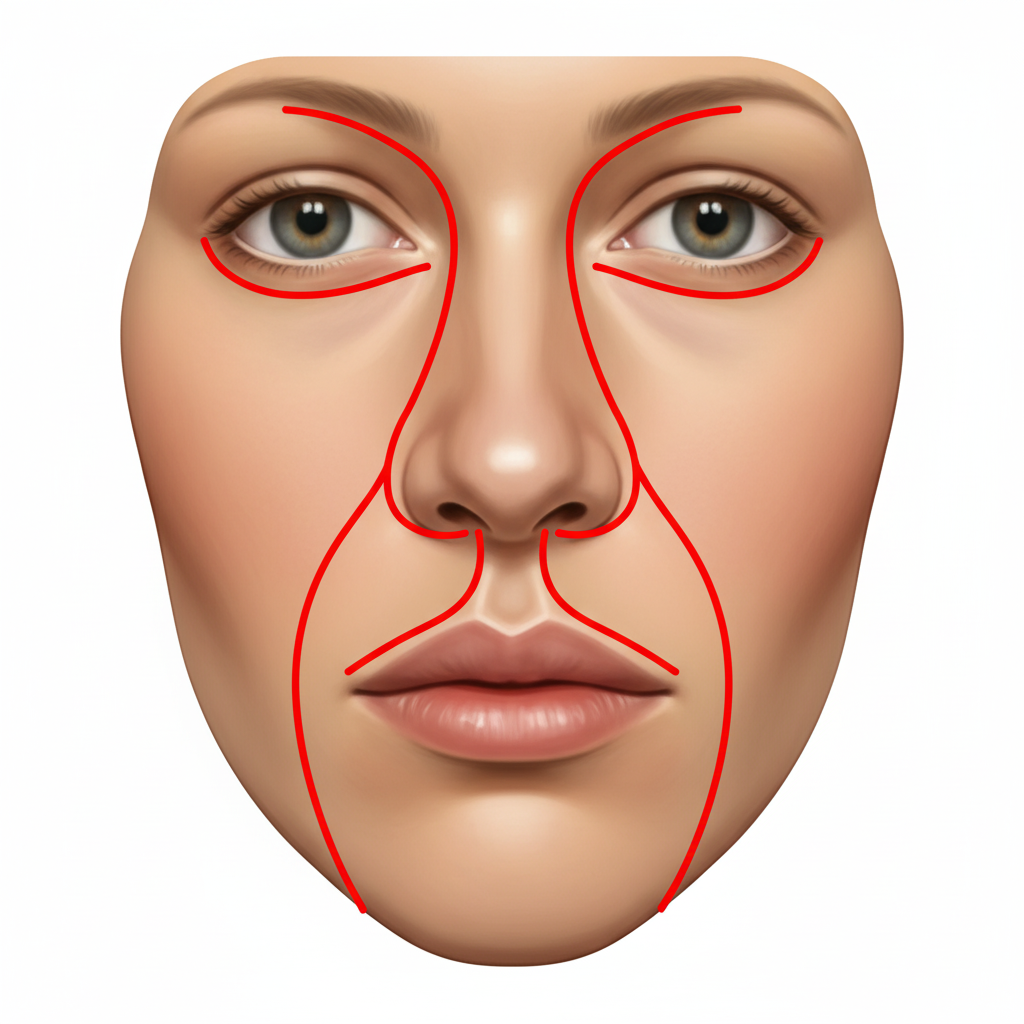
Structures preserved in modified radical neck dissection are all except:
What is the treatment for a child with cherubism?
When should a surgical obturator be inserted?
Frey's syndrome is caused by which of the following nerve interactions?
A patient presents with a tumor at the base of the tongue. What is the treatment of choice?
Commando’s operation is indicated for which condition?
What is the standard treatment for stage T3N1 carcinoma of the maxilla?
Pleomorphic adenoma is most commonly found in which salivary gland?
All of the following are common sites of a berry aneurysm, EXCEPT:
In extended supraomohyoid neck dissection, lymph node dissection is done up to which level?
Explanation: ### Explanation The core concept behind neck dissections lies in the transition from the **Radical Neck Dissection (RND)** to the **Modified Radical Neck Dissection (MRND)**. In a **Radical Neck Dissection (Crile’s procedure)**, all lymph nodes from levels I to V are removed along with three non-lymphatic structures: the Spinal Accessory Nerve (SAN), the Sternocleidomastoid (SCM) muscle, and the Internal Jugular Vein (IJV). **Modified Radical Neck Dissection (MRND)** was developed to reduce morbidity by preserving one or more of these non-lymphatic structures. * **Why Option C is correct:** The **Submandibular gland** is part of the Level Ib nodal compartment. In both RND and MRND, the submandibular gland is **routinely removed** to ensure complete clearance of the Level I lymph nodes. It is not considered a "preserved structure" in the definition of MRND. * **Why Options A, B, and D are incorrect:** These are the three specific structures that define the "Modified" types: * **MRND Type I:** Preserves the Spinal Accessory Nerve. * **MRND Type II:** Preserves the Spinal Accessory Nerve and the Internal Jugular Vein. * **MRND Type III (Functional Neck Dissection):** Preserves all three—SAN, IJV, and SCM. ### High-Yield Clinical Pearls for NEET-PG: 1. **Selective Neck Dissection (SND):** Unlike MRND (which removes levels I-V), SND preserves one or more lymph node levels (e.g., Supraomohyoid dissection removes only levels I-III). 2. **Most commonly preserved structure:** The Spinal Accessory Nerve (to prevent "Shoulder Syndrome" or shoulder drop). 3. **Boundary of Level II and III:** The bifurcation of the carotid artery or the hyoid bone. 4. **Level VI:** Refers to the anterior compartment (pre-tracheal, para-tracheal nodes), often cleared in thyroid malignancies.
Explanation: **Explanation:** **Cherubism** is a rare, autosomal dominant fibro-osseous disorder characterized by symmetrical, non-neoplastic enlargement of the mandible and maxilla. It is caused by a mutation in the **SH3BP2 gene**. **Why Option B is Correct:** The natural history of cherubism is unique: the lesions typically appear in early childhood (2–7 years), progress until puberty, and then undergo **spontaneous regression** or stabilization as the fibrous tissue undergoes remodeling into normal bone. Therefore, the standard management is **observation**. Surgical intervention is deferred until after puberty to allow for natural regression. If significant deformity persists after skeletal maturity, **cosmetic contouring** (recontouring of the bone) is performed. **Why Other Options are Incorrect:** * **A & D (Surgical excision/En bloc dissection):** Aggressive surgery during the active growth phase is contraindicated as it can trigger rapid regrowth or cause severe dental and facial developmental issues. Surgery is only indicated earlier if there is functional impairment (e.g., airway obstruction or severe visual loss). * **C (Radiation):** Radiation therapy is strictly contraindicated due to the high risk of secondary osteosarcoma and interference with facial growth. **NEET-PG High-Yield Pearls:** * **Radiology:** Characterized by **bilateral, symmetrical multilocular radiolucencies** (soap-bubble appearance) at the angles of the mandible. * **Clinical Feature:** "Eyes upturned to heaven" sign (due to maxillary involvement stretching the skin and exposing the lower sclera). * **Histology:** Features giant cells similar to Giant Cell Granuloma. * **Inheritance:** Autosomal Dominant (SH3BP2 gene on chromosome 4p16).
Explanation: ### Explanation In maxillofacial surgery, particularly for maxillectomy procedures, a **surgical obturator** is a prosthetic device used to seal the defect created between the oral and nasal/antral cavities. **Why Option B is Correct:** The surgical obturator is inserted **intraoperatively (on the day of the surgery)** immediately after the resection is completed. The primary objectives are: 1. **Immediate Function:** It allows the patient to speak and swallow (deglutition) immediately post-op without nasal regurgitation. 2. **Wound Protection:** It supports the surgical packing and protects the raw wound/skin graft from oral fluids and bacterial contamination. 3. **Psychological Benefit:** It minimizes the immediate trauma of losing a large portion of the palate or midface. **Analysis of Incorrect Options:** * **Option A (One day prior):** Inserting the device before surgery is impossible as the defect has not yet been created, and the device would interfere with intubation and the surgical site. * **Option C & D (14 or 30 days after):** Waiting weeks to insert an obturator would lead to severe speech impairment, inability to eat orally, and significant wound contraction/scarring, making future prosthetic fitting much more difficult. **High-Yield Clinical Pearls for NEET-PG:** * **Sequence of Obturators:** 1. **Surgical Obturator:** Inserted on Day 0; worn for 7–10 days. 2. **Interim/Delayed Obturator:** Inserted after the removal of surgical packing (approx. 2 weeks post-op) during the healing phase. 3. **Definitive Obturator:** Inserted only after complete wound healing and remodeling (usually **3–6 months** post-surgery). * **Retention:** The surgical obturator is often secured to remaining teeth or fixed to the alveolar bone/nasal spine using wires or screws. * **Material:** Usually made of clear acrylic to allow the surgeon to visualize any pressure points or ischemia on the underlying tissues.
Explanation: **Explanation:** **Frey’s Syndrome** (also known as Gustatory Sweating) is a common complication following parotidectomy or trauma to the parotid region. **1. Why Option A is Correct:** The underlying mechanism is **aberrant regeneration** of nerve fibers. Normally, the **auriculotemporal nerve** carries: * **Parasympathetic fibers** (secretomotor to the parotid gland). * **Sympathetic fibers** (to sweat glands and cutaneous blood vessels). Following surgery or trauma, the parasympathetic fibers meant for the parotid gland are severed. During healing, these fibers misdirect and fuse with the distal ends of sympathetic fibers that supply the overlying skin. Consequently, a stimulus that normally triggers salivation (like seeing or smelling food) instead causes localized sweating and flushing in the pre-auricular area. **2. Why Other Options are Incorrect:** * **Option B & C:** While the **Greater Auricular Nerve** (C2, C3) provides sensory innervation to the skin over the parotid and is often sacrificed during surgery (leading to earlobe numbness), it is not the source of the secretomotor fibers responsible for the gustatory sweating seen in Frey’s syndrome. The pathology specifically involves the auriculotemporal nerve's parasympathetic-to-sympathetic crossover. **Clinical Pearls for NEET-PG:** * **Diagnosis:** Confirmed by the **Minor’s Starch-Iodine Test** (affected skin turns blue-black upon sweating). * **Prophylaxis:** Placement of a barrier (e.g., SMAS flap, acellular dermal matrix) during parotidectomy. * **Treatment:** Topical anticholinergics or **Botulinum toxin (Botox) injections** (most effective). * **Incidence:** Subclinical in many; clinically significant in about 10-15% of post-parotidectomy patients.
Explanation: **Explanation:** The treatment of choice for tumors at the **base of the tongue** (posterior one-third) is **Wide Local Excision plus Cervical Lymph Node Dissection**. **1. Why Option C is Correct:** The base of the tongue is embryologically derived from the third pharyngeal arch and is characterized by a rich, decussating lymphatic network. Unlike the anterior tongue, tumors here are often diagnosed at a later stage and have a **high propensity for early, bilateral, and occult lymphatic spread**. Therefore, even in a clinically N0 neck, elective or therapeutic neck dissection is mandatory to address potential micrometastasis and improve survival rates. **2. Why Other Options are Incorrect:** * **Option A:** Wide local excision alone is inadequate because it fails to address the high risk of regional lymph node involvement. * **Option B:** While radiotherapy (or chemoradiotherapy) is a common primary or adjuvant modality for oropharyngeal cancers, the surgical "gold standard" for resectable tumors includes the management of the neck nodes. * **Option D:** Hemiglossectomy is typically reserved for tumors of the **anterior two-thirds** (oral tongue) that are lateralized. Base of tongue tumors often require more complex approaches (like a midline glossotomy or mandibulotomy) and must include nodal clearance. **Clinical Pearls for NEET-PG:** * **Anatomy:** The anterior 2/3 and posterior 1/3 are separated by the **circumvallate papillae** (sulcus terminalis). * **Lymphatics:** The base of the tongue drains primarily to **Level II (jugulodigastric)** and Level III nodes. * **Prognosis:** Base of tongue tumors generally have a poorer prognosis than anterior tongue tumors due to silent growth and early nodal metastasis. * **HPV Association:** Oropharyngeal cancers (including the base of tongue) are increasingly associated with **HPV-16**, which generally carries a better prognosis than tobacco-related cases.
Explanation: **Explanation:** **Commando’s Operation** (Combined Mandibulectomy and Neck Dissection Operation) is a major surgical procedure primarily indicated for **advanced oral cavity cancers**, particularly those involving the tongue, floor of the mouth, or lower alveolus where the tumor has invaded or is in close proximity to the mandible. 1. **Why it is correct:** The term "Commando" was coined during WWII (referring to the toughness of the surgery and the soldiers). It involves a **tri-partite approach**: * Resection of the primary intra-oral lesion. * Partial or total **mandibulectomy** (removal of the jawbone). * **Radical Neck Dissection (RND)** to remove cervical lymph node metastases. This aggressive approach ensures oncological clearance for tumors that bridge the oral mucosa and the bone. 2. **Why incorrect options are wrong:** * **Radical Mastectomy:** This is the Halsted procedure, involving removal of the breast, pectoralis muscles, and axillary lymph nodes. * **Mandible Fracture:** These are managed via Open Reduction and Internal Fixation (ORIF) or closed reduction, not radical resection. * **Leg Amputation:** These are orthopedic/vascular procedures (e.g., Below-Knee or Above-Knee amputation) unrelated to head and neck oncology. **Clinical Pearls for NEET-PG:** * **Composite Resection:** Another name for Commando’s operation when the primary tumor, bone, and lymph nodes are removed in continuity. * **Reconstruction:** Nowadays, "Commando" is often followed by microvascular free flap reconstruction (e.g., **Fibula free flap**) to restore form and function. * **Indication:** Specifically indicated when the tumor is fixed to the mandible or shows radiological evidence of cortical bone invasion.
Explanation: **Explanation:** The management of maxillary sinus carcinoma is determined by the clinical stage. **Stage T3N1** represents advanced local disease (T3: invasion of the posterior wall, floor/medial wall of the orbit, or ethmoid sinus) with regional lymph node involvement (N1). 1. **Why Option B is correct:** For advanced-stage (Stage III and IV) squamous cell carcinoma of the maxilla, the standard of care is **multimodal therapy**. Surgery (typically a total or extended maxillectomy) followed by **adjuvant radiotherapy** is the gold standard. Post-operative radiation is mandatory in T3/T4 tumors or when nodal disease (N1) is present to improve local control and address potential microscopic residual disease. 2. **Why other options are incorrect:** * **Option A (Surgery only):** This is reserved for very early, localized T1 or T2 tumors with no nodal involvement. In T3N1, the risk of recurrence is unacceptably high with surgery alone. * **Option B (Radiation only):** Radiation alone has poor cure rates for bone-invasive maxillary tumors and is generally reserved for palliative cases or patients unfit for surgery. * **Option D (Chemoradiation):** While definitive chemoradiation is common in oropharyngeal or laryngeal cancers, in maxillary sinus tumors, surgical resection remains the primary treatment modality whenever the tumor is resectable. **Clinical Pearls for NEET-PG:** * **Ohngren’s Line:** An imaginary line connecting the medial canthus to the angle of the mandible. Tumors **posterosuperior** to this line have a worse prognosis. * **Most common histology:** Squamous cell carcinoma (80%). * **Lymphatic drainage:** Primarily to the submandibular and deep cervical nodes. * **Infrastructure vs. Suprastructure:** Tumors of the infrastructure (below the level of the maxillary sinus floor) have a better prognosis than those of the suprastructure.
Explanation: **Explanation:** **Pleomorphic Adenoma (Benign Mixed Tumor)** is the most common salivary gland tumor, accounting for approximately 60–70% of all salivary gland neoplasms. 1. **Why Parotid Gland is Correct:** The **Parotid gland** is the most frequent site for both salivary gland tumors in general and Pleomorphic Adenoma specifically. About 80% of all salivary gland tumors occur in the parotid, and 80% of those are Pleomorphic Adenomas. It typically presents as a slow-growing, painless, firm swelling at the angle of the jaw, most commonly involving the superficial lobe. 2. **Why Other Options are Incorrect:** * **Submandibular Gland:** Only about 10% of salivary tumors occur here. While Pleomorphic Adenoma is still the most common benign tumor of this gland, its overall incidence is much lower than in the parotid. * **Sublingual Gland:** Tumors here are rare (approx. 1%). Notably, a tumor in the sublingual gland has an 80% chance of being **malignant** (e.g., Adenoid Cystic Carcinoma). * **Lacrimal Gland:** While Pleomorphic Adenoma can occur in the lacrimal gland (the most common epithelial tumor there), it is far less frequent than in the major salivary glands. **Clinical Pearls for NEET-PG:** * **Rule of 80s:** 80% of salivary tumors are in the Parotid; 80% of Parotid tumors are Pleomorphic Adenoma; 80% occur in the superficial lobe. * **Histology:** Characterized by a "mixed" appearance—epithelial elements (ducts/acini) and mesenchymal-like stroma (myxoid, chondroid, or osteoid). * **Treatment:** Superficial parotidectomy with preservation of the **Facial Nerve**. Simple enucleation is avoided due to the risk of recurrence from "pseudopods" (microscopic projections through the capsule). * **Malignant Transformation:** Long-standing cases can transform into **Carcinoma ex pleomorphic adenoma**.
Explanation: ### Explanation **Berry aneurysms** (saccular aneurysms) are thin-walled protrusions at arterial bifurcations in the **Circle of Willis**. They lack a tunica media and internal elastic lamina, making them prone to rupture and subarachnoid hemorrhage (SAH). **Why Option B (Vertebral Artery) is the Correct Answer:** While berry aneurysms occur within the cerebral circulation, they are overwhelmingly found in the **Anterior Circulation (90-95%)**. The **Vertebral Artery** itself is a rare site for a true berry aneurysm. Most aneurysms in the posterior system occur at the basilar artery apex or the junction of the basilar and superior cerebellar arteries, rather than on the vertebral artery trunk. **Analysis of Incorrect Options:** * **Anterior Cerebral Artery (ACA):** The junction of the **Anterior Communicating Artery (ACoA)** and the ACA is the **most common site** (approx. 30-35%) for berry aneurysms. * **Middle Cerebral Artery (MCA):** The bifurcation of the MCA is the second or third most common site (approx. 20%), frequently associated with sylvian fissure hematomas upon rupture. * **Posterior Cerebral Artery (PCA):** While less common than anterior sites, the junction of the **Posterior Communicating Artery (PCoA)** and the Internal Carotid Artery is a very frequent site (approx. 30-35%). The PCA itself is a recognized component of the Circle of Willis where these aneurysms occur. **High-Yield Clinical Pearls for NEET-PG:** * **Most Common Site:** Anterior Communicating Artery (ACoA). * **Risk Factors:** Hypertension, Smoking, Adult Polycystic Kidney Disease (ADPKD), and Ehlers-Danlos Syndrome. * **Clinical Presentation:** "Worst headache of life" (Thunderclap headache). * **Nerve Palsy:** Aneurysms at the **PCoA-ICA junction** can cause **ipsilateral 3rd Nerve Palsy** (mydriasis and ptosis) due to compression. * **Investigation of Choice:** Digital Subtraction Angiography (DSA) is the gold standard; NCCT head is the initial screening tool for rupture.
Explanation: ### Explanation **Concept and Definition:** Neck dissection is categorized based on the levels of lymph nodes removed. A **Supraomohyoid Neck Dissection (SOHND)** is a type of selective neck dissection (SND) typically performed for oral cavity cancers. In a standard SOHND, lymph nodes from **Levels I, II, and III** are removed. The term **"Extended"** in neck dissection refers to the inclusion of additional lymph node groups or non-lymphatic structures not normally included in the standard procedure. An **Extended Supraomohyoid Neck Dissection** involves the removal of Level I-III plus **Level IV**. This is often performed when there is a clinical suspicion of "skip metastases" or when the primary tumor involves the tongue, which has a higher propensity for drainage to the mid and lower jugular nodes. **Analysis of Options:** * **Level II & III (Options A & B):** These levels are part of the *standard* supraomohyoid neck dissection. Removing only up to these levels would not constitute an "extended" dissection in this context. * **Level IV (Option C - Correct):** Inclusion of the deep cervical nodes located between the omohyoid muscle and the clavicle (Level IV) defines the "extended" version of the SOHND. * **Level V (Option D):** Removal of Level V (posterior triangle) along with Levels I-IV is termed a **Posterolateral Neck Dissection** or is part of a **Modified Radical Neck Dissection (MRND)**, rather than an extended SOHND. **High-Yield Clinical Pearls for NEET-PG:** * **Standard SOHND:** Levels I, II, and III. * **Lateral Neck Dissection:** Levels II, III, and IV (commonly for laryngeal/hypopharyngeal SCC). * **Posterolateral Neck Dissection:** Levels II, III, IV, and V (commonly for scalp/skin malignancies). * **Radical Neck Dissection (RND):** Levels I-V + removal of Sternocleidomastoid (SCM), Internal Jugular Vein (IJV), and Spinal Accessory Nerve (SAN). * **Modified Radical Neck Dissection (MRND):** Levels I-V but preserves one or more non-lymphatic structures (SAN, IJV, or SCM). Type I preserves SAN; Type II preserves SAN and IJV; Type III preserves all three.
Salivary Gland Diseases
Practice Questions
Thyroid Gland Disorders
Practice Questions
Parathyroid Gland Disorders
Practice Questions
Neck Masses Evaluation
Practice Questions
Oral Cavity Lesions
Practice Questions
Laryngeal Disorders
Practice Questions
Head and Neck Cancer
Practice Questions
Reconstructive Techniques in Head and Neck Surgery
Practice Questions
Surgical Management of Sleep Apnea
Practice Questions
Airway Management in Head and Neck Surgery
Practice Questions
Surgical Approaches to the Neck
Practice Questions
Neck Dissection Techniques
Practice Questions
Get full access to all questions, explanations, and performance tracking.
Start For Free