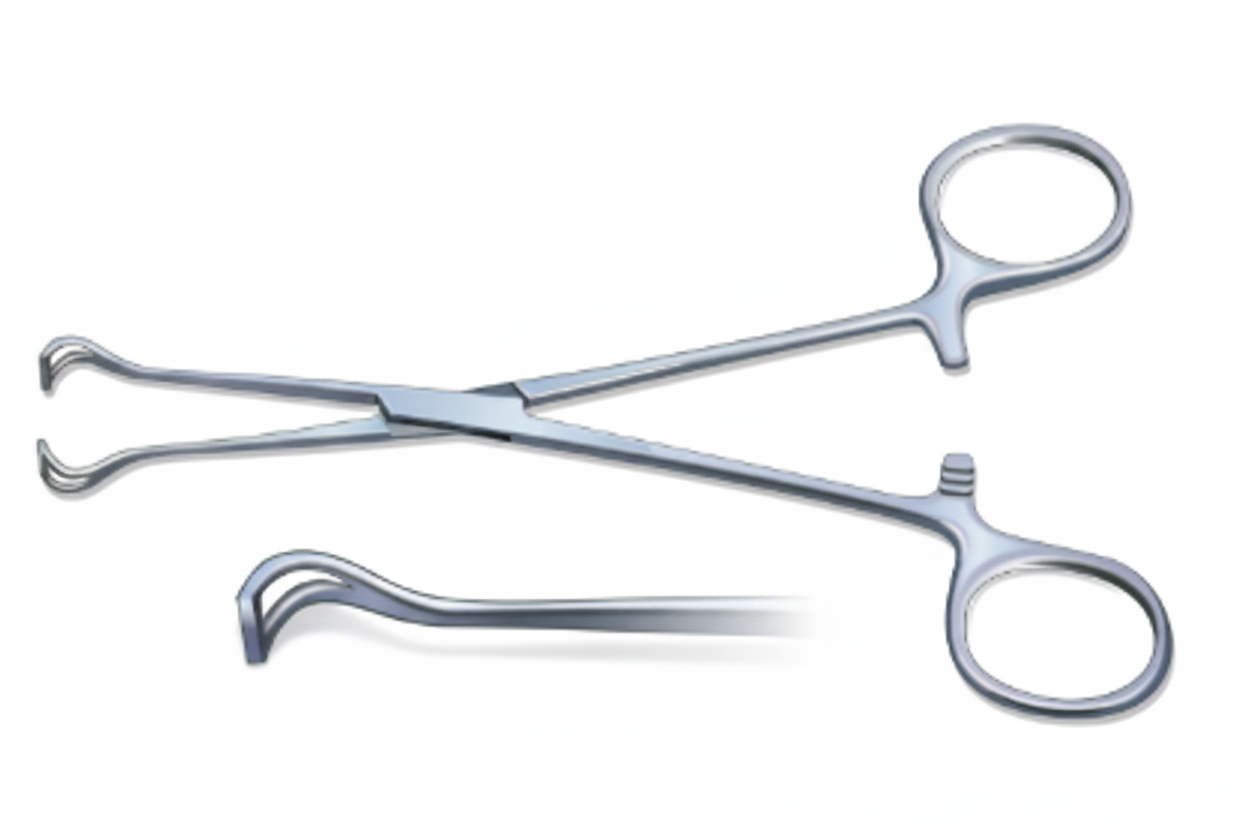
Identify the instrument:

Identify the instrument shown:
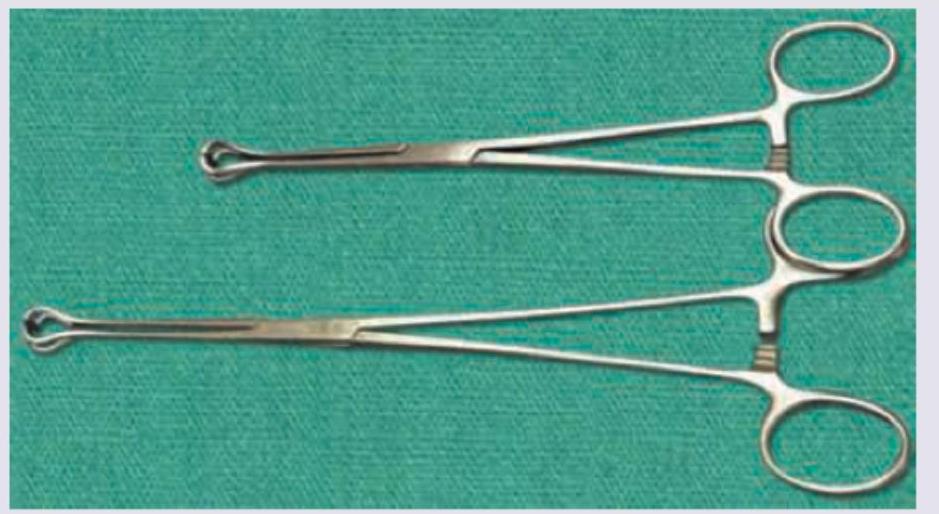
Identify the instrument shown below:
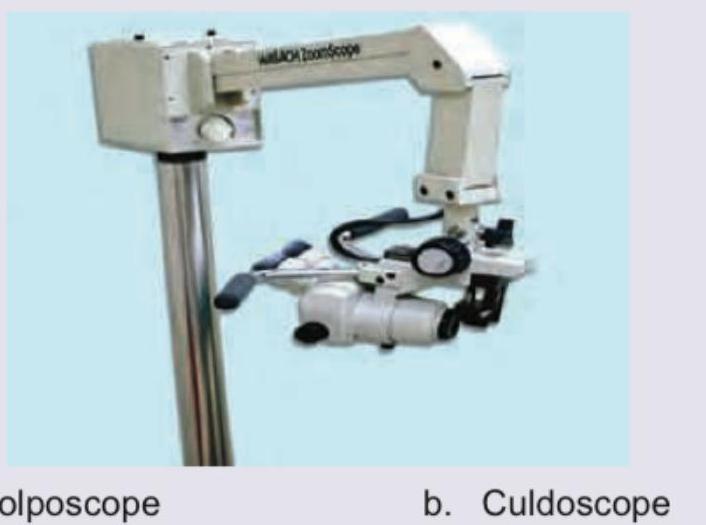
Identify the instrument in the image.
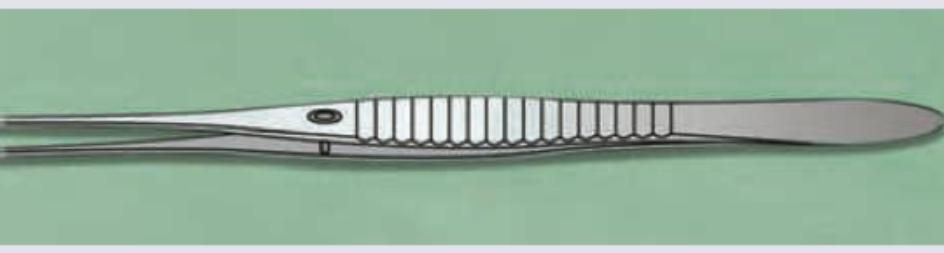
Identify the instrument in the image:
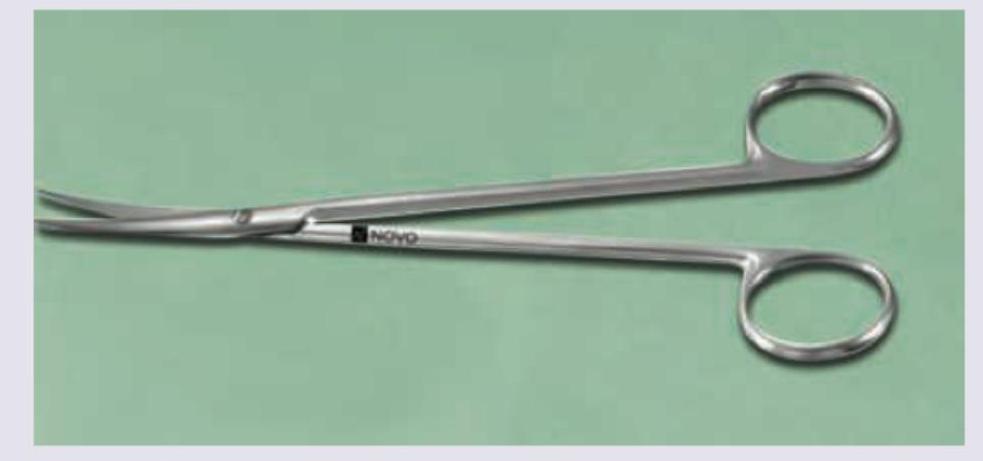
Identify the image given below:
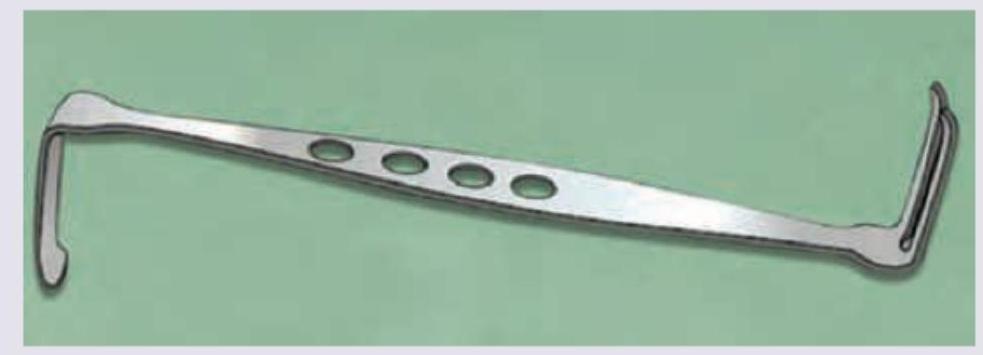
Identify the instrument in the image:
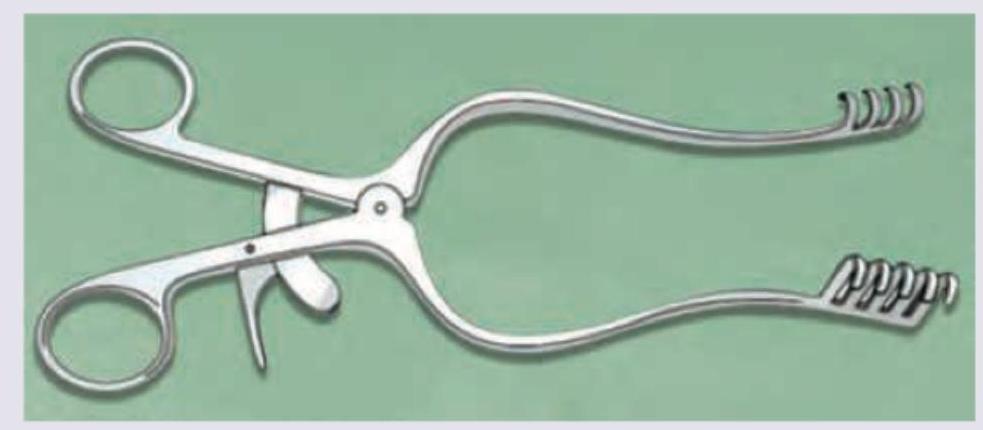
Identify the instrument in the image:
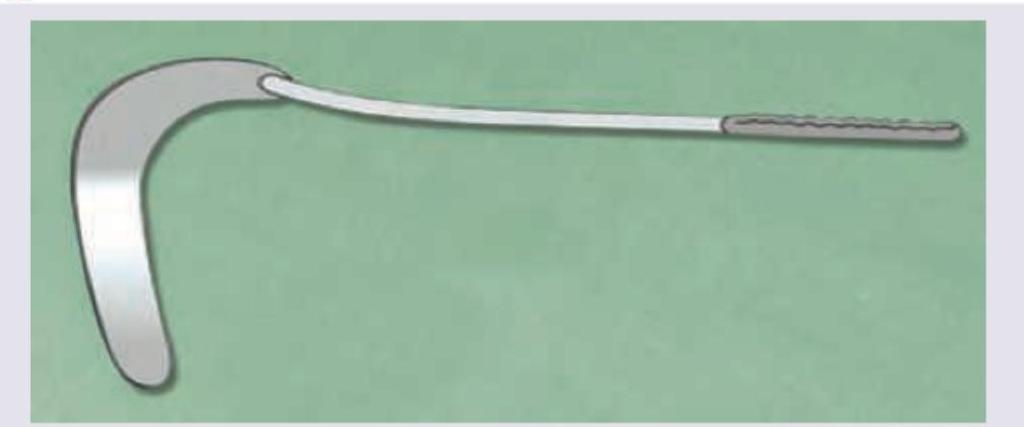
Identify the instrument in the image:
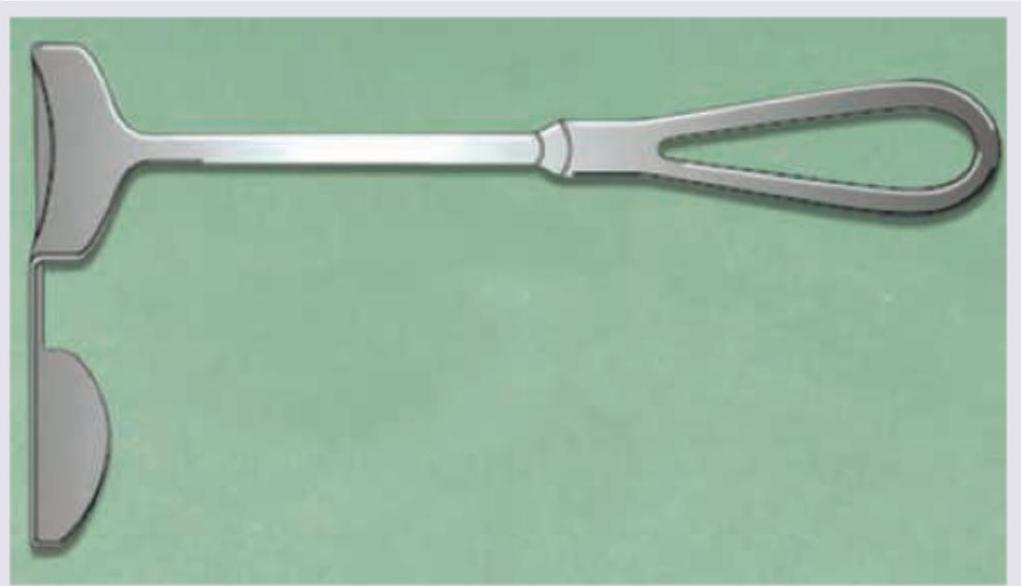
Identify the instrument in the image:
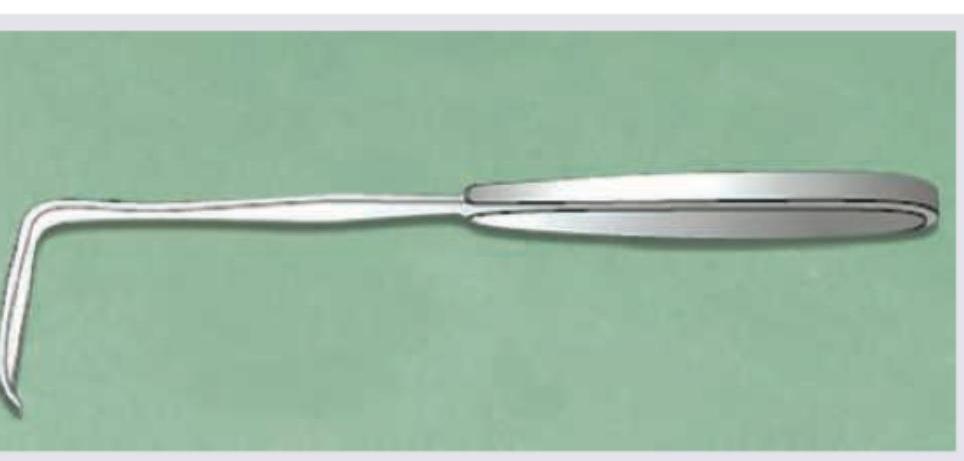
Explanation: ***Babcock forceps*** - Babcock forceps are characterized by their **atraumatic, rounded, triangular jaws** - They are used for **grasping delicate tissue** such as bowel or fallopian tubes without causing significant damage. *Green-Armytage forceps* - Green-Armytage forceps, also known as hysterotomy forceps, have **long, fenestrated jaws** with horizontal serrations. - They are primarily used in **cesarean sections** to grasp the uterine wall. *Allis forceps* - Allis forceps have **sharp, interlocking teeth** at the tip of their jaws. - They are used to hold **dense tissue** securely, but can cause crushing damage to delicate structures. *Kocher forceps* - Kocher forceps have **jaws with teeth** at the very tip and serrations along the broader clamping surface. - They are designed for grasping **tough, fibrous tissue** or for clamping blood vessels, and are not appropriate for delicate structures.
Explanation: ***Babcock forceps*** - This image clearly shows Babcock forceps, distinguished by their **atraumatic, fenestrated, and rounded tips**. - These tips allow for **gentle grasping** of delicate tissues (like bowel or fallopian tubes) without causing damage, which is their key functional feature. *Allis forceps* - Allis forceps have **sharp, serrated teeth** at their tips, designed for firmly grasping and holding fibrous or slippery tissues. - Unlike Babcock forceps, they are considered **traumatic** and can crush tissue, making them unsuitable for delicate structures. *Kocher forceps* - Kocher clamps have **sharp, interlocking teeth** at their jaws which provide a secure and often traumatic grip. - They are typically used for grasping tough tissues or for **hemostasis** where tissue damage is acceptable or intended sacrifice. *Adson forceps* - Adson forceps (or Adson tissue forceps) are small, delicate forceps with **fine-toothed tips** or smooth tips. - They are primarily used for handling **delicate tissues** in superficial dissections or for holding skin edges, not for clamping like the instrument shown.
Explanation: ***Colposcope*** - The image clearly displays a **colposcope**, identified by its distinctive features such as the mounted microscope head, adjustable arm, and stand. - A colposcope is used for magnified visual inspection of the **cervix**, vagina, and vulva, primarily for detecting abnormal cells. *Babcock forceps* - **Babcock forceps** are grasping and holding instruments with fenestrated, triangular jaws and a blunt, rounded tip, used for holding delicate tissue without crushing it. - They are commonly used in abdominal surgeries for holding tubes (e.g., fallopian tube, ureter) or bowel. *Mosquito forceps* - **Mosquito forceps** are small, delicate hemostatic clamps with fine, serrated jaws, designed to grasp and occlude small blood vessels. - They are significantly smaller and have a different appearance compared to the large, mounted device shown. *Kocher forceps* - **Kocher forceps** are traumatic grasping forceps characterized by sharp teeth at the tip of their jaws, making them suitable for holding tough tissue or in situations where tissue crushing is not a concern. - This instrument is designed for clamping and has a completely different structure and function than the device depicted.
Explanation: ***Adson forceps*** - The image clearly displays **Adson forceps**, which are identifiable by their **short, broad jaws** and often fine teeth or serrations at the tips. - These forceps are commonly used for grasping delicate tissues in various surgical procedures, particularly in **plastic surgery** and **neurosurgery**. *Gillies forceps* - **Gillies forceps** (also known as dissecting forceps) typically have **long, slender jaws** with fine teeth and are used for grasping fine tissues, distinct from the broader tip seen in the image. - They are often used in general surgery for delicate dissections and handling dressings. *Spencer Wells forceps* - **Spencer Wells forceps** are primarily **hemostatic forceps** characterized by their scissor-like handles with a ratcheted locking mechanism and serrated jaws to clamp blood vessels. - The instrument in the image lacks a locking mechanism and has a different jaw structure, indicating it is not a Spencer Wells forceps. *Desjardin choledocholithotomy forceps* - **Desjardin choledocholithotomy forceps** are specialized instruments with **long, curved shafts** and fenestrated jaws designed to extract gallstones from the bile ducts. - The forceps in the image do not exhibit these distinct features, making this option incorrect.
Explanation: ***McIndoe scissors*** - These are **fine, delicate scissors** with a distinct **curve** to the blades, often used in plastic and reconstructive surgery for precise soft tissue dissection. - The appearance in the image, with its slender build and curved tips, is characteristic of McIndoe scissors. *Deaver retractor* - A Deaver retractor is a **large, flat, C-shaped retractor** used to hold back deep tissues, often in abdominal surgery, and looks nothing like the instrument pictured. - It is used for **retraction**, not cutting or dissection. *Spencer Wells forceps* - Spencer Wells forceps are **hemostatic forceps** with serrated jaws, used to clamp blood vessels. - They have a **ratchet mechanism** to lock them in place and are designed for grasping, not cutting. *Mayo scissors* - Mayo scissors are typically **heavier scissors** with either a straight or curved blade used for cutting **thick tissues** or sutures. - While they can be curved, their blades are generally broader and less delicate than those of the instrument shown.
Explanation: ***Langenbeck retractor*** - This image displays a **Langenbeck retractor**, characterized by its **L-shaped blades** and usually having one shorter and one longer blade. These are commonly used for retracting superficial tissues. - The perforations in the handle help to reduce its weight, making it easier for the surgeon or assistant to hold during prolonged procedures. *Czerny retractor* - A Czerny retractor features a **double-ended design** with one end having a blunt, curved blade and the other a sharper, angled blade for deeper retraction. - It does not typically have the distinctive L-shaped blades seen in the image, nor the perforated handle. *Deaver retractor* - The Deaver retractor is easily identifiable by its **flat, curved, and broad blade**, often resembling a question mark. - It is utilized for retracting deep abdominal and thoracic organs, which is a different purpose and design compared to the depicted instrument. *Goligher retractor* - A Goligher retractor is a **self-retaining retractor** with multiple blades, often found in sets, used to hold open a surgical incision. - It has a distinct mechanism that allows it to stay in place without continuous manual holding, unlike the hand-held retractor shown.
Explanation: ***Goligher retractor*** - The image displays a self-retaining retractor with curved arms, each ending in **four blunt, curved prongs**, which is characteristic of a **Goligher retractor**. - This instrument is designed for providing **atraumatic retraction** of tissues during surgical procedures, particularly in colorectal surgery. *Langenbeck retractor* - A Langenbeck retractor is a **hand-held, L-shaped retractor** with a flat, smooth blade, which is different from the self-retaining, pronged instrument shown. - It is used for retracting superficial tissues and is not self-retaining. *Joll retractor* - The Joll retractor is a **self-retaining retractor** typically used in thyroid surgery, featuring angled blades designed to retract strap muscles. - Its blade configuration is distinct from the pronged design seen in the image. *Travers retractor* - A Travers retractor is also a **self-retaining retractor**, but it commonly features **fenestrated blades** or specific shapes for gynecological or general surgical procedures. - The prongs visible in the image are not characteristic of a Travers retractor.
Explanation: ***Deaver retractor*** - The image displays a **Deaver retractor**, characterized by its **flat, curved, and hook-like blade** at one end, and a serrated handle at the other. - This instrument is commonly used in **abdominal and thoracic surgeries** for deep tissue retraction, allowing exposure of internal organs and structures. *Langenbeck retractor* - A **Langenbeck retractor** has a much smaller, **L-shaped blade** and is typically used for retracting **superficial tissues** in smaller incision sites. - It is often used in pairs and does not have the prominent curve seen in the image. *Morris retractor* - A **Morris retractor** features a wide, slightly curved blade, often with a **fenestrated handle** for better grip. - While also used for retracting deep tissues, its blade is typically **broader and less sharply curved** than the Deaver retractor. *Dyball retractor* - The **Dyball retractor** is an automatically adjustable retractor system, typically used in **shoulder surgery**. - It has a very different configuration, usually involving a **ratchet mechanism** and multiple interchangeable blades, which is not depicted in the image.
Explanation: ***Langenbeck retractor*** - The image displays a **Langenbeck retractor**, identified by its **oval looped handle** and a blade with an **L-shaped or boot-shaped tip**. - It is a **hand-held retractor** commonly used to retract skin, subcutaneous tissue, or muscle in various surgical procedures, especially in **small or shallow incisions**. *Morris retractor* - The **Morris retractor** typically has a **curved, wide, and sometimes double-ended blade** to retract large tissue masses, such as in abdominal surgery. - It does not feature the distinct L-shaped tip and looped handle seen in the image. *Deaver retractor* - A **Deaver retractor** is characterized by its **flat, curved, S-shaped blade**, often used for deep retraction in abdominal or thoracic surgery. - Its unique shape is markedly different from the instrument shown. *Doyen retractor* - The **Doyen retractor** is a **large, curved retractor** with a **right-angled blade**, typically used for retracting the abdominal wall or large organs in deep abdominal surgery. - Its design is much larger and more robust than the hand-held Langenbeck retractor shown in the image.
Explanation: ***Langenbeck retractor*** - This image displays a **Langenbeck retractor**, recognized by its **L-shaped working end** and flat handle. - It is a **hand-held retractor** commonly used in surgical procedures for small, superficial incisions or when delicate retraction is needed. *Morris retractor* - A Morris retractor typically has a **curved blade** and is often used for retracting large muscle masses, especially in orthopedic or deep abdominal surgeries. - It is generally **larger and more substantial** than the instrument shown. *Deaver retractor* - The Deaver retractor is characterized by its **flat, curved, and spoon-shaped blade**, often used for retracting deep tissues, particularly in the abdomen. - Its shape is distinctly different from the L-shaped blade shown in the image. *Dyball retractor* - The Dyball retractor is a **self-retaining retractor** with multiple prongs or blades, used for maintaining exposure without continuous manual holding. - The instrument in the image is a **manual retractor** and lacks the self-retaining mechanism or multiple prongs of a Dyball retractor.
Wound Healing and Care
Practice Questions
Surgical Infections
Practice Questions
Fluid and Electrolyte Management
Practice Questions
Nutrition in Surgical Patients
Practice Questions
Hemostasis and Blood Transfusion
Practice Questions
Surgical Instruments and Equipment
Practice Questions
Sutures and Stapling Devices
Practice Questions
Minimal Access Surgery Principles
Practice Questions
Surgical Complications
Practice Questions
Anesthesia Principles for Surgeons
Practice Questions
Surgical Oncology Principles
Practice Questions
Evidence-Based Surgery
Practice Questions
Get full access to all questions, explanations, and performance tracking.
Start For Free