A 34-year-old male undergoes an open appendectomy for acute appendicitis. The choice of incision was McBurney's incision. Postoperatively, after a few days, he presents with pain and bulging in the right lower quadrant, which is diagnosed as an indirect inguinal hernia. Which nerve injury during the appendectomy is most likely responsible for this complication?
The given image shows an ulcer. Identify the marked structure.
A 25-year-old patient presents to the surgical OPD with a painless left inguinal reducible mass. On examination cough impulse is positive. After further investigations, the patient is diagnosed with an inguinal hernia. What is the surgical management of this patient?
Identify the given instrument.
Elective splenectomy is preferred in which of the following conditions?
Which of the following statements regarding Vacuum-Assisted Closure (VAC) therapy is correct? 1. It promotes granulation tissue formation 2. It reduces interstitial and periwound edema 3. It drains excessive exudate 4. It increases local blood flow
Identify the knot?
What is correct regarding this suture?
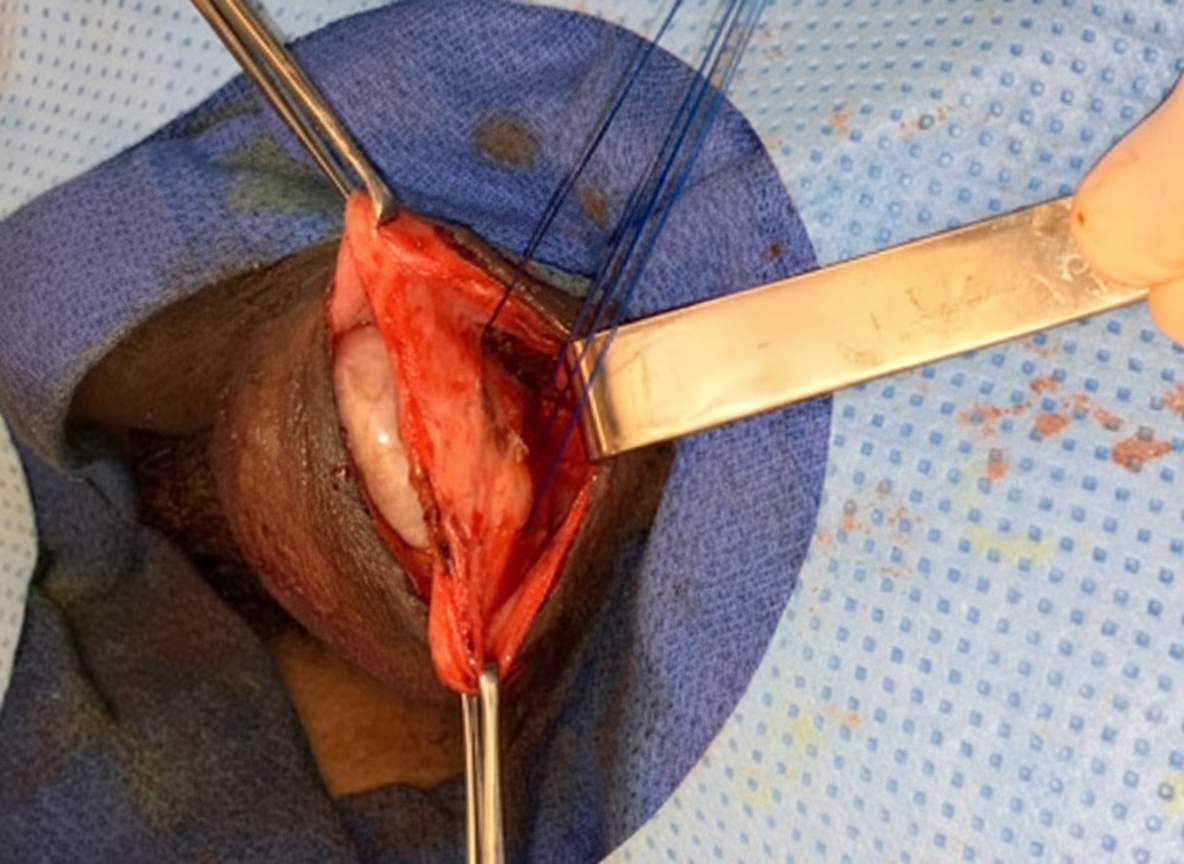
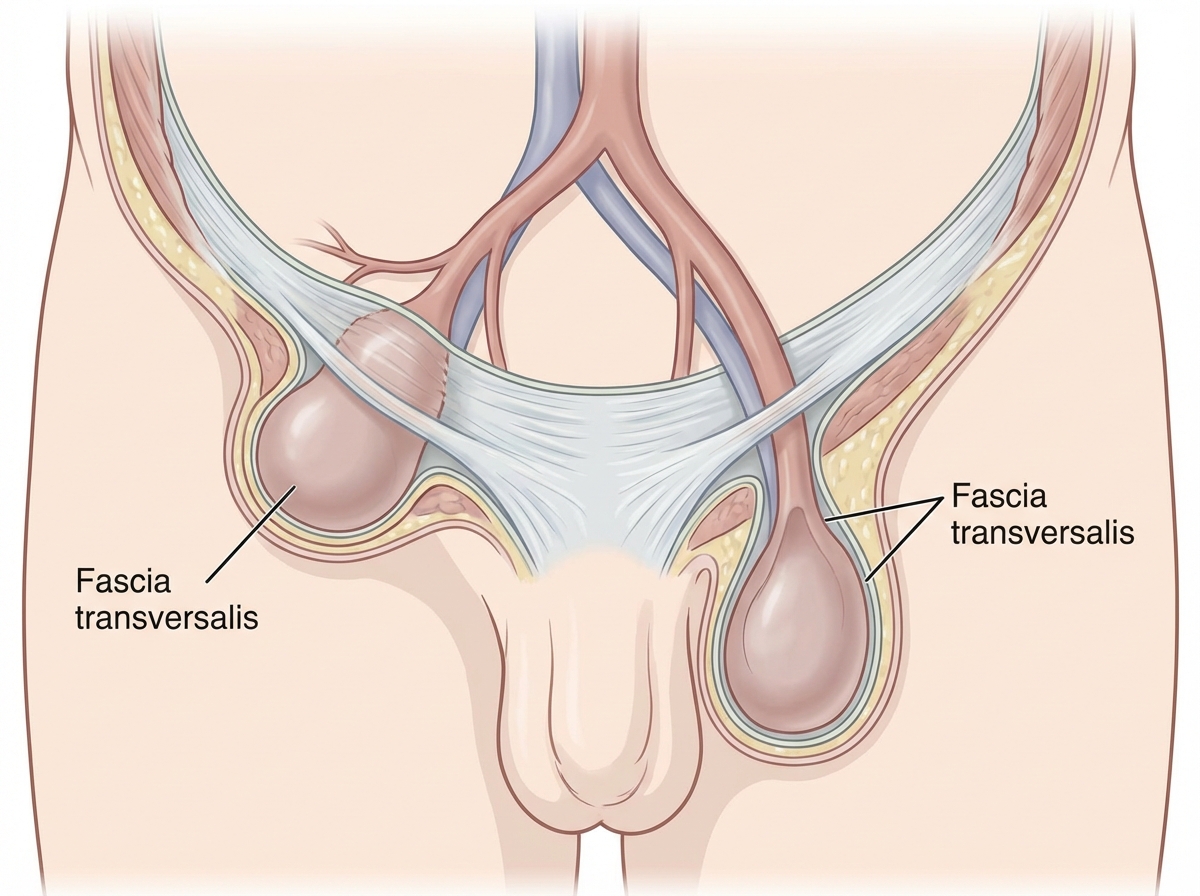
A patient underwent surgery for a reducible groin swelling. The image shows the layers of the hernia sac identified intraoperatively. Using the reference table below that enumerates the covering layers of inguinal hernias, identify the type of hernia shown: | Indirect inguinal hernia | Direct inguinal hernia | | :--: | :--: | | - Extraperitoneal tissue <br> - Internal spermatic <br> fascia <br> - Cremasteric fascia <br> - External spermatic <br> fascia <br> - Skin | - Extraperitoneal tissue <br> - Fascia transversalis <br> - Conjoint tendon (in medial <br> direct hernia) <br> - Cremaster fascia (in <br> lateral direct hernia) <br> - External spermatic fascia <br> - Skin |
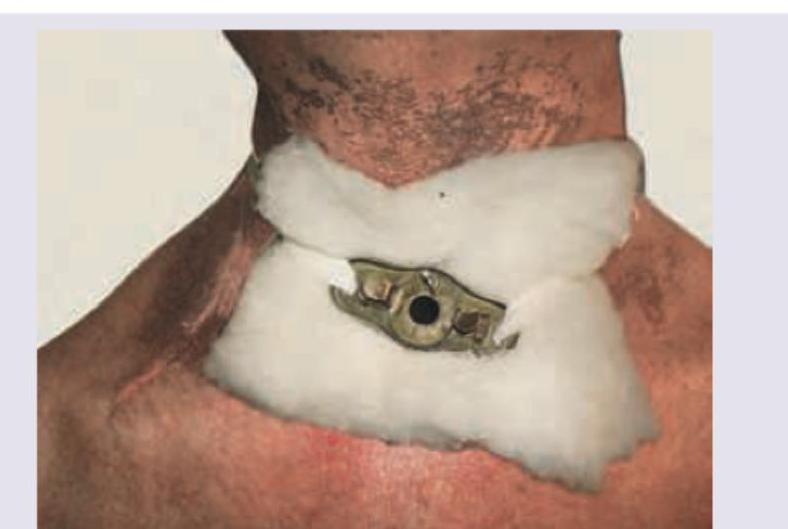
All are correct about the procedure performed in the patient except:
Explanation: ***Ilioinguinal nerve*** - The **ilioinguinal nerve** (L1) runs between the internal oblique and transversus abdominis muscles in the inguinal region and passes through the superficial inguinal ring - During **McBurney's incision** (muscle-splitting incision at McBurney's point), the ilioinguinal nerve is at risk of injury as it traverses the layers of the anterior abdominal wall - **Mechanism of hernia formation:** Injury to the ilioinguinal nerve causes denervation and atrophy of the internal oblique and transversus abdominis muscles, which weakens the posterior wall of the inguinal canal - This muscular weakness predisposes to **indirect inguinal hernia** formation through the internal inguinal ring - **Classic presentation:** Pain and bulging in the inguinal region post-appendectomy *Pudendal nerve* - Arises from S2-S4 and runs through the **pelvis and perineum** (pudendal canal) - Not at risk during appendectomy as it is far from the surgical field - Injury would cause perineal sensory loss and sphincter dysfunction, not hernia *Genitofemoral nerve* - Runs on the psoas muscle and divides into genital and femoral branches - While the genital branch passes through the inguinal canal, injury typically causes **sensory loss** in the groin and scrotum/labia - Does **not** cause motor weakness or hernia formation *Femoral nerve* - Runs beneath the **inguinal ligament** in the femoral triangle - Not at risk during McBurney's incision - Injury would cause quadriceps weakness and loss of knee extension, not hernia
Explanation: ***Edge*** - The marked structure represents the side of the ulcer, connecting the **margin** to the **floor**, which is correctly termed the **edge**. - The characteristics of the edge (e.g., sloping, punched-out, undermined) are crucial for determining the ulcer's etiology, such as in **tuberculous ulcers** (undermined) or **malignant ulcers** (everted). *Margin* - The **margin** is the area of skin immediately surrounding the ulcer, essentially the "rim" on the surface. - The arrow is pointing into the crater of the ulcer, not the tissue around its periphery. *Floor* - The **floor** is the bottom, visible surface of the ulcer crater itself. - The marked structure is the wall leading down to the floor, not the floor itself. *Base* - The **base** is the tissue deep to the ulcer, upon which it rests, and is typically assessed by palpation for induration. - It is not a visible structure on inspection, unlike the edge which is clearly marked in the diagram.
Explanation: ***Hernioplasty***- **Hernioplasty**, which utilizes a prosthetic mesh (e.g., **Lichtenstein technique**), is the universally accepted standard for repairing adult inguinal hernias to achieve a tension-free repair.- This method provides a **tension-free repair** of the posterior inguinal wall, leading to significantly lower recurrence rates compared to traditional suture repairs.*Herniotomy*- **Herniotomy** involves only the excision of the hernia sac and is typically reserved for **indirect inguinal hernias in children**, where the muscle wall is robust.- In an adult, failing to repair the inherent weakness of the **inguinal canal floor** after sac removal results in an unacceptably high risk of hernia recurrence.*Wait and watch*- This approach is mainly reserved for **elderly or comorbid patients** with minimally symptomatic or asymptomatic reducible hernias who are considered high risk for surgery.- For a fit 25-year-old, surgery is recommended to prevent future potentially life-threatening complications like **strangulation** or chronic pain.*Emergency laparotomy*- A full **laparotomy** is an extensive abdominal incision utilized for exploring the acute abdomen or managing complicated intra-abdominal sepsis.- This procedure is unnecessary as the hernia is described as **reducible** and **painless**, indicating an elective repair is warranted, not an emergency exploration.
Explanation: ***Linear stapler*** - The instrument shown has a long shaft with two jaws that apply staples in a straight line, which is characteristic of a **linear stapler**. - It is primarily used in **abdominal** and **thoracic surgery** for transecting tissue or closing internal organs like the stomach, intestines, or lung parenchyma. *Skin stapler* - A **skin stapler** is a much smaller, handheld device used exclusively for closing skin incisions externally and has a distinctly different appearance. - It applies single, wide staples and is not used for internal tissue anastomosis or transection. *Circular stapler* - A **circular stapler** has a round head at the distal end designed to create a circular, end-to-end anastomosis, typically in **colorectal** or **esophageal** surgery. - The instrument in the image lacks this circular head and is designed for a linear staple line. *Curved stapler* - This term most commonly refers to a **circular stapler** or a **curved linear cutter**, which has a curved head to facilitate access in locations like the pelvis. - The instrument shown has straight jaws, not a curved head, and is designed for creating a straight line of staples.
Explanation: ***Hereditary spherocytosis***- It is the preferred elective treatment because the inherited structural defect in the red blood cell membrane leads to the sequestration and destruction of the rigid **spherocytes** primarily by the **spleen**. - Splenectomy significantly reduces hemolysis and corrects chronic anemia, but it is typically delayed until the child is over 5 years old to reduce the risk of **post-splenectomy sepsis**.*G6PD deficiency-Glucose-6-phosphate dehydrogenase deficiency*- This condition causes episodic hemolysis (typically **intravascular**) triggered by **oxidative stress** (drugs, fava beans, infection), not continuous extravascular hemolysis reliant on the spleen.- The mainstay of management is identifying and **avoiding oxidant triggers**; splenectomy is not indicated as it does not address the underlying enzymatic deficiency or the mechanism of hemolysis.*Paroxysmal nocturnal hemoglobinuria*- PNH is characterized by complement-mediated cytotoxicity due to lack of **GPI-anchored proteins** (CD55, CD59) on RBCs, leading to **intravascular hemolysis**.- Treatment involves targeted therapies like **complement inhibitors** (e.g., **eculizumab**) or **hematopoietic stem cell transplant**; splenectomy is usually ineffective and potentially harmful.*Hairy cell leukemia*- This is a **B-cell malignancy** effectively treated with chemotherapy using **purine analogs** (e.g., **cladribine**), which is the standard first-line approach for symptomatic disease.- Splenectomy may be considered for massive symptomatic **splenomegaly** or severe **refractory cytopenias**, but it is a secondary intervention and not the preferred elective treatment for the condition itself.
Explanation: ***All correct*** - Vacuum-Assisted Closure (VAC) therapy, or Negative Pressure Wound Therapy (**NPWT**), provides several mechanical and biological benefits that collectively promote complex wound healing and preparing the wound bed for definitive closure. - The therapeutic effects of NPWT include promoting **granulation tissue formation**, reducing **interstitial and periwound edema**, draining excessive **exudate** (which lowers bacterial load), and significantly increasing **local blood flow** (perfusion) in the wound bed. ***1 and 3 correct*** - This option is incomplete because the reduction of **edema** (statement 2) and the increase in **local blood flow** (statement 4) are well-established, crucial mechanisms of NPWT. - Excluding statements 2 and 4 falsely limits the physiological effects of VAC, which relies on managing tissue pressure and perfusion for optimal results. ***2 and 4 correct*** - This option is incomplete because the primary visible clinical goals of NPWT, namely the promotion of **granulation tissue** (statement 1) and the active removal of **exudate/infectious material** (statement 3), are ignored. - NPWT's ability to stimulate cellular activity for **granulation** is one of its most critical roles in preparing the wound for closure. ***1, 2, 3 correct*** - While statements 1, 2, and 3 are correct, this option excludes the crucial benefit of statement 4: increasing **local blood flow**. - Increased blood flow ensures adequate delivery of **oxygen and nutrients** to support cellular repair and proliferation, which is fundamental to successful vacuum-assisted wound healing.
Explanation: ***Surgeon's knot*** - The image displays the characteristic first throw of a **Surgeon's knot**, which involves looping the suture end twice (a **double throw** or double twist) instead of once. - This double throw is designed to increase friction, preventing slippage when securing vascular pedicles or tissues under **high tension** before completing the knot with a second single throw. *Granny's knot* - A **Granny's knot** is formed by two consecutive throws made in the same direction, meaning the second throw does not reverse the first. - This design causes the knot to lie obliquely, making it inherently weak and prone to **slipping** or untying, especially under tension. *Reef knot* - Also known as a **Square knot**, a Reef knot consists of two consecutive throws made in **opposite directions** (e.g., right-over-left followed by left-over-right). - It is a secure knot when used correctly, but it uses only a single twist for the first throw, unlike the double twist shown in the image. *Double Knot* - "Double knot" is a generalized or imprecise term; while a Surgeon's knot involves a double twist, this term does not precisely describe the unique **structure and function** of the knot shown. - The image specifically illustrates the deliberate **two consecutive wraps** in the first throw, which precisely defines the specialized technique of the Surgeon's knot.
Explanation: ***Monofilament*** - **Monofilament** sutures consist of a single strand, which minimizes tissue drag and reduces the risk of harboring **bacteria** and subsequent wound infection. - This structure is typical for materials like **Prolene** (Polypropylene) and **Nylon**, prized for their low friction and use in delicate or contaminated fields. *Non absorbable* - This describes the **fate** of the suture (remaining permanently in the body) but not its structure; non-absorbable sutures can be either **monofilament** (e.g., Nylon) or multifilament (e.g., Silk). - While many important sutures are non-absorbable, it is a property independent of whether the suture is single-stranded. *Braided multifilament* - This refers to sutures made of multiple intertwined strands, which is the structural opposite of a **monofilament**. - Multifilament sutures typically offer better knot security but have increased tissue drag and potential for **capillarity** (wicking action). *Collagen derived* - This refers to the material source, specifically **catgut** (made from sheep or cow intestine), which is an absorbable natural material. - Catgut is absorbable and rapidly loses its tensile strength; 'monofilament' describes the physical form and is not exclusive to this biologic material.
Explanation: ***Direct inguinal hernia*** - The image shows presence of **fascia transversalis** in the hernia sac, which is **characteristic of direct inguinal hernia** - Direct hernia protrudes through **Hesselbach's triangle**, medial to the inferior epigastric vessels - It herniates directly through the **posterior wall of the inguinal canal** due to weakness in the transversalis fascia - Covered by fascia transversalis, not by all three layers of spermatic fascia *Indirect inguinal hernia* - Would pass through the **internal inguinal ring** lateral to inferior epigastric vessels - Covered by **internal spermatic fascia** (from transversalis fascia), cremasteric fascia, and external spermatic fascia - Does NOT have direct contact with fascia transversalis as shown in the image *Femoral hernia* - Protrudes through the **femoral canal** below the inguinal ligament - More common in females, located in the femoral triangle - Would not show the anatomical layers described for inguinal hernias *Spigelian hernia* - Occurs through the **spigelian fascia** (aponeurotic layer between rectus abdominis and semilunar line) - Located lateral to the rectus muscle, typically below the level of umbilicus - Not associated with the inguinal canal anatomy shown
Explanation: ***Skin incision is a vertical midline incision from cricoid cartilage to suprasternal notch*** - Standard tracheostomy technique uses a **horizontal skin incision** approximately two fingerbreadths above the suprasternal notch, not a vertical midline incision. - Vertical incisions are **never recommended** for elective tracheostomies due to poor cosmetic results and increased risk of hypertrophic scarring. - This statement is **definitively incorrect** and represents the most clearly wrong option. *Tracheal incision is a transverse incision starting from the first tracheal ring* - While the **first tracheal ring should ideally be avoided** to prevent cricoid cartilage injury and subglottic stenosis, the phrasing "starting from" allows some interpretation. - Standard practice is to make the tracheal incision between the **2nd-3rd or 3rd-4th tracheal rings**. - However, this option is less definitively incorrect compared to the vertical incision statement. *Skin incision is not sutured to prevent surgical emphysema* - This is a **correct technique** that can be employed to allow air escape and prevent subcutaneous emphysema. - While not universally practiced, leaving the skin partially unsutured is a valid approach in certain clinical scenarios. *Performed under general anesthesia in infants* - Pediatric tracheostomy is **correctly performed under general anesthesia** to ensure optimal airway control and patient immobility. - This is **standard practice** for infants and young children.
Wound Healing and Care
Practice Questions
Surgical Infections
Practice Questions
Fluid and Electrolyte Management
Practice Questions
Nutrition in Surgical Patients
Practice Questions
Hemostasis and Blood Transfusion
Practice Questions
Surgical Instruments and Equipment
Practice Questions
Sutures and Stapling Devices
Practice Questions
Minimal Access Surgery Principles
Practice Questions
Surgical Complications
Practice Questions
Anesthesia Principles for Surgeons
Practice Questions
Surgical Oncology Principles
Practice Questions
Evidence-Based Surgery
Practice Questions
Get full access to all questions, explanations, and performance tracking.
Start For Free