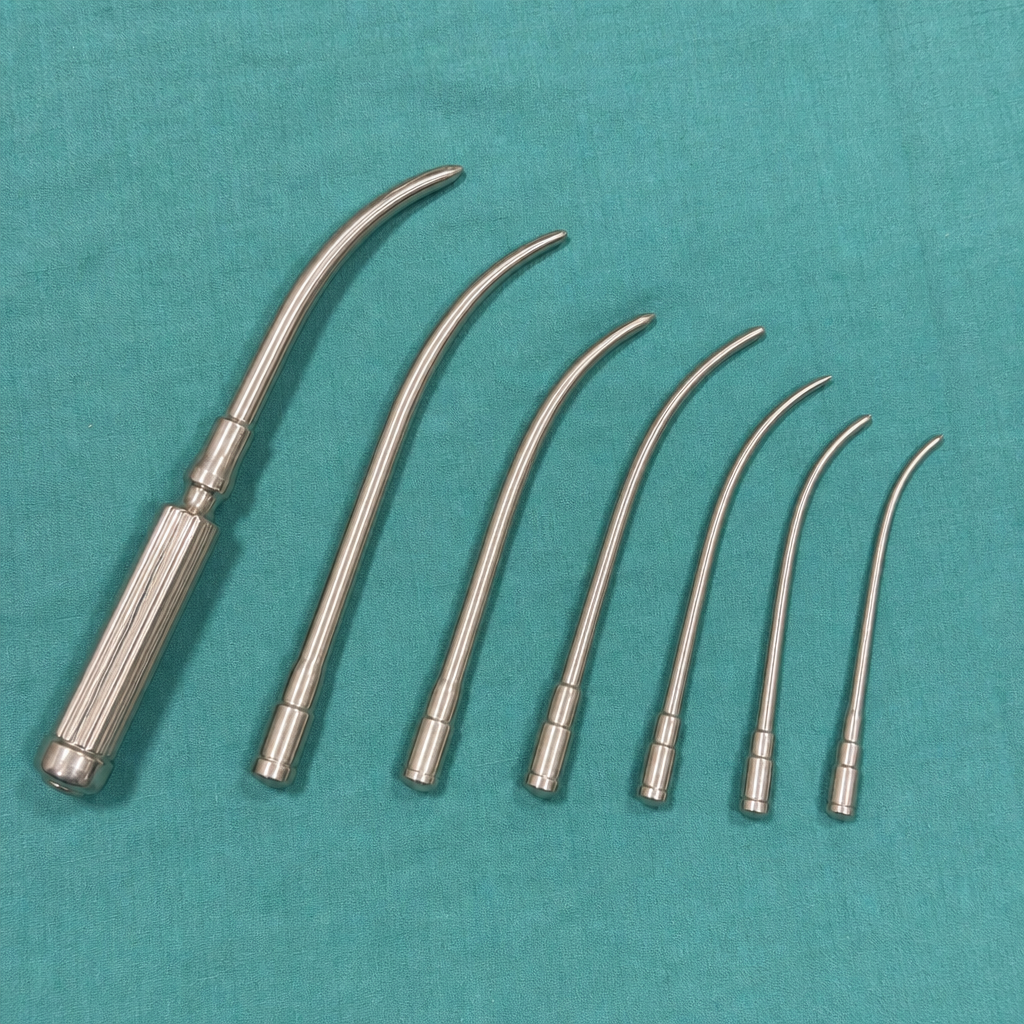
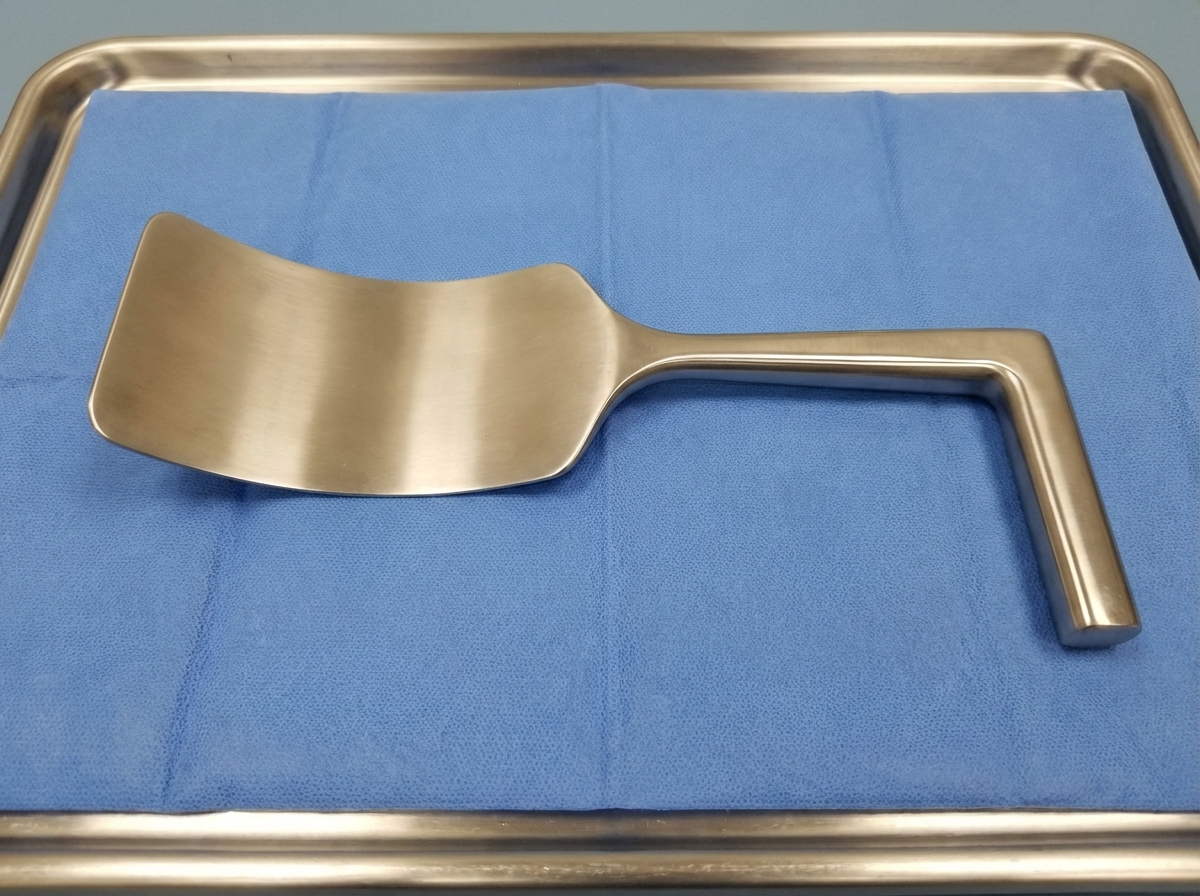
A 28-year-old woman recently treated as an outpatient for pelvic inflammatory disease presents with fever, leukocytosis, and deep rectal pain. In which space is this lesion?
What percentage of chest cavity involvement by spontaneous pneumothorax necessitates the insertion of a chest tube?
In a patient with lung cancer, which of the following is a contraindication for surgical resection?
A 60-year-old male patient complains of discoloration of the right leg. The patient has a history of diabetes mellitus and a traumatic injury to the right leg. Physical examination reveals blackish discoloration of the right leg with pus and a foul smell. Which of the following most appropriately describes the condition of this patient?
Recognized complications associated with enteral feeding include all except?
What is the most common tumour of the posterior mediastinum?
An epiplocele contains:
A 20-year-old female presents to the casualty with right iliac fossa pain, local guarding, and tenderness. Which of the following management interventions should NOT be done?
Silk is which class of suture?
Phlegmon is defined as:
Explanation: ***Supralevator space*** - **Pelvic inflammatory disease** can spread downward through the **pouch of Douglas** to form a **supralevator abscess**, presenting with deep rectal pain and systemic symptoms. - The **supralevator space** lies above the levator ani muscle and communicates with the **pelvis**, making it susceptible to infections spreading from **gynecologic sources**. *Perianal space* - **Perianal abscesses** arise from **infected anal glands** or **cryptoglandular disease**, not from pelvic infections. - They present as **superficial, painful swellings** around the **anal verge** with localized tenderness, not deep rectal pain. *Levator ani muscle* - The **levator ani muscle** itself is not a space where abscesses typically form. - **Muscle infections** would present with **myositis** symptoms rather than the classic abscess presentation described. *Intermuscular space* - **Intermuscular abscesses** occur between the **internal and external anal sphincters** due to **cryptoglandular infections**. - They present with **perianal pain** and **tenderness** rather than deep rectal pain, and are unrelated to **pelvic inflammatory disease**.
Explanation: **Explanation:** The management of a spontaneous pneumothorax is primarily determined by the size of the collapse and the patient's clinical stability. According to standard surgical guidelines (including ATLS and BTS), a pneumothorax is generally considered "large" when it involves **more than 25%** of the hemithorax. 1. **Why 25% is correct:** At this threshold, the lung's functional capacity is significantly compromised, and the rate of spontaneous reabsorption (approximately 1.25% of the volume per day) is too slow for conservative management. Insertion of an intercostal drainage (ICD) tube or a pigtail catheter is required to re-expand the lung, prevent tension pneumothorax, and alleviate respiratory distress. 2. **Why other options are incorrect:** * **10%:** Small pneumothoraces (<15-20%) in stable patients can often be managed conservatively with observation and supplemental oxygen, which increases the rate of nitrogen absorption. * **45% and 60%:** These represent massive collapses. While these definitely require a chest tube, the clinical intervention threshold is much lower (at 25%) to prevent further deterioration. Waiting for 45-60% involvement would be clinically unsafe. **Clinical Pearls for NEET-PG:** * **Gold Standard Diagnosis:** Erect Inspiratory Chest X-ray (shows a visceral pleural line without peripheral lung markings). * **Most Sensitive Imaging:** CT Chest is the gold standard, but bedside Ultrasound (looking for "Lung Slide") is highly sensitive in emergencies. * **Safe Triangle:** The preferred site for chest tube insertion is the 5th intercostal space, anterior to the mid-axillary line (bordered by the pectoralis major, latissimus dorsi, and nipple line). * **Tension Pneumothorax:** This is a clinical diagnosis; never wait for an X-ray. Immediate needle decompression in the 5th ICS (mid-axillary line) is the priority.
Explanation: ### Explanation In the management of Non-Small Cell Lung Cancer (NSCLC), determining resectability is crucial. The presence of a **Malignant Pleural Effusion (Option A)** signifies that the tumor has disseminated within the pleural cavity. According to the TNM staging system (8th edition), this is classified as **M1a (Stage IV)** disease. Surgical resection is generally contraindicated in Stage IV because the disease is systemic rather than localized, and surgery does not offer a survival benefit or curative potential in this setting. **Analysis of Incorrect Options:** * **Hilar Lymphadenopathy (Option B):** This corresponds to N1 nodal involvement. While it indicates a higher stage (Stage II), it is not a contraindication to surgery; these patients typically undergo lobectomy with lymph node dissection. * **Consolidation of one lobe (Option C):** This is often a secondary effect of bronchial obstruction by the tumor (obstructive pneumonitis). As long as the tumor itself is resectable, consolidation limited to the lobe or even the entire lung is not a contraindication. * **Involvement of the visceral pleura (Option D):** This is classified as T2 disease. It indicates local extension but remains localized to the lung structure, making it amenable to surgical resection. **NEET-PG High-Yield Pearls:** * **Absolute Contraindications to Surgery (The "STOP" Criteria):** * **S:** Superior Vena Cava (SVC) Syndrome. * **T:** Tracheal involvement or Carina involvement (less than 2cm from carina). * **O:** Outside metastasis (Distant metastasis, including Malignant Pleural Effusion). * **P:** Paralysis of the Left Vocal Cord (indicates Recurrent Laryngeal Nerve involvement) or Phrenic nerve. * **PFT Criteria:** A predicted post-operative FEV1 of **<800ml** or **<30-40%** of predicted is generally a contraindication to pneumonectomy.
Explanation: ### Explanation The patient presents with the classic clinical triad of **Wet Gangrene**: tissue necrosis (blackish discoloration), secondary bacterial infection (pus), and putrefaction (foul smell). **1. Why Wet Gangrene is Correct:** Wet gangrene occurs in naturally moist tissues or limbs where there is a combination of **arterial occlusion and venous congestion**. In this patient, the history of **Diabetes Mellitus** (which causes microangiopathy and impaired immunity) combined with **trauma** creates a nidus for infection. Unlike dry gangrene, wet gangrene is characterized by rapid spread, liquefactive necrosis due to the action of proteolytic enzymes from bacteria, and systemic toxicity. The presence of pus and a foul odor confirms the presence of an active, superadded infection. **2. Why Other Options are Incorrect:** * **Dry Gangrene:** This typically occurs due to gradual arterial occlusion (e.g., atherosclerosis). The part is dry, shrunken, and black, with a clear **line of demarcation**. There is no infection or foul smell, and it usually involves the distal parts of the limbs. * **Psoriasis:** An autoimmune inflammatory skin condition characterized by well-demarcated erythematous plaques with silvery scales. It does not cause tissue necrosis or foul-smelling discharge. * **Pemphigus:** A group of bullous (blistering) autoimmune diseases of the skin and mucous membranes. While it can lead to secondary infections, it does not present as limb gangrene. **Clinical Pearls for NEET-PG:** * **Wet Gangrene** is a surgical emergency due to the high risk of **Septicemia**. * **Gas Gangrene** is a specific type of wet gangrene caused by *Clostridium perfringens*, characterized by crepitus (gas in tissues). * **Line of Demarcation:** Present in dry gangrene; absent or poorly defined in wet gangrene. * **Treatment:** Wet gangrene requires urgent debridement or amputation, whereas dry gangrene may sometimes be allowed to auto-amputate if localized.
Explanation: **Explanation:** The correct answer is **Hepatic steatosis** because it is a classic complication of **Parenteral Nutrition (TPN)**, not enteral feeding. 1. **Why Hepatic Steatosis is the correct choice:** Hepatic steatosis (fatty liver) occurs in parenteral nutrition due to the continuous infusion of high glucose loads, which stimulates insulin secretion and promotes lipogenesis while inhibiting fatty acid oxidation. In contrast, **enteral feeding** is physiological; it maintains the gut-liver axis and stimulates gallbladder contraction, actually helping to *prevent* cholestasis and steatosis. 2. **Analysis of Incorrect Options:** * **Constipation (A):** A common mechanical/functional complication of enteral feeding, often due to low-fiber formulas or inadequate fluid intake. * **Bloating and Nausea (B):** These are frequent gastrointestinal complications caused by high osmolarity of the feed, rapid infusion rates (bolus feeding), or delayed gastric emptying. * **Aspiration Pneumonia (C):** This is the most serious respiratory complication of enteral feeding. It occurs due to the reflux of gastric contents, especially in patients with impaired gag reflexes, supine positioning, or misplaced nasogastric tubes. **NEET-PG High-Yield Pearls:** * **Enteral vs. Parenteral:** Always remember: "If the gut works, use it." Enteral feeding maintains gut mucosal integrity and prevents bacterial translocation. * **Refeeding Syndrome:** A shared complication of both, characterized by **Hypophosphatemia** (most common), hypokalemia, and hypomagnesemia. * **Aspiration Prevention:** Keep the head of the bed elevated at **30–45 degrees** during enteral feeding to reduce the risk of pneumonia. * **Diarrhea:** The most common GI complication of enteral feeding (often due to high osmolarity or antibiotics).
Explanation: The mediastinum is anatomically divided into compartments, each characterized by specific resident structures and associated pathologies. **Correct Answer: A. Neurogenic tumour** Neurogenic tumours are the most common primary mediastinal tumours overall, and specifically, they account for over **90% of posterior mediastinal masses**. They arise from the intercostal nerves (e.g., Schwannomas, Neurofibromas) or the sympathetic chain (e.g., Ganglioneuromas, Neuroblastomas). Because the paravertebral sulcus is located in the posterior compartment, these nerve-derived tumours are almost exclusively found here. **Explanation of Incorrect Options:** * **B. Thymoma:** This is the most common primary tumour of the **anterior mediastinum**. While it is the most common mediastinal tumour in adults overall, its location is strictly pre-vascular. * **C. Cyst:** Bronchogenic or pericardial cysts are most frequently found in the **middle mediastinum**. While enteric cysts can occur posteriorly, they are far less common than neurogenic tumours. * **D. Lymphoma:** Lymphomas typically present in the **anterior or middle mediastinum** (associated with lymph node chains). They are rarely isolated to the posterior compartment. **High-Yield Clinical Pearls for NEET-PG:** * **Mnemonic for Anterior Mediastinal Masses (4 Ts):** **T**hymoma, **T**eratoma (Germ cell tumours), **T**errible Lymphoma, and **T**hyroid (Retrosternal goiter). * **Middle Mediastinum:** Predominantly characterized by lymphadenopathy and developmental cysts. * **Posterior Mediastinum:** Think "Nerves." Schwannoma is the most common type in adults. * **Imaging Gold Standard:** Contrast-Enhanced CT (CECT) is the initial investigation of choice, but MRI is superior for evaluating spinal canal involvement in posterior tumours ("Dumbbell tumours").
Explanation: **Explanation:** The term **Epiplocele** is derived from the Greek word *epiploon*, which means **omentum**. Therefore, an epiplocele refers to a hernia where the contents of the hernial sac consist specifically of the **greater omentum**. **Why the correct answer is right:** * **Omentum (Option A):** When the omentum enters a hernial sac, it often becomes "plugged" or incarcerated. Because the omentum is highly vascular and fatty, it can undergo torsion or strangulation, leading to a firm, irreducible, and often tender mass. **Why the incorrect options are wrong:** * **Ileum (Option B):** A hernia containing the small intestine (most commonly the ileum) is referred to as an **enterocele**. This is the most common type of hernia content. * **Caecum (Option C):** If the caecum is part of the hernial sac wall, it is termed a **sliding hernia** (hernia en glissade). * **Appendix (Option D):** A hernia containing the vermiform appendix is known as **Amyand’s hernia** (if in an inguinal sac) or **De Garengeot hernia** (if in a femoral sac). **High-Yield Clinical Pearls for NEET-PG:** * **Richter’s Hernia:** Only a portion of the circumference of the bowel wall is trapped; it can strangulate without causing complete intestinal obstruction. * **Maydl’s Hernia:** A retrograde hernia (W-shaped) where two loops of bowel are in the sac, but the intervening loop inside the abdomen is the one that strangulates. * **Littre’s Hernia:** A hernial sac containing a **Meckel’s diverticulum**. * **Omental Plug:** In many clinical scenarios, the omentum acts as a protective mechanism, often sealing off perforations or plugging hernial orifices.
Explanation: **Explanation:** The clinical presentation of right iliac fossa (RIF) pain, local guarding, and tenderness in a young female is highly suggestive of **Acute Appendicitis** or an acute surgical abdomen. The management of such cases follows the standard surgical principle of "stabilize and prepare for potential surgery." **1. Why "None of the above" is correct:** All the interventions listed (A, B, and C) are standard, appropriate management steps for a patient with a suspected acute abdomen. Therefore, none of them are contraindicated. **2. Analysis of Options:** * **Nil Orally (NPO):** This is the most critical initial step. It prevents aspiration during potential emergency anesthesia and rests the bowel. * **Intravenous Glucose/Fluids:** Since the patient is NPO and may have lost fluids due to vomiting or decreased intake, IV fluids (often Dextrose-Normal Saline) are essential to maintain hydration and electrolyte balance. * **Pethidine (Analgesia):** Historically, there was a myth that analgesics "mask" the signs of peritonitis. Modern surgical teaching (and ATLS guidelines) emphasizes that providing pain relief (like Pethidine or Morphine) does **not** interfere with the diagnosis and is humane. It reduces patient distress and may actually make the physical exam easier by reducing voluntary guarding. **Clinical Pearls for NEET-PG:** * **Analgesia in Acute Abdomen:** Opioids do not mask physical signs or delay diagnosis; they are recommended once a preliminary evaluation is done. * **Pethidine vs. Morphine:** Pethidine was traditionally preferred in biliary colic due to the belief it causes less spasm of the Sphincter of Oddi, though recent evidence suggests little clinical difference. * **Most common cause of RIF pain in young females:** Acute appendicitis, but always rule out ectopic pregnancy (order a UPT) and ovarian torsion.
Explanation: **Explanation:** The classification of non-absorbable sutures is defined by the **United States Pharmacopeia (USP)** based on the material's composition and construction. **Why Class 1 is correct:** According to USP standards, **Class 1** sutures are defined as silk or synthetic fibers with a monofilament, twisted, or braided construction. Since Silk is a natural protein fiber produced by the *Bombyx mori* silkworm and is typically braided, it falls strictly into Class 1. **Analysis of incorrect options:** * **Class 2:** This category includes natural or synthetic fibers that are **coated**, or those where the coating contributes to the thickness but not the strength (e.g., cotton, linen, or coated synthetic fibers). * **Class 3:** This category is reserved specifically for **monofilament or multifilament metal wire** (e.g., stainless steel sutures). **High-Yield Clinical Pearls for NEET-PG:** * **Nature of Silk:** Although classified as "non-absorbable," silk is technically **slowly absorbable**. It undergoes progressive degradation via proteolysis and usually disappears from the tissue within 2 years. * **Tissue Reaction:** Silk elicits the **highest tissue reaction** among all non-absorbable sutures because it is a foreign protein. * **Capillarity:** Due to its braided nature, silk exhibits high capillarity (wicking action), which can harbor bacteria; therefore, it is generally avoided in the presence of active infection. * **Common Use:** It is frequently used for securing drains or in mucosal closures where its superior handling and knot security are beneficial.
Explanation: **Explanation:** **Phlegmon** is a clinical term used to describe a spreading, diffuse, and non-circumscribed inflammatory process of the soft tissues. It is fundamentally a **severe form of cellulitis** that involves the deeper connective tissues. Unlike an abscess, which is a localized collection of pus with a defined wall, a phlegmon lacks a capsule and spreads along fascial planes and natural tissue spaces. * **Why Option B is correct:** Phlegmon is pathologically characterized by acute inflammation of the subcutaneous or deeper connective tissues. It is essentially a "spreading cellulitis" where the body has not yet localized the infection into a fluctuant abscess. * **Why Options A & D are incorrect:** Phlegmon is a general surgical pathology related to soft tissue infection (often caused by *Streptococcus pyogenes* or *Staphylococcus aureus*). It is not specific to the reproductive system or transmitted via sexual contact. * **Why Option C is incorrect:** Osteomyelitis refers specifically to the inflammation/infection of the bone and bone marrow, whereas phlegmon is a soft tissue entity. **NEET-PG High-Yield Pearls:** 1. **Phlegmon vs. Abscess:** A phlegmon is "solid" and diffuse; an abscess is "liquid" (fluctuant) and localized. 2. **Common Clinical Context:** In NEET-PG, "Phlegmon" is most frequently discussed in the context of **Acute Pancreatitis** (a peripancreatic inflammatory mass) or **Appendicitis** (an appendix mass/phlegmon). 3. **Management:** While an abscess usually requires incision and drainage (I&D), a phlegmon is primarily managed with intravenous antibiotics, as there is no drainable pus collection initially.
Wound Healing and Care
Practice Questions
Surgical Infections
Practice Questions
Fluid and Electrolyte Management
Practice Questions
Nutrition in Surgical Patients
Practice Questions
Hemostasis and Blood Transfusion
Practice Questions
Surgical Instruments and Equipment
Practice Questions
Sutures and Stapling Devices
Practice Questions
Minimal Access Surgery Principles
Practice Questions
Surgical Complications
Practice Questions
Anesthesia Principles for Surgeons
Practice Questions
Surgical Oncology Principles
Practice Questions
Evidence-Based Surgery
Practice Questions
Get full access to all questions, explanations, and performance tracking.
Start For Free