Which anatomical site is most commonly affected by diabetic foot ulcers?
During repair of indirect inguinal hernia, while releasing the constriction at the deep inguinal ring, the surgeon takes care not to damage which of the following structures?
Which among the following is the most common site of a felon?
Acute paronychia is treated by which of the following procedures?
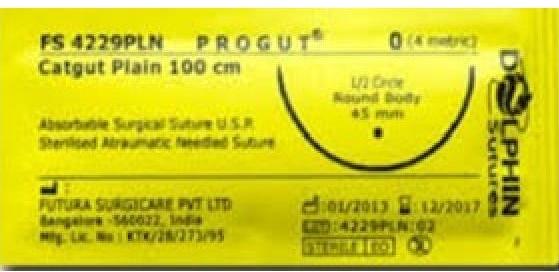
What is the absorption time for PDS sutures?
Which of the following electrolyte imbalances is most likely to cause paralytic ileus?
Splenectomy is indicated in which of the following conditions?
What is the most common incision used for open general thoracic surgical procedures?
What is the most common location for a Morgagni hernia?
Punched-out edges are characteristic of which type of ulcer?
Explanation: **Explanation:** Diabetic foot ulcers (DFUs) primarily occur due to a combination of **peripheral neuropathy** (loss of protective sensation) and **peripheral arterial disease** (ischemia). The **heel** is the most common site for these ulcers because it is a major weight-bearing area subject to significant vertical pressure and shear forces during ambulation. In a neuropathic foot, the patient lacks the sensory feedback to shift weight, leading to repetitive microtrauma, callus formation, and eventual skin breakdown over bony prominences. **Analysis of Options:** * **Heel (Correct):** As the primary point of contact during the "heel strike" phase of the gait cycle, it bears the maximum load. Additionally, the heel has a relatively poor blood supply compared to the forefoot, making it prone to deep pressure necrosis. * **Medial and Lateral Malleoli (Incorrect):** These sites are more characteristically associated with **venous ulcers** (medial malleolus) or **ischemic/arterial ulcers** (lateral malleolus) caused by direct pressure from footwear or trauma, rather than primary weight-bearing diabetic neuropathic damage. **High-Yield Clinical Pearls for NEET-PG:** * **Wagner’s Classification:** Used to grade DFUs (Grade 0: Pre-ulcerative; Grade 1: Superficial; Grade 2: Deep to tendon/capsule; Grade 3: Deep with osteomyelitis; Grade 4: Forefoot gangrene; Grade 5: Entire foot gangrene). * **The "Rocking Horse" Foot:** Motor neuropathy leads to atrophy of intrinsic muscles, causing claw toes and shifting weight to the **metatarsal heads** (another very common site for DFUs). * **Charcot’s Arthropathy:** A sterile, inflammatory process leading to joint destruction, often presenting as a "hot, swollen foot" in diabetics.
Explanation: **Explanation:** The **inferior epigastric artery** is the most critical landmark during the surgical repair of an indirect inguinal hernia, particularly when releasing a constriction at the **deep inguinal ring**. 1. **Why it is correct:** The deep inguinal ring is an opening in the fascia transversalis located lateral to the inferior epigastric vessels. In an indirect hernia, the sac enters the inguinal canal through this ring. If the ring is too tight (constricted), the surgeon must incise it to release the contents. This incision is always made **laterally** to avoid injuring the inferior epigastric artery, which lies immediately **medial** to the deep inguinal ring. 2. **Why the other options are incorrect:** * **Falx inguinalis (Conjoint tendon):** This is formed by the fusion of the internal oblique and transversus abdominis aponeuroses. It lies medially and forms the posterior wall of the inguinal canal, far from the deep ring. * **Interfoveolar ligament (Hesselbach’s ligament):** This is a thickening of the fascia transversalis at the medial edge of the deep inguinal ring. While it is a nearby landmark, it is not the primary structure of concern regarding life-threatening hemorrhage compared to the artery. * **Spermatic cord:** While the cord must be protected, the question specifically asks about releasing the constriction at the ring. The cord passes *through* the ring; the danger during the *incision* of the ring itself is the adjacent vascular supply. **High-Yield Clinical Pearls for NEET-PG:** * **Hesselbach’s Triangle:** Boundaries are the lateral border of Rectus abdominis (medial), Inferior epigastric artery (lateral), and Inguinal ligament (inferior). * **Direct vs. Indirect:** Indirect hernias are lateral to the inferior epigastric artery; Direct hernias are medial to it. * **Mnemonic:** **MD** (**M**edial = **D**irect).
Explanation: **Explanation:** A **felon** is an acute, closed-space infection of the pulp space of the distal phalanx. The pulp is divided into numerous small, non-compliant compartments by tough fibrous septa that extend from the skin to the periosteum. **Why the Thumb is Correct:** Statistically, the **thumb** and the **index finger** are the most frequently involved digits in hand infections due to their increased usage and higher frequency of minor trauma (e.g., needle pricks, splinters). Among all digits, the **thumb** is documented as the most common site for a felon. The clinical significance lies in the anatomy: as pressure increases within these tight compartments due to pus formation, it can lead to local ischemia, necrosis, and potentially osteomyelitis of the distal phalanx. **Analysis of Incorrect Options:** * **Index Finger (Option A):** While the index finger is the second most common site, it follows the thumb in frequency. * **Ring Finger (Option B) & Little Finger (Option C):** These digits are less involved in fine motor tasks and repetitive trauma compared to the thumb and index finger, making them less common sites for felon development. **High-Yield Clinical Pearls for NEET-PG:** * **Clinical Presentation:** Characterized by severe, throbbing pain, redness, and exquisite tenderness over the pulp. * **Treatment:** Early incision and drainage (I&D) are mandatory. The incision should be made where the tenderness is maximal (usually lateral or volar) to avoid the tactile pad and prevent "fish-mouth" deformity. * **Complication:** If left untreated, it can lead to **osteomyelitis** of the distal phalanx (the most common complication) or a **flexor tenosynovitis** if the infection tracks proximally.
Explanation: **Explanation:** **Acute paronychia** is a common localized infection of the lateral or proximal nail fold, most frequently caused by *Staphylococcus aureus*. The primary pathology involves a collection of pus (abscess) between the nail plate and the surrounding soft tissue. **Why Incision and Drainage (I&D) is correct:** The gold standard for treating any fluctuant abscess is **Incision and Drainage**. In acute paronychia, once suppuration (pus formation) occurs, conservative management with warm soaks or antibiotics is insufficient. An incision is made directly over the area of maximum fluctuation or along the nail fold (eponychium) to evacuate the pus, providing immediate pain relief and preventing the spread of infection to the nail bed or pulp space (felon). **Analysis of Incorrect Options:** * **B. Lifting the paronychium:** While a blunt probe can sometimes be used to separate the nail fold from the nail plate to release pus, it is considered a technique of drainage rather than a standalone procedure. Formal I&D is the definitive surgical principle. * **C. Partial nail excision:** This is typically reserved for cases where the infection has tracked underneath the nail plate (subungual abscess), but it is not the primary treatment for simple paronychia. * **D. Total nail excision:** This is an over-treatment for acute paronychia. It is generally indicated for chronic fungal infections or severe, recurrent ingrown toenails (onychocryptosis). **Clinical Pearls for NEET-PG:** * **Most common organism:** *Staphylococcus aureus* (Acute); *Candida albicans* (Chronic). * **Chronic Paronychia:** Defined as lasting >6 weeks; usually due to irritants/moisture. Treatment is avoidance of triggers and topical steroids (not antibiotics). * **Eponychia:** If the infection involves the entire proximal nail fold. * **Run-around abscess:** When paronychia extends from one lateral fold to the other across the base of the nail.
Explanation: **Explanation:** **Polydioxanone (PDS)** is a synthetic, monofilament, absorbable suture. The correct answer is **225 days** because PDS is designed for prolonged wound support, undergoing slow hydrolysis. While it maintains significant tensile strength for several weeks, its complete absorption by the body typically takes between **180 to 240 days** (averaging 225 days). **Analysis of Options:** * **A. 7 days:** This is too short for any standard absorbable suture. Even Plain Catgut maintains strength for about 7–10 days but takes much longer to absorb. * **B. 21 days:** This is the approximate timeframe for the loss of tensile strength in sutures like Vicryl or Dexon, but not their total absorption time. * **C. 100 days:** This is the approximate absorption time for **Vicryl (Polyglactin 910)** and **Dexon (Polyglycolic acid)**, which are braided synthetic sutures. **NEET-PG High-Yield Pearls:** * **Tensile Strength:** PDS retains ~60% of its strength at 4 weeks and ~25% at 6 weeks. This makes it the suture of choice for tissues that heal slowly, such as **fascia (rectus sheath)** and pediatric cardiovascular anastomoses. * **Monofilament Advantage:** Being monofilament, PDS has a lower risk of harboring bacteria compared to braided sutures like Vicryl, making it safer in potentially contaminated fields. * **Comparison:** * **Catgut:** Proteolytic enzymatic digestion (unpredictable). * **Synthetic (PDS/Vicryl/Monocryl):** Non-enzymatic hydrolysis (predictable). * **Fastest absorption:** Monocryl (~90–120 days). * **Slowest absorption:** PDS (~180–240 days).
Explanation: **Explanation:** **Hypokalemia (Option A)** is the most common electrolyte abnormality associated with paralytic ileus. Potassium is essential for maintaining the resting membrane potential of smooth muscle cells. Low extracellular potassium levels lead to hyperpolarization of the cell membrane, making it more difficult for smooth muscle cells in the gastrointestinal tract to reach the threshold for depolarization. This results in decreased peristalsis, bowel distension, and the clinical picture of ileus. **Incorrect Options:** * **Hypoglycemia (Option B):** While severe hypoglycemia can cause neurological symptoms or sympathetic activation, it does not directly inhibit intestinal smooth muscle contraction. * **Hyperkalemia (Option C):** High potassium levels typically increase neuromuscular excitability initially. While it can cause cardiac arrhythmias, it is not a classic cause of adynamic ileus. * **Hypercalcemia (Option D):** While hypercalcemia can cause constipation due to decreased neuromuscular excitability, **Hypokalemia** is the more frequent and "classic" cause of postoperative paralytic ileus tested in surgical exams. (Note: Hypomagnesemia and Hyponatremia are also associated with ileus). **Clinical Pearls for NEET-PG:** * **Postoperative Ileus:** Normal bowel function typically returns in the following order: Small Intestine (0–24 hours) → Stomach (24–48 hours) → Colon (48–72 hours). * **Management:** The first step in managing postoperative ileus is often checking the electrolyte panel, specifically **Potassium** and **Magnesium**. * **Drug-induced Ileus:** Always consider Opioids and Anticholinergics as pharmacological causes. * **Ogilvie Syndrome:** This is acute pseudo-obstruction of the colon, often seen in elderly or bedridden patients, also exacerbated by electrolyte imbalances.
Explanation: ### Explanation Splenectomy is indicated for a variety of hematological, oncological, and traumatic conditions. The correct answer includes three distinct indications: 1. **Sickle Cell Anemia:** While "autosplenectomy" often occurs due to repeated infarction, surgical splenectomy is indicated in cases of **acute splenic sequestration crises** (life-threatening pooling of blood) or **hypersplenism**. 2. **Hereditary Spherocytosis (HS):** This is the **most common** hemolytic anemia for which splenectomy is performed. Since the spleen destroys the abnormally shaped erythrocytes, splenectomy significantly increases red cell lifespan and prevents gallstone formation. 3. **Hodgkin’s Lymphoma:** Historically, "staging laparotomy" with splenectomy was gold-standard for Hodgkin’s. Although modern PET-CT imaging has largely replaced this, splenectomy remains an indication for **diagnostic staging** in specific refractory cases or for managing massive splenomegaly causing cytopenia. **Analysis of Incorrect Options:** * **Options A & B:** While Hemoglobin C disease can cause splenomegaly, it is usually mild and rarely requires splenectomy compared to the definitive indications in HS and Sickle Cell. * **Option D:** This option is incomplete. While both conditions are indications, it misses Hodgkin’s lymphoma, which is a recognized surgical indication in the context of this question. **NEET-PG High-Yield Pearls:** * **Timing:** In elective cases, splenectomy should be delayed until age **5–6 years** to minimize the risk of OPSI (Overwhelming Post-Splenectomy Infection). * **Vaccination:** Patients must receive vaccinations against *S. pneumoniae*, *H. influenzae*, and *N. meningitidis* at least **2 weeks before** elective surgery or 2 weeks after emergency surgery. * **Peripheral Smear:** Look for **Howell-Jolly bodies**, Pappenheimer bodies, and Heinz bodies post-splenectomy. * **Most common indication (Trauma):** Blunt trauma to the abdomen (Spleen is the most commonly injured organ).
Explanation: **Explanation:** The **Median Sternotomy** is the most common incision used for open general thoracic and cardiac surgical procedures. Its dominance in thoracic surgery is due to the excellent, wide exposure it provides to the heart, great vessels, and both pleural spaces. It is the standard approach for coronary artery bypass grafting (CABG), valve replacements, and mediastinal tumor resections (e.g., thymectomy). It is generally well-tolerated, associated with less postoperative pain compared to lateral incisions, and preserves pulmonary function better than a thoracotomy. **Analysis of Incorrect Options:** * **Anterior Thoracotomy:** Used primarily for emergency trauma (resuscitative thoracotomy) or limited access to the lung/pericardium. It offers restricted visualization compared to a sternotomy. * **Lateral Thoracotomy (Posterolateral):** While it is the "gold standard" for most **pulmonary** surgeries (lobectomy, pneumonectomy) and esophageal surgeries, it is not the most common incision for *general* thoracic/cardiac procedures overall. It is also associated with significant post-operative pain due to rib spreading and muscle transection. * **Transverse Thoracosternotomy (Clamshell Incision):** A bilateral incision used for double lung transplants or massive chest trauma. It is highly invasive and reserved for specific, complex cases. **Clinical Pearls for NEET-PG:** * **Most common incision for Cardiac Surgery:** Median Sternotomy. * **Best incision for Lung Resection:** Posterolateral Thoracotomy. * **Nerve at risk during Sternotomy:** The phrenic nerve (if dissecting near the pericardium). * **Sternal Dehiscence:** A serious complication of sternotomy, often associated with obesity, COPD, and diabetes. * **"Hemiclamshell":** A combination of a partial median sternotomy and an anterior thoracotomy.
Explanation: **Morgagni hernia** is a type of congenital diaphragmatic hernia (CDH) that occurs through the **Foramen of Morgagni**, an anatomical defect located between the xiphoid process and the costal margins of the diaphragm. ### **Explanation of the Correct Answer** The correct answer is **Right anterior**. The Foramen of Morgagni is an anterior defect. While these defects exist bilaterally, approximately **90% of Morgagni hernias occur on the right side**. This is because the left side is anatomically protected by the heart and the pericardial attachments, which provide a structural barrier against herniation. ### **Analysis of Incorrect Options** * **Right/Left Posterior:** Posterior defects of the diaphragm are associated with **Bochdalek hernias** (the most common type of CDH overall). A useful mnemonic is *"Bochdalek is Back and Big."* * **Left Anterior:** While Morgagni hernias can occur on the left, they are rare (approx. 2-5%) due to the protective presence of the heart. ### **High-Yield Clinical Pearls for NEET-PG** * **Location:** Anterior and retrosternal (specifically the right cardiophrenic angle). * **Contents:** Most commonly contains **Omentum**, followed by the transverse colon. * **Presentation:** Unlike Bochdalek hernias, which present with acute respiratory distress in neonates, Morgagni hernias are often **asymptomatic** and discovered incidentally in adulthood on a chest X-ray. * **Radiology:** On a lateral chest X-ray, it appears as a mass in the **anterior mediastinum**. * **Treatment:** Surgical repair is recommended even in asymptomatic patients due to the risk of strangulation.
Explanation: **Explanation:** The characteristic appearance of an ulcer’s edge is a vital clinical clue in surgery. A **punched-out edge** (where the edge is vertical and the ulcer appears as if cut out with a punch) is the hallmark of a **Syphilitic (Gummatous) ulcer**. This occurs due to endarteritis obliterans, which causes localized ischemia and rapid tissue necrosis, leading to sharply defined margins. **Analysis of Options:** * **Syphilitic (Correct):** Typically seen in the tertiary stage of syphilis. These ulcers are painless, circular or "serpiginous," with a "wash-leather" slough at the base and characteristic punched-out edges. * **Tuberculosis:** Characterized by **undermined edges**. This happens because the disease process (caseous necrosis) destroys the subcutaneous tissue faster than the overlying skin. * **Rodent Ulcer (Basal Cell Carcinoma):** Characterized by **rolled-out (pearly) edges**. This is a slow-growing malignant ulcer that locally invades tissue but rarely metastasizes. * **Non-specific (Chronic/Venous):** Usually presents with **sloping edges**, indicating an attempt at healing where new epithelium grows over the granulation tissue. **NEET-PG High-Yield Pearls:** * **Punched-out edges** are also seen in **Trophic (Neuropathic) ulcers** (e.g., Diabetes, Leprosy) and **Arterial (Ischemic) ulcers**. * **Everted edges** are a classic sign of **Squamous Cell Carcinoma**. * **Wash-leather slough** is specifically associated with Syphilitic ulcers. * **Apple-jelly nodules** on the edge are characteristic of Lupus Vulgaris (Cutaneous TB).
Wound Healing and Care
Practice Questions
Surgical Infections
Practice Questions
Fluid and Electrolyte Management
Practice Questions
Nutrition in Surgical Patients
Practice Questions
Hemostasis and Blood Transfusion
Practice Questions
Surgical Instruments and Equipment
Practice Questions
Sutures and Stapling Devices
Practice Questions
Minimal Access Surgery Principles
Practice Questions
Surgical Complications
Practice Questions
Anesthesia Principles for Surgeons
Practice Questions
Surgical Oncology Principles
Practice Questions
Evidence-Based Surgery
Practice Questions
Get full access to all questions, explanations, and performance tracking.
Start For Free