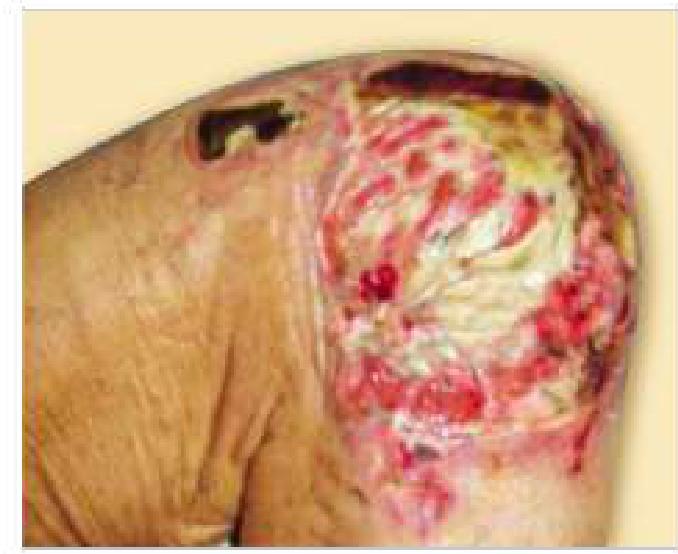
Which of the following best describes a felon?
A 45-year-old man presents with progressive cervical lymph node enlargement for the past 3 months. What is the most diagnostic investigation?
Which of the following is FALSE regarding cellulitis?
Lymphoedema is due to all except?
Which of the following patient characteristics might increase the risk of a wound infection?
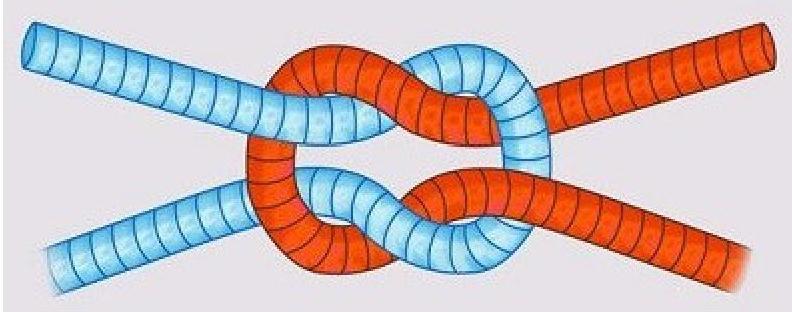
What is the diameter in mm of a suture with size 2-0?
Which approach is safest for draining an axillary abscess?
What is a Shoehron forceps?
Spigelian hernia is a type of hernia occurring at:
Which of the following is true about a Richter hernia?
Explanation: ### Explanation A **felon** is a closed-space infection of the **distal pulp space** of the finger. This space is anatomically unique because it is divided into numerous small, non-compliant compartments by tough **fibrous septa** that run from the skin to the periosteum of the distal phalanx. **Why Option C is Correct:** When an infection occurs in the pulp (usually due to a puncture wound), the inflammatory edema causes a rapid rise in pressure within these tight compartments. This leads to intense, throbbing pain and can compress the local capillaries, potentially causing **ischemic necrosis** of the bone (osteomyelitis of the distal phalanx). **Analysis of Incorrect Options:** * **Option A (Cystic swelling at the back of the wrist):** This describes a **Ganglion cyst**, which is a benign, fluid-filled sac arising from a joint capsule or tendon sheath. * **Option B (Infection of the nail fold):** This is a **Paronychia**. It is the most common hand infection and involves the soft tissue surrounding the fingernail. * **Option C (Thickened fibrous sheath at the wrist):** This refers to conditions like **De Quervain’s Tenosynovitis** (involving the first dorsal compartment) or **Carpal Tunnel Syndrome** (involving the flexor retinaculum). **High-Yield Clinical Pearls for NEET-PG:** * **Treatment:** Early incision and drainage are mandatory. The incision should be made where the pain is maximal (usually lateral) to avoid damaging the digital nerves and to prevent a tactile scar on the finger pad. * **Complication:** If left untreated, a felon can lead to **sequestration** of the distal phalanx (diaphysis) because the blood supply to the bone travels through these high-pressure septa. * **Key Organism:** *Staphylococcus aureus* is the most common causative pathogen.
Explanation: **Explanation:** In the evaluation of persistent cervical lymphadenopathy (lasting >3-4 weeks), establishing a definitive tissue diagnosis is crucial to differentiate between reactive hyperplasia, chronic infections (like Tuberculosis), and malignancies (Lymphoma or Metastatic Squamous Cell Carcinoma). **Why Lymph Node Biopsy is the Correct Answer:** Excisional lymph node biopsy is considered the **gold standard** and the most diagnostic investigation. Unlike cytology, a biopsy preserves the **nodal architecture**, which is essential for diagnosing lymphomas (to differentiate Hodgkin’s vs. Non-Hodgkin’s and determine grading). It also provides sufficient tissue for immunohistochemistry (IHC) and molecular studies, which are vital for identifying the primary site in cases of occult malignancy. **Analysis of Incorrect Options:** * **A. X-ray of soft tissues:** This provides no information regarding the internal morphology or cellular nature of the node. It is non-specific and largely obsolete for primary diagnosis. * **B. Fine Needle Aspiration Cytology (FNAC):** While FNAC is often the *initial* investigation of choice due to its speed and low cost, it is not the most diagnostic. It provides only cellular detail (cytology) and lacks architectural context, often leading to false negatives in lymphoma. **High-Yield Clinical Pearls for NEET-PG:** * **Initial Investigation:** FNAC. * **Gold Standard/Most Diagnostic:** Excisional Biopsy. * **Biopsy Selection:** If multiple nodes are present, the largest, deepest, and most suspicious node should be sampled. Avoid the uppermost (submandibular) nodes if possible, as they often show chronic inflammatory changes. * **Rule of Thumb:** Any node >1 cm persisting for more than 4 weeks without a clear infectious cause requires a definitive tissue diagnosis.
Explanation: **Explanation:** Cellulitis is a common bacterial skin infection characterized by spreading inflammation of the dermis and subcutaneous tissues. **Why Option D is the Correct (False) Statement:** The fundamental surgical principle for any **abscess** (a localized collection of pus) is **Incision and Drainage (I&D)**. Abscesses cannot be managed conservatively with antibiotics alone because the necrotic core and acidic environment of the pus cavity prevent adequate antibiotic penetration. If an abscess complicates cellulitis, it must be drained surgically to achieve source control. **Analysis of Other Options:** * **Option A:** **Streptococcus pyogenes** (Group A Strep) is the most common causative organism, followed by *Staphylococcus aureus*. Strep produces enzymes like hyaluronidase that facilitate the rapid, "spreading" nature of the infection. * **Option B:** Cellulitis can lead to **SIRS** (fever, tachycardia, leukocytosis) if the infection becomes systemic. If left untreated, it can progress to sepsis or necrotizing fasciitis. * **Option C:** By definition, cellulitis is an acute, spreading infection of the **deep dermis and subcutaneous fat**, distinguishing it from Erysipelas, which is more superficial and involves upper dermal lymphatics. **Clinical Pearls for NEET-PG:** * **Erysipelas vs. Cellulitis:** Erysipelas has well-defined, raised borders (milestone sign), whereas cellulitis has ill-defined, non-raised borders. * **Orbital Cellulitis:** A surgical emergency; look for proptosis and restricted eye movements. * **Treatment:** Elevation of the limb and systemic antibiotics (e.g., Flucloxacillin or Cephalosporins). If MRSA is suspected, use Vancomycin or Linezolid.
Explanation: **Explanation:** Lymphedema is a chronic condition characterized by the accumulation of protein-rich interstitial fluid due to a failure of the lymphatic drainage system. **Why Option A is the correct answer:** In lymphedema, there is a **decrease** in lymphatic contractility, not an increase. As the disease progresses, the lymphatic vessels (lymphangions) become dilated and the smooth muscle in their walls undergoes fatigue and eventual atrophy. This leads to ineffective pumping and stasis of lymph fluid. Therefore, "Increased lymphatic contractility" is the exception. **Analysis of other options:** * **B. Lymphatic obliteration by infection:** This is a classic cause of secondary lymphedema. Recurrent infections (like cellulitis) or parasitic infestations (like *Wuchereria bancrofti* in Filariasis) cause inflammation and fibrosis, physically blocking the lymph channels. * **C. Increased collagen formation:** Chronic lymphostasis triggers an inflammatory response. This stimulates fibroblasts, leading to excessive collagen deposition and **subcutaneous fibrosis** (non-pitting edema), a hallmark of late-stage lymphedema. * **D. Lymphatic valvular insufficiency:** As lymph vessels dilate due to proximal obstruction or congenital weakness, the valves become incompetent. This leads to the backflow (reflux) of lymph, further worsening the edema. **NEET-PG High-Yield Pearls:** * **Most common cause worldwide:** Filariasis (*Wuchereria bancrofti*). * **Most common cause in developed countries:** Post-mastectomy (axillary lymph node dissection) for breast cancer. * **Stemmer’s Sign:** Inability to pinch the skin on the dorsal surface of the base of the second toe; it is a pathognomonic clinical sign of lymphedema. * **Stewart-Treves Syndrome:** A rare, highly aggressive angiosarcoma arising in a limb with chronic lymphedema.
Explanation: ***Recipient of chemotherapy*** - **Chemotherapy** causes **immunosuppression** by reducing white blood cell counts, particularly **neutrophils**, which are crucial for fighting bacterial infections at wound sites. - **Impaired immune response** from cytotoxic drugs significantly increases susceptibility to **postoperative infections** and delays wound healing. *History of colon surgery* - Previous **colon surgery** itself does not inherently increase infection risk for new wounds unless there are active complications like **anastomotic leaks** or **abscesses**. - The surgical history indicates surgical tolerance rather than an active risk factor for new wound infections. *Hypertension* - **Hypertension** alone does not significantly impair **immune function** or wound healing mechanisms in most patients. - Well-controlled **blood pressure** typically does not increase infection risk, though severe uncontrolled hypertension may affect **tissue perfusion**. *Male sex* - **Gender** is not a significant independent risk factor for **wound infections** in surgical patients. - **Male sex** does not inherently compromise **immune function** or wound healing compared to female patients.
Explanation: **Explanation:** The diameter of surgical sutures is standardized by the **United States Pharmacopeia (USP)**. The sizing system uses a numbering scale where "0" is the baseline. As the number of zeros increases (e.g., 2-0, 3-0, 4-0), the diameter of the suture decreases. Conversely, as the whole numbers increase (e.g., 1, 2, 3), the diameter increases. For **synthetic absorbable sutures** (like Polyglactin 910/Vicryl) and **non-absorbable sutures** (like Nylon or Prolene), the USP diameter for a **2-0 suture** is specifically defined as **0.30 mm** (ranging from 0.30 to 0.339 mm). **Analysis of Options:** * **Option D (0.30 mm):** Correct. This is the standard USP diameter for 2-0 synthetic sutures. * **Option C (0.27 mm):** Incorrect. This falls within the range for a 3-0 suture (0.20–0.29 mm). * **Option B (0.24 mm):** Incorrect. This is also within the 3-0 size range. * **Option A (0.21 mm):** Incorrect. This is the lower limit for a 3-0 suture. **High-Yield NEET-PG Pearls:** 1. **Tensile Strength:** Smaller diameter sutures (higher "0" count) have lower tensile strength but cause less tissue trauma. 2. **Catgut Exception:** Natural sutures like Chromic Catgut have slightly different diameter requirements compared to synthetic sutures for the same USP size (e.g., 2-0 Catgut is 0.35 mm). 3. **Common Sizes:** * **2-0:** Used for fascia and heavy dermis. * **3-0/4-0:** Used for skin closure. * **6-0/7-0:** Used for delicate vascular or plastic surgery. 4. **Rule of Thumb:** Each "0" added reduces the diameter by approximately 0.05–0.1 mm depending on the material.
Explanation: **Explanation:** The axilla is a pyramid-shaped space containing vital neurovascular structures, including the axillary artery, axillary vein, and the cords of the brachial plexus. When draining an axillary abscess, the primary goal is to avoid accidental injury to these structures. **Why "Floor" is the correct answer:** The safest approach is through the **floor (base)** of the axilla. The incision is made in the center of the axillary floor, directed towards the **medial wall** (ribs/serratus anterior). This path is the furthest away from the major neurovascular bundle, which lies superiorly and laterally. By incising the skin and fascia at the floor and using **Hilton’s method** (blunt dissection with a hemostat), the surgeon can safely evacuate pus without risking a major hemorrhage or nerve palsy. **Analysis of Incorrect Options:** * **Lateral Wall:** This is the most dangerous approach. The axillary vessels and the brachial plexus lie close to the lateral wall (humerus). An incision here risks life-threatening bleeding. * **Posterior Wall:** This wall contains the subscapular nerves and vessels. Incising here risks damaging the nerve to the latissimus dorsi (thoracodorsal nerve). * **Medial Wall:** While the long thoracic nerve (Nerve of Bell) runs along the medial wall, the primary reason it is incorrect as a *starting* point is that the floor provides the most direct and dependent drainage while remaining superficial to the medial wall. **Clinical Pearls for NEET-PG:** * **Hilton’s Method:** Always used for abscesses in "dangerous" areas (axilla, groin, neck). It involves a skin incision followed by blunt dissection using a sinus forceps or hemostat to break loculi. * **Nerve at Risk:** During axillary procedures, the **Long Thoracic Nerve** (supplying Serratus Anterior) is at risk on the medial wall; injury leads to "Winged Scapula." * **Anatomy:** The axillary vein is the most superficial/medial structure in the neurovascular bundle, making it highly susceptible to injury if the incision is misplaced.
Explanation: **Explanation:** The **Shoehron forceps** is a classic example of a misnomer in surgical instrumentation. Despite being called a "forceps," it is functionally a **small straight elevator** used primarily in oral and maxillofacial surgery. **1. Why the Correct Answer is Right:** The Shoehron elevator consists of a handle, a shank, and a small, straight, wedge-shaped blade. It operates on the **principle of a lever** and the **wedge principle**. It is used to luxate (loosen) a tooth from its bony socket by being inserted into the periodontal ligament space. Its small size allows for precise application in confined spaces, making it ideal for initiating the extraction process or removing small root fragments. **2. Why the Other Options are Incorrect:** * **Large straight elevator:** These (such as the Coupland or London Hospital elevators) have much broader blades and are used for larger teeth or where significant force is required. * **Small forceps:** Forceps are designed for grasping and pulling (using a "pincer" action), whereas the Shoehron is designed for prying and elevating. * **Crossbar elevator:** These (like the Winter’s or Cryer’s elevators) have a handle perpendicular to the shank (T-shaped), providing high mechanical advantage for removing mandibular molar roots. **Clinical Pearls for NEET-PG:** * **Mechanism:** Elevators work by expanding the alveolar bone and severing the periodontal ligament. * **Rule of Use:** Always use a finger rest (fulcrum) when using elevators to prevent accidental slippage and soft tissue injury. * **High-Yield Fact:** In surgical instruments, always look out for "misnomers" like the Shoehron, as they are frequent targets for image-based or factual questions in NEET-PG.
Explanation: **Explanation:** A **Spigelian hernia** (also known as a spontaneous lateral ventral hernia) occurs through a defect in the **Spigelian fascia**. This fascia is the layer of the aponeurosis of the internal oblique and transversus abdominis muscles. **Why Option B is Correct:** The Spigelian fascia is located between the **lateral border of the rectus abdominis muscle** (linea semilunaris) and the semi-circular line of Douglas. The hernia most commonly occurs at the "Spigelian hernia belt," a 6 cm wide zone located above the interspinal line where the fascia is widest and weakest. Because the defect is often deep to the external oblique aponeurosis, it is frequently "interparietal," making it difficult to diagnose on physical examination as there may be no obvious bulge. **Why Other Options are Incorrect:** * **Option A:** The medial border of the rectus abdominis is the site of the **linea alba**. Hernias here are termed epigastric or umbilical hernias. * **Option C:** Hernias in the lumbar region occur through the **Grynfelt-Lesshaft triangle** (superior) or **Petit’s triangle** (inferior). * **Option D:** The femoral canal is the site for **femoral hernias**, located below and lateral to the pubic tubercle. **High-Yield Clinical Pearls for NEET-PG:** * **Diagnosis:** Often requires **CT scan** or Ultrasound because it is an interparietal hernia (masked by the intact external oblique muscle). * **Risk:** It has a high risk of **strangulation** due to the narrow, rigid neck of the defect. * **Surgical Landmark:** It occurs at the level of the **arcuate line**, where the posterior rectus sheath is absent.
Explanation: **Richter Hernia** is a unique clinical entity where only a **portion of the circumference of the bowel wall** (usually the antimesenteric border) becomes trapped within a hernia sac. ### **Explanation of Options** * **Correct Answer (C):** In a Richter hernia, the entire lumen of the intestine is not compromised; only a part of the wall is strangulated. Because the continuity of the lumen remains partially intact, patients may not present with typical signs of intestinal obstruction (like vomiting or absolute constipation), making it a "dangerous" diagnosis as gangrene can occur silently. * **Option A:** A hernia containing a Meckel’s diverticulum is known as **Littre’s Hernia**. * **Option B:** A hernia containing the vermiform appendix is known as **Amyand’s Hernia** (if in an inguinal sac) or **De Garengeot Hernia** (if in a femoral sac). * **Option D:** A hernia with both direct and indirect components is called a **Pantaloon Hernia** (or Romberg’s hernia). ### **High-Yield Clinical Pearls for NEET-PG** * **Common Site:** The most common site for a Richter hernia is the **Femoral canal**, followed by the inguinal canal and obturator foramen. * **Clinical Paradox:** Ischemia and gangrene can occur rapidly despite the absence of bowel obstruction. * **Key Feature:** It is more common in small defects with rigid boundaries (like the femoral ring). * **Management:** It is a surgical emergency requiring reduction and assessment of bowel viability.
Wound Healing and Care
Practice Questions
Surgical Infections
Practice Questions
Fluid and Electrolyte Management
Practice Questions
Nutrition in Surgical Patients
Practice Questions
Hemostasis and Blood Transfusion
Practice Questions
Surgical Instruments and Equipment
Practice Questions
Sutures and Stapling Devices
Practice Questions
Minimal Access Surgery Principles
Practice Questions
Surgical Complications
Practice Questions
Anesthesia Principles for Surgeons
Practice Questions
Surgical Oncology Principles
Practice Questions
Evidence-Based Surgery
Practice Questions
Get full access to all questions, explanations, and performance tracking.
Start For Free