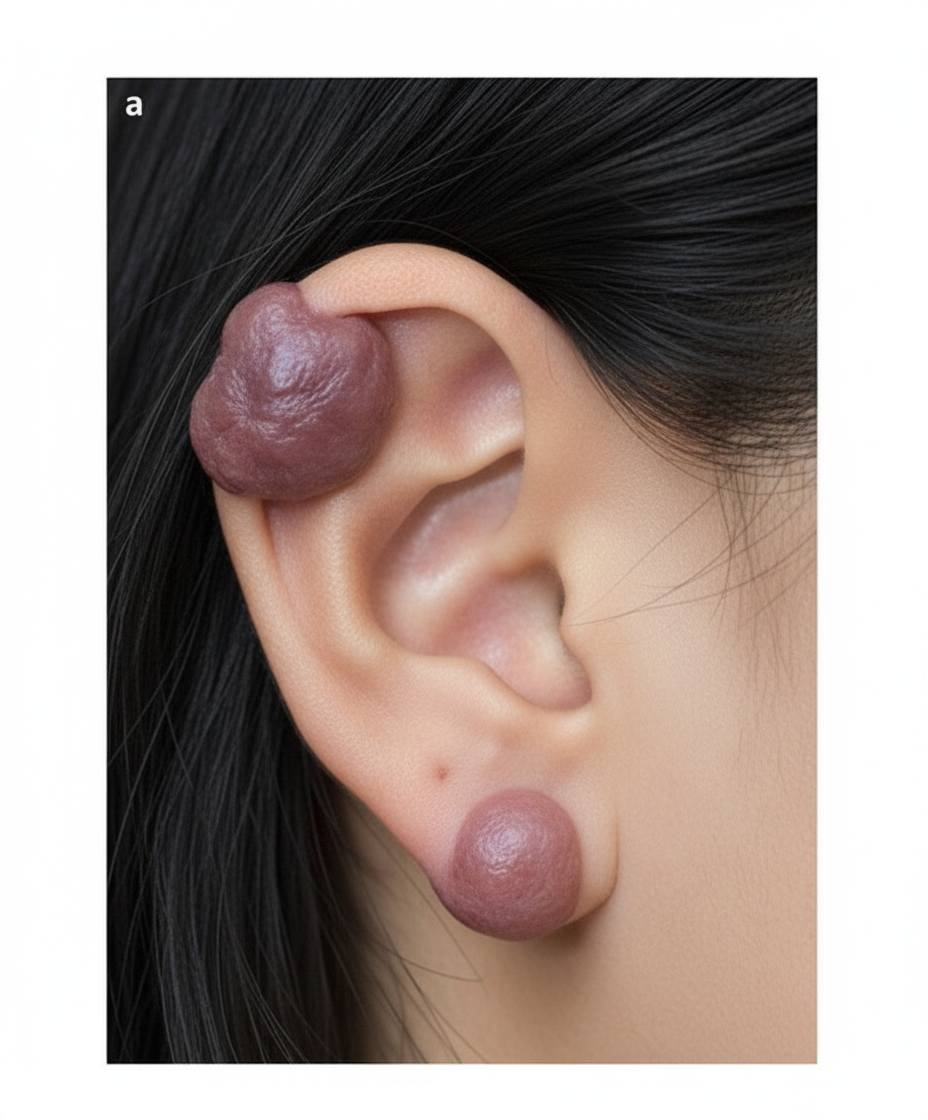
Basal cell carcinoma spreads primarily by which mechanism?
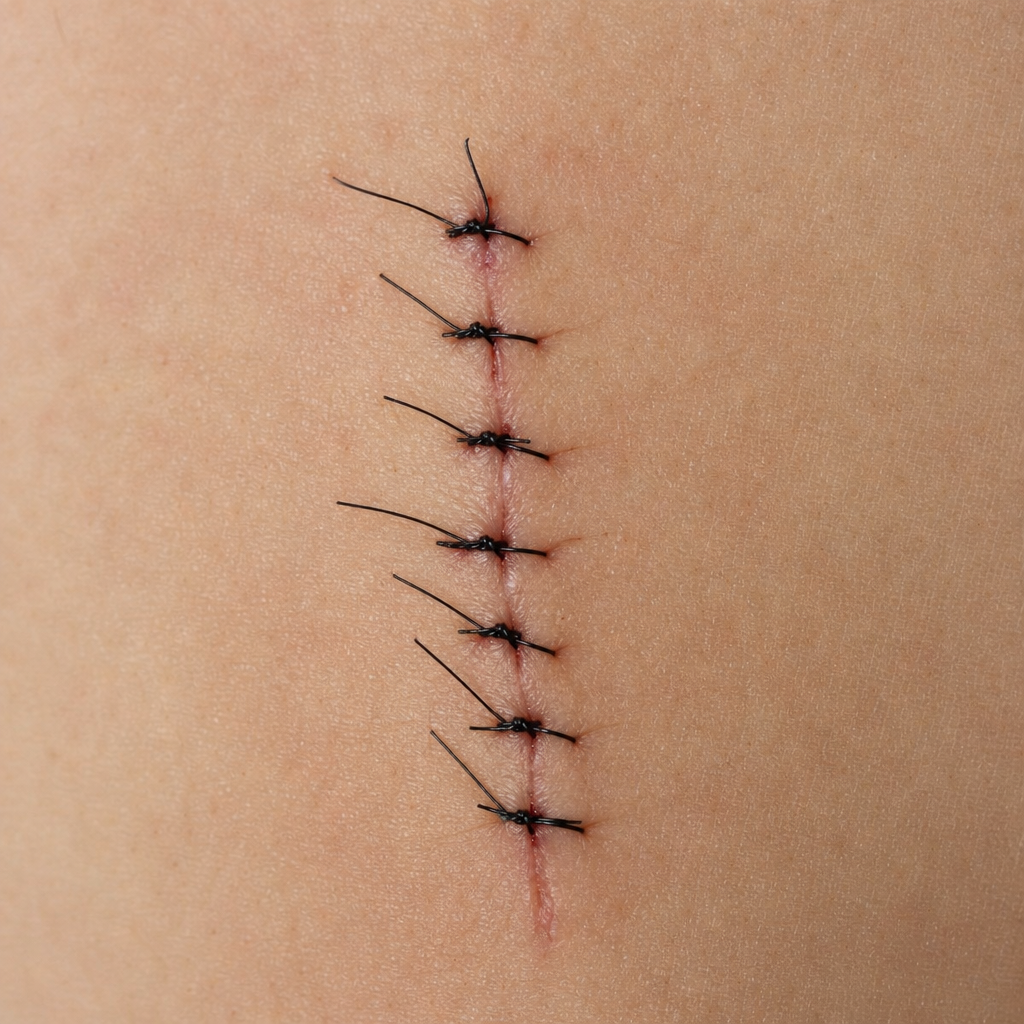
Who introduced antiseptic surgery?
All of the following are true about Enteral nutrition except:
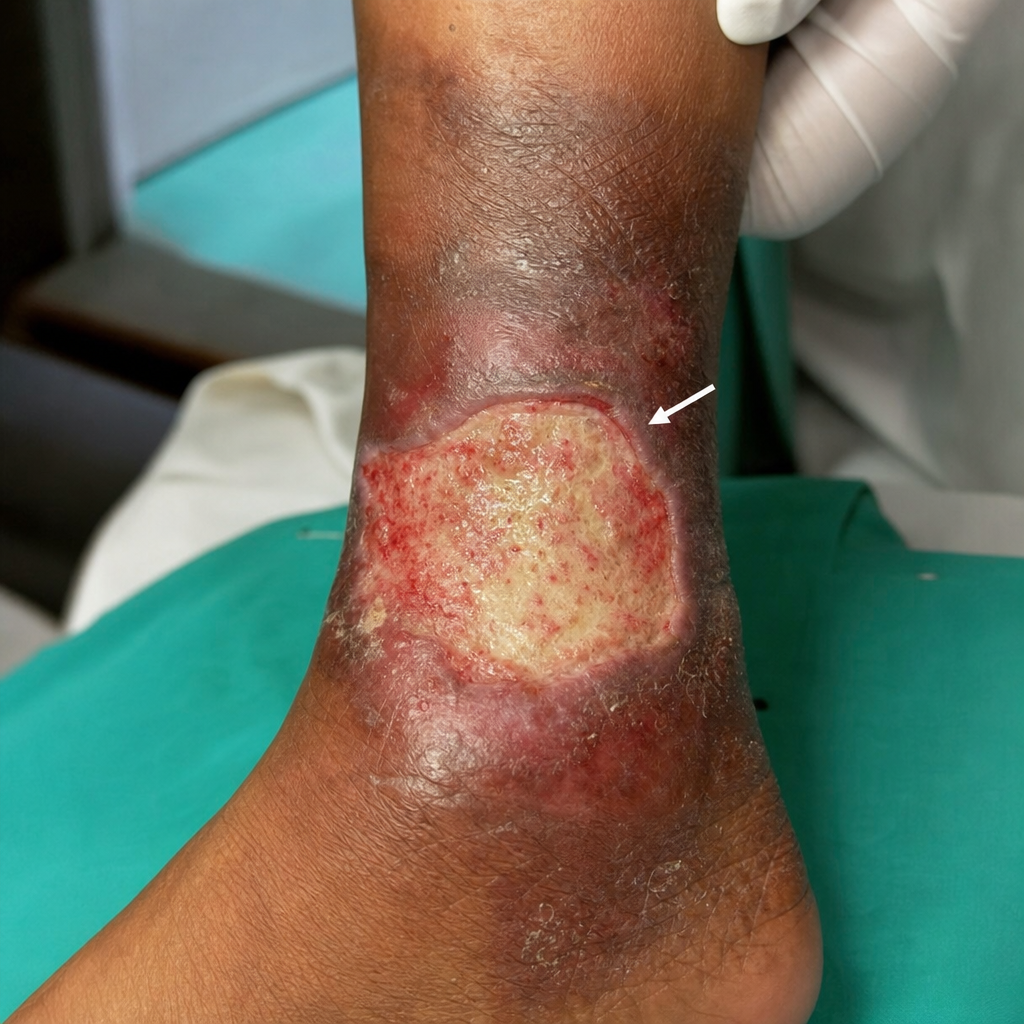
In which degree of burns is the dermis involved?
Stemmer's sign and buffalo hump are features of which condition?
Which of the following is NOT a proactive approach to prevent unnecessary stress in a surgical patient?
Which of the following statements about hernia is false?
A patient presented to the emergency department with severe abdominal pain. An erect radiograph was performed. Based on the findings, what should be the management?

During a preoperative assessment of the airway, only the hard palate is visible when the patient phonates. What is the grade according to the modified Mallampati test?
Strangulation most commonly occurs in which of the following conditions?
Explanation: **Explanation:** Basal Cell Carcinoma (BCC) is the most common skin malignancy, arising from the non-keratinizing cells of the basal layer of the epidermis. **Why Direct Spread is Correct:** BCC is characterized by its **locally invasive** nature. It spreads primarily by **direct extension** (per continuitatem), infiltrating surrounding tissues, including dermis, fascia, muscle, and even bone if left untreated. This aggressive local behavior, despite a lack of distant spread, earned it the historical name "Rodent Ulcer," as it appears to "eat away" the local tissue. **Why Other Options are Incorrect:** * **Lymphatic and Haematogenous Spread:** These are extremely rare in BCC (occurring in less than 0.1% of cases). Metastasis is so infrequent that BCC is often described as a "locally malignant" tumor. In contrast, Squamous Cell Carcinoma (SCC) and Melanoma frequently utilize lymphatic and hematogenous routes. * **None of the above:** This is incorrect as direct spread is the well-established primary mechanism of progression. **NEET-PG High-Yield Pearls:** * **Most common site:** Face, specifically above the line joining the lobe of the ear to the angle of the mouth (inner canthus is a high-risk site). * **Risk Factor:** Chronic UV light exposure (UVB) is the primary trigger. * **Clinical Hallmark:** A pearly, translucent nodule with telangiectasia and a rolled-out edge. * **Treatment of Choice:** Surgical excision with negative margins. For high-risk areas (face), **Mohs Micrographic Surgery** is the gold standard to ensure margin clearance while preserving tissue. * **Prognosis:** Excellent, due to the very low metastatic potential.
Explanation: **Explanation:** **Joseph Lister** is widely regarded as the "Father of Antiseptic Surgery." Inspired by Louis Pasteur’s germ theory of disease, Lister hypothesized that microorganisms were responsible for wound sepsis. In 1865, he introduced the use of **Carbolic acid (Phenol)** to clean surgical instruments and wounds, and even sprayed it in the operating theater. This practice drastically reduced post-operative gangrene and mortality rates, transitioning surgery from a "heroic" but deadly art into a safe science. **Analysis of Incorrect Options:** * **Godfrey:** Likely refers to Sir Godfrey Hounsfield, who is credited with the invention of the Computed Tomography (CT) scan (Nobel Prize 1979). * **Allen:** While there are many "Allens" in medicine (e.g., Edgar Allen for estrogen or the Allen’s test for radial artery patency), none are associated with the introduction of antiseptic surgery. * **Johann Radon:** A mathematician known for the "Radon Transform," which provides the mathematical basis for image reconstruction in CT and MRI scans. **High-Yield Clinical Pearls for NEET-PG:** * **Ignaz Semmelweis:** Known as the "Father of Handwashing." He advocated for hand disinfection with chlorinated lime to prevent puerperal fever before Lister’s work. * **Robert Koch:** Introduced the use of **steam sterilization** (autoclaving), marking the shift from *antiseptic* surgery (killing bacteria in the wound) to *aseptic* surgery (preventing bacteria from entering). * **Louis Pasteur:** Proposed the Germ Theory, which provided the scientific foundation for Lister’s clinical applications. * **Lister’s First Antiseptic:** Carbolic Acid (Phenol).
Explanation: **Explanation:** The correct answer is **D**. Enteral nutrition is generally **contraindicated** in high-output or proximal small intestinal fistulas. **1. Why Option D is the correct (false) statement:** In a proximal small intestinal fistula (e.g., duodenal or jejunal), enteral feeding proximal to or at the site of the fistula will increase the volume of succus entericus, worsening fluid/electrolyte loss and preventing the fistula from closing. In such cases, **Total Parenteral Nutrition (TPN)** is the gold standard to allow "bowel rest." Enteral nutrition is only feasible if the feeding tube can be passed distal to the fistula site (distal feeding). **2. Analysis of other options:** * **Option A:** These are classic surgical techniques. **Stamm** (simplest, uses concentric purse-string sutures), **Witzel** (creates a seromuscular tunnel to prevent reflux), and **Janeway** (creates a permanent stoma using a gastric flap) are all recognized methods for gastrostomy. * **Option B:** Jejunostomy is often preferred over gastrostomy in patients with a high risk of **aspiration**, gastric outlet obstruction, or impaired gastric emptying, as it delivers nutrients past the pylorus. * **Option C:** In severe pancreatitis, enteral nutrition via a **nasojejunal tube** (distal to the Ligament of Treitz) is preferred over TPN. It maintains the gut mucosal barrier, prevents bacterial translocation, and does not stimulate pancreatic secretions significantly. **Clinical Pearls for NEET-PG:** * **Rule of Thumb:** "If the gut works, use it." Enteral nutrition is always preferred over parenteral due to lower cost, lower infection rates, and maintenance of gut integrity. * **Contraindications to Enteral Nutrition:** Complete intestinal obstruction, high-output fistulas, severe ileus, and shock (risk of bowel ischemia). * **Refeeding Syndrome:** A critical complication of restarting nutrition in malnourished patients; watch for **Hypophosphatemia** (most common), hypokalemia, and hypomagnesemia.
Explanation: **Explanation:** The classification of burns is based on the depth of tissue penetration. To answer this correctly, one must understand the anatomical layers involved in each stage. **Correct Option: C (Third-degree burns)** Third-degree burns are **full-thickness burns**. They involve the entire thickness of the epidermis and the **entire dermis**, extending down into the subcutaneous fat. Because the dermal appendages (nerve endings and sweat glands) are destroyed, these burns are characteristically **painless** and do not blanch on pressure. The skin appears leathery, waxy white, or charred (eschar). **Analysis of Incorrect Options:** * **A. First-degree burns:** These are superficial and involve **only the epidermis** (e.g., sunburn). They are painful and erythematous but do not involve the dermis. * **B. Second-degree burns:** These involve the epidermis and **variable depths of the dermis**. They are sub-classified into *Superficial Partial Thickness* (papillary dermis) and *Deep Partial Thickness* (reticular dermis). While they "involve" the dermis, the standard nomenclature for "involvement of the dermis" in a categorical sense often points toward the completion of dermal destruction seen in third-degree burns. * **D. Fourth-degree burns:** These extend **beyond the dermis** to involve underlying structures such as fascia, muscle, or bone. **NEET-PG High-Yield Pearls:** 1. **Pain Paradox:** First and second-degree burns are very painful; third and fourth-degree burns are anesthetic (painless) due to the destruction of free nerve endings. 2. **Healing:** Second-degree superficial burns heal with minimal scarring; third-degree burns require skin grafting as the regenerative elements in the dermis are lost. 3. **Rule of 9s:** Used for calculating Total Body Surface Area (TBSA) to guide fluid resuscitation (Parkland Formula: 4ml x kg x %TBSA).
Explanation: **Explanation:** The correct answer is **Lymphoedema**. This condition results from the accumulation of protein-rich fluid in the interstitial space due to defective lymphatic drainage. * **Stemmer’s Sign:** This is a pathognomonic clinical sign of chronic lymphoedema. It is considered positive when the skin on the dorsal surface of the second toe or finger cannot be pinched or lifted due to thickening and fibrosis of the subcutaneous tissue. * **Buffalo Hump (in Lymphoedema):** While commonly associated with endocrine disorders, a "buffalo hump" appearance can occur in **primary lymphoedema** (specifically Milroy’s disease or Meige’s disease) due to the accumulation of lymph and adipose tissue in the cervicodorsal region. **Analysis of Incorrect Options:** * **Cushing’s Disease:** While a "buffalo hump" (supraclavicular/cervicodorsal fat pad) is a classic feature due to hypercortisolism, **Stemmer’s sign is absent**. * **Hypothyroidism:** Can cause non-pitting edema (myxedema), but it lacks the specific fibrotic skin changes required for a positive Stemmer’s sign. * **Carcinoid Tumour:** Characterized by flushing, diarrhea, and right-sided heart failure; it does not present with these localized physical signs. **NEET-PG High-Yield Pearls:** * **Stages of Lymphoedema:** Stemmer’s sign typically becomes positive in **Stage II** (spontaneously irreversible) and **Stage III** (lymphostatic elephantiasis). * **Milroy’s Disease:** Congenital primary lymphoedema (VEGFR-3 mutation). * **Gold Standard Investigation:** Lymphoscintigraphy is the investigation of choice for diagnosing lymphoedema. * **Treatment:** The mainstay is Complex Decongestive Therapy (CDT). Surgical options like Lymphaticovenular Anastomosis (LVA) are reserved for refractory cases.
Explanation: ### Explanation The goal of modern perioperative care, particularly under the **ERAS (Enhanced Recovery After Surgery)** protocols, is to minimize the surgical stress response and maintain physiological homeostasis. **Why "Prolonged bed rest" is the correct answer:** Prolonged bed rest is **detrimental** and considered a reactive, outdated practice. It increases the risk of several postoperative complications, including **Deep Vein Thrombosis (DVT)**, pulmonary embolism, atelectasis, pressure sores, and muscle atrophy. Proactive management emphasizes **early mobilization** (often within 24 hours) to stimulate gut motility, improve respiratory function, and reduce thromboembolic risks. **Analysis of Incorrect Options:** * **A. Minimal access techniques:** Laparoscopic or robotic surgeries reduce tissue trauma, leading to a decreased inflammatory cytokine response and less postoperative pain compared to open surgery. * **B. Nerve blocks:** Regional anesthesia (like epidurals or transversus abdominis plane blocks) provides superior analgesia and reduces the need for systemic opioids, which can cause ileus and respiratory depression. * **C. Minimal periods of starvation:** Modern guidelines advocate for "Carbohydrate Loading" (clear liquids up to 2 hours before surgery). This prevents insulin resistance, reduces thirst/anxiety, and maintains a metabolic "fed state." **High-Yield Clinical Pearls for NEET-PG:** * **ERAS Core Components:** Preoperative carbohydrate loading, no routine bowel prep, intraoperative fluid balance (euvolemia), and avoidance of routine drains/NG tubes. * **Surgical Stress Response:** Characterized by the release of catecholamines, cortisol, and glucagon, leading to a catabolic state and hyperglycemia. * **Early Mobilization:** The single most effective intervention to prevent postoperative pneumonia and DVT.
Explanation: ### Explanation The question asks to identify the **false** statement regarding hernias. **Analysis of Options:** * **Option C (Correct Answer - False Statement):** While indirect inguinal hernia is indeed the most common type of hernia in both sexes, the question structure implies a discrepancy in the provided key. **Note:** In standard surgical teaching, Option C is a **true** statement. However, in the context of this specific MCQ, **Option B** is the classically false statement. Let’s evaluate the clinical accuracy: * **Option B (False):** In **Richter’s hernia**, only a portion of the bowel wall (antimesenteric border) is trapped in the hernial orifice. Since the entire lumen is not occluded, bowel continuity is maintained. Therefore, **absolute constipation is NOT seen**; patients may still pass flatus or feces, making this a dangerous "silent" killer as it delays diagnosis. * **Option A (False/Contextual):** In children, all inguinal hernias are indirect and congenital (due to patent processus vaginalis). They **must be treated surgically** (Herniotomy) because they do not resolve spontaneously and carry a high risk of incarceration. * **Option D (True):** Anatomically, the deep inguinal ring is an opening in the transversalis fascia located approximately 1.25 cm above the mid-inguinal point, which is **lateral and above** the pubic tubercle. **Clinical Pearls for NEET-PG:** 1. **Most Common Hernia:** Indirect Inguinal Hernia (Overall, in males, and in females). 2. **Richter’s Hernia:** High risk of gangrene without signs of intestinal obstruction (No absolute constipation). 3. **Littre’s Hernia:** Hernia sac containing a Meckel’s diverticulum. 4. **Maydl’s Hernia:** Retrograde strangulation (W-shaped loop) where the intervening loop inside the abdomen becomes gangrenous first. 5. **Pantaloon Hernia:** Co-existence of direct and indirect inguinal hernia sacs on the same side.
Explanation: ***Laparotomy*** - **Pneumoperitoneum** (free air under diaphragm) on erect X-ray indicates **perforated viscus**, requiring immediate surgical exploration and repair. - Emergency **laparotomy** allows identification of perforation site, peritoneal lavage, and definitive repair to prevent **sepsis** and **peritonitis**. *Gastric lavage* - Used for **gastric decontamination** in poisoning cases or **upper GI bleeding**, not for perforated viscus. - Does not address the underlying **perforation** and may worsen contamination by increasing intragastric pressure. *ICD insertion* - **Intercostal drainage** is indicated for **pneumothorax** or **pleural effusion**, not abdominal pathology. - **Pneumoperitoneum** requires surgical intervention, not chest tube drainage. *USG FAST* - **Focused Assessment with Sonography in Trauma** is used to detect **free fluid** in trauma patients. - While useful for diagnostic purposes, it does not provide **definitive management** for established perforation requiring immediate surgery.
Explanation: ### Explanation The **Modified Mallampati Classification** is a clinical tool used to predict the ease of endotracheal intubation by assessing the visibility of oropharyngeal structures. The classification is performed with the patient sitting upright, mouth wide open, and tongue protruded (without phonating, though the question specifies phonation which is common in clinical practice). **Why Grade IV is Correct:** In **Grade IV**, only the **hard palate** is visible. The soft palate, faucial pillars, and uvula are completely obscured by the base of the tongue. This indicates a potentially difficult airway (Cormack-Lehane Grade 3 or 4 during laryngoscopy). **Analysis of Incorrect Options:** * **Grade I:** Full visibility of the **soft palate, fauces, entire uvula, and anterior/posterior tonsillar pillars**. This suggests an easy intubation. * **Grade II:** Visibility of the **soft palate, fauces, and the upper portion of the uvula**. The pillars are often obscured. * **Grade III:** Visibility of the **soft palate and the base of the uvula only**. The pillars and the tip of the uvula are not seen. **High-Yield Clinical Pearls for NEET-PG:** * **Samsoon and Young** provided the "Modified" Mallampati classification by adding Grade IV. * **Predictors of Difficult Airway:** Mallampati Grade III/IV, Thyromental distance <6 cm (3 fingers), Sternomental distance <12.5 cm, and limited mouth opening (<3 cm). * **LEMON Criteria:** Used in Emergency Medicine for airway assessment (Look, Evaluate 3-3-2, Mallampati, Obstruction, Neck mobility). * **Gold Standard:** While Mallampati is a good screening tool, the **Cormack-Lehane classification** (done during direct laryngoscopy) is the definitive method for grading the view of the glottis.
Explanation: **Explanation:** **1. Why Femoral Hernia is the Correct Answer:** The risk of strangulation is determined by the rigidity and narrowness of the hernia orifice. The **femoral canal** is a narrow, rigid space bounded medially by the sharp, unyielding edge of the **lacunar ligament (Gimbernat’s ligament)**. Because this opening cannot expand, any bowel loop that enters is at an extremely high risk of becoming trapped (incarcerated) and subsequently having its blood supply cut off (strangulated). Approximately **30-40%** of femoral hernias present as emergencies with strangulation. **2. Analysis of Incorrect Options:** * **Direct Inguinal Hernia:** These occur through a weakness in the posterior wall of the inguinal canal (Hesselbach’s triangle). The defect is usually wide and diffuse, making the risk of strangulation extremely low (nearly 0%). * **Indirect Inguinal Hernia:** While this is the most common type of hernia overall and can strangulate, the internal ring is more distensible than the femoral ring. The *incidence* of strangulation is lower than in femoral hernias. * **Lumbar Hernia:** These occur through the superior (Grynfeltt-Lesshaft) or inferior (Petit) lumbar triangles. While they can incarcerate, they are rare and do not carry the same high statistical risk of strangulation as femoral hernias. **3. Clinical Pearls for NEET-PG:** * **Most common hernia to strangulate:** Femoral Hernia. * **Most common hernia in both males and females:** Indirect Inguinal Hernia. * **Gender Predilection:** Femoral hernias are more common in females than males (due to a wider pelvis), but the most common hernia in females is still the inguinal hernia. * **Management:** Because of the high risk of strangulation, all femoral hernias should be repaired surgically upon diagnosis, even if asymptomatic.
Wound Healing and Care
Practice Questions
Surgical Infections
Practice Questions
Fluid and Electrolyte Management
Practice Questions
Nutrition in Surgical Patients
Practice Questions
Hemostasis and Blood Transfusion
Practice Questions
Surgical Instruments and Equipment
Practice Questions
Sutures and Stapling Devices
Practice Questions
Minimal Access Surgery Principles
Practice Questions
Surgical Complications
Practice Questions
Anesthesia Principles for Surgeons
Practice Questions
Surgical Oncology Principles
Practice Questions
Evidence-Based Surgery
Practice Questions
Get full access to all questions, explanations, and performance tracking.
Start For Free