An absolute contraindication for extraction of teeth is:
Which salivary gland tumor is exclusively seen in the parotid gland?
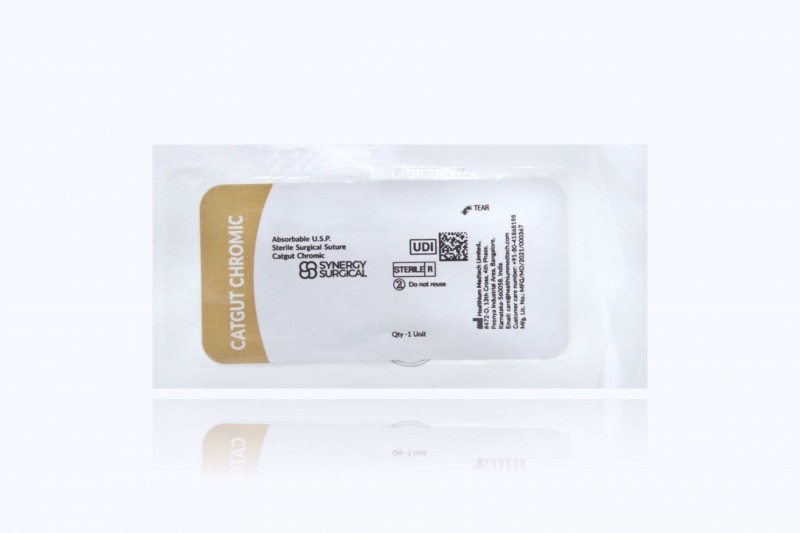
Maximum tissue reaction is associated with which suture material?
A skin ulcer with undermined edges suggests which of the following conditions?
A patient with an abdominal wall desmoid tumor should be screened for which of the following conditions?
What is the most common type of hernia in females?
What is the name of the instrument shown?

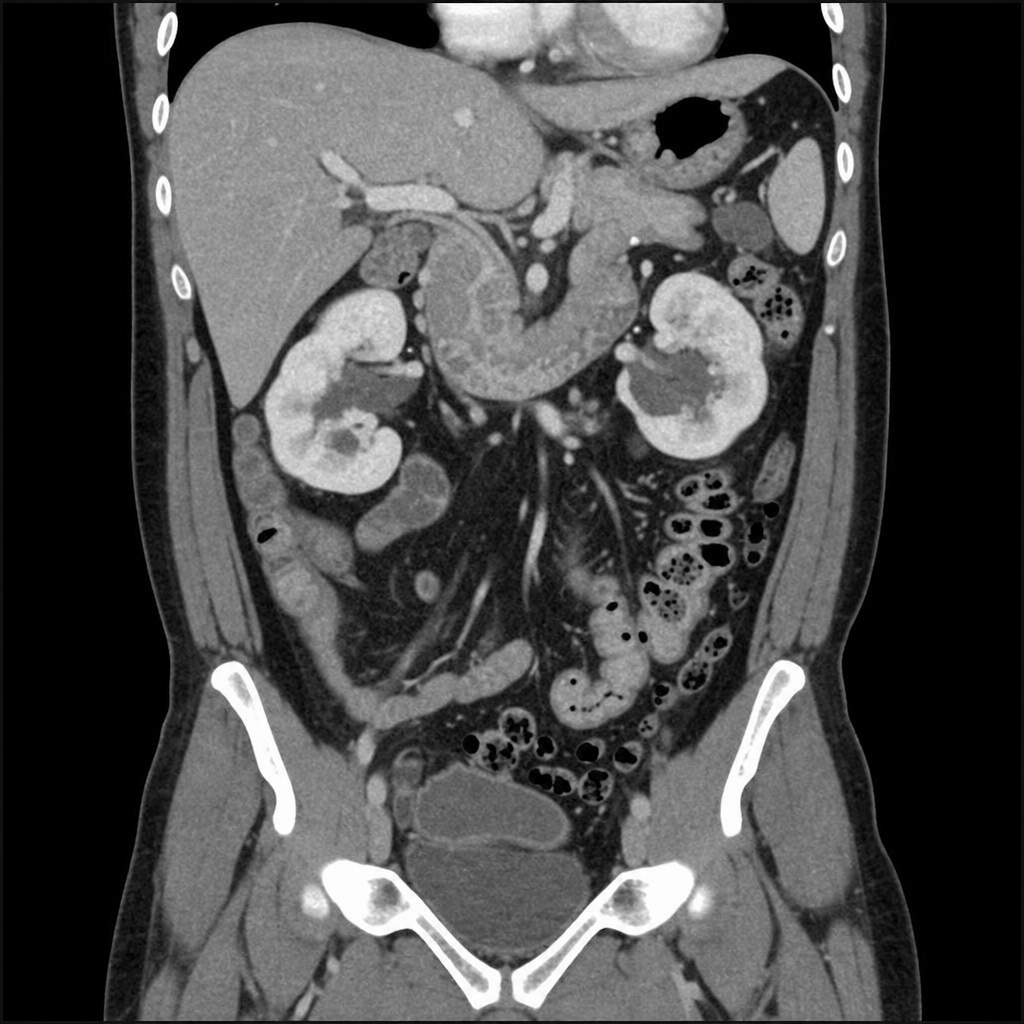
What is true regarding hemangioma of the spleen?
Colopotomy is done to treat which of the following?
Name the incision.

Explanation: **Explanation:** The correct answer is **Central Hemangioma**. **Why Central Hemangioma is the Correct Answer:** A central hemangioma is a benign vascular neoplasm located within the bone (usually the mandible). It consists of a proliferation of blood vessels that create large, blood-filled cavernous spaces. Tooth extraction in the vicinity of a central hemangioma is an **absolute contraindication** because it can lead to sudden, massive, and often uncontrollable "exsanguinating" hemorrhage. Once the tooth is removed, the protective bony socket is lost, and the high-pressure vascular lesion can bleed so rapidly that it may result in hypovolemic shock or death on the dental chair. **Why Other Options are Incorrect:** * **Hypertension:** This is a **relative contraindication**. Extraction can be performed once blood pressure is pharmacologically controlled (usually <160/100 mmHg) and with the use of local anesthesia containing limited epinephrine. * **Myocardial Infarction (MI):** This is a **relative contraindication**. Elective extractions are typically deferred for 6 months post-MI to allow the myocardium to heal and to manage anticoagulant therapy. However, it is not "absolute" in emergency life-saving situations. * **Thyrotoxicosis:** This is a **relative contraindication**. Uncontrolled hyperthyroidism carries a risk of "Thyroid Storm" due to stress; however, once the patient is rendered euthyroid with medication, extraction is safe. **High-Yield Clinical Pearls for NEET-PG:** * **Radiographic Appearance:** Central hemangiomas often show a "soap bubble," "honeycomb," or "sunburst" appearance on X-ray. * **Aspiration Test:** Always perform needle aspiration before any surgical intervention in a suspected bony lesion of the jaw to rule out a vascular malformation. * **Management:** Treatment of central hemangioma usually involves embolization followed by surgical resection or sclerotherapy.
Explanation: **Explanation:** **Warthin’s Tumor (Papillary Cystadenoma Lymphomatosum)** is the correct answer because of its unique embryological origin. During development, the parotid gland is the only salivary gland that contains **intraparenchymal lymph nodes**. Warthin’s tumor arises from salivary ductal epithelium that becomes entrapped within these lymphoid tissues during fetal life. Since other salivary glands (submandibular, sublingual, or minor) do not contain these internal lymph nodes, Warthin’s tumor is found **exclusively in the parotid gland** (specifically the tail of the parotid). **Analysis of Incorrect Options:** * **Pleomorphic Adenoma:** This is the most common salivary gland tumor overall. While it most frequently occurs in the parotid, it can arise in any salivary gland, including the submandibular and minor salivary glands (most commonly the palate). * **Mucoepidermoid Carcinoma:** This is the most common malignant salivary gland tumor. It occurs in both major and minor salivary glands. * **Adenoid Cystic Carcinoma:** This is the most common malignant tumor of the **submandibular and minor salivary glands**. It is notorious for perineural invasion. **High-Yield NEET-PG Pearls:** * **Smoking Link:** Warthin’s tumor is strongly associated with smoking. * **Hot Spot:** On Technetium-99m pertechnetate scan, Warthin’s tumor appears as a "hot" lesion (due to the presence of oncocytes). * **Bilateralism:** It is the most common salivary tumor to present bilaterally or multicentrically (10% of cases). * **Demographics:** Classically seen in older males (though the male-to-female ratio is narrowing).
Explanation: **Explanation:** The degree of tissue reaction to a suture material is primarily determined by its origin (natural vs. synthetic) and its structure (monofilament vs. multifilament). **Why Plain Catgut is correct:** Plain catgut is a natural, absorbable suture derived from the submucosa of sheep intestine or the serosa of bovine intestine. Because it is a **foreign animal protein**, it triggers a significant inflammatory response. Unlike synthetic sutures that undergo hydrolysis, catgut is degraded by **enzymatic digestion** by macrophages. This process results in the highest degree of tissue reaction among all commonly used sutures, leading to faster loss of tensile strength and increased scarring. **Why the other options are incorrect:** * **Polypropylene (A):** A synthetic, non-absorbable monofilament. It is chemically inert and associated with the **least** tissue reaction, making it ideal for vascular surgery and skin closure. * **Polyglyconate (B) & Polydioxanone (C):** These are synthetic, absorbable monofilaments. Because they are synthetic, they are broken down by **hydrolysis** rather than enzymatic action, resulting in minimal inflammatory response compared to natural materials like catgut. **NEET-PG High-Yield Pearls:** * **Most Inert Suture:** Polypropylene (Prolene) or Stainless Steel. * **Suture with Highest Tissue Reaction:** Plain Catgut > Chromic Catgut > Silk. * **Degradation Mechanism:** Natural sutures (Catgut, Silk) = Proteolysis/Enzymatic; Synthetic sutures (Vicryl, PDS, Monocryl) = Hydrolysis. * **Catgut Contraindication:** Never use in the presence of infection or for suturing the biliary/urinary tract (can act as a nidus for stone formation).
Explanation: **Explanation:** The character of an ulcer’s edge is a classic clinical sign used to differentiate various pathologies. In this case, **Tuberculosis (TB)** is the correct answer because TB ulcers typically present with **undermined edges**. This occurs because the subcutaneous fat and connective tissue are destroyed more rapidly by the caseous necrosis than the overlying skin, causing the skin to "overhang" the floor of the ulcer. **Analysis of Options:** * **Tuberculosis (Correct):** Characterized by undermined edges, a bluish-purple hue of the surrounding skin, and a floor covered with pale, unhealthy granulations. * **Syphilis (Incorrect):** Tertiary syphilis (Gumma) typically presents as a **punched-out ulcer** with a "wash-leather" slough at the base. It is usually painless and circular. * **Cancerous Ulcer (Incorrect):** Malignant ulcers (like Squamous Cell Carcinoma) are characterized by **everted (rolled-out) edges** due to the rapid proliferation of neoplastic cells at the margin. * **Venous Ulcer (Incorrect):** These usually have **sloping edges**. They are commonly located in the "gaiter area" (medial malleolus) and are associated with chronic venous insufficiency and skin changes like lipodermatosclerosis. **High-Yield Clinical Pearls for NEET-PG:** * **Undermined edge:** Tuberculosis. * **Punched-out edge:** Syphilis, Trophic (Neuropathic) ulcers, Vasculitic ulcers. * **Everted edge:** Squamous cell carcinoma (Marjolin’s ulcer), Epithelioma. * **Sloping edge:** Healing traumatic or venous ulcer. * **Rolled-in (Inverted) edge:** Basal Cell Carcinoma (Rodent ulcer).
Explanation: ### Explanation **Correct Answer: C. Colonic polyps** **Why it is correct:** Desmoid tumors (also known as aggressive fibromatosis) are benign but locally invasive myofibroblastic neoplasms. There is a strong clinical association between desmoid tumors and **Familial Adenomatous Polyposis (FAP)**, specifically **Gardner Syndrome**. Gardner Syndrome is a variant of FAP characterized by the triad of: 1. **Colonic polyposis** (thousands of adenomatous polyps with 100% risk of malignancy). 2. **Soft tissue tumors** (Desmoid tumors are the most common extra-colonic manifestation). 3. **Bone tumors** (Osteomas, typically of the mandible or skull). Approximately 10–15% of patients with FAP develop desmoid tumors. Conversely, any patient presenting with an abdominal wall desmoid tumor must be screened for FAP via **colonoscopy** to identify precancerous colonic polyps. **Why the other options are incorrect:** * **A, B, & D (Lung, Breast, Pancreatic cancer):** While FAP/Gardner Syndrome can occasionally be associated with other malignancies (like periampullary or thyroid cancer), there is no direct or pathognomonic link between desmoid tumors and lung, breast, or primary pancreatic adenocarcinoma. Screening for these is not standard protocol upon finding a desmoid tumor. **High-Yield Clinical Pearls for NEET-PG:** * **Location:** Desmoid tumors most commonly occur in the **rectus abdominis** muscle in women (often post-pregnancy) or intra-abdominally in FAP patients. * **Molecular Basis:** They are associated with mutations in the **APC gene** (Wnt signaling pathway) or the **CTNNB1 gene** (beta-catenin). * **Management:** The current "gold standard" is **active surveillance** (Wait and Watch) for asymptomatic cases, as they do not metastasize. Surgery is reserved for symptomatic or progressing tumors due to high recurrence rates. * **Pharmacotherapy:** NSAIDs (Sulindac) and Anti-estrogens (Tamoxifen) are sometimes used in medical management.
Explanation: **Explanation:** The correct answer is **Indirect inguinal hernia**. This is a classic high-yield concept in surgery that often confuses students due to the anatomical predisposition of females to femoral hernias. **1. Why Indirect Inguinal Hernia is Correct:** While femoral hernias are more common in females than in males, the **indirect inguinal hernia** remains the most common type of hernia in **both sexes**. In females, the indirect hernia occurs due to the patency of the *processus vaginalis* (Nuck’s canal), allowing abdominal contents to protrude through the deep inguinal ring. Statistically, the frequency of inguinal hernias far outweighs that of femoral hernias, even in the female population. **2. Analysis of Incorrect Options:** * **Direct Inguinal Hernia:** These occur through Hesselbach’s triangle due to an acquired weakness in the abdominal wall. They are significantly less common in females compared to males. * **Femoral Hernia:** This is the "trap" option. While it is true that femoral hernias are **more common in females than in males** (due to a wider bony pelvis), they are still less common than indirect inguinal hernias in females. * **Incisional Hernia:** These occur at the site of previous surgical scars. While common post-operatively, they do not surpass the baseline incidence of indirect inguinal hernias. **Clinical Pearls for NEET-PG:** * **Most common hernia overall (M/F):** Indirect Inguinal Hernia. * **Most common hernia in females:** Indirect Inguinal Hernia. * **Hernia with the highest risk of strangulation:** Femoral Hernia (due to the rigid boundaries of the femoral canal). * **Nuck’s Canal:** The female equivalent of the processus vaginalis; its failure to obliterate leads to indirect hernias in women.
Explanation: ***Proctoscope*** - A **short, rigid instrument** (typically 6-8 cm long) specifically designed for **direct visualization** of the **anal canal** and **lower rectum**. - Features a **straight, tubular design** with built-in lighting and is commonly used for **hemorrhoid evaluation** and **anorectal procedures**. *Sigmoidoscope* - A **longer instrument** (25-60 cm) designed to examine the **sigmoid colon** and **rectum**, extending much further than a proctoscope. - Available in both **rigid** and **flexible** versions, requiring more extensive preparation and patient positioning. *Colonoscope* - A **long, flexible endoscope** (typically 160-180 cm) used for **complete colonic examination** from rectum to cecum. - Features **advanced optics**, **biopsy channels**, and **therapeutic capabilities** for comprehensive colonoscopy procedures. *Rhinoscope* - A **nasal examination instrument** with a **speculum-like design** used to visualize the **nasal cavity** and **nasopharynx**. - Completely different anatomy target with **angled mirrors** or **fiber-optic lighting** for **ENT procedures**.
Explanation: **Explanation:** Splenic hemangiomas are the **most common primary benign neoplasm** of the spleen. They are typically slow-growing, vascular lesions composed of blood-filled cystic spaces. **1. Why Option B is Correct:** While most splenic hemangiomas are asymptomatic and follow a benign course, they carry a documented risk of **malignant transformation into hemangiosarcoma** (angiosarcoma). This is a highly aggressive primary malignancy of the spleen with a poor prognosis. Because of this risk, as well as the potential for spontaneous rupture (leading to life-threatening intraperitoneal hemorrhage), surgical intervention is often considered for large or symptomatic lesions. **2. Why Other Options are Incorrect:** * **Option A:** This is incorrect because hemangiomas are the **most common** benign tumor of the spleen, not the least common. * **Option C:** Malignant transformation (hemangiosarcoma) is never managed conservatively. It requires aggressive surgical resection (splenectomy) often followed by adjuvant chemotherapy. Even benign hemangiomas, if they show rapid growth or reach a size >4 cm, are usually managed surgically to prevent rupture. **High-Yield Clinical Pearls for NEET-PG:** * **Most common benign splenic tumor:** Hemangioma. * **Most common primary splenic malignancy:** Non-Hodgkin Lymphoma (however, Hemangiosarcoma is the most common primary *non-lymphoid* malignancy). * **Classic Presentation:** Most are incidental findings on imaging (USG/CT), but large ones present with left upper quadrant pain or "Kasabach-Merritt Syndrome" (consumptive coagulopathy and thrombocytopenia). * **Imaging:** On CT, they show peripheral enhancement with centripetal fill-in (similar to hepatic hemangiomas).
Explanation: **Explanation:** **Colpotomy** (specifically posterior colpotomy) is a surgical procedure where an incision is made through the posterior vaginal wall into the **Pouch of Douglas (Rectouterine pouch)**. 1. **Why Pelvic Abscess is Correct:** The Pouch of Douglas is the most dependent (lowest) part of the peritoneal cavity in a female. Inflammatory processes (like PID or ruptured appendicitis) often lead to the accumulation of pus in this space, forming a **pelvic abscess**. A posterior colpotomy allows for direct, gravity-dependent drainage of this abscess through the vaginal vault, avoiding a more invasive laparotomy. 2. **Why Other Options are Incorrect:** * **Ischiorectal and Perianal Abscesses:** These are types of anorectal abscesses located in the perianal skin or the ischiorectal fossa (below the pelvic floor). They are drained via **external skin incisions** (usually cruciate incisions) near the anus, not through the vaginal wall. * **Appendicular Abscess:** While a pelvic abscess can result from appendicitis, a localized appendicular abscess in the right iliac fossa is typically drained percutaneously (ultrasound-guided) or via an abdominal approach (extraperitoneal drainage). **NEET-PG High-Yield Pearls:** * **Clinical Presentation:** A pelvic abscess typically presents with swinging fever, diarrhea, and mucus discharge per rectum (due to irritation of the anterior rectal wall). * **Diagnosis:** On Per-Vaginal (PV) or Per-Rectal (PR) examination, a **tender, boggy swelling** is felt in the posterior fornix or anterior rectal wall. * **Culdocentesis:** This is the aspiration of fluid from the Pouch of Douglas via the posterior fornix, used to diagnose hemoperitoneum (e.g., ruptured ectopic pregnancy) or pus. * **Anatomical Landmark:** The incision for posterior colpotomy is made between the uterosacral ligaments.
Explanation: ***Chevron incision*** - A **bilateral subcostal incision** that extends horizontally across the upper abdomen, creating a "rooftop" or inverted V-shape appearance. - Provides excellent **exposure to the liver, gallbladder, and upper abdominal organs**, commonly used for hepatobiliary procedures and liver transplantation. *Kocher's incision* - A **right subcostal incision** that runs parallel to the right costal margin, limited to one side only. - Primarily used for **open cholecystectomy** and right upper quadrant procedures, not bilateral like the image shows. *Lanz incision* - A **transverse incision in the right iliac fossa**, positioned lower in the abdomen over McBurney's point. - Specifically designed for **appendectomy procedures**, located much lower than the subcostal region shown. *Maylard incision* - A **transverse incision in the lower abdomen** that cuts through the rectus abdominis muscles. - Used for **gynecological procedures** and lower abdominal access, positioned significantly below the costal margins.
Wound Healing and Care
Practice Questions
Surgical Infections
Practice Questions
Fluid and Electrolyte Management
Practice Questions
Nutrition in Surgical Patients
Practice Questions
Hemostasis and Blood Transfusion
Practice Questions
Surgical Instruments and Equipment
Practice Questions
Sutures and Stapling Devices
Practice Questions
Minimal Access Surgery Principles
Practice Questions
Surgical Complications
Practice Questions
Anesthesia Principles for Surgeons
Practice Questions
Surgical Oncology Principles
Practice Questions
Evidence-Based Surgery
Practice Questions
Get full access to all questions, explanations, and performance tracking.
Start For Free