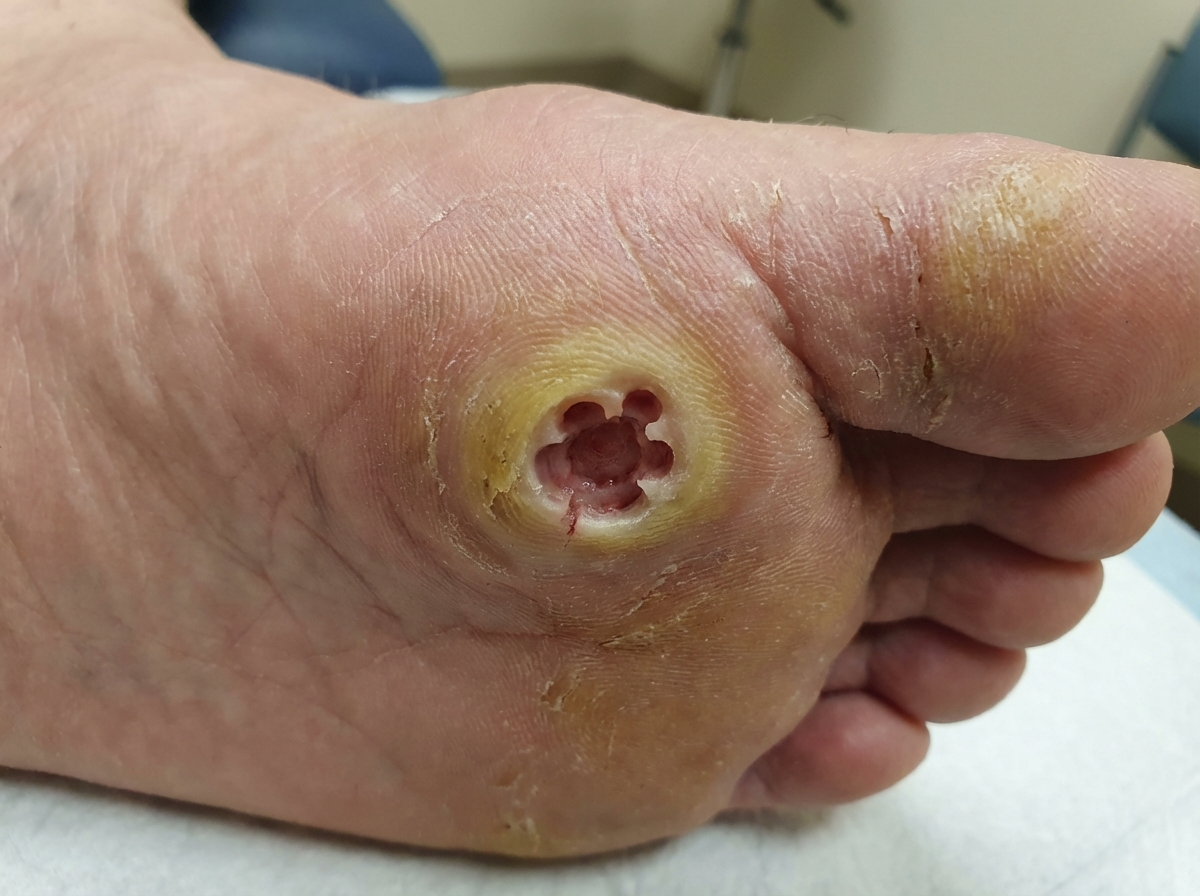
Paradoxical aciduria is seen in which of the following conditions?
Which of the following tumors is not found in the anterior mediastinum?
When an extraoral vertical subsigmoid osteotomy is performed, which of the following is false?
Mönckeberg's calcific sclerosis affects the medium-sized muscular arteries by involving which layer?
Malignant change in lipoma is most common in which anatomical location?
A 70-year-old, moderately obese woman presents with a large midline incisional hernia. She underwent colon resection for adenocarcinoma one year previously. Which of the following statements is truest regarding her condition?
What is the most appropriate treatment for a desmoid tumor diagnosed in the abdomen?
Which of the following is characteristic of a moist heat burn?
Bassini's repair is indicated for which type of hernia?
A 50-year-old patient developed a wound infection post-laparotomy for pyoperitoneum and was treated conservatively. Granulation tissue is now seen in the wound. What is the next step in management?
Explanation: **Explanation:** **Paradoxical Aciduria** is a classic metabolic hallmark of **Pyloric Obstruction** (e.g., Gastric Outflow Obstruction or Infantile Hypertrophic Pyloric Stenosis). **Pathophysiology:** 1. **Initial Insult:** Persistent vomiting leads to loss of HCl, resulting in **Hypochloremic Hypokalemic Metabolic Alkalosis**. 2. **Renal Compensation:** Initially, the kidney tries to compensate for alkalosis by excreting bicarbonate ($HCO_3^-$). Since $HCO_3^-$ is negatively charged, it drags sodium ($Na^+$) with it, leading to dehydration. 3. **The Paradox:** As dehydration worsens, the body prioritizes volume over pH. Aldosterone is secreted to reabsorb $Na^+$. In the distal tubule, $Na^+$ is reabsorbed in exchange for either Potassium ($K^+$) or Hydrogen ($H^+$). 4. **Final Stage:** Because the patient is already hypokalemic, the kidney is forced to exchange $Na^+$ for $H^+$ ions. Consequently, $H^+$ is excreted into the urine, making it **acidic** despite the systemic **alkalosis**. **Analysis of Incorrect Options:** * **A. Intestinal obstruction:** Usually presents with metabolic acidosis due to loss of alkaline succus entericus and dehydration-induced lactic acidosis. * **C. Enterocutaneous fistula:** Typically leads to metabolic acidosis due to the massive loss of bicarbonate-rich intestinal or pancreatic fluids. * **D. Vesicovaginal fistula:** This is a structural communication between the bladder and vagina; it causes urinary incontinence but does not inherently cause systemic electrolyte or acid-base disturbances. **High-Yield Clinical Pearls for NEET-PG:** * **Metabolic Profile:** Hypochloremic, Hypokalemic, Metabolic Alkalosis with Paradoxical Aciduria. * **Fluid of Choice:** Normal Saline (0.9% NaCl). It addresses the volume deficit and provides Chloride, which allows the kidney to stop $H^+$ excretion. * **Potassium:** Must be replaced only after ensuring adequate urine output.
Explanation: ### Explanation The mediastinum is anatomically divided into compartments, and identifying the specific location of a mass is the most crucial step in narrowing the differential diagnosis. **1. Why Neurogenic Tumor is the Correct Answer:** Neurogenic tumors (such as Schwannomas, Neurofibromas, and Ganglioneuromas) are the most common primary tumors of the **posterior mediastinum**. They typically arise from the spinal nerve roots or the sympathetic chain located in the paravertebral gutters. Therefore, they are not found in the anterior mediastinum. **2. Analysis of Incorrect Options (Anterior Mediastinal Masses):** The anterior mediastinum is the space between the sternum and the pericardium. The differential diagnosis for a mass in this region is famously remembered by the **"4 Ts"**: * **Retrosternal Goiter (Thyroid):** Ectopic thyroid tissue or a cervical goiter extending behind the sternum (Option A). * **Thymoma:** The most common primary anterior mediastinal tumor in adults (Option B). * **Teratoma (and other Germ Cell Tumors):** These are common in young adults; mature teratomas are the most frequent subtype (Option C). * **"Terrible" Lymphoma:** Often presents with bulky lymphadenopathy. **3. High-Yield Clinical Pearls for NEET-PG:** * **Most common mediastinal mass overall:** Neurogenic tumors (located posteriorly). * **Most common anterior mediastinal mass:** Thymoma. * **Thymoma Association:** Approximately 30–50% of patients with thymoma have **Myasthenia Gravis**. Conversely, only 15% of patients with Myasthenia Gravis have a thymoma. * **Imaging Gold Standard:** Contrast-Enhanced CT (CECT) is the investigation of choice for localizing and characterizing mediastinal masses. * **Posterior Mediastinum Boundaries:** Contains the esophagus, descending aorta, and the sympathetic chain.
Explanation: **Explanation:** The **Extraoral Vertical Subsigmoid Osteotomy (EVSO)** is a surgical technique used primarily for mandibular setback in cases of prognathism. **Why Option B is the Correct (False) Statement:** Postoperative morbidity is actually **increased** in extraoral approaches compared to intraoral techniques. The extraoral route requires a skin incision (usually submandibular/Risdon approach), which leads to **visible cutaneous scarring** and carries a higher risk of damaging the **marginal mandibular branch of the facial nerve**. In contrast, the intraoral approach avoids external scars and reduces the risk of facial nerve injury, making it the preferred choice for reducing morbidity. **Analysis of Other Options:** * **Option A:** Extraoral access provides a direct, wide-field view of the lateral aspect of the ramus, making the surgical procedure technically **easier** to visualize than the restricted space of an intraoral approach. * **Option C:** The **lingula** (the landmark for the mandibular foramen) corresponds to a small bony prominence or depression on the **lateral surface** of the ramus, which serves as a vital surgical landmark to ensure the osteotomy is performed posterior to the neurovascular bundle. * **Option D:** During significant mandibular setback, the **coronoid process** may abut the anterior border of the zygomatic arch or the distal segment, acting as a physical bony limit to the posterior movement. **High-Yield Clinical Pearls for NEET-PG:** * **Indication:** EVSO is preferred for large mandibular setbacks (>10mm) where the Intraoral Vertical Ramus Osteotomy (IVRO) might be technically difficult. * **Nerve at Risk:** The **Marginal Mandibular Nerve** is the most vulnerable structure during the extraoral approach. * **Fixation:** Unlike Sagittal Split Osteotomy (SSO), vertical ramus osteotomies often rely on "clinched" wiring or no fixation (allowing the segments to overlap), requiring a period of Maxillomandibular Fixation (MMF).
Explanation: **Explanation:** **Mönckeberg’s medial calcific sclerosis** is a specific type of arteriosclerosis characterized by calcium deposits within the **tunica media** of medium and small-sized muscular arteries (e.g., femoral, tibial, radial, and ulnar arteries). 1. **Why Option B is Correct:** The hallmark of this condition is dystrophic calcification localized strictly to the **tunica media**. These deposits form ring-like structures or plates that do not narrow the vessel lumen, as they occur within the muscular layer rather than the lining. This is why patients typically remain asymptomatic and do not suffer from ischemia, despite the vessels appearing "pipe-stem" like on imaging. 2. **Why Other Options are Incorrect:** * **Option A (Intima):** Involvement of the intima is the characteristic feature of **Atherosclerosis**, where fibro-fatty plaques narrow the lumen. In Mönckeberg’s, the intima remains smooth and unaffected. * **Option C (Adventitia):** The adventitia is the outermost connective tissue layer and is not the primary site of calcification in any major form of arteriosclerosis. * **Option D:** Since the pathology is histologically confined to the media, "All of the above" is incorrect. **High-Yield Clinical Pearls for NEET-PG:** * **Radiology:** Often an incidental finding on X-rays, appearing as "railroad track" or "pipe-stem" calcifications. * **Clinical Presentation:** It does **not** cause luminal narrowing; therefore, pulses are usually palpable. However, it can cause a falsely elevated Ankle-Brachial Index (ABI) due to non-compressible vessels. * **Associations:** Most commonly seen in elderly patients, individuals with **Diabetes Mellitus**, and those with **Chronic Kidney Disease** (secondary to hyperphosphatemia). * **Key Distinction:** Unlike atherosclerosis, Mönckeberg’s does not predispose the patient to thrombosis or embolism.
Explanation: **Explanation:** The correct answer is **Retroperitoneum**. **Underlying Medical Concept:** Lipomas are the most common benign mesenchymal tumors and are typically composed of mature adipocytes. While the vast majority of lipomas are benign and do not undergo malignant transformation, those located in the **retroperitoneum** are the exception. In this anatomical space, what appears to be a simple lipoma is often a **Well-Differentiated Liposarcoma (WDL)** from the outset. True malignant transformation of a pre-existing subcutaneous lipoma is exceedingly rare; however, deep-seated lipomatous masses, particularly in the retroperitoneum, carry a high risk of being or becoming malignant (Liposarcoma). **Analysis of Options:** * **Retroperitoneum (Correct):** This is the most common site for liposarcomas. Any large lipomatous mass in this region should be treated as malignant until proven otherwise. * **Thigh (Incorrect):** While the thigh is a common site for both lipomas and sarcomas, the rate of malignant change in a superficial thigh lipoma is negligible compared to the retroperitoneum. * **Nape of neck & Back (Incorrect):** These are classic sites for subcutaneous "universal" lipomas. These are almost always benign and rarely, if ever, undergo malignant transformation. **High-Yield Clinical Pearls for NEET-PG:** * **Most common soft tissue sarcoma in adults:** Liposarcoma. * **Most common histological variant:** Well-differentiated liposarcoma. * **Clinical Sign:** A lipoma that suddenly increases in size, becomes painful, or feels fixed/hard should raise suspicion of malignancy. * **Investigation of Choice:** MRI is the gold standard for evaluating the extent and characteristics of lipomatous tumors. * **Cytogenetics:** Well-differentiated liposarcomas are often associated with the amplification of the **MDM2** gene.
Explanation: **Explanation:** **1. Why Option A is Correct:** Laparoscopic Incisional and Ventral Hernia Repair (LIVHR) is a well-established technique. In a 70-year-old obese patient, laparoscopy is often preferred over open surgery as it reduces the risk of wound-related complications (infection, dehiscence), which are common in obese individuals. The use of **Intraperitoneal Onlay Mesh (IPOM)**—typically a composite mesh to prevent bowel adhesions—is the standard of care in laparoscopic repair to provide tension-free closure. **2. Why the Other Options are Incorrect:** * **Option B:** Incisional hernia repairs are complex procedures, especially in obese patients with large defects. They require significant dissection and often involve adhesiolysis from previous surgeries. Therefore, they are performed under **General Anesthesia**, not local anesthesia. * **Option C:** **Incisional hernias** are actually the most common type of ventral/parietal wall hernias encountered in clinical practice (occurring in 10-15% of abdominal incisions), whereas epigastric hernias are less frequent. * **Option D:** Open surgery (such as the **Sublay/Rives-Stoppa technique**) remains a "gold standard" for many incisional hernias. It is certainly possible and often necessary for very large or incarcerated hernias. **High-Yield Clinical Pearls for NEET-PG:** * **Risk Factors:** Obesity, wound infection (the most significant factor), DM, and old age are primary drivers for incisional hernias. * **Mesh Placement:** The **Sublay (retro-rectus)** position is considered the most mechanically sound position for open repair. * **Laparoscopic Advantage:** Lower incidence of Surgical Site Infections (SSI) compared to open repair. * **Dual Mesh:** In laparoscopic repair (IPOM), the mesh must have a non-adherent barrier (e.g., PTFE or collagen) on the visceral side to prevent "mesh-bowel" fistulas.
Explanation: ### Explanation **Correct Answer: D. Surgery** **Understanding the Concept:** A desmoid tumor (also known as aggressive fibromatosis) is a benign but locally aggressive fibroblastic proliferation. In the context of the abdomen, these tumors most commonly arise from the musculoaponeurotic structures of the abdominal wall or the mesentery. The **primary treatment of choice for a resectable desmoid tumor is wide local surgical excision** with negative margins (R0 resection). Despite being histologically benign (no metastasis), they have a high propensity for local recurrence, making surgical precision crucial. **Analysis of Incorrect Options:** * **A & B (Chemotherapy and Radiation):** These are not first-line treatments. They are typically reserved for recurrent cases, unresectable tumors, or patients who are poor surgical candidates. Radiation carries a risk of secondary malignancies and is generally avoided in young patients or those with Gardner syndrome. * **C (Combined Therapy):** While multimodal therapy exists for aggressive recurrences, it is not the standard initial approach for a primary, diagnosable abdominal desmoid tumor. **NEET-PG High-Yield Pearls:** * **Association:** Desmoid tumors are strongly associated with **Familial Adenomatous Polyposis (FAP)**, specifically **Gardner Syndrome**. In FAP patients, they are a leading cause of death after colorectal cancer. * **Location:** The most common site is the **rectus abdominis muscle**, often seen in postpartum women due to trauma or hormonal influences (estrogen). * **Pathology:** They are characterized by the proliferation of spindle cells and are often positive for **nuclear β-catenin** staining. * **Management Trend:** While surgery is the traditional answer, "Watchful Waiting" is increasingly considered for asymptomatic, stable extra-abdominal tumors; however, for abdominal wall tumors, surgery remains the definitive gold standard.
Explanation: **Explanation:** The question differentiates between the clinical presentations of various thermal injuries. A **moist heat burn**, commonly known as a **scald**, is caused by hot liquids (water, oil) or steam. **Why "Blister" is correct:** Moist heat typically causes partial-thickness burns (Second-degree). The heat is sufficient to cause damage to the epidermis and the superficial dermis, leading to the accumulation of inflammatory exudate between these layers. This results in the formation of **vesicles or blisters**, which are the hallmark of scalds. The underlying skin is usually red, moist, and extremely painful. **Why other options are incorrect:** * **Charring (A):** This is characteristic of **dry heat burns** (flame burns) or high-voltage electrical burns. It indicates third or fourth-degree burns where the tissue is carbonized due to extreme temperatures. * **Ulcer (C):** While a burn can eventually lead to an ulcer if it becomes infected or fails to heal (e.g., Marjolin’s ulcer in chronic scars), it is not an immediate characteristic of a moist heat burn. * **Slough (D):** Slough refers to dead tissue (often yellowish/white) separating from living tissue, typically seen in deep burns or infected wounds during the inflammatory phase, but it is not the primary diagnostic feature of an acute scald. **High-Yield Clinical Pearls for NEET-PG:** * **Scalds in Children:** The most common cause of pediatric burns. Always rule out non-accidental injury (NAI) if the pattern is "glove and stocking" or lacks splash marks. * **Jackson’s Zones of Thermal Injury:** Zone of Coagulation (irreversible necrosis), Zone of Stasis (potentially salvageable), and Zone of Hyperemia (will recover). * **Rule of Nines:** Used for TBSA (Total Body Surface Area) calculation; remember that **blisters** are included in the calculation, but simple erythema (1st degree) is not.
Explanation: **Explanation:** **Bassini’s repair** is a classic "tissue-to-tissue" tension repair primarily used for **Inguinal hernias**. The underlying anatomical principle involves strengthening the posterior wall of the inguinal canal. In this procedure, the conjoined tendon (internal oblique and transversus abdominis muscles) is sutured to the incurving part of the inguinal ligament (Poupart’s ligament). This reinforces the floor of the canal, making it the gold-standard tissue repair before the advent of tension-free mesh repairs (Lichtenstein). **Analysis of Incorrect Options:** * **B. Femoral hernia:** These occur through the femoral canal, below and lateral to the pubic tubercle. Common repairs include **McVay’s repair** (which sutures the conjoined tendon to Cooper’s ligament) or the **Low (McEvedy)** and **High (Lotheissen’s)** approaches. * **C. Spigelian hernia:** This is a ventral hernia occurring through the Spigelian fascia (linear semilunaris). It requires primary closure or mesh reinforcement, not a canal-specific repair like Bassini’s. * **D. Epigastric hernia:** These occur through the linea alba between the xiphoid process and the umbilicus. Treatment involves simple primary closure or mesh hernioplasty. **High-Yield Clinical Pearls for NEET-PG:** * **Lichtenstein Repair:** Currently the "Gold Standard" for inguinal hernia; it is a **tension-free** repair using polypropylene mesh. * **Shouldice Repair:** The best tissue-to-tissue repair with the lowest recurrence rate (involves four layers of continuous suturing). * **Modified Bassini:** Unlike the original, this typically excludes the transversalis fascia to avoid excessive tension. * **Nerves at risk:** During inguinal hernia surgery, the **Ilioinguinal nerve** is the most commonly injured nerve, leading to numbness over the scrotum/labia and medial thigh.
Explanation: ### Explanation The clinical scenario describes a patient with a surgical site infection (SSI) following a laparotomy for a contaminated case (pyoperitoneum). The presence of **granulation tissue** indicates that the infection is controlled and the wound is in the proliferative phase of healing. **Why Option D is Correct:** The management of a contaminated wound that has been opened and allowed to form healthy granulation tissue is **Secondary Suture (Delayed Primary Closure)**. "Resulting with interrupted stitches" refers to the surgical apposition of these healthy wound edges. This technique reduces the healing time, minimizes scarring, and provides better structural integrity compared to allowing the wound to heal entirely by secondary intention. Interrupted stitches are preferred to allow for drainage if any residual infection persists. **Why Other Options are Incorrect:** * **A. Daily dressing:** While dressings are used to reach the stage of granulation, continuing them indefinitely once the wound is clean is inefficient. Secondary closure is the definitive next step to accelerate recovery. * **B. Mesh repair:** Mesh is contraindicated in the presence of recent infection or contaminated fields (like pyoperitoneum) due to the high risk of a persistent foreign body infection. * **C. Incision and drainage:** This is the treatment for an undrained abscess. Since the wound is already open and showing granulation tissue, there is no localized collection left to drain. **Clinical Pearls for NEET-PG:** * **Healing by Primary Intention:** Clean surgical wounds closed immediately. * **Healing by Secondary Intention:** Wound left open to heal by granulation and contraction (used in highly infected cases). * **Healing by Tertiary Intention (Delayed Primary Closure):** Wound is initially left open, then closed surgically once granulation tissue appears (usually day 4–5). This is the strategy described in the question. * **Pyoperitoneum** is a "Dirty-Infected" wound (CDC Class IV), which carries a >30% risk of SSI.
Wound Healing and Care
Practice Questions
Surgical Infections
Practice Questions
Fluid and Electrolyte Management
Practice Questions
Nutrition in Surgical Patients
Practice Questions
Hemostasis and Blood Transfusion
Practice Questions
Surgical Instruments and Equipment
Practice Questions
Sutures and Stapling Devices
Practice Questions
Minimal Access Surgery Principles
Practice Questions
Surgical Complications
Practice Questions
Anesthesia Principles for Surgeons
Practice Questions
Surgical Oncology Principles
Practice Questions
Evidence-Based Surgery
Practice Questions
Get full access to all questions, explanations, and performance tracking.
Start For Free