Infestation with Clonorchis sinensis increases the risk of which of the following conditions?
Alveoloplasty is performed following multiple extractions for what purpose?
A 25-year-old patient presents with a 2-cm painful abscess in the perianal region for 1 day. The patient does not have fever or leukocytosis. In which anatomical space is this lesion located?
Howship-Romberg sign is associated with which condition?
Take in of split skin graft occurs when?
Hyperbaric oxygen is indicated for which of the following conditions?
All are criteria for SIRS except?
What is the most common clinical presentation of basal cell carcinoma?
A sitz bath consists of which of the following?
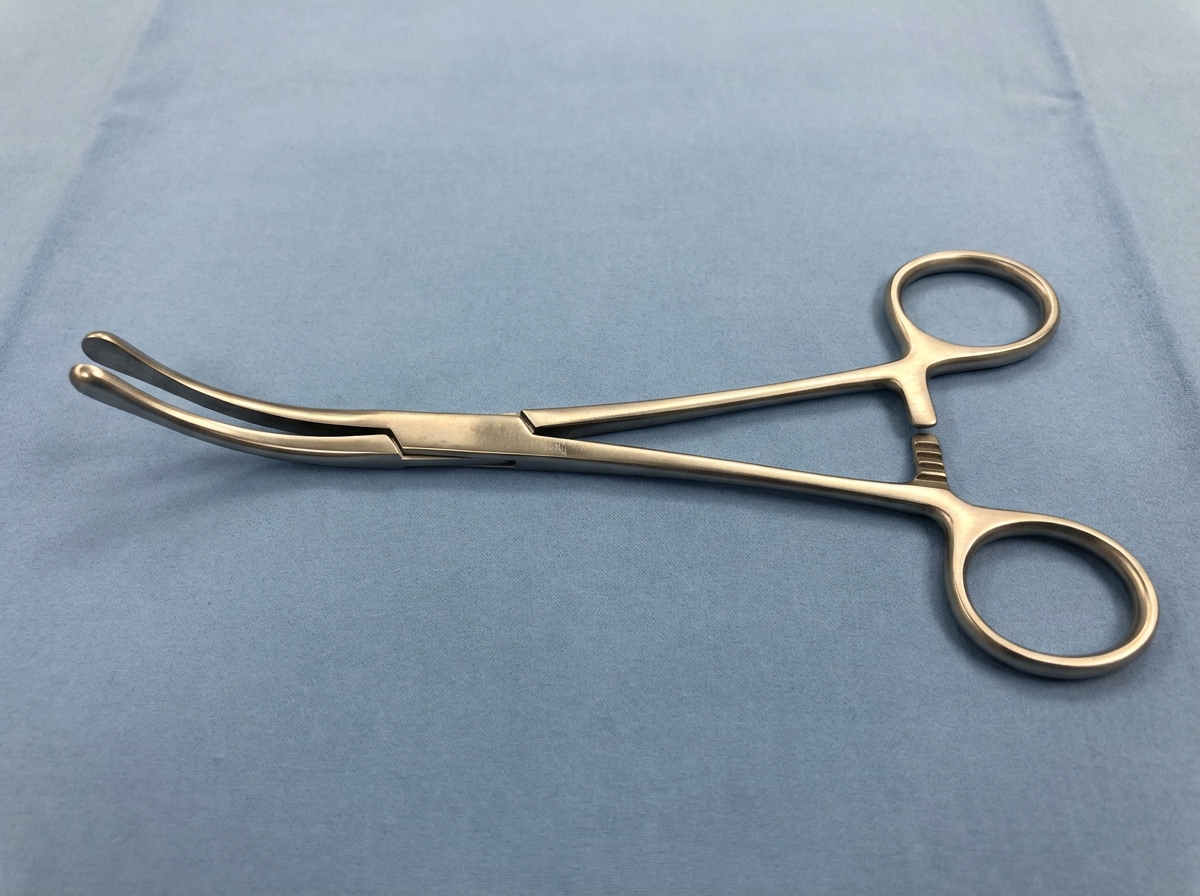
What is the instrument shown below?

Explanation: **Explanation:** **Clonorchis sinensis** (the Chinese liver fluke) is a parasitic trematode acquired by consuming undercooked freshwater fish. It primarily inhabits the **intrahepatic bile ducts**. **1. Why Cholangiocarcinoma is correct:** Chronic infestation leads to mechanical irritation, localized obstruction, and the release of metabolic products that trigger chronic inflammation and adenomatous hyperplasia of the biliary epithelium. This persistent inflammatory state induces DNA damage and cellular proliferation, making *Clonorchis sinensis* (and *Opisthorchis viverrini*) a Group 1 carcinogen specifically for **Cholangiocarcinoma** (bile duct cancer). **2. Why other options are incorrect:** * **Gall bladder cancer:** While associated with gallstones (cholelithiasis) and "porcelain gallbladder," it is not classically linked to liver flukes, which prefer the bile ducts over the gallbladder. * **Hepatocellular carcinoma (HCC):** HCC is primarily associated with Hepatitis B and C, cirrhosis, and Aflatoxin B1. It arises from hepatocytes, not the biliary epithelium. * **Carcinoma of the head of the pancreas:** This is associated with smoking, chronic pancreatitis, and certain genetic syndromes (e.g., BRCA2, Peutz-Jeghers), but not parasitic fluke infections. **High-Yield Clinical Pearls for NEET-PG:** * **Key Parasites & Cancers:** * *Clonorchis sinensis/Opisthorchis:* Cholangiocarcinoma. * *Schistosoma haematobium:* Squamous cell carcinoma of the Urinary Bladder. * **Diagnostic Clue:** Look for a history of raw fish consumption and imaging showing "dilated intrahepatic bile ducts" with a normal common bile duct. * **Treatment:** **Praziquantel** is the drug of choice for liver fluke infestations.
Explanation: **Explanation:** **Alveoloplasty** is the surgical recontouring and smoothing of the alveolar bone ridges, typically performed after single or multiple tooth extractions. Its primary objective is to prepare the alveolar ridge for optimal prosthetic rehabilitation (dentures) and to facilitate healthy healing. **Why Option C is Correct:** 1. **Undercut Removal (Option B):** Following multiple extractions, the alveolar bone often presents with sharp bony spicules, irregular ridges, or prominent undercuts. If left uncorrected, these undercuts interfere with the "path of insertion" for a prosthesis and create pressure points that cause pain under a denture. Alveoloplasty smooths these areas to ensure a stable, retentive base. 2. **Proper Wound Closure (Option A):** In many cases, the reduction of sharp interdental or interradicular bone allows the overlying gingival flaps to be approximated more easily without tension. This promotes primary intention healing and prevents the bone from perforating the thin mucosa during the healing phase. **Why Other Options are Incorrect:** * **Option A & B individually:** While both are correct functions of the procedure, selecting only one would be incomplete. Alveoloplasty is a multifaceted procedure addressing both mechanical (prosthetic) and biological (healing) requirements. **High-Yield Clinical Pearls for NEET-PG:** * **Dean’s Alveoloplasty (Intraseptal Alveoloplasty):** A specific technique where the interradicular bone is removed, and the labial cortical plate is crushed inward. It is preferred because it preserves the labial cortical bone and muscle attachments, reducing post-operative bone resorption. * **Timing:** It is most commonly performed at the time of extraction (Immediate Alveoloplasty) to minimize the number of surgical interventions. * **Key Goal:** To achieve a "U-shaped" ridge rather than a "V-shaped" or "knife-edge" ridge, which provides the best support for a prosthesis.
Explanation: ### Explanation **1. Why the Correct Answer is Right:** The **perianal space** is the most common site for anorectal abscesses (approx. 60%). Anatomically, it is located just beneath the skin of the anal canal. Clinical presentation typically involves a **well-localized, superficial, painful swelling** near the anal verge. Because it is a superficial space, systemic symptoms like high-grade fever or significant leukocytosis are often absent in the early stages, as seen in this 25-year-old patient. **2. Why Incorrect Options are Wrong:** * **A. Supralevator space:** This space is located above the levator ani muscle. Abscesses here are rare and present with deep-seated pelvic pain, fever, and malaise. They are not visible as superficial perianal swellings. * **C. Levator ani muscle:** This is a muscular structure (part of the pelvic floor), not an anatomical potential space where an abscess typically localizes. * **D. Intermuscular space:** While the "intersphincteric space" is the origin of most abscesses (Cryptoglandular theory), an "intermuscular" abscess is a deeper finding and would not present as a localized 2-cm superficial perianal lesion. **3. NEET-PG High-Yield Pearls:** * **Cryptoglandular Theory:** Most anorectal abscesses originate from an infection of the anal glands located in the **intersphincteric plane**. * **Classification:** Based on Parks' classification, the order of frequency is: **Perianal (60%)** > Ischiorectal (20%) > Intersphincteric (5%) > Supralevator (4%). * **Management:** The gold standard treatment for any anorectal abscess is **prompt Incision and Drainage (I&D)**. Do not wait for "fluctuance" or use antibiotics as a substitute for surgery. * **Horseshoe Abscess:** This occurs when an infection spreads through the **deep postanal space** to the contralateral side.
Explanation: **Explanation:** **Howship-Romberg sign** is a pathognomonic clinical finding for an **obturator hernia**. It refers to pain or paresthesia extending down the medial aspect of the thigh to the knee. This occurs because the herniated bowel sac compresses the **obturator nerve** as it passes through the narrow obturator canal. The pain is typically exacerbated by extension, adduction, or internal rotation of the hip. **Analysis of Options:** * **Obturator Hernia (Correct):** Often called the "little old lady's hernia," it is most common in elderly, multiparous, emaciated women. Because the hernia is deep, it rarely presents with a visible swelling; thus, the Howship-Romberg sign is the most significant clinical clue. * **Splenic Rupture (Incorrect):** Associated with **Kehr’s sign** (referred pain to the left shoulder due to diaphragmatic irritation by blood). * **Diaphragmatic Hernia (Incorrect):** Presents with respiratory distress and a scaphoid abdomen; it does not involve pelvic nerve compression. * **Carcinoma of the Rectum (Incorrect):** Typically presents with tenesmus, bleeding per rectum, or altered bowel habits. While it can cause pelvic pain, it does not elicit the specific Howship-Romberg sign. **High-Yield Pearls for NEET-PG:** * **Hannington-Kiff Sign:** Another sign of obturator hernia; it refers to the loss of the adductor reflex despite a preserved patellar reflex. * **Demographics:** Most common in women (F:M ratio of 6:1) due to a wider pelvis and larger obturator canal. * **Mortality:** It has the highest mortality rate of all abdominal wall hernias because it often presents late with intestinal obstruction.
Explanation: **Explanation:** The "take" of a split-thickness skin graft (SSG) refers to the successful revascularization and integration of the donor skin into the recipient bed. This process occurs in three stages: **Plasmatic imbibition** (first 24–48 hours), **Inosculation** (capillary alignment), and **Revascularization**. **Why Option A is Correct:** For a graft to take, there must be **absolute immobilization** and **intimate contact** between the graft and the recipient bed. A **tight (pressure) dressing** is essential because it: 1. Prevents the formation of hematomas or seromas under the graft, which would act as a barrier to revascularization. 2. Minimizes "shearing forces" that can disrupt the fragile new capillary connections forming during the inosculation phase. **Why the Other Options are Incorrect:** * **B. Excessive discharge:** Fluid accumulation (pus, serum, or blood) physically lifts the graft away from the wound bed, preventing the diffusion of nutrients and leading to graft failure. * **C. Streptococcus hemolyticus infection:** This is a major contraindication for grafting. *Group A Beta-hemolytic Streptococci* produce **streptokinase**, which dissolves the fibrin bond necessary to hold the graft in place, leading to total graft loss. * **D. Wound bed not vascularized:** A graft is a "parasite" that requires a vascularized bed (e.g., healthy granulation tissue, periosteum, or perichondrium) to survive. It will not take on avascular structures like bare bone, bare tendon, or infected tissue. **NEET-PG High-Yield Pearls:** * **Most common cause of graft failure:** Hematoma formation. * **Most common organism causing graft failure:** *Pseudomonas* (often causes patchy loss), but *Streptococcus* is the most destructive. * **Ideal time for first dressing change:** Usually on the 5th post-operative day. * **Meshing:** Increasing the surface area of a graft and allowing for the drainage of discharge, which improves the "take" in suboptimal beds.
Explanation: **Explanation:** Hyperbaric Oxygen Therapy (HBOT) involves breathing 100% oxygen at pressures greater than sea level (usually 2 to 3 ATA). This increases the amount of dissolved oxygen in the plasma, significantly enhancing tissue oxygenation even in areas with compromised blood supply. **Why Osteoradionecrosis is Correct:** Radiation therapy causes "3-H" tissue damage: **Hypocellular, Hypovascular, and Hypoxic**. This leads to non-healing bone necrosis, most commonly in the mandible. HBOT is a gold-standard treatment because it stimulates **angiogenesis** (via fibroblast proliferation and collagen synthesis) and enhances osteoclast activity to clear necrotic debris, promoting healing in an otherwise ischemic environment. **Why Other Options are Incorrect:** * **Obstructive Lung Diseases:** HBOT is generally **contraindicated** in patients with COPD or bullous lung disease due to the high risk of pneumothorax (barotrauma) and the potential suppression of the hypoxic respiratory drive. * **Cardiac Failure:** Acute heart failure is a relative contraindication. The increased systemic vascular resistance caused by hyperoxia can increase afterload, potentially worsening heart failure. * **Renal Diseases:** There is no established therapeutic indication for HBOT in primary renal diseases. **High-Yield Clinical Pearls for NEET-PG:** * **Absolute Contraindication:** Untreated Tension Pneumothorax. * **FDA-Approved Indications:** Gas gangrene (*Clostridium perfringens*), Carbon Monoxide (CO) poisoning, Decompression sickness (The Bends), Necrotizing soft tissue infections, and Diabetic foot ulcers (Wagner Grade 3 or higher). * **Most Common Side Effect:** Middle ear barotrauma (due to inability to equalize pressure). * **Mechanism in CO Poisoning:** It reduces the half-life of Carboxyhemoglobin (COHb) from 300 minutes (room air) to approximately 20–30 minutes.
Explanation: The Systemic Inflammatory Response Syndrome (SIRS) is a clinical response to a variety of severe clinical insults (infectious or non-infectious). To diagnose SIRS, at least **two or more** of the following four criteria must be met: 1. **Temperature:** >38°C (Hyperthermia) or <36°C (Hypothermia). 2. **Heart Rate:** >90 beats per minute (Tachycardia). 3. **Respiratory Rate:** >20 breaths per minute (Tachypnoea) OR PaCO2 <32 mmHg. 4. **White Blood Cell Count:** >12 x 10⁹/L (Leukocytosis), <4 x 10⁹/L (Leukopenia), or >10% immature (band) forms. **Why Option D is the correct answer:** The threshold for leukocytosis in SIRS criteria is **>12 x 10⁹/L**, not >10 x 10⁹/L. While 10 x 10⁹/L is often considered the upper limit of a "normal" range in many labs, it does not meet the specific diagnostic threshold required for SIRS. **Why other options are incorrect:** * **Option A (Hypothermia <36°C):** This is a standard SIRS criterion. Both extremes of temperature signify a systemic response. * **Option B (Tachycardia >90/min):** This is a standard SIRS criterion reflecting sympathetic activation. * **Option C (Tachypnoea >20/min):** This is a standard SIRS criterion, often the earliest sign of systemic distress. **High-Yield Clinical Pearls for NEET-PG:** * **Sepsis Redefined:** According to the **Sepsis-3 guidelines**, the SIRS criteria have been largely replaced by the **SOFA (Sequential Organ Failure Assessment)** score and **qSOFA** (RR ≥22, Altered Mentation, Systolic BP ≤100) for identifying sepsis. However, SIRS remains a frequently tested concept in surgical exams. * **SIRS vs. Sepsis:** SIRS + a documented source of infection = Sepsis. * **Non-infectious SIRS:** Common causes include acute pancreatitis, major trauma, and severe burns.
Explanation: **Explanation:** **Basal Cell Carcinoma (BCC)** is the most common skin cancer worldwide, arising from the non-keratinizing cells of the basal layer of the epidermis. **1. Why Nodular is Correct:** The **Nodular variant** is the most common clinical subtype, accounting for approximately 60–80% of all BCC cases. It typically presents as a slow-growing, "pearly" or translucent papule or nodule with overlying telangiectasia (dilated blood vessels) and rolled-out borders. As it grows, the center often undergoes necrosis, leading to a central ulceration—a classic presentation known as a **"Rodent Ulcer."** It is most frequently found on sun-exposed areas, particularly the face (above the line joining the lobe of the ear to the angle of the mouth). **2. Why Other Options are Incorrect:** * **Morpheaform (Sclerosing):** This is an aggressive, infiltrative variant that looks like a flat, waxy scar or plaque. It is less common but clinically significant due to its indistinct margins. * **Superficial:** The second most common type, often appearing as a red, scaly patch. It is typically found on the trunk and limbs rather than the face. * **Keratotic:** Also known as Basosquamous carcinoma, this is a rare subtype that shares features of both BCC and Squamous Cell Carcinoma; it is more aggressive and prone to metastasis. **Clinical Pearls for NEET-PG:** * **Risk Factor:** Chronic UV light exposure (UVB) is the primary trigger. * **Metastasis:** BCC is locally invasive but **rarely metastasizes** (unlike Squamous Cell Carcinoma). * **Gold Standard Diagnosis:** Incisional or punch biopsy. * **Treatment of Choice:** Surgical excision with safe margins. For high-risk areas (face), **Mohs Micrographic Surgery** offers the highest cure rate. * **Inherited Syndrome:** Gorlin Syndrome (Basal Cell Nevus Syndrome) is associated with multiple BCCs at a young age.
Explanation: **Explanation:** A **Sitz bath** (derived from the German word *"sitzen,"* meaning to sit) is a therapeutic procedure where a patient sits in warm water up to the hips. It is a cornerstone of conservative management in proctology and perineal care. **Why Option C is Correct:** The primary mechanism of a sitz bath is **vasodilation** caused by the warm temperature (typically 40°C to 45°C). This increases blood flow to the pelvic region, which accelerates healing, reduces inflammation, and relaxes the internal anal sphincter, thereby relieving pain. While plain warm water is often sufficient, the addition of **antiseptic lotions** (like Povidone-iodine or Potassium Permanganate) helps maintain hygiene and prevent secondary infections in open wounds. **Analysis of Incorrect Options:** * **Option A:** While normal saline is used for wound irrigation, it is not the standard medium for a sitz bath, which primarily relies on the thermal effect of water. * **Options B & D:** Molten wax is used in **Wax Therapy (Paraffin bath)**, a physiotherapy technique for chronic joint pain (e.g., Rheumatoid Arthritis) in hands or feet. Using molten wax in the perineal area would cause severe thermal burns. **NEET-PG High-Yield Pearls:** * **Indications:** Post-hemorrhoidectomy, anal fissures, perianal abscess (post-drainage), and painful inflammatory conditions like prostatitis or episiotomy recovery. * **Duration:** Typically recommended for **15–20 minutes**, 2–3 times a day. * **Mechanism of Pain Relief:** It reduces the **resting anal pressure** by relaxing the smooth muscles of the anal canal. * **Precaution:** Patients should be warned about **vasovagal syncope** (fainting) due to peripheral vasodilation when standing up quickly after the bath.
Explanation: ***Tracheal dilator*** - This is **Trousseau's dilator**, characterized by its distinctive **two curved spreading arms** that open the tracheal opening during emergency procedures. - Specifically designed for **tracheostomy procedures** to maintain airway patency and facilitate tube insertion. *Urethral dilator* - **Hegar's dilators** or **metal bougies** are typically straight, graduated instruments used for urethral stricture management. - They have a **smooth, tapered design** without the characteristic spreading arms seen in this instrument. *Aneurysm needle* - **Aneurysm needles** are thin, curved instruments with a **blunt tip** used for passing ligatures around blood vessels. - They have a **needle-like appearance** with an eye for threading sutures, completely different from this spreading instrument.
Wound Healing and Care
Practice Questions
Surgical Infections
Practice Questions
Fluid and Electrolyte Management
Practice Questions
Nutrition in Surgical Patients
Practice Questions
Hemostasis and Blood Transfusion
Practice Questions
Surgical Instruments and Equipment
Practice Questions
Sutures and Stapling Devices
Practice Questions
Minimal Access Surgery Principles
Practice Questions
Surgical Complications
Practice Questions
Anesthesia Principles for Surgeons
Practice Questions
Surgical Oncology Principles
Practice Questions
Evidence-Based Surgery
Practice Questions
Get full access to all questions, explanations, and performance tracking.
Start For Free