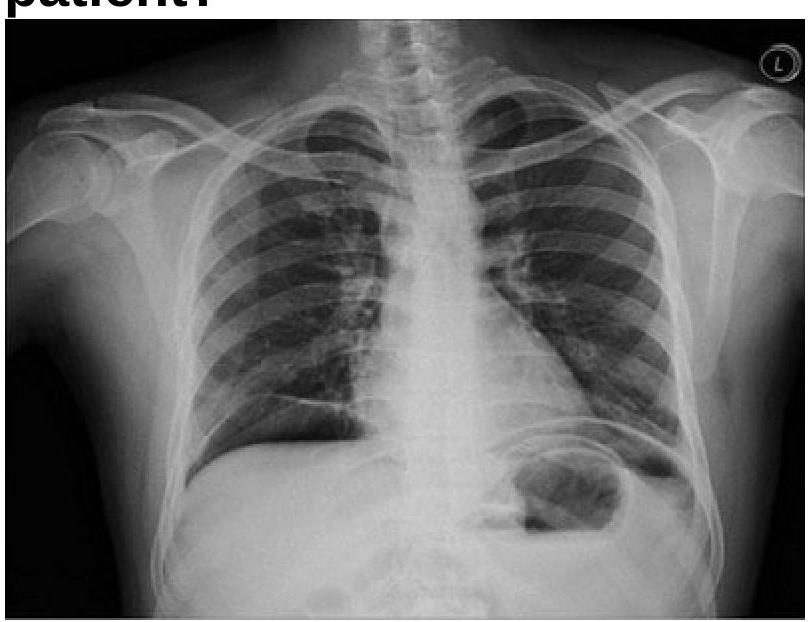
A 55-year-old man presents with a 2-day history of left lower quadrant (LLQ) abdominal pain, associated with constipation. Physical examination reveals LLQ tenderness and fullness, a leukocyte count of 22,000, and a temperature of 101.5°F. Which diagnostic study would be best to evaluate this patient?
The most common complication of vagotomy is:
A wide mouth Meckel's diverticulum is found incidentally during laparotomy. What is the recommended treatment?
Water loss is severe if intestinal obstruction occurs at which level?
Paralytic ileus is characterized by which of the following findings, except?
Which of the following features characterize acute intestinal obstruction?
A 50-year-old woman presented with bilateral solid ovarian tumors, ascites, and an ulcerative growth in the pyloric region of the stomach. What is the most likely diagnosis?
In pyloric stenosis, the following changes are seen?
What is the treatment of choice for perforation of the cervical esophagus?
A 60-year-old male is diagnosed with carcinoma of the stomach. A CT scan of the abdomen reveals a 4x4 cm mass in the antrum with involvement of celiac and right gastric nodes. What is the management of choice?
Explanation: ### Explanation The clinical presentation of left lower quadrant (LLQ) pain, fever, leukocytosis, and a palpable mass in an older patient is classic for **Acute Diverticulitis** (often referred to as "Left-sided Appendicitis"). **Why Option D is Correct:** **Contrast-enhanced CT (CECT) of the abdomen and pelvis** is the gold standard diagnostic modality for acute diverticulitis. It has a sensitivity and specificity of >90%. It is preferred because it: 1. **Confirms the diagnosis** (showing bowel wall thickening, pericolic fat stranding, or diverticula). 2. **Assesses severity** using the **Hinchey Classification**, which guides management (e.g., identifying abscesses, perforation, or fistulas). 3. **Identifies alternative diagnoses** or complications like bowel obstruction. **Why Other Options are Incorrect:** * **A. Diagnostic Laparoscopy:** This is an invasive procedure. While it can be therapeutic in cases of purulent or fecal peritonitis, it is not the initial diagnostic study of choice for a stable patient. * **B. Barium Enema:** This is **contraindicated** in the acute phase of diverticulitis due to the high risk of converting a micro-perforation into a macro-perforation, leading to barium peritonitis. * **C. Plain Abdominal Roentgenogram:** While useful to rule out pneumoperitoneum (free air under the diaphragm) or bowel obstruction, it lacks the sensitivity to diagnose diverticulitis or its specific complications. **NEET-PG High-Yield Pearls:** * **Hinchey Classification:** Used to grade diverticulitis (Stage I: Pericolic abscess; Stage II: Pelvic/Distant abscess; Stage III: Purulent peritonitis; Stage IV: Fecal peritonitis). * **Avoid Colonoscopy:** Like barium enemas, colonoscopy is contraindicated in the acute phase (risk of perforation). It should be performed **6–8 weeks after** the inflammation subsides to rule out malignancy. * **Management:** Uncomplicated cases are managed with bowel rest and antibiotics; complicated cases (Stage III/IV) usually require a **Hartmann’s Procedure**.
Explanation: **Explanation:** The correct answer is **A. Diarrhea**. **Why Diarrhea is the Correct Answer:** Post-vagotomy diarrhea is the most common complication following truncal vagotomy, occurring in approximately 20–30% of patients (though severe in only 1–2%). The underlying pathophysiology involves the denervation of the biliary tree and small intestine, leading to: 1. **Rapid Gastric Emptying:** Loss of the stomach's receptive relaxation and antral pump regulation. 2. **Bile Acid Malabsorption:** Increased delivery of bile salts to the colon, which stimulates fluid secretion and increases motility. 3. **Intestinal Dysmotility:** Altered vagal control of the small bowel. **Analysis of Incorrect Options:** * **B. Dryness of mouth:** This is a side effect of anticholinergic drugs (which block muscarinic receptors), not a surgical vagotomy. * **C. Tachycardia:** While vagal denervation of the heart could theoretically increase heart rate, it is not a clinical complication of abdominal vagotomy (where the cardiac branches are preserved). * **D. Bleaching:** This is not a recognized medical complication of gastric surgery. (Note: "Belching" is a common symptom in GERD or dyspepsia, but not the primary complication of vagotomy). **NEET-PG High-Yield Pearls:** * **Most common complication overall:** Diarrhea. * **Most common metabolic complication:** Vitamin B12 deficiency (due to reduced intrinsic factor/acid). * **Dumping Syndrome:** Often confused with post-vagotomy diarrhea; however, "Early Dumping" is primarily due to the hyperosmolar load in the duodenum, whereas "Late Dumping" is due to reactive hypoglycemia. * **Highly Selective Vagotomy (HSV):** Also known as Parietal Cell Vagotomy, it has the **lowest** incidence of diarrhea and dumping because it preserves the nerve of Latarjet (antral innervation), maintaining the pyloric pump. * **Recurrence Rate:** HSV has the highest recurrence rate of ulcers, while Truncal Vagotomy with Antrectomy has the lowest.
Explanation: **Explanation:** The management of an incidentally discovered Meckel’s diverticulum (MD) remains a classic debate in surgery, but current consensus for NEET-PG follows the principle of **conservative management** for asymptomatic, wide-mouthed diverticula. **Why "Leave as is" is correct:** A **wide-mouthed** diverticulum is at very low risk for complications like diverticulitis or obstruction because intestinal contents can flow freely in and out, preventing stasis. In adults, the risk of developing complications from an asymptomatic MD is approximately 4–6%, whereas the risk of postoperative complications (adhesions, leak) from an unnecessary resection is often higher. Therefore, if the diverticulum is asymptomatic, wide-based, and feels soft (no palpable ectopic tissue), it should be left alone. **Why other options are incorrect:** * **A & C (Resection/Ligation):** Simple diverticulectomy or ligation is reserved for symptomatic cases (like diverticulitis) or high-risk incidental cases (narrow base, long length >2cm, or presence of palpable nodules). * **D (Resection with ileum):** Formal wedge resection or segmental ileal resection is mandatory only if there is **bleeding** (to ensure the ectopic gastric mucosa in the adjacent ileum is removed) or if the base is inflamed/gangrenous. **High-Yield Clinical Pearls for NEET-PG:** 1. **Rule of 2s:** 2% population, 2 inches long, 2 feet from ileocecal valve, 2% symptomatic, 2 types of ectopic tissue (Gastric > Pancreatic). 2. **Most common presentation:** Painless lower GI bleed in children; Intestinal obstruction in adults. 3. **Incidental Resection Criteria:** Resect if the patient is <18 years old, the diverticulum is >2cm long, has a narrow neck, or feels thickened (suggesting ectopic mucosa). 4. **Technetium-99m Pertechnetate scan:** The investigation of choice for bleeding MD (detects ectopic gastric mucosa).
Explanation: **Explanation:** The severity of fluid and electrolyte loss in intestinal obstruction is inversely proportional to the distance of the obstruction from the stomach. **Why the First Part of the Duodenum is Correct:** Obstruction at the **first part of the duodenum** (proximal obstruction) leads to rapid and severe water loss primarily through **profuse vomiting**. At this high level, the stomach and proximal duodenum cannot reabsorb any of the 8–10 liters of daily secretions (saliva, gastric juice, bile, and pancreatic juice). Because there is no distal intestinal surface area available for reabsorption, dehydration occurs rapidly, often accompanied by **hypochloremic, hypokalemic metabolic alkalosis**. **Analysis of Incorrect Options:** * **Third part of the duodenum & Mid-jejunum:** While these are still considered "high" obstructions, a small portion of the duodenum or jejunum remains proximal to the obstruction, allowing for a minimal amount of fluid absorption compared to a first-part obstruction. * **Ileum:** This is a **distal (low) small bowel obstruction**. In these cases, the majority of the small intestine is available to reabsorb secretions. Vomiting occurs much later, and the primary clinical feature is significant abdominal distension rather than immediate, severe dehydration. **High-Yield Clinical Pearls for NEET-PG:** * **Proximal Obstruction:** Characterized by early, profuse vomiting, minimal distension, and rapid onset of dehydration/shock. * **Distal Obstruction:** Characterized by late vomiting (may be feculent), marked abdominal distension, and multiple air-fluid levels on X-ray. * **Metabolic Profile:** High intestinal obstruction typically results in metabolic alkalosis (loss of H+ and Cl-), whereas low intestinal obstruction may eventually lead to metabolic acidosis due to dehydration and sepsis.
Explanation: **Explanation:** Paralytic ileus is a state of functional intestinal obstruction where there is a failure of peristalsis without a mechanical blockage. **1. Why Option D is the Correct Answer (The Exception):** In paralytic ileus, the loops of the intestine are **clearly visible** on imaging (X-ray or CT). Because peristalsis has ceased, the bowel becomes distended with gas and fluid. These dilated, gas-filled loops are a hallmark radiological finding. The statement that "loops are not seen" is factually incorrect, making it the right choice for an "except" question. **2. Analysis of Incorrect Options:** * **Option A (No bowel sounds):** Since there is a global absence of peristaltic activity (aperistalsis), auscultation typically reveals a "silent abdomen." This is a classic clinical feature. * **Option B (No passage of flatus):** Because the functional movement of the gut has stopped, gas and feces cannot be propelled distally, leading to absolute constipation and failure to pass flatus. * **Option C (Gas-filled loops with fluid levels):** On an erect abdominal X-ray, paralytic ileus shows generalized dilatation of both the small and large bowel. Multiple air-fluid levels are seen at the same height in the same loop (unlike the "step-ladder" pattern of mechanical obstruction). **3. Clinical Pearls for NEET-PG:** * **Most common cause:** Post-operative state (Physiological ileus). Normal recovery: Small bowel (0–24h) > Stomach (24–48h) > Colon (48–72h). * **Electrolyte Imbalance:** Hypokalemia is the most common metabolic cause of paralytic ileus. * **Radiology:** Characterized by "Gas in the Rectum" (often absent in complete mechanical obstruction). * **Management:** Usually conservative (NPO, IV fluids, nasogastric decompression, and correction of electrolytes). Avoid opioids as they worsen the condition.
Explanation: ### Explanation Acute intestinal obstruction is characterized by a classic tetrad: **pain, vomiting, distension, and constipation.** The clinical presentation varies significantly depending on the level of obstruction (proximal vs. distal). **Why Option C is Correct:** In **colonic (large bowel) obstruction**, the site of blockage is distal. This allows for a massive accumulation of gas and fluid in the proximal colon and small intestine, leading to **marked abdominal distension**. Because the ileocecal valve often prevents retrograde flow and the obstruction is far from the stomach, vomiting occurs very late or may be absent entirely. **Analysis of Incorrect Options:** * **Option A:** While vomiting occurs in duodenal obstruction, it is most characteristic of **high small-bowel obstruction** (jejunum). In duodenal or pyloric obstruction, vomiting is frequent but the term "common" is less specific than the diagnostic weight of distension in colonic cases. * **Option B:** In ileal (low small bowel) obstruction, vomiting usually provides **temporary relief** from pain. If pain persists or worsens after vomiting, it suggests a more serious underlying pathology like strangulation. * **Option C vs D:** While Option D is a true clinical statement (colicky pain turning steady often indicates ischemia/strangulation), Option C is the **classic physiological hallmark** used to differentiate small bowel from large bowel obstruction in surgical exams. **NEET-PG High-Yield Pearls:** * **High Obstruction:** Early vomiting, minimal distension, rapid dehydration. * **Low Obstruction:** Late vomiting (feculent), marked distension, absolute constipation. * **Strangulation:** Suspect if there is "tachycardia out of proportion to fever," localized tenderness, or a shift from colicky to constant pain. * **X-ray findings:** Small bowel shows central loops with *valvulae conniventes* (complete circles); Large bowel shows peripheral loops with *haustra* (incomplete circles).
Explanation: ### Explanation The clinical presentation described is a classic case of **Krukenberg Tumor**, which refers to a metastatic signet-ring cell carcinoma of the ovary, most commonly originating from a primary site in the **stomach (Gastric Adenocarcinoma)**. **Why Gastric Adenocarcinoma is correct:** In this patient, the "ulcerative growth in the pyloric region" represents the primary malignancy. Krukenberg tumors are characterized by **bilateral, solid ovarian enlargement** resulting from retrograde lymphatic spread or transcoelomic seeding. While the colon, breast, and appendix can also be primary sites, the stomach is the most frequent source (approx. 70% of cases). The presence of ascites further suggests peritoneal dissemination. **Why the other options are incorrect:** * **Ovarian malignancy:** While the patient has ovarian tumors, the presence of a gastric pyloric mass indicates that the ovarian involvement is secondary (metastatic) rather than primary. * **Uterine malignancy:** Uterine cancers typically spread to pelvic lymph nodes or the lungs; they do not commonly present with a primary gastric mass and bilateral solid ovarian tumors. * **Duodenal adenocarcinoma:** This is significantly rarer than gastric cancer and is not the classic primary site associated with the eponymous Krukenberg tumor. **Clinical Pearls for NEET-PG:** * **Histology:** Look for **Signet-ring cells** (mucin-filled cytoplasm displacing the nucleus to the periphery). * **Route of spread:** Most commonly believed to be **retrograde lymphatic spread**, though transcoelomic seeding occurs. * **Sister Mary Joseph Nodule:** Another sign of gastric metastasis, presenting as a palpable nodule at the umbilicus. * **Virchow’s Node:** Left supraclavicular lymphadenopathy, often the first sign of hidden gastric malignancy.
Explanation: ### Explanation In **Infantile Hypertrophic Pyloric Stenosis (IHPS)**, the hallmark metabolic derangement is **Hypokalemic, Hypochloremic, Hyponatremic Metabolic Alkalosis with Paradoxical Aciduria**. **Why Option A is Correct:** 1. **Vomiting:** Persistent non-bilious vomiting leads to the loss of gastric juice rich in **Hydrogen (H+)**, **Chloride (Cl-)**, and **Water**. 2. **Alkalosis:** The loss of H+ ions directly causes metabolic alkalosis. 3. **Hyponatremia & Hypochloremia:** Loss of NaCl in vomitus and subsequent volume depletion leads to low sodium and chloride levels. 4. **Hypokalemia:** This occurs due to two reasons: * Direct loss of Potassium (K+) in vomitus. * **Renal Compensation:** To conserve volume, the kidneys activate the Renin-Angiotensin-Aldosterone System (RAAS). Aldosterone reabsorbs Na+ at the expense of excreting K+ and H+ into the urine. **Why Other Options are Incorrect:** * **B & D (Hyperkalemia/Hyperchloremic Acidosis):** These are seen in conditions like Renal Tubular Acidosis or Addison’s disease. In pyloric stenosis, Cl- and K+ are always lost, never elevated. * **C (Acidosis):** Vomiting gastric acid (HCl) inherently leads to a rise in pH (alkalosis), not a drop (acidosis). **High-Yield Clinical Pearls for NEET-PG:** * **Paradoxical Aciduria:** Initially, the kidney excretes bicarbonate (alkaline urine). As dehydration worsens, the kidney prioritizes Na+ reabsorption. To save Na+, it secretes H+ ions into the urine, making the urine **acidic** despite systemic **alkalosis**. * **Fluid of Choice:** Normal Saline (0.9% NaCl) with added Potassium. **Never** use Ringer’s Lactate as the liver converts lactate to bicarbonate, worsening the alkalosis. * **Diagnosis:** Ultrasound is the gold standard (Muscle thickness >4mm, Length >14mm). Look for the "Target sign" or "Donut sign."
Explanation: The management of esophageal perforation is a surgical emergency. The treatment of choice for **cervical esophageal perforation** is **cervical exploration and drainage of the superior mediastinum**, combined with systemic antibiotics. ### Why the Correct Answer is Right The cervical esophagus is surrounded by loose areolar tissue that communicates directly with the superior mediastinum (via the retrovisceral space). Perforation leads to rapid contamination and the risk of life-threatening **mediastinitis**. * **Surgical Drainage:** The primary goal is to prevent abscess formation and sepsis. Even if the perforation is small, the area must be drained to allow any leak to exit through the neck rather than tracking down into the chest. * **Primary Repair:** If the injury is identified early (<24 hours), the perforation is primarily sutured, and the area is drained. ### Why Other Options are Wrong * **Options A & B (Conservative Management):** While "medical management" (NPO, antibiotics, TPN) is sometimes used for very small, contained instrumental perforations in stable patients, it is **not** the standard "treatment of choice" for the NEET-PG exam. Nasogastric tubes can actually worsen the injury if passed blindly through a fresh perforation. * **Option D (Resection and Colonic Interposition):** This is an aggressive procedure reserved for extensive esophageal necrosis, caustic injuries, or perforations in the setting of an underlying malignancy. It is not indicated for a simple cervical perforation. ### NEET-PG High-Yield Pearls * **Most Common Cause:** Iatrogenic (endoscopy/instrumentation) is the #1 cause of cervical esophageal perforation. * **Clinical Presentation:** Look for the triad of **pain, fever, and crepitus** (subcutaneous emphysema) in the neck. * **Diagnosis:** The initial investigation of choice is a **Gastrografin (water-soluble) swallow**. * **Mackler’s Triad:** Vomiting, chest pain, and subcutaneous emphysema (specifically for Boerhaave Syndrome/Thoracic perforation).
Explanation: ### Explanation The management of gastric adenocarcinoma is primarily determined by the **location** of the tumor and the **stage** of the disease. **1. Why Subtotal Gastrectomy is Correct:** For tumors located in the **distal stomach (antrum or pylorus)**, a **Subtotal Gastrectomy** is the procedure of choice. The goal of curative surgery is to achieve a macroscopic margin of at least 5 cm (R0 resection). In distal lesions, this margin can be achieved without removing the entire stomach. Subtotal gastrectomy is preferred over total gastrectomy when oncologically feasible because it is associated with lower morbidity and better nutritional outcomes (improved reservoir function). The involvement of regional lymph nodes (celiac and right gastric) necessitates a **D2 lymphadenectomy** along with the resection. **2. Why Other Options are Incorrect:** * **Total Gastrectomy:** This is indicated for tumors involving the **proximal third** of the stomach (cardia/fundus) or for **linitis plastica** (diffuse type). It is not necessary for a localized 4 cm antral mass. * **Palliative Care:** This is reserved for Stage IV disease with distant metastasis (e.g., liver, lung, or peritoneal seeding). A 4x4 cm mass with regional node involvement is still considered potentially curable. * **Chemotherapy:** While perioperative chemotherapy (FLOT regimen) is often used for T2 or higher tumors, the definitive "management of choice" for a resectable gastric mass remains surgical excision. **Clinical Pearls for NEET-PG:** * **Margins:** Aim for a 5 cm proximal margin for intestinal-type and 8 cm for diffuse-type gastric cancer. * **Lymphadenectomy:** **D2 dissection** (removing nodes along the hepatic, left gastric, celiac, and splenic arteries) is the standard of care. * **Reconstruction:** After subtotal gastrectomy, reconstruction is typically done via **Billroth II** or **Roux-en-Y** gastrojejunostomy. * **Most common site:** The antrum remains the most common site for gastric cancer globally.
Esophageal Disorders
Practice Questions
Gastric Disorders
Practice Questions
Small Intestine Pathology
Practice Questions
Appendicitis
Practice Questions
Inflammatory Bowel Disease
Practice Questions
Intestinal Obstruction
Practice Questions
Gastrointestinal Bleeding
Practice Questions
Diverticular Disease
Practice Questions
Anorectal Disorders
Practice Questions
Colorectal Neoplasms
Practice Questions
Gastrointestinal Stomas
Practice Questions
Bariatric Surgery Principles
Practice Questions
Get full access to all questions, explanations, and performance tracking.
Start For Free