A young office executive, on tour, presents with a 7-day history of bright red, painless bleeding and abdominal pain. External and perirectal examinations are normal. As the attending general practitioner, what will be your next step?
A patient's CT scan reveals diverticulitis confined to the sigmoid colon, with no associated pericolic abscess. What is the best course of treatment?
During appendectomy, if the base of the appendix is noticed to be inflamed, what is the further line of treatment?
Pseudo obstruction of the intestine is also known as?
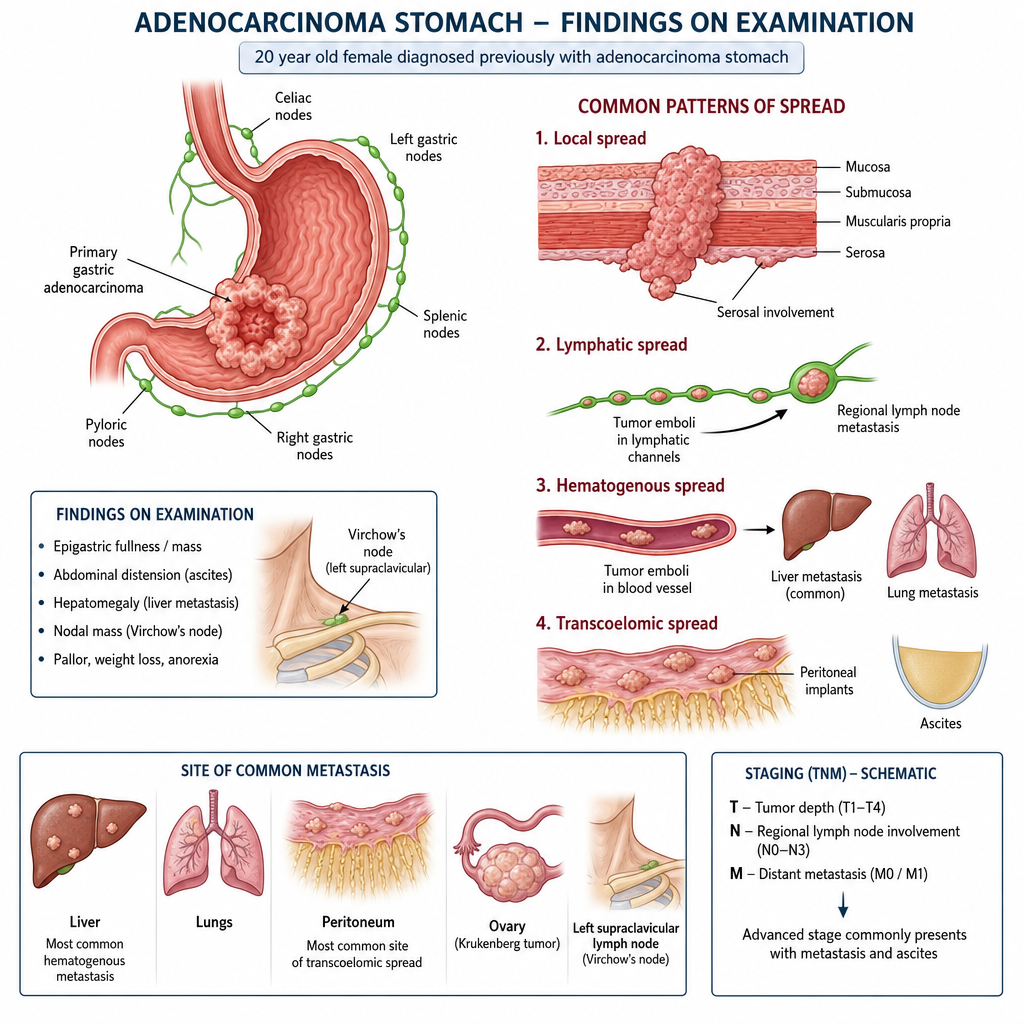
Early gastric carcinoma is defined as a tumor confined to which layers of the gastric wall?
A thirty-year-old male presents to the Emergency Department with symptoms of epigastric pain radiating to the back that wakes him up at night and is relieved by consuming food. He gives a history of similar pain in the past which was diagnosed as a perforated duodenal ulcer and treated with omental patch surgery on two occasions. Pain before and after surgery has been controlled with proton pump inhibitors and analgesics. What is the likely diagnosis on this occasion?
Which type of seton is used in anosurgery for draining purposes?
A 50-year-old man presented with severe vomiting and chest pain after consuming alcohol and a heavy dinner, leading to collapse. Chest X-ray revealed hydropneumothorax. What is the likely diagnosis?
Which of the following is NOT typically seen following massive resection of the small bowel?
All of the following are indications for surgery in a case of duodenal ulcer EXCEPT?
Explanation: ### Explanation The patient presents with **painless, bright red rectal bleeding (hematochezia)**. In a young patient with a normal external examination, the most common cause of such bleeding is **internal hemorrhoids**. **1. Why Proctoscopy is the Correct Next Step:** Proctoscopy is the gold-standard bedside investigation for diagnosing internal hemorrhoids. Since internal hemorrhoids are located above the dentate line, they are not visible on external inspection and are usually too soft to be felt on a Digital Rectal Examination (DRE). A proctoscope allows direct visualization of the anal canal mucosa and the degree of hemorrhoidal prolapse. As a General Practitioner, this is the most cost-effective, immediate, and diagnostic "next step" before considering invasive or expensive referrals. **2. Why Other Options are Incorrect:** * **Barium Enema:** This is an outdated modality for acute rectal bleeding. It has poor sensitivity for mucosal lesions and cannot detect hemorrhoids. * **Sigmoidoscopy/Colonoscopy:** While these are necessary if a proximal source (like a polyp or malignancy) is suspected, they are not the *immediate* next step in a young patient with classic symptoms of hemorrhoids and a normal external exam. Referral to a specialist is premature before performing a basic bedside proctoscopy. **3. Clinical Pearls for NEET-PG:** * **Internal Hemorrhoids:** Characteristically painless because they are above the dentate line (autonomic nerve supply). * **External Hemorrhoids:** Painful, especially if thrombosed, as they are below the dentate line (somatic nerve supply). * **First-line Investigation for Hematochezia:** Always start with DRE and Proctoscopy. * **Red Flag:** If the patient were >50 years old or had weight loss/altered bowel habits, a **Colonoscopy** would be the mandatory next step to rule out colorectal carcinoma.
Explanation: ### Explanation **1. Why Option A is Correct:** The patient presents with **uncomplicated diverticulitis** (Hinchey Stage 0 or Ia), characterized by inflammation confined to the colonic wall without abscess, perforation, or peritonitis. The standard of care for uncomplicated diverticulitis is **conservative management**. This includes: * **Bowel rest and IV fluids:** To minimize colonic peristalsis and maintain hydration. * **Broad-spectrum antibiotics:** To cover Gram-negative aerobes and anaerobes (e.g., Ciprofloxacin + Metronidazole). * **Nasogastric (NG) suction:** Indicated if the patient exhibits signs of ileus or significant vomiting. Approximately 70–90% of patients with uncomplicated diverticulitis respond to medical management alone. **2. Why the Other Options are Incorrect:** * **Option B (Urgent surgical resection):** Surgery is reserved for **complicated diverticulitis**, such as generalized peritonitis (Hinchey III/IV), large abscesses not amenable to drainage, or failure of conservative therapy. * **Option C (Steroids):** Steroids are contraindicated as they can mask signs of peritonitis and increase the risk of colonic perforation. * **Option D (Diverting colostomy):** This is a surgical intervention used in emergency settings (e.g., Hartmann’s procedure) for fecal peritonitis or severe obstruction, which is not present in this case. **3. Clinical Pearls for NEET-PG:** * **Investigation of Choice:** **Contrast-enhanced CT (CECT)** of the abdomen is the gold standard for diagnosing and staging diverticulitis. * **Contraindications:** **Colonoscopy and Barium Enema** are strictly contraindicated in the acute phase due to the high risk of perforation. They should be performed 6–8 weeks after the inflammation subsides to rule out malignancy. * **Hinchey Classification:** Remember that Stage I (pericolic abscess) is often treated with antibiotics or CT-guided drainage, while Stages III and IV require emergency surgery.
Explanation: ### Explanation The management of the appendiceal stump is a critical step in appendectomy. Traditionally, surgeons practiced **invagination (burying) of the stump** into the cecum using a purse-string or Z-stitch. However, if the **base of the appendix is inflamed or friable**, attempting to bury the stump is contraindicated. **Why "No burying of the stump" is correct:** When the base is inflamed, the cecal wall surrounding it becomes edematous and fragile. Attempting to place sutures (like a purse-string) in this "cheesy" or friable tissue leads to the sutures cutting through, which can cause **cecal necrosis, fecal fistula formation, or localized abscess**. In such cases, the safest approach is simple ligation of the stump without invagination. Modern evidence also suggests that routine burying is unnecessary as it does not reduce postoperative complications and may even cause intramural abscesses. **Analysis of Incorrect Options:** * **A. No appendicectomy:** Once the decision to operate is made and the appendix is found to be the source of pathology, it must be removed to prevent perforation or peritonitis. * **C. Hemicolectomy:** This is an over-treatment for simple inflammation. Right hemicolectomy is reserved for cases where the inflammation involves the ileocecal junction extensively or if a tumor (e.g., Carcinoid >2cm) is found at the base. * **D. Cecal resection:** This is only indicated if the gangrenous process or inflammation involves a significant portion of the cecum itself, making simple ligation impossible. **Clinical Pearls for NEET-PG:** * **Standard of Care:** Simple ligation of the stump is now preferred over invagination in both open and laparoscopic appendectomies. * **The "Inverted" Stump:** If a stump is buried, it may mimic a polyp on a future follow-up colonoscopy (known as a "stump granuloma"). * **Artery of Young:** This is the accessory appendicular artery; failure to ligate it can lead to post-operative hemorrhage. * **McBurney’s Point:** Located at the junction of the lateral 1/3rd and medial 2/3rd of the line joining the ASIS to the umbilicus.
Explanation: **Explanation:** **Ogilvie’s Syndrome (Acute Colonic Pseudo-obstruction)** is the correct answer. It is a clinical condition characterized by signs, symptoms, and radiological evidence of large bowel obstruction (massive dilatation of the cecum and right colon) without any mechanical cause. It is thought to result from an imbalance in the autonomic regulation of colonic motility, often triggered by surgery, trauma, or severe systemic illness. **Analysis of Incorrect Options:** * **Hamann’s Syndrome:** This refers to spontaneous pneumomediastinum, often associated with subcutaneous emphysema. It is typically characterized by "Hamman’s crunch"—a clicking sound heard over the heart during systole. * **Ozili’s Syndrome:** This is a distractor and is not a recognized clinical entity in standard surgical textbooks. * **Mirizzi Syndrome:** This is a rare complication of gallstone disease where a stone impacted in the cystic duct or gallbladder neck causes extrinsic compression of the common hepatic duct, leading to obstructive jaundice. **High-Yield Clinical Pearls for NEET-PG:** * **Classic Presentation:** An elderly, bedridden patient with a comorbid medical condition (e.g., MI, pneumonia, or post-orthopedic surgery) presenting with massive abdominal distension. * **Diagnosis:** Abdominal X-ray shows massive colonic dilatation (often >10 cm). The **cecum** is the most common site of perforation. * **Management:** Initial treatment is conservative (NPO, NG tube, electrolyte correction). If the cecal diameter exceeds 10–12 cm or fails to respond, **Neostigmine** (acetylcholinesterase inhibitor) is the pharmacological drug of choice. * **Risk:** The most feared complication is cecal ischemia and perforation.
Explanation: **Explanation:** **Early Gastric Cancer (EGC)** is defined by its depth of invasion rather than its size or the presence of lymph node metastasis. 1. **Why Option B is Correct:** By definition, EGC is a carcinoma limited to the **mucosa (T1a)** or **submucosa (T1b)**, regardless of whether regional lymph nodes are involved. This definition is crucial because tumors confined to these layers have a significantly better prognosis (5-year survival >90%) compared to advanced gastric cancer. 2. **Why Other Options are Incorrect:** * **Option A:** While EGC includes the mucosa, limiting the definition *only* to the mucosa is incomplete, as it also encompasses submucosal invasion. * **Option C:** Once a tumor invades the **muscularis propria (T2)** or deeper, it is classified as **Advanced Gastric Cancer**. The involvement of the muscular layer significantly increases the risk of systemic spread and worsens the prognosis. * **Option D:** Lymph node status does **not** determine whether a gastric cancer is "early" or "advanced." Even if N1 or N2 nodes are positive, the cancer is still termed "Early Gastric Cancer" as long as the primary tumor is restricted to the mucosa or submucosa. **High-Yield Clinical Pearls for NEET-PG:** * **Most common site:** The lesser curvature of the antrum. * **Japanese Endoscopic Classification:** EGC is divided into Type I (Protruded), Type II (Superficial - subdivided into elevated, flat, and depressed), and Type III (Excavated). * **Lymph Node Involvement:** Approximately 5–10% of mucosal EGCs and 15–25% of submucosal EGCs have lymph node metastasis at the time of diagnosis. * **Treatment:** Endoscopic Submucosal Dissection (ESD) is the preferred treatment for EGC with negligible risk of lymph node metastasis.
Explanation: ### Explanation **1. Why Duodenal Ulcer is Correct:** The clinical presentation is classic for a **Duodenal Ulcer (DU)**. The key diagnostic features include: * **Pain-Food-Relief Pattern:** Epigastric pain that is relieved by food intake (which buffers gastric acid) is a hallmark of DU, unlike Gastric Ulcers where pain is often aggravated by food. * **Night Pain:** Pain that wakes the patient at night (when acid secretion is unopposed by food) is highly specific for DU. * **Recurrence:** The history of two previous omental patch repairs for perforated DU indicates a **refractory or recurrent ulcer disease**. Despite surgical repair of a perforation, the underlying acid-peptic diathesis remains unless definitive acid-reduction surgery (like vagotomy) or *H. pylori* eradication is performed. **2. Why Other Options are Incorrect:** * **Gastric Ulcer:** Pain typically occurs 15–30 minutes after eating and is **aggravated by food**, leading to "sitophobia" (fear of eating) and weight loss. * **Atrophic Gastritis:** This involves chronic inflammation and mucosal atrophy leading to **hypochlorhydria** (low acid). It does not present with acute, food-relieved epigastric pain or a history of perforations. * **Chronic Pancreatitis:** While it causes epigastric pain radiating to the back, the pain is usually **worsened by food** (especially fatty meals) and is associated with malabsorption (steatorrhea) and weight loss, not relief by food. **3. NEET-PG High-Yield Pearls:** * **Most common site for DU:** First part of the duodenum (Bulbar region). * **Omental Patch (Graham’s Patch):** It is a life-saving procedure for perforation but **not** a definitive treatment for the ulcer diathesis. * **Recurrent Ulcers:** In patients with multiple recurrences despite PPI therapy, always rule out **Zollinger-Ellison Syndrome (Gastrinoma)** by checking serum gastrin levels. * **H. pylori:** The most common cause of DU; eradication reduces the recurrence rate from 70% to <5%.
Explanation: **Explanation:** In the management of anal fistulae (Fistula-in-ano), a **Seton** is a surgical thread (silk, nylon, or rubber) passed through the fistula tract. The primary classification of setons is based on their clinical intent: **Cutting** or **Draining (Loose)**. 1. **Why Cutting Seton is correct:** A cutting seton is tied tightly to exert pressure on the sphincter muscles. Over time, it slowly "cuts" through the muscle while simultaneously inducing **fibrosis** behind it. This allows the tract to heal without the two ends of the sphincter muscle retracting, thereby maintaining fecal continence while treating the fistula. It is specifically indicated for "high" fistulae where a simple fistulotomy would risk immediate incontinence. 2. **Why other options are incorrect:** * **Dissolving seton:** There is no standard surgical term for a "dissolving" seton; setons are intended to stay in place for weeks/months and are manually tightened or removed. * **Dissecting seton:** This is not a recognized classification. Dissection refers to the surgical act of separating tissues, not the function of the seton itself. * **Fibrosing seton:** While a cutting seton *induces* fibrosis, it is not formally called a "fibrosing seton." **High-Yield NEET-PG Pearls:** * **Loose (Draining) Seton:** Used in Crohn’s disease or sepsis to keep the tract open and prevent abscess formation without cutting the muscle. * **Goodsall’s Rule:** Predicts the trajectory of the fistula tract. Posterior openings follow a curved path to the 6 o'clock position; anterior openings follow a straight radial path (except those >3cm from the anus). * **Park’s Classification:** Categorizes fistulae into Intersphincteric (most common), Transsphincteric, Suprasphincteric, and Extrasphincteric.
Explanation: **Explanation:** The clinical presentation of severe vomiting followed by sudden chest pain and collapse, combined with the radiological finding of **hydropneumothorax**, is a classic description of **Boerhaave syndrome**. **1. Why Boerhaave Syndrome is correct:** Boerhaave syndrome is a **spontaneous full-thickness transmural perforation** of the esophagus. It typically occurs due to a sudden rise in intra-abdominal pressure (e.g., forceful vomiting or retching against a closed glottis). The perforation most commonly occurs in the **left posterolateral aspect of the distal esophagus** (2-3 cm above the gastroesophageal junction). The leakage of gastric contents and air into the pleural space leads to chemical pleuritis and hydropneumothorax. **2. Why other options are incorrect:** * **Mallory-Weiss syndrome:** This involves a **mucosal/submucosal tear** (not transmural) at the gastroesophageal junction. It presents with hematemesis but does not cause perforation or hydropneumothorax. * **Ruptured duodenal ulcer:** While it causes sudden abdominal pain and pneumoperitoneum (air under the diaphragm), it does not typically present with hydropneumothorax or severe chest pain. * **Myocardial infarction:** While it presents with chest pain and collapse, it would not explain the presence of air or fluid in the pleural cavity (hydropneumothorax). **High-Yield Clinical Pearls for NEET-PG:** * **Mackler’s Triad:** Vomiting, chest pain, and subcutaneous emphysema (pathognomonic but seen in only 25% of cases). * **Diagnosis:** Gastrografin (water-soluble contrast) swallow is the initial investigation of choice. * **Chest X-ray:** May show the **V-sign of Naclerio** (translucent streaks of air behind the heart). * **Management:** Surgical emergency requiring primary repair and mediastinal drainage if diagnosed within 24 hours.
Explanation: Following massive small bowel resection (Short Bowel Syndrome), several physiological changes occur due to the loss of absorptive surface area and hormonal feedback loops. ### Why Hypogastrinemia is the Correct Answer Massive resection leads to **Hypergastrinemia**, not hypogastrinemia. The small intestine normally produces hormones (like secretin and gastric inhibitory peptide) that inhibit gastric acid secretion. When the small bowel is removed, this inhibitory feedback is lost. Additionally, there is a compensatory hyperplasia of G-cells. This results in gastric acid hypersecretion, which can exacerbate diarrhea by inactivating pancreatic enzymes and damaging the remaining intestinal mucosa. ### Explanation of Incorrect Options * **Vitamin B12 deficiency:** B12 is specifically absorbed in the **terminal ileum** via the intrinsic factor complex. Resection of this segment inevitably leads to megaloblastic anemia. * **Malabsorption:** This is the hallmark of Short Bowel Syndrome. The reduction in mucosal surface area leads to decreased absorption of macronutrients (fats, proteins, carbohydrates) and micronutrients, resulting in steatorrhea and weight loss. * **Oxalate stone formation:** Normally, calcium binds to oxalate in the gut, forming an insoluble complex excreted in feces. In SBS, unabsorbed fatty acids bind to calcium (saponification), leaving oxalate free to be hyper-absorbed in the colon (**Enteric Hyperoxaluria**), leading to calcium oxalate renal stones. ### NEET-PG High-Yield Pearls * **Minimum length:** Malnutrition usually occurs if <200 cm of small bowel remains. * **The "Ileal Brake":** The ileum is more critical than the jejunum because it produces GLP-1 and PYY, which slow transit time. * **Gallstones:** Also common in SBS due to decreased bile acid resorption, leading to a lithogenic bile composition. * **Management:** TPN is often required initially; Teduglutide (GLP-2 analogue) can be used to enhance mucosal adaptation.
Explanation: **Explanation:** The management of duodenal ulcers (DU) has shifted significantly toward medical therapy due to the efficacy of Proton Pump Inhibitors (PPIs) and *H. pylori* eradication. Surgery is now reserved primarily for **complications** rather than the disease itself. **Why "Typical Periodicity" is the correct answer:** Typical periodicity refers to the classic symptomatic pattern of duodenal ulcers (pain-food-relief-pain), occurring in clusters over weeks followed by pain-free intervals. This is a **clinical feature** of uncomplicated DU, which is managed medically. It is not an indication for surgical intervention. **Analysis of Incorrect Options (Indications for Surgery):** * **Acute Perforation (Option A):** This is a surgical emergency. The standard treatment is an emergency laparotomy/laparoscopy with a Graham’s omental patch repair. * **Pyloric Stenosis (Option B):** This represents gastric outlet obstruction (GOO) due to chronic scarring. It is a mechanical complication that requires surgical correction (e.g., Truncated Vagotomy and Gastrojejunostomy or Pyloroplasty). * **Massive Haemorrhage (Option C):** While most bleeds are managed endoscopically, surgery (e.g., underrunning the bleeder) is indicated if there is hemodynamic instability despite resuscitation or failure of endoscopic intervention. **NEET-PG High-Yield Pearls:** * **Most common complication of DU:** Hemorrhage. * **Most common site of perforation:** Anterior wall of the first part of the duodenum (D1). * **Most common site of bleeding:** Posterior wall of D1 (erosion into the Gastroduodenal Artery). * **Intractability:** Failure of medical management (after 6–12 weeks of therapy) is also a surgical indication, though rare today.
Esophageal Disorders
Practice Questions
Gastric Disorders
Practice Questions
Small Intestine Pathology
Practice Questions
Appendicitis
Practice Questions
Inflammatory Bowel Disease
Practice Questions
Intestinal Obstruction
Practice Questions
Gastrointestinal Bleeding
Practice Questions
Diverticular Disease
Practice Questions
Anorectal Disorders
Practice Questions
Colorectal Neoplasms
Practice Questions
Gastrointestinal Stomas
Practice Questions
Bariatric Surgery Principles
Practice Questions
Get full access to all questions, explanations, and performance tracking.
Start For Free