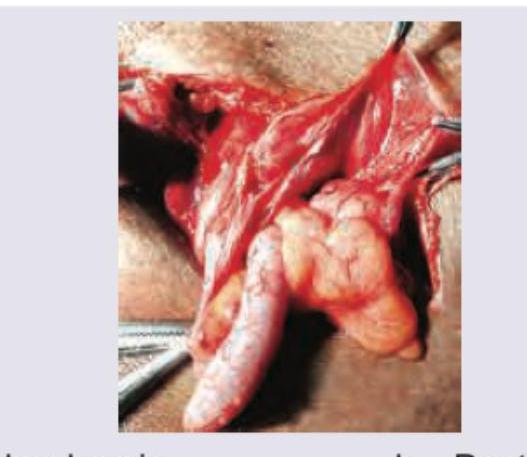
Which of the following is the treatment for achalasia?
Which of the following is NOT true regarding primary gastric lymphoma?
In appendicitis, the initial periumbilical pain is eventually localized to the right iliac fossa because of which structure?
A 75-year-old woman with chronic atrial fibrillation presented with a 2-day history of colicky abdominal pain. Physical examination revealed hypoactive bowel sounds and diffuse abdominal tenderness. Laboratory tests showed a white cell count of 19,400/mm with 92% neutrophils, a blood urea nitrogen level of 42 mg/dL, and a serum creatinine level of 3.0 mg/dL. What is the investigation of choice?
Cholecystectomy may lead to an increased risk of which of the following?
All the following are used to classify stomach malignancies except?
POEM is indicated for which of the following conditions?
What is the treatment of choice in ulcerative colitis?
What is true about peptic oesophagitis?
What is the minimum amount of gastrointestinal bleeding required to cause melena?
Explanation: **Explanation:** Achalasia cardia is a primary esophageal motility disorder characterized by the failure of the Lower Esophageal Sphincter (LES) to relax and the absence of progressive peristalsis. The primary goal of treatment is to reduce the outflow resistance at the LES. **Why Option A is Correct:** Management typically follows a stepped approach. While medical therapies (like nitrates or calcium channel blockers) and endoscopic interventions (Botox injection or Pneumatic Dilation) are available, they often provide temporary relief or carry risks of recurrence. **Surgery (Heller’s Myotomy)** is considered the gold standard for definitive treatment. It is indicated when medical management fails to provide symptomatic relief, in young patients, or when pneumatic dilation is contraindicated or unsuccessful. **Why Other Options are Incorrect:** * **Option B (Nissen’s Fundoplication):** This is the treatment of choice for Gastroesophageal Reflux Disease (GERD). In achalasia surgery, a *partial* fundoplication (like Dor or Toupet) is performed alongside a Heller’s Myotomy to prevent reflux, but a 360° Nissen’s is avoided as it would create too much resistance. * **Option C (Medical treatment only):** Medical therapy is the least effective long-term option and is generally reserved for elderly patients or those unfit for surgery/dilation. **NEET-PG High-Yield Pearls:** * **Investigation of Choice:** Esophageal Manometry (shows incomplete LES relaxation and aperistalsis). * **Gold Standard Surgery:** Laparoscopic Heller’s Cardiomyotomy with a partial fundoplication. * **Radiology:** "Bird’s beak" appearance on Barium Swallow. * **POEM (Per-Oral Endoscopic Myotomy):** A newer, minimally invasive endoscopic "scarless" surgical alternative.
Explanation: **Explanation:** Primary gastric lymphoma is the most common site for extranodal lymphoma, yet it remains a diagnostic challenge because it **cannot be easily differentiated from gastric adenocarcinoma clinically.** 1. **Why Option D is the Correct Answer (The False Statement):** The clinical presentation of gastric lymphoma is remarkably similar to gastric adenocarcinoma, featuring epigastric pain, weight loss, and anorexia. **Early satiety** and **lymph node involvement** are common to both conditions. Definitive differentiation requires endoscopic biopsy and histopathology, as physical examination and symptoms alone are non-specific. 2. **Analysis of Incorrect Options (True Statements):** * **Option A:** Unlike systemic lymphomas, **B symptoms** (fever, night sweats, weight loss >10%) are **rare** in primary gastric lymphoma, occurring in less than 10-15% of cases. * **Option B:** *H. pylori* infection is a major risk factor, particularly for **MALT (Mucosa-Associated Lymphoid Tissue)** lymphoma. Eradication of the bacteria can lead to complete remission in early-stage MALTomas. * **Option C:** Over 90% of primary gastric lymphomas are of **B-cell origin**, with the most common subtypes being Diffuse Large B-cell Lymphoma (DLBCL) and MALT lymphoma. **High-Yield NEET-PG Pearls:** * **Most common site of extranodal lymphoma:** Stomach. * **Most common histological type:** DLBCL (High grade) followed by MALToma (Low grade). * **Staging System:** The **Lugano Classification** is specifically used for gastrointestinal lymphomas. * **Treatment:** Low-grade MALToma (Stage I) is treated with *H. pylori* eradication. Advanced or high-grade cases require chemotherapy (R-CHOP). Surgery is generally reserved for complications like perforation or bleeding.
Explanation: **Explanation:** The shift of pain in acute appendicitis is a classic example of the transition from visceral to somatic pain. 1. **Why Peritoneum is correct:** * **Initial Pain (Visceral):** Early in appendicitis, distension of the appendix stimulates visceral afferent nerve fibers (T8–T10). Since the midgut's visceral nerves are poorly localized, the brain perceives this as dull, vague pain in the **periumbilical region**. * **Localized Pain (Somatic):** As the inflammation progresses, it reaches the serosa and eventually irritates the **parietal peritoneum** lining the abdominal wall. Unlike the viscera, the parietal peritoneum is supplied by somatic nerves, which are highly sensitive and provide precise localization. This results in the classic shift of pain to the **Right Iliac Fossa (McBurney’s point)**. 2. **Why other options are incorrect:** * **Iliopsoas:** While irritation of the psoas muscle (Psoas sign) can occur in retrocecal appendicitis, it is a secondary sign of muscle irritation during hip extension, not the mechanism for pain localization. * **Colon & Caecum:** These are visceral structures. While the appendix is attached to the caecum, inflammation of the bowel wall itself continues to produce vague visceral pain; it is only when the **parietal peritoneum** is involved that localization occurs. **Clinical Pearls for NEET-PG:** * **Sequence of Symptoms (Murphy’s Triad):** Pain first, followed by vomiting, then fever. * **McBurney’s Point:** Located 1/3rd of the distance from the Right Anterior Superior Iliac Spine (ASIS) to the umbilicus. * **Nerve Supply:** Visceral pain is carried by sympathetic fibers; Somatic pain is carried by intercostal nerves (T12/L1). * **Most common position of Appendix:** Retrocecal (75%).
Explanation: ### Explanation The clinical presentation of a 75-year-old patient with **chronic atrial fibrillation (AF)**, colicky abdominal pain, and leukocytosis is highly suspicious for **Acute Mesenteric Ischemia (AMI)**. In a standard scenario, Contrast-Enhanced CT (CECT) is the gold standard for diagnosis. However, this question hinges on the patient’s **renal status**. **1. Why Ultrasound (USG) is the Correct Answer:** The patient has significant renal impairment (Creatinine: 3.0 mg/dL, BUN: 42 mg/dL). In the context of **Acute Kidney Injury (AKI) or Chronic Kidney Disease (CKD)**, the administration of intravenous iodinated contrast for a CECT is contraindicated due to the high risk of **Contrast-Induced Nephropathy (CIN)**. While USG has limited sensitivity for bowel ischemia, it is the safest initial bedside modality to rule out other causes of acute abdomen in a patient with renal failure. **2. Why the Other Options are Incorrect:** * **Contrast-enhanced CT (CECT):** Although the "investigation of choice" for AMI, it is contraindicated here due to the elevated creatinine (3.0 mg/dL). * **Duplex Doppler:** While it can visualize proximal mesenteric vessels, it is technically difficult in an acute setting due to bowel gas and patient discomfort, making it less ideal than USG for a general screen. * **MRI Scan:** Gadolinium-based contrast agents carry a risk of **Nephrogenic Systemic Fibrosis (NSF)** in patients with a GFR <30 mL/min. Additionally, MRI is time-consuming and impractical for an unstable patient with suspected ischemia. **3. Clinical Pearls for NEET-PG:** * **Gold Standard for AMI:** CT Angiography (CECT). * **Most Common Cause of AMI:** Arterial embolism (often secondary to Atrial Fibrillation). * **Classic Sign:** "Pain out of proportion to physical findings" (early stage). * **Management Rule:** If the creatinine is high, non-contrast studies or bedside USG are preferred initially, though in life-threatening emergencies, some protocols suggest hydration and proceeding with CT if the benefit outweighs the risk of CIN. However, for exam purposes, **elevated creatinine = avoid contrast.**
Explanation: **Explanation:** The correct answer is **Proximal colon cancer**. **1. Why Proximal Colon Cancer is Correct:** After a cholecystectomy, the storage function of the gallbladder is lost, leading to a continuous, unregulated flow of bile into the duodenum. This results in an increased enterohepatic circulation of bile acids. Anaerobic bacteria in the gut chemically modify these primary bile acids into **secondary bile acids** (such as deoxycholic acid and lithocholic acid). These secondary bile acids are known carcinogens that irritate the colonic mucosa, promote cellular proliferation, and generate reactive oxygen species. This effect is most pronounced in the **proximal (right) colon**, where the concentration of these modified bile acids is highest. **2. Why Other Options are Incorrect:** * **B. Cancer of the Pancreas:** While some older studies suggested a weak link, meta-analyses have not consistently proven a statistically significant causal relationship between cholecystectomy and pancreatic adenocarcinoma. * **C. Hepatic Cancer:** There is no established pathophysiological mechanism linking the removal of the gallbladder to an increased risk of primary hepatocellular carcinoma. * **D. Cholangiocarcinoma:** While chronic cholecystitis and gallstones are risk factors for gallbladder cancer, cholecystectomy actually *removes* the risk of gallbladder cancer. There is no strong evidence that it increases the risk of bile duct cancer (cholangiocarcinoma). **3. NEET-PG High-Yield Clinical Pearls:** * **Post-Cholecystectomy Syndrome:** Recurrence of symptoms (RUQ pain, dyspepsia) after surgery, often due to retained stones or sphincter of Oddi dysfunction. * **Bile Acid Diarrhea:** A common post-operative complication treated with **Cholestyramine** (a bile acid sequestrant). * **The "Right-Sided" Rule:** For NEET-PG, remember that the association is specifically with **Right-sided/Proximal colon cancer** (Cecum and Ascending colon) rather than distal or rectal cancer.
Explanation: The correct answer is **Strasberg classification** because it is used to classify **Bile Duct Injuries** (iatrogenic injuries occurring during cholecystectomy), not stomach malignancies. It categorizes injuries from Type A to E based on the location and extent of the biliary leak or stricture. ### Explanation of Other Options: * **Bormann Classification:** This is the most widely used system for describing the **macroscopic (gross) appearance** of advanced gastric cancer. It divides tumors into four types: * Type I: Polypoid/Fungating * Type II: Ulcerated with well-defined margins * Type III: Ulcerated with infiltrating margins * Type IV: Diffuse infiltrating (Linitis Plastica) * **Lauren Classification:** This is a **histological classification** that divides gastric adenocarcinoma into two main types: * **Intestinal type:** Well-differentiated, associated with environmental factors and H. pylori. * **Diffuse type:** Poorly differentiated, signet ring cells, associated with E-cadherin (CDH1) mutations. * **Japanese Classification (JGCA):** A detailed anatomical classification used for surgical planning, focusing on **lymph node stations** (N1, N2, N3) and the extent of lymphadenectomy (D1 vs. D2). ### NEET-PG High-Yield Pearls: * **Linitis Plastica:** Associated with Bormann Type IV and Lauren Diffuse type; it carries the worst prognosis. * **Strasberg Type E:** Refers to a major circumferential injury to the hepatic duct (further divided by the Bismuth classification). * **Early Gastric Cancer (EGC):** Defined as a tumor limited to the mucosa or submucosa, regardless of lymph node status (classified by the Japanese Endoscopic Society).
Explanation: **Explanation:** **POEM (Per-Oral Endoscopic Myotomy)** is a minimally invasive endoscopic procedure used to treat motility disorders of the esophagus. It involves creating a submucosal tunnel to reach the muscularis propria and performing a selective myotomy of the inner circular muscle layer of the lower esophagus and the Lower Esophageal Sphincter (LES). **Why Achalasia Cardia is the correct answer:** Achalasia is characterized by the failure of the LES to relax and the absence of esophageal peristalsis. POEM has emerged as a first-line treatment (alongside Heller’s Myotomy) because it effectively reduces LES pressure, allowing gravity-assisted passage of food into the stomach. It is particularly preferred for **Type III (Spastic) Achalasia** because it allows for a longer myotomy in the esophageal body than traditional surgery. **Analysis of Incorrect Options:** * **Hiatus Hernia:** This is an anatomical defect where the stomach protrudes through the diaphragm. Treatment involves surgical repair (Cruroplasty) and fundoplication, not myotomy. * **Diffuse Esophageal Spasm (DES):** While POEM can technically be used for DES, Achalasia Cardia is the primary and most established indication. In exams, if both are present, Achalasia is the definitive choice. * **Esophageal Carcinoma:** This is a malignancy requiring esophagectomy, chemotherapy, or radiotherapy. Myotomy is contraindicated as it does not address the tumor. **High-Yield Clinical Pearls for NEET-PG:** * **Eckardt Score:** Used to assess the clinical severity and treatment success in Achalasia. * **Bird’s Beak Appearance:** Classic finding on Barium Swallow for Achalasia. * **Gold Standard Diagnosis:** High-Resolution Manometry (HRM). * **Complication:** The most common side effect of POEM is **Gastroesophageal Reflux Disease (GERD)**, as no anti-reflux procedure (like a Dor wrap) is performed during the endoscopic process.
Explanation: **Explanation:** The treatment of choice for Ulcerative Colitis (UC) depends on the severity and extent of the disease. For **induction and maintenance of remission** in mild-to-moderate UC, **5-aminosalicylic acid (5-ASA)** compounds, such as Mesalamine, are the first-line agents. They work topically on the colonic mucosa to inhibit cytokine production and inflammatory mediators (leukotrienes and prostaglandins). **Analysis of Options:** * **A. 5-aminosalicylic acid (Correct):** It is the gold standard for initial therapy. It can be administered orally or topically (suppositories/enemas) depending on the disease distribution (proctitis vs. pancolitis). * **B. Azathioprine:** This is an immunomodulator used as a **second-line** agent for patients who are steroid-dependent or refractory to 5-ASA. It is not the initial treatment of choice due to its slow onset of action (3–6 months). * **C. Metronidazole:** While useful in Crohn’s disease (especially perianal disease) or Pouchitis, antibiotics have no proven primary role in the standard management of UC. * **D. Salicylates:** While 5-ASA is a salicylate derivative, "Salicylates" (like Aspirin) is a broad term. In the context of IBD, the specific 5-ASA moiety is required; traditional aspirin is ineffective and may even exacerbate GI symptoms. **NEET-PG High-Yield Pearls:** * **Sulfasalazine:** A combination of 5-ASA and sulfapyridine. The sulfapyridine causes most side effects (e.g., male infertility, rash), while 5-ASA is the active therapeutic component. * **Surgery:** Total Proctocolectomy with Ileal Pouch-Anal Anastomosis (IPAA) is the **surgical treatment of choice** and is curative for UC. * **Monitoring:** Patients with UC for >8 years require regular colonoscopic surveillance due to the high risk of Colorectal Carcinoma.
Explanation: **Explanation:** Peptic oesophagitis (Gastroesophageal Reflux Disease - GERD) is a clinical condition where the reflux of gastric acid causes mucosal damage. The diagnosis is primarily clinical, and the options provided do not accurately reflect the gold standard diagnostic protocols. **Why "None of the above" is correct:** The definitive diagnosis of peptic oesophagitis is not "readily" confirmed by a single routine test like endoscopy or barium swallow because many patients have **Non-Erosive Reflux Disease (NERD)**, where symptoms exist despite a normal-looking mucosa. The gold standard for diagnosing acid reflux is **24-hour ambulatory pH monitoring**. **Analysis of Incorrect Options:** * **Option A:** Barium swallow is insensitive for detecting early or mild oesophagitis. It is primarily used to identify structural complications like strictures, webs, or large hiatus hernias, but it cannot visualize mucosal inflammation or "red-out" signs. * **Option B:** While hiatus hernia is a common predisposing factor for GERD, it is **not** always present. Many patients with severe oesophagitis have a competent hiatus, and conversely, many people with a hiatus hernia remain asymptomatic. * **Option C:** Oesophagoscopy can confirm *erosive* oesophagitis (using the Los Angeles Classification), but it cannot "readily confirm" all cases. Up to 50-70% of patients with reflux symptoms have a macroscopically normal endoscopy (NERD). **High-Yield Clinical Pearls for NEET-PG:** * **Gold Standard for GERD diagnosis:** 24-hour pH monitoring (DeMeester Score >14.72). * **Most common symptom:** Heartburn (Pyrosis). * **Investigation of choice for complications (Stricture/Barrett’s):** Endoscopy with biopsy. * **Savary-Miller or Los Angeles Classification:** Used to grade the severity of endoscopic oesophagitis. * **Drug of Choice:** Proton Pump Inhibitors (PPIs).
Explanation: **Explanation:** Melena refers to the passage of black, tarry, and foul-smelling stools, resulting from the degradation of hemoglobin into **hematin** by gastric acid and intestinal bacteria. **1. Why 60 ml is correct:** Clinical studies and classic surgical teaching (e.g., *Bailey & Love*) establish that a minimum of **60 ml** of blood in the upper gastrointestinal tract is required to produce a single melenic stool. For melena to occur, the blood must typically remain in the GI tract for at least **8 to 14 hours** to allow for sufficient chemical breakdown. **2. Analysis of Incorrect Options:** * **10 ml (Option A):** This amount is insufficient to change the color and consistency of stool to melena. However, as little as **5–10 ml** of blood can result in a positive **Fecal Occult Blood Test (FOBT)**. * **40 ml (Option B):** While some older texts suggest 50 ml, 60 ml is the standardized threshold recognized in most competitive medical examinations. * **115 ml (Option D):** This is well above the minimum threshold. While 100–200 ml will certainly cause melena, it does not represent the *minimum* amount required. **3. Clinical Pearls for NEET-PG:** * **Site of Bleeding:** Melena usually indicates bleeding **proximal to the ligament of Treitz** (Upper GI). However, bleeding from the right colon or small intestine can also present as melena if intestinal transit is slow. * **Hematochezia:** This is the passage of bright red blood per rectum, usually indicating a Lower GI bleed. However, massive Upper GI bleeding (>1000 ml) with rapid transit can also present as hematochezia. * **Pseudo-melena:** Ingestion of iron supplements, bismuth, or charcoal can cause black stools, but these lack the characteristic "tarry" consistency and offensive odor of true melena.
Esophageal Disorders
Practice Questions
Gastric Disorders
Practice Questions
Small Intestine Pathology
Practice Questions
Appendicitis
Practice Questions
Inflammatory Bowel Disease
Practice Questions
Intestinal Obstruction
Practice Questions
Gastrointestinal Bleeding
Practice Questions
Diverticular Disease
Practice Questions
Anorectal Disorders
Practice Questions
Colorectal Neoplasms
Practice Questions
Gastrointestinal Stomas
Practice Questions
Bariatric Surgery Principles
Practice Questions
Get full access to all questions, explanations, and performance tracking.
Start For Free