A healthy 75-year-old man has a bleeding duodenal ulcer. Medical management and endoscopic measures have failed to stop the bleeding. What is the next step in management?
A 25-year-old patient presented with a mass in the right iliac fossa. Laparotomy revealed a 2.5 cm carcinoid tumor. What is the next step in management?
Which of the following statements is false regarding dumping syndrome?
Zenker's diverticulum occurs at which anatomical location?
All of the following are true regarding gallstone management EXCEPT?
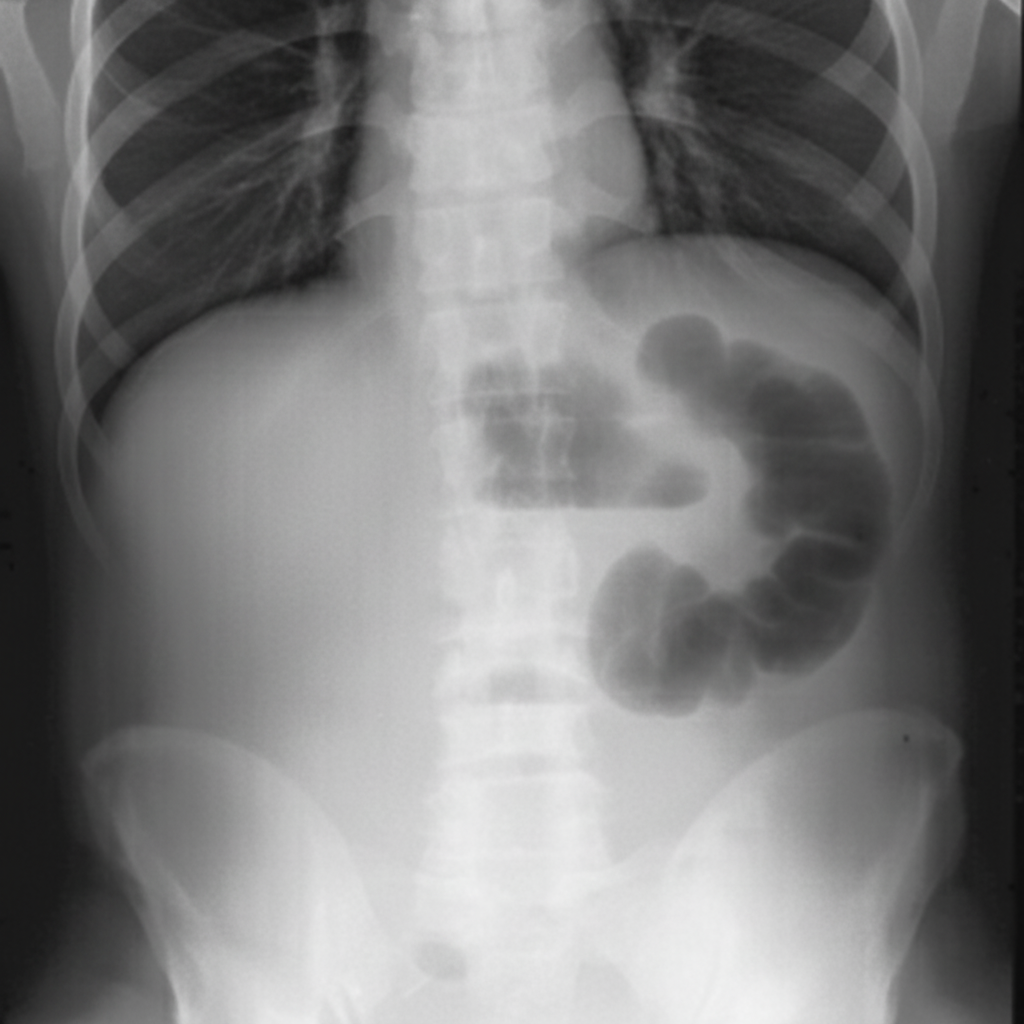
What is the best investigation for acute intestinal obstruction?
A 65-year-old man has stools positive for occult blood. Which of the following is the most likely location of the bowel cancer?
What is a feature of early dumping syndrome?
What is the recommended surgical approach for a single perforation due to typhoid fever?
Ivor Lewis operation is done for which of the following conditions?
Explanation: **Explanation:** The management of a bleeding duodenal ulcer (DU) follows a stepwise escalation. When medical therapy (PPIs) and endoscopic interventions (clipping, thermal coagulation, or adrenaline injection) fail, **surgical intervention** is mandatory to prevent exsanguination. **Why Option D is Correct:** In a stable patient, the surgical goal is twofold: immediate hemostasis and prevention of recurrence. 1. **Oversewing:** A longitudinal gastroduodenotomy is performed, and the bleeding vessel (usually the **gastroduodenal artery**) is ligated/oversewn. 2. **Vagotomy and Pyloroplasty (V&P):** Since the underlying cause of DU is acid hypersecretion, a truncal vagotomy is performed to reduce acid output. Because vagotomy results in gastric stasis, a drainage procedure (pyloroplasty) is required. This remains the standard definitive surgical treatment for refractory bleeding DU. **Why Other Options are Incorrect:** * **Option A:** Continued transfusion without source control leads to "lethal triad" (acidosis, coagulopathy, hypothermia). Surgery is indicated if >4–6 units are required in 24 hours. * **Option B:** Norepinephrine is a vasopressor used for distributive shock; it does not address the mechanical arterial bleed and may worsen tissue ischemia. * **Option C:** While oversewing stops the immediate bleed, it does not address the underlying acid pathophysiology, leading to a high rate of ulcer recurrence. **Clinical Pearls for NEET-PG:** * **Most common site:** Posterior wall of the first part of the duodenum (D1). * **Vessel involved:** Gastroduodenal artery (GDA). * **Indications for surgery:** Hemodynamic instability despite resuscitation, failure of endoscopic therapy (twice), or rare blood groups. * **Rockall Score/Blatchford Score:** Used to predict mortality and the need for intervention in UGIB.
Explanation: **Explanation:** The management of an appendiceal carcinoid (neuroendocrine tumor) is primarily determined by the **size of the tumor** and its location. For a tumor measuring **>2 cm**, the risk of nodal metastasis increases significantly (up to 30-60%). Therefore, a **Right Hemicolectomy** is the standard of care to ensure adequate oncological clearance of the lymphatic drainage. **Why other options are incorrect:** * **Appendicectomy (B):** This is the treatment of choice only for tumors **<1 cm** located at the tip of the appendix without mesoappendiceal involvement. * **Segmental Resection (A):** This is not a standard oncological procedure for appendiceal carcinoids. If the tumor is between **1–2 cm**, appendicectomy is usually sufficient unless there are high-risk features (e.g., involvement of the base, mesoappendiceal invasion >3mm, or high grade), in which case a right hemicolectomy is considered. * **Yearly 5-HIAA assay (D):** 5-HIAA is a breakdown product of serotonin used to monitor carcinoid syndrome. However, appendiceal carcinoids rarely cause syndrome unless they have metastasized to the liver. It is a monitoring tool, not a primary surgical management step. **High-Yield Clinical Pearls for NEET-PG:** * **Most common site** of carcinoid tumor: **Appendix** (historically) or Small Intestine (recent data). * **Most common location** within the appendix: **Tip** (75%). * **Indications for Right Hemicolectomy in Appendiceal Carcinoid:** 1. Size >2 cm. 2. Involvement of the appendiceal base. 3. Mesoappendiceal invasion >3 mm. 4. Goblet cell carcinoid (Adenocarcinoid) variant. * **Stain:** Chromogranin A and Synaptophysin are the most specific markers.
Explanation: ### Explanation **Dumping Syndrome** occurs due to the rapid emptying of hyperosmolar gastric contents into the small intestine, typically following gastric surgeries like Billroth II or Roux-en-Y bypass. **Why Option D is the correct (False) statement:** Pectin is a viscous, soluble dietary fiber. When added to meals, it increases the viscosity of the gastric chyme, thereby **slowing gastric emptying** and delaying carbohydrate absorption. This helps stabilize blood glucose levels and reduces the osmotic shift into the bowel. Therefore, pectin **alleviates** rather than exacerbates dumping symptoms. **Analysis of other options:** * **Option A (True):** Early dumping (within 30 mins) involves a massive fluid shift from the intravascular space to the intestinal lumen. This leads to **cardiovascular symptoms** like tachycardia, palpitations, syncope, and diaphoresis. * **Option B (True):** Management focuses on reducing the osmotic load. A **low carbohydrate** diet prevents rapid glucose spikes, while **high protein and fat** provide sustained energy without causing significant osmotic shifts. * **Option C (True):** Patients are advised to **avoid fluids during meals** and consume them 30–60 minutes before or after eating. This prevents the "washing down" effect that accelerates gastric emptying. **Clinical Pearls for NEET-PG:** * **Early Dumping:** Most common; occurs 15–30 mins post-prandially; caused by osmotic fluid shift and release of GI hormones (Serotonin, VIP). * **Late Dumping:** Occurs 1–3 hours post-prandially; caused by **reactive hypoglycemia** due to an exaggerated insulin surge. * **Medical Management:** First-line is dietary modification. Refractory cases are treated with **Octreotide** (Somatostatin analogue), which inhibits insulin and slows transit. * **Surgical Management:** Reserved for severe cases; options include converting Billroth II to **Roux-en-Y** or creating a reversed jejunal interposition.
Explanation: **Explanation:** Zenker’s diverticulum is a **pulsion diverticulum** (false diverticulum) that occurs due to increased intraluminal pressure during swallowing against a resistant **Upper Esophageal Sphincter (UES)**. The underlying pathophysiology involves **incoordination** or incomplete relaxation of the cricopharyngeus muscle. This leads to the herniation of the mucosal and submucosal layers through a point of least resistance called **Killian’s Dehiscence**—a triangular area located between the horizontal fibers of the cricopharyngeus and the oblique fibers of the thyropharyngeus (both parts of the inferior constrictor muscle). **Analysis of Options:** * **Option A (Correct):** The diverticulum originates at the level of the UES, specifically at the pharyngoesophageal junction. * **Option B & C (Incorrect):** The Lower Esophageal Sphincter (LES) is associated with conditions like Achalasia Cardia or Epiphrenic diverticula, not Zenker’s. Zenker’s is strictly a proximal esophageal pathology. * **Option D (Incorrect):** Zenker’s is fundamentally a disorder of the UES mechanism. **High-Yield Clinical Pearls for NEET-PG:** * **Clinical Presentation:** Characterized by dysphagia, **halitosis** (due to undigested food rotting in the sac), and regurgitation of undigested food. * **Diagnosis:** The gold standard investigation is a **Barium Swallow**, which shows the pouch posteriorly. * **Complication:** The most common serious complication is **aspiration pneumonia**. * **Treatment:** Small asymptomatic pouches are observed; symptomatic ones require **Cricopharyngeal Myotomy** (Dohlman’s procedure is the endoscopic approach). * **Caution:** Avoid blind nasogastric tube insertion or endoscopy in these patients due to the high risk of **perforation**.
Explanation: This question pertains to the criteria for **Medical Dissolution Therapy** (using bile acids like Ursodeoxycholic acid) or **Extracorporeal Shock Wave Lithotripsy (ESWL)** for gallstones. ### **Explanation of the Correct Answer (B)** The statement "The stone should be radiopaque" is **false**. For medical dissolution therapy to work, the stone must be **radiolucent** (not visible on X-ray). Radiopacity indicates significant calcium content, which prevents bile acids from penetrating and dissolving the cholesterol matrix of the stone. Therefore, only pure or predominantly cholesterol stones (which are radiolucent) are candidates. ### **Analysis of Other Options** * **A. The stone should be cholesterol:** This is true. Bile acid therapy works specifically by decreasing the cholesterol saturation of bile. Pigment stones do not respond to this treatment. * **C. The gallbladder should be functioning:** This is true. A patent cystic duct and a functioning gallbladder (confirmed by oral cholecystography) are essential so that the drug-enriched bile can reach the stone and the resulting "sludge" or fragments can be emptied into the duodenum. * **D. Symptoms should be non-acute:** This is true. Medical management is a slow process (taking 6–24 months) and is only indicated for patients with mild, infrequent symptoms who are unfit for or refuse surgery. Acute cholecystitis is a contraindication. ### **NEET-PG High-Yield Pearls** * **Ideal Candidate for Dissolution:** Small (<10mm), radiolucent, floating cholesterol stones in a functioning gallbladder. * **Drug of Choice:** Ursodeoxycholic acid (UDCA). * **Success Rate:** High recurrence rate (>50%) once the drug is stopped, which is why **Laparoscopic Cholecystectomy** remains the gold standard. * **Radiopacity:** Only 15-20% of gallstones are radiopaque (due to calcium carbonate/bilirubinate), whereas 85% of kidney stones are radiopaque.
Explanation: **Explanation:** **Why X-ray is the correct answer:** In the setting of acute intestinal obstruction, a **Plain Erect Abdominal X-ray** is the initial investigation of choice and the most practical "best" first step in an emergency. It is highly sensitive for diagnosing obstruction, showing characteristic features such as **dilated bowel loops** and **multiple air-fluid levels** (more than 3-5 are considered significant). It helps differentiate between small bowel obstruction (central loops, valvulae conniventes) and large bowel obstruction (peripheral loops, haustrations). **Why other options are incorrect:** * **Barium Studies:** These are generally **contraindicated** in acute obstruction, especially if perforation is suspected, as barium can cause severe chemical peritonitis. While Gastrografin (water-soluble contrast) is sometimes used therapeutically or diagnostically in partial obstruction, it is not the primary investigation. * **USG (Ultrasonography):** While useful for identifying "target signs" in intussusception or assessing free fluid, it is limited by overlying bowel gas, which obscures the view in most cases of obstruction. * **ERCP:** This is an endoscopic procedure used for biliary and pancreatic pathologies (e.g., choledocholithiasis). It has no role in the diagnosis of generalized intestinal obstruction. **High-Yield Clinical Pearls for NEET-PG:** * **Gold Standard:** While X-ray is the "best initial" investigation, **Contrast-Enhanced CT (CECT)** is the "Gold Standard" (most accurate) as it identifies the site, cause, and signs of strangulation. * **Step-ladder pattern:** A classic X-ray finding in small bowel obstruction. * **Coffee bean sign:** Pathognomonic for Sigmoid Volvulus on X-ray. * **Bird’s beak appearance:** Seen on contrast enema in cases of Volvulus.
Explanation: **Explanation:** The **sigmoid colon** is the most common site for colorectal carcinoma, accounting for approximately 25–35% of all cases. When considering the entire large bowel, the left side (distal to the splenic flexure) is more frequently involved than the right side. * **Why Sigmoid Colon is Correct:** Epidemiological data consistently shows that the sigmoid colon and rectum are the most frequent locations for primary colorectal malignancies. These tumors often present with altered bowel habits, obstructive symptoms, or occult/frank bleeding. * **Why Ascending Colon is Incorrect:** While the incidence of right-sided (proximal) colon cancers is increasing, the ascending colon remains less common than the sigmoid. Right-sided lesions typically present with iron deficiency anemia due to chronic occult blood loss but are statistically second to left-sided lesions. * **Why Transverse Colon is Incorrect:** The transverse colon is a relatively rare site for primary adenocarcinoma compared to the distal segments. * **Why Appendix is Incorrect:** Primary appendiceal cancer is extremely rare (found in <1% of appendectomies). The most common tumor of the appendix is a Neuroendocrine Tumor (Carcinoid), not adenocarcinoma. **High-Yield Pearls for NEET-PG:** 1. **Most common site of Colorectal Cancer:** Sigmoid colon (followed by the Rectum). 2. **Most common presentation of Right-sided colon cancer:** Iron deficiency anemia and vague abdominal pain. 3. **Most common presentation of Left-sided colon cancer:** Change in bowel habits and intestinal obstruction (due to narrower lumen and solid stools). 4. **Gold Standard Investigation:** Colonoscopy with biopsy. 5. **Tumor Marker:** CEA (primarily used for monitoring recurrence, not for screening).
Explanation: **Explanation:** Dumping syndrome is a common complication following gastric surgeries (like Billroth I/II or Roux-en-Y gastric bypass) where the pyloric mechanism is bypassed or destroyed. **1. Why Option A is correct:** Early dumping syndrome occurs **15 to 30 minutes** after a meal. The underlying pathophysiology is the rapid "dumping" of hypertonic chyme into the small intestine. This creates a high osmotic gradient, drawing fluid from the intravascular space into the intestinal lumen. This sudden shift leads to **intestinal distention** (causing abdominal pain and bloating) and **vasomotor symptoms** (due to decreased circulating blood volume). **2. Why the other options are incorrect:** * **Option B:** Symptoms are **aggravated by food** (especially high-carb, hyperosmolar meals), not relieved by it. * **Option C:** While exercise isn't the primary trigger, symptoms are typically relieved by **lying down** (recumbency), which slows gastric emptying. * **Option D:** Tremors, faintness, and prostration are classic features of **Late Dumping Syndrome**. Late dumping occurs 2–3 hours post-meals due to reactive hypoglycemia (insulin surge in response to rapid glucose absorption). **Clinical Pearls for NEET-PG:** * **Early Dumping:** Most common type; primarily **osmotic/vasomotor** (tachycardia, palpitations, flushing, diarrhea). * **Late Dumping:** Primarily **hypoglycemic** (sweating, confusion, tremors). * **Management:** First-line is dietary modification (small, frequent, low-carb meals; avoid liquids during meals). * **Medical Treatment:** **Octreotide** (somatostatin analogue) is the drug of choice for refractory cases as it slows gastric emptying and inhibits insulin release.
Explanation: **Explanation:** Typhoid perforation is a serious complication of enteric fever, typically occurring in the 3rd week of illness. The perforations are usually longitudinal and occur on the antimesenteric border of the terminal ileum, where Peyer’s patches are most abundant. **Why Primary Closure is Correct:** For a **single, small perforation** (<1 cm) with minimal peritoneal contamination and a healthy-looking bowel wall, **primary closure** (debridement of edges and two-layer transverse closure) is the treatment of choice. Closing the longitudinal ulcer transversely prevents narrowing of the bowel lumen. **Analysis of Incorrect Options:** * **Resection with Anastomosis (A & B):** These are indicated only in specific scenarios: multiple perforations in a short segment of the bowel, a very large perforation (>2 cm), or if the bowel wall is gangrenous/friable. In a single, simple perforation, resection is unnecessarily aggressive and increases operative time. * **Diversion (D):** An ileostomy (diversion) is reserved for patients in extremis (severe sepsis, shock) or those with gross fecal peritonitis where any anastomosis or closure is likely to leak. It is not the standard approach for a single perforation in a stable patient. **High-Yield Facts for NEET-PG:** * **Location:** Most common site is within **45–60 cm** of the ileocaecal valve. * **Timing:** Classically occurs in the **3rd week** of infection. * **Surgical Pearl:** Always check the entire small bowel for multiple perforations (seen in ~25% of cases). * **Wound Management:** Delayed primary closure of the skin is often preferred due to the high risk of surgical site infection in typhoid cases.
Explanation: **Explanation:** **Ivor Lewis Esophagectomy** is a classic surgical procedure used primarily for the treatment of **Carcinoma of the esophagus**, specifically for tumors involving the middle and lower thirds of the esophagus. ### Why Option A is Correct: The Ivor Lewis operation is a **transthoracic esophagectomy** that utilizes a two-stage approach: 1. **Laparotomy:** To mobilize the stomach and create a gastric conduit. 2. **Right Thoracotomy:** To resect the esophagus and perform an intrathoracic anastomosis (esophagogastrostomy) at the level of the azygos vein. It is the gold standard for distal esophageal and gastroesophageal junction (GEJ) tumors because it allows for excellent lymph node dissection and direct visualization of the tumor. ### Why Other Options are Incorrect: * **B. Achalasia Cardiae:** The definitive surgical treatment is **Heller’s Myotomy** (usually laparoscopic), which involves cutting the muscle fibers of the lower esophageal sphincter. * **C. Hiatus Hernia:** This is typically managed via **Nissen’s Fundoplication** or other pexy procedures to restore the anatomy. * **D. GERD:** Refractory GERD is treated with anti-reflux surgeries like **Nissen’s (360°)** or **Toupet (270°)** fundoplication. ### NEET-PG High-Yield Pearls: * **McKeown’s Procedure:** A three-stage esophagectomy (Cervical + Thoracic + Abdominal) used for upper/middle third tumors. * **Transhiatal Esophagectomy (Orringer’s):** Done via abdominal and cervical incisions, avoiding a thoracotomy. * **Most common conduit:** The **Stomach** is the most common organ used to replace the esophagus; the Colon is the second choice. * **Positioning:** For Ivor Lewis, the patient is moved from supine (laparotomy) to a left lateral decubitus position (thoracotomy).
Esophageal Disorders
Practice Questions
Gastric Disorders
Practice Questions
Small Intestine Pathology
Practice Questions
Appendicitis
Practice Questions
Inflammatory Bowel Disease
Practice Questions
Intestinal Obstruction
Practice Questions
Gastrointestinal Bleeding
Practice Questions
Diverticular Disease
Practice Questions
Anorectal Disorders
Practice Questions
Colorectal Neoplasms
Practice Questions
Gastrointestinal Stomas
Practice Questions
Bariatric Surgery Principles
Practice Questions
Get full access to all questions, explanations, and performance tracking.
Start For Free