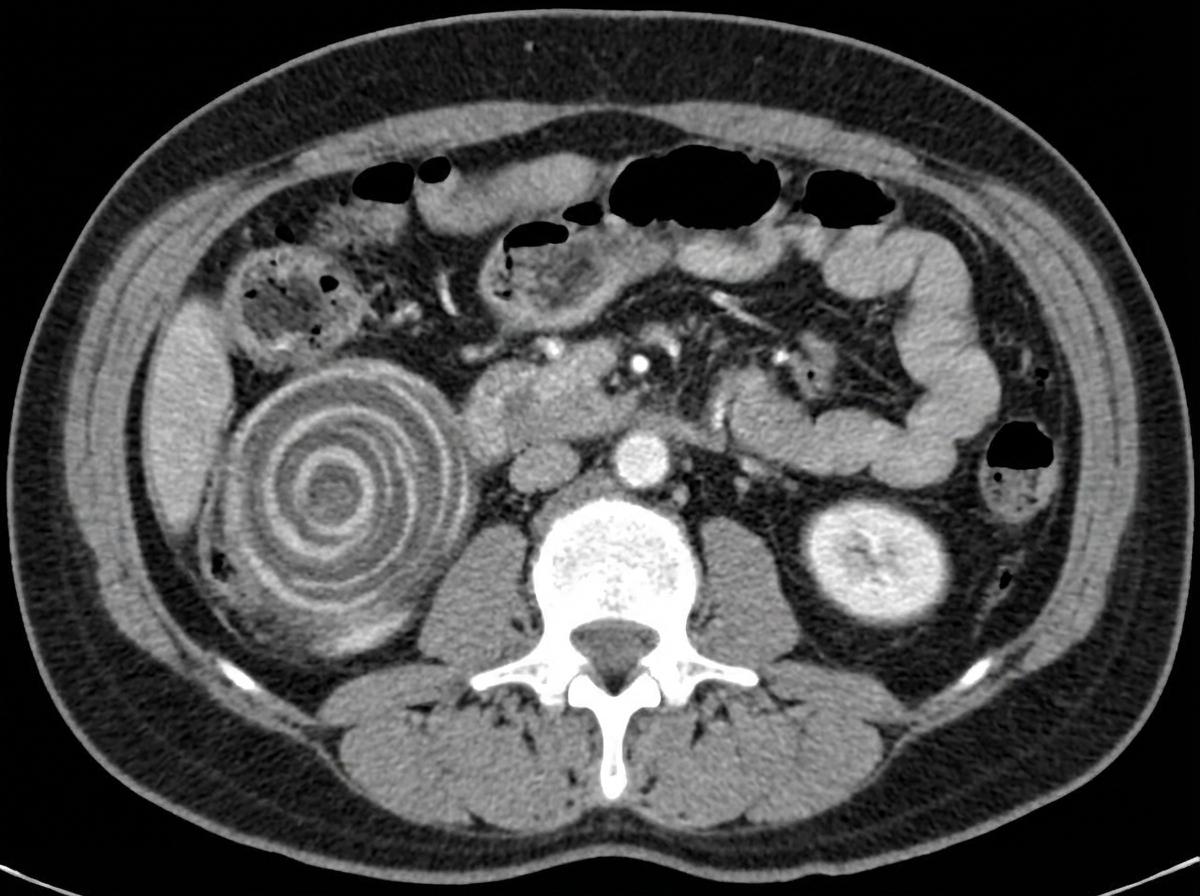
What is the best diagnostic test for oesophageal varices?
Cushing's ulcer is a type of stress ulcer typically seen in which of the following conditions?
What is the most important prognostic indicator in esophageal carcinoma?
Which of the following are types of setons used in fistula in ano surgery?
Gastro-esophageal tears are best detected with which of the following investigations?
What is the most common presentation of benign small bowel tumors?
What is the most common site of a chronic fissure in ano?
Which veins are the primary source of bleeding in gastro-esophageal varices?
All of the following statements are true for telangiectasias of the colon except?
A 40-year-old woman treated for many years for gastroesophageal reflux develops dysphagia and weight loss. Previous esophagoscopy has revealed cellular atypia. An esophagoscopy is about to be performed. What is it most likely to reveal?
Explanation: **Explanation:** The gold standard and best diagnostic test for esophageal varices is **Gastro-oesophagoscopy (Upper GI Endoscopy)**. **Why it is the correct answer:** Upper GI endoscopy is the most sensitive and specific modality for identifying esophageal varices. Beyond mere diagnosis, it allows for the **grading** of varices (Grade I-IV based on size and protrusion) and the identification of **high-risk markers** for bleeding, such as "red wale markings" or "cherry red spots." Crucially, endoscopy offers a **therapeutic advantage**, enabling immediate intervention via Endoscopic Variceal Ligation (EVL) or sclerotherapy if active bleeding is present. **Why the other options are incorrect:** * **CT Scan:** While modern MDCT can detect large varices and provide information about portal vein anatomy or cirrhosis, it lacks the sensitivity to detect small varices and cannot provide therapeutic intervention. * **Tomography:** This is a general term for cross-sectional imaging. It is non-specific and lacks the mucosal detail required to evaluate variceal wall tension or bleeding risk. * **Ultrasound:** While abdominal ultrasound (with Doppler) is the first-line investigation to diagnose **portal hypertension** (by measuring portal vein diameter and flow), it cannot reliably visualize esophageal varices or assess their risk of rupture. **High-Yield Clinical Pearls for NEET-PG:** * **Screening:** All patients diagnosed with cirrhosis should undergo screening endoscopy to look for varices. * **Primary Prophylaxis:** For large varices that have not bled, the treatment of choice is **Non-selective Beta Blockers (Propranolol/Nadolol)** or EVL. * **Acute Bleed Management:** The drug of choice is **Terlipressin** (or Octreotide), and the definitive procedure is **EVL**. * **Child-Pugh Score:** Used to assess the prognosis of chronic liver disease and the risk of variceal bleeding.
Explanation: **Explanation:** **Cushing’s ulcer** is a specific type of stress ulcer associated with **increased intracranial pressure (ICP)**, most commonly seen in patients with **head injuries**, brain tumors, or following intracranial surgery. **Why Option A is Correct:** The underlying pathophysiology involves the stimulation of the **vagus nerve** nuclei due to elevated ICP. Vagal overactivity leads to the hypersecretion of gastric acid (HCl) via the release of acetylcholine. Unlike other stress ulcers caused by mucosal ischemia, Cushing’s ulcers are primarily caused by **hyperacidity**. These ulcers are typically deep, single, and have a higher tendency to perforate compared to other stress ulcers. **Why Other Options are Incorrect:** * **Option B (Severe burns):** Stress ulcers associated with severe burns are known as **Curling’s ulcers**. These are caused by reduced mucosal blood flow (ischemia) due to systemic hypovolemia. * **Option C (Severe hypertension):** While chronic hypertension affects systemic vasculature, it is not a direct cause of acute stress ulceration. * **Option D (Crohn’s disease):** This is an inflammatory bowel disease that can cause gastroduodenal ulcers, but these are chronic and immunomediated, not acute stress-related ulcers. **High-Yield Clinical Pearls for NEET-PG:** * **C**ushing’s = **C**NS (Head injury/Brain). * **C**urling’s = **C**url of the flame (Burns). * **Location:** Cushing’s ulcers can occur in the esophagus, stomach, or duodenum. * **Prophylaxis:** Proton Pump Inhibitors (PPIs) or H2 blockers are standard in ICU settings to prevent these complications.
Explanation: In esophageal carcinoma, the **depth of invasion (T-stage)** is the most significant prognostic factor. This is because the esophagus lacks a serosal layer, which allows for early transmural spread and involvement of adjacent mediastinal structures. As the tumor invades deeper into the muscularis propria and beyond, the risk of lymphatic spread increases exponentially due to the extensive submucosal lymphatic network. ### Why the other options are incorrect: * **Length of involvement:** While a tumor length >5 cm often correlates with advanced disease and poor resectability, it is a secondary clinical observation rather than a primary pathological determinant of survival compared to the T and N stages. * **Histological grading:** This refers to the degree of differentiation (well, moderately, or poorly differentiated). While it influences biological behavior, the anatomical extent of the disease (Stage) is a far more powerful predictor of outcome. * **Immunohistochemistry (IHC):** IHC is primarily used for diagnostic confirmation or identifying molecular targets (like HER2/neu in GE junction tumors) but is not a primary prognostic indicator. ### High-Yield Clinical Pearls for NEET-PG: * **Most common site:** Middle third (Squamous Cell Ca); Lower third (Adenocarcinoma). * **Most common histological type:** Worldwide – Squamous Cell Ca; Increasing in West – Adenocarcinoma. * **Nodal Status:** The number of positive lymph nodes (N-stage) is also a critical prognostic factor, but among the options provided, **Depth of Invasion** is the fundamental determinant of the TNM stage. * **Investigation of choice for T-staging:** Endoscopic Ultrasound (EUS). * **Investigation of choice for M-staging:** PET-CT.
Explanation: In the surgical management of fistula-in-ano, a **seton** is a foreign material (such as silk, polypropylene, or vessel loops) passed through the fistula tract. The choice of seton depends on whether the goal is to promote drainage or to gradually divide the sphincter muscle. **1. Why Option C is Correct:** * **Cutting Seton:** This is used to treat "high" or complex fistulae. It is tied tightly and tightened periodically in the clinic. It works by slowly cutting through the sphincter muscle while simultaneously inducing fibrosis behind it. This prevents the muscle ends from snapping apart, thereby maintaining continence while the tract heals. * **Draining (Non-cutting) Seton:** This is tied loosely around the tract. Its primary purpose is to keep the tract open to prevent the formation of recurrent abscesses and to allow the tract to epithelialize and mature before a definitive secondary procedure (like a LIFT or advancement flap). **2. Why Other Options are Incorrect:** * **Dissecting/Fibrosing Seton:** These are not standard surgical classifications. While setons do cause fibrosis, "fibrosing seton" is not a formal term used in surgical literature. * **Dissolving Seton:** Setons are intended to stay in place for weeks or months; therefore, they are made of non-absorbable materials. A dissolving material would fail to provide the necessary long-term tension or drainage. **High-Yield Clinical Pearls for NEET-PG:** * **Goodsall’s Law:** Predicts the trajectory of the fistula tract based on the location of the external opening relative to the transverse anal line. * **Park’s Classification:** Categorizes fistulae into Intersphincteric (most common), Transsphincteric, Suprasphincteric, and Extrasphincteric. * **Hippocrates** was the first to describe the use of a seton (using horsehair). * **Kshara Sutra:** A traditional Indian medicated seton used for gradual chemical cauterization and healing of the tract.
Explanation: **Explanation:** The question refers to **Mallory-Weiss Syndrome**, which is characterized by longitudinal mucosal lacerations at the gastro-esophageal junction or gastric cardia, typically following episodes of forceful vomiting, retching, or coughing. **1. Why Upper GI Endoscopy (UGIE) is the Correct Answer:** UGIE is the **gold standard** and investigation of choice for gastro-esophageal tears. It allows for direct visualization of the linear mucosal tears, which often appear as "red streaks" near the Z-line. Beyond diagnosis, endoscopy is therapeutic; it allows for active management of bleeding through clipping, thermal coagulation, or epinephrine injection. **2. Why Other Options are Incorrect:** * **CT Scan:** While useful for detecting transmural perforations (Boerhaave syndrome) by showing pneumomediastinum or extraluminal air, it lacks the resolution to identify superficial mucosal tears. * **Angiography:** This is only indicated in cases of massive, brisk gastrointestinal bleeding (usually >0.5 ml/min) where endoscopy fails to localize the source. It is not a primary diagnostic tool for tears. * **Barium Swallow:** This is contraindicated in acute upper GI bleeding due to the risk of aspiration and interference with subsequent endoscopy. Furthermore, mucosal tears are too superficial to be reliably detected by contrast studies. **Clinical Pearls for NEET-PG:** * **Mallory-Weiss vs. Boerhaave:** Mallory-Weiss is a **mucosal tear** (incomplete), whereas Boerhaave syndrome is a **transmural rupture** (complete). * **Location:** Most tears (approx. 75%) occur in the gastric cardia just below the GE junction. * **Management:** Most Mallory-Weiss tears (80-90%) stop bleeding spontaneously with conservative management (acid suppression and fluid resuscitation). * **Associated Factor:** Strongly associated with alcohol binge drinking.
Explanation: **Explanation:** Small bowel tumors are relatively rare, accounting for only 1–3% of all gastrointestinal neoplasms. Among these, benign tumors are frequently asymptomatic due to the liquid nature of small bowel contents and the distensibility of the intestinal wall. **1. Why "Incidental finding on laparotomy" is correct:** Most benign small bowel tumors (such as small leiomyomas, lipomas, or hemangiomas) remain clinically silent throughout life. They are most commonly discovered as **incidental findings** during laparotomy for other conditions, during radiographic studies, or at autopsy. Because they rarely grow large enough to cause symptoms, they often go undetected unless they reach a significant size or cause a mechanical complication. **2. Why other options are incorrect:** * **Small bowel obstruction (A):** While this is the most common presentation of **symptomatic** benign tumors (often via intussusception), the majority of benign tumors overall remain asymptomatic. * **Mass effect (B):** Benign tumors rarely reach a size palpable as a mass. Palpable masses in the small bowel are more characteristic of malignancies like GIST or Lymphoma. * **Recurrent gastrointestinal bleeding (C):** This is a common presentation for specific types like hemangiomas or ulcerated leiomyomas, but it is not the most common presentation for benign tumors as a whole. **Clinical Pearls for NEET-PG:** * **Most common benign tumor:** Leiomyoma (historically) or Adenoma (most common neoplastic). Lipomas are common in the ileum. * **Most common symptomatic presentation:** Obstruction (usually via intussusception). * **Peutz-Jeghers Syndrome:** Associated with hamartomatous polyps; most common site is the jejunum. * **Rule of 2s (Meckel’s Diverticulum):** The most common "pseudo-tumor" or congenital anomaly presenting with bleeding in children.
Explanation: **Explanation:** An anal fissure is a linear tear in the distal anal mucosa, extending from the dentate line to the anal verge. **Why Posterior is Correct:** The **posterior midline** is the most common site for chronic anal fissures, occurring here in over **90% of cases**. The primary pathophysiological reason is the **lack of muscular support** and **poor blood supply** (relative ischemia) at the posterior commissure. The elliptical arrangement of the external anal sphincter fibers provides less support posteriorly compared to the lateral sides. Additionally, during defecation, the acute angle of the anorectal junction causes the greatest mechanical strain to be exerted on the posterior anal canal. **Why Other Options are Incorrect:** * **Anterior:** This is the second most common site, seen in about 10% of women and 1% of men. Anterior fissures are often associated with pelvic floor weakness or trauma during childbirth. * **Lateral/Anterolateral:** Fissures in these locations are highly uncommon. If a fissure is found in a lateral position, a clinician must suspect underlying systemic conditions such as **Crohn’s disease**, tuberculosis, HIV/AIDS, or anal malignancy. **High-Yield Clinical Pearls for NEET-PG:** * **Sentinel Pile:** A chronic fissure is characterized by a triad: the fissure itself, hypertrophied anal papillae (proximal), and a **sentinel skin tag** (distal). * **Management:** The gold standard surgical treatment for chronic fissure in ano is **Lateral Internal Sphincterotomy (LIS)**. * **Pathophysiology:** The "vicious cycle" of a fissure involves pain leading to internal sphincter spasm, which causes ischemia, preventing the tear from healing.
Explanation: **Explanation:** The primary mechanism behind gastro-esophageal varices is **portal hypertension**, which causes a reversal of blood flow through porto-systemic collateral pathways. In the region of the distal esophagus and gastric fundus, the portal venous system communicates with the systemic azygos system. **Why Option B is Correct:** Gastro-esophageal varices are formed by the engorgement of the sub-epithelial and sub-mucosal venous plexuses. The specific portal tributaries responsible for this are: 1. **Left Gastric Vein (Coronary Vein):** The most significant contributor; it drains into the portal vein and forms the primary source for esophageal varices. 2. **Short Gastric Veins:** These arise from the splenic vein and are the primary source for **isolated gastric varices** (especially in the fundus). 3. **Right Gastric Vein:** Contributes to the venous plexus along the lesser curvature. Together, these three veins provide the retrograde flow that leads to the development of bleeding varices when portal pressures exceed 12 mmHg. **Why other options are incorrect:** * **Options A, C, and D** are incomplete. While the Left Gastric and Short Gastric veins are the most clinically significant, the Right Gastric vein also contributes to the collateral network. Excluding any of these fails to account for the complete anatomical drainage pattern involved in portal hypertension. **NEET-PG High-Yield Pearls:** * **HVPG (Hepatic Venous Pressure Gradient):** Varices develop when HVPG >10 mmHg; they bleed when HVPG >12 mmHg. * **Left Gastric Vein:** It is the most common source of esophageal varices. * **Isolated Gastric Varices:** Often associated with **Splenic Vein Thrombosis** (left-sided portal hypertension). * **Treatment of Choice (Acute Bleed):** Endoscopic Variceal Ligation (EVL) + Pharmacotherapy (Terlipressin or Octreotide).
Explanation: **Explanation:** Telangiectasias of the colon (also known as **Angiodysplasia**) are the most common vascular malformations of the gastrointestinal tract and a frequent cause of lower GI bleeding in the elderly. **Why Option D is the correct (false) statement:** Angiodysplasia is characteristically found in the **right side of the colon**, specifically the **cecum and ascending colon** (approx. 75-80% of cases). It is rarely found in the rectum. Therefore, the statement that 50% involve the rectum is clinically inaccurate. **Analysis of other options:** * **Options A & B:** While angiodysplasia is most commonly a degenerative condition of aging (typically seen in patients **>60 years** due to chronic intermittent venous obstruction), it can also be seen in younger patients (**<40 years**), often associated with systemic conditions like von Willebrand disease or chronic kidney disease. * **Option C:** The **cecum** is indeed the most common site. This is attributed to the Law of Laplace; the cecum has the largest diameter of the colon, resulting in the highest wall tension, which leads to chronic submucosal venous mucosal dilation over time. **High-Yield Clinical Pearls for NEET-PG:** * **Association:** Strongly associated with **Aortic Stenosis** (Heyde’s Syndrome) and End-stage Renal Disease (ESRD). * **Diagnosis:** **Colonoscopy** is the gold standard (shows "cherry-red" mucosal lesions). In active bleeding, **Angiography** (showing a tuft of vessels or early filling vein) is useful. * **Management:** Most stop bleeding spontaneously. For active or recurrent bleeds, **Argon Plasma Coagulation (APC)** or endoscopic thermal ablation is the treatment of choice.
Explanation: **Explanation:** The clinical scenario describes a classic progression of chronic **Gastroesophageal Reflux Disease (GERD)** leading to malignancy. Long-standing GERD causes chronic irritation of the esophageal mucosa, leading to **Barrett’s Esophagus**—a metaplastic change where the normal stratified squamous epithelium is replaced by simple columnar epithelium with goblet cells. The presence of **cellular atypia** (dysplasia) is the critical precursor to **Adenocarcinoma**. **Why Option C is Correct:** In the lower third of the esophagus, chronic acid exposure triggers the metaplasia-dysplasia-adenocarcinoma sequence. Adenocarcinoma is now the most common esophageal cancer in Western countries and is rapidly increasing in India among patients with chronic GERD and obesity. **Analysis of Incorrect Options:** * **Option A (Leiomyoma):** This is the most common benign tumor of the esophagus. It typically presents as a smooth submucosal mass and is not associated with chronic reflux or cellular atypia. * **Option B (Squamous Cell Carcinoma):** While historically the most common esophageal cancer globally, its primary risk factors are smoking, alcohol, and corrosive injury (lye), not GERD. It typically involves the upper or middle third of the esophagus. * **Option D (Gastric Adenocarcinoma):** While gastric cardia cancers can involve the GE junction, the history of long-term reflux and documented cellular atypia specifically points toward a primary esophageal transformation (Barrett’s) rather than upward extension from the stomach. **NEET-PG High-Yield Pearls:** * **Barrett’s Esophagus:** Defined by intestinal metaplasia (Goblet cells). * **Surveillance:** Patients with high-grade dysplasia require aggressive management (endoscopic mucosal resection or radiofrequency ablation). * **Location:** Adenocarcinoma is usually found in the **distal 1/3rd**; Squamous cell carcinoma is usually in the **middle 1/3rd**. * **Most common symptom:** Progressive dysphagia (solids followed by liquids) and significant weight loss.
Esophageal Disorders
Practice Questions
Gastric Disorders
Practice Questions
Small Intestine Pathology
Practice Questions
Appendicitis
Practice Questions
Inflammatory Bowel Disease
Practice Questions
Intestinal Obstruction
Practice Questions
Gastrointestinal Bleeding
Practice Questions
Diverticular Disease
Practice Questions
Anorectal Disorders
Practice Questions
Colorectal Neoplasms
Practice Questions
Gastrointestinal Stomas
Practice Questions
Bariatric Surgery Principles
Practice Questions
Get full access to all questions, explanations, and performance tracking.
Start For Free