A 50-year-old male presents with occasional dysphagia for solids, regurgitation of food, and foul-smelling breath. What is the probable diagnosis?
Mid-esophageal diverticula are classically caused by which of the following?
A patient presents with dysphagia of 4 weeks duration and can now swallow only liquid food. Which of the following is the most appropriate investigation to be done?
In percutaneous endoscopic gastrostomy (PEG), which of the following is not used?
All of the following are true about achalasia cardia except?
Which of the following vaccines is NOT typically recommended for patients post-splenectomy?
A 30-year-old male patient presents with bleeding per rectum. He complains of hemorrhoids which are reduced spontaneously. What is the treatment of choice?
Amongst the following organs, which is the most common site for leiomyoma?
What is true about mesenteric cysts?
Which of the following statements about hemorrhoids is false?
Explanation: ### Explanation The clinical presentation of **dysphagia**, **regurgitation of undigested food**, and **halitosis** (foul-smelling breath) in an older male is a classic triad for **Zenker’s Diverticulum**. #### Why Zenker’s Diverticulum is Correct: Zenker’s is a **pulsion pseudodiverticulum** occurring through **Killian’s dehiscence**—a weak area between the thyropharyngeus and cricopharyngeus muscles. The halitosis is a hallmark sign caused by the fermentation of food trapped within the diverticular sac. Regurgitation often occurs when the patient lies down or stoops. #### Why Other Options are Incorrect: * **Achalasia Cardia:** While it presents with dysphagia and regurgitation, the dysphagia is typically for **both solids and liquids** from the onset (paradoxical dysphagia). It is caused by the failure of the Lower Esophageal Sphincter (LES) to relax, not a proximal pouch. * **Carcinoma Esophagus:** This usually presents with **progressive** dysphagia (solids then liquids) and significant **weight loss**. While halitosis can occur in advanced stages, the classic regurgitation of undigested food is more specific to a diverticulum. * **Diabetic Gastroparesis:** This presents with early satiety, bloating, and vomiting of food eaten hours prior, but it is a gastric motility issue and does not typically cause the specific oropharyngeal symptoms described. #### NEET-PG High-Yield Pearls: * **Location:** It is a posterior protrusion in the midline. * **Investigation of Choice:** **Barium Swallow** (shows a "pouch" behind the esophagus). * **Contraindication:** Avoid **Upper GI Endoscopy (UGIE)** or NG tube insertion blindly, as they may accidentally perforate the diverticulum. * **Treatment:** Small/Asymptomatic: Observation. Large/Symptomatic: **Dohlman’s Procedure** (Endoscopic stapling) or Cricopharyngeal myotomy with diverticulectomy.
Explanation: ### Explanation **Correct Answer: C. Tuberculosis** Mid-esophageal diverticula are classically categorized as **traction diverticula**. This occurs due to extrinsic inflammatory processes in the mediastinum—most commonly **tuberculous lymphadenitis** (hilar or subcarinal nodes). As the inflamed lymph nodes heal, they undergo fibrosis and scarring, which physically pulls (tractions) the full thickness of the esophageal wall outward, creating a wide-necked, true diverticulum. **Analysis of Incorrect Options:** * **A. Congenital defect:** While some esophageal duplications exist, mid-esophageal diverticula are almost exclusively acquired due to inflammatory traction or motility disorders (pulsion). * **B. Esophageal squamous cell carcinoma:** Malignancy typically causes luminal obstruction or fistulization (e.g., tracheoesophageal fistula) rather than the formation of a structured diverticulum. * **D. Trauma:** Esophageal trauma usually results in perforation (Boerhaave syndrome) or stricture formation during the healing phase, not diverticula. **High-Yield Clinical Pearls for NEET-PG:** * **True vs. False Diverticula:** Mid-esophageal (traction) diverticula are **true diverticula** (involve all layers: mucosa, submucosa, and muscularis). In contrast, Zenker’s and Epiphrenic diverticula are **false diverticula** (pulsion type; only mucosa and submucosa herniate through the muscle). * **Pulsion Mechanism:** Modern studies show many mid-esophageal diverticula are actually "pulsion" diverticula caused by esophageal dysmotility (e.g., Diffuse Esophageal Spasm), but for exam purposes, **Tuberculosis/Traction** remains the classic association. * **Management:** Most are asymptomatic and require no treatment. If symptomatic, the underlying motility disorder or inflammatory cause must be addressed.
Explanation: **Explanation:** The patient presents with **progressive dysphagia** (solid to liquid) of short duration (4 weeks), which is a classic "red flag" symptom. In any patient with rapid-onset dysphagia, the primary goal is to rule out **Esophageal Carcinoma**. **1. Why Upper GI Endoscopy (UGIE) is the correct answer:** UGIE is the **investigation of choice** because it allows for direct visualization of the esophageal mucosa. Most importantly, it enables the clinician to take a **biopsy**, which is essential for a definitive histopathological diagnosis of malignancy. It can also identify other structural causes like esophagitis or strictures. **2. Why other options are incorrect:** * **Barium studies:** While useful for identifying the "bird’s beak" appearance in achalasia or the site of a stricture, it cannot provide a tissue diagnosis. It is often used as an initial screening tool in some setups, but endoscopy is superior for definitive management. * **CT scan:** This is the investigation of choice for **staging** a diagnosed esophageal cancer (assessing local spread and metastasis), but it is not the primary diagnostic tool for the initial evaluation of dysphagia. * **Esophageal manometry:** This is the gold standard for **motility disorders** (like Achalasia Cardia). However, in a patient with rapid progression to liquid dysphagia, a structural/malignant cause must be ruled out first via endoscopy. **Clinical Pearls for NEET-PG:** * **Investigation of choice for Dysphagia:** Upper GI Endoscopy. * **Gold standard for Achalasia Cardia:** Esophageal Manometry. * **Best initial test for Zenker’s Diverticulum:** Barium Swallow (to avoid accidental perforation during endoscopy). * **Staging of Esophageal Cancer:** CT Chest/Abdomen (for distant spread) and Endoscopic Ultrasound (EUS) for T and N staging.
Explanation: **Explanation:** Percutaneous Endoscopic Gastrostomy (PEG) is a common procedure used to provide long-term enteral nutrition. The correct answer is **Retraction method**, as it is not a recognized technique for PEG tube placement. **Why Retraction Method is Correct:** There is no "retraction method" in the standard surgical or endoscopic protocols for gastrostomy. The term is likely a distractor designed to sound like a surgical maneuver, but it does not describe a validated method for percutaneous tube insertion. **Analysis of Other Options:** * **Pull Technique (Ponsky-Gauderer):** The most common method. A guidewire is passed through the abdominal wall into the stomach, grasped by an endoscope, and pulled out through the mouth. The PEG tube is then attached to the wire and "pulled" down the esophagus and out through the abdominal wall. * **Push Technique (Sachs-Vine):** Similar to the pull technique, but instead of pulling the tube, the PEG tube is "pushed" over a long guidewire from the oral end until it exits the abdominal wall. * **Introducer Technique (Russell):** This involves a direct puncture of the stomach with a needle and trocar under endoscopic visualization. The tube is then inserted directly through the abdominal wall using the Seldinger technique, without the tube passing through the mouth/esophagus. **High-Yield Clinical Pearls for NEET-PG:** * **Indications:** Stroke with dysphagia, head and neck cancers, and prolonged mechanical ventilation. * **Contraindications:** Absolute contraindications include uncorrected coagulopathy, peritonitis, and interposition of organs (e.g., liver or colon) between the stomach and abdominal wall. * **Complication:** The most common serious complication is **peritonitis**; the most common minor complication is **wound infection** at the exit site. * **Anatomy:** The "Safe Tract" technique (aspirating air into a syringe while advancing the needle) is used to ensure no bowel is interposed.
Explanation: **Explanation:** Achalasia cardia is a primary esophageal motility disorder characterized by the failure of the Lower Esophageal Sphincter (LES) to relax and the absence of esophageal peristalsis. **Why Option C is the Correct Answer (The False Statement):** In achalasia, there is **increased (hypertensive) resting LES pressure** (typically >30 mmHg) and, more importantly, **incomplete relaxation** of the LES upon swallowing. This is due to the degeneration of inhibitory nitrergic neurons in the myenteric (Auerbach’s) plexus. Therefore, "decreased tone" is physiologically incorrect. **Analysis of Other Options:** * **Option A (Bird beak appearance):** This is the classic radiological finding on a barium swallow. The dilated proximal esophagus tapers down to a narrow distal segment (the non-relaxing LES), resembling a bird’s beak or rat’s tail. * **Option B (Absent air bubble):** On a plain chest X-ray, the absence of the gastric air bubble (magenblase) is a high-yield sign. Since the LES does not open properly, air cannot enter the stomach. * **Option C (Absent peristalsis):** This is a hallmark manometric finding. The esophageal body shows aperistalsis or low-amplitude simultaneous contractions because of the destruction of the ganglionic cells. **High-Yield Clinical Pearls for NEET-PG:** * **Gold Standard Investigation:** Esophageal Manometry (shows incomplete LES relaxation and aperistalsis). * **Most Common Symptom:** Dysphagia to both solids and liquids (often starting simultaneously). * **Heller’s Myotomy:** The surgical treatment of choice, usually performed with a partial fundoplication (Dor or Toupet) to prevent reflux. * **Chagas Disease:** A common secondary cause of achalasia (caused by *Trypanosoma cruzi*). * **Sigmoid Esophagus:** The term used for the advanced, massively dilated, and tortuous esophagus seen in long-standing cases.
Explanation: **Explanation:** The spleen plays a critical role in the body’s immune defense, particularly against **encapsulated organisms**. It contains splenic macrophages and produces opsonins (like tuftsin and properdin) that are essential for the clearance of bacteria that possess a polysaccharide capsule. **Why Typhoid Vaccine is the Correct Answer:** Post-splenectomy patients are specifically at risk for **Overwhelming Post-Splenectomy Infection (OPSI)**, which is primarily caused by encapsulated bacteria. *Salmonella typhi* (the causative agent of Typhoid) is an intracellular pathogen, but it is not among the primary trio of encapsulated organisms that cause OPSI. While typhoid vaccination may be given for travel purposes, it is **not** part of the standard, mandatory post-splenectomy immunization protocol. **Analysis of Incorrect Options:** * **Pneumococcal vaccine (C):** *Streptococcus pneumoniae* is the most common cause of OPSI (accounting for ~50-90% of cases). Vaccination is mandatory. * **Haemophilus influenzae type b (A):** *Hib* is a major encapsulated pathogen that can cause rapid sepsis in asplenic individuals. * **Meningococcal vaccine (B):** *Neisseria meningitidis* is the third essential encapsulated organism requiring vaccination to prevent life-threatening meningitis and sepsis. **NEET-PG High-Yield Pearls:** * **Timing of Vaccination:** For elective splenectomy, vaccines should be given **2 weeks before** surgery. For emergency splenectomy, they should be given **2 weeks after** surgery (to allow the immune system to recover from surgical stress). * **The "Big Three":** Always remember the mnemonic **"S.H.N"** (*S. pneumoniae, H. influenzae, N. meningitidis*) for post-splenectomy prophylaxis. * **Annual Prophylaxis:** These patients should also receive the **annual Influenza vaccine**, as viral infections can predispose them to secondary bacterial pneumonia. * **Antibiotic Prophylaxis:** Daily oral penicillin is often recommended, especially in children, for at least 2 years post-surgery or until age 5.
Explanation: ### Explanation The patient presents with **Grade II Internal Hemorrhoids**. The clinical hallmark of Grade II hemorrhoids is that they prolapse during defecation but **reduce spontaneously**. **Why Sclerotherapy is correct:** The management of internal hemorrhoids is determined by their grade: * **Grade I & II:** Primarily managed by non-surgical, office-based procedures if conservative measures fail. * **Sclerotherapy** (injection of 5% phenol in almond oil) or **Rubber Band Ligation (RBL)** are the treatments of choice for Grade II. They work by inducing fibrosis, which fixes the mucosa to the underlying muscle and obliterates the vascular channels. **Analysis of Incorrect Options:** * **Sitz bath (Option B):** This is part of conservative management (fiber, fluids, and hygiene). While helpful for symptomatic relief in Grade I, it is often insufficient as a definitive "treatment of choice" when a patient seeks intervention for persistent bleeding in Grade II. * **Open Hemorrhoidectomy (Option A):** This is a surgical procedure (e.g., Milligan-Morgan) reserved for **Grade III and IV** hemorrhoids, or when office-based procedures fail. It is too invasive for Grade II. * **Stapled Hemorrhoidopexy (Option D):** Also known as MIPH (Minimally Invasive Procedure for Hemorrhoids), this is typically indicated for **circumferential Grade III** hemorrhoids. **NEET-PG High-Yield Pearls:** * **Classification:** * Grade I: Bleed only, no prolapse. * Grade II: Prolapse with spontaneous reduction. * Grade III: Prolapse requiring manual reduction. * Grade IV: Permanently prolapsed; irreducible. * **Treatment Summary:** Grades I-II = RBL/Sclerotherapy; Grades III-IV = Surgery (Stapled or Open/Closed Hemorrhoidectomy). * **Anatomy:** Internal hemorrhoids occur above the **dentate line** and are painless (autonomic innervation). External hemorrhoids occur below the line and are painful (somatic innervation).
Explanation: **Explanation:** Leiomyomas are benign smooth muscle tumors that can occur anywhere in the gastrointestinal (GI) tract. The **stomach** is the most common site for these tumors, accounting for approximately 60–70% of all GI leiomyomas. They typically arise from the muscularis propria or muscularis mucosae and are often discovered incidentally during endoscopy or imaging. **Analysis of Options:** * **A. Stomach (Correct):** It is the most frequent location. Most gastric leiomyomas are asymptomatic, but if they grow large, they may cause ulceration of the overlying mucosa, leading to hematemesis or melena. * **B. Small Intestine:** While leiomyomas do occur here (most commonly in the jejunum), they are significantly less frequent than in the stomach. * **C. Duodenum:** This is a relatively rare site for leiomyomas compared to the stomach and the rest of the small bowel. * **D. Colon:** Leiomyomas of the colon and rectum are rare; most mesenchymal tumors found in the lower GI tract are now classified as GISTs or other spindle cell tumors. **Clinical Pearls for NEET-PG:** 1. **GIST vs. Leiomyoma:** Historically, many tumors labeled as "leiomyomas" are now identified as **Gastrointestinal Stromal Tumors (GIST)**. GISTs are **c-KIT (CD117) positive**, whereas true leiomyomas are **Desmin and SMA positive** but c-KIT negative. 2. **Appearance:** On endoscopy, they appear as firm, subepithelial masses with normal overlying mucosa (unless "bridle" ulceration is present). 3. **Esophagus:** The esophagus is the second most common site for GI leiomyomas; they are the most common benign tumor of the esophagus.
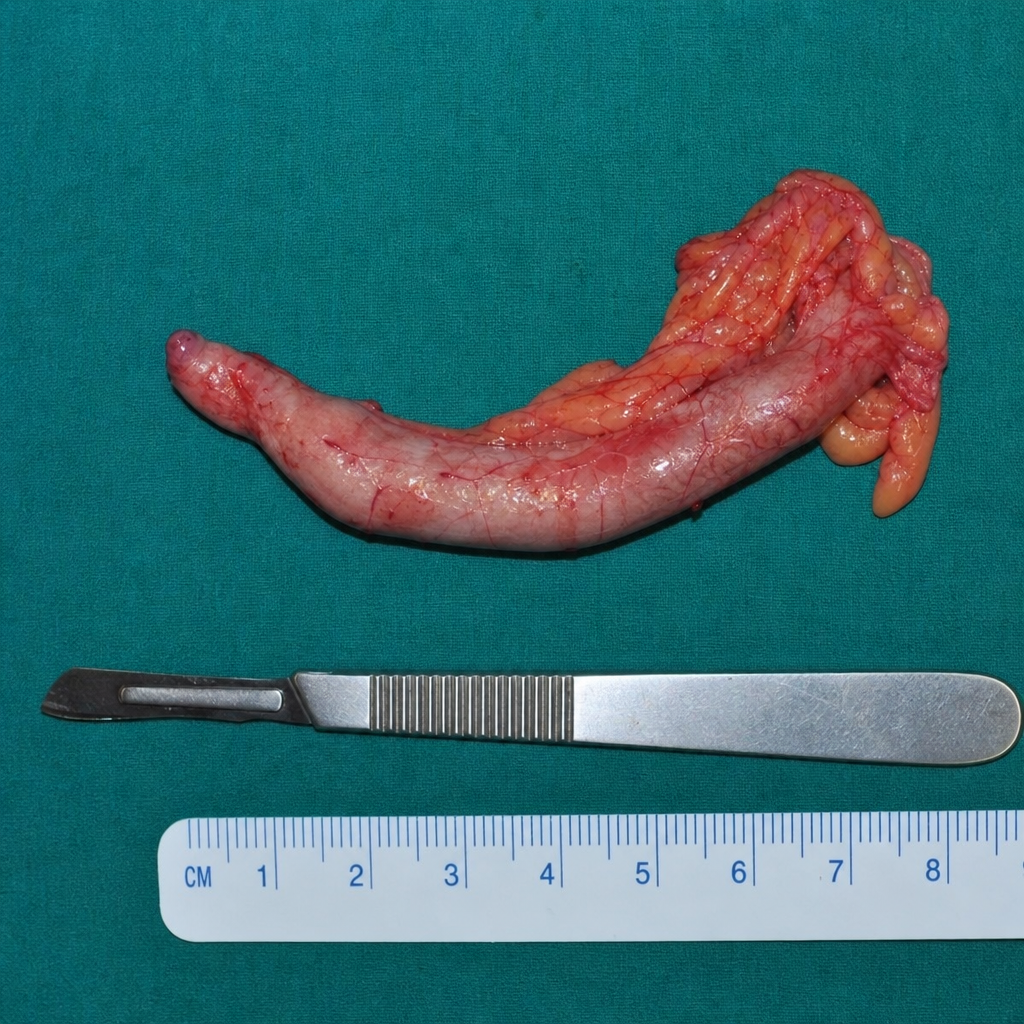
Explanation: Mesenteric cysts are rare intra-abdominal tumors located between the leaves of the mesentery [1]. Understanding their clinical presentation and pathology is crucial for NEET-PG. **1. Why Option A is Correct:** The hallmark clinical sign of a mesenteric cyst is its **mobility**. Because the cyst is attached to the mesentery (which runs from the left second lumbar vertebra to the right sacroiliac joint), it can be moved freely in a plane **perpendicular to the line of mesenteric attachment** (transverse mobility) [1]. It has restricted mobility along the longitudinal axis of the attachment. **2. Why the other options are Incorrect:** * **Option B:** The most common type is the **Chylolymphatic cyst**, followed by enterogenous cysts. Teratomatous cysts are rare. * **Option C:** Chylolymphatic cysts are thin-walled and **share a common blood supply** with the adjacent loop of the bowel. This makes simple enucleation difficult without compromising the bowel's vascularity. * **Option D:** The treatment of choice is **enucleation** (simple excision). Resection of the adjacent bowel is **not** required for all cysts; it is only indicated if the cyst is large, involves the bowel wall, or shares an inseparable blood supply (common in chylolymphatic or enterogenous types). **Clinical Pearls for NEET-PG:** * **Tillaux’s Sign:** A zone of resonance (tympanitic) all around the cyst with a dull note over the center, which is characteristic of mesenteric cysts [1]. * **Most common site:** Mesentery of the **ileum** (60%). * **Imaging:** Ultrasound is the initial investigation; CT/MRI is used for surgical planning. * **Differential Diagnosis:** Ovarian cyst (moves side-to-side but usually has a pelvic origin) [2].
Explanation: **Explanation:** The correct answer is **D**, as the statement is factually incorrect. Internal hemorrhoids are vascular cushions located in the anal canal. Their anatomical distribution is constant, corresponding to the terminal branches of the superior rectal artery. They are most commonly found at the **3, 7, and 11 o'clock positions** (in the lithotomy position). The 9 o'clock position is not a primary site for hemorrhoid formation. **Analysis of other options:** * **Option A (Not palpable on DRE):** This is **true**. Internal hemorrhoids are soft, compressible vascular cushions. Unless they are severely thrombosed or prolapsed and fibrosed, they cannot be felt during a standard digital rectal examination. Diagnosis usually requires anoscopy. * **Option B (Painless rectal bleeding):** This is **true**. Internal hemorrhoids are located above the dentate line, where the nerve supply is visceral (autonomic). Therefore, they typically present with painless, bright red bleeding ("splashing the pan"). Pain only occurs if there is a complication like thrombosis or strangulation. * **Option C (Arterial bleeding):** This is **true**. Despite being called "varices" in older texts, the bleeding from hemorrhoids is actually **arterial** in nature. This is due to the direct arteriovenous communications within the cushions, which explains why the blood is bright red. **High-Yield Clinical Pearls for NEET-PG:** * **Classification:** Grade I (Bleeding only), Grade II (Prolapse, reduces spontaneously), Grade III (Prolapse, requires manual reduction), Grade IV (Permanently prolapsed). * **Treatment of Choice:** Rubber Band Ligation (Barron’s) is the most common procedure for Grades I-III. Stapled Hemorrhoidopexy (Longo’s) is preferred for circumferential prolapse. * **External Hemorrhoids:** Occur below the dentate line, are covered by anoderm (somatic innervation), and are **painful** if thrombosed.
Esophageal Disorders
Practice Questions
Gastric Disorders
Practice Questions
Small Intestine Pathology
Practice Questions
Appendicitis
Practice Questions
Inflammatory Bowel Disease
Practice Questions
Intestinal Obstruction
Practice Questions
Gastrointestinal Bleeding
Practice Questions
Diverticular Disease
Practice Questions
Anorectal Disorders
Practice Questions
Colorectal Neoplasms
Practice Questions
Gastrointestinal Stomas
Practice Questions
Bariatric Surgery Principles
Practice Questions
Get full access to all questions, explanations, and performance tracking.
Start For Free