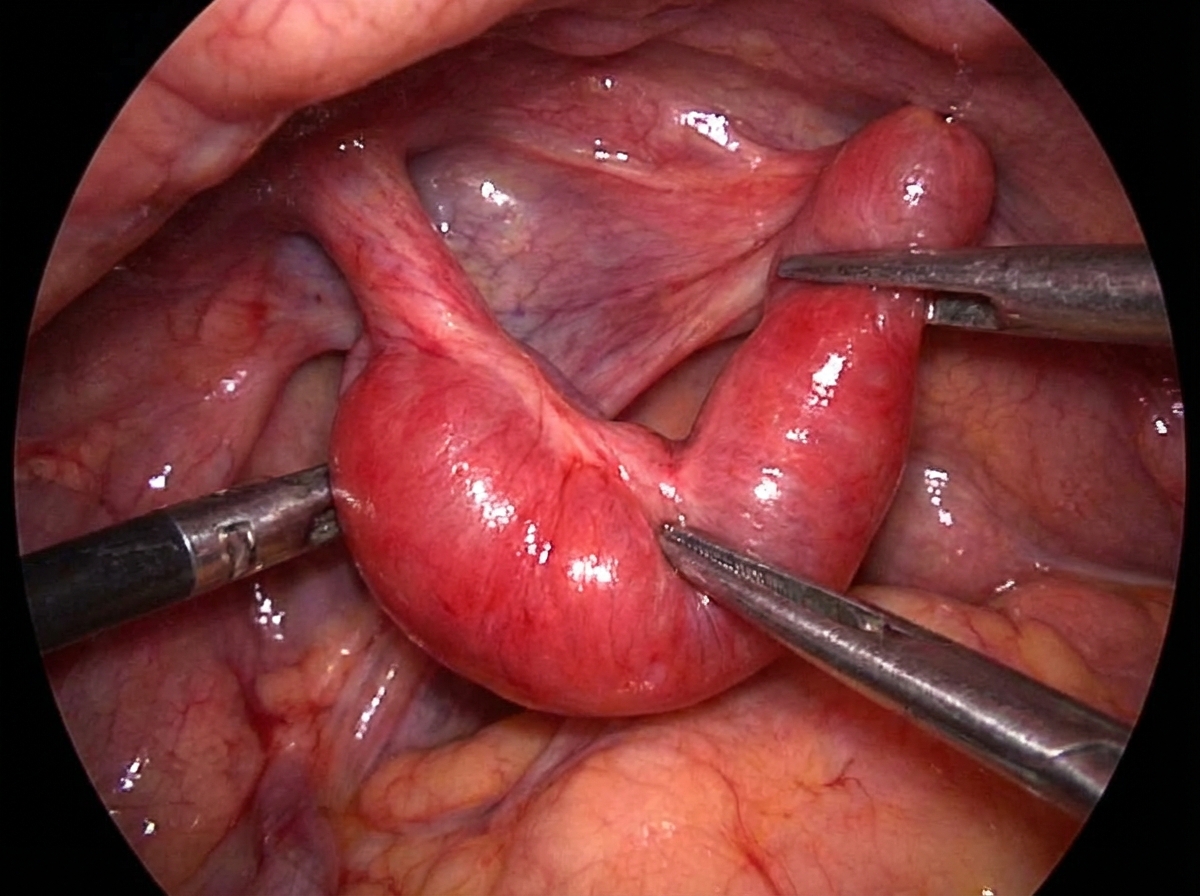
Which of the following are investigations for duodenal ulcer?
A patient is admitted to the hospital after ingesting lye. The following day he complains of chest pain. His pulse is 120 bpm. On physical examination, he is found to have subcutaneous crepitus on palpation. His chest x-ray shows widening of the mediastinum and a pleural effusion. What has most likely occurred?
What is the most common type of esophageal cancer?
Which of the following is the first symptom to appear in a case of acute intestinal obstruction?
Upper gastrointestinal endoscopy is indicated in all except?
The highest malignant potential is seen in which of the following conditions?
What is true about oesophageal perforation?
What is the best test to diagnose gastroesophageal reflux disease and quantify acid output?
External hemorrhoids are located below the dentate line. Which of the following statements is true about them?
Rovsing sign is seen in which of the following conditions?
Explanation: **Explanation:** The diagnosis of duodenal ulcer (DU) relies on identifying the ulcer niche and assessing for potential complications like perforation. 1. **Upper GI Endoscopy (UGIE):** This is the **gold standard** and most sensitive investigation. It allows direct visualization of the ulcer, assessment of size/depth, and the ability to perform a biopsy (though DU is rarely malignant compared to gastric ulcers) or a Rapid Urease Test (RUT) for *H. pylori*. 2. **Barium Meal:** Historically significant, it shows the "ulcer niche" (barium-filled crater) or "clover-leaf deformity" in chronic cases due to scarring. Note that Barium *swallow* is for the esophagus, while Barium *meal* is for the stomach and duodenum. 3. **Abdominal X-ray (Erect View):** This is crucial for diagnosing a **perforated duodenal ulcer**. It reveals "pneumoperitoneum" (gas under the diaphragm) in approximately 75-80% of perforation cases. **Analysis of Incorrect Options:** * **Options A & C:** Include **Barium swallow**, which is used to evaluate the esophagus (e.g., achalasia, motility disorders) and does not reach the duodenum effectively for ulcer diagnosis. * **Option D:** **Hypotonic duodenography** is a specialized technique used primarily to visualize periampullary tumors or pancreatic pathologies by inducing duodenal atony; it is not a routine or primary investigation for simple duodenal ulcers. **High-Yield Clinical Pearls for NEET-PG:** * **Most common site:** First part of the duodenum (usually the anterior wall). * **Perforation:** Most common on the **anterior wall**. * **Bleeding:** Most common from the **posterior wall** (erosion of the gastroduodenal artery). * **H. pylori:** Associated with >90% of duodenal ulcers. * **Investigation of Choice for Perforation:** X-ray Chest/Abdomen (Erect) showing free air under the diaphragm.
Explanation: **Explanation:** The clinical presentation is classic for **Esophageal Perforation** secondary to caustic ingestion. Lye (a strong alkali) causes **liquefactive necrosis**, which deeply penetrates the esophageal wall, leading to rapid transmural destruction and perforation. **Why Option C is correct:** The triad of **chest pain, tachycardia (120 bpm), and subcutaneous crepitus** (Hamman’s sign/subcutaneous emphysema) strongly indicates air escaping from the esophagus into the mediastinum and soft tissues. The chest X-ray findings of **mediastinal widening** (mediastinitis) and **pleural effusion** further confirm a full-thickness breach in the esophageal integrity. **Why other options are incorrect:** * **A. Aortic rupture:** While it causes chest pain and mediastinal widening, it does not cause subcutaneous crepitus and is not a typical complication of lye ingestion. * **B. Coagulation necrosis:** This is characteristic of **acid ingestion**, which forms a limiting eschar. Lye causes *liquefactive necrosis*, which is far more invasive and prone to perforation. * **D. Oropharyngeal inflammation:** While present after ingestion, it cannot account for systemic symptoms like tachycardia, mediastinal widening, or crepitus. **NEET-PG High-Yield Pearls:** * **Alkali (Lye):** Liquefactive necrosis (deeper injury). Most common site of stricture: Middle third of the esophagus. * **Acid:** Coagulation necrosis (superficial injury). Most common site of injury: Pre-pyloric region of the stomach. * **Management:** Early endoscopy (within 12–24 hours) is the gold standard to grade the injury, but it is **contraindicated** if perforation is already suspected clinically or radiologically. * **Mackler’s Triad (for perforation):** Vomiting, chest pain, and subcutaneous emphysema.
Explanation: **Explanation:** **1. Why Squamous Cell Carcinoma (SCC) is the correct answer:** Globally, **Squamous Cell Carcinoma (SCC)** remains the most common histological type of esophageal cancer. It typically arises from the squamous epithelium lining the esophagus and is most frequently located in the **upper and middle thirds**. While Adenocarcinoma is rapidly increasing in incidence in Western nations (due to obesity and GERD), SCC still accounts for approximately 80–90% of cases worldwide, particularly in the "Asian Esophageal Cancer Belt." **2. Analysis of Incorrect Options:** * **B. Adenocarcinoma:** This is the most common type in **Western countries** and typically arises in the **lower third** of the esophagus from Barrett’s esophagus (metaplastic columnar epithelium). However, globally, it remains second to SCC. * **C. Adenoid cystic carcinoma:** This is a rare primary esophageal malignancy, more commonly associated with salivary glands. It carries a different prognosis and clinical presentation. * **D. Mucoepidermoid carcinoma:** Another extremely rare variant of esophageal cancer characterized by a mixture of squamous and mucus-secreting cells. **3. Clinical Pearls for NEET-PG:** * **Most common site (SCC):** Middle third of the esophagus. * **Most common site (Adenocarcinoma):** Lower third/GE junction. * **Risk Factors (SCC):** Smoking, Alcohol, Achalasia cardia, Tylosis, Corrosive injury, and Plummer-Vinson Syndrome. * **Risk Factors (Adenocarcinoma):** GERD, Barrett’s Esophagus, and Obesity. * **Investigation of choice:** Upper GI Endoscopy with biopsy. * **Staging investigation of choice:** Contrast-Enhanced CT (CECT) for distant spread; Endoscopic Ultrasound (EUS) for T and N staging.
Explanation: In acute intestinal obstruction, the sequence of symptoms is a classic high-yield topic for NEET-PG. The correct answer is **Colicky pain**. ### 1. Why Colicky Pain is the First Symptom The hallmark of mechanical obstruction is the body's attempt to overcome the blockage. As soon as the lumen is obstructed, the proximal bowel undergoes vigorous **hyperperistalsis** to push the contents past the site of obstruction. This intense muscular contraction results in intermittent, cramping, or "colicky" abdominal pain. It is almost always the inaugural symptom. ### 2. Why Other Options are Incorrect * **Vomiting:** This follows pain. The timing depends on the level of obstruction: early in high small-bowel obstruction and late (or even absent) in distal large-bowel obstruction. * **Distension:** This occurs as gas and fluid accumulate proximal to the block. It takes time for the bowel to dilate sufficiently to be clinically visible, making it a later sign than pain. * **Constipation (Obstipation):** This is the final cardinal feature. Even after a complete block, the bowel distal to the obstruction may still empty its remaining contents. Absolute constipation (failure to pass flatus or feces) only occurs once the distal segment is evacuated. ### 3. Clinical Pearls for NEET-PG * **Cardinal Features:** The four classic symptoms of obstruction are **Pain, Vomiting, Distension, and Obstipation**. * **Pain Characteristics:** If the pain changes from colicky to **continuous and localized**, it strongly suggests **strangulation** (ischemia), which is a surgical emergency. * **X-ray Findings:** The earliest radiological sign is dilated bowel loops with multiple air-fluid levels (best seen on an erect abdominal X-ray). * **Sequence Rule:** In high-level obstruction, vomiting is prominent and early; in low-level obstruction, distension is prominent and pain is more prolonged.
Explanation: **Explanation:** Upper Gastrointestinal Endoscopy (UGIE) is a diagnostic and therapeutic tool, but its performance is governed by the patient’s hemodynamic stability. **1. Why Septic Shock is the Correct Answer:** Septic shock is a state of **hemodynamic instability** and multi-organ dysfunction. Performing an endoscopy in an unstable patient is generally **contraindicated** unless the source of the sepsis is a life-threatening GI emergency (like ascending cholangitis requiring ERCP). In a state of shock, the priority is resuscitation (ABC - Airway, Breathing, Circulation). Endoscopy carries risks of aspiration, worsening hypoxia, and cardiac arrhythmias due to sedation and the procedure's stress, making it unsafe until the patient is stabilized. **2. Analysis of Incorrect Options:** * **Atypical Chest Pain:** UGIE is indicated to rule out Gastroesophageal Reflux Disease (GERD) or peptic ulcer disease as a non-cardiac cause of chest pain, once a cardiac etiology has been excluded. * **Barrett Esophagus:** Endoscopy with biopsy is the **gold standard** for the diagnosis and surveillance of Barrett esophagus to monitor for intestinal metaplasia and dysplasia (pre-cancerous changes). * **Malabsorption Syndrome:** UGIE allows for **D2 (second part of duodenum) biopsies**, which are essential for diagnosing conditions like Celiac disease, Whipple’s disease, and tropical sprue. **Clinical Pearls for NEET-PG:** * **Absolute Contraindications to UGIE:** Perforated viscus (most important), hemodynamic instability/shock, and atlantoaxial subluxation. * **Relative Contraindications:** Recent myocardial infarction, uncooperative patient, and large aortic aneurysm. * **High-Yield Fact:** For Barrett’s surveillance, the **Seattle Protocol** (four-quadrant biopsies every 1–2 cm) is the standard recommendation.
Explanation: **Explanation:** The correct answer is **Familial Adenomatous Polyposis (FAP)** because it carries a **100% lifetime risk** of developing colorectal carcinoma if left untreated. ### Why Familial Polyposis is Correct: FAP is an autosomal dominant condition caused by a mutation in the **APC gene** on chromosome 5q21. It is characterized by the development of hundreds to thousands of adenomatous polyps throughout the colon. Due to the sheer number of polyps and the "adenoma-carcinoma sequence," malignancy is an absolute certainty, typically occurring by the age of 40. Prophylactic proctocolectomy is the standard management. ### Why Other Options are Incorrect: * **Ulcerative Colitis (UC):** While UC significantly increases the risk of colorectal cancer (approx. 7-10% after 20 years of pancolitis), the risk is not absolute (100%) like in FAP. * **Crohn’s Disease:** There is an increased risk of adenocarcinoma in the small bowel and colon, but this risk is lower than that seen in Ulcerative Colitis and significantly lower than in FAP. * **Infantile (Juvenile) Polyp:** Solitary juvenile polyps are hamartomatous and have **no malignant potential**. However, "Juvenile Polyposis Syndrome" (multiple polyps) does carry a risk, but it is still lower than FAP. ### NEET-PG High-Yield Pearls: * **Gardner Syndrome:** FAP + Osteomas (mandible) + Soft tissue tumors (Desmoid tumors) + Sebaceous cysts. * **Turcot Syndrome:** FAP + CNS tumors (Medulloblastoma). * **Screening for FAP:** Starts at age 10–12 years with annual sigmoidoscopy. * **CHRPE:** Congenital Hypertrophy of Retinal Pigment Epithelium is the earliest extra-colonic manifestation of FAP.
Explanation: **Explanation:** Oesophageal perforation is a surgical emergency requiring rapid diagnosis. **Barium swallow** is considered the gold standard for diagnosis (Option A). While Gastrografin (water-soluble contrast) is often used first to avoid barium-induced mediastinitis, it has a higher false-negative rate (approx. 10-25%). If Gastrografin is negative but clinical suspicion remains high, a Barium swallow must be performed as its higher density better detects small leaks. **Analysis of Incorrect Options:** * **Option B:** Treatment is not always primary repair. Management depends on the time of presentation, location, and the state of the underlying oesophagus. Options range from conservative management (small, contained leaks) to diversion or esophagectomy. * **Option C:** The most common cause of oesophageal perforation is **iatrogenic** (e.g., during endoscopy or dilatation), not traumatic injury. * **Option D:** Delaying repair beyond 24 hours significantly increases mortality due to mediastinitis and sepsis. Early intervention (within 24 hours) is the goal for "early" perforations. **Clinical Pearls for NEET-PG:** * **Mackler’s Triad:** Vomiting, chest pain, and subcutaneous emphysema (pathognomonic for Boerhaave Syndrome). * **Most common site (Iatrogenic):** Cricopharyngeus muscle (upper sphincter). * **Most common site (Boerhaave):** Left posterolateral aspect of the distal esophagus (2-3 cm above the GE junction). * **Chest X-ray findings:** Mediastinal widening, pneumomediastinum, or "V sign of Naclerio."
Explanation: **Explanation:** **24-hour pH monitoring** is considered the **Gold Standard** for diagnosing Gastroesophageal Reflux Disease (GERD). It is the only test that can objectively confirm the presence of acid reflux, correlate symptoms (like heartburn or cough) with reflux episodes, and quantify the total acid exposure time (DeMeester Score). By measuring the percentage of time the esophageal pH drops below 4, it provides a definitive quantitative assessment of acid output into the esophagus. **Why other options are incorrect:** * **Esophagogram (Barium Swallow):** Useful for identifying anatomical abnormalities like hiatal hernias, strictures, or webs, but it has very low sensitivity for diagnosing GERD as it cannot quantify acid exposure. * **Endoscopy (EGD):** While it is the first-line investigation to look for complications (Esophagitis, Barrett’s esophagus, or malignancy), up to 50-70% of GERD patients have **NERD (Non-Erosive Reflux Disease)**, where the endoscopy appears completely normal. * **Manometry:** This is used to assess the motility of the esophagus and the resting pressure of the Lower Esophageal Sphincter (LES). It is mandatory *before* anti-reflux surgery to rule out achalasia, but it does not diagnose or quantify reflux itself. **High-Yield Clinical Pearls for NEET-PG:** * **DeMeester Score:** A composite score used in pH monitoring; a score **>14.72** indicates pathological reflux. * **Indications for pH monitoring:** Persistent symptoms despite PPI therapy, preoperative evaluation for anti-reflux surgery, and atypical (extra-esophageal) symptoms. * **Bravo Capsule:** A wireless pH monitoring system that is better tolerated than the transnasal catheter. * **Impedance-pH monitoring:** The most sensitive test for detecting **non-acid (alkaline) reflux.**
Explanation: **Explanation:** The anatomical landmark that differentiates internal from external hemorrhoids is the **dentate (pectinate) line**. This line marks a significant transition in embryology, histology, and innervation. **1. Why Option A is Correct:** External hemorrhoids are located **below the dentate line**, which is covered by anoderm (modified squamous epithelium). This area is richly supplied by **somatic sensory nerves** (inferior rectal nerves, branches of the pudendal nerve). Consequently, external hemorrhoids—especially when thrombosed—are acutely sensitive to pain, touch, and temperature. In contrast, internal hemorrhoids (above the line) are covered by columnar mucosa and have autonomic innervation, making them painless. **2. Why the Other Options are Incorrect:** * **Option B:** Rubber band ligation is the treatment of choice for Grade I-III **internal** hemorrhoids. Ligation is contraindicated for external hemorrhoids because the somatic innervation would cause excruciating pain. * **Option C:** Skin tags (redundant perianal skin) are a very common sequela of resolved external hemorrhoids or previous thrombotic episodes. * **Option D:** Hemorrhoids are vascular cushions, not neoplasms. They do not have malignant potential. **High-Yield Clinical Pearls for NEET-PG:** * **Innervation:** Above dentate line = Autonomic (Painless); Below dentate line = Somatic (Painful). * **Blood Supply:** Internal hemorrhoids arise from the superior rectal artery; External hemorrhoids arise from the inferior rectal artery. * **Management:** Acute thrombosed external hemorrhoids presenting within 72 hours are best treated by **elliptical excision**; after 72 hours, conservative management is preferred. * **Classification:** Only internal hemorrhoids are graded (I to IV) based on the degree of prolapse.
Explanation: **Explanation:** **Rovsing sign** is a classic physical examination finding indicative of peritoneal irritation in the right iliac fossa. It is elicited by applying deep pressure to the **left lower quadrant** (left iliac fossa); a positive sign occurs when the patient experiences pain in the **right lower quadrant**. The underlying medical concept is based on the displacement of intraluminal gas and the movement of peritoneal contents. When the left side is compressed, gas is pushed retrograde toward the cecum, stretching the inflamed peritoneum overlying the appendix. This "indirect tenderness" is highly suggestive of **Acute Appendicitis**. **Analysis of Incorrect Options:** * **B. Acute Cholecystitis:** Characterized by **Murphy’s sign** (arrest of inspiration on deep palpation of the right hypochondrium). * **C. Pancreatitis:** Typically presents with epigastric pain radiating to the back. Specific signs include **Cullen’s sign** (periumbilical ecchymosis) or **Grey Turner’s sign** (flank ecchymosis) in hemorrhagic cases. **High-Yield Clinical Pearls for NEET-PG:** * **Psoas Sign:** Pain on extension of the right hip (indicates a retrocecal appendix). * **Obturator Sign:** Pain on internal rotation of the flexed right hip (indicates a pelvic appendix). * **McBurney’s Point:** The most common site of maximal tenderness, located 1/3rd of the distance from the ASIS to the umbilicus. * **Sherren’s Triangle:** An area of hyperesthesia formed by the ASIS, pubic tubercle, and umbilicus; its presence suggests appendicular rupture.
Esophageal Disorders
Practice Questions
Gastric Disorders
Practice Questions
Small Intestine Pathology
Practice Questions
Appendicitis
Practice Questions
Inflammatory Bowel Disease
Practice Questions
Intestinal Obstruction
Practice Questions
Gastrointestinal Bleeding
Practice Questions
Diverticular Disease
Practice Questions
Anorectal Disorders
Practice Questions
Colorectal Neoplasms
Practice Questions
Gastrointestinal Stomas
Practice Questions
Bariatric Surgery Principles
Practice Questions
Get full access to all questions, explanations, and performance tracking.
Start For Free