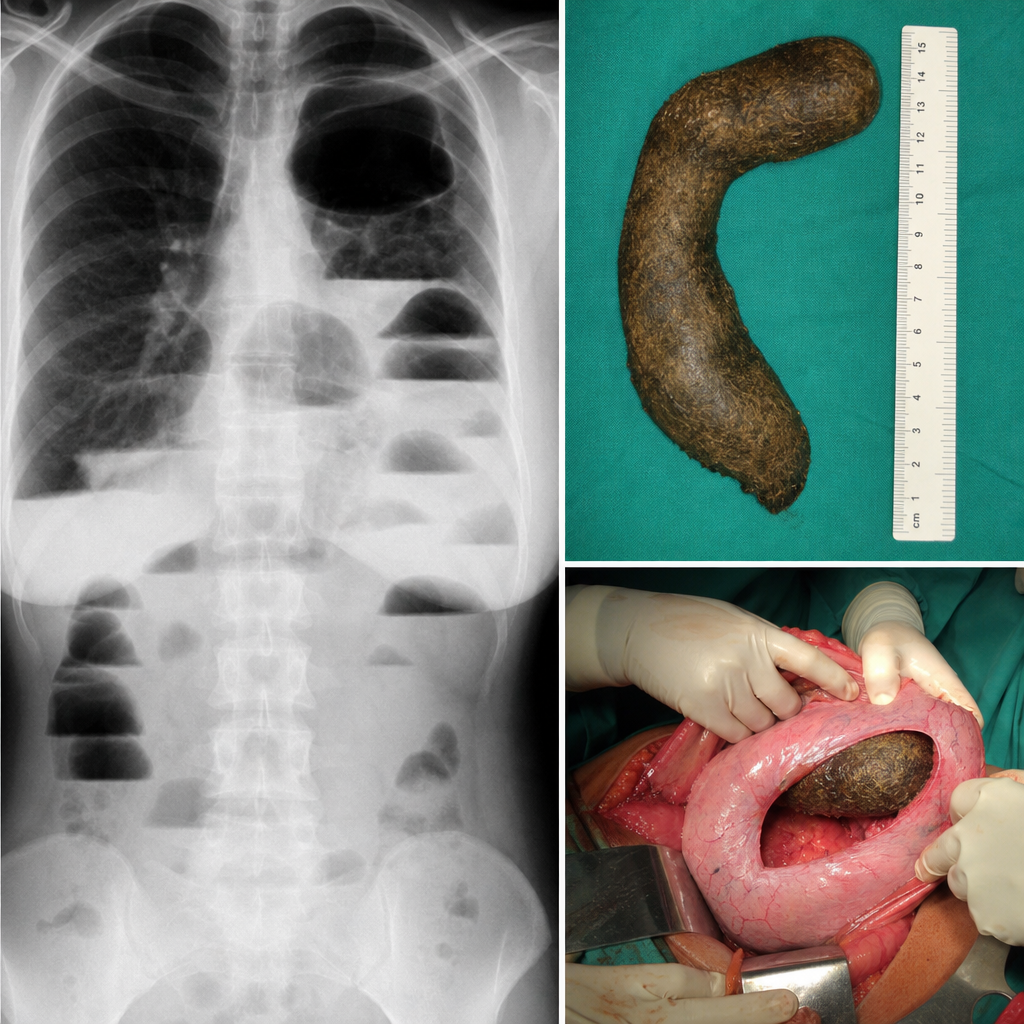
All of the following are causes of duodenal obstruction syndrome, except?
Which of the following is NOT a risk factor for carcinoma of the stomach?
Which statement is true regarding esophageal leiomyoma?
What is the investigation of choice for esophageal stricture caused by corrosive poisoning?
Achalasia cardia is due to which of the following?
What is the procedure of choice for elective removal of common bile duct stones in most patients?
Which blood group is associated with gastric cancer?
Boerhaave's syndrome is due to what?
What is true about small bowel diverticula?
Which artery is most likely to bleed in a duodenal ulcer hemorrhage?
Explanation: **Explanation:** The question refers to **Superior Mesenteric Artery (SMA) Syndrome**, also known as Wilkie’s syndrome or Cast syndrome. This condition occurs when the third part of the duodenum is compressed between the **Abdominal Aorta** and the **Superior Mesenteric Artery** at an acute angle (normally 38°–56°). **Why Malnutrition is the Correct Answer (The Exception):** The primary pathophysiological trigger for SMA syndrome is the **loss of the retroperitoneal mesenteric fat pad**, which normally acts as a cushion to keep the SMA away from the aorta. Therefore, **malnutrition is a cause** of the syndrome, not an exception. Rapid weight loss (due to eating disorders, cancer, or burns) leads to the depletion of this fat pad, narrowing the aortomesenteric angle and causing obstruction. **Analysis of Other Options:** * **High attachment of mesentery (Ligament of Treitz):** An abnormally high or short ligament of Treitz suspends the duodenum in a more superior position, placing it directly within the narrowest part of the aortomesenteric angle. * **Long mesentery:** A long, heavy mesentery can cause the SMA to sag downward (visceroptosis), which decreases the angle and increases the risk of compression. * **Pancreatic cancer:** Tumors of the head of the pancreas or surrounding lymphadenopathy can cause extrinsic compression of the duodenum, mimicking or exacerbating the syndrome. **NEET-PG High-Yield Pearls:** * **Normal Aortomesenteric Angle:** 38°–56°. In SMA syndrome, it is typically **<25°**. * **Normal Aortomesenteric Distance:** 10–28 mm. In SMA syndrome, it is **<8 mm**. * **Clinical Presentation:** Postprandial fullness, vomiting, and relief of pain in the **left lateral decubitus** or knee-chest position (which opens the angle). * **Management:** Initial treatment is conservative (nutritional support/weight gain); surgery (Duodenojejunostomy) is reserved for refractory cases.
Explanation: **Explanation:** The correct answer is **Duodenal peptic ulcer**. In surgical pathology, duodenal ulcers (DU) are associated with high gastric acid secretion (hyperchlorhydria). Gastric cancer, conversely, thrives in an environment of low acid (hypochlorhydria) and mucosal atrophy. Therefore, patients with a history of DU actually have a **decreased risk** of developing gastric adenocarcinoma. **Analysis of Options:** * **Blood Group A:** There is a well-established genetic association between Blood Group A and the **diffuse type** of gastric cancer (Lauren classification). * **Atrophic Gastritis:** This is a precursor lesion. Chronic inflammation leads to intestinal metaplasia and dysplasia, significantly increasing the risk of the **intestinal type** of gastric cancer. * **Partial Gastrectomy:** Patients who have undergone a distal gastrectomy (especially Billroth II reconstruction) for benign disease are at increased risk after 15–20 years. This is due to chronic **alkaline reflux** (bile reflux) causing "stump cancer" in the remnant stomach. **NEET-PG High-Yield Pearls:** 1. **H. pylori Paradox:** While *H. pylori* is the #1 risk factor for both, the strain and host response determine the outcome. Antral-predominant infection leads to DU (low cancer risk), while pangastritis leads to atrophy and cancer. 2. **Lauren Classification:** * **Intestinal Type:** Associated with environmental factors (diet, *H. pylori*), older age, and hematogenous spread. * **Diffuse Type:** Associated with Blood Group A, younger age, and transmural/lymphatic spread (e.g., Linitis Plastica). 3. **Dietary Factors:** High intake of nitrates/nitrites (smoked foods) and low Vitamin C intake are significant risk factors.
Explanation: **Explanation:** **Esophageal Leiomyoma** is the most common benign tumor of the esophagus, originating from the smooth muscle cells of the muscularis propria or muscularis mucosae. 1. **Why Option B is Correct:** On Computed Tomography (CT), leiomyomas characteristically appear as **ovoid, well-demarcated, intramural masses** with a smooth outline. They typically show homogeneous attenuation and may occasionally contain calcifications (a high-yield diagnostic clue). 2. **Why Other Options are Incorrect:** * **Option A:** Leiomyomas are most commonly found in the **distal two-thirds** (lower and middle esophagus) because this is where smooth muscle predominates. The proximal third consists primarily of skeletal muscle. * **Option C:** It is a benign tumor of **smooth muscle**, not skeletal muscle. * **Option D:** The prognosis is **excellent**. These tumors are slow-growing, rarely undergo malignant transformation (into leiomyosarcoma), and are often asymptomatic unless they exceed 5 cm in size. **NEET-PG High-Yield Pearls:** * **Endoscopy:** Appears as a smooth, submucosal bulge with intact overlying mucosa. * **Barium Swallow:** Shows a characteristic **"crescent sign"** or a smooth, "apple-core" like filling defect with sharp borders (oblong/semilunar). * **Biopsy Contraindication:** Pre-operative endoscopic biopsy is **avoided** if surgery is planned, as it increases the risk of mucosal perforation and creates scarring, making the surgical plane for **enucleation** (the treatment of choice) difficult. * **Surgical Approach:** Enucleation via thoracotomy or VATS (Video-Assisted Thoracoscopic Surgery).
Explanation: **Explanation:** **1. Why Endoscopy is the Correct Answer:** Upper Gastrointestinal (UGI) Endoscopy is the **investigation of choice** for evaluating corrosive esophageal injury. It allows for direct visualization of the mucosal damage, enabling the clinician to grade the severity of the burn (Zargar’s classification). This is crucial for predicting the risk of stricture formation and determining further management. In the acute phase (ideally within 12–24 hours), it identifies the extent of injury; in the chronic phase, it is used to visualize the site, length, and diameter of the stricture and often serves as a therapeutic tool for dilatation. **2. Why Other Options are Incorrect:** * **Barium Meal:** While a Barium Swallow (not meal) is excellent for defining the anatomy, length, and "bird-beak" appearance of a chronic stricture, it cannot assess mucosal viability or grade acute injury. It is usually a secondary investigation. * **Pharyngoscopy:** This only visualizes the oropharynx and hypopharynx. It cannot evaluate the esophagus, where the majority of corrosive strictures occur. * **X-rays:** Plain radiographs (Chest/Abdomen) are used primarily to rule out complications like perforation (pneumomediastinum or air under the diaphragm) but cannot diagnose or characterize a stricture. **3. High-Yield Clinical Pearls for NEET-PG:** * **Timing:** Endoscopy should be performed within **12–24 hours**. It is generally avoided between 5 to 15 days post-ingestion due to the high risk of perforation during the "softening phase" of wound healing. * **Zargar’s Classification:** Grade III (transmural) injuries have a nearly 100% chance of stricture formation. * **Acid vs. Alkali:** Alkalis cause **liquefactive necrosis** (deeper penetration, more common in esophagus), while acids cause **coagulative necrosis** (more common in stomach/antrum). * **Cancer Risk:** Corrosive strictures significantly increase the long-term risk of **Squamous Cell Carcinoma** of the esophagus.
Explanation: **Explanation:** **Achalasia Cardia** is a primary esophageal motility disorder characterized by the failure of the Lower Esophageal Sphincter (LES) to relax and the absence of esophageal peristalsis. **Why Option B is Correct:** The pathophysiology involves the selective **degeneration and loss of inhibitory ganglion cells** in the **Auerbach’s (Myenteric) plexus**, located between the longitudinal and circular muscle layers of the esophagus. These inhibitory neurons normally release Nitric Oxide (NO) and Vasoactive Intestinal Peptide (VIP) to relax the LES. Their absence leads to an imbalance where excitatory cholinergic activity predominates, resulting in a hypertensive, non-relaxing LES. **Why Other Options are Incorrect:** * **Option A:** While the exact etiology is idiopathic, it is generally attributed to an autoimmune inflammatory response (possibly triggered by viruses like HSV-1) rather than a specific toxin. * **Option C:** An excess of ganglion cells is not seen in Achalasia; the hallmark is "aganglionosis" or a significant reduction in cell count. * **Option D:** Meissner’s (Submucosal) plexus primarily regulates secretion and local blood flow. Motor function and peristalsis are governed by the Myenteric (Auerbach’s) plexus. **High-Yield Clinical Pearls for NEET-PG:** * **Gold Standard Investigation:** Esophageal Manometry (shows incomplete LES relaxation and aperistalsis). * **Barium Swallow Sign:** "Bird’s Beak" or "Rat-tail" appearance. * **Chagas Disease:** Caused by *Trypanosoma cruzi*, it can cause secondary achalasia by destroying the myenteric plexus. * **Treatment of Choice:** Laparoscopic Heller’s Myotomy with partial fundoplication (Dor or Toupet). * **Pharmacotherapy:** Isosorbide dinitrate or Nifedipine (used as temporizing measures).
Explanation: **Explanation:** The management of common bile duct (CBD) stones has evolved significantly with the advent of minimally invasive techniques. **Endoscopic Retrograde Cholangiopancreatography (ERCP) with sphincterotomy and stone extraction (Endoscopic Choledocholithotomy)** is currently the procedure of choice for elective removal of CBD stones in most patients. **Why Option B is Correct:** ERCP is preferred because it is less invasive than surgery, has a high success rate (approx. 90-95%), and allows for immediate decompression of the biliary tree. In the elective setting, it is often performed as a "two-stage" procedure: first, ERCP to clear the duct, followed by laparoscopic cholecystectomy to address the gallbladder. **Why Other Options are Incorrect:** * **Open Choledocholithotomy (A):** Historically the gold standard, it is now reserved for cases where endoscopic or laparoscopic methods fail, or when the anatomy is severely distorted (e.g., previous Billroth II reconstruction). * **Laparoscopic Choledocholithotomy (C):** While highly effective and allowing for a "one-stage" treatment (clearing the duct and removing the gallbladder in one surgery), it requires advanced laparoscopic skills and specialized equipment (choledochoscopes), making it less widely available than ERCP. * **Percutaneous Choledocholithotomy (D):** This is an invasive transhepatic approach generally reserved for patients with altered surgical anatomy or those who have failed ERCP and are unfit for surgery. **High-Yield Clinical Pearls for NEET-PG:** * **Gold Standard for Diagnosis:** Magnetic Resonance Cholangiopancreatography (MRCP) is the most sensitive non-invasive diagnostic tool. * **ERCP Complications:** The most common complication is **Post-ERCP Pancreatitis** (3-5%). * **Large Stones:** For stones >1.5 cm, endoscopic papillary large balloon dilation (EPLBD) or mechanical lithotripsy may be required during ERCP. * **Management Strategy:** In fit patients with gallbladder stones and CBD stones, the current trend is shifting toward single-stage laparoscopic management if expertise is available, but ERCP remains the standard answer for "procedure of choice" in general elective scenarios.
Explanation: **Explanation:** The association between **Blood Group A** and **Gastric Cancer** (specifically the intestinal type) is a classic high-yield association in surgical oncology. **1. Why Blood Group A is Correct:** Epidemiological studies have consistently shown that individuals with Blood Group A have an approximately **20% higher risk** of developing gastric adenocarcinoma compared to other blood groups. While the exact molecular mechanism is still being researched, it is hypothesized that the A-antigen may facilitate the binding of *Helicobacter pylori* to the gastric mucosa or influence the inflammatory response, leading to chronic atrophic gastritis and subsequent neoplasia. **2. Why Other Options are Incorrect:** * **Blood Group O:** This group is strongly associated with **Peptic Ulcer Disease (PUD)**, specifically **Duodenal Ulcers**. This is often a point of confusion; remember: **A** for **A**denocarcinoma and **O** for **O**lcer (Ulcer). * **Blood Groups B and AB:** There are no significant or consistently proven clinical associations between these blood groups and the risk of gastric malignancy in standard surgical literature. **3. Clinical Pearls for NEET-PG:** * **Lauren Classification:** The association with Blood Group A is more prominent in the **Intestinal type** of gastric cancer (associated with environmental factors) rather than the Diffuse type. * **Most Common Site:** The most common site for gastric cancer globally is the **Antrum**, but the incidence of proximal (cardia) lesions is rising. * **Virchow’s Node:** Left supraclavicular lymphadenopathy is a classic sign of metastatic gastric cancer. * **Sister Mary Joseph Nodule:** Periumbilical metastasis indicating advanced disease. * **Dietary Factors:** High intake of nitrates, smoked foods, and low Vitamin C are other major risk factors.
Explanation: **Explanation:** **Boerhaave’s syndrome** is defined as a **spontaneous transmural perforation** of the esophagus. The underlying mechanism involves a sudden, massive increase in intra-esophageal pressure combined with negative intrathoracic pressure, typically caused by forceful vomiting or retching against a closed glottis (the Mackler triad: vomiting, chest pain, and subcutaneous emphysema). * **Why Option C is correct:** It is termed "spontaneous" because it does not result from direct trauma or instrumentation (iatrogenic). The perforation most commonly occurs in the **left posterolateral aspect of the distal esophagus**, approximately 2–3 cm above the gastroesophageal junction, which is the anatomically weakest point. **Analysis of Incorrect Options:** * **Option A:** Drug-induced perforation (pill esophagitis) usually causes localized mucosal ulceration rather than full-thickness rupture. * **Option B:** Corrosive injury leads to chemical burns and strictures; while it can cause perforation, it is categorized as caustic ingestion, not Boerhaave’s. * **Option D:** GERD leads to esophagitis, Barrett’s esophagus, or strictures, but not acute transmural rupture. **High-Yield Clinical Pearls for NEET-PG:** * **Diagnosis:** The initial investigation of choice is a **Gastrografin (water-soluble) swallow**, which shows extravasation of dye. Chest X-ray may show a "V sign of Naclerio" or pneumomediastinum. * **Distinction:** Unlike **Mallory-Weiss syndrome** (which involves only a mucosal/submucosal tear and presents with hematemesis), Boerhaave’s is a **full-thickness rupture** and is a surgical emergency. * **Management:** If diagnosed within 24 hours, primary surgical repair is preferred. Beyond 24 hours, management often involves drainage and diversion due to mediastinitis.
Explanation: **Explanation:** Small bowel diverticula are classified into two types: **congenital** and **acquired**. The most common small bowel diverticulum is **Meckel’s diverticulum**, which is a **true diverticulum**. * **Why Option A is Correct:** By definition, a **true diverticulum** (like Meckel’s) involves all layers of the intestinal wall, including the mucosa, submucosa, and the muscularis propria. This distinguishes it from acquired (false) diverticula, which are typically mucosal herniations through muscular defects. * **Why Option B is Incorrect:** Meckel’s diverticulum is characteristically found in the **ileum**, specifically within 2 feet (60 cm) of the ileocecal valve, but not typically at the terminal ileum itself. Acquired diverticula (jejunal) are most common in the proximal jejunum. * **Why Option C is Incorrect:** Small bowel diverticula can be visualized radiographically using **Technetium-99m pertechnetate scans** (Meckel’s scan), CT scans (showing enteroliths or inflammation), or enteroclysis. * **Why Option D is Incorrect:** While asymptomatic cases may be managed conservatively, surgical treatment (diverticulectomy or segmental resection) is **mandatory** if complications arise, such as diverticulitis, perforation, hemorrhage, or intestinal obstruction. **High-Yield Clinical Pearls for NEET-PG:** 1. **Meckel’s Diverticulum Rule of 2s:** 2% of the population, 2 inches long, 2 feet from the ileocecal valve, 2 types of ectopic tissue (Gastric > Pancreatic), and presents before age 2. 2. **Most common presentation:** In children, it is painless lower GI bleeding; in adults, it is intestinal obstruction. 3. **Jejunal Diverticula:** These are usually "false" diverticula and are associated with bacterial overgrowth leading to Vitamin B12 deficiency and malabsorption.
Explanation: ### Explanation **1. Why Gastroduodenal Artery (GDA) is Correct:** The most common site for a chronic peptic ulcer is the **first part of the duodenum (D1)**. While anterior wall ulcers are more prone to perforation, **posterior wall ulcers** are more likely to erode into adjacent vascular structures. The **Gastroduodenal Artery** runs vertically directly behind the first part of the duodenum. When a posterior duodenal ulcer penetrates the muscularis and serosa, it erodes into the GDA, leading to massive, life-threatening upper gastrointestinal hemorrhage. **2. Analysis of Incorrect Options:** * **Splenic Artery:** This artery runs along the superior border of the pancreas. It is the most common site of visceral artery aneurysms and can be involved in gastric ulcers on the posterior wall of the *stomach* or pancreatic pathology, but not duodenal ulcers. * **Left Gastric Artery:** This is the most common source of bleeding in **gastric ulcers** (typically located on the lesser curvature of the stomach). * **Superior Mesenteric Artery (SMA):** The SMA lies much lower, passing over the third part of the duodenum. It is associated with "SMA Syndrome" (compression of D3) but is not involved in D1 ulcer bleeds. **3. NEET-PG High-Yield Pearls:** * **Anterior Duodenal Ulcer:** Most likely to **Perforate** (presents with pneumoperitoneum). * **Posterior Duodenal Ulcer:** Most likely to **Bleed** (due to GDA erosion). * **Most common cause of Upper GI Bleed:** Peptic Ulcer Disease. * **Management:** Initial stabilization followed by endoscopy. If endoscopic thermal/clip therapy fails, surgical ligation of the GDA (via a duodenotomy) is required.
Esophageal Disorders
Practice Questions
Gastric Disorders
Practice Questions
Small Intestine Pathology
Practice Questions
Appendicitis
Practice Questions
Inflammatory Bowel Disease
Practice Questions
Intestinal Obstruction
Practice Questions
Gastrointestinal Bleeding
Practice Questions
Diverticular Disease
Practice Questions
Anorectal Disorders
Practice Questions
Colorectal Neoplasms
Practice Questions
Gastrointestinal Stomas
Practice Questions
Bariatric Surgery Principles
Practice Questions
Get full access to all questions, explanations, and performance tracking.
Start For Free