What is the aim of preventing reflux esophagitis by repairing a hiatus hernia?
In a highly selective vagotomy, the vagal supply is severed to which part of the stomach?
Which of the following colonic polyps has the highest potential for malignant transformation?
What is the commonest site from which pseudomyxoma peritonei arise?
Regarding typhoid ulcer, all of the following are true except?
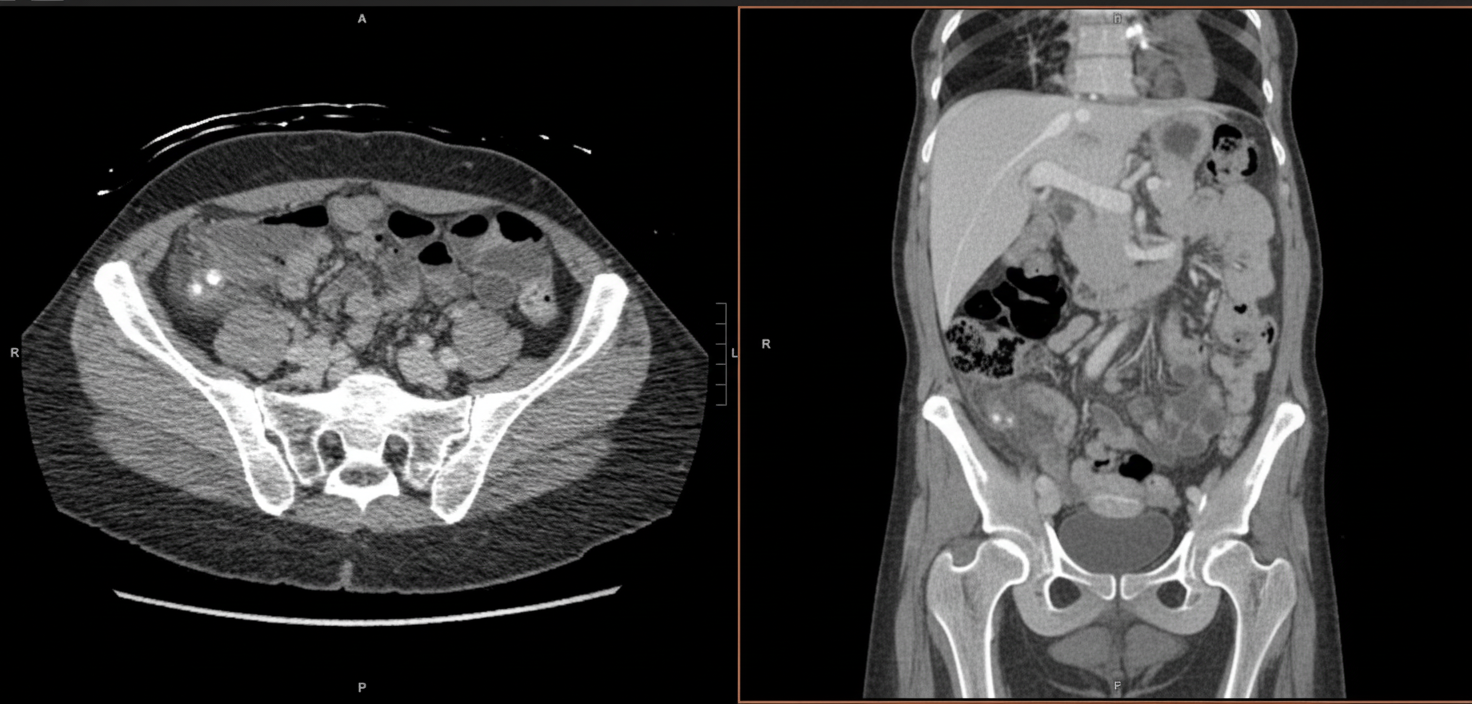
What is the standard treatment of an appendicular mass?
What is the most common site of carcinoma of the esophagus?
Who performed the first gastrectomy in 1881?
A 70-year-old male presents with colicky pain in the lower abdomen, with non-passage of feces and flatus. Abdominal X-ray findings are provided. Which of the following is the preferred treatment option for this patient?

What is the most common cause of free air under the diaphragm?
Explanation: The surgical management of a hiatus hernia aims to restore the normal anatomy and physiological anti-reflux barriers at the gastroesophageal junction (GEJ). **Explanation of the Correct Answer:** The correct answer is **D (All of the above)** because effective prevention of reflux requires a multi-step anatomical correction: 1. **Bringing the stomach inferior to the diaphragm (A):** This ensures that a sufficient length of the esophagus (usually 3-5 cm) is placed in the intra-abdominal environment. The positive intra-abdominal pressure acts on this segment to help keep the Lower Esophageal Sphincter (LES) closed. 2. **Reconstitution of the angle of His (B):** The angle of His is the acute angle between the esophagus and the fundus of the stomach. This creates a "flap-valve" mechanism; when the stomach distends, the fundus presses against the esophagus, preventing reflux. This is typically achieved during the fundoplication step (e.g., Nissen or Toupet). 3. **Repair of the defect in the diaphragm (C):** This involves **Cruraplasty** (narrowing the esophageal hiatus). By tightening the diaphragmatic crura, the "external sphincter" effect of the diaphragm is restored, preventing the stomach from re-herniating into the posterior mediastinum. **Clinical Pearls for NEET-PG:** * **Gold Standard Treatment:** Laparoscopic Nissen Fundoplication (360° wrap) is the most common surgical procedure for GERD and hiatus hernia. * **The "Three Pillars" of Anti-reflux Surgery:** 1. Restoration of intra-abdominal esophageal length. 2. Crural repair. 3. Creation of a fundoplication (to increase LES pressure and restore the angle of His). * **Hill’s Repair:** Specifically focuses on **Gastropexy** (anchoring the GEJ to the median arcuate ligament) to maintain the intra-abdominal position. * **Allison’s Repair:** An older technique that focused solely on crural repair; it had high failure rates because it did not address the anti-reflux mechanism (fundoplication).
Explanation: ### Explanation **Highly Selective Vagotomy (HSV)**, also known as proximal gastric vagotomy or parietal cell vagotomy, is designed to denervate only the acid-secreting portion of the stomach while preserving the motor function of the antrum and pylorus. **Why the Antrum is the key focus:** In HSV, the surgeon severs the individual branches of the **Anterior and Posterior Nerves of Latarjet** (branches of the Vagus) that supply the **proximal two-thirds** of the stomach (the fundus and body). Crucially, the terminal branches supplying the **antrum and pylorus** (often referred to as the "crow’s foot") are **preserved**. By preserving the antral innervation, the gastric pump remains functional, eliminating the need for a drainage procedure (like pyloroplasty). *Note: While the surgery involves cutting nerves TO the proximal stomach, the question asks which part's supply is specifically addressed/spared in the context of the surgical boundary. In the context of standard NEET-PG patterns, the preservation of the antral "crow's foot" is the defining anatomical landmark.* **Analysis of Incorrect Options:** * **Option A (Proximal two-thirds):** This is the area that is actually denervated. If the question asks what is *preserved*, the answer is the antrum. If the question asks what is *severed*, it refers to the supply to the acid-secreting area. * **Option C (Pylorus):** The nerve supply to the pylorus is strictly preserved in HSV to maintain the gastric emptying mechanism. * **Option D (Whole of the stomach):** This occurs in a **Truncal Vagotomy**, where the main vagal trunks are divided at the esophageal hiatus, necessitating a drainage procedure due to total gastric stasis. **High-Yield Clinical Pearls for NEET-PG:** * **Landmark:** The dissection starts 6 cm proximal to the pylorus (at the "crow's foot") and extends up to the esophagus. * **Advantage:** Lowest rate of post-vagotomy complications (dumping syndrome, diarrhea) because the pyloric mechanism is intact. * **Disadvantage:** Higher recurrence rate of ulcers (approx. 10-15%) compared to truncal vagotomy with antrectomy. * **Nerve of Grassi:** The "criminal nerve" (a branch of the posterior vagus) must be divided to prevent ulcer recurrence.
Explanation: **Explanation:** The malignant potential of a colonic polyp is determined by its histological characteristics. **Adenomatous polyps** are true neoplastic proliferations and are considered precursors to colorectal carcinoma via the **adenoma-carcinoma sequence**. The risk of malignancy within an adenoma depends on three factors: size (>2 cm), histological type (villous > tubulovillous > tubular), and the degree of dysplasia. Among these, **villous adenomas** have the highest risk of harboring invasive carcinoma (up to 40%). **Analysis of Incorrect Options:** * **Juvenile Polyps:** These are typically hamartomatous lesions found in children. While they can bleed, solitary juvenile polyps have no malignant potential. (Note: Juvenile Polyposis *Syndrome* increases cancer risk due to associated adenomatous changes, but the polyp itself is benign). * **Hyperplastic Polyps:** These are the most common non-neoplastic polyps, usually found in the rectosigmoid. They result from decreased cell shedding and generally carry no malignant potential (except for the distinct "sessile serrated" pathway). * **Hamartomatous Polyps:** These are composed of native tissue elements arranged in a disorganized mass (e.g., Peutz-Jeghers syndrome). They are benign, though the underlying genetic syndromes may predispose patients to extra-colonic malignancies. **High-Yield Pearls for NEET-PG:** * **Most common site for polyps:** Sigmoid colon. * **Most common histological type of Adenoma:** Tubular adenoma (but Villous has higher malignant risk). * **Gardner Syndrome:** Adenomatous polyps + Osteomas + Soft tissue tumors (Desmoids). * **Turcot Syndrome:** Adenomatous polyps + CNS tumors (Medulloblastoma/Glioma). * **Screening:** Colonoscopy is the gold standard for both detection and therapeutic polypectomy.
Explanation: **Explanation:** **Pseudomyxoma Peritonei (PMP)** is a clinical syndrome characterized by the accumulation of abundant mucinous (gelatinous) fluid within the peritoneal cavity, often referred to as "jelly belly." **Why Appendix is the Correct Answer:** The **appendix** is the primary and most common site of origin for PMP (accounting for over 90% of cases). It typically arises from a low-grade mucinous neoplasm of the appendix (LAMN). When the appendix ruptures, mucin-producing cells are seeded throughout the peritoneum, where they continue to produce large volumes of extracellular mucin. **Analysis of Incorrect Options:** * **Ovary (Option A):** Historically, the ovary was thought to be a primary site. However, modern immunohistochemistry (CK20+, CK7-, CEA+) has proven that most mucinous tumors involving the ovary in PMP are actually **metastatic** from an appendiceal primary. Primary ovarian mucinous tumors rarely cause PMP. * **Pancreas (Option C) & Stomach (Option D):** While mucinous adenocarcinomas of the pancreas, stomach, or colon can occasionally cause peritoneal carcinomatosis with mucin, they are rare causes of the classic PMP syndrome compared to the appendix. **NEET-PG High-Yield Pearls:** * **Redistribution Phenomenon:** This is a hallmark of PMP where tumor cells follow the natural flow of peritoneal fluid and settle at sites of fluid absorption (e.g., greater omentum, undersurface of the diaphragm) while sparing the mobile small bowel. * **Treatment of Choice:** Cytoreductive Surgery (CRS) combined with **Hyperthermic Intraperitoneal Chemotherapy (HIPEC)**, often known as the "Sugarbaker Procedure." * **Tumor Marker:** CEA and CA-19-9 are often elevated and used for monitoring recurrence.
Explanation: In typhoid fever (caused by *Salmonella typhi*), the bacteria primarily target the **Peyer’s patches** in the terminal ileum. This leads to longitudinal ulceration along the long axis of the bowel. ### Why Option B is the Correct Answer (The "Except") Unlike Tuberculosis or Crohn’s disease, **typhoid ulcers do not result in stricture formation or intestinal obstruction.** This is because typhoid ulcers are **longitudinal** (parallel to the long axis of the gut). When these ulcers heal, they do not cause circumferential contraction of the bowel lumen. Therefore, obstruction is virtually never a complication of typhoid. ### Explanation of Incorrect Options * **A. Perforation is common:** This is a classic complication, typically occurring in the **3rd week** of the illness. It usually occurs in the terminal ileum (within 60cm of the ileocaecal valve) due to necrosis of Peyer's patches. * **C. Bleeding is usual:** Intestinal hemorrhage is a frequent complication (occurring in about 5-10% of cases) due to the erosion of small vessels in the floor of the ulcer during the sloughing stage. * **D. Ileum is the common site:** Since Peyer’s patches are most numerous in the **terminal ileum**, this is the most common site for both ulceration and subsequent perforation. ### High-Yield Clinical Pearls for NEET-PG * **Orientation:** Typhoid ulcers are **longitudinal**; Tubercular ulcers are **transverse** (leading to strictures). * **Timeline:** Perforation typically occurs in the **3rd week** of infection ("Week of complications"). * **Surgery:** For typhoid perforation, the treatment of choice is primary closure (debridement and two-layer closure) or exteriorization if the patient is unstable. * **Widal Test:** Becomes positive during the **2nd week**.
Explanation: **Explanation:** The standard management for an **appendicular mass** is conservative treatment, known as the **Ochsner-Sherren regimen**. An appendicular mass forms when the inflamed appendix is walled off by the greater omentum and small bowel loops. At this stage, the anatomy is highly distorted and the tissues are friable (phlegmon). **1. Why Ochsner-Sherren is correct:** The goal is to allow the inflammatory process to resolve naturally. The regimen includes: * Hospitalization and strict bed rest. * NPO (Nothing by mouth) status with IV fluids. * Broad-spectrum antibiotics. * Serial monitoring of vitals, pain, and mass size. If successful, an **interval appendectomy** is typically performed 6–12 weeks later to prevent recurrence, although some modern guidelines suggest this may be optional if the patient remains asymptomatic. **2. Why other options are incorrect:** * **A & D (Immediate Surgery):** Attempting an appendectomy (open or laparoscopic) on a mass is technically difficult and dangerous. It carries a high risk of injury to the friable bowel, fecal fistula formation, and often necessitates a more radical procedure like a right hemicolectomy. * **B (Needle Aspiration):** This is the treatment for an **appendicular abscess**, not a solid mass. Aspiration or percutaneous drainage is indicated only if there is a localized collection of pus. **High-Yield Clinical Pearls for NEET-PG:** * **Indications to stop Ochsner-Sherren and operate:** Increasing pulse rate (earliest sign of failure), increasing pain/tenderness, or increase in the size of the mass. * **Differential Diagnosis:** In elderly patients, always rule out **Carcinoma Cecum** as it can mimic an appendicular mass. * **Most common site** of an appendicular mass is the right iliac fossa.
Explanation: The esophagus is anatomically divided into three segments: the upper, middle, and lower thirds. Globally and historically, **Squamous Cell Carcinoma (SCC)** has been the most prevalent histological type of esophageal cancer, and its most frequent location is the **middle third** of the esophagus. ### Why the Correct Answer is Right: * **Middle Third (Option A):** This segment is the most common site for Squamous Cell Carcinoma, which accounts for the majority of esophageal cancers worldwide. The middle third is particularly susceptible due to prolonged exposure to irritants (like tobacco and alcohol) and its large surface area compared to other segments. ### Why Other Options are Wrong: * **Upper Third (Option B):** While SCC can occur here, it is the least common site among the three segments (approximately 10-15%). * **Lower Third / Lower End (Options C & D):** These segments are the primary sites for **Adenocarcinoma**, which typically arises from Barrett’s esophagus (metaplasia due to chronic GERD). While the incidence of Adenocarcinoma is rising rapidly in Western countries, SCC of the middle third remains the most common site globally and in the Indian context. ### High-Yield Clinical Pearls for NEET-PG: * **Global vs. Western Trends:** If the question specifies "Western world," the lower third (Adenocarcinoma) is becoming most common. Without specification, the middle third (SCC) remains the standard answer. * **Most Common Histology:** Squamous Cell Carcinoma (Global/India); Adenocarcinoma (USA/Western Europe). * **Risk Factors:** SCC is linked to smoking, alcohol, and achalasia; Adenocarcinoma is linked to GERD, obesity, and Barrett’s esophagus. * **Spread:** The esophagus lacks a serosa, leading to early mediastinal invasion and lymph node metastasis.
Explanation: **Explanation:** The correct answer is **Theodor Billroth (C)**. In 1881, Theodor Billroth performed the first successful partial gastrectomy for a patient with gastric cancer. This landmark procedure involved a gastroduodenostomy, now famously known as the **Billroth I** reconstruction. Shortly after, he developed the **Billroth II** (gastrojejunostomy), which remains a fundamental concept in gastric surgery today. **Analysis of Incorrect Options:** * **A. Mickuliz (Johann von Mikulicz):** A student of Billroth, he is best known for describing Mikulicz’s syndrome and contributing to the development of the esophagoscope and exteriorization of the colon (Paul-Mikulicz procedure), but he did not perform the first gastrectomy. * **B. Wolfer (Anton Wölfler):** Also an assistant to Billroth, Wölfler is credited with performing the first successful **gastroenterostomy** (bypass) in 1881, but not the first gastrectomy (resection). * **D. Moynihan (Berkeley Moynihan):** A British surgeon known for his work on duodenal ulcers and "Moynihan’s hump" (a vascular anomaly of the right hepatic artery), but his contributions came much later than the 1881 milestone. **High-Yield Clinical Pearls for NEET-PG:** * **Billroth I:** End-to-end anastomosis of the stomach remnant to the duodenum. * **Billroth II:** Closure of the duodenal stump and side-to-side anastomosis of the stomach to the jejunum. * **First Total Gastrectomy:** Performed by **Karl Schlatter** in 1897. * **Historical Context:** 1881 is a pivotal year in surgery; remember Billroth for gastrectomy and Wölfler for gastroenterostomy.
Explanation: ***Colonoscopic detorsion followed by elective sigmoid colectomy*** - **Colonoscopic detorsion** provides immediate relief of the **sigmoid volvulus** obstruction, while **elective sigmoid colectomy** prevents recurrence, which occurs in up to **90%** of cases if only detorsion is performed. - This **two-stage approach** allows for patient stabilization and bowel preparation, reducing surgical mortality compared to emergency resection in an unprepared colon. *Colonoscopic detorsion* - While effective for immediate decompression of **sigmoid volvulus**, it has a very high **recurrence rate (90%)** if used as sole treatment. - Does not address the underlying **redundant sigmoid colon** and **elongated mesentery** that predispose to volvulus formation. *Elective sigmoid colectomy* - Cannot be performed as the initial treatment in this acute setting due to **bowel obstruction** and lack of adequate bowel preparation. - Emergency resection in an unprepared, distended colon carries significantly higher **morbidity and mortality** rates. *Paul-Mikulicz operation* - This is a **three-stage procedure** (exteriorization, resection, anastomosis) that is unnecessarily complex for sigmoid volvulus management. - Reserved for cases with **bowel perforation** or **gangrene**, which are not indicated in this stable presentation with viable bowel.
Explanation: **Explanation:** **Pneumoperitoneum** (free air under the diaphragm) is a surgical emergency typically indicating a perforated hollow viscus. **1. Why Duodenal Perforation is Correct:** The most common cause of pneumoperitoneum worldwide is a perforated **Peptic Ulcer**, specifically a **Duodenal Ulcer (DU)**. Most duodenal ulcers occur on the **anterior wall** of the first part of the duodenum. When these perforate, they release air and gastric contents directly into the greater sac of the peritoneal cavity, which then collects under the diaphragm (the highest point in the upright position). **2. Analysis of Incorrect Options:** * **Perforated Appendix:** While common, the appendix is often obstructed by a fecalith; thus, it rarely contains enough gas to cause a radiologically visible pneumoperitoneum (seen in <2% of cases). * **Perforation of the Small Intestine:** Usually occurs due to trauma or typhoid; however, it is statistically less frequent than peptic ulcer disease. * **Perforation of the Esophagus:** Most commonly leads to **pneumomediastinum** or pleural effusion (Boerhaave syndrome) rather than pneumoperitoneum, as the esophagus is primarily an intrathoracic structure. **3. NEET-PG High-Yield Pearls:** * **Gold Standard Investigation:** Erect Chest X-ray (can detect as little as 1–2 ml of air). * **Alternative View:** If the patient cannot stand, a **Left Lateral Decubitus** X-ray is preferred (air collects above the liver). * **Most Common Site of DU Perforation:** Anterior wall of the 1st part of the duodenum. * **Most Common Site of DU Bleeding:** Posterior wall (erosion into the Gastroduodenal artery). * **Clinical Sign:** "Rigler’s Sign" (gas on both sides of the bowel wall) on abdominal X-ray.
Esophageal Disorders
Practice Questions
Gastric Disorders
Practice Questions
Small Intestine Pathology
Practice Questions
Appendicitis
Practice Questions
Inflammatory Bowel Disease
Practice Questions
Intestinal Obstruction
Practice Questions
Gastrointestinal Bleeding
Practice Questions
Diverticular Disease
Practice Questions
Anorectal Disorders
Practice Questions
Colorectal Neoplasms
Practice Questions
Gastrointestinal Stomas
Practice Questions
Bariatric Surgery Principles
Practice Questions
Get full access to all questions, explanations, and performance tracking.
Start For Free