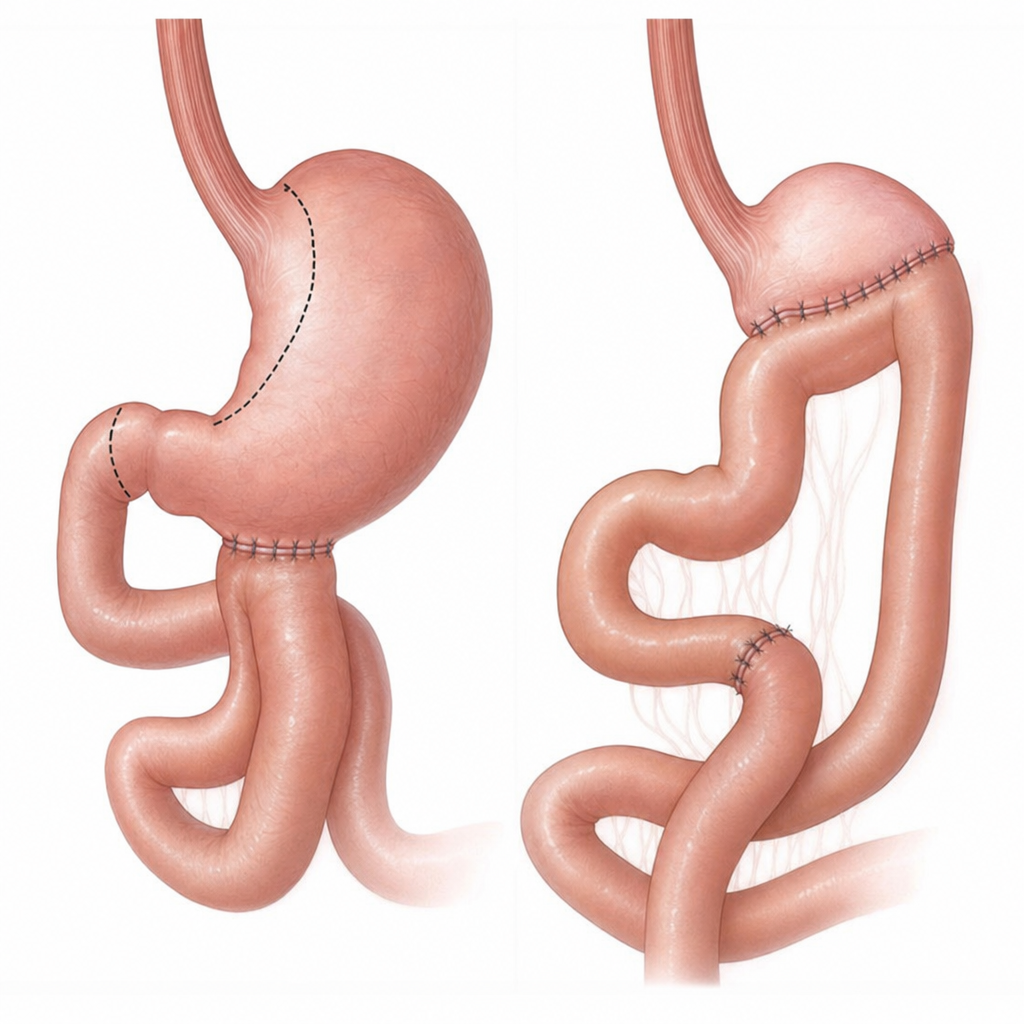
All of the following are true about carcinoma of the esophagus except?
Which of the following are components of the management of a perforated peptic ulcer?
A patient recently underwent an endoscopic procedure, following which esophageal perforation occurred. What is the most common site of esophageal perforation in this scenario?
A previously healthy 55-year-old man undergoes elective right hemicolectomy for a stage I (T2N0M0) cancer of the cecum. His postoperative ileus is somewhat prolonged, and on the fifth postoperative day his nasogastric tube is still in place. Physical examination reveals diminished skin turgor, dry mucous membranes, and orthostatic hypotension. Pertinent laboratory values are as follows: Arterial blood gases: pH 7.56, PCO2 50 mm Hg, PO2 85 mm Hg. Serum electrolytes (mEq/L): Na+ 132, K+ 3.1, Cl- 80; HCO3- 42. Urine electrolytes (mEq/L): Na+ 2, K+ 5, Cl- 6. What is the patient's acid-base abnormality?
Which of the following is NOT a cause of non-healing of an enterocutaneous fistula?
Maximal reduction in gastric acidity is achieved by which surgical procedure?
Upper GI endoscopy is indicated in all the following conditions except:
All of the following are true about Meckel's diverticulum except?
Which of the following features are present in Zollinger-Ellison syndrome?
Which of the following investigations is used in diagnosing intestinal obstruction?
Explanation: **Explanation:** The correct answer is **B**, as the statement is false. While Squamous Cell Carcinoma (SCC) remains the most common type of esophageal cancer globally, its **incidence is actually decreasing** in Western countries and urban populations due to better nutrition and reduced smoking. Conversely, the incidence of **Adenocarcinoma is rapidly increasing**, primarily due to the rising prevalence of obesity, GERD, and Barrett’s esophagus. **Analysis of Options:** * **Option A:** Globally, SCC accounts for approximately 90% of esophageal cancer cases, making it the most common histological type overall. * **Option C:** SCC typically arises from the squamous lining of the **upper and middle thirds** of the esophagus. It is strongly associated with alcohol consumption, smoking, and dietary deficiencies. * **Option D:** Adenocarcinoma almost exclusively occurs in the **lower third** of the esophagus, arising from intestinal metaplasia (Barrett’s esophagus) in the setting of chronic acid reflux. **High-Yield Clinical Pearls for NEET-PG:** * **Most common site (Global):** Middle third (SCC). * **Most common site (Increasing trend in West):** Lower third (Adenocarcinoma). * **Risk Factors for SCC:** Tylosis (100% risk), Achalasia cardia, Plummer-Vinson syndrome, and corrosive strictures. * **Investigation of Choice:** Upper GI Endoscopy with biopsy. * **Staging:** Endoscopic Ultrasound (EUS) is the most accurate for 'T' and 'N' staging; PET-CT is best for distant metastasis. * **Lymphatic Spread:** The esophagus lacks a serosa, leading to early mediastinal spread.
Explanation: **Explanation:** Perforated peptic ulcer (PPU) is a surgical emergency characterized by chemical peritonitis that rapidly progresses to bacterial peritonitis and sepsis. The management follows a definitive sequence: **Resuscitation, Pharmacotherapy, and Surgery.** 1. **Why Option C is Correct:** * **Intravenous Fluids:** Essential for initial resuscitation to correct hypovolemia caused by third-space fluid loss into the peritoneal cavity. * **Intravenous Pantoprazole (PPIs):** High-dose PPIs reduce gastric acid secretion, facilitating the healing of the ulcer bed and preventing further chemical insult. * **Immediate Surgery:** This is the definitive treatment. The goal is to close the perforation (typically via a **Graham’s Omental Patch**) and perform a thorough peritoneal lavage to remove gastric contents and inflammatory debris. 2. **Why Other Options are Incorrect:** * **Antacids (Options A, B, D):** These are oral medications used for symptomatic relief of dyspepsia. In a perforation, the patient is kept *Nil Per Oral (NPO)* to prevent further peritoneal soiling; oral antacids are contraindicated and ineffective. * **Drainage of paracolic gutter (Options B, D):** While peritoneal lavage is performed during surgery, simple drainage of the paracolic gutter without closing the primary perforation is inadequate and will lead to persistent sepsis. **High-Yield Clinical Pearls for NEET-PG:** * **Gold Standard Investigation:** X-ray Erect Abdomen showing **"Gas under the diaphragm"** (seen in ~70% of cases). * **Most Common Site:** The anterior wall of the first part of the duodenum (D1). * **Surgical Procedure of Choice:** **Cellan-Jones** or **Graham’s Patch repair** (using a pedicled or free piece of omentum). * **Conservative Management:** Known as **Taylor’s Method**, it is reserved only for hemodynamically stable patients with "sealed" perforations confirmed by water-soluble contrast studies.
Explanation: **Explanation:** The most common cause of esophageal perforation is **iatrogenic injury** (instrumentation), accounting for nearly 60-70% of cases. During endoscopic procedures, the most common site of perforation is the **Cervical Esophagus (Option A)**, specifically at the level of the **Cricopharyngeus muscle** (the narrowest part of the esophagus). This area, known as **Killian’s Dehiscence**, is a site of potential weakness between the thyropharyngeus and cricopharyngeus muscles, making it highly susceptible to injury during the initial insertion of the endoscope. **Analysis of Incorrect Options:** * **Option B (Cardiac region):** While the gastroesophageal junction is a site of pathology (like achalasia), it is not the most common site for iatrogenic trauma. * **Option C (Mid esophagus):** Perforations here are usually due to foreign bodies or malignancy, rather than routine endoscopic insertion. * **Option D (Lower esophagus):** This is the most common site for **spontaneous perforation (Boerhaave Syndrome)**, typically occurring in the left posterolateral aspect, 2-3 cm above the diaphragm. It is less common in iatrogenic cases unless a specific intervention (like balloon dilation) is performed. **NEET-PG High-Yield Pearls:** * **Most common site (Overall/Iatrogenic):** Cervical esophagus (Cricopharyngeus). * **Most common site (Spontaneous/Boerhaave):** Distal 1/3rd (Lower esophagus). * **Diagnosis:** Gastrografin swallow is the initial investigation of choice (water-soluble contrast); CT scan is the most sensitive for detecting extraluminal air. * **Mackler’s Triad (Boerhaave):** Vomiting, chest pain, and subcutaneous emphysema.
Explanation: ### Explanation **1. Understanding the Correct Answer (D):** The patient presents with **Metabolic Alkalosis with Respiratory Compensation**. * **Primary Abnormality:** The pH is 7.56 (>7.45), indicating alkalemia. The $HCO_3^-$ is 42 mEq/L (Normal: 24), confirming a primary metabolic alkalosis. This is caused by the loss of gastric acid (HCl) via the nasogastric tube. * **Compensation:** In response to high pH, the respiratory center decreases ventilation to retain $CO_2$. The $PCO_2$ is 50 mm Hg (Normal: 40), which is the expected compensatory rise (Expected $PCO_2 = 0.7 \times [HCO_3^-] + 21 \pm 2$). * **Mechanism:** Loss of $Cl^-$ and $H^+$ leads to "contraction alkalosis." The low urinary chloride (6 mEq/L) confirms this is **Chloride-responsive metabolic alkalosis**. The kidneys conserve $Na^+$ and water due to volume depletion, but to maintain electroneutrality, they must excrete $H^+$ and $K^+$ (paradoxical aciduria), further worsening the alkalosis. **2. Why Incorrect Options are Wrong:** * **Option A:** It is not "uncompensated" because the $PCO_2$ has risen significantly (50 mm Hg) to bring the pH back toward normal. * **Option B:** In primary respiratory acidosis, the pH would be <7.35. Here, the high $PCO_2$ is a secondary response, not the primary cause. * **Option C:** In respiratory alkalosis, $PCO_2$ would be low (<35 mm Hg). Here, it is elevated. **3. High-Yield Clinical Pearls for NEET-PG:** * **Classic Triad in NG Suction/Pyloric Stenosis:** Hypochloremic, hypokalemic, metabolic alkalosis with paradoxical aciduria. * **Urinary Chloride:** The most useful test to differentiate causes of metabolic alkalosis. If Urine $Cl^- < 20$ mEq/L, it is chloride-responsive (e.g., vomiting, NG suction, diuretics). * **Paradoxical Aciduria:** Occurs because the kidney prioritizes volume resuscitation (reabsorbing $Na^+$) over pH balance, forcing $H^+$ excretion in the distal tubule when $K^+$ is depleted.
Explanation: To understand why an enterocutaneous fistula (ECF) fails to heal spontaneously, we use the classic mnemonic **FRIEND**. This acronym lists the factors that prevent closure: **F**oreign body, **R**adiation, **I**nfection/Inflammation, **E**pithelialization, **N**eoplasia, and **D**istal obstruction. ### Explanation of the Correct Answer **B. Track length greater than 3 cm:** This is the correct answer because a **long track (>2 cm)** actually **favors** spontaneous healing. Conversely, a short track (<2 cm) is a risk factor for non-healing because it allows the intestinal mucosa to easily reach the skin surface, leading to epithelialization. ### Why the Other Options are Wrong * **A. Epithelialization of the track:** Once the fistula track is lined with epithelium (mucocutaneous continuity), it behaves like a stoma. It will never close spontaneously and requires surgical intervention. * **C. Acute inflammatory disease:** Active inflammation (e.g., Crohn’s disease or local abscess) prevents the deposition of collagen and the contraction of the track, leading to persistence. * **D. Radiation enteritis:** Radiation causes endarteritis obliterans and chronic ischemia of the bowel wall. Poor blood supply significantly impairs the tissue's ability to heal. ### NEET-PG High-Yield Pearls * **FRIEND Mnemonic:** **F**oreign body, **R**adiation, **I**nfection/IBD, **E**pithelialization, **N**eoplasia, **D**istal obstruction. * **Anatomical Factors for Non-healing:** Short track (<2 cm), high output (>500 ml/day), large defect (>1 cm), and lateral duodenal or gastric fistulae. * **Electrolyte Imbalance:** High-output fistulae most commonly lead to **hypokalemic metabolic acidosis** (due to loss of bicarbonate and potassium). * **Management Priority:** The first step in management is always **stabilization** (fluid resuscitation and skin protection), not immediate surgery.
Explanation: ### Explanation The goal of surgical management for peptic ulcer disease is to eliminate the physiological phases of gastric acid secretion. Gastric acid production is primarily stimulated by two pathways: the **Cephalic phase** (mediated by the Vagus nerve) and the **Gastric phase** (mediated by Gastrin from the antrum). **Why Option B is Correct:** **Truncal Vagotomy and Antrectomy (TV+A)** is the most effective procedure because it addresses both major stimulatory pathways simultaneously: 1. **Truncal Vagotomy:** Eliminates the cholinergic (vagal) stimulation of parietal cells. 2. **Antrectomy:** Removes the G-cells located in the antrum, thereby eliminating the hormonal (gastrin) stimulus. By combining these two, the acid output is reduced by approximately **80-95%**, resulting in the **lowest recurrence rate (0-1%)** among all ulcer surgeries. **Analysis of Incorrect Options:** * **A. Truncal Vagotomy and Pyloroplasty:** While it eliminates vagal stimulation, the antrum remains intact, allowing gastrin-mediated acid secretion to continue. Recurrence rate is higher (~10%). * **C. Parietal Gastrectomy:** This is not a standard term for acid reduction surgery. Subtotal gastrectomy reduces acid but is less effective than combining vagotomy with resection. * **D. Highly Selective Vagotomy (HSV):** This denervates only the acid-producing area (fundus/body) while preserving the nerve of Latarjet (antral function). While it has the lowest complication rate (no drainage needed), it has the **highest recurrence rate (10-15%)**. **NEET-PG High-Yield Pearls:** * **Gold Standard for Acid Reduction:** Truncal Vagotomy + Antrectomy. * **Lowest Recurrence Rate:** Truncal Vagotomy + Antrectomy (<1%). * **Highest Recurrence Rate:** Highly Selective Vagotomy (HSV). * **Procedure of Choice for Elective Duodenal Ulcer:** HSV (due to fewer post-operative nutritional complications like dumping syndrome). * **Most Common Complication of TV:** Diarrhea.
Explanation: Upper Gastrointestinal (UGI) endoscopy, or Esophagogastroduodenoscopy (EGD), is the gold standard diagnostic tool for visualizing the mucosa of the esophagus, stomach, and proximal duodenum. **Explanation of the Correct Answer:** The correct answer is **D (None of the above)** because all the conditions listed (A, B, and C) are definitive indications for UGI endoscopy. In clinical practice, endoscopy is indicated whenever there is a need to visualize mucosal lesions, obtain biopsies, or perform therapeutic interventions. **Analysis of Options:** * **Peptic Ulceration:** Endoscopy is the investigation of choice to confirm the presence of gastric or duodenal ulcers, assess for complications (like bleeding), and rule out malignancy (especially in gastric ulcers) via biopsy. * **Achalasia Cardia:** While Manometry is the gold standard for diagnosis and Barium Swallow shows the "Bird’s Beak" appearance, **endoscopy is mandatory** to rule out "Pseudoachalasia" (malignancy at the GE junction mimicking achalasia) and to assess the esophageal mucosa before treatment. * **Barrett’s Esophagus and Esophageal Stricture:** Endoscopy is vital for Barrett’s to perform surveillance biopsies (looking for dysplasia). For strictures, it helps differentiate benign (peptic) from malignant causes and allows for therapeutic dilatation. **High-Yield Clinical Pearls for NEET-PG:** * **Gold Standard for Achalasia:** Esophageal Manometry (shows incomplete LES relaxation and aperistalsis). * **Therapeutic Endoscopy:** Beyond diagnosis, EGD is used for band ligation (EVL) in varices, adrenaline injection for bleeding ulcers, and stenting for inoperable malignancies. * **Contraindications:** The most important absolute contraindication is a **suspected perforated viscus** and hemodynamic instability (unless it is for emergency hemostasis). * **Screening:** In Barrett’s esophagus, the **Seattle Protocol** (four-quadrant biopsies every 2 cm) is followed during endoscopy.
Explanation: **Explanation:** Meckel’s diverticulum is the most common congenital anomaly of the gastrointestinal tract, resulting from the incomplete obliteration of the **vitellointestinal (omphalomesenteric) duct**. **Why Option C is the correct answer (The Exception):** The question asks for the "except" statement. In standard anatomy, Meckel’s diverticulum **does** arise from the **antimesenteric border** of the ileum. However, in the context of this specific question (often seen in standard surgical textbooks like Bailey & Love), the statement is considered the "exception" if the examiner is testing the rare occurrence of **mesenteric** Meckel's or if there is a typographical error in the question's premise. *Note: In most clinical scenarios, C is actually a true statement. If this is a recall question where C is marked correct, it implies the diverticulum can occasionally have its own mesentery or arise near the mesenteric attachment, though this is rare.* **Analysis of other options:** * **Option A (Bleeding):** This is the most common presentation in children, usually due to acid secretion from **ectopic gastric mucosa** causing ileal ulceration. * **Option B (Intussusception):** Meckel’s diverticulum can act as a **lead point**, causing ileo-ileal or ileo-colic intussusception. * **Option D (Located 60 cm from IC valve):** This follows the "Rule of 2s," stating it is typically found 2 feet (approx. 60 cm) proximal to the ileocecal valve. **High-Yield Clinical Pearls (Rule of 2s):** * **2%** of the population. * **2 feet** (60 cm) from the ileocecal valve. * **2 inches** long. * **2 types** of common ectopic tissue: **Gastric** (most common) and **Pancreatic**. * **2 times** more common in males. * Usually presents by **age 2**. * **Diagnosis:** Technetium-99m pertechnetate scan (**Meckel’s scan**) is the investigation of choice for bleeding.
Explanation: **Explanation:** Zollinger-Ellison Syndrome (ZES) is caused by a gastrin-secreting neuroendocrine tumor (gastrinoma), leading to hypergastrinemia and massive gastric acid hypersecretion. **1. Why Option C is Correct:** * **Intractable Peptic Ulceration:** Excessive acid production leads to multiple, recurrent, and refractory ulcers. While most occur in the first part of the duodenum, they are often found in atypical locations like the distal duodenum or jejunum. * **Secretory Diarrhea:** This occurs due to two mechanisms: (a) the high volume of gastric acid overwhelms the small intestine's resorptive capacity, and (b) the low pH inactivates pancreatic lipase, leading to steatorrhea and malabsorption. **2. Why Other Options are Incorrect:** * **Location (Options A, B, and D):** While gastrinomas were historically associated with the pancreas, it is now established that the **most common site is the Duodenum** (specifically within the "Gastrinoma Triangle" or Passaro’s Triangle). Approximately 50–85% of gastrinomas are duodenal. Therefore, any option stating the pancreas as the most common site is technically incorrect. **Clinical Pearls for NEET-PG:** * **Gastrinoma Triangle (Passaro’s Triangle):** Boundaries include the junction of the cystic and common bile duct, the junction of the 2nd and 3rd parts of the duodenum, and the neck of the pancreas. * **Association:** About 25% of cases are associated with **MEN-1 syndrome** (3Ps: Parathyroid, Pancreas, Pituitary); these are often multicentric. * **Diagnosis:** Best initial test is **Fasting Serum Gastrin** (>1000 pg/mL is diagnostic). The most sensitive provocative test is the **Secretin Stimulation Test**. * **Localization:** **Somatostatin Receptor Scintigraphy (SRS)** or Gallium-68 DOTATATE PET/CT are the imaging modalities of choice.
Explanation: **Explanation:** The diagnosis of intestinal obstruction is primarily clinical, but radiological imaging is essential for confirmation. **Why Option B is Correct:** The **X-ray abdomen (supine view)** is the initial investigation of choice. It is superior for identifying the **location of the obstruction** (small vs. large bowel) and the specific **pattern of bowel dilatation**. In a supine film, gas distributes throughout the bowel loops, allowing for the visualization of characteristic signs like the "valvulae conniventes" (stack of coins appearance) in the small bowel or "haustrations" in the large bowel. **Why Other Options are Incorrect:** * **Chest X-ray (Erect):** While often performed alongside abdominal films, its primary role is to rule out **perforation** (pneumoperitoneum) by showing free air under the diaphragm, rather than diagnosing the obstruction itself. * **X-ray abdomen (Lateral view):** This is rarely used in routine practice for obstruction. It may be used in specific pediatric cases (e.g., imperforate anus) but lacks the diagnostic yield of supine/erect views in adults. * **Barium meal:** This is **contraindicated** in suspected acute intestinal obstruction. Barium can inspissate (harden) proximal to the obstruction, worsening the condition or causing barium peritonitis if a perforation occurs. **NEET-PG High-Yield Pearls:** * **Gold Standard:** Contrast-Enhanced CT (CECT) is the most accurate investigation to determine the site, cause, and presence of strangulation. * **Erect Abdominal X-ray:** Best for visualizing **multiple air-fluid levels** (defined as >3 levels). * **Small vs. Large Bowel:** Small bowel loops are central and have valvulae conniventes (cross the full width); large bowel loops are peripheral and have haustrations (do not cross the full width).
Esophageal Disorders
Practice Questions
Gastric Disorders
Practice Questions
Small Intestine Pathology
Practice Questions
Appendicitis
Practice Questions
Inflammatory Bowel Disease
Practice Questions
Intestinal Obstruction
Practice Questions
Gastrointestinal Bleeding
Practice Questions
Diverticular Disease
Practice Questions
Anorectal Disorders
Practice Questions
Colorectal Neoplasms
Practice Questions
Gastrointestinal Stomas
Practice Questions
Bariatric Surgery Principles
Practice Questions
Get full access to all questions, explanations, and performance tracking.
Start For Free