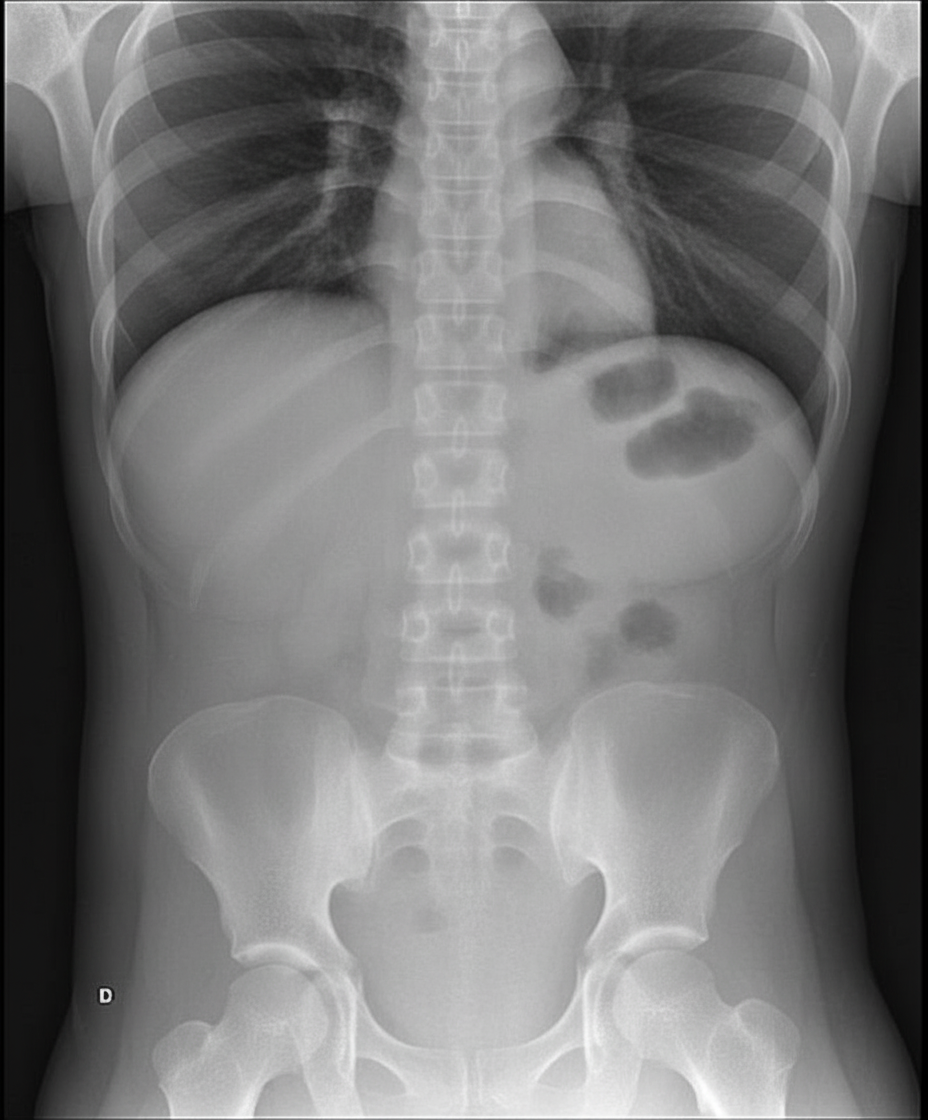
All of the following predispose to carcinoma of the stomach except?
A 60-year-old man presents with epigastric pain after meals, with some nausea and vomiting. A burning sensation in the midepigastrium is relieved by antacids and H2 antagonists. Upper endoscopy demonstrates paired ulcers on both walls of the proximal duodenum. Which of the following represents the most common complication of this patient's duodenal disease?
Direct bronchoscopy can visualize all of the following structures, EXCEPT:
All are true about Gardner's syndrome EXCEPT?
An upward dislocation of both the cardia and gastric fundus is which type of hiatal hernia?
What is true regarding peptic ulcer disease?
Which of the following is not a premalignant lesion of the esophagus?
Trosier's sign is defined as:
Which of the following statements regarding colostomy is true?
Chronic gastric ulcers are much more common at which location?
Explanation: **Explanation:** The development of gastric carcinoma is a multi-step process often involving chronic mucosal inflammation and precancerous lesions. **Why Gastric Erosion is the Correct Answer:** **Gastric erosions** are superficial mucosal defects that do not penetrate the *muscularis mucosae*. They are typically acute lesions caused by NSAIDs, alcohol, or severe physiological stress (e.g., Curling’s or Cushing’s ulcers). Because they heal rapidly without significant architectural remodeling or intestinal metaplasia, they carry **no malignant potential**. **Analysis of Incorrect Options (Precancerous Conditions):** * **Menetrier's Disease:** A hyperplastic gastropathy characterized by giant mucosal folds and protein loss. It carries a **10-15% risk** of transforming into adenocarcinoma due to excessive TGF-alpha expression. * **Chronic Gastritis:** Specifically **Chronic Atrophic Gastritis** (often due to *H. pylori* or Autoimmune Gastritis) leads to intestinal metaplasia and dysplasia, which are the hallmarks of the Correa pathway of gastric carcinogenesis. * **Gastric Polyps:** While most are benign, **Adenomatous polyps** have a high malignant potential (up to 40%). Even hyperplastic polyps, if larger than 2 cm, carry a small risk. **NEET-PG High-Yield Pearls:** * **Most common site** for gastric cancer: Antrum (though GE junction incidence is rising). * **Blood Group A** is associated with an increased risk of gastric cancer. * **Sister Mary Joseph Nodule:** Umbilical metastasis (common in gastric CA). * **Virchow’s Node:** Left supraclavicular lymphadenopathy. * **Krukenberg Tumor:** Metastasis to the ovaries (signet ring cells). * **Irish Node:** Left axillary lymph node involvement.
Explanation: **Explanation:** The patient presents with classic symptoms of **Peptic Ulcer Disease (PUD)**, specifically duodenal ulcers. The presence of "paired ulcers" on opposite walls of the duodenum is known as **"Kissing Ulcers."** **1. Why Bleeding is the Correct Answer:** Bleeding is the **most common complication** of peptic ulcer disease overall. In the duodenum, it typically occurs when an ulcer erodes into the **gastroduodenal artery**, which runs posterior to the first part of the duodenum. While many ulcers are managed medically, hemorrhage remains the leading cause of ulcer-related morbidity and the most frequent reason for emergency surgical intervention. **2. Why the Other Options are Incorrect:** * **Malignant transformation:** Duodenal ulcers are **virtually never malignant**. Unlike gastric ulcers, which require biopsy to rule out adenocarcinoma, duodenal ulcers do not necessitate routine biopsy for malignancy. * **Obstruction:** Gastric Outflow Obstruction (GOO) due to scarring or edema is a known complication but occurs much less frequently than bleeding. * **Perforation:** This is the second most common complication. While life-threatening and presenting with an acute abdomen (pneumoperitoneum), its incidence is lower than that of clinical hemorrhage. **3. High-Yield Clinical Pearls for NEET-PG:** * **Most common site of PUD:** Duodenum (specifically the first part/duodenal bulb). * **Most common complication of PUD:** Bleeding. * **Most common site of perforation:** Anterior wall of the duodenum. * **Most common site of bleeding:** Posterior wall of the duodenum (erosion of gastroduodenal artery). * **Kissing Ulcers:** Often associated with severe PUD or Zollinger-Ellison Syndrome (ZES); they increase the risk of both bleeding and perforation.
Explanation: **Explanation:** The core concept here is the difference between **intraluminal visualization** and **extraluminal structures**. Direct bronchoscopy (whether rigid or flexible) involves passing an endoscope through the upper airway into the tracheobronchial tree. It allows for the direct visual inspection of the internal mucosal surfaces and the lumen of the respiratory tract. * **Why Option D is correct:** **Subcarinal lymph nodes** are located outside the tracheobronchial tree, specifically in the mediastinum below the bifurcation of the trachea (carina). Because they are extraluminal, they cannot be seen with a standard bronchoscope. Visualizing or sampling these nodes requires specialized techniques like **Endobronchial Ultrasound (EBUS)** or invasive procedures like mediastinoscopy. * **Why Options A, B, and C are incorrect:** * **Vocal cords (B) and Trachea (A):** These are the primary structures encountered as the bronchoscope is advanced. They form the main conduit of the upper and middle airway and are easily visualized. * **First segmental subdivision (C):** Modern flexible bronchoscopes can easily navigate into the lobar bronchi and further into the segmental (third-generation) bronchi. **Clinical Pearls for NEET-PG:** 1. **Carina:** The ridge at the base of the trachea; if it appears blunt or widened on bronchoscopy, it often indicates enlargement of the **subcarinal lymph nodes** (commonly due to malignancy). 2. **EBUS-TBNA:** This is the gold standard for "visualizing" and biopsying subcarinal nodes minimally invasively. 3. **Rigid vs. Flexible:** Rigid bronchoscopy is preferred for foreign body removal and massive hemoptysis, while flexible bronchoscopy is the standard for diagnostic visualization of distal segments.
Explanation: **Explanation:** Gardner’s syndrome is a phenotypic variant of **Familial Adenomatous Polyposis (FAP)**, characterized by the triad of colonic polyposis, soft tissue tumors, and skeletal abnormalities. It is an autosomal dominant condition caused by a mutation in the **APC gene** on chromosome 5q21. **Why Option B is the Correct Answer (The Exception):** The onset of Gardner’s syndrome is **not** in the 5th decade. Colonic polyps typically appear in the **second decade** (teens), and if left untreated, progression to colorectal carcinoma occurs in nearly 100% of patients by the **fourth decade** (age 40). Waiting until the 5th decade for screening or diagnosis would be fatal. **Analysis of Other Options:** * **A. Protein-losing enteropathy:** Extensive polyposis in the GI tract can lead to significant protein loss through the stool, resulting in hypoalbuminemia. * **C. Presence of small intestine polyps:** While colonic polyps are hallmark, patients frequently develop polyps in the duodenum (especially periampullary) and the ileum. * **D. Malignancy is common:** Colorectal cancer is an inevitable outcome without prophylactic colectomy. There is also an increased risk of duodenal carcinoma and desmoid tumors. **NEET-PG High-Yield Pearls:** * **Extra-colonic manifestations:** Osteomas (usually of the mandible/skull), dental abnormalities (supernumerary teeth), desmoid tumors, and Epidermoid cysts. * **CHRPE:** Congenital Hypertrophy of Retinal Pigment Epithelium is a highly specific clinical marker for FAP/Gardner’s. * **Turcot Syndrome:** Association of FAP with CNS tumors (Medulloblastoma). * **Management:** Prophylactic Total Proctocolectomy is the treatment of choice.
Explanation: ### Explanation Hiatal hernias are classified into four types based on the anatomical position of the gastroesophageal junction (GEJ) and the gastric fundus relative to the diaphragm. **1. Why Type III is Correct:** **Type III (Mixed Hiatal Hernia)** is a combination of Type I and Type II. In this type, there is both a widening of the hiatus and a stretching of the phrenoesophageal membrane. Consequently, the **gastroesophageal junction (cardia) is displaced upward** into the chest (like Type I), and the **gastric fundus also herniates** alongside the esophagus (like Type II). **2. Analysis of Incorrect Options:** * **Type I (Sliding Hernia):** The most common type (95%). Only the GEJ (cardia) slides upward into the posterior mediastinum. The fundus remains below the GEJ. * **Type II (Rolling/Paraesophageal Hernia):** The GEJ remains in its normal anatomical position (fixed), but the gastric fundus "rolls" up through the hiatus alongside the esophagus. * **Type IV (Complex Hernia):** This involves the herniation of the stomach plus other intra-abdominal viscera (e.g., colon, spleen, small intestine, or omentum) into the thoracic cavity. **3. NEET-PG High-Yield Pearls:** * **Most Common Type:** Type I (Sliding). It is primarily associated with GERD. * **Most Common Paraesophageal Type:** Type III. * **Clinical Significance:** Unlike Type I, paraesophageal hernias (Types II, III, and IV) carry a high risk of **gastric volvulus, strangulation, and incarceration**, often requiring surgical intervention even if asymptomatic. * **Cameron Ulcers:** Linear gastric erosions found in the mucosal folds of a large hiatal hernia, often leading to chronic iron deficiency anemia.
Explanation: **Explanation:** **1. Why Option D is Correct:** *Helicobacter pylori* is classified as a **Type I Carcinogen** by the WHO. It causes chronic active gastritis, leading to a sequence of mucosal changes: atrophy → intestinal metaplasia → dysplasia → adenocarcinoma (Correa’s hypothesis). It is also strongly associated with **MALToma** (Mucosa-Associated Lymphoid Tissue lymphoma), where eradication of the bacteria can often lead to tumor regression. **2. Why Other Options are Incorrect:** * **Option A:** Posterior ulcers typically **penetrate** into the pancreas rather than perforating into the free peritoneal cavity. However, if they do perforate or cause massive hemorrhage (via the gastroduodenal artery), they often require **urgent surgical intervention**, not just conservative management. * **Option B:** This is a classic "switch" trap. **Anterior ulcers** are more likely to **perforate** (due to lack of supporting structures), while **posterior ulcers** are more likely to **bleed** (due to proximity to the gastroduodenal artery). * **Option C:** Unlike duodenal ulcers, **gastric ulcers** are often associated with **normal or even low acid production**. The primary pathology in gastric ulcers is a breakdown in mucosal defense mechanisms rather than hyperacidity. **High-Yield Clinical Pearls for NEET-PG:** * **Most common site for Peptic Ulcer:** First part of the duodenum (D1). * **Most common site for Gastric Ulcer:** Lesser curvature (incisura angularis). * **Investigation of Choice:** Upper GI Endoscopy (UGIE). * **Modified Johnson Classification:** Used to categorize gastric ulcers based on location and acid status (Type II and III are associated with high acid). * **Triple Therapy:** Clarithromycin + Amoxicillin + PPI for 14 days.
Explanation: **Explanation:** The correct answer is **Hiatus hernia**. While a hiatus hernia is a significant risk factor for developing Gastroesophageal Reflux Disease (GERD), it is not considered a premalignant lesion itself. It is an anatomical abnormality where the stomach protrudes through the diaphragmatic hiatus. While chronic GERD caused by a hernia can lead to Barrett’s esophagus, the hernia does not undergo malignant transformation. **Analysis of Options:** * **Esophageal Web (Option A):** These are thin mucosal folds in the upper esophagus. They are associated with **Plummer-Vinson Syndrome** (triad of iron deficiency anemia, dysphagia, and webs), which carries an increased risk of **Squamous Cell Carcinoma (SCC)** of the post-cricoid region. * **Barrett’s Esophagus (Option B):** This is the most significant premalignant condition for **Adenocarcinoma**. It involves intestinal metaplasia (replacement of squamous epithelium with columnar epithelium containing goblet cells) due to chronic acid reflux. * **Achalasia Cardia (Option D):** Long-standing achalasia leads to food stasis and chronic esophagitis. This chronic irritation increases the risk of **Squamous Cell Carcinoma** (approximately 15–30 times higher than the general population) usually after 15–20 years of symptoms. **High-Yield Clinical Pearls for NEET-PG:** * **SCC Risk Factors:** Smoking, Alcohol, Achalasia, Tylosis (100% risk), Lye (corrosive) strictures, and Plummer-Vinson Syndrome. * **Adenocarcinoma Risk Factors:** Barrett’s esophagus, Obesity, and GERD. * **Barrett’s Management:** Requires periodic endoscopic surveillance. If high-grade dysplasia is found, endoscopic mucosal resection (EMR) or radiofrequency ablation is indicated. * **Most common site for SCC:** Middle third of the esophagus. * **Most common site for Adenocarcinoma:** Lower third (distal) esophagus.
Explanation: **Explanation:** **Troisier’s Sign** refers to the clinical finding of a hard, enlarged **left supraclavicular lymph node** (known as **Virchow’s node**) in the presence of an underlying intra-abdominal malignancy. 1. **Why Option B is correct:** The left supraclavicular node is the site where the **thoracic duct** joins the left subclavian vein. Malignant cells from abdominal organs (most commonly the stomach) spread via the thoracic duct and lodge in these nodes. The presence of this palpable node (Troisier’s sign) typically indicates advanced, metastatic (Stage IV) disease, rendering the tumor unresectable. 2. **Why other options are incorrect:** * **Option A:** Right supraclavicular lymphadenopathy usually drains the mediastinum, lungs, or esophagus, rather than the distal abdominal viscera. * **Option C:** Carpopedal spasm is a sign of hypocalcemia (Trousseau’s sign of latent tetany), often confused with Troisier’s due to the similar name. * **Option D:** Migrating thrombophlebitis is known as **Trousseau’s sign of malignancy**, frequently associated with pancreatic cancer. **High-Yield Clinical Pearls for NEET-PG:** * **Most common primary:** Gastric adenocarcinoma (specifically the intestinal type). * **Other associated signs of Gastric Cancer:** * **Sister Mary Joseph’s nodule:** Periumbilical lymphadenopathy. * **Blumer’s shelf:** Deposit in the rectovesical/rectouterine pouch (felt on PR exam). * **Krukenberg tumor:** Metastasis to the ovaries (signet ring cells). * **Irish node:** Left axillary lymph node enlargement.
Explanation: ### Explanation **Correct Answer: D. Double-barreled colostomy is commonly done nowadays.** In modern surgical practice, the **Double-barreled colostomy** (specifically the **Loop Colostomy**) is the most frequently performed procedure for fecal diversion. It is preferred because it is technically easier to create and, more importantly, much simpler to reverse (extraperitoneal closure) compared to a divided end colostomy. It effectively "defunctions" the distal segment, protecting distal anastomoses or allowing distal pathology (like a leak or fistula) to heal. **Analysis of Incorrect Options:** * **Option A:** While a colostomy is indeed an artificial opening to divert feces, this is a **general definition** rather than a specific clinical "truth" tested in the context of surgical practice. In the hierarchy of the question, the clinical prevalence of the double-barreled technique is the intended focus. * **Option B:** While temporary colostomies are used to defunction, the statement is incomplete. They are also used to decompress an obstructed bowel or protect a distal repair. * **Option C:** This describes a **Permanent End Colostomy** (Hartmann’s or AP resection). While true in specific cases, it is a specific subtype, not a general rule for all rectal resections (many of which now utilize Low Anterior Resection with primary anastomosis). **High-Yield Clinical Pearls for NEET-PG:** * **Loop Colostomy vs. End Colostomy:** Loop colostomy is the procedure of choice for **temporary diversion**. End colostomy (Hartmann’s Procedure) is preferred in emergency settings with gross fecal contamination where primary anastomosis is unsafe. * **Site of Choice:** The **Sigmoid colon** is the most common site for a permanent colostomy; the **Transverse colon** is often used for temporary loop colostomies. * **Complications:** The most common complication of a colostomy is **Parastomal Hernia**, followed by skin excoriation and prolapse. * **Stoma Care:** A healthy stoma should appear pink/red (well-perfused) and moist. A dusky or black stoma indicates **ischemia/necrosis**, requiring immediate surgical re-exploration.
Explanation: **Explanation:** The most common site for a chronic gastric ulcer is the **lesser curvature**, specifically at or near the **incisura angularis** (the junction of the body and the antrum). This area is a physiological "watershed" zone where the acid-secreting parietal cell mucosa of the body meets the gastrin-secreting mucosa of the antrum. This transitional zone is highly susceptible to mucosal injury from factors like *H. pylori* colonization and bile reflux. **Analysis of Options:** * **Incisura angularis (Correct):** This corresponds to **Type I gastric ulcers** (Modified Johnson Classification), which are the most frequent type. They occur along the lesser curve and are typically associated with low to normal acid secretion. * **Prepyloric (A):** These are **Type III ulcers**. While common, they are less frequent than Type I. They behave similarly to duodenal ulcers and are associated with gastric acid hypersecretion. * **Fundus (B) & Cardia (D):** These are rare sites for chronic peptic ulcers. Ulcers near the gastroesophageal junction are classified as **Type IV** and pose a significant surgical challenge due to their proximity to the esophagus. **Clinical Pearls for NEET-PG:** * **Modified Johnson Classification:** * **Type I:** Lesser curve/Incisura (Most common; normal acid). * **Type II:** Two ulcers (Gastric + Duodenal; high acid). * **Type III:** Prepyloric (High acid). * **Type IV:** High on lesser curve near GE junction (Normal acid). * **Type V:** Anywhere in the stomach (Associated with NSAID use). * **Rule of Thumb:** Unlike duodenal ulcers, all gastric ulcers must be biopsied to rule out malignancy, as approximately 5% of "benign-looking" gastric ulcers are actually gastric adenocarcinomas.
Esophageal Disorders
Practice Questions
Gastric Disorders
Practice Questions
Small Intestine Pathology
Practice Questions
Appendicitis
Practice Questions
Inflammatory Bowel Disease
Practice Questions
Intestinal Obstruction
Practice Questions
Gastrointestinal Bleeding
Practice Questions
Diverticular Disease
Practice Questions
Anorectal Disorders
Practice Questions
Colorectal Neoplasms
Practice Questions
Gastrointestinal Stomas
Practice Questions
Bariatric Surgery Principles
Practice Questions
Get full access to all questions, explanations, and performance tracking.
Start For Free