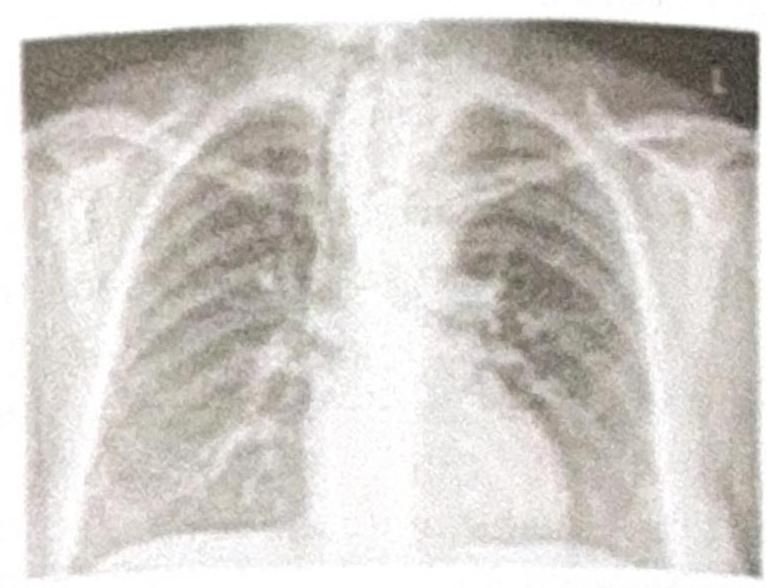
What is the best surgical approach for accessing a retrosternal goitre?
A 50-year-old female patient presented with a chief complaint of a painless thyroid nodule. Further examination is insignificant. TSH levels are normal. FNAC reveals papillary changes with nuclear atypia. Total thyroidectomy is planned. During surgery, a nearby nerve is injured while ligating the superior thyroid artery. Which of the following laryngeal muscles is likely to be affected?
In retrosternal goiter, what is the most common presenting feature?
A 3 cm adrenal mass is found incidentally on a CT scan. Which of the following investigations is NOT indicated?
A patient underwent thyroidectomy for hyperthyroidism. Two days later, the patient presented with features of thyroid storm. What is the most likely cause?
A 20-year-old female presents with a 9-month history of neck swelling and thyrotoxic symptoms. Investigations reveal increased T4 and decreased TSH levels, with a palpable 2 cm thyroid nodule. What is the next appropriate investigation?
What is the treatment for parathyroid hyperplasia?
Which of the following is true regarding a solitary thyroid nodule?
Pemberton’s sign is elicited by which maneuver?
A patient operated for thyroid surgery for a thyroid swelling, later in the evening developed difficulty in breathing and swelling in the neck. What is the immediate management?
Explanation: ### Explanation **Why the Cervical Approach is Correct:** The majority of retrosternal goitres (approximately 90–95%) are **primary cervical goitres** that have descended into the mediastinum due to gravity, negative intrathoracic pressure, and the lack of anatomical barriers at the thoracic inlet. Because these goitres derive their blood supply from the **inferior thyroid arteries** (branches of the thyrocervical trunk in the neck), they can almost always be safely delivered and resected through a standard **transverse cervical (Kocher) incision**. Digital dissection along the plane of the thyroid capsule allows the surgeon to gently "deliver" the mass into the neck. **Analysis of Incorrect Options:** * **Sternal Approach (Sternotomy):** This is reserved for only 2–5% of cases. Indications for sternotomy include "true" ectopic intrathoracic goitres (blood supply from internal mammary or aorta), recurrent goitres, malignancy with mediastinal lymphadenopathy, or an "iceberg" goitre where the diameter exceeds the thoracic inlet. * **VATS (Video-Assisted Thoracoscopic Surgery):** While used for some mediastinal masses, it is not the primary approach for retrosternal goitres because the vascular control (inferior thyroid artery) is superiorly located in the neck. **High-Yield Clinical Pearls for NEET-PG:** * **Definition:** A goitre is considered retrosternal if more than 50% of its volume is below the level of the thoracic inlet. * **Pemberton’s Sign:** Facial congestion and inspiratory stridor upon raising both arms above the head; indicates superior vena cava syndrome or thoracic inlet obstruction. * **Most common complication:** Recurrent laryngeal nerve injury and hypoparathyroidism are slightly more common in retrosternal cases compared to simple thyroidectomies. * **Key Rule:** Always secure the superior pole and the middle thyroid vein first to mobilize the gland before attempting to deliver the retrosternal component.
Explanation: **Explanation:** The correct answer is **C. Thyroarytenoid muscle**. **1. Why the correct answer is right:** The question describes a nerve injury occurring during the ligation of the **superior thyroid artery**. Anatomically, the **External Branch of the Superior Laryngeal Nerve (EBSLN)** runs in close proximity to the superior thyroid artery. However, there is a common clinical and anatomical nuance often tested in exams: while the EBSLN is at risk during superior pole dissection, the **Recurrent Laryngeal Nerve (RLN)** is the nerve most commonly injured during thyroidectomy overall (often near the inferior thyroid artery or the ligament of Berry). In this specific question context, the **External Laryngeal Nerve** supplies only one muscle: the **Cricothyroid**. However, if the question implies a broader surgical injury or follows specific NEET-PG patterns where the **Recurrent Laryngeal Nerve** is the focus of "laryngeal muscle" questions, we must look at the innervation. The RLN supplies **all intrinsic muscles of the larynx except the cricothyroid**. This includes the Thyroarytenoid, Posterior cricoarytenoid, and Lateral cricoarytenoid. Among the options, the Thyroarytenoid is a primary intrinsic muscle supplied by the RLN. **2. Why the incorrect options are wrong:** * **A. Cricothyroid muscle:** This is supplied by the External Laryngeal Nerve. While this nerve is closest to the superior thyroid artery, it is often not the "intended" answer in questions focusing on general laryngeal paralysis unless "voice pitch" is mentioned. * **B & D. Posterior and Lateral cricoarytenoid:** These are also supplied by the RLN. In many standardized formats, the Thyroarytenoid (Option C) is the preferred answer for general RLN palsy questions. **3. High-Yield Clinical Pearls for NEET-PG:** * **Superior Thyroid Artery:** Closely related to the **External Laryngeal Nerve**. Injury leads to inability to create high-pitched sounds (monotone voice). * **Inferior Thyroid Artery:** Closely related to the **Recurrent Laryngeal Nerve**. * **Safety Tip:** To avoid nerve injury, ligate the superior thyroid artery **close to the gland** and the inferior thyroid artery **far from the gland**. * **Posterior Cricoarytenoid:** The only **abductor** of the vocal cords ("Safety muscle of the larynx").
Explanation: ### Explanation **1. Why Dyspnea is the Correct Answer:** Retrosternal goiter (RSG) refers to a thyroid enlargement where at least 50% of the gland is below the thoracic inlet. The **trachea** is the most vulnerable structure in the narrow superior mediastinum. As the goiter expands within the rigid bony confines of the thoracic cage, it causes extrinsic compression and displacement of the trachea. This leads to **dyspnea** (shortness of breath), which is the most frequent presenting symptom, occurring in approximately 70–80% of symptomatic patients. It is often exertional or positional (worsening when lying supine). **2. Analysis of Incorrect Options:** * **Dysphagia (A):** While the esophagus lies posterior to the trachea, it is a muscular, collapsible tube and is more mobile. Significant compression leading to difficulty swallowing occurs less frequently than tracheal compression. * **Stridor (B):** Stridor is a sign of advanced, high-grade airway obstruction (usually when the tracheal lumen is reduced to <5mm). While it occurs in RSG, it is a late feature rather than the most common initial presentation. * **Superior Vena Cava (SVC) Syndrome (D):** This results from compression of the venous outflow. While RSG is a known benign cause of SVC syndrome (Pemberton’s sign), it occurs in less than 5–10% of cases. **3. High-Yield Clinical Pearls for NEET-PG:** * **Definition:** Most commonly defined as a goiter where the lower pole cannot be felt on neck extension or extends below the level of the 4th thoracic vertebra. * **Pemberton’s Sign:** Facial congestion, cyanosis, and inspiratory stridor upon raising both arms above the head (positive in RSG). * **Surgical Approach:** Most retrosternal goiters (95%) can be removed via a **standard cervical collar incision**. A sternotomy is only required in <5% of cases (e.g., malignancy, posterior mediastinal goiter, or "iceberg" goiters wider than the thoracic inlet). * **Most common type:** Majority are "secondary" RSG (arising from the neck and descending); "primary" mediastinal goiters (ectopic) are rare (<1%).
Explanation: **Explanation:** The clinical scenario describes an **Adrenal Incidentaloma**, defined as an adrenal mass ≥1 cm discovered on imaging performed for reasons other than suspected adrenal disease. The primary goal in managing an incidentaloma is to determine if the mass is **hormonally active** or **malignant**. **Why Adrenalectomy is the correct answer:** Adrenalectomy is a **treatment**, not an investigation. It is only indicated if the mass is functional (hormone-secreting), shows suspicious radiological features (e.g., size >4 cm, high Hounsfield units), or increases in size during follow-up. A 3 cm non-functional mass with benign features is typically managed with observation, making immediate surgery inappropriate as an initial diagnostic step. **Analysis of Incorrect Options (Necessary Investigations):** * **Dexamethasone Suppression Test (DST):** Essential to screen for **Subclinical Cushing’s Syndrome** (autonomous cortisol secretion), which is the most common hormonal abnormality in incidentalomas. * **Measurement of Plasma Catecholamines/Metanephrines:** Mandatory to rule out **Pheochromocytoma**, even in asymptomatic patients, as an undiagnosed pheochromocytoma can lead to a lethal hypertensive crisis during biopsy or surgery. * **Midnight Plasma Cortisol:** Used to assess the loss of circadian rhythm, another sensitive marker for autonomous cortisol production. **High-Yield Clinical Pearls for NEET-PG:** 1. **Size Cut-off:** Masses **>4 cm** have a higher risk of malignancy and are generally recommended for resection. 2. **Biopsy Rule:** Never perform a Fine Needle Aspiration (FNA) of an adrenal mass until **Pheochromocytoma is ruled out** biochemically. 3. **Hounsfield Units (HU):** On non-contrast CT, a density of **<10 HU** suggests a lipid-rich benign adenoma. 4. **Conn’s Screening:** If the patient is hypertensive or hypokalemic, the **Aldosterone-to-Renin Ratio (ARR)** must also be checked.
Explanation: ### Explanation **1. Why "Inadequate Preoperative Preparation" is correct:** The primary goal of preoperative management in hyperthyroidism (especially Graves' disease) is to achieve a **euthyroid state** before surgery. If a patient is not properly prepared with antithyroid drugs (like Carbimazole or Methimazole) and Beta-blockers, the thyroid gland remains hyperactive. Surgical manipulation of an overactive gland triggers a massive release of stored thyroid hormones (T3 and T4) into the circulation. This sudden surge precipitates a **Thyroid Storm**, a life-threatening hypermetabolic state characterized by hyperpyrexia, tachycardia, and cardiac failure. **2. Why other options are incorrect:** * **Poor antibiotic coverage:** While this increases the risk of surgical site infection or sepsis, it does not directly trigger the hormonal surge characteristic of a thyroid storm. * **Rough handling during surgery:** While excessive manipulation can exacerbate hormone release, it rarely causes a storm if the patient was adequately prepared and euthyroid. Preparation is the definitive preventive factor. * **Removal of parathyroid:** This leads to **hypocalcemia** (tetany, Chvostek’s/Trousseau’s signs), not thyroid storm. **3. Clinical Pearls for NEET-PG:** * **Lugol’s Iodine:** Often given 10 days preoperatively to decrease the **vascularity** and friability of the gland (Plummer’s effect). * **Drug of choice for Thyroid Storm:** **Propylthiouracil (PTU)** is preferred over Methimazole because it also inhibits the peripheral conversion of T4 to T3. * **Beta-blockers (Propranolol):** Essential to control adrenergic symptoms and also help inhibit peripheral T4 to T3 conversion. * **Burch-Wartofsky Point Scale:** Used clinically to diagnose and grade the severity of a thyroid storm.
Explanation: ### **Explanation** The clinical presentation describes a patient with **overt hyperthyroidism** (increased T4, decreased TSH) and a **palpable thyroid nodule**. In the management of a thyroid nodule, the first step is always checking the TSH level. 1. **Why Thyroid Scan is correct:** When TSH is suppressed (low), the next step is a **Thyroid Radionuclide Scan** (using Technetium-99m or Iodine-123). This determines the functional status of the nodule. If the nodule is "hot" (autonomously functioning), the risk of malignancy is extremely low (<1%), and further evaluation with FNAC is generally not required. If the nodule is "cold" (non-functioning), the risk of malignancy is higher, and an Ultrasound-guided FNAC is indicated. 2. **Why Ultrasound is incorrect:** While USG is the most sensitive tool for anatomical characterization of nodules, in the presence of hyperthyroidism, functional assessment (Scan) takes precedence to avoid unnecessary biopsy of a hot nodule. 3. **Why Radioactive Iodine Uptake (RAIU) is incorrect:** RAIU measures the percentage of iodine trapped by the *entire* gland to differentiate causes of thyrotoxicosis (e.g., Graves' vs. Thyroiditis). It does not provide the localized "hot vs. cold" map required to evaluate a specific nodule. 4. **Why CT scan is incorrect:** CT is not a primary investigation for thyroid nodules and the iodinated contrast can interfere with subsequent radioactive iodine therapy. ### **Clinical Pearls for NEET-PG** * **The "Golden Rule":** Never perform FNAC on a "Hot" nodule. * **Hot Nodule:** High uptake; low risk of malignancy; treat the hyperthyroidism. * **Cold Nodule:** Low uptake; ~15-20% risk of malignancy; proceed to FNAC. * **Most common cause of a solitary hot nodule:** Toxic Adenoma (Plummer’s disease).
Explanation: **Explanation:** Parathyroid hyperplasia involves the enlargement of all four parathyroid glands, commonly seen in secondary hyperparathyroidism (CKD) or MEN syndromes. Unlike a solitary adenoma, where only the affected gland is removed, hyperplasia requires a more extensive surgical approach because all parathyroid tissue is inherently overactive. **1. Why Option C is Correct:** The standard surgical treatment for hyperplasia is **Subtotal Parathyroidectomy (3 ½ gland removal)**. In this procedure, three whole glands and half of the fourth (most normal-appearing) gland are removed. The remaining 50mg of vascularized tissue is left in situ to maintain calcium homeostasis and prevent permanent hypocalcemia. An alternative is **Total Parathyroidectomy with Autotransplantation**, where all four glands are removed and a small piece is re-implanted into the brachioradialis muscle or sternocleidomastoid. **2. Why Other Options are Wrong:** * **Option A (Phosphate binders):** These are used in the medical management of secondary hyperparathyroidism to control hyperphosphatemia, but they do not treat the underlying hyperplasia once surgical intervention is indicated. * **Option B (Calcitonin):** This is used for the acute management of severe hypercalcemia (emergency) or Paget’s disease; it has no role in the definitive treatment of hyperplasia. * **Option D (Enlarged glands to be removed):** This describes the treatment for **Parathyroid Adenoma** (focused excision). In hyperplasia, even "normal-looking" glands are pathologically involved; removing only the visibly enlarged ones leads to a high rate of recurrence. **High-Yield Clinical Pearls for NEET-PG:** * **MEN 1 & 2A:** Most common cause of hereditary parathyroid hyperplasia. * **Localization:** Sestamibi scans are less sensitive in hyperplasia compared to adenomas. * **Post-op Complication:** "Hungry Bone Syndrome" (profound hypocalcemia) is common after surgery for hyperplasia/secondary hyperparathyroidism. * **Marking:** The remnant gland in subtotal parathyroidectomy is usually marked with a non-absorbable suture or clip for easy identification if re-exploration is needed.
Explanation: ### Explanation **Correct Option: D. Common in females** Solitary thyroid nodules (STN) are clinically common, and epidemiological studies consistently show a higher prevalence in women. The female-to-male ratio for thyroid nodules is approximately **4:1**. While nodules are more frequent in females, it is a high-yield clinical fact that a solitary nodule found in a **male** or at the extremes of age (very young or very old) carries a significantly higher risk of malignancy. **Analysis of Incorrect Options:** * **A. Thyroid-stimulating hormone receptor antibodies (TRAb):** These antibodies are the hallmark of **Graves' Disease**, which typically presents with diffuse toxic goiter rather than a solitary nodule. * **B. Lined by columnar epithelium:** This is a histological feature often associated with **Papillary Thyroid Carcinoma** (tall cell variant) or toxic goiters (hyperactive follicles), but it is not a defining characteristic of a solitary nodule itself, which can be a cyst, adenoma, or various types of carcinoma. * **C. Diffuse hyperplasia of the thyroid:** This describes a **Diffuse Goiter** (e.g., Graves' or physiological goiter). A solitary nodule is, by definition, a discrete swelling in an otherwise impalpable gland or a prominent nodule in a multinodular goiter. **Clinical Pearls for NEET-PG:** * **Initial Investigation of Choice:** Serum TSH. * **Gold Standard Investigation:** Fine Needle Aspiration Cytology (FNAC). * **Most Common Cause:** Colloid nodule/Dominant nodule of a Multinodular Goiter (MNG). * **Risk of Malignancy:** Approximately 5–15% of solitary nodules are malignant. * **Hot vs. Cold Nodules:** On radionuclide scanning, "Cold" nodules (non-functional) have a higher risk of malignancy compared to "Hot" (hyperfunctioning) nodules.
Explanation: **Explanation:** **Pemberton’s sign** is a clinical maneuver used to demonstrate latent **thoracic inlet obstruction**. It is most commonly seen in patients with a large retrosternal goiter, though it can also occur in cases of mediastinal tumors or superior vena cava (SVC) syndrome. **1. Why "Raising of arms" is correct:** The maneuver involves asking the patient to elevate both arms until they touch the sides of the face (Pemberton’s maneuver) and holding this position for 30–60 seconds. This action further narrows the thoracic inlet by pulling the clavicles and soft tissues upward. In the presence of a retrosternal mass, this "corks" the inlet, obstructing venous return. A **positive sign** is indicated by facial congestion, cyanosis, inspiratory stridor, or distended neck veins. **2. Why the other options are incorrect:** * **Swallowing:** This is used to assess the mobility of a thyroid swelling (thyroid moves upward with deglutition due to its attachment to the pretracheal fascia). * **Extrusion of tongue:** This is used to identify a **Thyroglossal cyst**, which moves upward upon tongue protrusion because it is connected to the hyoid bone/foramen caecum. * **Extension of neck:** While extension can make a cervical goiter more prominent, it is not the specific maneuver for Pemberton’s sign. **Clinical Pearls for NEET-PG:** * **Indication:** Retrosternal goiter is the #1 cause. * **Mechanism:** Venous congestion due to compression of the internal jugular and subclavian veins. * **Berry’s Sign:** Absence of carotid pulse due to encasement by thyroid malignancy (differentiates from benign goiter). * **Kocher’s Test:** Pushing on the lateral lobes of a goiter causing stridor (indicates tracheomalacia or compression).
Explanation: ### Explanation **Correct Option: D. Open the wound sutures in the ward** The clinical presentation of respiratory distress and neck swelling immediately following thyroid surgery is a classic sign of a **tension hematoma**. This is a surgical emergency where bleeding (usually from a slipped ligature on the superior thyroid artery) accumulates deep to the investing layer of the deep cervical fascia. The pressure compresses the trachea and causes venous congestion, leading to laryngeal edema and rapid airway obstruction. The **immediate management** is to evacuate the hematoma to relieve the pressure. This must be done at the bedside (in the ward) by removing the skin sutures and opening the deep fascia. Waiting to transfer the patient to the operating theater can be fatal. **Why other options are incorrect:** * **A. Epinephrine injection:** Used for anaphylaxis or cardiac arrest; it does not address the mechanical compression of the airway. * **B. Tracheostomy:** While it secures the airway, it is technically difficult and time-consuming in a patient with a massive neck hematoma. Hematoma evacuation must precede or bypass the need for this. * **C. IV calcium gluconate:** This is the treatment for hypocalcemia (post-operative tetany), which typically presents 24–72 hours post-surgery with circumoral paresthesia and carpopedal spasm, not acute respiratory distress. **Clinical Pearls for NEET-PG:** * **Most common cause of post-thyroidectomy respiratory distress:** Tension hematoma (within the first 24 hours). * **Other causes:** Bilateral recurrent laryngeal nerve injury (presents immediately after extubation) and laryngeal edema. * **Sequence of Management:** 1. Open sutures at bedside $\rightarrow$ 2. Secure airway (intubation) $\rightarrow$ 3. Return to OR for formal hemostasis. * **Tracheomalacia:** A rare cause of collapse seen in long-standing large goiters where tracheal rings have weakened.
Thyroid Nodules
Practice Questions
Thyroid Cancer
Practice Questions
Graves' Disease
Practice Questions
Thyroiditis
Practice Questions
Primary Hyperparathyroidism
Practice Questions
Secondary and Tertiary Hyperparathyroidism
Practice Questions
Adrenal Cortical Tumors
Practice Questions
Pheochromocytoma
Practice Questions
Adrenal Incidentalomas
Practice Questions
Multiple Endocrine Neoplasia
Practice Questions
Neuroendocrine Tumors
Practice Questions
Intraoperative Monitoring in Endocrine Surgery
Practice Questions
Get full access to all questions, explanations, and performance tracking.
Start For Free