Venous spread in carcinoma of the rectum most commonly reaches which of the following structures?
What is the most common cause of an anorectal abscess?
All of the following are true about Familial adenomatous polyposis EXCEPT:
All of the following are complications of regional enteritis (Crohn's disease) except?
All the following statements regarding the malignant potential of colorectal polyps are true EXCEPT?
What is the most common type of anal carcinoma?
What is the most common early presentation of rectal carcinoma?
What is the definitive treatment for primary hemorrhoids?
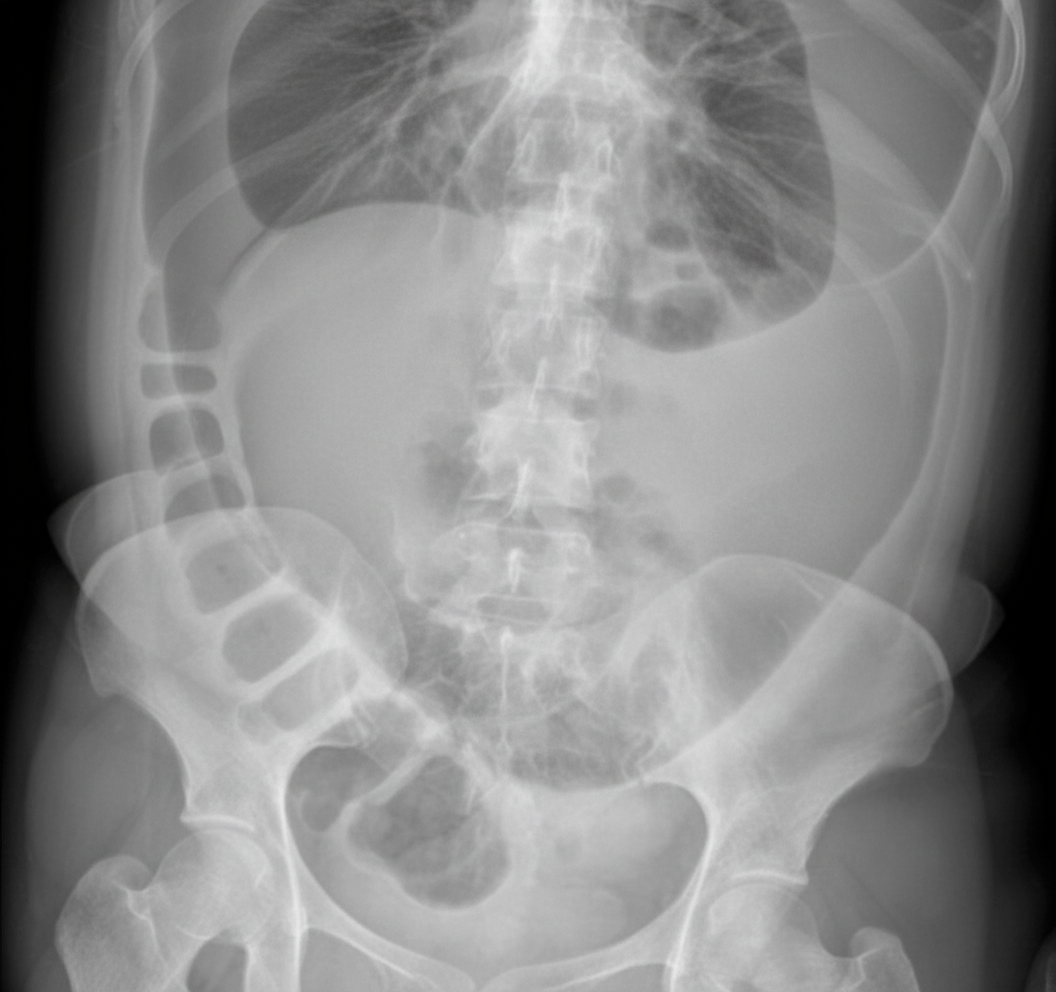
Acute pseudo-obstruction of the colon is known as:
High or low fistula in ano is termed according to its internal opening with reference to which anatomical landmark?
Explanation: **Explanation:** The correct answer is **Liver (Option C)**. **1. Why Liver is Correct:** The venous drainage of the rectum is primarily mediated by the **Superior Rectal Vein**, which is a direct tributary of the **Inferior Mesenteric Vein (IMV)**. The IMV drains into the **Portal Venous System**. Consequently, malignant cells that enter the bloodstream from a rectal tumor are carried via the portal circulation directly to the liver, making it the most common site for distant hematogenous metastasis in colorectal cancers. *Note:* While the middle and inferior rectal veins drain into the systemic circulation (Internal Iliac Veins), the superior rectal vein's contribution to the portal system is the dominant pathway for early venous spread. **2. Why Other Options are Incorrect:** * **Spleen (Option A):** While the splenic vein is part of the portal system, blood flows *from* the spleen to the liver. Retrograde spread to the spleen is extremely rare. * **Kidney (Option B):** Renal involvement usually occurs via direct local invasion or late-stage systemic spread, not via the primary venous drainage route of the rectum. * **Duodenum (Option D):** The duodenum is an upper gastrointestinal structure. There is no direct venous or lymphatic pathway connecting the rectum to the duodenum. **3. High-Yield Clinical Pearls for NEET-PG:** * **Most common site of distant metastasis:** Liver (via Portal system). * **Second most common site of distant metastasis:** Lungs (via Systemic circulation/Internal Iliac veins). * **Lymphatic Spread:** This is the most common overall mode of spread for rectal cancer. It follows the arterial supply (Superior Rectal Artery to Pre-aortic nodes). * **Batten’s Plexus:** This valveless vertebral venous plexus explains how rectal cancer can occasionally metastasize to the **lumbar vertebrae** without involving the liver or lungs.
Explanation: **Explanation:** The correct answer is **A. Inflammation of an anal gland.** **Pathophysiology (The Cryptoglandular Hypothesis):** The vast majority (over 90%) of anorectal abscesses originate from an infection of the anal glands. These glands are located at the level of the **dentate line**, with their ducts opening into the **anal crypts**. When a crypt becomes obstructed by debris, fecal matter, or foreign bodies, the trapped secretions in the gland become infected, leading to abscess formation. This infection typically begins in the intersphincteric space and can spread to various potential spaces (perianal, ischiorectal, or supralevator). **Why the other options are incorrect:** * **B. Folliculitis:** While infected hair follicles can cause localized skin abscesses in the perianal region, they are superficial and do not represent the primary etiology of true anorectal abscesses. * **C. Inflammation of the rectal mucosa:** Proctitis (inflammation of the mucosa) usually presents with tenesmus, discharge, or bleeding, but it does not typically lead to the formation of deep-seated anorectal abscesses unless associated with Crohn’s disease. * **D. Fissure:** An anal fissure is a linear tear in the anoderm. While a chronic fissure can occasionally lead to a superficial "sentinel pile" or a minor subcutaneous abscess, it is not the most common underlying cause. **High-Yield Clinical Pearls for NEET-PG:** * **Most common site:** The **Perianal abscess** is the most common clinical type of anorectal abscess. * **Bacteriology:** Most abscesses are polymicrobial, containing both skin flora (*Staphylococcus aureus*) and enteric organisms (*E. coli, Bacteroides fragilis*). * **Goodsall’s Rule:** Used to predict the track of the resulting fistula-in-ano (the chronic phase of an abscess). * **Management:** The definitive treatment is **prompt incision and drainage**. Antibiotics are secondary and reserved for patients with systemic symptoms, diabetes, or immunosuppression. * **Association:** Recurrent or complex abscesses should raise suspicion for **Crohn’s disease**.
Explanation: **Explanation:** Familial Adenomatous Polyposis (FAP) is an autosomal dominant syndrome characterized by the development of hundreds to thousands of adenomatous polyps throughout the colon and rectum. **Why Option C is the correct answer (The Exception):** The lifetime risk of developing colorectal cancer (CRC) in untreated FAP patients is **virtually 100%**, not 70-80%. Malignancy typically develops by age 40-50. Because of this inevitable progression, prophylactic total proctocolectomy is the standard of care, usually performed in the late teens or early twenties. **Analysis of other options:** * **Option A:** By definition, FAP requires the presence of **>100 synchronous colorectal adenomas**. If there are 10–100 polyps, it is termed "Attenuated FAP." * **Option B:** FAP is associated with several **extraintestinal manifestations**, including desmoid tumors (a leading cause of death post-colectomy), osteomas (Gardner syndrome), congenital hypertrophy of retinal pigment epithelium (CHRPE), and dental abnormalities. * **Option D:** The condition is caused by a germline mutation in the **APC gene** located on **chromosome 5q21**. This gene is a tumor suppressor that regulates the Wnt signaling pathway. **High-Yield Clinical Pearls for NEET-PG:** * **Most common extra-colonic malignancy:** Duodenal carcinoma (specifically periampullary). * **Gardner Syndrome:** FAP + Osteomas + Soft tissue tumors (sebaceous cysts, desmoids). * **Turcot Syndrome:** FAP + CNS tumors (Medulloblastoma). * **Screening:** Starts at age 10–12 years with annual flexible sigmoidoscopy. * **CHRPE:** The earliest clinical sign of FAP, detectable at birth via ophthalmoscopy.
Explanation: **Explanation:** The correct answer is **Intussusception**. **1. Why Intussusception is the correct answer:** Crohn’s disease is characterized by **transmural inflammation**, which leads to significant thickening and fibrosis of the bowel wall (the "lead pipe" appearance). This makes the affected segments rigid and non-pliable. Intussusception requires a flexible segment of bowel to invaginate into an adjacent segment; the stiff, thickened wall in Crohn’s disease acts as a physical deterrent to this process. Therefore, intussusception is an extremely rare, if not non-existent, complication of regional enteritis. **2. Why the other options are incorrect:** * **Obstruction (Option A):** This is the **most common** surgical complication of Crohn’s disease. It occurs due to acute inflammation/edema or, more commonly, chronic fibrotic strictures. * **Fistula formation (Option B):** Transmural inflammation leads to deep ulcerations (fissures) that penetrate the serosa, resulting in communications between the bowel and other organs (entero-enteric, entero-vesical, entero-vaginal) or the skin (entero-cutaneous). * **Perforation (Option C):** While less common than in Ulcerative Colitis (due to the protective effect of fibrosis and adhesions), free perforation can occur during acute exacerbations or proximal to a high-grade obstruction. **Clinical Pearls for NEET-PG:** * **Most common site:** Terminal ileum (Ileocolic). * **Pathognomonic feature:** Non-caseating granulomas (seen in 50-70% of cases). * **Endoscopic hallmark:** "Cobblestone appearance" and "Skip lesions." * **Radiological signs:** "String sign of Kantor" (due to terminal ileum stricture) and "Proud flesh" (increased inter-loop distance). * **Surgery:** Not curative; indicated only for complications. The principle is **minimal resection** or **stricturoplasty** to prevent Short Bowel Syndrome.
Explanation: **Explanation:** The malignant potential of colorectal polyps depends on their histological type and genetic background. **Why Option B is the correct answer (The False Statement):** **Pseudopolyps** (inflammatory polyps) are non-neoplastic islands of regenerating mucosa surrounded by areas of mucosal ulceration and depletion, commonly seen in **Ulcerative Colitis**. They are purely inflammatory and **do not have malignant potential**. While patients with Ulcerative Colitis are at an increased risk for colorectal cancer, that risk arises from flat, dysplastic mucosa (DALM), not from the pseudopolyps themselves. **Analysis of Incorrect Options:** * **Option A:** **Familial Adenomatous Polyposis (FAP)** is characterized by hundreds to thousands of adenomatous polyps. Without a prophylactic total proctocolectomy, the risk of progression to colorectal cancer is **100% by age 40-50**. * **Option C:** Among adenomatous polyps, the risk of malignancy follows the order: **Villous > Tubulovillous > Tubular**. Villous adenomas are often larger and have a 30–40% risk of containing invasive carcinoma. * **Option D:** **Juvenile polyps** are hamartomatous polyps. Solitary juvenile polyps are common in children and carry **no malignant potential**. (Note: Juvenile Polyposis *Syndrome* increases cancer risk due to associated adenomas, but the polyps themselves are benign). **High-Yield Clinical Pearls for NEET-PG:** 1. **Size Matters:** Polyps <1 cm have <1% cancer risk, while polyps >2 cm have a >30-50% risk. 2. **Vogelstein Model:** Describes the "Adenoma-Carcinoma Sequence" (APC gene mutation $\rightarrow$ KRAS $\rightarrow$ p53). 3. **Hyperplastic Polyps:** Generally considered benign if located in the distal colon, but "Serrated Adenomas" are premalignant. 4. **Most common site for Villous Adenoma:** Rectum.
Explanation: **Explanation:** The anal canal is lined by different types of epithelium: columnar epithelium in the upper part, transitional (cloacogenic) epithelium at the dentate line, and non-keratinized squamous epithelium below it. **Squamous cell carcinoma (SCC)** is the most common histological type, accounting for approximately **80% of all anal canal malignancies**. It is strongly associated with persistent infection by high-risk **Human Papillomavirus (HPV)**, particularly types 16 and 18. **Analysis of Options:** * **Squamous Cell Carcinoma (Correct):** Arises from the squamous epithelium of the anal canal or the transformation zone at the dentate line. It is the "gold standard" answer for the most common primary anal malignancy. * **Basal Cell Carcinoma (Incorrect):** This is a rare tumor of the perianal skin (anal margin) rather than the anal canal itself. It behaves similarly to BCC elsewhere on the skin. * **Melanoma (Incorrect):** Anorectal melanoma is the third most common site for melanoma (after skin and eyes) but represents only 1–3% of anal cancers. It has an extremely poor prognosis. * **Adenoma (Incorrect):** Adenomas are benign epithelial tumors (polyps). While adenocarcinoma can occur (usually via spread from the rectum), it is less common than SCC in the anal canal. **High-Yield Clinical Pearls for NEET-PG:** * **Risk Factors:** HPV infection, multiple sexual partners, receptive anal intercourse, and immunosuppression (HIV). * **Nigro Protocol:** The primary treatment for anal SCC is **chemoradiotherapy** (5-FU + Mitomycin C + Radiation), NOT surgery. * **Surgery (APR):** Abdominoperineal Resection is reserved only for salvage therapy (residual or recurrent disease). * **Lymphatic Spread:** Above the dentate line to internal iliac nodes; below the dentate line to **superficial inguinal nodes**.
Explanation: **Explanation:** The most common early clinical presentation of rectal carcinoma is **painless bleeding per rectum (hematochezia)**. This occurs because the tumor surface is friable and undergoes constant trauma during the passage of stool, leading to surface ulceration and hemorrhage. In the early stages, the bleeding is often bright red and may be mistaken for hemorrhoids, which frequently leads to a delay in diagnosis. **Analysis of Options:** * **A. Bleeding (Correct):** It is the earliest and most frequent symptom. Any middle-aged or elderly patient presenting with fresh rectal bleeding must undergo a digital rectal examination (DRE) and proctosigmoidoscopy to rule out malignancy. * **B. Pain:** This is usually a **late feature**. Pain occurs only when the tumor invades the anal canal (involving somatic nerves) or causes deep infiltration into the sacral plexus or surrounding pelvic structures. * **C. Constipation:** While common in left-sided colonic cancers due to the narrower lumen, in the rectum, it usually manifests later as the tumor grows large enough to cause significant luminal obstruction. * **D. Alternate constipation and diarrhea:** This "spurious diarrhea" is a classic symptom of rectal cancer but typically occurs once the tumor is advanced. It is caused by the irritation of the rectal mucosa by the tumor, leading to the secretion of mucus and fluid that bypasses the fecal mass. **Clinical Pearls for NEET-PG:** * **Most common site of Colorectal Cancer:** Rectum (followed by the Sigmoid colon). * **Digital Rectal Examination (DRE):** Can detect up to 40-50% of rectal cancers. * **Gold Standard Investigation:** Colonoscopy with biopsy. * **TNM Staging:** Best assessed via **MRI Pelvis** (for local staging/circumferential resection margin) or **Endorectal Ultrasound (ERUS)** for early T-staging.
Explanation: **Explanation:** The management of hemorrhoids is primarily determined by their degree (grade) and the severity of symptoms. For **primary (1st-degree) hemorrhoids**, which bleed but do not prolapse, the definitive treatment is conservative or non-surgical intervention. **Why Sclerotherapy is correct:** Sclerotherapy is the treatment of choice for 1st-degree and early 2nd-degree hemorrhoids. It involves injecting a sclerosant (e.g., 5% phenol in almond oil) into the submucosa above the dentate line. This induces an inflammatory reaction leading to fibrosis, which obliterates the vascular channels and "pins" the mucosa back to the underlying muscle, effectively stopping the bleeding. **Why other options are incorrect:** * **Surgery (Hemorrhoidectomy):** This is reserved for 3rd and 4th-degree hemorrhoids or cases where non-surgical methods have failed. It is too invasive for primary hemorrhoids. * **No treatment:** While asymptomatic hemorrhoids require no treatment, "primary hemorrhoids" as a clinical diagnosis usually implies symptomatic bleeding that necessitates intervention. * **Analgesics:** These provide symptomatic relief for pain (often associated with thrombosed external hemorrhoids) but do not treat the underlying vascular pathology of internal hemorrhoids. **High-Yield Clinical Pearls for NEET-PG:** * **Grading:** 1st degree (bleed only), 2nd degree (prolapse but reduce spontaneously), 3rd degree (require manual reduction), 4th degree (permanently prolapsed). * **Rubber Band Ligation (RBL):** The most effective non-surgical treatment for 2nd-degree hemorrhoids. * **Position:** Internal hemorrhoids typically occur at the 3, 7, and 11 o'clock positions (lithotomy position). * **Pain:** Internal hemorrhoids are painless (above the dentate line); pain usually indicates a complication like thrombosis or an associated anal fissure.
Explanation: **Explanation:** **Ogilvie’s Syndrome (Correct Answer):** Acute Colonic Pseudo-obstruction (ACPO), or Ogilvie’s syndrome, is a clinical condition characterized by massive dilation of the colon (usually the cecum and right colon) in the **absence of a mechanical cause**. It is believed to result from an imbalance in the autonomic regulation of colonic motility—specifically, an overactivity of the sympathetic system or a suppression of the parasympathetic system (S2-S4). It is commonly seen in elderly, bedridden patients with underlying medical conditions (e.g., electrolyte imbalances, trauma, or post-surgery). **Analysis of Incorrect Options:** * **Sjogren’s Syndrome:** An autoimmune systemic connective tissue disease characterized by lymphocytic infiltration of exocrine glands, leading to dry eyes (keratoconjunctivitis sicca) and dry mouth (xerostomia). * **Gardner’s Syndrome:** A variant of Familial Adenomatous Polyposis (FAP) characterized by the triad of colonic polyps, osteomas (usually of the mandible), and soft tissue tumors (e.g., desmoid tumors, sebaceous cysts). * **Peutz-Jeghers Syndrome:** An autosomal dominant condition characterized by multiple hamartomatous polyps in the GI tract and mucocutaneous hyperpigmentation (melanotic spots on lips and buccal mucosa). **High-Yield Clinical Pearls for NEET-PG:** * **Diagnosis:** The hallmark is a massively dilated cecum on abdominal X-ray. A CT scan is essential to rule out mechanical obstruction. * **Management:** Initial treatment is conservative (NPO, decompression, correcting electrolytes). If the cecal diameter exceeds **10–12 cm**, there is a high risk of perforation. * **Pharmacotherapy:** **Neostigmine** (an acetylcholinesterase inhibitor) is the drug of choice for patients failing conservative management. * **Surgical Emergency:** If signs of ischemia or perforation (peritonitis) appear, immediate cecostomy or resection is required.
Explanation: **Explanation:** The classification of a fistula-in-ano as "high" or "low" is determined by the relationship of the fistulous track and its internal opening to the **anorectal ring**. **1. Why the Anorectal Ring is correct:** The anorectal ring is a muscular band located at the junction of the anal canal and the rectum. It is formed by the fusion of the puborectalis muscle, deep external sphincter, and the internal sphincter. * **Low Fistula:** The track opens into the anal canal **below** the anorectal ring. These are usually simple (e.g., subcutaneous or low intersphincteric) and can be treated by fistulotomy without risking fecal incontinence. * **High Fistula:** The track or internal opening is **at or above** the anorectal ring. Surgical division of these tracks involves cutting the puborectalis muscle, which is the primary muscle responsible for continence, leading to permanent fecal incontinence. **2. Why other options are incorrect:** * **Anal Canal:** This is the general anatomical region where fistulae occur, but it is not the specific landmark used for the high/low classification. * **Dentate Line:** This is a crucial landmark for classifying internal vs. external hemorrhoids and the origin of anal crypts (where fistulae begin), but it does not define the "high/low" surgical classification. * **Sacral Promontory:** This is a bony landmark used in pelvic measurements and abdominal surgeries (like rectopexy), but it has no relevance to the classification of fistula-in-ano. **Clinical Pearls for NEET-PG:** * **Goodsall’s Rule:** Helps predict the trajectory of the fistula track based on the location of the external opening relative to a transverse line drawn through the anus. * **Park’s Classification:** The most widely used system, classifying fistulae into Intersphincteric (most common), Transsphincteric, Suprasphincteric, and Extrasphincteric. * **Management:** Low fistulae are treated with **fistulotomy**, while high fistulae often require a **Seton** or sphincter-sparing procedures (LIFT, VAAFT) to preserve the anorectal ring.
Colorectal Anatomy and Physiology
Practice Questions
Diverticular Disease
Practice Questions
Inflammatory Bowel Disease
Practice Questions
Colorectal Polyps
Practice Questions
Colorectal Cancer
Practice Questions
Anorectal Abscess and Fistula
Practice Questions
Hemorrhoids
Practice Questions
Rectal Prolapse
Practice Questions
Fecal Incontinence
Practice Questions
Intestinal Stomas Creation and Management
Practice Questions
Pelvic Floor Disorders
Practice Questions
Enhanced Recovery After Colorectal Surgery
Practice Questions
Get full access to all questions, explanations, and performance tracking.
Start For Free