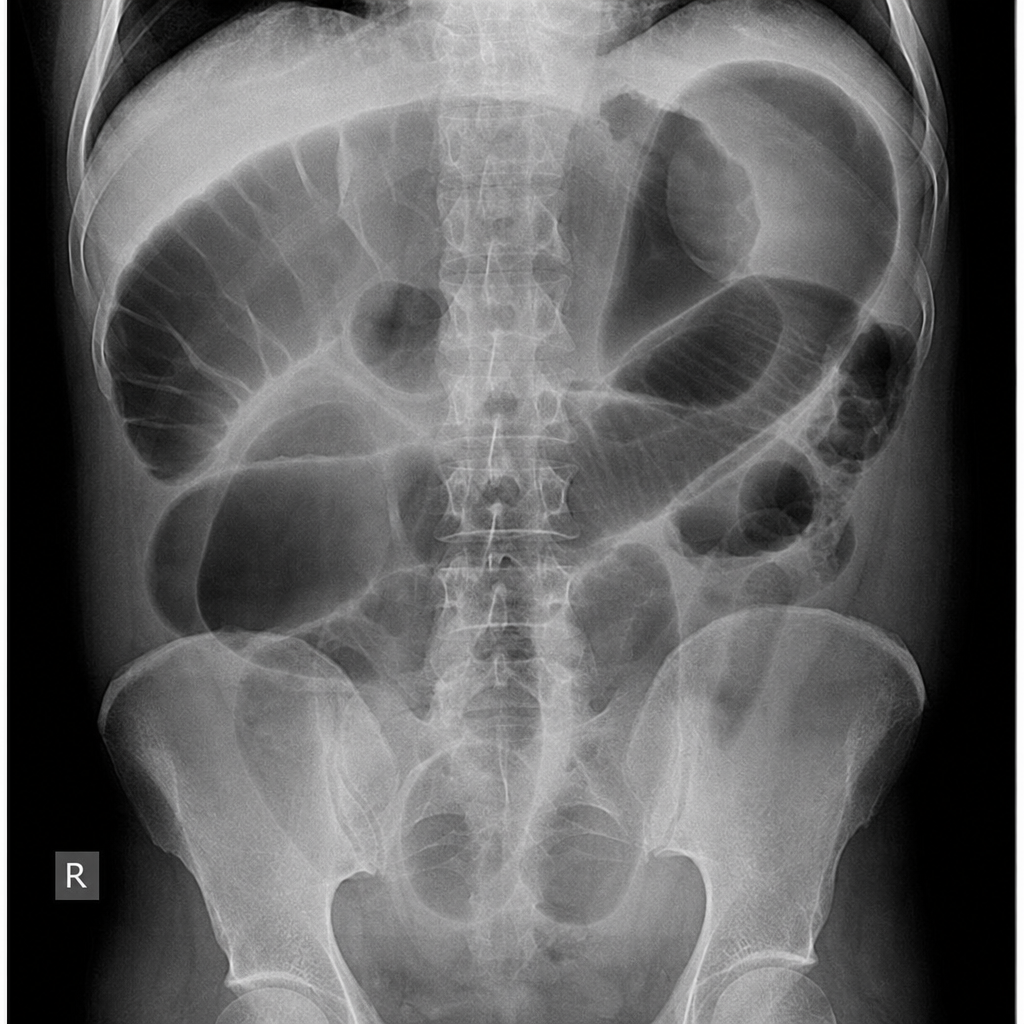
Local excision in rectal cancer is done in all, except:
Most important disadvantage of cryosurgery for hemorrhoids is:
A patient with a non-obstructing carcinoma of the sigmoid colon is being prepared for elective resection. To minimize the risk of postoperative infectious complications, what should be included in your planning?
A young male patient presents with complete rectal prolapse and no history of previous surgeries. The surgery of choice is:
Most common site of chronic fissure in the anus is
Procedure of choice in ulcerative colitis with acute perforation is
Explanation: ***T2 cancer or any lymph node involvement*** - Local excision is typically reserved for **early-stage rectal cancers (T1 tumors)** where the risk of lymph node metastasis is very low and there is **no lymph node involvement**. - **T2 tumors** (invasion into muscularis propria) carry a significantly higher risk of lymph node metastasis (10-20%) and are generally **not suitable for local excision**, requiring radical resection instead. - **Any lymph node involvement** (even in T1 disease) is an **absolute contraindication** to local excision, as it indicates metastatic spread requiring comprehensive lymphadenectomy through radical resection. *Within 6 cm of anal verge* - This refers to the **location within the rectum** and accessibility for transanal approaches. - Rectal tumors within 6-8 cm of the anal verge are **suitable for local excision** techniques like transanal endoscopic microsurgery (TEM) or transanal minimally invasive surgery (TAMIS) if they meet other criteria (T1, N0, favorable histology). *Lesion <4 cm* - **Tumor size <3-4 cm** is one of the favorable criteria for local excision. - Smaller tumors are more amenable to complete excision with adequate margins and are associated with lower risk of lymph node metastasis. *Involvement of <40% circumference* - The **circumferential involvement** of the rectal wall is an important factor for technical feasibility. - Tumors involving **<30-40% of the circumference** are suitable for local excision, allowing adequate margin resection and primary closure without compromising rectal function or causing stenosis.
Explanation: ***Profuse watery discharge*** - **Profuse, foul-smelling watery discharge** is the **most important and troublesome disadvantage** of cryosurgery for hemorrhoids. - Results from **tissue necrosis and sloughing** following freezing, lasting **2-3 weeks** post-procedure. - This persistent discharge is **socially distressing**, requires frequent dressing changes, and is the primary reason cryosurgery has **largely fallen out of favor** in modern practice. - The severity and duration of this complication makes it more problematic than other side effects. *Pain* - While postoperative discomfort does occur, pain after cryosurgery is **generally not more severe** than with other hemorrhoid procedures. - The freezing effect can actually cause **temporary nerve damage** that may reduce immediate pain sensation. - Pain is manageable with standard analgesics and is **not the defining disadvantage** of this technique. *Infection* - Infection is **uncommon** with cryosurgery as the ultra-cold temperatures have some **antibacterial effect**. - Not a characteristic or major complication of this specific technique. *Hemorrhage* - Cryosurgery actually has a **lower risk of immediate bleeding** compared to excisional hemorrhoidectomy. - The freezing causes **vasoconstriction and thrombosis** of small vessels, reducing acute blood loss. - Delayed bleeding can rarely occur when eschar separates, but this is not the most significant disadvantage.
Explanation: ***Single preoperative parenteral dose of antibiotic effective against aerobes and anaerobes*** - For **elective colorectal surgery**, a single dose of a **broad-spectrum parenteral antibiotic** administered within 60 minutes prior to incision is the standard of care to reduce surgical site infections. - This approach ensures adequate drug levels in the tissues during the period of potential bacterial contamination and is a cornerstone of modern surgical prophylaxis. - Current guidelines (WHO, SCIP) recommend a single preoperative dose, which may be redosed intraoperatively if the procedure is prolonged beyond 3-4 hours. *Avoidance of oral antibiotics to prevent emergence of Clostridioides difficile* - This is **incorrect**. **Oral antibiotics** (such as neomycin and metronidazole) are routinely used preoperatively in conjunction with mechanical bowel preparation for colorectal surgery to reduce intraluminal bacterial load. - The concern for *Clostridioides difficile* infection is generally low with short-term, targeted prophylactic antibiotic regimens compared to broad-spectrum, prolonged use. - The combination of oral and parenteral antibiotics has been shown to further reduce surgical site infections. *Postoperative administration for 5 to 7 days of parenteral antibiotics* - **Prolonged postoperative antibiotic administration** beyond 24 hours in uncomplicated cases is not recommended as it increases the risk of **antibiotic resistance**, *C. difficile* infection, and adverse drug reactions without additional benefit. - The goal of prophylactic antibiotics is to cover the period of contamination during surgery, not to treat presumed ongoing infection postoperatively. *Postoperative administration for 2 to 4 days of parenteral antibiotics* - While administration for up to 24 hours post-operatively may be considered in some high-risk cases, routine **prolonged postoperative antibiotics** (2-4 days) are unnecessary for most elective colorectal resections. - Evidence suggests that continuing antibiotics beyond the immediate perioperative period does not further reduce the incidence of **surgical site infections** in clean-contaminated surgeries.
Explanation: ***Abdominal rectopexy*** - **Abdominal rectopexy** is considered the surgery of choice for **complete rectal prolapse** in young, fit patients due to its superior long-term results in terms of recurrence rates. - This procedure involves addressing the prolapse via an abdominal approach, often by fixing the rectum to the sacrum, and may include sigmoid resection if there is a redundant colon. *Delorme's procedure* - This is a **perineal approach** that involves plication of the prolapsed rectal mucosa and muscle. - It is generally favored in **elderly** or **frail patients** due to its lower morbidity, but it has a higher recurrence rate compared to abdominal approaches. *Anterior resection* - **Anterior resection** is primarily a procedure for removing a diseased segment of the **left colon or rectum**, typically for cancer or diverticular disease. - While it may be combined with rectopexy if a redundant sigmoid colon is present, it is not the primary or sole treatment for rectal prolapse itself. *Goodsall's procedure* - **Goodsall's rule** is a principle used to predict the internal opening of an anal fistula based on the external opening's location, and **Goodsall's procedure** is not a named surgical technique for rectal prolapse. - This option appears to be a distractor, as there is no specific surgical procedure for rectal prolapse named after Goodsall.
Explanation: ***Posterior*** - The **posterior midline** is the most common site for anal fissures due to it being less well-supported and poorly vascularized, making it susceptible to trauma during defecation. - The internal anal sphincter pulls the anoderm in the posterior midline, making it the most common site of injury and fissure formation in both sexes. *Anterior* - While anterior fissures can occur, they are much less common than posterior fissures, accounting for a smaller percentage of all chronic fissures. - Anterior fissures are more common in women due to the different angles of the anterior anal canal in relation to the vaginal introitus, but still less frequent than posterior ones. *Anterolateral* - Fissures rarely occur in an anterolateral position. Anal fissures typically appear in the midline anteriorly or posteriorly. - This location is not anatomically predisposed to the same degree of trauma or stress experienced by the anterior or posterior midline during defecation. *Lateral* - **Lateral fissures** are uncommon and should raise suspicion for other underlying conditions, such as **inflammatory bowel disease** (Crohn's disease), tuberculosis, or malignancy [1]. - The anal canal's support and vascularization are generally better in the lateral aspects, making primary fissure formation here less likely.
Explanation: ***Total colectomy and ileostomy*** - **Acute perforation** in ulcerative colitis is a life-threatening emergency requiring immediate and definitive surgical management. - **Total colectomy** removes the diseased colon, preventing further perforation and systemic toxicity, with an ileostomy providing fecal diversion. *Defunctioning ileostomy* - A defunctioning ileostomy alone would not address the actively perforated and inflamed colon, leaving the source of sepsis intact. - This procedure leads to potentially fatal **peritoneal contamination** and ongoing inflammation. *Closure of perforation* - Direct closure of a colonic perforation in the context of acute ulcerative colitis is generally contraindicated due to the **fragile, inflamed, and friable bowel tissue**, which is prone to dehiscence. - This approach carries a high risk of **re-perforation** and persistent sepsis. *Proximal diversion colostomy* - A proximal diversion colostomy, similar to a defunctioning ileostomy, fails to remove the diseased and perforated segment of the colon. - It would not prevent the continued leakage of bowel contents from the perforation site into the **abdominal cavity**, leading to severe peritonitis.
Colorectal Anatomy and Physiology
Practice Questions
Diverticular Disease
Practice Questions
Inflammatory Bowel Disease
Practice Questions
Colorectal Polyps
Practice Questions
Colorectal Cancer
Practice Questions
Anorectal Abscess and Fistula
Practice Questions
Hemorrhoids
Practice Questions
Rectal Prolapse
Practice Questions
Fecal Incontinence
Practice Questions
Intestinal Stomas Creation and Management
Practice Questions
Pelvic Floor Disorders
Practice Questions
Enhanced Recovery After Colorectal Surgery
Practice Questions
Get full access to all questions, explanations, and performance tracking.
Start For Free