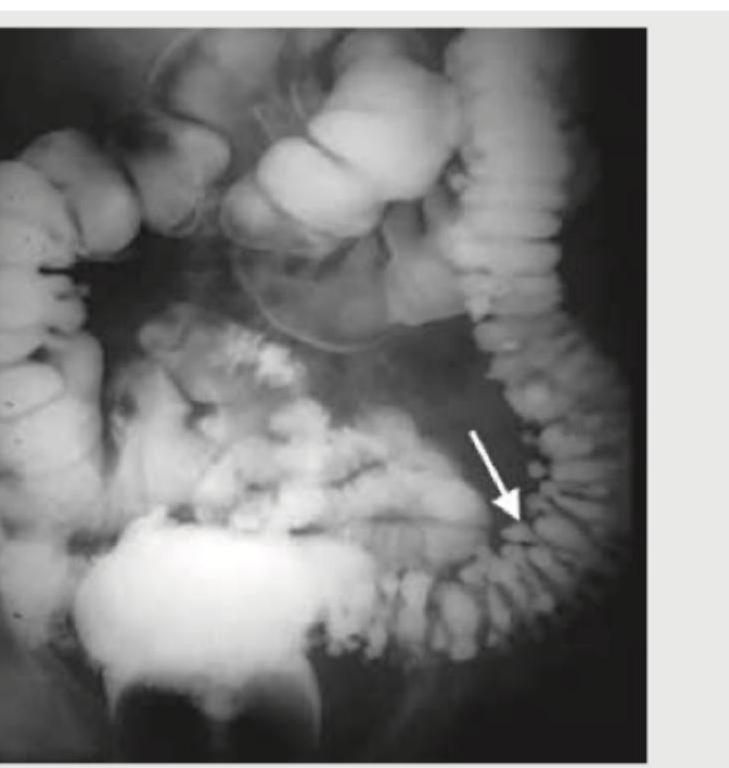
How is an anal fissure typically diagnosed?
A 70 year old male complaining of per rectal bleeding was diagnosed with rectal/anorectal cancer. The distal margin of the tumor was 5 cm from the anal verge. The treatment of choice would be -
Most common site of colorectal carcinoma?
Which of the following stoma is formed in Hartmann's procedure?
What is the primary indication for the Nigro Regimen?
Most common site for anal fissure is
What is the preferred palliative surgical procedure for rectal prolapse in elderly patients who are unfit for more invasive surgery?
Ogilvie's syndrome most commonly involves
What is the treatment of choice for anal carcinoma?
What is the most common abdominal surgical procedure for complete rectal prolapse?
Explanation: ***Clinical examination*** - An anal fissure is typically diagnosed by visual inspection during a **physical examination** of the perianal area. - The fissure appears as a **linear tear or crack** in the anoderm, often at the posterior midline. *Transrectal ultrasound (TRUS)* - TRUS is primarily used for assessing conditions like **prostate cancer** or abnormalities of the rectal wall and sphincter complex. - It is not the initial or routine diagnostic tool for a basic anal fissure. *Colonoscopy examination* - Colonoscopy is an invasive procedure used to visualize the entire colon and is indicated for conditions like **colorectal cancer screening**, inflammatory bowel disease, or unexplained bleeding from higher up in the colon. - It is not necessary for the diagnosis of a visible anal fissure. *Barium enema* - A barium enema is a radiographic study used to visualize the **large intestine** for polyps, tumors, or structural changes. - It is not suitable for directly visualizing or diagnosing a superficial anal tear.
Explanation: ***Low anterior resection*** - A tumor located 5 cm from the anal verge is considered a **low rectal tumor**, which is typically amenable to a **low anterior resection** with sphincter preservation. - This procedure aims for complete tumor removal while preserving anal function, which is often achievable when the distal margin allows for a safe distal resection margin (usually 1-2 cm). *Palliative Radiotherapy* - This is typically reserved for patients with advanced, **unresectable disease** or those who are not candidates for surgery due to comorbidities, aiming to alleviate symptoms rather than cure. - The scenario describes a potentially resectable tumor, making curative surgery the preferred initial approach. *Abdominoperineal resection* - This procedure involves the removal of the rectum, anus, and creation of a permanent colostomy, typically reserved for very **low rectal tumors** that are extremely close to or involve the anal sphincter, and cannot safely achieve a negative distal margin with sphincter preservation. - A tumor 5 cm from the anal verge usually allows for a sphincter-sparing procedure like low anterior resection. *Local Excision* - **Local excision (transanal excision)** is suitable for very superficial, small, well-differentiated tumors without lymph node involvement, typically T1N0M0 tumors. - The question does not provide details on tumor depth or nodal status, but a 5 cm tumor usually indicates a need for a more comprehensive resection to ensure oncological clearance.
Explanation: ***Sigmoid Colon*** - The **sigmoid colon** is the most common site for colorectal carcinoma, accounting for approximately **25%** of all cases. - This higher incidence is potentially due to its role in stool storage, leading to longer contact time with potential carcinogens. *Rectum* - While the rectum is a common site, it accounts for about **15-20%** of colorectal cancers, making it less frequent than the sigmoid colon. - Rectal cancers often present with **hematochezia** and changes in bowel habits. *Ascending Colon* - The **ascending colon** is less frequently affected, around **10-15%** of cases. - Tumors here are often associated with **iron deficiency anemia** due to chronic blood loss. *Descending Colon* - The **descending colon** is also less commonly affected, making up approximately **5-10%** of colorectal cancers. - Tumors in this segment may present with **obstruction** due to the narrower lumen.
Explanation: ***End Colostomy*** - Hartmann's procedure involves resection of a diseased segment of the **colon**, typically the sigmoid colon, with the creation of a **proximal colostomy** and closure of the distal rectal stump. - The proximal end of the colon is brought out through the abdominal wall to form a **stoma**, which is a type of end colostomy. *End Ileostomy* - An end ileostomy involves bringing the **ileum** (small intestine) to the abdominal wall, which is not part of the standard Hartmann's procedure. - This is typically performed after a **total colectomy** or in cases of severe Crohn's disease affecting the colon. *Loop Ileostomy* - A loop ileostomy involves bringing a **loop of the ileum** to the surface of the abdomen, creating two openings that are then joined together. - This is often a **temporary diversion** and does not involve resection of the colon in the same manner as Hartmann's procedure. *Caecostomy* - A caecostomy is a stoma created from the **cecum**, the beginning of the large intestine. - This is typically performed for various reasons such as **bowel decompression** or management of fecal incontinence, and is not a component of Hartmann's procedure.
Explanation: ***Anal Carcinoma*** - The **Nigro Regimen** is a standard treatment protocol involving concurrent **chemotherapy** (5-fluorouracil and mitomycin C) and **radiation therapy** for anal carcinoma. - Its primary goal is to achieve **organ preservation** and avoid the need for abdominoperineal resection, which would result in a permanent colostomy. *Rectal Carcinoma* - Treatment for **rectal carcinoma** often involves surgery (e.g., low anterior resection), radiation, and chemotherapy, but the specific **Nigro Regimen** is not the primary protocol. - While some chemotherapy drugs might overlap, the combined regimen and indications are distinct. *Sigmoid Colon Carcinoma* - **Sigmoid colon carcinoma** is typically treated primarily with **surgical resection**, often followed by adjuvant chemotherapy based on staging. - The Nigro Regimen is specifically designed for tumors in the **anal canal**, not the more proximal colon. *Duodenal Carcinoma* - **Duodenal carcinoma** is a rare gastrointestinal cancer usually managed with surgical resection, such as a **Whipple procedure**, and sometimes adjuvant chemotherapy. - This type of cancer is anatomically and etiologically distinct from anal carcinoma, making the Nigro Regimen irrelevant.
Explanation: ***6 O'clock*** - The **posterior midline (6 o'clock position)** is the most common site for anal fissures, accounting for approximately **90% of all cases**. - This location is prone to tearing due to relatively **poor blood supply** and increased **mechanical stress** during defecation. - The posterior midline is the least supported part of the anal canal by the external anal sphincter. - **Note**: The **anterior midline (12 o'clock position)** is the second most common site, occurring in **10-25% of women** but rarely in men. *3 O'clock* - The **3 o'clock position (right lateral)** is an infrequent site for anal fissures. - Fissures in this location, especially if *lateral*, may suggest an underlying systemic disease such as **Crohn's disease**, **tuberculosis**, **HIV**, or **malignancy**. - Atypical fissures warrant thorough investigation. *2 O'clock* - The **2 o'clock position (anterior-lateral)** is not typically associated with anal fissures. - Similar to other atypical sites, a fissure here warrants investigation for secondary causes. - Consider inflammatory bowel disease or other pathological conditions. *10 O'clock* - The **10 o'clock position (left lateral)** is also a less common site for anal fissures compared to the posterior midline. - Fissures in lateral positions should raise suspicion for other conditions, such as **inflammatory bowel disease**, **tuberculosis**, **HIV**, or **malignancy**.
Explanation: ***Thiersch's operation*** - **Thiersch's operation** is a perineal procedure involving the placement of a **circum-anal cerclage** (a non-absorbable suture) around the anal canal to prevent external prolapse. - It is preferred in elderly or frail patients due to its **minimal invasiveness**, low operative risk, and suitability for local or regional anesthesia as a palliative measure for symptoms. *Delorme's procedure* - **Delorme's procedure** is a perineal approach that involves the **mucosal stripping** of the prolapsed rectum, plication of the muscularis, and re-anastomosis. - While less invasive than abdominal approaches, it is more complex than Thiersch's and may still carry higher operative risks for very frail patients. *Wells' procedure* - **Wells' procedure** (rectopexy via an abdominal approach) involves **mobilization of the rectum** and its fixation to the sacrum, often with a mesh. - This is a more invasive abdominal procedure with a higher operative risk, making it unsuitable for elderly patients unfit for major surgery. *Low anterior resection* - **Low anterior resection** is a major abdominal procedure primarily used for rectal cancer or severe inflammatory bowel disease, involving the **surgical removal of a segment of the rectum**. - It is a highly invasive procedure with significant morbidity and mortality, making it inappropriate for the palliative management of rectal prolapse in frail elderly patients.
Explanation: ***Cecum and right hemicolon*** - Ogilvie's syndrome, also known as acute colonic pseudo-obstruction, primarily affects the **large bowel**. - It most commonly presents with significant dilation of the **cecum and right hemicolon** due to impaired autonomic innervation *Stomach* - The stomach is not typically involved in Ogilvie's syndrome. Conditions affecting the stomach might include **gastroparesis** or **pyloric obstruction**, which have different pathophysiologies. - Ogilvie's syndrome is a disorder of **colonic motility**, not gastric motility. *Gallbladder* - The gallbladder is an organ of the **biliary system** and is not directly affected by Ogilvie's syndrome. - Conditions like **cholecystitis** or **cholelithiasis** involve the gallbladder but are unrelated to acute colonic pseudo-obstruction. *Small intestine* - While pseudo-obstruction can sometimes affect the small intestine (chronic intestinal pseudo-obstruction), Ogilvie's syndrome specifically refers to **acute colonic pseudo-obstruction**. - **Small bowel obstruction** caused by mechanical blockages is a distinct condition with different diagnostic features and management.
Explanation: ***Chemoradiation*** - This combined modality is the **standard of care** for most anal carcinomas, achieving high cure rates while preserving sphincter function. - The combination of **chemotherapy** (e.g., 5-fluorouracil and mitomycin C) and **external beam radiation** works synergistically to destroy cancer cells. *Chemotherapy alone* - **Chemotherapy alone** is generally insufficient as a primary treatment for anal carcinoma. - It is often used in combination with radiation or for **metastatic disease**, but not as a monotherapy for curative intent in localized disease. *APR combined with radiotherapy* - **Abdominoperineal resection (APR)** combined with radiotherapy is typically reserved for **recurrent** or **persistent anal carcinoma** after failed chemoradiation, or for very advanced tumors. - APR is a highly morbid surgery leading to a **permanent colostomy**, and primary chemoradiation aims to avoid this outcome. *All of the options* - As **chemoradiation** is the preferred first-line treatment and other options are either inadequate or reserved for specific situations, stating "all of the options" is incorrect. - The treatment strategy for anal carcinoma involves a nuanced approach, prioritizing **organ preservation** with effective cancer control.
Explanation: ***Rectopexy*** - **Rectopexy** is the most common abdominal surgical procedure for full-thickness rectal prolapse - It involves fixing the rectum to the sacral promontory or presacral fascia (with sutures or mesh) to prevent prolapse - Various modifications exist including suture rectopexy, mesh rectopexy, ventral rectopexy, and resection rectopexy - **Abdominal approach** is preferred in fit patients with better long-term outcomes compared to perineal procedures *Rectal mucosal stapling* - This procedure refers to **stapled hemorrhoidopexy (PPH)** or **STARR procedure** - Primarily used for **internal mucosal prolapse** and hemorrhoids, not full-thickness external rectal prolapse - Involves excising redundant rectal mucosa using circular staplers - Does not address the full-thickness prolapse or provide proper fixation *Placation/wiring* - **Thiersch wiring** is a historical perineal procedure involving placement of a wire or suture around the anus to narrow the anal canal - Now largely abandoned due to high recurrence rates and complications - **Plication** refers to folding tissue but is not a standalone procedure name for rectal prolapse - This terminology is not standard in modern colorectal surgery *Mucosal resection* - Refers to **Delorme's procedure**, a perineal approach involving mucosal sleeve resection with underlying muscle plication - Used in elderly or high-risk patients who cannot tolerate abdominal surgery - Associated with higher recurrence rates compared to abdominal rectopexy - Does not provide the same level of fixation as abdominal procedures
Colorectal Anatomy and Physiology
Practice Questions
Diverticular Disease
Practice Questions
Inflammatory Bowel Disease
Practice Questions
Colorectal Polyps
Practice Questions
Colorectal Cancer
Practice Questions
Anorectal Abscess and Fistula
Practice Questions
Hemorrhoids
Practice Questions
Rectal Prolapse
Practice Questions
Fecal Incontinence
Practice Questions
Intestinal Stomas Creation and Management
Practice Questions
Pelvic Floor Disorders
Practice Questions
Enhanced Recovery After Colorectal Surgery
Practice Questions
Get full access to all questions, explanations, and performance tracking.
Start For Free