What is the primary purpose of administering prophylactic antibiotics to a patient undergoing colorectal surgery?
A 50-year-old male presents with Stage III rectal cancer. He has undergone neoadjuvant chemoradiation. What are the critical intraoperative decisions that need to be made during the low anterior resection (LAR) procedure?
In a patient with toxic megacolon unresponsive to medical management, what key factors should be considered when deciding between subtotal colectomy and proctocolectomy with ileostomy?
A patient presents with acute onset of left-sided lower abdominal pain and a palpable mass. A CT scan shows thickening of the sigmoid colon with surrounding inflammation. What is the most likely diagnosis?
Which of the following is NOT a contraindication for colostomy planning?
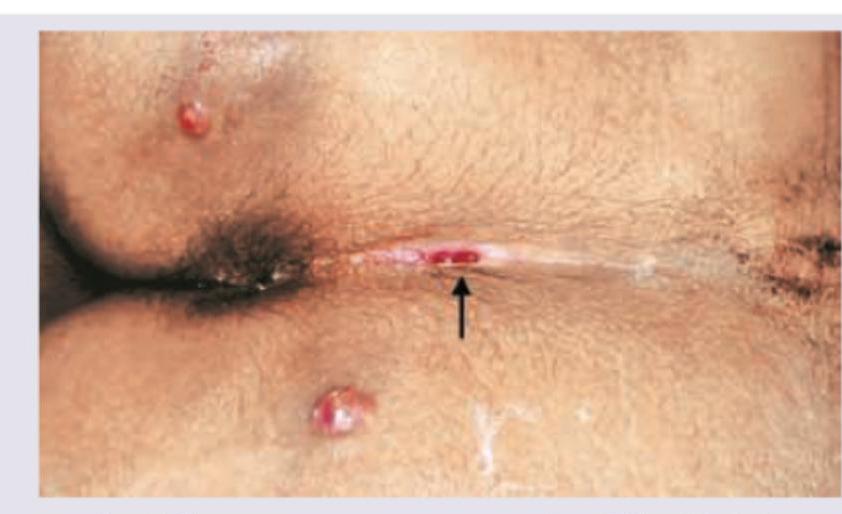
According to Goodsall's rule, what is the distance from the anal margin that indicates an exception to the rule?
Colonoscopy is not indicated in which of the following conditions?
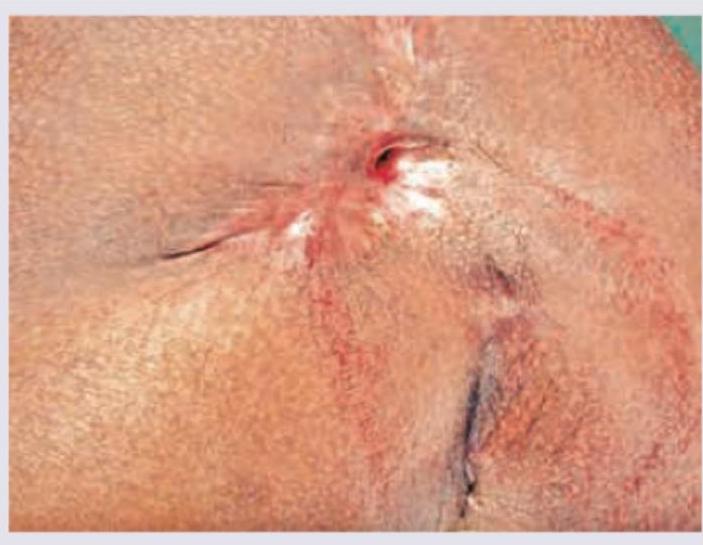
Treatment of choice for low fistula in ano?
In carcinoma of the anus, the distal margin of clearance of the anal canal should be at least...
Recurrent anal fistula, what is the most appropriate investigation?
Explanation: ***To prevent postoperative infections*** - The primary goal of **prophylactic antibiotics** in colorectal surgery is to **reduce the risk of surgical site infections (SSIs)**, which are common due to the high bacterial load in the colon. - Administering antibiotics before incision ensures adequate tissue concentration to target potential pathogens introduced during surgery. *To reduce postoperative pain* - **Analgesics** and proper pain management strategies are used to reduce postoperative pain, not prophylactic antibiotics. - Antibiotics do not directly affect pain pathways or perception. *To enhance wound healing* - Factors like proper wound closure technique, nutrition, and blood supply contribute to **wound healing**, not prophylactic antibiotics alone. - While preventing infection helps avoid complications that can impede healing, antibiotics do not directly enhance the healing process itself. *To manage preexisting infections* - **Therapeutic antibiotics** are used to manage existing infections, which would typically be treated before elective surgery or with a different antibiotic regimen. - Prophylactic antibiotics are given to prevent *new* infections, not to treat *established* ones.
Explanation: ***Achieving negative margins, deciding on the necessity of a diverting ileostomy, and assessing sphincter preservation*** - **Negative margins** are crucial for oncological completeness and preventing local recurrence in rectal cancer surgery. - The decision for a **diverting ileostomy** balances the risk of anastomotic leak against the morbidity of a stoma, while **sphincter preservation** significantly impacts the patient's quality of life. *Determining the patient's dietary preferences* - This decision is typically made preoperatively or postoperatively by dietitians and is not a critical intraoperative surgical decision. - While patient comfort is important, dietary preferences do not impact the immediate surgical outcome or oncological principles. *Length of the hospital stay* - The length of hospital stay is an outcome measure influenced by surgical decisions and patient recovery, not a decision made during the operation itself. - Factors like complications and patient comorbidities dictate the length, not an intraoperative choice. *Availability of the operating room* - This is an administrative and logistical consideration that occurs prior to the start of the surgery, ensuring the procedure can proceed. - It does not involve surgical technique or oncological principles applied during the operation itself.
Explanation: ***Extent of colonic disease, patient's nutritional status, and risk of future malignancy*** - In toxic megacolon requiring emergency surgery, the **extent of colonic disease** determines whether subtotal colectomy (preserving rectum) or total proctocolectomy is needed. If rectal involvement is severe, proctocolectomy may be considered. - **Nutritional status** critically affects surgical outcomes, wound healing, and the ability to tolerate more extensive surgery. Malnourished patients may be better served with the less extensive subtotal colectomy. - **Future malignancy risk** in inflammatory bowel disease (especially ulcerative colitis with dysplasia) influences whether to preserve the rectum or perform complete proctocolectomy, though this is typically a secondary consideration in the emergency setting. - In practice, **subtotal colectomy with end ileostomy** is preferred in acute toxic megacolon due to lower morbidity, while proctocolectomy is reserved for elective settings or when rectal preservation is not feasible. *Patient's age and preference* - While important in elective colorectal surgery, these factors are **secondary** in life-threatening toxic megacolon requiring emergency intervention. - The immediate priority is controlling sepsis and removing diseased colon; patient preference regarding sphincter preservation and quality of life is addressed in staged reconstructive procedures later. *Availability of surgical instruments* - This is a **logistical factor**, not a clinical decision-making criterion. - All necessary surgical instruments for both procedures should be available in any facility managing toxic megacolon emergencies. *Immediate surgical intervention without further evaluation* - While toxic megacolon unresponsive to medical management requires **urgent surgery**, the decision between subtotal colectomy and proctocolectomy must be based on proper **preoperative assessment**. - Rapid evaluation of disease extent, hemodynamic status, and operative risk is essential to choose the appropriate procedure and optimize outcomes.
Explanation: ***Diverticulitis*** - Acute onset **left-sided lower abdominal pain** and a **palpable mass** are classic signs, as diverticula most commonly occur in the sigmoid colon. - **CT findings** of sigmoid colon thickening with surrounding inflammation directly point to inflammation and infection of diverticula. *Colon cancer* - While it can cause a **palpable mass** and sometimes pain, the acute inflammatory presentation and CT findings are less typical than for diverticulitis. - Often presents with insidious symptoms such as **changes in bowel habits**, rectal bleeding, or weight loss. *Ischemic colitis* - Characterized by acute abdominal pain, often with **bloody diarrhea**, particularly in older patients with vascular risk factors. - CT usually shows **bowel wall thickening**, but often with characteristic **thumbprinting** and less prominent surrounding inflammation compared to diverticulitis. *Crohn's disease* - A chronic inflammatory condition that can affect any part of the GI tract, often causing **abdominal pain**, diarrhea, and weight loss. - While it can cause bowel wall thickening and inflammation, an acute, isolated presentation in the sigmoid colon with a palpable mass is less characteristic than the typical presentation of **skip lesions** or **transmural inflammation** in other bowel segments.
Explanation: ***Age > 60 yrs*** - While older patients may have more comorbidities, advanced age alone is generally **not an absolute contraindication** for colostomy planning or ostomy surgery. - The decision is based on the patient's overall health and ability to manage the stoma, not solely their age. *Stoma near skin creases and bony prominences* - Placing a stoma in these areas can **impair the seal of the ostomy appliance**, leading to leaks, skin irritation, and discomfort. - Such locations are therefore considered **contraindicated** to ensure proper stoma function and patient comfort. *Poorly motivated patient for elective stoma* - A patient's motivation and ability to learn stoma care are crucial for managing an ostomy successfully. - Poor motivation can lead to **neglect of stoma care**, resulting in complications like skin breakdown, infection, and social isolation. *Stomas through previous scars* - Positioning a stoma through a previous surgical scar increases the risk of **compromised healing**, **hernia formation**, and **stomal stenosis**. - Scar tissue may also make appliance adherence difficult, leading to leaks and skin issues.
Explanation: ***3 cm*** - Goodsall's rule states that fistulas with external openings located **more than 3 cm** from the anal margin are **exceptions to the rule**. - This is the **classical teaching** described in standard surgical textbooks (Bailey & Love's, Schwartz's Principles of Surgery). - At distances **>3 cm**, the fistula tract tends to take a **radial (direct) course** to the nearest crypt at the dentate line, regardless of whether it is anterior or posterior. - These distant fistulas do not follow the typical anterior-radial/posterior-curved pattern of Goodsall's rule. *1 cm* - This distance is very close to the anal margin and falls well within the range where Goodsall's rule applies accurately. - Fistulas at 1 cm follow the standard rule: anterior openings → radial tract; posterior openings → curved tract to posterior midline. *4 cm* - While 4 cm is beyond the 3 cm exception threshold, it is not the specific distance that defines the classical exception to Goodsall's rule. - The standard teaching specifically identifies **3 cm** as the cutoff distance. *5 cm* - Although fistulas at 5 cm would certainly not follow Goodsall's rule, this is not the classical cutoff distance taught in surgical literature. - The exception threshold is **3 cm**, not 5 cm.
Explanation: ***Multiple Endocrine Neoplasia type 2B*** - **MEN 2B** is characterized by **medullary thyroid carcinoma**, **pheochromocytoma**, and specific features such as **mucosal neuromas** and a marfanoid habitus, but it does **not involve colonic polyps or an increased risk of colorectal cancer** that would necessitate colonoscopy. - While gastrointestinal manifestations like ganglioneuromatosis may be present, **routine colonoscopy screening** is not indicated in this syndrome as there is no increased colorectal cancer risk. *Familial Adenomatous Polyposis* - **FAP** is an autosomal dominant disorder characterized by the development of hundreds to thousands of **colorectal adenomatous polyps**, which have an almost 100% risk of progressing to **colorectal cancer** if untreated. - **Regular colonoscopic surveillance** and eventual colectomy are essential for managing this condition due to the high malignancy risk. *Hereditary Nonpolyposis Colorectal Cancer* - Also known as **Lynch syndrome**, HNPCC is characterized by an increased risk of **colorectal cancer** and other extra-colonic cancers (e.g., endometrial, ovarian) due to germline mutations in **mismatch repair genes**. - **Colonoscopy is crucial** for early detection and prevention of colorectal cancer in affected individuals, typically starting at age 20-25 years or 2-5 years before the youngest family member was diagnosed. *Peutz-Jeghers Syndrome* - **Peutz-Jeghers Syndrome** is an autosomal dominant condition characterized by **hamartomatous polyps** throughout the gastrointestinal tract and mucocutaneous pigmentation (melanotic macules on lips, oral mucosa, and digits). - These polyps have **malignant potential** with increased risk of gastrointestinal and extra-intestinal cancers (breast, ovarian, pancreatic). - **Regular colonoscopic surveillance** is recommended starting from late teens or early 20s for polyp detection and removal.
Explanation: ***Fistulotomy*** - **Fistulotomy** is the treatment of choice for **low fistula-in-ano** because it offers the highest success rate (>90%) with minimal risk of incontinence. - This procedure involves laying open the fistula tract, allowing it to heal from the inside out. - Low fistulas involve <30% of the external sphincter, making fistulotomy safe and effective. *Seton placement* - **Seton placement** is a technique where a thread or drain is placed through the fistula tract. - It is typically reserved for **high or complex fistulas** that involve a significant portion of the sphincter, where immediate fistulotomy would risk incontinence. - For simple low fistulas, seton placement is unnecessary and delays definitive treatment. *Intravenous antibiotics* - **Antibiotics** are primarily used to treat **acute infections** or abscesses associated with fistulas, but they do not resolve the fistula tract itself. - A fistula-in-ano is a chronic condition that requires **surgical intervention** for definitive cure. *Staged surgical resection* - **Staged procedures** or complex repairs (e.g., advancement flaps, LIFT procedure) are typically reserved for **high fistulas** or recurrent cases involving significant sphincter muscle. - For low fistulas, the simpler **fistulotomy** is usually sufficient and safer.
Explanation: ***5 cm*** - For **carcinoma of the anal canal** requiring surgical resection (abdominoperineal resection), a minimum **5 cm distal margin** is the standard recommendation. - This wider margin is necessary because anal cancers often have **discontinuous spread** and lymphatic involvement requiring adequate clearance. - The 5 cm margin helps ensure **adequate local control** and reduces the risk of local recurrence. *2 cm* - A 2 cm margin is the standard for **rectal carcinoma**, not anal canal carcinoma. - This margin would be **inadequate** for anal cancer and associated with higher local recurrence rates. - The confusion often arises because rectal and anal cancers are different entities with different margin requirements. *4 cm* - While 4 cm would be closer to adequate, it still falls **short of the recommended 5 cm standard** for anal canal carcinoma. - This margin might compromise oncologic outcomes in terms of **local control**. *7 cm* - While 7 cm would certainly achieve adequate clearance, it is **beyond the standard recommendation** of 5 cm. - However, it would not be considered excessive if anatomically feasible, as achieving negative margins is the priority.
Explanation: ***MRI*** - **Magnetic Resonance Imaging (MRI)** provides excellent soft tissue contrast, allowing for precise visualization of the entire fistula tract, its relationship to the sphincter muscles, and any secondary extensions or abscesses. - For **recurrent anal fistulas**, MRI is particularly valuable in identifying complex anatomy, missed tracts, or undrained collections that can lead to recurrence. *Endorectal Ultrasound* - While useful for initial assessment of **simple anal fistulas**, endorectal ultrasound may have limitations in fully mapping **complex or recurrent tracts**, especially those extending cranially or involving high transsphincteric components. - Its accuracy can be operator-dependent and may not provide the detailed global view of the anatomical planes that MRI offers. *Flexible Sigmoidoscopy* - **Flexible sigmoidoscopy** is primarily used to examine the **mucosa of the sigmoid colon and rectum** for inflammatory bowel disease or other mucosal abnormalities, which might be associated with fistula formation. - It does not directly visualize the **extramural fistula tract** or its relation to the sphincter complex. *Rigid Proctoscopy* - **Rigid proctoscopy** provides a macroscopic view of the **anal canal and lower rectum** to identify the internal opening of a fistula, if visible. - It cannot adequately assess the **depth and complexity of the fistula tract** within the sphincter muscles or beyond, making it less suitable for recurrent cases where thorough mapping is crucial.
Colorectal Anatomy and Physiology
Practice Questions
Diverticular Disease
Practice Questions
Inflammatory Bowel Disease
Practice Questions
Colorectal Polyps
Practice Questions
Colorectal Cancer
Practice Questions
Anorectal Abscess and Fistula
Practice Questions
Hemorrhoids
Practice Questions
Rectal Prolapse
Practice Questions
Fecal Incontinence
Practice Questions
Intestinal Stomas Creation and Management
Practice Questions
Pelvic Floor Disorders
Practice Questions
Enhanced Recovery After Colorectal Surgery
Practice Questions
Get full access to all questions, explanations, and performance tracking.
Start For Free