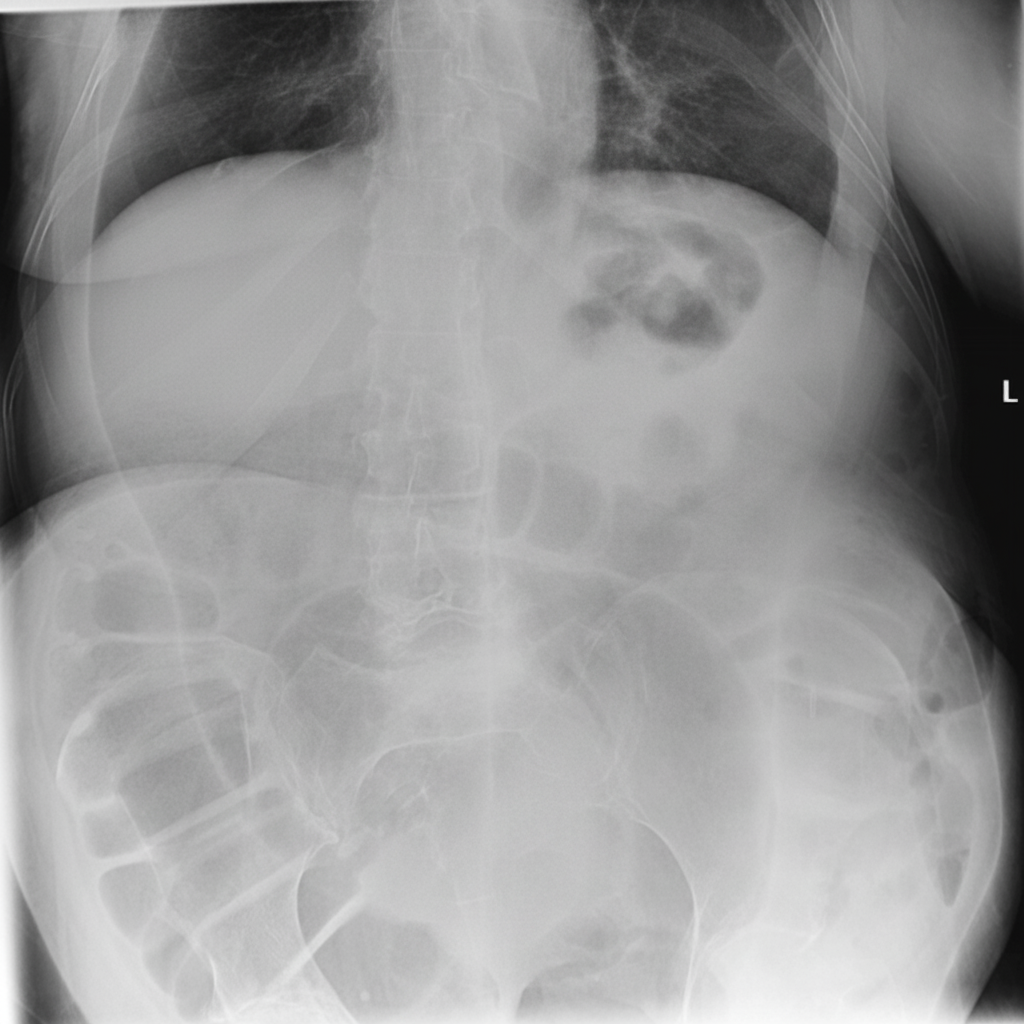
Screening for colon cancer can be done by all the following methods except:
A 22-year-old male patient presents with complete rectal prolapse. What is the surgery of choice?
All of the following polyposis syndromes are associated with a high risk of malignancy except?
Which of the following is true about familial adenomatous polyposis?
What is the earliest symptom of carcinoma of the rectum?
Which of the following are characteristic features of carcinoma of the left side of the colon?
Gardner's syndrome is associated with all except?
What is the most common site of colon cancer?
Which of the following does NOT come under Gardner syndrome?
What is the most common cause of lower gastrointestinal bleeding?
Explanation: **Explanation:** The goal of colorectal cancer (CRC) screening is to detect precancerous polyps or early-stage malignancies in asymptomatic individuals. **Why USG Abdomen is the correct answer:** Ultrasonography (USG) of the abdomen is **not** a screening tool for colon cancer. It has poor sensitivity for visualizing hollow viscus organs like the colon due to interference from overlying bowel gas. While USG may detect large masses or liver metastases in advanced cases, it cannot identify small polyps or early mucosal lesions, which is the primary objective of screening. **Analysis of other options:** * **Fecal Occult Blood Test (FOBT/FIT):** A non-invasive stool-based test used to detect occult bleeding. It is a standard initial screening tool; if positive, it must be followed by a colonoscopy. * **Colonoscopy:** Considered the **Gold Standard** for CRC screening. It allows for direct visualization of the entire colon and provides the opportunity for immediate biopsy or polypectomy (diagnostic and therapeutic). * **Flexible Sigmoidoscopy:** A less invasive endoscopic procedure that examines the distal colon (rectum and sigmoid). While it misses proximal lesions, it is a recognized screening modality, often combined with annual FOBT. **High-Yield Clinical Pearls for NEET-PG:** * **Standard Screening Age:** Starts at **45 years** for average-risk individuals (recently updated from 50). * **Gold Standard:** Colonoscopy (performed every 10 years if normal). * **Best Initial Test:** Fecal Immunochemical Test (FIT) is preferred over guaiac-based FOBT due to higher specificity. * **CEA (Carcinoembryonic Antigen):** Not used for screening; it is used for **monitoring recurrence** post-treatment. * **Virtual Colonoscopy (CT Colonography):** A valid screening alternative for those who cannot undergo conventional colonoscopy.
Explanation: **Explanation:** The management of complete rectal prolapse (full-thickness protrusion) is primarily determined by the patient’s age, comorbidities, and fitness for surgery. **1. Why Abdominal Rectopexy is Correct:** In a **young, fit patient** (like this 22-year-old), the **Abdominal Rectopexy** (specifically Laparoscopic Rectopexy) is the gold standard and surgery of choice. Abdominal approaches have significantly **lower recurrence rates** (0–10%) compared to perineal approaches. The procedure involves mobilizing the rectum and fixing it to the sacral promontory, often using mesh (Wells or Ripstein procedure) or sutures (Suture Rectopexy). **2. Why the other options are incorrect:** * **Delorme’s Procedure (Option A):** This is a perineal approach involving mucosal proctectomy and plication of the rectal muscle. It is reserved for elderly, frail patients or those with short-segment prolapse because it has a high recurrence rate (up to 20-30%). * **Altemeier’s Procedure (Options C & D):** Also known as perineal proctosigmoidectomy, this involves a full-thickness resection of the prolapsed bowel via the perineum. While it is the preferred perineal procedure for patients unfit for general anesthesia, it is not the first choice for a young, healthy male due to higher recurrence compared to abdominal rectopexy. **Clinical Pearls for NEET-PG:** * **Gold Standard:** Laparoscopic Abdominal Rectopexy (lowest recurrence). * **Frykman-Goldberg Procedure:** Abdominal rectopexy + Sigmoid colectomy (indicated if the patient has significant pre-existing constipation). * **Thiersch Wiring:** A historical, palliative procedure using a perianal ring; now largely obsolete. * **Key Anatomical Defect:** Complete rectal prolapse is considered a **sliding hernia** through the Pouch of Douglas, associated with a patulous anus and deep rectovesical/rectouterine pouch.
Explanation: **Explanation:** The core concept in evaluating polyposis syndromes is distinguishing between **adenomatous polyps** (neoplastic) and **hamartomatous polyps** (non-neoplastic). **Why Juvenile Polyposis is the correct answer:** Juvenile polyposis syndrome (JPS) is characterized by multiple **hamartomatous polyps**. While there is a cumulative lifetime risk of colorectal cancer (approximately 40-50%) due to the potential for adenomatous transformation over time, it is considered to have a significantly lower and less "inevitable" malignant potential compared to the classical adenomatous syndromes. In the context of this competitive question, it is the "least" malignant option. **Analysis of Incorrect Options:** * **Familial Adenomatous Polyposis (FAP):** Caused by a mutation in the *APC* gene. It carries a **100% risk** of colorectal cancer by age 40 if a prophylactic proctocolectomy is not performed. * **Gardner’s Syndrome:** A variant of FAP. It includes colonic polyposis plus extra-colonic manifestations (osteomas, desmoid tumors, sebaceous cysts). It carries the same **100% malignancy risk** as FAP. * **Turcot’s Syndrome:** Another FAP variant (or associated with HNPCC) characterized by colonic polyposis associated with **CNS tumors** (Medulloblastoma or Glioma). It also carries a very high risk of malignancy. **High-Yield Clinical Pearls for NEET-PG:** * **FAP:** Thousands of polyps; "carpet-like" appearance; *APC* gene on Chromosome 5q21. * **Peutz-Jeghers Syndrome:** Hamartomatous polyps + perioral pigmentation; associated with *STK11* mutation. * **Most common site for Juvenile Polyps:** Rectum (often presents as painless rectal bleeding in children). * **Mnemonic for Gardner’s:** **SOD** (Sebaceous cysts, Osteomas, Desmoid tumors).
Explanation: **Explanation:** **Familial Adenomatous Polyposis (FAP)** is an autosomal dominant condition characterized by the development of hundreds to thousands of adenomatous colorectal polyps. 1. **Why Option C is Correct:** In the classical variety of FAP, the progression from adenoma to carcinoma is inevitable. If left untreated (without a prophylactic total proctocolectomy), the **risk of colorectal malignancy is 100%**, usually by the age of 40–50 years. 2. **Why Other Options are Incorrect:** * **Option A:** Lynch syndrome is **Hereditary Non-Polyposis Colorectal Cancer (HNPCC)**. Unlike FAP, it is characterized by fewer polyps and is caused by mutations in DNA mismatch repair (MMR) genes (MLH1, MSH2, etc.). * **Option B:** The **APC (Adenomatous Polyposis Coli) gene** is located on the long arm of chromosome 5 at **5q21**, not 5p21. * **Option D:** FAP is an **autosomal dominant** disorder, meaning it affects males and females equally. There is no gender predilection for being a carrier. **High-Yield Clinical Pearls for NEET-PG:** * **Diagnosis:** Requires >100 colorectal adenomas. * **Extracolonic Manifestations:** * **Gardner Syndrome:** FAP + Osteomas (mandible), Desmoid tumors, and Sebaceous cysts. * **Turcot Syndrome:** FAP + CNS tumors (Medulloblastoma). * **Screening:** Annual flexible sigmoidoscopy starting at age 10–12 years for at-risk relatives. * **Most Common Extracolonic Malignancy:** Duodenal carcinoma (periampullary). * **CHRPE:** Congenital Hypertrophy of Retinal Pigment Epithelium is a specific clinical marker seen on fundoscopy.
Explanation: **Explanation:** In colorectal surgery, the clinical presentation of malignancy varies significantly based on the anatomical location of the tumor. For **Carcinoma of the Rectum**, the earliest and most common presenting symptom is **Bleeding per rectum**. **Why Bleeding per rectum is correct:** The rectum serves as a reservoir for feces. As a tumor grows on the rectal mucosa, it is subjected to constant friction and trauma from passing stool. This leads to surface ulceration and friability, causing bright red or slightly altered blood to appear on or mixed with the stool. Because the rectal vault is relatively distended, bleeding often occurs long before the tumor is large enough to cause obstructive symptoms or pain. **Analysis of Incorrect Options:** * **Alteration of bowel habits:** This is typically the earliest symptom of **Carcinoma of the Left Colon** (Descending/Sigmoid). In the rectum, it occurs later as the lumen becomes compromised. * **Tenesmus:** This refers to a distressing feeling of incomplete evacuation. It is a feature of rectal cancer but usually indicates an **advanced stage** where the tumor is large enough to mimic the presence of feces, constantly stimulating the defecation reflex. * **Pain:** Rectal cancer is characteristically **painless** in the early stages. Pain only develops when the tumor invades the anal canal, involves the sacral plexus, or causes complete obstruction. **Clinical Pearls for NEET-PG:** * **Right-sided Colon Cancer:** Most common symptom is **Anemia** (due to occult blood loss) and a palpable mass in the right iliac fossa. * **Left-sided Colon Cancer:** Most common symptom is **Alteration of bowel habits** (constipation/diarrhea) and features of obstruction. * **Rectal Cancer:** Most common/earliest symptom is **Bleeding per rectum**. * **Rule of Thumb:** Any middle-aged or elderly patient presenting with fresh rectal bleeding must undergo a digital rectal examination (DRE) and proctosigmoidoscopy to rule out malignancy.
Explanation: **Explanation:** Carcinoma of the colon presents differently depending on the anatomical site due to differences in luminal diameter and fecal consistency. **1. Why "Altered bowel habit" is correct:** The left colon (descending and sigmoid) has a relatively **narrower lumen**, and the fecal matter here is **solid/semi-solid**. Tumors in this region tend to be infiltrating or "napkin-ring" type (annular), leading to progressive narrowing. This results in a change in bowel habits—typically alternating constipation and diarrhea, or a decrease in stool caliber—as the body attempts to push solid waste through a stenotic area. **2. Why other options are incorrect:** * **Anemia:** While it can occur in any colon cancer, it is a hallmark of **Right-sided (Caecal) lesions**. Right-sided tumors are often large, exophytic, and bleed occultly over time, leading to Iron Deficiency Anemia. * **Obstruction:** Although left-sided cancers are the most common cause of malignant large bowel obstruction, "Altered bowel habit" is considered the more characteristic early clinical feature. Obstruction is often a late-stage manifestation. * **Melena:** This refers to black, tarry stools resulting from upper GI bleeding (above the ligament of Treitz). Colonic cancers typically present with **hematochezia** (bright red blood) or occult blood, not melena. **Clinical Pearls for NEET-PG:** * **Right-sided tumors:** Present with Anemia, palpable mass in the Right Iliac Fossa, and weight loss (the "silent" side). * **Left-sided tumors:** Present with Altered bowel habits, Tenesmus (if rectal), and features of Intestinal Obstruction. * **Most common site of Colorectal Cancer:** Sigmoid colon (historically), though the incidence of right-sided lesions is increasing. * **Gold Standard Investigation:** Colonoscopy with biopsy.
Explanation: **Explanation:** Gardner’s Syndrome is a clinical variant of **Familial Adenomatous Polyposis (FAP)**, an autosomal dominant condition caused by a mutation in the **APC gene** on chromosome 5q21. It is characterized by the triad of intestinal polyposis, soft tissue tumors, and skeletal abnormalities. **Why "Brain Tumor" is the correct answer:** While brain tumors (specifically medulloblastomas) are associated with FAP, this specific association is known as **Turcot Syndrome**, not Gardner’s Syndrome. Gardner’s is primarily defined by its extracolonic manifestations involving the skin and bone. **Analysis of Incorrect Options:** * **Sebaceous Cyst (and Epidermoid Cysts):** These are classic cutaneous manifestations of Gardner’s Syndrome. They often appear in unusual locations like the face, scalp, and extremities. * **Desmoid Tumor:** These are aggressive fibroblastic tumors that occur in approximately 10-15% of Gardner’s patients, often in the abdominal wall or mesentery, and are a significant cause of morbidity. * **Bony Exostosis (Osteomas):** These are benign bony outgrowths, most commonly found in the mandible and skull. They are a hallmark diagnostic feature of Gardner’s. **High-Yield Clinical Pearls for NEET-PG:** * **Mnemonic for Gardner’s:** **S**ebaceous cysts, **O**steomas, **D**esmoid tumors, **A**PC gene (**SODA**). * **CHRPE:** Congenital Hypertrophy of Retinal Pigment Epithelium is a highly specific early screening sign for FAP/Gardner’s. * **Dental abnormalities:** Impacted teeth or supernumerary teeth are also common. * **Turcot Syndrome:** Think "Turban" = Brain tumors + FAP.
Explanation: **Explanation:** The distribution of colorectal cancer is non-uniform across the large bowel. Historically and statistically, the **rectosigmoid region** (comprising the rectum and the sigmoid colon) remains the most common site for primary adenocarcinoma of the colon. * **Why Rectosigmoid is Correct:** Approximately **50–55%** of all colorectal cancers occur in the distal large bowel. Specifically, the rectum accounts for about 30–35% and the sigmoid colon for about 20–25%. This is attributed to the prolonged contact time of concentrated fecal carcinogens with the mucosa in these storage areas. * **Why others are incorrect:** * **Ascending Colon (Right-sided):** While the incidence of right-sided (proximal) colon cancer is increasing (a phenomenon known as "proximal shift"), it still accounts for only about 15–25% of cases. * **Descending Colon:** This segment accounts for roughly 5–10% of cases. * **Transverse Colon:** This is one of the least common sites, accounting for approximately 10% of cases. **High-Yield Clinical Pearls for NEET-PG:** 1. **Clinical Presentation:** Right-sided cancers (Ascending) typically present with **iron deficiency anemia** and occult bleeding, whereas left-sided cancers (Rectosigmoid) present with **altered bowel habits** and features of intestinal obstruction. 2. **Most common site of metastasis:** The **Liver** (via portal venous drainage), except for distal rectal cancer which can spread to the lungs via the systemic circulation. 3. **Gold Standard Investigation:** **Colonoscopy with biopsy** is the investigation of choice for diagnosis. 4. **Tumor Marker:** **CEA** (Carcinoembryonic Antigen) is used for monitoring recurrence, not for primary screening.
Explanation: **Explanation:** Gardner syndrome is a phenotypic variant of **Familial Adenomatous Polyposis (FAP)**, caused by a germline mutation in the **APC gene** on chromosome 5q21. The syndrome is characterized by the clinical triad of colonic polyposis plus specific extra-colonic manifestations. **Why "Colorectal Cancer" is the correct answer:** While patients with Gardner syndrome have a near 100% risk of developing colorectal cancer if left untreated, the cancer itself is a **complication** or the end-result of the disease, not a defining component of the syndrome's diagnostic features. The question asks for the constituents of the syndrome; Gardner syndrome is defined by the presence of the precursor polyps and extra-colonic findings, not the malignancy itself. **Analysis of Incorrect Options:** * **A. Classical FAP:** This is the hallmark of Gardner syndrome. Patients develop hundreds to thousands of adenomatous polyps throughout the colon during their teens. * **B. Exostosis (Osteomas):** These are benign bony outgrowths, most commonly found in the mandible and skull. They are a classic extra-colonic feature of Gardner syndrome. * **D. Multiple sebaceous cysts:** Also known as epidermoid cysts, these along with lipomas and fibromas (desmoid tumors) represent the soft tissue component of the syndrome. **High-Yield Clinical Pearls for NEET-PG:** * **CHRPE:** Congenital Hypertrophy of Retinal Pigment Epithelium is the earliest detectable sign of FAP/Gardner syndrome. * **Desmoid Tumors:** These are aggressive fibromatoses that often occur post-surgery in Gardner patients and are a significant cause of morbidity. * **Turcot Syndrome:** Another FAP variant characterized by colonic polyps plus CNS tumors (Medulloblastoma in FAP-associated; Glioblastoma in Lynch-associated). * **Management:** Prophylactic Proctocolectomy is the treatment of choice, usually performed in the late teens or early twenties.
Explanation: **Explanation:** The most common cause of lower gastrointestinal (GI) bleeding overall is **Hemorrhoids**. While often presenting as minor, painless, bright red rectal bleeding (hematochezia) during or after defecation, their high prevalence in the general population makes them the leading cause of lower GI blood loss. **Why the other options are incorrect:** * **Diverticulosis:** This is the most common cause of **massive, painless** lower GI bleeding in the elderly. While it causes more significant volume loss per episode than hemorrhoids, it is less frequent in the general population. * **Crohn’s Disease:** Inflammatory Bowel Disease (IBD) can cause bloody diarrhea and mucus, but it is a much less common cause of bleeding compared to anorectal pathologies. * **Colorectal Cancer:** While a critical diagnosis to rule out in any patient presenting with hematochezia or iron-deficiency anemia, it is statistically less common than benign causes like hemorrhoids or diverticula. **NEET-PG High-Yield Pearls:** 1. **Most common cause of LGIB:** Hemorrhoids. 2. **Most common cause of *massive* LGIB:** Diverticulosis (specifically right-sided diverticula are more prone to bleed). 3. **Most common cause of LGIB in children:** Meckel’s Diverticulum. 4. **Most common cause of occult GI bleeding:** Iron deficiency anemia secondary to Colorectal Cancer (until proven otherwise). 5. **Angiodysplasia:** The second most common cause of massive LGIB in the elderly; often associated with Aortic Stenosis (**Heyde’s Syndrome**).
Colorectal Anatomy and Physiology
Practice Questions
Diverticular Disease
Practice Questions
Inflammatory Bowel Disease
Practice Questions
Colorectal Polyps
Practice Questions
Colorectal Cancer
Practice Questions
Anorectal Abscess and Fistula
Practice Questions
Hemorrhoids
Practice Questions
Rectal Prolapse
Practice Questions
Fecal Incontinence
Practice Questions
Intestinal Stomas Creation and Management
Practice Questions
Pelvic Floor Disorders
Practice Questions
Enhanced Recovery After Colorectal Surgery
Practice Questions
Get full access to all questions, explanations, and performance tracking.
Start For Free