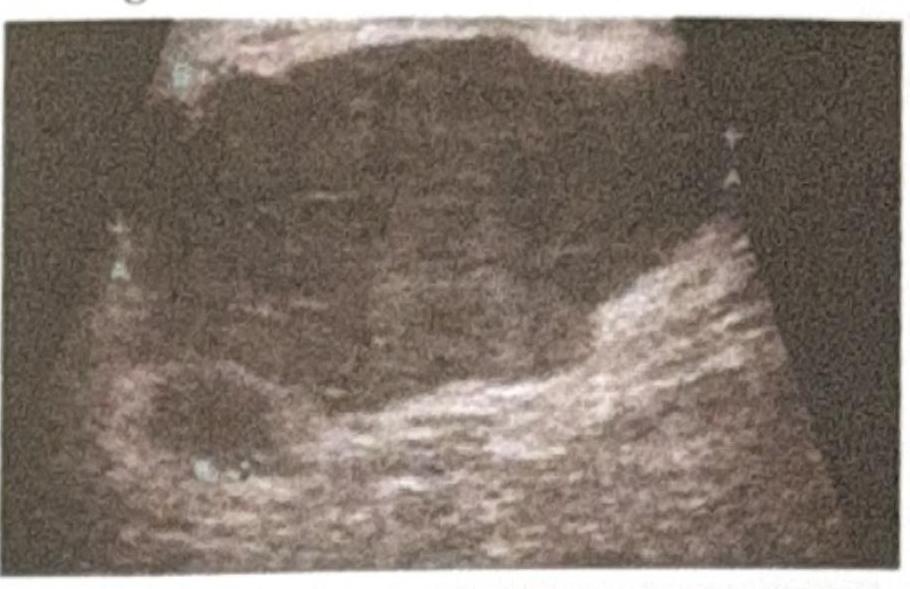
Prophylactic mastectomy is indicated for all of the following conditions EXCEPT:
Which lymph node is typically the first to be involved in breast cancer?
What does a simple mastectomy include the removal of?
A 55-year-old female presented with a 3 cm breast mass with ulceration, edema, and satellite nodules confined to the same breast, along with metastasis to ipsilateral axillary lymph nodes I & II. The mass is mobile on examination. What is the staging of this breast cancer?
In radical mastectomy, which of the following structures is preserved?
A 48-year-old post-menopausal lady presents with an 8 cm breast lump that is adherent to the skin, with one firm apical lymph node in the axilla and one more in the supraclavicular region, with no distant metastases clinically. What is the TNM staging?
A 45-year-old woman presents with a hard and mobile lump in the breast. What is the next investigation?
Mondor's disease involves which of the following structures?
A 24-year-old woman presents two weeks after delivering a 3.5-kg baby, during which she has been breastfeeding. She has a fever of 38 C (101 F). Physical examination reveals redness on the lower side of the left breast, but no abnormal vaginal discharge or evidence of pelvic pain. Despite temporarily stopping nursing the infant, her symptoms persist, and the entire breast becomes swollen and painful. What is the most likely diagnosis?
Regarding cystic disease of the breast, which one is true?
Explanation: **Explanation:** The goal of **prophylactic (risk-reducing) mastectomy** is to prevent the development of breast cancer in high-risk individuals. **1. Why Cyclical Mastalgia is the Correct Answer:** Cyclical mastalgia is a benign condition characterized by breast pain related to the menstrual cycle. It is usually managed with reassurance, supportive bras, and pharmacological agents (like evening primrose oil, NSAIDs, or Danazol). It is **not a premalignant condition** and does not increase the risk of breast cancer; therefore, major surgery like mastectomy is never indicated. **2. Analysis of Incorrect Options (Indications for Prophylactic Mastectomy):** * **Strong Family History:** Women with a significant family history (e.g., multiple first-degree relatives with early-onset breast or ovarian cancer) have a high lifetime risk, making them candidates for risk-reducing surgery. * **Lobular Carcinoma In Situ (LCIS):** While LCIS is often managed with close surveillance or chemoprevention (Tamoxifen), it serves as a significant marker for increased risk of developing invasive cancer in *either* breast. In patients with additional risk factors or high anxiety, bilateral prophylactic mastectomy is a recognized option. * **BRCA1/BRCA2 Mutation:** These genetic mutations carry a lifetime breast cancer risk of up to 70–80%. Prophylactic bilateral mastectomy reduces this risk by over 90% and is a standard recommendation for these carriers. **High-Yield Pearls for NEET-PG:** * **Gail Model:** Used to calculate the 5-year and lifetime risk of invasive breast cancer. * **LCIS vs. DCIS:** LCIS is a risk marker (bilateral risk), whereas DCIS is a true precursor lesion (unilateral risk). * **Prophylactic Oophorectomy:** In BRCA carriers, removing the ovaries also reduces breast cancer risk by ~50% if done before menopause. * **Most common site for breast cancer:** Upper Outer Quadrant.
Explanation: **Explanation:** The lymphatic drainage of the breast is the primary route for the metastatic spread of breast cancer. Approximately **75% to 97%** of the lymph from the breast drains into the **axillary lymph nodes**, making them the most common and typically the first site of nodal involvement. * **Axillary (Correct):** The axillary nodes are organized into three levels (Berg’s levels) based on their relationship to the pectoralis minor muscle. In most cases, cancer spreads predictably from Level I to Level II and then to Level III. * **Internal Mammary:** These nodes drain about 25% of the lymph, primarily from the inner quadrants of the breast. While they can be involved, they are rarely the *first* or primary site compared to the axilla. * **Supraclavicular:** These are considered Level III or apical nodes. Involvement usually occurs late in the disease process after the axillary nodes are involved; their involvement is now classified as N3 (Stage IIIC) disease. * **Contralateral Axillary:** Drainage to the opposite axilla is rare and usually indicates advanced disease or a blockage of normal lymphatic pathways. **High-Yield Clinical Pearls for NEET-PG:** * **Sentinel Lymph Node (SLN):** This is the first node in the lymphatic basin that receives drainage from the primary tumor. SLN biopsy is the gold standard for axillary staging in clinically N0 (node-negative) patients. * **Rotter’s Nodes:** These are interpectoral nodes located between the pectoralis major and minor muscles. * **Most common site of breast cancer:** Upper Outer Quadrant (UOQ), which correlates with the high frequency of axillary involvement.
Explanation: ### Explanation **1. Correct Answer: A. Only the breast** A **Simple (Total) Mastectomy** involves the surgical removal of the entire breast tissue, including the nipple-areola complex (NAC) and the overlying skin. The underlying medical concept is that this procedure does **not** involve the dissection of axillary lymph nodes or the removal of pectoral muscles. It is typically indicated for prophylaxis (e.g., BRCA mutations), DCIS, or palliative care in advanced fungating tumors. **2. Why the other options are incorrect:** * **Option B (Breast and axillary nodes):** This describes a **Modified Radical Mastectomy (MRM)**. In MRM, the breast tissue and Level I & II axillary lymph nodes are removed, but the pectoralis major muscle is preserved. This is currently the standard surgical treatment for operable breast cancer. * **Option C (Breast, axillary nodes, and pectoralis major):** This refers to a variation of the **Radical Mastectomy**, specifically when the pectoralis major is removed but the minor is spared (or vice versa). * **Option D (Breast, axillary nodes, pectoralis major, and pectoralis minor):** This describes the **Halsted Radical Mastectomy**. Historically used for large tumors, it is now rarely performed due to significant morbidity and the realization that it does not improve survival compared to less invasive techniques. **3. NEET-PG High-Yield Clinical Pearls:** * **Patey’s MRM:** Removal of breast, axillary nodes, and **pectoralis minor** (to access Level III nodes). * **Auchincloss MRM:** Removal of breast and axillary nodes; **both** pectoral muscles are preserved. * **Extended Radical (Urban’s) Mastectomy:** Includes Radical Mastectomy plus internal mammary node dissection. * **Skin-Sparing Mastectomy:** Used in immediate reconstruction; removes breast tissue and NAC but preserves the skin envelope.
Explanation: To determine the correct stage, we must apply the **AJCC TNM Staging System** for breast cancer based on the clinical findings provided: ### 1. TNM Classification * **T (Tumor):** The presence of **ulceration, edema (peau d'orange), and satellite nodules** confined to the same breast automatically classifies the tumor as **T4b**. (Note: T4 status is assigned regardless of the tumor size, which is 3 cm here). * **N (Nodes):** Metastasis to **ipsilateral axillary lymph nodes (Level I & II)** that are mobile is classified as **N1**. * **M (Metastasis):** No distant metastasis is mentioned, so it is **M0**. ### 2. Stage Grouping According to the AJCC staging table: * **T4, N1, M0 = Stage III B.** * Any T4 tumor with N0, N1, or N2 nodal involvement falls into Stage III B. --- ### Why the other options are incorrect: * **Stage II B:** This would typically be T2N1 or T3N0. The presence of T4 features (ulceration/edema) upgrades the stage significantly beyond Stage II. * **Stage III A:** This involves T3N1, T0-2N2, or T3N2. Since the tumor is T4, it cannot be Stage III A. * **Stage IV:** This requires evidence of **distant metastasis** (e.g., to lungs, bone, or liver). Satellite nodules in the *same* breast are local extensions (T4b), not distant metastasis. ### NEET-PG High-Yield Pearls: * **T4 Categories:** * **T4a:** Extension to the chest wall (ribs, intercostals, serratus anterior). * **T4b:** Edema (peau d'orange), ulceration, or satellite skin nodules. * **T4c:** Both 4a and 4b. * **T4d:** Inflammatory carcinoma. * **Peau d'orange** is caused by cutaneous lymphatic obstruction. * **Stage III B** is considered **Locally Advanced Breast Cancer (LABC)** and usually requires neoadjuvant chemotherapy before surgery.
Explanation: In breast surgery, understanding the anatomical boundaries of different mastectomy techniques is high-yield for NEET-PG. **Explanation of the Correct Answer:** The question refers to the **Modified Radical Mastectomy (MRM)**, specifically the **Patey’s version**. In a standard MRM, the breast tissue and axillary lymph nodes (Levels I, II, and III) are removed. The **Pectoralis minor** muscle is typically retracted or divided to access Level III nodes, but in the **Auchincloss modification** of MRM, the Pectoralis minor is **preserved**. In the context of modern surgical practice (where MRM has replaced the Halsted Radical Mastectomy), the preservation of the Pectoralis minor is a defining feature that maintains the structural integrity of the chest wall and reduces morbidity. **Analysis of Incorrect Options:** * **Axillary Vein:** This forms the superior boundary of axillary dissection. While it is not removed, it is skeletonized. However, in the context of "structures preserved" in classical radical surgery descriptions, the focus is usually on muscles and nerves. * **Cephalic Vein:** This vein lies in the deltopectoral groove. While usually not removed, it is not the primary structure discussed regarding the "preservation" criteria of mastectomy types. * **Nerve to Serratus Anterior (Long Thoracic Nerve of Bell):** This must be preserved to prevent "Winging of Scapula." However, it is a nerve, and the question specifically tests the distinction between Radical (Halsted) and Modified Radical Mastectomy regarding muscle preservation. **High-Yield Clinical Pearls for NEET-PG:** 1. **Halsted Radical Mastectomy:** Removes Breast + Both Pectoralis Major & Minor + All Axillary Nodes. 2. **Patey’s MRM:** Preserves Pectoralis Major; Pectoralis Minor is **removed/divided** to reach Level III nodes. 3. **Auchincloss MRM:** Preserves **both** Pectoralis Major and Minor (Level III nodes are accessed by retraction). 4. **Nerves to save:** Long Thoracic Nerve (Serratus Anterior) and Thoracodorsal Nerve (Latissimus Dorsi). 5. **Nerve usually sacrificed:** Intercostobrachial nerve (leads to numbness of the inner arm).
Explanation: ### **Explanation** To determine the TNM staging for this patient, we must break down the clinical findings based on the **AJCC 8th Edition** criteria: **1. Tumor (T) Stage:** * The lump is **8 cm** in size. * **T3** is defined as a tumor **>5 cm** in greatest dimension. * *Note:* Although the lump is "adherent to the skin," it does not qualify as T4 unless there is skin ulceration, satellite nodules, or peau d'orange (T4b), or involvement of the chest wall (T4a). Simple adherence/tethering remains T3. **2. Node (N) Stage:** * **Apical lymph node (Level III axillary):** This signifies **N3a**. * **Supraclavicular lymph node:** This signifies **N3c**. * According to TNM rules, the highest N category is used. Therefore, the presence of a supraclavicular node classifies the patient as **N3**. **3. Metastasis (M) Stage:** * No distant metastases clinically = **M0**. **Conclusion:** The staging is **T3N3M0 (Stage IIIC).** --- ### **Why other options are incorrect:** * **Option A (T3N2M0):** Incorrect because N2 refers to fixed/matted axillary nodes (N2a) or internal mammary nodes (N2b). Supraclavicular nodes are always N3. * **Option B & C (T4...):** Incorrect because T4 requires specific skin changes (ulceration/edema) or chest wall fixation (serratus anterior/intercostals). Simple skin adherence is insufficient for T4. --- ### **High-Yield Clinical Pearls for NEET-PG:** * **T4a:** Extension to the chest wall (ribs, intercostals, serratus anterior). *Note: Pectoralis muscle involvement is NOT T4.* * **T4b:** Edema (peau d'orange), ulceration, or satellite skin nodules. * **N3 Categories:** * **N3a:** Infraclavicular (Level III). * **N3b:** Internal mammary + Axillary. * **N3c:** Supraclavicular. * **Stage IIIC:** Any T, N3, M0. This is considered **Locally Advanced Breast Cancer (LABC)** and usually requires Neoadjuvant Chemotherapy (NACT).
Explanation: ### Explanation The correct approach to any breast lump is the **Triple Assessment**, which consists of clinical examination, imaging, and pathology. **1. Why Mammography is the correct answer:** In a woman aged **45 years**, the breast tissue is less dense and contains more fat, making **Mammography** the gold standard primary imaging modality. It helps characterize the lesion (looking for microcalcifications or spiculation) and screens the contralateral breast for occult lesions. In the diagnostic algorithm for a breast lump, imaging always precedes pathological intervention. **2. Why other options are incorrect:** * **Ultrasonography (USG):** This is the initial investigation of choice for women **<35 years** (due to dense breast tissue) or to differentiate between cystic and solid lesions. At age 45, it is used as an adjunct to mammography, not the primary tool. * **FNAC:** While part of the triple assessment, it has been largely replaced by **Core Needle Biopsy (CNB)** because FNAC cannot distinguish between *in situ* and invasive carcinoma. Furthermore, imaging must be performed before any needle intervention to avoid hematomas that obscure radiological findings. * **Excision Biopsy:** This is a surgical procedure and is never the "next" step. It is only indicated if the triple assessment is inconclusive or if the lesion is small and requires removal for definitive diagnosis. **Clinical Pearls for NEET-PG:** * **Triple Assessment Accuracy:** If all three components (Clinical, Imaging, Pathology) are concordant, the diagnostic accuracy is **>99%**. * **Age Cut-off:** Use **35 years** as the threshold. Below 35, start with USG; above 35, start with Mammography. * **BIRADS:** Mammography findings are reported using the BIRADS (Breast Imaging-Reporting and Data System) score (0–6). * **Gold Standard for Pathology:** Core Needle Biopsy (CNB) is preferred over FNAC for suspicious solid lumps.
Explanation: **Explanation:** **Mondor’s disease** is a rare, benign condition characterized by **thrombophlebitis of the superficial veins** of the breast and anterior chest wall. It most commonly involves the lateral thoracic vein, the thoracoepigastric vein, or the superior epigastric vein. 1. **Why Option A is Correct:** The disease typically presents as a sudden onset of a firm, painless or mildly tender, "cord-like" structure under the skin of the **breast**. This cord may become more prominent when the patient raises their arm (the "bowstring" sign). It is often idiopathic but can be triggered by trauma, vigorous exercise, or surgery. 2. **Why Other Options are Incorrect:** * **Axilla (B):** While the cord may extend toward the axilla, the primary site of involvement and the classic clinical description are centered on the breast and chest wall. * **Neck (C) & Thymus (D):** These structures are anatomically unrelated to the superficial venous drainage system involved in Mondor’s disease. **High-Yield Clinical Pearls for NEET-PG:** * **Diagnosis:** Primarily clinical. Mammography or ultrasound is often performed to rule out underlying malignancy (though the association with breast cancer is low, <5%). * **Management:** It is a **self-limiting** condition. Treatment is conservative, involving reassurance, warm compresses, and NSAIDs for pain. It usually resolves within 4–8 weeks. * **Key Sign:** The **"string-like"** or **"cord-like"** palpable mass is the pathognomonic feature.
Explanation: ### Explanation **Correct Answer: A. Acute Mastitis** **Clinical Reasoning:** The patient presents with the classic triad of **lactational (puerperal) mastitis**: a nursing mother (2 weeks postpartum), systemic symptoms (fever), and localized signs of inflammation (redness, pain, and swelling). Acute mastitis is most commonly caused by **Staphylococcus aureus**, which enters through cracks or fissures in the nipple. The infection typically begins with milk stasis (clogged duct), providing a medium for bacterial growth. If left untreated or if breastfeeding is stopped abruptly (as seen in this case), the condition can progress from localized cellulitis to a generalized breast infection or even a breast abscess. **Why Incorrect Options are Wrong:** * **B. Chronic mastitis:** This is a long-term inflammatory process, often associated with recurrent infections or tuberculosis. It does not present with the acute, febrile onset seen in a postpartum patient. * **C. Duct ectasia:** This typically affects perimenopausal or postmenopausal women. It involves the dilation of large subareolar ducts and presents with cheesy nipple discharge and slit-like nipple retraction, not acute systemic infection. * **D. Granulomatous mastitis:** An uncommon inflammatory condition that mimics breast cancer. It usually presents as a firm, painless mass and is a diagnosis of exclusion (often idiopathic or related to Sarcoidosis/TB). **NEET-PG High-Yield Pearls:** * **Management:** The most important step is **continued breastfeeding** or regular emptying of the breast (pumping) to prevent stasis. Antibiotics (e.g., Dicloxacillin or Cephalexin) are the mainstay of treatment. * **Complication:** If a fluctuant mass develops, suspect a **breast abscess**. The gold standard treatment is **ultrasound-guided needle aspiration** (preferred over Incision & Drainage to avoid milk fistula). * **Differential:** If mastitis does not respond to antibiotics in a non-lactating woman, always rule out **Inflammatory Breast Cancer**.
Explanation: **Explanation:** **Cystic disease of the breast** (also known as Fibrocystic Change or ANDI – Aberrations of Normal Development and Involution) is the most common cause of breast lumps in premenopausal women. **Why Option D is Correct:** **Aspiration** is both the primary diagnostic and therapeutic modality. If the fluid is non-bloody and the lump disappears completely after aspiration, no further treatment is required. If the fluid is blood-stained or the lump recurs, a biopsy (FNAC/Core) or excision is indicated to rule out intracystic carcinoma. **Why Other Options are Incorrect:** * **Option A:** Cystic disease is most common in the **perimenopausal age group (35–50 years)**, often due to an imbalance between estrogen and progesterone. It is rare after menopause unless the patient is on HRT. * **Option B:** **Excision** is not the first-line treatment. It is reserved only for suspicious cases, such as those with blood-stained aspirate, a residual mass post-aspiration, or multiple recurrences. * **Option C:** Simple cysts are **benign** and do not typically turn malignant. While certain proliferative types of fibrocystic disease (like atypical ductal hyperplasia) increase the risk of future cancer, the simple cysts themselves are not considered premalignant. **Clinical Pearls for NEET-PG:** * **Blue Domed Cysts of Bloodgood:** A classic pathological description of large breast cysts containing brownish-blue fluid. * **Triple Assessment:** Always remember the protocol for any breast lump: Clinical examination, Imaging (Ultrasound for <35 years, Mammography for >35 years), and Pathology (FNAC/Core Biopsy). * **Management:** Reassurance and supportive bras are often sufficient for mild symptoms; aspiration is the definitive management for symptomatic cysts.
Breast Anatomy and Physiology
Practice Questions
Benign Breast Diseases
Practice Questions
Breast Cancer Screening
Practice Questions
Breast Cancer: Diagnosis and Staging
Practice Questions
Surgical Management of Breast Cancer
Practice Questions
Oncoplastic Breast Surgery
Practice Questions
Sentinel Lymph Node Biopsy
Practice Questions
Axillary Surgery
Practice Questions
Breast Reconstruction Techniques
Practice Questions
Male Breast Disorders
Practice Questions
Phyllodes Tumors
Practice Questions
Management of Ductal Carcinoma In Situ
Practice Questions
Get full access to all questions, explanations, and performance tracking.
Start For Free