Which of the following does not alter the T stage in breast cancer?
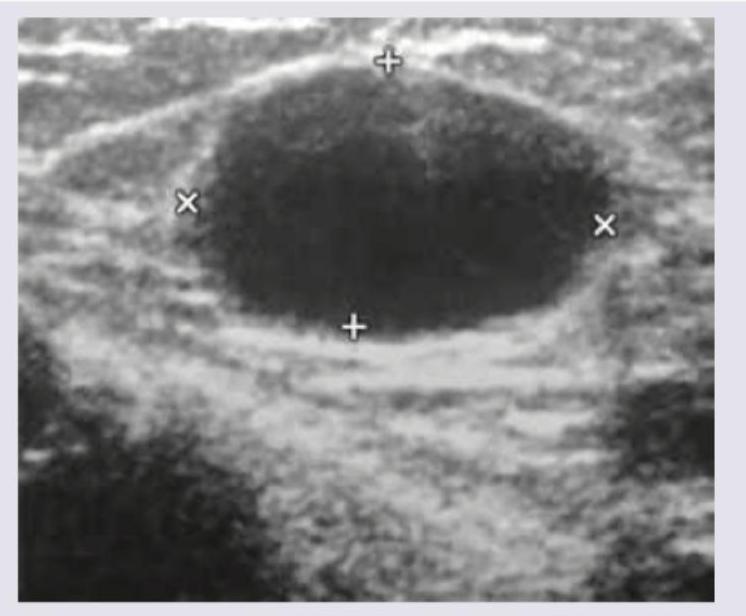
What is the primary treatment for cystosarcoma phyllodes?
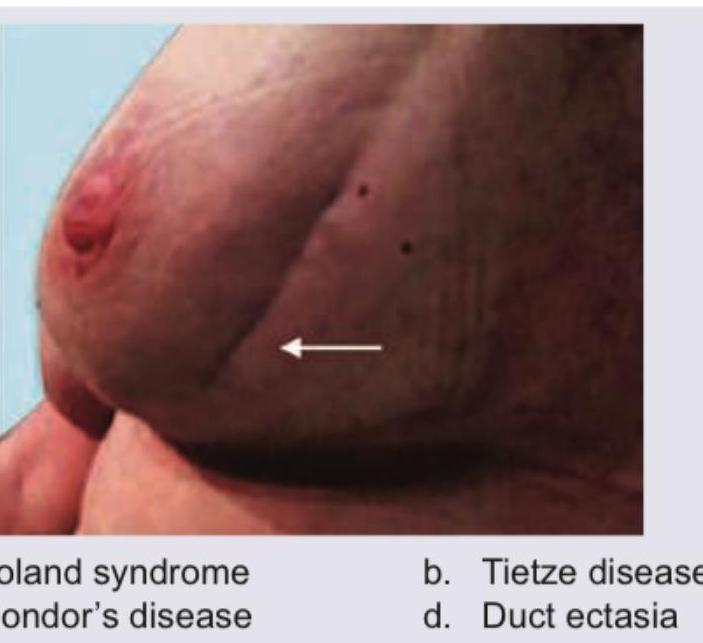
What is Mondor's disease?
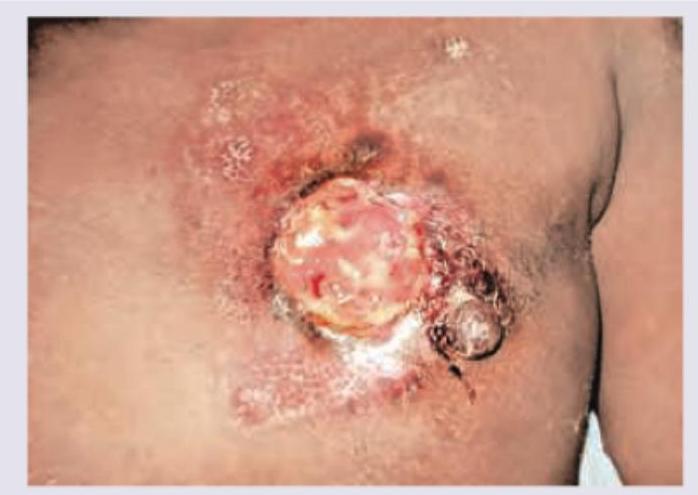
Blood-stained discharge from the nipple is indicative of which of the following?
What is the common presentation of duct papilloma of the breast?
A 70-year-old woman has a 2-cm mass in the left breast. Tissue analysis of a core needle biopsy reveals findings suggestive of malignancy. The patient undergoes wide excision of the breast mass and lymph node removal. Which lymph nodes are most likely to be affected?
Which of the following is NOT considered one of Haagensen's signs of inoperability in carcinoma?
In evaluating a breast lesion located in the anterior axillary line, to which site does the lateral edge of normal breast tissue extend?
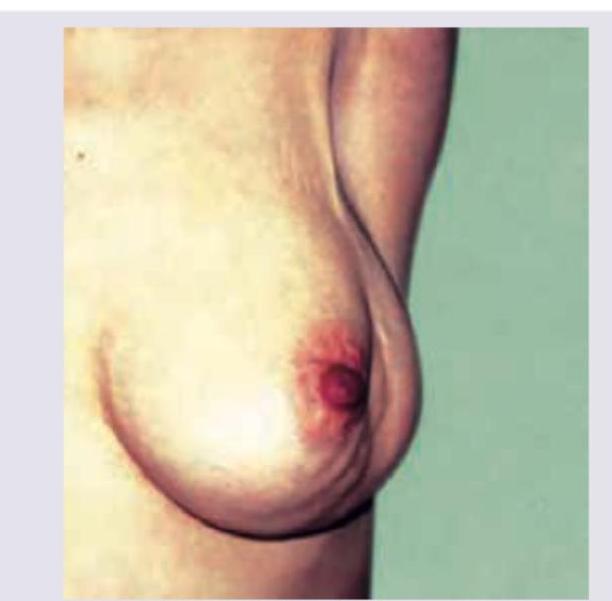
Peau d'orange appearance is due to:
What is the most frequent site of accessory breast tissue?
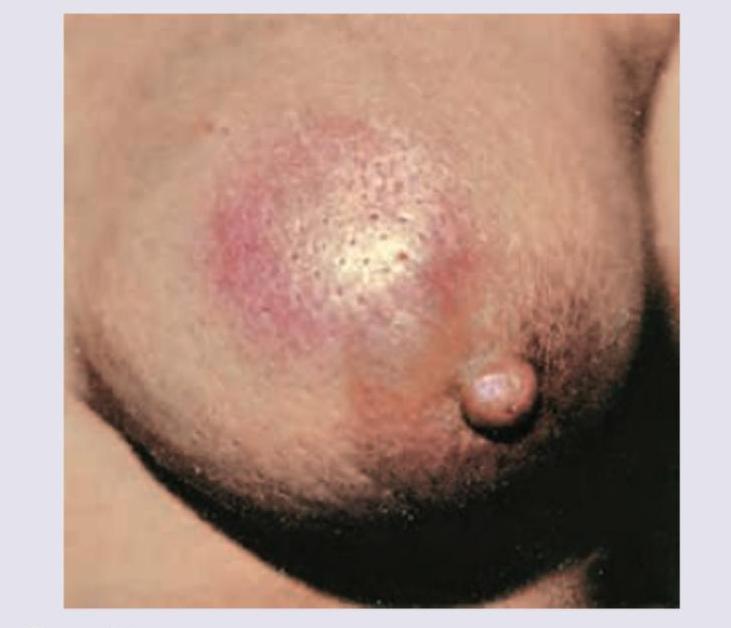
Explanation: In breast cancer staging (AJCC 8th Edition), the **T stage** is determined by the size of the primary tumor and its extension into the chest wall or skin. ### Why Pectoral Muscle Involvement is the Correct Answer According to the TNM classification, **extension into the pectoral muscle alone does not change the T stage.** A tumor is classified as **T4** only if it involves the **chest wall** (ribs, intercostal muscles, or serratus anterior). Since the pectoralis major and minor muscles lie superficial to the chest wall, their involvement is considered part of the local tumor size and does not upgrade the stage to T4. ### Analysis of Other Options * **A. Peau d'orange:** This represents dermal lymphatic edema. It is a hallmark of inflammatory breast cancer and automatically classifies the tumor as **T4d**. * **B. Skin ulceration:** Direct extension to the skin resulting in ulceration or satellite nodules is a feature of **T4b**. * **D. Serratus anterior muscle involvement:** The serratus anterior is anatomically considered part of the **chest wall**. Involvement of any component of the chest wall (ribs, intercostals, or serratus) classifies the tumor as **T4a**. ### High-Yield Clinical Pearls for NEET-PG * **T4a:** Extension to the chest wall (ribs, intercostals, serratus anterior). * **T4b:** Edema (including peau d'orange), ulceration of the skin, or satellite skin nodules. * **T4c:** Both 4a and 4b are present. * **T4d:** Inflammatory carcinoma. * **Dimpling of skin:** This occurs due to involvement of **Cooper’s ligaments** and does NOT signify T4 disease (unlike ulceration or peau d'orange).
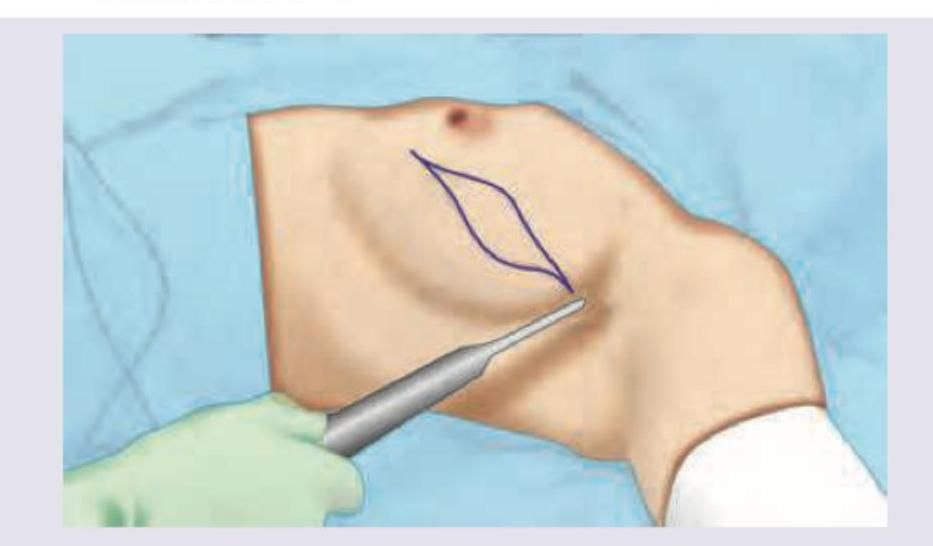
Explanation: **Explanation:** **Cystosarcoma Phyllodes** (Phyllodes tumor) is a fibroepithelial tumor of the breast. Unlike breast adenocarcinoma, which spreads primarily via lymphatics, Phyllodes tumors behave like sarcomas; they are characterized by rapid local growth and a tendency for **hematogenous spread** rather than lymphatic spread. **1. Why Simple Mastectomy is correct:** The primary goal of treatment is achieving wide local clearance. For large tumors or those where a cosmetically acceptable result cannot be achieved with breast-conserving surgery, a **Simple Mastectomy** (removal of the entire breast tissue including the nipple-areolar complex) is the treatment of choice. Since axillary lymph node involvement is extremely rare (<1%), routine axillary dissection is not required. **2. Why other options are incorrect:** * **Radical Mastectomy (B) & Modified Radical Mastectomy (C):** These procedures involve axillary lymphadenectomy. Because Phyllodes tumors rarely spread to lymph nodes, removing the nodes adds morbidity without oncological benefit. * **Hadfield’s Operation (D):** This is a "sub-areolar duct excision" used for treating mammary duct fistula or nipple discharge (e.g., duct ectasia), not for solid tumors. **High-Yield Clinical Pearls for NEET-PG:** * **Wide Local Excision:** This is the treatment of choice for smaller tumors, provided a **1 cm margin** of healthy tissue can be maintained. * **Leaf-like appearance:** Histologically, it shows an exaggerated intracanalicular growth pattern with hypercellular stroma. * **Age Group:** Typically occurs in women aged 40–50 (older than the typical fibroadenoma age). * **Metastasis:** If it occurs, it is most commonly to the **lungs**. * **Recurrence:** It has a high rate of local recurrence if margins are inadequate.
Explanation: **Explanation:** **Mondor’s disease** is a rare, benign condition characterized by **superficial thrombophlebitis** of the veins of the breast and anterior chest wall. It most commonly involves the **lateral thoracic vein**, the **thoracoepigastric vein**, or the **superior epigastric vein**. 1. **Why Option A is correct:** The underlying pathology is the spontaneous or traumatic inflammation and subsequent thrombosis of these superficial veins. Clinically, it presents as a sudden onset of a painful, palpable, "cord-like" structure under the skin of the breast. A classic sign is the skin becoming tethered or grooved over the cord when the arm is elevated. 2. **Why other options are incorrect:** * **Option B & C:** Mondor’s disease is strictly a vascular/inflammatory condition. It is **not** a malignancy or a premalignant state. However, because it causes skin tethering (which can mimic carcinoma), it often requires clinical evaluation to rule out underlying breast cancer. * **Option D:** Filariasis of the breast involves lymphatic obstruction by *Wuchereria bancrofti*, leading to lymphedema or a breast lump, but it does not involve superficial venous thrombosis. **High-Yield Clinical Pearls for NEET-PG:** * **Etiology:** Often idiopathic, but can follow vigorous exercise, breast surgery, trauma, or tight-fitting bras. * **Diagnosis:** Primarily clinical. Doppler ultrasound can confirm a non-compressible superficial vein with no flow. * **Management:** It is a **self-limiting** condition. Treatment is conservative, involving NSAIDs for pain and warm compresses. It usually resolves spontaneously within 4–6 weeks. * **Key Association:** While benign, in rare cases, it can be a paraneoplastic manifestation; thus, a mammogram is often recommended in older patients to exclude occult malignancy.
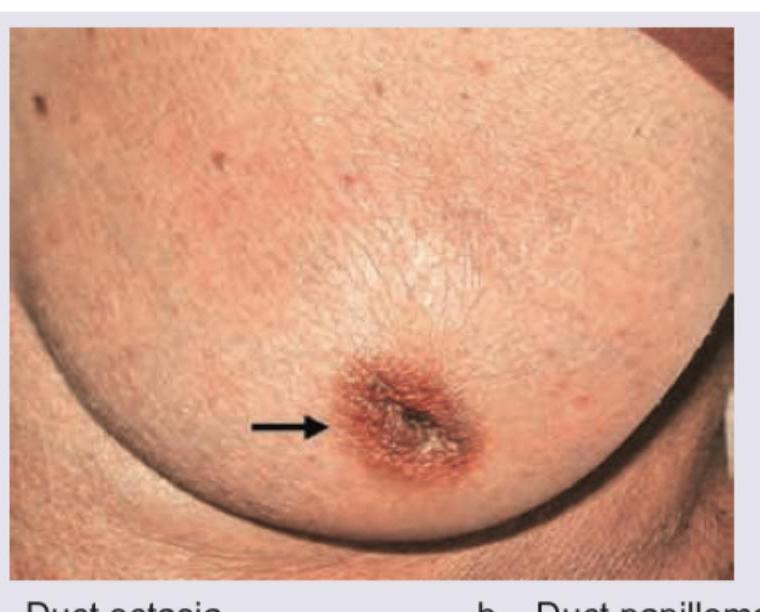
Explanation: **Explanation:** Nipple discharge is a common clinical presentation in breast surgery. While **Intraductal Papilloma** is the most common cause of bloody nipple discharge overall, **Duct Ectasia** is a significant cause, particularly in perimenopausal women. **1. Why Duct Ectasia is Correct:** Duct ectasia involves the dilatation of the subareolar ducts, which become filled with debris and stagnant secretions. This leads to periductal inflammation (plasma cell mastitis). The discharge is typically thick, cheesy, or multicolored (green/black), but it can frequently be **blood-stained** due to the erosion of the ductal lining caused by chronic inflammation. **2. Analysis of Incorrect Options:** * **Paget’s Disease:** This presents primarily as an eczematous-like lesion of the nipple-areola complex. While it indicates an underlying DCIS or invasive cancer, it typically presents with crusting or scaling rather than isolated blood-stained discharge. * **Solitary Intraalveolar Papilloma:** This is likely a distractor for *Intraductal Papilloma*. While intraductal papilloma is the #1 cause of bloody discharge, the term "intraalveolar" is anatomically incorrect in this context (papillomas occur in the lactiferous ducts). * **Lobular Carcinoma:** This subtype of breast cancer is often multifocal and bilateral but rarely presents with nipple discharge. It is more commonly an incidental finding or a vague palpable mass. **Clinical Pearls for NEET-PG:** * **Most common cause of bloody nipple discharge:** Intraductal Papilloma. * **Most common cause of nipple discharge overall:** Duct Ectasia. * **Management of Duct Ectasia:** Usually conservative; if persistent or suspicious, **Hadfield’s operation** (Total Duct Excision) is performed. * **Triple Assessment:** Always mandatory for any nipple discharge in women >40 years to rule out malignancy.
Explanation: **Explanation:** **Intraductal Papilloma** is the most common cause of **pathological nipple discharge**, specifically **bloody (sanguineous) or serosanguineous** discharge. It is a benign proliferative lesion arising from the epithelium of the lactiferous ducts. Because these papillary growths are fragile and have a central vascular stalk, they easily undergo torsion or trauma, leading to bleeding into the duct which then manifests at the nipple. **Analysis of Options:** * **A. Bloody nipple discharge (Correct):** This is the classic presentation, typically involving a single duct (uniductal) in a premenopausal woman. * **B. Mass in breast:** While large duct papillomas are usually subareolar, they are often too small to be palpable. A palpable mass is more characteristic of fibroadenoma or phyllodes tumor. * **C. Breast eczema:** This is a dermatological condition or a mimic of Paget’s disease. It involves the skin and is not a primary feature of ductal pathology. * **D. Paget’s disease:** This presents as an itchy, eroded, or eczematous lesion of the nipple-areola complex, often associated with an underlying DCIS or invasive carcinoma, rather than simple bloody discharge. **High-Yield Clinical Pearls for NEET-PG:** * **Most common cause of bloody nipple discharge:** Intraductal Papilloma. * **Most common cause of breast lump:** Fibroadenoma (in young females). * **Investigation of Choice:** Microdochectomy (surgical excision of the involved duct) serves as both the definitive diagnosis and treatment. * **Triple Assessment:** Always rule out malignancy in older patients presenting with bloody discharge, as papillary carcinoma can mimic this presentation.
Explanation: ### Explanation The lymphatic drainage of the breast follows a predictable anatomical pattern. Approximately **75% of the lymph from the breast drains into the axillary lymph nodes**. **Why Level III is the Correct Answer:** In the context of surgical staging and the natural progression of breast cancer, the axillary lymph nodes are categorized based on their relationship to the **pectoralis minor muscle**: * **Level I:** Lateral to the pectoralis minor. * **Level II:** Deep to (behind) the pectoralis minor. * **Level III (Apical):** Medial and superior to the pectoralis minor. While Level I nodes are usually the first to be involved (sentinel nodes), the question asks which nodes are "most likely to be affected" in a clinical scenario involving surgical removal. In advanced or progressive cases, or when performing a formal axillary dissection, the **Level III (Apical) nodes** represent the final station of axillary drainage before the lymph enters the supraclavicular nodes or the venous system. For NEET-PG purposes, understanding the Berg’s levels is crucial for surgical clearance. **Analysis of Incorrect Options:** * **Level I & II:** These are involved earlier in the disease process. While frequently positive, the surgical "clearance" goal often focuses on reaching the apex (Level III) to ensure complete oncological staging. * **Internal Mammary Nodes:** These drain only about 25% of the breast lymph, primarily from the medial quadrants. They are rarely the primary site of involvement compared to the axillary chain. **Clinical Pearls for NEET-PG:** * **Rotter’s Nodes:** These are interpectoral nodes located between the pectoralis major and minor muscles. * **Sentinel Lymph Node Biopsy (SLNB):** The gold standard for axillary staging in clinically node-negative (cN0) patients. * **Boundary of Axillary Dissection:** The **axillary vein** forms the superior boundary, and the **long thoracic nerve** (Nerve to Serratus Anterior) must be preserved to prevent "winged scapula."
Explanation: **Explanation:** Haagensen’s criteria were historically used to define "grave signs" of locally advanced breast cancer that indicated a poor prognosis and rendered the disease technically inoperable by primary surgery (radical mastectomy). **Why the correct answer is "None of the above":** All the options listed (A, B, and C) are classic components of Haagensen’s criteria for inoperability. Since every option provided is indeed a sign of inoperability, "None of the above" is the correct choice. **Analysis of Options:** * **Option A (Edema of skin/arm):** Extensive edema of the skin (Peau d'orange) involving more than one-third of the breast or edema of the arm indicates extensive lymphatic blockage and is a major sign of inoperability. * **Option B (Satellite nodules):** The presence of satellite tumor nodules in the skin of the breast signifies dermal lymphatic spread and high-risk local recurrence, making primary surgery futile. * **Option C (Supraclavicular/Distant metastases):** Proved supraclavicular lymph node involvement or distant organ metastases (M1 disease) automatically classifies the cancer as Stage IV, where systemic therapy is prioritized over curative-intent surgery. **High-Yield Clinical Pearls for NEET-PG:** 1. **Haagensen’s Criteria (Other signs):** Also include inflammatory carcinoma, parasternal nodules, and fixed axillary nodes (to the skin or deep structures). 2. **Current Practice:** While Haagensen’s criteria defined "inoperability" in the era of radical surgery, modern management utilizes **Neoadjuvant Chemotherapy (NACT)** to downstage these tumors, often making them "operable" later. 3. **Peau d'orange:** Caused by cutaneous lymphatic edema; the "pits" are formed by the tethering of suspensory ligaments of Cooper. 4. **Staging:** Most of Haagensen's signs correspond to **T4b** or **N3/M1** disease in the current AJCC TNM staging system.
Explanation: **Explanation:** The breast is a modified sweat gland located in the superficial fascia of the anterior chest wall. Understanding its anatomical boundaries is crucial for surgical procedures like mastectomy and for evaluating the extent of breast lesions. **1. Why the correct answer is right:** The base of the breast (the area of adherence to the chest wall) extends horizontally from the lateral border of the sternum to the **mid-axillary line**. Anatomically, the breast tissue rests on the pectoral fascia. It covers the pectoralis major medially and extends laterally to cover the **medial third of the serratus anterior muscle**. This lateral extension is significant because breast tissue often follows the curve of the chest wall toward the axilla. **2. Analysis of incorrect options:** * **Option A:** The breast tissue does not stop at the lateral edge of the pectoralis major; it continues further laterally to overlap the serratus anterior. * **Option B:** The pectoralis minor lies deep to the pectoralis major. While it serves as a landmark for axillary lymph node levels (I, II, and III), it is not the lateral boundary of the breast base. * **Option D:** The semispinalis capitis is a deep muscle of the back and neck. It has no anatomical relation to the breast or the anterior chest wall. **3. Clinical Pearls for NEET-PG:** * **Vertical Extent:** The breast extends from the **2nd to the 6th rib**. * **Axillary Tail of Spence:** This is a small part of the upper outer quadrant that pierces the deep fascia (foramen of Langer) to enter the axilla. It is a common site for missed pathology. * **Retromammary Space:** A loose areolar tissue plane between the breast and pectoral fascia that allows the breast to move freely. Obliteration of this space suggests deep invasion (T4 stage). * **Suspensory Ligaments of Cooper:** Fibrous bands connecting the dermis to the pectoral fascia; their contraction by a tumor causes **skin dimpling**.
Explanation: **Explanation:** **Peau d'orange** (French for "orange peel skin") is a classic clinical sign of advanced breast cancer, specifically associated with **Inflammatory Breast Cancer (IBC)**. **1. Why the correct answer is right:** The characteristic dimpled appearance occurs due to the **blockade of subdermal lymphatics** by tumor emboli. This obstruction leads to localized **lymphedema** of the skin. Because the skin is tethered at certain points by the hair follicles and sweat glands, the edematous skin swells around these fixed points, creating a pitted, orange-peel texture. **2. Why the incorrect options are wrong:** * **A. Hematogenous dissemination:** This refers to the spread of cancer via the bloodstream to distant organs (lungs, bone, liver). It does not cause localized skin changes like peau d'orange. * **B. Adherence of Cooper's ligaments:** While involvement of Cooper’s ligaments does cause skin changes, it results in **skin dimpling/retraction**, not the diffuse "orange peel" edema. * **C. Chest wall fixation:** This indicates advanced T4b disease where the tumor invades the pectoralis major or serratus anterior muscles, leading to a fixed, immobile breast mass. **3. High-Yield Clinical Pearls for NEET-PG:** * **T-Staging:** Peau d'orange automatically classifies a breast cancer as **T4d** (Inflammatory Breast Cancer), regardless of the size of the underlying tumor. * **Differential Diagnosis:** While most commonly associated with malignancy, peau d'orange can rarely be seen in severe mastitis or chronic breast abscess. * **Biopsy:** In suspected IBC, a **full-thickness skin punch biopsy** is often performed to look for characteristic tumor emboli within the dermal lymphatics. * **Management:** Inflammatory breast cancer is typically treated with **Neoadjuvant Chemotherapy (NACT)** followed by surgery and radiotherapy.
Explanation: ### Explanation **1. Why Axilla is the Correct Answer:** Accessory breast tissue (polymastia) occurs due to the failure of the **primitive mammary ridge (milk line)** to regress during embryonic development. This ridge extends bilaterally from the **axilla to the groin**. While ectopic breast tissue can appear anywhere along this line, the **axilla** is the most common site, accounting for approximately 60–70% of cases. It often presents as a palpable lump that may enlarge or become tender during menstruation, pregnancy, or lactation due to hormonal responsiveness. **2. Why the Other Options are Incorrect:** * **B. Groin:** While the milk line terminates in the inguinal region, accessory breast tissue is significantly less common here than in the axillary region. * **C & D. Buttock and Thigh:** These are considered **extramammary sites**. While rare cases of ectopic breast tissue have been reported in these locations (likely due to migratory arrest of precursor cells), they do not lie on the primary milk line and are extremely rare compared to the axilla. **3. Clinical Pearls for NEET-PG:** * **Most common location:** Axilla (specifically the Tail of Spence is normal tissue, but accessory tissue is separate). * **Most common presentation:** A bilateral, asymptomatic axillary mass that fluctuates with hormonal cycles. * **Pathology:** Accessory breast tissue is subject to the same diseases as normal breast tissue, including **fibroadenoma** and **carcinoma** (most common type in accessory tissue is Invasive Ductal Carcinoma). * **Polythelia vs. Polymastia:** Polythelia (extra nipple) is the most common form of accessory breast tissue overall, whereas Polymastia refers to the presence of accessory glandular tissue. * **Association:** Polythelia has a known clinical association with **urinary tract anomalies** (e.g., renal agenesis or supernumerary kidneys).
Breast Anatomy and Physiology
Practice Questions
Benign Breast Diseases
Practice Questions
Breast Cancer Screening
Practice Questions
Breast Cancer: Diagnosis and Staging
Practice Questions
Surgical Management of Breast Cancer
Practice Questions
Oncoplastic Breast Surgery
Practice Questions
Sentinel Lymph Node Biopsy
Practice Questions
Axillary Surgery
Practice Questions
Breast Reconstruction Techniques
Practice Questions
Male Breast Disorders
Practice Questions
Phyllodes Tumors
Practice Questions
Management of Ductal Carcinoma In Situ
Practice Questions
Get full access to all questions, explanations, and performance tracking.
Start For Free