A 50-year-old male patient complains of facial heaviness, headache, and nasal congestion. He has a history of chronic sinusitis. A Waters view X-ray was performed. What is the typical positioning of the canthomeatal line relative to the film in this projection?
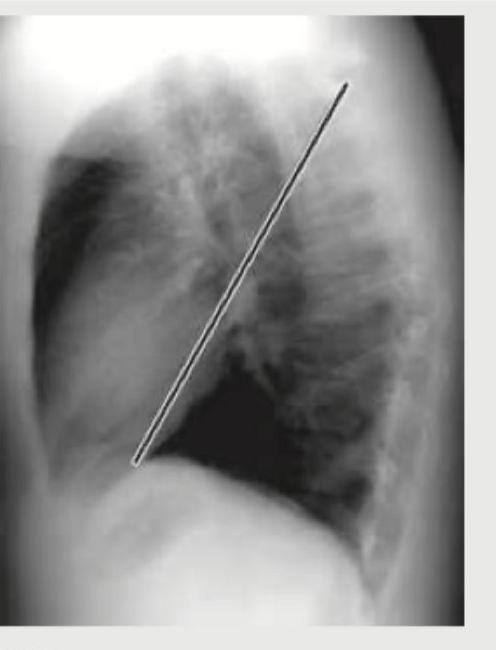
Thirteen pairs of ribs can be seen in all of the following conditions except?
The radiopacity of the zygoma is superimposed on the roots of which teeth?
Cerebrospinal fluid is formed by the vascular choroid plexus in which structure?

What is the term for a thin radiolucent line that follows the outline of a tooth?
Which radiographic view best visualizes the C1 and C2 vertebrae?
A radiograph of a mandibular 3rd molar shows fading of trabeculations and narrowing of the canal in the apical region of the tooth. What is the diagnosis?
Which developmental cyst does not involve bone and may not be visible on radiographs, but causes swelling in the mucobuccal fold and the floor of the nose near the attachment of the ala over the maxilla?
Which of the following is NOT a radiological feature of scleroderma?
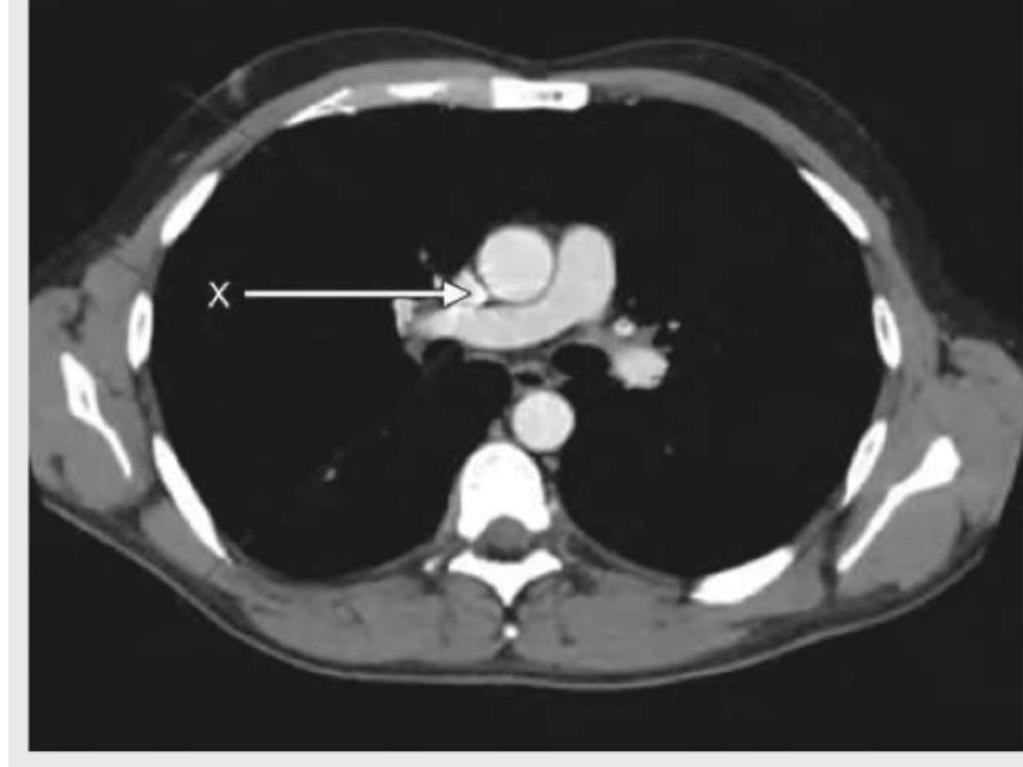
Which of the following does NOT contribute to the right side of the mediastinal shadow?
Explanation: **Explanation:** The **Waters view (Occipitomental projection)** is the gold-standard radiographic position for evaluating the **maxillary sinuses**. To achieve this view, the patient’s chin is extended against the image receptor so that the **Canthomeatal Line (CML)** forms an angle of **37 degrees** with the plane of the film. This specific angulation is crucial because it projects the dense petrous ridges of the temporal bone inferior to the maxillary antra, allowing for a clear, unobstructed view of the sinuses to detect fluid levels or mucosal thickening. **Analysis of Options:** * **Option B (Correct):** 37 degrees is the standard positioning for the Waters view to clear the petrous pyramids from the maxillary sinuses. * **Option A:** If the CML is parallel to the film, it typically describes a lateral view or a standard PA view, which causes significant bony superimposition over the sinuses. * **Option C:** A -30 degree angle (or 30 degrees in the opposite direction) is more characteristic of the **Towne’s view**, used primarily to visualize the occipital bone and the posterior fossa. * **Option D:** A 10-15 degree angulation (specifically the CML at 15 degrees) is used in the **Caldwell view (Occipitofrontal projection)**, which is best for visualizing the frontal and ethmoid sinuses. **High-Yield Clinical Pearls for NEET-PG:** * **Waters View:** Best for Maxillary sinuses. (Mnemonic: **W**aters = **W**ater in the Maxillary sinus). * **Caldwell View:** Best for Frontal and Ethmoid sinuses. * **Open-mouth Waters View:** Specifically used to visualize the **sphenoid sinus**. * **Petrous Ridge Position:** In a well-positioned Waters view, the petrous ridges should lie just below the floor of the maxillary sinuses.
Explanation: **Explanation:** The presence of **13 pairs of ribs** (supernumerary ribs) is a recognized skeletal anomaly associated with several genetic syndromes. However, **Down syndrome (Trisomy 21)** is classically associated with the presence of **11 pairs of ribs** (hypoplastic or absent 12th ribs) rather than an increased number. **1. Why Down Syndrome is the Correct Answer:** In Down syndrome, skeletal maturation is often delayed, and specific morphological variations occur. The most high-yield radiological finding regarding the ribs is the presence of only **11 pairs** (seen in approximately 25-30% of cases). Other characteristic skeletal features include a "double-bubble" sign (duodenal atresia), flared iliac wings (Mickey Mouse pelvis), and clinodactyly. **2. Analysis of Incorrect Options (Conditions with 13 pairs of ribs):** * **Holt-Oram Syndrome:** An autosomal dominant "heart-hand" syndrome characterized by upper limb radial ray defects and cardiac septal defects. It is frequently associated with accessory ribs. * **Turner Syndrome (45, XO):** While known for a shield chest and increased carrying angle (cubitus valgus), supernumerary ribs (13 pairs) are a documented skeletal association. * **Incontinentia Pigmenti:** An X-linked dominant neuroectodermal disorder. Skeletal anomalies are common, including hemivertebrae, scoliosis, and the presence of extra ribs. **Clinical Pearls for NEET-PG:** * **11 pairs of ribs:** Down Syndrome, Campomelic Dysplasia. * **13 pairs of ribs:** Trisomy 18 (Edwards Syndrome), Turner Syndrome, Holt-Oram Syndrome, and Incontinentia Pigmenti. * **Cervical Rib:** Most commonly arises from the C7 vertebra; it is a common cause of Thoracic Outlet Syndrome (TOS).
Explanation: ### Explanation The **zygomatic process of the maxilla** and the **zygomatic bone** are dense cortical structures located superior to the maxillary posterior teeth. In intraoral periapical (IOPA) radiographs, the zygomatic process often appears as a U-shaped or J-shaped radiopacity. **1. Why Option B is Correct:** Due to the anatomical positioning and the angulation of the X-ray beam (bisecting angle technique), the zygomatic process is frequently projected over the **roots of the maxillary first and second molars**. This superimposition can sometimes obscure the details of the root canals or the periapical bone, making radiographic interpretation challenging in this specific region. **2. Why Other Options are Incorrect:** * **Option A (Premolars):** The premolars are situated more anteriorly. While the maxillary sinus may extend into this region, the dense zygomatic bone is typically located further posterior. * **Option C (Maxillary 3rd Molar):** The 3rd molar is located at the maxillary tuberosity area, which is posterior to the main body of the zygomatic process. While the zygomatic bone may occasionally overlap it in distorted views, it is most consistently associated with the 1st and 2nd molars. **3. Clinical Pearls for NEET-PG:** * **U-shaped Radiopacity:** In dental radiology, a "U-shaped" radiopaque line in the posterior maxilla is a classic descriptor for the **zygomatic process of the maxilla**. * **Maxillary Sinus:** The floor of the maxillary sinus is often seen as a thin radiopaque line (the "W-shaped" or "inverted Y" line) near the premolars and molars. * **Anatomical Landmark:** Distinguishing the zygomatic process from pathological sclerotic bone is crucial for differential diagnosis in the maxillary posterior quadrant.
Explanation: ***Structure A*** - **Cerebrospinal fluid (CSF)** is primarily produced by the **choroid plexus** located in the **lateral ventricles**, which is Structure A. - The **lateral ventricles** contain the largest and most active choroid plexus, responsible for approximately **70-80%** of total CSF production. *Structure B* - This structure likely represents the **third ventricle**, which contains choroid plexus but produces significantly less CSF than the lateral ventricles. - CSF flows from the lateral ventricles to the third ventricle via the **foramen of Monro**, making it a transit point rather than the primary production site. *Structure C* - This structure likely represents the **fourth ventricle**, which also contains choroid plexus but contributes minimally to total CSF production. - CSF reaches the fourth ventricle via the **cerebral aqueduct (aqueduct of Sylvius)** from the third ventricle before entering the subarachnoid space. *Structure D* - This structure likely represents the **subarachnoid space** or **cisterns**, where CSF circulates after leaving the ventricular system. - The subarachnoid space is where CSF is **absorbed** by **arachnoid granulations** into the venous system, not where it is produced.
Explanation: ### Explanation The correct answer is **Periodontal Ligament (PDL)** space. **1. Why Periodontal Ligament (PDL) is correct:** In dental radiography, the PDL space appears as a **thin radiolucent (dark) line** that surrounds the root of the tooth, situated between the root cementum and the alveolar bone. Because the periodontal ligament consists of soft connective tissue, it does not attenuate X-rays as much as the surrounding hard tissues, resulting in its characteristic radiolucent appearance. A uniform PDL space is a hallmark of a healthy tooth. **2. Why the other options are incorrect:** * **Lamina Dura:** This is the thin **radiopaque (white) line** of dense cortical bone that immediately surrounds the PDL space. It represents the alveolar bone proper. While it also follows the outline of the tooth, it is opaque, not lucent. * **Nutrient Canals:** These are radiolucent lines often seen in the anterior mandible containing blood vessels and nerves. They typically run vertically and do not follow the circumferential outline of a tooth. **3. Clinical Pearls & High-Yield Facts for NEET-PG:** * **Widening of PDL Space:** This is a critical diagnostic sign. Pathological widening can indicate **periapical abscess**, occlusal trauma, or orthodontic movement. * **Systemic Sclerosis (Scleroderma):** A classic high-yield radiology fact is the **uniform thickening/widening of the PDL space** (especially in posterior teeth) seen in patients with Scleroderma. * **Malignancy:** Irregular widening or destruction of the PDL space and Lamina Dura can be an early sign of osteosarcoma or local malignancy ("floating-in-air" appearance). * **Step-ladder trabecular pattern:** Often associated with Sickle Cell Anemia, seen in the interdental alveolar bone.
Explanation: ### Explanation **1. Why the Odontoid View is Correct:** The **Odontoid view** (also known as the **Open-mouth view**) is specifically designed to visualize the upper cervical spine. In a standard AP view, the mandible and the base of the skull superimpose over C1 and C2, obscuring detail. By opening the mouth wide, the radiologist creates an "acoustic window" that shifts the mandible out of the way. This allows for a clear, unobstructed view of the **Atlas (C1)**, the **Axis (C2)**, the **Dens (Odontoid process)**, and the **atlanto-axial joints**. It is the gold standard for assessing fractures of the dens or C1-C2 subluxation. **2. Why Other Options are Incorrect:** * **Anteroposterior (AP) View:** This view is best for visualizing the lower cervical vertebrae (C3–C7). As mentioned, the shadow of the chin/mandible hides the C1-C2 complex. * **Lateral View:** While excellent for assessing cervical alignment, the pre-vertebral soft tissues, and the "three lines" of the spine, the overlapping lateral masses of C1 and C2 make it difficult to identify specific fractures of the dens or lateral mass displacement. * **Oblique View:** These are primarily used to visualize the **intervertebral foramina** and the facet joints, not the upper cervical bony anatomy. **3. Clinical Pearls for NEET-PG:** * **Jefferson Fracture:** A burst fracture of C1, best identified on the Odontoid view by looking for lateral displacement of the C1 lateral masses relative to C2. * **Rule of Spence:** If the combined lateral displacement of C1 masses is **>7mm** on the Odontoid view, it indicates a rupture of the transverse ligament (unstable). * **Peg/Dens Fractures:** Classified by the **Anderson and D’Alonzo** system; Type II (fracture at the base of the dens) is the most common and prone to non-union.
Explanation: ### Explanation This question assesses the ability to interpret radiographic signs of the relationship between the **Inferior Alveolar Nerve (IAN) canal** and the roots of the **mandibular third molar**, which is critical for preventing nerve injury during extraction. **1. Why Option A is Correct:** The radiographic signs described—**fading of trabeculations** (radiolucency) and **narrowing of the canal**—are classic indicators of a close anatomical relationship where the root is deeply grooved by the nerve or the nerve is passing through the root. * **Fading of trabeculations:** Occurs because the root is thinned or grooved, allowing more X-rays to pass through, creating a more radiolucent area over the canal. * **Narrowing of the canal:** Suggests that the root is physically encroaching upon the space of the IAN canal. * **Loss of cortical lines:** The disappearance of the "white lines" (radio-opaque borders) of the canal indicates that the root has perforated or deeply indented the bony housing of the nerve. **2. Why Other Options are Incorrect:** * **Option B:** While the nerve *could* be passing between roots, the specific signs of "narrowing" and "fading" are more pathognomonic for deep grooving or perforation rather than simple inter-radicular positioning. * **Option C & D:** These suggest technical errors. However, these specific morphological changes (narrowing and cortical loss) are consistent anatomical findings validated by Rood and Shehab’s criteria, not mere artifacts of angulation or poor technique. **3. Clinical Pearls for NEET-PG:** * **Rood and Shehab’s Criteria:** There are seven radiographic signs indicating a close relationship between the 3rd molar and IAN. The three most predictive of nerve exposure are: 1. **Darkening of the root** (most common). 2. **Interruption of the white line** (canal wall). 3. **Diversion of the canal.** * **High-Yield Fact:** If these signs are present on a periapical or OPG, a **CBCT (Cone Beam Computed Tomography)** is the gold standard investigation to confirm the 3D relationship and plan the surgery (e.g., coronectomy vs. extraction).
Explanation: ### Explanation **Correct Option: B. Nasoalveolar cyst (Nasolabial cyst)** The **Nasoalveolar cyst** is a rare, non-odontogenic, **soft-tissue cyst**. Unlike most other developmental cysts in the maxillary region, it originates in the soft tissues of the nasolabial fold, just below the ala of the nose. * **Key Pathophysiology:** It arises from epithelial remnants of the nasolacrimal duct. * **Radiological Feature:** Because it is primarily a soft-tissue lesion, it **does not involve bone** and is typically **invisible on routine radiographs**. However, if it grows large, it may cause a secondary "saucerization" (pressure resorption) of the underlying alveolar bone. * **Clinical Presentation:** It classically presents as a swelling in the mucobuccal fold, causing elevation of the ala of the nose and flare of the nostril. --- ### Why the other options are incorrect: * **A. Nasopalatine cyst:** This is the most common non-odontogenic cyst. It is an **intraosseous** lesion located in the midline of the anterior maxilla. On radiographs, it appears as a well-defined "heart-shaped" radiolucency between the maxillary central incisors. * **C. Gingival cyst of neonate:** These are small, multiple whitish papules (Bohn’s nodules or Epstein pearls) found on the alveolar ridges of newborns. They are superficial and do not present as a deep swelling near the nasal ala. * **D. Primordial cyst:** This is an odontogenic cyst that develops **in place of a tooth** (usually the third molar). It is an intraosseous lesion and is clearly visible as a radiolucency on an X-ray. --- ### High-Yield NEET-PG Pearls: * **Nasolabial cyst** = Soft tissue cyst (Extraosseous). * **Nasopalatine cyst** = Heart-shaped radiolucency (Intraosseous). * **Clinical Sign:** Look for "elevation of the ala of the nose" in the clinical stem to differentiate Nasoalveolar cysts from dental abscesses or other bony cysts. * **Treatment:** Simple surgical excision via an intraoral approach.
Explanation: **Explanation:** Scleroderma (Systemic Sclerosis) is a multisystem connective tissue disorder characterized by excessive collagen deposition and vascular dysfunction. **Why "Diffuse periosteal reaction" is the correct answer:** Periosteal reaction (new bone formation) is **not** a feature of scleroderma. Scleroderma is primarily characterized by **atrophy and resorption** rather than bone formation. Diffuse periosteal reaction is more commonly associated with conditions like Hypertrophic Osteoarthropathy (HOA), thyroid acropachy, or certain infections and malignancies. **Analysis of other options:** * **Esophageal dysmotility:** This is a hallmark feature. Fibrosis of the smooth muscle leads to a "dilated, aperistaltic esophagus" (often seen as a "glass tube" appearance on barium swallow). * **Erosion of the tip of the phalanges:** Known as **Acro-osteolysis**, this is a classic radiological finding. It results from digital ischemia and pressure from overlying skin tightening (sclerodactyly). * **Lung nodules:** While Interstitial Lung Disease (NSIP pattern) is more common, scleroderma patients have an increased risk of malignancy (Bronchioloalveolar carcinoma) and can develop necrobiotic nodules or silicotic nodules (Erasmus Syndrome). **High-Yield NEET-PG Pearls for Scleroderma:** 1. **Soft Tissue Calcification:** Known as **Calcinosis cutis**, often seen in the fingertips (part of CREST syndrome). 2. **Gastrointestinal:** Widening of the periodontal ligament space and "wide-mouthed" colonic diverticula (pseudodiverticula). 3. **Chest Radiology:** Lower lobe predominant ground-glass opacities or honeycombing (NSIP/UIP patterns) and a dilated esophagus on CT (the "Patulous Esophagus" sign). 4. **Erasmus Syndrome:** The association of silicosis with systemic sclerosis.
Explanation: ### Explanation The mediastinal shadow on a frontal Chest X-ray (CXR) is formed by the borders of the heart and great vessels. Understanding the anatomical structures that form these borders is a high-yield topic for NEET-PG. **Why the Right Ventricle is the Correct Answer:** The **Right Ventricle** is the most anterior chamber of the heart. On a standard Posteroanterior (PA) view, it sits directly behind the sternum and does **not** contribute to either the right or left heart borders. It only becomes visible on a **lateral** chest radiograph, where it forms the anterior border of the cardiac silhouette. **Analysis of Incorrect Options (Right Heart Border):** The right mediastinal border is formed from top to bottom by: * **Right Innominate (Brachiocephalic) Vein:** Forms the uppermost part of the right border in the superior mediastinum. * **Superior Vena Cava (SVC):** Forms the straight vertical border above the right atrium. * **Right Atrium:** Forms the prominent convex lower part of the right heart border. * **Inferior Vena Cava (IVC):** May occasionally be seen as a small vertical shadow at the cardiophrenic angle during deep inspiration. **Clinical Pearls for NEET-PG:** * **Left Heart Border:** Formed by the Left Subclavian Artery, Aortic Arch (Aortic Knuckle), Pulmonary Trunk, Left Auricle, and Left Ventricle. * **Right Ventricular Enlargement:** Since it doesn't form a border on the PA view, enlargement is detected on a lateral view (obliteration of the retrosternal clear space) or by the upward displacement of the apex (boot-shaped heart/Coeur en Sabot). * **Left Atrial Enlargement:** Does not form the left border; instead, it causes a "double atrial shadow" on the right side and splaying of the carina.
Radiographic Anatomy of Skull and Face
Practice Questions
Radiographic Anatomy of Spine
Practice Questions
Radiographic Anatomy of Chest
Practice Questions
Radiographic Anatomy of Abdomen
Practice Questions
Radiographic Anatomy of Extremities
Practice Questions
Cross-sectional Anatomy: Brain and Head
Practice Questions
Cross-sectional Anatomy: Neck
Practice Questions
Cross-sectional Anatomy: Thorax
Practice Questions
Cross-sectional Anatomy: Abdomen and Pelvis
Practice Questions
Vascular Anatomy
Practice Questions
Developmental Anatomy Variations
Practice Questions
Anatomic Landmarks for Interventional Procedures
Practice Questions
Get full access to all questions, explanations, and performance tracking.
Start For Free