Which radiographic projection is best for visualizing the maxillary sinus?
Which of the following projections depicts the entire medial-lateral aspect of the condyle?
Panoramic radiography is used to detect radiological abnormalities of all of the following, except:
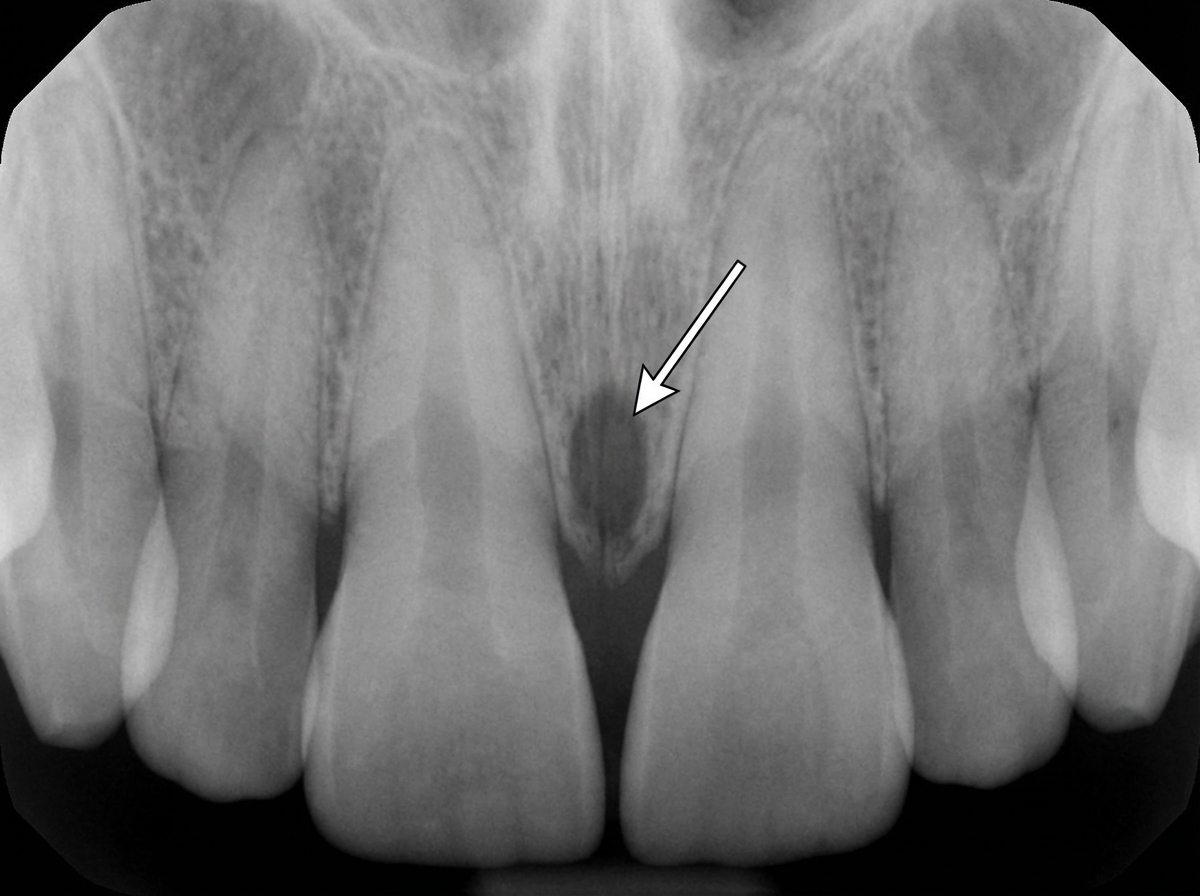
An irregular radiolucent area related to the apex of a non-vital tooth could represent which of the following conditions?
On barium swallow, posterior indentation is seen due to:
Which X-ray view is used to visualize the supraorbital fissure?
Which of the following radiological modalities is not considered safe in pregnancy?
Which of the following has the highest Hounsfield Unit?
What is the name of the frontal temporomandibular joint (TMJ) projection?
What is the best radiographic view for visualizing the temporomandibular joint?
Explanation: **Explanation:** The **Waters view (Occipitomental projection)** is the gold standard radiographic view for evaluating the **maxillary sinuses**. In this projection, the patient’s neck is extended so that the chin touches the film and the nose is approximately 1–2 cm away. This orientation tilts the petrous part of the temporal bone downwards, preventing it from overlapping and obscuring the maxillary antrum, thus providing a clear view of the sinus floor and walls. **Analysis of Options:** * **Submentovertex (SMV) view:** Primarily used to visualize the **sphenoid sinus**, ethmoid air cells, and the zygomatic arches (Jug-handle view). * **PA (Caldwell) view:** The best view for the **frontal and ethmoid sinuses**. In this view, the petrous ridges are projected over the lower third of the orbits, which obscures the maxillary sinuses. * **Towne’s projection:** An AP axial projection used mainly to visualize the **occipital bone**, foramen magnum, and the condylar processes of the mandible. **High-Yield Clinical Pearls for NEET-PG:** * **Modified Waters View:** If the patient opens their mouth during a Waters view, the **sphenoid sinus** can also be visualized. * **Air-fluid levels:** To detect fluid (pus/blood) in the sinuses, radiographs must be taken in an **erect (upright) position**. * **Fractures:** Waters view is also excellent for diagnosing **Orbital Floor (Blow-out) fractures** and Tripod fractures of the zygoma. * **Gold Standard:** While Waters view is the best *plain radiograph*, **Non-Contrast CT (NCCT) of the Paranasal Sinuses** is the overall gold standard for sinus pathology.
Explanation: **Explanation:** The **Transorbital projection** (also known as the **Zimmer view**) is the correct answer because it is specifically designed to visualize the **mediolateral dimension** of the mandibular condyle and the condylar neck. In this projection, the X-ray beam is directed through the orbit, perpendicular to the long axis of the condyle. This orientation eliminates the superimposition of the dense petrous part of the temporal bone, providing a clear, frontal view of the entire mediolateral aspect of the condylar head. **Analysis of Incorrect Options:** * **Transcranial view (Gilliatt’s view):** This is a lateral oblique projection. It primarily visualizes the **lateral aspect** of the joint space and the superior surface of the condyle. It cannot depict the mediolateral width as the beam is directed across the skull. * **Transpharyngeal projection (Parma’s view):** This is also a lateral view where the beam passes through the sigmoid notch of the opposite side. It provides a good view of the **lateral profile** of the condylar neck and head but fails to show the mediolateral dimension. **High-Yield NEET-PG Pearls:** * **Transorbital View:** Best for detecting **mediolateral fractures** of the condylar neck and horizontal displacements. * **Transcranial View:** Most common plain film for TMJ screening; best for seeing **bony changes** (osteophytes/erosion) on the lateral condylar surface. * **Reverse Towne’s Projection:** Another high-yield view for the condyles, specifically used to identify **medial or lateral displacement** of fractured condylar fragments. * **Gold Standard for TMJ:** **MRI** is the gold standard for soft tissue (disc displacement), while **CBCT/CT** is the gold standard for bony anatomy.
Explanation: **Explanation:** Panoramic radiography, also known as an **Orthopantomogram (OPG)**, is a specialized extraoral radiographic technique that produces a single tomographic image of the facial structures, including the entire dental arches and their supporting structures. **Why Occipital Condyle is the Correct Answer:** The OPG is designed to visualize the maxillofacial region. The **occipital condyles** are part of the cranial base (occipital bone) and are located significantly posterior and superior to the focal trough (the zone of sharpness) of a standard panoramic machine. Because they lie outside this specific imaging plane, they are not captured or are severely distorted. To visualize the occipital condyles, specialized imaging like CT scans or specific skull base views (e.g., Open-mouth Odontoid view) are required. **Analysis of Incorrect Options:** * **Mandibular Condyle:** The OPG is a primary screening tool for the Temporomandibular Joint (TMJ). It clearly visualizes the mandibular condyles, making it useful for detecting fractures or degenerative changes. * **Maxillary Anteriors & Mandibular Teeth:** The fundamental purpose of an OPG is to provide a comprehensive view of the entire dentition (both maxillary and mandibular arches) and the alveolar bone. **NEET-PG High-Yield Pearls:** * **Principle:** OPG works on the principle of **curved-plane laminography** (tomography). * **Focal Trough:** This is the 3D curved zone where structures are clearly defined. Objects outside this trough appear blurred, magnified, or as "ghost images." * **Ghost Images:** A classic OPG finding where dense objects (like earrings or the contralateral ramus) appear on the opposite side, higher up, and blurred. * **Indications:** Ideal for orthodontic assessment, impacted third molars, and evaluating jaw fractures (especially the mandibular symphysis and condyles).
Explanation: ### Explanation The presence of an **irregular radiolucent area** at the apex of a non-vital tooth is a hallmark of periapical inflammatory lesions. **Why Chronic Periapical Abscess is the Correct Answer:** A chronic periapical abscess represents a localized collection of pus at the root apex resulting from pulpal necrosis. Radiographically, it typically presents as an **irregular, ill-defined radiolucency** with "fuzzy" borders. The lack of a distinct cortical rim is a key feature that differentiates it from more organized lesions like cysts. **Analysis of Incorrect Options:** * **Periapical Granuloma:** These are usually **well-defined**, small, and circular radiolucencies. While they also occur at the apex of non-vital teeth, the margins are typically more distinct than an abscess. * **Periapical Cyst (Radicular Cyst):** These are characterized by a **well-circumscribed** radiolucency with a **sharp, sclerotic (radiopaque) border**. They are often larger than granulomas and have a classic "punched-out" appearance. * **Early Osteomyelitis:** In the very early stages of osteomyelitis, there are often **no radiographic changes** visible (it takes 30-60% bone mineral loss to show on X-ray). Later, it presents with a "moth-eaten" appearance, but it is not specifically localized to a single tooth apex in the same manner as a periapical abscess. **High-Yield NEET-PG Pearls:** * **Non-vital tooth:** The primary prerequisite for periapical abscess, granuloma, and radicular cysts. * **Radiographic Differentiation:** * *Ill-defined/Irregular:* Abscess. * *Well-defined/Small:* Granuloma. * *Well-defined/Sclerotic rim:* Cyst. * **Radicular Cyst:** The most common inflammatory odontogenic cyst. * **Lamina Dura:** Loss of the apical lamina dura is the earliest radiographic sign of periapical pathology.
Explanation: **Explanation:** The esophagus is a midline structure that can be indented by surrounding cardiovascular structures. On a barium swallow, the direction of the indentation is a high-yield diagnostic clue. **1. Why Aberrant Right Subclavian Artery (ARSA) is correct:** ARSA (also known as *Arteria Lusoria*) is the most common congenital anomaly of the aortic arch. Instead of being the first branch, it arises as the last branch of the aortic arch and travels from left to right to reach the right arm. In 80% of cases, it passes **posterior to the esophagus**, creating a characteristic **oblique posterior indentation** (running upwards and to the right). This can sometimes cause "Dysphagia Lusoria." **2. Why the other options are incorrect:** * **Left Atrium:** Enlargement of the left atrium (e.g., in mitral stenosis) causes an **anterior indentation** on the mid-esophagus. * **Aortic Knuckle:** The normal aortic arch and a prominent aortic knuckle cause a **left lateral indentation** on the esophagus, best seen in the PA or RAO view. * **Sling of Pulmonary Artery:** An anomalous left pulmonary artery arising from the right pulmonary artery passes between the trachea and the esophagus. This causes an **anterior indentation** on the esophagus (and a posterior indentation on the trachea). **High-Yield Clinical Pearls for NEET-PG:** * **Double Aortic Arch:** Causes both anterior and posterior indentation (encircles the esophagus and trachea), often described as a "vascular ring." * **Right-sided Aortic Arch:** Causes a right-sided indentation. * **Dysphagia Lusoria:** The clinical term for difficulty swallowing caused by the compression from an aberrant right subclavian artery. * **Most common site of ARSA:** Posterior to the esophagus (80%), followed by between the esophagus and trachea (15%).
Explanation: **Explanation:** The **Caldwell view** (Occipitofrontal projection) is the correct answer. In this view, the patient’s forehead and nose touch the film, and the X-ray beam is angled 15 degrees caudally. This specific angulation displaces the dense petrous ridges to the lower third of the orbits, providing a clear, unobstructed visualization of the **superior orbital fissure (SOF)**, the frontal sinuses, and the ethmoid sinuses. **Analysis of Incorrect Options:** * **Towne’s View (30° AP Axial):** Primarily used to visualize the **occipital bone**, the foramen magnum, and the petrous ridges. It is the best view for the posterior fossa and condylar fractures of the mandible. * **AP View:** A standard frontal projection where the petrous pyramids overlap the orbits, making it difficult to distinguish fine structures like the superior orbital fissure. * **Basal View (Submentovertex):** Used to visualize the **skull base**, including the foramen ovale, foramen spinosum, and the sphenoid sinuses. It is also excellent for viewing the zygomatic arches ("Jug-handle view"). **High-Yield Clinical Pearls for NEET-PG:** * **Water’s View (Occipitomental):** Best for **Maxillary sinuses** and the orbital floor (Blow-out fractures). * **Superior Orbital Fissure Syndrome:** Characterized by palsy of CN III, IV, VI, and the ophthalmic branch of CN V (V1) due to compression at the fissure. * **Optic Canal View:** Requires the **Rheese projection**. * **Stenver’s View:** Used for the temporal bone and internal auditory canal.
Explanation: **Explanation:** The safety of radiological modalities in pregnancy is primarily determined by the presence of **ionizing radiation**. **Why Computed Tomography (CT) is the correct answer:** CT scans utilize high doses of ionizing radiation (X-rays). Exposure to ionizing radiation during pregnancy, especially during the period of organogenesis (2–8 weeks) and early fetal development, carries risks of **teratogenesis** (congenital malformations), **microcephaly**, and an increased lifetime risk of **childhood leukemia**. While a single diagnostic CT (like a CT PE protocol) may fall below the threshold for deterministic effects (50–100 mGy), it is generally avoided unless the maternal benefit significantly outweighs the fetal risk. **Why the other options are considered safe:** * **Ultrasound (USG):** Uses high-frequency sound waves (non-ionizing). It is the gold standard and safest modality for fetal imaging. * **Doppler:** A subset of ultrasound that measures blood flow. While it has a higher thermal index than B-mode USG, it is non-ionizing and clinically safe when used judiciously. * **MRI:** Uses magnetic fields and radiofrequency pulses (non-ionizing). It is considered safe in pregnancy, particularly after the first trimester, and is the preferred modality when USG is inconclusive (e.g., for suspected maternal appendicitis or fetal CNS anomalies). **NEET-PG High-Yield Pearls:** 1. **Rule of Thumb:** USG and MRI are non-ionizing (Safe); X-rays and CT are ionizing (Potential risk). 2. **Threshold Dose:** Fetal risk is considered negligible at exposures **<50 mGy**. Most diagnostic X-rays are well below this, but CT scans approach or exceed it. 3. **Contrast Safety:** Gadolinium (MRI contrast) crosses the placenta and is generally **avoided** in pregnancy unless essential. Iodinated contrast (CT) can affect the fetal thyroid but is not strictly contraindicated if life-saving. 4. **Nuclear Medicine:** Radioactive Iodine (I-131) is **absolutely contraindicated** as it can destroy the fetal thyroid.
Explanation: The Hounsfield Unit (HU) is a quantitative scale used in Computed Tomography (CT) to describe radiodensity. It is based on the linear attenuation coefficient of a tissue relative to water. **Why Grey Matter is Correct:** Grey matter consists of neuronal cell bodies and has a higher water and protein content compared to white matter (which is rich in fatty myelin). On a CT scan, grey matter typically measures between **+35 to +45 HU**, whereas white matter is slightly lower (+20 to +30 HU). Since the other options represent substances with neutral, negative, or near-zero density, grey matter has the highest HU among the choices. **Analysis of Incorrect Options:** * **Air (Option C):** This is the least dense substance on the scale, assigned a fixed value of **-1000 HU**. It appears pitch black on CT. * **Fat (Option B):** Fat is less dense than water and typically ranges from **-50 to -100 HU**. * **CSF (Option A):** Cerebrospinal fluid is primarily water. Since water is the reference point (0 HU), CSF typically measures between **0 to +10 HU**. **High-Yield Clinical Pearls for NEET-PG:** * **Reference Standards:** Water = 0 HU; Air = -1000 HU. * **Dense Substances:** Acute hemorrhage (+50 to +80 HU), Bone (+400 to +1000 HU), and Metal (>+1000 HU) have the highest densities. * **The "Windowing" Concept:** In stroke imaging, the "disappearing basal ganglia" sign occurs because cytotoxic edema lowers the HU of grey matter, making it indistinguishable from white matter. * **Rule of Thumb:** Higher HU = Brighter (Hyperdense); Lower HU = Darker (Hypodense).
Explanation: **Explanation:** The **Zimmer projection** is a specific radiographic technique used to visualize the **frontal (coronal) view** of the temporomandibular joint (TMJ). Unlike standard lateral views, it provides a clear image of the mandibular condyle and its relationship to the articular fossa in the frontal plane, which is particularly useful for detecting mediolateral displacements or fractures of the condylar neck. **Analysis of Options:** * **Zimmer projection (Correct):** This is the definitive frontal/coronal projection for the TMJ. It is performed with the patient's mouth open to move the condyle out of the glenoid fossa for better visualization. * **Transcranial projection (Incorrect):** This is a **lateral** (oblique) view of the TMJ. It is the most common screening radiograph used to visualize the superior and lateral aspects of the joint space and condylar position. * **McQueen Dell technique (Incorrect):** This is a variation of the **axial/submentovertex** projection used to visualize the zygomatic arches and the base of the skull, not a frontal TMJ view. * **Infracranial projection (Incorrect):** This is not a standard radiographic term for TMJ imaging. Most TMJ views are either transcranial, transpharyngeal, or transorbital. **High-Yield Clinical Pearls for NEET-PG:** * **Gold Standard for TMJ:** **MRI** is the gold standard for evaluating the articular disc (internal derangement). * **Bony Anatomy:** **CT/CBCT** is superior for evaluating bony erosions, osteophytes, and fractures. * **Transpharyngeal (Parrish) View:** Another lateral view used specifically to see the condylar neck. * **Reverse Towne’s Projection:** Often used to visualize the condylar heads and necks to rule out fractures.
Explanation: **Explanation:** The **Transpharyngeal view (Parma’s projection)** is considered the best conventional radiographic view for visualizing the **condylar head and neck** of the mandible. In this projection, the X-ray beam is directed through the sigmoid notch of the opposite side, avoiding superimposition of the base of the skull and the opposite TMJ. This provides a clear lateral profile of the condyle, making it ideal for detecting fractures, erosions, or structural changes in the joint. **Analysis of Options:** * **OPG (Orthopantomogram):** While frequently used as a screening tool for the mandible, it often results in a distorted view of the TMJ due to the rotational nature of the scan and superimposition of the cervical spine. * **Transorbital view:** This is primarily used to visualize the condylar head in the **mediolateral** plane (frontal view). It is useful for detecting displaced fractures but is not the primary view for general TMJ morphology. * **Reverse Towne's projection:** This is the best view for visualizing **condylar neck fractures** and the mandibular rami, but it provides a posterior-anterior perspective rather than a detailed lateral view of the joint space. **High-Yield Pearls for NEET-PG:** * **Gold Standard:** For soft tissue (articular disc) evaluation of the TMJ, **MRI** is the gold standard. * **Bony Anatomy:** For detailed 3D bony assessment, **CBCT (Cone Beam CT)** is preferred over conventional radiography. * **Schuller’s View:** Another common TMJ projection (transcranial) used to visualize the lateral aspect of the joint. * **Open/Closed Mouth:** TMJ views are often taken in both positions to assess the **range of condylar translation**.
Radiographic Anatomy of Skull and Face
Practice Questions
Radiographic Anatomy of Spine
Practice Questions
Radiographic Anatomy of Chest
Practice Questions
Radiographic Anatomy of Abdomen
Practice Questions
Radiographic Anatomy of Extremities
Practice Questions
Cross-sectional Anatomy: Brain and Head
Practice Questions
Cross-sectional Anatomy: Neck
Practice Questions
Cross-sectional Anatomy: Thorax
Practice Questions
Cross-sectional Anatomy: Abdomen and Pelvis
Practice Questions
Vascular Anatomy
Practice Questions
Developmental Anatomy Variations
Practice Questions
Anatomic Landmarks for Interventional Procedures
Practice Questions
Get full access to all questions, explanations, and performance tracking.
Start For Free