Shenton's Line is present in which joint?
Which of the following radiographic projections is used to demonstrate the base of the skull, sphenoid sinus, position and orientation of the condyles, and fractures of the zygomatic arch?
Which CT view best demonstrates paranasal sinus polyps?
Which sinus is the last to appear radiologically on X-ray?
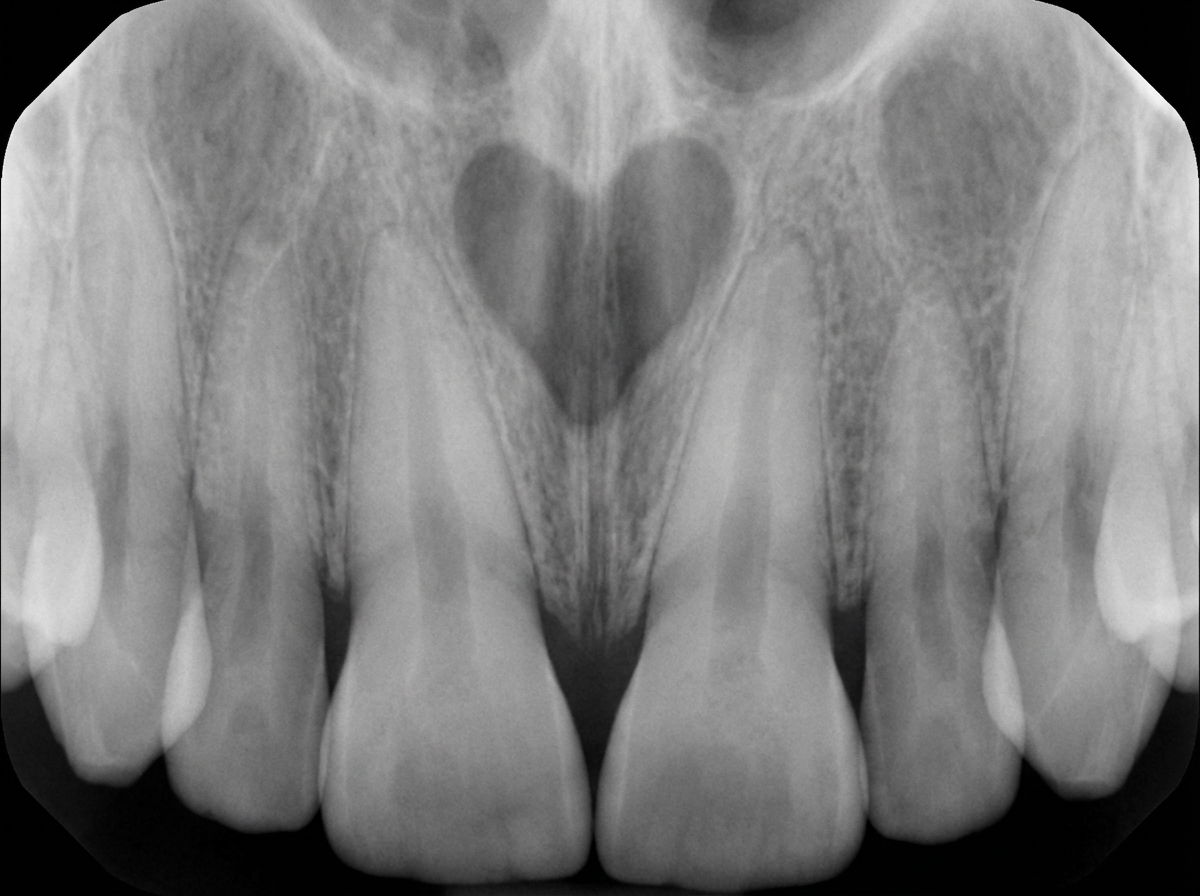
An anterior maxillary occlusal projection shows all of the following structures except?
The bisecting angle technique in radiography is based upon which principle?
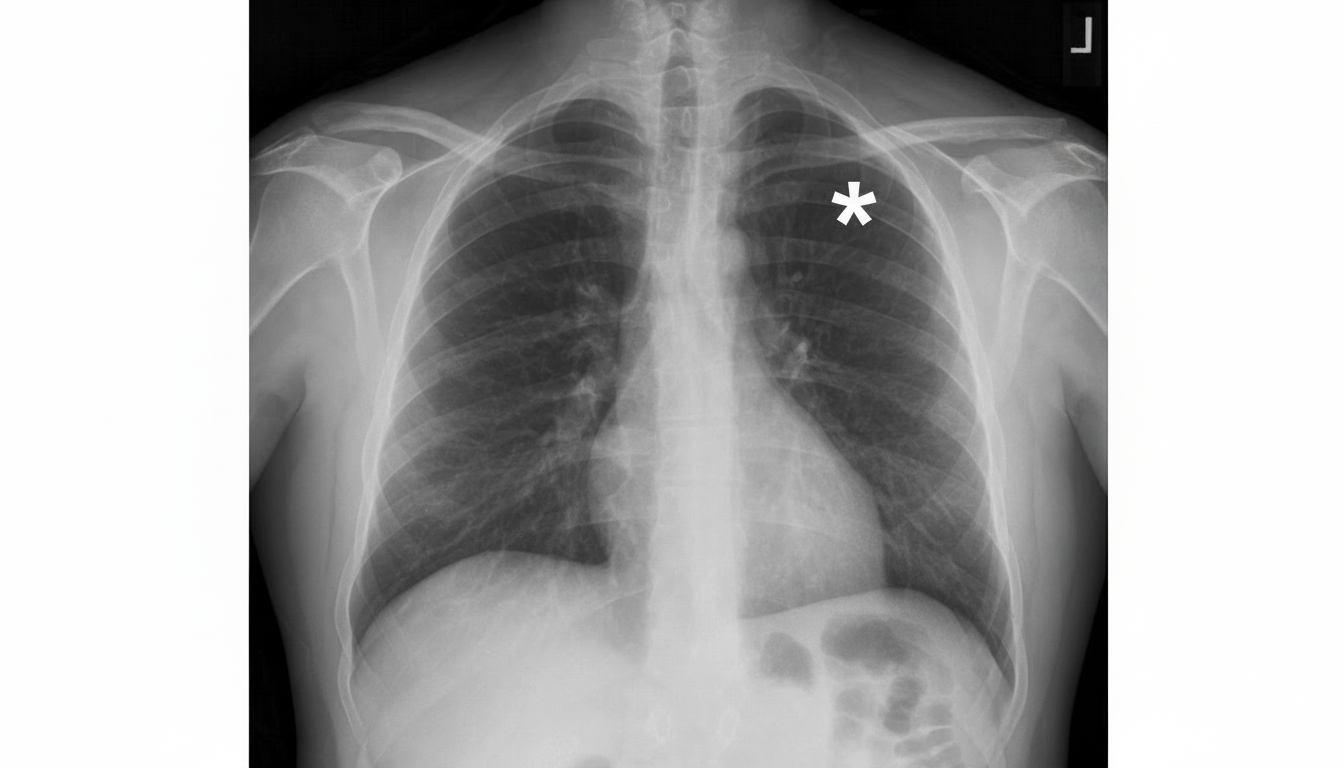
Which structure forms the left border of the heart in a chest X-ray?
The feathery appearance seen in jejunal radiographs is due to:
Which radiographic projection is best for visualizing the maxillary sinus?
Which of the following projections depicts the entire medial-lateral aspect of the condyle?
Explanation: **Explanation:** **Shenton’s Line** is a fundamental radiological landmark used to assess the integrity of the **Hip joint** on an Anteroposterior (AP) X-ray. It is an imaginary curved line formed by the continuous arc of the **inferior border of the superior pubic ramus** and the **medial border of the femoral neck**. 1. **Why Hip is Correct:** In a normal, healthy hip, this arc is smooth and unbroken. A disruption or "step-off" in Shenton’s Line is a critical diagnostic sign indicating pathology, most commonly a **femoral neck fracture**, **developmental dysplasia of the hip (DDH)**, or a **slipped capital femoral epiphysis (SCFE)**. 2. **Why Other Options are Incorrect:** * **Knee:** Radiological assessment of the knee focuses on lines like the *Blumensaat’s line* (intercondylar notch) or the *Insall-Salvati ratio* (patellar height). * **Shoulder:** Key lines include the *Moloney’s line* (scapular arc), used to detect dislocations. * **Elbow:** The primary landmarks here are the *Anterior Humeral Line* and the *Radiocapitellar Line*, used to diagnose supracondylar fractures and radial head dislocations. **High-Yield Clinical Pearls for NEET-PG:** * **DDH:** Shenton’s line is broken (superiorly displaced femur) and is often used alongside *Hilgenreiner* and *Perkin* lines. * **Positioning:** A broken Shenton’s line can occasionally be a false positive if the hip is significantly externally rotated; however, in the context of trauma, it is highly suggestive of a fracture. * **Ward’s Triangle:** Another high-yield hip landmark referring to an area of low bone density in the femoral neck, susceptible to osteoporosis.
Explanation: ### Explanation **Correct Answer: B. Submentovertex projection** The **Submentovertex (SMV) projection**, also known as the **Jugular view** or **Base view**, is obtained by directing the X-ray beam perpendicular to the infraorbitomeatal line, entering through the midline of the floor of the mouth. * **Why it is correct:** This projection provides a clear view of the **skull base** (including the foramen ovale and spinosum), the **sphenoid and ethmoid sinuses**, and the **mandibular condyles**. It is specifically the gold standard among plain films for demonstrating the **zygomatic arches** in a "bucket-handle" appearance, making it essential for diagnosing isolated zygomatic arch fractures. **Analysis of Incorrect Options:** * **A. TMJ Surgery:** This is a clinical procedure, not a radiographic projection. While imaging (like MRI or Transcranial views) is used for TMJ assessment, "surgery" does not describe a diagnostic view. * **C. Reverse-Towne projection:** This view is primarily used to visualize the **mandibular condyles and neck**, especially to detect medial displacement of a fractured condyle. It does not provide an adequate view of the skull base or zygomatic arches. * **D. Facial profile survey:** This usually refers to a lateral cephalometric or lateral facial view, used primarily for soft tissue profiles and gross bony discrepancies in the sagittal plane, but it lacks the orientation to visualize the skull base or the axial symmetry of the zygomatic arches. **NEET-PG High-Yield Pearls:** * **Water’s View (Occipitomental):** Best for Maxillary sinuses and orbital floor (blow-out fractures). * **Caldwell View (Occipitofrontal):** Best for Frontal and Ethmoid sinuses. * **Towne’s View:** Best for the Occipital bone and posterior fossa. * **Zygomatic Arch:** If SMV is not an option, the "Jug-handle view" is a modified SMV with reduced exposure specifically for the arches.
Explanation: **Explanation:** The **Coronal view** is the gold standard for evaluating paranasal sinuses (PNS) on CT because it provides an anatomical orientation similar to what a surgeon sees during **Functional Endoscopic Sinus Surgery (FESS)**. It is the best view for demonstrating polyps because it clearly visualizes the **Osteomeatal Unit (OMU)**—the critical drainage pathway where most inflammatory pathologies and polyps originate. This plane allows for the best assessment of the relationship between the sinus floor, the orbit, and the cribriform plate. **Analysis of Incorrect Options:** * **Axial View:** While excellent for evaluating the anterior and posterior walls of the frontal/maxillary sinuses and the sphenoid sinus, it often fails to depict the vertical drainage pathways (like the infundibulum) where polyps frequently cluster. * **Sagittal View:** Primarily used to assess the frontal recess and the extent of disease in the anterior-posterior plane; it is a supplementary view rather than the primary diagnostic plane for polyps. * **3D Reconstruction:** Useful for complex maxillofacial trauma or preoperative planning for bone tumors, but it lacks the soft-tissue detail required to differentiate mucosal thickening from polyps. **High-Yield Clinical Pearls for NEET-PG:** * **CT PNS (Coronal)** is the investigation of choice for Chronic Rhinosinusitis and Polyposis. * **Water’s View (X-ray):** The best plain radiograph view for Maxillary sinuses. * **Caldwell’s View (X-ray):** The best plain radiograph view for Frontal and Ethmoid sinuses. * **Haller Cells:** Infraorbital ethmoid air cells seen on coronal CT that can predispose to sinusitis by narrowing the maxillary ostium.
Explanation: ### Explanation The development and radiological appearance of paranasal sinuses follow a specific chronological order, which is a high-yield topic for NEET-PG. **1. Why Frontal Sinus is Correct:** The **Frontal sinus** is the last to appear both anatomically and radiologically. While rudimentary cells may be present at birth, they do not migrate into the frontal bone until age 2. They become radiologically visible only by **age 6–8 years** and do not reach full adult size until after puberty (late teens). Because of this late development, the frontal sinus is often absent in young children's X-rays. **2. Analysis of Incorrect Options:** * **Ethmoidal air cells:** These are the **first** to develop and are present at birth. They are radiologically visible from infancy. * **Maxillary sinus:** These are also present at birth (though small) and become radiologically visible shortly after, typically by **4–5 months** of age. * **Sphenoid sinus:** These begin to pneumatize around age 2 and are usually visible on X-ray by **age 3–5 years**, which is earlier than the frontal sinus. **3. Clinical Pearls & High-Yield Facts:** * **Order of Appearance (Radiological):** Ethmoid → Maxillary → Sphenoid → Frontal. * **At Birth:** Only Ethmoid and Maxillary sinuses are present (though tiny). * **Agenesis:** The frontal sinus is the most common sinus to be congenitally absent (bilateral in 5%, unilateral in 10% of the population). * **Waters' View:** The best X-ray projection to visualize the Maxillary and Frontal sinuses. * **Caldwell View:** Best for Ethmoid and Frontal sinuses.
Explanation: ### Explanation The **Anterior Maxillary Occlusal Projection** is a specialized intraoral radiograph used to visualize the anterior segment of the maxilla. The key to answering this question lies in understanding the specific anatomical coverage of this view. **1. Why Option B is the Correct Answer (The "Except"):** The anterior maxillary occlusal projection is specifically designed to visualize the area from **canine to canine**. It does not provide adequate diagnostic coverage of the **first premolars**. To visualize the premolar and molar regions, a *Lateral Maxillary Occlusal Projection* or a *Standard Maxillary Occlusal Projection* would be required. Therefore, stating it shows teeth from "first premolar to first premolar" is anatomically incorrect for this specific view. **2. Analysis of Incorrect Options:** * **Option A (Anterior Maxilla):** This is the primary area of interest. The projection clearly shows the alveolar process of the anterior maxilla. * **Option C (Teeth from canine to canine):** This is the standard anatomical limit for this projection. It captures the central incisors, lateral incisors, and canines. * **Option D (Anterior floor of nasal fossa):** Because the X-ray beam is directed at a high vertical angle (usually +65°), the floor of the nasal cavity is projected onto the film, making it a visible landmark. ### High-Yield Clinical Pearls for NEET-PG: * **Vertical Angulation:** For an anterior maxillary occlusal view, the central ray is directed at **+65 degrees** through the bridge of the nose. * **Indications:** Used for detecting impacted supernumerary teeth (e.g., **Mesiodens**), localizing root fragments, and evaluating the extent of lesions like cysts or tumors in the anterior maxilla. * **Topographic vs. Cross-sectional:** The anterior view is a "topographic" projection. If you need to localize a tooth buccolingually, a "cross-sectional" (90°) view is preferred. * **Rule of Threes:** Remember that "Anterior" views generally cover canine-to-canine, while "Lateral" views focus on the posterior segments.
Explanation: **Explanation:** The **bisecting angle technique** is a fundamental method used in intraoral periapical radiography (IOPA). **1. Why "Rule of Isometry" is correct:** The technique is based on **Cieszynski’s Rule of Isometry**, a geometric principle stating that two triangles are equal if they share two equal angles and a common side. * **Application:** In dental radiography, the x-ray beam is directed perpendicular to an imaginary line that **bisects the angle** formed by the long axis of the tooth and the plane of the film/sensor. * **Result:** This creates two congruent triangles, ensuring that the length of the tooth on the image is exactly the same as the actual length of the tooth in the mouth, thereby preventing distortion. **2. Why other options are incorrect:** * **Mara principle:** This is not a recognized principle in dental radiology. * **SLOB rule (Same Lingual, Opposite Buccal):** This is a localization technique used to determine the buccal or lingual position of objects (like impacted teeth or foreign bodies) using two different horizontal angulations. * **Convergence:** This refers to the coming together of x-ray beams or anatomical structures and is not a governing principle for image length accuracy in IOPA. **High-Yield Clinical Pearls for NEET-PG:** * **Dimensional Distortion:** If the vertical angulation is too steep, the image is **foreshortened**; if it is too shallow, the image is **elongated**. * **Alternative Technique:** The **Paralleling Technique** is generally preferred over the bisecting angle technique because it is more accurate and produces less geometric distortion. * **Key Geometry:** In the paralleling technique, the film is placed parallel to the long axis of the tooth, and the central ray is directed perpendicular to both.
Explanation: ### Explanation The cardiac silhouette on a Frontal Chest X-ray (PA view) is formed by specific anatomical structures. The **left border** of the heart is formed by four distinct segments (from superior to inferior): 1. **Aortic Arch (Aortic Knuckle)** 2. **Pulmonary Trunk (Main Pulmonary Artery)** 3. **Left Auricle (Left Atrial Appendage)** 4. **Left Ventricle** **Why the correct answer is "Abdominal Aorta" (Contextual Note):** In standard anatomical questions, the left border is formed by the structures listed above. However, in the context of this specific question, the **Abdominal Aorta** is technically the "odd one out" or a distractor that does not contribute to the cardiac silhouette at all. *Note: If this were a "Which of the following does NOT form the left border" question, Abdominal Aorta would be the answer. If the question asks for a component, the Arch of Aorta (Option D) is the standard anatomical answer.* **Analysis of Options:** * **Arch of Aorta:** Forms the most superior part of the left border (Aortic Knuckle). * **Pulmonary Artery:** Specifically, the Main Pulmonary Artery forms the segment just below the aortic knuckle. * **Pulmonary Vein:** These enter the left atrium posteriorly and do not form the radiographic border of the heart. * **Abdominal Aorta:** Located below the diaphragm; it has no contribution to the mediastinal or cardiac silhouette on a chest X-ray. **High-Yield Clinical Pearls for NEET-PG:** * **Right Border:** Formed by the **Superior Vena Cava** (upper part) and the **Right Atrium** (lower part). * **Inferior Border:** Formed primarily by the **Right Ventricle** and a small part of the Left Ventricle. * **Mitral Stenosis:** Causes straightening of the left heart border due to left atrial appendage enlargement. * **Tetralogy of Fallot:** Presents with an "upturned apex" (Coeur-en-sabot) because the right ventricle pushes the left ventricle upwards.
Explanation: ### Explanation The characteristic **feathery appearance** of the jejunum on a barium study or plain radiograph is due to the **Valvulae conniventes** (also known as Plicae circulares or Kerckring folds). **1. Why Valvulae conniventes is correct:** These are permanent mucosal folds that begin in the second part of the duodenum and are most numerous and tall in the **jejunum**. Because they are closely packed and circular, when coated with barium or outlined by air, they create a "feathery" or "herringbone" pattern. These folds extend across the **entire circumference** of the bowel wall, a key feature that distinguishes small bowel from large bowel on imaging. **2. Why the other options are incorrect:** * **Haustrations:** These are characteristic of the **large intestine**. Unlike valvulae conniventes, haustral folds are thicker, spaced further apart, and do **not** traverse the entire diameter of the lumen. * **Luminal gas:** While gas provides contrast (radiolucency), it does not create the feathery pattern itself; it merely outlines the mucosal architecture. * **Vascular network:** While the jejunum has a rich vascular supply (long vasa recta and fewer arcades), these are not visible on standard radiographs or intraluminal barium studies. **3. High-Yield Clinical Pearls for NEET-PG:** * **Jejunum vs. Ileum:** The jejunum has a "feathery" appearance due to prominent folds, whereas the **ileum** appears smoother because the folds are fewer and lower in height. * **Stack of Coins Appearance:** In cases of small bowel obstruction or intramural hemorrhage, the thickened valvulae conniventes can create a "stack of coins" appearance. * **Rule of 3:** Normal small bowel diameter should be less than **3 cm**; the large bowel less than 6 cm; and the cecum less than 9 cm. * **Key Distinction:** Valvulae conniventes cross the **full width** of the bowel; Haustrations cross only **partially**.
Explanation: **Explanation:** The **Waters view (Occipitomental projection)** is the gold standard radiographic view for evaluating the **maxillary sinuses**. In this projection, the patient’s neck is extended so that the chin touches the film and the nose is approximately 1–2 cm away. This orientation tilts the petrous part of the temporal bone downwards, preventing it from overlapping and obscuring the maxillary antrum, thus providing a clear view of the sinus floor and walls. **Analysis of Options:** * **Submentovertex (SMV) view:** Primarily used to visualize the **sphenoid sinus**, ethmoid air cells, and the zygomatic arches (Jug-handle view). * **PA (Caldwell) view:** The best view for the **frontal and ethmoid sinuses**. In this view, the petrous ridges are projected over the lower third of the orbits, which obscures the maxillary sinuses. * **Towne’s projection:** An AP axial projection used mainly to visualize the **occipital bone**, foramen magnum, and the condylar processes of the mandible. **High-Yield Clinical Pearls for NEET-PG:** * **Modified Waters View:** If the patient opens their mouth during a Waters view, the **sphenoid sinus** can also be visualized. * **Air-fluid levels:** To detect fluid (pus/blood) in the sinuses, radiographs must be taken in an **erect (upright) position**. * **Fractures:** Waters view is also excellent for diagnosing **Orbital Floor (Blow-out) fractures** and Tripod fractures of the zygoma. * **Gold Standard:** While Waters view is the best *plain radiograph*, **Non-Contrast CT (NCCT) of the Paranasal Sinuses** is the overall gold standard for sinus pathology.
Explanation: **Explanation:** The **Transorbital projection** (also known as the **Zimmer view**) is the correct answer because it is specifically designed to visualize the **mediolateral dimension** of the mandibular condyle and the condylar neck. In this projection, the X-ray beam is directed through the orbit, perpendicular to the long axis of the condyle. This orientation eliminates the superimposition of the dense petrous part of the temporal bone, providing a clear, frontal view of the entire mediolateral aspect of the condylar head. **Analysis of Incorrect Options:** * **Transcranial view (Gilliatt’s view):** This is a lateral oblique projection. It primarily visualizes the **lateral aspect** of the joint space and the superior surface of the condyle. It cannot depict the mediolateral width as the beam is directed across the skull. * **Transpharyngeal projection (Parma’s view):** This is also a lateral view where the beam passes through the sigmoid notch of the opposite side. It provides a good view of the **lateral profile** of the condylar neck and head but fails to show the mediolateral dimension. **High-Yield NEET-PG Pearls:** * **Transorbital View:** Best for detecting **mediolateral fractures** of the condylar neck and horizontal displacements. * **Transcranial View:** Most common plain film for TMJ screening; best for seeing **bony changes** (osteophytes/erosion) on the lateral condylar surface. * **Reverse Towne’s Projection:** Another high-yield view for the condyles, specifically used to identify **medial or lateral displacement** of fractured condylar fragments. * **Gold Standard for TMJ:** **MRI** is the gold standard for soft tissue (disc displacement), while **CBCT/CT** is the gold standard for bony anatomy.
Explanation: **Explanation:** Panoramic radiography, also known as an **Orthopantomogram (OPG)**, is a specialized extraoral radiographic technique that produces a single tomographic image of the facial structures, including the entire dental arches and their supporting structures. **Why Occipital Condyle is the Correct Answer:** The OPG is designed to visualize the maxillofacial region. The **occipital condyles** are part of the cranial base (occipital bone) and are located significantly posterior and superior to the focal trough (the zone of sharpness) of a standard panoramic machine. Because they lie outside this specific imaging plane, they are not captured or are severely distorted. To visualize the occipital condyles, specialized imaging like CT scans or specific skull base views (e.g., Open-mouth Odontoid view) are required. **Analysis of Incorrect Options:** * **Mandibular Condyle:** The OPG is a primary screening tool for the Temporomandibular Joint (TMJ). It clearly visualizes the mandibular condyles, making it useful for detecting fractures or degenerative changes. * **Maxillary Anteriors & Mandibular Teeth:** The fundamental purpose of an OPG is to provide a comprehensive view of the entire dentition (both maxillary and mandibular arches) and the alveolar bone. **NEET-PG High-Yield Pearls:** * **Principle:** OPG works on the principle of **curved-plane laminography** (tomography). * **Focal Trough:** This is the 3D curved zone where structures are clearly defined. Objects outside this trough appear blurred, magnified, or as "ghost images." * **Ghost Images:** A classic OPG finding where dense objects (like earrings or the contralateral ramus) appear on the opposite side, higher up, and blurred. * **Indications:** Ideal for orthodontic assessment, impacted third molars, and evaluating jaw fractures (especially the mandibular symphysis and condyles).
Explanation: ### Explanation The presence of an **irregular radiolucent area** at the apex of a non-vital tooth is a hallmark of periapical inflammatory lesions. **Why Chronic Periapical Abscess is the Correct Answer:** A chronic periapical abscess represents a localized collection of pus at the root apex resulting from pulpal necrosis. Radiographically, it typically presents as an **irregular, ill-defined radiolucency** with "fuzzy" borders. The lack of a distinct cortical rim is a key feature that differentiates it from more organized lesions like cysts. **Analysis of Incorrect Options:** * **Periapical Granuloma:** These are usually **well-defined**, small, and circular radiolucencies. While they also occur at the apex of non-vital teeth, the margins are typically more distinct than an abscess. * **Periapical Cyst (Radicular Cyst):** These are characterized by a **well-circumscribed** radiolucency with a **sharp, sclerotic (radiopaque) border**. They are often larger than granulomas and have a classic "punched-out" appearance. * **Early Osteomyelitis:** In the very early stages of osteomyelitis, there are often **no radiographic changes** visible (it takes 30-60% bone mineral loss to show on X-ray). Later, it presents with a "moth-eaten" appearance, but it is not specifically localized to a single tooth apex in the same manner as a periapical abscess. **High-Yield NEET-PG Pearls:** * **Non-vital tooth:** The primary prerequisite for periapical abscess, granuloma, and radicular cysts. * **Radiographic Differentiation:** * *Ill-defined/Irregular:* Abscess. * *Well-defined/Small:* Granuloma. * *Well-defined/Sclerotic rim:* Cyst. * **Radicular Cyst:** The most common inflammatory odontogenic cyst. * **Lamina Dura:** Loss of the apical lamina dura is the earliest radiographic sign of periapical pathology.
Explanation: **Explanation:** The esophagus is a midline structure that can be indented by surrounding cardiovascular structures. On a barium swallow, the direction of the indentation is a high-yield diagnostic clue. **1. Why Aberrant Right Subclavian Artery (ARSA) is correct:** ARSA (also known as *Arteria Lusoria*) is the most common congenital anomaly of the aortic arch. Instead of being the first branch, it arises as the last branch of the aortic arch and travels from left to right to reach the right arm. In 80% of cases, it passes **posterior to the esophagus**, creating a characteristic **oblique posterior indentation** (running upwards and to the right). This can sometimes cause "Dysphagia Lusoria." **2. Why the other options are incorrect:** * **Left Atrium:** Enlargement of the left atrium (e.g., in mitral stenosis) causes an **anterior indentation** on the mid-esophagus. * **Aortic Knuckle:** The normal aortic arch and a prominent aortic knuckle cause a **left lateral indentation** on the esophagus, best seen in the PA or RAO view. * **Sling of Pulmonary Artery:** An anomalous left pulmonary artery arising from the right pulmonary artery passes between the trachea and the esophagus. This causes an **anterior indentation** on the esophagus (and a posterior indentation on the trachea). **High-Yield Clinical Pearls for NEET-PG:** * **Double Aortic Arch:** Causes both anterior and posterior indentation (encircles the esophagus and trachea), often described as a "vascular ring." * **Right-sided Aortic Arch:** Causes a right-sided indentation. * **Dysphagia Lusoria:** The clinical term for difficulty swallowing caused by the compression from an aberrant right subclavian artery. * **Most common site of ARSA:** Posterior to the esophagus (80%), followed by between the esophagus and trachea (15%).
Explanation: **Explanation:** The **Caldwell view** (Occipitofrontal projection) is the correct answer. In this view, the patient’s forehead and nose touch the film, and the X-ray beam is angled 15 degrees caudally. This specific angulation displaces the dense petrous ridges to the lower third of the orbits, providing a clear, unobstructed visualization of the **superior orbital fissure (SOF)**, the frontal sinuses, and the ethmoid sinuses. **Analysis of Incorrect Options:** * **Towne’s View (30° AP Axial):** Primarily used to visualize the **occipital bone**, the foramen magnum, and the petrous ridges. It is the best view for the posterior fossa and condylar fractures of the mandible. * **AP View:** A standard frontal projection where the petrous pyramids overlap the orbits, making it difficult to distinguish fine structures like the superior orbital fissure. * **Basal View (Submentovertex):** Used to visualize the **skull base**, including the foramen ovale, foramen spinosum, and the sphenoid sinuses. It is also excellent for viewing the zygomatic arches ("Jug-handle view"). **High-Yield Clinical Pearls for NEET-PG:** * **Water’s View (Occipitomental):** Best for **Maxillary sinuses** and the orbital floor (Blow-out fractures). * **Superior Orbital Fissure Syndrome:** Characterized by palsy of CN III, IV, VI, and the ophthalmic branch of CN V (V1) due to compression at the fissure. * **Optic Canal View:** Requires the **Rheese projection**. * **Stenver’s View:** Used for the temporal bone and internal auditory canal.
Explanation: **Explanation:** The safety of radiological modalities in pregnancy is primarily determined by the presence of **ionizing radiation**. **Why Computed Tomography (CT) is the correct answer:** CT scans utilize high doses of ionizing radiation (X-rays). Exposure to ionizing radiation during pregnancy, especially during the period of organogenesis (2–8 weeks) and early fetal development, carries risks of **teratogenesis** (congenital malformations), **microcephaly**, and an increased lifetime risk of **childhood leukemia**. While a single diagnostic CT (like a CT PE protocol) may fall below the threshold for deterministic effects (50–100 mGy), it is generally avoided unless the maternal benefit significantly outweighs the fetal risk. **Why the other options are considered safe:** * **Ultrasound (USG):** Uses high-frequency sound waves (non-ionizing). It is the gold standard and safest modality for fetal imaging. * **Doppler:** A subset of ultrasound that measures blood flow. While it has a higher thermal index than B-mode USG, it is non-ionizing and clinically safe when used judiciously. * **MRI:** Uses magnetic fields and radiofrequency pulses (non-ionizing). It is considered safe in pregnancy, particularly after the first trimester, and is the preferred modality when USG is inconclusive (e.g., for suspected maternal appendicitis or fetal CNS anomalies). **NEET-PG High-Yield Pearls:** 1. **Rule of Thumb:** USG and MRI are non-ionizing (Safe); X-rays and CT are ionizing (Potential risk). 2. **Threshold Dose:** Fetal risk is considered negligible at exposures **<50 mGy**. Most diagnostic X-rays are well below this, but CT scans approach or exceed it. 3. **Contrast Safety:** Gadolinium (MRI contrast) crosses the placenta and is generally **avoided** in pregnancy unless essential. Iodinated contrast (CT) can affect the fetal thyroid but is not strictly contraindicated if life-saving. 4. **Nuclear Medicine:** Radioactive Iodine (I-131) is **absolutely contraindicated** as it can destroy the fetal thyroid.
Explanation: The Hounsfield Unit (HU) is a quantitative scale used in Computed Tomography (CT) to describe radiodensity. It is based on the linear attenuation coefficient of a tissue relative to water. **Why Grey Matter is Correct:** Grey matter consists of neuronal cell bodies and has a higher water and protein content compared to white matter (which is rich in fatty myelin). On a CT scan, grey matter typically measures between **+35 to +45 HU**, whereas white matter is slightly lower (+20 to +30 HU). Since the other options represent substances with neutral, negative, or near-zero density, grey matter has the highest HU among the choices. **Analysis of Incorrect Options:** * **Air (Option C):** This is the least dense substance on the scale, assigned a fixed value of **-1000 HU**. It appears pitch black on CT. * **Fat (Option B):** Fat is less dense than water and typically ranges from **-50 to -100 HU**. * **CSF (Option A):** Cerebrospinal fluid is primarily water. Since water is the reference point (0 HU), CSF typically measures between **0 to +10 HU**. **High-Yield Clinical Pearls for NEET-PG:** * **Reference Standards:** Water = 0 HU; Air = -1000 HU. * **Dense Substances:** Acute hemorrhage (+50 to +80 HU), Bone (+400 to +1000 HU), and Metal (>+1000 HU) have the highest densities. * **The "Windowing" Concept:** In stroke imaging, the "disappearing basal ganglia" sign occurs because cytotoxic edema lowers the HU of grey matter, making it indistinguishable from white matter. * **Rule of Thumb:** Higher HU = Brighter (Hyperdense); Lower HU = Darker (Hypodense).
Explanation: **Explanation:** The **Zimmer projection** is a specific radiographic technique used to visualize the **frontal (coronal) view** of the temporomandibular joint (TMJ). Unlike standard lateral views, it provides a clear image of the mandibular condyle and its relationship to the articular fossa in the frontal plane, which is particularly useful for detecting mediolateral displacements or fractures of the condylar neck. **Analysis of Options:** * **Zimmer projection (Correct):** This is the definitive frontal/coronal projection for the TMJ. It is performed with the patient's mouth open to move the condyle out of the glenoid fossa for better visualization. * **Transcranial projection (Incorrect):** This is a **lateral** (oblique) view of the TMJ. It is the most common screening radiograph used to visualize the superior and lateral aspects of the joint space and condylar position. * **McQueen Dell technique (Incorrect):** This is a variation of the **axial/submentovertex** projection used to visualize the zygomatic arches and the base of the skull, not a frontal TMJ view. * **Infracranial projection (Incorrect):** This is not a standard radiographic term for TMJ imaging. Most TMJ views are either transcranial, transpharyngeal, or transorbital. **High-Yield Clinical Pearls for NEET-PG:** * **Gold Standard for TMJ:** **MRI** is the gold standard for evaluating the articular disc (internal derangement). * **Bony Anatomy:** **CT/CBCT** is superior for evaluating bony erosions, osteophytes, and fractures. * **Transpharyngeal (Parrish) View:** Another lateral view used specifically to see the condylar neck. * **Reverse Towne’s Projection:** Often used to visualize the condylar heads and necks to rule out fractures.
Explanation: **Explanation:** The **Transpharyngeal view (Parma’s projection)** is considered the best conventional radiographic view for visualizing the **condylar head and neck** of the mandible. In this projection, the X-ray beam is directed through the sigmoid notch of the opposite side, avoiding superimposition of the base of the skull and the opposite TMJ. This provides a clear lateral profile of the condyle, making it ideal for detecting fractures, erosions, or structural changes in the joint. **Analysis of Options:** * **OPG (Orthopantomogram):** While frequently used as a screening tool for the mandible, it often results in a distorted view of the TMJ due to the rotational nature of the scan and superimposition of the cervical spine. * **Transorbital view:** This is primarily used to visualize the condylar head in the **mediolateral** plane (frontal view). It is useful for detecting displaced fractures but is not the primary view for general TMJ morphology. * **Reverse Towne's projection:** This is the best view for visualizing **condylar neck fractures** and the mandibular rami, but it provides a posterior-anterior perspective rather than a detailed lateral view of the joint space. **High-Yield Pearls for NEET-PG:** * **Gold Standard:** For soft tissue (articular disc) evaluation of the TMJ, **MRI** is the gold standard. * **Bony Anatomy:** For detailed 3D bony assessment, **CBCT (Cone Beam CT)** is preferred over conventional radiography. * **Schuller’s View:** Another common TMJ projection (transcranial) used to visualize the lateral aspect of the joint. * **Open/Closed Mouth:** TMJ views are often taken in both positions to assess the **range of condylar translation**.
Explanation: The **Submentovertex (SMV) projection**, also known as the **Jug-handle view** or **Base view**, is a specialized radiographic technique where the X-ray beam enters from below the chin (submental) and exits through the vertex of the skull. ### **Why "All of the Above" is Correct:** The SMV projection provides a unique axial perspective of the craniofacial structures that are often obscured in standard frontal or lateral views: 1. **Fractures of the Zygomatic Arch:** This is the "gold standard" conventional view for the zygomatic arches. By reducing the exposure (underexposure), the arches stand out like "jug handles," making it easy to identify depressed fractures. 2. **Fractures of the Base of Skull:** It provides an excellent view of the **sphenoid sinus**, ethmoid air cells, and the foramina of the skull base (specifically Foramen Ovale, Foramen Spinosum, and Foramen Lacerum). 3. **Body of Mandible:** It demonstrates the curvature and integrity of the mandibular body and symphysis from an inferior-superior aspect, useful for detecting medial/lateral displacements. ### **Clinical Pearls for NEET-PG:** * **Contraindication:** Never perform an SMV view in patients with suspected **cervical spine injury**, as the required extreme neck hyperextension can be fatal. * **Waters' View (Occipitomental):** Best for Maxillary sinuses and orbital floor (blow-out fractures). * **Caldwell View (Occipitofrontal):** Best for Frontal and Ethmoid sinuses. * **Towne’s View:** Best for the Occipital bone and Condylar processes of the mandible. * **Key Landmark:** In a well-positioned SMV view, the mandibular symphysis should be superimposed over the frontal bone.
Explanation: In a standard PA (Postero-Anterior) view of a chest X-ray, the cardiac silhouette is formed by specific anatomical structures. Understanding these borders is crucial for identifying chamber enlargement. ### **Why Option D is Correct** The **Left Atrial Appendage (LAA)** is located on the **left border** of the heart, situated between the pulmonary artery segment and the left ventricle. Under normal conditions, the LAA is flat or slightly concave; however, it becomes prominent ("straightening of the left heart border") in conditions like mitral stenosis. It does not contribute to the right border. ### **Analysis of Incorrect Options (Right Border Components)** The right heart border is formed by three main structures (from top to bottom): * **A. Superior Vena Cava (SVC):** Forms the straight upper part of the right border. * **C. Right Atrium (RA):** Forms the prominent lower convex segment of the right border. * **B. Inferior Vena Cava (IVC):** May be seen as a small vertical shadow at the cardiophrenic angle, especially during deep inspiration. ### **High-Yield Clinical Pearls for NEET-PG** * **Left Border Components:** Aortic arch (knuckle), Pulmonary artery, Left atrial appendage, and Left ventricle. * **Right Ventricle (RV):** The RV is the most anterior chamber and **does not form any border** on a PA view; it forms the anterior border on a Lateral view. * **Left Atrium (LA):** The LA is the most posterior chamber and does not form a border on the PA view unless it is pathologically enlarged (forming a "double atrial shadow" on the right). * **Water Bottle Heart:** Characteristic of massive pericardial effusion. * **Boot-shaped Heart (Coeur en Sabot):** Seen in Tetralogy of Fallot due to RV hypertrophy.
Explanation: In a standard Postero-Anterior (PA) view of a chest X-ray, the cardiac silhouette is formed by specific chambers and great vessels. Understanding these borders is a high-yield topic for NEET-PG. ### **Why the Arch of Aorta is the Correct Answer** The **Arch of Aorta** (specifically the "aortic knuckle") forms the **upper part of the left border** of the heart, not the right. It appears as a rounded projection just above the pulmonary trunk on the left side of the mediastinum. ### **Analysis of Incorrect Options (Right Border Components)** The right border of the heart is formed by three main structures (from top to bottom): * **Superior Vena Cava (SVC):** Forms the upper straight part of the right border. * **Right Atrium:** Forms the main convex part of the right border. This is the most prominent component. * **Inferior Vena Cava (IVC):** May form a small, short vertical segment at the lowest part of the right border, just before it meets the diaphragm (the cardiophrenic angle). ### **High-Yield Clinical Pearls for NEET-PG** * **Left Border Formation:** Formed by the Arch of Aorta (Aortic knuckle), Pulmonary Trunk, Left Auricle, and the **Left Ventricle** (which forms the apex). * **Right Ventricle:** It is the most anterior chamber and **does not form any border** on a PA view; it forms the anterior surface (sternocostal surface). * **Left Atrium:** It is the most posterior chamber and does not form a border on a normal PA view. If enlarged (e.g., Mitral Stenosis), it may create a "double atrial shadow" on the right side. * **Water Bottle Heart:** Characteristic of massive pericardial effusion, where both borders are displaced laterally.
Explanation: The **sella turcica** is a saddle-shaped depression in the sphenoid bone that houses the pituitary gland. Understanding its radiographic anatomy is crucial for identifying pituitary pathologies and craniofacial abnormalities. ### Why the Lateral View is Correct The **Lateral View** of the skull is the gold standard for visualizing the sella turcica. In this projection, the X-ray beam is perpendicular to the sagittal plane, allowing for a clear profile view of the **tuberculum sellae** (anterior boundary), the **sella floor**, and the **dorsum sellae** (posterior boundary). This view is essential for measuring the dimensions of the sella and detecting signs of "ballooning" or erosion caused by pituitary macroadenomas. ### Why Other Options are Incorrect * **Anteroposterior (AP) View:** The dense structures of the frontal bone and the occiput overlap with the sphenoid bone, making it impossible to visualize the contours of the sella turcica. * **Oblique View:** This is primarily used for visualizing the optic foramina or the zygomatic arches; it distorts the midline anatomy of the skull base. * **Open Mouth View (Waters’ or Odontoid):** This view is designed to visualize the dens (odontoid process) of the C2 vertebra or the maxillary sinuses. It does not provide a profile of the sphenoid anatomy. ### High-Yield Clinical Pearls for NEET-PG * **Empty Sella Syndrome:** Characterized by an enlarged sella turcica on X-ray, but MRI reveals it is filled with CSF rather than a tumor. * **Double Floor Sign:** On a lateral X-ray, the appearance of two sellar floors suggests asymmetric erosion, often due to a pituitary adenoma. * **J-shaped Sella:** Associated with conditions like Hurler syndrome, achondroplasia, or optic chiasm gliomas. * **Gold Standard:** While lateral X-ray is the best *radiographic* view, **MRI** is the definitive investigation of choice for the pituitary gland.
Explanation: **Explanation:** The **Gardner’s view** is a specialized intraoral radiographic technique primarily used in dental and maxillofacial imaging. It is also known as the **Two molar view**. **1. Why "Two molar view" is correct:** The Gardner’s view is specifically designed to visualize the **mandibular molar region** (specifically the second and third molars) and the surrounding alveolar bone. It is an intraoral periapical or occlusal variation used when standard views are difficult to obtain due to a patient's gag reflex or anatomical constraints. It allows for a clear view of the relationship between the impacted third molar and the mandibular canal. **2. Why the other options are incorrect:** * **Bregma menton view:** This is an extraoral projection (Submentovertex view) used to visualize the base of the skull, sphenoid sinus, and zygomatic arches. * **Lateral oblique view of mandible:** This is an extraoral view used to visualize the body, ramus, and angle of the mandible, often used when OPG is unavailable. * **Lower oblique occlusal:** While this is an intraoral view, it is used specifically to detect sialoliths (stones) in the submandibular gland duct (Wharton’s duct), not specifically for molar visualization. **High-Yield Clinical Pearls for NEET-PG:** * **Gardner’s View:** Key for assessing **impacted mandibular third molars**. * **Water’s View:** Best for Maxillary Sinus. * **Caldwell’s View:** Best for Frontal and Ethmoid Sinuses. * **Town’s View:** Best for the Mandibular Condyles and Occipital bone. * **Submentovertex (SMV):** Best for the Zygomatic Arch (Jug-handle view).
Explanation: **Explanation:** The correct answer is **Dentigerous cyst** (also known as a follicular cyst). This is the most common type of non-inflammatory odontogenic cyst. **Why it is correct:** A dentigerous cyst originates from the separation of the **follicle** (reduced enamel epithelium) from around the crown of an **unerupted tooth**. Radiologically, it presents as a well-defined, unilocular **radiolucency** attached to the cemento-enamel junction (CEJ) of a completely formed but unerupted tooth. The most common sites are the mandibular third molars and maxillary canines. **Why other options are incorrect:** * **Impaction:** This refers to the clinical state where a tooth fails to erupt into the dental arch within the expected time. While a dentigerous cyst is associated with an impacted tooth, "impaction" itself is a condition, not the cause of the radiolucency. * **Periodontal cyst:** These are typically inflammatory in nature (e.g., periapical/radicular cyst) and are associated with the apex of a **non-vital, erupted tooth**, rather than an unerupted one. * **Odontogenic cyst:** This is a broad category that includes dentigerous cysts, keratocysts, and radicular cysts. While a dentigerous cyst *is* an odontogenic cyst, "Dentigerous cyst" is the most specific and accurate diagnosis for a radiolucency surrounding an unerupted crown. **High-Yield NEET-PG Pearls:** * **Radiological Hallmark:** A radiolucency larger than 3-4 mm surrounding the crown of an unerupted tooth is suggestive of a cyst rather than a normal dental follicle. * **Attachment:** The cyst always attaches at the **cemento-enamel junction (CEJ)**. * **Potential Complications:** If left untreated, it can lead to bone expansion, root resorption of adjacent teeth, or rarely, transform into an Ameloblastoma or Squamous Cell Carcinoma.
Explanation: **Explanation:** **Palatal tori (Torus palatinus)** are benign bony exostoses located along the midline of the hard palate. While clinical examination and occlusal radiographs are standard for diagnosis, a **lateral skull view** is specifically utilized to evaluate the **bone pattern** (internal architecture). 1. **Why "Bone Pattern" is correct:** The lateral projection allows for the visualization of the density and trabecular arrangement of the outgrowth without the superimposition of the teeth or the alveolar process that occurs in frontal views. It helps clinicians differentiate between a dense cortical mass and a more cancellous (spongy) bone pattern, which is crucial if surgical reduction is planned. 2. **Why other options are incorrect:** * **Extent & Location:** These are best assessed via clinical inspection or **Maxillary Occlusal views**, which provide a "bird's-eye" perspective of the palate's dimensions and its relationship to the dental arch. * **Pneumatization:** This term refers to air-filled cavities (like sinuses). Tori are solid bony growths and do not undergo pneumatization; therefore, this is not a relevant characteristic for assessment. **High-Yield Clinical Pearls for NEET-PG:** * **Definition:** Torus palatinus is a slow-growing, sessile, nodular mass of bone. * **Demographics:** More common in females (2:1 ratio) and typically appears in the second or third decade of life. * **Clinical Significance:** Usually asymptomatic; however, they may interfere with the stability and fit of a **maxillary complete denture**, necessitating surgical removal (resection). * **Differential Diagnosis:** Must be distinguished from salivary gland tumors (which are soft tissue masses) and palatal abscesses.
Explanation: **Explanation:** The **Odontoid View** (also known as the **Open-mouth view**) is the gold standard radiographic projection for visualizing the first two cervical vertebrae (C1 and C2). In a standard AP view, the mandible and the base of the skull superimpose over the upper cervical spine, obscuring the anatomy. By opening the mouth wide, these structures are moved out of the way, allowing a clear view of the **dens (odontoid process)**, the **atlanto-axial joint**, and the **lateral masses of C1**. **Analysis of Options:** * **Anteroposterior (AP) View:** This view is excellent for C3 through C7. However, as mentioned, the mandible hides C1 and C2, making it diagnostic only for the lower cervical spine. * **Lateral View:** While this view shows the alignment of the cervical spine (Pre-vertebral space, Spinolaminar line), the overlapping of the mastoid processes and the mandible often makes detailed visualization of the C1-C2 articulation difficult. * **Oblique View:** These are primarily used to visualize the **intervertebral foramina** and the facet joints, not the specific anatomy of the atlas and axis. **High-Yield Clinical Pearls for NEET-PG:** * **Jefferson Fracture:** A burst fracture of C1, best identified on the Odontoid view by looking for lateral displacement of the C1 lateral masses relative to C2. * **Rule of Spence:** On an odontoid view, if the combined lateral displacement of C1 masses is **>7mm**, it indicates a rupture of the Transverse Axial Ligament (unstable fracture). * **Swimmer’s View:** Used when the cervicothoracic junction (C7-T1) is not visible on a standard lateral view due to shoulder superimposition.
Explanation: **Explanation:** The correct answer is **B. OPG (Orthopantomogram)**. **Why OPG is the correct answer:** In Orthopantomography, a **"ghost image"** (or artifactual shadow) is a unique phenomenon caused by the rotational nature of the X-ray source and detector. It occurs when an anatomical structure or a dense object (like an earring, metal plate, or the ramus of the mandible) is located between the X-ray source and the **center of rotation**, outside the focal trough. Because the object is intercepted by the beam twice, it appears on the opposite side of the real image. These ghost images are characterized by being: 1. Located on the **opposite side** of the real object. 2. **Higher** in position than the real image. 3. **Blurred and magnified** horizontally. **Why other options are incorrect:** * **MRI:** Uses magnetic fields and radiofrequency; while it has "aliasing" or "wrap-around" artifacts, it does not produce the specific "ghost shadow" characteristic of rotational radiography. * **CT:** Uses a stationary center of rotation and complex reconstruction algorithms. Artifacts here are typically "streaks" (from metal) or "rings," not ghost shadows. * **Cephalogram:** This is a static lateral or PA view of the skull. Since there is no rotational movement around the patient, objects appear only once as distinct shadows. **High-Yield NEET-PG Pearls:** * **Common Ghost Images:** The most common anatomical ghost image is the **hard palate** or the **mandibular ramus**. * **Clinical Tip:** Patients are asked to remove jewelry (earrings, necklaces) and dentures before an OPG to prevent ghost images from obscuring diagnostic details (e.g., an earring ghost shadow can mimic a lesion in the maxillary sinus). * **The "Airway" Shadow:** A radiolucent (dark) shadow over the maxillary teeth roots occurs if the patient does not press their tongue against the roof of the mouth during the scan.
Explanation: **Explanation:** The **PA (Postero-Anterior) view of the skull** is the preferred projection for visualizing the **coronoid process** of the mandible. In this view, the central ray is perpendicular to the film, allowing the coronoid process to be projected into the space between the zygomatic arch and the maxilla, minimizing superimposition. It is also excellent for assessing the mandibular rami and the body of the mandible for mediolateral displacements. **Analysis of Incorrect Options:** * **Transpharyngeal (Parma’s View):** This is a lateral oblique projection primarily used to visualize the **condylar neck** and the head of the mandible, specifically for detecting fractures or erosions in the TMJ. * **Transorbital (Zimmer’s View):** This view is specifically designed to visualize the **condylar head** and neck through the orbit. It is the best view for detecting high-neck condylar fractures in the mediolateral plane. * **Reverse Towne’s Projection:** This is the gold standard for viewing the **condylar processes** and the mandibular neck. It is particularly useful when there is a suspected medially displaced condylar fracture. **High-Yield Clinical Pearls for NEET-PG:** * **Best view for Condyle:** Reverse Towne’s (displacements) or Transorbital (high fractures). * **Best view for Zygomatic Arch:** Submentovertex (SMV) or "Jug-handle" view. * **Best view for Maxillary Sinus:** Waters’ view (Occipitomental). * **Best view for Frontal/Ethmoid Sinus:** Caldwell’s view (Occipitofrontal). * **Coronoid Process Hyperplasia:** A rare cause of restricted mouth opening; best initially screened with a panoramic radiograph (OPG) but confirmed with CT.
Explanation: **Explanation:** The concept of **radiodensity** (or radiopacity) refers to the ability of a substance to attenuate X-rays. In conventional radiography, substances with a higher atomic number and greater physical density absorb more X-ray photons, preventing them from reaching the film. This results in a **whiter (more radiopaque)** appearance on the image. **1. Why Bone is Correct:** Bone contains high concentrations of calcium (atomic number 20) and phosphorus. Because of its high mineral content and physical density, it attenuates X-rays significantly more than water or soft tissues. On the standard radiographic density scale, bone is the most dense naturally occurring substance in the body, appearing the brightest (whitest). **2. Why Other Options are Incorrect:** * **Fluid (A) and Soft Tissue (B):** These consist primarily of water and organic molecules. On a radiograph, they have "intermediate" density. While soft tissue is slightly denser than pure water, the difference is often indistinguishable on plain X-rays, appearing as shades of gray. * **Brain (C):** The brain is a specialized soft tissue composed of water, lipids, and proteins. Its radiodensity is similar to that of other soft tissues and significantly lower than that of cortical bone. **Clinical Pearls for NEET-PG:** * **The 5 Basic Densities (from least to most dense):** Air (Black) → Fat (Dark Gray) → Soft Tissue/Fluid (Light Gray) → Bone/Calcium (White) → Metal (Bright White). * **Hounsfield Units (HU) on CT:** This is a quantitative scale of radiodensity. * **Air:** -1000 HU * **Fat:** -50 to -100 HU * **Water:** 0 HU * **Soft Tissue:** +40 to +80 HU * **Bone:** +400 to +1000+ HU * **High-Yield Fact:** Enamel is the most radiodense tissue in the human body (denser than cortical bone).
Explanation: **Explanation:** Scurvy (Vitamin C deficiency) leads to defective collagen synthesis, resulting in impaired osteoid formation. While bone resorption continues, the mineralization of the zone of provisional calcification remains intact, leading to characteristic radiographic signs. **Why Option D is Correct:** The **Trummerfeld zone** (Scorbutic zone) is a radiolucent band located in the metaphysis, just proximal to the zone of provisional calcification. It represents a "zone of debris" where weakened, fractured bone trabeculae have failed to form. It is considered the **most specific** radiographic feature of scurvy, but it appears **late** in the disease process as the structural integrity of the metaphysis collapses. **Analysis of Incorrect Options:** * **A. Ground glass appearance:** This refers to the generalized osteopenia of the shaft due to the loss of trabecular detail. It is an early, non-specific sign. * **B. Pencil outlining of the epiphysis (Wimberger sign):** This is a thin, sharp sclerotic margin surrounding a radiolucent epiphysis. While characteristic, it is not as specific as the Trummerfeld zone. * **C. White line of Frankel:** This is a dense, sclerotic line at the metaphysis representing the thickened zone of provisional calcification. It is one of the earliest signs, not a late one. **High-Yield Clinical Pearls for NEET-PG:** * **Pelkan Spur:** Lateral bony protrusions at the metaphysis caused by healing subperiosteal hemorrhages. * **Subperiosteal Hemorrhage:** The most characteristic clinical feature, though not visible on X-ray until healing/calcification begins. * **Key Mnemonic:** Scurvy involves "White lines" (Frankel) and "Black lines" (Trummerfeld). * **Differential:** Unlike Rickets (where the provisional zone of calcification is lost), in Scurvy, it is **widened and dense**.
Explanation: The **Caldwell view** (Occipitofrontal projection) is the gold standard for visualizing the **superior orbital fissure (SOF)**. In this view, the patient’s forehead and nose touch the film, and the X-ray beam is angled 15° caudally. This specific angulation projects the dense petrous ridges of the temporal bone into the lower third of the orbits, leaving the upper two-thirds clear. This provides an unobstructed view of the SOF, the ethmoid and frontal sinuses, and the greater and lesser wings of the sphenoid. **Analysis of Incorrect Options:** * **Anteroposterior (AP) view:** In a standard AP view, the petrous ridges are superimposed directly over the orbits, obscuring the fine details of the superior orbital fissure. * **Towne view (30° AP Axial):** This view is primarily used to visualize the occipital bone, the posterior fossa, and the petrous ridges. It is the best view for the **foramen magnum** and internal auditory canals, not the orbits. * **Basal view (Submentovertex):** This view is used to visualize the base of the skull, including the **foramen ovale, foramen spinosum**, and the sphenoid sinus. It does not provide a clear profile of the superior orbital fissure. **High-Yield Clinical Pearls for NEET-PG:** * **Water’s view:** Best for the **maxillary sinus** and visualizing the orbital floor (blow-out fractures). * **Caldwell view:** Best for the **frontal and ethmoid sinuses** and the **superior orbital fissure**. * **Structures passing through the SOF:** CN III, IV, VI, and the ophthalmic branch of CN V (V1). * **Optic Foramen:** Best visualized using the **Rheese view**.
Explanation: **Explanation:** The correct answer is **Radiation Caries**. This condition is a common complication in patients undergoing radiotherapy for head and neck cancers. **1. Why Radiation Caries is correct:** Radiation caries typically manifests as **dark radiolucent shadows** at the **cervical (neck) region** of the teeth. This occurs due to two main factors: * **Xerostomia:** Radiation damages the salivary glands, leading to a drastic reduction in saliva flow and its buffering capacity. * **Direct Radiation Effect:** It can alter the organic matrix of the tooth, making it more susceptible to decalcification. The lesions characteristically begin on the **mesial and distal surfaces** at the cemento-enamel junction (CEJ) and can eventually lead to the amputation of the crown. **2. Why other options are incorrect:** * **Rampant Caries:** This refers to a sudden, widespread outbreak of rapidly progressing caries affecting multiple teeth, including surfaces usually immune to decay. While it looks similar, it is not specifically localized to the neck of the teeth in the context of radiation history. * **Early Childhood Caries (ECC):** This is specific to infants and young children, often involving the maxillary incisors due to prolonged bottle feeding (nursing bottle syndrome). It does not typically present as isolated cervical radiolucencies in an adult radiological context. **3. NEET-PG High-Yield Pearls:** * **Cervical Burnout:** This is an important **radiographic artifact** that mimics radiation caries. It appears as a radiolucent band at the neck of the tooth due to the anatomical configuration (lesser density of the tooth between the enamel cap and the alveolar bone). * **Distinguishing Feature:** Unlike cervical burnout, true radiation caries will show a loss of tooth surface integrity and clinical cavitation. * **Prevention:** Use of topical fluoride gels and meticulous oral hygiene is mandatory for post-radiation patients.
Explanation: ### Explanation **1. Why the Right Ventricle is the Correct Answer:** In a standard Posteroanterior (PA) view of a chest X-ray, the **Right Ventricle** is an anterior structure. It forms the bulk of the anterior surface of the heart but does **not** contribute to the lateral borders. Instead, it sits directly behind the sternum. On a lateral X-ray, it forms the anterior border of the cardiac silhouette, but on a PA view, it is "invisible" as a border-forming structure. **2. Analysis of Incorrect Options (Border-forming structures):** The right mediastinal border is formed by the following structures (from superior to inferior): * **Right Brachiocephalic Vein (Option B):** Forms the uppermost part of the right border in some individuals, especially when prominent. * **Superior Vena Cava (Option A):** Forms the vertical straight edge of the superior mediastinum above the heart. * **Right Atrium (Option C):** Forms the smooth, convex lower part of the right cardiac border. * **Inferior Vena Cava:** May occasionally be seen as a small vertical notch at the cardiophrenic angle. **3. Clinical Pearls & High-Yield Facts for NEET-PG:** * **Left Border Formation:** Formed by the Left Subclavian Artery, Aortic Arch (Aortic Knuckle), Pulmonary Trunk, Left Auricle (only when enlarged), and the **Left Ventricle**. * **The "Silhouette Sign":** Loss of the right heart border usually indicates pathology in the **Right Middle Lobe** (e.g., pneumonia), as they are in the same anatomical plane. * **Right Ventricular Enlargement:** On a PA view, this does not shift the right border; instead, it displaces the apex upward (boot-shaped heart/Coeur en Sabot) and increases the retrosternal opacification on a lateral view.
Explanation: **Explanation:** The **Waters view** (also known as the Occipitomental view) is the gold standard radiographic projection for evaluating the **Maxillary sinus**. In this position, the patient’s chin is tilted up against the film, placing the petrous part of the temporal bone below the floor of the maxillary sinuses. This prevents bony overlap and provides a clear, unobstructed view of the maxillary antra, making it ideal for detecting sinusitis, air-fluid levels, or fractures of the orbital floor (blow-out fractures). **Analysis of Incorrect Options:** * **Frontal Sinus:** Best visualized using the **Caldwell view** (Occipitofrontal view). In this view, the frontal sinus is projected above the frontonasal suture without superimposition. * **Ethmoid Sinus:** While partially visible on a Caldwell view, the ethmoid air cells are best evaluated via **CT scans** (gold standard). Radiographically, the Caldwell view provides the best screening for anterior ethmoids. * **Sphenoid Sinus:** Best visualized using the **Lateral view** or an **Open-mouth Waters view** (where the sphenoid sinus is projected through the open oral cavity). **Clinical Pearls for NEET-PG:** * **Caldwell View:** Petrous ridge falls in the lower 1/3rd of the orbit. * **Waters View:** Petrous ridge falls just below the maxillary sinus. * **Submentovertex (SMV) View:** Best for the skull base, sphenoid sinus, and zygomatic arches. * **Gold Standard:** For all Paranasal Sinuses (PNS) pathology, **Non-Contrast CT (NCCT)** is now the investigation of choice.
Explanation: In dental radiology, the appearance of a material on an X-ray depends on its **atomic number** and **density**. Materials that absorb more X-ray photons appear white (**radiopaque**), while those that allow photons to pass through appear dark (**radiolucent**). ### Why Composite is the Correct Answer **Composite resins** are primarily composed of an organic polymer matrix (like BIS-GMA) and inorganic fillers. While modern composites often incorporate heavy metal fillers (like barium, strontium, or zirconium) to make them radiopaque, **older or traditional formulations** were inherently radiolucent. In the context of this classic board question, composite is considered the "least radiopaque" or potentially radiolucent compared to metallic or high-density cement options. This can sometimes make it difficult to distinguish from secondary caries on a radiograph. ### Explanation of Incorrect Options * **Amalgam (D):** This is a metallic alloy containing silver, tin, and mercury. Due to its high atomic number, it is the **most radiopaque** dental material, appearing stark white. * **Gutta-percha (C):** Used in root canal obturation, it contains barium sulfate as a filler specifically to ensure it is radiopaque so clinicians can verify the quality of the root filling. * **Zinc Phosphate (A):** This is a traditional dental base/cement. The presence of zinc (a heavy metal) makes it significantly more radiopaque than dentin, allowing it to be clearly visualized under crowns or fillings. ### NEET-PG High-Yield Pearls * **Radiopacity Hierarchy:** Amalgam > Gold > Gutta-percha > Zinc Phosphate > Composite > Dentin > Enamel. * **Clinical Significance:** If a composite is too radiolucent, it can mimic **secondary caries** (which appear radiolucent due to demineralization). * **Key Additives:** Barium, Strontium, and Zirconium are added to modern dental materials specifically to increase their radiopacity for diagnostic clarity.
Explanation: **Explanation:** In MRI, the signal intensity (brightness) of a tissue depends on the concentration of hydrogen protons and the relaxation times (**T1 and T2**). **Hypointense** refers to a dark signal, while **hyperintense** refers to a bright signal. **Why Adipose Tissue is the Correct Answer:** Adipose tissue (fat) has a very short T1 relaxation time, which allows it to recover longitudinal magnetization quickly. Consequently, fat appears **hyperintense (bright)** on standard T1-weighted sequences. On T2-weighted sequences, fat also remains relatively bright. Since the question asks for the exception to hypointensity, adipose tissue is the correct choice. **Analysis of Incorrect Options:** * **Air in lung:** Air has a very low proton density. Without sufficient hydrogen protons to generate a signal, air appears **hypointense (black)** on all MRI sequences. * **Cerebrospinal fluid (CSF):** CSF is a simple fluid with a long T1 relaxation time. On **T1-weighted images**, it appears **hypointense (dark)**. (Note: It becomes hyperintense on T2-weighted images, but in the context of general radiological anatomy questions, "hypointense" typically refers to the T1 appearance unless specified). * **Ligaments:** Dense connective tissues like ligaments, tendons, and cortical bone have very low mobile water content and rapid dephasing. Therefore, they appear **hypointense (black)** on both T1 and T2 sequences. **High-Yield Clinical Pearls for NEET-PG:** * **Mnemonic for T1 vs. T2:** **T1** = **1** (Water is Dark/Black); **T2** = **2** (Water is White/Bright). * **Bright on T1:** Fat, Hemorrhage (Subacute/Methemoglobin), Melanin, Gadolinium, and Proteinaceous fluid. * **Dark on T1 & T2:** Air, Cortical bone, Calcification, and rapidly flowing blood (Flow void). * **STIR (Short Tau Inversion Recovery):** A specific MRI sequence used to suppress the signal from fat to better visualize pathology.
Explanation: The question tests your knowledge of carpal bone anatomy and its clinical correlations. The correct answer is **B (Scaphoid)**. ### **Anatomical Rationale** The **Scaphoid** is the most lateral bone of the proximal carpal row and plays a dual role in the landmarks mentioned: 1. **Floor of the Anatomic Snuffbox:** The snuffbox is bounded medially by the extensor pollicis longus and laterally by the extensor pollicis brevis and abductor pollicis longus. The scaphoid (along with the trapezium) forms the floor. 2. **Muscle Origin:** The **Abductor Pollicis Brevis (APB)**, a thenar muscle, originates primarily from the flexor retinaculum and the tubercles of the **scaphoid** and **trapezium**. ### **Analysis of Options** * **Option A (Lunate):** Located in the center of the proximal row. It is the most commonly dislocated carpal bone but does not form the floor of the snuffbox. * **Option C (Triquetrum):** Located on the medial (ulnar) side of the wrist; it does not relate to the thumb musculature or the snuffbox. * **Option D (Pisiform):** A sesamoid bone in the tendon of the flexor carpi ulnaris. It serves as an attachment for the abductor digiti minimi, not the thumb muscles. ### **NEET-PG High-Yield Pearls** * **Scaphoid Fractures:** The most common carpal bone fracture. Tenderness in the anatomic snuffbox is pathognomonic. * **Blood Supply:** The scaphoid has a retrograde blood supply (distal to proximal). Fractures at the waist often lead to **Avascular Necrosis (AVN)** of the proximal pole. * **Radiology:** If a fracture is suspected but X-rays are negative, a "Scaphoid view" (ulnar deviation) or MRI is indicated.
Explanation: ### Explanation The correct answer is **Traumatic Bone Cyst (TBC)**, also known as a Simple Bone Cyst or Solitary Bone Cyst. **1. Why Traumatic Bone Cyst is Correct:** The hallmark of a Traumatic Bone Cyst is that it is a **"pseudocyst"** (lacking an epithelial lining) which, upon surgical exploration, is found to be an **empty, air-filled cavity** or contains only a small amount of serosanguinous fluid. Radiographically, it appears as a well-defined radiolucency, typically in the mandible of young patients (second decade). A classic diagnostic feature is its **scalloped border** extending between the roots of the teeth without causing root resorption or tooth displacement. **2. Why the Other Options are Incorrect:** * **A. Osteoporotic bone marrow:** This refers to focal areas of hematopoietic marrow that appear radiolucent but contain fatty or cellular marrow, not an empty cavity. * **B. Aneurysmal bone cyst (ABC):** Unlike TBC, an ABC is a reactive lesion filled with **blood-filled sinusoidal spaces**. It typically causes significant cortical expansion and "blow-out" appearances, which are absent here. * **C. Odontogenic keratocyst (OKC):** An OKC is a true cyst with a distinct **keratinized epithelial lining**. It is filled with thick, "cheesy" keratin debris, not empty space, and often shows aggressive growth. **3. High-Yield Clinical Pearls for NEET-PG:** * **Age/Site:** Most common in the 10–20 age group; predominantly involves the posterior mandible. * **Pathogenesis:** Though the exact cause is unknown, the "Hemorrhage-clot-trauma theory" suggests it results from intramedullary hemorrhage that fails to organize and instead liquefies. * **Radiology:** Look for the **"scalloping"** effect between teeth. * **Vitality:** Teeth associated with a TBC are almost always **vital**. * **Treatment:** Surgical "curettage" of the bony walls induces bleeding, which leads to clot formation and subsequent bone healing.
Explanation: The correct answer is **A. Optic foramen**. ### **Explanation** The **Rhese view** (also known as the Parieto-orbital oblique projection) is the specific radiographic technique used to visualize the **optic foramen**. In this view, the patient’s head is positioned such that the orbit being examined is closest to the film, with the chin, cheek, and nose touching the cassette (the "three-point landing"). This projects the optic canal into the lower outer quadrant of the orbit, allowing for a clear assessment of its size and margins. ### **Analysis of Incorrect Options** * **B. Internal acoustic canal (IAC):** The IAC is best visualized using the **Stenvers view** (oblique) or the **Towne’s view** (AP axial). In modern practice, High-Resolution CT (HRCT) of the temporal bone is the gold standard. * **C. Sella turcica:** This is best visualized on a **Lateral view** of the skull. It is used to assess the pituitary fossa for enlargement or "ballooning" (often due to pituitary adenomas). * **D. Inferior orbital foramen:** This is typically seen on a **Water’s view** (Parietoacanthial projection), which is primarily used for evaluating the maxillary sinuses and orbital floor fractures (blow-out fractures). ### **High-Yield Clinical Pearls for NEET-PG** * **Caldwell View:** Best for the frontal and ethmoid sinuses; it also shows the superior orbital fissure. * **Water’s View:** Best for the maxillary sinus and detecting air-fluid levels. * **Submentovertex (SMV) View:** Used to visualize the base of the skull, foramina (ovale and spinosum), and the zygomatic arches. * **Optic Canal Diameter:** The normal diameter is approximately 5-6 mm. An increase in size may indicate an optic nerve glioma, while a decrease may suggest osteopetrosis or fibrous dysplasia.
Explanation: In radiology, **radiodensity** refers to the ability of a substance to attenuate (block) X-rays. The more X-rays a substance absorbs, the whiter it appears on a radiograph. This property is determined by the substance’s physical density and its effective atomic number. **Why Bone is the Correct Answer:** Bone is the most radiodense naturally occurring substance in the human body. It contains high concentrations of calcium and phosphorus, which have high atomic numbers. These elements effectively absorb X-ray photons, preventing them from reaching the film/detector, thus appearing **radiopaque (white)**. On the Hounsfield Scale (CT scan), bone has the highest values, typically ranging from **+400 to +1000 HU**. **Analysis of Incorrect Options:** * **Fluid (A):** Water and simple fluids have a neutral density. On CT, water is the baseline at **0 HU**. It is significantly less dense than bone. * **Soft Tissue (B):** This category includes muscles and organs. While denser than fat or air, soft tissue is composed primarily of water and organic molecules, making it much less radiodense than mineralized bone (**+40 to +80 HU**). * **Brain (C):** Brain parenchyma is a specialized soft tissue. Gray matter (~35-40 HU) and white matter (~25-30 HU) are slightly less dense than general muscle and far less dense than bone. **High-Yield Clinical Pearls for NEET-PG:** * **The Five Basic Densities (from least to most dense):** Air (Black) → Fat → Fluid/Soft Tissue → Bone/Calcium → Metal (Whitest). * **Hounsfield Units (HU) to Remember:** * Air: -1000 * Fat: -50 to -100 * Water: 0 * Acute Blood: +60 to +80 * Bone: +400 to +1000 * **Contrast Media:** Substances like Barium or Iodine are more radiodense than bone, which is why they are used to opacify lumens and vessels.
Explanation: ### Explanation The **Basal View**, also known as the **Submentovertex (SMV) view**, is a specialized radiographic projection used to visualize the base of the skull. **1. Why Sphenoid Sinus is the Correct Answer:** In the SMV view, the X-ray beam is directed perpendicular to the infraorbitomeatal line (from below the chin through the vertex). This orientation projects the **sphenoid sinus** clearly, as it lies directly in the midline of the skull base. It is the gold-standard conventional view for assessing the sphenoid sinus, showing its size, symmetry, and the presence of any opacification or bony erosion. It also provides an excellent view of the ethmoid air cells and the foramina of the skull base (Ovale, Spinosum, and Lacerum). **2. Why Other Options are Incorrect:** * **Frontal Sinus:** Best visualized on the **Caldwell view** (PA view with 15° caudal angulation). In the basal view, the frontal sinus is obscured by the facial bones. * **Maxillary Sinus:** Best visualized on the **Waters view** (Occipitomental view). While visible on the basal view, the maxillary sinuses are distorted and overlapped by the mandible. * **Ethmoid Sinus:** While the posterior ethmoids are visible on the basal view, the **Caldwell view** is generally preferred for the anterior ethmoids, and the sphenoid is the primary diagnostic target of the SMV view. **3. High-Yield Clinical Pearls for NEET-PG:** * **Waters View:** Best for Maxillary sinus (think "Water in the Maxilla"). * **Caldwell View:** Best for Frontal and Ethmoid sinuses. * **Submentovertex (Basal) View:** Best for Sphenoid sinus, Zygomatic arches ("Jug-handle view"), and skull base foramina. * **Lateral View:** Best for seeing the air-fluid levels in all sinuses and the Sella Turcica.
Explanation: **Explanation:** The **Internal Auditory Meatus (IAM)** is best visualized using the **Periorbital view** (also known as the **Transorbital view**). In this radiographic projection, the X-ray beam is directed straight through the orbits. Because the orbits provide a "radiolucent window" of air and thin bone, the dense petrous pyramids of the temporal bone—which house the IAM—can be projected clearly within the orbital shadows without overlapping dense cranial structures. This view is classically used to compare the symmetry of both IAMs, looking for widening which may indicate an acoustic neuroma. **Analysis of Incorrect Options:** * **A. Orbital Fissure:** While located within the orbit, the superior and inferior orbital fissures are better evaluated using the **Caldwell’s view** (20° PA view) or dedicated CT imaging. * **B. Pterion:** This is the junction of the frontal, parietal, temporal, and sphenoid bones on the lateral aspect of the skull. It is best visualized on a **Lateral view** of the skull. * **C. Zygoma:** The zygomatic arch and malar bones are best visualized using the **Submentovertex (SMV) view** (Jug-handle view) or the **Waters’ view**. **High-Yield Clinical Pearls for NEET-PG:** * **Stenvers’ View:** Best for the petrous ridge, mastoid process, and internal ear. * **Towne’s View:** Best for the occipital bone and for visualizing the internal auditory canals from a different angle. * **Waters’ View:** The gold standard for **Maxillary sinuses**. * **Caldwell’s View:** Best for **Frontal and Ethmoid sinuses**.
Explanation: **Explanation:** The **"crew cut" appearance** (also known as the "hair-on-end" appearance) on a skull X-ray is a classic radiological sign of **extramedullary hematopoiesis**. In chronic hemolytic anemias like **Thalassemia Major**, the body attempts to compensate for severe, chronic anemia by expanding the bone marrow. This leads to the widening of the diploic space and the thinning of the outer table of the skull. The characteristic vertical striations seen on X-ray are actually new bone trabeculae forming perpendicular to the skull vault, resembling a short haircut. **Analysis of Options:** * **Thalassemia (Correct):** This is the most common cause of the "crew cut" appearance due to intense marrow hyperplasia. It is also frequently seen in **Sickle Cell Anemia**. * **Megaloblastic Anemia:** While this involves ineffective erythropoiesis, it does not typically cause the massive marrow expansion required to produce vertical trabeculations in the skull. * **Autoimmune Hemolytic Anemia (AIHA):** AIHA is usually an acquired, shorter-term condition. The "hair-on-end" sign requires chronic, congenital marrow stimulation starting from childhood. * **Ultrasonography:** This is a diagnostic modality, not a clinical condition. It is irrelevant to the pathology described. **NEET-PG High-Yield Pearls:** 1. **Other Causes:** Besides Thalassemia and Sickle Cell, this sign can rarely be seen in Hereditary Spherocytosis and Iron Deficiency Anemia (in severe, prolonged cases). 2. **Facial Changes:** Marrow expansion in Thalassemia also involves the maxillary bones, leading to **"Chipmunk Facies"** (prominent cheekbones and malocclusion). 3. **Sparing:** Note that the **occipital bone** is often spared in Thalassemia because it contains less red marrow compared to the frontal and parietal bones.
Explanation: **Explanation:** The **Transcranial projection** (specifically the Schuller’s method) is a lateral oblique view primarily used to visualize the **Temporomandibular Joint (TMJ)**. In this projection, the X-ray beam is angled cranio-caudally (usually 20-25 degrees) to bypass the dense petrous ridge of the temporal bone on the opposite side. This allows for a clear, **lateral aspect** view of the mandibular condyle, the articular eminence, and the glenoid fossa, making it the gold standard conventional radiograph for detecting **gross osseous changes** such as erosions, osteophytes, or fractures in the TMJ. **Analysis of Incorrect Options:** * **B. Transorbital:** This projection is designed to view the internal auditory canal and the petrous pyramids through the orbit. It is an AP (Anteroposterior) view, not a lateral one. * **C. Transpharyngeal (Parma’s Method):** While this also views the TMJ from a lateral aspect, the beam is directed through the sigmoid notch of the opposite side. It is less effective than the transcranial view for gross osseous detail because of the high degree of magnification and distortion. * **D. Translaryngeal:** This is not a standard radiographic projection for osseous structures; it typically refers to clinical procedures or specific soft tissue imaging of the larynx. **NEET-PG High-Yield Pearls:** * **Schuller’s View:** The most common transcranial view; it is excellent for evaluating the **mastoid air cells** and TMJ. * **Townes View:** The best projection for viewing the **condylar neck** and fractures of the condyle in an AP plane. * **Water’s View:** The best view for the **maxillary sinus** and orbital floor (blow-out fractures). * **Submentovertex (SMV) View:** Used to visualize the zygomatic arches ("Jug-handle view").
Explanation: **Explanation:** The correct answer is **Left atrium**. This question tests the anatomical relationship between the esophagus and the heart, which is fundamental for interpreting Transesophageal Echocardiography (TEE). **1. Why Left Atrium is Correct:** The esophagus descends in the posterior mediastinum, directly posterior to the heart. The **left atrium (LA)** is the most posterior chamber of the heart. Consequently, when a TEE probe is positioned in the mid-esophagus and directed anteriorly, it sits immediately behind the LA, separated only by the pericardium. This proximity makes TEE the "gold standard" for visualizing LA thrombi, mitral valve pathology (as suggested by the holosystolic murmur radiating to the axilla, indicating mitral regurgitation), and vegetations in infective endocarditis. **2. Why Other Options are Incorrect:** * **Right Atrium:** Located to the right and slightly anterior to the left atrium; it is not the primary posterior-most structure. * **Left Ventricle:** Positioned anteriorly and to the left of the LA. While visible on TEE, it is further from the mid-esophageal probe than the LA. * **Right Ventricle:** This is the **most anterior** chamber of the heart, situated directly behind the sternum. It is the furthest chamber from the esophageal probe. **Clinical Pearls for NEET-PG:** * **Posterior-most chamber:** Left Atrium (Enlargement can cause dysphagia—*Dysphagia Megalatriata*—or hoarseness due to recurrent laryngeal nerve compression—*Ortner’s Syndrome*). * **Anterior-most chamber:** Right Ventricle (Most commonly injured in penetrating chest trauma). * **TEE Utility:** Superior to Transthoracic Echo (TTE) for detecting vegetations < 2mm and left atrial appendage thrombi.
Explanation: **Explanation:** The appearance of carpal bones on a radiograph (skiagram) is a classic high-yield topic in pediatric radiology and forensic medicine for assessing skeletal age. At birth, the carpal bones are entirely cartilaginous and therefore not visible on X-rays. They ossify in a predictable, clockwise or counter-clockwise sequence. **Why Option C is Correct:** The rule of thumb for carpal bone ossification is that the number of visible bones equals the **child’s age in years plus one** (up to age 7). By the end of **1 year**, two bones typically appear: 1. **Capitate:** The first to ossify (approx. 1–3 months). 2. **Hamate:** The second to ossify (approx. 2–4 months). **Analysis of Incorrect Options:** * **A. None:** Incorrect, as the Capitate and Hamate appear well before the first birthday. * **B. One:** Incorrect, as both the Capitate and Hamate are usually visible by 6 months of age. * **D. Three:** Incorrect, as the third bone (**Triquetrum**) typically appears at the end of the 2nd year or beginning of the 3rd year. **NEET-PG High-Yield Pearls:** * **Order of Ossification:** Capitate → Hamate → Triquetrum → Lunate → Scaphoid → Trapezium → Trapezoid → Pisiform (**C**ome **H**ome **T**onight **L**et's **S**leep **T**ogether **T**onight **P**lease). * **Pisiform:** The last carpal bone to ossify, typically appearing between **9–12 years** (earlier in females). * **Skeletal Age:** The left hand and wrist radiograph is the standard for bone age assessment (Greulich and Pyle atlas). * **First Bone to Ossify in the Body:** Clavicle (5th–6th week of intrauterine life).
Explanation: **Explanation:** The **Waters view (Occipitomental projection)** is the gold standard radiographic view for evaluating the midface and paranasal sinuses. In this position, the patient’s chin touches the film while the nose is kept 1–2 cm away, causing the dense petrous pyramids to be projected below the maxillary sinuses. This provides an unobstructed view of the **Zygomatic complex**, the orbital rims, and the maxillary sinuses. It is particularly useful for identifying the "Tripod fracture" (Zygomaticomaxillary complex fracture). **Analysis of Incorrect Options:** * **Submentovertex (SMV) view:** Also known as the "Jug-handle view," it is primarily used to visualize the **Zygomatic arches** in isolation. While it shows the arch, the Waters view is superior for the Zygomatic bone (body) and its articulations. * **Reduced SMV:** This is a variation used to prevent overexposure of the arches but remains specific to the arch rather than the entire zygoma. * **Reverse Towne’s projection:** This view is the investigation of choice for visualizing the **condylar and subcondylar fractures** of the mandible, as it displaces the mastoid processes to show the condylar necks. **High-Yield Clinical Pearls for NEET-PG:** * **Waters View:** Best for Maxillary sinus, Zygoma, and Orbital floor (blow-out fractures). * **Caldwell View (Occipitofrontal):** Best for Frontal and Ethmoid sinuses and the superior orbital rim. * **Towne’s View:** Best for the Occipital bone and Mandibular condyles. * **Submentovertex View:** Best for the Sphenoid sinus and Zygomatic arches.
Explanation: **Explanation:** The **"salt and pepper"** appearance on an intraoral periapical (IOPA) radiograph is a classic feature of **Thalassemia**. This appearance results from the compensatory expansion of the bone marrow due to chronic hemolytic anemia. The trabecular pattern of the jawbone undergoes remodeling, where some trabeculae are lost while others are thickened, leading to a granular, mottled radiolucency and radiopacity resembling a mixture of salt and pepper. **Analysis of Options:** * **Thalassemia (Correct):** In addition to the "salt and pepper" jaw, the skull often shows a **"Hair-on-end"** appearance (widening of the diploic space with vertical striations) due to extreme marrow hyperplasia. * **Sjogren Syndrome:** Characterized by a **"cherry blossom"** or **"snowstorm"** appearance on sialography due to punctate sialectasis, not bone trabecular changes. * **Sickle Cell Anemia:** While it also shows marrow hyperplasia, the characteristic radiographic finding in the jaws is a **"stepladder"** appearance (horizontal alignment of trabeculae between teeth). * **Condensing Osteitis:** This is a localized periapical radiopacity (focal sclerosing osteomyelitis) resulting from low-grade chronic inflammation, usually at the apex of a non-vital tooth. **High-Yield Clinical Pearls for NEET-PG:** * **Hair-on-end appearance:** Seen in Thalassemia, Sickle Cell Anemia, and Hereditary Spherocytosis. * **Ground glass appearance:** Characteristic of Fibrous Dysplasia. * **Cotton wool appearance:** Characteristic of Paget’s disease (late stage). * **Sunburst appearance:** Characteristic of Osteosarcoma. * **Thalassemia Facies:** "Chipmunk facies" due to maxillary overgrowth and malocclusion.
Explanation: Hyperparathyroidism (HPT) is characterized by excessive secretion of Parathyroid Hormone (PTH), which stimulates osteoclastic activity, leading to generalized bone resorption. The radiological features are a direct manifestation of this increased bone turnover. **Explanation of Features:** 1. **Loss of Lamina Dura (Option A):** This is one of the **earliest** radiographic signs of HPT. The lamina dura is the thin layer of compact bone lining the tooth socket. Its resorption makes the teeth appear to "float" in the alveolar bone. 2. **Osteitis Fibrosa Cystica (Option B):** In chronic, severe HPT, bone is replaced by fibrous tissue. This leads to the formation of **Brown Tumors** (hemosiderin-laden cysts), which appear as well-defined, expansile lytic lesions. 3. **Erosion of the Skull (Option C):** PTH causes resorption of the trabecular bone in the cranium. This results in a characteristic "mottled" or punctate appearance known as the **"Salt and Pepper Skull."** This involves the loss of definition of the inner and outer tables (dura mater interface). **Why "All of the Above" is Correct:** All three features are classic hallmarks of the skeletal involvement in hyperparathyroidism. While subperiosteal resorption of the radial aspect of the middle phalanges is the most specific sign, the options provided represent the systemic nature of the disease across the dental, long bone, and cranial anatomy. **High-Yield Clinical Pearls for NEET-PG:** * **Most Specific Sign:** Subperiosteal bone resorption (especially the radial aspect of the 2nd and 3rd middle phalanges). * **Rugger-Jersey Spine:** Characterized by bands of increased bone density at the upper and lower endplates of vertebrae (common in secondary HPT/Renal Osteodystrophy). * **Soft Tissue Calcification:** Nephrocalcinosis and chondrocalcinosis are frequently associated findings. * **Brown Tumors:** These are NOT true neoplasms; they are reactive lesions that may regress after the parathyroidectomy.
Explanation: ### Explanation **Correct Answer: D. Towne’s view** **Why Towne’s view is correct:** Towne’s view (Anteroposterior axial projection) is primarily used to visualize the occipital bone and the posterior cranial fossa. However, in maxillofacial radiology, it is the specific projection used to visualize the **inferior orbital fissure (IOF)**. By tilting the tube caudally (usually 30°), the facial structures are projected in a way that the IOF is seen clearly within the lower part of the orbit, free from the overlap of the petrous temporal bone. It is also the best view for the **condylar process of the mandible**. **Why other options are incorrect:** * **Water’s view (Occipitomental):** This is the gold standard for **maxillary sinuses**. It provides an excellent view of the orbital floor and the zygomatic arch (Tripod fractures), but the IOF is usually obscured. * **Caldwell’s view (Occipitofrontal):** This view is best for the **frontal and ethmoid sinuses**. It also clearly shows the superior orbital fissure (SOF) and the orbital rims, but not the inferior fissure. * **Lateral skull view:** This is used to visualize the sella turcica, sphenoid sinus, and facial profiles. The bilateral orbital structures are superimposed, making it impossible to isolate the inferior orbital fissure. **High-Yield Clinical Pearls for NEET-PG:** * **Superior Orbital Fissure:** Best seen in **Caldwell’s view**. * **Optic Foramen:** Best seen in **Rhese view** (Parieto-orbital oblique). * **Zygomatic Arch:** Best seen in **Submentovertex (SMV) view** (Jug-handle view). * **Blow-out Fracture:** Initial screening is done via **Water’s view** (look for the "Teardrop sign"). * **Towne’s View Tip:** Remember it for two "C"s: **C**ondyle and **C**ranial base (occiput).
Explanation: **Explanation:** Physiological calcifications are intracranial calcifications that occur due to aging or metabolic changes without an underlying disease process. They are common incidental findings on CT scans and skull X-rays. **1. Why Option C is Correct:** The most common sites for physiological calcification include: * **Pineal Gland:** Seen in about 50-70% of adults. A shift of a calcified pineal gland (>2mm) on a skull X-ray can indicate a space-occupying lesion. * **Choroid Plexus:** Usually occurs in the atrial portion of the lateral ventricles. It is often bilateral and symmetric. * **Basal Ganglia:** Specifically the globus pallidus. While often associated with Fahr’s syndrome (pathological), minor punctate calcification in the basal ganglia is considered physiological in elderly patients (usually >40 years). * **Other sites:** Habenular commissure, Dura mater (falx cerebri, tentorium cerebelli), and the Petroclinoid ligaments. **2. Why Other Options are Incorrect:** * **Options A & C:** These are identical in your list; both correctly identify the triad of Pineal, Choroid, and Basal Ganglia. * **Option B:** The **Red Nucleus** does not undergo physiological calcification. Calcification in the brainstem is rare and usually pathological. * **Option D:** While Pineal and Choroid are correct, this option is incomplete as Basal Ganglia is also a recognized physiological site. **High-Yield Clinical Pearls for NEET-PG:** * **Pineal Gland Size:** A calcified pineal gland larger than **1 cm** in diameter may suggest a pineal neoplasm (e.g., Pineocytoma). * **Age Factor:** Calcification of the pineal gland in a child **under 6 years** of age is considered suspicious for a tumor and requires further investigation. * **Habenular Calcification:** It is located just anterior to the pineal gland and has a characteristic **"C-shape"** appearance.
Explanation: ### Explanation **Correct Answer: B. Posterioanterior (PA) View** The **Posterioanterior (PA) view of the mandible** is the standard extraoral projection used to evaluate fractures of the mandibular body, ramus, and symphysis. In this view, the patient’s forehead and nose touch the film, which minimizes magnification and provides a clear visualization of the mediolateral displacement of fracture fragments. It is particularly useful for detecting fractures of the **mandibular ramus and angle**. **Analysis of Incorrect Options:** * **A. Submentovertex (SMV):** Also known as the "Jug handle view," it is primarily used to visualize the **zygomatic arches**, sphenoid sinus, and the base of the skull. It is not the primary choice for mandibular body fractures. * **C. Water’s View (Occipitomental):** This is the gold standard for visualizing the **maxillary sinuses** and mid-facial fractures (Le Fort fractures, zygomatic complex). The mandible is often superimposed or out of focus in this projection. * **D. Towne’s View (Reverse Towne’s):** This view is specifically used to visualize the **mandibular condyles** and the condylar neck. While it images part of the mandible, the PA view is the more comprehensive general survey for the mandibular body and ramus. **High-Yield Clinical Pearls for NEET-PG:** * **Gold Standard for Mandible:** While the PA view is a standard extraoral film, the **Orthopantomogram (OPG)** is the most common initial screening tool for mandibular fractures. * **Condylar Fractures:** If a fracture of the condyle is suspected, **Towne’s view** is the specific investigation of choice. * **Symphysis/Parasymphysis:** For fractures in the midline of the mandible, a **Mandibular Occlusal view** is often added to the PA view for better detail. * **Triple Fracture:** Always look for multiple fractures in the mandible (the "Pretzel logic"); a blow to one side often causes a fracture on the contralateral side (e.g., symphysis fracture with contralateral condylar fracture).
Explanation: **Explanation:** The **Waters view (Occipitomental projection)** is the gold-standard radiographic position for evaluating the **maxillary sinuses**. To achieve this view, the patient’s chin is extended against the image receptor so that the **Canthomeatal Line (CML)** forms an angle of **37 degrees** with the plane of the film. This specific angulation is crucial because it projects the dense petrous ridges of the temporal bone inferior to the maxillary antra, allowing for a clear, unobstructed view of the sinuses to detect fluid levels or mucosal thickening. **Analysis of Options:** * **Option B (Correct):** 37 degrees is the standard positioning for the Waters view to clear the petrous pyramids from the maxillary sinuses. * **Option A:** If the CML is parallel to the film, it typically describes a lateral view or a standard PA view, which causes significant bony superimposition over the sinuses. * **Option C:** A -30 degree angle (or 30 degrees in the opposite direction) is more characteristic of the **Towne’s view**, used primarily to visualize the occipital bone and the posterior fossa. * **Option D:** A 10-15 degree angulation (specifically the CML at 15 degrees) is used in the **Caldwell view (Occipitofrontal projection)**, which is best for visualizing the frontal and ethmoid sinuses. **High-Yield Clinical Pearls for NEET-PG:** * **Waters View:** Best for Maxillary sinuses. (Mnemonic: **W**aters = **W**ater in the Maxillary sinus). * **Caldwell View:** Best for Frontal and Ethmoid sinuses. * **Open-mouth Waters View:** Specifically used to visualize the **sphenoid sinus**. * **Petrous Ridge Position:** In a well-positioned Waters view, the petrous ridges should lie just below the floor of the maxillary sinuses.
Explanation: **Explanation:** The presence of **13 pairs of ribs** (supernumerary ribs) is a recognized skeletal anomaly associated with several genetic syndromes. However, **Down syndrome (Trisomy 21)** is classically associated with the presence of **11 pairs of ribs** (hypoplastic or absent 12th ribs) rather than an increased number. **1. Why Down Syndrome is the Correct Answer:** In Down syndrome, skeletal maturation is often delayed, and specific morphological variations occur. The most high-yield radiological finding regarding the ribs is the presence of only **11 pairs** (seen in approximately 25-30% of cases). Other characteristic skeletal features include a "double-bubble" sign (duodenal atresia), flared iliac wings (Mickey Mouse pelvis), and clinodactyly. **2. Analysis of Incorrect Options (Conditions with 13 pairs of ribs):** * **Holt-Oram Syndrome:** An autosomal dominant "heart-hand" syndrome characterized by upper limb radial ray defects and cardiac septal defects. It is frequently associated with accessory ribs. * **Turner Syndrome (45, XO):** While known for a shield chest and increased carrying angle (cubitus valgus), supernumerary ribs (13 pairs) are a documented skeletal association. * **Incontinentia Pigmenti:** An X-linked dominant neuroectodermal disorder. Skeletal anomalies are common, including hemivertebrae, scoliosis, and the presence of extra ribs. **Clinical Pearls for NEET-PG:** * **11 pairs of ribs:** Down Syndrome, Campomelic Dysplasia. * **13 pairs of ribs:** Trisomy 18 (Edwards Syndrome), Turner Syndrome, Holt-Oram Syndrome, and Incontinentia Pigmenti. * **Cervical Rib:** Most commonly arises from the C7 vertebra; it is a common cause of Thoracic Outlet Syndrome (TOS).
Explanation: The **Odontoid View** (also known as the **Open-mouth view**) is the gold standard for visualizing the C1-C2 articulation. In a standard AP view, the mandible and the base of the skull superimpose over the upper cervical spine, obscuring the anatomy. By opening the mouth wide, these structures are moved out of the X-ray beam's path, allowing a clear view of the **dens (odontoid process)**, the **lateral masses of C1**, and the **atlanto-axial joints**. ### Why the other options are incorrect: * **Lateral View:** While excellent for assessing the pre-vertebral space and the Atlanto-Dental Interval (ADI), it causes the lateral masses of C1 to superimpose, making it impossible to evaluate the symmetry of the C1-C2 joint spaces. * **Oblique View:** These are primarily used to visualize the **neural foramina** and the facet joints of the lower cervical vertebrae (C3-C7), not the craniovertebral junction. * **Anteroposterior (AP) View:** As mentioned, the overlying shadow of the mandible completely hides the C1 and C2 vertebrae in a standard neutral AP projection. ### NEET-PG High-Yield Pearls: * **Jefferson Fracture:** On an odontoid view, if the sum of the lateral displacement of C1 lateral masses over C2 is **>7mm**, it indicates a burst fracture of C1 (Jefferson fracture) with a likely rupture of the transverse ligament. * **Rule of Spence:** This refers to the aforementioned 7mm displacement rule used to assess C1 stability. * **Mach Effect:** A common radiological pitfall where the shadow of the incisors or the base of the skull creates a lucent line across the dens, mimicking an odontoid fracture.
Explanation: ### Explanation The **zygomatic process of the maxilla** and the **zygomatic bone** are dense cortical structures located superior to the maxillary posterior teeth. In intraoral periapical (IOPA) radiographs, the zygomatic process often appears as a U-shaped or J-shaped radiopacity. **1. Why Option B is Correct:** Due to the anatomical positioning and the angulation of the X-ray beam (bisecting angle technique), the zygomatic process is frequently projected over the **roots of the maxillary first and second molars**. This superimposition can sometimes obscure the details of the root canals or the periapical bone, making radiographic interpretation challenging in this specific region. **2. Why Other Options are Incorrect:** * **Option A (Premolars):** The premolars are situated more anteriorly. While the maxillary sinus may extend into this region, the dense zygomatic bone is typically located further posterior. * **Option C (Maxillary 3rd Molar):** The 3rd molar is located at the maxillary tuberosity area, which is posterior to the main body of the zygomatic process. While the zygomatic bone may occasionally overlap it in distorted views, it is most consistently associated with the 1st and 2nd molars. **3. Clinical Pearls for NEET-PG:** * **U-shaped Radiopacity:** In dental radiology, a "U-shaped" radiopaque line in the posterior maxilla is a classic descriptor for the **zygomatic process of the maxilla**. * **Maxillary Sinus:** The floor of the maxillary sinus is often seen as a thin radiopaque line (the "W-shaped" or "inverted Y" line) near the premolars and molars. * **Anatomical Landmark:** Distinguishing the zygomatic process from pathological sclerotic bone is crucial for differential diagnosis in the maxillary posterior quadrant.
Explanation: ### Explanation The correct answer is **Periodontal Ligament (PDL)** space. **1. Why Periodontal Ligament (PDL) is correct:** In dental radiography, the PDL space appears as a **thin radiolucent (dark) line** that surrounds the root of the tooth, situated between the root cementum and the alveolar bone. Because the periodontal ligament consists of soft connective tissue, it does not attenuate X-rays as much as the surrounding hard tissues, resulting in its characteristic radiolucent appearance. A uniform PDL space is a hallmark of a healthy tooth. **2. Why the other options are incorrect:** * **Lamina Dura:** This is the thin **radiopaque (white) line** of dense cortical bone that immediately surrounds the PDL space. It represents the alveolar bone proper. While it also follows the outline of the tooth, it is opaque, not lucent. * **Nutrient Canals:** These are radiolucent lines often seen in the anterior mandible containing blood vessels and nerves. They typically run vertically and do not follow the circumferential outline of a tooth. **3. Clinical Pearls & High-Yield Facts for NEET-PG:** * **Widening of PDL Space:** This is a critical diagnostic sign. Pathological widening can indicate **periapical abscess**, occlusal trauma, or orthodontic movement. * **Systemic Sclerosis (Scleroderma):** A classic high-yield radiology fact is the **uniform thickening/widening of the PDL space** (especially in posterior teeth) seen in patients with Scleroderma. * **Malignancy:** Irregular widening or destruction of the PDL space and Lamina Dura can be an early sign of osteosarcoma or local malignancy ("floating-in-air" appearance). * **Step-ladder trabecular pattern:** Often associated with Sickle Cell Anemia, seen in the interdental alveolar bone.
Explanation: **Explanation:** The correct answer is **Caldwell’s view (Occipitofrontal projection)**. **1. Why Caldwell’s view is correct:** In this projection, the patient’s forehead and nose touch the film, and the X-ray beam is angled 15 degrees caudally. This positioning displaces the dense petrous ridges of the temporal bone to the lower third of the orbits. This creates an unobstructed, clear visualization of the **frontal sinuses** and the **ethmoid sinuses**. It is the gold standard plain radiograph for evaluating frontal sinusitis or trauma. **2. Why the other options are incorrect:** * **Water’s view (Occipitomental projection):** This is the best view for the **maxillary sinuses**. By tilting the chin up, the petrous ridges are displaced below the maxillary floors, allowing a clear view of the antrum. * **Towne’s view:** This is primarily used to visualize the **occipital bone** and the posterior fossa. In ENT/Radiology, it is also used to see the condylar processes of the mandible. * **Schuller’s view:** This is a lateral oblique view used specifically for the **mastoid air cells** and the temporal bone, not the paranasal sinuses. **3. High-Yield Clinical Pearls for NEET-PG:** * **Frontal Sinus:** Caldwell’s View. * **Maxillary Sinus:** Water’s View (Look for air-fluid levels). * **Sphenoid Sinus:** Open-mouth Water’s view or Lateral view. * **Ethmoid Sinus:** Caldwell’s view (anterior) and Lateral view. * **Adenoids:** Lateral view of the nasopharynx. * **Zygomatic Arch Fracture:** Jug handle view (Submentovertex).
Explanation: ### Explanation **1. Why the Odontoid View is Correct:** The **Odontoid view** (also known as the **Open-mouth view**) is specifically designed to visualize the upper cervical spine. In a standard AP view, the mandible and the base of the skull superimpose over C1 and C2, obscuring detail. By opening the mouth wide, the radiologist creates an "acoustic window" that shifts the mandible out of the way. This allows for a clear, unobstructed view of the **Atlas (C1)**, the **Axis (C2)**, the **Dens (Odontoid process)**, and the **atlanto-axial joints**. It is the gold standard for assessing fractures of the dens or C1-C2 subluxation. **2. Why Other Options are Incorrect:** * **Anteroposterior (AP) View:** This view is best for visualizing the lower cervical vertebrae (C3–C7). As mentioned, the shadow of the chin/mandible hides the C1-C2 complex. * **Lateral View:** While excellent for assessing cervical alignment, the pre-vertebral soft tissues, and the "three lines" of the spine, the overlapping lateral masses of C1 and C2 make it difficult to identify specific fractures of the dens or lateral mass displacement. * **Oblique View:** These are primarily used to visualize the **intervertebral foramina** and the facet joints, not the upper cervical bony anatomy. **3. Clinical Pearls for NEET-PG:** * **Jefferson Fracture:** A burst fracture of C1, best identified on the Odontoid view by looking for lateral displacement of the C1 lateral masses relative to C2. * **Rule of Spence:** If the combined lateral displacement of C1 masses is **>7mm** on the Odontoid view, it indicates a rupture of the transverse ligament (unstable). * **Peg/Dens Fractures:** Classified by the **Anderson and D’Alonzo** system; Type II (fracture at the base of the dens) is the most common and prone to non-union.
Explanation: ### Explanation This question assesses the ability to interpret radiographic signs of the relationship between the **Inferior Alveolar Nerve (IAN) canal** and the roots of the **mandibular third molar**, which is critical for preventing nerve injury during extraction. **1. Why Option A is Correct:** The radiographic signs described—**fading of trabeculations** (radiolucency) and **narrowing of the canal**—are classic indicators of a close anatomical relationship where the root is deeply grooved by the nerve or the nerve is passing through the root. * **Fading of trabeculations:** Occurs because the root is thinned or grooved, allowing more X-rays to pass through, creating a more radiolucent area over the canal. * **Narrowing of the canal:** Suggests that the root is physically encroaching upon the space of the IAN canal. * **Loss of cortical lines:** The disappearance of the "white lines" (radio-opaque borders) of the canal indicates that the root has perforated or deeply indented the bony housing of the nerve. **2. Why Other Options are Incorrect:** * **Option B:** While the nerve *could* be passing between roots, the specific signs of "narrowing" and "fading" are more pathognomonic for deep grooving or perforation rather than simple inter-radicular positioning. * **Option C & D:** These suggest technical errors. However, these specific morphological changes (narrowing and cortical loss) are consistent anatomical findings validated by Rood and Shehab’s criteria, not mere artifacts of angulation or poor technique. **3. Clinical Pearls for NEET-PG:** * **Rood and Shehab’s Criteria:** There are seven radiographic signs indicating a close relationship between the 3rd molar and IAN. The three most predictive of nerve exposure are: 1. **Darkening of the root** (most common). 2. **Interruption of the white line** (canal wall). 3. **Diversion of the canal.** * **High-Yield Fact:** If these signs are present on a periapical or OPG, a **CBCT (Cone Beam Computed Tomography)** is the gold standard investigation to confirm the 3D relationship and plan the surgery (e.g., coronectomy vs. extraction).
Explanation: ### Explanation **Correct Option: B. Nasoalveolar cyst (Nasolabial cyst)** The **Nasoalveolar cyst** is a rare, non-odontogenic, **soft-tissue cyst**. Unlike most other developmental cysts in the maxillary region, it originates in the soft tissues of the nasolabial fold, just below the ala of the nose. * **Key Pathophysiology:** It arises from epithelial remnants of the nasolacrimal duct. * **Radiological Feature:** Because it is primarily a soft-tissue lesion, it **does not involve bone** and is typically **invisible on routine radiographs**. However, if it grows large, it may cause a secondary "saucerization" (pressure resorption) of the underlying alveolar bone. * **Clinical Presentation:** It classically presents as a swelling in the mucobuccal fold, causing elevation of the ala of the nose and flare of the nostril. --- ### Why the other options are incorrect: * **A. Nasopalatine cyst:** This is the most common non-odontogenic cyst. It is an **intraosseous** lesion located in the midline of the anterior maxilla. On radiographs, it appears as a well-defined "heart-shaped" radiolucency between the maxillary central incisors. * **C. Gingival cyst of neonate:** These are small, multiple whitish papules (Bohn’s nodules or Epstein pearls) found on the alveolar ridges of newborns. They are superficial and do not present as a deep swelling near the nasal ala. * **D. Primordial cyst:** This is an odontogenic cyst that develops **in place of a tooth** (usually the third molar). It is an intraosseous lesion and is clearly visible as a radiolucency on an X-ray. --- ### High-Yield NEET-PG Pearls: * **Nasolabial cyst** = Soft tissue cyst (Extraosseous). * **Nasopalatine cyst** = Heart-shaped radiolucency (Intraosseous). * **Clinical Sign:** Look for "elevation of the ala of the nose" in the clinical stem to differentiate Nasoalveolar cysts from dental abscesses or other bony cysts. * **Treatment:** Simple surgical excision via an intraoral approach.
Explanation: **Explanation:** Scleroderma (Systemic Sclerosis) is a multisystem connective tissue disorder characterized by excessive collagen deposition and vascular dysfunction. **Why "Diffuse periosteal reaction" is the correct answer:** Periosteal reaction (new bone formation) is **not** a feature of scleroderma. Scleroderma is primarily characterized by **atrophy and resorption** rather than bone formation. Diffuse periosteal reaction is more commonly associated with conditions like Hypertrophic Osteoarthropathy (HOA), thyroid acropachy, or certain infections and malignancies. **Analysis of other options:** * **Esophageal dysmotility:** This is a hallmark feature. Fibrosis of the smooth muscle leads to a "dilated, aperistaltic esophagus" (often seen as a "glass tube" appearance on barium swallow). * **Erosion of the tip of the phalanges:** Known as **Acro-osteolysis**, this is a classic radiological finding. It results from digital ischemia and pressure from overlying skin tightening (sclerodactyly). * **Lung nodules:** While Interstitial Lung Disease (NSIP pattern) is more common, scleroderma patients have an increased risk of malignancy (Bronchioloalveolar carcinoma) and can develop necrobiotic nodules or silicotic nodules (Erasmus Syndrome). **High-Yield NEET-PG Pearls for Scleroderma:** 1. **Soft Tissue Calcification:** Known as **Calcinosis cutis**, often seen in the fingertips (part of CREST syndrome). 2. **Gastrointestinal:** Widening of the periodontal ligament space and "wide-mouthed" colonic diverticula (pseudodiverticula). 3. **Chest Radiology:** Lower lobe predominant ground-glass opacities or honeycombing (NSIP/UIP patterns) and a dilated esophagus on CT (the "Patulous Esophagus" sign). 4. **Erasmus Syndrome:** The association of silicosis with systemic sclerosis.
Explanation: ### Explanation The mediastinal shadow on a frontal Chest X-ray (CXR) is formed by the borders of the heart and great vessels. Understanding the anatomical structures that form these borders is a high-yield topic for NEET-PG. **Why the Right Ventricle is the Correct Answer:** The **Right Ventricle** is the most anterior chamber of the heart. On a standard Posteroanterior (PA) view, it sits directly behind the sternum and does **not** contribute to either the right or left heart borders. It only becomes visible on a **lateral** chest radiograph, where it forms the anterior border of the cardiac silhouette. **Analysis of Incorrect Options (Right Heart Border):** The right mediastinal border is formed from top to bottom by: * **Right Innominate (Brachiocephalic) Vein:** Forms the uppermost part of the right border in the superior mediastinum. * **Superior Vena Cava (SVC):** Forms the straight vertical border above the right atrium. * **Right Atrium:** Forms the prominent convex lower part of the right heart border. * **Inferior Vena Cava (IVC):** May occasionally be seen as a small vertical shadow at the cardiophrenic angle during deep inspiration. **Clinical Pearls for NEET-PG:** * **Left Heart Border:** Formed by the Left Subclavian Artery, Aortic Arch (Aortic Knuckle), Pulmonary Trunk, Left Auricle, and Left Ventricle. * **Right Ventricular Enlargement:** Since it doesn't form a border on the PA view, enlargement is detected on a lateral view (obliteration of the retrosternal clear space) or by the upward displacement of the apex (boot-shaped heart/Coeur en Sabot). * **Left Atrial Enlargement:** Does not form the left border; instead, it causes a "double atrial shadow" on the right side and splaying of the carina.
Explanation: **Explanation:** The **Mental foramen** is the correct answer because it is a normal anatomical structure—a bilateral opening in the mandible that allows for the passage of the mental nerve and vessels. On an X-ray (specifically an intraoral periapical or panoramic view), it appears as a well-defined, **radiolucent (dark) round or oval area** typically located near the apices of the mandibular premolars. Because it is a distinct bony canal, it is consistently identifiable on plain radiographs. **Why the other options are incorrect:** * **Acute Pulpitis (A):** This is an inflammation of the dental pulp. Since the pulp is soft tissue confined within the hard dentin, early inflammation does not cause changes in bone density. Therefore, acute pulpitis **cannot be seen on an X-ray**; the diagnosis is purely clinical. * **Periapical Granuloma (B):** While this appears as a radiolucency at the root apex, it is radiographically indistinguishable from a periapical cyst or abscess. A definitive diagnosis requires histopathological examination, not just an X-ray. * **Cementoma (D):** Now often referred to as Periapical Cemento-osseous Dysplasia (PCOD), its appearance varies significantly depending on its stage (radiolucent in early stages, radiopaque in late stages). It can often be confused with other lesions, making the mental foramen a more "accurately identifiable" anatomical landmark. **NEET-PG High-Yield Pearls:** * **Mental Foramen Mimicry:** The mental foramen can sometimes be superimposed over the apex of a premolar, mimicking a periapical lesion (like a granuloma). To differentiate, use the **SLOB rule** (Same Lingual, Opposite Buccal) or check for the continuity of the **Lamina Dura**; if the lamina dura is intact, it is likely the foramen and not pathology. * **Radiolucent vs. Radiopaque:** Remember, "LUCENT" is "LOOSE" (darker/less dense), and "OPAQUE" is "OBSTRUCTIVE" (whiter/more dense).
Explanation: ### Explanation The **Caldwell view** (Occipitofrontal projection) is the gold standard for visualizing the **superior orbital fissure (SOF)**. In this view, the patient’s forehead and nose touch the film, and the X-ray beam is angled 15° caudad. This specific angulation projects the petrous ridges of the temporal bone into the lower third of the orbits, leaving the upper two-thirds clear. This provides an unobstructed, symmetrical view of the SOF, the ethmoid and frontal sinuses, and the orbital rims. **Analysis of Incorrect Options:** * **Plain AP View:** Without the 15° caudal angulation, the dense petrous ridges overlap directly with the orbits, obscuring the superior orbital fissure and other internal orbital structures. * **Towne View (30° AP Axial):** This view is primarily used to visualize the **occipital bone**, the foramen magnum, and the petrous pyramids. It is the best view for the posterior fossa, not the orbits. * **Basal View (Submentovertex):** This view is used to visualize the **skull base**, the sphenoid sinus, and the zygomatic arches. While it shows the foramina of the skull base (like Foramen Ovale and Spinosum), it is not ideal for the SOF. **High-Yield Clinical Pearls for NEET-PG:** * **Water’s View (Occipitomental):** Best for the **maxillary sinus** and visualizing the orbital floor (blow-out fractures). * **Caldwell View:** Best for the **frontal and ethmoid sinuses** and the superior orbital fissure. * **Structures passing through the SOF:** CN III, IV, VI, and the ophthalmic branch of CN V (V1), plus the superior ophthalmic vein. * **Rhese View:** Specifically used to visualize the **optic canal**.
Explanation: **Explanation:** The **Water’s view (Occipitomental projection)** is the gold standard radiographic projection for evaluating the **maxillary sinuses**. In this view, the patient’s head is tilted back (chin touching the film, nose 1–2 cm away), which displaces the dense petrous part of the temporal bone downward, below the floor of the maxillary sinuses. This provides a clear, unobstructed view of the maxillary antrum, making it ideal for detecting opacities, air-fluid levels (sinusitis), or soft tissue masses (growths). **Analysis of Incorrect Options:** * **A. Lateral Cephalogram:** Primarily used in orthodontics to assess facial growth and skeletal relationships. While it shows the sinuses, the left and right maxillary sinuses are superimposed, making it impossible to localize a growth to one side. * **B. PA View of Skull:** In a standard Posteroanterior view, the petrous pyramids are superimposed over the orbits and the maxillary sinuses, obscuring the detail required to diagnose a growth. * **C. Reverse Towne’s View:** This is specifically used to visualize the **condylar neck and ramus of the mandible**. It is the projection of choice for suspected condylar fractures. **High-Yield Clinical Pearls for NEET-PG:** * **Caldwell’s View (Occipitofrontal):** Best for visualizing the **Frontal and Ethmoid sinuses**. * **Submentovertex (SMV) View:** Best for the **Sphenoid sinus** and the zygomatic arches (Jug-handle view). * **Open-mouth Water’s View:** Allows visualization of the **Sphenoid sinus** through the open mouth. * **Gold Standard Imaging:** While Water’s view is the best plain radiograph, **Non-Contrast CT (NCCT) of the Paranasal Sinuses** is the overall gold standard for sinus pathology.
Explanation: **Explanation:** **1. Why CT Scan is the Correct Answer:** Non-Contrast Computed Tomography (NCCT) is the **gold standard** and imaging study of choice for the paranasal sinuses (PNS). The primary reason is its superior ability to provide high-resolution visualization of the complex bony anatomy and the **ostiomeatal complex (OMC)**. It accurately depicts mucosal thickening, fluid levels, and bony erosions, which is essential for diagnosing chronic sinusitis and planning Functional Endoscopic Sinus Surgery (FESS). **2. Analysis of Incorrect Options:** * **USG (A):** Ultrasound has no role in routine PNS imaging due to the air-filled nature of the sinuses, which reflects sound waves, preventing visualization of deeper structures. * **X-ray PNS (C):** While historically used (e.g., Waters' view for maxillary sinuses), X-rays are now considered obsolete for definitive diagnosis due to significant bony overlap and low sensitivity for early mucosal changes. * **FDG PET scan (D):** This is a functional imaging modality used primarily for staging and detecting metastasis in malignancies. It is not used for routine anatomical evaluation of the sinuses. **3. High-Yield Clinical Pearls for NEET-PG:** * **Standard View:** The **Coronal plane** is the most important for CT PNS as it best demonstrates the ostiomeatal complex. * **MRI vs. CT:** While CT is best for bone, **MRI** is the investigation of choice for suspected **fungal sinusitis** (shows signal void on T2) or when evaluating the intracranial/intraorbital extension of a tumor. * **Waters' View:** Also known as the Occipitomental view; it is the best X-ray view for the Maxillary sinus. * **Caldwell View:** Best X-ray view for the Frontal and Ethmoid sinuses.
Explanation: **Explanation:** The **mental foramen** is a critical anatomical landmark in the mandible that serves as the exit point for the mental nerve and vessels. **1. Why the Correct Answer is Right:** In the majority of the population (approximately 50-70%), the mental foramen is radiographically located **between the apices of the first and second mandibular premolars**. However, its position can vary slightly based on age, ethnicity, and tooth loss. It is typically situated halfway between the alveolar crest and the lower border of the mandible. On an intraoral periapical (IOPA) radiograph, it appears as a well-defined circular or oval radiolucency. **2. Why Incorrect Options are Wrong:** * **Option A (Canine and first premolar):** This is too anterior. While the mental canal originates near the incisors, the foramen itself rarely exits this far forward. * **Option C (Second premolar and first molar):** This is the second most common location (common in certain ethnic groups), but statistically, the position between the premolars is the standard "textbook" answer for exams. * **Option D (Incisor region):** This area contains the **incisive foramen** (on the lingual aspect) or the mental fossa, but not the mental foramen. **3. Clinical Pearls & High-Yield Facts for NEET-PG:** * **Radiographic Mimicry:** The mental foramen can sometimes be superimposed over the apex of a premolar, mimicking a **periapical granuloma or cyst**. To differentiate, look for an intact **lamina dura** around the tooth root; if the lamina dura is intact, the radiolucency is likely the foramen. * **Nerve Block:** The mental nerve is a branch of the **inferior alveolar nerve**. A mental nerve block provides anesthesia to the lower lip and chin but *not* the teeth (which require an incisive nerve block or IANB). * **Age Changes:** In edentulous (toothless) patients, due to bone resorption, the mental foramen appears closer to the **superior border** of the mandible.
Explanation: **Explanation:** The **Reverse-Townes view** is the gold standard radiographic projection for visualizing the **condylar neck and head of the mandible**. In a standard AP or PA view, the condyles are often obscured by the dense petrous part of the temporal bone. The Reverse-Townes view uses a specific angulation (the head is tilted down so the forehead and nose touch the film) which displaces the condyles laterally and downward, projecting them clear of the zygomatic arches and petrous bones. This allows for the clear detection of medial or lateral displacement of condylar fractures. **Analysis of Incorrect Options:** * **Lateral jaw projection:** Useful for the body and ramus of the mandible, but the condylar neck is often superimposed by the cervical spine or the contralateral side of the mandible. * **Lateral skull projection:** Primarily used for the cranium and sella turcica; it results in significant superimposition of both sides of the mandible, making it poor for specific condylar assessment. * **Waters projection:** The primary view for **maxillary sinuses** and mid-facial fractures (Le Fort injuries). It does not provide an unobstructed view of the mandibular condyles. **High-Yield Clinical Pearls for NEET-PG:** * **Townes View vs. Reverse-Townes:** Townes is AP; Reverse-Townes is PA. Reverse-Townes is preferred for the mandible as it reduces radiation dose to the eyes and provides better magnification. * **OPG (Orthopantomogram):** The best initial screening tool for all mandibular fractures. * **Guardsman Fracture:** A midline symphysis fracture associated with bilateral condylar fractures (often from a fall on the chin). * **Subcondylar fracture:** The most common site of fracture in the mandible (due to its inherent structural weakness).
Explanation: **Explanation:** The correct answer is **A. Optic foramen**. The specific radiographic projection used to visualize the optic foramen is the **Rhese view** (also known as the Parieto-orbital oblique projection). In this view, the patient’s head is positioned such that the orbit being examined is closest to the film, with the chin, cheek, and nose touching the cassette (the "three-point landing"). This aligns the optic canal perpendicular to the film, allowing it to appear as a distinct ring in the lower outer quadrant of the orbit. **Analysis of Incorrect Options:** * **B. Internal acoustic canal:** This is best visualized using the **Stenvers view** (oblique view of the petrous temporal bone) or the **Towne’s view**. * **C. Sella turcica:** This is best evaluated on a **Lateral view** of the skull, which provides a clear profile of the pituitary fossa and the clinoid processes. * **D. Inferior orbital foramen:** This is typically seen on a **Waters view** (Parietoacanthial projection), which is the gold standard for visualizing the maxillary sinuses and the orbital floor. **High-Yield Clinical Pearls for NEET-PG:** * **Rhese View:** Essential for detecting fractures of the optic canal or tumors (like optic nerve gliomas) that cause enlargement of the foramen. * **Waters View:** Best for the Maxillary sinus and evaluating "Blow-out" fractures of the orbital floor. * **Caldwell View:** Best for the Frontal and Ethmoid sinuses. * **Submentovertex (SMV) View:** Best for the Zygomatic arch and the Base of the Skull (Foramen Ovale and Spinosum).
Explanation: **Explanation:** **Why Pregnancy is the Correct Answer:** MRI is generally considered safe during pregnancy as it does not involve ionizing radiation (unlike X-rays or CT scans). While the first trimester is approached with caution due to organogenesis, there is no documented evidence of fetal harm or teratogenicity from MRI exposure. It is the imaging modality of choice for complex maternal or fetal conditions when ultrasound is inconclusive. However, **Gadolinium contrast is avoided** in pregnancy as it crosses the placenta and can be toxic to the fetal kidneys. **Why the Other Options are Incorrect:** * **A. Cardiac Pacemakers:** Most traditional pacemakers are **MRI-contraindicated** because the strong magnetic field can cause lead heating, displacement, or malfunction of the pulse generator. (Note: Modern "MRI-conditional" pacemakers exist but require specific programming and safety protocols). * **B. Insulin Pumps:** These are electronic devices containing metallic components and motors. The magnetic field can cause mechanical failure, unintended insulin delivery, or permanent damage to the device. * **C. Cochlear Implants:** These are generally a **strict contraindication**. The magnetic field can demagnetize the internal magnet, cause electrode displacement, or induce electrical currents that may damage the auditory nerve. **High-Yield Clinical Pearls for NEET-PG:** * **MRI Safety Zones:** Zone IV is the actual magnet room (highest risk). * **Quenching:** The rapid transition of liquid cryogen (helium) to gas, used to shut down the magnetic field in emergencies. * **Specific Absorption Rate (SAR):** Measures the RF energy absorbed by the body (monitored to prevent tissue heating). * **Absolute Contraindications:** Metallic intraocular foreign bodies, older intracranial aneurysm clips, and non-MRI-compatible electronic implants.
Explanation: **Explanation:** **Why Hydrogen atoms is the correct answer:** MRI relies on the magnetic properties of atomic nuclei. The **Hydrogen nucleus (proton)** is the primary basis for MRI because it possesses a property called "spin" and acts like a tiny bar magnet (magnetic dipole). Hydrogen is the most abundant element in the human body, found in water ($H_2O$) and fat molecules. When placed in a strong external magnetic field ($B_0$), these protons align themselves. A radiofrequency (RF) pulse is then applied to displace them; as they return to their original state (relaxation), they emit signals that are processed to create an image. **Analysis of Incorrect Options:** * **B. X-rays:** These are the basis for Conventional Radiography and CT scans. They use ionizing electromagnetic radiation to create images based on tissue density (attenuation). * **C. Helium ions:** While liquid Helium is used in MRI machines, its role is purely as a **cryogen** to cool the superconducting magnets to near absolute zero; it is not the source of the imaging signal. * **D. Radioactivity:** This is the basis for Nuclear Medicine (e.g., PET or SPECT scans), where radiopharmaceuticals (like Technetium-99m) are injected into the patient to emit gamma rays. **High-Yield Clinical Pearls for NEET-PG:** * **Larmor Equation:** $f = \gamma B_0$ (Precessional frequency is proportional to magnetic field strength). * **T1 Relaxation:** Also called "Spin-Lattice" relaxation (longitudinal). * **T2 Relaxation:** Also called "Spin-Spin" relaxation (transverse). * **Contraindications:** MRI is contraindicated in patients with non-compatible cardiac pacemakers, metallic intraocular foreign bodies, or cochlear implants. * **Gadolinium:** The most common intravenous contrast agent used in MRI, which works by shortening T1 relaxation times.
Explanation: ### Explanation The **"Bull's Eye" appearance** in an Intraoral Periapical (IOP) radiograph is a classic radiological sign used to determine the buccolingual position of an impacted mandibular third molar. **1. Why Lingually Placed is Correct:** When a mandibular third molar is positioned **lingually**, its long axis becomes parallel to the direction of the X-ray beam (perpendicular to the film). This results in an "end-on" view of the tooth. On the radiograph, the occlusal surface appears as a dense, circular radiopacity (the "target") surrounded by the radiolucency of the follicular space (the "halo"), mimicking a **Bull's Eye**. **2. Analysis of Incorrect Options:** * **Buccally placed mandibular third molar:** While a buccal impaction also involves a horizontal shift, it typically does not produce the perfectly centered "Bull's Eye" appearance due to the increased object-to-film distance and the specific anatomy of the external oblique ridge, which often obscures the clarity compared to lingual placement. * **Inverted mandibular third molar:** This refers to a tooth positioned upside down (crown pointing towards the inferior border of the mandible). It appears as a reversed tooth structure, not a circular target. * **Distoangular impaction:** This describes the angulation of the tooth where the crown is tilted posteriorly. It is visualized as a tilted tooth on a 2D radiograph, not an end-on circular image. **3. High-Yield Facts for NEET-PG:** * **SLOB Rule (Same Lingual, Opposite Buccal):** This is the gold standard for localization. If the object moves in the same direction as the tube head, it is Lingual; if it moves in the opposite direction, it is Buccal. * **Right-Angle Technique (Miller’s Technique):** Uses two radiographs at right angles to each other (e.g., a periapical and an occlusal view) to localize objects in the third dimension. * **Clinical Pearl:** The Bull's Eye appearance is a specific application of the **"End-on" effect** in radiology, where a cylindrical or conical object appears circular when the X-ray beam passes through its long axis.
Explanation: **Explanation:** The **Anterior Maxillary Occlusal Projection** is a specialized intraoral radiographic technique used to visualize the anterior maxilla, including the incisors, the anterior portion of the nasal septum, and the hard palate. **1. Why the Correct Answer is Right:** In this projection, the patient is positioned with the occlusal plane parallel to the floor. The X-ray tube head is angled at **+65 degrees** (vertical angulation) to the film. To capture the anterior maxillary anatomy accurately and minimize distortion, the central ray is directed through the **tip of the nose** toward the center of the film packet. This specific entry point ensures that the beam passes through the apical region of the maxillary incisors. **2. Why the Incorrect Options are Wrong:** * **The tip of the chin (A):** This is the entry point for the **Mandibular Occlusal Projections** (specifically the anterior mandibular occlusal view, where the beam is angled at -55 degrees). * **The bridge of the nose (C):** This point is too superior. Directing the beam here would result in excessive overlap of the nasal bones and frontal process of the maxilla, obscuring the dental anatomy. * **The glabella (D):** This is the entry point for a **Standard Maxillary Occlusal Projection** (topographic), where the beam is angled at +65 to +75 degrees to view the entire palate, rather than just the anterior segment. **3. High-Yield Clinical Pearls for NEET-PG:** * **Vertical Angulation:** Remember **+65°** for Anterior Maxillary Occlusal and **-55°** for Anterior Mandibular Occlusal. * **Indications:** Occlusal radiographs are the "gold standard" for detecting **sialoliths** (salivary stones) in the submandibular duct and for locating **supernumerary teeth** (like mesiodens). * **Film Size:** Occlusal radiographs use **Size 4** film (the largest intraoral film).
Explanation: **Explanation:** **1. Why the Correct Answer is Right:** The **Lateral view of the skull** is the gold standard conventional radiographic projection for visualizing the **sella turcica**. In this view, the sella turcica is seen in profile, allowing for the assessment of its floor, the anterior and posterior clinoid processes, and the dorsum sellae. In cases of pituitary tumors (like a prolactinoma suggested by amenorrhea and galactorrhea), a lateral X-ray may show "ballooning" of the sella, erosion of the clinoid processes, or a "double floor" appearance. **2. Why the Incorrect Options are Wrong:** * **Oblique view:** This is primarily used to visualize the optic foramina or the zygomatic arches, but it causes overlap of the sphenoid structures, making the sella difficult to interpret. * **Water’s view (Occipitomental):** This is the best view for the **maxillary sinuses** and facial fractures. The sella is obscured by the facial bones in this projection. * **Caldwell’s view (Occipitofrontal):** This is ideal for the **frontal and ethmoid sinuses** and the orbital rims. The sella turcica is projected behind the ethmoid air cells and is not seen in profile. **3. Clinical Pearls for NEET-PG:** * **Gold Standard Imaging:** While lateral X-ray is the classic anatomical answer, **Contrast-enhanced MRI** is the investigation of choice (IOC) for pituitary pathology. * **Normal Dimensions:** The normal anteroposterior diameter of the sella turcica is <15 mm, and the depth is <12 mm. * **Empty Sella Syndrome:** A condition where the sella is filled with CSF, causing the pituitary gland to flatten against the floor; it is often an incidental finding on lateral imaging. * **Prolactinoma:** The most common functional pituitary tumor, classically presenting with the triad of amenorrhea, galactorrhea, and infertility.
Explanation: **Explanation:** The detection of dental caries or dentinal destruction on a radiograph depends on the threshold of demineralization. For a lesion to become radiographically visible, there must be a significant loss of mineral content to alter the attenuation of the X-ray beam. **1. Why Option B (40 microns) is correct:** Radiographic evidence of dentinal destruction typically becomes apparent only after the lesion has progressed significantly. Studies in oral radiology indicate that approximately **40 microns** of dentinal destruction (or a 30-50% loss of calcium and phosphorus) is the minimum threshold required to produce a detectable change in radiodensity on a standard intraoral periapical radiograph (IOPA). Below this level, the surrounding sound tooth structure masks the lesion, leading to the clinical rule that "radiographs always underestimate the actual depth of the lesion." **2. Why other options are incorrect:** * **Options A (30 microns) and C (20 microns):** These values represent microscopic changes. At these stages, the mineral loss is insufficient to create a visible radiolucency against the dense background of enamel and dentin. * **Option D (200 microns):** This represents an advanced stage of destruction. While clearly visible on a radiograph, it is far beyond the *minimal* threshold of detection. **High-Yield Clinical Pearls for NEET-PG:** * **The "Iceberg" Effect:** Clinical caries is always more advanced than it appears on a radiograph. * **Demineralization Threshold:** At least **30% to 50%** of the bone or tooth mineral must be lost before it is visible on a conventional radiograph. * **Best View:** The **Bitewing radiograph** is the gold standard for detecting interproximal (Class II) caries and assessing the depth of dentinal involvement. * **Mach Band Effect:** An optical illusion often mistaken for dentinal caries; it appears as a radiolucent line at the junction of two objects of different densities (e.g., DEJ).
Explanation: ### Explanation **Correct Answer: A. Water’s View** **Water’s view (Occipitomental projection)** is the gold standard radiographic view for evaluating the **maxillary sinuses**. In this position, the patient’s chin is tilted up against the image receptor, which projects the dense petrous part of the temporal bone below the floor of the maxillary sinuses. This provides a clear, unobstructed view of the antrum, making it ideal for detecting sinusitis, air-fluid levels, and fractures of the orbital floor (blow-out fractures) or zygomatic arch. **Analysis of Incorrect Options:** * **B. Caldwell View (Occipitofrontal projection):** This view is best for visualizing the **frontal and ethmoid sinuses**. In this position, the petrous ridges are projected over the lower third of the orbits, obscuring the maxillary sinuses. * **C. Ferguson’s View:** This is a specialized view used in orthopedics to evaluate the **lumbosacral junction** (L5-S1) or to assess scoliosis. It is not used for paranasal sinus imaging. * **D. Skyline View:** This is a tangential view used to visualize the **patella** and the patellofemoral joint space. **High-Yield Clinical Pearls for NEET-PG:** * **Water’s View with Open Mouth:** This modification allows for the visualization of the **sphenoid sinus** through the open oral cavity. * **Submentovertex (SMV) View:** The preferred view for the **sphenoid sinus** and the base of the skull. * **Lateral View:** Best for assessing the **adenoids** and the anterior/posterior extent of the frontal sinuses. * **Gold Standard:** While X-rays are common screening tools, **Non-Contrast CT (NCCT) of the Paranasal Sinuses** is the investigation of choice for chronic sinusitis and preoperative planning.
Explanation: **Explanation:** The **"Floating Teeth" sign** is a classic radiological feature characterized by the extensive destruction of the alveolar bone (mandible or maxilla), causing the teeth to lose their bony support. This makes the teeth appear as if they are "floating" in space on a radiograph. **1. Why Histiocytosis is Correct:** The most common cause of this sign is **Langerhans Cell Histiocytosis (LCH)**, specifically the Eosinophilic Granuloma variant. In LCH, abnormal proliferation of Langerhans cells leads to focal, "punched-out" lytic lesions. When these lesions involve the alveolar process of the jaw, the bone surrounding the roots of the teeth is destroyed, leaving the teeth suspended only by soft tissue. **2. Analysis of Incorrect Options:** * **Metastasis:** While metastatic deposits can cause bone destruction in the jaw, they typically present as ill-defined, moth-eaten radiolucencies rather than the classic "floating teeth" appearance. * **Osteitis Fibrosa (Cystica):** Seen in hyperparathyroidism, this condition leads to generalized bone resorption and "Brown tumors." While it can cause loss of the *lamina dura* around teeth, it rarely results in the complete "floating" appearance. * **Asbestosis:** This is a restrictive lung disease caused by asbestos fiber inhalation. It involves pleural plaques and pulmonary fibrosis and has no primary radiological manifestation in the jaw or teeth. **3. Clinical Pearls for NEET-PG:** * **Differential Diagnosis for Floating Teeth:** Apart from LCH, consider **Cherubism**, **Multiple Myeloma**, **Burkitt’s Lymphoma**, and severe **Periodontitis**. * **LCH Triad (Hand-Schüller-Christian disease):** Exophthalmos, Diabetes Insipidus, and Bone lesions (often skull). * **Radiology Tip:** Look for "punched-out" lesions without a sclerotic rim in the skull—this is another high-yield LCH feature.
Explanation: **Explanation:** The **Caldwell view** (Occipitofrontal projection) is the gold standard for visualizing the **superior orbital fissure (SOF)**. In this projection, the patient’s forehead and nose touch the film, and the X-ray beam is angled **15° caudally**. This specific angulation projects the dense petrous ridges of the temporal bone into the lower third of the orbits, leaving the upper two-thirds clear. This provides an unobstructed view of the SOF, the ethmoid and frontal sinuses, and the greater and lesser wings of the sphenoid. **Analysis of Incorrect Options:** * **Lateral view:** This view results in the superimposition of both orbits and facial bones, making it impossible to isolate the SOF. It is better suited for evaluating the sella turcica or the depth of the paranasal sinuses. * **Towne view:** This is an AP axial projection with a 30° caudal tilt, primarily used to visualize the **occipital bone**, the foramen magnum, and the petrous ridges. It does not provide a clear view of the anterior orbital structures. * **Anteroposterior (AP) view:** Without the specific caudal angulation used in the Caldwell view, the petrous ridges completely overlap the orbits, obscuring the superior orbital fissure. **High-Yield Clinical Pearls for NEET-PG:** * **Waters View (Occipitomental):** Best for the **maxillary sinus** and evaluating the orbital floor (blow-out fractures). * **Submentovertex (SMV) View:** Best for the **zygomatic arches** (Jug-handle view) and the base of the skull. * **Superior Orbital Fissure Syndrome:** Characterized by palsy of CN III, IV, VI, and the ophthalmic branch of CN V (V1) due to compression at the fissure.
Explanation: **Explanation:** The **Caldwell view** (Occipitofrontal projection) is the gold standard for evaluating the **frontal and ethmoid sinuses**. In this view, the patient’s forehead and nose touch the film, and the X-ray beam is angled 15 degrees caudally. This positioning ensures that the petrous ridges are projected into the lower third of the orbits, leaving the frontal sinuses clearly visible and unobstructed by dense cranial bones. **Analysis of Incorrect Options:** * **Waters’ view (Occipitomental projection):** This is the best view for the **maxillary sinuses**. By tilting the chin up, the petrous ridges are projected below the maxillary floors, providing a clear view of the antrum. It is also used to assess the frontal sinus, but it is not the primary view for it. * **Towne view:** This is primarily used to visualize the **occipital bone**, petrous apex, and the mastoid air cells. It is also the best view for assessing fractures of the mandibular condyles. * **Lateral view:** This is the best view for evaluating the **sphenoid sinus** and the nasopharyngeal soft tissues (e.g., adenoids). It also helps determine the depth (anteroposterior diameter) of the frontal sinuses. **High-Yield Clinical Pearls for NEET-PG:** * **Most common sinus involved in sinusitis:** Maxillary sinus (Adults), Ethmoid sinus (Children). * **View for Blow-out fracture of the orbit:** Waters’ view (look for the "Teardrop sign"). * **View for Zygomatic arch fractures:** Submentovertex (Jug-handle) view. * **Most common site for a Mucocele:** Frontal sinus.
Explanation: **Explanation:** In MRI, the signal intensity (brightness) of a tissue depends on the concentration of hydrogen protons and how they interact with their environment (Relaxation times T1 and T2). **1. Why Adipose Tissue is the Correct Answer:** Adipose tissue (fat) has a very short **T1 relaxation time**. Because it gives up its energy quickly to the surrounding lattice, it appears **hyper-intense (bright)** on T1-weighted images. On T2-weighted images, it also remains relatively bright (intermediate to high signal). Therefore, it is the only option among the choices that does not appear hypo-intense. **2. Why the Other Options are Wrong:** * **Air in Lung (A):** Air has a very low proton density. Without sufficient hydrogen protons to produce a signal, air appears **hypo-intense (black)** on all MRI sequences. * **Ligaments (B):** Cortical bone, tendons, and ligaments are composed of dense collagen with "fixed" protons. These structures have extremely short T2 relaxation times, causing them to lose signal before it can be recorded. Thus, they appear **hypo-intense (black)**. * **CSF (D):** Cerebrospinal fluid is a simple fluid. While it is bright on T2, it has a long T1 relaxation time. On standard **T1-weighted images**, CSF appears **hypo-intense (dark)**. **High-Yield Clinical Pearls for NEET-PG:** * **Mnemonic for T1 vs. T2:** **W**ater is **W**hite on T2 (T**2** = **H2**O). Conversely, water/CSF is dark on T1. * **Bright on T1 (Short T1):** Fat, Hemorrhage (Methemoglobin), Melanin, Gadolinium, and Proteinaceous fluid. * **Dark on T1 & T2:** Air, Cortical bone, Calcification (usually), and rapidly flowing blood (Flow void). * **Magic Angle Phenomenon:** Tendons/ligaments oriented at 55° to the magnetic field may show an artificial increase in signal, mimicking a tear.
Explanation: The **Odontoid view** (also known as the **Open-mouth view**) is the gold standard for visualizing the C1 (atlas) and C2 (axis) vertebrae. ### **Why the Odontoid View is Correct** In a standard Anteroposterior (AP) view, the mandible and the base of the skull superimpose over the upper cervical spine, obscuring the anatomy of C1 and C2. By having the patient open their mouth wide during the X-ray, these structures are moved out of the path of the X-ray beam. This allows for clear visualization of the **dens (odontoid process)**, the **lateral masses of C1**, and the **atlanto-axial joints**. ### **Why Other Options are Incorrect** * **AP View:** As mentioned, the mandible and occiput overlap the upper cervical vertebrae, making it useful only for C3 through C7. * **Lateral View:** While excellent for assessing the pre-vertebral soft tissues and the alignment of the spinolaminar lines, it often results in the superimposition of the shoulders or mastoid processes over the C1-C2 junction. * **Oblique View:** These are primarily used to visualize the **intervertebral foramina** and the facet joints, rather than the central bony anatomy of the atlas and axis. ### **High-Yield Clinical Pearls for NEET-PG** * **Jefferson Fracture:** A burst fracture of C1, best identified on the Odontoid view by looking for lateral displacement of the C1 lateral masses relative to C2. * **Rule of Spence:** If the combined lateral displacement of C1 lateral masses is **>7mm** on the odontoid view, it indicates a rupture of the transverse ligament (unstable). * **Peg Fractures:** The Odontoid view is essential for classifying Anderson and D'Alonzo types of odontoid fractures. * **Swimmer’s View:** Used when the cervicothoracic junction (C7-T1) is not visible on a standard lateral view.
Explanation: **Explanation:** The **Water’s view (Occipitomental view)** is the preferred radiographic projection for evaluating the **orbital floor** and the **maxillary sinuses**. In this position, the patient’s chin touches the film while the nose is kept away, tilting the head back at approximately 37°. This maneuver displaces the dense petrous pyramids of the temporal bone downward, below the floor of the maxillary sinuses, providing an unobstructed view of the orbital rims and the antrum. It is the "gold standard" conventional radiograph for diagnosing **Blow-out fractures**, where one might see the "Teardrop sign" (herniated orbital contents into the maxillary sinus). **Analysis of Incorrect Options:** * **Caldwell’s view (Occipitofrontal):** The head is tilted such that the petrous ridges superimpose over the lower third of the orbit. It is best for visualizing the **frontal and ethmoid sinuses** and the superior orbital rim, but poor for the orbital floor. * **Lateral skull view:** Useful for seeing the anterior/posterior extent of sinuses and the sella turcica, but the bilateral orbital floors are superimposed, making it non-diagnostic for isolated floor fractures. * **Stenver’s/Towne’s view:** Stenver’s view is used for the **petrous temporal bone** (internal auditory canal), while Towne’s view is primarily for the **occipital bone** and the condylar processes of the mandible. **Clinical Pearls for NEET-PG:** * **Teardrop Sign:** Soft tissue mass hanging from the orbital floor into the maxillary sinus on Water's view. * **Black Eyebrow Sign:** Intraorbital air (emphysema) seen in orbital fractures. * **Best Imaging Modality:** While Water's view is the best *X-ray*, **Non-contrast CT (NCCT) with coronal sections** is the overall investigation of choice for orbital trauma.
Explanation: **Explanation:** The **Waters view (Occipitomental projection)** is a standard radiographic technique used primarily to visualize the paranasal sinuses and midfacial bones. It is performed by placing the patient’s chin against the film with the nose slightly away, creating a 37-degree angle between the orbitomeatal line and the film. This position displaces the dense petrous ridges of the temporal bone downward, below the floor of the maxillary sinuses, providing a clear view of the facial structures. **Why "All of the above" is correct:** 1. **Maxillary Sinuses (Option C):** This is the primary indication. The Waters view provides the most unobstructed and clear view of the maxillary antrum, making it the gold standard for diagnosing maxillary sinusitis or air-fluid levels. 2. **Frontal and Ethmoidal Sinuses (Option A):** While the Caldwell view is superior for these, the Waters view still allows for the evaluation of the frontal sinuses and the anterior ethmoidal cells. 3. **Zygomaticofrontal Suture and Nasal Cavity (Option B):** The projection provides an excellent view of the orbital rims, the zygomatic arch (forming part of the "Tripod fracture" assessment), and the bony nasal septum. **Clinical Pearls for NEET-PG:** * **Caldwell View (Occipitofrontal):** Best for Frontal and Ethmoidal sinuses. The petrous ridge lies in the lower third of the orbit. * **Submentovertex View:** Best for the Zygomatic arches ("Jug-handle" view) and Sphenoid sinus. * **Open-mouth Waters View:** Specifically used to visualize the **Sphenoid sinus**. * **Trauma:** Waters view is the initial screening radiograph for **Blow-out fractures** of the orbit and **Tripod (Zygomaticomaxillary complex) fractures**.
Explanation: **Explanation:** The **Full Axial View** of the skull is most commonly known as the **Submentovertex (SMV) view**. It is also colloquially referred to as the **"Jug handle view"** because, in this projection, the zygomatic arches stand out from the sides of the skull, resembling the handles of a jug. This view is achieved by hyperextending the neck until the infraorbitomeatal line is parallel to the image receptor, with the X-ray beam directed perpendicular to it. It is the gold standard for evaluating fractures of the zygomatic arches and visualizing the skull base (foramina like ovale and spinosum) and sphenoid sinuses. **Analysis of Incorrect Options:** * **B. Reverse Towne’s view:** This is a PA projection used primarily to visualize the mandibular condyles and the neck of the mandible. It is not an axial view. * **C. PA view of skull:** This is a standard frontal projection (Caldwell’s is a variation) used to assess the frontal bone and general symmetry; it does not provide an axial perspective of the skull base. * **D. Lateral skull:** This view is taken from the side and is used to visualize the sella turcica, paranasal sinuses, and the vault in profile. **High-Yield Clinical Pearls for NEET-PG:** * **Zygomatic Arch:** Best seen in the SMV/Jug handle view. * **Water’s View:** Best for Maxillary sinuses (Occipitomental). * **Caldwell’s View:** Best for Frontal and Ethmoid sinuses (Occipitofrontal). * **Towne’s View:** Best for the Occipital bone and Foramen magnum.
Explanation: ### Explanation **Correct Answer: C. Transcranial view** The **Transcranial view (Schuller’s projection)** is considered the standard plain film radiographic technique for evaluating the **Temporomandibular Joint (TMJ)**. In this view, the X-ray beam is directed at a 20–25 degree cranial angle, which helps project the dense petrous part of the temporal bone away from the joint. This allows for a clear visualization of the **lateral aspect of the joint space**, the mandibular condyle, and the articular eminence. It is particularly effective for identifying **ankylosis** (bony or fibrous fusion), as it provides a profile view of the joint space narrowing and bony bridges. **Analysis of Incorrect Options:** * **A. Lateral oblique view:** While used for the body and ramus of the mandible, it often results in significant superimposition of the contralateral side and cervical spine, making it suboptimal for detailed TMJ joint space analysis. * **B. Lateral view:** A true lateral view of the skull causes the two TMJs to overlap completely, making it impossible to distinguish pathology in a single joint. * **D. Posterior-anterior (PA) view:** This view is primarily used to assess mediolateral displacements or fractures of the mandible. The base of the skull and the petrous temporal bone obscure the TMJ details in this projection. **Clinical Pearls for NEET-PG:** * **Gold Standard:** While Transcranial view is the best *plain film*, **CT scan** is the overall gold standard for bony ankylosis, and **MRI** is the gold standard for internal derangements (disc displacement). * **Reverse Towne’s View:** This is the best plain film projection to visualize the **condylar neck** and high fractures of the condyle. * **Ankylosis Etiology:** In children, the most common cause of TMJ ankylosis is **trauma** (often an undiagnosed chin injury), followed by infection (otitis media).
Explanation: ### Explanation In a standard **Posteroanterior (PA) view** of a chest X-ray, the cardiac silhouette is formed by specific chambers and great vessels. Understanding these borders is a high-yield topic for NEET-PG. **Correct Answer: D. Left ventricle** The **left border** of the heart is primarily formed by the **left ventricle** (inferiorly) and the **left atrial appendage** (superior to the ventricle). The left ventricle is responsible for the characteristic "apex" of the heart seen pointing toward the left costophrenic angle. **Analysis of Incorrect Options:** * **A. Aortic arch:** While the "aortic knuckle" (arch of the aorta) is the most superior component of the left mediastinal silhouette, it is considered part of the **superior mediastinal border**, not the heart chamber border itself. * **B. Left pulmonary artery:** This forms the "hilar" shadow just below the aortic arch but above the left atrial appendage. It does not form the main cardiac border. * **C. Right atrium:** This forms the **right border** of the heart. The right ventricle, notably, does not form any border on a PA view as it lies anteriorly (it forms the anterior border on a lateral view). **High-Yield Clinical Pearls for NEET-PG:** * **Right Border:** Formed by the Superior Vena Cava (top) and **Right Atrium** (bottom). * **Left Border (Top to Bottom):** Aortic arch → Pulmonary trunk → Left atrial appendage → **Left Ventricle**. * **Inferior Border:** Formed mainly by the **Right Ventricle** and slightly by the Left Ventricle. * **Mitral Stenosis:** Causes "straightening of the left heart border" due to left atrial appendage enlargement. * **Lateral View:** The **Right Ventricle** forms the anterior border (retrosternal space), and the **Left Atrium** forms the upper posterior border.
Explanation: The **"Hair-on-end" appearance** (also known as the "crew-cut" sign) is a classic radiological finding in the skull vault caused by **compensatory extramedullary hematopoiesis**. ### 1. Why Thalassemia is Correct In chronic hemolytic anemias like **Thalassemia Major**, the bone marrow undergoes massive hyperplasia to compensate for the shortened lifespan of red blood cells. This expansion widens the diploic space of the skull. The outer table of the skull becomes thinned, and new bone is laid down in vertical striations (trabeculae) perpendicular to the inner table. On a lateral X-ray, these vertical trabeculae resemble hair standing on end. ### 2. Analysis of Other Options * **Hydrocephalus:** Typically presents with "beaten silver" or "copper beaten" skull appearance due to increased intracranial pressure causing gyral impressions on the inner table. * **Chronic Malaria:** While it causes hemolysis, it rarely leads to the degree of marrow hyperplasia required to produce significant skeletal changes like the hair-on-end sign. * **Sickle Cell Anemia:** While it *can* occasionally show this sign, it is much more characteristic and severe in Thalassemia. In Sickle Cell, bone infarcts and "H-shaped" vertebrae (Reynolds sign) are more common diagnostic features. ### 3. NEET-PG High-Yield Pearls * **Differential Diagnosis for Hair-on-end:** Thalassemia (most common), Sickle cell anemia, Hereditary spherocytosis, and occasionally Iron deficiency anemia (in severe pediatric cases). * **Associated Finding:** In Thalassemia, the facial bones also undergo marrow expansion, leading to **"Chipmunk Facies"** (prominent maxilla and malar bones). * **Key Distinction:** The **Paranasal Sinuses** (especially the maxillary sinus) are often obliterated in Thalassemia due to marrow expansion, but the **Ethmoid sinus** is typically spared (as it lacks red marrow).
Explanation: **Explanation:** **Talon Cusp** is an accessory cusp-like structure projecting from the cingulum or cemento-enamel junction of maxillary or mandibular anterior teeth. Radiographically, it appears as a **V-shaped radiopaque structure** superimposed on the normal crown of the tooth. Because it is composed of normal dental tissues (enamel, dentin, and sometimes a pulp extension), its **radiodensity is identical to that of a normal tooth.** 1. **Why Option C is Correct:** A **supernumerary tooth** (like a mesiodens) is an extra tooth composed of organized enamel, dentin, and pulp. Therefore, it shares the same radiographic density and "tooth-like" appearance as a talon cusp. When a talon cusp is viewed in a 2D radiograph, its superimposed density can often mimic the appearance of a small, overlying supernumerary tooth. 2. **Why Other Options are Incorrect:** * **Dilaceration (A):** Refers to an abnormal angulation or sharp bend in the root or crown. It is a morphological deformity, not an additional density mimicking a cusp. * **Concrescence (B):** A condition where two adjacent teeth are joined by cementum only. It involves the roots and does not present as an accessory coronal density. * **Dens in dente (D):** Also known as *dens invaginatus*, it appears as an "infolding" of enamel into the dentin, creating a "tooth within a tooth" appearance. Radiographically, it shows a radiopaque line (enamel) within the pulp chamber, which is the inverse of the outward projection seen in a talon cusp. **High-Yield Clinical Pearls for NEET-PG:** * **Talon Cusp Association:** Frequently associated with **Rubinstein-Taybi Syndrome**, Mohr syndrome, and Sturge-Weber syndrome. * **Common Site:** Most common in the **Maxillary lateral incisor** (permanent dentition). * **Complications:** Can cause occlusal interference, displacement of teeth, and speech difficulties. * **Radiographic Mimic:** On a periapical radiograph, a talon cusp can sometimes be mistaken for an odontoma or a supernumerary tooth due to the superimposed radiopacity.
Explanation: **Explanation:** The **Caldwell view** (Occipitofrontal projection) is the correct answer. In this view, the patient’s forehead and nose touch the film, and the X-ray beam is angled 15 degrees caudally. This specific angulation projects the petrous ridges into the lower third of the orbits, allowing for a clear, unobstructed visualization of the **superior orbital fissure (SOF)**, the frontal sinuses, and the ethmoid sinuses. **Analysis of Incorrect Options:** * **Towne’s view (30° AP Axial):** This is primarily used to visualize the occipital bone, the foramen magnum, and the petrous pyramids. It is the best view for the posterior fossa. * **Anteroposterior (AP) view:** In a standard AP view, the dense petrous temporal bones overlap the orbits, obscuring the fine details of the superior orbital fissure. * **Basal view (Submentovertex):** This view is used to visualize the base of the skull, the sphenoid sinus, and the zygomatic arches. It is excellent for identifying the foramen ovale and foramen spinosum, but not the superior orbital fissure. **High-Yield Clinical Pearls for NEET-PG:** * **Water’s View (Occipitomental):** Best for the **Maxillary sinus** and visualizing the orbital floor (Blow-out fractures). * **Caldwell View:** Best for the **Frontal sinus** and Superior Orbital Fissure. * **Stenver’s View:** Used for the petrous temporal bone and internal auditory canal. * **Submentovertex View:** Best for the **Zygomatic arch** (Jug-handle view).
Explanation: **Explanation:** The **"Hair-on-end" appearance** (also known as the crew-cut sign) is a classic radiological finding on a lateral skull X-ray. It occurs due to **periosteal reaction** or compensatory **extramedullary hematopoiesis**, where new bone is deposited in thin, vertical spicules perpendicular to the outer table of the skull. **Why Neuroblastoma is correct:** While most commonly associated with chronic hemolytic anemias, **metastatic Neuroblastoma** is a classic cause of this appearance. In this context, the "hair-on-end" look is caused by **subperiosteal metastases** that trigger a rapid, spiculated periosteal reaction. This is a high-yield distinction for NEET-PG, as it represents a malignant cause of this sign. **Analysis of Incorrect Options:** * **Still’s Disease (Systemic Juvenile Idiopathic Arthritis):** Typically presents with joint space narrowing, periarticular osteopenia, and growth plate abnormalities, not spiculated skull reactions. * **Scurvy:** Characterized by specific signs like the **Wimberger ring sign** (epiphyseal lucency), **Frankel’s line** (dense zone of provisional calcification), and **Pelkan spurs**, but not the hair-on-end sign. * **Cirrhosis of Liver:** Does not involve the skull in this manner; it may be associated with hepatic osteodystrophy (osteoporosis), but not periosteal spiculation. **High-Yield Clinical Pearls for NEET-PG:** * **Differential Diagnosis for "Hair-on-end" appearance:** 1. **Thalassemia Major** (Most common cause; due to marrow expansion). 2. **Sickle Cell Anemia.** 3. **Metastatic Neuroblastoma** (Malignant cause). 4. **Iron Deficiency Anemia** (Severe/Chronic). * **Key Distinction:** In anemias, the "hair-on-end" appearance usually **spares the occipital bone** because it lacks significant bone marrow, whereas in Neuroblastoma, the distribution can be more irregular.
Explanation: In a Chest X-ray (PA view), the cardiac silhouette is formed by specific chambers and vessels. Understanding this anatomy is crucial for identifying chamber enlargement. **1. Why Option A is the Correct Answer (The "Except" Statement):** The **Right Ventricle (RV)** is the most anterior chamber of the heart. In a standard PA view, it sits directly behind the sternum and **does not form any part of the heart border**. It only contributes to the cardiac silhouette in a Lateral view (forming the anterior border). Therefore, the statement that the RV forms the right heart border is false. **2. Analysis of Other Options:** * **Option B (Left ventricle forms the left heart border):** This is **true**. The left heart border is formed by the aortic arch (knuckle), pulmonary artery segment, left atrial appendage, and primarily the **Left Ventricle**. * **Option C (Cardiothoracic ratio is 50% or less):** This is **true**. The CTR is the ratio of the maximum horizontal cardiac diameter to the maximum inner thoracic diameter. A ratio >0.5 (50%) in adults suggests cardiomegaly. * **Option D (Right atrium forms the right heart border):** This is **true**. The right heart border is formed by two main structures: the **Superior Vena Cava (SVC)** superiorly and the **Right Atrium (RA)** inferiorly. **High-Yield Clinical Pearls for NEET-PG:** * **Right Ventricular Enlargement (RVE):** On a PA view, RVE causes the **apex to be lifted upwards** (boot-shaped heart/Coeur en sabot), as seen in Tetralogy of Fallot. * **Left Atrial Enlargement (LAE):** Look for the "Double atrial shadow," splaying of the carina, and straightening of the left heart border. * **AP vs. PA View:** In an AP view (often portable), the heart appears artificially magnified, making the CTR unreliable for diagnosing cardiomegaly.
Explanation: **Explanation:** The appearance of carpal bones on a radiograph (skiagram) is a classic high-yield topic for assessing skeletal maturity and bone age in pediatric radiology. At birth, the carpal bones are entirely cartilaginous and therefore not visible on X-ray. They ossify in a predictable, clockwise sequence starting from the center. **Why Two is Correct:** By the end of the **first year (12 months)**, typically **two** carpal bones have begun to ossify and are visible: 1. **Capitate:** The first to appear (usually at 1–3 months). 2. **Hamate:** The second to appear (usually at 2–4 months). **Analysis of Incorrect Options:** * **A. None:** Incorrect, as the Capitate and Hamate ossify well before the first birthday. * **B. One:** Incorrect, as both the Capitate and Hamate are typically present by 6 months of age. * **D. Three:** Incorrect, as the third bone (**Triquetrum**) usually appears around **3 years** of age. **High-Yield Clinical Pearls for NEET-PG:** * **Order of Ossification (Mnemonic: "Go Catch Her, The Tiger Takes Laps"):** 1. **C**apitate (1–3 months) 2. **H**amate (2–4 months) 3. **T**riquetrum (3 years) 4. **L**unate (4 years) 5. **S**caphoid (5 years) 6. **T**rapezium (6 years) 7. **T**rapezoid (6 years) 8. **P**isiform (9–12 years; the last to ossify). * **Rule of Thumb:** The number of carpal bones visible on an X-ray is roughly equal to the **Age in Years + 1** (valid up to age 8). For a 1-year-old: 1 + 1 = 2 bones. * **Standard for Bone Age:** The **Greulich and Pyle Atlas** (using the left hand and wrist) is the gold standard for comparing these ossification centers to determine skeletal age.
Explanation: **Explanation:** **Towne’s View (Anteroposterior Axial Projection)** is a specialized radiographic view primarily used to visualize the **occipital bone** and the **petrous portions of the temporal bones**. **Why the correct answer is 'All of the above':** In Towne’s view, the X-ray beam is angled 30° caudally to the orbitomeatal line. This projection displaces the dense bones of the skull base, allowing for a clear, symmetrical visualization of the internal structures of the petrous pyramids. Specifically: * **Cochlea:** Located in the anterior part of the bony labyrinth, it is well-projected in this view. * **Arcuate Eminence:** This is the rounded prominence on the anterior surface of the petrous temporal bone (caused by the superior semicircular canal), which is clearly profiled. * **Superior Semicircular Canal:** Along with the posterior canal and the vestibule, these components of the inner ear are visible within the petrous ridge. **Analysis of Options:** Since all three structures (Cochlea, Arcuate eminence, and Superior semicircular canal) are anatomical components of the **inner ear/petrous temporal bone**, they are all effectively visualized in a well-executed Towne’s projection. **High-Yield Clinical Pearls for NEET-PG:** * **Primary Use:** Best view for the **occipital bone**, foramen magnum, and posterior clinoid processes. * **Clinical Indication:** Often used to evaluate **acoustic neuroma** (widening of the internal auditory canal) and fractures of the condylar neck of the mandible. * **Comparison:** While **Stenver’s view** is the "gold standard" for the petrous apex, Towne’s view provides an excellent bilateral comparison of the petrous ridges. * **Angle:** Remember the **30° caudal angle** to the orbitomeatal line (or 37° to the infraorbitomeatal line).
Explanation: ### Explanation **Pindborg’s Tumour**, medically known as **Calcifying Epithelial Odontogenic Tumour (CEOT)**, is a rare, benign but locally aggressive odontogenic neoplasm. **1. Why "Driven Snow Appearance" is Correct:** The characteristic radiological feature of CEOT is a multilocular (or occasionally unilocular) radiolucency containing varying amounts of radiopaque foci. These calcifications represent the mineralization of amyloid-like material within the tumour. When these scattered, dense white flecks are seen within the radiolucent area, they resemble **"driven snow."** This feature is most prominent when the tumour is associated with an impacted tooth (usually a mandibular molar). **2. Analysis of Incorrect Options:** * **Onion-peel appearance:** This refers to concentric layers of new periosteal bone formation. It is classically seen in **Ewing’s Sarcoma** and Garre’s Osteomyelitis. * **Sun burst appearance:** This represents divergent spicules of bone formation radiating from the periosteum. It is a hallmark of **Osteosarcoma**. * **Cherry blossom appearance:** This is a classic sialographic finding (punctate sialectasis) seen in **Sjögren’s syndrome**. **3. NEET-PG High-Yield Pearls:** * **Location:** Most common in the **posterior mandible** (molar-ramus area). * **Histology:** Look for **Liesegang rings** (concentric calcifications) and polyhedral epithelial cells with prominent intercellular bridges. * **Association:** Frequently associated with an **impacted tooth** (60% of cases). * **Differential Diagnosis:** If a lesion is pericoronal with radiopacities, consider CEOT, Adenomatoid Odontogenic Tumour (AOT), or Calcifying Odontogenic Cyst (COC).
Explanation: **Explanation:** The **Caldwell view** (Occipitofrontal projection) is the correct answer. In this view, the patient’s forehead and nose touch the film, and the X-ray beam is angled 15 degrees caudally. This specific angulation displaces the dense petrous ridges to the lower third of the orbits, providing a clear, unobstructed visualization of the **superior orbital fissure (SOF)**, the frontal sinus, and the ethmoid sinuses. **Analysis of Incorrect Options:** * **Towne’s view (30° AP Axial):** This is primarily used to visualize the **occipital bone**, the foramen magnum, and the petrous ridges. It is the best view for the posterior fossa. * **AP view:** A standard AP view causes the petrous pyramids to superimpose directly over the orbits, obscuring the superior orbital fissure and other orbital structures. * **Basal view (Submentovertex):** This view is used to visualize the **base of the skull**, specifically the foramen ovale, foramen spinosum, and the sphenoid sinus. It is also excellent for evaluating the zygomatic arches ("Jug-handle view"). **High-Yield Clinical Pearls for NEET-PG:** * **Water’s view (Occipitomental):** Best for the **maxillary sinus** and visualizing the orbital floor (blow-out fractures). * **Superior Orbital Fissure Syndrome:** Characterized by palsy of CN III, IV, VI, and the ophthalmic branch of CN V (V1) due to lesions near the fissure. * **Optic Canal:** Best visualized using the **Rheese view**. * **Stenver’s view:** Used for the temporal bone and internal auditory canal.
Explanation: ### Explanation The **'hair-on-end'** (or crew-cut) appearance is a classic radiological sign seen on a lateral skull X-ray. It occurs due to **compensatory extramedullary hematopoiesis** in response to chronic hemolytic anemia. **1. Why Thalassemia is Correct:** In conditions like **Thalassemia Major** and **Sickle Cell Anemia**, the body attempts to compensate for chronic hypoxia and ineffective erythropoiesis by expanding the bone marrow. This causes: * **Widening of the diploic space** of the skull. * **Thinning of the outer table.** * The formation of new bone trabeculae perpendicular to the inner table, which creates the characteristic "sunburst" or "hair-on-end" vertical striations. **2. Why Other Options are Incorrect:** * **Hydrocephalus:** This typically presents with "beaten silver" or **"copper beaten"** skull appearance due to increased intracranial pressure causing gyral impressions on the inner table of the skull. * **Chronic Malaria:** While malaria causes hemolysis, it rarely leads to the degree of marrow hyperplasia required to produce the hair-on-end sign. * **All of the above:** Incorrect, as the sign is specific to marrow-expanding disorders. **3. High-Yield Clinical Pearls for NEET-PG:** * **Other conditions with 'hair-on-end':** Sickle cell anemia, Hereditary spherocytosis, and occasionally Iron deficiency anemia (rarely in children). * **Facial changes:** Marrow expansion in Thalassemia also involves the maxilla, leading to **"Chipmunk facies"** (prominent cheekbones and malocclusion). * **Note:** The **frontal bone** is most commonly involved, but the **occipital bone** is usually spared because it lacks significant hematopoietic marrow in adults.
Explanation: **Explanation:** The correct answer is **C. Incipient caries.** In dental radiography, the choice of kilovoltage (kVp) determines the **contrast** of the image. A **low kilovoltage technique (65-70 kVp)** produces a "short-scale" contrast, meaning there is a high degree of difference between black and white areas with fewer shades of gray. **Incipient caries** are early-stage lesions characterized by a very slight decrease in mineral density (demineralization) of the enamel. To detect these subtle changes, high contrast is essential to distinguish the radiolucent (dark) demineralized area from the surrounding radiopaque (white) healthy enamel. Therefore, low kVp is the gold standard for detecting early decay. **Analysis of Incorrect Options:** * **A & B (Alveolar crest resorption and Periapical lesions):** These conditions involve bone changes. Evaluating bone requires a "long-scale" contrast (high kVp) to visualize subtle variations in bone trabeculation and density. High kVp provides better latitude, allowing the clinician to see through varying thicknesses of bone. * **D (Nutrient canals):** These are small anatomical landmarks within the bone. Like other bony structures, they are better visualized using standard or higher kVp settings that provide a wider range of gray scales to differentiate delicate anatomical details. **High-Yield Facts for NEET-PG:** * **Low kVp (<70):** High contrast (Short-scale); best for **caries detection**. * **High kVp (>70-90):** Low contrast (Long-scale); best for **periodontal disease** and **periapical assessment** as it allows for better visualization of bone density changes. * **Rule of Thumb:** Increasing kVp increases the energy/penetration of the beam but decreases image contrast. * **Exposure:** Low kVp techniques generally result in a higher skin dose to the patient compared to high kVp techniques for the same film density.
Explanation: **Explanation:** **Shenton’s Line** is a fundamental radiological landmark used to assess the integrity of the **Hip joint** on an Anteroposterior (AP) X-ray of the pelvis. 1. **Why Hip is Correct:** Shenton’s line is an imaginary continuous arc formed by the **inferior border of the superior pubic ramus** and the **medial margin of the femoral neck**. In a normal, healthy hip, this line is smooth and unbroken. A disruption or "step-off" in this line is a critical diagnostic sign indicating pathology such as a femoral neck fracture, developmental dysplasia of the hip (DDH), or slipped capital femoral epiphysis (SCFE). 2. **Why Other Options are Incorrect:** * **Shoulder:** Landmarks here include the *Moloney’s line* (scapulohumeral arch), which assesses for dislocations. * **Elbow:** Key lines include the *Anterior Humeral Line* and the *Radiocapitellar Line*, used primarily to detect supracondylar fractures and radial head dislocations. * **Knee:** Radiological assessment focuses on the *Blumensaat’s line* (intercondylar notch) or the *Insall-Salvati ratio* for patellar height. **Clinical Pearls for NEET-PG:** * **DDH:** Disruption of Shenton’s line is a classic finding in Developmental Dysplasia of the Hip, along with an increased acetabular angle and lateral displacement of the femoral head. * **Positioning:** The line can occasionally appear broken if the hip is significantly externally rotated, so proper positioning is vital for accurate interpretation. * **Other Hip Lines:** Remember **Ward’s Triangle** (area of low bone density in the femoral neck) and **Skinner’s Line** as other high-yield hip landmarks.
Explanation: ### Explanation **Correct Answer: A. Congenital hemolytic anemia** The "hair-on-end" appearance (also known as the crew-cut sign) is a classic radiological finding caused by **compensatory extramedullary hematopoiesis**. In conditions like **Thalassemia major** and **Sickle cell anemia**, chronic hemolysis leads to a massive demand for red blood cell production. This results in: 1. **Marrow Hyperplasia:** The diploic space of the skull expands to accommodate the proliferating bone marrow. 2. **Trabecular Reorientation:** The outer table of the skull becomes thinned, and new bone trabeculae are laid down perpendicular to the inner table to provide structural support, creating the characteristic "brush border" or "hair-on-end" spikes on a lateral X-ray. --- ### Why the other options are incorrect: * **B. Multiple Myeloma:** Typically presents with **"punched-out" lytic lesions** (well-circumscribed, non-sclerotic margins) due to plasma cell infiltration. It does not cause diploic expansion or vertical trabeculations. * **C. Raised Intracranial Tension:** In children, this leads to **sutural diastasis** (widening of sutures) and a **"beaten silver" or "copper beaten" appearance** of the skull vault due to chronic pressure from gyri. * **D. Meningioma:** While it can cause localized hyperostosis (bone thickening) of the overlying skull, it does not produce a generalized hair-on-end appearance across the diploic space. --- ### High-Yield NEET-PG Pearls: * **Thalassemia:** The most common cause of the hair-on-end appearance. It also causes **"Chipmunk facies"** due to maxillary marrow expansion and a "Salt and Pepper" appearance of the skull. * **Sickle Cell Anemia:** Shows similar skull changes but may also feature **H-shaped vertebrae** (Reynold’s sign) due to endplate infarction. * **Note:** The **facial bones** are often spared in Sickle Cell Anemia (due to early marrow conversion to fat) but are heavily involved in Thalassemia, leading to the characteristic malocclusion.
Explanation: ### Explanation The correct answer is **Cementoenamel junction (CEJ)**. This phenomenon is known as **Cervical Burnout**. **1. Why the Cementoenamel Junction (CEJ) is correct:** Cervical burnout is a radiolucent artifact seen at the neck of the tooth (the CEJ). It occurs because the neck of the tooth has a smaller cross-sectional area compared to the enamel-covered crown above and the bone-covered root below. Consequently, fewer X-ray photons are absorbed in this region, resulting in a localized radiolucency. On an intraoral periapical radiograph, this can mimic the appearance of **cervical caries** or root caries. It is distinguished from true caries by its diffuse borders and the fact that it disappears when the X-ray angulation is changed. **2. Why the other options are incorrect:** * **Dentin-enamel junction (DEJ):** This is the interface between enamel and dentin. While a "Mach band" effect can sometimes occur here, it is not the classic site for mistaking anatomy for caries. * **Pulp horn:** These are extensions of the pulp chamber. While radiolucent, their anatomical position deep within the tooth makes them easily distinguishable from peripheral decay. * **Secondary dentin:** This is dentin formed after root formation is complete. It is **more radiopaque** (whiter) than primary dentin and actually reduces the size of the pulp chamber; it would not be mistaken for a radiolucent cavity. **3. High-Yield Clinical Pearls for NEET-PG:** * **Cervical Burnout vs. Caries:** Caries usually show a "saucer-shaped" defect with loss of the outer tooth surface, whereas cervical burnout maintains the integrity of the outer tooth edge. * **Mach Band Effect:** An optical illusion where the eye perceives exaggerated contrast at boundaries (e.g., seeing a dark line under a very radiopaque enamel cap), often confused with DEJ caries. * **Adumbration:** Another term sometimes used for the shadowing effect seen in cervical burnout.
Explanation: **Explanation:** The primary objective in dental radiography, especially in a young patient (15 years old), is to minimize radiation exposure while maintaining diagnostic quality. This is achieved through the principle of **ALARA (As Low As Reasonably Achievable)**. **Why Rectangular Collimator is Correct:** A **rectangular collimator** is the single most effective way to reduce radiation dose in intraoral radiography. It restricts the X-ray beam to a size that just covers the dimensions of the intraoral film or sensor (approx. 3x4 cm). Compared to a standard round collimator, a rectangular collimator reduces the patient’s radiation exposure by **60-70%** and improves image contrast by reducing "scatter radiation." **Analysis of Incorrect Options:** * **A. Round Collimator:** While commonly used, it produces a beam diameter of 7 cm (2.75 inches) at the skin. This is significantly larger than the film, exposing the patient to unnecessary "excess" radiation. * **C. Short Pointed Aiming Tubes:** These are strictly contraindicated in modern practice. They cause high levels of secondary scatter radiation to the patient's face and thyroid. Modern units use open-ended, lead-lined cylinders. * **D. Short Source-to-Skin Distance:** A short distance (e.g., 8 inches) increases beam divergence and skin dose. A **long source-to-skin distance** (12-16 inches) is preferred as it produces a more parallel beam, reducing the skin dose and improving image sharpness (less penumbra). **Clinical Pearls for NEET-PG:** * **Collimation:** Restricting the size and shape of the X-ray beam. * **Filtration:** Removing low-energy (long wavelength) photons that do not contribute to the image but increase patient dose. Aluminum is the standard filter. * **Fastest Film Speed:** Using F-speed film or digital sensors significantly reduces exposure time compared to D-speed film. * **Thyroid Shield:** Crucial for pediatric/adolescent patients due to the high sensitivity of the thyroid gland to radiation.
Explanation: **Explanation:** **Bitewing radiographs** are a specific type of intraoral imaging where the patient bites on a tab, allowing the film/sensor to capture the crowns of both maxillary and mandibular teeth simultaneously. **Why Crestal Bone Levels is Correct:** The primary clinical indication for bitewing radiographs is the detection of **interproximal caries** and the evaluation of **crestal bone levels**. Because the X-ray beam is directed perpendicular to the long axis of the teeth, it provides an undistorted view of the alveolar crest. This makes it the "gold standard" for monitoring early changes in periodontal disease and bone loss, as periapical views often suffer from vertical angulation distortion. **Analysis of Incorrect Options:** * **A. Unerupted teeth:** These are best evaluated using **Periapical (PA) radiographs** or **Orthopantomograms (OPG)**, as bitewings do not capture the full root length or the surrounding periapical bone. * **C. Crown preparations:** While bitewings show the crown, the detailed assessment of a preparation’s margins and fit is typically done via clinical examination and periapical films for apical health. * **D. Endodontic procedures:** These require a full view of the root apex and pulp canal. **Periapical radiographs** are mandatory here to visualize the entire root length and the periapical lamina dura. **High-Yield Pearls for NEET-PG:** * **Ideal Angulation:** For bitewings, a vertical angulation of **+5° to +10°** is used to compensate for the slight palatal tilt of maxillary teeth. * **Vertical Bitewings:** Used specifically when there is extensive bone loss to visualize more of the alveolar process. * **Rule of Thumb:** Bitewings = Caries & Bone levels; Periapicals = Root & Apex; OPG = General survey/Trauma.
Explanation: The **Submentovertex (SMV) view**, also known as the **Jug-handle view**, is a specialized radiographic projection used primarily to visualize the zygomatic arches, the base of the skull (sphenoid sinus, foramen ovale, and spinosum), and the mandible. ### **Explanation of the Correct Option** In the SMV view, the patient’s head is hyperextended until the infraorbitomeatal line (IOML) is parallel to the image receptor. The **central beam** is directed perpendicular to the IOML. Anatomically, the beam enters through the midline of the neck (submental region) and is **centered approximately 2 cm (¾ inch) anterior to a line connecting the right and left mandibular condyles** (or midway between the angles of the mandible). This positioning ensures that the zygomatic arches are projected clear of the mandible, appearing like "jug handles." ### **Why Other Options are Incorrect** * **Option A:** The central beam is **perpendicular** to the image receptor, not parallel. * **Option B:** The beam is directed from the **mandible (submental) toward the skull (vertex)**, hence the name "Submentovertex." * **Option D:** The centering point is related to the **condyles**, not the coronoid processes. Centering posterior to the condyles would result in suboptimal visualization of the zygomatic arches and skull base. ### **High-Yield Clinical Pearls for NEET-PG** * **Best View for Zygomatic Arch:** Submentovertex (SMV) view. * **Best View for Maxillary Sinus:** Waters’ view (Occipitomental). * **Best View for Frontal/Ethmoid Sinus:** Caldwell’s view (Occipitofrontal). * **Clinical Correlation:** Reduced mouth opening (trismus) after trauma often indicates a zygomatic arch fracture impinging on the coronoid process of the mandible. * **Technical Note:** To visualize the zygomatic arches specifically, the exposure factors (kVp) are usually reduced compared to a standard skull base SMV.
Explanation: **Explanation:** The **Insall-Salvati index** is a radiographic measurement used to assess the position of the **patella** (Option B) relative to the tibia. It is calculated on a lateral knee X-ray (ideally flexed at 30°) by dividing the length of the **patellar tendon (LT)** by the **greatest diagonal length of the patella (LP)**. * **Normal Index:** 0.8 – 1.2 * **Patella Alta (High-riding patella):** Index **> 1.2**. Associated with patellar tendon rupture or recurrent patellar subluxation. * **Patella Baja (Low-riding patella):** Index **< 0.8**. Associated with quadriceps tendon rupture, neuromuscular disorders, or post-surgical changes. **Analysis of Incorrect Options:** * **Olecranon (A):** Evaluated for fractures or bursitis, but no specific "Insall-Salvati" index applies here. * **Talus (B):** Assessed using angles like the Boehler’s angle or Gissane’s angle (primarily for the calcaneus). * **Scaphoid (D):** Evaluated for fractures or AVN (Preiser’s disease) using specific views like the "Scaphoid view" (Ulnar deviation), but not this index. **High-Yield Clinical Pearls for NEET-PG:** * **Modified Insall-Salvati Index:** Uses the length of the posterior articular surface of the patella instead of the whole bone; it is considered more accurate in cases of an elongated inferior pole (Cyrano patella). * **Other Knee Indices:** Blackburne-Peel and Caton-Deschamps indices are alternative methods to measure patellar height. * **Radiology Fact:** The lateral view at 30° flexion is crucial because it puts the patellar tendon under tension, ensuring an accurate measurement.
Explanation: **Explanation:** The presence of specific ossification centers at birth is a critical concept in pediatric radiology and forensic medicine for determining gestational age and fetal maturity. **1. Why "All of the Above" is correct:** At full-term birth (approx. 40 weeks), several primary and secondary ossification centers are expected to be radiologically visible. These serve as markers of skeletal maturity: * **Lower end of Femur:** This is the most reliable indicator of a full-term fetus. It typically appears between **36–40 weeks** of intrauterine life. * **Upper end of Tibia:** This center usually appears just before birth, around **38–40 weeks**. * **Calcaneum:** This is the first tarsal bone to ossify, appearing much earlier (around the **5th–6th month** of intrauterine life). **2. Analysis of Options:** * **Lower end of Femur & Upper end of Tibia:** These are secondary ossification centers (epiphyses). Their presence on an X-ray of a newborn's knee confirms the baby is full-term. * **Calcaneum & Talus:** These are primary ossification centers of the tarsal bones present at birth. The **Talus** appears around the 7th month. * **Cuboid:** Another high-yield bone that may ossify just before or at birth (often used as a sign of maturity). **3. Clinical Pearls for NEET-PG:** * **Rule of Thumb:** If you see the distal femoral epiphysis, the fetus is >36 weeks; if you see the proximal tibial epiphysis, the fetus is >38 weeks. * **First bone to ossify:** Clavicle (5th–6th week of IUL). * **First carpal bone to ossify:** Capitate (at 1–3 months post-birth). **No carpal bones are ossified at birth.** * **Forensic Significance:** These centers are used in the "Modified Rule of Haase" and other methods to estimate the age of a newborn in medico-legal cases.
Explanation: **Explanation:** The **Shenton line** is a crucial radiological landmark used to assess the integrity of the **Hip joint** on an Anteroposterior (AP) X-ray of the pelvis. **Why Hip is Correct:** The Shenton line is an imaginary curved line formed by the continuous arc of the **inferior border of the superior pubic ramus** and the **inner (medial) aspect of the femoral neck**. In a normal, healthy hip, this arc is smooth and unbroken. A "broken" or interrupted Shenton line is a classic diagnostic sign for conditions such as: * Developmental Dysplasia of the Hip (DDH) * Fractured neck of femur * Slipped Capital Femoral Epiphysis (SCFE) **Why other options are incorrect:** * **Knee:** Radiological assessment of the knee focuses on the **Blumensaat line** (intercondylar notch) or the **Insall-Salvati ratio** (patellar height). * **Shoulder:** Key lines include the **Moloney’s line** (scapulohumeral arch), which is the upper limb equivalent of the Shenton line, used to detect dislocations. * **Elbow:** Assessment involves the **Anterior Humeral Line** and the **Radiocapitellar Line**, primarily used to diagnose supracondylar fractures and radial head dislocations. **High-Yield Clinical Pearls for NEET-PG:** 1. **Klein’s Line:** Used specifically for diagnosing SCFE (it should normally intersect the femoral head). 2. **Ward’s Triangle:** A zone of low bone density in the femoral neck, significant in osteoporosis. 3. **Hilgenreiner and Perkins Lines:** Used alongside Shenton’s line to evaluate DDH in pediatric pelvic X-rays. 4. **Skinner’s Line:** Used to assess the relationship between the greater trochanter and the femoral shaft.
Explanation: ### Explanation The **coronal plane** is the gold standard for evaluating the paranasal sinuses (PNS) because it best mimics the surgical orientation used in Functional Endoscopic Sinus Surgery (FESS) and clearly demonstrates the drainage pathways. **1. Why "Frontoethmoid Recess" is the correct answer:** The **frontoethmoid recess** (or frontal recess) is the narrow drainage pathway connecting the frontal sinus to the middle meatus. While it can be seen on coronal sections, it is **best visualized and evaluated in the sagittal plane**. The sagittal view is superior for understanding the anterior-to-posterior relationship of the frontal recess, the attachment of the uncinate process, and the boundaries formed by the ethmoid bulla. In many clinical contexts and board exams, if a structure is "not well visualized" or "better seen elsewhere" compared to the coronal plane, the frontal recess/outflow tract is the primary candidate. **2. Why the other options are incorrect:** * **Ostiomeatal Complex (OMC):** This is the functional unit comprising the maxillary ostium, infundibulum, and middle meatus. The coronal plane is the **best** view to visualize the OMC. * **Orbit:** The floor, roof, and medial walls of the orbit are clearly demarcated on coronal CT, which is essential for assessing orbital complications of sinusitis or blow-out fractures. * **Sinus Cavities:** The air-filled maxillary, ethmoid, and frontal sinuses are the most prominent features of a coronal PNS scan. ### Clinical Pearls for NEET-PG: * **Best view for OMC:** Coronal CT. * **Best view for Cribriform plate:** Coronal CT (to assess the Keros classification for risk of CSF leak). * **Best view for Frontal Recess:** Sagittal CT. * **Haller Cells:** Infraorbital ethmoid cells seen on coronal views; they can narrow the maxillary ostium. * **Onodi Cells:** Sphenoethmoid cells (posterior-most ethmoid cells) that lie lateral or superior to the sphenoid sinus; important because they are adjacent to the optic nerve.
Explanation: **Explanation:** **Odontomas** are the most common odontogenic tumors and are considered hamartomas rather than true neoplasms. They are composed of dental tissues (enamel, dentin, cementum, and pulp). On a radiograph, they appear as **multiple radioopacities** surrounded by a narrow radiolucent halo. Specifically, **Compound Odontomas** present as a cluster of small, tooth-like structures (denticles), typically in the anterior maxilla, which accounts for the multiple radioopaque shadows. **Analysis of Incorrect Options:** * **Multiple Myeloma:** Characteristically presents as multiple **radiolucent** (dark) "punched-out" osteolytic lesions, not radioopacities. * **Cherubism:** A genetic disorder characterized by bilateral, symmetrical **multilocular radiolucent** (soap-bubble appearance) lesions in the mandible and maxilla. * **Osteopetrosis:** Known as "Marble Bone Disease," it presents as a **diffuse, generalized increase in bone density** (sclerosis) rather than discrete multiple radioopacities. **High-Yield Clinical Pearls for NEET-PG:** * **Complex Odontoma:** Presents as an amorphous, irregular mass of calcified tissue, usually in the posterior mandible. * **Gardner Syndrome:** If multiple odontomas are associated with osteomas and intestinal polyps, suspect this syndrome. * **Radiopacity vs. Radiolucency:** Always remember that "opaque" is white (dense) and "lucent" is black (destruction/void) on X-rays. * **Sunray Appearance:** Characteristic of Osteosarcoma. * **Cotton Wool Appearance:** Characteristic of Paget’s disease (late stage).
Explanation: ### Explanation **Hyperostosis Frontalis Interna (HFI)** is a benign condition characterized by the thickening of the inner table of the frontal bone. On a lateral skull X-ray, it appears as a dense, undulating, or nodular bony overgrowth. **Why the correct answer is right:** The hallmark of HFI is that the thickening is strictly limited to the **inner table** of the frontal bone, typically sparing the midline (where the superior sagittal sinus lies) and the outer table. It is most commonly an incidental finding in postmenopausal women and is often associated with metabolic or endocrine disturbances (e.g., Morgagni-Stewart-Morel syndrome). **Why the incorrect options are wrong:** * **Paget’s Disease:** Characterized by "Cotton Wool" spots on the skull. It involves both the inner and outer tables, leading to generalized skull thickening and enlargement (diploe expansion), unlike the localized inner-table involvement of HFI. * **Fibrous Dysplasia:** Typically presents with a "Ground Glass" appearance. While it can affect the frontal bone, it causes expansion of the bone and distortion of the normal architecture, often involving the facial bones (leontiasis ossea). * **Osteopetrosis:** A generalized increase in bone density ("Marble Bone Disease"). It affects the entire skeleton and the entire skull base/vault uniformly, rather than being localized to the internal frontal bone. **High-Yield Clinical Pearls for NEET-PG:** * **Demographics:** Most common in elderly females (incidental finding). * **Radiological Sign:** Sparing of the midline/sagittal suture is a classic feature of HFI. * **Morgagni-Stewart-Morel Syndrome:** A triad of HFI, obesity, and virilism/hirsutism. * **Differential Diagnosis:** Must be distinguished from a meningioma, which usually shows associated soft tissue changes or a sunburst periosteal reaction.
Explanation: **Explanation:** In dental radiology, the appearance of a material on an X-ray (radiopaque vs. radiolucent) depends on its **atomic number** and **density**. Materials with high atomic numbers absorb more X-ray photons and appear white (radiopaque), while those with lower density appear dark (radiolucent). **Why Zinc Oxide Eugenol (ZOE) is the correct answer (in the context of this specific question):** While ZOE is technically radiopaque due to the presence of Zinc (Atomic No. 30), it is often **less radiopaque** than modern restorative materials like Composite or Calcium Hydroxide liners. However, there is a common academic distinction in dental materials: **Acrylic resin** is the only material in this list that is inherently **radiolucent** (appears dark). *Note: There appears to be a discrepancy in the provided key. In standard radiology, Acrylic resin is radiolucent, while ZOE, Calcium Hydroxide, and Composites are radiopaque. If the question asks which is NOT radiopaque, **Acrylic Resin (A)** is the most accurate clinical answer.* **Analysis of Options:** * **Acrylic Resin (A):** Composed of organic polymers with low atomic numbers (C, H, O). It is **radiolucent** and can be difficult to distinguish from caries or oral tissues unless radiopaque fillers are added. * **Calcium Hydroxide (B):** Used as a liner; it is manufactured with radiopaque fillers (like Barium sulfate) to ensure it is visible on X-rays. * **Zinc Oxide Eugenol (C):** Contains Zinc, making it inherently **radiopaque**. It is used as a base or temporary filling. * **Composite (D):** Modern composites contain glass fillers (Barium, Strontium, or Zirconium) specifically to make them **radiopaque** so they aren't confused with recurrent decay. **NEET-PG High-Yield Pearls:** 1. **Most Radiopaque:** Amalgam, Gold crowns, and Gutta-percha. 2. **Radiolucent:** Acrylic resin, older composites, and dental caries. 3. **Rule of Thumb:** Any material containing heavy metals (Zinc, Barium, Strontium) will appear radiopaque. 4. **Clinical Significance:** Restorative materials must be more radiopaque than dentin to allow for the detection of secondary caries.
Explanation: **Explanation:** **CT Scan (Correct Answer):** Computed Tomography (CT) is the "Gold Standard" for detecting calcification. It possesses superior **high-contrast resolution**, allowing it to detect even minute, speck-like calcifications (e.g., in the pineal gland, granulomas, or early vascular calcification) that are invisible on other modalities. On CT, calcium appears as high-attenuation (hyperdense) areas with Hounsfield Units (HU) typically ranging from **+100 to over +1000**. **Why other options are incorrect:** * **MRI Scan:** MRI is generally poor at detecting calcification because calcium lacks mobile protons, often appearing as a "signal void" (dark). It can be easily confused with flowing blood or air. While specialized sequences like **SWI (Susceptibility Weighted Imaging)** can detect it, CT remains the primary choice. * **X-ray:** While X-rays can show gross calcifications (like kidney stones or bone tumors), they lack the sensitivity to detect small or faint calcifications due to the superposition of overlying tissues. * **Ultrasound (USG):** USG can detect calcification (appearing as hyperechoic structures with posterior acoustic shadowing), but it is operator-dependent and cannot visualize calcifications deep within the lungs or behind bony structures. **High-Yield Clinical Pearls for NEET-PG:** * **Hounsfield Unit (HU) for Bone/Calcification:** > +400 to +1000. * **Psammomatous calcification:** Classically seen in Papillary Thyroid Carcinoma, Meningioma, and Serous Cystadenocarcinoma of the Ovary. * **Eggshell calcification:** Characteristic of Silicosis and Sarcoidosis (hilar lymph nodes). * **Popcorn calcification:** Pathognomonic for Pulmonary Hamartoma and involuting Breast Fibroadenoma.
Explanation: ***Organ of Corti***- The **Organ of Corti** is a delicate, purely **soft-tissue structure** located within the cochlear duct (scala media).- **HRCT** primarily excels at visualizing **bone and air interfaces**; the soft-tissue resolution is insufficient to distinctly delineate this microscopic sensorineural structure.*Cochlea*- The bony shell of the **cochlea**, forming the **bony labyrinth** wall, is clearly visible on HRCT due to its high **density and calcification**.- HRCT is essential for evaluating the internal auditory canal and **cochlear anatomy**, especially for surgical planning or trauma assessment.*Vestibule*- The **vestibule** is part of the **bony labyrinth** housing the utricle and saccule, and its dense bony walls are clearly depicted by HRCT.- Visualization of the vestibule is crucial for assessing **temporal bone fractures** and identifying developmental anomalies.*Semicircular canal*- The three **semicircular canals** (anterior, posterior, lateral) are osseous structures easily resolved by the fine spatial detail of **HRCT**.- HRCT accurately assesses pathology such as **semicircular canal dehiscence** or traumatic disruption of these structures.
Explanation: ***3rd rib posterior part*** - On a posteroanterior (PA) chest X-ray, the **posterior ribs** are more prominent and have a more horizontal orientation as they articulate with the thoracic vertebrae, which matches the highlighted structure. - When counting from the top, the first rib is the highest and most curved. The highlighted rib is clearly the third one down from the apex of the thorax, confirming it as the **3rd posterior rib**. *3rd rib anterior part* - The **anterior parts** of the ribs are more difficult to visualize and course downwards and medially towards the sternum. The highlighted rib is oriented horizontally. - Anterior ribs connect to the sternum via **costal cartilage**, which is not as radiopaque as bone and thus appears less distinct on an X-ray than the highlighted structure. *4th rib anterior part* - This option is incorrect as the highlighted structure is a **posterior rib**, not an anterior one, based on its orientation. - Additionally, counting reveals the rib to be the third, not the fourth. The **fourth rib** would be located inferior to the highlighted one. *1st rib anterior part* - The **1st rib** is the most superior and has a very sharp curvature, often partially obscured by the clavicle. The highlighted rib is located below the first and second ribs. - This is also incorrect because the image highlights the **posterior aspect** of a rib, not the anterior aspect.
Explanation: ***Correct: Option 3*** - This pointer correctly identifies the impression on the esophagus caused by the **left atrium**, which is the most posterior chamber of the heart. - An enlarged left atrium, often seen in conditions like **mitral stenosis**, can cause a prominent posterior indentation on the esophagus at this level. - The left atrium impression is typically seen at the level of T4-T6 vertebrae on barium swallow studies. *Incorrect: None of them* - This option is incorrect as the image clearly shows normal anatomical impressions on the esophagus, and pointer 3 correctly identifies the left atrial impression. - A barium swallow is a standard radiological procedure to visualize these impressions from adjacent cardiovascular structures. *Incorrect: Option 1* - This pointer indicates the impression of the **aortic arch**, which is the first and most superior indentation seen on a lateral or oblique view of a barium swallow. - The aortic arch crosses the esophagus on its left side at approximately T4 level, creating a distinct notch as it arches posteriorly. *Incorrect: Option 2* - This pointer shows the impression made by the **left main bronchus** as it crosses anterior to the esophagus. - This indentation is located inferior to the aortic arch impression at approximately T5 level and is typically less pronounced than the aortic or left atrial impressions.
Explanation: ***Correct Answer: Duodenum*** - The arrow points to a C-shaped structure located in the **retroperitoneum**, anterior to the right kidney and vertebral body, consistent with the location and appearance of the **duodenum** on axial CT - The characteristic **thickened, enhancing wall** and mucosal folds further distinguish the duodenum - The duodenum is a retroperitoneal structure that wraps around the head of the pancreas in a C-shaped configuration *Incorrect: Transverse colon* - The transverse colon is typically located more anteriorly in the abdomen and often contains **feces** and **intraluminal gas**, which are not seen in the indicated structure - It has a larger caliber and generally a different mucosal pattern than the structure pointed to by the arrow - The transverse colon is an intraperitoneal structure, not retroperitoneal *Incorrect: Superior mesenteric vein* - The superior mesenteric vein is a **vascular structure** located in the mesentery, typically seen anterior to the aorta and to the right of the superior mesenteric artery - It appears as a **round, enhancing vessel filled with contrast media**, which is distinct from the C-shaped, bowel-like structure marked by the arrow - Would not show mucosal folds or bowel wall characteristics *Incorrect: IVC* - The IVC (Inferior Vena Cava) is a large **retroperitoneal vein** situated to the right of the aorta and posterior to the head of the pancreas and duodenum - It would appear as a **large, circular or oval contrast-filled vessel**, much larger than the structure indicated by the arrow and in a more posterior location - The IVC does not have the C-shaped configuration or mucosal characteristics of the marked structure
Explanation: ***Inferior vena cava*** - The structure marked as X is located to the **right of the aorta** and is typically seen as a large, relatively **thin-walled vessel**. - Its position anterior and to the right of the vertebral body, draining into the heart, is consistent with the **inferior vena cava (IVC)**. *Pancreas* - The pancreas is typically located more anteriorly and superiorly in this cross-section, usually nestled between the duodenum and spleen. - It would appear as a **glandular organ** with a different texture and position on a CT scan. *Aorta* - The aorta is typically the **larger, thick-walled, pulsatile vessel** located to the **left of the vertebral body** and to the left of the structure marked X. - It usually appears circular in cross-section and is often seen with higher attenuation due to arterial contrast. *Left renal vein* - The left renal vein typically arises from the left kidney and crosses the midline to drain into the IVC, passing **anterior to the aorta**. - The structure marked X is the IVC itself, which receives the left renal vein, rather than the left renal vein.
Explanation: ***P2 PCA*** - The image displays a CT angiography of the **Circle of Willis**. The vessel marked 'X' is a segment of the **posterior cerebral artery** (PCA). - The PCA is conventionally divided into four segments: P1 (pre-communicating), P2 (peduncular), P3 (quadrigeminal), and P4 (cortical). The 'X' points to the segment of the PCA that is distal to the posterior communicating artery, indicating the **P2 segment**. *P1 PCA* - The **P1 segment** of the PCA is the initial part, located between the basilar artery bifurcation and the posterior communicating artery. - The vessel marked 'X' is clearly **distal to the connection point** where the posterior communicating artery would typically join, thus it is not the P1 segment. *Internal carotid artery* - The **internal carotid arteries** typically ascend higher and give rise to the anterior and middle cerebral arteries, forming the anterior circulation. - The vessel marked 'X' is part of the **posterior circulation**, originating from the basilar artery system, not the internal carotid artery. *M1, Middle cerebral artery* - The **M1 (main trunk) segment of the middle cerebral artery** extends laterally from the internal carotid artery. - The vessel marked 'X' is situated more posteriorly and medially, clearly identifying it as part of the **posterior cerebral artery**, and not the middle cerebral artery.
Explanation: ***Fish vertebra*** - The image indicates **biconcave vertebral bodies** with a central depression, mimicking the appearance of a **fish vertebra**. This shape results from bone softening conditions, leading to compression of the vertebral body by the turgid intervertebral discs. - This finding is classically associated with **osteoporosis** or **osteomalacia**, where the bone mineral density is reduced making the vertebrae more susceptible to this type of deformation. *Hemivertebra* - A hemivertebra is a **congenital anomaly** where only half of a vertebral body forms, causing a wedge-shaped vertebra and often leading to **scoliosis**. - The image does not show a malformed, wedge-shaped vertebral body; instead, it shows a **biconcave deformity** of a fully formed vertebra. *Rugger jersey spine* - Rugger jersey spine refers to the appearance of alternating lucent and sclerotic bands on the superior and inferior endplates of vertebral bodies, resembling the stripes on a rugby jersey. - This finding is characteristic of **renal osteodystrophy** due to secondary hyperparathyroidism, which is not depicted in the given image. *Block vertebra* - A block vertebra is a **congenital or acquired fusion** of two or more adjacent vertebral bodies, resulting in a single, enlarged vertebral segment with rudimentary or absent intervertebral discs. - The image clearly shows distinct vertebral bodies with intervening discs, albeit distorted, and no evidence of fusion.
Explanation: ***Steeple sign*** - The image shows a **narrowing of the subglottic trachea**, which resembles a "steeple" or a church spire on a frontal neck X-ray. - This sign is highly suggestive of **croup** (laryngotracheobronchitis), caused by inflammation and edema of the subglottic region. *Zenker's diverticulum* - This is an **outpouching of the posterior pharyngeal wall** through Killian's triangle, typically seen as a fluid or air-filled sac posterior to the esophagus. - It would appear inferior to the larynx and esophagus, not as a tracheal narrowing within the airway. *Laryngocele* - A laryngocele is an **abnormal air-filled dilation of the laryngeal saccule**, usually appearing as a radiolucent mass in the neck, often extending into the soft tissues. - It would be located more superiorly and laterally to the trachea and does not present as a classic subglottic narrowing. *Thumb sign* - The **"thumb sign"** refers to the appearance of an **enlarged, edematous epiglottis** on a lateral neck X-ray, resembling a thumb. - This sign is characteristic of **epiglottitis**, a different condition affecting the supraglottic region, not the subglottic trachea.
Explanation: ***Waters' view*** - This view, also known as the **occipitomental view**, is primarily used to visualize the **maxillary sinuses**. - Key features include the **maxillary sinuses** being projected above the petrous ridges, allowing clear visualization of their floors and the inferolateral orbital walls. - The patient's mouth is open in this view, and the **petrous pyramids are projected below the maxillary sinuses**. *Caldwell view* - Also known as the **occipitofrontal view**, it primarily visualizes the **frontal sinuses** and anterior ethmoid air cells. - In a Caldwell view, the **petrous ridges** obscure the lower third of the orbits. *Orthopantomogram* - An **Orthopantomogram (OPG)** is a panoramic dental X-ray that shows all the teeth and surrounding bones in a single image. - It provides a broad view of the **mandible** and **maxilla**, which is not depicted in the image. *Luc's View* - Luc's view is an uncommon projection, sometimes referring to a **lateral view of the maxillary sinus** or a **basal/submentovertex view**. - It is used to visualize the **sphenoid sinus** and **posterior structures**, not the maxillary sinuses as prominently shown in this image.
Explanation: ***Sinus tympani*** - The image shows a **radiographic projection** designed to visualize structures of the **temporal bone**. Specifically, an X-ray beam angled at 30 degrees to the radiographic plate, with the skull positioned laterally, is characteristic of specific views for the **middle ear structures**, such as the sinus tympani. - The **sinus tympani** is a small, deep recess in the posterior wall of the middle ear, and its detailed visualization often requires specialized **oblique radiographic projections**. *Recess of fourth ventricle* - The **fourth ventricle** is located within the brain stem, and its recesses are deep brain structures. - Visualization of the fourth ventricle and its recesses typically requires advanced imaging modalities like **CT or MRI**, not standard X-ray projections of the skull. *Round window* - The **round window** is a structure of the inner ear, specifically located at the cochlea. - While it is part of the temporal bone, standard skull X-rays are not optimal for its detailed visualization, and a specialized view for the **hypotympanum** would be needed to see it clearly, which is not depicted by this projection angle. *Lateral ventricle* - The **lateral ventricles** are located within the cerebral hemispheres of the brain. - Similar to the fourth ventricle, these structures are best visualized with **CT or MRI** and are not effectively seen with basic skull X-ray projections, especially not with an angled view designed for the temporal bone.
Explanation: ***Maxillary*** - The image provided is a **Waters' view** (occipitomental view) X-ray of the paranasal sinuses, which is primarily used to visualize the **maxillary sinuses**. - In a Waters' view, the **petrous ridges** (dense bone at the base of the skull) are projected below the maxillary sinuses, allowing for a clear view of these sinuses. *Frontal* - While the **frontal sinuses** are visible in a Waters' view, they are generally better visualized in a **Caldwell view** (occipitofrontal view) or lateral view. - In this projection, their visualization can be obscured by other bony structures, and they are not the primary focus. *Ethmoidal* - The **ethmoidal sinuses** are typically comprised of multiple small air cells located between the orbits and are best seen on a **Caldwell view** or specialized oblique views. - In a Waters' view, their evaluation is limited due to superimposition of other facial bones. *Sphenoidal* - The **sphenoidal sinuses** are located deep within the skull, inferior to the sella turcica, and are quite difficult to visualize on standard plain radiographs like the Waters' view. - They are best assessed using a **lateral view of the skull** or advanced imaging like **CT scans**.
Explanation: ***A= Ventriculoperitoneal shunt, B= Ventriculo-atrial shunt*** - Image A shows a catheter extending from the cerebral ventricle and terminating in the **peritoneal cavity** (abdomen), characteristic of a **ventriculoperitoneal shunt**. - Image B depicts a catheter extending from the ventricle to the **right atrium** of the heart, indicating a **ventriculo-atrial shunt**. *A= Ventriculo-atrial shunt, B= Ventriculo-peritoneal shunt* - This option incorrectly reverses the identification of the shunts shown in the images. - The catheter termination points are mismatched; image A terminates in the abdomen (VP shunt), not the heart (VA shunt). *A= Denver shunt, B= Leveen shunt* - **Denver shunts** and **Leveen shunts** are **peritoneovenous shunts** used for refractory **ascites**, not hydrocephalus. - These shunts drain ascitic fluid from the peritoneal cavity to systemic circulation, completely different from ventricular shunts for CSF drainage. *B= Leveen shunt, A= Denver shunt* - This option also misidentifies the shunts as peritoneovenous shunts used for **ascites management**. - Both Denver and Leveen shunts are unrelated to **hydrocephalus treatment** and ventricular CSF drainage systems.
Explanation: ***Cobble stone*** - The image shows a barium swallow with a **"corkscrew" or "rosary bead" appearance**, characteristic of **distal esophageal spasm**. - **Cobblestoning** is typically seen in the colon, associated with severe **Crohn's disease**, and refers to ulcerations and edema creating a nodular appearance, which is not depicted here. *Corkscrew appearance* - This term accurately describes the radiological image, specifically identifying **distal esophageal spasm** where uncoordinated contractions present as multiple irregular indentations. - The **barium column** takes on a spiral or corkscrew shape due to simultaneous, non-peristaltic contractions. *Rosary bead esophagus* - This term is a synonym for the **corkscrew esophagus** appearance and is also used to describe the irregular, segmentally constricted appearance seen in diffuse esophageal spasm. - The contractions create multiple small, bead-like segments, resembling a rosary. *Pseudodiverticula* - These are small outpouchings that can be present in the esophagus when there is severe luminal narrowing from spastic contractions. - The image shows these constrictions and bulging segments that can resemble pseudodiverticula in the context of esophageal spasm.
Explanation: ***Multiple myeloma*** - The X-ray shows multiple well-defined, lytic, **punched-out lesions** throughout the skull, which is the classic presentation of multiple myeloma. - These lesions represent areas of bone destruction due to proliferation of **plasma cells** within the bone marrow. *Histiocytosis-X* - Histiocytosis X (Langerhans cell histiocytosis) can cause lytic skull lesions, but they are often described as **"beveled edge"** or **"hole within a hole"** appearance, which is not clearly depicted here. - While it can cause bony lesions, the widespread, uniformly punched-out appearance is more characteristic of multiple myeloma. *Hyperparathyroidism* - Hyperparathyroidism typically causes **generalized demineralization** of the skull, leading to a **"salt-and-pepper"** appearance, and possibly **subperiosteal bone resorption**. - It does not typically present with discrete, punched-out lytic lesions like those seen in the image. *Sickle cell anemia* - In sickle cell anemia, the skull X-ray may show **widening of the diploic spaces** and a **"hair-on-end"** or **"crew-cut"** appearance, especially in severe cases, due to marrow hyperplasia. - This is distinct from the multiple punched-out lesions observed in the provided image.
Explanation: ***Pepper pot skull*** - The image exhibits a diffuse punctate or granular demineralization of the skull, resembling a "pepper pot." This appearance is characteristic of **hyperparathyroidism**, where excessive parathyroid hormone leads to increased osteoclastic activity and trabecular bone loss, leaving behind small, lucent areas. - This pattern results from widespread erosions of the **cortical bone** and trabeculae throughout the skull, creating a mottled, finely granular or punctate radiolucency. *Crew cut appearance* - A "crew cut" or "hair-on-end" appearance is typically seen in patients with severe, chronic **hemolytic anemias**, such as **thalassemia major** and **sickle cell anemia**. - It results from extreme marrow hyperplasia, causing expansion of the diploic space and thinning of the outer cortical bone, leading to spiculation perpendicular to the skull surface. *Punched out lytic lesions* - "Punched out lytic lesions" are well-demarcated, rounded radiolucencies without a sclerotic border, classically associated with **multiple myeloma**. - These lesions represent areas of osteolysis caused by plasma cell infiltration and are typically larger and more discrete than the fine granular appearance seen in a "pepper pot skull." *Widened sella turcica* - A widened sella turcica is usually indicative of an intrasellar mass, most commonly a **pituitary adenoma**, or can be due to hydrocephalus. - This finding focuses specifically on the sella region and does not describe the diffuse, granular demineralization seen throughout the entire skull vault in the image.
Explanation: ***Scurvy*** - The X-ray images display classical findings of scurvy, including a **dense metaphyseal line** (white line of Frankel), **lucent zone beneath the metaphysis** (Trümmerfeld zone), and **epiphyseal separation** due to capillary fragility. - The findings are particularly evident at the distal ends of the femur and proximal tibia, consistent with **subperiosteal hemorrhages** and impaired osteoid formation characteristic of **vitamin C deficiency**. *Rickets* - Rickets is characterized by **widening, cupping, and fraying of the metaphyses**, often accompanied by **growth plate widening** and bowing of long bones due to defective mineralization of bone matrix. - These features are not the predominant findings in the provided X-rays, which show distinct abnormalities related to hemorrhage and bone fragility. *Hemarthrosis* - Hemarthrosis refers to bleeding into a joint space, often characterized by **joint effusions** and possibly **bone erosions** if chronic, typically seen in conditions like hemophilia. - While subperiosteal hemorrhages are present in scurvy, the X-ray findings are broader than just intra-articular bleeding and include specific metaphyseal changes. *Sun burst appearance* - A "sunburst appearance" is a classic radiographic finding often associated with aggressive **bone tumors** like **osteosarcoma**, indicating **spiculated periosteal reaction** extending perpendicularly from the bone cortex. - This pattern is absent in the provided X-rays, which show signs of metabolic bone disease rather than a primary bone tumor.
Explanation: ***Pepper pot skull*** - The X-ray image displays a classic "pepper pot" appearance, characterized by diffuse **punctate lucencies** evenly distributed throughout the skull vault, resembling numerous small holes. - This finding is highly suggestive of **hyperparathyroidism**, where excessive parathyroid hormone leads to increased bone resorption, visible as demineralization and multiple small lytic lesions. *Artifacts* - **Artifacts** are extraneous marks or distortions on an image that do not represent true anatomical structures. - The observed pattern is a consistent, diffuse change in bone density, indicating a **pathological condition** rather than a technical error or imaging artifact. *Silver-beaten appearance* - A "silver-beaten" or **convolutional impression** refers to the undulating pattern on the inner table of the skull caused by increased **intracranial pressure** in children. - This appearance is characterized by broad, shallow indentations, which is distinct from the multiple small, sharply defined lucencies seen in pepper pot skull. *Hair-on-end appearance* - The **hair-on-end** or "crew-cut" appearance shows **perpendicular bony trabeculae** radiating outward from the skull vault, creating a spiculated pattern. - This finding is classically associated with **chronic hemolytic anemias** (thalassemia, sickle cell disease) due to marrow hyperplasia, not the diffuse lucencies seen here.
Explanation: ***Pulmonary artery*** - The CT scan demonstrates a **miliary pattern** with numerous small (1-3mm), discrete nodules showing **random distribution** throughout both lungs - This random distribution is the hallmark of **hematogenous spread via the pulmonary arteries** - When pathogens or tumor cells reach the pulmonary arteries (from right heart or systemic venous circulation), they disseminate uniformly throughout lung parenchyma - Classic examples include **miliary tuberculosis** and **hematogenous metastases** (thyroid, renal, melanoma) *Lymphatics* - Lymphatic spread produces a **perilymphatic distribution**, NOT a miliary/random pattern - Nodules appear along lymphatic pathways: peribronchovascular bundles, interlobular septa, and subpleural regions - Creates a characteristic beaded or nodular appearance along lymphatic routes - Seen in **sarcoidosis** and **lymphangitic carcinomatosis**, which do NOT present with miliary patterns *Bronchial vein* - Bronchial veins drain deoxygenated blood from bronchial walls to the systemic circulation (azygos/hemiazygos system) - This is NOT a recognized pathway for producing miliary lung nodules in standard radiology literature - Miliary patterns specifically refer to pulmonary arterial hematogenous dissemination *All of the above* - Incorrect: The miliary pattern is specifically caused by **pulmonary artery spread only** - The random distribution seen in the image is pathognomonic for hematogenous spread via pulmonary arteries, not lymphatic or bronchial venous routes
Explanation: ***CD1A positivity*** - The skull X-ray shows multiple punched-out lytic lesions without sclerotic borders, characteristic of **Langerhans Cell Histiocytosis (LCH)**. - **Langerhans cells** in LCH express surface markers like **CD1a** and S100 protein, which are diagnostic when detected via **immunohistochemistry on tissue biopsy**. - CD1a positivity is the **gold standard** for confirming LCH diagnosis. *Elevated SAP* - **Serum Alkaline Phosphatase (SAP)** is typically elevated in conditions with increased osteoblastic activity or liver/biliary disease. - LCH lesions are generally **lytic** and not associated with increased osteoblastic activity, thus SAP elevation is not a specific or common finding. *Bence Jones proteins* - **Bence Jones proteins** (monoclonal light chains) are found in the urine of patients with **Multiple Myeloma**, which can also cause lytic bone lesions. - However, the image shows more discrete, "punched-out" lesions typical of LCH, whereas myeloma lesions are often more diffuse or "salt-and-pepper" in appearance, and LCH does not secrete Bence Jones proteins. *Elevated HbA2* - **Elevated HbA2** is a characteristic finding in **beta-thalassemia trait**, a genetic blood disorder. - There is no clinical or radiological indication in the provided image or question to suggest a connection to thalassemia.
Explanation: ***Orthopantomogram*** - The image displays a panoramic view of the upper and lower jaws, including all teeth, the temporomandibular joints, and surrounding bone structures, which is characteristic of an **Orthopantomogram (OPG)** or panoramic radiograph. - This type of radiograph is commonly used in dentistry to assess the overall dental status, detect **impacted teeth**, and evaluate **bone pathology** across the entire oral cavity. *Water's view* - A **Water's view** (occipitomental view) is a radiographic projection typically used to visualize the maxilla, sinuses (especially the maxillary sinuses), and orbits. - It does not provide a panoramic view of the entire dental arches as seen in the image. *Invertogram* - An **invertogram** is a specialized lateral radiographic view of the abdomen and pelvis, particularly positioned to show the anus and rectum. - It is primarily used to assess **anorectal malformations** in infants and has no relation to dental imaging. *Gynogram* - The term **gynogram** is not a standard or recognized medical imaging technique. - Imaging studies related to gynecological conditions typically involve ultrasound, MRI, or CT scans of the pelvis, not a specific "gynogram" X-ray.
Explanation: ***Perforation peritonitis*** - The X-ray image shows widespread **free air under the diaphragm** and dilated loops of bowel with **air-fluid levels**, which are classic signs of **perforation peritonitis**. - **Free intraperitoneal air** (pneumoperitoneum) is a strong indicator of a perforated hollow viscus, leading to peritonitis. *Toxic megacolon* - Characterized by **extreme dilatation of the colon** (typically >6 cm in transverse colon) with loss of haustral markings on plain film, without free air. - While it can lead to perforation, the primary finding here is *free air*, not just colitis and colonic dilation. *Intestinal obstruction* - Identified by multiple **dilated bowel loops proximal to the obstruction**, with **air-fluid levels**, and a relative absence of gas distally. - While there are dilated loops and air-fluid levels, the most prominent finding of **free air under the diaphragm** is not typically associated with an uncomplicated obstruction. *Chronic mesenteric insufficiency* - This condition involves **reduced blood flow to the intestines**, leading to chronic abdominal pain, especially postprandial, and weight loss. - Its radiographic signs are often non-specific or involve bowel wall thickening and pneumatosis, not free air or acute findings of perforation.
Explanation: ***Thalassemia*** - The skull X-ray shows prominent **"hair-on-end" appearance** due to widening of the diploic space and thinning of the outer table, characteristic of chronic erythroid hyperplasia in thalassemia. - The vertebral bodies show a **"fishmouth" or "codfish" deformity**, a sign of severe osteopenia and bone marrow expansion commonly seen in thalassemia. *Rickets* - Rickets primarily affects the **growth plates** in children, leading to wide, irregular growth plates, cupping, and fraying of metaphyses, which are not seen here. - While it causes bone softening, the specific cranial and vertebral changes observed, like **"hair-on-end"** or "fishmouth" vertebrae, are not typical of rickets. *Osteopetrosis* - Osteopetrosis is characterized by **increased bone density** (sclerotic bones) due to defective osteoclast function, leading to abnormally thick and dense bones. - The radiographs show **osteopenia** and bone marrow expansion, which is the opposite of what is seen in osteopetrosis. *Hyperparathyroidism* - Hyperparathyroidism typically causes **subperiosteal bone resorption**, especially in the phalanges, and sometimes **brown tumors**. - While it can lead to generalized osteopenia, the specific "hair-on-end" skull and "fishmouth" vertebrae are not hallmark features; **salt-and-pepper skull** may be present, which differs from the findings here.
Explanation: ***Cobblestone appearance*** - The image shows a **barium study** of the small bowel, revealing an irregular, nodular mucosal pattern, which is characteristic of the **cobblestone appearance**. - This appearance is typically seen in **Crohn's disease** due to deep ulcerations crisscrossing with edematous, inflamed mucosa. - The combination of **linear ulcers** and **transverse fissures** separated by areas of edematous mucosa creates this distinctive pattern. *Belt sign* - The **belt sign** is a radiological finding on **CT imaging** associated with **blunt abdominal trauma**, particularly **seat belt injuries**. - It refers to bowel wall thickening, mesenteric hematoma, or abdominal wall bruising in the distribution of a seat belt. - This sign is not observed in the gastrointestinal barium study pattern shown in this image. *String sign* - The **string sign** is also seen in Crohn's disease but refers to a **severely narrowed or stenotic bowel lumen**, appearing as a thin, continuous string of barium. - This occurs due to chronic inflammation leading to fibrotic strictures. - While Crohn's can cause both findings, the image prominently displays the nodular, irregular mucosal pattern rather than a simple string-like narrowing. *Coffee bean sign* - The **coffee bean sign** is a classic radiographic finding in **sigmoid volvulus** on plain abdominal X-ray. - A massively dilated, gas-filled loop of bowel creates an appearance resembling a coffee bean. - This sign is distinct from the intestinal mucosal pattern observed in the provided barium study.
Explanation: ***Adder head*** - The image displays an **intravenous pyelogram (IVP)**, and the "adder head" sign refers to the characteristic appearance of the dilated ureter and renal pelvis (renal collecting system) due to an **ureterocele**. - An **ureterocele** is a congenital dilatation of the distal part of the ureter as it enters the bladder, causing a filling defect and proximal hydronephrosis resembling a **snake's head** on an IVP. *Flower vase* - This is not a recognized radiological sign for the pathology shown. - The appearance of the collecting system, specifically the ureter proximal to the ureterocele, does not resemble a flower vase. *Spider leg* - The "spider leg" or "spidery" appearance is associated with **polyarteritis nodosa (PAN)** in renal angiography, where multiple microaneurysms and stenoses of small renal arteries give a spidery pattern. - The image here is an IVP showing the collecting system, not an angiogram of renal vessels. *Flower bouquet* - This is not a recognized radiological sign for the pathology shown. - The configuration of the collecting system in this IVP does not depict a flower bouquet.
Explanation: ***Scurvy*** - The radiograph shows a **dense provisional zone of calcification (white line of Frankel)**, **rarefaction of the metaphysis (Trummerfeld zone)**, and **epiphyseal separation**, which are classic signs of scurvy. - Scurvy results from **vitamin C deficiency**, impairing collagen synthesis crucial for bone matrix formation. *Rickets* - Rickets typically presents with **widened, cupped, and frayed metaphyses** due to impaired mineralization of cartilage in the growth plates. - This image does not show the characteristic widening and fraying of the growth plates seen in rickets. *Osteoid osteoma* - An osteoid osteoma is a **benign bone tumor** characterized by a small radiolucent **nidus** surrounded by dense sclerotic bone. - The findings in the radiograph (metaphyseal changes, epiphyseal separation) are not consistent with osteoid osteoma. *Haemophilia* - Hemophilia causes **recurrent hemarthrosis (bleeding into joints)**, leading to joint destruction, synovial hypertrophy, and subchondral bone cysts. - While it can affect bone health, the specific changes seen in this radiograph (e.g., dense provisional zone of calcification) are not typical of hemophilia.
Explanation: ***Inferior vena cava*** - The structure labeled 'X' is a large, **thin-walled vessel** located to the **right of the vertebral body** and anterior to the right kidney, which is characteristic of the inferior vena cava. - The **inferior vena cava (IVC)** is typically more ovoid or flattened compared to the aorta, especially at this level, and drains into the right atrium. *Aorta* - The **aorta** is typically located to the **left of the vertebral body** and is generally more rounded and has thicker, more muscular walls than the IVC, appearing as a more uniformly circular structure. - The structure labeled 'X' is on the right side, making it unlikely to be the aorta. *Ureter* - Ureters are much **smaller in diameter** and are located more peripherally in the retroperitoneum, often seen near the psoas muscles. - The structure indicated by 'X' is a large, central vessel, not consistent with a ureter. *Superior mesenteric artery* - The **superior mesenteric artery (SMA)** originates from the aorta and is typically seen anterior to the aorta, often surrounded by fat and vessels of the superior mesenteric vein. - The structure 'X' is a major vein, not an artery, and is positioned more posteriorly and to the right of the midline compared to where the SMA would typically be found.
Explanation: ***Ascending aorta*** - The arrow points to a circular, bright white structure in the anterior mediastinum, which is the **ascending aorta** enhanced with contrast. - Its position anterior to the trachea and superior to the main pulmonary artery is characteristic of the ascending aorta at this CT level. *Descending aorta* - The **descending aorta** is positioned more posteriorly and to the left of the vertebral body at this level; the structure indicated is clearly in the anterior mediastinum. - It would appear as a separate, contrast-enhanced circular structure behind the heart and often slightly to the left of midline. *Superior vena cava* - While also in the anterior mediastinum, the **superior vena cava (SVC)** is typically a thinner-walled, more ovoid structure and lies to the right of the ascending aorta. - The indicated structure is distinctly thick-walled and circular, typical of an artery, not a vein. *Inferior vena cava* - The **inferior vena cava (IVC)** is located much lower in the chest and abdomen, and it is not visible at this axial CT level through the great vessels. - At the level of the great vessels, the IVC would be out of the displayed field or would appear more inferiorly, entering the right atrium.
Explanation: ***Correct Option: Gas under diaphragm*** - The image clearly shows a crescent-shaped lucency (gas) beneath the diaphragm, indicated by the red arrow, which is characteristic of **pneumoperitoneum**. - This finding is a critical sign of a **perforated viscus** within the abdomen, such as a perforated peptic ulcer, perforated diverticulitis, or other hollow viscus perforation. - **Free air under the diaphragm** is best seen on an erect chest X-ray or erect abdominal film and is a surgical emergency. *Incorrect Option: Bat wing sign* - The **"bat wing"** or **"butterfly" sign** refers to bilateral perihilar infiltrates seen in conditions like **pulmonary edema** due to congestive heart failure or acute respiratory distress syndrome (ARDS). - This pattern is not present in the provided image; the lung fields appear relatively clear except for the presence of gas under the diaphragm. *Incorrect Option: Situs inversus* - **Situs inversus** is a congenital condition where the major visceral organs are reversed or mirrored from their normal positions, manifesting as the **heart shadow** on the right side and liver on the left side. - The image shows the heart on the normal left side, and there is no evidence of reversed organ positioning. *Incorrect Option: Money bag appearance* - The **"money bag appearance"** is a recognized radiological sign seen in conditions like **hydronephrosis** on intravenous pyelogram (IVP) or in **hiatal hernia** where the gastric fundus appears as a rounded sac above the diaphragm. - This finding is not demonstrated in the provided image, which clearly shows free gas beneath the diaphragm rather than a soft tissue mass or fluid-filled structure.
Explanation: ***Major fissure*** - The image clearly shows an oblique line running from the mid-thoracic region superiorly and posteriorly to the diaphragm anteriorly, which is characteristic of the **major (oblique) fissure** on a lateral chest X-ray. - This fissure separates the **upper and middle lobes from the lower lobe** in the right lung, and the upper lobe from the lower lobe in the left lung. *Minor fissure* - The minor (horizontal) fissure is typically seen as a **horizontal line** on the lateral view, running from the mid-axillary line to meet the major fissure anteriorly. - It is located between the **upper and middle lobes** of the right lung only and is not depicted by the annotated line. *Azygos fissure* - An azygos fissure is an **anatomical variant** caused by the atypical migration of the azygos vein during development, creating a deep fissure in the superior aspect of the **right upper lobe**. - It would appear as a curvilinear line forming a "tear-drop" shape and is not represented by the oblique line shown. *Transverse fissure* - "Transverse fissure" is another name for the **minor (horizontal) fissure**. - As described earlier, its appearance and location on a lateral chest X-ray are distinct from the oblique line indicated.
Explanation: ***Portal vein*** - The arrow points to a vessel receiving blood from the splenic and superior mesenteric veins, which is characteristic of the **portal vein** entering the **liver parenchyma**. - The portal vein is typically seen anterior to the **inferior vena cava** and posterior to the **common hepatic artery** at this level. *Inferior vena cava* - The **inferior vena cava (IVC)** is a large, retroperitoneal vessel located posterior to the liver and to the right of the aorta. - The structure indicated by the arrow is clearly within the liver substance, not in the typical position of the IVC. *Splenic vein* - The **splenic vein** runs horizontally behind the body of the pancreas and joins with the superior mesenteric vein to form the portal vein. - The vessel shown is within the liver, distal to the formation of the portal vein. *Superior mesenteric vein* - The **superior mesenteric vein (SMV)** typically runs vertically in the mesentery and joins the splenic vein to form the portal vein. - The indicated structure is within the liver hilum, not in the anatomical location of the SMV.
Explanation: **Superior mesenteric artery** - The arrow points to a circular, **contrast-filled vessel** anterior to the aorta and posterior to the pancreatic head, characteristic of the **superior mesenteric artery (SMA)** - The SMA originates from the **anterior aspect of the aorta at L1 level** and supplies the midgut structures - In arterial phase CT, the SMA shows **bright contrast enhancement** and appears as a round structure between the aorta and pancreatic uncinate process *Incorrect: Aorta* - The **aorta** is the larger, more posterior vessel with a crescent or oval shape in axial sections - While the SMA branches from the aorta, the marked structure is clearly anterior to the main aortic lumen *Incorrect: Inferior vena cava* - The **IVC** is located to the **right of the aorta** in axial CT sections - The marked structure is **anterior and to the left**, not in the expected IVC position - The IVC would show less enhancement in arterial phase imaging *Incorrect: Superior mesenteric vein* - The **SMV** typically runs to the **right and slightly anterior** to the SMA - In arterial phase CT, the SMV shows **less intense opacification** compared to the arterial structures - The marked structure shows arterial-phase enhancement, indicating it is an artery, not a vein
Explanation: ***Cervical rib*** - The image displays an extra rib arising from the **C7 cervical vertebra**, which is characteristic of a cervical rib. - This **supernumerary rib** extends towards the sternum or first thoracic rib, a classic radiological finding. *Costochondritis* - **Costochondritis** is an inflammation of the cartilage connecting the ribs to the sternum, which is typically a clinical diagnosis, not visible on X-ray. - An X-ray would not show inflammatory changes in cartilage or soft tissue, making this diagnosis unlikely based on imaging alone. *Fracture of 2nd rib* - A **fracture of the 2nd rib** would appear as a discontinuity or break in the normal bony architecture of the second rib. - The image does not show any signs of a broken rib; instead, it shows an **extra, well-formed rib-like structure** originating from the cervical spine. *Spondylolisthesis* - **Spondylolisthesis** involves the anterior displacement of one vertebral body over another, usually in the lumbar spine. - This condition is also not visible in the provided image, which focuses on the cervicothoracic junction and shows an **anatomic variation** rather than vertebral slippage.
Explanation: ***Submentovertex*** - The **Submentovertex (SMV) view** is primarily used to assess the **zygomatic arches**, base of the skull, and sphenoid sinuses, not typically for mandibular body or ramus fractures. - While it can provide some information about the medial aspects of the mandible, it offers **limited structural detail** crucial for diagnosing fractures in the body and ramus. *Lower occlusal* - **Lower occlusal films** are useful for visualizing the **anterior mandible**, including the symphysis and parasymphysis regions, and the lingual aspect of the body. - They can provide detailed views of these specific areas but are not the primary view for comprehensive assessment of the entire body or ramus. *Lateral obliques* - **Lateral oblique views** are highly effective for visualizing the **body, angle, and ramus** of the mandible, providing a good representation of these regions without superimposition from the contralateral side. - This projection allows for assessment of fracture displacement and angulation in the lateral and postero-lateral aspects of the mandible. *Orthopantomogram* - An **Orthopantomogram (OPG)**, also known as a panoramic radiograph, provides a comprehensive view of the **entire mandible** and maxilla on a single film. - It is an excellent screening tool for identifying fractures in the **condyle, ramus, angle, body, and symphysis** of the mandible due to its broad coverage.
Explanation: ***Correct: 2*** - During infancy, only the **capitate** and **hamate** carpals have begun to ossify and are visible on X-rays. - The remaining carpal bones ossify at later ages during childhood. - This is the expected finding in a normal infant radiograph. *Incorrect: 5* - Five carpal bones are usually visible in radiographs of children around **1 year of age**, but not typically in infants. - This number would imply significant early ossification beyond what is expected at birth. *Incorrect: 3* - Three carpal bones might be visible in later infancy or early childhood, but not typically at birth. - The **triquetrum** is usually the third carpal bone to ossify (around 2-3 years). *Incorrect: 0* - It is uncommon for **zero carpal bones** to be visible in a radiograph of a healthy infant. - The **capitate and hamate** are usually present at birth or shortly after, making zero an unlikely finding.
Explanation: ***Enlarged azygous vein*** - An enlarged azygous vein typically presents as a widening of the **right paratracheal stripe** on a frontal chest X-ray, or a mass in the **right tracheobronchial angle**. - It does not project onto the **left cardiac border** and is therefore not associated with a left-sided bulge. *Coronary artery aneurysm* - A large **coronary artery aneurysm**, particularly of the left main or left anterior descending artery, can manifest as a localized bulge along the **left heart border**. - This is due to the expansion of the artery, which can project outwards from the cardiac silhouette. *Left atrial enlargement* - Severe **left atrial enlargement** can push the left ventricle inferiorly and anteriorly, causing a bulge along the **upper left cardiac border**. - On a chest X-ray, this is often seen as a **\"double density\" sign** or an outward convexity of the left atrial appendage. *Pericardial defect* - A congenital or acquired **pericardial defect**, especially on the left side, can allow the heart to herniate or shift to the left. - This displacement can lead to a visible **left cardiac bulge** due to the repositioning of cardiac chambers or structures within the chest cavity.
Explanation: ***Internal auditory meatus*** - The **perorbital view** (also known as the **Stenvers view**) is specifically used to visualize the internal auditory meatus. - This projection helps in assessing the internal auditory canal for conditions such as **acoustic neuromas** or other lesions that may affect the **auditory and facial nerves**. *Petrous apex* - While the petrous apex is part of the temporal bone, it is better visualized by other projections like the **submentovertex (SMV)** view or specialized CT/MRI scans. - The perorbital view's primary focus is on the **internal auditory meatus** rather than the entire petrous apex. *Bilateral mastoid pathologies* - Bilateral mastoid pathologies are typically assessed using views like the **Schuller's view** or **Law's view**, which provide better visualization of the **mastoid air cells** and their involvement. - The perorbital view is not optimized for comprehensively evaluating **bilateral mastoid processes**. *Mastoid process* - The mastoid process, a part of the temporal bone, is usually best seen on different projections such as the **Law's view** or **Schuller's view**. - The perorbital view provides only a limited and often obscured view of the **mastoid process** due to its specific angulation for the internal auditory meatus.
Explanation: ***Optic canal*** - The **Transorbital (or Rhese)** view in radiography is specifically designed to visualize the **optic canal (optic foramen)**. - This projection uses an oblique angle through the orbit to provide a clear view of the optic canal without superimposition from other dense bone structures. - The optic canal transmits the optic nerve and ophthalmic artery, making its visualization clinically important in cases of trauma, tumors, or suspected optic nerve pathology. *Internal auditory meatus* - The **internal auditory meatus (IAM)** is best visualized using **Stenvers view** or **Pöschl view**, which are specifically designed to project the petrous portion of the temporal bone. - These views provide optimal demonstration of the IAM, which transmits the facial nerve (CN VII) and vestibulocochlear nerve (CN VIII). - The transorbital view does not adequately demonstrate the IAM due to its different anatomical focus. *Mastoid process* - The **mastoid process** is typically visualized using views like **Schuller's view** or **Law's view**, which are specifically tailored to show the mastoid air cells and bony contours. - The transorbital view does not optimally demonstrate the mastoid process; instead, it focuses on anterior skull base structures. *Bilateral mastoid pathology* - Evaluating **bilateral mastoid pathology** would require views that clearly show both mastoids, such as a **Townes view** or specialized mastoid projections like **dual Schuller's views**. - The transorbital view is a unilateral projection primarily focused on the optic canal rather than a comprehensive bilateral assessment of the mastoids.
Explanation: ***Mixed density*** - **Mixed density** refers to a lesion that consists of both solid and cystic components, or areas of different tissue attenuation, which describes its **internal appearance**. - This term is commonly used in **imaging studies** (e.g., CT, MRI) to characterize the internal composition of a mass or lesion. *Pedunculated* - **Pedunculated** describes a lesion that is attached to a surface by a **stalk-like structure**. - This term refers to the **external shape** or attachment of a lesion, not its internal composition. *Circular* - **Circular** describes the **external shape** of a lesion when viewed from a certain angle, indicating a rounded or disc-like outline. - It does not provide information about the **internal characteristics** or contents of the lesion. *Discoid* - **Discoid** describes a lesion that is **flat and disk-shaped** or roundish with a flattened or slightly raised surface. - This term characterizes the **overall external morphology** of a lesion, not its internal structure or density.
Explanation: ***floor of orbit*** - A **tear-drop sign** on imaging, particularly in X-rays or CT scans, is characteristic of a **blow-out fracture** of the orbit, specifically involving the **inferior orbital wall (floor)**. - The "tear-drop" appearance is created by the herniation of **orbital soft tissues (fat and/or inferior rectus muscle)** into the maxillary sinus through the fractured orbital floor. *Retinoblastoma* - Retinoblastoma is a **malignant tumor of the retina** in children, typically presenting with **leukocoria (white pupillary reflex)**, strabismus, or vision changes. - While imaging (CT or MRI) can show an intraocular mass with calcifications, it does not typically produce a "tear-drop sign." *Congenital nasolacrimal duct obstruction* - This condition presents with chronic **tearing (epiphora)** and discharge in infants due to failure of the nasolacrimal duct to open. - Imaging is usually not required for diagnosis, and when performed, it would not show a "tear-drop sign" but might reveal a dilated lacrimal sac. *Dry eyes* - Dry eyes (keratoconjunctivitis sicca) involve insufficient tear production or excessive tear evaporation, leading to ocular discomfort, burning, and foreign body sensation. - Diagnosis is clinical, involving tests like the **Schirmer test** or fluorescein staining, and it has no associated "tear-drop sign" on imaging.
Explanation: ***Posterior displacement of esophagus*** - As the **left atrium enlarges**, it expands posteriorly, pushing against the **esophagus**, which is anatomically located directly behind the left atrium. - This displacement can be visualized early on a **lateral chest X-ray** or during a **barium swallow study**, making it an early radiological sign. *Widening of carinal angle* - **Left atrial enlargement** can eventually lead to a widened **carinal angle** (the angle where the trachea bifurcates into the main bronchi), but this often indicates more significant enlargement. - This sign is often seen later as the expanding atrium pushes the **left main stem bronchus** superiorly and laterally. *Elevation of left bronchus* - **Elevation of the left main stem bronchus** is a sign of left atrial enlargement, but it is typically a later finding than the posterior displacement of the esophagus. - It occurs as the greatly enlarged left atrium pushes the **bronchus upwards**. *Double shadow of right border* - A **double shadow of the right cardiac border** (also known as a "double density" or "double contour") is a classic sign of significant left atrial enlargement on a **PA chest X-ray**. - This occurs when the enlarged left atrium bulges to the right, creating an additional shadow superimposed on the normal right heart border, indicating **advanced enlargement**.
Explanation: ***Jug Handle view*** - The **Jug Handle view**, also known as the **submentovertex (SMV) view**, is optimal for visualizing the entire course of both **zygomatic arches**, projecting them free from superimposition by other facial bones. - This projection requires the patient's head to be tilted back so that the central ray passes through the neck and enters the skull vertically, allowing for a clear, unobstructed image of the arches. *Skull PA view* - A **PA (posteroanterior) skull view** primarily demonstrates the frontal bone, orbits, and nasal cavity. - While it shows portions of the zygoma, the **zygomatic arches are often superimposed** by other cranial structures, making detailed assessment difficult. *Orthopantamogram* - An **Orthopantamogram (OPG)** is a panoramic dental X-ray that provides a broad view of the maxilla, mandible, and temporomandibular joints. - It offers a **limited or distorted view of the zygomatic arches**, as its primary purpose is dental assessment, not detailed facial bone evaluation. *Occipito mental view* - The **occipitomental view**, also known as the **Waters' view**, is excellent for visualizing the **maxillary sinuses**, orbits, and nasal bones. - While it shows the **zygomaticomaxillary complex**, it does not provide a true tangential projection of the entire zygomatic arch, which is often partially obscured by other structures.
Explanation: ***CT*** - **CT angiography (CTA)** is the **investigation of choice** for diagnosing vascular rings due to its ability to provide detailed anatomical visualization of the great vessels and their relationship to the trachea and esophagus. - It offers high spatial resolution, allowing precise identification of the type of vascular anomaly, the degree of **airway and esophageal compression**, and guiding surgical planning. *PET* - **PET scans** are primarily used for assessing **metabolic activity**, particularly in oncology or to evaluate organ function, and do not provide sufficient anatomical detail for vascular rings. - While it can detect metabolically active lesions, it is **not suitable** for visualizing the structural abnormalities of blood vessels and their compressive effects on the airway. *Catheter directed angiography* - **Catheter-directed angiography** is an **invasive procedure** involving radiation and contrast, primarily used for assessing blood flow dynamics, identifying stenosis, or guiding interventions. - While it can visualize vessels, CTA is **less invasive**, provides comparable or superior anatomical detail for vascular rings, and is generally preferred for initial diagnosis. *MRI* - **MRI** can provide good soft tissue contrast and visualize vascular structures without radiation, but it is often **less readily available** and can be more challenging for pediatric patients due to the need for sedation and longer scan times. - For comprehensive anatomical detail including bone and calcifications, and in patients who might struggle with breath-holding, **CT angiography** often offers clearer and more consistent images of complex vascular anatomy.
Explanation: ***Left Atrial enlargement*** - **Mitral stenosis** obstructs blood flow from the left atrium to the left ventricle, leading to increased pressure and **enlargement of the left atrium**. - On a chest X-ray, this enlarged left atrium can cause a **"double atrial shadow"** or **"double contour"** sign, where the right border of the enlarged left atrium is seen through the right atrium, creating a double density along the right heart border. - This is the **classic radiological sign** of left atrial enlargement in mitral stenosis. *Right Atrial enlargement* - **Right atrial enlargement** is typically associated with conditions like **pulmonary hypertension** or **tricuspid valve disease**, not primarily mitral stenosis. - Right atrial enlargement does not cause the characteristic **"double atrial shadow"** seen in mitral stenosis, which specifically represents the enlarged left atrium projecting through the right heart border. *Right Atrium appendages* - **Right atrial appendages** are normal anatomical structures and do not cause a double atrial shadow. - The **"double atrial shadow"** is specifically a radiological manifestation of **left atrial enlargement**, not related to normal right atrial anatomy. *Tumor in Right Atrium* - A **right atrial tumor** is a rare finding and not a consequence of **mitral stenosis**. - While a tumor could cause an abnormal cardiac silhouette, it would not produce the characteristic **"double atrial shadow"** sign, which is specifically due to **left atrial enlargement**.
Explanation: ***Optic foramen*** - **Rhese's view** is a specialized radiographic projection primarily used for visualizing the **optic canal** and **optic foramen**. - This view helps to detect fractures, tumors, or erosions affecting the optic canal which can compromise the **optic nerve**. *Superior orbital fissure* - The **superior orbital fissure** is better visualized on standard skull views or specific CT scans, which provide better detail of its complex anatomy. - While it's located near the optic foramen, Rhese's view is not optimized for its evaluation. *Sella turcica* - The **sella turcica**, which houses the pituitary gland, is best visualized on a **lateral skull view** or sagittal CT/MRI scans. - Rhese's view is angled to project the optic foramen clearly, making it unsuitable for detailed sella turcica assessment. *Inferior orbital fissure* - The **inferior orbital fissure** transmits neurovascular structures between the orbit and other regions. - This structure is not clearly or optimally visualized using Rhese's projection, which is specifically designed for the optic canal.
Explanation: ***Mastoid air cells*** - **Schuller's view** is an **oblique lateral radiograph** specifically designed to visualize the mastoid air cells, the **tegmen mastoideum**, and the **sigmoid sinus**. - **Law's view**, another lateral oblique projection, also provides excellent visualization of the mastoid air cells and the surrounding bony structures. *Sphenoid sinus* - The **sphenoid sinus** is best visualized with lateral and submentovertex (SMV) views, not Schuller's or Law's views. - These projections are critical for assessing sinus opacification, **mucoperiosteal thickening**, or presence of fluid levels. *Carotid canal* - The **carotid canal** requires specialized views like the **Stenvers view** or advanced imaging techniques like **CT scans** and **MRI** for optimal visualization. - Standard skull radiographs like Schuller's and Law's views do not adequately demonstrate the intricacies of the carotid canal. *Foramen ovale and spinosum* - The **foramen ovale** and **foramen spinosum** are located at the base of the skull and are best visualized using the **submentovertex (SMV)** or **Hirtz view**, or with cross-sectional imaging. - These foramina transmit the **mandibular nerve**, lesser petrosal nerve, accessory meningeal artery, and middle meningeal vessels, respectively.
Explanation: ***PA ceph*** - A **posteroanterior (PA) cephalometric radiograph** allows for the evaluation of the skeletal structures in both **transverse (width) and vertical (height) dimensions** of the face and skull. - It is particularly useful for assessing **facial symmetry**, transverse discrepancies, and the vertical relationships of the upper and lower jaws. - This is the **gold standard** for evaluating both transverse and vertical skeletal relationships simultaneously. *SMV* - The **submentovertex (SMV)** projection primarily visualizes the **cranial base**, zygomatic arches, and sphenoid sinuses. - It is mainly used for assessing the **width of the cranial base** and specific structural morphology, but does not provide comprehensive transverse and vertical skeletal analysis in the way PA ceph does. *OMV* - The **occipitomental view (OMV)**, also known as **Waters view**, is a standard radiographic projection primarily used for evaluating **paranasal sinuses** and **facial bones**. - While it shows some anteroposterior and limited transverse information, it is **not the primary projection** for comprehensive transverse and vertical skeletal study. - PA ceph is superior for systematic transverse and vertical skeletal assessment. *Lateral Ceph* - A **lateral cephalometric radiograph** primarily provides a two-dimensional view of the skull and facial bones in the **sagittal plane**. - It is excellent for assessing **anteroposterior (AP) and vertical skeletal relationships**, but it **does not show transverse dimensions or asymmetry** since it's a side view.
Explanation: ***Thalassemia*** - The **"hair on end" appearance** on skull X-rays is caused by **extramedullary hematopoiesis** in the bone marrow, as the body tries to compensate for severe anemia. - This persistent, high-volume erythropoiesis leads to the **expansion** of the **bone marrow spaces**, especially in the skull, resulting in the characteristic radiating spicules. *Rickets* - Rickets is a disorder caused by **vitamin D deficiency**, leading to impaired bone mineralization. - It presents with **bowing of legs**, **rachitic rosary**, and **widening of growth plates**, not "hair on end" appearance. *Scurvy* - Scurvy is due to a **deficiency of vitamin C**, which is essential for collagen synthesis. - It manifests as **bleeding gums**, **perifollicular hemorrhages**, and **impaired wound healing**, not changes in skull bone marrow. *Hemochromatosis* - Hemochromatosis is characterized by **excessive iron accumulation** in various organs, leading to organ damage. - It can cause **liver cirrhosis**, **diabetes**, and **skin pigmentation**, but does not present with the "hair on end" skull manifestation.
Explanation: ***Genial tubercle*** - The radiopaque structure in the image, located in the midline of the mandible below the incisor roots, is characteristic of the **genial tubercle**. - These are small, bony projections on the lingual surface of the mandible that serve as attachment points for the **genioglossus** and **geniohyoid muscles**. - Also known as **mental spines**, though technically the genial tubercle is the more anatomically precise term for these specific structures. *Lingual foramen* - The lingual foramen is a small opening located near the genial tubercles, but it appears as a **radiolucent** (darker) dot within the radiopaque genial tubercles on a radiograph, not a radiopaque structure itself. - It allows passage for a small branch of the **lingual artery**. *Periapical cyst (PCD)* - A periapical cyst typically presents as a well-defined **radiolucency** (dark area) around the apex of a tooth root, indicating bone destruction due to infection. - It would not appear as a dense radiopaque structure in the mandibular midline. *Mental spine* - While "mental spine" is sometimes used as a synonym for genial tubercles, **genial tubercle** is the more precise anatomical term for these specific bony prominences. - The term "mental spine" can be ambiguous as it may refer to the broader midline prominence rather than the specific tubercles.
Explanation: ***Nasal septum*** - The **nasal septum** is composed of bone and cartilage, which readily absorb X-rays due to their density. - This absorption causes less X-ray penetration to the film, resulting in a **radiopaque** (white or light) appearance on a radiograph. *Mental foramen* - The **mental foramen** is an opening in the bone, allowing nerves and vessels to pass through. - As an opening, it appears as a **radiolucent** (dark) area on a radiograph because X-rays pass through it more easily. *Maxillary sinus* - The **maxillary sinus** is an air-filled cavity within the maxilla. - Air does not absorb many X-rays, making the maxillary sinus appear **radiolucent** (dark) on an X-ray image. *Nasal fossa* - The **nasal fossa** (or nasal cavity) is primarily an air-filled space within the skull. - Due to the presence of air, which offers little resistance to X-rays, the nasal fossa appears **radiolucent** (dark) on a radiograph.
Explanation: ***Air space*** - **Air** has a very low density, allowing almost all X-rays to pass through it, resulting in a **dark (radiolucent)** appearance on an X-ray image. - In dental radiography, air spaces such as the **maxillary sinus** or nasal cavity appear as distinct dark areas. *Enamel* - **Enamel** is the **most highly mineralized** tissue in the human body, containing approximately 96% inorganic material. - Due to its high mineral content, enamel absorbs a large amount of X-rays, making it appear very **bright (radiopaque)** on an X-ray. *Bone* - **Bone tissue** is highly mineralized, though less so than enamel, and contains significant amounts of calcium and phosphate. - It absorbs a substantial portion of X-rays, appearing **radiopaque (white or light gray)** on a radiograph, indicating its density. *Dentin* - **Dentin** is less mineralized than enamel but more so than pulp, composed of about 70% inorganic material. - It appears **less radiopaque than enamel** but still significantly radiopaque (light gray) compared to soft tissues or air.
Explanation: ***CT scan*** - **Computed Tomography (CT) scan** is the preferred imaging modality for diagnosing **choanal atresia** due to its superior ability to visualize **bony anatomy** and the precise location and extent of the obstruction. - It effectively differentiates between **bony** and **membranous atresia** and helps in surgical planning. *X-ray* - **X-rays** provide limited detail of the complex **nasal and choanal anatomy** and are not sufficient to accurately diagnose choanal atresia or characterize the obstruction. - While it might show some signs, it lacks the **spatial resolution** needed for definitive diagnosis and surgical guidance. *MRI* - **Magnetic Resonance Imaging (MRI)** is excellent for visualizing **soft tissue structures** but is less optimal for evaluating bony defects characteristic of most choanal atresia cases. - It can be used as an adjunct to assess associated **craniofacial anomalies** but is not the primary diagnostic tool for the atresia itself. *PET scan* - **Positron Emission Tomography (PET) scan** is primarily used for assessing **metabolic activity**, particularly in oncology, and has no role in the diagnosis of **choanal atresia**. - It does not provide the anatomical detail required to visualize the obstruction in the posterior nasal airway.
Explanation: ***Midsagittal plane positioning*** - The **midsagittal plane** is the **first and most critical anatomical landmark** used for initial patient alignment in pantomogram positioning - A vertical light beam indicator is used to align the **midsagittal plane perpendicular to the floor**, ensuring the patient's head is centered in the machine - This prevents **horizontal distortion** and ensures symmetrical imaging of both sides of the dental arches - Proper midsagittal alignment must be established **before** other positioning steps *Frankfort horizontal plane alignment* - The **Frankfort horizontal plane** (from the inferior border of the orbit to the superior border of the external auditory meatus) is the **second positioning step** - A horizontal light beam is used to ensure this plane is **parallel to the floor**, preventing vertical distortion - This alignment is performed **after** midsagittal plane positioning is established *Bite block placement* - The **bite block** is positioned **after** the midsagittal and Frankfort planes are aligned - It serves to **stabilize** the patient's head position and maintain the established alignment throughout the exposure - The bite block also slightly **separates the dental arches** to prevent superimposition of upper and lower teeth *Canine-to-canine bite positioning* - This refers to the **width of the bite groove** on the bite block, which typically spans from canine to canine - While important for optimal arch coverage, this is a **final positioning check** rather than an initial alignment landmark - It ensures the **focal trough** properly encompasses the dental arches
Explanation: ***Lateral view*** - A **lateral skull X-ray** provides the clearest profile view of the sella turcica, allowing for assessment of its size, shape, and cortical margins. - This projection effectively separates the structures of the sella from overlying bone, making it ideal for visualizing the pituitary fossa. *Open mouth view* - Primarily used to visualize the **odontoid process** (dens) of the C2 vertebra and atlantoaxial alignment. - It does not offer a clear or unobstructed view of the sella turcica. *Town's view* - Also known as an **anteroposterior (AP) axial view of the skull**, it is used to visualize the occipital bone and posterior fossa. - This view does not provide adequate visualization of the sella turcica due to superimposed structures. *AP view* - An **anteroposterior (AP) view of the skull** shows the frontal bone, orbits, and maxillary sinuses. - The sella turcica is significantly obscured by other cranial structures in this projection, making it unsuitable for detailed assessment.
Explanation: ***Aberrant right subclavian artery*** - An **aberrant right subclavian artery** (ARSA) arises from the **descending aorta** and passes **behind the esophagus** to reach the right arm. - This posterior course causes an **extrinsic impression** on the posterior wall of the esophagus, visible on barium swallow. *ASD* - An **Atrial Septal Defect (ASD)** involves a hole between the atria and does not directly impinge on the esophagus. - ASD primarily affects **cardiac hemodynamics** and may lead to right heart enlargement, but not esophageal compression. *VSD* - A **Ventricular Septal Defect (VSD)** is a hole between the ventricles of the heart, leading to shunting of blood. - VSDs typically cause **cardiac enlargement** but do not involve structures that would cause a posterior esophageal impression. *Pulmonary vascular hypertension* - **Pulmonary vascular hypertension** leads to enlargement of the **pulmonary arteries** and right side of the heart. - While significant cardiac enlargement can cause esophageal displacement, it typically results in **anterior or right-sided deviation**, not a direct posterior impression.
Explanation: ***Calcification of canals*** - **Calcification within root canals** can be observed on conventional radiographs as an increased radiopacity within the pulp chamber or root canal space. - This is because the **mineralized tissue** attenuates X-rays more effectively than demineralized structures, making it visible. *Periodontal ligament* - The **periodontal ligament (PDL)** space is a radiolucent area between the tooth root and the alveolar bone. - While its presence is detectable, the **ligament fibers themselves are not visible** on conventional radiographs due to their soft tissue nature. *Gingival fibers* - **Gingival fibers** are composed of soft tissue and are not mineralized. - Therefore, they **do not attenuate X-rays sufficiently** to be visualized on conventional radiographs. *Buccal curvature of roots* - A conventional 2D radiograph provides a **two-dimensional projection** of a three-dimensional structure. - While mesiodistal curvatures can be seen, **buccal or lingual curvatures of roots are often superimposed** and cannot be clearly visualized or accurately assessed on a standard radiograph.
Explanation: ***Open mouth view*** - The **odontoid view**, also known as the **open mouth view**, is a specific radiographic projection used to visualize the **odontoid process** (dens) of the C2 vertebra and its articulation with C1. - Patients are instructed to open their mouths as wide as possible to project the mandible away from the C1-C2 complex, allowing for clear visualization of the dens. *Anteroposterior view* - This view takes the X-ray beam from the front (anterior) to the back (posterior) of the patient. - While it images the cervical spine, the **mandible typically superimposes** the odontoid process, obscuring its details. *Posteroanterior view* - In this view, the X-ray beam travels from the back (posterior) to the front (anterior) of the patient. - Similar to the AP view, the **mandible would still interfere** with proper visualization of the odontoid process. *Lateral view* - The lateral view shows the cervical spine from the side, providing a profile view of the vertebral bodies, alignment, and disc spaces. - It does **not provide an optimal direct view** of the odontoid process for assessing its integrity or relationship with the lateral masses of C1.
Explanation: ***Lateral view*** - The lateral skull radiograph provides a **side profile** that optimally displays the **superior orbital fissure** as a radiolucent cleft in the posterior orbit. - The superior orbital fissure lies between the **greater and lesser wings of the sphenoid bone**, and the lateral projection minimizes superimposition of this structure. - This is the **standard radiographic view** for assessing the superior orbital fissure in conventional skull radiography. *Caldwell view* - The Caldwell view is an **anteroposterior (AP) projection** with 15-degree caudal angulation, designed primarily for visualizing the **frontal sinuses**, ethmoid air cells, and **inferior orbital structures**. - While it provides good visualization of the orbital rims and floors, it does not optimally demonstrate the **superior orbital fissure** due to its anterior-posterior orientation and the posterior location of this structure. *Water's view* - The Water's view is an **occipito-mental projection** primarily used for visualizing the **maxillary sinuses**, zygomatic arches, and facial bones. - This view projects the petrous ridges below the maxillary sinuses but does not provide optimal visualization of the **superior orbital fissure** in the posterior orbit. *Basal view* - The basal (submentovertex) view is used to visualize the **base of the skull**, including the sphenoid sinuses, foramen magnum, and mandibular condyles. - While this view shows skull base foramina, the **superior orbital fissure** is not optimally demonstrated due to the projection angle and overlapping structures.
Explanation: ***7 mm*** * The normal prevertebral soft tissue thickness in adults at the **C3 level** is approximately **7 mm** (upper limit 5-7 mm) on a lateral cervical spine radiograph. * The **C1-C4 levels** have relatively thin prevertebral soft tissue as they lie above the hypopharynx and esophagus. * Exceeding this measurement can indicate **prevertebral hematoma, edema, abscess**, or other pathologies such as retropharyngeal abscess or cervical spine fracture with soft tissue swelling. *Incorrect: 15 mm* * A measurement of 15 mm at the **C3 level** would be considered **abnormal** and indicates prevertebral soft tissue swelling. * This value exceeds the normal limit by more than double and warrants further investigation. *Incorrect: 22 mm* * A measurement of 22 mm at the **C3 level** is significantly **abnormal** and highly suggestive of serious pathology such as retropharyngeal hematoma, abscess, or cervical spine injury. * Note that 22 mm may be within normal limits at the **C6-C7 level** where the esophagus widens the prevertebral space. *Incorrect: 30 mm* * 30 mm is severely abnormal at the **C3 level**. * While prevertebral soft tissue thickness can be greater at lower cervical levels (C5-C7) due to the esophagus, even at those levels 30 mm would suggest pathology. * Such measurements indicate significant conditions like large hematoma, abscess, or tumor.
Explanation: ***Acetabulum*** - **Judet views** are specialized radiographic projections (specifically, iliac oblique and obturator oblique views) designed to visualize the **acetabular columns** and determine the pattern of acetabular fractures. - These views help in assessing the anterior and posterior columns of the acetabulum, providing critical information for surgical planning of **acetabular fractures**. *Scaphoid* - Fractures of the **scaphoid** are primarily evaluated using standard wrist views (PA, lateral, oblique) and often dedicated **scaphoid views** or MRI due to its complex anatomy and high risk of avascular necrosis. - The imaging techniques for scaphoid fractures focus on visualizing the scaphoid bone directly, which is not the purpose of Judet views. *Coccyx* - Fractures of the **coccyx** are typically diagnosed with lateral views of the sacrum and coccyx, or CT scans in complex cases. - The Judet view is specific for the hip joint and acetabulum, not the tailbone. *Calcaneum* - Fractures of the **calcaneum** (heel bone) are evaluated using standard foot radiographs (lateral, axial calcaneal view) and often a CT scan to assess the extent of intra-articular involvement. - The Judet view has no application in the assessment of calcaneal injuries.
Explanation: ***Zygoma fractures*** - The **Submentovertex (SMV) view**, also known as the **basal view** or **base view**, is the **primary radiographic projection for visualizing zygomatic arch fractures**. - It provides an **unobstructed anteroposterior view of both zygomatic arches** without superimposition from other facial structures, allowing excellent assessment of **arch continuity, displacement, and buckling**. - This view is particularly useful for detecting **depressed zygomatic arch fractures** (tripod fractures) where the arch is pushed medially. *Sinuses* - While the SMV view can demonstrate the **sphenoid sinus** and **posterior ethmoid air cells**, it is not the primary view for sinus evaluation. - **Waters view (occipitomental)** and **Caldwell view (occipitofrontal)** are superior for comprehensive sinus assessment, particularly the **maxillary and frontal sinuses**. *Maxillary fractures* - **Maxillary fractures** (including **Le Fort fractures**) are best evaluated with **Waters view**, **lateral skull view**, and **CT scan**. - The SMV view provides limited information about maxillary structures due to superimposition and orientation. *Mandibular fractures* - **Mandibular fractures** are best assessed using **panoramic radiograph (OPG)**, **PA mandible view**, or **lateral oblique views**. - While the SMV view can show the **mandibular condyles and rami**, it is not the preferred view for comprehensive mandibular fracture evaluation.
Explanation: ***CT scan*** - **CT scans** are superior in detecting subtle or small **calcifications** due to their excellent spatial resolution and ability to differentiate between tissues based on varying densities. - They provide a 3D structural view, allowing for precise localization and characterization of even minute calcified deposits. *USG* - **Ultrasound (USG)** is effective for detecting large or superficial calcifications, especially in soft tissues, but it is highly operator-dependent. - Its ability to detect deeper or smaller calcifications can be limited by overlying structures and acoustic shadows. *X-ray* - **X-rays** can detect calcifications, particularly larger and denser ones, but they lack the sensitivity and detailed spatial resolution of CT scans. - Subtle or finely dispersed calcifications, especially within complex anatomical regions, may be missed on standard X-ray images. *MRI* - **MRI** is excellent for soft tissue contrast but is generally poor at directly visualizing **calcifications**, which typically appear as signal voids (dark areas). - While it can sometimes show indirect signs associated with calcification, it is not the primary modality for its direct detection.
Explanation: ***Lateral View*** - **McGregor's line** and **Chamberlain's line** are reference lines used in diagnostic imaging, specifically on **lateral skull radiographs**, to assess for basilar invagination or platybasia. - **McGregor's line** connects the hard palate to the lowest point of the occipital bone. - **Chamberlain's line** extends from the posterior hard palate to the posterior margin of the foramen magnum. - Basilar invagination, a condition where the odontoid process projects above the foramen magnum, is best evaluated in the **sagittal plane** provided by a lateral view. *SMV View* - The **submentovertex (SMV) view** is primarily used to visualize the basal skull, sphenoid sinuses, and zygomatic arches. - It does not provide the necessary **lateral projection** to accurately assess the relationship between the odontoid process and the skull base, which is crucial for these lines. *PA View* - A **posterior-anterior (PA) view** of the skull primarily displays the frontal and parietal bones, orbits, and mastoid air cells. - It does not allow for the measurement of McGregor's or Chamberlain's lines, which are based on **sagittal alignment** of structures. *PNS View* - The **paranasal sinuses (PNS) view**, often referring to a Waters view or Caldwell view, is specialized for imaging the sinuses. - This view is not suitable for assessing the **cervicocranial junction** or evaluating for basilar invagination using specific reference lines.
Explanation: ***Arachnoiditis*** - The **empty thecal sac** sign is a characteristic imaging finding in severe chronic arachnoiditis, where nerve roots clump together and adhere to the dura, leaving the center of the thecal sac empty of contrast or cerebrospinal fluid. - This condition involves **inflammation and fibrosis** of the arachnoid membrane, often leading to adhesion of nerve roots. *Discitis* - Discitis is an **inflammation of the intervertebral disc** space, typically presenting with back pain and fever, but does not cause an empty thecal sac sign. - Imaging usually shows **disc space narrowing** and endplate changes. *Vertebral osteomyelitis* - This is an **infection of the vertebral bone**, distinguished by progressive bone destruction and sometimes epidural abscess formation. - It does not lead to the **empty thecal sac** sign; instead, imaging reveals bony changes and potential soft tissue masses. *Tethered Cord syndrome* - Tethered cord syndrome involves the **spinal cord being anchored to the spinal canal**, restricting its movement and causing traction. - While it can manifest with neurological symptoms, it is characterized by a low-lying conus medullaris and a thickened filum terminale, not an **empty thecal sac**.
Explanation: ***Sclerosis with cavity in mastoid*** - **Sclerosis** of the mastoid bone and the presence of a **cavity** are classic radiological signs of chronic otitis media, indicating long-standing inflammation and bone destruction. - This finding reflects the body's attempt to wall off the infection, leading to increased bone density and eventual resorption forming a cavity, such as a **mastoid antrum**. *Clear-cut distinct bony partitions between mastoid air cells* - This describes a **normal mastoid pneumatic system**, where air cells are clearly separated by thin bony septa, indicating an absence of chronic inflammatory processes. - In chronic otitis media, inflammation typically leads to the **destruction of these septa** and subsequent scarring or sclerosis. *Honeycombing of the mastoid* - While descriptive, "honeycombing" can be ambiguous and is not the most precise term for chronic otitis media; it's more commonly associated with the **destructive pattern seen with cholesteatoma**, an epidermal cyst-like growth. - Cholesteatoma, often a complication of chronic otitis media, erodes bone, creating irregular **cavities** and **bone loss**, which might be broadly described as honeycombing but is distinct from simple sclerosis. *None of the options* - This option is incorrect as **sclerosis with a cavity in the mastoid** is a well-recognized and typical X-ray finding for chronic otitis media.
Explanation: ***X-ray*** - X-rays are generally the **first-line imaging study** for suspected fractures due to their widespread availability, low cost, and ability to clearly visualize bone structures. - They effectively show **bone alignment**, fracture patterns, and presence of **displacement**. *CT scan* - While excellent for detailed bony anatomy, **CT scans** expose patients to higher doses of **radiation** and are typically reserved for complex fractures or when standard X-rays are inconclusive. - They provide **cross-sectional views** and are useful for evaluating intra-articular fractures or bone fragments. *MRI* - **MRI** is superior for visualizing **soft tissues** like tendons, ligaments, and cartilage, and detecting occult fractures not seen on X-ray. - It is not the initial imaging choice for suspected fractures because it is **more expensive**, time-consuming, and less readily available than X-rays. *Ultrasound* - **Ultrasound** is useful for evaluating certain soft tissue injuries and can detect **ligamentous tears** or effusions. - However, its ability to clearly visualize and definitively diagnose most bone fractures is **limited**, especially deep or complex ones.
Explanation: **Waters view** - The **occipitomental view** positions the patient so that the X-ray beam passes from the back of the head to the front, with the patient's chin and nose touching the image receptor. - This specific projection is designed to optimally visualize the **maxillary sinuses**, providing a clear view while minimizing superimposition of other facial structures. *Caldwell view* - The **Caldwell view** (occipitofrontal view) is used for visualizing the **frontal sinuses** and **ethmoid air cells**. - It involves the X-ray beam passing from the back of the head to the front, with the patient's forehead and nose touching the film. *Town view* - The **Townes view** (occipital view) is specifically used for visualizing the **occipital bone** and the **foramen magnum**. - It involves a specific angulation of the X-ray beam through the occiput. *Pine view* - **Pine view** is not a recognized or standard radiological projection for the paranasal sinuses or any other anatomical region. - This term does not correspond to a specific X-ray technique in medical imaging.
Explanation: ***Primary hyperparathyroidism*** - The **"salt and pepper pot" skull appearance** on imaging (e.g., X-ray) is a classic radiographic sign of **osteopenia** in primary hyperparathyroidism, resulting from increased osteoclastic activity. - This appearance is characterized by widespread **demineralization** and fine granular lucencies in the skull, caused by bone resorption. *Multiple myeloma* - Multiple myeloma typically causes **punched-out lytic lesions** in the skull, which are sharply marginated and lack a sclerotic rim, differing from the diffuse granular appearance of "salt and pepper." - These lesions reflect focal destruction of bone by plasma cell infiltration rather than diffuse osteopenia. *Hyperthyroidism* - While prolonged hyperthyroidism can lead to **generalized osteoporosis** due to increased bone turnover, it does not typically produce the specific "salt and pepper" appearance in the skull. - The bone changes are usually more diffuse and less distinct on imaging compared to hyperparathyroidism. *Pseudohypoparathyroidism* - Pseudohypoparathyroidism is characterized by **end-organ resistance to parathyroid hormone**, leading to hypocalcemia and hyperphosphatemia. - It's associated with developmental abnormalities such as **short stature** and **brachydactyly**, and does not typically manifest with the "salt and pepper" skull appearance.
Explanation: ***Internal auditory canal*** - The **Stenvers position** (Stenvers view) is a specific radiographic projection designed to visualize the **petrous portion of the temporal bone**, with a clear profile of the internal auditory canal. - It is used to evaluate the **internal auditory canals** for abnormalities such as **acoustic neuromas** or other lesions affecting the vestibulocochlear nerve. *Inferior orbital foramen* - The inferior orbital foramen is typically visualized with standard facial bone views or specific orbital projections, not the Stenvers view. - It is a small opening on the floor of the orbit, transmitting the **infraorbital nerve and vessels**. *Sella turcica* - The sella turcica, which houses the pituitary gland, is best visualized using a **lateral skull view** or CT/MRI. - Stenvers view is not designed to provide optimal imaging of the sella turcica. *Superior orbital foramen* - The superior orbital foramen (more commonly referred to as the **superior orbital fissure**) is best seen on standard orbital or skull views. - It transmits cranial nerves III, IV, VI, and the ophthalmic division of V, and is not the primary focus of the Stenvers view.
Explanation: ***Renal Tuberculosis*** - Characterized by **calcifications** in the renal parenchyma and collecting system visible on X-ray, often appearing as **moth-eaten** or **amputated calyces** - Associated with **sterile pyuria**, **acidic urine**, and **caseous necrosis** leading to characteristic radiographic findings of calcified granulomas *Uterine Fibroid* - Appears as a **well-defined soft tissue mass** arising from the pelvis, often with **popcorn calcifications** if degenerating - Located in the **uterine region** rather than the renal area, and typically presents with menstrual abnormalities and pelvic pressure *Bladder Carcinoma* - Presents as an **irregular filling defect** or **mass** within the bladder on contrast studies, rarely with calcifications - Associated with **hematuria** and typically shows **soft tissue density** rather than the dense calcifications seen in renal TB *Bladder Stone* - Appears as a **rounded, smooth radiopaque density** in the pelvis corresponding to the bladder location - Usually has a **homogeneous density** with well-defined borders, unlike the irregular calcifications of renal tuberculosis
Explanation: ***Brain metastases (Skull metastases)*** - The image shows multiple **lytic lesions** in the skull calvarium, which are characteristic of metastatic disease that has spread to bone - Metastases from primary cancers (lung, breast, kidney, thyroid, prostate) commonly involve the skull and appear as **punched-out or moth-eaten lytic lesions** - While plain X-rays cannot visualize brain parenchyma, they can detect **bony destruction** caused by metastatic deposits in the skull - These appear as well-defined osteolytic lesions without sclerotic margins *Multiple myeloma* - Multiple myeloma typically presents with **multiple punched-out lytic lesions** in the skull that can appear very similar to metastases - However, multiple myeloma is a **primary bone marrow malignancy** rather than metastatic disease - Key differentiator: myeloma lesions are usually more uniform in size and distribution - Clinical context (monoclonal protein, anemia, renal dysfunction) helps distinguish from metastases *Osteosarcoma* - Osteosarcoma is a **primary bone tumor** that usually causes a mixture of lytic and blastic (bone-forming) lesions - Typically presents with **sunburst or spiculated periosteal reaction** and soft tissue mass - Usually occurs as a **solitary aggressive lesion** in younger patients, not multiple scattered lesions - Rarely occurs in the skull compared to long bones *Osteomyelitis* - Osteomyelitis is an **infection of the bone** that causes bone destruction and reactive new bone formation - Shows features of **bone destruction, periosteal reaction**, and possibly sequestra (dead bone fragments) - Typically presents as a **focal process** with surrounding inflammatory changes - Does not produce the multiple discrete lytic lesions pattern seen in metastatic disease
Explanation: ***MRI*** - **Magnetic Resonance Imaging (MRI)** is generally considered the best modality for evaluating **chemodectomas** due to its superior soft tissue contrast. - It can accurately delineate the tumor's extent, its relationship to surrounding structures, and detect any **vascular invasion** or **nerve involvement**. *Xray* - **X-rays** provide limited detail for soft tissue tumors like chemodectomas. - They primarily visualize bone structures and are not effective in characterizing small or non-calcified soft tissue masses. *Ultrasound* - **Ultrasound** can detect the presence of a mass and assess its vascularity, but its utility for chemodectomas is limited by its lower resolution and dependence on operator skill. - It may not provide sufficient detail for precise anatomical localization or differentiation from other neck masses. *CT angiography (can provide useful information regarding vascular involvement)* - **CT angiography** is excellent for visualizing the **vascular supply** to the tumor and assessing its relationship with critical blood vessels. - While useful for surgical planning, it typically offers less detailed soft tissue characterization compared to MRI for the primary tumor itself.
Explanation: ***4 years*** - By age 4, the **capitate**, **hamate**, **triquetrum**, and **lunate** carpals have typically ossified and are clearly visible on an X-ray. - The appearance of these four ossification centers is a key milestone in **skeletal maturation**. *3 years* - At 3 years old, usually only the **capitate** and **hamate** are clearly ossified. - The **triquetrum** may begin to appear, but the **lunate** is typically not yet visible or well-ossified. *5 years* - By 5 years old, most children will have at least **five or six carpal bones** ossified, as the **scaphoid** and **trapezium** often follow. - While four are visible, this age represents a more advanced stage of carpal ossification than the question implies for *first* clearly seeing four. *6 years* - At 6 years old, the hand typically shows **six or more carpal bones** ossified, including the **scaphoid**, **trapezium**, and often the **trapezoid**. - This age is well past the point where *only* four carpals are typically clearly visible for the first time.
Explanation: ***Coracoid process*** - On a standard **X-ray projection of the shoulder**, especially an **AP view**, the **coracoid process** of the scapula is typically the most superior bony structure visible. - Its anterior projection often situates it cranially to other humeral landmarks. *Greater tubercle* - The **greater tubercle** is part of the proximal humerus and serves as an attachment site for rotator cuff muscles. - While prominent, it usually lies infero-lateral to the coracoid process in most standard shoulder X-ray views. *Surgical neck of the humerus* - The **surgical neck** is located distal to the head and tubercles of the humerus. - It is positioned significantly inferior to the superior aspect of the shoulder joint. *Head of the humerus* - The **head of the humerus** articulates with the glenoid fossa of the scapula. - While superior to much of the humerus, the coracoid process typically extends more superiorly.
Explanation: ***Lateral view*** - The **lateral view** provides an excellent profile image of the **sphenoid sinus**, allowing for clear visualization of its anterior and posterior walls, and its relationship with the sella turcica. - This projection is particularly useful for assessing the **depth** and **anteroposterior extent** of the sphenoid sinus. *Water's view* - The Water's view (occipitomental projection) is primarily used to visualize the **maxillary sinuses**, and the **orbits**. - While it offers some indirect information about the posterior ethmoid cells, it is not ideal for direct assessment of the sphenoid sinus due to **superimposition** of other facial structures. *Caldwell view* - The Caldwell view (occipitofrontal projection) is optimized for viewing the **frontal sinuses** and **ethmoid sinuses**. - The sphenoid sinus is often **obscured** by overlying structures in this projection, making it difficult to assess. *Towne's view* - The Towne's view (occipital/half-axial projection) is primarily used to visualize the **occipital bone**, **petrous pyramids**, and the **foramen magnum**. - This projection does not provide adequate visualization of the sphenoid sinus due to the angle and superimposition of the skull base.
Explanation: ***Correct: 4 years*** - By **4 years of age**, all four carpal bones—**capitate**, **hamate**, **triquetrum**, and **lunate**—are typically visible on X-ray. - The **capitate** and **hamate** appear first (around 2-4 months of age). - The **triquetrum** appears around **2-3 years**. - The **lunate** is the last of these four to appear, typically visible by **3-4 years**. - This age marks a significant progression in **skeletal maturation** and provides key milestones for assessing bone age. *Incorrect: 2 years* - At **2 years of age**, typically only the **capitate**, **hamate**, and **triquetrum** are visible on X-ray. - The **lunate** has usually not yet ossified sufficiently to be radiographically apparent at this age. - Since the question asks when all four specified bones are visible, 2 years is too early. *Incorrect: 5 years* - By **5 years of age**, all four carpal bones (capitate, hamate, triquetrum, lunate) would have already been well-established and visible for over a year. - Additionally, the **scaphoid** would likely be appearing or already visible by this age. - This is later than when all four bones first become visible together. *Incorrect: 7 years* - At **7 years of age**, not only these four carpal bones but also additional carpal bones like the **scaphoid**, **trapezium**, and **trapezoid** would be clearly visible. - The visibility of the four bones specified in the question would be well established much earlier than this age. - This represents a much more advanced stage of carpal bone maturation.
Explanation: ***Water's view*** - The **Water's view**, or occipitomental view, is ideal for visualizing the **maxillary sinuses** as it projects the petrous ridges below the maxillary sinuses. - This projection also provides a clear view of the **orbits**, zygomatic arches, and nasal cavity. *Caldwell view* - The Caldwell view (occipitofrontal view) is primarily used to visualize the **frontal sinuses** and ethmoid air cells. - In this view, the **petrous ridges** overlap the lower half of the orbits, obscuring some orbital details. *Lateral view* - A lateral view of the skull is useful for assessing the **sphenoid sinus**, sella turcica, and overall skull alignment. - It does not provide detailed, unobstructed views of the maxillary sinuses or the entire orbit crucial for assessing symmetry and pathology in these specific areas. *Towne view* - The Towne view (half-axial or anteroposterior axial view) is primarily used to visualize the **occipital bone**, foramen magnum, and condyles. - It is not designed to provide clear views of the maxillary sinuses or orbits, as these structures are typically superimposed or distorted in this projection.
Explanation: ***Bone*** - **Bone**, particularly cortical bone, has the **highest density** and thus the highest Hounsfield Unit (HU) value among the given options, typically ranging from +300 to +1000 HU. - Its high density causes **significant attenuation** of X-rays, leading to a bright appearance on CT scans. *Water* - **Water** is defined as having a Hounsfield Unit (HU) value of **0**, serving as the reference point for the scale. - Substances less dense than water have negative HU values, while those more dense have positive values. *Fat* - **Fat** has a negative Hounsfield Unit (HU) value, typically ranging from **-50 to -100 HU**, indicating it is less dense than water. - This low density causes less X-ray attenuation, making fat appear dark on CT scans. *Soft tissue* - **Soft tissues** such as muscle or organs generally have HU values slightly higher than water, ranging from **+20 to +60 HU**. - Their density is greater than fat but significantly less than bone.
Explanation: ***Sarcoidosis*** - The **Lambda-Panda sign** is a characteristic finding in sarcoidosis on **gallium-67 scintigraphy**. - **Lambda sign**: Bilateral hilar and right paratracheal lymph node uptake forming a pattern resembling the Greek letter lambda (λ). - **Panda sign**: Symmetric uptake in the **lacrimal and parotid glands**, creating a facial pattern resembling a panda. - These signs are highly specific for sarcoidosis and reflect the **non-caseating granulomatous** inflammation characteristic of the disease. *Tuberculosis* - While tuberculosis can cause lymphadenopathy, it typically does not present with the specific **Lambda-Panda sign** on gallium-67 scintigraphy. - **Granulomas** in tuberculosis are caseating, differentiating it from the non-caseating granulomas of sarcoidosis. *Histoplasmosis* - Histoplasmosis is a fungal infection that can cause pulmonary and disseminated lesions, but the **Lambda-Panda sign** is not characteristic of its presentation. - Diagnosis relies on fungal cultures, **antigen detection**, or serology. *Leishmaniasis* - Leishmaniasis is a parasitic disease that manifests as cutaneous, mucocutaneous, or visceral forms, which do not typically involve the specific sites to produce the **Lambda-Panda sign**. - Diagnosis is primarily by **microscopic identification** of amastigotes in tissue samples.
Explanation: ***Neurogenic bladder dysfunction*** - The "Christmas tree appearance" refers to the **trabeculated and irregular bladder wall** with associated **bladder diverticula** seen on a voiding cystourethrogram (VCUG). - This appearance is characteristic of chronic, high-pressure bladder emptying due to **neurological impairment**, leading to hypertrophy of the detrusor muscle. *Autonomous bladder function* - An autonomous bladder (or isolated detrusor contraction) typically results from **complete spinal cord lesions** above the sacral micturition center after spinal shock. - While it is a type of neurogenic bladder, it doesn't specifically correlate with the "Christmas tree appearance," which is broader and signifies any form of chronic bladder outlet obstruction or spasticity. *Nocturnal enuresis* - This refers to **involuntary urination during sleep** and is primarily a functional disorder, especially in children, without structural bladder changes. - It is not associated with the characteristic radiological findings of bladder wall hypertrophy or diverticula. *Urinary stress incontinence* - Characterized by **involuntary leakage of urine** during physical activity that increases intra-abdominal pressure. - This condition is typically due to **urethral hypermobility** or **intrinsic sphincter deficiency** and does not involve structural changes to the bladder wall itself that would cause a "Christmas tree appearance."
Explanation: ***Acute laryngotracheobronchitis*** - The **steeple sign** on an anteroposterior (AP) neck radiograph is a classic finding in acute laryngotracheobronchitis, also known as **croup**. - This sign refers to the **subglottic narrowing** of the trachea, resembling a church steeple, due to edema caused by viral infection. *Acute epiglottitis* - Acute epiglottitis is characterized by the **thumb sign** on a lateral neck radiograph, where the swollen epiglottis appears enlarged. - This condition involves inflammation primarily of the epiglottis, not the subglottic region. *Laryngeal papillomatosis* - Laryngeal papillomatosis is characterized by **wart-like growths** (papillomas) on the vocal cords and larynx, often leading to hoarseness. - Radiographically, it typically appears as irregular soft tissue masses, not the diffuse subglottic narrowing seen in croup. *Bilateral abductor paralysis* - Bilateral abductor paralysis involves the inability of both vocal cords to abduct, leading to a **fixed, narrowed glottic opening**. - This condition presents as a smooth, constant narrowing at the level of the vocal cords rather than the subglottic, conical narrowing of the steeple sign.
Explanation: ***Portal Vein*** - The image clearly labels the **Portal Vein** as the large vessel entering the liver and branching into the right and left portal veins. - The portal vein is crucial for carrying nutrient-rich, deoxygenated blood from the gastrointestinal tract and spleen to the liver for processing. *Superior Vena Cava* - The **superior vena cava** is located in the chest and drains blood from the upper body, not directly into the liver. - It would not be visible branching within the liver parenchyma on an abdominal CT scan in this manner. *Inferior Vena Cava* - The **inferior vena cava** is a large vein that runs along the posterior abdominal wall, draining blood from the lower body. - While it passes through the liver, it does not branch *into* the liver parenchyma in the same way the portal vein does. *Splenic Vein* - The **splenic vein** is shown in the image as a vessel that contributes to the formation of the portal vein. - It drains the spleen and merges with the superior mesenteric vein to form the portal vein, but it does not branch *into* the liver directly as depicted for the portal vein.
Explanation: ***Maxillary sinus*** - **Water's view** (occipitomental projection) is specifically designed to visualize the **maxillary sinuses** and highlight any **fluid levels** or **mucosal thickening** within them. - In this view, the **petrous ridges are projected below the floors of the maxillary sinuses**, allowing for clear assessment and optimal visualization. *Ethmoidal sinuses* - While partially visible on Water's view, the **ethmoidal sinuses** are best visualized with a **Caldwell view** (occipitofrontal projection) or a **CT scan**. - The complex bony structures surrounding them make detailed assessment difficult with Water's view alone. *Frontal sinus* - The **frontal sinuses** are best evaluated with a **Caldwell view** (occipitofrontal projection), which projects the petrous ridges at the lower third of the orbits. - Water's view offers a suboptimal projection for comprehensive assessment of the frontal sinuses. *Sphenoid sinus* - The **sphenoid sinus** is centrally located and often obscured by other structures on plain radiographs like Water's view. - It is best visualized with a **lateral skull view** or, more comprehensively, with a **CT scan**.
Explanation: ***Low attenuation on CT scan*** - Lipomas, being composed of **fat**, appear as areas of **low attenuation** (typically -50 to -150 Hounsfield Units) on computed tomography (CT) scans. - This low attenuation is a **key diagnostic characteristic** that helps differentiate lipomas from other soft tissue masses. *Hyperechoic on ultrasound* - Lipomas typically appear **isoechoic to hypoechoic** on ultrasound, not consistently hyperechoic. - They may have a thin echogenic capsule, but the internal contents are usually similar to or less echogenic than adjacent subcutaneous fat. *Hyperintense on fat-suppressed sequences* - This is **incorrect** - lipomas show **signal dropout** (become dark/hypointense) on fat-suppressed sequences (STIR, fat-sat T1/T2). - Signal suppression on fat-saturated sequences is actually a **diagnostic feature** confirming the fatty nature of the lesion. - Note: Lipomas ARE hyperintense on standard T1-weighted imaging due to fat content. *Hyper-intense on T2-weighted MRI* - Lipomas typically show **intermediate to slightly hyperintense signal** on T2-weighted MRI, but not markedly hyperintense like fluid. - They are less bright than fluid-filled structures or highly vascular lesions on T2-weighted sequences.
Explanation: ***Frontal sinus*** - **Caldwell's view**, a posteroanterior radiographic projection with 15-degree caudal angulation, is optimized for visualizing the **frontal sinuses**, providing a clear image above the orbital rims. - This view is particularly useful for assessing conditions like **frontal sinusitis** or **fractures** affecting the frontal region. - It also provides good visualization of the **ethmoid air cells**. *Maxillary sinus* - The **Waters' view** (occipitomental projection) is primarily used for the visualization of the **maxillary sinuses**, providing an unobstructed view of their floor and walls. - While Caldwell's view might show portions of the maxillary sinuses, it is not optimized for their comprehensive assessment due to superimposition of other structures. *Ethmoidal sinus* - While Caldwell's view does provide visualization of the **ethmoidal air cells**, the **frontal sinuses** remain the primary target of this projection. - The **lateral view** can also be used for assessing the ethmoidal air cells, as it demonstrates their anterior and posterior groups. *Sphenoid sinus* - The **sphenoid sinus** is best visualized using the **submentovertex (base) view** or **lateral view**. - Caldwell's view does not provide adequate visualization of the sphenoid sinus due to its deep posterior location in the skull base.
Explanation: ***MRI is better for calcified lesions*** - **Magnetic Resonance Imaging (MRI)** is generally **poor** at visualizing **calcified lesions** like gallstones, kidney stones, or bone fragments. - **Computed Tomography (CT) scans** are the **modality of choice** for detecting and characterizing calcifications due to their ability to directly measure tissue density. *MRI is contraindicated in patients with pacemakers* - This statement is generally correct, as the strong magnetic fields and radiofrequency pulses can interfere with pacemaker function, leading to **device malfunction** or **patient harm**. - While "MRI-conditional" pacemakers exist, standard pacemakers are a **relative or absolute contraindication** for MRI. *MRI is useful for evaluating bone marrow* - **MRI** is highly effective for visualizing and characterizing the **bone marrow**, allowing for the detection of tumors, infections, and other marrow-related pathologies. - It can differentiate between various marrow components, such as **fatty marrow** and **hematopoietic marrow**, and detect early changes not visible on other imaging modalities. *MRI is useful for localizing small lesions in the brain* - **MRI** offers superior **soft tissue contrast** compared to CT, making it highly effective for detecting and precisely localizing even **small lesions** within the brain. - Its ability to visualize different tissue types and pathology makes it crucial for diagnosing conditions like **multiple sclerosis plaques, tumors, and ischemic strokes**.
Explanation: ***Duodenal atresia*** - The **double bubble sign** on an abdominal X-ray is pathognomonic for **duodenal atresia**, characterized by two air-filled bubbles: one in the stomach and one in the proximal duodenum, separated by the pylorus. - This congenital anomaly results from a complete obstruction of the duodenum, preventing the passage of air and fluid past this point. *Duodenal stenosis* - While also an obstruction of the duodenum, **duodenal stenosis** is an incomplete obstruction, meaning some gas will pass beyond the duodenum. - This would result in gas being present in the distal bowel, which is not seen with a classic "double bubble" where the bowel distal to the duodenum is gasless. *Volvulus* - **Volvulus** involves the twisting of a loop of intestine, leading to obstruction and potentially ischemia. - While it can cause obstruction, it typically presents with a "corkscrew" appearance on an upper GI series or signs of diffuse bowel distension, not the isolated double bubble. *All of the options* - The double bubble sign is highly specific to **duodenal atresia** due to the complete obstruction it signifies. - Other conditions like duodenal stenosis and volvulus cause different radiological patterns, making this option incorrect.
Explanation: ***Optic foramen*** - The Rhese view, or **parieto-orbital oblique projection**, is specifically designed to isolate and visualize the **optic canal**, which houses the **optic nerve** and **ophthalmic artery**. - This view helps in detecting fractures, tumors, or erosions affecting the **optic foramen** and optic nerve. *Superior orbital fissure* - While located near the optic foramen, the **superior orbital fissure** is typically better visualized with other radiographic views such as the **Caldwell view** or specific CT scans. - The Rhese view's angulation is optimized for the optic canal, not the **superior orbital fissure**. *Infraorbital foramen* - The **infraorbital foramen** is located on the maxilla, inferior to the orbit, and is not the primary target of the Rhese view. - Views like the **Waters view** or specialized facial bone projections are more appropriate for visualizing the **infraorbital foramen**. *Sella turcica* - The **sella turcica**, which houses the pituitary gland, is best visualized using lateral skull projections or dedicated CT/MRI scans of the brain and pituitary region. - The Rhese view does not provide an optimal projection for examining the **sella turcica**.
Explanation: ***Caldwell*** - The Caldwell view (occipitofrontal projection) is ideal for visualizing the **frontal sinuses**, **orbital roofs**, and **superior orbital fissures**, as it projects the orbital structures clearly. - In this view, the central ray is angled 15 degrees caudad, which helps to project the **petrous ridges below the orbital floors**, making the supraorbital fissures more visible. *Towne's* - The Towne's view (half-axial or anteroposterior axial projection) primarily visualizes the **occipital bone**, **petrous pyramids**, and **foramen magnum**. - It does not offer a clear or direct view of the supraorbital fissures. *AP* - A standard Anteroposterior (AP) view of the skull often superimposes various facial and cranial structures, making detailed visualization of the **supraorbital fissures difficult** due to overlap. - This projection is typically used for general assessment rather than specific detailed views of small cranial foramina. *nasal* - A "nasal" X-ray view is not a standard projection for visualizing brain or skull base structures like the supraorbital fissure. - X-rays specifically of the nasal bones are focused on assessing **nasal fractures** and the overall bony structure of the nose.
Explanation: ***Lateral*** - The **lateral view** provides a clear profile of the nasal bones, allowing for the best assessment of fractures, displacement, and angulation. - It visualizes the nasal bone in relation to other facial structures, which is crucial for treatment planning. *Towne's* - The **Towne's view** is primarily used to visualize the **occipital bone** and the **foramen magnum**, not the nasal bones. - It projects the petrous pyramids inferiorly, which would obstruct the view of the nasal region. *Caldwell* - The **Caldwell view** is primarily used to assess the **frontal sinuses**, **ethmoid sinuses**, and **orbits**. - While it offers some visualization of the nasal region, it does not provide the detailed lateral projection needed for optimal nasal bone assessment. *Submentovertical* - The **submentovertical view** (also known as the **basal view**) is primarily used to visualize the **base of the skull**, **sphenoid sinuses**, and **zygomatic arches**. - This view does not offer a direct or clear projection of the nasal bones themselves.
Explanation: ***Coronal*** - The **coronal view** provides the best visualization of the **ostia of the paranasal sinuses**, which are crucial for assessing the extent and obstruction caused by polyps. - This orientation effectively demonstrates whether polyps are **protruding into the nasal cavity** or obstructing the drainage pathways. *Axial view* - The axial view is useful for evaluating **posterior structures** and **bony erosion** but is less optimal for assessing the vertical extent of polyps or ostial obstruction. - It can show the **anteroposterior dimensions** of polyps but does not offer the same clarity for sinus outflow tracts as the coronal view. *Sagittal view* - The sagittal view is good for showing the **craniocaudal extent** of lesions and differentiating between the nasal cavity and sphenoid sinus, but it is not ideal for comprehensive paranasal sinus polyp evaluation. - It can help in localizing some polyps but does not provide a clear overview of **sinus ostia** or lateral extension. *3D view* - A 3D reconstruction can be helpful for a general overview and surgical planning but does not offer the fine detail and specific orientation needed for primary polyp detection and ostial assessment as effectively as direct 2D views. - It is a derived image rather than a primary acquisition plane and might obscure smaller polyps or subtle anatomical relationships.
Explanation: ***Contrast-enhanced CT*** - A **contrast-enhanced CT** scan is the investigation of choice for **nasopharyngeal angiofibroma** due to its ability to clearly delineate the extent of the tumor, its vascularity, and its bony involvement. - The contrast highlights the **highly vascular nature** of the angiofibroma, which is crucial for surgical planning and embolization. *X-ray* - **X-rays** provide limited detail of soft tissue structures and mass lesions in the complex anatomy of the nasopharynx. - They are generally not sensitive enough to characterize a tumor like **angiofibroma** or determine its exact extent. *Plain CT* - A **plain CT** (non-contrast CT) can show soft tissue masses and bony erosion but lacks the ability to assess the **vascularity** of the tumor. - Without contrast, it's difficult to differentiate the tumor from surrounding tissues or identify its blood supply, which is critical for **angiofibroma** management. *MRI* - While **MRI** offers excellent soft tissue contrast and is valuable for assessing intracranial extension or perineural spread, **contrast-enhanced CT** is generally preferred as the primary imaging modality for angiofibroma. - **CT with contrast** is superior for demonstrating **bony erosion** and the characteristic **vascularity** of this tumor.
Explanation: ***Correct: Achalasia cardia*** - The **"rat tail" or "bird's beak" sign** is the classic radiological appearance of **achalasia cardia** on barium swallow study - Shows **smooth, symmetrical, tapered narrowing** of the distal esophagus with proximal esophageal dilatation - Due to **failure of the lower esophageal sphincter (LES) to relax**, causing functional obstruction - The smooth tapering distinguishes it from irregular narrowing seen in malignancy *Incorrect: Carcinoma esophagus* - Esophageal carcinoma shows **"shouldered lesion"** or **"apple core" appearance** - Characterized by **irregular, shelf-like margins** with abrupt transition - Narrowing is **asymmetric and irregular**, not the smooth tapering of rat tail sign - May show mucosal destruction and filling defects *Incorrect: Plummer-Vinson syndrome* - Shows **postcricoid web** in the upper esophagus on barium swallow - Associated with iron deficiency anemia, glossitis, and increased risk of esophageal cancer - Presents as a thin, web-like membrane rather than distal narrowing *Incorrect: Diffuse esophageal spasms* - Shows **"corkscrew esophagus"** or **"rosary bead" appearance** on barium swallow - Multiple, **simultaneous, non-peristaltic contractions** create segmented appearance - Dynamic finding with normal segments between contractions - Represents uncoordinated muscular activity, not fixed narrowing
Explanation: ***Left atrium*** - A **double right heart border** on a chest X-ray is a classic sign of **left atrial enlargement**, as the enlarged left atrium bulges into the right atrial silhouette. - The **wide subcarinal angle** (angle between the mainstem bronchi) also indicates left atrial enlargement, as the expanding left atrium pushes the bronchi apart. *Left ventricle* - **Left ventricular enlargement** primarily manifests as a **downward and leftward displacement of the apex** and increased cardiac silhouette on the left. - It does not typically cause a double right heart border or widening of the subcarinal angle. *Right atrium* - **Right atrial enlargement** usually presents as a **prominent right heart border** that extends further to the right than normal. - It does not result in a double right heart border or affect the subcarinal angle. *Right ventricle* - **Right ventricular enlargement** leads to an **anterior bowing of the sternum** (in severe cases) and an upward and leftward displacement of the cardiac apex. - It pushes the left ventricle posteriorly and does not produce a double right heart border or a wide subcarinal angle.
Explanation: ***Pulmonary hamartoma*** - **Popcorn calcification** is a pathognomonic radiographic finding highly suggestive of **pulmonary hamartoma**, a **benign tumor** composed of cartilage, fat, and connective tissue - This characteristic calcification pattern is due to the presence of **chondroid (cartilaginous) tissue** within the lesion - Appears as coarse, irregular calcifications resembling popcorn on chest X-ray or CT scan *Bronchogenic carcinoma* - Malignant lung lesions typically show **irregular, spiculated, or ill-defined margins** and tend to grow rapidly - While calcification can occur in some lung malignancies, it usually appears as **eccentric, stippled, or amorphous** rather than the distinctive popcorn pattern - Popcorn calcification is not a feature of primary lung cancers *Tuberculosis* - **Granulomatous infections** such as tuberculosis often lead to calcification, but it usually presents as **laminated, clustered, or target-like patterns** in lymph nodes or within granulomas (Ghon lesion, Ranke complex) - **Popcorn calcification** is not a typical feature of active or healed tuberculous lesions *Pulmonary metastases* - **Metastatic lesions** are generally not calcified, although a few primary tumors (e.g., mucinous adenocarcinoma, osteosarcoma, chondrosarcoma) can metastasize as calcified nodules - When calcification is present in metastases, it is rarely in the specific **popcorn pattern** and is usually diffuse, punctate, or amorphous
Explanation: ***Fat*** - On both T1 and T2 weighted MRI sequences, fat appears **bright** (high signal intensity). - This consistent bright signal makes fat a useful internal reference point for signal interpretation. *Gall bladder* - The gall bladder is filled with **bile**, which appears bright on T2-weighted images due to its high water content, but can be variable on T1. - Bile does not maintain consistently the **same signal intensity** as fat on both sequences. *Kidney* - The renal parenchyma typically has **intermediate signal intensity** on both T1 and T2, but its signal characteristics are different from the consistently bright signal of fat. - The signal can vary depending on the specific sequence parameters and hydration status, unlike fat. *CSF* - **Cerebrospinal fluid (CSF)** appears dark (low signal) on T1-weighted images and bright (high signal) on T2-weighted images due to its high water content. - This distinct signal intensity difference between T1 and T2 is contrary to the shared bright appearance of fat on both sequences.
Explanation: ***Haustra (Correct Answer)*** - **Haustra** are sacculations or pouches of the colon created by the uneven contraction of the **taeniae coli** - They are THE characteristic feature that helps distinguish the large bowel from the small bowel on an X-ray - These indentations typically do **not cross the entire width** of the bowel lumen, unlike the valvulae conniventes of the small intestine - Haustra appear as incomplete septations on plain radiographs *Valvulae conniventes (Incorrect)* - **Valvulae conniventes** (also known as plicae circulares) are large, circular folds of the **small intestine** mucosa that project into the lumen - They extend **completely across the lumen** of the small bowel, making them easily distinguishable from haustra which only partially traverse the colon - This is a feature of small bowel, not colon *String of beads sign (Incorrect)* - The "**string of beads sign**" is a **pathological radiographic finding** associated with small bowel obstruction - It refers to multiple small, gas-filled loops of small bowel stacked on top of each other, often with small pockets of fluid or air trapped between the folds, resembling beads on a string - This is not a normal anatomical feature used to identify the colon *More number of loops (Incorrect)* - The number of loops is **not a primary distinguishing feature** between the large and small bowel on an X-ray - While the small intestine generally has more convolutions or loops than the colon, this is a **less reliable and specific sign** compared to the presence of haustra - Haustra remain the gold standard feature for colon identification
Explanation: ***Peripheral distribution*** - The small bowel is typically located **centrally** in the abdomen, while the large bowel is more peripherally distributed. - A peripheral distribution suggests the presence of **large bowel** on an abdominal radiograph, not small bowel. *Valvulae conniventes are present* - **Valvulae conniventes** (also known as plicae circulares) are characteristic folds of the small bowel mucosa that extend across the entire lumen. - Their presence helps distinguish the small bowel from the large bowel on imaging. *Radius of curvature is small* - The small bowel loops tend to have a **smaller radius of curvature** compared to the large bowel, which often forms wider, more sweeping loops. - This feature assists in differentiating bowel segments on an abdominal radiograph. *Solid faeces are absent* - The small bowel primarily contains fluid and gas, and the presence of **solid faeces** is characteristic of the large bowel. - Absence of solid faeces is an expected finding when visualizing the small bowel.
Explanation: ***Correct: CT (CT Angiography)*** - **CT angiography is the gold standard** for diagnosing vascular rings and slings causing airway compression - Provides **excellent spatial resolution** with multiplanar and 3D reconstruction capabilities to clearly demonstrate the anatomical relationship between anomalous vessels and the trachea/bronchi - **Fast acquisition time** minimizes motion artifacts, particularly important in pediatric patients who are the typical population affected by vascular slings - Superior for **surgical planning** due to detailed visualization of vascular anatomy and the exact site and degree of airway compression - More readily available and cost-effective compared to MRI for this specific indication *Incorrect: MRI* - While MRI provides excellent soft tissue contrast and avoids ionizing radiation, it has **longer acquisition times** leading to increased risk of motion artifacts, especially in children - Lower spatial resolution compared to CT for vascular structures - May be used as a **complementary modality** when radiation avoidance is critical or for follow-up imaging, but not the first-line preferred modality *Incorrect: Catheter angiography of aorta and pulmonary artery* - **Invasive procedure** with associated risks including vascular injury, bleeding, and contrast reactions - Provides excellent vascular detail but **no information about airway compression** or surrounding soft tissue structures - Reserved for cases requiring **intervention** (embolization, stent placement) or when non-invasive imaging is inconclusive - Has been largely replaced by non-invasive CTA for diagnostic purposes *Incorrect: PET-CT* - Primarily assesses **metabolic activity**, used for oncology staging, infection, and inflammatory conditions - **Not indicated** for structural vascular anomalies or their anatomical relationships to airways - Does not provide the necessary vascular or airway detail for evaluating vascular slings
Explanation: ***Anterior scalloping of vertebrae*** - **Anterior vertebral scalloping** is not typically seen in acromegaly. It is more characteristic of conditions causing **aneurysmal dilatation of the aorta** or **neurofibromatosis**. - Acromegaly primarily affects bone and soft tissue growth due to excess **Growth Hormone (GH)**, leading to widespread changes, but not specific anterior vertebral erosions from bony overgrowth. *Posterior scalloping of vertebrae* - **Posterior vertebral scalloping** is a feature seen in acromegaly due to the enlargement of **spinal canal contents** or overgrowth of soft tissues in the spinal canal. - The excess **growth hormone** can cause hypertrophy of ligaments and other soft tissues, leading to pressure erosion on the posterior vertebral bodies. *Chondrocalcinosis* - **Chondrocalcinosis** (calcification of articular cartilage) is a common radiological finding in acromegaly, particularly in the **knees and hips**. - It results from altered cartilage metabolism and increased **calcium deposition** due to prolonged exposure to high levels of **growth hormone and IGF-1**. *Calcification of pinna* - **Calcification of the pinna** (auricular cartilage) is a recognized though less common feature of acromegaly due to deposition of **calcium salts** in the cartilaginous structures. - The exact mechanism is not fully understood but is believed to be related to the metabolic derangements and widespread connective tissue changes induced by **excess growth hormone**.
Explanation: ***Interproximal caries*** - Radiography, particularly **bitewing radiographs**, is the **gold standard** for detecting interproximal caries that cannot be visualized clinically - Interproximal caries appears as a **radiolucent (dark) area** in the enamel and/or dentin between adjacent teeth - Radiographs can detect caries **before clinical examination** reveals cavitation, allowing for early intervention - The demineralization process reduces tissue density, making it appear darker on radiographs compared to healthy tooth structure *Root caries* - Root caries CAN be detected radiographically, appearing as **saucer-shaped radiolucencies** at the cervical region - However, root caries may be **easier to detect clinically** than interproximal caries since root surfaces are more accessible to direct visualization - Radiographic detection is still valuable, especially for subgingival root caries *Deep caries* - Deep caries CAN be detected radiographically as **extensive radiolucent areas** extending deep into dentin - However, the term "deep caries" refers to the **extent** rather than location, and can often be detected clinically - Radiographs help assess the **proximity to the pulp** and extent of involvement **Key Point:** While all three types of caries can be detected radiographically, **interproximal caries** is the type most dependent on radiographic detection since these areas cannot be directly visualized clinically between tooth contacts.
Explanation: ***Croup*** - The image suggests a **steeple sign** on the X-ray neck, which corresponds to the subglottic narrowing characteristic of croup. - Croup, primarily caused by **parainfluenza virus**, leads to inflammation and edema below the vocal cords reducing the airway. *Epiglottitis* - Epiglottitis is characterized by a **"thumb sign"** on lateral neck X-ray, indicating a swollen epiglottis. - Patients with epiglottitis typically present with rapidly progressing airway obstruction, high fever, and drooling, unlike the gradual onset and barking cough of croup. *Laryngomalacia* - Laryngomalacia involves the **collapse of supraglottic structures** during inspiration, causing inspiratory stridor. - It would not typically present with the subglottic narrowing seen in the image, but rather with dynamic airway changes visualized during endoscopy. *Bronchiolitis* - Bronchiolitis involves inflammation of the **small airways (bronchioles)** and is usually diagnosed clinically, with chest X-rays showing hyperinflation or peribronchial cuffing if at all. - It primarily affects the lower respiratory tract and would not produce findings like the steeple sign on a neck X-ray.
Explanation: ***Hydatid cyst of lung*** - The **'water lily sign'** in an **echinococcal cyst** (hydatid cyst) occurs when the **endocyst** ruptures and collapses, detaching from the pericyst. - This detached membrane floats within the cyst fluid, creating a characteristic appearance on imaging that resembles a water lily. *Aspergilloma lung* - An **aspergilloma (fungus ball)** is typically seen as a mobile mass within a pre-existing cavitary lesion, often associated with a **crescentic lucency (air crescent sign)**. - It does not present with the specific appearance of floating membranes seen in the 'water lily sign'. *Tuberculosis* - **Tuberculosis (TB)** in the lung can cause various imaging findings, including **cavitation**, consolidation, and nodules. - However, it does not typically produce the 'water lily sign', which is specific to parasitic cysts. *Silicosis* - **Silicosis** is a pneumoconiosis characterized by **multiple small nodules** in the upper lung fields and can lead to **progressive massive fibrosis**. - Its imaging findings are distinct and do not include the 'water lily sign'.
Explanation: ***Right atrium*** - The **right atrium** forms the major portion of the heart's **right cardiac border** on a standard posteroanterior (PA) chest X-ray. - Its position allows it to be the most lateral structure on the right side of the heart silhouette. *Right ventricle* - The **right ventricle** primarily forms the **anterior surface** of the heart. - While it contributes to the anterior cardiac outline, it rarely forms the right border on a PA chest X-ray unless there is significant enlargement. *Pulmonary artery* - The **pulmonary artery** typically forms the **left upper cardiac border** in the region below the aortic knob. - It does not contribute to the right border of the heart. *Superior vena cava* - The **superior vena cava (SVC)** lies superior and medial to the right atrium. - It forms part of the **right superior mediastinal border**, but not the actual right border of the heart itself.
Explanation: ***Multiple Myeloma*** - The **\"raindrop skull\"** appearance on X-ray is characteristic of multiple myeloma, resulting from numerous small, **punched-out lytic lesions** in the skull. - These lytic lesions are caused by the proliferation of **plasma cells** in the bone marrow, leading to localized bone destruction. *Hemophilia* - Hemophilia is a **bleeding disorder** caused by a deficiency in clotting factors and does not directly cause lytic bone lesions or a raindrop skull appearance. - While it can lead to **hemarthrosis** and other bleeding-related bone changes, these are distinct from the lytic lesions seen in myeloma. *Thalassemia* - Thalassemia is a **genetic blood disorder** characterized by abnormal hemoglobin production, leading to **anemia**. - Severe thalassemia can cause bone changes (e.g., **\"hair-on-end\" skull** due to marrow hyperplasia), but not the discrete lytic lesions of a raindrop skull. *Hodgkin's lymphoma* - Hodgkin's lymphoma is a **lymphatic system cancer** that can cause bone lesions, but these are typically **sclerotic** or mixed lytic/sclerotic, not the purely lytic, punched-out lesions characteristic of a raindrop skull. - Bone involvement in Hodgkin's is less common than in non-Hodgkin's lymphoma and usually presents differently.
Explanation: ***Air*** - **Air** has an HU value of **-1000**, which is the lowest possible value on the Hounsfield scale. - This low attenuation is due to the very low density of air, allowing almost all X-rays to pass through without significant interaction. *Acute hemorrhage* - **Acute hemorrhage** appears *hyperdense* on CT, with HU values typically ranging from **+40 to +90**. - This higher density is due to the protein content of blood and the hemoglobin within red blood cells. *Iodinated contrast agents* - **Iodinated contrast agents** are designed to significantly increase the attenuation of X-rays, leading to very high HU values, often in the range of **+100 to +300** or more, depending on concentration and location. - The high atomic number of iodine atoms results in strong X-ray absorption. *Subcutaneous fat* - **Subcutaneous fat** has HU values generally in the range of **-50 to -150**. - While lower than most soft tissues and acute hemorrhage, these values are still significantly higher than that of air.
Explanation: ***Lordotic view*** - The **lordotic view** is a specialized chest X-ray projection specifically designed to visualize the **lung apices** clearly by projecting the clavicles superiorly. - This view is achieved by leaning the patient backward (lordotic position) while the X-ray beam is angled, or by angling the X-ray tube itself superiorly. *AP view* - The **AP (Anteroposterior) view** often projects the **clavicles over the lung apices**, obscuring them and making thorough assessment difficult. - This general chest X-ray view is primarily used when the patient cannot stand or sits upright for a PA view. *PA view* - Similar to the AP view, the standard **PA (Posteroanterior) view** can also have the **clavicles superimpose the lung apices**, making subtle apical pathology hard to detect. - While a routine chest X-ray, it's not optimal for detailed evaluation of the uppermost lung regions. *Oblique view* - **Oblique views** are primarily used to separate superimposed structures or to better visualize specific areas that are obscured in standard AP or PA views, but they are not the best for the apices. - They are often employed to assess the pleura, hilum, or specific lung segments by rotating the patient.
Explanation: ***Genital TB*** - The "string of beads sign" in **genital tuberculosis** refers to the characteristic appearance of multiple small, nodular lesions along the **fallopian tube** on **hysterosalpingography (HSG)**. - This results from **alternating areas of stricture and dilatation** due to chronic **tuberculous salpingitis** with granulomatous inflammation. - Among tuberculosis manifestations, this sign is specifically associated with female genital TB. - **Note:** The "string of beads" sign is also classically seen in **fibromuscular dysplasia of renal arteries**, but in the context of tuberculosis, it refers to genital TB. *Gastroduodenal TB* - Gastroduodenal TB typically manifests as ulcers, strictures, or mass lesions in the stomach or duodenum. - The "string of beads sign" is not a characteristic finding for tuberculosis in this location. *Spinal tuberculosis* - Spinal tuberculosis (Pott's disease) primarily affects the vertebrae, leading to vertebral collapse, kyphosis, and paraspinal abscesses. - Imaging shows vertebral destruction, disc space narrowing, and paravertebral soft tissue shadows. - The "string of beads sign" is not associated with spinal TB. *Ileocaecal TB* - Ileocaecal TB commonly presents with bowel wall thickening, ulcerations, strictures, and lymphadenopathy. - While strictures can occur, the specific "string of beads sign" is not a recognized feature of ileocaecal TB.
Explanation: ***Posterior ethmoid air cells*** - The **occipitomental (Water's) view** is designed to visualize the maxillary sinuses, frontal sinuses, and anterior ethmoid cells. - The **posterior ethmoid air cells** are consistently **not well-visualized** in this view due to their posterior location deep within the skull base and significant superimposition of overlying bony structures. - A **lateral skull view or CT scan** is required for proper evaluation of the posterior ethmoid cells. *Sphenoid sinus* - While the **sphenoid sinus** is also poorly visualized in a standard Water's view, portions of its anterior wall may sometimes be seen on well-positioned films. - However, it is generally considered inadequately assessed on Water's view and requires **lateral skull radiographs or CT** for proper evaluation. - Of the structures listed, the posterior ethmoid cells are the **least visualized** on this view. *Maxillary sinus* - The **maxillary sinuses** are the **primary target** of the Water's view, appearing as large radiolucent areas in the infraorbital region. - This view is excellent for detecting **fluid levels, mucosal thickening, or fractures** of the maxillary sinus. *Anterior ethmoid air cells* - The **anterior ethmoid air cells** are typically **well-visualized** in the Water's view, appearing medial to the medial orbital wall. - These cells can be assessed for opacification, mucosal disease, or orbital complications.
Explanation: ***Caldwell's view*** - This **posteroanterior (PA) radiographic projection** is optimized for visualizing the **frontal sinuses** and the **anterior ethmoid air cells**. - The OML (orbitomeatal line) is positioned perpendicular to the image receptor, directing the central ray 15 degrees caudal from the posterior aspect of the skull, projecting the petrous ridges below the orbits. *Towne's view* - The **AP axial projection**, or Towne's view, is primarily used to visualize the **occipital bone**, **foramen magnum**, and the **condyles of the mandible**. - It involves caudal angulation of the central ray to separate these structures. *Schuller's view* - Also known as the **lateral projection of the mastoid**, Schuller's view is primarily used to assess the **mastoid air cells** and the **external auditory canal**. - It helps in evaluating mastoiditis or cholesteatoma. *Water's view* - This **parietoacanthial projection**, or Water's view, is best for visualizing the **maxillary sinuses**, and also provides good visualization of the **orbits** and **zygomatic arches**. - The MML (mentomeatal line) is positioned perpendicular to the image receptor, projecting the petrous ridges below the maxillary sinuses.
Explanation: ***Caldwell*** - The **Caldwell view** (posteroanterior with caudal angulation) is specifically designed to project the **orbital structures**, including the **superior orbital fissures**, superior to the petrous pyramids. - This view effectively visualizes the **orbital margins**, **ethmoid sinuses**, and **frontal sinuses**, providing an optimal profile for the superior orbital fissure. *Towne's* - The Towne's view is primarily used to visualize the **occipital bone**, **foramen magnum**, and **petrous pyramids**. - It involves a posteroanterior projection with a cephalic angulation, making it less suitable for optimal visualization of the orbital region. *AP* - An **AP (Anteroposterior) view** of the skull provides a general overview but results in significant **superimposition** of facial bones and skull base structures. - This superimposition obscures detailed visualization of the relatively small and complex superior orbital fissure. *Basal* - The **Basal (submentovertex) view** is optimized for visualizing the **skull base**, **sphenoid sinus**, and **foramen ovale/spinosum**. - It projects the orbital structures far superiorly and distorts them, making it inappropriate for assessing the superior orbital fissure.
Explanation: ***Waters view*** - The Waters view is a common radiographic projection used to visualize the **paranasal sinuses**, particularly the **maxillary sinuses**. - It is also known as the **occipitomental view** because the X-ray beam passes from the occiput to the mentum (chin). *Caldwell view* - The Caldwell view, or **occipitofrontal view**, is another common projection for the paranasal sinuses. - It primarily provides a good view of the **frontal sinuses** and ethmoid air cells, not the maxillary sinuses as prominently as the Waters view. *Pine view* - "Pine view" is **not a recognized standard radiographic projection** for the paranasal sinuses or any other body part. - This term does not correspond to any established anatomical or imaging technique. *Towne's view* - The Towne's view is a radiographic projection typically used to visualize the **occipital bone** and foramen magnum. - It is not used for routine assessment of the paranasal sinuses.
Radiographic Anatomy of Skull and Face
Practice Questions
Radiographic Anatomy of Spine
Practice Questions
Radiographic Anatomy of Chest
Practice Questions
Radiographic Anatomy of Abdomen
Practice Questions
Radiographic Anatomy of Extremities
Practice Questions
Cross-sectional Anatomy: Brain and Head
Practice Questions
Cross-sectional Anatomy: Neck
Practice Questions
Cross-sectional Anatomy: Thorax
Practice Questions
Cross-sectional Anatomy: Abdomen and Pelvis
Practice Questions
Vascular Anatomy
Practice Questions
Developmental Anatomy Variations
Practice Questions
Anatomic Landmarks for Interventional Procedures
Practice Questions
Get full access to all questions, explanations, and performance tracking.
Start For Free