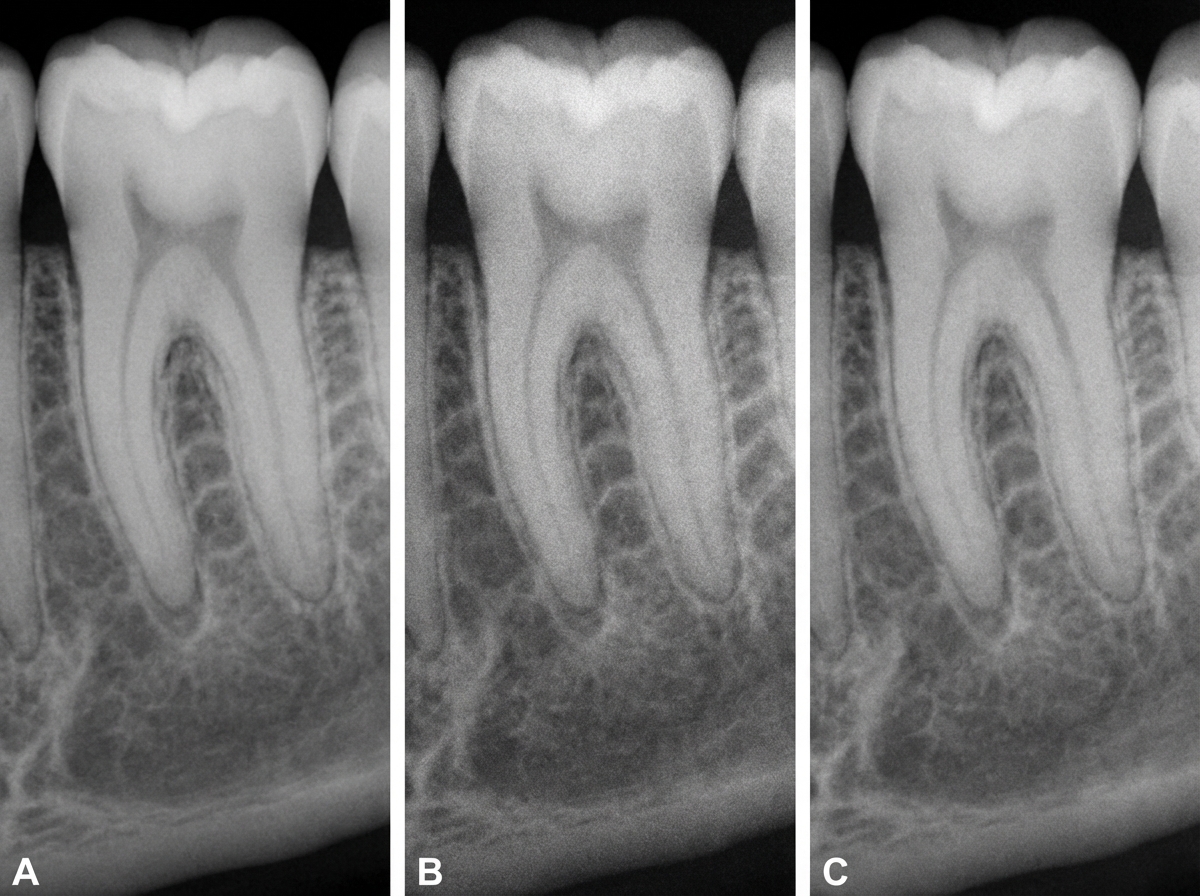
What does KVP in X-ray determine?
What is the mathematical representation of the inverse square law?
A grid is a device which is used for:
Which statement is true regarding CT dose index?
When were X-rays discovered?
What is the Hounsfield number for water?
The principle of Nuclear Magnetic Resonance (NMR) is based on which subatomic particle?
What is true about X-rays?
An obese patient has heavy, thick bones. What technical factor should be increased on the X-ray machine to achieve a diagnostic image?
What are the typical diameter and length of the filament in an X-ray tube?
Explanation: **Explanation:** **1. Why "Kilovolt peak" is correct:** In X-ray physics, **kVp (Kilovolt peak)** represents the maximum high-voltage applied across the X-ray tube. It determines the **quality** or **penetrating power** of the X-ray beam. When the kVp is increased, the electrons are accelerated with greater kinetic energy from the cathode to the anode, resulting in X-ray photons with higher energy and shorter wavelengths. This directly influences the **image contrast**: a higher kVp produces a "long scale" of contrast (more shades of gray), which is ideal for chest radiography. **2. Why other options are incorrect:** * **Kilovolt potential:** While voltage is a potential difference, "potential" is not the formal technical term used to describe the peak voltage setting on an X-ray machine. * **Kilovolt power:** Power is measured in Watts (Voltage × Current). kVp refers specifically to the electrical potential peak, not the total power consumption. * **Kilovolt per minute:** This is a rate-based unit and is irrelevant to X-ray physics. X-ray energy is instantaneous and not measured as a function of voltage over time. **3. High-Yield Clinical Pearls for NEET-PG:** * **kVp vs. mAs:** Remember that **kVp** controls the **Quality** (penetrating power/contrast), while **mAs** (milliampere-seconds) controls the **Quantity** (number of photons/density). * **15% Rule:** Increasing kVp by 15% has the same effect on image receptor exposure as doubling the mAs. * **Photoelectric Effect:** This interaction is inversely proportional to the cube of energy ($1/E^3$). Therefore, increasing kVp decreases the probability of photoelectric absorption, leading to lower patient dose but also lower image contrast. * **Scatter:** High kVp increases the proportion of **Compton scatter**, which can degrade image quality by adding "fog."
Explanation: ### Explanation **1. Understanding the Inverse Square Law** The Inverse Square Law is a fundamental principle in radiation physics stating that the intensity of the x-ray beam is **inversely proportional** to the square of the distance from the source. Mathematically, this is expressed as: **Intensity (I) ∝ 1 / Distance (D)²** When comparing two different distances, the formula becomes: **I₁ / I₂ = (D₂)² / (D₁)²** This means if you double the distance (2D), the radiation intensity decreases to one-fourth (1/4) of the original value. Conversely, if you halve the distance, the intensity increases fourfold. This is the most effective method of radiation protection for healthcare workers. **2. Analysis of Incorrect Options** * **Option A:** This suggests a direct square relationship (Intensity increases as distance increases), which is physically impossible for divergent beams. * **Option C & D:** These options ignore the "square" component of the law. Radiation spreads in two dimensions (area) as it travels, necessitating the squared term. **3. Clinical Pearls for NEET-PG** * **ALARA Principle:** "As Low As Reasonably Achievable." Distance is the most important factor among the three cardinal rules of radiation protection (Time, Distance, Shielding). * **Practical Application:** A radiologist standing 2 meters away from a patient during fluoroscopy receives only 1/4th the dose compared to standing 1 meter away. * **Beam Divergence:** This law only applies to "point sources" of radiation. * **Calculation Tip:** If a question asks for the new intensity, remember: **New Intensity = Old Intensity × (Old Distance / New Distance)²**.
Explanation: ### Explanation **1. Why Option A is Correct:** A **radiographic grid** is a device placed between the patient and the image receptor (film/detector). It consists of alternating strips of radiopaque material (usually **lead**) and radiolucent spacer material (plastic or aluminum). Its primary function is to **absorb scattered radiation** (Compton scatter) produced within the patient's body before it reaches the film. By removing this "fog," the grid significantly **improves image contrast** and detail. **2. Why Other Options are Incorrect:** * **Option B (Reducing patient exposure time):** This is incorrect. Because the grid absorbs some of the primary beam along with the scatter, a higher exposure (mAs) is required to maintain image density. Therefore, using a grid actually **increases** patient radiation dose and exposure time. * **Option C (Reducing contrast):** This is the opposite of the grid's function. By removing scattered radiation, which otherwise creates a uniform gray haze, the grid **increases** the radiographic contrast. * **Option D:** Since B and C are incorrect, D is also incorrect. **3. High-Yield Clinical Pearls for NEET-PG:** * **Grid Ratio:** Defined as the ratio of the height of the lead strips to the distance between them ($H/D$). A higher grid ratio is more effective at removing scatter but requires a higher radiation dose. * **Bucky-Potter Diaphragm:** A moving grid mechanism that oscillates during exposure to blur out the lead strip lines, preventing them from appearing on the final radiograph. * **When to use:** Grids are generally used when the body part thickness exceeds **10 cm** or when high kVp techniques are employed, as these conditions produce significant scatter. * **Grid Cut-off:** An unwanted absorption of the primary beam caused by improper alignment of the X-ray tube or the grid, resulting in a loss of optical density.
Explanation: **Explanation:** **1. Why Option B is Correct:** Pediatric patients are significantly more sensitive to ionizing radiation than adults due to their rapidly dividing cells and longer life expectancy, which provides more time for radiation-induced cancers to manifest. The **ALARA (As Low As Reasonably Achievable)** principle is paramount in pediatrics. Dose reduction is achieved through "pediatric protocols," which involve adjusting parameters based on the child's size and weight to prevent unnecessary overexposure. **2. Why Other Options are Incorrect:** * **Option A:** The relationship between KVP and dose is not linear; it is **exponential**. Radiation dose is approximately proportional to the **square of the KVP** ($Dose \propto KVP^2$). Therefore, reducing KVP by 50% would reduce the dose by much more than half (roughly 75%). * **Option C:** CT Dose Index (CTDI) remains a fundamental metric in multi-slice CT (MSCT). Specifically, **CTDIvol** is used to estimate the average dose within the scanned volume, accounting for pitch and slice thickness, making it essential for protocol optimization. * **Option D:** KVP is one of the primary determinants of the CT dose index. Increasing KVP increases the energy and quantity of photons reaching the detectors, thereby increasing the CTDI. **High-Yield Clinical Pearls for NEET-PG:** * **CTDIvol:** The standard unit for expressing CT dose per slice. * **Dose Length Product (DLP):** Calculated as $CTDIvol \times Scan\ Length$. It represents the total energy deposited in the patient. * **Effective Dose (mSv):** Calculated as $DLP \times k$ (conversion factor). This is the best measure for estimating long-term cancer risk. * **Image Gently Campaign:** A global initiative specifically focused on increasing awareness for radiation protection in pediatric imaging.
Explanation: **Explanation:** The discovery of X-rays is a foundational milestone in medical imaging. On **November 8, 1895**, German physicist **Wilhelm Conrad Röntgen** accidentally discovered X-rays while experimenting with cathode rays in a Crookes tube. He noticed that a screen coated with barium platinocyanide began to fluoresce, even though the tube was covered with black cardboard. He termed these unknown rays "X-rays." **Analysis of Options:** * **Option C (Correct):** November 1895 is the historically accurate date. Shortly after his discovery, on December 22, 1895, Röntgen took the first medical X-ray of his wife Bertha’s hand, revealing her wedding ring and skeletal structure. * **Option B (October 1895):** This is just prior to the discovery; while Röntgen was likely experimenting during this time, the definitive discovery occurred in November. * **Option A (November 1897):** By this time, X-rays were already being used clinically in Europe and the United States. * **Option D (November 1890):** While other scientists (like Arthur Goodspeed) had inadvertently produced X-ray shadows earlier, they did not recognize or investigate the phenomenon. **High-Yield Facts for NEET-PG:** * **First Nobel Prize:** Röntgen received the first-ever Nobel Prize in Physics in **1901**. * **Unit of Exposure:** The "Roentgen" (R) is the unit used to measure exposure to ionizing radiation. * **Nature of X-rays:** They are electromagnetic waves with high energy and short wavelengths (0.01 to 10 nanometers). * **Biological Effects:** The first reports of X-ray induced skin damage (dermatitis) appeared as early as 1896, leading to the eventual development of radiation protection principles.
Explanation: **Explanation:** The **Hounsfield Unit (HU)**, also known as the CT number, is a quantitative scale used to describe radiodensity in Computed Tomography. It is calculated based on the linear attenuation coefficient of a tissue relative to that of distilled water. **1. Why Option A is Correct:** By definition, the Hounsfield scale is calibrated using two fixed reference points: * **Water is assigned a value of 0 HU.** * **Air is assigned a value of -1000 HU.** Since water is the standard reference point for the scale, its value is always 0. **2. Why Other Options are Incorrect:** * **Option B (100 HU):** This value represents hyperdense structures. Soft tissues typically range from +30 to +60 HU, while clotted blood or calcifications approach +100 HU. * **Option C (-100 HU):** This value represents low-density structures like **Fat**, which typically ranges from -50 to -100 HU. * **Option D (-80 HU):** Similar to -100, this falls within the range of adipose tissue (fat) and is not representative of water. **3. High-Yield Clinical Pearls for NEET-PG:** * **Bone:** +400 to +1000 HU (Highest density). * **Acute Hemorrhage:** +50 to +80 HU (Hyperdense). * **Lung:** -400 to -600 HU (Mostly air). * **Simple Cyst:** Close to 0 HU (as it contains water-like fluid). If a lesion has a HU > 20, it suggests it is not a simple cyst. * **Windowing:** The "Level" is the HU value at the center of the window, and "Width" is the range of HU values displayed.
Explanation: ### Explanation **Correct Answer: C. Proton** **Why it is correct:** The principle of Nuclear Magnetic Resonance (NMR), which forms the basis of MRI, relies on the magnetic properties of atomic nuclei. Specifically, it targets nuclei with an odd number of protons or neutrons (odd mass number), which possess a property called **"Spin."** In clinical imaging, the **Hydrogen nucleus (a single Proton)** is used because it is the most abundant atom in the human body (found in water and fat) and has a significant magnetic moment. When placed in a strong external magnetic field, these protons align and precess; when a Radiofrequency (RF) pulse is applied, they absorb energy (resonance), which is later emitted as the signal used to create images. **Why the other options are incorrect:** * **A. Positron:** These are the antiparticles of electrons. They are the basis of **PET (Positron Emission Tomography)** scans, where they annihilate with electrons to produce gamma rays. * **B. Neutron:** While neutrons contribute to the "spin" of a nucleus, a lone neutron cannot be manipulated by NMR in clinical practice. The focus is specifically on the Hydrogen nucleus (Proton). * **D. Electron:** Electrons are involved in **Electron Spin Resonance (ESR)**, but in diagnostic radiology, they are primarily associated with X-ray production (thermionic emission) and CT scans, not MRI. **High-Yield Clinical Pearls for NEET-PG:** * **Larmor Equation:** $f = \gamma B_0$ (Precessional frequency is proportional to the magnetic field strength). * **Gyromagnetic Ratio ($\gamma$):** For a proton, it is **42.58 MHz/Tesla**. * **Active Nuclei:** Besides Hydrogen ($^1H$), other NMR-active nuclei include $^{13}C$, $^{19}F$, and $^{23}Na$, though they are rarely used clinically. * **Net Magnetization ($M$):** In a magnetic field, protons align more in the "parallel" (low energy) state than the "anti-parallel" state, creating a net longitudinal magnetization.
Explanation: ### Explanation **Correct Option: B. In adult cells, the effects of radiation are short-term and reversible.** This statement aligns with the **Law of Bergonie and Tribondeau**, which states that the radiosensitivity of a cell is directly proportional to its reproductive rate and inversely proportional to its degree of differentiation. Adult cells (mature, specialized cells like nerve or muscle cells) are highly differentiated and divide slowly. Consequently, they are relatively radioresistant. When exposed to diagnostic levels of radiation, these cells can often repair sublethal damage through enzymatic DNA repair mechanisms, making the effects reversible. **Why other options are incorrect:** * **Option A:** X-rays are a form of **ionizing radiation**. They possess enough energy to displace electrons from atoms, creating free radicals (indirect action) or causing direct DNA strand breaks. No biologic cell is completely immune to damage if the dose is sufficient. * **Option C:** This is a common misconception. While the **central ray** (the theoretical center of the X-ray beam) has the highest intensity, the entire primary beam and **scatter radiation** (Compton scatter) are harmful. Scatter radiation is, in fact, the primary source of occupational exposure to radiologists. **High-Yield Clinical Pearls for NEET-PG:** * **Most Radiosensitive Phase:** The **M-phase** (Mitosis) of the cell cycle is the most sensitive; the **S-phase** (Synthesis) is the most resistant. * **Most Radiosensitive Cells:** Lymphocytes (exception to the rule as they are mature but highly sensitive), erythroblasts, and spermatogonia. * **Deterministic vs. Stochastic Effects:** Deterministic effects (e.g., cataracts, skin erythema) have a **threshold dose**, while Stochastic effects (e.g., cancer, genetic mutations) follow a **linear no-threshold (LNT) model**. * **ALARA Principle:** As Low As Reasonably Achievable—the gold standard for radiation protection.
Explanation: ### Explanation In radiology, the quality of an X-ray image depends on two primary factors: **Quantity** (number of photons) and **Quality** (penetrating power of photons). **1. Why Increase in kVp is Correct:** kVp (peak kilovoltage) controls the **energy and penetrability** of the X-ray beam. Obese patients and those with thick, dense bones present high physical density. To visualize structures through such thick tissue, the X-ray photons must have higher energy to pass through the body rather than being absorbed or scattered. Increasing kVp increases the "hardness" of the beam, ensuring enough photons reach the detector to form a diagnostic image. **2. Why Other Options are Incorrect:** * **mA (milliampere):** This controls the **quantity** (number) of X-rays produced. While increasing mA increases the total dose, it does not change the energy of the photons. If the photons aren't energetic enough to penetrate the thick bone, simply adding more low-energy photons will only increase the patient's skin dose without improving image quality. * **Exposure Time:** Increasing time increases the total mAs (mA × time). Like mA, this increases quantity but not penetration. It also increases the risk of **motion blur**, which is detrimental in diagnostic imaging. * **Developing Time:** This is a post-processing step (in manual film radiography). Increasing developing time cannot compensate for a lack of X-ray penetration during the initial exposure. **Clinical Pearls for NEET-PG:** * **The 15% Rule:** An increase in kVp by 15% has the same effect on image density as doubling the mAs. * **Contrast vs. kVp:** High kVp results in **low contrast** (long-scale contrast), which is useful for chest X-rays. Low kVp results in **high contrast** (short-scale), ideal for mammography. * **Photoelectric Effect:** This is the primary interaction responsible for image contrast but decreases as kVp increases.
Explanation: ### Explanation **1. Understanding the Correct Answer (C: 2 mm ; < 1 cm)** The filament is the source of electrons in an X-ray tube, typically made of **thoriated tungsten**. It is coiled into a small spiral to increase the surface area for thermionic emission while maintaining a compact size. * **Diameter:** A diameter of approximately **2 mm** is standard to ensure the electron beam is narrow enough to be focused onto a small focal spot on the anode, which is crucial for image sharpness (spatial resolution). * **Length:** The length is kept **under 1 cm (typically 7–10 mm)**. If the filament were longer, the resulting electron cloud (space charge) would be too large, leading to a broad focal spot and significant geometric blurring (penumbra) on the radiograph. **2. Analysis of Incorrect Options** * **Option A (3 mm ; 2 cm) & B (2 cm ; 3 mm):** These dimensions are far too large. A 2 cm length or diameter would result in a massive focal spot, making diagnostic imaging impossible due to extreme blurring. * **Option D (4 mm ; 1 cm):** While closer in length, a 4 mm diameter is double the standard size, which would reduce the efficiency of the focusing cup and degrade image quality. **3. High-Yield Clinical Pearls for NEET-PG** * **Material:** Tungsten is used because of its **high melting point (3410°C)** and high atomic number (Z=74). * **Thorium Addition:** 1–2% Thorium is added to the tungsten filament to increase the efficiency of thermionic emission and prolong tube life. * **Dual Focus Tubes:** Most modern X-ray tubes have two filaments (small and large) side-by-side to provide "small focal spot" (for high detail) and "large focal spot" (for high heat capacity) options. * **Space Charge Effect:** At low kVp and high mA, electrons can build up around the filament, limiting further emission; this is known as the space charge effect.
Electromagnetic Radiation
Practice Questions
X-ray Production
Practice Questions
Interaction of Radiation with Matter
Practice Questions
Radiation Measurement Units
Practice Questions
Radiation Detectors
Practice Questions
Radiobiology Fundamentals
Practice Questions
Radiation Protection Principles
Practice Questions
Personnel Monitoring
Practice Questions
Shielding Design and Calculations
Practice Questions
Radiation Dose Optimization
Practice Questions
Regulatory Requirements
Practice Questions
Radiation Accidents Management
Practice Questions
Get full access to all questions, explanations, and performance tracking.
Start For Free