Radioactive cobalt emits which type of rays?
Maximum recommended dose for non-occupationally exposed individuals should not be greater than ____ µGy/week?
According to the International Commission on Radiological Protection (ICRP), what are the recommended annual occupational radiation dose limits?
What is a commonly used collimating device?
Effective dose in radiation at 2 m is 1 gray; what will be the effective dose at 1 m?
Radiation hazard is absent in which of the following imaging modalities?
Which of the following has the highest penetration power?
What is a characteristic of an ideal gas?
Which of the following has the maximum ionizing power?
Which of the following radioactive isotopes has the largest half-life?
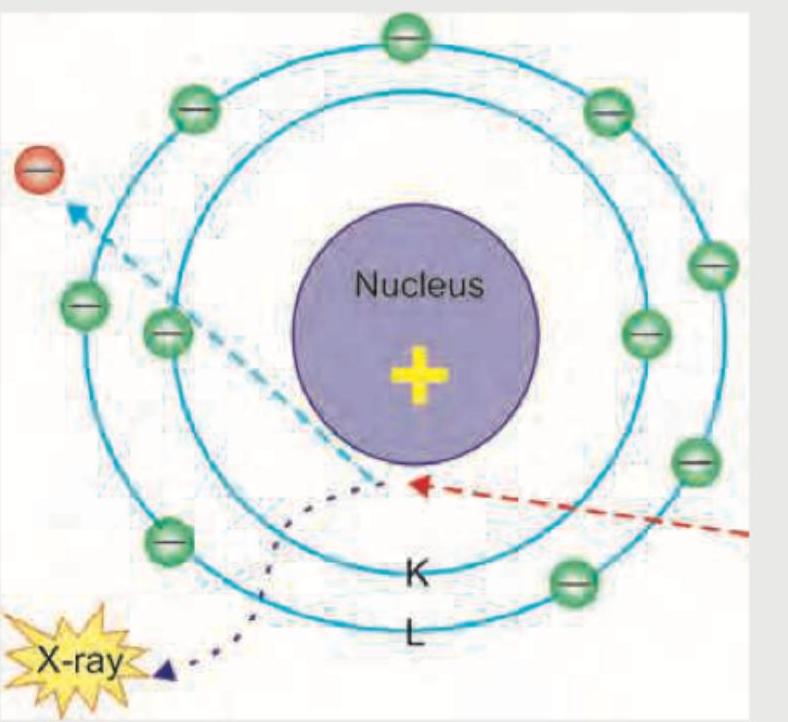
Explanation: **Explanation:** **Cobalt-60 ($^{60}$Co)** is a synthetic radioactive isotope produced by the activation of stable Cobalt-59 in a nuclear reactor. It is a mainstay in conventional external beam radiotherapy (Telecobalt therapy). 1. **Why Gamma rays are correct:** Cobalt-60 undergoes radioactive decay by emitting a beta particle to become an excited state of Nickel-60. To reach its stable ground state, the Nickel-60 nucleus immediately releases excess energy in the form of **two high-energy Gamma ($\gamma$) rays** (photons) with energies of **1.17 MeV and 1.33 MeV**. In clinical practice, the average energy is considered **1.25 MeV**. These gamma rays have high penetrating power, making them ideal for treating deep-seated tumors. 2. **Why other options are incorrect:** * **Beta rays:** While $^{60}$Co does emit beta particles during its initial decay, these are low-energy electrons that are absorbed by the source capsule (encapsulation) and do not contribute to the therapeutic beam. * **Alpha rays:** These are heavy helium nuclei with very low penetration power; they are not emitted by Cobalt-60. * **Neutrons:** These are uncharged particles typically produced in nuclear fission or by high-energy linear accelerators ($>10$ MV) via photodisintegration; they are not a product of Cobalt-60 decay. **High-Yield Clinical Pearls for NEET-PG:** * **Half-life of Cobalt-60:** Approximately **5.27 years**. * **Source Strength:** The source must be replaced when its activity drops to about 50% (roughly every 5 years). * **Penumbra:** Telecobalt machines have a larger geometric penumbra compared to Linear Accelerators (LINAC) due to the larger physical size of the source. * **Dmax:** The maximum dose for Cobalt-60 occurs at a depth of **0.5 cm** (5 mm) in tissue.
Explanation: **Explanation:** The correct answer is **100 µGy/week**. This value is derived from the international radiation safety standards set by the **ICRP (International Commission on Radiological Protection)** and enforced in India by the **AERB (Atomic Energy Regulatory Board)**. **1. Why 100 µGy/week is correct:** The annual dose limit for the general public (non-occupationally exposed individuals) is **1 mSv per year**. To calculate the weekly limit for shielding and safety design: * 1 mSv/year = 1000 µSv/year. * Dividing by 50 weeks/year ≈ **20 µSv/week**. * However, for structural shielding design in medical imaging (like X-ray rooms), the design goal for uncontrolled areas (public areas) is often set at **0.1 mGy/week**, which equals **100 µGy/week**. This ensures that even with continuous occupancy, the public dose remains well below the legal limit. **2. Why the other options are incorrect:** * **10 µGy/week:** This is too low and would lead to unnecessarily expensive and thick lead shielding. * **1000 µGy/week (1 mGy/week):** This is the limit for **occupationally exposed workers** (e.g., Radiologists/Technicians), whose annual limit is 20 mSv. * **300 µGy/week:** This value does not correspond to any standard regulatory threshold for public or occupational exposure. **High-Yield Clinical Pearls for NEET-PG:** * **Annual Dose Limits:** * **Occupational Worker:** 20 mSv/year (averaged over 5 years, not exceeding 30 mSv in any single year). * **General Public:** 1 mSv/year. * **Pregnant Worker:** 1 mSv to the fetus for the remainder of the pregnancy. * **ALARA Principle:** As Low As Reasonably Achievable (Time, Distance, Shielding). * **Rule of thumb:** 1 mSv ≈ 1 mGy for X-rays and Gamma rays (Quality factor = 1).
Explanation: **Explanation:** The International Commission on Radiological Protection (ICRP) establishes guidelines to minimize the stochastic effects (like cancer) and prevent deterministic effects (like tissue reactions) of ionizing radiation. For **occupational exposure** (radiation workers), the current recommendation is a limit of **20 mSv per year averaged over five years** (totaling 100 mSv), with the caveat that the dose in any **single year should not exceed 50 mSv**. * **Why Option B is correct:** It accurately reflects the ICRP 60/103 recommendations. The "100 mSv in 5 years" rule ensures a low long-term cumulative risk, while the "50 mSv in a single year" cap prevents acute spikes in exposure. * **Why Option A is incorrect:** 5 mSv is too low for an occupational limit; it is closer to the limit for the general public (which is 1 mSv/year, though 5 mSv is allowed in special circumstances). * **Why Options C & D are incorrect:** These values (500 mSv to 5000 mSv) are dangerously high. 500 mSv is the annual limit for specific organs like the **skin or hands/feet**, but not for the whole-body effective dose. 5 Sv (5000 mSv) is a lethal dose if delivered to the whole body acutely. **High-Yield Clinical Pearls for NEET-PG:** * **General Public Limit:** 1 mSv/year. * **Pregnant Worker:** Once pregnancy is declared, the dose to the surface of the abdomen should not exceed **2 mSv** for the remainder of the pregnancy (fetal dose limit is **1 mSv**). * **Lens of the Eye:** The ICRP recently lowered this limit significantly to **20 mSv/year** (averaged over 5 years) to prevent radiation-induced cataracts. * **ALARA Principle:** "As Low As Reasonably Achievable" is the fundamental philosophy of radiation protection.
Explanation: ### Explanation **Correct Answer: B. Lead Diaphragm** **Underlying Concept:** Collimation is the process of restricting the size and shape of the X-ray beam to the specific area of clinical interest. A **Lead Diaphragm** is a simple collimating device consisting of a thick sheet of lead with an aperture (opening) in the center. Because lead has a high atomic number ($Z=82$), it effectively absorbs peripheral X-rays, preventing unnecessary radiation exposure to surrounding tissues and reducing **scatter radiation**, which improves image contrast. **Analysis of Incorrect Options:** * **A. Aluminium Filter:** Filtration is different from collimation. Aluminium filters are used to remove "soft" (low-energy) X-rays from the beam that would otherwise be absorbed by the patient's skin without contributing to the image. This process is called **beam hardening**. * **C. Molybdenum Cup:** This is a component of the X-ray tube cathode. It serves as a **focusing cup** that houses the filament and uses electrostatic repulsion to direct the electron stream toward the focal spot on the anode. * **D. Tungsten Filament:** This is the source of electrons in the X-ray tube. When heated (thermionic emission), it releases electrons that are accelerated toward the target to produce X-rays. **High-Yield Clinical Pearls for NEET-PG:** * **Benefits of Collimation:** 1. Reduces patient dose (ALARA principle). 2. Reduces scatter radiation (Compton effect). 3. Increases image contrast. * **Types of Collimators:** Apart from lead diaphragms, other types include **cones/cylinders** and the most common modern type, the **variable-aperture rectangular collimator** (using adjustable lead shutters). * **Added vs. Inherent Filtration:** Inherent filtration includes the glass envelope and oil; added filtration is typically the **Aluminium disc**. Total filtration required for units operating above 70 kVp is **2.5 mm of Al equivalent**.
Explanation: ### Explanation **The Underlying Concept: The Inverse Square Law** The correct answer is **4 gray** because radiation intensity follows the **Inverse Square Law**. This physical principle states that the intensity of radiation is inversely proportional to the square of the distance from the source ($I \propto 1/d^2$). Mathematically, the formula is: $$I_1 \times (d_1)^2 = I_2 \times (d_2)^2$$ **Calculation:** * Initial Intensity ($I_1$) = 1 Gray * Initial Distance ($d_1$) = 2 meters * New Distance ($d_2$) = 1 meter * $1 \times (2)^2 = I_2 \times (1)^2$ * $1 \times 4 = I_2 \times 1$ * **$I_2 = 4$ Gray** When the distance is halved (from 2m to 1m), the radiation dose increases by a factor of four ($2^2$). --- ### Analysis of Incorrect Options * **A. 0.25 gray:** This would be the dose if the distance were doubled (from 2m to 4m). * **B. 0.5 gray:** This assumes a linear relationship, which is incorrect for radiation physics. * **C. 2 gray:** This assumes the dose doubles when distance is halved, failing to account for the "square" factor in the law. --- ### NEET-PG High-Yield Clinical Pearls * **ALARA Principle:** "As Low As Reasonably Achievable." The three pillars of radiation protection are **Time, Distance, and Shielding.** * **Distance is the most effective way** to reduce radiation exposure to staff. Doubling your distance from the source reduces your dose to one-fourth. * **Lead Aprons:** Usually 0.25–0.5 mm lead equivalent. They attenuate approximately 90-95% of scatter radiation. * **Thermoluminescent Dosimeter (TLD) Badges:** Used to monitor occupational exposure. In India, these are based on **CaSO₄:Dy** (Calcium Sulfate doped with Dysprosium) and are typically worn at the chest level under the lead apron.
Explanation: **Explanation:** The core concept in radiation safety is the distinction between **ionizing** and **non-ionizing** radiation. Ionizing radiation possesses enough energy to detach electrons from atoms, leading to DNA damage and potential oncogenesis (radiation hazards). **Why MRI is the Correct Answer:** **Magnetic Resonance Imaging (MRI)** utilizes strong magnetic fields and **radiofrequency (RF) pulses**, both of which are forms of **non-ionizing radiation**. Since these waves do not have sufficient energy to ionize atoms, they do not pose a conventional radiation hazard. While MRI has other safety concerns (e.g., projectile effects, heating of implants), it is fundamentally free from ionizing radiation. **Analysis of Incorrect Options:** * **Doppler Ultrasound:** While Ultrasound also uses non-ionizing mechanical (sound) waves and is generally considered safe, the question asks for the modality where radiation hazard is *absent*. Technically, Doppler uses higher energy levels than B-mode ultrasound, but more importantly, **MRI is the classic textbook answer** for a modality devoid of ionizing radiation. *Note: In some contexts, USG and MRI are both considered safe, but MRI is the standard answer for "absence of radiation hazard" in physics-based questions.* * **Digital Subtraction Angiography (DSA):** This modality uses **X-rays** to visualize blood vessels. X-rays are a potent form of ionizing radiation. * **Tc 99m Scan (Technetium-99m):** This is a nuclear medicine study involving the injection of a radioactive isotope that emits **Gamma rays**, which are highly ionizing. **High-Yield Clinical Pearls for NEET-PG:** * **Ionizing Modalities:** X-ray, CT scan, Mammography, PET scan, Scintigraphy (Nuclear Medicine), and Fluoroscopy/DSA. * **Non-Ionizing Modalities:** MRI and Ultrasound. * **Safe in Pregnancy:** Ultrasound is the first-line investigation; MRI is generally considered safe (especially after the first trimester) as it avoids ionizing radiation. * **ALARA Principle:** "As Low As Reasonably Achievable" is the guiding principle for minimizing ionizing radiation exposure in clinical practice.
Explanation: **Explanation:** The penetration power of radiation is primarily determined by the particle's **charge** and **mass**. **Why Neutrons are the correct answer:** Neutrons are subatomic particles that carry **no electrical charge** (neutral). Unlike charged particles, they do not interact with the orbital electrons of atoms via electrostatic forces. This allows them to travel deep into matter, including dense materials and human tissue, before colliding directly with an atomic nucleus. Because these direct nuclear collisions are relatively rare compared to electronic interactions, neutrons possess the highest penetration power among the listed options. **Analysis of Incorrect Options:** * **Beta rays (B):** These consist of high-speed electrons or positrons. Being charged particles (negative or positive), they interact strongly with matter and are easily stopped by a few millimeters of aluminum or a layer of plastic. * **Gamma rays (C) and X-rays (D):** Both are forms of electromagnetic radiation (photons). While they have high penetration power compared to alpha or beta particles because they lack mass and charge, they still interact with orbital electrons via the Photoelectric effect and Compton scattering. In equivalent thicknesses of dense material, neutrons generally exhibit superior penetration depth compared to standard diagnostic X-rays or Gamma rays. **NEET-PG High-Yield Pearls:** * **Order of Penetration:** Neutrons > Gamma/X-rays > Beta particles > Alpha particles. * **Order of Ionization:** Alpha particles (highest) > Beta > Gamma/X-rays (lowest). Ionization is inversely proportional to penetration. * **Shielding:** Lead is excellent for X-rays/Gamma rays, but **hydrogen-rich materials** (like water, paraffin, or concrete) are required to shield against neutrons. * **Biological Effect:** Neutrons have a high **Relative Biological Effectiveness (RBE)**, making them more damaging to tissues than X-rays at the same dose.
Explanation: **Explanation:** An **ideal gas** is a theoretical gas composed of many randomly moving point particles that are not subject to interparticle interactions. In medical physics (specifically in the context of anesthesia machines, hyperbaric oxygen therapy, and pulmonary physiology), the behavior of gases is approximated using the **Ideal Gas Law ($PV = nRT$)**. **Why the correct answer is right:** An ideal gas is defined by its adherence to the fundamental gas laws under all conditions of temperature and pressure: * **Boyle’s Law:** $V \propto 1/P$ (at constant $T$). * **Charles’s Law:** $V \propto T$ (at constant $P$). * **Avogadro’s Law:** $V \propto n$ (volume is proportional to the number of moles). A gas that obeys all three is considered "ideal." **Analysis of Incorrect Options:** * **Option A:** Incorrect. According to Boyle’s Law, volume is **inversely** proportional to pressure ($V \propto 1/P$), not directly. * **Option B:** Incorrect. According to Charles’s Law, volume is **directly** proportional to absolute temperature ($V \propto T$), not inversely. * **Option C:** Incorrect. At absolute zero ($0\ K$ or $-273.15^\circ C$), the volume of an ideal gas is theoretically **zero**, as molecular motion ceases. **High-Yield Clinical Pearls for NEET-PG:** 1. **Real vs. Ideal:** No real gas is perfectly ideal. Real gases behave most like ideal gases at **high temperatures and low pressures**. 2. **STP (Standard Temperature and Pressure):** At STP ($0^\circ C$ and $1\ atm$), one mole of an ideal gas occupies **22.4 Liters**. 3. **Critical Temperature:** The temperature above which a gas cannot be liquefied, regardless of the pressure applied (e.g., Nitrous oxide is stored as a liquid because its critical temperature is $36.5^\circ C$, above room temperature). 4. **Adiabatic Expansion:** When a gas escapes a cylinder rapidly, it cools (Joule-Thompson effect), which is why frost may form on anesthetic cylinders.
Explanation: ### Explanation The ionizing power of radiation refers to its ability to remove electrons from atoms, creating ion pairs. This property is directly proportional to the **charge** of the particle and inversely proportional to its **velocity**. **Why Alpha Rays are the Correct Answer:** Alpha particles consist of two protons and two neutrons (Helium nucleus). They are the most ionizing because: 1. **High Charge:** They carry a $+2$ charge, the highest among common radiations. 2. **Large Mass:** Being heavy, they travel slowly, allowing more time to interact with and ionize atoms along their path. 3. **High Linear Energy Transfer (LET):** They deposit a large amount of energy over a very short distance. **Analysis of Incorrect Options:** * **B. Protons:** While protons are charged ($+1$), they have only half the charge and about one-fourth the mass of an alpha particle, resulting in lower ionizing power. * **A. Neutrons:** These are uncharged particles. They ionize matter indirectly through collisions with nuclei (recoil protons), making their primary ionizing power much lower than alpha particles. * **C. X-rays:** These are electromagnetic photons (no mass, no charge). They are "sparsely ionizing" (Low LET) and have high penetrability but the lowest ionizing power among the options. **High-Yield Clinical Pearls for NEET-PG:** * **Inverse Relationship:** Ionizing power is inversely proportional to **penetrating power**. Alpha rays have the *maximum* ionizing power but the *minimum* penetration (stopped by a sheet of paper). * **Quality Factor (Q):** In radiation protection, Alpha particles have a high weighting factor ($Q = 20$), whereas X-rays and Gamma rays have a factor of $1$. * **Biological Hazard:** Alpha emitters (like Radon) are most dangerous when **inhaled or ingested** because their high ionizing power causes significant localized DNA damage.
Explanation: In medical physics and radiology, the **half-life ($T_{1/2}$)** of an isotope determines its clinical application, storage, and safety protocols. **Correct Answer: B. Radium (Ra-226)** Radium-226 has a half-life of approximately **1,600 years**. Historically, it was the cornerstone of brachytherapy (the "Paris system") for treating cervical and oral cancers. Due to its extremely long half-life and the production of gaseous Radon-222 as a decay product, it has largely been replaced by safer, shorter-lived isotopes in modern practice. **Analysis of Incorrect Options:** * **A. Radon (Rn-222):** A decay product of Radium, it is a gas with a very short half-life of **3.8 days**. * **C. Plutonium (Pu-239):** While some isotopes of Plutonium have very long half-lives (24,000 years), in the context of standard **medical/radiological exams**, Plutonium is rarely the focus compared to Radium. If the question refers to Pu-238 (used in older cardiac pacemakers), its half-life is **87.7 years**, still significantly shorter than Ra-226. * **D. Iridium (Ir-192):** The most common isotope used in modern High Dose Rate (HDR) brachytherapy. It has a half-life of **74 days**, requiring frequent source replacement. **High-Yield Clinical Pearls for NEET-PG:** * **Cobalt-60:** Half-life is **5.27 years** (used in Teletherapy). * **Cesium-137:** Half-life is **30 years** (used in manual brachytherapy). * **Iodine-131:** Half-life is **8 days** (used for thyroid imaging/ablation). * **Technetium-99m:** Half-life is **6 hours** (most common diagnostic isotope). * **Gold-198:** Half-life is **2.7 days** (permanent seed implants).
Electromagnetic Radiation
Practice Questions
X-ray Production
Practice Questions
Interaction of Radiation with Matter
Practice Questions
Radiation Measurement Units
Practice Questions
Radiation Detectors
Practice Questions
Radiobiology Fundamentals
Practice Questions
Radiation Protection Principles
Practice Questions
Personnel Monitoring
Practice Questions
Shielding Design and Calculations
Practice Questions
Radiation Dose Optimization
Practice Questions
Regulatory Requirements
Practice Questions
Radiation Accidents Management
Practice Questions
Get full access to all questions, explanations, and performance tracking.
Start For Free