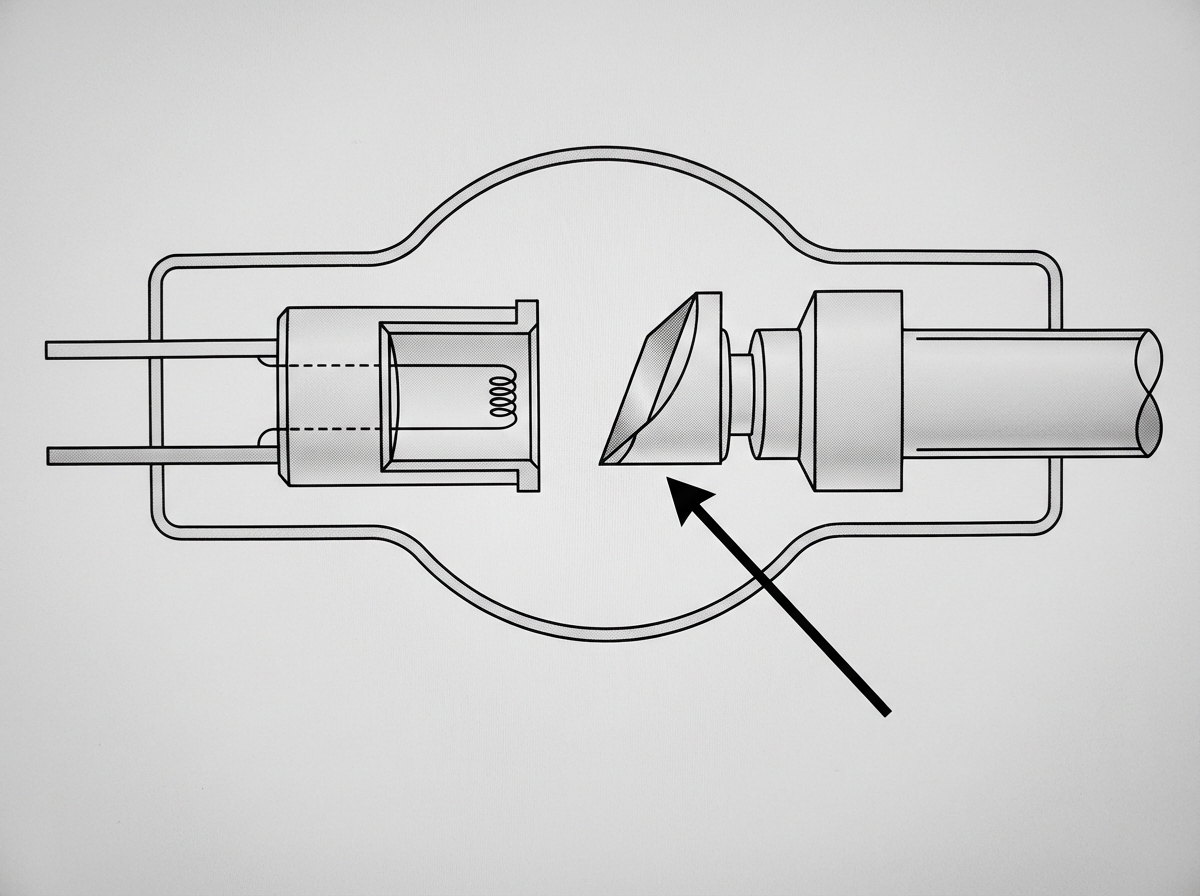
What is the average wavelength of the X-ray used in dentistry?
What is the unit of measurement used to compare the biological damage caused by different types of radiation?
What type of radiation is produced by a linear accelerator?
Roentgen is the unit of:
What is the mean radiation exposure from an Orthopantomogram (OPG)?
In which year did the centenary of X-ray discovery occur?
X-ray films are insensitive to which light?
Who discovered X-rays?
Which of the following has the most penetrating power?
1 curie is equivalent to:
Explanation: ### Explanation **1. Why Option A is Correct:** In dental radiography, the X-ray beam must have sufficient energy to penetrate oral tissues (teeth and alveolar bone) while maintaining high image contrast. The wavelength of an X-ray is inversely proportional to its energy ($E = hc/\lambda$). Dental X-ray machines typically operate between **50 kVp and 90 kVp** (most commonly 70 kVp). * At these voltage settings, the resulting X-ray spectrum produces an **average (effective) wavelength** in the range of **0.6 to 1 Å (Angstrom)**. * These are considered "Hard X-rays," which are preferred because they have high penetrability and lower skin absorption compared to "Soft X-rays." **2. Why Other Options are Incorrect:** * **Option B (1-2 Å) & Option D (2-2.5 Å):** These represent longer wavelengths. Longer wavelengths signify lower energy ("Soft X-rays"). These rays lack the power to penetrate dense dental structures and would be absorbed by the patient's skin, increasing the radiation dose without contributing to the diagnostic image. * **Option C (0.5-2 Å):** While this range includes the correct values, it is too broad. The upper limit (2 Å) includes low-energy radiation that is typically filtered out by aluminum discs in the X-ray tube to protect the patient. **3. Clinical Pearls & High-Yield Facts for NEET-PG:** * **Voltage Range:** Most dental units operate at **70 kVp**. Increasing kVp decreases the wavelength (increases energy), resulting in a "harder" beam with more penetration. * **Aluminum Filtration:** Dental X-ray machines require a total filtration of **1.5 mm Al** (if <70 kVp) or **2.5 mm Al** (if >70 kVp) to remove long-wavelength, low-energy photons. * **Wavelength vs. Frequency:** Remember that X-rays used in diagnostic radiology generally fall between **0.1 to 1 Å**. Dental X-rays specifically occupy the **0.6-1 Å** niche. * **Rule of Thumb:** Shorter wavelength = Higher frequency = Higher energy = Better penetration.
Explanation: **Explanation:** The correct answer is **Equivalent Dose**. This unit is specifically designed to account for the fact that different types of radiation (e.g., alpha particles vs. X-rays) cause different levels of biological damage even if the energy absorbed is the same. It is calculated by multiplying the **Absorbed Dose** by a **Radiation Weighting Factor ($W_R$)**. For example, alpha particles have a higher $W_R$ (20) than X-rays (1) because they are more densely ionizing and damaging. The SI unit is the **Sievert (Sv)** (older unit: rem). **Analysis of Incorrect Options:** * **A. Exposure:** Measures the amount of ionization produced in a specific mass of **air** by X-rays or gamma rays. It does not measure energy absorbed by tissue or biological effect. Unit: Roentgen (R) or Coulomb/kg. * **B. Absorbed Dose:** Measures the actual physical energy deposited per unit mass of any matter (tissue). It does not account for the *type* of radiation or the biological sensitivity of the tissue. Unit: **Gray (Gy)** (older unit: rad). * **C. Effective Dose:** This takes Equivalent Dose a step further by multiplying it by a **Tissue Weighting Factor ($W_T$)**. It is used to estimate the overall **stochastic risk** (like cancer) to the entire body, accounting for the varying radiosensitivity of different organs (e.g., gonads are more sensitive than skin). **High-Yield Clinical Pearls for NEET-PG:** * **Deterministic effects** (e.g., cataracts, skin erythema) have a threshold dose; **Stochastic effects** (e.g., cancer, genetic mutations) follow the "Linear No-Threshold" (LNT) model. * **Annual dose limit** for occupational workers: **20 mSv/year** (averaged over 5 years). * **ALARA Principle:** As Low As Reasonably Achievable (Time, Distance, Shielding). * **Most radiosensitive phase of cell cycle:** $M$ phase (followed by $G_2$). Least sensitive: $S$ phase.
Explanation: **Explanation:** A **Linear Accelerator (LINAC)** is the most common device used for external beam radiation therapy in oncology. It functions by accelerating charged particles (usually electrons) to high speeds using radiofrequency electromagnetic waves. When these high-energy electrons strike a high-atomic-number target (like tungsten), their kinetic energy is converted into high-energy **X-rays** via the **Bremsstrahlung (braking radiation)** process. These X-rays are then shaped and directed to treat deep-seated tumors. **Analysis of Options:** * **A. X-rays (Correct):** LINACs produce "megavoltage" X-rays. They can also be used in "electron mode" to treat superficial tumors, but their primary output for deep radiotherapy is X-rays. * **B. Gamma rays:** These are emitted from the nucleus of unstable isotopes (e.g., Cobalt-60). Unlike X-rays produced by machines, gamma rays are a product of natural radioactive decay. * **C. Beta rays:** These are high-speed electrons or positrons emitted during radioactive decay. While LINACs use electrons internally, the therapeutic beam produced after hitting a target is X-ray radiation. * **D. Neutrons:** These are uncharged particles. While some high-energy LINACs (above 10 MV) can produce "contaminant" neutrons as a byproduct, they are not the intended therapeutic radiation. **High-Yield Clinical Pearls for NEET-PG:** * **Mechanism:** LINACs use **microwave technology** to accelerate electrons in a part called the "waveguide." * **Energy Range:** LINACs typically operate in the **4 to 25 MeV** range, providing much higher penetration than orthovoltage units. * **Advantage:** Unlike Cobalt-60 units, a LINAC can be turned off (no source decay), reducing the risk of accidental exposure when not in use. * **Skin Sparing Effect:** High-energy X-rays from a LINAC exhibit a "build-up" effect, where the maximum dose is delivered at a depth (e.g., 1.5 cm for 6 MV) rather than on the skin surface.
Explanation: **Explanation:** The **Roentgen (R)** is the traditional unit used to measure **radiation exposure**. It is defined as the amount of ionizing radiation (X-rays or Gamma rays) that produces a specific amount of ionization (charge) in a unit mass of air under standard conditions. Specifically, 1 Roentgen equals $2.58 \times 10^{-4}$ Coulombs per kilogram of air. **Analysis of Options:** * **Option A (Radioactivity):** This refers to the rate of decay of a radionuclide. The SI unit is the **Becquerel (Bq)**, and the traditional unit is the **Curie (Ci)**. * **Option B (Radiation Exposure):** Correct. Roentgen measures the intensity of the radiation beam in the air before it interacts with biological tissue. * **Option C (Absorbed Dose):** This measures the energy deposited in a medium (like human tissue). The SI unit is the **Gray (Gy)**, and the traditional unit is the **Rad** (Radiation Absorbed Dose). * **Option D (None of the above):** Incorrect, as Option B is the established definition. **High-Yield Clinical Pearls for NEET-PG:** * **SI Unit of Exposure:** While Roentgen is the traditional unit, the SI unit is **Coulombs per kilogram (C/kg)**. * **Effective Dose:** Measured in **Sieverts (Sv)** or **Rem**. This unit accounts for the biological effectiveness of different types of radiation and the sensitivity of specific organs. * **The "Rule of 1":** For diagnostic X-rays in soft tissue, **1 Roentgen (Exposure) $\approx$ 1 Rad (Absorbed Dose) $\approx$ 1 Rem (Dose Equivalent)**. * **ALARA Principle:** "As Low As Reasonably Achievable" is the fundamental principle of radiation protection to minimize exposure to patients and staff.
Explanation: **Explanation:** The **Orthopantomogram (OPG)** is a panoramic dental X-ray that provides a wide-view image of the lower face, including the teeth, upper and lower jaws, and temporomandibular joints. In radiation physics, exposure is often measured in **milli-Roentgen (mR)**. **Why Option B is Correct:** The mean radiation exposure for a standard OPG is approximately **90 mR**. While modern digital OPGs have significantly reduced the dose compared to older film-based systems, 90 mR remains the standard textbook value for medical examinations. This dose is relatively low because the X-ray beam is highly collimated into a narrow vertical slit, rotating around the patient's head to capture the panoramic view, thereby limiting the total volume of tissue irradiated at any single moment. **Analysis of Incorrect Options:** * **Option A (300 mR):** This value is too high for a single OPG. Such levels are more characteristic of older, full-mouth intraoral periapical (IOPA) series (which can reach 200–400 mR). * **Option C (0.03 mR):** This is an insignificantly low value, lower than the natural background radiation a person receives in a single day. * **Option D (30 mR):** While a single IOPA X-ray might expose a patient to roughly 30 mR, an OPG covers a much larger anatomical area, resulting in a higher mean exposure. **High-Yield Clinical Pearls for NEET-PG:** * **Effective Dose:** In terms of Sieverts, an OPG delivers roughly **14–24 μSv**, which is equivalent to about 2–3 days of natural background radiation. * **Comparison:** 1 OPG is roughly equivalent to the radiation dose of 2 to 4 standard IOPA films. * **ALARA Principle:** Always follow "As Low As Reasonably Achievable" to minimize stochastic effects (like cancer induction), even with low-dose procedures like OPG.
Explanation: **Explanation:** The correct answer is **1995** because it marks exactly 100 years since the discovery of X-rays. **1. Why 1995 is correct:** X-rays were discovered by the German physicist **Wilhelm Conrad Röntgen** on **November 8, 1895**, while he was experimenting with Crookes tubes (cathode rays). Since the discovery occurred in 1895, the centenary (100th anniversary) was celebrated globally in 1995. This discovery revolutionized medicine, earning Röntgen the first-ever Nobel Prize in Physics in 1901. **2. Why the other options are incorrect:** * **1899, 1897, and 2001:** These years do not align with the 100-year milestone of the 1895 discovery. While 1897 saw the early clinical application of X-rays (such as in the Balkan War), and 1901 was the year of the Nobel Prize, they are mathematically incorrect for a centenary calculation. **3. Clinical Pearls & High-Yield Facts for NEET-PG:** * **First X-ray image:** Taken of Röntgen’s wife’s hand (Anna Bertha Ludwig). * **International Day of Radiology:** Celebrated every year on **November 8** to commemorate the discovery. * **Nature of X-rays:** They are electromagnetic radiations with a very short wavelength (0.01 to 10 nm). * **Units to remember:** * **Roentgen (R):** Unit of exposure. * **Rad/Gray (Gy):** Unit of absorbed dose. * **Rem/Sievert (Sv):** Unit of dose equivalent (most relevant for radiation protection). * **ALARA Principle:** "As Low As Reasonably Achievable" is the gold standard for radiation protection.
Explanation: ### Explanation **1. Why Yellow and Red is Correct:** X-ray films are traditionally **orthochromatic** or **monochromatic**, meaning they are primarily sensitive to the blue and green parts of the visible light spectrum (emitted by intensifying screens). To allow a radiologist or technician to handle and process films in a darkroom without causing "fogging" (accidental exposure), a **Safelight** is used. Since the silver halide crystals in the film emulsion are least sensitive to longer wavelengths, **Yellow and Red** light can be used to provide visibility in the darkroom without affecting the film quality. **2. Analysis of Incorrect Options:** * **Option B (Red):** While red is a safe light color, yellow is also included in the safe spectrum for many film types. Option A is more comprehensive. * **Option C (White):** White light contains all wavelengths of the visible spectrum, including blue and green. Exposure to white light will immediately "fog" or blacken the film, ruining the image. * **Option D (Blue and Green):** These are the wavelengths to which X-ray films are **most sensitive**. Modern intensifying screens (like Gadolinium oxysulfide) are designed to emit green light to maximize film exposure while minimizing radiation dose to the patient. **3. High-Yield Clinical Pearls for NEET-PG:** * **Safelight Filter:** The most common filter used in darkrooms is the **Kodak Wratten Series 6B** (brownish-red) for blue-sensitive films and **GBX-2** (ruby red) for both blue and green-sensitive films. * **Distance Rule:** A safelight should be placed at least **4 feet (1.2 meters)** away from the film working area to prevent fogging. * **Bulb Wattage:** The bulb used in a safelight is typically low power, usually **15 Watts** or less. * **Intensifying Screens:** Remember that 99% of the latent image on a film is formed by light from intensifying screens, and only 1% is formed by direct X-ray photons.
Explanation: **Explanation:** **Wilhelm Conrad Roentgen** discovered X-rays on **November 8, 1895**, while experimenting with cathode rays in a Crookes tube. He observed that a screen coated with barium platinocyanide began to fluoresce even when the tube was covered with black cardboard. He dubbed these unknown rays "X-rays." The first medical X-ray ever taken was of his wife’s hand. For this monumental discovery, he was awarded the first-ever **Nobel Prize in Physics in 1901**. **Analysis of Incorrect Options:** * **Madam Curie:** Known for her pioneering research on radioactivity. She discovered the elements **Polonium and Radium** and was the first to use mobile X-ray units (Petites Curies) during WWI. * **Henry Becquerel:** Discovered **spontaneous radioactivity** in 1896. The SI unit of radioactivity (Becquerel, Bq) is named after him. * **Chadwick:** James Chadwick discovered the **neutron** in 1932, a fundamental discovery for nuclear physics and radiotherapy. **High-Yield Clinical Pearls for NEET-PG:** * **X-ray Properties:** They are electromagnetic waves of high frequency and short wavelength. They travel in straight lines at the speed of light and are not deflected by magnetic or electric fields. * **International Day of Radiology:** Celebrated on **November 8th** every year to commemorate Roentgen’s discovery. * **Unit of Exposure:** The **Roentgen (R)** is the traditional unit used to measure the ionization produced in air by X-rays or gamma rays. * **Biological Effects:** X-rays are ionizing radiation; they cause damage primarily through the production of free radicals (indirect action).
Explanation: **Explanation:** The penetrating power of radiation is inversely proportional to its mass and charge. **1. Why Gamma Radiation is Correct:** Gamma rays (and X-rays) are electromagnetic radiations consisting of high-energy photons. They have **zero mass and no electrical charge**. Because they do not interact as readily with matter via coulombic forces, they can travel great distances through air and deeply penetrate human tissue or dense materials (requiring lead or thick concrete for shielding). **2. Analysis of Incorrect Options:** * **Alpha Particles:** These consist of two protons and two neutrons (Helium nucleus). Being heavy and doubly positively charged, they interact intensely with matter and lose energy rapidly. They have the **least penetrating power** (stopped by a sheet of paper) but the highest ionizing power. * **Beta Particles:** These are high-speed electrons emitted from the nucleus. They are much smaller than alpha particles but still possess a charge (-1). Their penetration is intermediate—they can penetrate skin but are stopped by a few millimeters of aluminum. * **Electron Beam:** Similar to beta particles, these are charged particles. In radiotherapy (Linac), electron beams are used for **superficial tumors** because they have a finite range and do not penetrate deeply into underlying tissues, unlike photon beams. **3. NEET-PG High-Yield Pearls:** * **Order of Penetration:** Gamma > Beta > Alpha. * **Order of Ionization:** Alpha > Beta > Gamma (Inverse of penetration). * **Linear Energy Transfer (LET):** Alpha particles are "High-LET" radiation, causing dense ionization along a short track, making them highly damaging biologically if internalized. * **Weighting Factor ($W_r$):** For radiation protection, Alpha particles have a weighting factor of 20, while Gamma/X-rays have a factor of 1, reflecting the higher biological damage of alpha particles per unit dose.
Explanation: **Explanation:** The **Curie (Ci)** is the traditional unit of radioactivity, named after Pierre and Marie Curie. It is defined as the quantity of any radioactive nuclide in which the number of disintegrations per second is **3.7 x 10¹⁰**. This specific value was originally chosen because it represents the approximate activity of **1 gram of Radium-226**. * **Why Option C is correct:** By definition, 1 Ci = 3.7 x 10¹⁰ disintegrations per second (dps) or Becquerels (Bq). In the SI system, the unit of activity is the **Becquerel (Bq)**, where 1 Bq = 1 dps. Therefore, 1 Ci = 37 GBq (Gigabecquerels). * **Why Options A, B, and D are incorrect:** These values are mathematically incorrect and do not correspond to the physical constant established for the decay rate of radium or the standardized definition of the Curie. **High-Yield Clinical Pearls for NEET-PG:** 1. **SI Unit:** The Becquerel (Bq) is the SI unit of radioactivity. Remember the conversion: **1 mCi = 37 MBq**. 2. **Specific Activity:** This refers to the activity per unit mass of a radionuclide (e.g., mCi/mg). 3. **Half-life ($T_{1/2}$):** The time required for the activity to reduce to half its initial value. Relationship: $T_{1/2} = 0.693 / \lambda$ (where $\lambda$ is the decay constant). 4. **Common Isotopes:** * **Technetium-99m:** Most common in diagnostic nuclear medicine ($T_{1/2} \approx 6$ hours). * **Iodine-131:** Used for thyroid imaging and ablation ($T_{1/2} \approx 8$ days). * **Cobalt-60:** Historically used in radiotherapy ($T_{1/2} \approx 5.27$ years).
Electromagnetic Radiation
Practice Questions
X-ray Production
Practice Questions
Interaction of Radiation with Matter
Practice Questions
Radiation Measurement Units
Practice Questions
Radiation Detectors
Practice Questions
Radiobiology Fundamentals
Practice Questions
Radiation Protection Principles
Practice Questions
Personnel Monitoring
Practice Questions
Shielding Design and Calculations
Practice Questions
Radiation Dose Optimization
Practice Questions
Regulatory Requirements
Practice Questions
Radiation Accidents Management
Practice Questions
Get full access to all questions, explanations, and performance tracking.
Start For Free