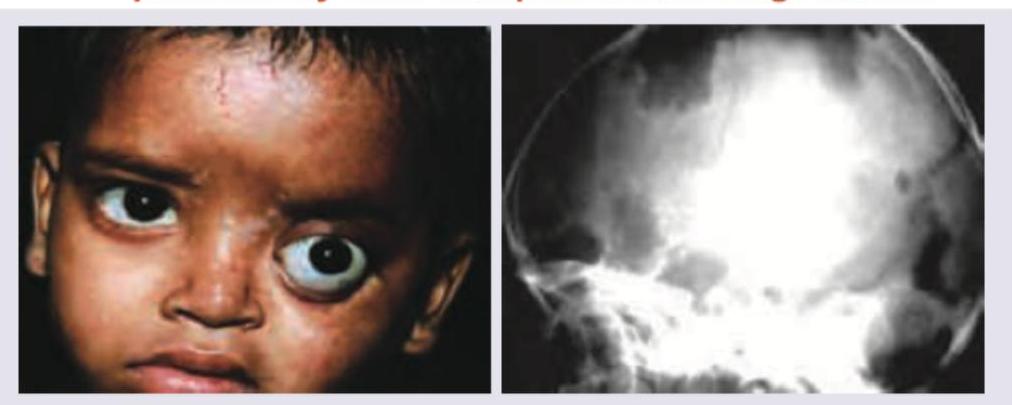
Banana sign seen in the fetal brain suggests ?

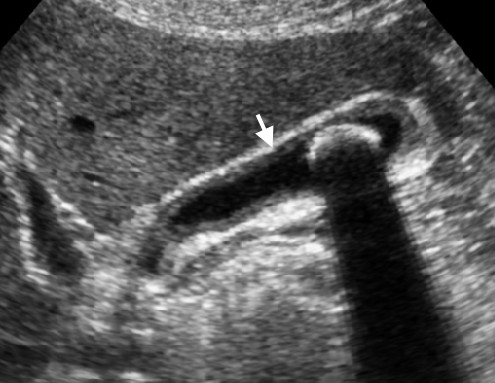
Which among the following is not an ultrasound feature of Congenital Hypertrophic Pyloric Stenosis?
Contrast material used in the diagnosis of esophageal atresia is:
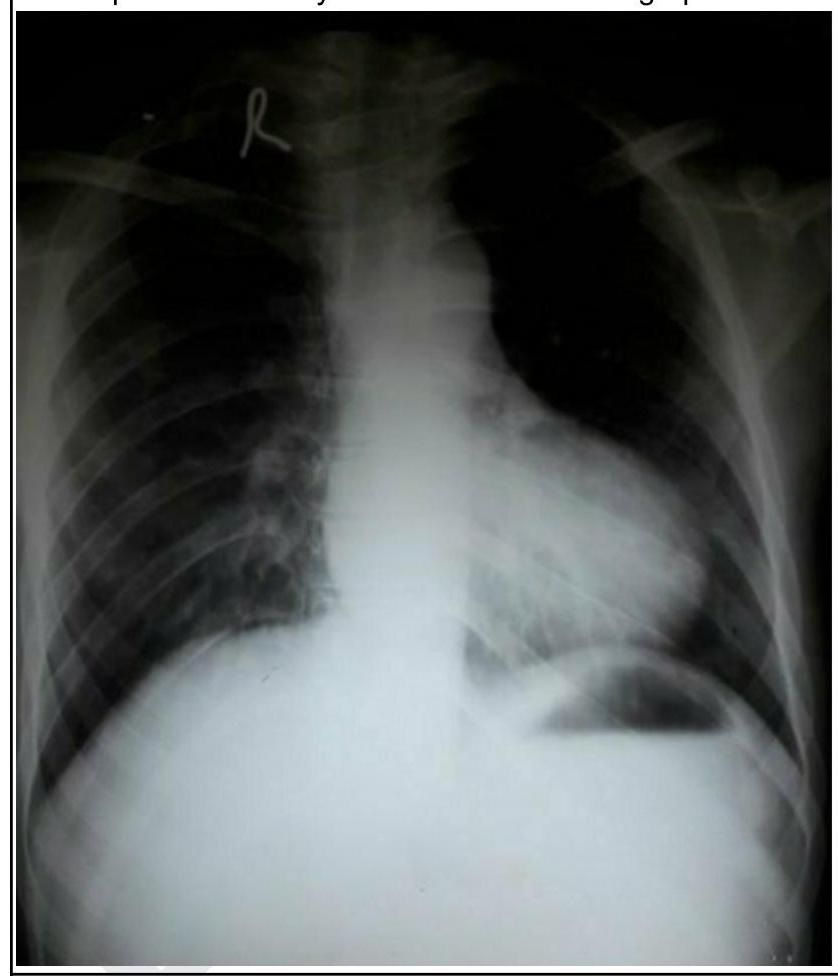
X-ray feature of pyloric stenosis is –
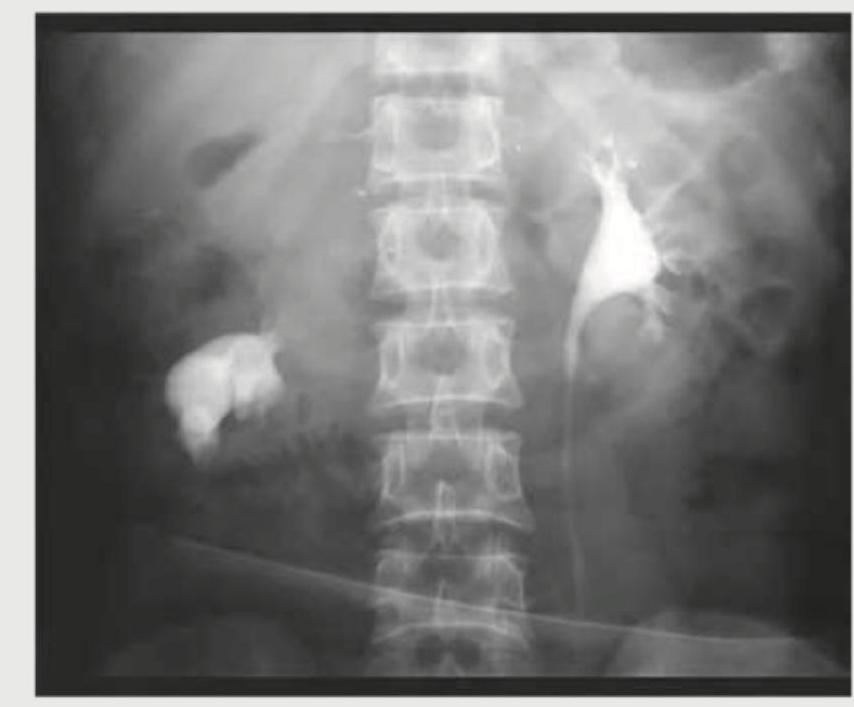
A 3-year-old child presents with recurrent urinary tract infections. An intravenous pyelogram (IVP) shows a characteristic "Cobra head appearance" at the distal end of the ureter. What is the most likely diagnosis?
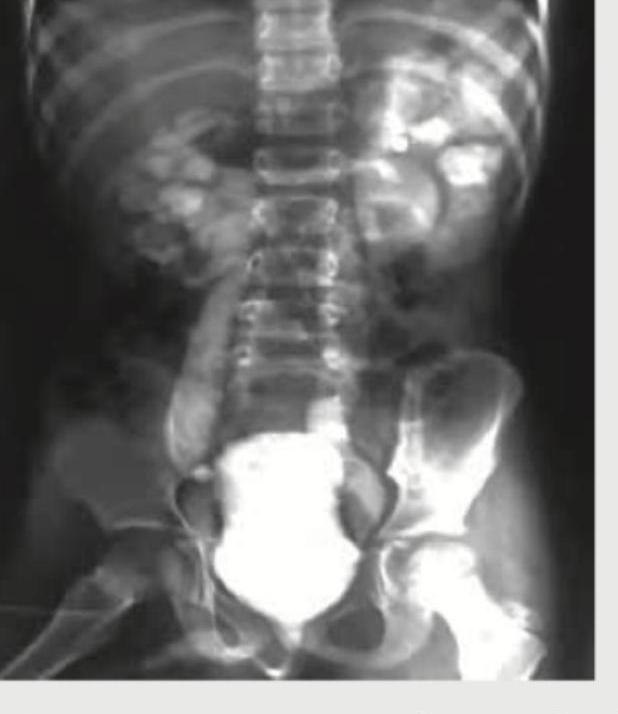
What is the most common presentation of neuroblastoma?
X-ray chest in a neonate may show 'ground glass' haziness in all the following conditions EXCEPT:
Which statement(s) is/are true about neuroblastoma with respect to Wilms tumor?
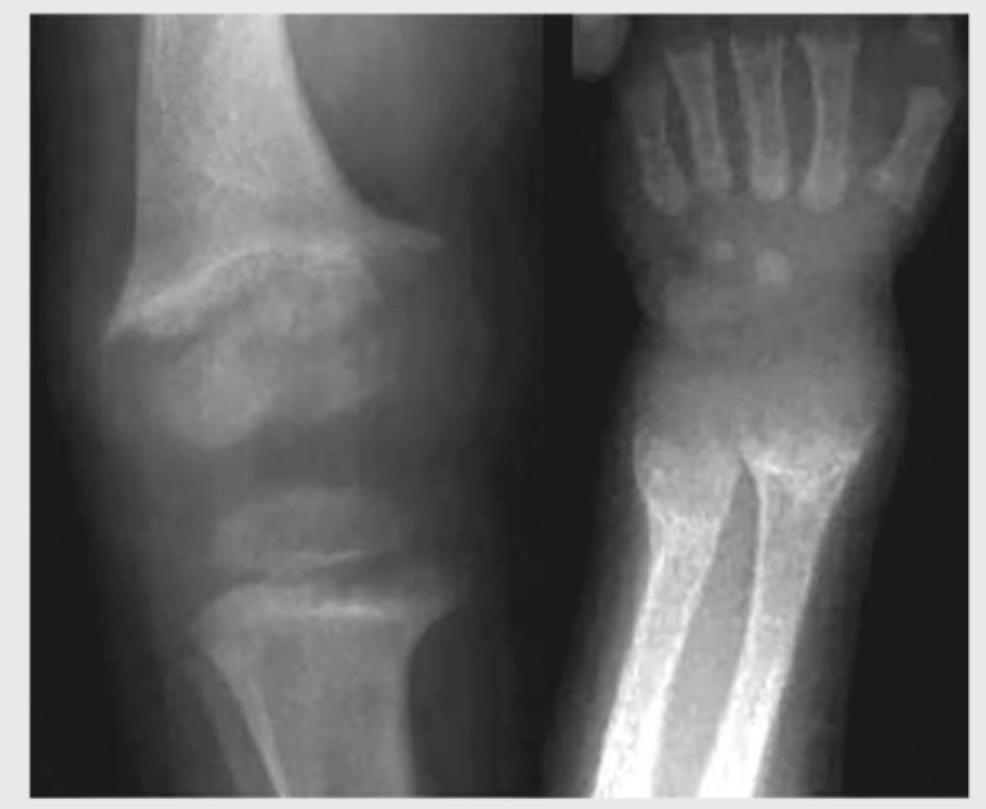
In a radiograph of suspected non-accidental injury, which of the following fractures is LEAST specific for child abuse?
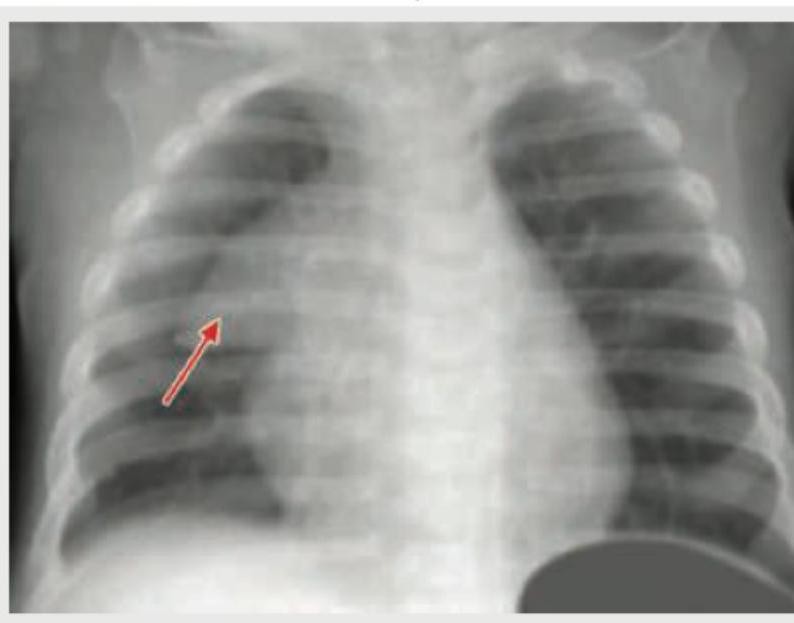
Radiological hallmark of primary tuberculosis in childhood is?
Explanation: ***Spina Bifida*** - The **banana sign** refers to the cerebellum being flattened and curved around the brainstem, resembling a banana. This occurs due to the **Chiari II malformation**, which is almost universally associated with open spina bifida. - In spina bifida, there is a defect in the closure of the neural tube, leading to caudal displacement of the brain structures, thus compressing and altering the shape of the cerebellum. *Porencephaly* - This condition involves **cysts or cavities within the brain** parenchyma, which are not directly indicated by the banana sign. - It results from destructive lesions (e.g., ischemia, infection) and is typically identified by anechoic fluid-filled spaces communicating with the ventricular system or subarachnoid space. *Encephalocele* - Encephalocele is a **protrusion of brain tissue and/or meninges through a defect in the skull**. - While it is a neural tube defect, its primary ultrasound finding is the presence of an exocranial mass, not the posterior fossa findings that characterize the banana sign. *Renal agenesis* - **Renal agenesis** refers to the **absence of one or both kidneys** and is identified by the lack of kidneys and often severe oligohydramnios. - This condition is a genitourinary anomaly and has no direct association with the banana sign or fetal brain morphology.
Explanation: ***95% sensitivity by ultrasound*** - This statement describes the **diagnostic accuracy** of ultrasound for pyloric stenosis, not a specific ultrasound feature of the condition itself - While relevant to diagnosing the condition, it doesn't represent **anatomical or functional findings** observed on an ultrasound image - Sensitivity refers to the test's ability to correctly identify disease when present *Thickness of pylorus > 4mm* - A **pyloric muscle wall thickness greater than 3-4 mm** is a key diagnostic criterion for hypertrophic pyloric stenosis on ultrasound - This increased thickness is due to the **hypertrophy of the muscular layer** of the pylorus - Normal pyloric wall thickness is typically <3mm in infants *Canal length > 16mm* - A **pyloric canal length greater than 16 mm** is another major diagnostic feature for hypertrophic pyloric stenosis - The thickened muscle causes the **elongation of the pyloric channel** - Normal pyloric canal length is typically <15mm in infants *High gastric residue* - **Increased gastric residue** or a dilated, fluid-filled stomach is often observed on ultrasound in infants with pyloric stenosis - This is a consequence of the **pyloric obstruction**, preventing stomach contents from passing into the duodenum - This is a **secondary finding** rather than a primary morphological feature
Explanation: ***Gastrograffin*** - **Gastrograffin** (diatrizoate meglumine) is the **traditional standard** water-soluble iodinated contrast agent for diagnosing **esophageal atresia**. - Historically preferred because if aspirated, it is absorbed from the lungs, unlike barium which causes severe pneumonitis. - **Note**: Modern practice increasingly favors **non-ionic, low-osmolar agents** (like Iohexol) due to Gastrograffin's hyperosmolarity, but **Gastrograffin remains the textbook answer** for most competitive exams. *Conray* - **Conray** (iothalamate meglumine) is an ionic iodinated contrast agent, primarily used for angiography and excretory urography. - Not typically recommended for esophageal studies in neonates with suspected **atresia**, due to its higher osmolality and potential complications if aspirated. *Barium swallow* - **Barium sulfate** is **absolutely contraindicated** in cases of suspected **esophageal atresia** or perforation. - If aspirated into the lungs, **barium** causes severe **chemical pneumonitis**, granuloma formation, and potentially **ARDS**, with significant morbidity and mortality. - Barium is not absorbed and remains in lung tissue, causing chronic inflammation. *Iohexol (Omnipaque)* - **Iohexol (Omnipaque)** is a **non-ionic, low-osmolar contrast agent** that is actually **safer than Gastrograffin** if aspirated. - In modern practice, non-ionic agents like Iohexol are increasingly preferred for esophageal studies due to lower osmolality and reduced risk of pulmonary edema. - However, for **exam purposes**, **Gastrograffin** remains the standard answer based on traditional teaching and most Indian textbooks.
Explanation: ***Single bubble appearance*** - Pyloric stenosis is characterized by an **enlarged stomach** due to the obstruction at the pylorus, which appears as a **single large air-filled bubble** on an X-ray. - The obstruction prevents gastric contents, including air, from passing into the duodenum, leading to gastric distension. *Multiple air fluid levels* - This finding is more typical of a **distal bowel obstruction**, where multiple loops of bowel are dilated and contain fluid. - Pyloric stenosis typically affects only the stomach, so multiple fluid levels in the small or large intestine would not be expected. *Triple bubble appearance* - This pattern is seen in **jejunal atresia** or other obstructions involving the duodenum and proximal jejunum. - It indicates air in the stomach, duodenum, and a third dilated loop of bowel. *Double bubble appearance* - This classic sign is indicative of **duodenal atresia** or an **annular pancreas**, where air is seen in the stomach and the dilated first part of the duodenum. - The obstruction is **distal to the pylorus** in the duodenum, allowing gastric contents to pass through the pylorus into the duodenum up to the point of obstruction, but no further.
Explanation: ***Ureterocele*** - A **ureterocele** is a congenital dilatation of the **distal ureter** as it enters the bladder, characterized by a **cystic bulge** in the bladder wall. - The "Cobra head appearance" on IVP is a classic radiological sign of a ureterocele, where the dilated ureter projects into the bladder with a clear halo around it. *Polycystic kidney* - This condition involves multiple **cysts** forming in the kidneys, leading to kidney enlargement and impaired function, which does not present with a "Cobra head appearance". - It would typically be diagnosed by **ultrasound or CT scan** showing numerous renal cysts, rather than a specific ureteral finding. *Horse shoe kidney* - A **horseshoe kidney** is a congenital anomaly where the two kidneys are fused at their lower poles, forming a **U-shape** across the midline. - This condition involves a fusion anomaly of the kidneys themselves and does not result in a "Cobra head appearance" on IVP relating to the ureter. *Hydronephrosis* - **Hydronephrosis** refers to the swelling of the kidney due to a backup of urine, often caused by obstruction. - While recurrent UTIs and obstruction can occur with a ureterocele due to its obstructive nature, hydronephrosis itself describes dilation of the renal pelvis and calyces, not a "Cobra head" sign at the distal ureter.
Explanation: ***Abdominal mass*** - **Neuroblastoma** most frequently originates in the **adrenal glands (40%)** or **abdominal sympathetic ganglia** (25%), leading to a palpable abdominal mass as the most common initial presentation **(60-70% of cases)**. - This mass is typically **firm, irregular, and crosses the midline**, distinguishing it from **Wilms' tumor** (which is intrarenal and doesn't cross midline). - **Peak age:** 2-3 years; 90% diagnosed before age 5. - Clinical features may include abdominal distension, pain, and constitutional symptoms (fever, weight loss). *Secondaries in brain* - While neuroblastoma can metastasize, **brain metastases are rare** (<5% of cases). - Most common metastatic sites are **bone marrow (71%)**, **bone (56%)**, liver, and lymph nodes—not brain. - Neurological symptoms at presentation suggest advanced stage disease, not typical initial presentation. *Renal invasion* - Neuroblastoma arises from **neural crest cells** in sympathetic tissue, not renal parenchyma. - It may **displace** or **encase** the kidney but does not typically **invade** it as a primary presentation. - Direct renal involvement suggests locally advanced disease rather than initial presentation. *Lung metastasis* - **Lung metastases** occur in only **3-5%** of neuroblastoma cases—much less common than bone/bone marrow spread. - Neuroblastoma has hematogenous spread pattern favoring bone marrow and bone over lungs. - When lung involvement occurs, it indicates stage M (metastatic) disease, not the typical initial presentation.
Explanation: ***Left-to-right shunt*** - A **left-to-right shunt** in a neonate typically causes an increase in pulmonary blood flow, leading to vascular congestion and possibly **cardiomegaly**, not ground-glass haziness. - While prolonged significant shunting can lead to pulmonary edema, classic "ground glass" haziness is more characteristic of diffuse lung pathology. *Obstructed TAPVC* - **Obstructed total anomalous pulmonary venous connection (TAPVC)** leads to severe pulmonary venous congestion, resulting in **pulmonary edema** and a classic **ground-glass appearance** on chest X-ray. - This condition is a surgical emergency due to severe respiratory distress and lung opacification. *Staphylococcal pneumonia* - **Staphylococcal pneumonia** in neonates can cause extensive **pulmonary inflammation** and **exudate formation**, leading to a diffuse alveolar filling pattern that appears as ground-glass opacities. - This is a severe form of pneumonia that can rapidly progress. *Hyaline membrane disease* - **Hyaline membrane disease (respiratory distress syndrome)** is characterized by surfactant deficiency, leading to diffuse **atelectasis** and **pulmonary edema**, which manifests as a **ground-glass appearance** on chest X-ray. - This condition commonly affects premature infants and is associated with air bronchograms.
Explanation: ***Correct: All of these*** - All three statements accurately describe distinguishing features of neuroblastoma compared to Wilms tumor - These imaging characteristics help differentiate these two common pediatric abdominal masses **Key Differentiating Features:** **Statement 1: Neuroblastoma encases major vessels without invasion** - Neuroblastoma characteristically grows around and encases major vessels (aorta, IVC, renal vessels) without invading vessel walls - Vessels appear "trapped" within tumor mass on CT/MRI but remain patent - In contrast, Wilms tumor typically displaces or compresses vessels rather than encasing them - This is one of the most reliable imaging features to differentiate the two tumors **Statement 2: Neuroblastoma causes inferolateral kidney displacement without collecting system distortion** - Neuroblastoma arises from adrenal medulla or sympathetic chain (extrinsic to kidney) - Displaces kidney downward and outward as an extrinsic mass - Collecting system and renal architecture remain intact (no claw sign) - Wilms tumor originates from renal parenchyma (intrarenal), causing internal distortion of calyces and collecting system with characteristic "claw sign" **Statement 3: Neuroblastoma crosses midline** - Neuroblastoma frequently crosses midline (60-70% of cases) due to origin from paraspinal sympathetic chain - Can involve bilateral paravertebral regions - Wilms tumor is typically unilateral and confined to one kidney, rarely crossing midline - Midline crossing strongly favors neuroblastoma over Wilms tumor *Why not individual statements alone?* - Since all three statements are correct, selecting any single statement would be incomplete - The question asks "which statement(s)" (plural), indicating multiple or all may be correct
Explanation: ***Parietal bone fracture*** - While **parietal bone fractures** are commonly seen in both accidental and non-accidental pediatric head trauma, they are **less specific for child abuse** compared to the classic skeletal injuries listed below. - Isolated skull fractures, particularly **simple linear parietal fractures**, can result from accidental falls and require additional clinical context (age, mechanism, associated injuries) to determine if abuse is suspected. - Complex, multiple, or depressed skull fractures are more concerning, but a simple parietal fracture alone is less diagnostic than the pathognomonic fractures of NAI. *Metaphyseal corner fracture* - Also known as **"bucket handle"** or **"corner" fractures**, these are **highly specific and virtually pathognomonic** for **non-accidental injury** in infants and young children. - They result from violent **shaking, twisting, or pulling forces** applied to the extremities, causing avulsion at the metaphyseal-epiphyseal junction. - These fractures are rarely seen in accidental trauma. *Costochondral & rib junction fracture* - **Posterior rib fractures** and **costochondral junction fractures** are **highly specific for NAI** in infants. - They result from **anteroposterior chest compression** during forceful squeezing or gripping of the thorax. - Accidental rib fractures in children are rare due to chest wall elasticity, making these fractures particularly suspicious. *Sternal fracture* - **Sternal fractures** are extremely rare in children due to the **flexibility of the pediatric sternum** and chest wall. - Their presence, especially without a history of **severe high-impact trauma** (e.g., motor vehicle collision), is **highly suspicious for non-accidental injury**. - Often result from direct forceful blows or severe compression injuries.
Explanation: ***Lymphadenopathy*** - Primary tuberculosis in children distinctively presents with **enlarged hilar and mediastinal lymph nodes** as a hallmark radiological finding. - This is often a result of the immune response to the primary infection in the lungs, leading to inflammation and swelling of regional lymph nodes. *Ghon's focus* - A **Ghon's focus** refers to the initial lung parenchymal lesion formed during primary tuberculosis, but it is typically small and often not the most prominent or defining radiological feature in childhood. - While it is a part of the primary complex, **lymphadenopathy** is generally considered the more striking and consistent radiological hallmark. *Normal chest Xray* - A **normal chest X-ray** is unlikely in a child with active primary tuberculosis, as the infection almost always produces detectable changes. - While some cases might be very mild, the presence of disease usually leads to visible radiological abnormalities. *Pleural effusion* - **Pleural effusion** can occur in primary tuberculosis, but it is a complication or a manifestation that typically develops later, rather than being the defining initial hallmark. - It indicates the spread of infection to the pleural space, often seen in more advanced or symptomatic cases.
Normal Pediatric Developmental Anatomy
Practice Questions
Neonatal Imaging
Practice Questions
Pediatric Chest Imaging
Practice Questions
Pediatric Abdominal Imaging
Practice Questions
Pediatric Musculoskeletal Imaging
Practice Questions
Pediatric Neuroradiology
Practice Questions
Congenital Heart Disease Imaging
Practice Questions
Pediatric Oncology Imaging
Practice Questions
Child Abuse Imaging
Practice Questions
Pediatric Interventional Radiology
Practice Questions
Radiation Protection in Pediatrics
Practice Questions
Sedation in Pediatric Imaging
Practice Questions
Get full access to all questions, explanations, and performance tracking.
Start For Free