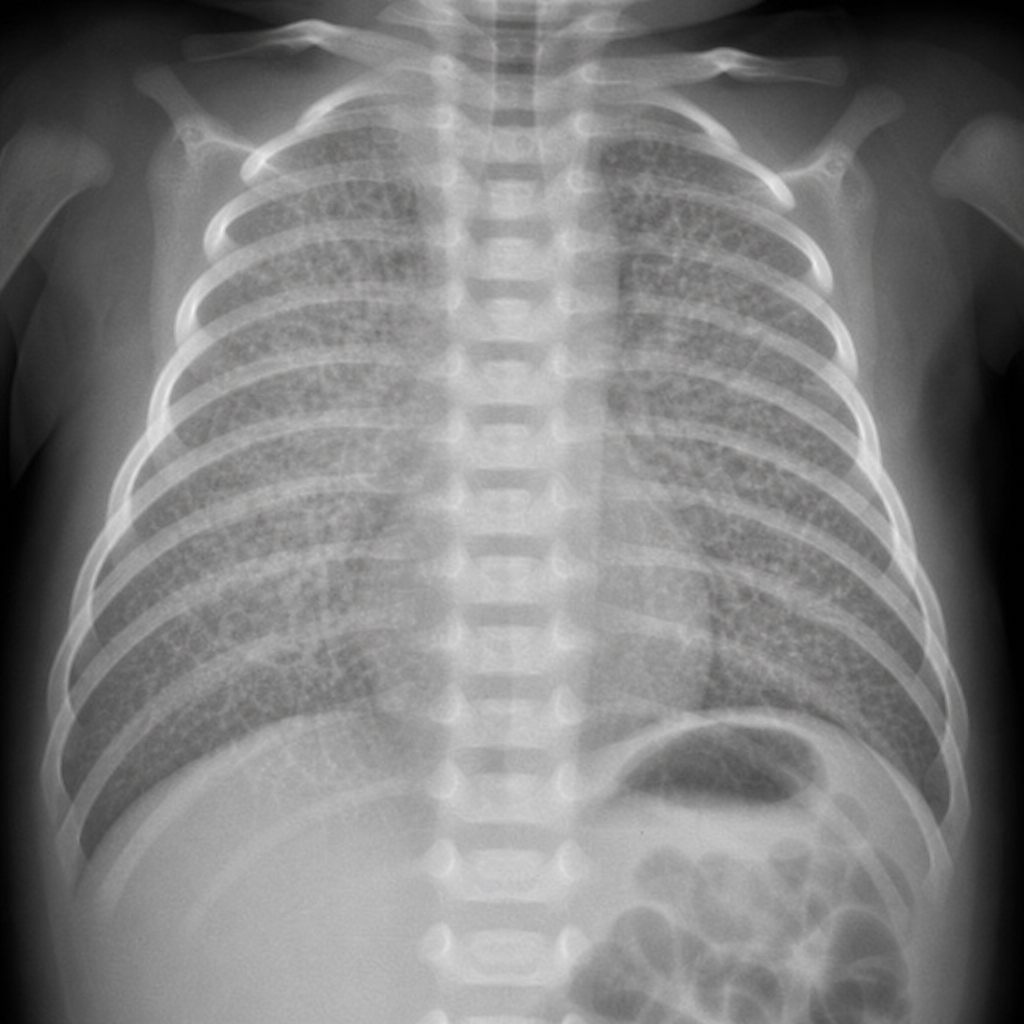
In a newborn, what is the typical time frame for gas to reach the colonic end?
A child presents with multiple vertebral anomalies and a posterior mediastinal mass. What is the likely diagnosis?
Antenatal ultrasound demonstrating a double bubble appearance is typically indicative of which of the following conditions?
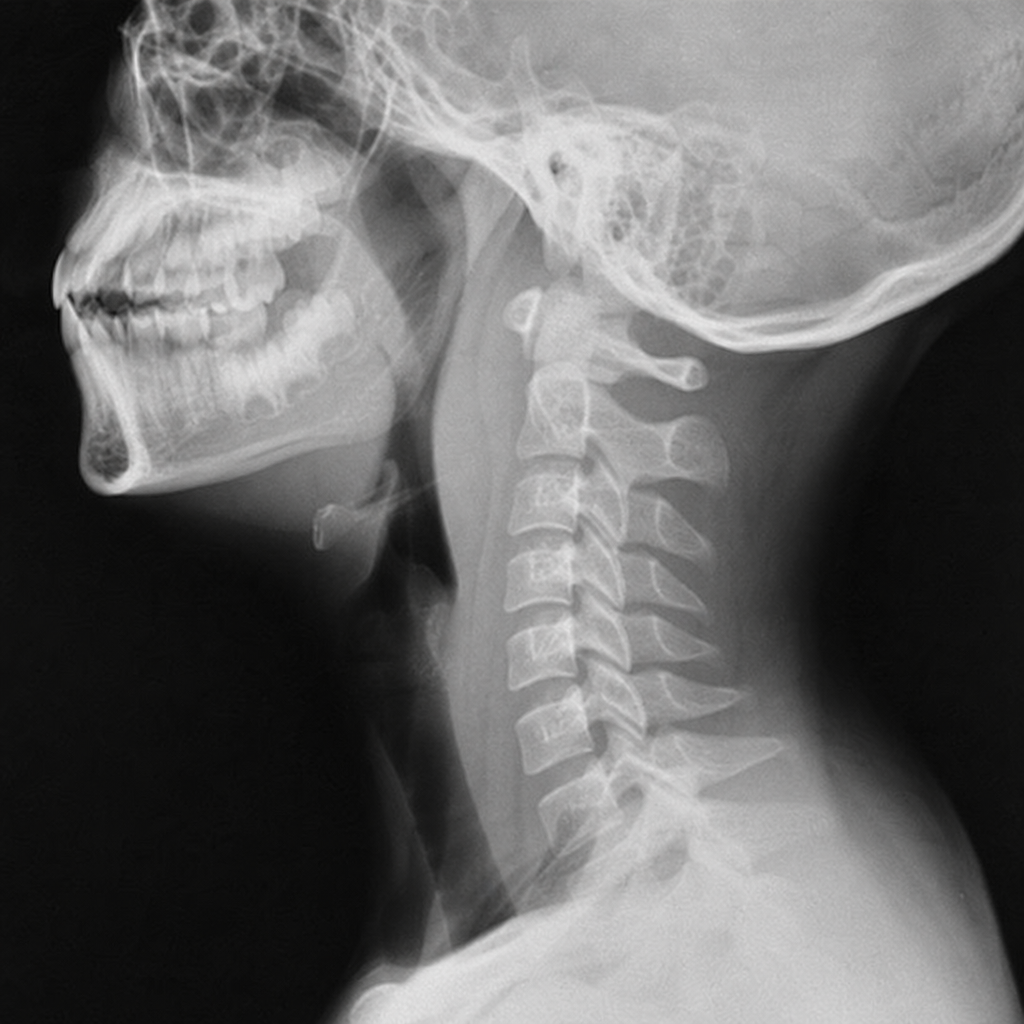
What is the characteristic radiological sign observed in Croup?
A contrast enema is performed on a one-day-old infant presenting with bilious emesis and abdominal distension. Based on the findings, which of the following is the MOST likely diagnosis?

What is the most common cause of a mass in the posterior mediastinum in children?
Regarding neuroimaging in the neonatal period, all are true except?
What is the name of the study performed on a newborn with an inability to pass stools, often visualized in an X-ray?
A preterm baby suffered perinatal asphyxia and was found to have Periventricular leucomalacia on CNS imaging. Which imaging modality was used?
What is the most characteristic radiographic sign in a child with leukemia?
Explanation: **Explanation:** In a healthy newborn, air is swallowed immediately after birth. The progression of this bowel gas follows a predictable chronological sequence, which is a vital diagnostic marker in pediatric radiology to rule out intestinal atresia or obstruction. 1. **Why 8-10 hours is correct:** Air typically reaches the **stomach** within minutes (0–15 mins), the **small intestine** by 3 hours, and the **caecum** by 5–6 hours. It finally reaches the **rectosigmoid/colonic end** between **8 to 12 hours** (mean average of 8-10 hours). By 24 hours, the entire gastrointestinal tract should be well-aerated. 2. **Analysis of Incorrect Options:** * **2-3 hours:** At this stage, gas is usually limited to the stomach and the proximal small bowel (duodenum and jejunum). * **4-5 hours:** Gas has typically reached the distal small bowel and is just beginning to enter the caecum. * **6-7 hours:** Gas is traversing the ascending and transverse colon but has not yet consistently reached the distal colonic end/rectum. **High-Yield Clinical Pearls for NEET-PG:** * **Clinical Significance:** If gas does not reach the rectum by 24 hours, clinicians must suspect **Anorectal Malformations (ARM)**, **Hirschsprung disease**, or **Meconium Ileus**. * **Inverted X-ray (Wangensteen-Rice view):** Used to determine the distance between the distal gas bubble and the anal dimple in ARM; it should only be performed **after 12–24 hours** to ensure gas has had sufficient time to reach the distal-most point. * **First sign of life:** The presence of air in the stomach on a neonatal X-ray is a medicolegal indicator that the baby breathed after birth.
Explanation: **Explanation:** The presence of a **posterior mediastinal mass** associated with **vertebral anomalies** (such as hemivertebrae, butterfly vertebrae, or scoliosis) is the classic imaging hallmark of a **Neuroenteric Cyst**. 1. **Why Neuroenteric Cyst is correct:** This congenital anomaly results from a failure of separation between the primitive endoderm (gut) and the ectoderm (notochord) during the 3rd week of gestation. This persistent connection leads to a cyst lined by gastrointestinal or respiratory epithelium, typically located in the posterior mediastinum. Because the notochord is involved, it is almost always associated with anterior vertebral body defects at or above the level of the cyst. 2. **Why the other options are incorrect:** * **Meningomyelocele:** While it involves vertebral defects, it is a neural tube defect characterized by the protrusion of meninges and spinal cord through a posterior vertebral arch defect, typically in the lumbosacral region, not as a mediastinal mass. * **Bronchogenic Cyst:** These are the most common foregut cysts but are usually located in the **middle mediastinum** (subcarinal) and are **not** typically associated with vertebral anomalies. * **Neuroblastoma:** This is the most common posterior mediastinal mass in children. While it can cause bone destruction or neural foraminal widening (dumb-bell tumor), it does not cause congenital vertebral malformations like hemivertebrae. **High-Yield NEET-PG Pearls:** * **Split Notochord Syndrome:** The spectrum of anomalies including neuroenteric cysts and vertebral defects. * **Location:** Most commonly found in the posterior mediastinum, slightly to the right. * **Imaging:** MRI is the modality of choice to visualize the cyst and its potential communication with the spinal canal. * **Key Association:** Always look for "Butterfly vertebrae" or "Hemivertebrae" in the clinical stem for Neuroenteric cysts.
Explanation: ### Explanation **Correct Answer: B. Duodenal atresia** The **"Double Bubble" sign** is a classic radiological hallmark of duodenal obstruction. In duodenal atresia, there is a failure of recanalization of the duodenum during the 8th–10th week of gestation. * **Mechanism:** The "bubbles" represent the gaseous (or fluid-filled, on antenatal USG) distension of the **stomach** and the **proximal duodenum**, separated by the pyloric sphincter. * **Antenatal USG:** It appears as two echo-free cystic structures in the upper abdomen. It is frequently associated with **polyhydramnios** because the fetus cannot effectively swallow and absorb amniotic fluid. **Why other options are incorrect:** * **A. Diaphragmatic hernia:** Typically presents with a "scaphoid abdomen" postnatally. On USG, one would see abdominal contents (bowel loops, stomach) in the thoracic cavity and a mediastinal shift. * **C. Gastric volvulus:** This is an acute surgical emergency involving rotation of the stomach. While it causes gastric outlet obstruction, it does not typically produce the specific "double bubble" configuration. * **D. Intussusception:** This is primarily a disease of infants (6–18 months), not usually seen antenatally. The classic USG sign is the **"Target" or "Donut" sign**. **High-Yield Clinical Pearls for NEET-PG:** * **Association:** Approximately 30% of infants with duodenal atresia have **Down Syndrome (Trisomy 21)**. * **X-ray finding:** Postnatally, an abdominal X-ray shows two air-filled bubbles with a complete absence of distal bowel gas. * **Differential for Double Bubble:** While duodenal atresia is the most common cause, other causes include **annular pancreas**, peritoneal (Ladd's) bands, and malrotation. * **VACTERL association:** Always screen for other congenital anomalies (Vertebral, Anal, Cardiac, Tracheo-Esophageal, Renal, and Limb).
Explanation: **Explanation:** **Croup (Laryngotracheobronchitis)** is a common pediatric viral infection, most frequently caused by the **Parainfluenza virus**. The characteristic radiological finding is the **Steeple sign**, seen on an anteroposterior (AP) neck X-ray. This sign is produced by the subglottic narrowing of the airway due to inflammatory edema, which gives the trachea a tapered, pointed appearance resembling a church steeple. **Analysis of Options:** * **A. Steeple sign (Correct):** Represents subglottic narrowing. It is the classic radiographic hallmark of Croup. * **B. Epiglottic swelling:** This is the hallmark of **Acute Epiglottitis**. On a lateral neck X-ray, this appears as the **"Thumb sign"** due to an enlarged, rounded epiglottis. * **C. Abnormal laryngeal cartilage:** This is associated with **Laryngomalacia**, the most common cause of congenital stridor, characterized by inward collapse of supraglottic structures during inspiration. * **D. Peritonsillar abscess:** This is a clinical diagnosis (Quinsy) characterized by uvular deviation and trismus; radiologically, it may show soft tissue swelling but not the steeple sign. **High-Yield Clinical Pearls for NEET-PG:** * **Clinical Triad:** Barking cough, inspiratory stridor, and hoarseness. * **Age Group:** Typically affects children aged 6 months to 3 years. * **Management:** Mild cases are treated with oral Dexamethasone; severe cases require nebulized L-epinephrine (Adrenaline). * **Radiology Tip:** While the Steeple sign is classic, it is only present in about 50% of cases; diagnosis is primarily clinical. Always look for the "Thumb sign" to rule out the more life-threatening Epiglottitis.
Explanation: ***Meconium ileus*** - Contrast enema shows **microcolon** (small, unused colon) with **pellet-like filling defects** in the terminal ileum due to inspissated meconium. - Associated with **cystic fibrosis** in 85-90% of cases, presenting with **bilious vomiting** and **abdominal distension** in neonates. *Hirschsprung Disease* - Contrast enema demonstrates a **transition zone** between the normal proximal bowel and the aganglionic distal segment. - Shows **delayed evacuation** of contrast on 24-hour films, but no microcolon or ileal filling defects. *Meconium Plug Syndrome* - Contrast enema reveals a **colonic plug** that can be evacuated with the enema, with **normal caliber colon**. - No microcolon present, and the obstruction is limited to the **left colon** without ileal involvement. *Small Left Colon Syndrome* - Shows **narrowed left colon** with a **transition point at the splenic flexure**, creating a caliber change. - The **right colon** appears normal or dilated, contrasting with the uniformly small colon seen in meconium ileus.
Explanation: **Explanation:** In pediatric radiology, the mediastinum is divided into anterior, middle, and posterior compartments. The **posterior mediastinum** is the most common site for mediastinal masses in children, and approximately **90% of these are neurogenic tumors.** **1. Why Neuroblastoma is Correct:** Neuroblastoma is a tumor derived from primordial neural crest cells of the sympathetic nervous system. While the adrenal gland is the most common primary site, the **posterior mediastinal sympathetic chain** is the second most common location. It typically presents as a paravertebral mass that may cause rib thinning or neural foraminal widening. In children, any solid mass in the posterior mediastinum should be considered a neurogenic tumor (Neuroblastoma, Ganglioneuroblastoma, or Ganglioneuroma) until proven otherwise. **2. Why the other options are incorrect:** * **Rhabdomyosarcoma (A):** This is the most common soft tissue sarcoma in children but typically occurs in the head/neck, genitourinary tract, or extremities. It is rarely a primary mediastinal mass. * **Duplication cyst (B):** While these occur in the posterior mediastinum, they are **cystic** lesions, not solid masses, and are less frequent than neurogenic tumors. * **Lymphoma (C):** Lymphoma is the most common cause of a mass in the **anterior or middle mediastinum** in children (often associated with lymphadenopathy and pleural effusions), but it is rare in the posterior compartment. **High-Yield Clinical Pearls for NEET-PG:** * **Rule of Thumb:** Anterior Mediastinum = Lymphoma/Teratoma; Middle Mediastinum = Lymphadenopathy/Cysts; Posterior Mediastinum = Neurogenic tumors. * **Imaging Sign:** Neuroblastomas often show **stippled calcifications** on CT (80% of cases). * **Dumbbell Tumor:** Neurogenic tumors can extend through the intervertebral foramina into the spinal canal, resembling a "dumbbell" shape. * **Biomarker:** Elevated urinary catecholamines (VMA/HVA) are diagnostic markers for neuroblastoma.
Explanation: **Explanation** The correct answer is **D**, as it is a false statement. Modern neuroimaging, particularly **Diffusion-Weighted Imaging (DWI)** on MRI, is highly sensitive and can detect cytotoxic edema and ischemic changes within hours of an insult, often on the first day of life. **Analysis of Options:** * **Option D (Incorrect Statement):** MRI is the most sensitive modality for neonatal brain injury. DWI sequences can identify restricted diffusion (indicative of acute ischemia) much earlier than conventional T1/T2 sequences or CT scans, making it possible to detect abnormalities within the first 24 hours. * **Option A & C (True Statements):** In term infants with Hypoxic-Ischemic Encephalopathy (HIE), both Cranial Ultrasound (USG) and CT scans are frequently normal or show non-specific findings during the first 24 hours. Edema and structural changes often take time to become radiologically apparent on these modalities. * **Option B (True Statement):** On CT, the "reversal sign" or decreased attenuation in the basal ganglia and thalamus typically becomes more prominent after the first 24 hours as cerebral edema evolves. These changes usually persist for about a week before transitioning to chronic stages. **NEET-PG High-Yield Pearls:** * **Investigation of Choice (IOC):** For screening germinal matrix hemorrhage in preterm neonates, **Cranial Ultrasound** (via the anterior fontanelle) is the IOC. * **Most Sensitive Sequence:** **DWI (MRI)** is the gold standard for early detection of HIE. * **CT Findings in HIE:** Look for the **"Reversal Sign"** (low attenuation of cerebral cortex/white matter with relative sparing of the cerebellum and brainstem) and the **"White Cerebellum Sign."** * **Timing:** The optimal window for conventional MRI to show the full extent of HIE injury is typically **3 to 5 days** after birth.
Explanation: **Explanation:** The correct answer is **Invertogram (Wangensteen-Rice technique)**. This specialized radiographic study is primarily used to evaluate **Anorectal Malformations (ARM)**, such as imperforate anus, in newborns who fail to pass meconium within the first 24–48 hours of life. **Why Invertogram is correct:** In this procedure, the neonate is held upside down (inverted) for 3–5 minutes to allow bowel gas to rise to the distal-most end of the rectal pouch. A radio-opaque marker (coin) is placed on the anal dimple. The distance between the gas bubble and the marker helps classify the anomaly as **High, Intermediate, or Low**, which dictates the surgical approach (e.g., primary anoplasty vs. colostomy). **Why other options are incorrect:** * **Enteroclysis:** A double-contrast study of the small bowel where contrast is infused via a nasojejunal tube. It is used for detecting small bowel obstructions or Crohn’s disease, not neonatal ARM. * **Graham Cole Test:** An obsolete oral cholecystography technique used to visualize the gallbladder. * **Digital X-ray:** A general modality of imaging, not a specific diagnostic study for stool-passing issues. **NEET-PG High-Yield Pearls:** * **Timing:** An invertogram should only be performed **after 18–24 hours** of birth to allow sufficient time for air to reach the distal rectum. * **Reference Line:** The **Kelly’s line** (at the level of the ischium) or the **PC line** (Pubococcygeal line) is used to differentiate high vs. low anomalies. * **Modern Alternative:** Prone cross-table lateral X-ray is now often preferred over the invertogram to avoid respiratory distress in the neonate.
Explanation: **Explanation:** **Periventricular Leukomalacia (PVL)** is a form of white matter brain injury characterized by necrosis of the white matter near the lateral ventricles, commonly seen in preterm infants following hypoxic-ischemic insults (perinatal asphyxia). **Why Transcranial Ultrasound (TUS) is the correct answer:** In the neonatal period, **Transcranial Ultrasound** is the **initial and preferred screening modality** for PVL. It is highly effective because the **anterior fontanelle** is still open, serving as an acoustic window to visualize the periventricular area. TUS is portable (bedside), non-invasive, does not require sedation, and involves no ionizing radiation, making it ideal for unstable preterm babies in the NICU. Early PVL appears as "flaring" or increased echogenicity, which later progresses to cystic changes (Cystic PVL). **Why other options are incorrect:** * **MRI Brain:** While MRI is the most sensitive modality for detecting subtle white matter changes, it is not the primary screening tool in the acute neonatal phase due to the need for transport and sedation of a fragile neonate. * **CECT Head:** CT is generally avoided in neonates due to high radiation risks and poor contrast between gray and white matter in the unmyelinated newborn brain. * **SPECT Brain:** This is a functional imaging tool used for blood flow studies and is not indicated for the structural diagnosis of PVL. **High-Yield Clinical Pearls for NEET-PG:** * **Acoustic Window:** The **Anterior Fontanelle** is the most common window used for TUS. * **Classic Finding:** Increased periventricular echogenicity (greater than the choroid plexus) persisting for >7 days is highly suggestive of PVL. * **Long-term Sequelae:** PVL is the most common cause of **Spastic Diplegia** (Cerebral Palsy) in preterm infants. * **Timing:** Screening TUS is typically performed at 1 week of age and repeated at 4–6 weeks to look for cystic changes.
Explanation: **Explanation:** In pediatric leukemia (most commonly Acute Lymphoblastic Leukemia - ALL), skeletal changes are present in approximately 50–70% of cases due to the rapid proliferation of leukemic cells within the bone marrow. **1. Why Metaphyseal Translucencies are correct:** The most characteristic and earliest radiographic sign is the **"Leukemic Line"**—a transverse radiolucent band located at the metaphysis, just proximal to the zone of provisional calcification. This occurs because the hypercellular leukemic marrow exerts pressure and interferes with normal endochondral ossification, leading to deficient bone formation in the most metabolically active area. **2. Analysis of Incorrect Options:** * **A. Osteosclerosis:** This is rare in leukemia. Sclerosis is more typical of bone metastases (like neuroblastoma) or certain metabolic disorders. * **C. Periosteal reaction:** While common in leukemia (due to subperiosteal infiltration), it is non-specific and can be seen in trauma, osteomyelitis, or Caffey’s disease. * **D. Osteolytic lesions:** These "punched-out" lesions occur in advanced stages due to focal destruction, but they are less characteristic and less frequent than metaphyseal bands. **High-Yield Clinical Pearls for NEET-PG:** * **Differential Diagnosis for Metaphyseal Bands:** Remember the mnemonic **"L-S-C"** (Leukemia, Scurvy, Congenital Syphilis). * **Scurvy vs. Leukemia:** In Scurvy, the radiolucent band is called the *Trummerfeld zone*, but it is accompanied by the *Wimberger ring* and *Pelkan spur*, which helps differentiate it from leukemia. * **Skeletal Pain:** Bone pain in a child that wakes them up at night should always prompt a workup for leukemia, even if the peripheral blood smear is initially normal.
Normal Pediatric Developmental Anatomy
Practice Questions
Neonatal Imaging
Practice Questions
Pediatric Chest Imaging
Practice Questions
Pediatric Abdominal Imaging
Practice Questions
Pediatric Musculoskeletal Imaging
Practice Questions
Pediatric Neuroradiology
Practice Questions
Congenital Heart Disease Imaging
Practice Questions
Pediatric Oncology Imaging
Practice Questions
Child Abuse Imaging
Practice Questions
Pediatric Interventional Radiology
Practice Questions
Radiation Protection in Pediatrics
Practice Questions
Sedation in Pediatric Imaging
Practice Questions
Get full access to all questions, explanations, and performance tracking.
Start For Free