What is the maximum limit of the cardiothoracic ratio in children below 2 years of age?
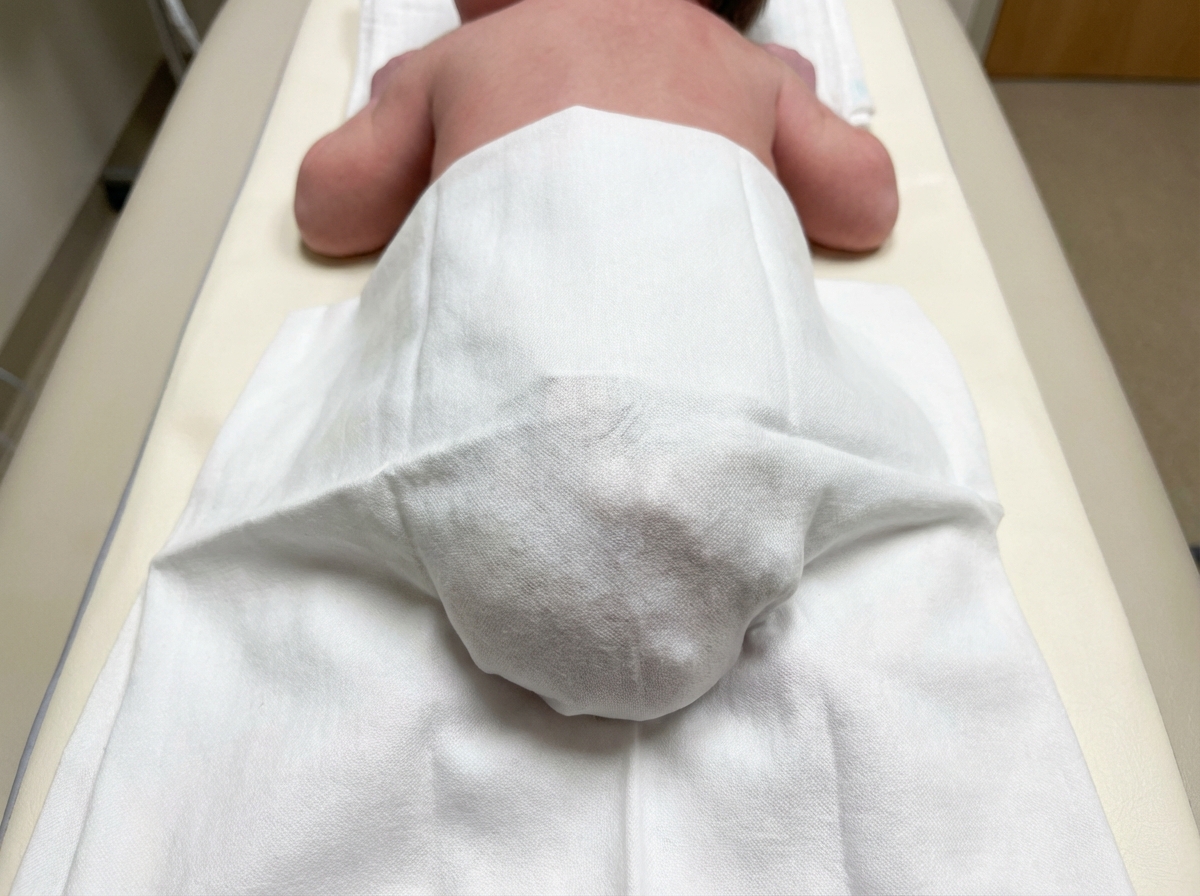
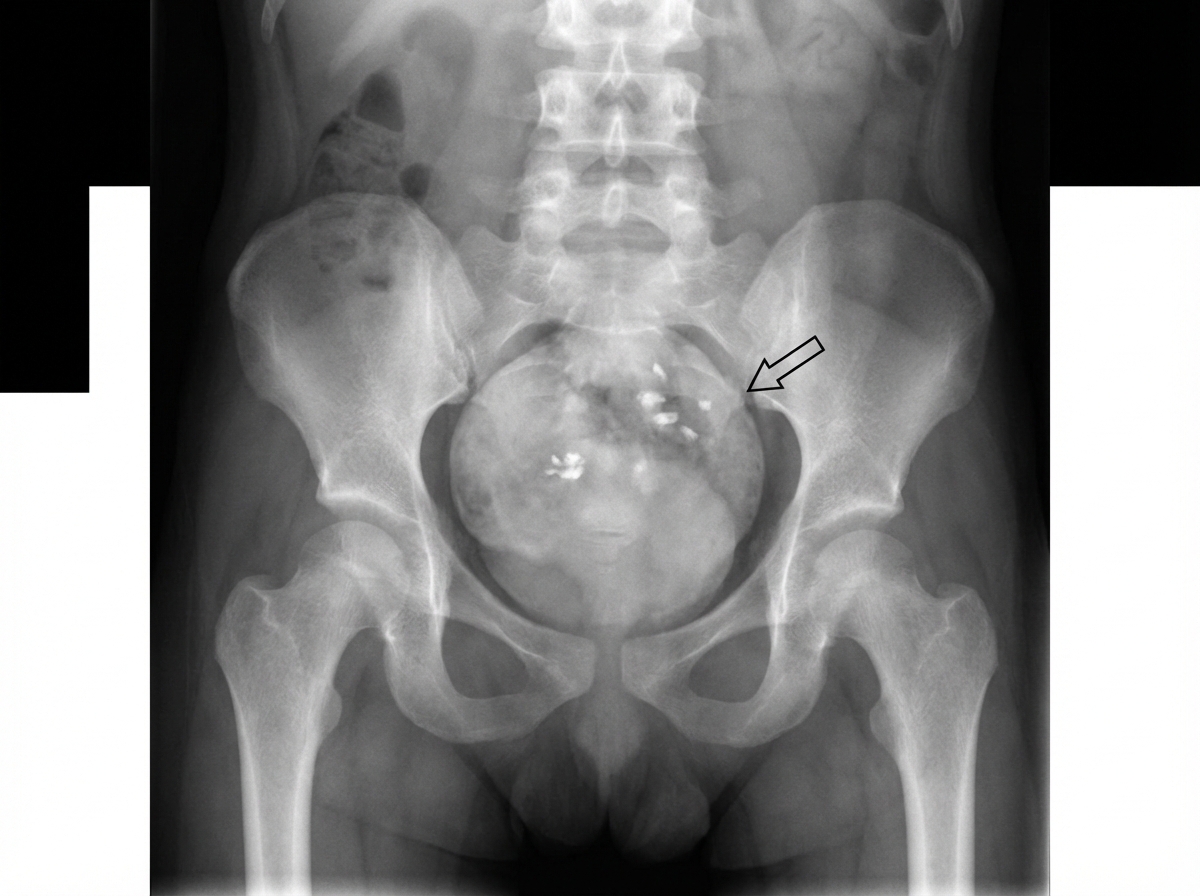
An infantogram shows the presence of which of the following?
At what time frame are congenital anorectal malformations typically detected by X-ray?
What is the first sign of hydrocephalus in children?
Which contrast material is used in the diagnosis of esophageal atresia?
The time usually taken for air to reach the descending colon after birth in a normal infant is:
A four-film survey for children consists of maxillary and mandibular occlusals along with which of the following?
Which one of the following is the earliest radiographic manifestation of childhood leukemia?
What is the investigation of choice for hydrocephalus in infants?
In a premature baby presenting with convulsions on the second day of life, what is the first investigation to be performed?
Explanation: **Explanation:** The **Cardiothoracic Ratio (CTR)** is a radiographic measurement used to estimate heart size on a Chest X-ray (CXR). It is calculated by dividing the maximum transverse diameter of the heart by the maximum internal diameter of the thoracic cage. **Why 0.5 is the correct answer:** In adults and children older than 2 years, a CTR of up to **0.5 (50%)** is considered the upper limit of normal. While infants (neonates) can have a physiological CTR of up to **0.6 (60%)** due to a more horizontal heart position, a high diaphragm, and the presence of the thymus, the standard clinical threshold for defining cardiomegaly across pediatric age groups—including those under 2 years—remains **>0.5**. In the context of standard medical examinations like NEET-PG, 0.5 is the established benchmark for the upper limit of a normal heart size. **Analysis of Incorrect Options:** * **A (0.4) & B (0.45):** These values are well within the normal range. A CTR this low would never be considered the "maximum limit" as it would exclude a large portion of the healthy population. * **D (0.55):** While a CTR of 0.55 can be normal in neonates (under 1 month) due to the thymus, it is not the standard "limit" for the broader category of children under 2 years. **High-Yield Clinical Pearls for NEET-PG:** * **The Thymus:** In children <2 years, the thymus often creates a "Sail Sign" or "Wave Sign" on CXR, which can falsely mimic cardiomegaly or a mediastinal mass. * **Inspiratory Effort:** An expiratory film in a crying child can falsely increase the CTR; always evaluate the heart size on a good inspiratory film (8–9 posterior ribs visible). * **Adult CTR:** Always 0.5. Anything >0.5 on a PA view is cardiomegaly.
Explanation: ***Sacrococcygeal teratoma*** - Appears on **infantogram** as a large **presacral soft tissue mass** with characteristic **calcifications** and mixed densities. - Most common **congenital tumor** in neonates, easily identified by its **posterior location** and **heterogeneous appearance** on plain radiographs. *Hemangioma* - Represents a **vascular malformation** that appears as soft tissue density without the discrete mass characteristics seen on infantogram. - Typically requires **contrast studies** or **MRI** for proper visualization, not readily apparent on plain film infantogram. *Myelomeningocele* - Shows as a **posterior spinal sac** containing **neural elements** and CSF, representing a **neural tube defect**. - Associated with **spina bifida** and **vertebral arch defects**, distinct from the presacral mass pattern of teratoma. *Arnold-Chiari malformation* - A **hindbrain anomaly** involving **cerebellar tonsillar herniation** through the foramen magnum. - Not visible on **plain film infantogram** and requires **MRI** or **CT** for diagnosis of this intracranial abnormality.
Explanation: **Explanation:** The diagnosis and classification of congenital anorectal malformations (ARM) rely on the presence of gas in the distal rectum to determine the level of the lesion. **Why Option B is Correct:** After birth, a neonate swallows air which progressively travels through the gastrointestinal tract. It typically takes **18 to 24 hours** for air to reach the distal-most part of the rectum. Performing an X-ray (such as the **Invertogram** or the **Wangensteen-Rice view**) before this timeframe may lead to a false-positive diagnosis of a "high" lesion, as the air column has not yet reached its furthest point. Therefore, the optimal window for radiological assessment is **24–48 hours** after birth, ensuring the distal bowel is fully distended. **Why Other Options are Wrong:** * **Option A:** Immediately after birth, there is insufficient gas in the distal bowel, making radiological interpretation inaccurate. * **Options C & D:** While an X-ray can still be performed after 48 hours, waiting this long is unnecessary and delays surgical intervention (like a diverting colostomy or anoplasty), increasing the risk of bowel distension and electrolyte imbalances. **High-Yield Clinical Pearls for NEET-PG:** * **Invertogram (Wangensteen-Rice View):** Historically used to classify ARM as High, Intermediate, or Low based on the distance of the gas bubble from the anal dimple (marked by a radio-opaque coin). * **Prone Cross-Table Lateral View:** Now preferred over the invertogram because it is safer for the neonate (avoids respiratory distress from being held upside down) and allows gas to displace meconium more effectively. * **PC Line (Pubococcygeal Line):** Used to differentiate high vs. low lesions. * **VACTERL Association:** Always screen for vertebral, cardiac, and renal anomalies in patients with ARM.
Explanation: **Explanation:** In pediatric patients, the skull is not yet a rigid box because the cranial sutures have not fused. When intracranial pressure (ICP) rises due to hydrocephalus, the skull compensates by expanding at these points of least resistance. **1. Why Sutural Diastasis is correct:** Sutural diastasis (widening of the cranial sutures) is the **earliest radiological sign** of increased ICP and hydrocephalus in infants and young children (typically up to 10–12 years of age). On a skull X-ray, a suture width of **>2 mm** is generally considered abnormal. This occurs before the bone itself thins or the head circumference reaches the 95th percentile. **2. Analysis of Incorrect Options:** * **Large head (Macrocephaly):** While a hallmark of hydrocephalus, it is a clinical finding rather than the earliest radiological sign. It occurs as a consequence of prolonged sutural diastasis. * **Post clinoid erosion:** This is a classic sign of increased ICP in **adults** or older children with fused sutures. In infants, the open sutures decompress the pressure, protecting the sella turcica from early erosion. * **Thinned out vault:** This is a late feature of chronic hydrocephalus. Prolonged pressure leads to "beaten brass" or "copper beaten" appearance (digital impressions) and generalized thinning of the calvarium. **Clinical Pearls for NEET-PG:** * **Copper Beaten Skull:** Associated with chronic increased ICP, but can be a normal variant in children aged 4–10 years if seen only in the posterior skull. * **Macewen’s Sign (Cracked Pot Sign):** A clinical sign where percussion of the skull over the junction of the frontal, temporal, and parietal bones yields a resonant sound due to sutural diastasis. * **Setting Sun Sign:** Downward gaze palsy due to pressure on the midbrain tectum, a classic clinical sign of hydrocephalus.
Explanation: **Explanation:** In the diagnosis of **Esophageal Atresia (EA)**, the primary diagnostic step is the inability to pass a firm, radio-opaque nasogastric tube into the stomach. However, if a contrast study is required to confirm the diagnosis or visualize a fistula, the choice of contrast is critical due to the high risk of **aspiration**. **Why Dianosil is correct:** **Dianosil (Propyliodone)** is an oil-based, iodinated contrast medium. It is the preferred agent in suspected EA because it is relatively inert and does not cause significant pulmonary edema or chemical pneumonitis if aspirated into the lungs (a common occurrence in infants with a tracheoesophageal fistula). Its viscosity also allows for better mucosal coating in a blind pouch. **Analysis of Incorrect Options:** * **Gastrograffin (Option A):** This is a high-osmolar, water-soluble contrast. It is **strictly contraindicated** in suspected EA/TEF because its high osmolality can cause life-threatening pulmonary edema if aspirated. * **Conray 420 (Option B):** This is an ionic, high-osmolar contrast medium (Sodium Iothalamate). Like Gastrograffin, it poses a severe risk of chemical pneumonitis and pulmonary edema upon aspiration. * **Myodii (Option D):** This is an older trade name for an iodinated oil (Ethiodized oil), primarily used for lymphangiography or myelography, but it is not the standard clinical choice for esophageal studies compared to Dianosil. **High-Yield Clinical Pearls for NEET-PG:** * **Gold Standard Diagnosis:** Failure to pass a 10Fr/12Fr stiff catheter (Coiling of the tube in the upper pouch on X-ray). * **VACTERL Association:** Always screen for Vertebral, Anal, Cardiac, TEF, Renal, and Limb anomalies. * **Most Common Type:** Type C (Proximal atresia with distal fistula) – characterized by a gas-filled abdomen on X-ray. * **Contrast Safety:** If Dianosil is unavailable, non-ionic, low-osmolar water-soluble contrast (e.g., Iohexol) is the modern alternative, but Gastrograffin must always be avoided.
Explanation: **Explanation:** In a healthy newborn, the progression of air through the gastrointestinal tract follows a predictable chronological sequence, which is a critical diagnostic marker in pediatric radiology. Upon the first breath and subsequent swallowing, air enters the stomach immediately. **The Chronological Progression of Air:** * **Stomach:** Immediately after birth (within minutes). * **Small Bowel (Proximal):** 30 minutes to 1 hour. * **Distal Small Bowel (Ileum):** 3 to 4 hours. * **Proximal Colon (Cecum/Ascending):** 5 to 6 hours. * **Descending Colon/Rectum:** **8 to 9 hours** (reaching the rectum by 12 hours). **Analysis of Options:** * **Option A (1-2 hours):** At this stage, air has typically only reached the duodenum or proximal jejunum. * **Option B (3-4 hours):** This is the timeframe for air to reach the distal small intestine (ileum). * **Option C (5-6 hours):** At this point, air is usually entering the cecum and ascending colon. * **Option D (8-9 hours):** This is the standard physiological time for air to traverse the transverse colon and reach the **descending colon**. **Clinical Pearls for NEET-PG:** 1. **Diagnostic Significance:** If air does not reach the rectum by 24 hours, it is considered pathological, suggesting conditions like **Hirschsprung disease**, **imperforate anus**, or **meconium ileus**. 2. **Maternal Sedation:** The progression of bowel gas may be significantly delayed if the mother received heavy sedation or narcotics during labor. 3. **Gasless Abdomen:** In a newborn, a "gasless abdomen" on X-ray after 12–24 hours is an emergency, often indicating esophageal atresia (without fistula) or severe intestinal obstruction.
Explanation: **Explanation:** In pediatric dentistry and radiology, a **four-film survey** is a standardized screening protocol used for children (typically in the primary or early mixed dentition stage) to assess dental development and detect pathology with minimal radiation exposure. **Why the correct answer is right:** The standard four-film survey consists of: 1. **Two Occlusal views** (one maxillary and one mandibular): These provide a broad view of the anterior teeth, helping to identify supernumerary teeth, impactions, or trauma. 2. **Two Posterior Bitewing views** (left and right): These are essential for detecting interproximal caries (cavities between teeth) and assessing the bone levels and the relationship between primary tooth roots and permanent tooth buds. **Analysis of incorrect options:** * **Options A & B:** Periapical views are generally reserved for specific diagnostic needs (e.g., evaluating an abscess or root fracture) rather than a routine survey. In a young child, bitewings are more efficient for screening than multiple periapicals. * **Option D:** A panoramic radiograph is a "full-mouth" extraoral view. While useful, it is not part of the specific "four-film" intraoral survey definition and often lacks the fine detail required to detect early interproximal caries compared to bitewings. **Clinical Pearls for NEET-PG:** * **ALARA Principle:** In pediatric radiology, "As Low As Reasonably Achievable" is the gold standard to minimize radiation. * **Indication:** This survey is typically indicated when the proximal surfaces of primary teeth cannot be visually inspected. * **Film Size:** Size 0 or 1 films are usually used for bitewings in small children, while Size 2 is used for occlusal views. * **Developmental Milestone:** A full-mouth survey (FMX) involving 12–16 films is usually deferred until the eruption of the permanent second molars.
Explanation: ### Explanation **1. Why the Correct Answer is Right:** The **radiolucent transverse metaphyseal band** (also known as the "Leukemic line") is the **earliest** and most common radiographic sign of childhood leukemia (specifically ALL). These bands are typically found in areas of rapid bone growth, such as the knees, wrists, and ankles. * **Pathophysiology:** These bands do not represent leukemic infiltration itself. Instead, they result from a **disturbance in endochondral ossification** caused by the systemic stress of the disease, leading to deficient osteogenesis and a lack of calcified primary spongiosa at the metaphysis. **2. Analysis of Incorrect Options:** * **B. Diffuse demineralization of bones:** While common in leukemia due to marrow hyperplasia and pressure atrophy, it usually occurs later than the metaphyseal bands. It is a non-specific finding. * **C. Osteoblastic lesions in skull:** Leukemia is primarily an **osteolytic** process. Osteoblastic (sclerotic) lesions are rare in leukemia and are more characteristic of metastatic neuroblastoma or lymphoma. * **D. Parenchymal pulmonary lesions:** While leukemic infiltration or opportunistic infections can occur in the lungs, skeletal changes are far more frequent and typically precede pulmonary manifestations on imaging. **3. Clinical Pearls for NEET-PG:** * **Most common skeletal finding:** Generalized osteopenia (demineralization). * **Most characteristic/earliest finding:** Radiolucent metaphyseal bands. * **Differential Diagnosis for Metaphyseal Bands:** Remember the mnemonic **"CHIRP"** (Celiac disease/Chronic illness, Healing rickets, Infection (TORCH), Retinoids, Phosphorus/Lead poisoning). * **Other findings:** Subperiosteal new bone formation (periostitis) and "moth-eaten" osteolytic lesions are also seen in advanced cases.
Explanation: **Explanation:** The investigation of choice for diagnosing and monitoring hydrocephalus in infants is **Cranial Ultrasonography (USG)**. **1. Why Cranial USG is the Correct Choice:** In infants (typically under 12–18 months), the **anterior fontanelle** remains open, serving as an ideal "acoustic window" for ultrasound waves. Cranial USG is the preferred first-line modality because it is non-invasive, bedside-portable, cost-effective, and involves **no ionizing radiation**. It accurately visualizes ventricular size, detects intraventricular hemorrhage (a common cause of hydrocephalus in preterms), and allows for serial monitoring of ventricular dilatation without the need for sedation. **2. Why Other Options are Incorrect:** * **CT Scan:** While excellent for bone and acute hemorrhage, it involves high doses of ionizing radiation. In infants, the developing brain is highly sensitive to radiation, making CT a secondary choice reserved for emergencies or trauma. * **MRI:** This is the "Gold Standard" for detailed anatomical evaluation (e.g., identifying Aqueductal Stenosis or Chiari malformations). However, it is not the *initial* investigation of choice because it requires prolonged immobilization, often necessitating sedation or anesthesia in infants. * **X-ray Skull:** This provides very limited information. While it may show "copper beaten appearance" or suture diastasis in chronic cases, it cannot visualize the brain parenchyma or ventricular system. **High-Yield Clinical Pearls for NEET-PG:** * **Acoustic Window:** The **Anterior Fontanelle** is the primary window; the Mastoid fontanelle is used to better visualize the cerebellum. * **Screening:** USG is the screening modality of choice for **Intraventricular Hemorrhage (IVH)** in premature neonates. * **Resistive Index (RI):** On Doppler USG, an increased RI in the anterior cerebral artery can suggest raised intracranial pressure in hydrocephalic infants.
Explanation: **Explanation:** The clinical presentation of a premature baby with convulsions on the second day of life is highly suspicious for **Intraventricular Hemorrhage (IVH)**, a common complication in preterm neonates due to the fragility of the germinal matrix. **Why Transcranial Ultrasonography (TUS) is the correct answer:** TUS is the **initial investigation of choice** in neonates because it is bedside (portable), non-invasive, does not involve ionizing radiation, and does not require sedation. In neonates, the **anterior fontanelle** acts as an acoustic window, allowing for excellent visualization of the periventricular area and ventricles to detect hemorrhage or periventricular leukomalacia (PVL). **Why other options are incorrect:** * **MRI:** While MRI is the most sensitive for brain parenchyma, it is time-consuming, requires sedation, and involves transporting a potentially unstable premature neonate out of the NICU. It is usually reserved for detailed follow-up. * **CT Scan:** Although CT can detect acute hemorrhage, it involves significant ionizing radiation and is less sensitive than USG for germinal matrix anatomy in neonates. * **Skull Radiography:** X-rays are useful for detecting fractures or bony abnormalities but have no role in evaluating intracranial pathology like hemorrhage or edema. **High-Yield Clinical Pearls for NEET-PG:** * **Germinal Matrix:** The most common site of IVH in preterm infants (usually disappears by 32–34 weeks gestation). * **Timing:** 90% of IVH occurs within the first 72 hours of life. * **Screening:** Routine TUS screening is recommended for all neonates born <30–32 weeks gestation. * **Grading:** IVH is graded using the **Papile Classification** (Grades I-IV) based on USG findings.
Normal Pediatric Developmental Anatomy
Practice Questions
Neonatal Imaging
Practice Questions
Pediatric Chest Imaging
Practice Questions
Pediatric Abdominal Imaging
Practice Questions
Pediatric Musculoskeletal Imaging
Practice Questions
Pediatric Neuroradiology
Practice Questions
Congenital Heart Disease Imaging
Practice Questions
Pediatric Oncology Imaging
Practice Questions
Child Abuse Imaging
Practice Questions
Pediatric Interventional Radiology
Practice Questions
Radiation Protection in Pediatrics
Practice Questions
Sedation in Pediatric Imaging
Practice Questions
Get full access to all questions, explanations, and performance tracking.
Start For Free