The "triangular cord sign" on ultrasonography is indicative of which condition in a neonate?
What is the investigation of choice for hydrocephalus in infants?
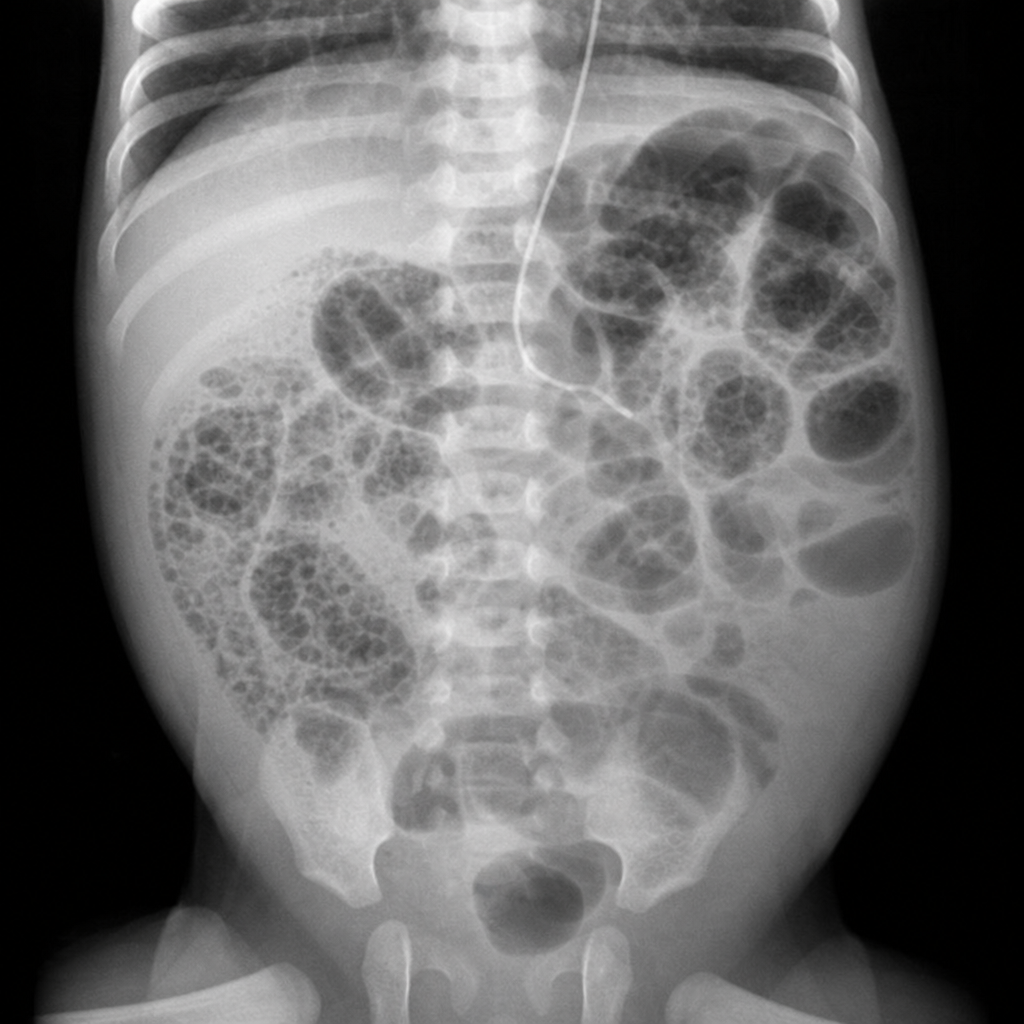
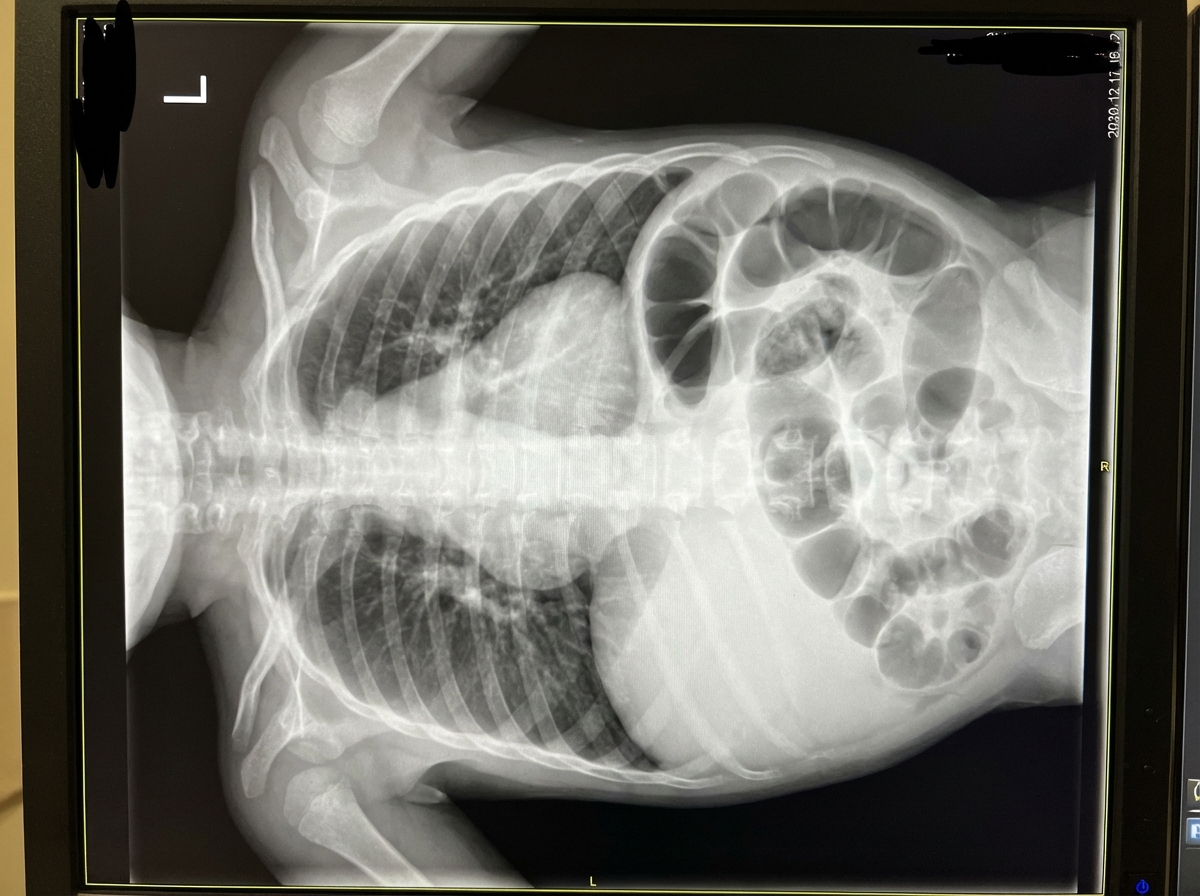
A neonate presented on day one of life with bilious vomiting. What is the first investigation to be done?
The lung-head ratio is useful in the diagnosis of which of the following conditions?
Wimberger's ring is seen in:
A premature infant born at 34 weeks presented with acute onset lethargy and cessation of feeding. What is the imaging modality of choice to screen for intraventricular haemorrhage?
An invertogram is typically taken after how many hours of birth?
In a child with retinoblastoma, which of the following is NOT a common finding on X-ray?
Congenital hypertrophic pyloric stenosis is diagnosed by which imaging modality?
Time sector imaging is preferred in infants because:
Explanation: **Explanation:** The **triangular cord sign** is a highly specific ultrasonographic finding for **Biliary Atresia (BA)**. It represents a cone-shaped or triangular fibrotic mass of the cranial part of the extrahepatic biliary tree. On ultrasound, it appears as an echogenic (hyperechoic) area located anterior to the bifurcation of the portal vein. A thickness of **>4 mm** is generally considered diagnostic. **Why Biliary Atresia is correct:** In BA, there is progressive fibro-obliterative destruction of the extrahepatic biliary system. The "triangular cord" is the sonographic visualization of this fibrous remnant at the porta hepatis. When combined with an absent or small, irregular gallbladder (ghost gallbladder sign), it is a pathognomonic finding. **Why other options are incorrect:** * **Galactosemia:** This is a metabolic disorder. While it can cause neonatal jaundice and hepatomegaly, it does not involve anatomical obliteration of the bile ducts; diagnosis is via enzyme assays and urine reducing sugars. * **Hepatitis (Neonatal):** This is the primary differential for BA. On ultrasound, neonatal hepatitis typically shows a patent biliary tree and a normal-sized gallbladder. It lacks the specific fibrous cord seen in BA. **High-Yield Clinical Pearls for NEET-PG:** * **Gold Standard Diagnosis:** Intraoperative Cholangiogram (IOCG). * **Best Initial Screening:** Ultrasound (looking for the triangular cord sign). * **Functional Imaging:** HIDA scan (shows uptake by the liver but **no excretion** into the bowel even after 24 hours). * **Surgical Management:** Kasai Procedure (Hepatoportoenterostomy), ideally performed before 60 days of life. * **Liver Biopsy:** Shows bile duct proliferation and portal fibrosis.
Explanation: **Explanation:** **1. Why Cranial USG is the Correct Answer:** In infants, the **anterior fontanelle** remains open (typically until 12–18 months), providing an ideal "acoustic window" for ultrasound waves. Cranial Ultrasound (USG) is the **investigation of choice (screening and initial)** for hydrocephalus because it is non-invasive, bedside (portable), cost-effective, and involves **no ionizing radiation**. It accurately visualizes ventricular size, detects intraventricular hemorrhage (a common cause of hydrocephalus in preterms), and allows for serial monitoring of ventricular dilatation. **2. Why Other Options are Incorrect:** * **CT Scan:** While excellent for bone and acute hemorrhage, it involves significant radiation exposure. In infants, the developing brain is highly sensitive to radiation. It is reserved for emergencies or when USG is inconclusive. * **MRI:** This is the **gold standard** for detailed anatomical evaluation (e.g., identifying the specific site of obstruction like aqueductal stenosis). However, it is not the *initial* investigation of choice because it often requires sedation in infants, is expensive, and is not readily available at the bedside. * **X-ray Skull:** This has a very limited role. While it may show "copper beaten appearance" or suture diastasis in chronic raised intracranial pressure, it cannot visualize the brain parenchyma or ventricular system. **Clinical Pearls for NEET-PG:** * **Acoustic Window:** The Anterior Fontanelle is the primary window; the Mastoid fontanelle is used to visualize the posterior fossa. * **Best Initial Test for IVH:** Cranial USG is also the investigation of choice for Intraventricular Hemorrhage (IVH) in premature neonates. * **Hydrocephalus Sign:** On physical exam, look for the **"Setting Sun Sign"** (downward gaze) and Macewen’s sign (cracked pot sound on percussion).
Explanation: **Explanation:** The clinical presentation of **bilious vomiting** in a neonate on the first day of life is a surgical emergency until proven otherwise. It indicates an intestinal obstruction distal to the Ampulla of Vater. **Why Babygram is the correct answer:** A **Babygram** (a single-view X-ray including both the chest and abdomen) is the initial screening investigation of choice. It is rapid, non-invasive, and provides immediate clues to the level of obstruction. Characteristic gas patterns on a babygram can diagnose conditions like: * **Double Bubble Sign:** Duodenal atresia. * **Triple Bubble Sign:** Jejunal atresia. * **Gasless Abdomen:** Suggestive of esophageal atresia without fistula or high-level obstruction. * **Pneumoperitoneum:** Indicating perforation. **Analysis of Incorrect Options:** * **Chest Skiagram (A):** While useful for respiratory distress or esophageal atresia, it does not provide sufficient information about the abdominal gas patterns necessary to evaluate bilious vomiting. * **Ultrasound (C):** Though excellent for diagnosing Pyloric Stenosis (which presents with *non-bilious* vomiting) or identifying the "whirlpool sign" in midgut volvulus, it is usually performed after the initial X-ray. * **Manometry (D):** This is used for functional disorders like Hirschsprung disease in older infants; it has no role in the acute emergency management of a neonate with bilious vomiting. **Clinical Pearls for NEET-PG:** * **Gold Standard for Malrotation/Volvulus:** Upper GI Contrast Study (showing "corkscrew" appearance). * **Most common cause of neonatal bowel obstruction:** Duodenal atresia (associated with Down Syndrome). * **Management Rule:** Any neonate with bilious vomiting requires an immediate X-ray to rule out life-threatening **Midgut Volvulus**.
Explanation: **Explanation:** The **Lung-to-Head Ratio (LHR)** is a critical prenatal ultrasonographic parameter used primarily to assess the severity of pulmonary hypoplasia in fetuses with **Congenital Diaphragmatic Hernia (CDH)**. In CDH, abdominal viscera herniate into the thoracic cavity, compressing the developing lungs. The LHR is calculated by measuring the area of the contralateral (healthy) lung at the level of the four-chamber view of the heart and dividing it by the fetal head circumference. A lower LHR indicates more severe pulmonary hypoplasia and correlates with a poorer prognosis and higher need for postnatal ECMO (Extracorporeal Membrane Oxygenation). **Analysis of Incorrect Options:** * **Sequestration:** While this is a bronchopulmonary malformation, it is characterized by non-functional lung tissue with an anomalous systemic blood supply. Diagnosis is usually based on identifying the feeding systemic artery via Doppler, not LHR. * **Ileal Atresia:** This is a distal bowel obstruction. Antenatal ultrasound typically shows dilated bowel loops and polyhydramnios, but it does not involve lung measurement. * **Esophageal Atresia:** This is suggested prenatally by a "small or absent stomach bubble" and polyhydramnios. It does not directly impact lung volume in a way that requires LHR measurement. **High-Yield Clinical Pearls for NEET-PG:** * **Most common type of CDH:** Bochdalek hernia (Posterolateral, more common on the **Left** side). * **Morgagni Hernia:** Anterior/Retrosternal, usually occurs on the right side. * **Observed/Expected LHR (o/e LHR):** A more modern refinement of LHR that accounts for gestational age to better predict survival. * **Scaphoid abdomen:** A classic physical exam finding in newborns with CDH.
Explanation: **Explanation:** **Wimberger’s ring sign** is a classic radiological feature of **Scurvy** (Vitamin C deficiency). In Scurvy, there is a failure of osteoid formation due to defective collagen synthesis, but osteoblastic activity continues to deposit calcium. This results in a thin, sclerotic (white) rim of calcification surrounding a central area of extreme radiolucency (rarefaction) in the epiphysis. **Why the other options are incorrect:** * **Rickets:** Characterized by Vitamin D deficiency leading to failure of mineralization of the osteoid. Key findings include cupping, fraying, and splaying of the metaphysis, and an increased "physeal" gap. * **Hemophilia:** Radiological findings typically involve joint destruction (hemophilic arthropathy), such as a widened intercondylar notch in the knee and squared lower pole of the patella. * **Pellagra:** A deficiency of Niacin (Vitamin B3) characterized by the "3 Ds" (Dermatitis, Diarrhea, Dementia). It does not have specific pathognomonic radiological bone signs. **High-Yield Clinical Pearls for Scurvy (NEET-PG):** 1. **Frankel’s Line:** Dense sclerotic line at the metaphysis (Zone of provisional calcification). 2. **Trummerfeld Zone:** A lucent (scorbutic) band proximal to Frankel’s line (site of microfractures). 3. **Pelkan Spur:** Marginal metaphyseal spurs caused by outward protrusion of the zone of provisional calcification. 4. **Subperiosteal Hemorrhage:** Leads to lifting of the periosteum, which becomes visible as it calcifies during healing.
Explanation: **Explanation:** **1. Why Transcranial USG is the Correct Choice:** In premature neonates, the **Germinal Matrix** (a highly vascularized area near the caudate nucleus) is prone to hemorrhage due to fragile vessels and impaired autoregulation. **Transcranial Ultrasonography (USG)** is the gold standard screening modality because: * **Open Fontanelle:** The anterior fontanelle acts as a perfect acoustic window to visualize the periventricular structures. * **Bedside Utility:** It is portable, allowing imaging in the NICU without moving a critically ill, unstable neonate. * **Safety:** It involves no ionizing radiation and requires no sedation. * **Sensitivity:** It is highly sensitive for detecting Germinal Matrix Hemorrhage (GMH) and grading Intraventricular Hemorrhage (IVH) using the **Papile Classification**. **2. Why Other Options are Incorrect:** * **NCCT (A):** While sensitive for blood, it involves significant ionizing radiation, which is avoided in neonates unless there is trauma or a need to rule out posterior fossa bleeds not seen on USG. * **MRI (B):** MRI is the most sensitive for white matter injury (Periventricular Leukomalacia), but it is not a screening tool. It requires transporting the infant and often necessitates sedation, making it impractical for acute screening. * **Plain Radiograph (D):** X-rays cannot visualize soft tissue structures or intracranial hemorrhages. **3. High-Yield Clinical Pearls for NEET-PG:** * **Screening Protocol:** All infants born **<30-32 weeks** or **<1500g** should undergo screening USG at 7–14 days of life. * **Acoustic Window:** The **Anterior Fontanelle** is the primary window; the Mastoid fontanelle is used to view the cerebellum. * **Grading (Papile):** * Grade I: Isolated Germinal Matrix Hemorrhage. * Grade II: IVH without ventricular dilatation. * Grade III: IVH with ventricular dilatation. * Grade IV: IVH with intraparenchymal extension.
Explanation: **Explanation:** The **Invertogram** (also known as the Rice-Wangensteen projection) is a specialized radiographic technique used to evaluate the level of atresia in neonates with **Anorectal Malformations (ARM)**. **Why 6 hours is the correct answer:** The primary goal of an invertogram is to allow swallowed air to act as a natural contrast agent, traveling through the gastrointestinal tract to reach the distal-most end of the rectal pouch. It takes approximately **6 hours** for air to transit from the mouth to the rectum in a newborn. Performing the X-ray earlier may lead to a **false-positive diagnosis** of high-level atresia because the air column has not yet reached its most distal point, or the distal pouch may be collapsed by meconium that hasn't yet shifted. **Analysis of Incorrect Options:** * **2 & 4 hours:** These timeframes are insufficient for gas to reliably reach the distal rectum. Imaging at this stage often results in an underestimation of the pouch length. * **8 hours:** While air would certainly have reached the rectum by this time, 6 hours is the established clinical standard to minimize delay in surgical planning and prevent unnecessary neonatal distress. **High-Yield Clinical Pearls for NEET-PG:** * **Positioning:** The infant is held upside down for 3–5 minutes before the X-ray (lateral view) to allow gas to rise. * **Landmark:** A radio-opaque marker (coin) is placed on the anal dimple. The distance between the gas bubble and the marker determines if the defect is **High, Intermediate, or Low** relative to the **PC line** (Pubococcygeal line). * **Modern Alternative:** In many centers, the **Prone Cross-table Lateral View** is now preferred over the invertogram as it is less stressful for the neonate and provides similar diagnostic accuracy.
Explanation: ### Explanation **Retinoblastoma** is the most common primary intraocular malignancy of childhood. Understanding its radiological presentation is crucial for NEET-PG, as it often involves identifying patterns of calcification and spread. **Why "Intracerebral Calcification" is the Correct Answer:** While retinoblastoma is known for intraocular calcification, it does **not** typically cause **intracerebral** (within the brain parenchyma) calcification. Intracerebral calcifications are more characteristic of TORCH infections (e.g., CMV, Toxoplasmosis) or neurocutaneous syndromes (e.g., Tuberous Sclerosis). In the context of retinoblastoma, any intracranial finding is usually related to direct extension or "Trilateral Retinoblastoma" (involving the pineal gland), but not diffuse or focal cerebral calcification. **Analysis of Other Options:** * **A. Intraocular calcification:** This is the hallmark of retinoblastoma, seen in approximately **90-95%** of cases on CT or X-ray. It is a high-yield diagnostic feature. * **C. Multiple calcified masses in the cranium:** This refers to **Trilateral Retinoblastoma**, where bilateral ocular tumors are associated with an intracranial midline tumor (usually a pineoblastoma). These midline tumors can also undergo calcification. * **D. Widening of the optic foramen:** This indicates **extraocular extension** of the tumor along the optic nerve toward the chiasm. It is a sign of advanced disease and poor prognosis. **High-Yield Clinical Pearls:** * **Investigation of Choice:** **MRI** is preferred to evaluate optic nerve involvement and intracranial extension; **CT** is most sensitive for detecting calcification. * **Trilateral Retinoblastoma:** Bilateral RB + Pineoblastoma (midline tumor). * **Flexner-Wintersteiner Rosettes:** The characteristic histopathological finding. * **Leukocoria:** The most common clinical presentation (white pupillary reflex).
Explanation: **Explanation:** **Congenital Hypertrophic Pyloric Stenosis (CHPS)** is a condition characterized by hypertrophy of the circular muscle of the pylorus, leading to gastric outlet obstruction. **Why Ultrasound (USG) is the Correct Answer:** Ultrasound is the **investigation of choice** for CHPS because it is non-invasive, avoids ionizing radiation (crucial in neonates), and allows for real-time visualization of the pyloric muscle. The diagnostic criteria on USG are: * **Pyloric muscle thickness:** >3 mm (most sensitive). * **Pyloric canal length:** >14–16 mm. * **Target sign:** Seen on transverse sections. * **Antral nipple sign:** Protrusion of redundant mucosa into the antrum. **Why Other Options are Incorrect:** * **A. CT Scan:** Involves high radiation doses and is unnecessary given the superficial location of the pylorus in infants. * **C. MRI Scan:** Too time-consuming, expensive, and often requires sedation in neonates. * **D. X-ray:** While a "single bubble" sign or a distended stomach may be seen, it is non-specific. X-rays are primarily used to rule out other causes of vomiting like intestinal malrotation. **High-Yield Clinical Pearls for NEET-PG:** * **Classic Presentation:** Non-bilious, projectile vomiting in a 3–6 week old male infant (First-born males are most affected). * **Physical Exam:** A palpable, firm, mobile, "olive-shaped" mass in the epigastrium. * **Metabolic Abnormality:** Hypochloremic, hypokalemic, metabolic alkalosis (due to loss of HCl from vomiting). * **Barium Swallow (if USG is inconclusive):** Shows the "String sign" (narrowed canal) or "Shoulder sign" (bulging of muscle into the antrum). * **Treatment:** Ramstedt’s Pyloromyotomy.
Explanation: **Explanation:** **Time Sector Imaging** (Sector Scanning) is the preferred modality for neonatal and infant neurosonography primarily due to the unique anatomical window provided by the **anterior fontanelle**. 1. **Why the correct answer is "All of the above":** * **Technique and Fontanelles:** Sector transducers have a small "footprint" (contact surface) but produce a wide, fan-shaped field of view. This allows the probe to fit perfectly over the small anterior fontanelle, providing a comprehensive view of the brain's deep structures and hemispheres through a narrow acoustic window. * **Patient Cooperation:** Unlike MRI or CT, which require the infant to remain perfectly still (often necessitating sedation), ultrasound is rapid and can be performed while the child is moving, feeding, or being held. This makes the procedure inherently more "cooperative" for the pediatric age group. * **Cost-Effectiveness:** Ultrasound is significantly less expensive than cross-sectional imaging (CT/MRI) and can be performed bedside in the NICU, avoiding the risks of transporting a critically ill neonate. 2. **Clinical Pearls for NEET-PG:** * **Acoustic Window:** The **Anterior Fontanelle** is the primary window for cranial USG. It typically closes between 9–18 months, after which this technique becomes difficult. * **Primary Indications:** It is the gold standard for screening preterm infants for **Germinal Matrix Hemorrhage (GMH)** and Periventricular Leukomalacia (PVL). * **Safety:** It is non-ionizing, making it the safest repetitive imaging modality for developing brains. * **Transducer Choice:** High-frequency (5–10 MHz) sector or curvilinear probes are used to balance resolution and depth.
Explanation: **Explanation:** **Congenital Diaphragmatic Hernia (CDH)** occurs due to the failure of the pleuroperitoneal membranes to fuse, most commonly on the left side (Bochdalek hernia). **Why Option C is Correct:** The definitive diagnostic feature on prenatal ultrasonography is the visualization of abdominal viscera within the thoracic cavity. Observing **peristalsis in the thoracic cavity** (bowel loops) is a pathognomonic sign that confirms the presence of herniated intestine. Other common findings include a fluid-filled stomach at the level of the four-chamber view of the heart. **Analysis of Incorrect Options:** * **Option A:** While a fluid-filled stomach may appear as a "cyst" in the chest, it is typically located **lateral** to the heart, not specifically behind the left atrium (which is more characteristic of a hiatal hernia or neurenteric cyst). * **Option B:** CDH causes a significant mediastinal shift, but it is almost always associated with an **abnormal cardiac axis** (levocardia or dextroposition) because the herniated mass displaces the heart. * **Option D:** In utero, the bowel does not contain air; therefore, the "gas bubble" sign is a postnatal radiographic finding, not a prenatal ultrasound feature. **High-Yield Clinical Pearls for NEET-PG:** * **Most Common Type:** Bochdalek (Posterolateral, 85-90%), usually on the **Left side**. * **Morgagni Hernia:** Anterior and retrosternal; less common. * **Key Ultrasound Findings:** Polyhydramnios, mediastinal shift, and herniated stomach/bowel. * **Prognostic Marker:** **Lung-to-Head Ratio (LHR)** is used to predict pulmonary hypoplasia and survival. * **Management:** The primary cause of mortality is **pulmonary hypoplasia** and persistent pulmonary hypertension, not the hernia itself. Stabilization is required before surgical repair.
Explanation: ### Educational Explanation **1. Why "Same location" is the correct answer:** Neuroblastoma and Wilms’ tumor do **not** share the same anatomical location. **Neuroblastoma** is an extra-renal tumor, most commonly arising from the adrenal medulla (though it can occur anywhere along the sympathetic chain). In contrast, **Wilms’ tumor (Nephroblastoma)** is an intra-renal tumor arising from the kidney parenchyma itself. This is a fundamental radiological distinction: Wilms’ tumor displaces the pelvicalyceal system (claw sign), whereas Neuroblastoma displaces the entire kidney (usually downward and laterally). **2. Analysis of Incorrect Options:** * **A. Calcification:** This is a major differentiator. Calcification is very common in Neuroblastoma (80–90% of cases, often stippled) but rare in Wilms’ tumor (only 10–15%). * **B. Aorta and IVC displacement:** Neuroblastoma is notorious for **encasing and displacing** major vessels (Aorta/IVC) without invading them. Wilms’ tumor, however, is more likely to **invade** the renal vein and IVC rather than just pushing them aside. * **D. Intraspinal extension:** Neuroblastoma frequently extends through the neural foramina into the spinal canal (dumbbell-shaped tumor). This feature is virtually never seen in Wilms’ tumor. **3. Clinical Pearls for NEET-PG:** * **Age Factor:** Neuroblastoma typically presents earlier (median age 2 years) than Wilms’ tumor (median age 3–4 years). * **Midline Crossing:** Neuroblastoma frequently crosses the midline; Wilms’ tumor usually remains confined to one side. * **The "Claw Sign":** Present in Wilms’ tumor (indicates the tumor originates from the kidney). * **Metastasis:** Neuroblastoma often spreads to bones (Orbit - Proptosis/Raccoon eyes); Wilms’ tumor primarily spreads to the lungs (Cannonball secondaries).
Explanation: **Explanation:** The **"Snowman" sign** (also known as the **Figure-of-8 appearance**) is a classic radiological finding in **Supracardiac Total Anomalous Pulmonary Venous Connection (TAPVC)**. **Why it occurs:** In supracardiac TAPVC, the pulmonary veins drain into a common pulmonary vein, which then drains into the **left vertical vein**. This vertical vein connects to the **left innominate (brachiocephalic) vein**, which eventually empties into the **Right Superior Vena Cava (SVC)**. * **The "Head" of the snowman:** Formed by the dilated left vertical vein (left), the left innominate vein (top), and the dilated right SVC (right). * **The "Body" of the snowman:** Formed by the enlarged right atrium. **Analysis of Incorrect Options:** * **Transposition of Great Arteries (TGA):** Characterized by the **"Egg-on-a-string"** appearance due to a narrow mediastinum (atrophy of the thymus and stress) and an abnormal relationship of the great vessels. * **Tetralogy of Fallot (TOF):** Characterized by the **"Boot-shaped heart" (Coeur en sabot)** due to right ventricular hypertrophy (lifting the apex) and a concave pulmonary segment. * **Aortic Dissection:** Classically shows **mediastinal widening** on a chest X-ray, but not a snowman configuration. **NEET-PG High-Yield Pearls:** * **TAPVC Types:** Supracardiac (most common, shows Snowman sign), Cardiac (drains to coronary sinus), and Infracardiac (most severe, often presents with neonatal respiratory distress due to obstruction). * **Scimitar Sign:** Seen in **Partial** Anomalous Pulmonary Venous Return (PAPVR), where an anomalous vein drains the right lung into the IVC. * **Box-shaped heart:** Seen in **Ebstein’s Anomaly** due to massive right atrial enlargement.
Explanation: ### Explanation In pediatric radiology, the skull's response to raised intracranial pressure (ICP) varies significantly based on age and the status of the cranial sutures. **1. Why Suture Diastasis is Correct:** In infants and young children (typically up to age 10–12), the cranial sutures are not yet fused. When intracranial pressure rises, the skull expands to accommodate the volume, leading to the **widening of the sutures (Suture Diastasis)**. This is the **earliest and most reliable sign** of raised ICP in this age group. A suture width of >2 mm is generally considered abnormal. **2. Analysis of Incorrect Options:** * **Copper Beaten Appearance (Option A):** Also known as "silver beaten" skull, this refers to prominent convolutional markings from gyri indenting the inner table of the skull. While associated with chronic raised ICP (like craniosynostosis), it is **not specific** and can be a normal finding in healthy children during periods of rapid brain growth (ages 4–10). * **Erosion of Dorsum Sellae (Option B):** This is the **most common sign of raised ICP in adults**. Because adult sutures are fused, the pressure is transmitted to the bony sella turcica. In children, suture diastasis occurs long before pressure can erode the bone. * **J-shaped Sella (Option D):** This is a morphological variant where the sella is elongated anteriorly. It is classically associated with **Mucopolysaccharidosis** (e.g., Hurler syndrome) or optic chiasm gliomas, not primarily with raised ICP. **Clinical Pearls for NEET-PG:** * **Sequence of signs in adults:** Erosion of the floor of the sella → Erosion of the dorsum sellae → Blurring of the posterior clinoid processes. * **Macewen’s Sign (Clinical):** A "cracked pot" sound on percussion of the skull, which is the clinical correlate of suture diastasis. * **Most sensitive imaging:** While X-rays show these signs, **Non-Contrast CT (NCCT)** is the gold standard for acute evaluation of raised ICP (looking for midline shift or effacement of cisterns).
Explanation: **Explanation:** **Ileal atresia** is a common cause of neonatal intestinal obstruction. The correct answer is **C (Double bubble sign)** because this radiological sign is the hallmark of **Duodenal atresia**, not ileal atresia. 1. **Why "Double bubble sign" is the correct answer:** The double bubble sign represents air in the stomach and the proximal duodenum, with no distal gas. This indicates a proximal obstruction at the level of the duodenum. In contrast, ileal atresia is a distal small bowel obstruction, which typically presents with multiple dilated bowel loops and air-fluid levels on an abdominal X-ray. 2. **Analysis of other options:** * **Obstruction on barium meal (A):** While not the first-line investigation, a barium meal/upper GI series in ileal atresia would show dilated proximal small bowel loops with a complete cutoff (obstruction) in the distal ileum. * **Microcolon on barium enema (B):** This is a classic finding in distal small bowel obstructions like ileal atresia. Because the colon has not been used during fetal life (due to the upstream obstruction), it remains small in caliber (disuse atrophy). * **Apple-peel appearance (D):** This is a specific morphological subtype (Type IIIb) of jejunoileal atresia where the distal bowel twists around a single marginal artery (the ileocolic artery), resembling an apple peel or Christmas tree. **High-Yield Clinical Pearls for NEET-PG:** * **Duodenal Atresia:** Associated with **Down Syndrome** and the "Double Bubble" sign. * **Jejunoileal Atresia:** Usually caused by a **vascular accident** in utero (ischemic necrosis). * **Triple Bubble Sign:** Characteristic of **Jejunal atresia**. * **Ground-glass appearance/Soap bubble sign:** Suggestive of **Meconium Ileus** (associated with Cystic Fibrosis).
Explanation: **Explanation:** The clinical presentation of acute abdominal pain and **"red currant jelly" stools** (blood and mucus) in a child is the classic triad of **Intussusception**, which is the most common cause of intestinal obstruction in children aged 6 months to 3 years. It occurs when a proximal segment of the bowel (intussusceptum) telescopes into a distal segment (intussuscepiens). **Why Intussusception is correct:** While a "sausage-shaped mass" is often palpable, its absence does not rule out the diagnosis. **Ultrasound** is the gold standard for diagnosis (sensitivity ~98%), typically revealing the **"Target sign"** or **"Donut sign"** in the transverse plane and the **"Pseudokidney sign"** in the longitudinal plane. **Why other options are incorrect:** * **Midgut Volvulus:** Usually presents in the neonatal period with bilious vomiting. Ultrasound shows the **"Whirlpool sign"** (vessels wrapping around the SMA). * **Ascariasis:** While common in children, it usually presents as subacute obstruction. Ultrasound shows the **"Spaghetti sign"** or "railway track" appearance of worms. * **Appendicitis:** Presents with migratory pain to the right iliac fossa and fever. Ultrasound would show a non-compressible, blind-ended tubular structure >6mm. **High-Yield Clinical Pearls for NEET-PG:** * **Most common site:** Ileocolic. * **Lead point:** In children >2 years, look for a pathological lead point like **Meckel’s diverticulum**, polyp, or lymphoma. * **Treatment:** Non-operative reduction using **Hydrostatic (saline) or Pneumatic (air) enema** under fluoroscopic or USG guidance is the initial treatment of choice if there are no signs of perforation or peritonitis.
Explanation: The **Double Bubble Sign** is a classic radiological finding seen on an abdominal X-ray (erect film). It represents the simultaneous gaseous distension of the **stomach** and the **proximal duodenum**, with a complete absence of gas in the distal bowel. ### Why Duodenal Atresia is Correct: In duodenal atresia, there is a congenital failure of recanalization of the duodenum. This creates a complete obstruction. On X-ray, the first "bubble" is the air-filled stomach, and the second "bubble" is the dilated proximal duodenum. Because the obstruction is complete, no gas passes into the distal small or large intestines, resulting in a "gasless abdomen" beyond the duodenum. ### Why Other Options are Incorrect: * **Jejunal Atresia:** Typically presents with a **"Triple Bubble Sign"** or multiple dilated loops of small bowel, as the obstruction is further down the gastrointestinal tract. * **Pyloric Stenosis:** Characterized by a large single gastric bubble. Diagnosis is primarily made via ultrasound (showing "target" or "doughnut" signs), not by a double bubble. * **Hirschsprung Disease:** A distal large bowel obstruction. X-rays show multiple dilated loops of both small and large bowel with a lack of air in the rectum. ### NEET-PG High-Yield Pearls: * **Association:** Approximately 30% of infants with duodenal atresia have **Down Syndrome (Trisomy 21)**. * **Antenatal Finding:** Polyhydramnios is common due to the fetus's inability to swallow and absorb amniotic fluid. * **Differential Diagnosis:** A "partial" double bubble (with some distal gas) can be seen in **Malrotation with Midgut Volvulus** or **Annular Pancreas**. * **Management:** Initial management involves nasogastric decompression and IV fluids, followed by surgical repair (Duodenoduodenostomy).
Explanation: ### Explanation **Retinoblastoma** is the most common primary intraocular malignancy of childhood. Understanding its radiological presentation is crucial for NEET-PG, as it often involves identifying the extent of tumor spread. **Why "Intracerebral calcification" is the correct answer:** While **calcification** is the hallmark of retinoblastoma (occurring in approximately 90% of cases), it is characteristically **intraocular** (within the globe). Retinoblastoma spreads via the optic nerve to the brain or via hematogenous routes to bones. While the tumor can spread to the brain (leptomeningeal dissemination), it does not typically present as primary "intracerebral calcification" on X-ray. Intracerebral calcifications are more characteristic of conditions like TORCH infections, Sturge-Weber syndrome, or Tuberous Sclerosis. **Analysis of Incorrect Options:** * **Intraocular calcification:** This is the most common radiological feature. On X-ray or CT, fine or chunky calcification within the soft tissue mass of the orbit is highly suggestive of retinoblastoma. * **Widening of the optic canal:** This indicates **retrobulbar extension**. If the tumor invades the optic nerve and extends toward the chiasm, it causes pressure erosion and subsequent enlargement of the optic foramen. * **Secondaries in cranial bones:** Retinoblastoma can metastasize hematogenously. Distant spread often involves the bone marrow and the skeleton, particularly the skull (cranial bones) and long bones, appearing as osteolytic or mixed lesions. **High-Yield Clinical Pearls for NEET-PG:** * **Most common presentation:** Leukocoria (white pupillary reflex). * **Imaging Modality of Choice:** **MRI** is preferred to evaluate optic nerve involvement and to rule out **Trilateral Retinoblastoma** (bilateral RB + Pineoblastoma). * **CT Scan:** Highly sensitive for detecting calcification but avoided when possible due to radiation risk (especially in heritable cases with *RB1* mutations). * **Pathology:** Look for **Flexner-Wintersteiner rosettes** (pathognomonic).
Explanation: **Explanation:** **Infantile Hypertrophic Pyloric Stenosis (IHPS)** is a common cause of gastric outlet obstruction in infants (typically aged 2–6 weeks). **Why Ultrasound (USG) is the Investigation of Choice:** Ultrasound is the gold standard because it is non-invasive, avoids ionizing radiation, and allows for real-time visualization of the pyloric muscle. It has a sensitivity and specificity approaching 100%. The diagnostic criteria on USG are: * **Pyloric muscle thickness:** >3 mm (most sensitive) * **Pyloric canal length:** >14–16 mm * **Pyloric volume:** >1.5 cm³ * **Target sign:** Seen on transverse view (hypoechoic hypertrophied muscle surrounding echogenic mucosa). **Why other options are incorrect:** * **Upper GI Series (Barium Swallow):** Previously the standard, it is now reserved for cases where USG is inconclusive. It shows the **"String sign"** (narrowed canal) or **"Beak sign."** It is avoided as a first-line due to radiation and aspiration risk. * **CT Scan (C) and MRI (D):** These are not indicated for IHPS. CT involves high radiation doses, and MRI is time-consuming and expensive. Neither offers superior diagnostic value over USG for this condition. **High-Yield Clinical Pearls for NEET-PG:** * **Clinical Presentation:** Non-bilious, projectile vomiting in a "hungry vomiter." * **Physical Exam:** Palpable **"olive-shaped" mass** in the epigastrium. * **Metabolic Abnormality:** Hypochloremic, hypokalemic metabolic alkalosis (with paradoxical aciduria). * **Treatment:** Ramstedt’s Pyloromyotomy (after correcting electrolyte imbalances).
Explanation: **Explanation:** **Ileal atresia** is a common cause of neonatal intestinal obstruction. The characteristic radiological finding is a **microcolon** (also known as "unused colon") seen on a contrast (barium/Gastrografin) enema. 1. **Why Option A is correct:** In ileal atresia, the obstruction occurs early in intrauterine life. Because the distal bowel (colon) does not receive the usual flow of succus entericus, amniotic fluid, and debris, it fails to expand and remains small in caliber. A contrast enema reveals a tiny, ribbon-like colon, which confirms the diagnosis and helps differentiate it from meconium ileus. 2. **Why other options are incorrect:** * **Option B (Double bubble sign):** This is the classic radiological hallmark of **Duodenal Atresia**. It represents air in the stomach and the proximal duodenum. * **Option C (Coil spring appearance):** This is a classic sign of **Intussusception** seen during a contrast enema, caused by the contrast material tracking between the intussusceptum and the intussuscipiens. **High-Yield Clinical Pearls for NEET-PG:** * **X-ray findings:** Ileal atresia typically shows multiple dilated loops of small bowel with air-fluid levels (distal obstruction). * **Vascular Insult Theory:** Unlike duodenal atresia (which is a failure of recanalization), jejunoileal atresia is usually caused by an **in-utero vascular accident** (e.g., volvulus or intussusception) leading to ischemic necrosis. * **Differential Diagnosis of Microcolon:** Includes Ileal atresia, Meconium ileus (associated with Cystic Fibrosis), and Total colonic aganglionosis (Hirschsprung disease). * **Triple Bubble Sign:** Characteristic of **Jejunal atresia**.
Explanation: **Explanation:** The **Cardiothoracic Ratio (CTR)** is a radiographic measurement used to estimate heart size on a Chest X-ray (CXR). It is calculated by dividing the maximum transverse diameter of the heart by the maximum internal diameter of the thoracic cage. **Why 0.5 is the correct answer:** In adults and children older than 2 years, a CTR of up to **0.5 (50%)** is considered the upper limit of normal. While infants (neonates) can have a physiological CTR of up to **0.6 (60%)** due to a more horizontal heart position, a high diaphragm, and the presence of the thymus, the standard clinical threshold for defining cardiomegaly across pediatric age groups—including those under 2 years—remains **>0.5**. In the context of standard medical examinations like NEET-PG, 0.5 is the established benchmark for the upper limit of a normal heart size. **Analysis of Incorrect Options:** * **A (0.4) & B (0.45):** These values are well within the normal range. A CTR this low would never be considered the "maximum limit" as it would exclude a large portion of the healthy population. * **D (0.55):** While a CTR of 0.55 can be normal in neonates (under 1 month) due to the thymus, it is not the standard "limit" for the broader category of children under 2 years. **High-Yield Clinical Pearls for NEET-PG:** * **The Thymus:** In children <2 years, the thymus often creates a "Sail Sign" or "Wave Sign" on CXR, which can falsely mimic cardiomegaly or a mediastinal mass. * **Inspiratory Effort:** An expiratory film in a crying child can falsely increase the CTR; always evaluate the heart size on a good inspiratory film (8–9 posterior ribs visible). * **Adult CTR:** Always 0.5. Anything >0.5 on a PA view is cardiomegaly.
Explanation: **Explanation** The correct answer is **Ultrasound (Neurosonography)**. **Why Ultrasound is the Ideal Modality:** In a one-month-old infant, the **anterior fontanelle** is still open, providing an excellent "acoustic window" for ultrasound waves to visualize the intracranial structures. Neurosonography is the preferred initial screening tool because it is non-invasive, portable (can be done bedside in the NICU), does not require sedation, and involves **zero ionizing radiation**. It is highly sensitive for detecting ventricular enlargement (ventriculomegaly) and monitoring the progression of hydrocephalus. **Why Other Options are Incorrect:** * **Plain X-ray:** This modality only visualizes bony structures. While it may show "copper beaten skull" or suture diastasis in chronic cases, it cannot visualize the brain parenchyma or ventricles directly. * **Computerized Tomography (CT):** While CT provides excellent detail, it is avoided in infants due to the high dose of ionizing radiation, which increases the lifetime risk of malignancy. It is usually reserved for acute emergencies (e.g., trauma or hemorrhage). * **Magnetic Resonance Imaging (MRI):** MRI is the "Gold Standard" for detailed anatomical evaluation (e.g., identifying the cause of obstruction like Aqueductal Stenosis). However, it is not the *initial* ideal modality because it often requires sedation and is time-consuming. **High-Yield Clinical Pearls for NEET-PG:** * **Acoustic Window:** The anterior fontanelle typically closes between 9–18 months; once closed, USG is no longer feasible. * **First-line for IVH:** USG is also the investigation of choice for screening Germinal Matrix Hemorrhage in preterm neonates. * **MRI Sequence:** "Fast-Spin Echo" T2-weighted MRI is often used in follow-ups to minimize the need for sedation.
Explanation: **Explanation:** The diagnosis and classification of congenital anorectal malformations (ARM) rely on the presence of gas in the distal rectum to determine the level of the lesion. **Why Option B is Correct:** After birth, a neonate swallows air which progressively travels through the gastrointestinal tract. It typically takes **18 to 24 hours** for air to reach the distal-most part of the rectum. Performing an X-ray (such as the **Invertogram** or the **Wangensteen-Rice view**) before this timeframe may lead to a false-positive diagnosis of a "high" lesion, as the air column has not yet reached its furthest point. Therefore, the optimal window for radiological assessment is **24–48 hours** after birth, ensuring the distal bowel is fully distended. **Why Other Options are Wrong:** * **Option A:** Immediately after birth, there is insufficient gas in the distal bowel, making radiological interpretation inaccurate. * **Options C & D:** While an X-ray can still be performed after 48 hours, waiting this long is unnecessary and delays surgical intervention (like a diverting colostomy or anoplasty), increasing the risk of bowel distension and electrolyte imbalances. **High-Yield Clinical Pearls for NEET-PG:** * **Invertogram (Wangensteen-Rice View):** Historically used to classify ARM as High, Intermediate, or Low based on the distance of the gas bubble from the anal dimple (marked by a radio-opaque coin). * **Prone Cross-Table Lateral View:** Now preferred over the invertogram because it is safer for the neonate (avoids respiratory distress from being held upside down) and allows gas to displace meconium more effectively. * **PC Line (Pubococcygeal Line):** Used to differentiate high vs. low lesions. * **VACTERL Association:** Always screen for vertebral, cardiac, and renal anomalies in patients with ARM.
Explanation: **Explanation:** In pediatric patients, the skull is not yet a rigid box because the cranial sutures have not fused. When intracranial pressure (ICP) rises due to hydrocephalus, the skull compensates by expanding at these points of least resistance. **1. Why Sutural Diastasis is correct:** Sutural diastasis (widening of the cranial sutures) is the **earliest radiological sign** of increased ICP and hydrocephalus in infants and young children (typically up to 10–12 years of age). On a skull X-ray, a suture width of **>2 mm** is generally considered abnormal. This occurs before the bone itself thins or the head circumference reaches the 95th percentile. **2. Analysis of Incorrect Options:** * **Large head (Macrocephaly):** While a hallmark of hydrocephalus, it is a clinical finding rather than the earliest radiological sign. It occurs as a consequence of prolonged sutural diastasis. * **Post clinoid erosion:** This is a classic sign of increased ICP in **adults** or older children with fused sutures. In infants, the open sutures decompress the pressure, protecting the sella turcica from early erosion. * **Thinned out vault:** This is a late feature of chronic hydrocephalus. Prolonged pressure leads to "beaten brass" or "copper beaten" appearance (digital impressions) and generalized thinning of the calvarium. **Clinical Pearls for NEET-PG:** * **Copper Beaten Skull:** Associated with chronic increased ICP, but can be a normal variant in children aged 4–10 years if seen only in the posterior skull. * **Macewen’s Sign (Cracked Pot Sign):** A clinical sign where percussion of the skull over the junction of the frontal, temporal, and parietal bones yields a resonant sound due to sutural diastasis. * **Setting Sun Sign:** Downward gaze palsy due to pressure on the midbrain tectum, a classic clinical sign of hydrocephalus.
Explanation: **Explanation:** In the diagnosis of **Esophageal Atresia (EA)**, the primary diagnostic step is the inability to pass a firm, radio-opaque nasogastric tube into the stomach. However, if a contrast study is required to confirm the diagnosis or visualize a fistula, the choice of contrast is critical due to the high risk of **aspiration**. **Why Dianosil is correct:** **Dianosil (Propyliodone)** is an oil-based, iodinated contrast medium. It is the preferred agent in suspected EA because it is relatively inert and does not cause significant pulmonary edema or chemical pneumonitis if aspirated into the lungs (a common occurrence in infants with a tracheoesophageal fistula). Its viscosity also allows for better mucosal coating in a blind pouch. **Analysis of Incorrect Options:** * **Gastrograffin (Option A):** This is a high-osmolar, water-soluble contrast. It is **strictly contraindicated** in suspected EA/TEF because its high osmolality can cause life-threatening pulmonary edema if aspirated. * **Conray 420 (Option B):** This is an ionic, high-osmolar contrast medium (Sodium Iothalamate). Like Gastrograffin, it poses a severe risk of chemical pneumonitis and pulmonary edema upon aspiration. * **Myodii (Option D):** This is an older trade name for an iodinated oil (Ethiodized oil), primarily used for lymphangiography or myelography, but it is not the standard clinical choice for esophageal studies compared to Dianosil. **High-Yield Clinical Pearls for NEET-PG:** * **Gold Standard Diagnosis:** Failure to pass a 10Fr/12Fr stiff catheter (Coiling of the tube in the upper pouch on X-ray). * **VACTERL Association:** Always screen for Vertebral, Anal, Cardiac, TEF, Renal, and Limb anomalies. * **Most Common Type:** Type C (Proximal atresia with distal fistula) – characterized by a gas-filled abdomen on X-ray. * **Contrast Safety:** If Dianosil is unavailable, non-ionic, low-osmolar water-soluble contrast (e.g., Iohexol) is the modern alternative, but Gastrograffin must always be avoided.
Explanation: **Explanation:** **Ultrasonography (USG)** is the investigation of choice for Neonatal Hypertrophic Pyloric Stenosis (HPS) due to its high sensitivity (98%) and specificity. It allows for real-time visualization of the pyloric muscle without exposing the neonate to ionizing radiation. The diagnosis is confirmed by measuring the pyloric dimensions: * **Pyloric muscle thickness:** >3 mm (most reliable sign). * **Pyloric channel length:** >14–16 mm. * **Pyloric diameter:** >11–15 mm. On USG, the thickened muscle appears as a hypoechoic ring, often referred to as the **"Target sign"** or **"Donut sign"** in cross-section. **Why other options are incorrect:** * **X-ray:** While it may show a "caterpillar sign" (hyperperistalsis) or a dilated stomach with minimal distal gas, it is non-specific and cannot confirm the diagnosis. * **CT Scan & MRI:** These are unnecessary, expensive, and impractical. CT involves significant radiation risk, while MRI requires sedation in neonates. Neither offers superior diagnostic value over USG for this condition. **High-Yield Clinical Pearls for NEET-PG:** * **Clinical Presentation:** Typically occurs in first-born males (3–6 weeks of age) with **non-bilious, projectile vomiting**. * **Physical Exam:** A palpable, olive-shaped mass in the epigastrium. * **Metabolic Abnormality:** Hypochloremic, hypokalemic, metabolic alkalosis (Paradoxical aciduria). * **Barium Swallow (if USG is inconclusive):** Shows the **"String sign"** (narrowed canal), **"Beak sign"** (proximal tapering), or **"Shoulder sign"** (bulging of muscle into the antrum). * **Treatment:** Ramstedt’s Pyloromyotomy.
Explanation: **Explanation:** In a healthy newborn, the progression of air through the gastrointestinal tract follows a predictable chronological sequence, which is a critical diagnostic marker in pediatric radiology. Upon the first breath and subsequent swallowing, air enters the stomach immediately. **The Chronological Progression of Air:** * **Stomach:** Immediately after birth (within minutes). * **Small Bowel (Proximal):** 30 minutes to 1 hour. * **Distal Small Bowel (Ileum):** 3 to 4 hours. * **Proximal Colon (Cecum/Ascending):** 5 to 6 hours. * **Descending Colon/Rectum:** **8 to 9 hours** (reaching the rectum by 12 hours). **Analysis of Options:** * **Option A (1-2 hours):** At this stage, air has typically only reached the duodenum or proximal jejunum. * **Option B (3-4 hours):** This is the timeframe for air to reach the distal small intestine (ileum). * **Option C (5-6 hours):** At this point, air is usually entering the cecum and ascending colon. * **Option D (8-9 hours):** This is the standard physiological time for air to traverse the transverse colon and reach the **descending colon**. **Clinical Pearls for NEET-PG:** 1. **Diagnostic Significance:** If air does not reach the rectum by 24 hours, it is considered pathological, suggesting conditions like **Hirschsprung disease**, **imperforate anus**, or **meconium ileus**. 2. **Maternal Sedation:** The progression of bowel gas may be significantly delayed if the mother received heavy sedation or narcotics during labor. 3. **Gasless Abdomen:** In a newborn, a "gasless abdomen" on X-ray after 12–24 hours is an emergency, often indicating esophageal atresia (without fistula) or severe intestinal obstruction.
Explanation: ### Explanation **Biliary Atresia (Correct Answer):** The **Triangular Cord Sign** is a classic, high-yield ultrasonographic finding pathognomonic for Biliary Atresia. It represents a cone-shaped or triangular fibrotic mass of the cranial part of the extrahepatic biliary tree. On ultrasound, it appears as an echogenic (bright) tubular or triangular area located anterior to the bifurcation of the portal vein. A thickness of **>4 mm** is generally considered a positive sign. This finding reflects the progressive obliterative fibrosis of the bile ducts characteristic of the disease. **Analysis of Incorrect Options:** * **Galactosemia:** This is a metabolic disorder that presents with neonatal jaundice and hepatomegaly, but it does not involve anatomical obstruction of the biliary tree. Diagnosis is made via enzyme assays and newborn screening. * **Hepatitis (Neonatal):** While neonatal hepatitis is the primary differential diagnosis for biliary atresia, it typically shows a patent gallbladder and normal biliary anatomy on ultrasound. It lacks the specific fibrotic "triangular cord" appearance. * **Hemangioblastoma:** This is a highly vascular tumor, most commonly found in the cerebellum (associated with Von Hippel-Lindau syndrome), and is not a cause of neonatal obstructive jaundice. **NEET-PG High-Yield Pearls:** * **Gold Standard Diagnosis:** Intraoperative Cholangiogram (IOCG). * **Best Initial Test:** Ultrasound (to look for the triangular cord sign and gallbladder abnormalities). * **Functional Imaging:** HIDA scan (shows uptake by hepatocytes but **no excretion** into the bowel at 24 hours). * **Surgical Management:** Kasai Procedure (Hepatoportoenterostomy), ideally performed before 60 days of life for the best prognosis.
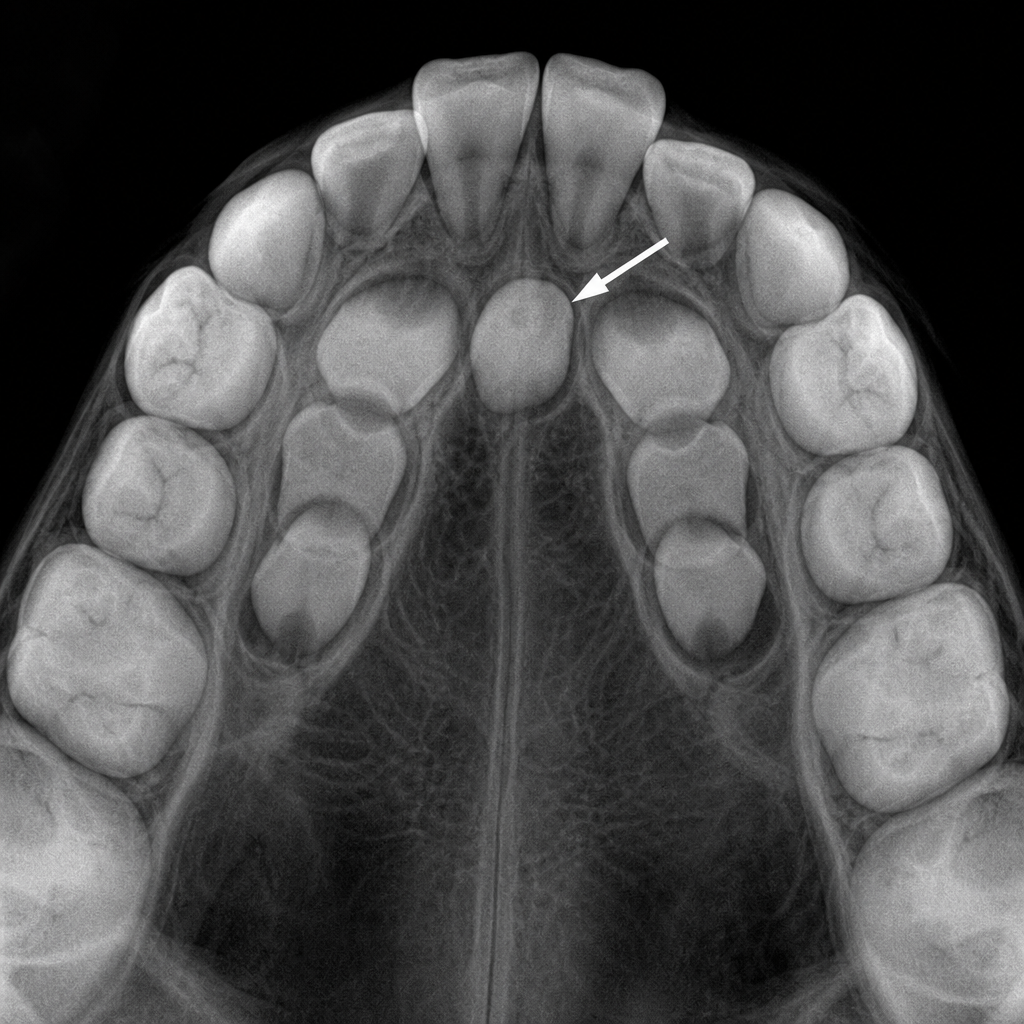
Explanation: **Explanation:** In pediatric dentistry and radiology, a **four-film survey** is a standardized screening protocol used for children (typically in the primary or early mixed dentition stage) to assess dental development and detect pathology with minimal radiation exposure. **Why the correct answer is right:** The standard four-film survey consists of: 1. **Two Occlusal views** (one maxillary and one mandibular): These provide a broad view of the anterior teeth, helping to identify supernumerary teeth, impactions, or trauma. 2. **Two Posterior Bitewing views** (left and right): These are essential for detecting interproximal caries (cavities between teeth) and assessing the bone levels and the relationship between primary tooth roots and permanent tooth buds. **Analysis of incorrect options:** * **Options A & B:** Periapical views are generally reserved for specific diagnostic needs (e.g., evaluating an abscess or root fracture) rather than a routine survey. In a young child, bitewings are more efficient for screening than multiple periapicals. * **Option D:** A panoramic radiograph is a "full-mouth" extraoral view. While useful, it is not part of the specific "four-film" intraoral survey definition and often lacks the fine detail required to detect early interproximal caries compared to bitewings. **Clinical Pearls for NEET-PG:** * **ALARA Principle:** In pediatric radiology, "As Low As Reasonably Achievable" is the gold standard to minimize radiation. * **Indication:** This survey is typically indicated when the proximal surfaces of primary teeth cannot be visually inspected. * **Film Size:** Size 0 or 1 films are usually used for bitewings in small children, while Size 2 is used for occlusal views. * **Developmental Milestone:** A full-mouth survey (FMX) involving 12–16 films is usually deferred until the eruption of the permanent second molars.
Explanation: ### Explanation **1. Why the Correct Answer is Right:** The **radiolucent transverse metaphyseal band** (also known as the "Leukemic line") is the **earliest** and most common radiographic sign of childhood leukemia (specifically ALL). These bands are typically found in areas of rapid bone growth, such as the knees, wrists, and ankles. * **Pathophysiology:** These bands do not represent leukemic infiltration itself. Instead, they result from a **disturbance in endochondral ossification** caused by the systemic stress of the disease, leading to deficient osteogenesis and a lack of calcified primary spongiosa at the metaphysis. **2. Analysis of Incorrect Options:** * **B. Diffuse demineralization of bones:** While common in leukemia due to marrow hyperplasia and pressure atrophy, it usually occurs later than the metaphyseal bands. It is a non-specific finding. * **C. Osteoblastic lesions in skull:** Leukemia is primarily an **osteolytic** process. Osteoblastic (sclerotic) lesions are rare in leukemia and are more characteristic of metastatic neuroblastoma or lymphoma. * **D. Parenchymal pulmonary lesions:** While leukemic infiltration or opportunistic infections can occur in the lungs, skeletal changes are far more frequent and typically precede pulmonary manifestations on imaging. **3. Clinical Pearls for NEET-PG:** * **Most common skeletal finding:** Generalized osteopenia (demineralization). * **Most characteristic/earliest finding:** Radiolucent metaphyseal bands. * **Differential Diagnosis for Metaphyseal Bands:** Remember the mnemonic **"CHIRP"** (Celiac disease/Chronic illness, Healing rickets, Infection (TORCH), Retinoids, Phosphorus/Lead poisoning). * **Other findings:** Subperiosteal new bone formation (periostitis) and "moth-eaten" osteolytic lesions are also seen in advanced cases.
Explanation: **Explanation:** The investigation of choice for diagnosing and monitoring hydrocephalus in infants is **Cranial Ultrasonography (USG)**. **1. Why Cranial USG is the Correct Choice:** In infants (typically under 12–18 months), the **anterior fontanelle** remains open, serving as an ideal "acoustic window" for ultrasound waves. Cranial USG is the preferred first-line modality because it is non-invasive, bedside-portable, cost-effective, and involves **no ionizing radiation**. It accurately visualizes ventricular size, detects intraventricular hemorrhage (a common cause of hydrocephalus in preterms), and allows for serial monitoring of ventricular dilatation without the need for sedation. **2. Why Other Options are Incorrect:** * **CT Scan:** While excellent for bone and acute hemorrhage, it involves high doses of ionizing radiation. In infants, the developing brain is highly sensitive to radiation, making CT a secondary choice reserved for emergencies or trauma. * **MRI:** This is the "Gold Standard" for detailed anatomical evaluation (e.g., identifying Aqueductal Stenosis or Chiari malformations). However, it is not the *initial* investigation of choice because it requires prolonged immobilization, often necessitating sedation or anesthesia in infants. * **X-ray Skull:** This provides very limited information. While it may show "copper beaten appearance" or suture diastasis in chronic cases, it cannot visualize the brain parenchyma or ventricular system. **High-Yield Clinical Pearls for NEET-PG:** * **Acoustic Window:** The **Anterior Fontanelle** is the primary window; the Mastoid fontanelle is used to better visualize the cerebellum. * **Screening:** USG is the screening modality of choice for **Intraventricular Hemorrhage (IVH)** in premature neonates. * **Resistive Index (RI):** On Doppler USG, an increased RI in the anterior cerebral artery can suggest raised intracranial pressure in hydrocephalic infants.
Explanation: **Explanation:** The clinical presentation of a premature baby with convulsions on the second day of life is highly suspicious for **Intraventricular Hemorrhage (IVH)**, a common complication in preterm neonates due to the fragility of the germinal matrix. **Why Transcranial Ultrasonography (TUS) is the correct answer:** TUS is the **initial investigation of choice** in neonates because it is bedside (portable), non-invasive, does not involve ionizing radiation, and does not require sedation. In neonates, the **anterior fontanelle** acts as an acoustic window, allowing for excellent visualization of the periventricular area and ventricles to detect hemorrhage or periventricular leukomalacia (PVL). **Why other options are incorrect:** * **MRI:** While MRI is the most sensitive for brain parenchyma, it is time-consuming, requires sedation, and involves transporting a potentially unstable premature neonate out of the NICU. It is usually reserved for detailed follow-up. * **CT Scan:** Although CT can detect acute hemorrhage, it involves significant ionizing radiation and is less sensitive than USG for germinal matrix anatomy in neonates. * **Skull Radiography:** X-rays are useful for detecting fractures or bony abnormalities but have no role in evaluating intracranial pathology like hemorrhage or edema. **High-Yield Clinical Pearls for NEET-PG:** * **Germinal Matrix:** The most common site of IVH in preterm infants (usually disappears by 32–34 weeks gestation). * **Timing:** 90% of IVH occurs within the first 72 hours of life. * **Screening:** Routine TUS screening is recommended for all neonates born <30–32 weeks gestation. * **Grading:** IVH is graded using the **Papile Classification** (Grades I-IV) based on USG findings.
Explanation: **Explanation:** In a healthy newborn, air is swallowed immediately after birth. The progression of this bowel gas follows a predictable chronological sequence, which is a vital diagnostic marker in pediatric radiology to rule out intestinal atresia or obstruction. 1. **Why 8-10 hours is correct:** Air typically reaches the **stomach** within minutes (0–15 mins), the **small intestine** by 3 hours, and the **caecum** by 5–6 hours. It finally reaches the **rectosigmoid/colonic end** between **8 to 12 hours** (mean average of 8-10 hours). By 24 hours, the entire gastrointestinal tract should be well-aerated. 2. **Analysis of Incorrect Options:** * **2-3 hours:** At this stage, gas is usually limited to the stomach and the proximal small bowel (duodenum and jejunum). * **4-5 hours:** Gas has typically reached the distal small bowel and is just beginning to enter the caecum. * **6-7 hours:** Gas is traversing the ascending and transverse colon but has not yet consistently reached the distal colonic end/rectum. **High-Yield Clinical Pearls for NEET-PG:** * **Clinical Significance:** If gas does not reach the rectum by 24 hours, clinicians must suspect **Anorectal Malformations (ARM)**, **Hirschsprung disease**, or **Meconium Ileus**. * **Inverted X-ray (Wangensteen-Rice view):** Used to determine the distance between the distal gas bubble and the anal dimple in ARM; it should only be performed **after 12–24 hours** to ensure gas has had sufficient time to reach the distal-most point. * **First sign of life:** The presence of air in the stomach on a neonatal X-ray is a medicolegal indicator that the baby breathed after birth.
Explanation: **Explanation:** The presence of a **posterior mediastinal mass** associated with **vertebral anomalies** (such as hemivertebrae, butterfly vertebrae, or scoliosis) is the classic imaging hallmark of a **Neuroenteric Cyst**. 1. **Why Neuroenteric Cyst is correct:** This congenital anomaly results from a failure of separation between the primitive endoderm (gut) and the ectoderm (notochord) during the 3rd week of gestation. This persistent connection leads to a cyst lined by gastrointestinal or respiratory epithelium, typically located in the posterior mediastinum. Because the notochord is involved, it is almost always associated with anterior vertebral body defects at or above the level of the cyst. 2. **Why the other options are incorrect:** * **Meningomyelocele:** While it involves vertebral defects, it is a neural tube defect characterized by the protrusion of meninges and spinal cord through a posterior vertebral arch defect, typically in the lumbosacral region, not as a mediastinal mass. * **Bronchogenic Cyst:** These are the most common foregut cysts but are usually located in the **middle mediastinum** (subcarinal) and are **not** typically associated with vertebral anomalies. * **Neuroblastoma:** This is the most common posterior mediastinal mass in children. While it can cause bone destruction or neural foraminal widening (dumb-bell tumor), it does not cause congenital vertebral malformations like hemivertebrae. **High-Yield NEET-PG Pearls:** * **Split Notochord Syndrome:** The spectrum of anomalies including neuroenteric cysts and vertebral defects. * **Location:** Most commonly found in the posterior mediastinum, slightly to the right. * **Imaging:** MRI is the modality of choice to visualize the cyst and its potential communication with the spinal canal. * **Key Association:** Always look for "Butterfly vertebrae" or "Hemivertebrae" in the clinical stem for Neuroenteric cysts.
Explanation: ### Explanation **Correct Answer: B. Duodenal atresia** The **"Double Bubble" sign** is a classic radiological hallmark of duodenal obstruction. In duodenal atresia, there is a failure of recanalization of the duodenum during the 8th–10th week of gestation. * **Mechanism:** The "bubbles" represent the gaseous (or fluid-filled, on antenatal USG) distension of the **stomach** and the **proximal duodenum**, separated by the pyloric sphincter. * **Antenatal USG:** It appears as two echo-free cystic structures in the upper abdomen. It is frequently associated with **polyhydramnios** because the fetus cannot effectively swallow and absorb amniotic fluid. **Why other options are incorrect:** * **A. Diaphragmatic hernia:** Typically presents with a "scaphoid abdomen" postnatally. On USG, one would see abdominal contents (bowel loops, stomach) in the thoracic cavity and a mediastinal shift. * **C. Gastric volvulus:** This is an acute surgical emergency involving rotation of the stomach. While it causes gastric outlet obstruction, it does not typically produce the specific "double bubble" configuration. * **D. Intussusception:** This is primarily a disease of infants (6–18 months), not usually seen antenatally. The classic USG sign is the **"Target" or "Donut" sign**. **High-Yield Clinical Pearls for NEET-PG:** * **Association:** Approximately 30% of infants with duodenal atresia have **Down Syndrome (Trisomy 21)**. * **X-ray finding:** Postnatally, an abdominal X-ray shows two air-filled bubbles with a complete absence of distal bowel gas. * **Differential for Double Bubble:** While duodenal atresia is the most common cause, other causes include **annular pancreas**, peritoneal (Ladd's) bands, and malrotation. * **VACTERL association:** Always screen for other congenital anomalies (Vertebral, Anal, Cardiac, Tracheo-Esophageal, Renal, and Limb).
Explanation: **Explanation:** **Croup (Laryngotracheobronchitis)** is a common pediatric viral infection, most frequently caused by the **Parainfluenza virus**. The characteristic radiological finding is the **Steeple sign**, seen on an anteroposterior (AP) neck X-ray. This sign is produced by the subglottic narrowing of the airway due to inflammatory edema, which gives the trachea a tapered, pointed appearance resembling a church steeple. **Analysis of Options:** * **A. Steeple sign (Correct):** Represents subglottic narrowing. It is the classic radiographic hallmark of Croup. * **B. Epiglottic swelling:** This is the hallmark of **Acute Epiglottitis**. On a lateral neck X-ray, this appears as the **"Thumb sign"** due to an enlarged, rounded epiglottis. * **C. Abnormal laryngeal cartilage:** This is associated with **Laryngomalacia**, the most common cause of congenital stridor, characterized by inward collapse of supraglottic structures during inspiration. * **D. Peritonsillar abscess:** This is a clinical diagnosis (Quinsy) characterized by uvular deviation and trismus; radiologically, it may show soft tissue swelling but not the steeple sign. **High-Yield Clinical Pearls for NEET-PG:** * **Clinical Triad:** Barking cough, inspiratory stridor, and hoarseness. * **Age Group:** Typically affects children aged 6 months to 3 years. * **Management:** Mild cases are treated with oral Dexamethasone; severe cases require nebulized L-epinephrine (Adrenaline). * **Radiology Tip:** While the Steeple sign is classic, it is only present in about 50% of cases; diagnosis is primarily clinical. Always look for the "Thumb sign" to rule out the more life-threatening Epiglottitis.
Explanation: **Explanation:** In pediatric radiology, the mediastinum is divided into anterior, middle, and posterior compartments. The **posterior mediastinum** is the most common site for mediastinal masses in children, and approximately **90% of these are neurogenic tumors.** **1. Why Neuroblastoma is Correct:** Neuroblastoma is a tumor derived from primordial neural crest cells of the sympathetic nervous system. While the adrenal gland is the most common primary site, the **posterior mediastinal sympathetic chain** is the second most common location. It typically presents as a paravertebral mass that may cause rib thinning or neural foraminal widening. In children, any solid mass in the posterior mediastinum should be considered a neurogenic tumor (Neuroblastoma, Ganglioneuroblastoma, or Ganglioneuroma) until proven otherwise. **2. Why the other options are incorrect:** * **Rhabdomyosarcoma (A):** This is the most common soft tissue sarcoma in children but typically occurs in the head/neck, genitourinary tract, or extremities. It is rarely a primary mediastinal mass. * **Duplication cyst (B):** While these occur in the posterior mediastinum, they are **cystic** lesions, not solid masses, and are less frequent than neurogenic tumors. * **Lymphoma (C):** Lymphoma is the most common cause of a mass in the **anterior or middle mediastinum** in children (often associated with lymphadenopathy and pleural effusions), but it is rare in the posterior compartment. **High-Yield Clinical Pearls for NEET-PG:** * **Rule of Thumb:** Anterior Mediastinum = Lymphoma/Teratoma; Middle Mediastinum = Lymphadenopathy/Cysts; Posterior Mediastinum = Neurogenic tumors. * **Imaging Sign:** Neuroblastomas often show **stippled calcifications** on CT (80% of cases). * **Dumbbell Tumor:** Neurogenic tumors can extend through the intervertebral foramina into the spinal canal, resembling a "dumbbell" shape. * **Biomarker:** Elevated urinary catecholamines (VMA/HVA) are diagnostic markers for neuroblastoma.
Explanation: **Explanation** The correct answer is **D**, as it is a false statement. Modern neuroimaging, particularly **Diffusion-Weighted Imaging (DWI)** on MRI, is highly sensitive and can detect cytotoxic edema and ischemic changes within hours of an insult, often on the first day of life. **Analysis of Options:** * **Option D (Incorrect Statement):** MRI is the most sensitive modality for neonatal brain injury. DWI sequences can identify restricted diffusion (indicative of acute ischemia) much earlier than conventional T1/T2 sequences or CT scans, making it possible to detect abnormalities within the first 24 hours. * **Option A & C (True Statements):** In term infants with Hypoxic-Ischemic Encephalopathy (HIE), both Cranial Ultrasound (USG) and CT scans are frequently normal or show non-specific findings during the first 24 hours. Edema and structural changes often take time to become radiologically apparent on these modalities. * **Option B (True Statement):** On CT, the "reversal sign" or decreased attenuation in the basal ganglia and thalamus typically becomes more prominent after the first 24 hours as cerebral edema evolves. These changes usually persist for about a week before transitioning to chronic stages. **NEET-PG High-Yield Pearls:** * **Investigation of Choice (IOC):** For screening germinal matrix hemorrhage in preterm neonates, **Cranial Ultrasound** (via the anterior fontanelle) is the IOC. * **Most Sensitive Sequence:** **DWI (MRI)** is the gold standard for early detection of HIE. * **CT Findings in HIE:** Look for the **"Reversal Sign"** (low attenuation of cerebral cortex/white matter with relative sparing of the cerebellum and brainstem) and the **"White Cerebellum Sign."** * **Timing:** The optimal window for conventional MRI to show the full extent of HIE injury is typically **3 to 5 days** after birth.
Explanation: **Explanation:** The correct answer is **Invertogram (Wangensteen-Rice technique)**. This specialized radiographic study is primarily used to evaluate **Anorectal Malformations (ARM)**, such as imperforate anus, in newborns who fail to pass meconium within the first 24–48 hours of life. **Why Invertogram is correct:** In this procedure, the neonate is held upside down (inverted) for 3–5 minutes to allow bowel gas to rise to the distal-most end of the rectal pouch. A radio-opaque marker (coin) is placed on the anal dimple. The distance between the gas bubble and the marker helps classify the anomaly as **High, Intermediate, or Low**, which dictates the surgical approach (e.g., primary anoplasty vs. colostomy). **Why other options are incorrect:** * **Enteroclysis:** A double-contrast study of the small bowel where contrast is infused via a nasojejunal tube. It is used for detecting small bowel obstructions or Crohn’s disease, not neonatal ARM. * **Graham Cole Test:** An obsolete oral cholecystography technique used to visualize the gallbladder. * **Digital X-ray:** A general modality of imaging, not a specific diagnostic study for stool-passing issues. **NEET-PG High-Yield Pearls:** * **Timing:** An invertogram should only be performed **after 18–24 hours** of birth to allow sufficient time for air to reach the distal rectum. * **Reference Line:** The **Kelly’s line** (at the level of the ischium) or the **PC line** (Pubococcygeal line) is used to differentiate high vs. low anomalies. * **Modern Alternative:** Prone cross-table lateral X-ray is now often preferred over the invertogram to avoid respiratory distress in the neonate.
Explanation: **Explanation:** **Periventricular Leukomalacia (PVL)** is a form of white matter brain injury characterized by necrosis of the white matter near the lateral ventricles, commonly seen in preterm infants following hypoxic-ischemic insults (perinatal asphyxia). **Why Transcranial Ultrasound (TUS) is the correct answer:** In the neonatal period, **Transcranial Ultrasound** is the **initial and preferred screening modality** for PVL. It is highly effective because the **anterior fontanelle** is still open, serving as an acoustic window to visualize the periventricular area. TUS is portable (bedside), non-invasive, does not require sedation, and involves no ionizing radiation, making it ideal for unstable preterm babies in the NICU. Early PVL appears as "flaring" or increased echogenicity, which later progresses to cystic changes (Cystic PVL). **Why other options are incorrect:** * **MRI Brain:** While MRI is the most sensitive modality for detecting subtle white matter changes, it is not the primary screening tool in the acute neonatal phase due to the need for transport and sedation of a fragile neonate. * **CECT Head:** CT is generally avoided in neonates due to high radiation risks and poor contrast between gray and white matter in the unmyelinated newborn brain. * **SPECT Brain:** This is a functional imaging tool used for blood flow studies and is not indicated for the structural diagnosis of PVL. **High-Yield Clinical Pearls for NEET-PG:** * **Acoustic Window:** The **Anterior Fontanelle** is the most common window used for TUS. * **Classic Finding:** Increased periventricular echogenicity (greater than the choroid plexus) persisting for >7 days is highly suggestive of PVL. * **Long-term Sequelae:** PVL is the most common cause of **Spastic Diplegia** (Cerebral Palsy) in preterm infants. * **Timing:** Screening TUS is typically performed at 1 week of age and repeated at 4–6 weeks to look for cystic changes.
Explanation: **Explanation:** In pediatric leukemia (most commonly Acute Lymphoblastic Leukemia - ALL), skeletal changes are present in approximately 50–70% of cases due to the rapid proliferation of leukemic cells within the bone marrow. **1. Why Metaphyseal Translucencies are correct:** The most characteristic and earliest radiographic sign is the **"Leukemic Line"**—a transverse radiolucent band located at the metaphysis, just proximal to the zone of provisional calcification. This occurs because the hypercellular leukemic marrow exerts pressure and interferes with normal endochondral ossification, leading to deficient bone formation in the most metabolically active area. **2. Analysis of Incorrect Options:** * **A. Osteosclerosis:** This is rare in leukemia. Sclerosis is more typical of bone metastases (like neuroblastoma) or certain metabolic disorders. * **C. Periosteal reaction:** While common in leukemia (due to subperiosteal infiltration), it is non-specific and can be seen in trauma, osteomyelitis, or Caffey’s disease. * **D. Osteolytic lesions:** These "punched-out" lesions occur in advanced stages due to focal destruction, but they are less characteristic and less frequent than metaphyseal bands. **High-Yield Clinical Pearls for NEET-PG:** * **Differential Diagnosis for Metaphyseal Bands:** Remember the mnemonic **"L-S-C"** (Leukemia, Scurvy, Congenital Syphilis). * **Scurvy vs. Leukemia:** In Scurvy, the radiolucent band is called the *Trummerfeld zone*, but it is accompanied by the *Wimberger ring* and *Pelkan spur*, which helps differentiate it from leukemia. * **Skeletal Pain:** Bone pain in a child that wakes them up at night should always prompt a workup for leukemia, even if the peripheral blood smear is initially normal.
Explanation: **Explanation:** **Hutchinson’s secondaries** refer to metastatic deposits in the skull and orbit, specifically originating from a **Neuroblastoma**. In children, the most common site for a primary neuroblastoma is the **Adrenal Medulla** (derived from neural crest cells). 1. **Why Adrenals are Correct:** Neuroblastoma is the most common extracranial solid tumor of childhood. It has a unique propensity for hematogenous spread to the bones. When it involves the skull and orbit, it leads to characteristic clinical features like **proptosis and periorbital ecchymosis ("Raccoon Eyes")**. Radiologically, these secondaries often cause "sunray" spicule formation and sutural widening due to increased intracranial pressure. 2. **Why Other Options are Incorrect:** * **Lungs & Breast:** These are common primary sites for bone metastasis in **adults**. In the pediatric age group, primary lung or breast carcinomas are extremely rare. * **Liver:** While neuroblastoma can metastasize to the liver (known as **Pepper’s syndrome**), the term "Hutchinson’s secondaries" is specifically reserved for bone/skull involvement. **Clinical Pearls for NEET-PG:** * **Hutchinson’s Type:** Metastasis to the skull, orbit, and long bones (common in older children). * **Pepper’s Type:** Massive involvement of the liver (common in infants). * **Smith’s Type:** Metastasis to the cervical lymph nodes. * **Radiology Sign:** On X-ray, look for the **"Sunray appearance"** of the skull and widening of cranial sutures. * **Biochemical Marker:** Elevated urinary VMA (Vanillylmandelic acid) and HVA (Homovanillic acid).
Explanation: **Explanation:** **1. Why "Open Fontanelles" is correct:** In neonatal imaging, **Time Sector Scanning** (Cranial Ultrasonography) is the gold standard for evaluating the brain. The primary reason is the presence of **open fontanelles**, specifically the **anterior fontanelle**, which serves as an "acoustic window." Since ultrasound waves cannot penetrate the thick, mineralized adult skull, the unossified gaps in a neonate's skull allow the ultrasound beam to pass through and visualize the intracranial structures (like the ventricles and germinal matrix) with high clarity. **2. Analysis of Incorrect Options:** * **B. Inexpensive:** While ultrasound is cost-effective compared to MRI or CT, this is a logistical advantage, not the technical reason why sector scanning is specifically *preferred* or *possible* for brain imaging in this age group. * **C. Children are more cooperative:** This is clinically false. Neonates are often uncooperative and move frequently. However, ultrasound is preferred because it is bedside-portable and does not require the strict sedation often needed for CT or MRI. * **D. Better resolution:** While high-frequency probes offer good resolution, MRI actually provides superior spatial and contrast resolution. The preference for USG is based on the accessibility provided by the fontanelle and the lack of ionizing radiation. **3. Clinical Pearls for NEET-PG:** * **Primary Window:** The **Anterior Fontanelle** is the most common window used. The posterior and mastoid fontanelles can be used to visualize the cerebellum and posterior fossa. * **Clinical Utility:** It is the investigation of choice for screening **Intraventricular Hemorrhage (IVH)** in preterm infants and **Periventricular Leukomalacia (PVL)**. * **Closure Timing:** The anterior fontanelle typically closes by **18–24 months**, after which this technique is no longer feasible. * **Safety:** It is non-invasive, involves **no ionizing radiation**, and can be performed at the bedside in the NICU.
Explanation: **Explanation:** **1. Why Ultrasound (USG) is the Correct Answer:** Ultrasound is the **gold standard and primary modality** for screening and diagnosing fetal structural anomalies, including hydrocephalus. It is non-invasive, cost-effective, and lacks ionizing radiation. The diagnosis is typically made by measuring the **atrial width of the lateral ventricles**. A measurement **>10 mm** at any gestational age is considered ventriculomegaly, which may progress to hydrocephalus. USG can also identify the underlying cause, such as Aqueductal Stenosis or Dandy-Walker malformation. **2. Why the Incorrect Options are Wrong:** * **Alpha-fetoprotein (AFP) estimation:** Elevated AFP levels in maternal serum or amniotic fluid are markers for **Neural Tube Defects (NTDs)** like Anencephaly or Spina Bifida, but they do not directly diagnose hydrocephalus. * **Foetoscopy:** This is an invasive endoscopic procedure used for fetal surgery or direct visualization. It is not a screening or primary diagnostic tool for hydrocephalus due to high procedural risks. * **Amniocentesis:** While used to detect chromosomal abnormalities or infections (which may be associated with hydrocephalus), it cannot visualize the ventricular system to provide a structural diagnosis. **3. High-Yield Clinical Pearls for NEET-PG:** * **Normal Atrial Width:** <10 mm. * **Mild Ventriculomegaly:** 10–15 mm; **Overt Hydrocephalus:** >15 mm. * **Dangling Choroid Sign:** A classic USG finding in fetal hydrocephalus where the choroid plexus falls dependently within the enlarged lateral ventricle. * **Fetal MRI:** Used as an adjunct to USG for better characterization of posterior fossa anomalies or cortical development issues, but it is not the *primary* method.
Explanation: ### Explanation **Correct Answer: D. Congenital diaphragmatic hernia (CDH)** **Why it is correct:** Congenital diaphragmatic hernia (most commonly the **Bochdalek** type, occurring posterolaterally on the left) results from a defect in the pleuroperitoneal membrane. This allows abdominal viscera (bowel loops, stomach) to herniate into the thoracic cavity. * **Radiological findings:** The "multiple air-filled structures" described are actually gas-filled bowel loops within the chest. These displace the heart and mediastinum to the contralateral side (right), leading to a **scaphoid abdomen** (due to lack of abdominal contents) and severe respiratory distress from secondary **pulmonary hypoplasia**. **Why the other options are incorrect:** * **A. Cystic Fibrosis:** Typically presents later in childhood with chronic cough, malabsorption, or meconium ileus. X-ray findings usually show bronchiectasis and hyperinflation, not bowel loops in the thorax. * **B. Streptococcal Pneumonia:** While it can cause respiratory distress, it presents with opacification (consolidation) or pleural effusion, not multi-cystic air-filled structures and significant mediastinal shift in a newborn. * **C. Congenital Tumour of Lungs:** Rare; while a Congenital Pulmonary Airway Malformation (CPAM) could mimic this, CDH is far more common in neonates presenting with immediate distress and a shifted mediastinum. **High-Yield Clinical Pearls for NEET-PG:** * **Most common site:** Left side (80-85%) through the Foramen of Bochdalek ("Bochdalek is Back and Left"). * **Key X-ray sign:** Bowel loops in the hemithorax and an absence of the normal abdominal gas pattern. * **Management Tip:** Avoid bag-and-mask ventilation as it distends the herniated bowel, further compressing the lungs. **Immediate endotracheal intubation** is the preferred management. * **Prognostic factor:** The degree of pulmonary hypoplasia and pulmonary hypertension determines survival.
Explanation: **Explanation:** The investigation of choice for evaluating hydrocephalus in a neonate or infant (typically under 6 months) is **Ultrasonography (USG) of the brain**, specifically via the **anterior fontanelle**. **Why USG is the Correct Answer:** In infants, the anterior fontanelle remains open, serving as an ideal "acoustic window." USG is the preferred initial modality because it is non-invasive, involves **no ionizing radiation**, does not require sedation, and can be performed at the bedside. It is highly sensitive for measuring ventricular size, detecting intraventricular hemorrhage (a common cause of hydrocephalus in preterms), and monitoring progression. **Analysis of Incorrect Options:** * **X-ray skull (A):** This is outdated for hydrocephalus. While it may show "copper beaten appearance" or suture diastasis in chronic cases, it cannot visualize brain parenchyma or ventricular size. * **CT scan (C):** While CT provides excellent detail, it involves significant **ionizing radiation**, which is avoided in infants unless there is acute trauma or USG is inconclusive. * **MRI (D):** MRI is the "Gold Standard" for defining complex anatomy or identifying the specific site of obstruction (e.g., aqueductal stenosis). However, it is not the *initial* investigation of choice because it usually requires sedation and is less accessible than USG. **Clinical Pearls for NEET-PG:** * **Acoustic Window:** The **Anterior Fontanelle** is the primary window; it typically closes by 12–18 months. * **Screening:** USG is also the screening modality of choice for **Germinal Matrix Hemorrhage** in premature neonates. * **Follow-up:** Once the fontanelle closes, MRI becomes the preferred modality for detailed evaluation.
Explanation: **Explanation:** **Corner Sign of Park** (also known as the Wimberger sign of scurvy) refers to a small marginal metaphyseal fracture or "beaking" seen at the edges of the zone of provisional calcification. **1. Why Scurvy is Correct:** Scurvy is caused by Vitamin C deficiency, which leads to defective collagen synthesis. This results in weakened capillary walls (leading to subperiosteal hemorrhages) and brittle osteoid. The **Corner Sign** occurs because the zone of provisional calcification is calcified but brittle; under mechanical stress, the edges of this zone fracture, creating a "corner" defect. This is often seen alongside the **Pelkan Spur**, which is the healing/ossification of the periosteum at these corners. **2. Why Other Options are Incorrect:** * **Rickets:** Characterized by a failure of mineralization. Key findings include cupping, splaying, and fraying of the metaphysis, and an increased growth plate width, but not discrete marginal fractures. * **Battered Baby Syndrome:** While it involves metaphyseal fractures (Bucket-handle or Corner fractures), these are traumatic avulsions of the metaphysis. The "Corner Sign of Park" is a specific eponym reserved for the metabolic pathology of Scurvy. * **Sickle Cell Disease:** Radiographic features include "H-shaped" vertebrae (Reynold’s sign), dactylitis (hand-foot syndrome), and bone infarcts, but not specific metaphyseal corner signs. **3. High-Yield Clinical Pearls for Scurvy (NEET-PG):** * **Wimberger Ring Sign:** A thin, sclerotic rim surrounding a lucent epiphysis. * **Frankel’s Line:** Dense, sclerotic line at the zone of provisional calcification. * **Trummerfeld Zone:** A lucent (scorbutic) band proximal to Frankel’s line representing a zone of debris. * **Subperiosteal Hemorrhage:** Leads to lifting of the periosteum, which becomes visible as "cloaking" upon healing/calcification.
Explanation: **Explanation:** **Ultrasound (USG)** is the gold standard and imaging modality of choice for Neonatal Hypertrophic Pyloric Stenosis (HPS). It is preferred because it is non-invasive, avoids ionizing radiation in neonates, and allows for real-time dynamic visualization of the pylorus. The diagnosis is confirmed by measuring the pyloric muscle thickness and length. **Why the other options are incorrect:** * **X-ray (A):** While it may show a "gasless abdomen" or a dilated stomach with a "single bubble" appearance, it is non-specific and cannot visualize the hypertrophied muscle directly. * **CT Scan (B) & MRI (C):** These are unnecessary, expensive, and time-consuming. CT involves high doses of radiation, while MRI often requires sedation in neonates. Neither offers the real-time benefits of USG for this condition. **High-Yield Clinical Pearls for NEET-PG:** * **Classic Presentation:** A 3–6 week-old male infant with **non-bilious, projectile vomiting** and a palpable "olive-shaped" mass in the epigastrium. * **Ultrographic Criteria (The "Rule of 3 and 14"):** * Pyloric muscle thickness **>3 mm** (most sensitive). * Pyloric channel length **>14 mm**. * Pyloric diameter **>11 mm**. * **Key Signs:** * **USG:** "Target sign" (transverse) or "Cervix sign" (longitudinal). * **Barium Swallow (if USG is inconclusive):** "String sign," "Beak sign," or "Shoulder sign." * **Metabolic Profile:** Hypochloremic, hypokalemic metabolic alkalosis (Paradoxical aciduria). * **Treatment:** Ramstedt’s Pyloromyotomy (after correcting electrolyte imbalances).
Explanation: **Explanation:** **Pneumatosis Intestinalis** refers to the presence of gas within the wall of the small or large intestine. It is the pathognomonic radiographic finding for **Necrotizing Enterocolitis (NEC)**, the most common gastrointestinal emergency in neonates (especially premature infants). In NEC, mucosal injury and bacterial invasion lead to gas production (hydrogen and methane) by gas-forming organisms within the bowel wall. * **Option A (Correct):** NEC presents with the triad of abdominal distension, bloody stools, and pneumatosis intestinalis. On X-ray, it appears as linear or curvilinear lucencies outlining the bowel wall. * **Option B:** Gallstone Ileus is characterized by **Rigler’s Triad** (small bowel obstruction, ectopic gallstone, and **pneumobilia**—gas in the biliary tree), not gas in the bowel wall. * **Option C:** Diverticulosis involves outpouchings of the mucosa through the muscularis; while it can lead to pneumoperitoneum if perforated, it is not typically associated with intramural gas. * **Option D:** Hirschsprung Disease presents with distal bowel obstruction and a "transition zone" on contrast enema. While it can lead to enterocolitis (HAEC), the primary radiographic feature is dilated proximal loops and a lack of air in the rectum. **High-Yield Clinical Pearls for NEET-PG:** * **Bell’s Staging:** Used to classify the severity of NEC. * **Portal Venous Gas:** A sign of advanced NEC, indicating gas has migrated from the bowel wall into the mesenteric veins. * **Football Sign:** Indicates massive pneumoperitoneum (perforation), seen as a large oval radiolucency on a supine abdominal X-ray. * **Most common site for NEC:** Terminal ileum and proximal colon.
Explanation: To answer this question, one must distinguish between conditions that cause **volume loss** (pulling the mediastinum) and those that involve **diffuse lung pathology**. ### **Explanation** The key to this question lies in the direction of the mediastinal shift. An **ipsilateral shift** occurs when there is a reduction in volume in one hemithorax, "pulling" the heart and trachea toward the side of the lesion. * **Hyaline Membrane Disease (HMD/RDS):** This is the correct answer because it is a **diffuse, bilateral** lung disease caused by surfactant deficiency. On a chest X-ray, it typically presents with symmetrical "ground-glass" opacities and air bronchograms. Since the pathology affects both lungs equally, there is no pressure gradient to cause a mediastinal shift. ### **Why the other options are incorrect:** * **Atelectasis & Lung Collapse:** Both involve the loss of aeration and volume in a portion of or the entire lung. This creates negative pressure, which pulls the mediastinum toward the affected (ipsilateral) side. * **Pulmonary Hypoplasia:** This is an embryological underdevelopment of the lung. The affected side has a significantly smaller volume than the normal side, leading to an ipsilateral shift of the mediastinal structures to fill the empty space. ### **NEET-PG High-Yield Pearls** * **Ipsilateral Shift (Pull):** Think volume loss (Collapse, Agenesis, Hypoplasia, Pneumonectomy). * **Contralateral Shift (Push):** Think space-occupying lesions (Tension Pneumothorax, Massive Pleural Effusion, Congenital Diaphragmatic Hernia, CPAM). * **HMD X-ray Grading:** Grade I (Fine granularity) to Grade IV ("White-out" lungs with obscured heart borders). * **Scaphoid Abdomen + Respiratory Distress:** Classic presentation of Congenital Diaphragmatic Hernia (causes **contralateral** shift).
Explanation: In neonatal radiology, the position of the mediastinum is a critical diagnostic clue. An **ipsilateral shift** (shift toward the side of the pathology) indicates a loss of lung volume or a failure of lung development on that side. ### Why Hyaline Membrane Disease (HMD) is the Correct Answer: **Hyaline Membrane Disease (RDS)** is a diffuse, bilateral condition caused by surfactant deficiency. Radiologically, it presents with bilateral "ground-glass" opacities, air bronchograms, and low lung volumes. Because the pathology is **symmetrical and generalized**, there is no pressure differential between the hemithoraces; therefore, the mediastinum remains **central**. ### Why the Other Options are Incorrect: * **Atelectasis & B. Lung Collapse:** Both involve the loss of air in a portion of or the entire lung. This creates negative pressure on the affected side, "pulling" the mediastinum toward the lesion (**ipsilateral shift**). * **Pulmonary Hypoplasia:** This is the incomplete development of the lung. The resulting empty space in the thoracic cavity causes the mediastinum to shift toward the underdeveloped side (**ipsilateral shift**) to compensate for the volume deficit. ### NEET-PG High-Yield Pearls: * **Ipsilateral Shift (Pull):** Think volume loss (Atelectasis, Agenesis, Hypoplasia, Post-pneumonectomy). * **Contralateral Shift (Push):** Think volume addition (Tension Pneumothorax, Massive Pleural Effusion, Congenital Diaphragmatic Hernia, CPAM). * **HMD Key Sign:** "Ground-glass" appearance + Air bronchograms + Central mediastinum. * **Congenital Diaphragmatic Hernia (CDH):** Most common cause of a **contralateral** shift in a distressed neonate with a scaphoid abdomen.
Explanation: ### Explanation The **'Egg-on-a-string'** or **'Egg-on-its-side'** appearance is the classic radiographic sign for **Transposition of the Great Arteries (TGA)**. **1. Why TGA is correct:** The characteristic shape is produced by two main anatomical changes: * **The "Egg":** Represents the globular enlargement of the heart (cardiomegaly), primarily due to right ventricular hypertrophy and right atrial enlargement. * **The "String":** Represents the **narrowing of the superior mediastinum**. This occurs because the aorta and pulmonary artery are positioned anteroposteriorly (one directly in front of the other) rather than side-by-side, and there is often thymic atrophy due to neonatal stress. **2. Why other options are incorrect:** * **TAPVC (Total Anomalous Pulmonary Venous Connection):** Classically shows a **'Snowman'** or **'Figure-of-8'** appearance due to a dilated left vertical vein, innominate vein, and superior vena cava. * **ASD and VSD:** These typically present with non-specific cardiomegaly and increased pulmonary vascular markings (plethora) but do not produce the specific "egg" morphology. **3. NEET-PG High-Yield Pearls:** * **Boot-shaped heart (Coeur en sabot):** Tetralogy of Fallot (due to right ventricular hypertrophy and an upturned apex). * **Box-shaped heart:** Ebstein’s Anomaly (massive right atrial enlargement). * **Sitting Duck appearance:** Tricuspid Atresia. * **Goose-neck deformity:** Seen on angiography in Endocardial Cushion Defects (AV Canal Defect). * **TGA Clinical Fact:** It is the most common cause of cyanosis in the **immediate neonatal period** (first 24 hours).
Explanation: ### Explanation The correct answer is **Transposition of the Great Arteries (TGA)**. **1. Why TGA is correct:** The "egg-on-a-string" or "egg-on-its-side" appearance is the classic radiographic sign of D-TGA. This morphology occurs due to two main anatomical changes: * **The "Egg":** Represents the globular enlargement of the right atrium and right ventricle (cardiomegaly). * **The "String":** Represents the **narrowing of the superior mediastinum (vascular pedicle)**. This happens because the aorta and pulmonary artery are positioned anteroposteriorly (stacked) rather than side-by-side, and there is often thymic atrophy due to neonatal stress. **2. Why the other options are incorrect:** * **TAPVC (Option A):** Characteristically shows the **"Snowman sign"** or **"Figure-of-8"** appearance (in the supracardiac type) due to a dilated vertical vein and superior vena cava. * **ASD/VSD (Options C & D):** These typically present with non-specific cardiomegaly and increased pulmonary vascular markings (plethora) but do not produce the specific "egg" configuration. **3. High-Yield Clinical Pearls for NEET-PG:** * **TGA** is the most common cyanotic heart disease presenting in the **first 24 hours of life**. * **Boot-shaped heart (Coeur en Sabot):** Seen in Tetralogy of Fallot (TOF) due to right ventricular hypertrophy and an upturned apex. * **Box-shaped heart:** Seen in Ebstein’s Anomaly due to massive right atrial enlargement. * **Sitting Duck sign:** Also associated with TGA. * **Management:** Prostaglandin E1 (to keep the ductus open) followed by the **Arterial Switch Operation (Jatene procedure)**.
Explanation: ### Explanation **Correct Answer: B. Biliary Atresia** The **Triangular Cord Sign** is a highly specific ultrasonographic finding for **Biliary Atresia (BA)**. It represents a cone-shaped or triangular fibrotic mass of the cranial part of the extrahepatic biliary tree. * **Radiological definition:** It is seen as an echogenic (bright) tubular or triangular area located anterior to the bifurcation of the portal vein. * **Diagnostic Criteria:** A thickness of the echogenic anterior wall of the right portal vein **>4 mm** is considered positive. It reflects the ductal remnant (fibrous cone) at the porta hepatis. **Why other options are incorrect:** * **A. Galactosemia:** This is a metabolic disorder that presents with neonatal jaundice and hepatomegaly, but the ultrasound typically shows non-specific fatty infiltration or cirrhosis in late stages, not a triangular cord sign. * **C. Hepatitis (Neonatal):** In neonatal hepatitis, the gallbladder is often present and may be normal or small, but the fibrous remnant at the porta hepatis (Triangular Cord Sign) is characteristically absent. This is a key feature used to differentiate BA from medical causes of neonatal cholestasis. **High-Yield Clinical Pearls for NEET-PG:** * **Gold Standard Diagnosis:** Intraoperative Cholangiography (IOCG) is the definitive gold standard for BA. * **HIDA Scan:** Shows good hepatic uptake but **absent excretion** into the gut even after 24 hours (often preceded by 5 days of Phenobarbital priming). * **Gallbladder Ghost Triad:** Includes an atretic gallbladder (length <19mm), irregular/lobulated contour, and lack of smooth mucosal lining. * **Management:** The surgical procedure of choice is **Kasai Portoenterostomy**, ideally performed before 60 days of life for the best prognosis.
Explanation: ***Laryngotracheobronchitis*** - The AP neck radiograph displays the classic **"steeple sign,"** which is a tapered narrowing of the subglottic trachea (indicated by the arrow) due to inflammation. - This condition, also known as **croup**, is typically caused by a viral infection (most commonly **parainfluenza virus**) and presents with a characteristic **barking cough** and inspiratory stridor. *Epiglottitis* - This condition is characterized by the **"thumb sign"** on a *lateral* neck X-ray, which shows a swollen epiglottis, not the subglottic narrowing seen here. - Patients typically present more severely with high fever, **drooling**, dysphagia, and assume a **"tripod" posture**, which differs from the presentation of croup. *Bronchitis* - Bronchitis is an inflammation of the larger airways (bronchi) and would not produce findings in the subglottic region of a neck X-ray. - The primary symptom is a productive cough, and a **chest X-ray**, not a neck X-ray, would be the relevant imaging, which is often normal. *Laryngomalacia* - This is a congenital condition causing inspiratory stridor due to the collapse of soft laryngeal structures; it is not an acute infectious process. - The diagnosis is typically confirmed with **flexible laryngoscopy**, and plain radiographs are usually normal and do not show a steeple sign.
Explanation: ***Bochdalek hernia*** - This is the most common type of congenital diaphragmatic hernia (CDH), accounting for over 80% of cases, and is characterized by a defect in the **posterolateral** aspect of the diaphragm. - The X-ray shows classic findings: multiple **gas-filled bowel loops** in the left hemithorax, causing **mediastinal shift** to the right and compression of the left lung, which is consistent with a left-sided Bochdalek hernia. *Morgagni hernia* - This is a rare, **anteromedial** diaphragmatic defect that occurs through the **foramen of Morgagni**, typically on the right side. - It is less common than Bochdalek hernia and often discovered incidentally in older children or adults, presenting with less severe respiratory symptoms. *Hiatal hernia* - This involves the protrusion of the upper part of the stomach through the **esophageal hiatus** into the chest. - It is a midline defect and typically presents with **gastroesophageal reflux disease (GERD)**, not the extensive herniation of multiple abdominal organs seen in this neonatal X-ray. *Traumatic diaphragmatic hernia* - This is an **acquired** condition resulting from severe blunt or penetrating trauma to the chest or abdomen, not a congenital defect. - While it can appear similar on imaging, the clinical context of a newborn (as suggested by the image) makes a congenital cause like Bochdalek hernia the most likely diagnosis.
Explanation: ***Depressed fracture*** - This radiograph clearly shows an inward displacement of a segment of the skull, which is the defining characteristic of a **depressed fracture**. This type of fracture is often described as a "ping-pong" fracture in infants due to the pliability of their skulls. - These fractures are clinically significant as they can be associated with underlying **dural tears**, **cortical contusions**, or **intracranial hemorrhage**, often necessitating surgical evaluation and intervention. *Linear fracture* - A linear fracture would appear as a sharp, lucent line on the radiograph without any displacement or depression of the bone fragments. - This is the most common type of skull fracture, but it does not match the visible **indentation** of the cranial vault seen in the image. *Hinge fracture* - A hinge fracture is a type of **basilar skull fracture** that runs across the floor of the middle cranial fossa, effectively separating the skull base into two halves. - This is a severe injury, not depicted in the image, which shows a fracture of the **parietal bone** in the cranial vault, not the base. *Gutter fracture* - A gutter fracture is a specific subtype of depressed fracture, typically caused by a tangential impact (e.g., a bullet grazing the skull), which carves out a trough or "gutter" in the bone. - While it involves depression, the term is more specific. The fracture shown is better classified by the general term **depressed fracture**, which accurately describes the inward buckling of the bone.
Explanation: ***Congenital Diaphragmatic Hernia (CDH)*** - The image shows loops of **gas-filled bowel** (multiple curvilinear lucencies) in the left hemithorax, confirming the presence of abdominal contents in the chest cavity, which is pathognomonic for **CDH** (most commonly through the **Bochdalek defect**). - There is significant **mediastinal shift** to the right, leading to compression of the right lung (pulmonary hypoplasia) and severe respiratory distress in the neonate. *Congenital Pulmonary Airway Malformation (CPAM)* - CPAM (previously CCAM) usually presents as a **mass of cysts** (Type 1 is large cysts, Type 2 is small cysts) within the lung parenchyma, which are not typically associated with gas-filled loops of bowel extending from the abdomen. - While CPAM can cause mediastinal shift, the defining feature in CDH is the presence of **abdominal viscera** above the diaphragm, which is clearly visible. *Congenital lobar emphysema* - This condition involves **hyperinflation** of one or more lobes (most commonly the upper lobes) due to air trapping, resulting in an abnormally large, radiolucent lobe on X-ray. - It would show a large area of hyperlucency and possible collapse of adjacent lung tissue but would **not show intestinal loops** in the chest cavity. *Neonatal pneumonia* - Neonatal pneumonia typically presents with generalized or focal **opacification/consolidation** (white patches) rather than distinct, gas-filled cystic appearances resembling bowel loops. - While pneumonia causes respiratory distress, it does **not cause the mediastinal shift** or the visualization of abdominal organs in the chest seen here.
Explanation: ***IVP showing horse shoe kidney*** - The image displays features consistent with an **Intravenous Pyelogram (IVP)**, a radiological study of the urinary tract using contrast. The large, fused renal structures at the inferior poles, forming a "U" or "horseshoe" shape, are characteristic of a **horseshoe kidney**. - In a horseshoe kidney, the **lower poles of both kidneys are fused**, typically anterior to the great vessels, which is visible here through the opacified collecting systems. *Barium enema ulcerative colitis* - A **barium enema** visualizes the colon, and typical findings in **ulcerative colitis** include loss of haustra, narrowing, and mucosal irregularities, which are not seen in this image. - The structures shown here are clearly **intravenous contrast-filled renal collecting systems**, not intestinal loops. *Hysterosalpingogram suggestive of PID* - A **hysterosalpingogram (HSG)** is an imaging test for the uterus and fallopian tubes, visualized after contrast injection. - While **pelvic inflammatory disease (PID)** can cause tubal abnormalities (e.g., hydrosalpinx), the image clearly shows structures resembling kidneys and ureters, not female reproductive organs. *Micturition cystourethrogram suggestive of VUR* - A **micturating cystourethrogram (MCUG)** assesses the bladder and urethra, primarily for **vesicoureteral reflux (VUR)**, where urine flows backward into the ureters and kidneys from the bladder. - This image shows contrast in the renal collecting systems and ureters, but it's consistent with an **IVP and an anatomical variant** (horseshoe kidney), not reflux from the bladder as would be observed during active micturition in an MCUG.
Explanation: ***Vesico-ureteric reflux*** - The image, likely a **voiding cystourethrogram (VCUG)**, shows **contrast material filling the bladder and extending upwards into both ureters and renal pelves**. This **retrograde flow of urine** from the bladder into the upper urinary tract is diagnostic of **vesicoureteral reflux (VUR)**. - VUR can lead to **recurrent urinary tract infections** and potential **kidney damage** due to pressure and infection. *Posterior urethral valves* - Posterior urethral valves typically cause an obstruction to urine flow from the bladder, leading to marked bladder distension and often significant bilateral hydronephrosis and hydroureter. - While VUR can coexist with PUV, the primary finding in this image is the reflux itself rather than signs of distal urethral obstruction. *Bladder stone* - A bladder stone would appear as a filling defect or a high-density area within the bladder, which is not depicted in this image. - The image shows the bladder uniformly filled with contrast, with no obvious intraluminal masses or calcifications. *Bladder rupture* - Bladder rupture would demonstrate extravasation of contrast material outside the confines of the bladder into the surrounding peritoneum or retroperitoneum, which is not seen here. - The contrast remains contained within the bladder and refluxes only into the collecting systems.
Explanation: ***Sail sign*** - The image displays a prominent triangular shadow in the right upper mediastinum, consistent with the **thymus gland** in a pediatric chest X-ray. - This characteristic appearance, resembling a **sailboat's sail**, is a normal finding in infants and young children and is known as the sail sign. *Right upper lobe consolidation* - **Consolidation** would appear as an area of increased opacity in the lung parenchyma, which is not clearly visible in the right upper lobe. - The opacity present is specifically located in the mediastinal region and has the typical shape and borders of the normal thymus. *Gas under diaphragm* - **Gas under the diaphragm** is typically seen as a crescent-shaped lucency beneath the diaphragm, usually indicative of a **pneumoperitoneum**. - No such free air is visible below either hemidiaphragm in this image. *Box shaped heart* - A **box-shaped heart** is a classic finding in **Ebstein's anomaly**, where the heart appears enlarged and more square due to atrialization of the right ventricle. - The cardiac silhouette in this image does not exhibit this specific morphology and appears within normal limits for a pediatric patient.
Explanation: ***Sacrococcygeal teratoma*** - The image shows a large, well-defined mass extending from the **sacrococcygeal region** of the infant. The presence of both soft tissue and calcifications within the mass (suggesting varying tissue types) is characteristic of a **teratoma**. - **Sacrococcygeal teratomas (SCTs)** are the most common germ cell tumors of childhood, typically presenting as external masses projecting from the lower back/buttocks. *Hemangioma* - A hemangioma is a **benign vascular tumor** that would typically appear as a soft tissue mass without the presence of internal calcifications or complex structures visible on plain radiography. - While they can be large, their radiological appearance would be primarily of **soft tissue density**, and they don't commonly arise with such distinct bony involvement or complex internal architecture. *Myelomeningocele* - A myelomeningocele is a form of **spina bifida** where the spinal cord and meninges protrude through a defect in the vertebral column, often presenting as a fluid-filled sac. - While it occurs in the same anatomical region, the image depicts a **solid, heterogeneous mass** with calcifications rather than a herniated neural tissue with cerebrospinal fluid. *Arnold-Chiari malformation* - Arnold-Chiari malformation is a structural defect in the **cerebellum**. - It involves the downward displacement of the cerebellar tonsils through the foramen magnum and would not present as an external mass in the sacrococcygeal region.
Explanation: ***Congenital diaphragmatic hernia*** - The infantogram shows loops of **bowel within the thoracic cavity**, displacing the heart and mediastinum. - This classic appearance, with visible **gas-filled loops** in the chest, is characteristic of a congenital diaphragmatic hernia, typically on the left side (Bochdalek hernia). *Cystic adenomatoid malformation* - This condition involves an abnormal growth of lung tissue forming **cysts**; these cysts typically appear as discrete radiolucencies or a solid mass within the lung. - Unlike in the image, it does not typically show distinct **bowel loops in the chest cavity**. *Pneumomediastinum* - This condition is characterized by air in the **mediastinum**, which would appear as lucency outlining the mediastinal structures, such as the heart and great vessels. - It does not involve the presence of **abdominal contents** within the chest cavity. *Congenital lobar emphysema* - This condition presents with **hyperinflation of a single lobe** (usually left upper lobe) causing mass effect and mediastinal shift. - It appears as a hyperlucent, overexpanded lobe, but does not show **bowel gas pattern** or abdominal contents in the thorax.
Explanation: ***Duodenal atresia*** - The X-ray image shows a classic "double bubble" sign, which is pathognomonic for **duodenal atresia**, caused by air trapped in the stomach and the proximal dilated duodenum. - There is an absence of distal bowel gas, indicating a complete obstruction beyond the duodenum. *Jejunal atresia* - While jejunal atresia also presents with intestinal obstruction, it typically shows **multiple dilated loops of small bowel** proximal to the obstruction, not just two distinct air-filled structures. - The "double bubble" sign is not characteristic of jejunal atresia, as the obstruction occurs further down the small intestine. *Pneumatosis intestinalis* - **Pneumatosis intestinalis** is characterized by the presence of gas within the bowel wall, often appearing as linear lucencies or bubbly patterns on X-ray. - This finding is typically associated with **necrotizing enterocolitis** and is not seen in the provided image. *Hirschsprung's disease* - **Hirschsprung's disease** is characterized by the absence of ganglion cells in the distal colon, leading to a functional obstruction. - X-rays typically show a **dilated colon proximal to the aganglionic segment** and often a paucity of gas in the rectum, but not the specific "double bubble" sign seen here.
Explanation: ***Schamroth's window*** - The image illustrates the physical exam maneuver used to assess for **Schamroth's window test**, where the distal phalanges of two opposing fingers are pressed together. - The presence of a **diamond-shaped space (window)** in the center, as shown, indicates a negative test, meaning clubbing is absent. Its absence signifies positive clubbing. *Hamman crunch sign* - This refers to a **crunching sound** heard over the precordium synchronous with the heartbeat, indicating **mediastinal emphysema** or pneumomediastinum. - It is an **auditory sign**, not a visual one involving the digits as depicted in the image. *Pemberton sign* - This sign is observed in patients with a **retrosternal goiter**, where facial plethora, distended neck veins, and respiratory distress occur upon raising both arms above the head. - It is a test for **superior vena cava obstruction** and has no relation to finger examination. *Oliver sign* - The Oliver sign is a **tracheal tugging** sensation felt upon palpation of the cricoid cartilage while the patient extends their neck, indicative of **aortic aneurysm**. - This sign is related to the great vessels and is not a digital examination.
Explanation: ***Percutaneous mitral balloon valvotomy*** - The image clearly depicts a **balloon catheter** being advanced through the heart chambers to the mitral valve, where it is inflated to open the valve orifice. - This procedure is specifically performed to relieve **mitral stenosis** by physically separating fused valve leaflets using the **Inoue balloon technique** or other balloon devices. - The transseptal approach shown is characteristic of mitral valve balloon procedures. *Percutaneous aortic balloon valvuloplasty* - This procedure targets the **aortic valve**, not the mitral valve, and is used primarily for aortic stenosis. - The catheter approach for aortic valvuloplasty is typically **retrograde through the femoral artery**, not transseptal as shown in this image. *Percutaneous mitral valve repair* - Mitral valve repair involves techniques like the **MitraClip procedure** where clips are used to coapt the valve leaflets, or the placement of annuloplasty devices. - These methods do not involve inflating a balloon across the valve as depicted in the image. *Percutaneous coronary intervention* - This procedure involves addressing blockages in the **coronary arteries**, which supply blood to the heart muscle. - The image shows a catheter inside the heart chambers, specifically targeting the **mitral valve**, not the coronary arteries.
Explanation: ***Pulmonary plethora*** - Pulmonary plethora, or **increased pulmonary vascular markings**, indicates increased blood flow to the lungs, which is not characteristic of Tetralogy of Fallot as it involves **pulmonary outflow obstruction**. - Tetralogy of Fallot leads to **decreased pulmonary blood flow**, resulting in **pulmonary oligemia** (reduced vascular markings) on CXR. *Boot-shaped heart* - This is a classic radiographic finding in **Tetralogy of Fallot** due to **right ventricular hypertrophy** and an upturned cardiac apex caused by **pulmonary hypoplasia**. - The image appears to show early signs of a boot-shaped heart (Coeur en sabot), consistent with the clinical picture of a cyanotic neonate with anoxic spells. *Right-sided aortic arch* - A **right-sided aortic arch** is seen in approximately 25% of patients with Tetralogy of Fallot and is a recognized associated anomaly. - While not universally present, its occurrence is significant enough to be considered a feature of the condition, making it a possible finding. *Right ventricular hypertrophy* - **Right ventricular hypertrophy** is one of the four defining features of **Tetralogy of Fallot** (together with ventricular septal defect, pulmonary stenosis, and an overriding aorta). - While not always directly visible as an enlarged chamber on a CXR, its presence is inferred by the **boot-shaped heart** configuration and the physiological adaptations to pulmonary outflow obstruction.
Explanation: ***Hyperkalemia*** - The ECG shows **peaked T waves** (especially prominent in V2-V5), **prolonged PR interval**, and a **widened QRS complex**, which are classic findings of hyperkalemia. - As hyperkalemia worsens, the T waves become taller and more symmetrical, PR interval lengthens, and the QRS complex widens, eventually leading to a **sine wave pattern** and cardiac arrest. *Hypocalcemia* - Hypocalcemia typically manifests with a **prolonged QT interval** on the ECG due to changes in ventricular repolarization. - It does not cause peaked T waves or QRS widening. *Hypercalcemia* - Hypercalcemia is associated with a **shortened QT interval** on the ECG due to accelerated repolarization. - Other common findings might include Osborn waves or J waves in severe cases, but not the changes seen here. *Hypokalemia* - Hypokalemia typically presents with **prominent U waves**, **flattened or inverted T waves**, and a prolonged QT interval. - The ECG in the image clearly shows peaked T waves, which is the opposite of the T wave changes seen in hypokalemia.
Explanation: ***Drooping water lily sign*** - This sign is characteristic of a **duplex collecting system** with a **dilated, obstructed upper pole ureter** and calyx, typically associated with an **ectopic ureterocele**. - The displaced lower pole calyces are pushed laterally and inferiorly by the dilated upper pole system, creating the appearance of a "drooping lily" or "drooping flower." - In children with recurrent UTIs, this finding indicates an underlying anatomical anomaly—specifically an **obstructed upper pole moiety in a duplex kidney**—which predisposes to stasis and infection. - **Most specific sign** for this condition on excretory urogram. *Horse shoe kidney* - A **horseshoe kidney** is a congenital fusion anomaly where the two kidneys are fused (usually at lower poles) across the midline. - Characteristic IVU findings include medially oriented lower poles, high ureteric insertion, and abnormal renal axis. - Does not cause the drooping lily appearance or typically present with recurrent UTI in this pattern. *Flower vase kidney* - **Flower vase sign** is a recognized radiological finding describing the appearance of **infundibular stenosis**, where the calyx is dilated but the infundibulum (connecting neck) is narrowed, resembling a flower vase. - This is a different entity from the drooping lily sign and represents focal obstruction at the infundibulum level rather than upper pole obstruction in a duplex system. - Not associated with the clinical scenario of recurrent UTI in a child with duplex kidney anomaly. *Duplication of kidney* - While a **duplex collecting system** (duplicated collecting system) is indeed present in this condition, this is a descriptive anatomical term rather than a specific radiological sign. - The **drooping water lily sign** is the more precise and specific descriptor for the characteristic IVU appearance of an obstructed upper pole moiety in a duplex kidney. - "Duplication" alone does not convey the specific pathology (obstruction) causing the recurrent UTIs.
Explanation: ***Grade III*** - The MCUG image demonstrates **reflux into the pelvicalyceal system** with tortuosity of the ureter. There is also evidence of **mild calyectasis**. This degree of reflux, characterized by reflux into the renal pelvis and calyces with mild dilatation and blunting, aligns with Grade III VUR. - Recurrent UTIs in a child are a common presentation that warrants investigation for VUR, and a Grade III VUR requires close monitoring and may necessitate intervention to prevent renal damage. *Grade I* - Grade I VUR involves reflux only into the **ureter** and does not reach the renal pelvis or calyces. - The provided image clearly shows contrast extending beyond the ureter into the collecting system of the kidney, ruling out Grade I. *Grade II* - Grade II VUR is characterized by reflux into the **renal pelvis and calyces** without any dilation or blunting of the calyces or tortuosity of the ureter. - The image shows some degree of **dilatation of the calyces and tortuosity of the ureter**, which is more severe than Grade II and indicative of Grade III. *Grade IV* - Grade IV VUR involves more significant findings, including **moderate dilation of the renal pelvis and calyces** with moderate blunting of the fornices. There is significant ureteral tortuosity. - While there is some dilation and tortuosity in the image, it does not reach the severe level typically seen in Grade IV, which would involve more pronounced blunting and more extensive hydronephrosis.
Explanation: ***Correct Option: Rickets*** - The radiograph displays classic signs of **rickets**, including **widened and frayed growth plates** (physeal plates) in the long bones, particularly visible at the distal femur and wrist - Other features often seen in rickets, and suggested by the image, are **cupping and splaying of the metaphyses**, indicating defective mineralization of bone - Rickets results from vitamin D deficiency leading to impaired calcium and phosphate metabolism, causing defective bone mineralization *Incorrect Option: Scurvy* - Scurvy, due to **vitamin C deficiency**, presents with distinct radiological findings such as the **Wimberger ring sign** (opacification outlining the epiphysis) and **corner fractures** (Pelkan spurs), which are not prominently depicted - While periosteal hemorrhage can occur in scurvy, the characteristic widening and fraying of growth plates seen here are more indicative of rickets - Scurvy affects collagen formation, not mineralization like rickets *Incorrect Option: Battered baby syndrome* - Images in **battered baby syndrome** (child abuse) typically show **multiple fractures at different stages of healing**, epiphyseal separations, and metaphyseal corner fractures - These features are distinct from the bone mineralization defects characteristic of rickets, and there are no clear signs of multiple traumatic injuries - The systematic bilateral changes seen in rickets would not be typical of inflicted trauma *Incorrect Option: Osteogenesis imperfecta* - **Osteogenesis imperfecta** is characterized by extreme **bone fragility** leading to frequent fractures, often with associated blue sclerae and hearing loss - The radiographic findings would predominantly be multiple fractures and osteopenia (reduced bone density), without the specific growth plate abnormalities seen in rickets - This is a collagen disorder causing generalized bone weakness, not a mineralization disorder
Explanation: ***Dandy-Walker syndrome*** - The image shows a **markedly enlarged posterior fossa** with a **cystic dilatation** that communicates with the fourth ventricle (indicated by arrows on the axial scan). There is also **hypoplasia of the cerebellar vermis** and **hydrocephalus**, characteristic features of Dandy-Walker syndrome. - This condition is a congenital brain malformation affecting the cerebellum and the fluid-filled spaces around it, leading to symptoms like macrocephaly due to hydrocephalus. *Aqueductal stenosis* - Aqueductal stenosis would primarily cause **dilatation of the lateral and third ventricles**, with a normal-sized fourth ventricle due to the blockage. - It would not typically present with the characteristic large posterior fossa cyst and cerebellar vermian hypoplasia seen here. *Tubercular meningitis* - Tubercular meningitis on imaging typically shows **basal meningeal enhancement**, hydrocephalus, and sometimes infarctions or tuberculomas. - It does not present with a primary cerebellum malformation or a large posterior fossa cyst as demonstrated in the image. *Neurocysticercosis* - Neurocysticercosis involves parasitic cysts (larval stage of *Taenia solium*) in the brain parenchyma, subarachnoid space, or ventricles, often seen as **cystic lesions with a scolex**. - While it can cause hydrocephalus if cysts block CSF flow, it does not involve the specific malformations of the posterior fossa and cerebellum seen in Dandy-Walker syndrome.
Explanation: ***Liver abscess*** - The CT image shows a well-defined, **hypodense lesion** within the right lobe of the liver, consistent with the characteristic appearance of a **liver abscess**, especially in a child presenting with **high-grade fever**. - Liver abscesses are collections of pus that can form in the liver, often presenting with fever, abdominal pain, and leukocytosis. *Typhlitis* - This condition involves inflammation of the **cecum** and ascending colon, often seen in **immunocompromised patients** (neutropenic enterocolitis). - CT findings would typically show **cecal wall thickening** and surrounding inflammation, which is not depicted in the image. *Acute pancreatitis* - This is an inflammation of the pancreas, usually presenting with severe **epigastric pain** radiating to the back. - CT findings would include **pancreatic edema**, fat stranding, and potentially fluid collections around the pancreas, none of which are evident in the provided image. *Biloma* - A biloma is a collection of **bile** that occurs due to leakage from the biliary tree, usually after trauma or surgery. - While it appears as a fluid collection, it typically lacks the often **irregular enhancing rim** or internal septations sometimes seen in abscesses, and the clinical context of high fever points more towards an infectious process.
Explanation: ***Pneumothorax*** - The CXR shows marked hyperlucency and absent lung markings on the right side, along with a collapsed lung (seen as a dense shadow centrally), characteristic of a **pneumothorax**. - Worsening respiratory distress and a significant drop in saturation in a child with pneumonia receiving vancomycin (suggesting severe infection) could indicate a complication like a tension pneumothorax, which requires urgent intervention. *Lung abscess* - A lung abscess typically appears as a **cavitated lesion** with an air-fluid level, usually within the lung parenchyma. - While pneumonia can lead to abscess formation, the CXR image does not show a circumscribed cavitary lesion but rather a generalized collapse of lung tissue. *Empyema* - Empyema is characterized by **pus in the pleural space** and would typically manifest as a **pleural effusion** with a fluid level when erect, or diffuse opacification of the hemithorax. - The image distinctly shows a clear space with absent lung markings and a displaced lung, which is not consistent with merely fluid accumulation. *Segmental collapse* - **Segmental collapse (atelectasis)** would appear as an area of **increased density** within the lung itself, with crowding of vessels and bronchi, and possibly displacement of fissures and mediastinum towards the affected side. - This is distinct from the hyperlucent appearance of the right hemithorax and the clear displacement of the lung boundary seen in the image.
Explanation: ***Congenital diaphragmatic hernia*** - The chest X-ray likely shows bowel loops within the chest cavity, mediastinal shift, and an absent or poorly defined diaphragmatic outline, which are classic signs of a **congenital diaphragmatic hernia**. - A 1-day-old neonate with respiratory distress and these radiographic findings strongly suggests this diagnosis, as it results from incomplete **closure of the diaphragm** enabling abdominal organs to herniate into the thorax. *Hyaline membrane disease* - Characterized by **diffuse reticulogranular infiltrates** and **air bronchograms** due to surfactant deficiency. - Does not typically present with bowel loops in the chest or mediastinal shift. *Meconium aspiration syndrome* - CXR typically reveals **patchy infiltrates**, **hyperinflation**, and sometimes **pneumothorax** or **pleural effusions**. - There is no evidence of bowel in the chest or mediastinal shift characteristic of diaphragmatic hernia. *Transient Tachypnea of newborn* - CXR findings usually include **prominent perihilar streaking**, **fluid in the fissures**, and **hyperinflation**. - This condition resolves within 24-48 hours and doesn't involve herniated abdominal organs in the chest space.
Explanation: ***Sail sign*** - The arrow points to an elevated, well-defined triangular shadow in the right upper mediastinum, characteristic of the **thymus gland** in an infant. - This appearance is known as the **"sail sign"** due to its resemblance to a boat's sail, caused by the normal shape of the thymus in young children. *Lingular lobe pneumonia* - Lingular lobe pneumonia would appear as an **area of consolidation** or opacification, usually in the left mid-to-lower lung field, which is not depicted here. - This pathology typically results in a loss of the normal markings of the lung parenchyma, unlike the clear outline seen in the image. *Pneumothorax* - A pneumothorax would present as a **collection of air** in the pleural space, characterized by the absence of lung markings in the affected area and a visible visceral pleural line. - There is no evidence of displaced lung tissue, collapsed lung, or an abnormal air collection in the image. *Dextrocardia* - Dextrocardia refers to a condition where the **heart is located on the right side** of the chest. - In this image, the cardiac silhouette is clearly on the left side, indicating a normally positioned heart.
Explanation: ***Craniopharyngioma*** - The X-ray skull image shows significant **intracranial calcifications**, which are a hallmark feature of **craniopharyngiomas**, especially in children (seen in 80-90% of cases). - Clinical symptoms like **headache** and **visual disturbances** are consistent with the mass effect of a suprasellar tumor like craniopharyngioma, which can compress the optic chiasm and cause hydrocephalus. - Craniopharyngioma is the **most common suprasellar tumor in children** and typically presents in this age group. *Hypothalamic hamartoma* - These are **non-neoplastic** lesions that typically do not present with diffuse calcifications on X-ray skull. - While they can cause endocrine abnormalities (precocious puberty) and gelastic seizures, headache and visual disturbances with calcifications point more toward craniopharyngioma. *Histiocytosis-X* - Histiocytosis-X (Langerhans cell histiocytosis) typically presents with **lytic bone lesions** (punched-out "geographic skull" lesions) on skull X-ray, not diffuse intracranial calcifications. - While it can affect the hypothalamic-pituitary axis causing diabetes insipidus, the dominant radiological finding would be bone destruction, not calcification. *Letterer-Siwe disease* - This is a severe, disseminated form of **Langerhans cell histiocytosis** (acute disseminated LCH) primarily affecting infants and young children under 2 years. - It usually presents with skin rash, hepatosplenomegaly, lymphadenopathy, and lytic bone lesions, but **intracranial calcifications are not a characteristic feature** on plain skull X-rays. - The age of presentation (9 years) and imaging findings make this diagnosis unlikely.
Explanation: ***Geographical skull*** - The combination of **seborrheic dermatitis**, **hepatosplenomegaly**, **pancytopenia**, and characteristic skull X-ray findings (multiple lytic lesions) in a child suggests **Langerhans Cell Histiocytosis (LCH)**. - The skull X-ray shows multiple, sharply demarcated, irregular lytic lesions of varying sizes, resembling a **map or "geographical" pattern**, which is characteristic of LCH. *Pepper pot skull* - This appearance is characterized by **numerous small lytic lesions** resembling tiny holes, typically seen in conditions causing widespread bone resorption, such as **hyperparathyroidism** or **multiple myeloma**. - The child's x-ray depicts larger, more irregular lytic lesions rather than diffuse small punctate ones. *Hair-on-end appearance* - This term describes **new bone formation perpendicular to the inner table of the skull**, giving the skull a "hair-on-end" or "sunburst" appearance on X-ray. - It is classically associated with severe **chronic hemolytic anemias** like **thalassemia major** and **sickle cell anemia**, which do not present with geographical skull lesions or the other clinical features mentioned. *Artifacts* - **Artifacts** are extraneous findings on an imaging study that are not due to the patient's anatomy or pathology (e.g., patient motion, metallic objects, processing errors). - The described and visual findings are consistent with specific bony lesions, not imaging errors.
Explanation: ***Squaring of metacarpals*** - The X-ray image shows **widening of the medullary space** and cortical thinning in the metacarpals, leading to a squared appearance. This is a classic finding in **beta-thalassemia major**, an inherited blood disorder characterized by severe anemia and organomegaly. - The associated microscopic image on the left likely shows **target cells**, which are also characteristic of thalassemia. *Hemarthrosis* - **Hemarthrosis** refers to bleeding into a joint space, which is typically seen in coagulopathies like **hemophilia**. - X-rays would show signs of joint distension, effusions, and eventually degenerative changes, but not the specific bone changes seen here. *Swan neck deformity* - A **swan neck deformity** is characterized by hyperextension of the proximal interphalangeal (PIP) joint and flexion of the distal interphalangeal (DIP) joint. - This deformity is classically associated with **rheumatoid arthritis** or other inflammatory arthropathies, not the described hematological disorder. *Subperiosteal resorption* - **Subperiosteal resorption** is a characteristic radiographic finding in **hyperparathyroidism**, often affecting the radial aspects of the middle phalanges. - It results from increased osteoclast activity and would not be the primary bone change seen in a young child with severe anemia and organomegaly.
Explanation: ***Duodenal atresia*** - The **double bubble sign** on antenatal ultrasound represents a dilated, fluid-filled stomach and a dilated, fluid-filled proximal duodenum, separated by the **pylorus**. - This anatomical obstruction is characteristic of **duodenal atresia**, preventing the passage of fluid past this point. *Hydronephrosis* - **Hydronephrosis** is characterized by dilation of the renal pelvis and calyces, visible as multiple cystic structures in the kidney region, not as discrete "bubbles" in the abdomen. - It results from urinary tract obstruction and is unrelated to the gastrointestinal tract. *Meningomyelocele* - **Meningomyelocele** is a neural tube defect involving the spine, characterized by a mass or sac protruding from the back, containing meninges and spinal cord. - It is identified by spinal defects and has no association with abdominal "bubble" signs. *Anencephaly* - **Anencephaly** is a severe neural tube defect characterized by the absence of a large part of the brain and skull. - It is diagnosed by the absence of the cranial vault and cerebral hemispheres, and does not present with abdominal "bubble" signs.
Explanation: ***Duodenal atresia*** - The **"double bubble" sign** on antenatal ultrasound is highly characteristic of duodenal atresia, representing a dilated **stomach** and a dilated **proximal duodenum**. - This finding indicates an **obstruction distal to the pylorus**, preventing normal passage of fluid and gas. *Anencephaly* - Anencephaly is a severe birth defect where a baby is born without parts of the **brain** and **skull**, and it is characterized by the absence of the skull vault. - It is identified by the absence of the **cranial vault** and **cerebral hemispheres**, not by an abdominal "double bubble." *Meningomyelocele* - Meningomyelocele is a type of **spina bifida** where the spinal cord and meninges protrude through an opening in the back. - This condition is typically diagnosed by visualizing a **spinal defect** with a sac-like protrusion, not gastric or duodenal distension. *Hydronephrosis* - Hydronephrosis involves the **swelling of one or both kidneys** due to a buildup of urine, often caused by an obstruction in the urinary tract. - It is identified by **dilated renal pelves** and calyces on ultrasound, not the "double bubble" sign, which relates to the gastrointestinal tract.
Explanation: ***Tetralogy of Fallot (TOF)*** - The chest radiograph shows a **boot-shaped heart (coeur en sabot)** due to **right ventricular hypertrophy** and a **concave pulmonary artery segment** (absent main pulmonary artery segment), which is characteristic of TOF. - The patient also presents with **cyanosis**, a common symptom of TOF due to right-to-left shunting. *Transposition of great arteries (TGA)* - TGA typically presents with a **"egg-on-a-string" appearance** on chest radiograph, indicating a narrow superior mediastinum and increased pulmonary vascular markings, which is not seen here. - While patients with TGA are cyanotic, the cardiac silhouette on this radiograph is inconsistent with the classic TGA findings. *Ebstein's anomaly* - Ebstein's anomaly is characterized by **apical displacement of the tricuspid valve**, leading to a large right atrium and massive **cardiomegaly** on chest X-ray, often described as a "box-shaped" heart, which is not evident in the provided image. - While it causes cyanosis, the heart size in the image is not markedly enlarged enough to suggest Ebstein's anomaly. *Total anomalous pulmonary venous return (TAPVC)* - TAPVC typically presents with a **"snowman" or "figure-of-8" appearance** on chest X-ray due to a dilated superior vena cava and left brachiocephalic vein, or a small heart with increased pulmonary vascularity, neither of which is present in the image. - Although TAPVC causes cyanosis, the specific radiographic features like the "boot-shaped" heart rule out this diagnosis.
Explanation: ***Spina bifida*** - The ultrasound image displays the **"lemon sign"** (frontal bone indentation), which is a classic indicator of **spina bifida** on antenatal ultrasound. - The lemon sign is caused by **scalloping of the frontal bones** due to caudal displacement of brain tissue (Arnold-Chiari malformation type II) secondary to an open spinal defect. - This sign is most commonly seen in the **second trimester** and is associated with neural tube defects. *Anencephaly* - **Anencephaly** presents with absence of the cranial vault and cerebral hemispheres on ultrasound. - The characteristic finding is the **"frog-eye appearance"** with protruding orbits, not frontal bone scalloping. - This is incompatible with life and has a distinctly different ultrasound appearance. *Dandy-Walker malformation* - **Dandy-Walker malformation** shows an enlarged posterior fossa with cystic dilatation of the fourth ventricle and hypoplasia of the cerebellar vermis. - It may present with the **"banana sign"** (cerebellar compression), but not the lemon sign. - This is a posterior fossa abnormality, not associated with frontal bone changes. *Encephalocele* - **Encephalocele** presents as a herniation of brain tissue and meninges through a cranial defect, typically occipital. - Ultrasound shows a **cystic mass protruding from the skull**, not frontal bone indentation. - While it's a neural tube defect, it has a different ultrasound appearance than the lemon sign.
Explanation: ***Morgagni hernia*** - The X-ray shows a **gas-filled lesion** in the **right cardiophrenic angle**, which is characteristic of a Morgagni hernia, where abdominal contents (often colon or omentum) herniate through the foramen of Morgagni. - The mild intermittent **upper abdominal pain** in a child is consistent with the infrequent or non-specific symptoms these hernias can present, as they are often discovered incidentally. *Bochdalek hernia* - **Bochdalek hernias** typically occur posteriorly and laterally, predominately on the **left side**, and are usually identified in the **neonatal period** with severe respiratory distress. - The radiographic appearance would be of abdominal contents (bowel loops, liver, spleen) largely filling the ipsilateral hemithorax, causing significant mediastinal shift, which is not seen here. *Gastric volvulus* - **Gastric volvulus** involves abnormal rotation of the stomach, often presenting with acute symptoms like **epigastric pain, vomiting, and inability to pass a nasogastric tube (Borchardt's triad)**. - Radiographically, it would show a **distended stomach** with an abnormal position, often high in the chest, but without the distinct localized air-filled mass in the cardiophrenic angle. *Eventration of diaphragm* - **Diaphragmatic eventration** is an abnormal elevation of part or all of an intact hemidiaphragm, usually due to muscular hypoplasia. - The X-ray would show a **uniformly elevated hemidiaphragm** with normal continuity, and there would be no discrete air-filled structures above the diaphragm to suggest herniated bowel.
Explanation: ***Wilms tumor*** - **Wilms tumor** is the most common renal malignancy in children aged 2-5 years, often presenting as a **palpable abdominal mass** or an incidental finding on imaging. - The ultrasound finding of a **solid, circumscribed, hypoechoic renal mass** in a 3-year-old boy is highly characteristic of Wilms tumor. *Mesoblastic nephroma* - This is typically diagnosed in infants, usually before **6 months of age**, making it less likely in a 3-year-old. - While it is a solid renal mass, its incidence is significantly lower than Wilms tumor in this age group. *Renal cell carcinoma* - **Renal cell carcinoma (RCC)** is extremely rare in young children, predominantly affecting adults. - While RCC can present as a solid renal mass, the age of the patient (3 years old) makes this diagnosis highly improbable. *Oncocytoma* - **Renal oncocytoma** is a benign renal tumor that is almost exclusively seen in adults, typically older than 50 years. - Its occurrence in a 3-year-old child is virtually unheard of.
Explanation: ***Oesophageal duplication cyst*** - The presence of a **radiopaque shadow with an air-fluid level** in the chest, coupled with **hemivertebrae of the 6th thoracic vertebra**, is highly suggestive of an esophageal duplication cyst due to their common developmental origin and intrathoracic location. - **Esophageal duplication cysts** are foregut anomalies that can present as cystic masses containing fluid, and their close association with vertebral anomalies like hemivertebrae points to a developmental error during embryogenesis affecting both structures. *Bronchogenic cyst* - While bronchogenic cysts are also foregut anomalies and can appear as **radiopaque shadows**, they typically do not present with an **air-fluid level** unless secondarily infected or communicating with the airway, and their association with vertebral anomalies is less direct. - These cysts usually present as a **well-circumscribed, non-communicating mass**, and an air-fluid level usually indicates rupture or infection. *Congenital diaphragmatic hernia* - A congenital diaphragmatic hernia involves the **displacement of abdominal contents into the chest cavity** through a defect in the diaphragm, which would manifest as multiple intestinal loops and air-filled structures in the chest. - While it can present with air-fluid levels (from bowel gas), it is not typically associated with **hemivertebrae**, and the radiopaque shadow would be less defined as a single cyst. *Staphylococcal pneumonia* - Staphylococcal pneumonia in a newborn can lead to **pneumatoceles (air-filled cysts)** that may contain air-fluid levels, but it is an infectious process that would be accompanied by signs of infection like fever and respiratory distress. - This condition is unlikely to present with an associated **vertebral anomaly** like hemivertebrae, which points to a congenital developmental abnormality rather than an acquired infectious cause.
Explanation: ***Spina Bifida*** - The **banana sign** refers to the cerebellum being flattened and curved around the brainstem, resembling a banana. This occurs due to the **Chiari II malformation**, which is almost universally associated with open spina bifida. - In spina bifida, there is a defect in the closure of the neural tube, leading to caudal displacement of the brain structures, thus compressing and altering the shape of the cerebellum. *Porencephaly* - This condition involves **cysts or cavities within the brain** parenchyma, which are not directly indicated by the banana sign. - It results from destructive lesions (e.g., ischemia, infection) and is typically identified by anechoic fluid-filled spaces communicating with the ventricular system or subarachnoid space. *Encephalocele* - Encephalocele is a **protrusion of brain tissue and/or meninges through a defect in the skull**. - While it is a neural tube defect, its primary ultrasound finding is the presence of an exocranial mass, not the posterior fossa findings that characterize the banana sign. *Renal agenesis* - **Renal agenesis** refers to the **absence of one or both kidneys** and is identified by the lack of kidneys and often severe oligohydramnios. - This condition is a genitourinary anomaly and has no direct association with the banana sign or fetal brain morphology.
Explanation: ***95% sensitivity by ultrasound*** - This statement describes the **diagnostic accuracy** of ultrasound for pyloric stenosis, not a specific ultrasound feature of the condition itself - While relevant to diagnosing the condition, it doesn't represent **anatomical or functional findings** observed on an ultrasound image - Sensitivity refers to the test's ability to correctly identify disease when present *Thickness of pylorus > 4mm* - A **pyloric muscle wall thickness greater than 3-4 mm** is a key diagnostic criterion for hypertrophic pyloric stenosis on ultrasound - This increased thickness is due to the **hypertrophy of the muscular layer** of the pylorus - Normal pyloric wall thickness is typically <3mm in infants *Canal length > 16mm* - A **pyloric canal length greater than 16 mm** is another major diagnostic feature for hypertrophic pyloric stenosis - The thickened muscle causes the **elongation of the pyloric channel** - Normal pyloric canal length is typically <15mm in infants *High gastric residue* - **Increased gastric residue** or a dilated, fluid-filled stomach is often observed on ultrasound in infants with pyloric stenosis - This is a consequence of the **pyloric obstruction**, preventing stomach contents from passing into the duodenum - This is a **secondary finding** rather than a primary morphological feature
Explanation: ***Gastrograffin*** - **Gastrograffin** (diatrizoate meglumine) is the **traditional standard** water-soluble iodinated contrast agent for diagnosing **esophageal atresia**. - Historically preferred because if aspirated, it is absorbed from the lungs, unlike barium which causes severe pneumonitis. - **Note**: Modern practice increasingly favors **non-ionic, low-osmolar agents** (like Iohexol) due to Gastrograffin's hyperosmolarity, but **Gastrograffin remains the textbook answer** for most competitive exams. *Conray* - **Conray** (iothalamate meglumine) is an ionic iodinated contrast agent, primarily used for angiography and excretory urography. - Not typically recommended for esophageal studies in neonates with suspected **atresia**, due to its higher osmolality and potential complications if aspirated. *Barium swallow* - **Barium sulfate** is **absolutely contraindicated** in cases of suspected **esophageal atresia** or perforation. - If aspirated into the lungs, **barium** causes severe **chemical pneumonitis**, granuloma formation, and potentially **ARDS**, with significant morbidity and mortality. - Barium is not absorbed and remains in lung tissue, causing chronic inflammation. *Iohexol (Omnipaque)* - **Iohexol (Omnipaque)** is a **non-ionic, low-osmolar contrast agent** that is actually **safer than Gastrograffin** if aspirated. - In modern practice, non-ionic agents like Iohexol are increasingly preferred for esophageal studies due to lower osmolality and reduced risk of pulmonary edema. - However, for **exam purposes**, **Gastrograffin** remains the standard answer based on traditional teaching and most Indian textbooks.
Explanation: ***Single bubble appearance*** - Pyloric stenosis is characterized by an **enlarged stomach** due to the obstruction at the pylorus, which appears as a **single large air-filled bubble** on an X-ray. - The obstruction prevents gastric contents, including air, from passing into the duodenum, leading to gastric distension. *Multiple air fluid levels* - This finding is more typical of a **distal bowel obstruction**, where multiple loops of bowel are dilated and contain fluid. - Pyloric stenosis typically affects only the stomach, so multiple fluid levels in the small or large intestine would not be expected. *Triple bubble appearance* - This pattern is seen in **jejunal atresia** or other obstructions involving the duodenum and proximal jejunum. - It indicates air in the stomach, duodenum, and a third dilated loop of bowel. *Double bubble appearance* - This classic sign is indicative of **duodenal atresia** or an **annular pancreas**, where air is seen in the stomach and the dilated first part of the duodenum. - The obstruction is **distal to the pylorus** in the duodenum, allowing gastric contents to pass through the pylorus into the duodenum up to the point of obstruction, but no further.
Explanation: ***Ureterocele*** - A **ureterocele** is a congenital dilatation of the **distal ureter** as it enters the bladder, characterized by a **cystic bulge** in the bladder wall. - The "Cobra head appearance" on IVP is a classic radiological sign of a ureterocele, where the dilated ureter projects into the bladder with a clear halo around it. *Polycystic kidney* - This condition involves multiple **cysts** forming in the kidneys, leading to kidney enlargement and impaired function, which does not present with a "Cobra head appearance". - It would typically be diagnosed by **ultrasound or CT scan** showing numerous renal cysts, rather than a specific ureteral finding. *Horse shoe kidney* - A **horseshoe kidney** is a congenital anomaly where the two kidneys are fused at their lower poles, forming a **U-shape** across the midline. - This condition involves a fusion anomaly of the kidneys themselves and does not result in a "Cobra head appearance" on IVP relating to the ureter. *Hydronephrosis* - **Hydronephrosis** refers to the swelling of the kidney due to a backup of urine, often caused by obstruction. - While recurrent UTIs and obstruction can occur with a ureterocele due to its obstructive nature, hydronephrosis itself describes dilation of the renal pelvis and calyces, not a "Cobra head" sign at the distal ureter.
Explanation: ***Abdominal mass*** - **Neuroblastoma** most frequently originates in the **adrenal glands (40%)** or **abdominal sympathetic ganglia** (25%), leading to a palpable abdominal mass as the most common initial presentation **(60-70% of cases)**. - This mass is typically **firm, irregular, and crosses the midline**, distinguishing it from **Wilms' tumor** (which is intrarenal and doesn't cross midline). - **Peak age:** 2-3 years; 90% diagnosed before age 5. - Clinical features may include abdominal distension, pain, and constitutional symptoms (fever, weight loss). *Secondaries in brain* - While neuroblastoma can metastasize, **brain metastases are rare** (<5% of cases). - Most common metastatic sites are **bone marrow (71%)**, **bone (56%)**, liver, and lymph nodes—not brain. - Neurological symptoms at presentation suggest advanced stage disease, not typical initial presentation. *Renal invasion* - Neuroblastoma arises from **neural crest cells** in sympathetic tissue, not renal parenchyma. - It may **displace** or **encase** the kidney but does not typically **invade** it as a primary presentation. - Direct renal involvement suggests locally advanced disease rather than initial presentation. *Lung metastasis* - **Lung metastases** occur in only **3-5%** of neuroblastoma cases—much less common than bone/bone marrow spread. - Neuroblastoma has hematogenous spread pattern favoring bone marrow and bone over lungs. - When lung involvement occurs, it indicates stage M (metastatic) disease, not the typical initial presentation.
Explanation: ***Left-to-right shunt*** - A **left-to-right shunt** in a neonate typically causes an increase in pulmonary blood flow, leading to vascular congestion and possibly **cardiomegaly**, not ground-glass haziness. - While prolonged significant shunting can lead to pulmonary edema, classic "ground glass" haziness is more characteristic of diffuse lung pathology. *Obstructed TAPVC* - **Obstructed total anomalous pulmonary venous connection (TAPVC)** leads to severe pulmonary venous congestion, resulting in **pulmonary edema** and a classic **ground-glass appearance** on chest X-ray. - This condition is a surgical emergency due to severe respiratory distress and lung opacification. *Staphylococcal pneumonia* - **Staphylococcal pneumonia** in neonates can cause extensive **pulmonary inflammation** and **exudate formation**, leading to a diffuse alveolar filling pattern that appears as ground-glass opacities. - This is a severe form of pneumonia that can rapidly progress. *Hyaline membrane disease* - **Hyaline membrane disease (respiratory distress syndrome)** is characterized by surfactant deficiency, leading to diffuse **atelectasis** and **pulmonary edema**, which manifests as a **ground-glass appearance** on chest X-ray. - This condition commonly affects premature infants and is associated with air bronchograms.
Explanation: ***Correct: All of these*** - All three statements accurately describe distinguishing features of neuroblastoma compared to Wilms tumor - These imaging characteristics help differentiate these two common pediatric abdominal masses **Key Differentiating Features:** **Statement 1: Neuroblastoma encases major vessels without invasion** - Neuroblastoma characteristically grows around and encases major vessels (aorta, IVC, renal vessels) without invading vessel walls - Vessels appear "trapped" within tumor mass on CT/MRI but remain patent - In contrast, Wilms tumor typically displaces or compresses vessels rather than encasing them - This is one of the most reliable imaging features to differentiate the two tumors **Statement 2: Neuroblastoma causes inferolateral kidney displacement without collecting system distortion** - Neuroblastoma arises from adrenal medulla or sympathetic chain (extrinsic to kidney) - Displaces kidney downward and outward as an extrinsic mass - Collecting system and renal architecture remain intact (no claw sign) - Wilms tumor originates from renal parenchyma (intrarenal), causing internal distortion of calyces and collecting system with characteristic "claw sign" **Statement 3: Neuroblastoma crosses midline** - Neuroblastoma frequently crosses midline (60-70% of cases) due to origin from paraspinal sympathetic chain - Can involve bilateral paravertebral regions - Wilms tumor is typically unilateral and confined to one kidney, rarely crossing midline - Midline crossing strongly favors neuroblastoma over Wilms tumor *Why not individual statements alone?* - Since all three statements are correct, selecting any single statement would be incomplete - The question asks "which statement(s)" (plural), indicating multiple or all may be correct
Explanation: ***Parietal bone fracture*** - While **parietal bone fractures** are commonly seen in both accidental and non-accidental pediatric head trauma, they are **less specific for child abuse** compared to the classic skeletal injuries listed below. - Isolated skull fractures, particularly **simple linear parietal fractures**, can result from accidental falls and require additional clinical context (age, mechanism, associated injuries) to determine if abuse is suspected. - Complex, multiple, or depressed skull fractures are more concerning, but a simple parietal fracture alone is less diagnostic than the pathognomonic fractures of NAI. *Metaphyseal corner fracture* - Also known as **"bucket handle"** or **"corner" fractures**, these are **highly specific and virtually pathognomonic** for **non-accidental injury** in infants and young children. - They result from violent **shaking, twisting, or pulling forces** applied to the extremities, causing avulsion at the metaphyseal-epiphyseal junction. - These fractures are rarely seen in accidental trauma. *Costochondral & rib junction fracture* - **Posterior rib fractures** and **costochondral junction fractures** are **highly specific for NAI** in infants. - They result from **anteroposterior chest compression** during forceful squeezing or gripping of the thorax. - Accidental rib fractures in children are rare due to chest wall elasticity, making these fractures particularly suspicious. *Sternal fracture* - **Sternal fractures** are extremely rare in children due to the **flexibility of the pediatric sternum** and chest wall. - Their presence, especially without a history of **severe high-impact trauma** (e.g., motor vehicle collision), is **highly suspicious for non-accidental injury**. - Often result from direct forceful blows or severe compression injuries.
Explanation: ***Lymphadenopathy*** - Primary tuberculosis in children distinctively presents with **enlarged hilar and mediastinal lymph nodes** as a hallmark radiological finding. - This is often a result of the immune response to the primary infection in the lungs, leading to inflammation and swelling of regional lymph nodes. *Ghon's focus* - A **Ghon's focus** refers to the initial lung parenchymal lesion formed during primary tuberculosis, but it is typically small and often not the most prominent or defining radiological feature in childhood. - While it is a part of the primary complex, **lymphadenopathy** is generally considered the more striking and consistent radiological hallmark. *Normal chest Xray* - A **normal chest X-ray** is unlikely in a child with active primary tuberculosis, as the infection almost always produces detectable changes. - While some cases might be very mild, the presence of disease usually leads to visible radiological abnormalities. *Pleural effusion* - **Pleural effusion** can occur in primary tuberculosis, but it is a complication or a manifestation that typically develops later, rather than being the defining initial hallmark. - It indicates the spread of infection to the pleural space, often seen in more advanced or symptomatic cases.
Explanation: ***MRI spine*** - **MRI** is the **most sensitive and specific** imaging modality for evaluating bone marrow infiltration in lymphoma, especially detecting the **'ivory vertebra' sign** (diffuse uniform sclerotic density). - It provides excellent soft tissue contrast, allowing for detailed visualization of **vertebral body involvement**, **bone marrow infiltration**, and **spinal cord compression**, which are critical in managing lymphoma. - MRI superior for assessing **extent of marrow replacement** and detecting **soft tissue masses** associated with lymphomatous involvement. *Plain X-ray* - While a plain X-ray might show the **'ivory vertebra' sign** as increased homogeneous bone density, it has **limited sensitivity** for early or subtle bone marrow changes. - It is often insufficient for comprehensive staging or assessing the full extent of **vertebral and paravertebral soft tissue involvement** in lymphoma. *CT spine* - **CT scans** excel at evaluating **cortical bone involvement** and detecting sclerotic changes but are less sensitive than MRI for detecting subtle **marrow infiltration** and soft tissue components. - While it can clearly depict the sclerotic density of **'ivory vertebra'**, it exposes the patient to **ionizing radiation** and offers inferior soft tissue resolution for bone marrow changes and epidural extension compared to MRI. *Bone scan* - **Bone scans** are sensitive for detecting **increased osteoblastic activity** and skeletal involvement but are **non-specific**, meaning they can indicate bone abnormalities without precisely defining the cause or extent. - While it can identify areas of **increased uptake** in lymphomatous bone involvement, it doesn't provide the detailed anatomical resolution needed to characterize the vertebral changes or assess **spinal cord compression** as effectively as MRI.
Explanation: ***Total anomalous pulmonary venous connection (TAPVC)*** - The "figure of eight" or "snowman" appearance on a chest X-ray is characteristic of **supracardiac TAPVC**. - This occurs due to the **dilated superior vena cava (SVC)** forming the "head" and the dilated right atrium and ventricle forming the "body" of the snowman. *Transposition of the great arteries* - The classic chest X-ray finding for this condition is a **"egg on a string"** appearance, where the narrow mediastinum gives the impression of an egg-shaped heart. - This is due to the **aorta** lying directly anterior to the **pulmonary artery**, obscuring their usual normal configuration. *Ebstein's anomaly* - Characterized by **apical displacement of the tricuspid valve leaflets**, leading to a large atrialized right ventricle. - Chest X-ray often shows a **markedly enlarged heart** (cardiomegaly) due to right atrial and right ventricular dilation, but not a "figure of eight" pattern. *Tetralogy of Fallot* - The classic chest X-ray finding for Tetralogy of Fallot is a **"boot-shaped" heart** (coeur en sabot). - This shape is due to **right ventricular hypertrophy** and an upturned apex, along with a concave pulmonary artery segment.
Explanation: ***Duodenal atresia*** - The **double bubble sign** on prenatal ultrasound is pathognomonic for **duodenal atresia**, representing a dilated stomach and a dilated first part of the duodenum. - This congenital anomaly results from a failure of the **duodenal lumen** to recanalize during fetal development, leading to a complete obstruction. *Hirschsprung disease* - Characterized by the absence of **ganglion cells** in the distal colon, leading to functional obstruction, but it does not typically present as a **double bubble sign** on prenatal ultrasound. - While it can cause bowel dilation, it usually affects more distal portions of the bowel and presents with symptoms like **delayed meconium passage** postnatally. *Pyloric stenosis* - Involves hypertrophy of the **pyloric muscle**, leading to gastric outlet obstruction, but it typically presents in infancy with **non-bilious projectile vomiting** and an **olive-shaped mass**, not a double bubble sign antenatally. - The 'double bubble' is specific to obstructions *after* the pylorus, in the duodenum. *Esophageal atresia* - This condition involves a blind-ending esophagus and is often associated with a **tracheoesophageal fistula**, leading to symptoms like **frothing and bubbling at the mouth** and choking during feeds. - While it impacts feeding, it does not cause the characteristic appearance of a **dilated stomach** and duodenum seen in the double bubble sign.
Explanation: ***Spina bifida*** - The **"banana sign"** is a characteristic ultrasound finding where the **cerebellum is compressed and flattened**, resembling a banana due to the caudal displacement of the posterior fossa contents into the spinal canal. - This compression is typically caused by the **Chiari II malformation**, which is almost always present with **myelomeningocele**, the most severe form of spina bifida. *Anencephaly* - Anencephaly results in the **absence of most of the brain and skull**, which is a distinctly different finding from the "banana sign." - The characteristic ultrasound finding for anencephaly is the **absence of the cranial vault and cerebral hemispheres** above the orbits. *Dandy-Walker malformation* - This malformation involves an **enlarged posterior fossa** with cystic dilation of the fourth ventricle and **agenesis/hypoplasia of the cerebellar vermis**. - It does not cause the cerebellar compression that creates the "banana sign." *Hydrocephalus* - Hydrocephalus involves the **enlargement of the ventricles** due to excessive cerebrospinal fluid (CSF) accumulation, leading to increased intracranial pressure. - While it can be associated with spina bifida and Chiari II malformation, **hydrocephalus itself doesn't directly cause the "banana sign"** as a primary feature.
Explanation: ***Multiple fractures in different stages of healing*** - This finding **strongly suggests repeated trauma** over time, which is **highly indicative of non-accidental injury (NAI)**. - The presence of both **acute and healing fractures** points to a pattern of abuse rather than a single accidental event. - This is considered one of the **classic radiological signs** of child abuse, along with metaphyseal corner fractures and posterior rib fractures. - Different stages of healing indicate injuries occurred at **different time points**, which is incompatible with a single traumatic event. *Single bone fracture* - While any fracture can be due to abuse, a **single bone fracture in isolation** is **less specific** for non-accidental trauma. - It might occur due to a single accidental event, and **further clinical correlation** is needed to determine its origin. - Additional factors like child's age, developmental stage, mechanism of injury, and presence of other injuries must be considered. *Spiral fracture* - **Spiral fractures** result from a **twisting force** applied to a long bone. - While they can occur accidentally (e.g., toddler's fracture), spiral fractures are **highly suspicious for abuse** in **non-ambulatory infants** who cannot walk or twist their own limbs. - In older ambulatory children, these are less specific as they can occur during play or sports. - Not as definitive as multiple fractures in different healing stages. *Hairline fracture* - A **hairline fracture** (or stress fracture) is a small crack in the bone from repetitive stress or minor trauma. - These are often **subtle** and can occur accidentally, making them **least specific** for abuse. - Common in normal childhood activities and sports.
Explanation: ***Ureterocele*** - An **adder head appearance** on a VCUG is characteristic of a **ureterocele**, which is a cystic dilation of the distal intra-vesical ureter. - This appearance is due to the dilated ureterocele protruding into the bladder lumen, resembling the head of an adder. *Posterior urethral valve* - This condition presents as a **filling defect** or **narrowing of the posterior urethra** on VCUG, often with dilation of the prostatic urethra and reflux into the seminal vesicles. - It does not typically cause an "adder head" appearance. *Bladder tumour* - A bladder tumour typically appears as a **filling defect** within the bladder lumen or an **irregularity of the bladder wall** on a VCUG. - This morphology is distinctly different from the characteristic appearance of a ureterocele. *Horse shoe kidney* - Horseshoe kidney is a congenital anomaly where the **kidneys are fused**, usually at their lower poles, and is a finding on **renal imaging** (e.g., ultrasound, CT, IVP), not typically on a VCUG of the bladder and urethra alone. - It does not produce an "adder head" appearance as it relates to renal structure, not bladder or ureteral dilation.
Explanation: ***Ultrasound*** - **Ultrasound** is the initial and most commonly used imaging modality due to its non-invasive nature, accessibility, and ability to visualize renal anatomy and location without radiation exposure. - It can effectively identify the **presence and location of ectopic kidneys**, as well as associated anomalies like hydronephrosis. *DTPA scan* - A **DTPA (diethylenetriamine pentaacetic acid) scan** primarily evaluates **renal function and blood flow** and is less detailed for anatomical localization. - While it can show renal perfusion, it is not the primary diagnostic tool for initial anatomical diagnosis of an ectopic kidney. *DMSA scan* - A **DMSA (dimercaptosuccinic acid) scan** is used to assess **renal cortical scarring and function**, particularly in cases of pyelonephritis. - It provides functional information about the kidney but is not typically the first-line imaging for identifying the anatomical location of an ectopic kidney. *MAG3 scan* - A **MAG3 (mercaptoacetyltriglycine) scan** assesses **renal plasma flow and excretory function**, similar to DTPA but often preferred in cases of impaired renal function. - It is more functional than anatomical in nature and less suitable as a primary tool for diagnosing ectopic kidney location compared to ultrasound.
Explanation: **Duodenal atresia** - The **"double bubble sign"** on an abdominal X-ray is classic for **duodenal atresia**, representing a dilated stomach and a dilated proximal duodenum separated by the pylorus. - This finding indicates a complete obstruction at the level of the duodenum, preventing the passage of gas distally. *Ileal atresia (may show distension throughout the bowel)* - In **ileal atresia**, the obstruction is further down the small bowel, leading to multiple dilated loops of bowel proximal to the atresia. - The X-ray would typically show more widespread **abdominal distension** with multiple air-fluid levels rather than the distinct double bubble. *Pyloric stenosis (typically presents with a single bubble sign)* - **Pyloric stenosis** involves narrowing of the pylorus but not an complete obstruction in the same way as duodenal atresia, leading to gastric outlet obstruction. - While it might show a **distended stomach (single bubble)**, it typically does not obstruct distally enough to create a second prominent bubble in the duodenum. *Esophageal atresia (associated with airless abdomen on X-ray)* - **Esophageal atresia** is an interruption in the continuity of the esophagus, preventing swallowed air from reaching the stomach and intestines. - An abdominal X-ray in this condition would typically show an **airless abdomen** because air cannot pass into the gastrointestinal tract.
Explanation: ***USG*** - **Ultrasound** (USG) is the preferred initial imaging modality due to its **non-invasive nature** and **lack of radiation exposure**, which is particularly important in children. - It can effectively visualize the **appendix**, assess its compressibility, and identify signs of inflammation like wall thickening and pericecal fluid collection. *MRI* - **MRI** is a highly accurate imaging technique for appendicitis but is generally reserved for cases where USG is inconclusive, or when there is a need to avoid radiation, and USG is not sufficient. - It takes **longer to perform** and often requires **sedation** in younger children, making it less practical as a first-line investigation. *CT scan* - **CT scan** is very sensitive and specific for appendicitis but involves significant **ionizing radiation**, which is a concern in the pediatric population due to increased lifetime cancer risk. - While it provides detailed anatomical information, the **radiation exposure** makes it a second-line investigation for children, typically used when USG is inconclusive or appendicitis is strongly suspected despite negative USG. *X-ray* - A plain **abdominal X-ray** has **very limited utility** in diagnosing acute appendicitis as it cannot visualize the appendix directly. - It may show non-specific findings like a **fecalith** or **ileus**, but these are not diagnostic of appendicitis and can be found in other conditions.
Explanation: **Transposition of great vessels** - The "egg on side" or **egg-on-a-string** appearance is a classic radiographic sign of **transposition of the great vessels (TGV)**, where the heart appears ovoid and lying on its side. - This appearance is due to the **narrow mediastinum** as the great arteries (aorta and pulmonary artery) run parallel to each other. *Fallot's tetralogy* - The classic chest X-ray finding in Fallot's tetralogy is a **boot-shaped heart** (coeur en sabot), due to right ventricular hypertrophy and pulmonary artery hypoplasia. - The mediastinum is usually not narrowed, and the great arteries do not exhibit the same parallel arrangement. *Ebstein's anomaly* - Ebstein's anomaly typically shows marked **cardiomegaly** on chest X-ray due to right atrial enlargement and tricuspid regurgitation. - It does not produce the "egg on side" appearance; the heart size is usually significantly increased and not ovoid. *Ventricular septal defect* - A **ventricular septal defect (VSD)** often presents with **cardiomegaly** and **pulmonary plethora** (increased pulmonary vascular markings) due to left-to-right shunting. - The heart shape is not typically described as "egg on side" and the great arteries are not transposed.
Explanation: ***USG*** - **Ultrasound** is the preferred initial imaging modality due to its non-invasiveness, lack of radiation, and high accuracy in visualizing the thickened pyloric muscle. - The classic ultrasound findings include a **pyloric muscle thickness** of ≥ 4 mm and a **pyloric channel length** of ≥ 14 mm. *Barium meal* - While a barium meal can show findings like the "string sign" or "shoulder sign," it involves **radiation exposure** and is generally considered a second-line investigation. - Its diagnostic accuracy is good, but it is less convenient and riskier than ultrasound for this condition. *Barium meal follow through* - This procedure tracks barium through the entire gastrointestinal tract, which is **excessive and unnecessary** for diagnosing pyloric stenosis, which is a localized obstruction. - It also involves significant **radiation exposure** and a prolonged examination time. *CT scan with contrast* - A **CT scan** involves significant **radiation exposure** and is not typically used for diagnosing congenital hypertrophic pyloric stenosis. - It is also less sensitive than ultrasound for visualizing the specific soft tissue changes in the pyloric muscle.
Explanation: ***Cytomegalic infection*** - **Periventricular calcification** is a classic finding in congenital Cytomegalovirus (CMV) infection due to the virus's predilection for the **subependymal germinal matrix**. - CMV is the **most common congenital infection** and the leading infectious cause of **sensorineural hearing loss** and neurodevelopmental delay, often presenting with such calcifications. *Toxoplasmosis* - Congenital toxoplasmosis typically causes **diffuse scattered intracranial calcifications** rather than the periventricular pattern seen with CMV. - While it is a significant cause of congenital neurological damage, its calcification pattern is usually **randomly distributed** throughout the brain parenchyma. *Congenital syphilis* - Congenital syphilis primarily affects the **bones, skin, liver, and eyes**, but typically does not cause intracranial calcifications. - Neurological manifestations in congenital syphilis are more commonly related to **meningitis** or **hydrocephalus**, without characteristic calcifications. *Tuberous sclerosis* - Tuberous sclerosis causes **subependymal nodules** that may calcify and can appear in a periventricular distribution. - However, these are **hamartomas** (non-infectious lesions) and are part of a broader neurocutaneous syndrome, distinguished from CMV by associated features like **cortical tubers**, **cardiac rhabdomyomas**, and **skin findings** (ash-leaf spots, shagreen patches).
Explanation: ***Detailed examination under anesthesia*** - A **detailed examination under anesthesia (EUA)** is crucial for accurately assessing the extent of intraocular lesions in children, particularly those with suspected retinoblastoma. It allows for a thorough and precise evaluation of tumor size, location, and multifocality that is otherwise difficult to achieve in an awake child. - EUA often includes fundus photography, ultrasonography, and sometimes anterior segment examination, all performed systematically without the child moving. It is the gold standard for **diagnosing and staging retinoblastoma**. *Ultrasound imaging of the eye* - **Ocular ultrasound** is a key component of the investigation and can help identify the intraocular mass and detect calcifications, which are characteristic of retinoblastoma. - However, ultrasound alone is often insufficient to fully characterize the tumor's extent or for precise staging, and it doesn't replace the need for direct visualization and comprehensive examination. *Measurement of intraocular pressure* - **Raised intraocular pressure** is a symptom that can be present in retinoblastoma but is not a diagnostic tool for the condition itself; it indicates secondary glaucoma due to the tumor. - While important for clinical management, measuring IOP does not directly visualize or characterize the tumor to confirm the diagnosis of retinoblastoma. *CT imaging of the orbit and head* - While **CT imaging** can detect orbital and intracranial extension of retinoblastoma, it involves **ionizing radiation**, which is a significant concern in children, especially those with an increased genetic risk for secondary cancers. - **MRI** is generally preferred over CT for assessing extraocular extension and possible central nervous system involvement due to its superior soft tissue contrast and lack of radiation exposure.
Explanation: ***Syphilis*** - **Congenital syphilis** is known to cause **periostitis**, especially in long bones, which can be visualized on X-rays as new bone formation. - Features often include **widespread bony lesions**, including periosteal thickening, osteitis, and metaphysitis due to the systemic nature of the infection. *Toxoplasma (affects CNS and eyes)* - **Congenital toxoplasmosis** primarily affects the **central nervous system** (e.g., hydrocephalus, intracranial calcifications) and eyes (e.g., chorioretinitis). - It does not typically cause **periostitis** or bony changes visible on X-ray of the hip. *CMV (typically leads to systemic disease)* - **Congenital cytomegalovirus (CMV)** infection often presents with **systemic manifestations** like hepatosplenomegaly, thrombocytopenia, and neurological deficits. - While CMV can cause **bony lesions** in severe cases, classical periostitis, especially as a prominent isolated feature on hip X-ray, is not characteristic. *Rubella (primarily causes cardiac and ocular abnormalities)* - **Congenital rubella syndrome** classically involves a triad of **cardiac defects** (e.g., patent ductus arteriosus), **ocular abnormalities** (e.g., cataracts, glaucoma), and **sensorineural hearing loss**. - While it can cause some bone lesions (e.g., "celery stalk" appearance in metaphyses), **periostitis** of the hip is not a primary or common finding associated with rubella.
Explanation: ***50-55%*** - The normal **cardiothoracic ratio** in children is generally considered to be **50-55%** on a **posterior-anterior (PA) chest X-ray**. - In **infants and young children (under 2 years)**, the ratio can be **up to 55-60%** due to relatively larger cardiac size and more horizontal positioning of the heart. - In **older children (over 2 years)**, the normal ratio approaches adult values of **less than 50%**. - A ratio consistently greater than 55% could indicate **cardiomegaly**, which warrants further investigation. *30-35%* - This range is typically too low and would suggest an **unusually small heart** for the chest cavity, which is not a normal finding in children. - A very low ratio like this is not characteristic of the pediatric population and may indicate technical issues with the radiograph. *40-45%* - While this range approaches normal values for **older children and adults**, it is generally on the lower side for the average **pediatric cardiothoracic ratio**. - This percentage alone is not the best answer when considering the entire pediatric age spectrum, including infants and younger children. *60-65%* - A cardiothoracic ratio in this range would typically be considered **abnormal** and indicative of **cardiomegaly** in children beyond infancy. - Such an elevated ratio would suggest an enlarged heart, prompting further cardiac evaluation including **echocardiography** to assess for structural heart disease.
Normal Pediatric Developmental Anatomy
Practice Questions
Neonatal Imaging
Practice Questions
Pediatric Chest Imaging
Practice Questions
Pediatric Abdominal Imaging
Practice Questions
Pediatric Musculoskeletal Imaging
Practice Questions
Pediatric Neuroradiology
Practice Questions
Congenital Heart Disease Imaging
Practice Questions
Pediatric Oncology Imaging
Practice Questions
Child Abuse Imaging
Practice Questions
Pediatric Interventional Radiology
Practice Questions
Radiation Protection in Pediatrics
Practice Questions
Sedation in Pediatric Imaging
Practice Questions
Get full access to all questions, explanations, and performance tracking.
Start For Free