What is the investigation of choice for meningeal carcinomatosis?
A patient on warfarin presents with right-sided hemiplegia. What is the initial investigation of choice?
CT scan is complementary to MRI in which of the following conditions?
A 64-year-old man presents with headache and left-sided upper extremity weakness. The MRI findings suggest that this is a glioblastoma multiforme. This is because the tumor exhibits which of the following characteristics?
The MR imaging in multiple sclerosis will show lesions in which of the following locations?
What is the characteristic CT scan finding of an extradural hematoma?
Feeding a nidus is characteristic of which of the following?
A patient presents with symptoms of sudden headache and paralysis. A CT scan reveals a subarachnoid hemorrhage. What is the next investigation of choice?
What is the commonest cause of obstructive hydrocephalus in children?
Which epileptic syndrome is associated with left hemispheric atrophy in a child?
Explanation: **Explanation:** **Meningeal carcinomatosis** (Leptomeningeal carcinomatosis) refers to the infiltration of the subarachnoid space by malignant cells from solid tumors (most commonly breast, lung, and melanoma). **Why Contrast-enhanced MRI (CE-MRI) is the Investigation of Choice:** MRI with gadolinium contrast is the most sensitive imaging modality for detecting leptomeningeal spread. The hallmark finding is **"sugar-coating" (Zuckerguss)**, characterized by linear or nodular enhancement along the sulci, cisterns, and cranial nerves. MRI is superior to CT because of its higher soft-tissue contrast and ability to visualize the posterior fossa and spinal cord, where malignant cells often settle due to gravity. **Analysis of Incorrect Options:** * **PET-CT:** While useful for identifying the primary systemic malignancy, it lacks the spatial resolution required to detect thin, microscopic layers of tumor cells along the meninges. * **SPECT:** This is a functional imaging tool primarily used for brain perfusion or differentiating radiation necrosis from tumor recurrence; it has no role in diagnosing meningeal carcinomatosis. * **Non-contrast CT (NCCT):** NCCT is highly insensitive for meningeal pathology. It may show secondary signs like hydrocephalus but will miss the actual carcinomatous infiltration. **Clinical Pearls for NEET-PG:** * **Gold Standard:** While CE-MRI is the *investigation of choice* (imaging), the **Gold Standard** for diagnosis remains **CSF Cytology** (demonstrating malignant cells). * **Imaging Pattern:** Look for "pial" or "leptomeningeal" enhancement that follows the contours of the brain gyri into the sulci. * **Common Primaries:** In adults, it is most common in Breast and Lung cancer; in children, it is seen with Medulloblastoma and Ependymoma (often called "drop metastases").
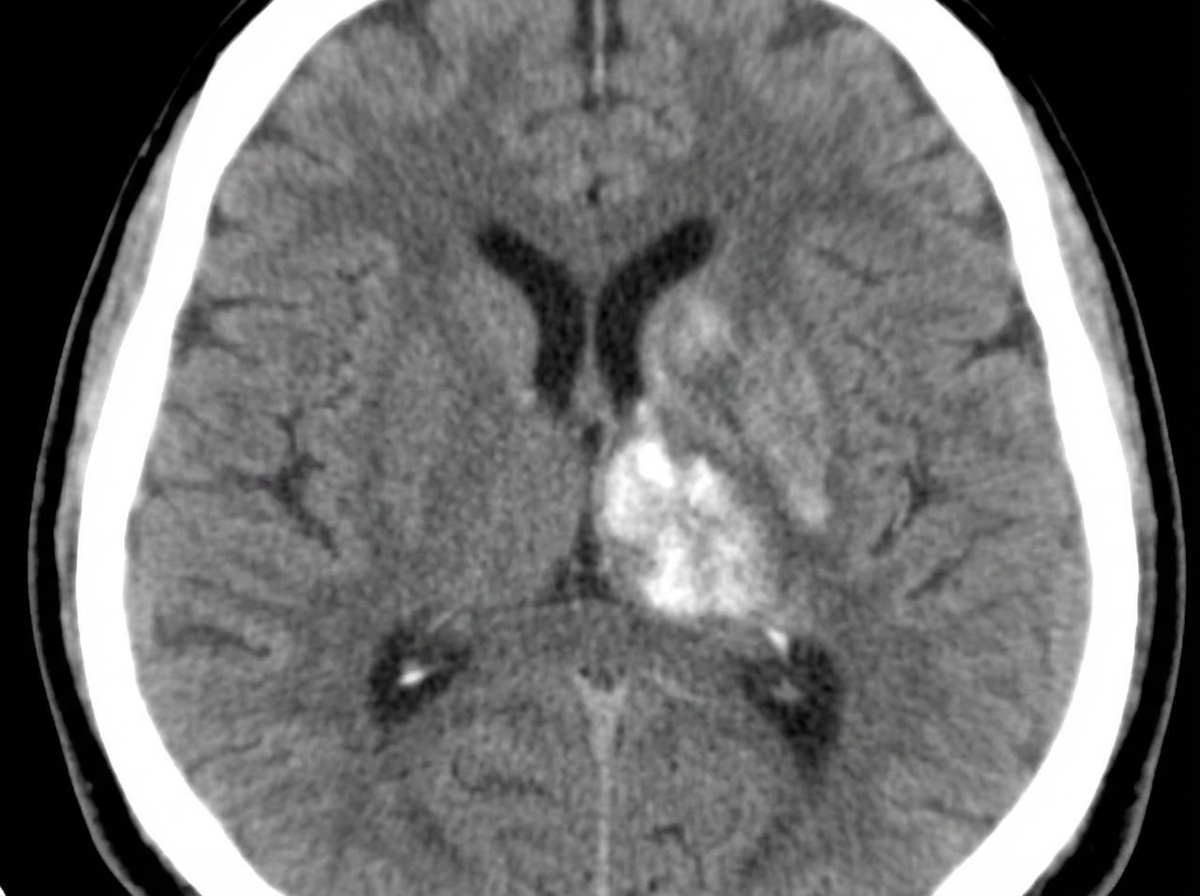
Explanation: **Explanation:** The patient presents with a focal neurological deficit (right-sided hemiplegia) while on **warfarin**, a potent anticoagulant. This clinical scenario strongly suggests an acute stroke, with a high suspicion of **Intracranial Hemorrhage (ICH)** due to the underlying coagulopathy. **Why CT scan is the correct answer:** A **Non-Contrast Computed Tomography (NCCT) Head** is the gold standard initial investigation for acute stroke. Its primary role is to **differentiate between ischemic and hemorrhagic stroke**. In this case, identifying a bleed is critical because the management involves immediate reversal of anticoagulation. CT is preferred over MRI in the emergency setting because it is faster, more widely available, and highly sensitive (nearly 100%) for detecting acute blood (which appears hyperdense/white). **Why other options are incorrect:** * **MRI:** While more sensitive for early ischemic changes (Diffusion-Weighted Imaging), it is time-consuming, less available, and more expensive. In an emergency "Time is Brain" scenario, CT is always the first step. * **Chest X-ray:** This is irrelevant for diagnosing an intracranial event. * **PET scan:** This is a functional imaging modality used primarily in oncology or epilepsy workups; it has no role in the acute management of stroke. **High-Yield Clinical Pearls for NEET-PG:** 1. **Hyperacute Stroke:** NCCT is done to rule out hemorrhage before considering thrombolysis. 2. **Appearance of Blood on CT:** Acute blood is **Hyperdense** (White). As it ages, it becomes Isodense and eventually Hypodense (Black). 3. **Warfarin Reversal:** If ICH is confirmed, the immediate treatment is Vitamin K and **Prothrombin Complex Concentrate (PCC)** or Fresh Frozen Plasma (FFP). 4. **"Door to CT" time:** Ideally should be less than 20–25 minutes in a stroke center.
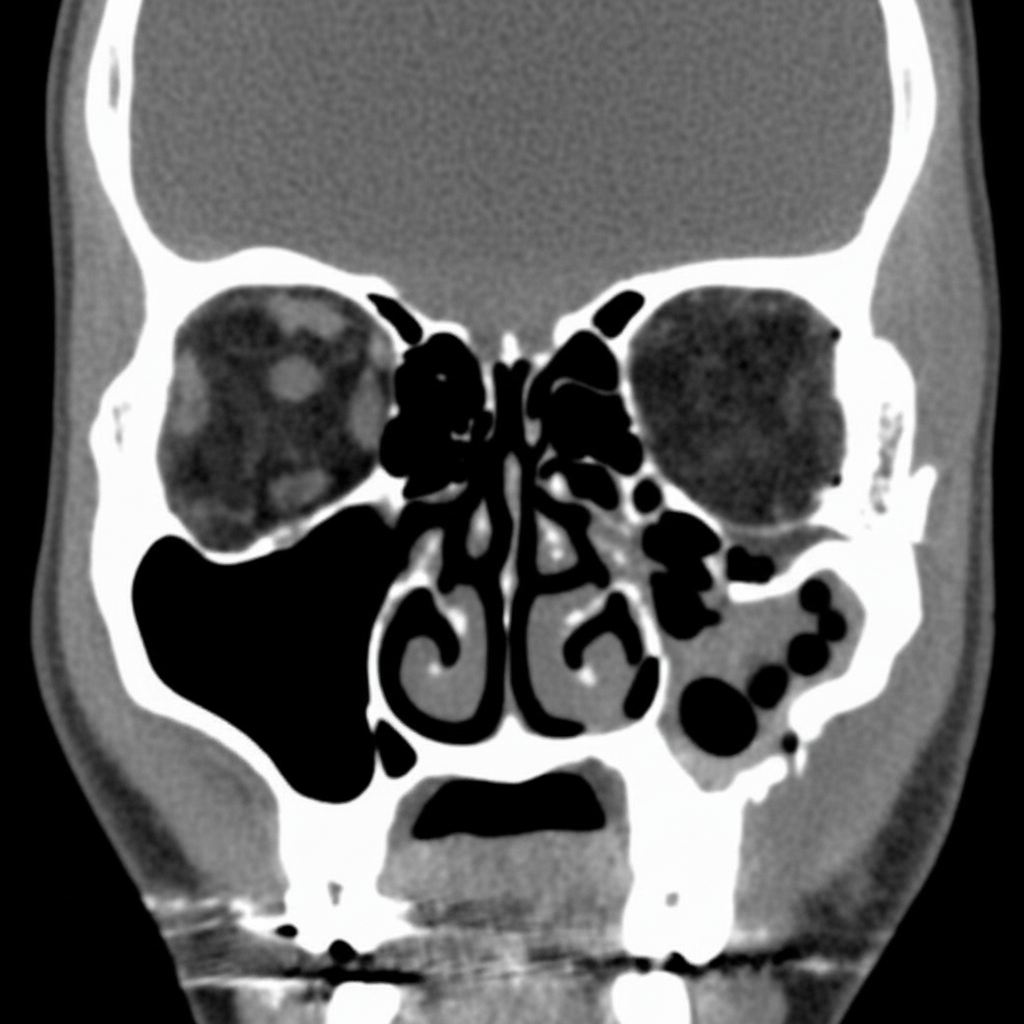
Explanation: In neuroradiology, MRI is the gold standard for evaluating the posterior fossa due to its superior soft-tissue contrast and lack of **"beam-hardening artifacts"** from the surrounding dense petrous and occipital bones, which often obscure details on CT. However, CT is considered **complementary** [1], [3] in **Posterior Fossa Tumors** [1] because it excels at identifying **calcification** [3] (e.g., in ependymomas) and **bony erosion or hyperostosis** [1], [2] (e.g., in acoustic neuromas or meningiomas). While MRI defines the tumor's extent and relationship to neural structures, CT provides critical information regarding the mineralized components and skull base involvement [1], [2]. **Analysis of Incorrect Options:** * **Trauma:** CT is the **initial investigation of choice** (not just complementary) because it is rapid and highly sensitive for acute intracranial hemorrhage and skull fractures. * **Hydrocephalus:** CT is often the primary modality for quick diagnosis and monitoring of ventricular size. While MRI helps identify the cause (e.g., aqueductal stenosis), CT is usually sufficient for management. * **Vascular Lesions:** For acute stroke, CT is the first-line tool to rule out hemorrhage. For detailed vascular anatomy (aneurysms/AVMs), **Digital Subtraction Angiography (DSA)** remains the gold standard, with MRA/CTA being the primary non-invasive choices. **High-Yield Clinical Pearls:** * **Beam Hardening Artifact:** The primary reason CT is inferior to MRI for the posterior fossa. * **Calcification:** CT is more sensitive than standard MRI sequences for detecting calcium [3]. * **Modality of Choice:** MRI is the best overall for posterior fossa, but CT is the "complementary" tool for bone/calcification details [3].
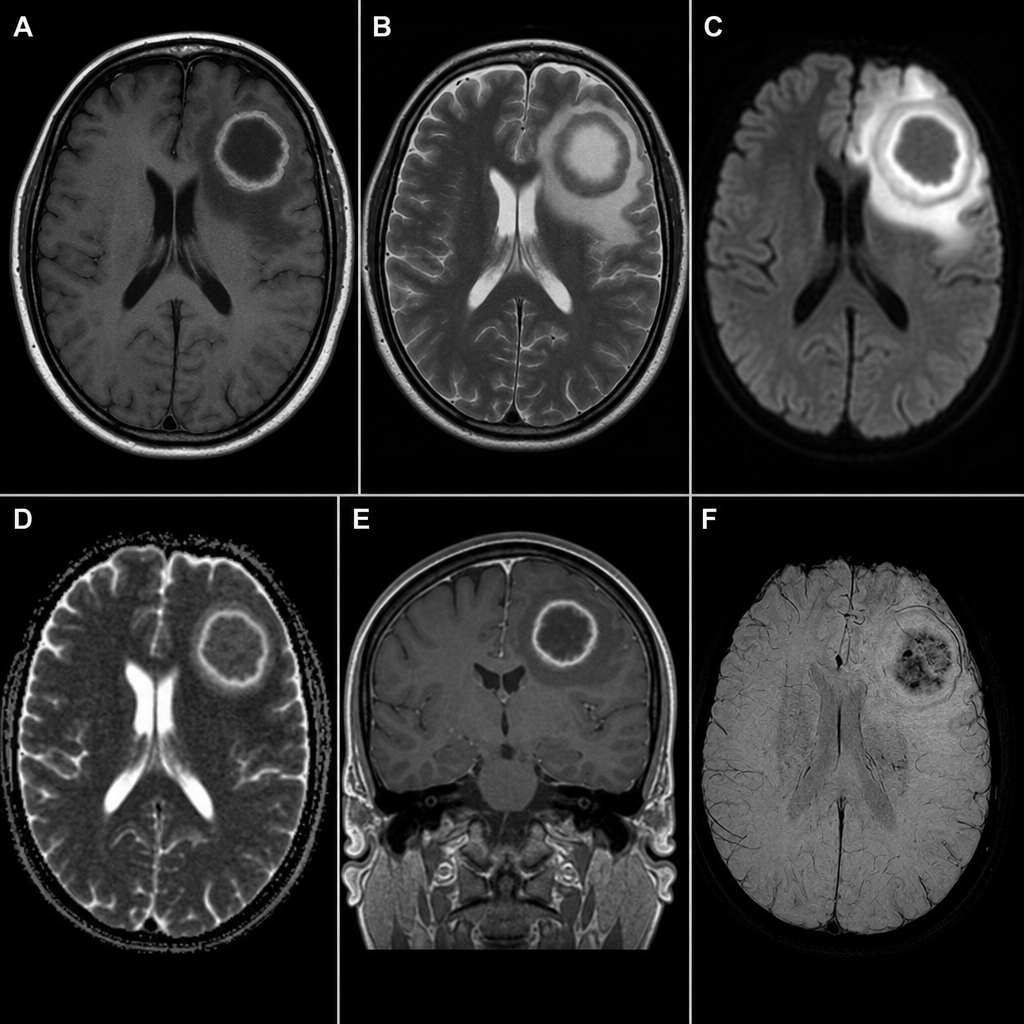
Explanation: **Explanation:** **Glioblastoma Multiforme (GBM)**, a Grade IV Astrocytoma, is the most common and aggressive primary malignant brain tumor in adults. The hallmark imaging feature of GBM on contrast-enhanced MRI is an **irregular, thick, ring-enhancing lesion** surrounding a **central non-enhancing necrotic core**. This occurs because the tumor grows rapidly, outstripping its blood supply and causing central necrosis, while the peripheral viable tumor cells exhibit neoangiogenesis and a breakdown of the blood-brain barrier, leading to contrast uptake. **Analysis of Options:** * **Option C (Correct):** The "ring-enhancement" reflects the peripheral hypervascularity, while the "necrotic center" is a defining pathological feature of GBM (pseudopalisading necrosis). * **Option A & B (Incorrect):** GBM is characteristically **irregular** in shape and **poorly demarcated**. It is highly infiltrative, often spreading along white matter tracts (e.g., crossing the corpus callosum, known as a "Butterfly Glioma"), making it impossible to define clear margins surgically or radiologically. * **Option D (Incorrect):** GBM is almost always associated with significant **vasogenic edema** (appearing hyperintense on T2/FLAIR), which contributes to the mass effect and clinical symptoms like headache and focal deficits. **High-Yield Clinical Pearls for NEET-PG:** * **Butterfly Glioma:** GBM crossing the midline via the corpus callosum. * **Histology:** Look for "pseudopalisading necrosis" and "microvascular proliferation." * **Differential Diagnosis for Ring-Enhancing Lesions (Mnemonic: MAGIC DR):** **M**etastasis, **A**bscess, **G**lioma (GBM), **I**nfarct (subacute), **C**ontusion, **D**emyelination (Tumefactive MS), **R**adiation necrosis.
Explanation: **Explanation:** **Multiple Sclerosis (MS)** is a chronic, immune-mediated inflammatory demyelinating disease of the Central Nervous System (CNS). The hallmark of MS is the presence of demyelinating plaques, which primarily target the **myelin sheath** produced by oligodendrocytes. **Why White Matter is Correct:** Myelin is the primary constituent of the CNS **white matter**. Therefore, MS lesions (plaques) are characteristically found in white matter tracts. On MRI, these appear as hyperintense lesions on T2-weighted and FLAIR sequences. Classic locations include the **periventricular** region (Dawson’s fingers), juxtacortical areas, infratentorial region (brainstem/cerebellum), and the spinal cord. **Why Other Options are Incorrect:** * **Grey Matter, Thalamus, and Basal Ganglia:** While modern high-field MRI (7T) has shown that "grey matter involvement" can occur in advanced MS, it is not the classic or primary site of pathology. For examination purposes, MS is strictly defined as a **White Matter Disease**. The Thalamus and Basal Ganglia are deep grey matter structures and are not the primary diagnostic sites for MS lesions. **High-Yield Clinical Pearls for NEET-PG:** * **Dawson’s Fingers:** Ovoid demyelinating plaques oriented perpendicular to the lateral ventricles (representing perivenular inflammation). * **McDonald Criteria:** The current gold standard for diagnosis, requiring "Dissemination in Space" (DIS) and "Dissemination in Time" (DIT). * **MRI Sequence of Choice:** **FLAIR** (Fluid Attenuated Inversion Recovery) is best for visualizing periventricular lesions as it suppresses the bright CSF signal. * **Active Lesions:** Show **Gadolinium enhancement** on T1-weighted images, indicating acute blood-brain barrier breakdown.
Explanation: ### Explanation **1. Why Option B is Correct:** An **Extradural Hematoma (EDH)** typically results from an arterial bleed (most commonly the **middle meningeal artery**) following a skull fracture. On a Non-Contrast CT (NCCT) scan, acute blood appears **hyperdense** (bright white) due to high hemoglobin concentration. The blood collects between the inner table of the skull and the endosteal layer of the dura. Because the dura is firmly attached to the cranial sutures, the hematoma is confined, resulting in a characteristic **biconvex (lentiform or lemon-shaped)** appearance. Unlike subdural bleeds, EDHs do not cross suture lines. **2. Why Other Options are Incorrect:** * **Option A & D:** Acute blood is never hypodense or low-attenuated. **Hypodensity** in a hematoma usually indicates a chronic stage (liquefaction) or an active "swirl sign" (hyperacute bleeding), but the classic presentation of EDH is hyperdense. * **Option C:** A **concavo-convex (crescentic or banana-shaped)** lesion is the hallmark of a **Subdural Hematoma (SDH)**. SDHs occur in the potential space between the dura and arachnoid mater and can cross suture lines because they are not restricted by dural attachments. **3. Clinical Pearls for NEET-PG:** * **Lucid Interval:** A classic clinical feature where the patient regains consciousness after initial trauma before deteriorating again. * **Source of Bleed:** Middle meningeal artery (most common) or dural venous sinuses (in children). * **Anatomical Landmark:** Most EDHs occur in the **pterion** region (temporal bone). * **Suture Rule:** EDH **cannot** cross suture lines but **can** cross dural reflections (like the falx or tentorium). SDH is the opposite.
Explanation: ### Explanation **Correct Answer: A. True arteriovenous malformation** **Underlying Concept:** A **True Arteriovenous Malformation (AVM)** is a high-flow vascular anomaly characterized by a direct communication between arteries and veins without an intervening capillary bed. The hallmark of an AVM is the **nidus**—a tangled network of dysplastic vascular channels. In this circuit, "feeding arteries" deliver high-pressure blood directly into the nidus, which then drains into "enlarged arterialized veins." The presence of a nidus is the defining pathological and radiological feature that distinguishes true AVMs from other vascular malformations. **Why incorrect options are wrong:** * **Venous Angioma (Developmental Venous Anomaly):** These are low-flow lesions consisting of a "caput medusae" appearance (radially arranged veins) draining into a single large collector vein. There is no arterial nidus. * **Cavernous Angioma (Cavernoma):** These are "angiographically occult" low-flow lesions consisting of dilated, thin-walled sinusoids (caverns) lined by endothelium. They lack both a nidus and large feeding/draining vessels. * **Hemangioma:** These are true vascular tumors (neoplasms) characterized by endothelial proliferation, rather than a structural malformation of the arteriovenous junction. **NEET-PG High-Yield Pearls:** * **Gold Standard Investigation:** Digital Subtraction Angiography (DSA) is the gold standard for visualizing the nidus and flow dynamics of an AVM. * **MRI Appearance:** AVMs typically show a "bag of worms" appearance with multiple punctate and curvilinear **flow voids** on T1 and T2 weighted images. * **Clinical Presentation:** The most common presentation is intracranial hemorrhage (ICH) or seizures. * **Spetzler-Martin Grading:** Used to assess surgical risk based on nidus size, eloquence of adjacent brain, and venous drainage pattern.
Explanation: **Explanation:** The clinical presentation of a sudden "thunderclap" headache followed by neurological deficits is classic for a **Subarachnoid Hemorrhage (SAH)**. Once SAH is confirmed via a non-contrast CT (NCCT), the primary goal is to identify the source of bleeding, which is most commonly a ruptured saccular (berry) aneurysm. **Why 4-Vessel Angiography is the Correct Choice:** Digital Subtraction Angiography (DSA), specifically **4-vessel angiography** (evaluating both internal carotids and both vertebral arteries), remains the **gold standard** for diagnosing intracranial aneurysms. It provides superior spatial resolution, allows for dynamic flow assessment, and facilitates immediate endovascular intervention (coiling) if an aneurysm is detected. While CT Angiography (CTA) is often used first in clinical practice due to speed, 4-vessel DSA is the definitive investigation of choice, especially if CTA is negative or if surgical planning is required. **Why Other Options are Incorrect:** * **SPECT:** This is a functional imaging modality used primarily for evaluating regional cerebral blood flow in dementia or epilepsy; it has no role in the acute diagnosis of SAH. * **Transorbital Doppler:** This is used to assess blood flow velocity in the ophthalmic artery or to detect raised intracranial pressure indirectly. It cannot visualize aneurysms or the source of SAH. * **MRI:** While sensitive for old blood (hemosiderin), MRI is time-consuming and less sensitive than CT in the hyperacute phase (first 6–24 hours) of SAH. **High-Yield Clinical Pearls for NEET-PG:** * **Initial Investigation of Choice:** Non-Contrast CT (NCCT) Head (Sensitivity >95% in the first 24 hours). * **Most Sensitive Investigation:** Lumbar Puncture (looking for xanthochromia) if CT is negative but clinical suspicion is high. * **Gold Standard for Aneurysm:** 4-vessel Digital Subtraction Angiography (DSA). * **Commonest Site of Berry Aneurysm:** Anterior Communicating Artery (A-com).
Explanation: **Explanation:** **Obstructive (Non-communicating) Hydrocephalus** occurs when there is a physical blockage to the flow of Cerebrospinal Fluid (CSF) within the ventricular system. **Aqueductal Stenosis (Option A)** is the most common cause of congenital obstructive hydrocephalus in children. The Aqueduct of Sylvius (connecting the 3rd and 4th ventricles) is the narrowest point in the CSF pathway, making it highly susceptible to narrowing. It can be idiopathic, X-linked (L1CAM mutation), or due to extrinsic compression (e.g., pineal tumors). On imaging, it typically shows dilatation of the lateral and third ventricles with a normal-sized fourth ventricle. **Why other options are incorrect:** * **Aqueductal Gliosis (Option B):** This is an acquired narrowing of the aqueduct usually following an intrauterine infection (like Toxoplasmosis or CMV) or hemorrhage. While it causes stenosis, idiopathic/congenital stenosis is statistically more common. * **Subarachnoid Hemorrhage (Option C) and Tubercular Meningitis (Option D):** These typically cause **Communicating (Non-obstructive) Hydrocephalus**. In these conditions, the blockage occurs at the level of the arachnoid villi, preventing the reabsorption of CSF into the venous sinuses, rather than obstructing the flow within the ventricles. **High-Yield Clinical Pearls for NEET-PG:** * **Most common cause of hydrocephalus in infants:** Aqueductal stenosis. * **Triventricular Hydrocephalus:** Classic imaging finding in aqueductal stenosis (Dilated 1st, 2nd, and 3rd ventricles). * **Bickers-Adams Syndrome:** X-linked aqueductal stenosis associated with thumb adduction and intellectual disability. * **Treatment of choice:** Endoscopic Third Ventriculostomy (ETV) or VP Shunt.
Explanation: ### Explanation **Correct Option: B. Dyke-Davidson-Mason Syndrome (DDMS)** **Dyke-Davidson-Mason Syndrome** is a clinical-radiological entity characterized by **unilateral cerebral atrophy** (in this case, the left hemisphere) resulting from an insult to the developing brain in utero or early childhood. * **Pathophysiology:** The primary event is usually a vascular insult (e.g., middle cerebral artery occlusion), infection, or trauma. * **Radiological Hallmarks:** To compensate for the loss of brain volume, the skull undergoes changes known as **ex-vacuo phenomena**: 1. Thickening of the calvarium (skull bone). 2. Hyperpneumatization of the paranasal sinuses (especially frontal and ethmoid) and mastoid air cells. 3. Elevation of the petrous ridge and sphenoid wing. * **Clinical Presentation:** Refractory epilepsy, contralateral hemiparesis, and intellectual disability. --- ### Why the other options are incorrect: * **A. Dravet Syndrome:** A severe genetic (SCN1A mutation) myoclonic epilepsy of infancy. Imaging is typically **normal** or shows non-specific generalized atrophy, not focal hemispheric collapse. * **C. Lennox-Gastaut Syndrome:** A childhood epileptic encephalopathy characterized by a triad of multiple seizure types, slow spike-wave EEG (1.5–2.5 Hz), and cognitive impairment. MRI is often normal or shows diffuse structural lesions, but not the specific hemiatrophy/bone changes of DDMS. * **D. West Syndrome:** Characterized by infantile spasms, hypsarrhythmia on EEG, and developmental regression. While it can be caused by structural issues (like Tuberous Sclerosis), it does not classically present with isolated hemispheric atrophy and compensatory skull changes. --- ### High-Yield Pearls for NEET-PG: * **DDMS Key Phrase:** "Unilateral atrophy + Compensatory skull thickening." * **Differential Diagnosis:** **Rasmussen’s Encephalitis** also presents with hemispheric atrophy and seizures, but it is an inflammatory/autoimmune process and **lacks** the compensatory bone changes (skull thickening) seen in DDMS. * **Age of Insult:** DDMS occurs when the brain insult happens before age 3, as the skull is still molding to the growing brain.
Neuroanatomy for Radiologists
Practice Questions
Cerebrovascular Diseases
Practice Questions
Intracranial Tumors
Practice Questions
CNS Infections
Practice Questions
Demyelinating and Degenerative Diseases
Practice Questions
Head Trauma Imaging
Practice Questions
Spine Imaging: Trauma and Degenerative Disease
Practice Questions
Spine Tumors and Infections
Practice Questions
Pediatric Neuroradiology
Practice Questions
Congenital CNS Anomalies
Practice Questions
Functional Neuroimaging
Practice Questions
Neurointerventional Procedures
Practice Questions
Get full access to all questions, explanations, and performance tracking.
Start For Free