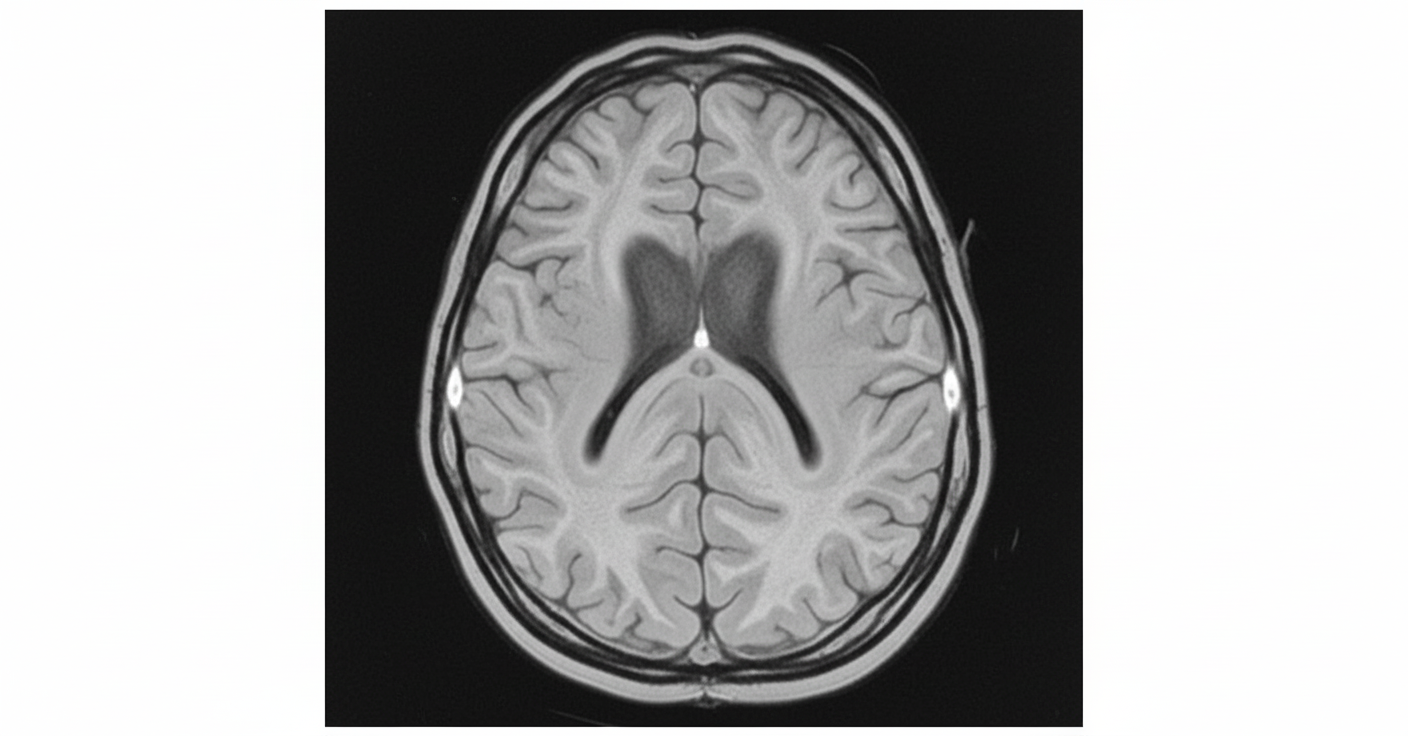
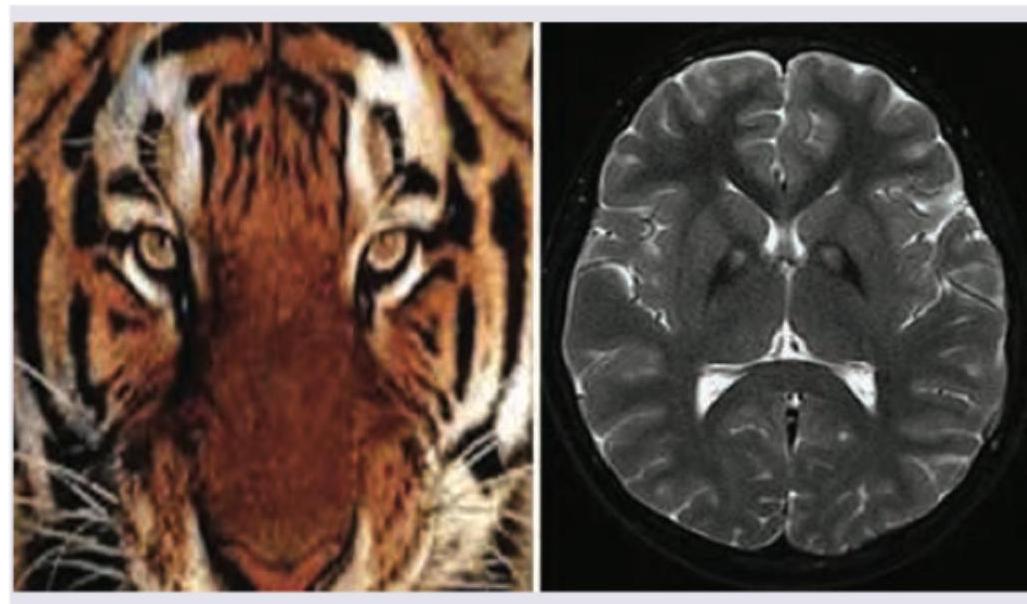
A 70-year-old hypertensive male presents complaining of a brief episode of slurred speech and left-sided weakness the previous evening. He gives a history of two transient episodes of sudden loss of vision in his right eye last month. His neurological examination is normal now. What is the most appropriate next diagnostic test?
Sphenoid wing dysplasia is seen in which of the following conditions?
What is the investigation of choice for acute subarachnoid hemorrhage?
Stereotactic surgery is used for the treatment of which of the following conditions?
Which of the following statements is false regarding a epidural hematoma?
After head injury, a biconvex, lenticular shaped hematoma on CT scan is characteristic of which of the following?
A 56-year-old man with a history of poorly controlled hypertension presents to the accident and emergency department with sudden onset weakness on the left side. What initial investigation would you request?
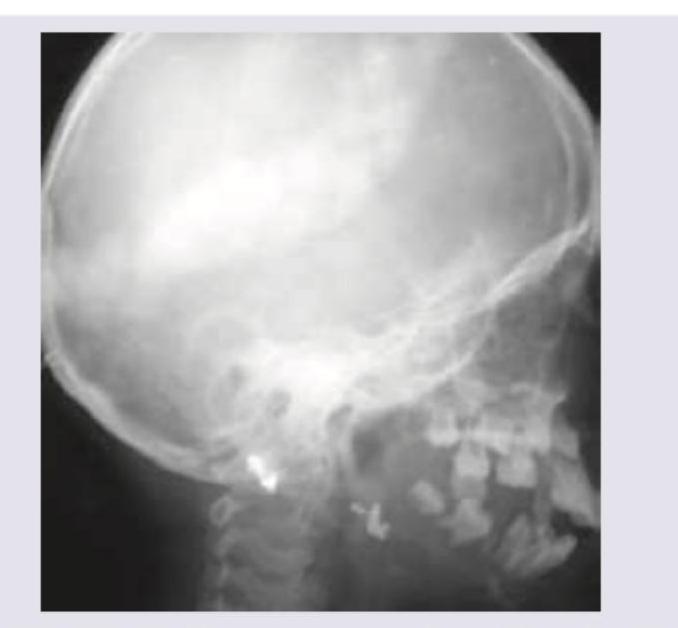
Which of the following conditions can cause a "bare orbit"?
An elderly patient presented with sudden onset of headache and altered sensorium and is diagnosed to have Subarachnoid hemorrhage. What is the best investigation of choice in this case?
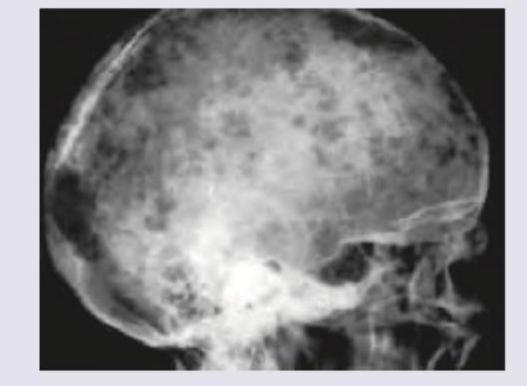
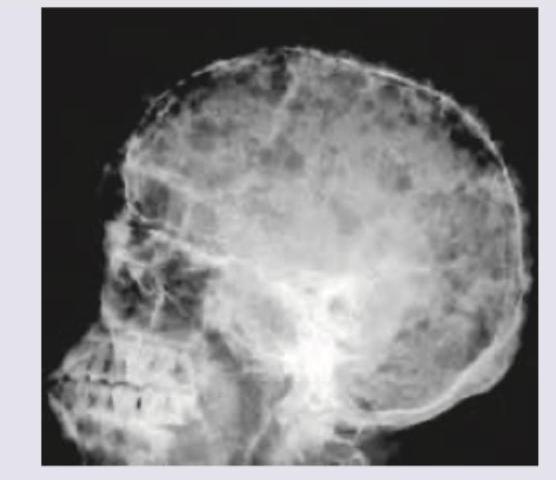
What are the common primary sites of metastasis to the brain?
Explanation: ### Explanation **Correct Answer: D. Carotid Doppler** **Clinical Reasoning:** The patient presents with a classic **Transient Ischemic Attack (TIA)** involving the right carotid territory. The symptoms—left-sided weakness (contralateral motor deficit) and **Amaurosis Fugax** (transient monocular blindness in the right eye)—strongly suggest an embolic source from the **Right Internal Carotid Artery (ICA)**. In an elderly hypertensive patient with resolved symptoms, the primary goal is to identify a treatable source of emboli to prevent a major stroke. **Carotid Doppler** is the most appropriate initial diagnostic test because it is non-invasive, cost-effective, and highly accurate in screening for carotid artery stenosis, which is the most likely etiology in this clinical scenario. **Why other options are incorrect:** * **A. CT Scan:** While useful to rule out hemorrhage in an acute stroke, it is insensitive for TIA as the symptoms have already resolved and the neurological exam is normal. * **B. Diffusion-weighted MRI (DWI):** This is the most sensitive sequence for detecting *acute* ischemic changes. However, in a TIA where symptoms have fully resolved, the priority is identifying the vascular source (carotid disease) rather than confirming a transient parenchymal insult. * **C. Cerebral Angiography:** This is the "gold standard" for vascular imaging but is invasive and carries a risk of stroke. It is reserved for pre-surgical planning or when non-invasive tests (Doppler, MRA, or CTA) are inconclusive. **High-Yield Clinical Pearls for NEET-PG:** * **Amaurosis Fugax:** Described as a "curtain falling over the eye," it is caused by retinal emboli via the ophthalmic artery (the first branch of the ICA). * **TIA Definition:** Transient episode of neurological dysfunction caused by focal brain, spinal cord, or retinal ischemia, without acute infarction. * **Management:** If Carotid Doppler shows >70% stenosis in a symptomatic patient, **Carotid Endarterectomy (CEA)** is generally indicated to reduce future stroke risk.
Explanation: **Explanation:** **Sphenoid wing dysplasia** is a characteristic skeletal manifestation of **Neurofibromatosis Type 1 (NF-1)**. It involves the partial or complete absence of the greater wing of the sphenoid bone. This defect leads to an expansion of the superior orbital fissure, resulting in a communication between the orbit and the middle cranial fossa. Radiologically, this produces the classic **"Bare Orbit Sign"** on a frontal skull X-ray or CT scan. Clinically, it may present as pulsating exophthalmos due to the transmission of cerebrospinal fluid (CSF) pulsations to the orbital contents. **Analysis of Incorrect Options:** * **A. Von Hippel Lindau (VHL):** A phakomatosis characterized by hemangioblastomas (cerebellum/retina), renal cell carcinoma, and pheochromocytoma. It does not involve sphenoid bone defects. * **C. Sturge-Weber Syndrome:** Characterized by a facial port-wine stain (trigeminal distribution) and leptomeningeal angiomatosis. Classic imaging finding is **"tram-track" cortical calcifications**, not bone dysplasia. * **D. Bournville’s Disease (Tuberous Sclerosis):** Features include cortical tubers, subependymal nodules (SEN), and subependymal giant cell astrocytomas (SEGA). Skeletal findings usually involve sclerotic bone islands, not dysplasia of the sphenoid. **High-Yield Clinical Pearls for NF-1:** * **Diagnostic Criteria (NIH):** Café-au-lait spots (≥6), Lisch nodules (iris hamartomas), Axillary/Inguinal freckling (Crowe sign), Optic nerve gliomas, and Neurofibromas. * **Skeletal Findings:** Sphenoid wing dysplasia, pseudoarthrosis of the tibia, and severe kyphoscoliosis. * **Imaging:** "Bare orbit sign" is a favorite NEET-PG image-based question.
Explanation: ### Explanation **Correct Answer: C. CT scan** **Why CT scan is the investigation of choice:** Non-contrast Computed Tomography (NCCT) of the head is the **gold standard initial investigation** for acute subarachnoid hemorrhage (SAH). It is highly sensitive (nearly 98-100% within the first 6-12 hours) because fresh blood appears **hyperdense** (bright white) against the brain parenchyma. Blood typically collects in the basal cisterns, sylvian fissures, and sulci, often forming a characteristic "star-shaped" pattern in the suprasellar cistern. Its widespread availability, speed, and superior ability to detect acute hemorrhage make it the first-line choice in emergency settings. **Why other options are incorrect:** * **A. Digital Subtraction Angiography (DSA):** While DSA is the **gold standard for identifying the cause** of SAH (e.g., detecting the specific site and morphology of a ruptured aneurysm), it is an invasive procedure and not the initial diagnostic tool to confirm the presence of blood. * **B. X-ray:** Plain radiographs have no role in diagnosing intracranial hemorrhage. * **C. MRI:** While highly sensitive, MRI (specifically FLAIR sequences) is generally reserved for **subacute or chronic SAH** where CT sensitivity drops. It is time-consuming and less practical in an acute emergency. **High-Yield Clinical Pearls for NEET-PG:** 1. **Sensitivity Trend:** CT sensitivity for SAH decreases over time (100% at <6 hrs, ~93% at 24 hrs, and <50% after one week). 2. **Next Step:** If CT is negative but clinical suspicion (e.g., "thunderclap headache") remains high, the next gold standard step is a **Lumbar Puncture** to look for xanthochromia. 3. **Grading:** The **Fisher Scale** is used to grade SAH based on CT appearance to predict the risk of cerebral vasospasm. 4. **Common Cause:** The most common cause of spontaneous SAH is a ruptured **Berry aneurysm** (usually at the junction of the Anterior Communicating Artery).
Explanation: **Explanation:** **Stereotactic surgery** (or stereotactic radiosurgery/biopsy) is a minimally invasive technique that uses a three-dimensional coordinate system to locate small targets inside the body and perform actions such as biopsies, injections, or radiation delivery with high precision. **Why Option A is Correct:** The skull provides a fixed, rigid frame of reference, making the **brain** the ideal organ for stereotactic procedures. By using a stereotactic frame (like the Lexsell frame) or frameless neuronavigation based on CT/MRI scans, neurosurgeons can reach deep-seated brain tumors with millimeter precision, minimizing damage to surrounding eloquent brain tissue. It is the gold standard for brain biopsies and Gamma Knife surgery. **Why Other Options are Incorrect:** * **Options B, C, and D (Lungs, Cervix, Renal):** These organs are located in the thorax and abdomen/pelvis. Unlike the brain, these organs are not encased in a rigid bony structure and are subject to **physiological motion** (respiration, peristalsis, and bladder filling). While "Stereotactic Body Radiotherapy" (SBRT) exists for these areas, the term "Stereotactic Surgery" classically refers to intracranial procedures where a fixed spatial coordinate system is applied to a stationary target. **Clinical Pearls for NEET-PG:** * **Gamma Knife:** A form of stereotactic radiosurgery (SRS) specifically used for intracranial lesions (e.g., Acoustic Neuroma, AVMs, Trigeminal Neuralgia). * **Key Components:** Requires a stereotactic frame, an imaging modality (CT/MRI), and a mathematical target localization software. * **Advantages:** Reduced hospital stay, ability to reach "inoperable" deep-seated lesions, and avoidance of large craniotomies.
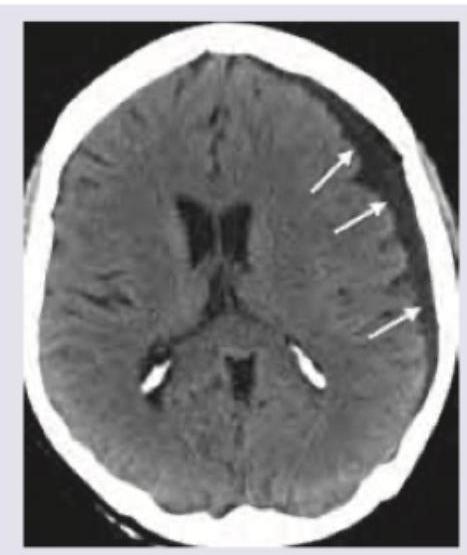
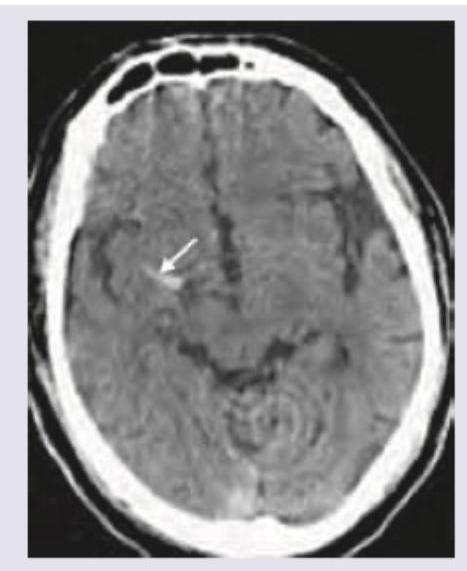
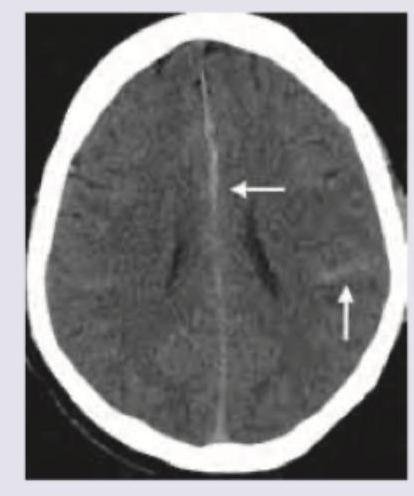
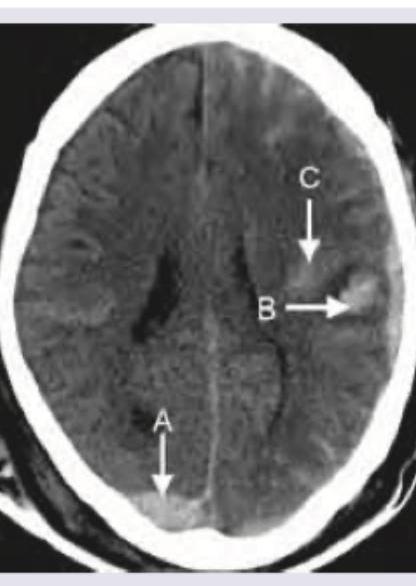
Explanation: **Explanation:** **1. Why Option D is the correct (false) statement:** The primary cause of an **Epidural Hematoma (EDH)** is the rupture of an **artery**, most commonly the **Middle Meningeal Artery (MMA)**, often following a fracture at the pterion. In contrast, the rupture of **bridging veins** (which drain from the cerebral cortex into the dural sinuses) is the hallmark cause of a **Subdural Hematoma (SDH)**. This is a high-yield distinction for NEET-PG. **2. Analysis of incorrect options (True statements about EDH):** * **Option A:** The **"Lucid Interval"** is a classic clinical feature where the patient regains consciousness after an initial concussion, only to deteriorate rapidly as the arterial bleed expands. * **Option B & C:** EDH is strongly associated with skull trauma. Approximately 85-95% of cases involve an overlying **skull fracture** (often a linear or fissure fracture). In adults, the **temporal bone** is the most common site because it is thin and overlies the MMA. **3. High-Yield Clinical Pearls for NEET-PG:** * **Radiology:** On CT, EDH appears as a **Biconvex (Lentiform/Lens-shaped)** hyperdensity. It **does not cross cranial sutures** (because the dura is firmly attached there) but can cross the midline. * **Source of Bleed:** Middle Meningeal Artery (most common) > Anterior Meningeal Artery > Dural Sinuses. * **Management:** It is a neurosurgical emergency. Treatment usually involves urgent craniotomy and evacuation to prevent brain herniation. * **Comparison:** Remember **"Biconvex = EDH (Arterial)"** vs. **"Crescentic = SDH (Venous)."**
Explanation: ### Explanation **1. Why Extradural Haemorrhage (EDH) is Correct:** An Extradural Haemorrhage (EDH) typically results from the rupture of the **middle meningeal artery**, often associated with a temporal bone fracture. The blood collects in the potential space between the inner table of the skull and the dura mater. Because the dura is firmly attached to the skull at the **suture lines**, the hematoma cannot expand past these points. This anatomical restriction forces the blood to expand inward toward the brain, creating the classic **biconvex (lens-shaped/lenticular)** appearance on a CT scan. **2. Why the Other Options are Incorrect:** * **Subdural Haemorrhage (SDH):** Caused by the tearing of **bridging veins**. The blood collects between the dura and the arachnoid mater. Since this space is not restricted by sutures, the blood spreads widely along the brain's convexity, resulting in a **crescent-shaped (concavo-convex)** appearance. * **Intracerebral Hematoma:** This involves bleeding within the brain parenchyma itself. On CT, it appears as a hyperdense area within the brain tissue, often surrounded by edema, rather than a peripheral collection. * **Diffuse Axonal Injury (DAI):** This is a microscopic injury caused by shearing forces. CT scans are often normal or may show small, punctate hemorrhages at the **grey-white matter junction**, corpus callosum, or brainstem. **3. NEET-PG High-Yield Pearls:** * **Source of Bleed:** EDH is usually arterial (Middle Meningeal Artery); SDH is usually venous (Bridging Veins). * **Clinical Presentation:** EDH is classically associated with a **"Lucid Interval"** (a period of consciousness between the initial injury and subsequent neurological deterioration). * **Suture Restriction:** EDH **does not** cross suture lines (but can cross the midline); SDH **crosses** suture lines (but does not cross the midline/dural reflections like the falx). * **Management:** Large EDHs are surgical emergencies requiring urgent craniotomy and evacuation.
Explanation: **Explanation:** The clinical presentation of sudden-onset focal neurological deficits (left-sided weakness) in a patient with hypertension is highly suggestive of an **acute stroke**. In the emergency setting, the primary goal is to differentiate between an **ischemic stroke** and a **hemorrhagic stroke**, as the management for each is diametrically opposed. **Why CT Head is the correct answer:** A **Non-Contrast Computed Tomography (NCCT) Head** is the gold standard initial investigation for suspected stroke. Its primary utility lies in its **high sensitivity for detecting acute intracranial hemorrhage**, which appears hyperdense (white). It is fast, widely available, and essential to rule out a bleed before initiating thrombolytic therapy (like tPA) or anticoagulation. **Why other options are incorrect:** * **MRI:** While Diffusion-Weighted Imaging (DWI) MRI is more sensitive for detecting early ischemic changes (within minutes), it is time-consuming, less available, and more expensive. In the "Time is Brain" window, CT is preferred for its speed. * **X-Ray:** Conventional skull X-rays have no role in the evaluation of acute stroke as they cannot visualize brain parenchyma or hemorrhage. * **D-dimer assay:** This is used to rule out venous thromboembolism (PE/DVT) and has no diagnostic value in the acute management of a stroke. **High-Yield Clinical Pearls for NEET-PG:** * **NCCT Findings:** In acute ischemia, the CT may appear normal for the first 6–12 hours. Early signs include the **"Hyperdense MCA sign"** (thrombus in the vessel) and loss of insular ribbon. * **Hemorrhage:** Appears **hyperdense** (60–80 HU) on CT. * **Ischemia:** Appears **hypodense** (dark) on CT as edema develops. * **Door-to-CT time:** Ideally should be within **20 minutes** of arrival.
Explanation: The **"Bare Orbit" sign** is a classic radiological finding on a frontal skull X-ray or CT scan characterized by the **absence of the innominate line** (the greater wing of the sphenoid bone). This occurs due to the destruction or hypoplasia of the sphenoid wing, leading to an empty-appearing orbit. ### Why Metastasis is Correct **Metastasis** (particularly from neuroblastoma in children or lung/breast cancer in adults) is a common cause of aggressive bony destruction. When the greater wing of the sphenoid is destroyed by a neoplastic process, the normal bony landmarks disappear, resulting in the "bare orbit" appearance. ### Why Other Options are Incorrect * **Pseudotumor cerebri:** This involves idiopathic intracranial hypertension. While it may cause an empty sella or slit-like ventricles, it does not cause bony destruction of the sphenoid wing. * **Optic nerve glioma:** This typically causes **enlargement of the optic canal** rather than generalized destruction of the sphenoid wing. * **Osteomyelitis:** While it can cause bone erosion, it is a rare cause of a classic "bare orbit" compared to neoplastic or congenital conditions. ### High-Yield Pearls for NEET-PG * **Most Common Cause:** The most classic association for "bare orbit" in radiology exams is **Neurofibromatosis Type 1 (NF1)**, due to congenital sphenoid wing dysplasia. * **Differential Diagnosis for Bare Orbit:** 1. Neurofibromatosis Type 1 (Sphenoid dysplasia) 2. Langerhans Cell Histiocytosis (LCH) 3. Metastatic disease (Neuroblastoma) 4. Post-surgical changes (Craniotomy) * **Clinical Correlation:** In NF1, this finding is often associated with **pulsatile exophthalmos** because the brain pulsations are transmitted directly to the orbit through the bony defect.
Explanation: **Explanation:** The investigation of choice for an acute **Subarachnoid Hemorrhage (SAH)** is a **Non-Contrast Computed Tomography (NCCT) scan of the head**. **1. Why CT Scan is the Correct Answer:** * **Sensitivity:** NCCT is highly sensitive (up to 98-100%) in detecting acute blood within the first 6–24 hours of the event. * **Appearance:** Acute blood appears **hyperdense (white)** on CT, typically seen filling the basal cisterns, sulci, and the Sylvian fissure (often described as a "star-shaped" density). * **Speed and Accessibility:** It is fast, widely available, and superior at detecting acute bony injuries or calcifications compared to MRI. **2. Why Other Options are Incorrect:** * **B. MRI Scan:** While MRI (especially FLAIR sequences) is sensitive, it is time-consuming, less accessible in emergencies, and difficult to perform on unstable patients with altered sensorium. It is, however, more sensitive than CT for detecting *subacute* or *chronic* SAH. * **C. Roentgenogram (X-ray) of Skull:** X-rays cannot visualize intracranial soft tissues or hemorrhages. They are obsolete for diagnosing SAH. * **D. Carotid Angiogram:** While Digital Subtraction Angiography (DSA) is the **Gold Standard** for identifying the *source* of the bleed (e.g., a ruptured berry aneurysm), it is not the initial investigation to *diagnose* the presence of hemorrhage. **Clinical Pearls for NEET-PG:** * **Initial Step:** NCCT Head. * **Next Step if NCCT is negative but clinical suspicion is high:** Lumbar Puncture (to look for **Xanthochromia**). * **Gold Standard for etiology:** Digital Subtraction Angiography (DSA). * **Commonest Cause:** Trauma (Overall); Rupture of Saccular/Berry Aneurysm (Spontaneous). * **Classic Presentation:** "Thunderclap headache" or "Worst headache of my life."
Explanation: **Explanation:** Brain metastases are the most common intracranial tumors in adults, occurring much more frequently than primary brain malignancies. **Why Lung Carcinoma is Correct:** **Lung Carcinoma** is the most common primary source of brain metastasis, accounting for approximately **40–50%** of all cases. This is due to the direct hematogenous spread via the systemic circulation; since the lungs are highly vascularized, tumor cells can easily enter the pulmonary veins and reach the brain without being filtered by the pulmonary capillary bed. Small cell lung cancer (SCLC) has the highest propensity for early brain spread, though non-small cell lung cancer (NSCLC) is more common overall. **Analysis of Incorrect Options:** * **Breast Carcinoma (Option D):** This is the **second most common** cause of brain metastasis in adults (approx. 15–25%). It is a very high-yield distractor, but lung remains the statistical leader. * **Thyroid Carcinoma (Option A):** While it can metastasize to the brain (particularly the papillary and follicular subtypes), it is a relatively rare occurrence compared to lung and breast. * **Tongue Carcinoma (Option B):** Squamous cell carcinomas of the head and neck typically spread via local invasion or lymphatic drainage to cervical nodes; distant hematogenous spread to the brain is uncommon. **High-Yield Clinical Pearls for NEET-PG:** * **Order of Frequency:** Lung > Breast > Melanoma > Renal Cell Carcinoma (RCC) > Colon. * **Melanoma:** Has the highest *likelihood* of spreading to the brain per individual case and is the most common primary to cause **hemorrhagic brain metastasis**. * **Imaging:** Contrast-enhanced MRI is the gold standard. Metastases typically appear at the **grey-white matter junction** (where vessel caliber narrows) and often show significant **perilesional vasogenic edema**. * **Multiplicity:** Most metastases are multiple; however, RCC, Colon, and Breast are more likely to present as a solitary brain metastasis.
Neuroanatomy for Radiologists
Practice Questions
Cerebrovascular Diseases
Practice Questions
Intracranial Tumors
Practice Questions
CNS Infections
Practice Questions
Demyelinating and Degenerative Diseases
Practice Questions
Head Trauma Imaging
Practice Questions
Spine Imaging: Trauma and Degenerative Disease
Practice Questions
Spine Tumors and Infections
Practice Questions
Pediatric Neuroradiology
Practice Questions
Congenital CNS Anomalies
Practice Questions
Functional Neuroimaging
Practice Questions
Neurointerventional Procedures
Practice Questions
Get full access to all questions, explanations, and performance tracking.
Start For Free