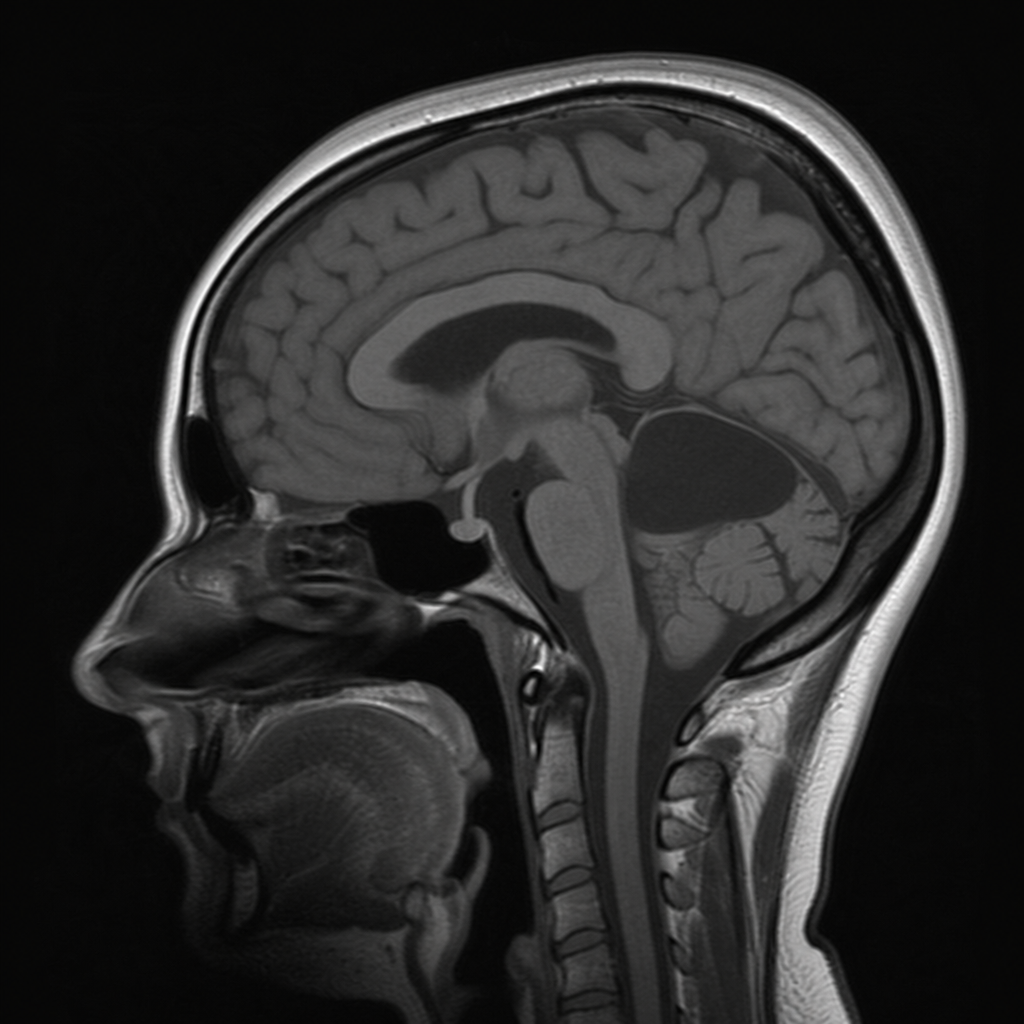
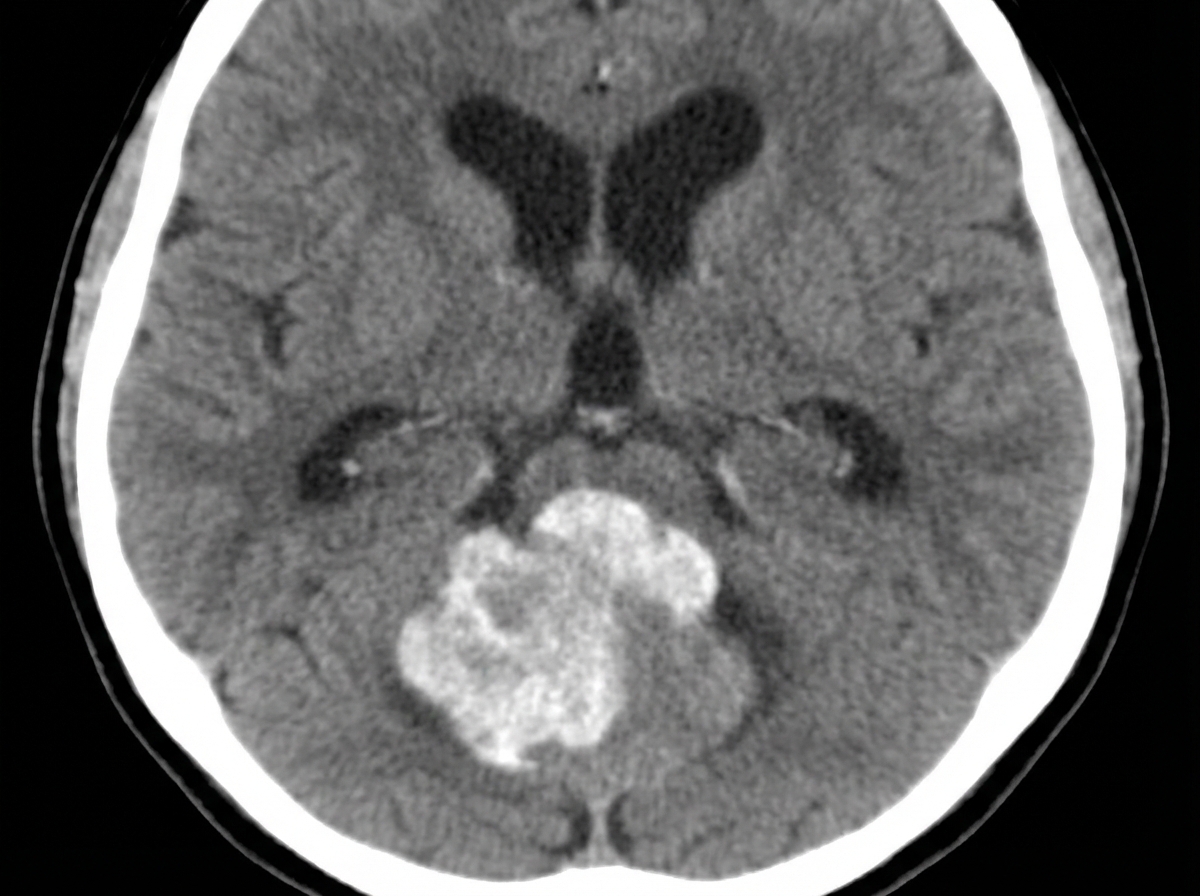
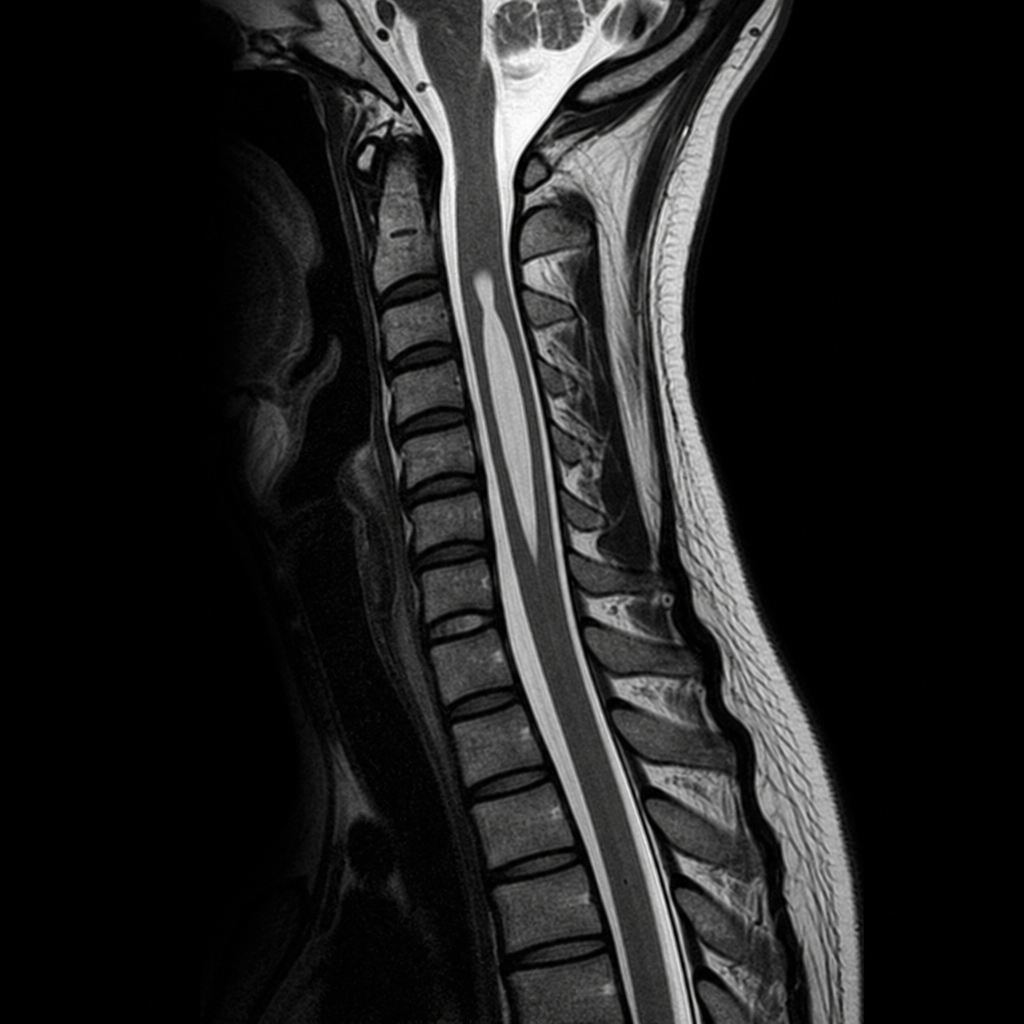
An 80-year-old male presents with a 5-day history of high-grade fever, cognitive decline, and behavioral disturbances. There is no history of travel or contact with TB patients. NCCT head revealed a hypodense lesion with edema in the left frontal lobe. MRI was performed to characterize the lesion. What is the most likely diagnosis?
CT scan of a patient with a history of head injury shows a biconvex hyperdense lesion displacing the grey-white matter interface. What is the most likely diagnosis?
What is the imaging modality of choice for diffuse axonal injury?
Which imaging modality can help to study CSF dynamics?
A dumbbell tumor is a characteristic feature of which of the following neoplasms?
What is the characteristic MRI brain appearance described as a 'soap bubble'?
Which of the following is the earliest bony sign of increased intracranial tension?
Which of the following tend to show marked and homogeneous enhancement on Gd-DTPA enhanced MRI?
"Lucid Interval" is associated with which of the following?
A patient was diagnosed with intracranial cavernous angioma on MR scan. What MRI finding is characteristic of this lesion?
Explanation: ### Explanation The clinical presentation of acute high-grade fever, rapid cognitive decline, and behavioral changes in an elderly patient, combined with imaging showing a hypodense lesion and significant perilesional edema, is highly suggestive of a **Pyogenic Brain Abscess**. **Why Pyogenic Abscess is correct:** Pyogenic abscesses typically present acutely (days). On NCCT, they appear as hypodense lesions with significant vasogenic edema. On MRI (the gold standard), they classically show **Ring Enhancement** on T1+Contrast and, most characteristically, **Restricted Diffusion** (Hyperintense on DWI, Hypointense on ADC) due to the presence of viscous pus. The frontal and temporal lobes are common sites due to hematogenous spread or contiguous spread from sinuses. **Why other options are incorrect:** * **Tubercular Abscess:** These usually follow a more subacute or chronic course. While they can show ring enhancement, they often have a thicker, more irregular wall and may show "lipid-lactate" peaks on MR spectroscopy rather than the classic amino acid peaks of pyogenic abscesses. * **Glioblastoma Multiforme (GBM):** While GBM presents with a ring-enhancing mass and edema, it typically occurs in older patients but lacks the acute febrile prodrome. On MRI, the central necrosis of a tumor usually shows **facilitated diffusion** (dark on DWI), unlike the restricted diffusion of an abscess. * **Hydatid Cyst:** These appear as well-defined, "glass-clear" fluid-filled cysts (CSF-like density) without significant perilesional edema or ring enhancement unless infected. **NEET-PG High-Yield Pearls:** * **DWI is the sequence of choice** to differentiate a brain abscess (Restricted Diffusion) from a necrotic tumor (Facilitated Diffusion). * **Ring Enhancing Lesions Mnemonic (MAGIC DR):** Metastasis, Abscess, Glioma, Infarct (resolving), Contusion, Demyelination (TUM), Radiation necrosis. * **MR Spectroscopy:** Pyogenic abscesses show peaks of **lactate, cytosolic amino acids (valine, leucine), and acetate/succinate.**
Explanation: **Explanation:** The correct diagnosis is **Extradural Hematoma (EDH)**. This is a classic radiological presentation frequently tested in NEET-PG. **Why Option C is Correct:** An EDH occurs when blood collects in the potential space between the skull and the dura mater, most commonly due to a rupture of the **middle meningeal artery** (associated with temporal bone fractures). * **Biconvex/Lens-shaped (Lentiform):** The dura is firmly attached to the cranial sutures; the hematoma cannot cross these sutures, forcing the blood to expand inward, creating a convex shape. * **Hyperdense:** Acute blood appears bright (white) on a CT scan. * **Grey-white interface displacement:** As the hematoma expands, it exerts mass effect, pushing the brain parenchyma (and its grey-white junction) away from the skull. **Why Other Options are Incorrect:** * **Subdural Hematoma (SDH):** Characterized by a **crescent-shaped (concave)** lesion. Unlike EDH, it can cross suture lines but is limited by dural reflections (like the falx cerebri). It usually results from the tearing of bridging veins. * **Diffuse Axonal Injury (DAI):** Typically presents with small, punctate hemorrhages at the grey-white matter junction, corpus callosum, or brainstem. It does not form a large biconvex collection. * **Hemorrhagic Contusion:** These are "brain bruises" appearing as heterogeneous areas of hemorrhage and edema within the brain parenchyma (intracerebral), often in a "salt and pepper" pattern. **High-Yield Clinical Pearls for NEET-PG:** * **Lucid Interval:** A classic clinical feature of EDH where the patient regains consciousness before rapidly deteriorating. * **Suture Lines:** EDH **does not** cross sutures (but can cross the midline); SDH **does** cross sutures (but not dural attachments). * **Source of Bleed:** EDH is usually arterial (Middle Meningeal Artery); SDH is usually venous (Bridging Veins).
Explanation: **Explanation:** **Diffuse Axonal Injury (DAI)** is a form of traumatic brain injury caused by high-velocity acceleration-deceleration or rotational forces, leading to the shearing of axons at the interface of tissues with different densities (typically the gray-white matter junction). **Why MRI is the Correct Choice:** MRI is the imaging modality of choice because it has superior soft-tissue contrast compared to CT. DAI lesions are often microscopic and non-hemorrhagic, making them invisible on CT. **Susceptibility-Weighted Imaging (SWI)** and **Gradient Echo (GRE)** sequences are the most sensitive as they detect "blooming" artifacts from micro-hemorrhages (hemosiderin). Diffusion-Weighted Imaging (DWI) is also highly sensitive for detecting early cytotoxic edema associated with axonal shearing. **Why Other Options are Incorrect:** * **Radiograph (X-ray):** Only visualizes bony structures (skull fractures) and cannot evaluate brain parenchyma. * **CT Scan:** Often appears normal in patients with severe clinical symptoms (the "clinicoradiological dissociation"). While it is the first-line investigation in acute trauma to rule out large bleeds, it lacks the sensitivity to detect small DAI foci. * **PET Scan:** Primarily used for metabolic activity and functional imaging (e.g., oncology or dementia) and has no role in the acute diagnosis of traumatic axonal injury. **NEET-PG High-Yield Pearls:** * **Most common sites for DAI:** Gray-white matter junction (most common), Corpus Callosum (splenium), and Brainstem (Dorsolateral midbrain). * **Grading:** Grade I (Gray-white junction), Grade II (Corpus callosum), Grade III (Brainstem). * **Clinical Hallmark:** A patient with a low GCS score post-trauma whose CT scan appears surprisingly normal.
Explanation: **Explanation:** **MR CSF Flowmetry** (Phase-Contrast MRI) is the gold standard for non-invasive evaluation of cerebrospinal fluid (CSF) dynamics. It utilizes the phase shifts of protons moving within a magnetic field to quantify the velocity and direction of CSF flow throughout the cardiac cycle. This is clinically vital for diagnosing **Normal Pressure Hydrocephalus (NPH)**, where a "flow void" or hyperdynamic flow is often seen at the Aqueduct of Sylvius, and for assessing conditions like Chiari malformations or syringomyelia. **Why other options are incorrect:** * **Transcranial Ultrasound Doppler:** This modality measures the velocity of **blood flow** within the major intracranial arteries (e.g., Middle Cerebral Artery) to detect vasospasm or stenosis; it does not visualize CSF movement. * **CT Ventriculography:** While it involves injecting contrast into the ventricles to check for obstructions, it is an invasive procedure and provides anatomical detail rather than functional "dynamics" or flow quantification. * **PET Scan:** This is a functional imaging tool used to study **cerebral glucose metabolism** (using FDG) or neurotransmitter activity, primarily in oncology and dementia workups, not fluid kinetics. **High-Yield Clinical Pearls for NEET-PG:** * **NPH Triad (Hakim’s Triad):** Urinary incontinence, Gait ataxia, and Dementia ("Wet, Wobbly, and Wacky"). * **MRI Sign:** Look for the **"Flow Void"** sign in the Aqueduct of Sylvius on T2-weighted images, indicating turbulent/hyperdynamic CSF flow. * **Radionuclide Cisternography:** Another (though more invasive/older) method to study CSF flow, often used to confirm NPH or detect CSF leaks.
Explanation: ### Explanation **Correct Answer: B. Neurofibroma** A **dumbbell (or hourglass) tumor** is a classic radiological and pathological description for a spinal nerve sheath tumor, most commonly a **Neurofibroma** or a **Schwannoma**. The "dumbbell" shape occurs because the tumor originates from a spinal nerve root within the spinal canal. As it grows, it extends through the narrow **intervertebral foramen** into the paravertebral space. The constriction caused by the bony foramen creates a "waist," resulting in a bulbous mass both inside and outside the spinal canal. On imaging (MRI/CT), this leads to the characteristic **widening of the intervertebral foramen** and erosion of adjacent pedicles. **Analysis of Incorrect Options:** * **A. Meningioma:** While these are common intradural-extramedullary tumors, they are typically broad-based, dural-attached, and globular. They rarely exit the foramen to form a dumbbell shape. * **C. Ependymoma:** These are the most common **intramedullary** (inside the cord) tumors in adults. They cause cord expansion rather than foraminal extension. * **D. Thymoma:** These are anterior mediastinal tumors. While they can be associated with Myasthenia Gravis, they do not exhibit a dumbbell morphology related to the spinal column. **NEET-PG High-Yield Pearls:** * **Most common cause of dumbbell tumor:** Schwannoma (more frequent than Neurofibroma). * **Imaging Modality of Choice:** MRI with contrast (shows intense enhancement). * **Neurofibromatosis Type 1 (NF1):** Strongly associated with multiple plexiform neurofibromas. * **Differential Diagnosis:** If a dumbbell-shaped mass is seen in a **pediatric** patient in the posterior mediastinum, consider **Neuroblastoma**.
Explanation: **Explanation:** **Cryptococcosis** is the correct answer. The characteristic **'soap bubble' appearance** on MRI refers to **gelatinous pseudocysts**. These occur when the fungus *Cryptococcus neoformans* spreads from the subarachnoid space into the perivascular spaces (Virchow-Robin spaces) of the basal ganglia and thalamus. The fungus secretes a copious amount of capsular polysaccharide, which expands these spaces with mucoid material. On MRI, these appear as multiple small, non-enhancing, fluid-filled lesions that mimic soap bubbles. **Analysis of Incorrect Options:** * **Neurocysticercosis (A):** Characterized by the "hole-with-a-dot" appearance (scolex within a cyst). It progresses through four stages (vesicular, colloidal, granular, and calcified), but does not form gelatinous pseudocysts. * **Tuberculosis (C):** Typically presents as basal meningitis or tuberculomas. Tuberculomas show "ring enhancement" and often have a central area of caseous necrosis, appearing as a "target sign." * **Toxoplasmosis (D):** The classic finding is multiple ring-enhancing lesions with significant perilesional edema, often showing the "eccentric target sign" (a small nodule of enhancement along the wall of the ring). **NEET-PG High-Yield Pearls:** * **Organism:** *Cryptococcus neoformans* (most common fungal CNS infection in HIV/AIDS). * **Imaging:** Soap bubble appearance = Basal ganglia gelatinous pseudocysts. * **Diagnosis:** India Ink preparation (shows halo) or Cryptococcal Antigen (CrAg) test. * **Treatment:** Induction with Amphotericin B + Flucytosine, followed by Fluconazole.
Explanation: **Explanation:** Increased intracranial pressure (ICP) manifests on skull radiographs through various bony changes. Understanding the chronological sequence of these signs is crucial for NEET-PG. **1. Why Erosion of Dorsum Sella is Correct:** The **earliest** bony change seen in adults with chronic increased ICP is the **erosion of the dorsum sella**. The dorsum sella is a thin plate of bone forming the posterior wall of the sella turcica. Because it is thin and surrounded by cerebrospinal fluid (CSF) in the interpeduncular cistern, it is highly sensitive to pressure changes. Increased ICP causes the third ventricle to pulsate against the bone, leading to demineralization and erosion, typically starting from the top and moving downwards. **2. Analysis of Incorrect Options:** * **Pineal Displacement:** This indicates a **mass effect** (midline shift) rather than generalized increased ICP. While significant, it is not a direct "bony sign" of tension itself. * **Widening of Sella:** This is usually a sign of a local pituitary adenoma or a long-standing "empty sella" rather than the earliest sign of generalized intracranial hypertension. * **Copper Beaten Appearance (Beaten Silver Skull):** This refers to prominent gyral impressions on the inner table of the skull. While classic, it is a **late sign** and can sometimes be seen as a normal variant in growing children (aged 4–10). **Clinical Pearls for NEET-PG:** * **Sutural Diastasis:** This is the **earliest sign in children** (before sutures fuse). A suture width >2mm is considered significant. * **Sequence of Sellar Changes:** Rarefaction/Erosion of dorsum sella → Erosion of the floor of the sella → Progressive enlargement. * **J-shaped Sella:** Associated with Optic Chiasm Glioma or Mucopolysaccharidosis (Hurler syndrome), not typically generalized ICP.
Explanation: **Explanation:** The degree and pattern of contrast enhancement on MRI depend on the integrity of the **blood-brain barrier (BBB)** and the vascularity of the lesion. **1. Why Option A is Correct:** Both **Meningiomas** and **Acoustic Neuromas (Vestibular Schwannomas)** are **extra-axial tumors**. Unlike intra-axial brain tissue, extra-axial tumors do not possess a blood-brain barrier. Consequently, Gadolinium-DTPA easily leaks into the interstitial space, resulting in **intense, marked, and homogeneous enhancement**. This is a classic radiological hallmark for these tumors. **2. Analysis of Incorrect Options:** * **Option B:** **Oligodendrogliomas** often show little to no enhancement (or patchy enhancement), and **Metastases** frequently show "ring enhancement" due to central necrosis rather than homogeneous enhancement. * **Option C:** **Low-grade gliomas** (WHO Grade II) typically show **no enhancement** because the BBB remains relatively intact. * **Option D:** **Glioblastoma Multiforme (GBM)** is characterized by rapid growth and central necrosis, leading to a classic **irregular, thick ring-enhancement** pattern rather than a homogeneous one. **3. High-Yield Clinical Pearls for NEET-PG:** * **Meningioma:** Look for the **"Dural Tail Sign"** on contrast MRI (thickening of the adjacent dura). * **Acoustic Neuroma:** Look for the **"Ice-cream cone appearance"** (expansion of the internal auditory canal). * **Ring Enhancing Lesions (Mnemonic: MAGIC DR):** Metastasis, Abscess, Glioma (GBM), Infarct, Contusion, Demyelination (Tumescent MS), Radiation necrosis. * **Non-enhancing tumor:** Low-grade astrocytoma is the most common example.
Explanation: ### Explanation **Correct Answer: A. Extradural hematoma (EDH)** The **"Lucid Interval"** is a classic clinical hallmark of an Extradural Hematoma. It refers to a temporary period of consciousness between the initial loss of consciousness (caused by the impact) and the subsequent neurological deterioration. * **Mechanism:** EDH most commonly results from a skull fracture (usually at the pterion) causing a rupture of the **Middle Meningeal Artery**. * **Pathophysiology:** The initial trauma causes a brief concussion. As the arterial bleed expands, it strips the dura away from the skull. The "lucid" phase occurs while the compensatory mechanisms of the brain handle the rising intracranial pressure (ICP). Once these mechanisms fail, rapid herniation and coma follow. * **Radiology:** On CT, EDH appears as a **Biconvex (Lentiform)**, hyperdense, extra-axial collection that does not cross skull sutures. --- ### Why the other options are incorrect: * **B. Acute Subdural Hematoma (SDH):** Usually involves tearing of **bridging veins**. Patients typically present with a persistent depressed level of consciousness from the time of injury due to associated parenchymal damage. * **C. Chronic Subdural Hematoma:** Common in elderly patients or alcoholics; presents with gradual cognitive decline or focal deficits weeks after minor trauma, not a classic lucid interval. * **D. Subarachnoid Hemorrhage (SAH):** Classically presents with a **"Thunderclap headache"** (worst headache of life). It is usually due to a ruptured aneurysm, not trauma-induced lucid intervals. --- ### High-Yield Clinical Pearls for NEET-PG: * **Source of bleed:** EDH = Middle Meningeal Artery; SDH = Bridging Veins; SAH = Berry Aneurysm. * **CT Shape:** EDH = Convex/Lemon; SDH = Concave/Crescent/Banana. * **Sutures:** EDH **cannot** cross sutures (dura is firmly attached); SDH **can** cross sutures but not dural reflections (falx/tentorium). * **Management:** EDH is a neurosurgical emergency requiring immediate burr hole or craniotomy for evacuation.
Explanation: **Explanation:** **Intracranial Cavernous Angiomas** (also known as cavernomas or cavernous malformations) are low-flow vascular malformations consisting of a "mulberry-like" cluster of dilated, thin-walled capillaries without intervening brain parenchyma. 1. **Why Option D is Correct:** On MRI, the characteristic appearance is a **"Popcorn-like" lesion**. This is due to multiple locules containing blood products at various stages of degradation (methemoglobin, ferritin). On **T2-weighted imaging**, this central reticulated core is typically surrounded by a **hypointense rim of hemosiderin** (the "hemosiderin halo"), which is best visualized on Gradient Echo (GRE) or Susceptibility Weighted Imaging (SWI) due to the "blooming effect." 2. **Why Other Options are Incorrect:** * **Options A & B (Nidus and Arterial Feeders):** These are classic features of **Arteriovenous Malformations (AVMs)**. Cavernomas are "angiographically occult" because they lack high-flow arterial supply or a shunting nidus. * **Option C (Phlebectasis):** This refers to dilated veins, which is more characteristic of **Developmental Venous Anomalies (DVAs)**. While DVAs are often associated with cavernomas (mixed malformations), phlebectasis itself is not the diagnostic feature of the cavernoma. **High-Yield Clinical Pearls for NEET-PG:** * **Gold Standard Investigation:** MRI (specifically GRE/SWI sequences). * **Angiography:** Usually normal (Occult). * **Clinical Presentation:** Most commonly presents with **seizures** or focal neurological deficits due to micro-hemorrhages. * **Zabramski Classification:** Used to grade cavernous malformations based on MRI appearance. * **Classic Description:** "Popcorn appearance" with a "hemosiderin rim."
Neuroanatomy for Radiologists
Practice Questions
Cerebrovascular Diseases
Practice Questions
Intracranial Tumors
Practice Questions
CNS Infections
Practice Questions
Demyelinating and Degenerative Diseases
Practice Questions
Head Trauma Imaging
Practice Questions
Spine Imaging: Trauma and Degenerative Disease
Practice Questions
Spine Tumors and Infections
Practice Questions
Pediatric Neuroradiology
Practice Questions
Congenital CNS Anomalies
Practice Questions
Functional Neuroimaging
Practice Questions
Neurointerventional Procedures
Practice Questions
Get full access to all questions, explanations, and performance tracking.
Start For Free