"Rugger-jersey spine" in X-rays is a characteristic feature of which condition?
What is the characteristic finding on MRI described as a "double line sign"?
Which of the following radiographic projections is contraindicated in patients with cervical spondylitis?
Erlenmeyer flask deformity is seen in which of the following conditions?
Residual asymmetric deformity of the mandible is seen in which condition?
What radiological feature differentiates myositis ossificans from a bone tumor?
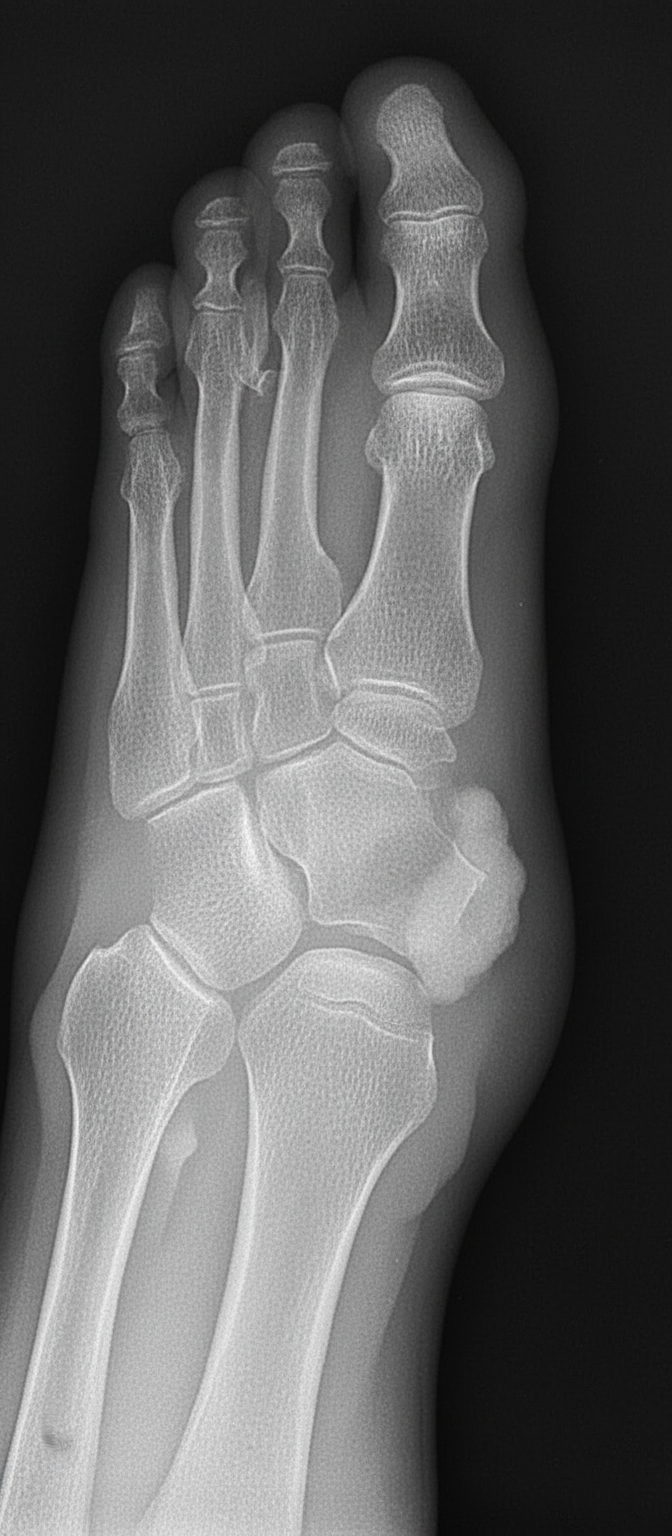
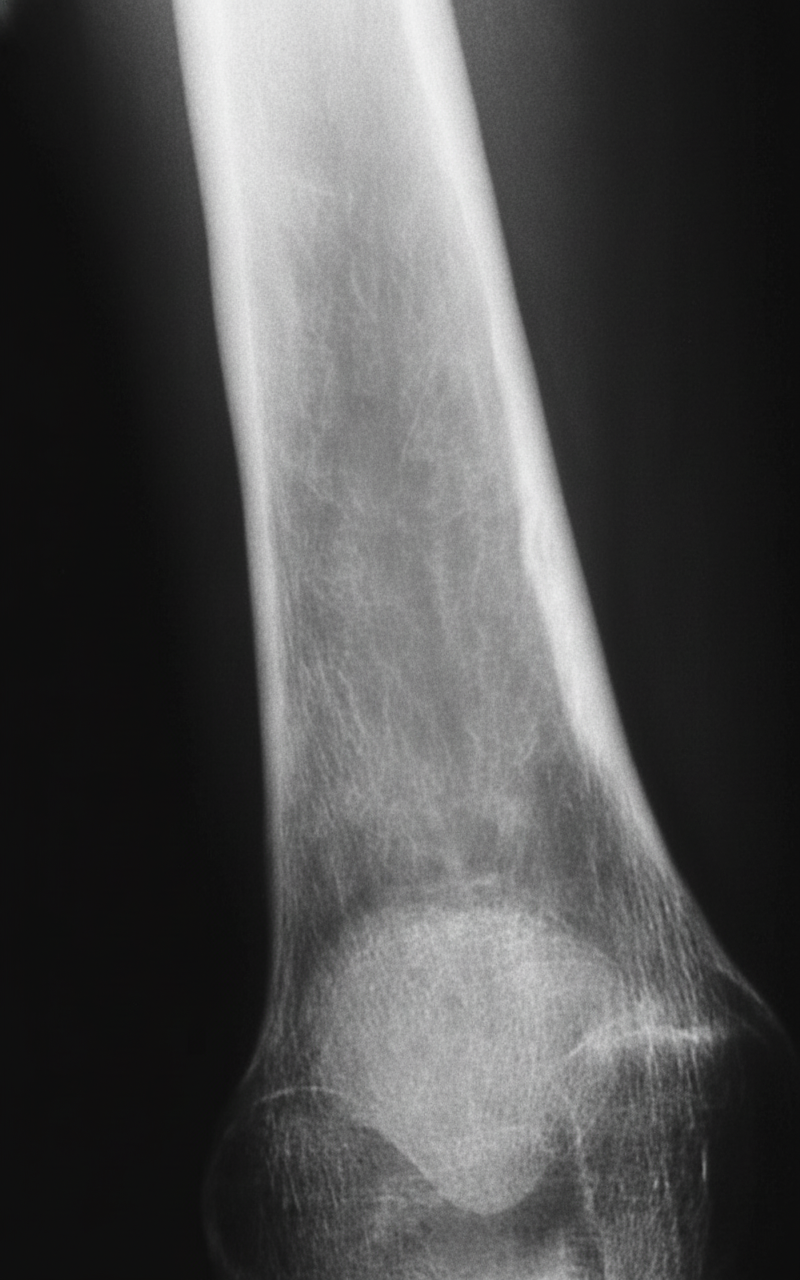
What pathology can be seen on X-ray?
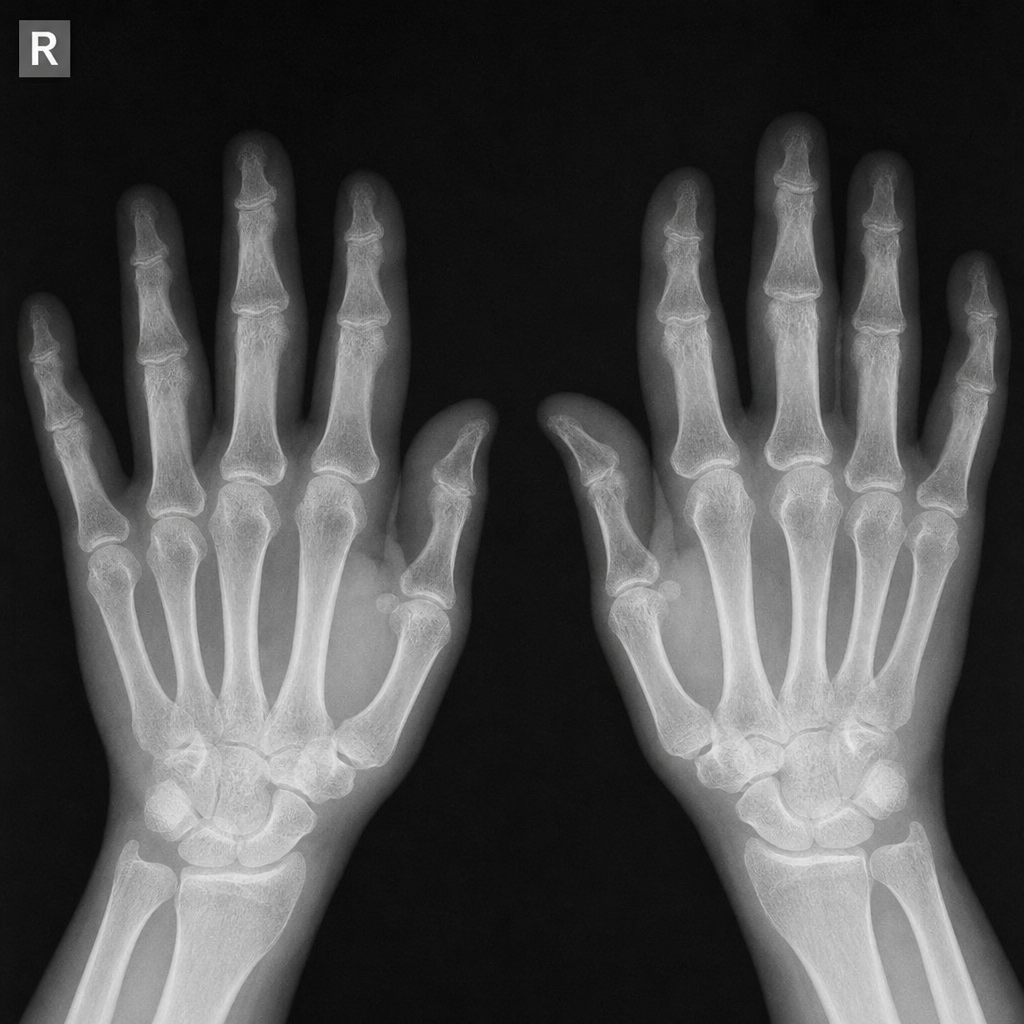
Which of the following is NOT a radiological finding seen in rickets?
On an X-ray, what is the appearance of dead bone?
A 13-year-old male presents with forearm pain and deformity after a fall onto his palm. Examination reveals an obvious angulation at the mid-forearm, with intact finger movement, circulation, and sensation. X-rays of the forearm are obtained. What is the most likely diagnosis?

Explanation: ### **Explanation: Rugger-Jersey Spine** The **Rugger-jersey spine** is a classic radiological sign characterized by prominent horizontal bands of increased bone density (sclerosis) at the superior and inferior endplates of the vertebral bodies, with a central area of radiolucency. This creates a striped appearance resembling the horizontal stripes on a British rugby jersey. #### **1. Why Renal Osteodystrophy is Correct** In **Renal Osteodystrophy** (specifically secondary hyperparathyroidism), there is a complex interplay of bone resorption and formation. Chronic kidney disease leads to phosphate retention and low Vitamin D levels, triggering a compensatory rise in Parathyroid Hormone (PTH). PTH stimulates osteoblastic activity alongside bone resorption. The increased density at the endplates is due to an **excess of osteoid tissue** that becomes mineralized, representing a form of osteosclerosis amidst generalized osteopenia. #### **2. Analysis of Incorrect Options** * **Hypoparathyroidism:** Typically presents with increased bone density (generalized osteosclerosis) or basal ganglia calcification, but it does not produce the specific striped endplate pattern. * **Pseudohypoparathyroidism:** While associated with short stature and short 4th/5th metacarpals (Albright’s Hereditary Osteodystrophy), it does not typically manifest with the Rugger-jersey spine. * **Osteoporosis (General):** Usually shows "codfish vertebrae" (biconcave) or "picture frame" vertebrae (in Paget's), but not the specific endplate sclerosis seen here. #### **3. High-Yield Clinical Pearls for NEET-PG** * **Differential Diagnosis:** The main differential for Rugger-jersey spine is **Osteopetrosis** (Marble Bone Disease), but in osteopetrosis, the appearance is often called a **"Sandwich Vertebra"** (denser, more sharply defined bands). * **Salt and Pepper Skull:** Another classic radiological feature of primary/secondary hyperparathyroidism. * **Subperiosteal Resorption:** The **most specific** radiological sign of hyperparathyroidism, most commonly seen on the radial aspect of the middle phalanges. * **Brown Tumors:** Osteoclastomas (lytic lesions) also seen in advanced renal osteodystrophy.
Explanation: **Explanation:** The **"Double Line Sign"** is a pathognomonic MRI finding seen on **T2-weighted images** in patients with **Avascular Necrosis (AVN)** of the femoral head. It represents the reactive interface between the necrotic bone and the viable reparative bone. * **The Inner Bright Line:** Represents hyperemic granulation tissue (high signal on T2). * **The Outer Dark Line:** Represents a rim of sclerotic bone (low signal on T2). **Why the other options are incorrect:** * **B. Slipped Capital Femoral Epiphysis (SCFE):** Characterized by the posterior and inferior displacement of the femoral head relative to the neck (best seen on "Frog-leg" lateral X-rays). MRI typically shows physeal widening and edema. * **C. Tuberculous Arthritis:** Presents with the **Phemister triad** (juxta-articular osteopenia, peripheral erosions, and gradual joint space narrowing). MRI would show synovial thickening and joint effusions, not a double line sign. * **D. Developmental Dysplasia of the hip (DDH):** A structural deformity involving an acetabular dysplasia or femoral head dislocation. Diagnosis is primarily via Ultrasound (in infants) or X-ray (Shenton’s line disruption). **High-Yield Clinical Pearls for NEET-PG:** * **MRI** is the most sensitive imaging modality for early detection of AVN (Stage 0/1). * **X-ray finding:** The **"Crescent Sign"** (subchondral fracture) indicates Stage II/III disease. * **Common Causes:** Corticosteroids (most common overall), Alcoholism, Trauma, and Sickle Cell Anemia. * **Classification:** The **Ficat and Arlet system** is commonly used to stage AVN based on imaging.
Explanation: **Explanation:** The **Submentovertex (SMV) view**, also known as the **Jugular view**, is contraindicated in patients with cervical spondylitis or suspected cervical spine instability. **Why it is contraindicated:** To obtain an SMV projection, the patient’s neck must be **hyperextended** until the vertex of the skull touches the image receptor and the infraorbitomeatal line is parallel to the film. In cervical spondylitis, the presence of osteophytes, disc degeneration, and ligamentous changes leads to a reduced range of motion and spinal canal narrowing. Forced hyperextension can cause **vertebrobasilar insufficiency**, spinal cord compression, or even fracture-dislocation in severe cases. **Analysis of Incorrect Options:** * **PA View:** This is a standard projection for the skull or sinuses where the neck remains in a neutral or slightly flexed position, posing no risk to the cervical spine. * **Reverse Towne’s Projection:** Used primarily to visualize the mandibular condyles, this view involves tucking the chin (flexion) rather than extreme extension, making it safer than the SMV view. * **Waters View (Occipitomental):** Used for maxillary sinuses, it requires only moderate extension (approx. 37°). While it requires some movement, it does not involve the extreme, forced hyperextension required for the SMV view. **High-Yield Clinical Pearls for NEET-PG:** * **SMV View Uses:** Best for visualizing the **base of the skull**, sphenoid sinuses, zygomatic arches ("Bucket handle" appearance), and the foramina (Ovale, Spinosum, and Lacerum). * **Cervical Spondylitis Imaging:** The initial investigation of choice is an **X-ray (Lateral view)**; however, **MRI** is the gold standard for evaluating cord compression or nerve root involvement. * **Safety First:** Always rule out cervical spine injury/instability before performing any radiographic view that requires neck manipulation.
Explanation: **Explanation:** The **Erlenmeyer flask deformity** refers to a characteristic radiographic finding where the distal metaphyses of long bones (most commonly the femur) fail to undergo normal modeling. This results in a flared, widened appearance with cortical thinning, resembling the laboratory glassware it is named after. **Why "All of the Above" is Correct:** The deformity occurs due to a failure of **metaphyseal remodeling** (osteoclast dysfunction or marrow expansion). * **Osteopetrosis:** This is the most classic association. Defective osteoclasts fail to resorb the primary spongiosa, leading to dense, widened metaphyses. * **Thalassemia:** Chronic severe anemia leads to massive **extramedullary hematopoiesis** and marrow hyperplasia. The expanding marrow cavity widens the bone from within, causing the characteristic flaring. * **Craniometaphyseal Dysplasia:** A rare genetic disorder characterized by hyperostosis of the skull and failure of long bone remodeling, consistently presenting with this deformity. **Clinical Pearls for NEET-PG:** * **Mnemonic (LEAD BOTTLE):** **L**ead poisoning, **E**nchondromatosis (Ollier disease), **A**lbers-Schönberg (Osteopetrosis), **D**ysplasias (Craniometaphyseal), **B**iliary Cirrhosis, **O**steogenesis Imperfecta, **T**halassemia, **T**revor disease, **L**ysosomal storage diseases (Gaucher disease - *very high yield*), **E**ngelmann disease. * **Gaucher Disease:** Often considered the most common cause of this deformity in clinical practice. * **Differential Diagnosis Tip:** If the question asks for "Erlenmeyer flask deformity with increased bone density," think **Osteopetrosis**. If it mentions "Erlenmeyer flask deformity with bone marrow expansion/anemia," think **Thalassemia** or **Gaucher disease**.
Explanation: **Explanation:** **Caffey Disease (Infantile Cortical Hyperostosis)** is the correct answer. It is a rare, self-limiting inflammatory disorder characterized by a clinical triad of fever, soft tissue swelling, and irritability, alongside the hallmark radiological finding of **subperiosteal new bone formation**. * **Mandibular Involvement:** The mandible is the most commonly affected site (75-80% of cases). While the condition usually resolves spontaneously within months, it can leave behind a **residual asymmetric deformity** of the mandible as the cortical thickening undergoes remodeling. **Why other options are incorrect:** * **Thalassemia:** Characterized by "Hair-on-end" appearance of the skull and "Chipmunk facies" due to maxillary marrow expansion. While it causes facial deformity, it is typically symmetric and involves marrow hyperplasia rather than primary cortical hyperostosis of the mandible. * **Achondroplasia:** A disorder of endochondral ossification leading to rhizomelic dwarfism, frontal bossing, and midface hypoplasia. It does not cause asymmetric mandibular cortical thickening. * **Paget Disease:** Involves abnormal bone remodeling (osteoclastic/osteoblastic activity). While it can affect the mandible (causing "Leontiasis Ossea"), it is a disease of adulthood, whereas Caffey disease is specifically infantile. **High-Yield Clinical Pearls for NEET-PG:** * **Age of Onset:** Almost always presents before **6 months** of age. * **Classic Triad:** Irritability, soft tissue swelling, and cortical thickening. * **Most Common Site:** Mandible > Clavicle > Ulna. * **Radiology:** "Onion-peel" appearance of periosteal reaction may be seen. * **Laboratory:** Elevated ESR and Alkaline Phosphatase are common during the acute phase.
Explanation: **Explanation:** The hallmark radiological feature that differentiates **Myositis Ossificans (MO)** from a malignant bone tumor (like Osteosarcoma) is its **discontinuity with the underlying bone**. 1. **Why Option C is Correct:** Myositis ossificans is a benign, post-traumatic heterotopic ossification occurring within soft tissue. On imaging (X-ray or CT), a characteristic **radiolucent zone** (the "string sign") is often seen separating the calcified mass from the adjacent bone cortex. In contrast, primary bone tumors typically arise directly from the bone, showing cortical destruction or direct continuity with the medulla. 2. **Why Other Options are Incorrect:** * **Option A (Peripheral Ossification):** While this is a classic feature of MO (known as the **zonal phenomenon**, where the lesion matures from the outside in), it is a feature of the internal architecture rather than the relationship with the bone. * **Option B (Central Lucency):** MO does have a more radiolucent (immature) center compared to its periphery, but this is also part of the internal zonal pattern and is less definitive for differentiation than the lack of bony attachment. **NEET-PG High-Yield Pearls:** * **Zonal Phenomenon:** MO matures from the periphery (mature lamellar bone) to the center (immature osteoid). **Osteosarcoma is the opposite** (dense central ossification, immature periphery). * **Clinical History:** Often follows blunt trauma (e.g., "thigh blow"), appearing 2–6 weeks post-injury. * **Imaging Gold Standard:** **CT scan** is the best modality to demonstrate the peripheral mineralization and the separation from the bone. * **Biopsy Warning:** Early-stage MO can histologically mimic Osteosarcoma due to high osteoblastic activity; clinical and radiological correlation is vital to avoid unnecessary radical surgery.
Explanation: The correct answer is **Psoriasis (Psoriatic Arthritis)**. ### **Explanation** The hallmark radiographic feature of Psoriatic Arthritis (PsA) is the **"Pencil-in-cup" deformity**. This occurs due to the combination of aggressive periarticular erosions (tapering of the distal end of a phalanx) and exuberant new bone formation (widening of the base of the adjacent distal phalanx). Unlike Rheumatoid Arthritis, PsA typically involves the **Distal Interphalangeal (DIP) joints** and is characterized by a lack of periarticular osteopenia. Other classic signs include "telescoping" of digits (arthritis mutilans) and asymmetrical joint involvement. ### **Why the other options are incorrect:** * **Osteoarthritis (OA):** While OA involves the DIP joints (Heberden’s nodes), it is characterized by joint space narrowing, subchondral sclerosis, and **osteophytes**, rather than the erosive "pencil-in-cup" morphology. * **Gouty Arthritis:** Gout typically presents with **"punched-out" erosions** with overhanging edges (Martel’s sign). It usually spares the joint space until late stages and is associated with soft tissue tophi. * **Ankylosing Spondylitis:** While part of the same seronegative family, it primarily affects the **axial skeleton** (Sacroiliitis and "Bamboo spine"). Peripheral involvement is less common and rarely presents with the specific digital erosive patterns of PsA. ### **High-Yield Clinical Pearls for NEET-PG:** * **Classic Triad:** DIP joint involvement + Dactylitis ("Sausage digit") + Nail pitting/onycholysis. * **Radiology Buzzwords:** Pencil-in-cup deformity, Mouse-ear erosions, Ivory phalanx, and asymmetric sacroiliitis. * **Serology:** Patients are typically **Rheumatoid Factor (RF) negative** (Seronegative Spondyloarthropathy).
Explanation: The correct answer is **C. Looser’s zones**. ### **Explanation** The fundamental concept to understand here is the difference between **Rickets** (which occurs in children before epiphyseal closure) and **Osteomalacia** (which occurs in adults after epiphyseal closure). * **Looser’s Zones (Pseudofractures):** These are cortical stress fractures filled with unmineralized osteoid. They are the **hallmark radiological finding of Osteomalacia** (adults). While they can rarely occur in severe juvenile rickets, they are classically associated with the adult form of the disease. * **Cupping and Splaying:** In Rickets, the weakened metaphyseal bone expands laterally (splaying) and becomes concave (cupping) due to the pressure of the adjacent epiphysis and weight-bearing. * **White Line of Frankel:** This is a dense, radiopaque line at the zone of provisional calcification. It is a classic sign of **Scurvy (Vitamin C deficiency)**, not Rickets. However, in the context of this specific question format often seen in exams, Looser's zones are distinguished as the adult manifestation, whereas cupping/splaying are the primary pediatric signs. *(Note: If the question implies "classic pediatric rickets," Looser's zones are the outlier. If comparing Scurvy vs. Rickets, the White Line of Frankel is the differentiator. In standard NEET-PG patterns, Looser's zones are categorized under Osteomalacia).* * **Triradiate Pelvis:** Softening of the pelvic bones leads to inward protrusion of the acetabulum (protrusio acetabuli), resulting in a heart-shaped or triradiate pelvic configuration. ### **NEET-PG High-Yield Pearls** * **Earliest sign of Rickets:** Fraying (loss of sharp margin) of the metaphysis. * **Rachitic Rosary:** Palpable/visible enlargement of costochondral junctions (seen on X-ray as expansion of anterior rib ends). * **Windswept Deformity:** Combination of Genu Valgum in one knee and Genu Varum in the other. * **Champagne Glass Pelvis:** Seen in Achondroplasia (not Rickets).
Explanation: **Explanation:** The correct answer is **A. More radiopaque**. In musculoskeletal radiology, dead bone (known as a **sequestrum**) appears more radiopaque (whiter/denser) than the surrounding living bone. This occurs due to two primary mechanisms: 1. **Loss of Blood Supply:** Dead bone lacks a blood supply, meaning it cannot undergo the normal process of bone resorption. 2. **Disuse Osteoporosis:** The surrounding healthy bone, stimulated by inflammation and hyperemia, undergoes active resorption and becomes osteoporotic (more radiolucent). This contrast makes the dead bone appear relatively denser. Additionally, new bone formation (involucrum) around the dead bone further enhances this visual density. **Analysis of Incorrect Options:** * **B & C (Radiolucent/Less radiopaque):** These terms describe bone that has lost mineral content (e.g., osteoporosis, osteolysis, or infection). Dead bone cannot lose mineral content because the osteoclasts required for resorption cannot reach it without a blood supply. * **D (Is not seen at all):** Dead bone is highly visible on X-rays, specifically in chronic osteomyelitis, where it serves as a hallmark diagnostic feature. **High-Yield NEET-PG Pearls:** * **Sequestrum:** A piece of dead bone that has become separated during the process of necrosis. * **Involucrum:** A layer of new periosteal bone that grows around the sequestrum. * **Cloaca:** An opening in the involucrum through which pus and debris (and sometimes small sequestra) can escape. * **Imaging Choice:** While X-ray is the initial investigation, **MRI** is the most sensitive for early osteomyelitis, and **CT** is the best for identifying a sequestrum.
Explanation: ***Galeazzi's fracture*** - **Fall onto outstretched hand (FOOSH)** mechanism with mid-forearm angulation suggests **radius shaft fracture** at the middle/distal third with **distal radioulnar joint (DRUJ) disruption**. - Common in **adolescents** and presents with obvious **forearm deformity** and preserved neurovascular function, as described in this case. *Night-stick fracture* - Results from **direct blow** to the forearm, typically causing an **isolated ulnar shaft fracture** without radial involvement. - Does not typically cause the **obvious angulation** seen in this case, as the radius remains intact to maintain some structural support. *Monteggia's fracture* - Involves **proximal ulnar fracture** with **radial head dislocation**, not mid-forearm deformity. - Typically occurs from **fall on extended arm** but presents with **elbow deformity** and limited **elbow flexion**, not mid-forearm angulation. *Colles' fracture* - **Distal radius fracture** near the **wrist joint** causing characteristic **dinner fork deformity** at the wrist. - Occurs from FOOSH mechanism but affects the **distal radius metaphysis**, not the mid-forearm shaft as described.
Radiographic Anatomy of Bones and Joints
Practice Questions
Imaging of Fractures and Dislocations
Practice Questions
Arthritides: Inflammatory and Degenerative
Practice Questions
Metabolic Bone Diseases
Practice Questions
Bone and Soft Tissue Tumors
Practice Questions
Congenital Skeletal Anomalies
Practice Questions
Spine Imaging
Practice Questions
Skeletal Infections
Practice Questions
Sports Medicine Imaging
Practice Questions
Imaging of Prostheses and Implants
Practice Questions
Musculoskeletal Ultrasound
Practice Questions
MSK Interventional Procedures
Practice Questions
Get full access to all questions, explanations, and performance tracking.
Start For Free