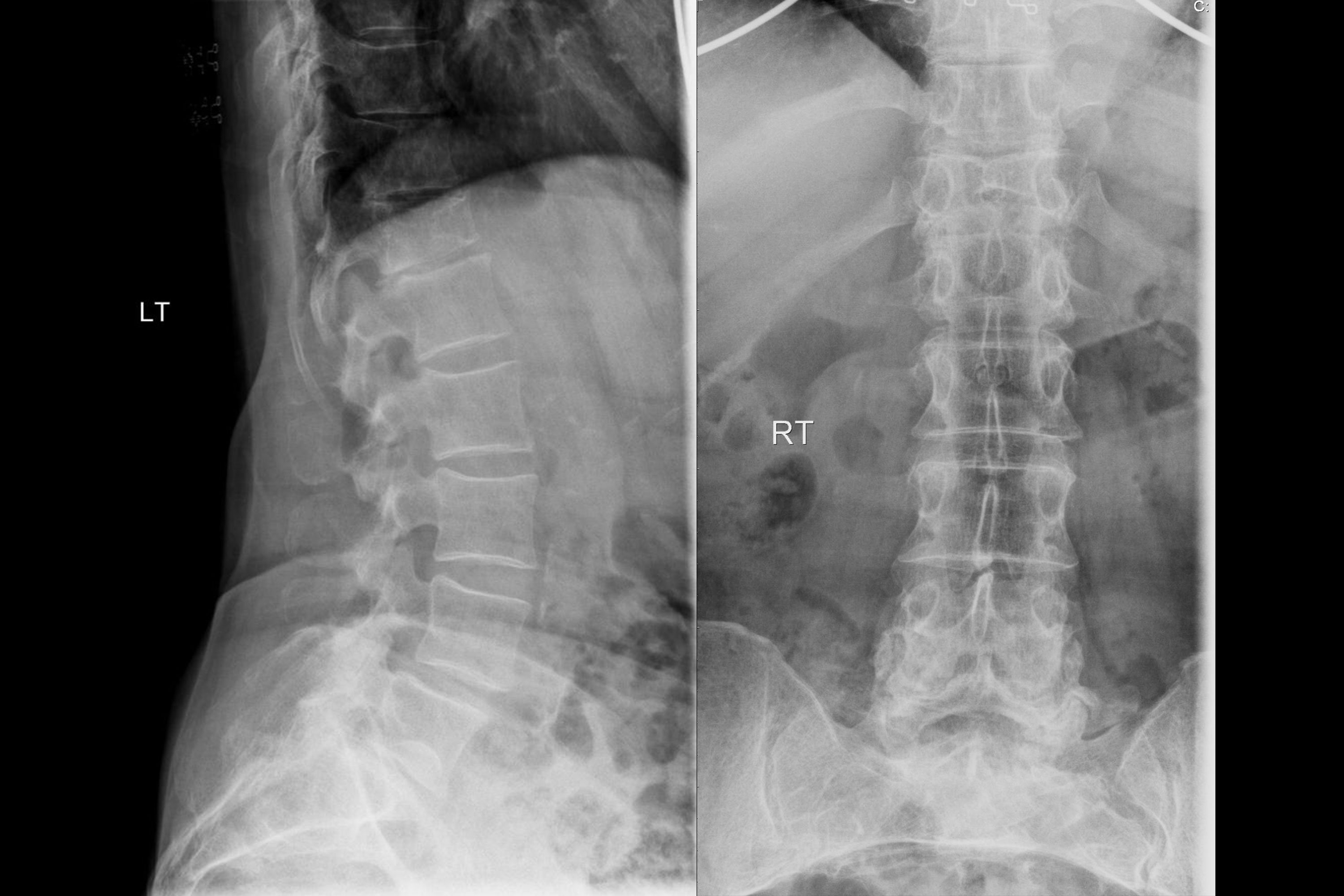
All are radiological signs of Vitamin C deficiency except:
Characteristic radiological feature of fibrous dysplasia is:
Popcorn calcification is seen in
Which of the following represents important radiological differentiating features between psoriatic arthritis, rheumatoid arthritis, and ankylosing spondylitis?
X-ray appearances of osteosarcoma are all except -
Radiographically, the lesion shown in the image could be:
What is the investigation of choice for diagnosing a stress fracture?
Dense cartilage matrix calcification is characteristically seen in
X-ray features of hypoparathyroidism are the following except:
All of the following have the same radiographic features except:
Explanation: ***Widening of epiphysis*** - This is **NOT a radiological sign of Vitamin C deficiency (scurvy)**. - In scurvy, **epiphyseal-metaphyseal separation** or **slipped epiphyses** can occur due to weakened growth plates and subperiosteal hemorrhage, but the epiphysis itself does not show widening. - Scurvy is characterized by impaired collagen synthesis leading to fragility at the growth plate zone, resulting in displacement or separation, not widening. *White line of Fränkel* - This refers to a dense, **calcified metaphyseal line** seen on radiographs, characteristic of scurvy. - It represents the zone of provisional calcification, which appears prominent due to impaired endochondral ossification in **Vitamin C deficiency**. *Wimberger line (Wimberger's sign)* - Also known as Wimberger's ring sign, this describes a **sclerotic ring of increased density** around the **epiphyseal ossification centers**. - It is caused by **subperiosteal hemorrhage** and subsequent calcification, a classic radiological sign of scurvy. *Osteoporosis of bone* - **Generalized osteopenia** (ground-glass osteoporosis) is seen in scurvy due to impaired osteoid formation and defective collagen synthesis. - This leads to decreased bone density and increased skeletal fragility, making bones more susceptible to fractures.
Explanation: ***Ground glass appearance*** - The "ground glass" appearance on **radiography** is a classic and highly characteristic feature of **fibrous dysplasia**, reflecting the immature, woven bone and fibrous tissue within the lesion. - This specific pattern results from the uniform, finely trabeculated osseous tissue that is less dense than normal bone, creating a hazy, frosted appearance. *Cortical erosion* - While significant **tumor growth** in any bone lesion can lead to cortical erosion, it is not a specific or characteristic primary feature of **fibrous dysplasia**. - **Cortical erosion** is more commonly associated with aggressive or rapidly expanding lesions, such as malignant tumors or infections. *Bone enlargement* - **Bone enlargement** can occur in fibrous dysplasia due to the expansion of the abnormal fibrous and osseous tissue, but it is a non-specific finding. - Many conditions, including various **benign** and **malignant tumors**, can cause bone enlargement, making it less diagnostic on its own. *Thickened bone matrix* - Fibrous dysplasia involves a disorganized and immature bone matrix, characterized by **woven bone**, not a thickened, well-organized normal bone matrix. - **Thickened bone matrix** may be seen in conditions like osteopetrosis or Paget's disease, which involve different pathological bone remodeling processes.
Explanation: ***Chondrosarcoma*** - **Popcorn calcification** is a classic radiographic sign frequently observed in **chondrosarcoma**, representing calcified cartilage matrix. - This type of calcification is typically seen in tumors arising from **cartilaginous tissue**. *Adamantinoma* - Adamantinoma is a rare, malignant bone tumor characterized by **epithelial cell nests** within a fibrous stroma, primarily affecting the **tibia**. - It usually presents with **lytic lesions** and often contains areas of calcification, but not typically the "popcorn" pattern. *Osteosarcoma* - Osteosarcoma is characterized by the production of **osteoid** by malignant osteoblasts. - Radiographically, it often shows a **sunburst pattern** or **Codman's triangle**, indicative of aggressive periosteal reaction and calcified tumor matrix, distinct from popcorn calcification. *Multiple myeloma* - Multiple myeloma is a **hematologic malignancy** involving plasma cells, leading to widespread osteolytic lesions. - It typically presents as **punched-out lytic lesions** without calcification or osteoblastic activity.
Explanation: ***Radiological patterns and joint distribution*** - **Radiological patterns and joint distribution** are the most important radiological differentiating features among these three arthropathies. - **Psoriatic arthritis**: Asymmetric distribution, DIP joint involvement, pencil-in-cup deformity, periostitis, and sausage digit appearance; can involve spine with asymmetric sacroiliitis and bulky syndesmophytes. - **Rheumatoid arthritis**: Symmetric polyarticular involvement of MCP, PIP, and wrist joints (DIP spared), periarticular osteoporosis, marginal erosions, uniform joint space narrowing, and subluxations. - **Ankylosing spondylitis**: Predominantly axial involvement with bilateral symmetric sacroiliitis, bamboo spine appearance, thin marginal syndesmophytes, squaring of vertebral bodies, and enthesitis. - These distinct **radiological patterns** allow differentiation based on imaging alone. *Laboratory markers and genetic associations* - While **laboratory markers** (rheumatoid factor, anti-CCP, HLA-B27) and **genetic associations** are important for diagnosis, they are **not radiological features**. - The question specifically asks for **radiological** differentiating features, making this option incorrect despite its clinical importance. - Laboratory data complements imaging but cannot be visualized on radiographs, CT, or MRI. *Clinical presentation and extra-articular features* - **Clinical presentation** and **extra-articular features** (skin psoriasis, uveitis, inflammatory bowel disease) are crucial for diagnosis but are **not radiological features**. - These are clinical findings obtained through history and physical examination, not through imaging studies. - Though they guide which imaging to order, they don't represent radiological differentiating features themselves. *Spinal involvement patterns* - While **spinal involvement patterns** are radiologically visible and help differentiate ankylosing spondylitis from rheumatoid arthritis, this option is too narrow. - It doesn't account for peripheral joint patterns which are crucial for differentiating psoriatic arthritis and rheumatoid arthritis (both can have minimal spinal involvement). - **Radiological patterns and joint distribution** is more comprehensive, encompassing both axial and peripheral manifestations across all three conditions.
Explanation: ***Soap-bubble*** - This appearance is characteristic of a **giant cell tumor**, which is a benign but locally aggressive bone tumor, often found in the **epiphysis** of long bones. - It results from multiple lucencies due to tumor cells eroding into the bone, creating a multicystic appearance. *Sunray appearance* - This describes **spicules of new bone** projecting outwards from the cortex, perpendicular to the bone surface, often seen in aggressive osteosarcomas. - It is a classic radiographic sign indicating **ossification within the soft tissue mass** of the tumor. *Codman's triangle* - This refers to an **elevated periosteum** forming a triangular area of new bone, indicating that the tumor has lifted the periosteum off the cortical surface of the bone. - It is a non-specific sign of primary bone tumor but is commonly associated with aggressive lesions like **osteosarcoma**. *Periosteal reaction* - This is a general term for the **formation of new bone** in response to periosteal irritation or elevation, which can be seen in various conditions including infection, trauma, and tumors. - In osteosarcoma, a periosteal reaction is a key finding, often presenting as a **spiculated, lamellated, or Codman's triangle pattern**, indicating an aggressive lesion.
Explanation: ***Garre's osteomyelitis*** - The radiographs show **periosteal new bone formation** resembling an **"onion skin"** appearance, which is characteristic of **Garre's osteomyelitis** (chronic osteomyelitis with proliferative periostitis). - This condition is typically a **reaction to low-grade chronic infection** or irritation, often seen in the periosteum of the mandible. *Cherubism* - Cherubism is a **fibro-osseous lesion** characterized by bilateral, symmetric enlargement of the jaws, giving a "cherubic" appearance. - Radiographically, it presents as **multilocular radiolucencies** with poorly defined borders, usually in children. *Fibrous dysplasia* - Fibrous dysplasia is a developmental anomaly where normal bone is replaced by **fibrous tissue and immature bone**. - Radiographically, it often has a **"ground glass" appearance** or a "peau d'orange" texture, differentiating it from the periosteal reaction seen in the image. *Osteosarcoma* - Osteosarcoma is a **malignant bone tumor** that typically shows a mix of osteolytic and osteoblastic areas, often with a **"sunburst" or "spiculated" periosteal reaction**. - While it involves periosteal reaction, the pattern and typical aggressive nature differ from the more layered and milder appearance of Garre's osteomyelitis.
Explanation: ***MRI*** - **Magnetic Resonance Imaging (MRI)** is the most sensitive and specific imaging modality for diagnosing **stress fractures**, especially in their early stages. - It can detect **bone marrow edema** and **periosteal reactions** indicative of stress injury before cortical changes are visible on plain radiographs. *X-ray* - **X-rays** are often the initial investigation, but they have low sensitivity for **stress fractures** in the early stages as bone changes may not be apparent for several weeks. - A positive X-ray for stress fracture typically shows a **sclerotic line** or **periosteal reaction**, but this indicates a more advanced injury. *CT scan* - **CT scans** provide excellent detail of **cortical bone** and can detect subtle fractures not seen on X-rays. - While more sensitive than X-rays, CT has **higher radiation exposure** and is generally less sensitive than MRI for early detection of **bone marrow edema** associated with stress injuries. *Bone scan* - **Bone scans** (scintigraphy) are highly sensitive for detecting increased **osteoblastic activity** associated with stress fractures. - However, they are **less specific** as various conditions can cause increased uptake, and they do not provide detailed anatomical information, making MRI superior for definitive diagnosis and staging.
Explanation: ***Chondrosarcoma*** - This is a **malignant cartilaginous tumor** that characteristically exhibits **dense cartilage matrix calcification** appearing as **ring-and-arc, flocculent, or popcorn-like** calcifications on imaging - This pattern of calcification is a key diagnostic feature differentiating it from other bone tumors - The calcification reflects the chondroid (cartilaginous) matrix produced by the tumor *Fibrosarcoma* - This is a **malignant tumor derived from fibrous tissue** and typically shows **no calcification** because it does not produce cartilage or bone matrix - Radiographically appears as a lytic, destructive lesion lacking the characteristic calcifications *Chondroblastoma* - This is a **rare benign cartilaginous tumor** usually occurring in the **epiphyses of long bones** in skeletally immature patients - While it may show calcification in ~50% of cases, it is typically **fine stippled calcification** rather than the dense ring-and-arc pattern of chondrosarcoma - Usually appears as a well-defined lytic lesion with a sclerotic rim *Osteosarcoma* - This is a **malignant bone-forming tumor** that produces **osteoid matrix calcification** appearing as **cloud-like or amorphous dense calcification** - Also shows characteristic periosteal reactions (**sunburst pattern** or **Codman's triangle**) - The calcification pattern differs from chondrosarcoma as it reflects osseous rather than cartilaginous matrix
Explanation: ***Subperiosteal resorption*** - This is a classic radiographic feature of **hyperparathyroidism**, characterized by the breakdown of bone beneath the periosteum, commonly seen in the phalanges. - In **hypoparathyroidism**, bone resorption is *decreased*, leading to increased bone density or **osteosclerosis**, not resorption. *Calvarial thickening* - **Calvarial thickening** can be observed in hypoparathyroidism due to altered bone remodeling processes resulting from chronic low parathyroid hormone (PTH) levels. - The absence of PTH leads to **decreased osteoclastic activity**, promoting bone accumulation. *Subcutaneous calcification* - **Subcutaneous calcification** occurs in hypoparathyroidism due to chronic **hyperphosphatemia** and **hypocalcemia**. - This imbalance can lead to the precipitation of **calcium phosphate crystals** in soft tissues. *Osteosclerosis* - **Osteosclerosis** is a direct consequence of chronic hypoparathyroidism, as the low PTH levels lead to **reduced bone turnover** and decreased osteoclast activity. - This results in an **increase in bone density**, making the bones appear denser on X-ray.
Explanation: ***Odontoma*** - This is the **correct answer** as it is the exception among the listed lesions. - Odontoma is a **benign odontogenic tumor** composed of mature enamel, dentin, cementum, and pulp tissue, which radiographically appears as a **radiopaque mass** (tooth-like structure) often associated with an impacted tooth. - Unlike the other three options which are all **radiolucent**, odontoma's distinct **radiopacity** differentiates it from the predominantly radiolucent cystic and tumoral lesions. *Keratocyst* - This lesion typically presents as a **well-defined, unilocular or multilocular radiolucency** with a smooth, corticated margin. - It does not contain radiopaque calcifications or tooth-like structures. - **Radiographically radiolucent** - similar to the other incorrect options. *Dentigerous cyst* - This cyst is classically seen as a **well-defined, unilocular radiolucency** surrounding the crown of an unerupted or impacted tooth. - Like other cysts, it is predominantly **radiolucent** and lacks internal radiopacities. *Ameloblastoma* - This is a **benign but locally invasive odontogenic tumor** that radiographically appears as a **multilocular ("soap bubble" or "honeycomb") or unilocular radiolucency**. - It is distinctively **radiolucent** and does not exhibit the radiopaque features of tooth-forming lesions.
Radiographic Anatomy of Bones and Joints
Practice Questions
Imaging of Fractures and Dislocations
Practice Questions
Arthritides: Inflammatory and Degenerative
Practice Questions
Metabolic Bone Diseases
Practice Questions
Bone and Soft Tissue Tumors
Practice Questions
Congenital Skeletal Anomalies
Practice Questions
Spine Imaging
Practice Questions
Skeletal Infections
Practice Questions
Sports Medicine Imaging
Practice Questions
Imaging of Prostheses and Implants
Practice Questions
Musculoskeletal Ultrasound
Practice Questions
MSK Interventional Procedures
Practice Questions
Get full access to all questions, explanations, and performance tracking.
Start For Free