What is the normal metacarpal index?
Subperiosteal erosion is seen in which of the following conditions?
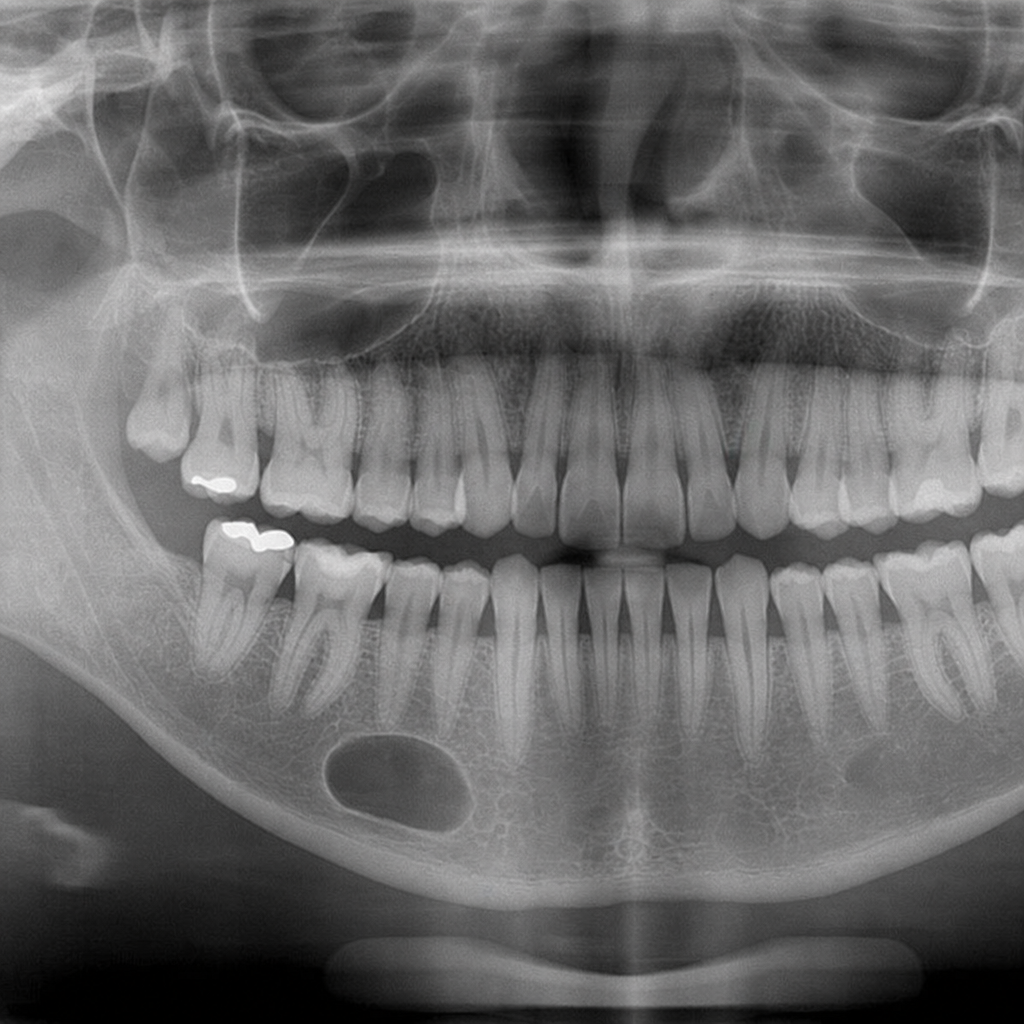
Raindrop skull is seen in which of the following conditions?
Which of the following is NOT a radiological feature of rickets?
All of the following are X-ray findings of Rheumatoid Arthritis except?
Subperiosteal resorption, most apparent on the radial aspect of the middle phalanx of the second and third fingers, is characteristic of which condition?
What is the earliest radiological change observed in rheumatoid arthritis (RA)?
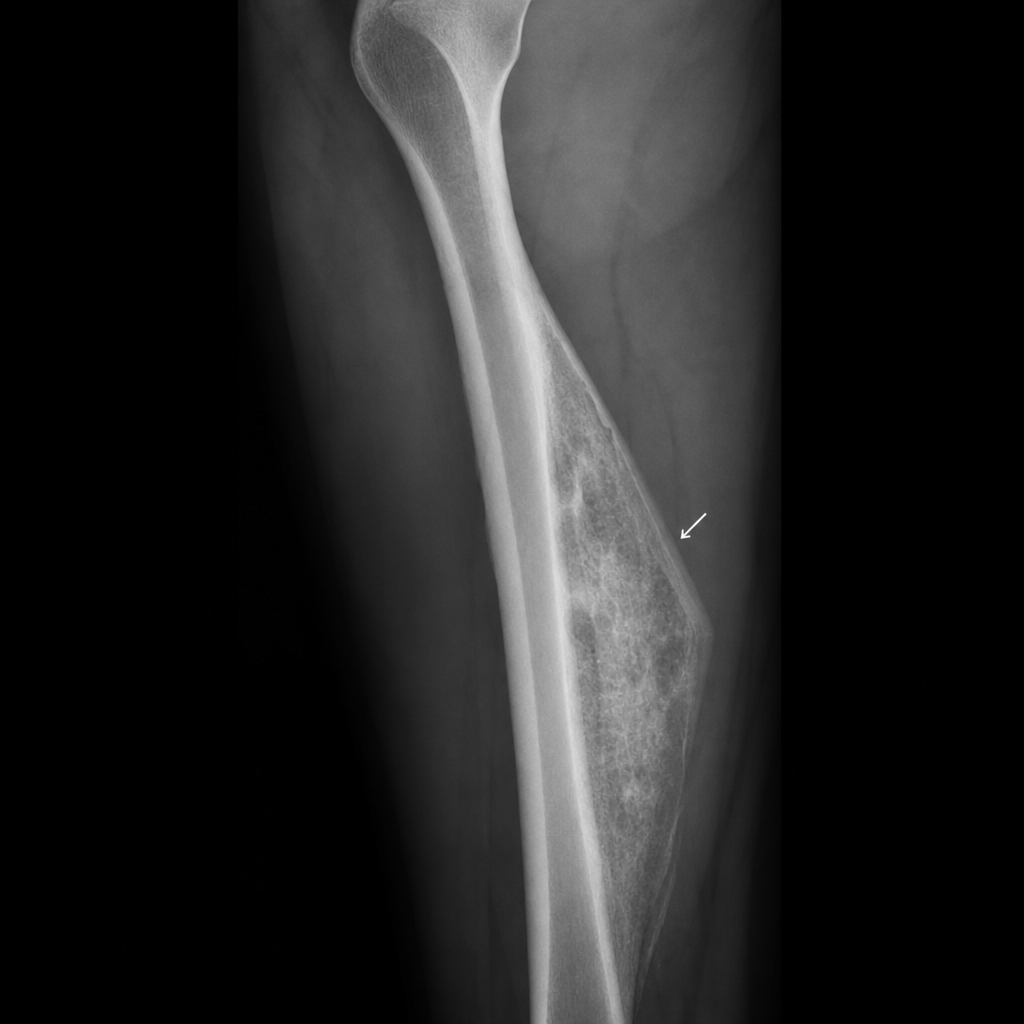
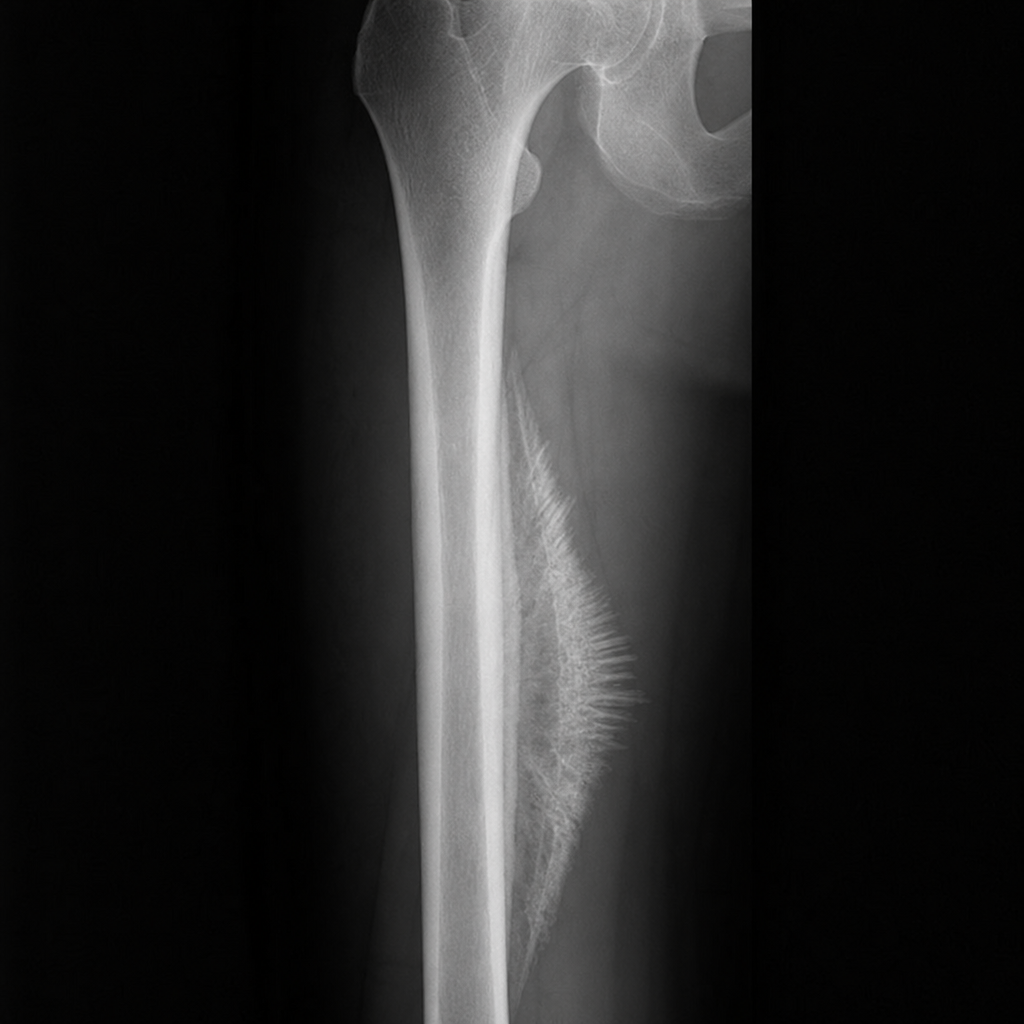
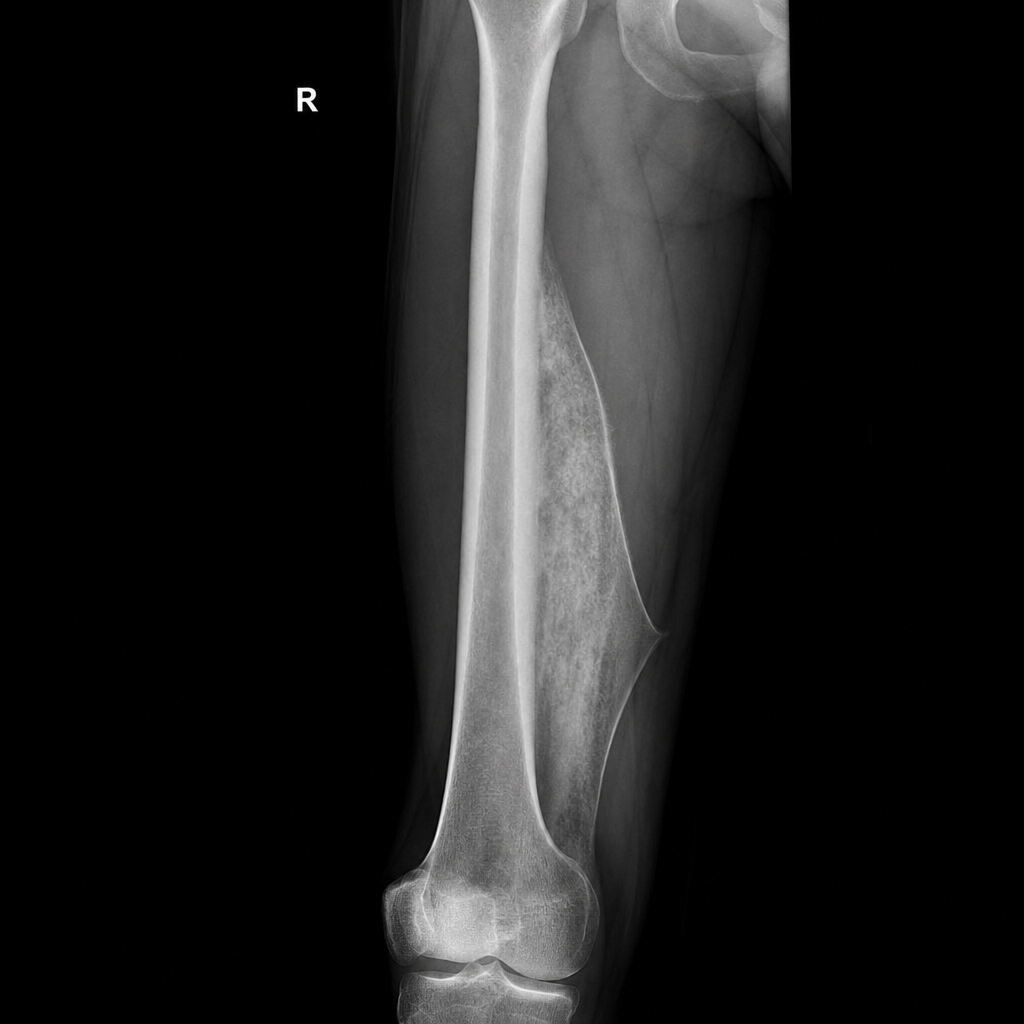
The most likely pathology associated with the following radiograph is:

All of the following are radiological signs of scurvy except?
Anterior scalloping of vertebrae is seen in which of the following conditions?
Explanation: The **Metacarpal Index (MCI)** is a radiographic measurement used to assess for arachnodactyly (abnormally long and slender fingers), a hallmark feature of connective tissue disorders like Marfan Syndrome. ### **Explanation of the Correct Answer** The MCI is calculated using a PA view of the hand. It is the average of the ratios of the length to the mid-shaft width of the **2nd, 3rd, 4th, and 5th metacarpals**. * **Normal Range:** In healthy individuals, the average index typically falls between **5.4 and 7.9**. * Values within this range indicate normal bone proportions relative to body habitus. ### **Analysis of Incorrect Options** * **Option A (< 5.4):** This would indicate "short" metacarpals (brachydactyly), which is not the focus of this clinical index. * **Option C (8.4 to 10.4):** This range is considered diagnostic for **Arachnodactyly**. An MCI greater than 8.4 (in some texts >8.0) is a highly suggestive radiological sign of Marfan Syndrome. * **Option D (> 10.4):** This represents extreme elongation, seen in severe cases of Marfan Syndrome or Homocystinuria. ### **NEET-PG High-Yield Pearls** * **Clinical Association:** A high Metacarpal Index is most commonly associated with **Marfan Syndrome**. It can also be seen in **Homocystinuria** and **Ehlers-Danlos Syndrome**. * **Other Signs of Arachnodactyly:** 1. **Steinberg Sign (Thumb Sign):** The thumb tip extends beyond the ulnar border of the clenched fist. 2. **Walker-Murdoch Sign (Wrist Sign):** The thumb and fifth finger overlap when encircling the opposite wrist. * **Radiology Tip:** While MCI is a classic exam question, it is less commonly used in modern clinical practice compared to genetic testing and echocardiography for Marfan diagnosis.
Explanation: ### Explanation **Correct Answer: B. Hyperparathyroidism** **Mechanism:** Subperiosteal bone resorption is the **pathognomonic** radiographic feature of hyperparathyroidism (HPT). Excess Parathyroid Hormone (PTH) stimulates osteoclastic activity, primarily at the subperiosteal surface where bone turnover is high. This typically manifests first along the **radial aspect of the middle phalanges** of the 2nd and 3rd fingers. As it progresses, it can lead to the "acro-osteolysis" (tuft resorption) and the characteristic "Salt and Pepper" appearance of the skull. **Why other options are incorrect:** * **Scurvy (Vitamin C deficiency):** Characterized by defective collagen synthesis. Key radiological signs include the **White line of Frankel** (dense zone of provisional calcification), **Wimberger’s ring** (sclerotic margin around epiphysis), and **Pelkan spurs**. * **Hypoparathyroidism:** Usually presents with increased bone density (osteosclerosis) or soft tissue/basal ganglia calcification, rather than erosions. * **Rickets (Vitamin D deficiency):** Primarily affects the growth plate (metaphysis) in children. Classic signs are **cupping, splaying, and fraying** of the metaphyses, and widening of the growth plate. **High-Yield Clinical Pearls for NEET-PG:** * **Rugger-Jersey Spine:** Sclerotic bands at vertebral endplates, seen in secondary hyperparathyroidism (Renal Osteodystrophy). * **Brown Tumors:** Osteoclastomas (lytic lesions) seen in advanced HPT; they are not true neoplasms but reactive lesions. * **Looser’s Zones (Pseudofractures):** Narrow radiolucent lines oriented perpendicular to the cortex, pathognomonic for **Osteomalacia/Rickets**. * **Sequence of Resorption in HPT:** Subperiosteal (most specific) → Intracortical (tunneling) → Endosteal → Subchondral (at SI joints/AC joints).
Explanation: **Explanation:** The **"Raindrop Skull"** is a classic radiological sign pathognomonic for **Multiple Myeloma**. It refers to multiple, well-defined, "punched-out" osteolytic lesions of varying sizes scattered throughout the calvarium. These lesions are caused by the proliferation of malignant plasma cells in the bone marrow, which secrete osteoclast-activating factors (like RANKL), leading to focal bone destruction without any surrounding osteoblastic (sclerotic) reaction. **Analysis of Options:** * **Multiple Myeloma (Correct):** The hallmark is the presence of multiple lytic lesions. On a lateral skull X-ray, these appear as dark (radiolucent) spots resembling raindrops hitting a surface. * **Burkitt’s Lymphoma:** Typically presents with a rapidly enlarging mass, often involving the jaw (endemic form) or abdomen (sporadic form). Radiologically, it may show bone destruction, but not the classic "raindrop" pattern. * **Hodgkin’s Lymphoma:** Bone involvement is less common and usually presents as **osteoblastic** (sclerotic) lesions, such as the "Ivory Vertebra," rather than diffuse punched-out lytic lesions. * **Haemophilia:** Musculoskeletal involvement primarily manifests as **haemarthrosis** (bleeding into joints), leading to joint destruction, subchondral cysts, and "squared-off" patella, but not calvarial lytic lesions. **High-Yield Clinical Pearls for NEET-PG:** * **Skull X-ray vs. Bone Scan:** In Multiple Myeloma, a **Skeletal Survey (X-ray)** is preferred over a Bone Scan. Bone scans depend on osteoblastic activity, which is absent in myeloma, often leading to false negatives ("Cold Scan"). * **Pepperpot Skull:** Do not confuse "Raindrop Skull" with "Pepperpot Skull" (salt-and-pepper appearance), which is seen in **Hyperparathyroidism** due to diffuse trabecular resorption. * **Other Myeloma Signs:** Look for "punched-out" lesions in long bones and "vertebra plana" (collapsed vertebra).
Explanation: **Explanation:** Rickets is characterized by a failure of osteoid mineralization at the growth plate (physis) due to Vitamin D deficiency or metabolic disturbances. Understanding the pathophysiology is key: the lack of mineralization leads to an accumulation of non-calcified cartilage and osteoid, causing the growth plate to become **widened and thickened**, not narrow. **Why Option B is Correct:** * **Narrow growth plate:** In rickets, there is a failure of the zone of provisional calcification. This leads to an overgrowth of disorganized chondrocytes, which clinically and radiologically manifests as a **widened (increased) physeal space**. Therefore, a "narrow" growth plate is the opposite of what is seen in rickets. **Why Other Options are Incorrect:** * **Frayed and widened metaphysis (Option C):** The metaphysis loses its sharp margin and appears "shaggy" or "moth-eaten" (fraying) due to disorganized osteoid. It widens because the uncalcified bone spreads laterally under weight-bearing stress. * **Metaphyseal cupping (Option D):** As the softened metaphysis is compressed by the adjacent epiphysis and muscular pull, it assumes a concave or "cup-like" configuration. * **Ill-defined epiphysis (Option A):** The ossification centers (epiphyses) appear delayed, small, or have hazy borders due to poor mineralization. **NEET-PG High-Yield Pearls:** * **Earliest sign:** Fraying and cupping are most prominent at the fastest-growing ends (e.g., distal radius/ulna, proximal humerus, and distal femur). * **Rachitic Rosary:** Palpable enlargement of the costochondral junctions. * **Harrison’s Groove:** A horizontal depression along the lower border of the chest. * **Healing sign:** The first sign of healing on X-ray is the reappearance of the **Zone of Provisional Calcification**.
Explanation: **Explanation:** Rheumatoid Arthritis (RA) is a chronic, systemic inflammatory disease characterized by **erosive synovitis**. The hallmark of RA is the destruction of bone and cartilage, rather than the formation of new bone. **Why Option C is the Correct Answer:** **Periarticular new bone formation** (osteophytes) is a characteristic feature of **Osteoarthritis (OA)**, not Rheumatoid Arthritis. In RA, the inflammatory process leads to bone resorption and destruction. The presence of new bone formation or sclerosis actually helps differentiate OA or Seronegative Spondyloarthropathies (like Psoriatic Arthritis) from RA. **Analysis of Incorrect Options:** * **A. Reduced joint space:** This occurs due to the destruction of articular cartilage by the inflammatory "pannus." In RA, this is typically **uniform** (symmetric) joint space narrowing. * **B. Soft tissue swelling:** This is often the **earliest radiographic sign** of RA, representing fusiform swelling around the joints (e.g., PIP and MCP joints) due to synovial inflammation and effusion. * **D. Subchondral cyst:** Also known as "geodes," these occur when synovial fluid is forced into the bone through surface erosions. **NEET-PG High-Yield Pearls:** 1. **Earliest Sign:** Soft tissue swelling. 2. **Earliest Bone Sign:** Periarticular osteopenia (juxta-articular demineralization). 3. **Pathognomonic Sign:** Marginal erosions (occurring at the "bare areas" where bone is not covered by cartilage). 4. **Key Exclusion:** RA characteristically **spares the DIP joints** (unlike OA and Psoriatic Arthritis). 5. **Deformities:** Look for Ulnar deviation at MCP, Boutonniere, and Swan-neck deformities in late stages.
Explanation: **Explanation:** **Hyperparathyroidism (HPT)** is the correct answer because **subperiosteal bone resorption** is considered the most specific radiographic hallmark of this condition. It occurs due to excessive Parathyroid Hormone (PTH) stimulating osteoclastic activity. While it can occur at various sites (like the phalanges, distal clavicles, and lamina dura of teeth), it is most classically and earliest seen on the **radial aspect of the middle phalanges of the 2nd and 3rd fingers**. **Analysis of Incorrect Options:** * **Hyperthyroidism:** While it can cause increased bone turnover and osteoporosis, it does not typically present with the focal subperiosteal resorption patterns seen in HPT. * **Osteoporosis:** This involves a generalized decrease in bone mass (quantitative loss) rather than the localized cortical erosions characteristic of HPT. * **Osteogenesis Imperfecta:** This is a genetic collagen disorder characterized by "brittle bones," blue sclera, and multiple fractures, but not specific subperiosteal resorption. **High-Yield NEET-PG Pearls for Hyperparathyroidism:** 1. **Rugger-Jersey Spine:** Sclerotic bands at the superior and inferior endplates of vertebrae (classic in Secondary HPT/Renal Osteodystrophy). 2. **Salt and Pepper Skull:** Multiple tiny lucencies in the calvarium. 3. **Brown Tumors (Osteoclastomas):** Well-defined lytic lesions (not true neoplasms) caused by rapid bone resorption. 4. **Acro-osteolysis:** Resorption of the terminal tufts of the phalanges. 5. **Soft Tissue Calcification:** Often seen in secondary HPT due to high calcium-phosphate product.
Explanation: **Explanation:** In Rheumatoid Arthritis (RA), the primary pathology is **chronic synovitis**. The inflammatory process leads to increased vascularity and the release of cytokines (like IL-1 and TNF-alpha) in the synovial membrane. This hypervascularity and localized inflammation cause rapid demineralization of the bone immediately adjacent to the inflamed joint, manifesting as **Periarticular Osteopenia** (also known as juxta-articular osteoporosis). This is the **earliest** radiographic sign, often appearing before any structural damage occurs. **Analysis of Incorrect Options:** * **Decreased joint space:** This occurs later as the inflammatory "pannus" destroys the articular cartilage. While a hallmark of RA, it follows the initial osteopenic changes. * **Articular erosion:** These are "marginal erosions" occurring at the "bare areas" (where bone is not covered by cartilage). While highly characteristic and diagnostic of RA, they appear after the initial osteopenia. * **Subchondral cyst:** Also known as geodes, these occur in later stages due to the transmission of intra-articular pressure through eroded cartilage into the bone. They are more common in osteoarthritis but can be seen in advanced RA. **NEET-PG High-Yield Pearls:** * **Earliest Sign (Overall):** Soft tissue swelling (fusiform/spindle-shaped). * **Earliest Bone Change:** Periarticular osteopenia. * **Most Characteristic Sign:** Marginal erosions (first seen at the MCP and PIP joints). * **Distribution:** RA typically involves the MCP, PIP, and MTP joints while **sparing the DIP joints** (unlike Osteoarthritis and Psoriatic Arthritis). * **MRI** is the most sensitive modality to detect early RA (shows bone marrow edema before X-ray changes).
Explanation: ***Garre's osteomyelitis*** - Characterized by **dense sclerosis**, **cortical thickening**, and prominent **periosteal reaction** without evidence of **sequestrum formation** or pus collection. - Also known as **sclerosing non-suppurative osteomyelitis**, it presents with characteristic **onion-peel** periosteal layering and absence of bone destruction. *Chronic suppurative (or rarefying) osteomyelitis* - Shows **bone destruction** with **sequestrum formation** and **involucrum** development, which are absent in this case. - Typically demonstrates **lytic lesions** with areas of bone necrosis and pus formation. *Acute osteomyelitis* - Presents with **bone marrow edema**, **soft tissue swelling**, and early **osteolytic changes** without significant sclerosis. - Lacks the characteristic **dense sclerotic reaction** and organized periosteal response seen here. *Sclerosing osteomyelitis* - This is a **broader category** that encompasses various sclerotic bone infections including Garre's osteomyelitis. - **Garre's osteomyelitis** is a specific subtype within sclerosing osteomyelitis, making it the more precise diagnosis in the Indian PG context.
Explanation: The correct answer is **Cupping and Fraying**, as these are the hallmark radiological features of **Rickets**, not Scurvy. ### 1. Why "Cupping and Fraying" is the Correct Answer In **Rickets**, there is a failure of mineralization of the osteoid matrix. This leads to the expansion of the growth plate and the characteristic "cupping" (concave deformity of the metaphysis) and "fraying" (shaggy, irregular margins) due to disorganized osteoid tissue. ### 2. Explanation of Scurvy Signs (Incorrect Options) Scurvy is caused by Vitamin C deficiency, leading to defective collagen synthesis and suppressed osteoblastic activity, but **preserved calcification**. * **White Line of Frankel (A):** This is a dense, radiopaque line at the metaphysis representing a zone of well-calcified provisional cartilage that hasn't been converted to bone. * **Ground Glass Appearance (C):** Due to the failure of osteoid formation, the trabecular pattern is lost, giving the epiphysis and diaphysis a hazy, "ground glass" translucency. * **Zone of Rarefaction (D):** Also known as the **Trummerfeld zone**, this is a lucent (dark) band just proximal to the White Line of Frankel, representing a site of scorbutic lattice fractures. ### 3. High-Yield Clinical Pearls for NEET-PG * **Wimberger’s Sign:** A thin, sclerotic rim surrounding a lucent epiphysis (resembling a "halo"). * **Pelkan Spur:** Lateral bony outgrowths at the metaphysis due to healing fractures. * **Subperiosteal Hemorrhage:** A classic clinical feature; while not immediately visible on X-ray, it causes significant pain and later shows calcification during healing. * **Key Differentiator:** Scurvy presents with **increased density** (White line), whereas Rickets presents with **decreased density** and irregular margins (Fraying) at the metaphysis.
Explanation: **Explanation:** **Vertebral scalloping** refers to the exaggeration of the normal concave appearance of the vertebral body. While posterior scalloping is more common (often due to intraspinal masses), **anterior scalloping** is typically caused by extrinsic pressure from adjacent structures. **Why Renal Cell Carcinoma (RCC) is correct:** RCC is a highly vascular tumor known for its propensity to cause **lymphadenopathy**. In the lumbar region, massive para-aortic lymph node enlargement (common in RCC) exerts chronic extrinsic pressure on the anterior surface of the vertebrae. Over time, this pressure leads to bone resorption, manifesting as anterior scalloping. **Analysis of Incorrect Options:** * **A. Osteogenesis Imperfecta:** This condition is associated with generalized osteopenia and "codfish vertebrae" (biconcave deformities) due to compression fractures, not localized anterior scalloping. * **B. Aortic Aneurysm:** While a classic cause of anterior scalloping (due to chronic pulsatile pressure), it is typically associated with **Abdominal Aortic Aneurysms (AAA)**. However, in the context of this specific question and standard NEET-PG patterns, RCC-induced lymphadenopathy is a frequently tested cause for this radiological sign. * **C. Metastasis:** Most spinal metastases (e.g., breast or lung) cause bone destruction (lytic) or formation (blastic) and often involve the pedicles. They do not typically present with smooth anterior scalloping. **High-Yield Clinical Pearls for NEET-PG:** 1. **Causes of Anterior Scalloping:** Aortic aneurysm (most common), Tuberculous abscess (Pott’s spine), and Lymphadenopathy (Lymphoma or RCC). 2. **Causes of Posterior Scalloping:** Increased intraspinal pressure (Ependymoma, Syringomyelia), Achondroplasia, and Marfan Syndrome (Dural ectasia). 3. **Ivory Vertebra:** Think of Hodgkin’s Lymphoma, Paget’s disease, or Osteoblastic metastasis (Prostate cancer). 4. **Picture Frame Vertebra:** Pathognomonic for Paget’s disease.
Radiographic Anatomy of Bones and Joints
Practice Questions
Imaging of Fractures and Dislocations
Practice Questions
Arthritides: Inflammatory and Degenerative
Practice Questions
Metabolic Bone Diseases
Practice Questions
Bone and Soft Tissue Tumors
Practice Questions
Congenital Skeletal Anomalies
Practice Questions
Spine Imaging
Practice Questions
Skeletal Infections
Practice Questions
Sports Medicine Imaging
Practice Questions
Imaging of Prostheses and Implants
Practice Questions
Musculoskeletal Ultrasound
Practice Questions
MSK Interventional Procedures
Practice Questions
Get full access to all questions, explanations, and performance tracking.
Start For Free