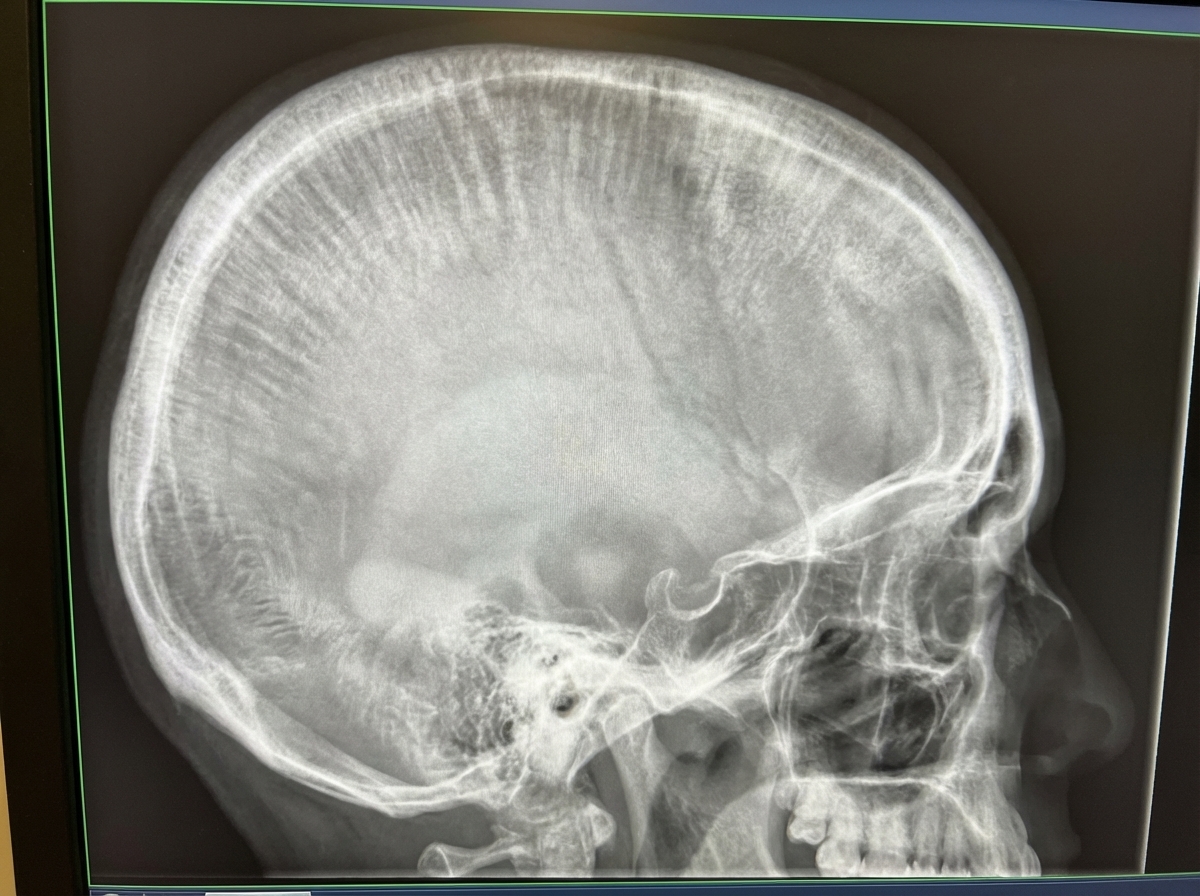
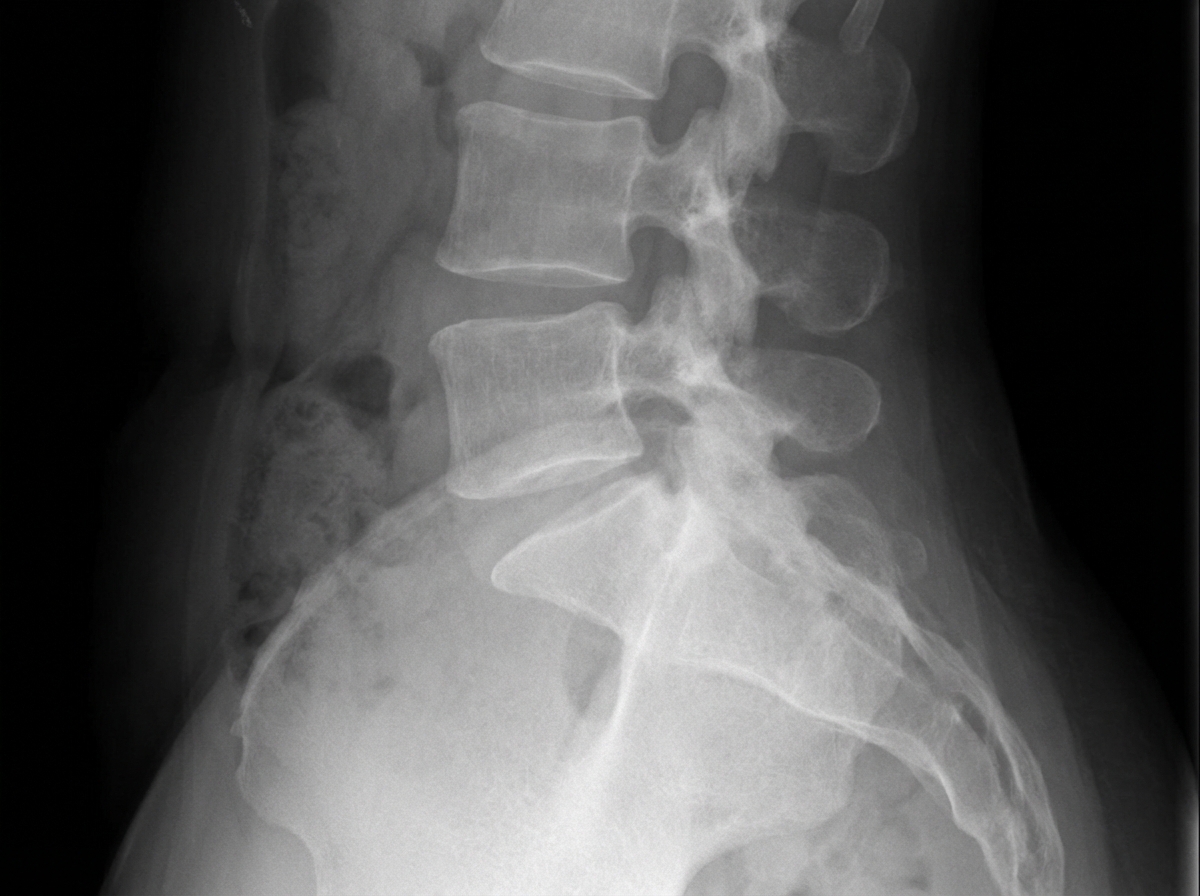
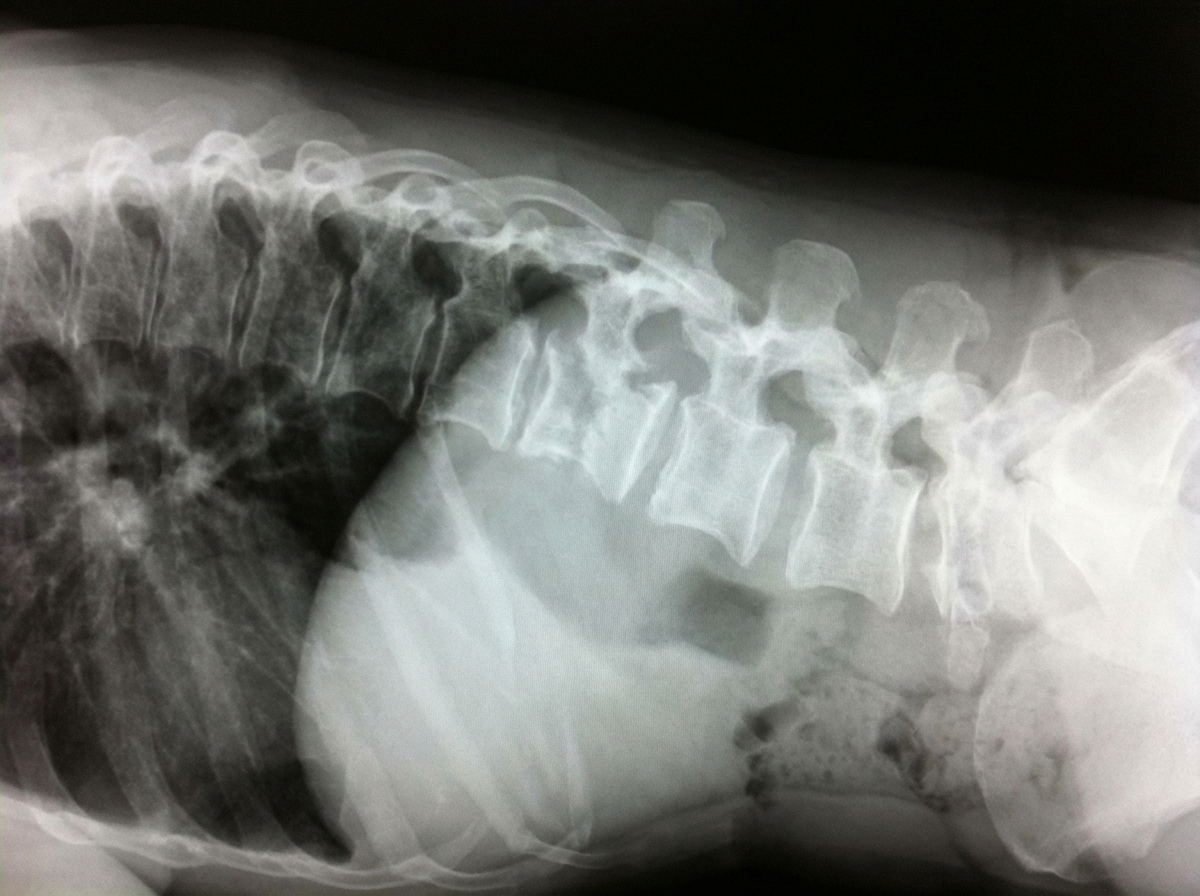
Multiple punched-out lesions on skull X-ray are found in which condition?
Frenkel's line is seen in which condition?
Hair on end appearance is seen in which of the following conditions?
Which of the following is NOT a radiological feature of scleroderma?
The "Double PCL" sign on MRI knee is typically seen in which of the following conditions?
Which is the earliest radiologic feature of bone infection?
An 'H' shaped vertebra is characteristic of which condition?
Punctuated lesions and floating teeth are seen in which of the following conditions?
Which of the following is NOT a radiological feature seen on an X-ray?
Bilateral symmetrical sacroiliitis is a hallmark of which condition?
Explanation: **Explanation:** **Multiple Myeloma (Correct Answer):** The classic radiological hallmark of Multiple Myeloma is the presence of multiple, well-circumscribed, "punched-out" lytic lesions. These occur due to the proliferation of neoplastic plasma cells in the bone marrow, which secrete osteoclast-activating factors (like RANK-L). This leads to focal bone destruction without any surrounding osteoblastic reaction (sclerosis), giving the lesions their sharp, clean edges on a skull X-ray. **Why other options are incorrect:** * **Down Syndrome:** This is a chromosomal disorder (Trisomy 21). Radiological findings in the skull typically include brachycephaly, delayed closure of sutures, and hypoplasia of the midface/nasal bone, rather than lytic lesions. * **Hyperparathyroidism:** While this condition involves bone resorption, it typically presents with a **"Salt and Pepper" skull** (granular decalcification) rather than discrete punched-out holes. Other features include subperiosteal bone resorption (especially in phalanges) and Brown tumors. **High-Yield Clinical Pearls for NEET-PG:** * **Raindrop Skull:** Another term used to describe the appearance of Multiple Myeloma on a lateral skull X-ray. * **Cold Bone Scan:** Despite extensive bone destruction, Multiple Myeloma often shows "cold" spots on a Technetium-99m bone scan because there is a lack of osteoblastic activity. Skeletal survey (X-ray) or MRI is preferred. * **Bence-Jones Proteins:** These are free light chains found in the urine of myeloma patients; they do not show up on a standard dipstick (which detects albumin). * **M-Spike:** Seen on serum protein electrophoresis (SPEP), usually representing IgG or IgA.
Explanation: **Explanation:** **Frankel’s Line** (also known as the White Line of Frankel) is a classic radiological sign of **Scurvy** (Vitamin C deficiency). It represents a dense, radiopaque transverse band at the zone of provisional calcification in the metaphysis. This occurs because Vitamin C deficiency impairs osteoid formation, but calcification of the cartilaginous matrix continues, leading to an accumulation of mineralized matrix that appears hyperdense on X-ray. **Why the other options are incorrect:** * **Rickets:** Characterized by a *lack* of mineralization of the osteoid. Key radiological findings include cupping, fraying, and splaying of the metaphyses, and an increased physeal width. The zone of provisional calcification is typically blurred or absent, rather than dense. * **Osteomalacia:** This is the adult counterpart of Rickets. It is characterized by generalized osteopenia and **Looser’s zones** (pseudofractures), not dense metaphysical lines. **High-Yield Clinical Pearls for Scurvy (NEET-PG):** In addition to Frankel’s line, look for these "Scurvy signs" on X-rays: 1. **Wimberger’s Ring Sign:** A dense sclerotic rim surrounding a lucent center in the epiphysis. 2. **Pelkan Spur:** Marginal metaphyseal osteophytes (spurs) caused by healing periosteal hemorrhages. 3. **Trummerfeld Zone:** A lucent (scorbutic) zone proximal to Frankel’s line, representing a site of microfractures. 4. **Subperiosteal Hemorrhage:** Leads to lifting of the periosteum, which becomes visible upon healing/calcification.
Explanation: **Explanation:** The **"Hair-on-end" appearance** (also known as the crew-cut sign) is a classic radiological finding seen on a lateral skull X-ray. It occurs due to **compensatory extramedullary hematopoiesis** in response to chronic hemolytic anemias. 1. **Why Thalassemia is correct:** In Thalassemia major, the body attempts to compensate for chronic anemia by expanding the bone marrow. This leads to the widening of the diploic space of the skull. The outer table of the skull becomes thinned, and new bone is laid down in vertical striations (trabeculae) perpendicular to the inner table, creating the appearance of hair standing on end. 2. **Why other options are incorrect:** * **Dermoid cyst:** Typically presents as a well-circumscribed, "punched-out" lytic lesion on the skull, often near the midline or sutures, but does not cause diffuse trabecular verticalization. * **Kwashiorkor:** While it affects bone density and growth (e.g., thinning of cortex), it does not trigger the massive marrow hyperplasia required for this sign. * **Tinea capitis:** This is a fungal infection of the scalp/hair shafts and is a clinical diagnosis; it does not involve the underlying calvarium. **High-Yield Clinical Pearls for NEET-PG:** * **Differential Diagnosis:** Besides Thalassemia, the hair-on-end appearance can also be seen in **Sickle Cell Anemia**, **Hereditary Spherocytosis**, and occasionally in Iron Deficiency Anemia (rarely). * **Associated Finding:** In Thalassemia, the **maxillary marrow expansion** leads to "chipmunk facies" (prominent cheekbones and malocclusion). * **Key Distinction:** Unlike Thalassemia, Sickle Cell Anemia often spares the mandible but may show "H-shaped" vertebrae (Reynold’s sign) due to infarction.
Explanation: **Explanation:** **Scleroderma (Systemic Sclerosis)** is a multisystem connective tissue disorder characterized by fibrosis and vascular abnormalities. The correct answer is **D (Bullet-shaped vertebra)** because this is a classic radiological feature of **Achondroplasia** and certain **Mucopolysaccharidoses** (like Hurler syndrome), not scleroderma. **Analysis of Options:** * **Acroosteolysis (Option A):** This refers to the resorption of the distal phalangeal tufts. In scleroderma, it occurs due to chronic ischemia from Raynaud’s phenomenon and digital vasculopathy. It is a hallmark finding. * **Calcinosis (Option B):** Part of the **CREST syndrome**, these are soft tissue calcifications (Calcinosis cutis) typically found in the periarticular regions of the fingers and pressure points like the elbows. * **Erosion of superior aspect of ribs (Option C):** This is a specific, high-yield radiological sign of scleroderma. It typically involves the posterior aspects of the 3rd to 6th ribs due to intercostal muscle atrophy and pressure from the overlying skin. **Clinical Pearls for NEET-PG:** * **CREST Syndrome:** Calcinosis, Raynaud’s, Esophageal dysmotility, Sclerodactyly, Telangiectasia. * **Gastrointestinal:** "Hide-bound" appearance of the small bowel (closely packed valvulae conniventes) and wide-mouthed sacculations (pseudodiverticula) in the colon. * **Pulmonary:** NSIP (Non-specific Interstitial Pneumonia) is the most common pattern of lung involvement. * **Mandible:** Symmetrical widening of the periodontal ligament space is a characteristic dental finding.
Explanation: The **"Double PCL" sign** is a classic radiological finding on sagittal MRI of the knee, highly specific for a **bucket-handle tear of the medial meniscus**. ### Why Medial Meniscus Tear is Correct A bucket-handle tear occurs when a longitudinal tear allows the inner fragment of the meniscus to displace centrally into the intercondylar notch. When this happens to the **medial meniscus**, the displaced fragment comes to lie anterior and inferior to the Posterior Cruciate Ligament (PCL). On a sagittal MRI slice, this fragment mimics the appearance of the PCL, creating a "double" contour. ### Why Other Options are Incorrect * **Lateral Meniscus Tear:** While bucket-handle tears can occur in the lateral meniscus, they rarely produce a "Double PCL" sign. This is because the Anterior Cruciate Ligament (ACL) usually prevents the lateral meniscus fragment from displacing far enough medially to sit in front of the PCL. * **PCL Tear:** A PCL tear would result in a loss of the ligament's normal taut, dark signal or a frank discontinuity, rather than a duplication of the structure. * **ACL Tear:** While ACL tears are frequently associated with meniscal injuries, the "Double PCL" sign specifically requires an intact ACL. If the ACL is torn, the displaced meniscal fragment may sit in a different position, and the classic "double" appearance is often lost. ### High-Yield Clinical Pearls for NEET-PG * **Specificity:** The Double PCL sign has a specificity of nearly 100% for a medial bucket-handle tear. * **Prerequisite:** For this sign to be visible, the **ACL must be intact**. * **Other Meniscal Signs:** * **Fragment-in-notch sign:** General term for a displaced meniscal fragment. * **Double Delta sign:** Seen in displaced tears of the lateral meniscus. * **Absent bow-tie sign:** Suggests a bucket-handle tear when fewer than two sagittal slices show a normal meniscal body.
Explanation: **Explanation:** In the context of acute osteomyelitis, the earliest radiologic changes are subtle and involve the surrounding soft tissues rather than the bone itself. **1. Why Soft Tissue Edema is Correct:** Soft tissue swelling and the obliteration of normal fat planes are the **earliest** radiographic signs, typically appearing within **3 to 5 days** of the onset of infection. This occurs because the inflammatory process causes localized hyperemia and fluid accumulation in the soft tissues adjacent to the infected bone before significant mineral loss occurs in the bone matrix. **2. Why the Other Options are Incorrect:** * **Destructive Lytic Lesion:** Bone destruction (radiolucency) only becomes visible on a plain X-ray after **30% to 50%** of the bone mineral content has been lost. This process usually takes **7 to 14 days** in children and even longer in adults. * **Periosteal Reaction:** This represents the bone's attempt to heal or contain the infection. It typically appears **10 to 14 days** after the initial insult as the lifting of the periosteum by pus or edema leads to new bone formation. * **Appearance of Sequestra:** A sequestrum (a piece of dead bone detached from healthy bone) is a feature of **chronic osteomyelitis**. It takes weeks to develop and is never an early sign. **Clinical Pearls for NEET-PG:** * **Earliest Imaging Modality:** While X-ray shows soft tissue edema first, **MRI** is the most sensitive and earliest imaging modality overall (detecting changes within 24–48 hours). * **Triple Phase Bone Scan:** Shows increased uptake in all three phases; it is highly sensitive but less specific than MRI. * **Sequence of X-ray findings:** Soft tissue swelling (3-5 days) → Periosteal reaction (7-10 days) → Lytic destruction (14 days).
Explanation: **Explanation:** The **'H' shaped vertebra** (also known as **Reynold’s sign** or Codfish vertebra) is a classic radiological hallmark of **Sickle Cell Anemia**. **Why it occurs:** The deformity is caused by **microvascular occlusion** of the small end-arteries (branches of the nutrient artery) that supply the central portion of the vertebral endplates. This leads to chronic ischemia and infarction of the central endplate, resulting in impaired growth and central depression. The peripheral parts of the endplate, supplied by the periosteal vessels, continue to grow normally. This creates a characteristic "steplike" central depression, giving the vertebral body an 'H' shape on a lateral radiograph. **Analysis of Incorrect Options:** * **Phenylketonuria:** This is a metabolic disorder of amino acid metabolism; it does not typically present with specific vertebral structural deformities. * **Hemangioma:** Characterized by the **"Corduroy cloth"** or **"Jail-bar"** appearance due to the thickening of vertical trabeculae. * **Osteoporosis:** Leads to generalized osteopenia and **"Codfish vertebrae"** (biconcave appearance), but it lacks the specific sharp, steplike central depression seen in Sickle Cell Anemia. **NEET-PG High-Yield Pearls:** * **Sickle Cell Anemia (Skeletal):** Look for "Hair-on-end" appearance of the skull, "Fish-mouth" vertebrae, and dactylitis (Hand-foot syndrome). * **Thalassemia:** Also shows "Hair-on-end" skull but typically presents with **"Salt and Pepper"** skull and expansion of facial bones (Chipmunk facies). * **Differential for H-shaped vertebra:** While most common in Sickle Cell, it can occasionally be seen in **Gaucher’s disease** and **Thalassemia major**.
Explanation: ### Explanation **Correct Answer: C. Histiocytosis (Langerhans Cell Histiocytosis - LCH)** **Langerhans Cell Histiocytosis (LCH)**, formerly known as Histiocytosis X, is a proliferative disorder of dendritic cells. In the musculoskeletal system, it most commonly presents as a "punched-out" or **punctuated lytic lesion** without a sclerotic rim. * **Floating Teeth:** This is a classic radiological sign of LCH. It occurs when extensive alveolar bone destruction involves the mandible or maxilla, causing the teeth to lose their bony support. On X-ray, the teeth appear to be "floating" in space. * **Skull Involvement:** It often presents as "geographic skull" (large, irregular lytic areas) or "beveled edge" lesions (due to unequal involvement of the inner and outer tables of the skull). --- ### Why the other options are incorrect: * **A. Metastasis:** While bone metastases cause lytic lesions, they typically occur in older age groups and rarely present with the specific "floating teeth" appearance. Metastases usually involve the axial skeleton (vertebrae) rather than the alveolar bone of the jaw. * **B. Osteitis Fibrosa:** Seen in primary hyperparathyroidism, this condition presents with "Brown tumors," subperiosteal bone resorption (classically in the phalanges), and a "salt and pepper" appearance of the skull, rather than punctuated lesions and floating teeth. * **D. Asbestosis:** This is a restrictive lung disease caused by asbestos fiber inhalation. It involves the pulmonary parenchyma and pleura (pleural plaques), not the skeletal system. --- ### NEET-PG High-Yield Pearls: * **Vertebra Plana:** LCH is the most common cause of a single collapsed "pancake" vertebra in children. * **Hand-Schüller-Christian Disease:** A triad of LCH consisting of exophthalmos, diabetes insipidus, and bone lesions. * **Other causes of "Floating Teeth":** While LCH is the most common answer, other causes include aggressive periodontitis, Cherubism, and Squamous Cell Carcinoma of the jaw.
Explanation: The question focuses on the radiological features of **Scurvy (Hypovitaminosis C)** versus other bone pathologies. ### **Explanation of the Correct Answer** **D. Ivory Vertebrae** is the correct answer because it is **not** a feature of Scurvy. An "Ivory Vertebra" refers to a single vertebral body that shows a diffuse, homogenous increase in radiodensity (sclerosis) without a change in size or shape. It is a classic radiological sign associated with **Hodgkin’s Lymphoma**, **Paget’s disease**, or **Osteoblastic Metastases** (e.g., Prostate cancer). ### **Analysis of Incorrect Options (Features of Scurvy)** The other three options are pathognomonic radiological signs of Scurvy, which results from defective collagen synthesis leading to capillary fragility and impaired osteoid formation: * **Wimberger’s Sign:** A circular, opaque radiodense rim surrounding a lucent center in the epiphysis (due to marginal calcification). * **Frankel’s Line:** Also known as the "White Line of Scurvy," it is a dense, thickened zone of provisional calcification at the metaphysis. * **Subperiosteal Hemorrhage:** While the hemorrhage itself is soft tissue and not immediately visible, it causes **periosteal elevation**. As it heals, it undergoes calcification, becoming visible on X-ray. ### **High-Yield Clinical Pearls for NEET-PG** * **Trummerfeld Zone:** A lucent, scorbutic zone of rarefaction just proximal to Frankel’s line (site of fractures). * **Pelkan Spur:** Lateral bony protrusions at the metaphysis caused by the outward displacement of the zone of provisional calcification. * **Clinical Presentation:** Look for a child with "pseudoparalysis" (due to pain), bleeding gums, and "corkscrew hairs." * **Differential for Ivory Vertebra:** Remember the mnemonic **"MOP"** (Metastasis, Osteitis deformans/Paget's, Proliferative/Lymphoma).
Explanation: **Explanation:** **1. Why Ankylosing Spondylitis (AS) is Correct:** Sacroiliitis is the earliest and most characteristic radiographic feature of Ankylosing Spondylitis. In AS, the involvement is classically **bilateral and symmetrical**. It typically begins in the lower two-thirds of the sacroiliac joint (the synovial portion). Radiographic progression follows a predictable pattern: pseudowidening (due to erosions), followed by sclerosis, and ultimately complete bony ankylosis (fusion). **2. Analysis of Incorrect Options:** * **Juvenile Rheumatoid Arthritis (JRA):** While JRA can involve the SI joints, it is not the hallmark. It more commonly presents with cervical spine fusion or small joint involvement in the hands/feet. * **Nail-Patella Syndrome:** This is a genetic disorder characterized by "Fong’s Prongs" (bilateral iliac horns), hypoplastic nails, and absent/small patellae. It does not typically cause sacroiliitis. * **Osteitis Condensans Ilii:** This presents as **bilateral, symmetrical sclerosis** of the iliac side of the SI joint. However, unlike AS, the joint space is preserved, there are no erosions, and it is usually an asymptomatic finding in multiparous women. **3. NEET-PG High-Yield Pearls:** * **Symmetry Rule:** * *Bilateral Symmetrical:* Ankylosing Spondylitis, Enteropathic Arthritis (IBD). * *Bilateral Asymmetrical/Unilateral:* Psoriatic Arthritis, Reactive Arthritis (Reiter’s). * **Radiology Sign:** Look for the **"Bamboo Spine"** (marginal syndesmophytes) and **"Dagger Sign"** (ossification of supraspinous/interspinous ligaments) in advanced AS. * **HLA Association:** AS is strongly associated with **HLA-B27** (>90% of cases). * **Modified New York Criteria:** Used for diagnosis, requiring radiographic evidence of sacroiliitis plus clinical criteria (limited lumbar motion/chest expansion).
Radiographic Anatomy of Bones and Joints
Practice Questions
Imaging of Fractures and Dislocations
Practice Questions
Arthritides: Inflammatory and Degenerative
Practice Questions
Metabolic Bone Diseases
Practice Questions
Bone and Soft Tissue Tumors
Practice Questions
Congenital Skeletal Anomalies
Practice Questions
Spine Imaging
Practice Questions
Skeletal Infections
Practice Questions
Sports Medicine Imaging
Practice Questions
Imaging of Prostheses and Implants
Practice Questions
Musculoskeletal Ultrasound
Practice Questions
MSK Interventional Procedures
Practice Questions
Get full access to all questions, explanations, and performance tracking.
Start For Free