In a patient with hyperparathyroidism, which of the following locations on an X-ray of the hand shows characteristic radiologic changes?
Which of the following conditions classically presents with a "bone within bone" appearance on imaging?
Which of the following is considered the best imaging modality for detecting sequestra in osteomyelitis?
Meniscal calcification is seen in which of the following conditions?
Which of the following primary tumors most commonly produces a radiopaque secondary deposit in bone?
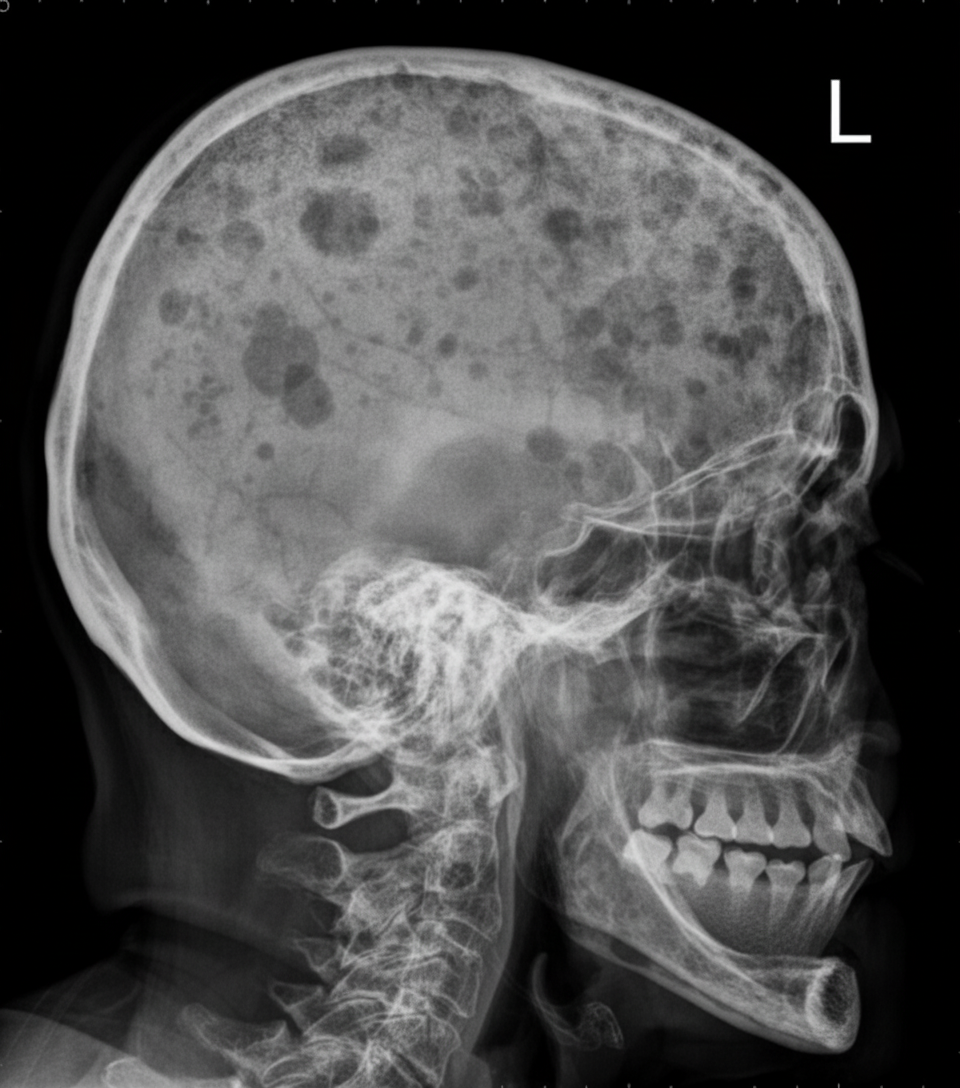
Punched out lesions in the skull are typically seen in which of the following conditions?
Which of the following conditions typically shows a specific x-ray finding of the spine?
Which of the following conditions does NOT typically present with lytic lesions in the skull?
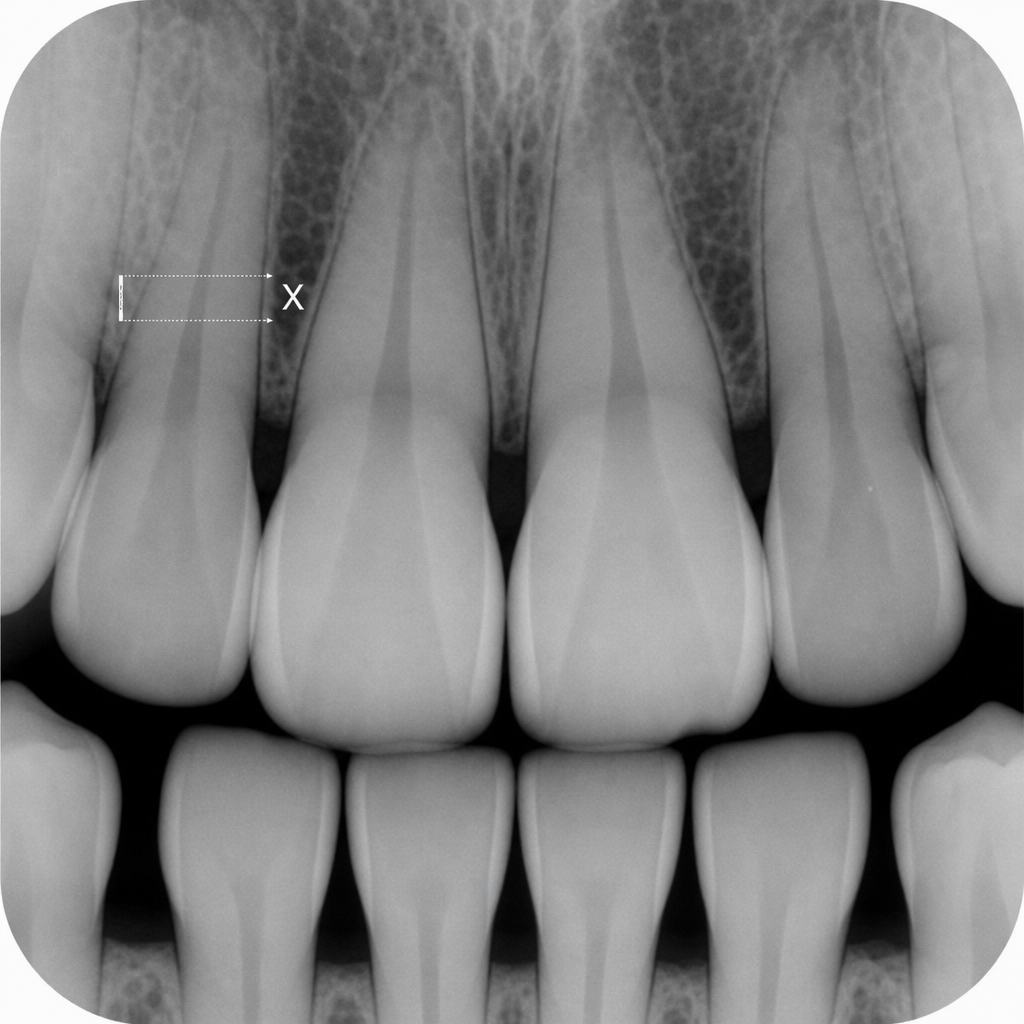
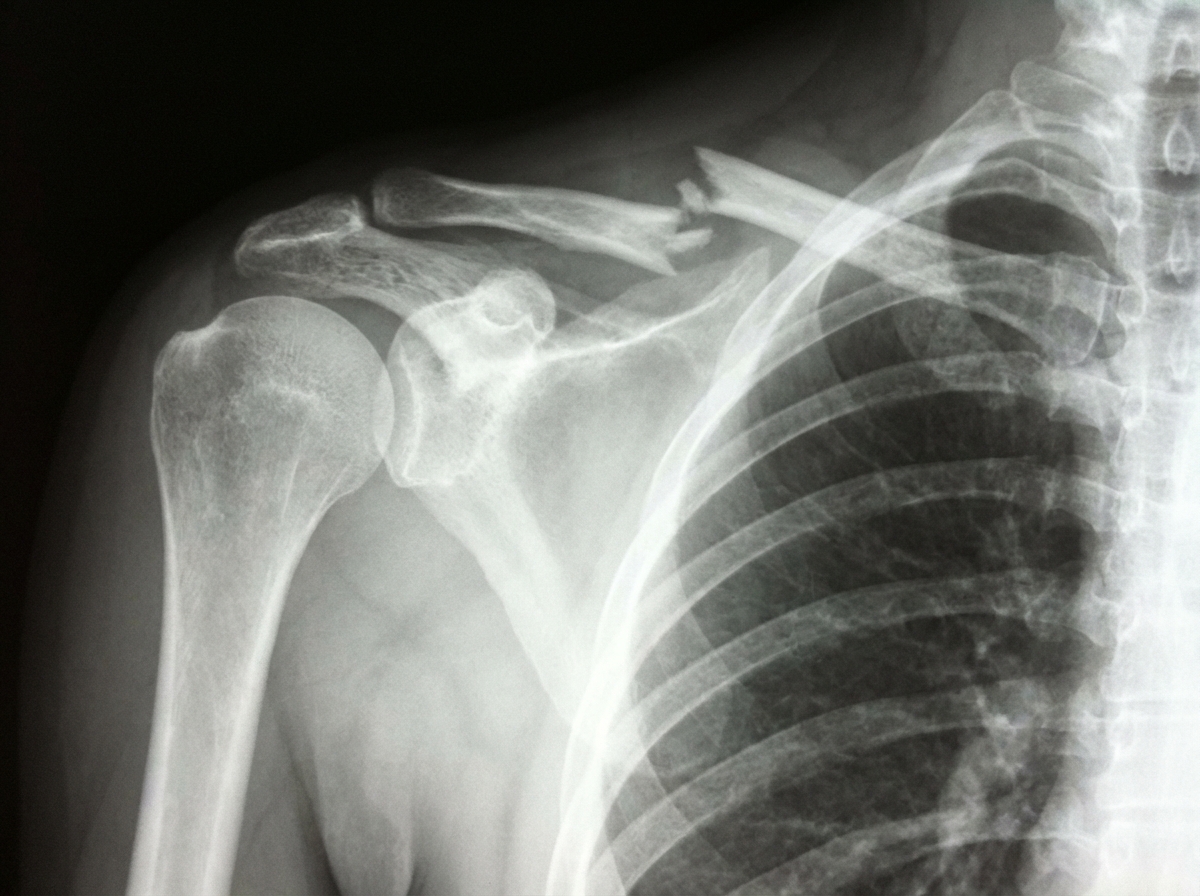
Which of the following conditions is characterized by the finding shown?

Which of the following conditions exhibits a 'cotton-wool' appearance on imaging?
Explanation: ### Explanation **1. The Correct Answer: Radial aspect of the middle phalanx** The hallmark radiographic feature of hyperparathyroidism (HPT) is **subperiosteal bone resorption**. This occurs because excess parathyroid hormone (PTH) stimulates osteoclasts to resorb bone, most aggressively beneath the periosteum. While this can occur in various bones, the **radial aspect of the middle phalanges of the index and middle fingers** is the most sensitive and earliest site for detection. The radial side is specifically involved because of the higher mechanical stress and remodeling activity in this region. **2. Analysis of Incorrect Options** * **Ulnar aspect of the middle phalanx (Option A):** While resorption can eventually become circumferential in severe cases, it characteristically begins on the radial side. The ulnar side is not the primary diagnostic site. * **Radial/Ulnar aspect of the little finger (Options C & D):** Although the little finger can be involved, the changes are most prominent and appear earliest in the **2nd and 3rd digits** (index and middle fingers). Therefore, the middle phalanx of the index/middle finger is the "classic" exam answer. **3. High-Yield Clinical Pearls for NEET-PG** * **Rugger-Jersey Spine:** Sclerotic bands at the superior and inferior endplates of vertebrae (seen in secondary HPT/Renal Osteodystrophy). * **Salt and Pepper Skull:** Multiple tiny lucent areas in the calvarium due to trabecular resorption. * **Brown Tumors (Osteoclastomas):** Well-defined lytic lesions (not true neoplasms) caused by localized osteoclastic activity; common in the jaw and long bones. * **Terminal Tufts:** Resorption of the distal phalangeal tufts (acro-osteolysis) is another common hand finding. * **Pathognomonic Sign:** Subperiosteal resorption is considered pathognomonic for hyperparathyroidism.
Explanation: **Explanation:** The **"bone within bone" appearance** (also known as *endobone*) is a classic radiological hallmark of **Osteopetrosis** (Albers-Schönberg disease). This condition is caused by a functional defect in **osteoclasts**, leading to impaired bone resorption. Consequently, the primary spongiosa is not remodeled, resulting in excessively dense, sclerotic, and brittle bones. The "bone within bone" sign occurs because of intermittent periods of growth arrest and subsequent resumption, creating the appearance of a miniature replica of the bone nested inside the cortical shell, most commonly seen in the vertebrae, pelvis, and short tubular bones. **Analysis of Incorrect Options:** * **A. Fibrous Dysplasia:** Characteristically presents with a **"Ground-glass" opacification** and expansion of the bone with a well-defined border. It involves the replacement of normal bone with fibrous tissue. * **C. Osteogenesis Imperfecta:** Primarily characterized by cortical thinning and osteopenia (low bone density) due to defective Type I collagen. Common findings include **"Zebra stripe" sign** (after bisphosphonate therapy) and multiple fractures. * **D. Osteoporosis:** Presents as generalized **radiolucency** (decreased bone density) and thinning of the cortex, the exact opposite of the dense appearance seen in osteopetrosis. **High-Yield NEET-PG Pearls for Osteopetrosis:** 1. **Erlenmeyer Flask Deformity:** Expansion of the metaphysis of long bones (also seen in Gaucher’s disease and Thalassemia). 2. **Rugger Jersey Spine:** Dense bands at the superior and inferior endplates of vertebrae (also seen in Renal Osteodystrophy). 3. **Clinical Triad:** Pancytopenia (due to marrow obliteration), cranial nerve palsies (due to foraminal narrowing), and pathological fractures.
Explanation: **Explanation:** **1. Why Computed Tomography (CT) is the Correct Answer:** A **sequestrum** is a piece of necrotic (dead) bone that has become detached from the healthy bone during the process of chronic osteomyelitis. Because it is dense, calcified, and often surrounded by pus or granulation tissue, it requires high spatial resolution and excellent contrast between mineralized and soft tissues for detection. **CT is the gold standard** because of its superior ability to visualize cortical bone detail, detect subtle calcifications, and identify small fragments of dead bone that may be missed by other modalities. **2. Analysis of Incorrect Options:** * **Radionuclide imaging (e.g., Bone Scan):** Highly sensitive for detecting early physiological changes and increased bone turnover (acute osteomyelitis), but lacks the anatomical detail required to identify a sequestrum. * **Tomography (Conventional):** Historically used before the advent of CT, but it has been entirely superseded by CT due to lower resolution and higher radiation scatter. * **MRI:** While MRI is the **most sensitive** modality for early diagnosis of osteomyelitis and for evaluating soft tissue involvement (abscesses, marrow edema), it is less effective than CT at distinguishing small, dense cortical sequestra from surrounding low-signal areas. **3. High-Yield Clinical Pearls for NEET-PG:** * **Sequestrum:** Dead bone (appears radiodense). * **Involucrum:** A layer of new bone growth around a sequestrum. * **Cloaca:** An opening in the involucrum through which pus and debris (and sometimes sequestra) escape. * **Brodie’s Abscess:** A subacute form of osteomyelitis appearing as a lucent lesion with a sclerotic rim, most commonly in the pediatric metaphysis. * **Imaging Choice:** Use **MRI** for early diagnosis/marrow edema; use **CT** for surgical planning and detecting sequestra.
Explanation: **Explanation:** **Meniscal calcification**, a form of **chondrocalcinosis**, is the hallmark radiological feature of **Pseudogout** (Calcium Pyrophosphate Deposition Disease - CPPD). In this condition, calcium pyrophosphate dihydrate crystals deposit within the fibrocartilage (menisci) and hyaline cartilage of joints. On an X-ray, this appears as linear or punctate radiodensities following the contour of the joint space. The knee is the most commonly affected site, followed by the wrist (triangular fibrocartilage complex) and symphysis pubis. **Analysis of Incorrect Options:** * **Alkaptonuria (Ochronosis):** While this involves pigment deposition in cartilage leading to premature degeneration, the characteristic radiological finding is **intervertebral disc calcification** (often at multiple levels), not primary meniscal calcification. * **Fluorosis:** This condition is characterized by **osteosclerosis** (increased bone density) and calcification of **ligaments and entheses** (e.g., sacrotuberous ligament), rather than intra-articular fibrocartilage. * **Diffuse Idiopathic Skeletal Hyperostosis (DISH):** This is a non-inflammatory condition characterized by flowing **ossification of the Anterior Longitudinal Ligament (ALL)** involving at least four contiguous vertebral bodies, with preservation of disc height. **High-Yield Clinical Pearls for NEET-PG:** * **Chondrocalcinosis "Big Three":** Hyperparathyroidism, Hemochromatosis, and Hypomagnesemia are metabolic triggers for CPPD. * **Polarizing Microscopy:** Pseudogout crystals are **rhomboid-shaped** and show **weak positive birefringence** (unlike the needle-shaped, negatively birefringent crystals of Gout). * **Milwaukee Shoulder:** A severe destructive arthropathy associated with basic calcium phosphate (hydroxyapatite) crystal deposition.
Explanation: ### Explanation **1. Why Prostate is Correct:** Bone metastases are classified as osteolytic (bone-destroying), osteoblastic (bone-forming/radiopaque), or mixed. **Prostate carcinoma** is the classic and most common cause of **purely osteoblastic (radiopaque)** metastases in males. This occurs because prostatic cancer cells secrete factors like Bone Morphogenetic Proteins (BMPs) and Prostate-Specific Antigen (PSA) that stimulate osteoblasts to lay down new, dense, disorganized bone. On X-ray or CT, these appear as dense, white "ivory" spots. **2. Why the Other Options are Incorrect:** * **Thyroid & Kidney (Options B & C):** These are the classic causes of **purely osteolytic** (radiolucent) metastases. They often present as "blow-out" lesions—highly vascular, expansile, and bone-destroying. * **Breast (Option D):** While breast cancer is the most common cause of bone metastasis in females, it typically produces **mixed** lesions (both lytic and blastic). While it can be radiopaque, it is less "purely" blastic than prostate cancer. **3. NEET-PG High-Yield Pearls:** * **Most common source of bone mets (Overall):** Breast (due to high prevalence). * **Most common source of blastic mets (Male):** Prostate. * **Most common source of blastic mets (Female):** Breast. * **Purely Lytic Metastases:** Kidney, Thyroid, Lung, and Multiple Myeloma (Note: Myeloma is "cold" on bone scans). * **Investigation of Choice:** **Bone Scan (Technetium-99m MDP)** is the most sensitive screening tool for detecting osteoblastic activity, except in Multiple Myeloma. * **Winking Owl Sign:** A classic radiologic sign of spinal metastasis where a pedicle is destroyed.
Explanation: ### Explanation **1. Why Multiple Myeloma is Correct:** Multiple Myeloma is a plasma cell dyscrasia characterized by the monoclonal proliferation of plasma cells in the bone marrow. These cells produce **Osteoclast Activating Factors (OAFs)**, such as IL-6 and RANK-ligand, which stimulate osteoclasts to resorb bone. On a skull radiograph, this manifests as multiple, well-circumscribed, "clean-cut" radiolucent areas without a sclerotic margin, classically described as **"Punched-out lesions."** Unlike many other bone pathologies, these lesions are typically "cold" on a Technetium-99m bone scan because there is minimal osteoblastic activity. **2. Why the Other Options are Incorrect:** * **Hyperparathyroidism:** Characterized by "Salt and Pepper" skull (mottled appearance due to trabecular resorption) and subperiosteal bone resorption, most notably on the radial aspect of the middle phalanges. * **Metastasis:** While osteolytic metastases (e.g., from lung or breast) can cause lucent lesions, they usually have ill-defined, "moth-eaten" borders rather than the sharp, punched-out margins seen in myeloma. * **Osteomalacia:** This involves defective mineralization of the osteoid. The classic radiological hallmark is **Looser’s zones** (pseudofractures), not focal lytic lesions. **3. Clinical Pearls for NEET-PG:** * **Raindrop Skull:** Another term used interchangeably with punched-out lesions in Multiple Myeloma. * **Bence-Jones Proteins:** Free light chains found in urine; they do not show up on a standard dipstick (requires sulfosalicylic acid test). * **M-Spike:** Seen on serum protein electrophoresis (usually IgG or IgA). * **CRAB Criteria:** Calcium (elevated), Renal insufficiency, Anemia, and Bone lesions (the mnemonic for symptomatic myeloma). * **Note:** In a patient over 50 with punched-out lesions and an elevated ESR, Multiple Myeloma should be the first differential.
Explanation: **Explanation:** The correct answer is **Renal Osteodystrophy** because it is classically associated with the **"Rugger Jersey Spine"** appearance on X-ray. **1. Why Renal Osteodystrophy is correct:** Renal osteodystrophy leads to secondary hyperparathyroidism. This causes a unique pattern of bone remodeling where there is **increased bone density (osteosclerosis)** at the superior and inferior endplates of the vertebral bodies, while the central portion remains relatively radiolucent (osteopenic). This creates horizontal striped bands resembling the stripes on a British rugby jersey. **2. Why the other options are incorrect:** * **Tuberculosis of the spine (Pott’s disease):** Typically shows paradiscal involvement, destruction of the intervertebral disc space, and wedge collapse leading to **Gibbus deformity**. * **Rickets:** Primarily affects the growth plates in children. Classic findings include cupping, fraying, and splaying of the metaphyses (e.g., at the wrist or knee) and the "rachitic rosary" at the ribs. * **Osteomalacia:** This is the adult form of Vitamin D deficiency. It is characterized by generalized osteopenia and **Looser’s zones** (pseudofractures), typically seen in the pelvis, femur, or scapula, rather than a specific vertebral banding pattern. **3. NEET-PG High-Yield Pearls:** * **Rugger Jersey Spine:** Pathognomonic for secondary hyperparathyroidism (Renal Osteodystrophy). * **Sandwich Vertebra:** Seen in **Osteopetrosis** (Marble bone disease); the endplates are much denser and more sharply defined than in Rugger Jersey spine. * **Picture Frame Vertebra:** Seen in **Paget’s Disease** due to peripheral cortical thickening. * **Codfish Vertebra:** Biconcave appearance seen in severe **Osteoporosis**. * **H-shaped Vertebra (Reynold’s Sign):** Seen in **Sickle Cell Anemia** due to microvascular endplate infarction.
Explanation: **Explanation:** The correct answer is **Carcinoma of the prostate**. In musculoskeletal radiology, bone lesions are broadly classified as **lytic** (bone-destroying) or **sclerotic/blastic** (bone-forming). **1. Why Carcinoma of the Prostate is correct:** Prostate cancer is the classic cause of **osteoblastic (sclerotic) metastases**. On a skull radiograph, this would appear as areas of increased radiodensity (whiter patches) rather than lytic "holes." While it can occasionally be mixed, it is the least likely among the options to present as a purely lytic lesion. **2. Analysis of Incorrect Options:** * **Multiple Myeloma:** Characterized by classic **"punched-out" lytic lesions**. These are sharply defined, circular radiolucencies without a sclerotic rim, caused by plasma cell infiltration. * **Metastasis from Bronchus:** Lung cancer (bronchogenic carcinoma) is a common source of **osteolytic metastases**. It typically causes irregular, ill-defined destruction of the bone. * **Thalassemia:** While not a malignancy, severe thalassemia causes massive erythroid hyperplasia. This expands the marrow space, leading to thinning of the outer table and a **"Hair-on-end" appearance**, which is essentially a pattern of vertical trabecular lytic changes. **Clinical Pearls for NEET-PG:** * **Mnemonic for Blastic Metastases:** **"P**rostate **B**eats **B**reast **S**lowly" (**P**rostate, **B**reast—can be mixed, **B**ladder, **S**tomach/Carcinoid). * **Mnemonic for Lytic Metastases:** **"L**ead **K**ettle" (**L**ung, **K**idney, **E**ndometrium, **T**hyroid, **T**estis). * **Key Radiographic Sign:** Multiple myeloma lesions are **cold on Bone Scan** because there is no osteoblastic activity to take up the tracer.
Explanation: ***All of the above*** - All three conditions (tuberculosis, multiple myeloma, and osteogenesis imperfecta) can present with **generalized osteoporosis** or **diffuse osteolytic changes** on radiological imaging. - The shared radiological finding demonstrates **decreased bone density** and **weakened bone architecture** through different pathophysiological mechanisms. *Tuberculosis* - **Skeletal tuberculosis** causes **osteolytic lesions** and bone destruction through chronic granulomatous inflammation and caseous necrosis. - Commonly affects **spine (Pott's disease)** and weight-bearing joints, leading to localized bone loss and osteoporosis. *Multiple myeloma* - Malignant plasma cells produce **osteoclast-activating factors** and suppress osteoblast activity, causing **punched-out lytic lesions**. - Results in **generalized osteoporosis** and **pathological fractures** due to disrupted bone remodeling. *Osteogenesis imperfecta* - Genetic disorder affecting **type I collagen synthesis**, leading to defective bone matrix formation. - Presents with **generalized osteoporosis**, **multiple fractures**, and **thin cortical bones** from birth or early childhood.
Explanation: **Explanation:** The **'cotton-wool' appearance** is a classic radiological hallmark of **Paget’s disease of bone** (Osteitis deformans), specifically during its late sclerotic or inactive phase. 1. **Why Paget’s Disease is Correct:** Paget’s disease involves a disordered cycle of bone remodeling characterized by excessive osteoclastic resorption followed by disorganized osteoblastic bone formation. In the skull, this manifests as thickened, disorganized trabeculae and sclerotic patches superimposed on areas of radiolucency (osteoporosis circumscripta). This creates the characteristic "cotton-wool" tufted appearance. 2. **Analysis of Incorrect Options:** * **Osteosclerosis:** This is a general term for increased bone density. While it appears radiopaque, it lacks the specific tufted, patchy morphology of Paget's. * **Periapical Cemental Dysplasia:** This typically presents as small, well-defined radiopacities at the apices of mandibular anterior teeth. While it has a "cotton-wool" stage in its mature form, the term is most classically associated with Paget's in a systemic/radiological context. * **Ossifying Fibroma:** This is a well-demarcated fibro-osseous lesion, often showing a "ground-glass" or "speckled" appearance, but it is usually a localized, expansive mass rather than the diffuse patchy involvement seen in Paget's. **NEET-PG High-Yield Pearls:** * **Skull Findings in Paget’s:** "Cotton-wool" spots and "Osteoporosis circumscripta" (early lytic phase). * **Pelvis Findings:** Thickening of the iliopectineal line (Brim sign). * **Vertebral Findings:** "Picture frame" vertebra (peripheral sclerosis) or "Ivory vertebra." * **Biochemical Marker:** Markedly elevated **Serum Alkaline Phosphatase (ALP)** with normal Calcium and Phosphate levels. * **Complication:** Small risk of transformation into **Osteosarcoma** in the elderly.
Radiographic Anatomy of Bones and Joints
Practice Questions
Imaging of Fractures and Dislocations
Practice Questions
Arthritides: Inflammatory and Degenerative
Practice Questions
Metabolic Bone Diseases
Practice Questions
Bone and Soft Tissue Tumors
Practice Questions
Congenital Skeletal Anomalies
Practice Questions
Spine Imaging
Practice Questions
Skeletal Infections
Practice Questions
Sports Medicine Imaging
Practice Questions
Imaging of Prostheses and Implants
Practice Questions
Musculoskeletal Ultrasound
Practice Questions
MSK Interventional Procedures
Practice Questions
Get full access to all questions, explanations, and performance tracking.
Start For Free