Which of the following is an example of a low-osmolar ionic contrast agent?
Which of the following is a non-ionic contrast agent?
Which of the following is Iso-osmolar agent?
Enhancement in CT contrast is due to -
Which type of contrast agent is considered safe for use in patients with chronic kidney disease?
Which contrast agent is most commonly used in MRI?
Which of the following is water soluble contrast?
Which of the following dyes is used in the diagnosis of esophageal perforation?
In a patient undergoing a CT scan for suspected pulmonary embolism, which contrast agent is primarily used to enhance imaging?
Which of the following is a nonionic dye used in medical imaging?
Explanation: ***Ioxaglate*** - **Ioxaglate** is a **low-osmolar ionic dimer**, making it the correct answer to this question. - It dissociates into two iodine-bearing anions and one meglumine/sodium cation in solution. - Its dimeric structure carries six iodine atoms per molecule, and its ionic nature combined with low osmolarity distinguishes it from high-osmolar ionic agents. *Iothalamate* - **Iothalamate** is a **high-osmolar ionic monomer** contrast agent, not low-osmolar. - While it is ionic, it dissociates into one iodine-bearing anion and one meglumine/sodium cation (3 iodine atoms per molecule), resulting in higher osmolarity. - This makes it incorrect for this specific question about low-osmolar agents. *Iohexol* - **Iohexol** is a **non-ionic monomer** contrast agent. - It does not dissociate in solution, remaining as a neutral molecule with three iodine atoms per molecule. - While it is low-osmolar, it is non-ionic, not ionic. *None of the options* - This option is incorrect because **Ioxaglate** is indeed an example of a low-osmolar ionic contrast agent. - Low-osmolar ionic agents like Ioxaglate provide better tolerability compared to high-osmolar ionic agents while maintaining ionic properties.
Explanation: ***Iohexol*** - **Iohexol** is a well-known example of a **non-ionic, low osmolar contrast agent**. It's widely used due to its lower incidence of adverse reactions compared to ionic agents. - Non-ionic contrast agents remain as **intact molecules** in solution and do not dissociate into charged ions, contributing to their lower osmolality and better tolerability. *Amidotrizoate* - **Amidotrizoate** (also known as diatrizoate) is an **ionic, high osmolar contrast agent**. It dissociates into two ions in solution. - Due to its high osmolality, it is associated with a higher risk of adverse effects, such as **nausea**, **vomiting**, and **nephrotoxicity**. *Iothalamate* - **Iothalamate** is another example of an **ionic, high osmolar contrast agent**. It also dissociates into charged ions when dissolved. - Its use has decreased significantly with the development of safer non-ionic alternatives due to its higher potential for **adverse drug reactions**. *Ioxoglate* - **Ioxoglate** is a **dimeric, ionic contrast agent**. Although it's ionic, it has a lower osmolality than monomeric ionic agents due to its dimeric structure. - Despite being dimeric, it still dissociates into ions, distinguishing it from truly non-ionic compounds like iohexol.
Explanation: ***Non-ionic Dimer contrast media*** - **Iodixanol** is the only available non-ionic dimer contrast agent, and it is **iso-osmolar** with blood plasma (290 mOsm/kg). - Its iso-osmolality contributes to a lower incidence of adverse reactions, particularly in patients at high risk. *Ionic Monomer - High osmolality contrast media* - These agents have an osmolality significantly higher than that of blood plasma, often 6-8 times greater. - High osmolality leads to a higher incidence of adverse effects due to cellular fluid shifts and direct endothelial damage. *Non-ionic Monomer - Low osmolality contrast media* - These agents have an osmolality lower than ionic monomers but are still hyperosmolar compared to blood plasma (typically 2-3 times higher). - While generally safer than high-osmolality agents, they can still cause discomfort and adverse reactions due to their hyperosmolality. *Ionic Dimer - Low osmolality contrast media* - Ionic dimers, such as **ioxaglate**, are considered low-osmolality agents but are still hyperosmolar relative to plasma. - They feature two benzene rings with iodine atoms and are salts, contributing to their osmolality.
Explanation: ***Iodine*** - **Iodine-based contrast agents** are commonly used in CT scans to enhance the visualization of blood vessels, organs, and certain lesions due to their **high atomic number** and ability to absorb X-rays. - The degree of enhancement observed on a CT image is directly proportional to the concentration of **iodine** in the tissue or blood. *Gadolinium* - **Gadolinium-based contrast agents** are predominantly used in **Magnetic Resonance Imaging (MRI)**, not CT scans. - Gadolinium works by altering the **magnetic properties** of water molecules in tissues, thereby improving MRI signal intensity. *Mercury* - **Mercury** is a highly toxic heavy metal and is **not used as a contrast agent** in any imaging modality due to its severe health risks. - While historically used in some medical applications, it has been replaced by safer alternatives. *Silver* - **Silver** is not used as a contrast agent in medical imaging; it has no suitable properties for enhancing images in CT or other common modalities. - It is known for its **antimicrobial properties** and is sometimes used in wound dressings.
Explanation: ***Ultrasound contrast*** - **Ultrasound contrast agents**, particularly those containing **microbubbles**, are considered safe for renal patients as they are not excreted via the kidneys. - These agents are broken down and excreted primarily through the **respiratory system**, posing minimal risk to kidney function. *Non-ionic iodinated contrast* - While generally safer than ionic alternatives, **non-ionic iodinated contrast agents** still carry a risk of **contrast-induced nephropathy (CIN)** in patients with **CKD**. - Renal excretion is the primary route of elimination, requiring careful consideration and prophylactic measures in individuals with **impaired renal function**. *Gadolinium* - **Gadolinium-based contrast agents** are associated with the risk of **nephrogenic systemic fibrosis (NSF)** in patients with **severe chronic kidney disease** or **acute kidney injury**. - Although newer macrocyclic agents have a lower risk, it is still generally avoided in renal patients unless absolutely necessary due to its **renal excretion**. *Ionic iodinated contrast* - **Ionic iodinated contrast agents** have a higher osmolality and are strongly associated with a greater risk of **contrast-induced nephropathy (CIN)** compared to non-ionic agents. - Their significant **renal toxicity** makes them largely contraindicated in patients with **pre-existing chronic kidney disease**.
Explanation: ***Gadolinium-based*** - **Gadolinium-based contrast agents** are paramagnetic and significantly shorten the T1 relaxation time of tissues, leading to increased signal intensity and enhanced visibility of structures. - They are primarily used in MRI to improve the detection and characterization of lesions, particularly in oncology, neurology, and cardiology. *Iodine-based* - **Iodine-based contrast agents** are primarily used in X-ray and CT imaging because they absorb X-rays efficiently due to their high atomic number, providing good contrast. - They are not suitable for MRI as they do not possess the necessary magnetic properties to alter proton relaxation times for MRI contrast. *Barium sulfate* - **Barium sulfate** is an oral or rectal contrast agent used for imaging the gastrointestinal tract in X-ray examinations, such as barium swallows, meals, and enemas. - It is not used in MRI because its high atomic number and lack of magnetic properties make it ineffective as an MRI contrast agent. *Technetium-99m* - **Technetium-99m** is a commonly used radioisotope in nuclear medicine for various diagnostic scans, such as bone scans, cardiac stress tests, and thyroid scans. - It is a gamma-emitting radionuclide and is not used as a contrast agent in MRI, which relies on magnetic properties.
Explanation: ***Iodine*** - **Iodinated contrast media** (containing iodine atoms) are the most commonly used **water-soluble contrast agents** in medical imaging. - Examples include **non-ionic iodinated compounds** (iohexol, iopamidol, iopromide) and **ionic compounds** (diatrizoate, iothalamate). - The **iodine atoms** provide radiodensity (X-ray attenuation), while the organic molecular structure ensures **water solubility**. - These agents are safely excreted by the kidneys and are used intravenously for CT angiography, intravenous urography, and contrast-enhanced CT scans. *Barium* - **Barium sulfate** is a **water-insoluble** compound used as an oral or rectal contrast agent for imaging the gastrointestinal tract. - It remains in the GI lumen and is not absorbed; if extravasated into soft tissues, it can cause significant inflammatory reactions. - Used for barium swallow, barium meal, barium follow-through, and barium enema studies. *Bromine* - **Bromine** is not used as a contrast agent in medical imaging due to its high toxicity and unsuitability for diagnostic purposes. - It does not form stable, non-toxic water-soluble compounds appropriate for clinical imaging. *Calcium* - **Calcium** is a natural component of bone and provides intrinsic radiodensity on plain X-rays. - It is not administered as an exogenous contrast agent for diagnostic imaging purposes.
Explanation: ***Iohexol*** - **Iohexol** is a **water-soluble, non-ionic, low-osmolar iodinated contrast medium** that is the preferred choice for diagnosing esophageal perforation. - Its **water solubility** is crucial because if extravasation occurs into the mediastinum or pleural space, it is **less irritating** and more easily absorbed than barium. - Being **non-ionic and low-osmolar**, it has **minimal toxicity** if it leaks outside the esophagus, making it safer for patients compared to older ionic contrast agents. - **Clinical preference:** Modern practice favors non-ionic agents like Iohexol over older ionic water-soluble agents due to better safety profile. *Barium sulphate* - **Barium sulphate** is a **radio-opaque contrast agent** typically used for routine gastrointestinal tract imaging. - It is **absolutely contraindicated** in suspected esophageal perforation because barium extravasation into the mediastinum causes severe **chemical mediastinitis**, granuloma formation, and significant morbidity. - Barium is **not absorbed** and persists in tissues, leading to chronic inflammation. *Gadolinium* - **Gadolinium** is a **paramagnetic contrast agent** used exclusively in **Magnetic Resonance Imaging (MRI)**. - It is not used for fluoroscopic evaluation of esophageal leaks or perforation, which requires real-time radiographic imaging with iodinated contrast. *Iodine dye* - This is a **non-specific term** that could refer to any iodine-based contrast agent, including both ionic and non-ionic varieties. - **Older ionic iodinated agents** (like diatrizoate) have **high osmolality** and can cause significant chemical irritation and pulmonary complications if aspirated or extravasated. - Without specifying which type of iodine contrast, this option is too vague and potentially includes agents that are less safe than modern non-ionic alternatives like Iohexol. - **Key point:** While Iohexol is also an iodine-containing contrast, it is specifically a modern, non-ionic, low-osmolar agent—making it the most appropriate specific choice.
Explanation: **Iodine** - **Iodine-based contrast agents** are primarily used in **CT scans** to enhance vascular structures and organs due to their high atomic number, which effectively attenuates X-rays. - In suspected **pulmonary embolism**, intravenous iodine contrast allows for visualization of filling defects within the pulmonary arteries, confirming or ruling out the diagnosis. *Gadolinium* - **Gadolinium** is a paramagnetic contrast agent predominantly used in **Magnetic Resonance Imaging (MRI)**, not CT scans. - It works by altering the local magnetic field, which shortens the relaxation times of hydrogen protons in tissues, leading to signal enhancement. *Silver* - **Silver** is not used as a contrast agent in medical imaging due to its toxicity and lack of appropriate X-ray attenuation or magnetic properties. - It has historical applications in histology (e.g., silver stains) but no current role in diagnostic imaging. *Mercury* - **Mercury** is highly toxic and has no role as a contrast agent in modern medical imaging. - Its use would be detrimental to patient health and does not provide diagnostic enhancement.
Explanation: ***Iohexol*** - **Iohexol** is a widely used **nonionic, low-osmolality contrast medium** in various medical imaging procedures. - Nonionic contrast agents generally have a **lower incidence of adverse reactions** compared to ionic agents due to their reduced osmolality. *Iothalamate* - **Iothalamate** is an **ionic, high-osmolality contrast medium**. - High-osmolality ionic agents are associated with a **higher risk of adverse events**, such as anaphylactoid reactions and nephrotoxicity. *Ioxaglate* - **Ioxaglate** is an **ionic dimer**, often described as a "monoacidic dimer," which gives it **lower osmolality** than traditional ionic monomers, but it is still fundamentally ionic. - While it has a better safety profile than older ionic monomers, it still differs structurally and functionally from true nonionic agents like iohexol. *None of the options* - This option is incorrect because **Iohexol** is indeed a nonionic dye used in medical imaging, fitting the description.
Chemistry of Contrast Media
Practice Questions
Pharmacokinetics of Contrast Agents
Practice Questions
Classification of Contrast Reactions
Practice Questions
Risk Factors for Contrast Reactions
Practice Questions
Prevention of Contrast Reactions
Practice Questions
Treatment of Acute Contrast Reactions
Practice Questions
Contrast-Induced Nephropathy
Practice Questions
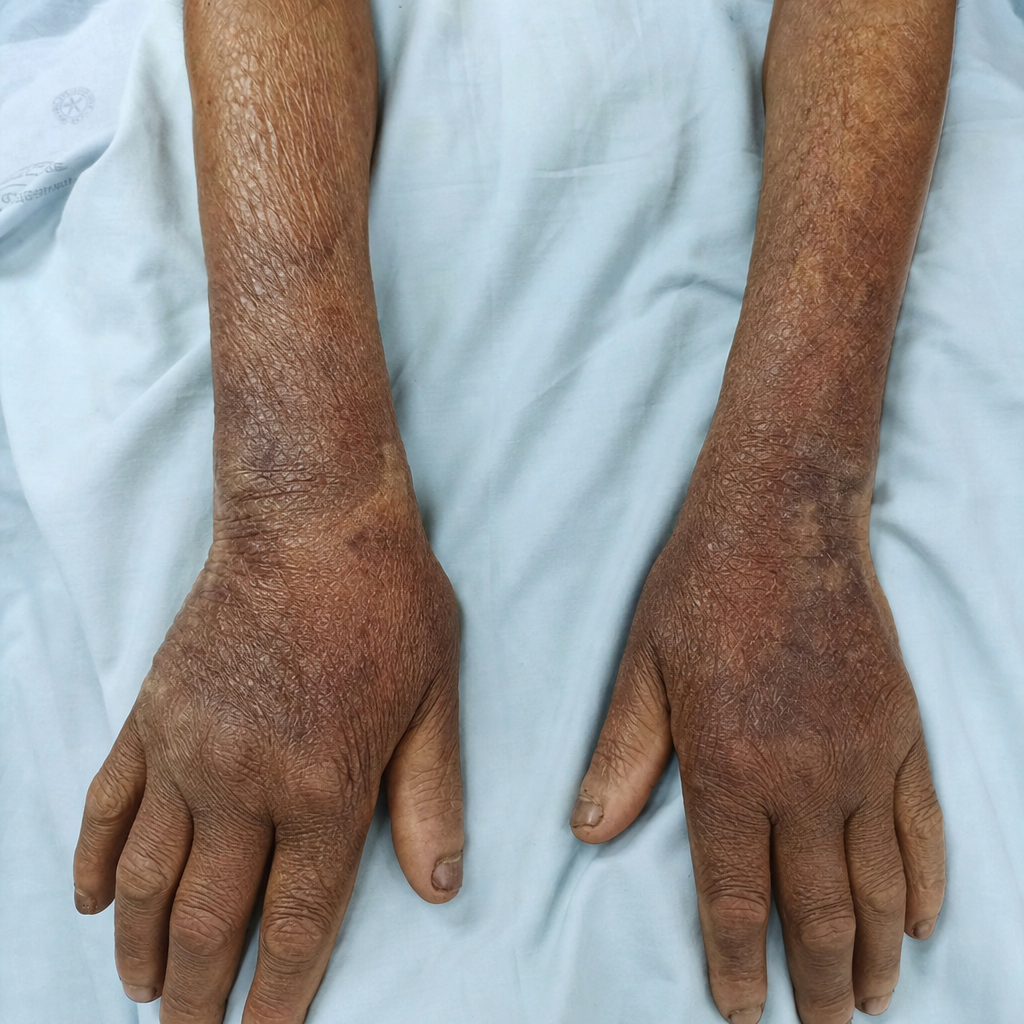
Nephrogenic Systemic Fibrosis
Practice Questions
Extravasation of Contrast Media
Practice Questions
Guidelines for Contrast Administration
Practice Questions
Alternative Contrast Agents
Practice Questions
Documentation and Medicolegal Aspects
Practice Questions
Get full access to all questions, explanations, and performance tracking.
Start For Free