A radiographic film that appears too dark and fogged is most likely due to which of the following factors?
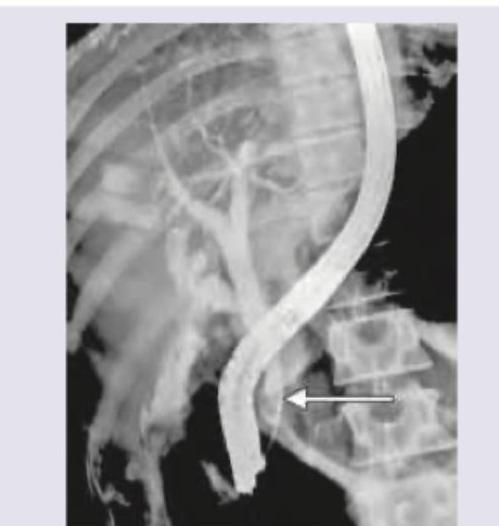
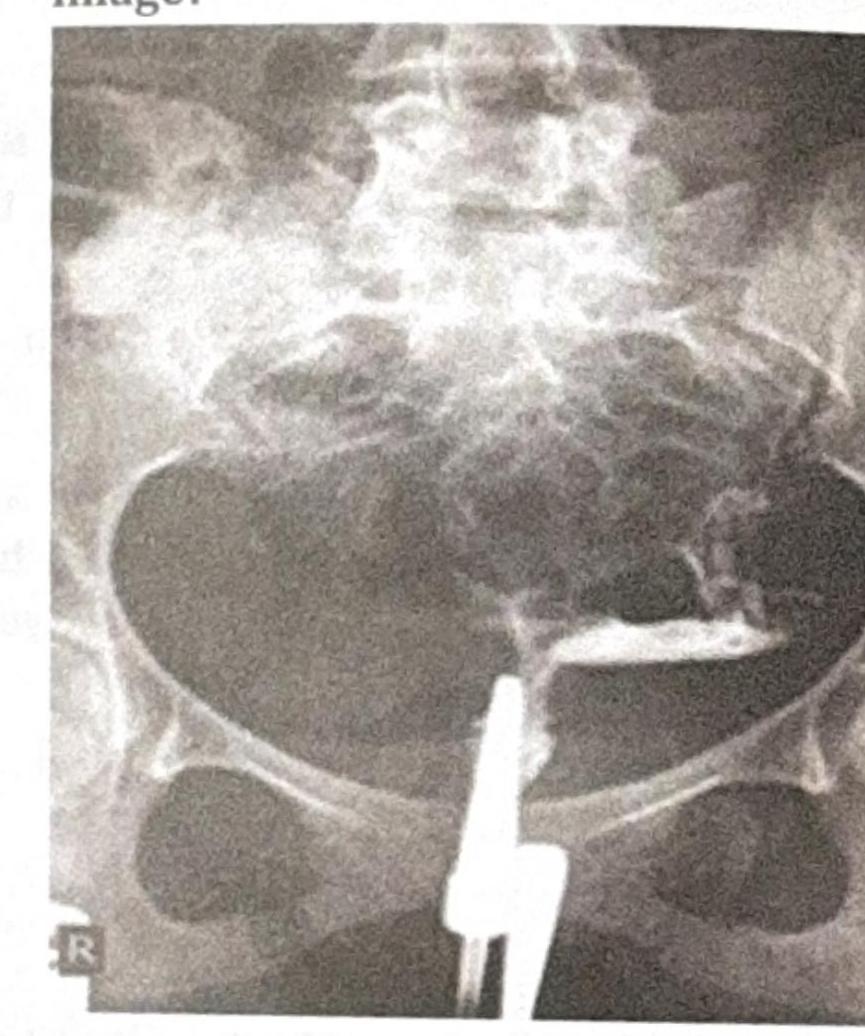
Which of the following is an indication for salpingography?
Which of the following conditions is characterized by a trifoliate appearance?
What is the recommended angulation when taking a bitewing radiograph to prevent overlapping of the cusps on the occlusal surface?
What does the abbreviation CBCT stand for?
In atresia of the cardiac end of the stomach, what contrast agent is best visualized on an X-ray chest?
Calcification is best detected by?
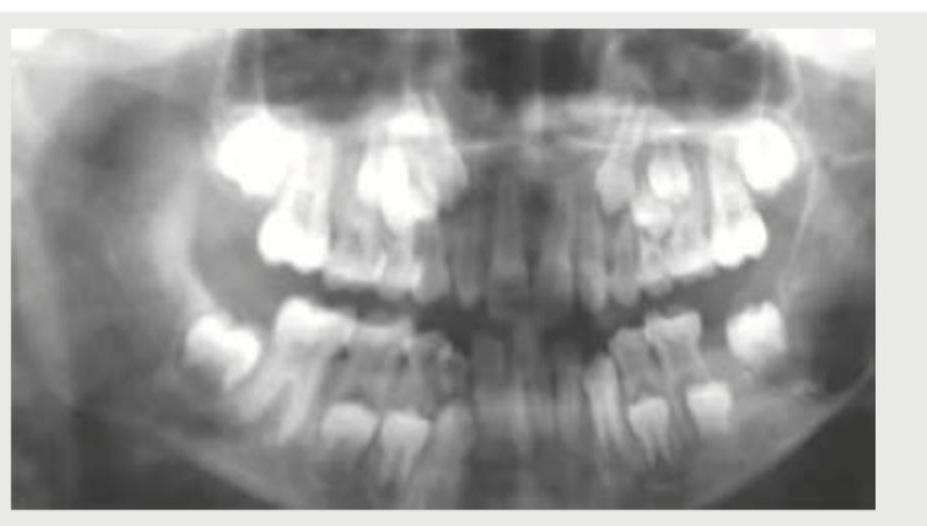
Which special investigation is known as an orthopantomogram?
A 20-year-old male patient presents with pain in an upper front tooth following a facial injury sustained while playing football. A periapical radiograph is taken and processed using the conventional manual technique. The processed radiograph shows a milky, cloudy, and opaque appearance with overall poor image quality. What is the most likely reason for this appearance?
What are the contraindications to intravenous pyelography (IVP)?
Explanation: ### Explanation **Correct Answer: C. Improper film storage conditions** The primary reason for a radiographic film appearing both **dark and fogged** is improper storage. X-ray films are highly sensitive to environmental factors. If stored in areas with high temperatures, high humidity, or exposure to stray radiation (chemical fumes or light leaks), the silver halide crystals in the film emulsion undergo a slow, spontaneous reaction. This results in "film fog"—a generalized graying that reduces image contrast and increases overall density (darkness), obscuring diagnostic detail. **Analysis of Incorrect Options:** * **A. Increased exposure time:** While this increases the total number of photons reaching the film (making it darker), it does not inherently cause "fogging." It results in an overexposed image with high density but typically maintains sharp contrast boundaries unless extreme. * **B. Passage through thin patient tissues:** Thin tissues (like a finger) attenuate fewer X-rays, leading to a darker image in those specific areas due to high transmission. However, this is a localized effect of density and does not produce the generalized, hazy "fog" seen with storage issues. * **D. High concentration of developer solution:** While over-development (due to high concentration or temperature) can darken a film, it is a processing error rather than a storage error. In the context of "fogging," storage conditions are the more classic cause cited in radiological physics. **High-Yield Clinical Pearls for NEET-PG:** * **Film Fog:** Defined as unwanted optical density on the film that does not represent any part of the patient's anatomy. * **Safe Light:** Improper "safe lights" in the darkroom (wrong filter or too close to the bench) are another common cause of film fog. * **Storage Rule:** Films should be stored upright (to avoid pressure desensitization), at 10–21°C, and 30–50% humidity. * **Grid Cut-off:** If a film is too light (underexposed) in certain areas, consider improper grid alignment.
Explanation: **Explanation:** **Salpingography** (often performed as part of Hysterosalpingography or HSG) is a radiological procedure used to visualize the uterine cavity and the patency of the fallopian tubes. **Why "Pelvic Infections" is the correct answer:** In the context of this specific question, **pelvic infections** (such as Chronic Pelvic Inflammatory Disease or Tuberculosis) are a primary indication for salpingography to assess the **sequelae** of the infection. Chronic infections often lead to tubal blockage, hydrosalpinx, or peritubal adhesions. Salpingography is the gold standard for evaluating tubal patency in patients with a history of such infections to determine if the tubes are functional or obstructed. **Analysis of Incorrect Options:** * **Infertility:** While HSG is a cornerstone in the workup of infertility, "Pelvic Infections" is often cited in specific clinical vignettes as the underlying pathology being investigated via salpingography. (Note: In many exams, Infertility and Pelvic Infections are both relevant, but the latter specifically targets the "salpingo" aspect). * **Recurrent Abortions:** These are more commonly associated with uterine factors (septum, bicornuate uterus, cervical incompetence) rather than tubal factors. * **Abnormal Uterine Bleeding (AUB):** AUB is primarily investigated using Ultrasound, Hysteroscopy, or Endometrial biopsy. HSG is generally contraindicated during active bleeding. **High-Yield Clinical Pearls for NEET-PG:** * **Best Time for HSG:** Proliferative phase (Day 7 to Day 10 of the menstrual cycle) to ensure the endometrium is thin and the patient is not pregnant. * **Contraindications:** Pregnancy, active pelvic infection (acute PID), and heavy menstrual bleeding. * **Therapeutic Effect:** HSG can sometimes have a "flushing" effect, clearing minor tubal debris and slightly increasing conception rates in the following months. * **Contrast Media:** Water-soluble iodinated contrast (e.g., Iohexol) is preferred over oil-based media to reduce the risk of granuloma formation or oil embolism.
Explanation: **Explanation:** The **trifoliate appearance** (also known as the **clover-leaf deformity**) is a classic radiological sign seen on a Barium meal study in patients with **chronic duodenal ulcers**. This appearance occurs due to the healing and cicatrization of a chronic ulcer in the duodenal bulb. The "leaves" of the clover are formed by the central ulcer crater (niche) surrounded by three components: the pre-stenotic outpouching, the post-stenotic outpouching, and the contraction of the bulb itself. **Analysis of Options:** * **A. CHPS (Congenital Hypertrophic Pyloric Stenosis):** Characterized by the **"String sign"** (narrowed pyloric canal), **"Beak sign,"** and **"Mushroom sign"** on Barium studies. * **B. Achalasia Cardia:** Classically presents with a **"Bird’s beak"** or **"Rat-tail"** appearance of the distal esophagus due to failure of the lower esophageal sphincter to relax. * **D. Pneumoperitoneum:** Characterized by the **"Gas under the diaphragm"** sign on an erect X-ray or the **"Rigler sign"** (gas on both sides of the bowel wall) on a supine film. **High-Yield Clinical Pearls for NEET-PG:** * **Duodenal Ulcer:** Most common site is the first part of the duodenum (duodenal bulb). * **Giant Duodenal Ulcer:** Defined as an ulcer >2 cm; it can mimic the entire duodenal bulb on imaging. * **Zollinger-Ellison Syndrome:** Suspect if ulcers are multiple, distal to the duodenal bulb, or refractory to treatment. * **Barium Meal Contraindication:** Never perform a Barium study if perforation is suspected (use water-soluble contrast like Gastrografin instead).
Explanation: ### Explanation The correct answer is **10 degrees (+10°)**. **Why 10 degrees is correct:** In bitewing radiography, the primary goal is to detect interproximal caries and evaluate the height of the alveolar bone. To achieve this, the X-ray beam must pass directly through the contact points of the teeth. However, maxillary teeth have a slight natural palatal inclination, while mandibular teeth have a slight lingual inclination. If a 0-degree horizontal angulation is used, the slight tilt of the teeth causes the palatal cusps of the maxillary teeth to project lower than the buccal cusps, leading to **overlapping of the occlusal surfaces**. A vertical angulation of **+10 degrees** (pointing slightly downward) compensates for this inclination, ensuring the occlusal surfaces are superimposed correctly and the interproximal spaces are clearly visible. **Analysis of Incorrect Options:** * **A (20 degrees) & D (15 degrees):** These angles are too steep. Excessive vertical angulation leads to vertical distortion (foreshortening) and may obscure the alveolar crest, making it difficult to diagnose periodontal bone loss. * **B (5 degrees):** While closer to the target, +5 degrees is insufficient to fully compensate for the curve of Monson and the natural inclination of the maxillary molars, often resulting in minor cusp overlap. **High-Yield Clinical Pearls for NEET-PG:** * **Vertical Angulation:** Always **+10°** for bitewings. * **Horizontal Angulation:** The beam must be perpendicular to the curvature of the arch to prevent **proximal overlapping**. * **Bitewing Indications:** Best for **interproximal caries** (proximal surfaces) and monitoring **crestal bone levels** (early periodontitis). * **Film Placement:** The film is placed parallel to the crowns of both upper and lower teeth.
Explanation: **Explanation:** **Cone Beam Computed Tomography (CBCT)** is a specialized radiographic technique where the X-ray source emits a **divergent, cone-shaped beam** rather than the narrow, fan-shaped beam used in conventional CT. As the source and detector rotate around the patient, they capture a series of 2D images which are reconstructed into a 3D volume. * **Why Option A is correct:** The term "Cone Beam" refers to the geometric shape of the X-ray beam. This design allows for a single rotation to capture the entire field of interest, resulting in lower radiation doses and faster scan times compared to traditional MDCT (Multidetector CT). * **Why Options B, C, and D are incorrect:** These are distractor terms. While "Circular" might describe the gantry rotation, it is not the formal nomenclature. "Coil" and "Combined" have no standard application in describing the physics of this imaging modality. **High-Yield Clinical Pearls for NEET-PG:** * **Primary Applications:** CBCT is the gold standard in **Dentistry and Maxillofacial surgery** (implant planning, orthodontics, and TMJ assessment) and is increasingly used in **ENT** (sinus imaging) and **Interventional Radiology** (C-arm CBCT). * **Advantages:** Higher spatial resolution for bony structures, lower cost, and significantly **reduced radiation dose** compared to conventional CT. * **Limitations:** Poor soft-tissue contrast (due to increased scatter radiation) and susceptibility to motion artifacts. * **Key Difference:** Unlike conventional CT which uses "slices," CBCT acquires data in **voxels** (3D pixels) that are typically **isotropic** (equal in all dimensions), ensuring accurate 1:1 measurements.
Explanation: ### Explanation The question refers to **Esophageal Atresia (EA)**, where the "cardiac end of the stomach" (the lower esophagus) is atretic. In such cases, there is a high risk of the contrast agent spilling over into the trachea or being aspirated into the lungs. **1. Why Dionosil is the Correct Answer:** **Dionosil** (Propyliodone) is an oil-based, iodinated contrast medium. It was historically the preferred agent for bronchography and suspected tracheoesophageal fistulas because it is **non-irritating to the bronchial mucosa**. Unlike water-soluble agents, it does not cause pulmonary edema if aspirated, and unlike Barium, it does not cause a severe foreign-body granulomatous reaction in the lungs. While largely replaced by non-ionic water-soluble agents in modern practice, it remains the classic textbook answer for this specific clinical scenario in competitive exams. **2. Why Other Options are Incorrect:** * **Barium Sulphate (C):** Absolutely contraindicated if a fistula or perforation is suspected. If aspirated, Barium causes severe **chemical pneumonitis** and granuloma formation, which can be fatal in neonates. * **Urograffin (B) and Conray 240 (A):** These are **high-osmolar water-soluble contrast media (HOCM)**. If aspirated, their high osmolality draws fluid into the alveoli, leading to life-threatening **pulmonary edema**. **3. Clinical Pearls for NEET-PG:** * **Most common type of EA:** Type C (Esophageal atresia with distal Tracheoesophageal Fistula). * **Initial Investigation:** Failure to pass a stiff nasogastric tube (NG tube). * **Modern Choice:** If a contrast study is required today, **non-ionic, low-osmolar contrast media (LOCM)** like Iohexol is preferred over Dionosil. * **VACTERL Association:** Always screen for vertebral, anal, cardiac, renal, and limb anomalies in cases of EA.
Explanation: **Explanation:** **CT Scan** is the gold standard and the most sensitive modality for detecting calcification. This is because CT measures the **linear attenuation coefficient** of tissues. Calcification has a high atomic number (calcium), which significantly attenuates X-ray beams, resulting in high Hounsfield Units (HU), typically ranging from **+100 to over +1000 HU**. CT can detect even minute, punctate, or "micro-calcifications" that are invisible on other modalities. **Why other options are incorrect:** * **X-ray:** While X-rays can show gross calcifications (like stones or vascular calcification), they lack the spatial and contrast resolution of CT. Small or deep-seated calcifications are often obscured by overlying structures (summation effect). * **USG:** Ultrasound is excellent for detecting stones (showing as hyperechoic foci with posterior acoustic shadowing), but it is operator-dependent and cannot reliably differentiate between calcification, air, or bone in all clinical contexts. * **MRI:** MRI is notoriously poor at detecting calcification. Because calcium lacks mobile protons, it typically appears as a "signal void" (dark/black) on most sequences, making it difficult to distinguish from flowing blood, air, or dense fibrous tissue. **Clinical Pearls for NEET-PG:** * **Hounsfield Units (HU):** Air (-1000), Fat (-50 to -100), Water (0), Soft tissue (+40 to +80), Bone/Calcification (>+400). * **Exceptions:** In **mammography** (a specialized X-ray), micro-calcifications are a primary sign of malignancy (DCIS). * **MRI Sequence:** If calcification must be seen on MRI, **Susceptibility Weighted Imaging (SWI)** or Gradient Echo (GRE) are the best sequences, as they show "blooming" artifacts.
Explanation: ### Explanation **Correct Answer: C. Orthopantomogram (OPG)** An **Orthopantomogram (OPG)**, also known as a dental panoramic radiograph, is a specialized extraoral radiographic technique that provides a wide, two-dimensional "panoramic" view of the upper and lower jaws (maxilla and mandible), teeth, and surrounding structures (TMJ and maxillary sinuses) on a single film. * **Mechanism:** It utilizes the principle of **tomography**, where the X-ray source and the detector rotate around the patient's head in opposite directions. This creates a focal trough (a curved zone) where structures are sharply imaged while others are blurred out. **Analysis of Incorrect Options:** * **A. CBCT (Cone Beam Computed Tomography):** This is a 3D imaging modality. Unlike the 2D OPG, CBCT uses a cone-shaped X-ray beam to produce high-resolution volumetric data, primarily used for dental implants and complex maxillofacial surgeries. * **B. Scanogram:** This is a specialized X-ray technique used primarily in orthopedics to measure the **length of long bones** (e.g., leg length discrepancy). It involves taking images of the hip, knee, and ankle joints with a radio-opaque ruler. * **D. Stenvers View:** This is a specific radiographic projection used to visualize the **petrous portion of the temporal bone**, the internal auditory canal, and the bony labyrinth. It has largely been replaced by HRCT of the temporal bone. **High-Yield Clinical Pearls for NEET-PG:** * **Indications for OPG:** Assessment of impacted third molars (wisdom teeth), evaluation of jaw fractures (especially the mandibular condyle), and screening for orthodontic treatment. * **Limitation:** OPG is not ideal for detecting small interproximal carious lesions or fine periodontal bone loss due to lower resolution compared to Intraoral Periapical (IOPA) views. * **Water’s View:** The gold standard conventional radiograph for visualizing the **maxillary sinuses**.
Explanation: ***Incomplete fixation*** - Results in a **milky or cloudy appearance** on the radiograph due to unexposed and undeveloped **silver halide crystals** remaining in the film emulsion. - The **fixer solution** removes these unexposed crystals, and insufficient fixation time or weak fixer concentration leads to poor radiograph quality. *Film contaminated with fixer before processing* - Causes **clear or white spots** on the radiograph where the fixer touched the film before development. - Results in **localized areas of no image formation** rather than overall poor quality or cloudiness. *Excessive fixation* - Leads to **bleaching** or **loss of radiographic density** as prolonged fixation removes developed silver particles. - The image becomes **too light** with reduced contrast, not cloudy or milky in appearance. *Overdevelopment* - Causes the radiograph to appear **too dark** with excessive **blackening** and loss of detail. - Results from prolonged development time, high developer temperature, or **concentrated developer solution**.
Explanation: **Explanation:** Intravenous Pyelography (IVP) involves the administration of iodinated contrast media to visualize the urinary tract. The procedure is contraindicated in conditions where the risk of adverse reactions or contrast-induced nephropathy (CIN) is significantly elevated. * **Idiosyncrasy to Iodine:** This is a major contraindication. Patients with a history of severe allergic reactions (anaphylaxis) to iodinated contrast are at high risk for life-threatening hypersensitivity reactions. * **Multiple Myeloma:** In these patients, the contrast medium can cause the precipitation of Bence-Jones proteins within the renal tubules. This leads to intratubular obstruction and acute renal failure, especially if the patient is dehydrated. * **Diabetes Mellitus:** Diabetics are at a baseline higher risk for diabetic nephropathy. When combined with iodinated contrast, the risk of **Contrast-Induced Nephropathy (CIN)** increases exponentially, particularly in those with pre-existing renal insufficiency or those taking Metformin (due to the risk of lactic acidosis). **Why "All of the Above" is correct:** Each of these conditions represents a significant clinical risk factor that can lead to either fatal allergic reactions or irreversible renal damage. **High-Yield Clinical Pearls for NEET-PG:** * **Creatinine Levels:** Always check serum creatinine before IVP. A level >2 mg/dL is generally considered a relative contraindication. * **Metformin Rule:** Metformin should be withheld 48 hours after the procedure to prevent lactic acidosis if renal function is impaired. * **Hydration:** Adequate pre-procedure hydration is the most effective way to prevent CIN. * **Modern Alternative:** Non-contrast CT (NCCT) KUB is now the "Gold Standard" for investigating urolithiasis, largely replacing IVP in emergency settings.
Iodinated Contrast Media
Practice Questions
MRI Contrast Agents
Practice Questions
Ultrasound Contrast Agents
Practice Questions
Adverse Reactions to Contrast Media
Practice Questions
Management of Contrast Reactions
Practice Questions
Contrast-Induced Nephropathy
Practice Questions
Barium Studies
Practice Questions
Intravenous Urography
Practice Questions
Angiography Techniques
Practice Questions
Lymphangiography
Practice Questions
Contrast Administration Protocols
Practice Questions
Pretesting and Premedication
Practice Questions
Get full access to all questions, explanations, and performance tracking.
Start For Free